Skip to content
  • Home
  • Subscribe / donate
  • Events calendar
  • News
    • Local
    • National
    • Israel
    • World
    • עניין בחדשות
      A roundup of news in Canada and further afield, in Hebrew.
  • Opinion
    • From the JI
    • Op-Ed
  • Arts & Culture
    • Performing Arts
    • Music
    • Books
    • Visual Arts
    • TV & Film
  • Life
    • Celebrating the Holidays
    • Travel
    • The Daily Snooze
      Cartoons by Jacob Samuel
    • Mystery Photo
      Help the JI and JMABC fill in the gaps in our archives.
  • Community Links
    • Organizations, Etc.
    • Other News Sources & Blogs
    • Business Directory
  • FAQ
  • JI Chai Celebration
  • JI@88! video

Recent Posts

  • Story of Israel’s north
  • Sheltering in train stations
  • Teach critical thinking
  • Learning to bridge divides
  • Supporting Iranian community
  • Art dismantles systems
  • Beth Tikvah celebrates 50th
  • What is Jewish music?
  • Celebrate joy of music
  • Women share experiences 
  • Raising funds for Survivors
  • Call for digital literacy
  • The hidden hand of hate
  • Tarot as spiritual ritual
  • Students create fancy meal
  • Encouraging young voices
  • Rose’s Angels delivers
  • Living life to its fullest
  • Drawing on his roots
  • Panama City welcoming
  • Pesach cleaning
  • On the wings of griffon vultures
  • Vast recipe & story collection
  • A word, please …
  • מארק קרני לא ממתין לטראמפ
  • On war and antisemitism
  • Jews shine in Canucks colours
  • Moment of opportunity
  • Shooting response
  • BC budget fails seniors
  • Ritual is what makes life holy
  • Dogs help war veterans live again
  • Remain vital and outspoken
  • An urgent play to see
  • Pop-up exhibit popular
  • An invite to join JWest

Archives

Follow @JewishIndie
image - The CJN - Visit Us Banner - 300x600 - 101625

Tag: Kolot Mayim

Bringing community together

Bringing community together

Carmel Tanaka has many diverse community projects on the go. (photo by Heather McCain)

Community engagement professional Carmel Tanaka gave a talk entitled A Day in the Life of a Queer, Neurodivergent, Jewpanese Millennial to a Zoom audience on Dec. 5. The lecture was part of Kolot Mayim Reform Temple’s 2021-22 speaker series Building Bridges: Celebrating Diversity in Jewish Life.

Tanaka, who founded and helms Vancouver’s JQT (pronounced J-Cutie), a nonprofit that advocates for the Jewish queer and trans community through dialogue and education, began her presentation by discussing her Jewish and Japanese heritage and the generational impact of both the Holocaust and the Japanese internment camps in Canada.

She introduced her family through numerous photographs going back two generations; her mother is a first-generation Ashkenazi Jewish Israeli from Haifa and her father is a third-generation Japanese Canadian.

Though she had an opportunity to meet three of her grandparents, they all passed away when she was relatively young. “I was definitely at an age when I was not nearly old enough to ask them the questions that I would desperately want to ask them now, particularly what they went through in the Holocaust, and Japanese Canadian internment,” Tanaka said. “The traumas of those two periods have greatly affected my family and informed the social justice work that I do.”

Fast-forwarding to December 2020, the screen shifted to the scene around the table during her father’s 75th birthday party. On what she described as a “completely normal to me” dining room table were doriyaki (Japanese steamed, sweet-filled pancakes), Jewish coffee cake, Japanese tea and Chanukah candles.

“Perhaps many of the tables in the local community have a similar melding of traditions as well,” she mused.

The offspring of two gifted cooks, Tanaka became a foodie in her own right. Many of her recipes – these include miso maple steelhead trout for Rosh Hashanah and matcha cheesecake for Shavuot – can be found on the internet, on such sites as My Jewish Learning.

With her recipes available online, many people of mixed Jewish and Japanese descent from around the world have reached out to Tanaka, making her realize that the global Jewpanese community is larger than she first thought it was.

Tanaka segued to the importance of names, and how her name differs depending on which group she may be addressing. For example, she uses Carmel in Jewish settings and Aya in Japanese setting because the name Carmel can be difficult to pronounce for Japanese speakers.

She then discussed JQT, which dedicates itself to creating connections and seeking space to celebrate the intersectional identities of Jews of all ages, diverse sexual orientations, as well as gender and sex identities, by “queering” Jewish space and “Jewifying” queer space.

One of the ways she queers Jewish space is through food. A pre-pandemic photo featured her selling community-donated rainbow challot glazed with apricot jam and rainbow sprinkled hamantashen at the Jewish Community Centre of Greater Vancouver.

JQT is also a partner organization of a project called Prism, a North American initiative that brings together Jewish artists of colour and is a place where, Tanaka said, she can celebrate all of her identities.

Another JQT venture is the B.C. Jewish Queer and Trans Oral Project, a collection of oral histories conducted in partnership with the Jewish Museum and Archives of British Columbia, and the first project of its kind in the province. Its objective is to make the archives more complete by providing the stories of older queer and trans members of the community. The first phase of the project was to conduct the interviews from May 2020 to July 2021. The second phase, now underway, is to use the material for a public online exhibit to give a voice to “a marginalized community within a marginalized community.”

Lastly, and fitting for the time of year, Tanaka spoke about JQT’s Hanukkah Hotties initiative, a daily set of Facebook livestreams throughout the holiday, in which a different guest lights their chanukiyah or shares another tradition. Guests chat about their life, art, activism and intersecting Jewish, queer, trans identities for the duration of the candles’ burning. This year’s lineup included, among others, Karen Newmoon, an Indigenous Jew-ish farmer; the Klezbians, “a band of unruly, chutzpah-licious musicians from the Isle of Klezbos”; and the Empress Mizrahi, a nonbinary/queer Persian Jewish Instagram content creator and activist in Los Angeles.

The pandemic has clearly not slowed Tanaka down by any means. She continues to be involved in another group she founded, Genocide Prevention BC, a cross-cultural collective of provincial representatives committed to the prevention of genocide and crimes against humanity.

She also works on her initiative, the Cross Cultural Walking Tours, a grassroots endeavour celebrating the multicultural history of Vancouver’s Downtown Eastside. These tours build awareness of the contributions of early immigrant communities and take place in May, which, in Canada, is both Asian Heritage Month and Jewish Heritage Month.

Tanaka, who once served as Hillel director at the University of Victoria, was recently named one of seven LGBTQ+ Jews of Colour You Should Know by Be’chol Lashon, a group that gives voice to cultural diversity in the Jewish community. She was also one of four local leaders featured in the article “The Push for Progress,” which was in the Fall/Winter 2021 issue of BCAA magazine.

Tanaka sees herself as well positioned to bring communities together. “As a mixed-race person, I have felt what it’s like to not be fully accepted by my own community. The art of bridging communities and bringing people together is my humble craft,” she said.

On Dec. 19, 6 p.m., Tanaka will take part in a discussion with Sara Yacobi-Harris from the Toronto-based group No Silence On Race, hosted by Victoria’s Temple Emanu-El, called Let’s Talk About Diversity, Equity and Belonging in the Victoria Jewish Community. For more information, visit congregationemanuelnews.wordpress.com/2021/11.

As for Kolot Mayim’s Building Bridges series, Rivka Campbell, co-founder of the organization Jews of Colour Canada, is the next speaker. On Jan. 9, Campbell will talk on the topic Harmony in a Divided Identity: A Minority within a Minority. To register, visit kolotmayimreformtemple.com.

Sam Margolis has written for the Globe and Mail, the National Post, UPI and MSNBC.
Format ImagePosted on December 17, 2021December 16, 2021Author Sam MargolisCategories LocalTags Building Bridges, Carmel Tanaka, community engagement, diversity, genocide prevention, inclusion, JQT, Kolot Mayim, LGBTQ+, oral histories, Victoria, walking tour
Finding the goddess in the Torah

Finding the goddess in the Torah

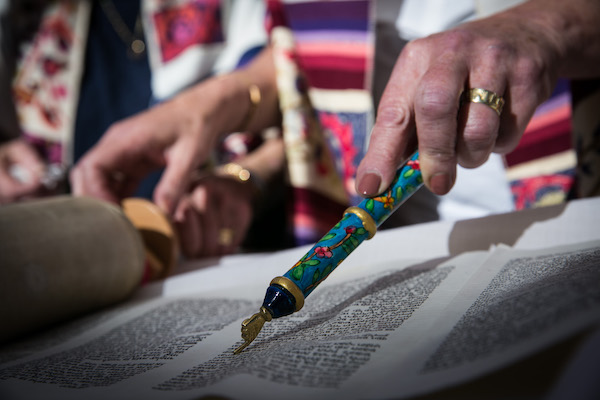
(photo by Yochi Rappeport)

Rabbi Gila Caine of Edmonton’s Temple Beth Ora was the lead-off speaker in November for Kolot Mayim’s six-part 2021/22 series Building Bridges: Celebrating Diversity in Jewish Life. Her talk, Toratah / Her Torah: Women Rabbis Revealing the Goddess in Torah, looked at the Tanakh (Hebrew Bible) from a less patriarchal perspective.

“It’s not new to have women involved in Jewish life. Women have always been involved in Jewish life in the home and in the family,” Caine began. “The new thing about recent generations is that women are publicly active. That’s a big difference.”

For the last few decades, she said, scholars have gone back into the text and started digging to find hints and remains of ancient goddesses. By goddess, Caine means the “sacred feminine.” The scholars search the texts to see if they can unveil clues, much like archeology, which will allow them to tell different stories than the ones that have already been told.

“It’s not that the researchers find the old stories useless; rather, they see it as just one part of the whole. To expand the story, the researchers pose questions, such as what did women believe in, how did they worship, and what were their lives like and what did God look like to them at that time?” Caine explained. The text is reinterpreted, and turned into commentaries and midrashim. As an example, she introduced the audience to two recent books: Dabri Torah: Israeli Women Interpret the Torah (published this year, in Hebrew) and Torah: A Women’s Commentary (WRJ Press, 2008).

Throughout her talk, Caine wove connections of Asherah, the mother goddess in ancient Semitic religions, to the heroines of the Torah, such as Sarah and Eve (Chava). Asherah is perceived as hiding within the texts. (Asherah, too, was connected to the Tree of Life, which, in images shown during Caine’s presentation, resembled a menorah.)

One midrash highlighted in the talk related to the Binding of Isaac. In it, Sarah goes and spends the night with King Abimelech. She does not sleep with him but still comes back pregnant, leaving Abraham furious. He hears voices telling him he must kill his son. As he raises his hand to slaughter Isaac, suddenly he sees a deer in the bushes.

This is interpreted as the moment of transition into patriarchy. The deer represents the mother goddess who wants to save her son. “As Sarah dies right after the Akedah, she perhaps does so to save her son,” Caine said.

On the subject of Eve, Caine quoted Rabbi Rachel Adler: “the world of patriarchy cries out for mending. A mending world would commit itself to equality and power sharing, to working collectively to fulfil needs and solve problems. Reunited again with the rest of Creation, men and women could learn again to be loving friends as the traditional rabbinic wedding blessing portrays them.”

Caine pointed out that Adler – through her rereading of the text and reinterpreting what a Jewish relationship is about – restructured the Jewish wedding ceremony. She took the Jewish language of covenant into the ceremony and not kinyan, which implies taking ownership, and created a brit avuhim, or lovers’ covenant. (See ritualwell.org/ritual/brit-ahuvim-lovers-covenant.)

Lastly, Caine spoke about a project, led by Israeli-American artist Yael Kanarek, to rewrite and regender the Torah, i.e., a male in the traditional text is now referred to as female and vice versa. Though the story remains the same, there would now be, for example, a female Jacob with 12 daughters and four husbands. “Suddenly, we have a mirror image of Torah,” said Caine. “It’s very interesting to read it and the immense midrash that it creates for Torah, as well as for our own understanding of who is telling the story and who is part of the story.”

When looked at this way, Caine said, new things come up and are discovered in Torah. By finding the sacred feminine in the texts, she said she is able to understand how she relates and could be part of the process of studying Torah.

“It’s part of a larger question of how do we heal our tradition and take a Judaism that seems at times very disconnected from the earth. By being able to access the language of goddess, it has enabled me to reimagine and to rethink how I do ritual and Judaism, and how I do everyday life – that aims not at the goddess at all – and create a Judaism that speaks to us now in our lives today.”

Born and raised in Jerusalem, Caine graduated the Hebrew University with a master’s in contemporary Judaism and received her rabbinic ordination at the Hebrew Union College-Jewish Institute of Religion’s Israeli program in 2011. Her rabbinic thesis explored liturgical, spiritual and ceremonial aspects of birth in Jewish tradition and contemporary practice. Stemming from that, as well as her years as volunteer at a rape crisis centre, she is one of the founders of the Israeli rabbinic women’s group B’not Dinah, creating a female and feminist rabbinic tradition of healing after sexual trauma.

For more information about Beit Toratah visit beittoratah.org. To register for the next Building Bridges lecture, go to kolotmayimreformtemple.com.

Sam Margolis has written for the Globe and Mail, the National Post, UPI and MSNBC.
Format ImagePosted on December 10, 2021December 8, 2021Author Sam MargolisCategories LocalTags Beit Toratah, Gila Caine, healing, Judaism, Kolot Mayim, Rachel Adler, Torah, tradition, women
Diverse learning series

Diverse learning series

Rabbi Gila Caine (photo from Kolot Mayim)

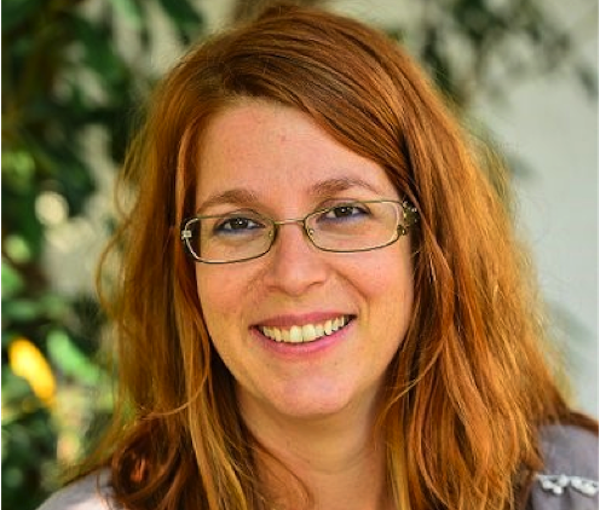
Kolot Mayim Reform Temple in Victoria welcomes back Rabbi Gila Caine, spiritual leader of Temple Beth Ora in Edmonton, to speak on the topic Toratah/Her Torah: Women Rabbis Revealing the Goddess in Torah.

The Nov. 7, 11 a.m., lecture on Zoom kicks off a six-part series of talks called Building Bridges: Celebrating Diversity in Jewish Life. The community is invited to listen and learn from Indigenous, Black, Asian, feminist and differently-gendered and differently-abled advocates who are working to make our world a better place.

As a people who have experienced the devastating impact of antisemitism and hatred, Judaism commits us to the responsibility of tikkun olam (repairing our world). In that spirit, Kolot Mayim’s series of speakers will lead attendees on a journey to deepen their understanding of these contemporary issues and how they can support those who do not feel included.

Kolot Mayim’s Rabbi Lynn Greenough describes the series as “an opportunity to build bridges – bridges that enable us to link to what is and what can be, to step beyond our own particular experiences.” The Hebrew word for bridge is gesher, she explained, pointing to the song, “Kol Ha’Olam Kulo,” “the whole world is a very narrow bridge; the important thing is not to be afraid.”

In the series opener, Caine will explore how, throughout the millennia, rabbinic tradition, and especially written tradition, was composed from within a man-focused and -experienced perspective. Now, after around half a century of ordaining women, there is a growing corpus of documented writing flowing from within woman’s experiences and interpretations of Torah and life. In her talk, Caine will read a few Torah commentaries written by (women) rabbis from North America and Israel, as examples of weaving together rabbinic and women’s experience into something new.

Born and raised in Jerusalem, Caine graduated Hebrew University with a master’s in contemporary Judaism and received her rabbinic ordination at the Hebrew Union College-Jewish Institute of Religion’s Israeli program in 2011. Her rabbinic thesis explored liturgical, spiritual and ceremonial aspects of birth in Jewish tradition and contemporary practice.

Stemming from that, as well as her years as a volunteer at a rape crisis centre, Caine is one of the founders of the Israeli rabbinic women’s group B’not Dinah, creating a female and feminist rabbinic tradition of healing after sexual trauma. She now serves as rabbi at Temple Beth Ora and her Building Bridges talk is co-sponsored with her shul.

Other speakers in the 2021/22 series are:

  • Carmel Tanaka, founder and executive director of JQT Vancouver (Jewish Queer and Trans Vancouver) on A Day in the Life of a Queer, Neurodivergent, Jewpanese Millennial (Dec. 5);
  • Rivka Campbell, executive director of Jews of Colour Canada, on Harmony in a Divided Identity: A Minority Within a Minority (Jan. 9);
  • Joy Ladin, poet, author and first openly transgender professor at a Jewish institution, on Jonah, God and Other Strangers: Reading the Torah from a Trans Perspective (Feb. 6);
  • Reverend Hazan Daniel Benlolo, director of the Shira Choir, Spanish & Portuguese Synagogue, Montreal, on The Power of Music: In Honour of Jewish Disability Awareness and Inclusion Month (Feb. 13); and
  • Patricia June Vickers, Indigenous artist and independent consultant, and Rabbi Adam Cutler, senior rabbi of Adath Israel Congregation in Toronto, on An Indigenous and Jewish Dialogue on Truth and Reconciliation (March 20).

Kolot Mayim has been active for 20 years and this is the fourth year that the synagogue is offering this speaker series. Talks are free and held on the scheduled Sundays from 11 a.m. to 12:15 p.m. PST. To register, visit kolotmayimreformtemple.com.

– Courtesy Kolot Mayim

Format ImagePosted on November 5, 2021November 4, 2021Author Kolot MayimCategories LocalTags Building Bridges, diversity, education, inclusion, Jews of colour, Judaism, Kolot Mayim, LGBTQ+, speakers, Torah, women

Worshipping with joy

On May 2, Kolot Mayim Reform Temple in Victoria welcomes singer, songwriter, teacher, music producer and cantorial soloist Len Udow to speak on Worship with Joy. Drawing on both secular and cantorial music, Udow will recall his journey from 1960s coffee-house folk singer to cantorial soloist at Temple Shalom, Winnipeg’s Reform congregation, where he helps to officiate and teach.

photo - Cantor Len Udow
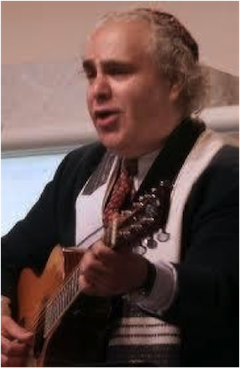
Cantor Len Udow (photo from Kolot Mayim)

By sharing both his own story and performing live with vocals and guitar, Udow wants to show how we can “carry our ancient narratives to other hearts and souls … respecting the old traditions while introducing innovation in prayer and spirituality.” As he describes it, “In Judaism, we see ourselves enlivening prayer with breath and melody, revealing the joy, praise and gratitude embedded in our heritage.”

For Udow, the phrase iv’du b’simchah (worship with joy) has been “a call to service, putting this musician on the bimah (altar) of a little prairie shul … where I have been privileged to lead a kahal (assembly) to a closer musical fellowship and learning.”

With humour, Udow quotes his mentor, the late Rabbi Lord Jonathan Sacks, the former chief rabbi of the United Kingdom: “When Jews talk they argue; when they sing, they sing together.” To Sacks, “Words are the language of the Jewish mind; music is the language of the Jewish soul.”

Udow has performed on concert stages, at festivals, on radio and television, and on numerous recordings. As well as playing the piano, banjo and guitar, he was a featured vocalist and music producer with fellow Winnipegger, Fred Penner, for more than two decades.

Worship with Joy is the final lecture of Kolot Mayim’s six-part series called Building Bridges: Language, Song and Story. It starts on Zoom at 11 a.m. and registration is via kolotmayimreformtemple.com.

Posted on April 23, 2021April 22, 2021Author Kolot MayimCategories MusicTags Judaism, Kolot Mayim, Len Udow, music
What makes art Jewish?

What makes art Jewish?

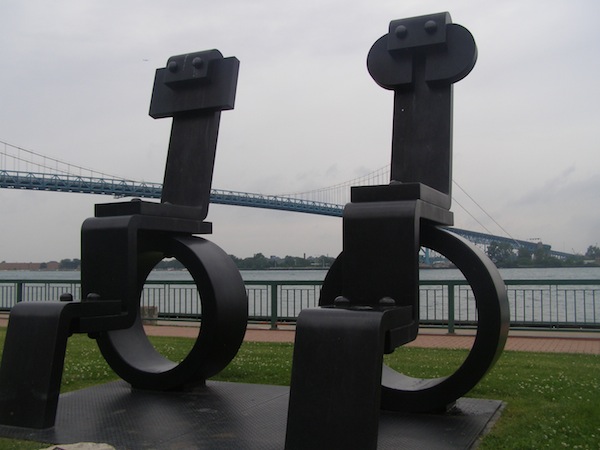
Sorel Etrog’s sculpture in Odette Sculpture Park, in Windsor, Ont. Etrog was one of four artists featured in Prof. Jennifer Eiserman’s March 7 lecture, Is There Such a Thing as Canadian Jewish Art? (photo by Matt Glaman)

Is there such a thing as “Jewish art” in Canada? Dr. Jennifer Eiserman explored this question in a March 7 Zoom lecture organized by Victoria’s Kolot Mayim Reform Temple.

Eiserman, an artist and an art professor at the University of Calgary, shared some of the preliminary findings of her investigation. She pointed out that, with respect to the concept of “Jewish art,” she was not referring to Judaica or Jewish themes in art. “I’m curious about whether artists with some kind of Jewish background make art that is qualitatively different from other artists. If so, I am interested in how these Jewish artists speak and think Jewishly,” she explained.

She began by providing a background to Canadian art history and, specifically, how it has been taught. There has been a profound shift, to put it mildly, in focus, she said. Prior to 1990, the study of Canadian art was a colonial one, concentrating mostly on male artists of European descent. Now, the works of women, Indigenous people and others are part of the curriculum.

Eiserman then discussed four artists and how they speak both Jewishly and as Canadians. She started with sculptor Sorel Etrog (1933-2014) and his contribution to Canadian Modernism. Etrog was a Romanian-born Holocaust survivor who spent time in Israel before immigrating to Canada. His biography is one of movement from place to place.

“The way I see Etrog speaking Jewishly is through the tension between tradition and innovation and the notion of interweaving roads, the idea of the new, which occurs in Etrog’s work,” Eiserman said.

His work, she added, also speaks Jewishly, in that it maintains certain core principles of the genre of public sculpture while addressing the contemporary context in which the sculpture is being placed. Just as we place Jewish law from generation to generation into contemporary contexts, Etrog’s art innovates while carrying on traditional elements.

The figurative art of Betty Goodwin (1923-2008) was demonstrated as being the work of “an outsider, someone not part of the Old Boys’ Club and one who had to find her own way.” Her work, according to Eiserman, contributed internationally to how drawing was defined and what it was to become.

“Her floating figures might express the experience of being in a world that does not welcome one’s experience. The experience of being neither here nor there. Her work speaks to the experience of losing and finding,” Eiserman noted.

Sylvia Safdie’s video installations of flowing water, sand, light and sound advance the traditional concerns of Canadian art with landscape and nature, most commonly associated with the Group of Seven. Safdie was born in Lebanon in 1942 and her family moved to Montreal in 1953.

Safdie’s video can be perceived as exploring a variety of themes that allow her to bring her own voice into the world. “Her work is part of a post-colonial narrative in which some people have experienced harm as the nation of Canada came into being, and speaks Jewishly of the central issues of living in the Diaspora – how to adapt and yet maintain our identity,” said Eiserman.

The distinctively Jewish fantastical creatures of sculptor David Altmejd (born 1974), who represented Canada at the Venice Biennale in 2007, were the final set of slides shown by Eiserman. She described Altmejd as the “quintessential 21st-century Canadian artist. He is bicultural, multilingual, internationally known and now lives in another country (United States) yet is still deeply rooted in Canada.

“Life is complicated, Altmejd reminds us, we can’t have the good without the bad. Yet, always in his work, life shines through. While he rarely discusses his Jewish roots … one can see that his works speak Jewishly in many aspects,” Eiserman said.

Growing up in Montreal, Eiserman experienced the national influence that the Saidye Bronfman Centre had in disseminating Canadian Jewish art. She received her bachelor’s in art history and master’s in education through the arts at McGill University in Montreal, and a bachelor’s in fine arts (visual art) at the University of Regina in Saskatchewan. Her doctorate, one of the first to use studio art as its method of inquiry, is from the University of Calgary, where she is now an associate professor. Her current research is in North American contemporary Jewish art and community-based Jewish art.

In her artistic endeavours, Eiserman uses mixed media, crochet, watercolour, installation and public art projects to explore issues related to Jewish theology, philosophy and identity. She refers to her work as “visual Midrash, an artistic response to sacred Jewish texts.”

Sam Margolis has written for the Globe and Mail, the National Post, UPI and MSNBC.
Format ImagePosted on March 19, 2021March 18, 2021Author Sam MargolisCategories Visual ArtsTags art, Betty Goodwin, Canada, David Altmejd, Jennifer Eiserman, Kolot Mayim, painting, sculpture, Sorel Etrog, Sylvia Safdie, University of Calgary, visual midrash
Conspiracists not new

Conspiracists not new

Prof. Simon Devereaux (photo from Twitter.com/UVicHumanities)

The belief in far-fetched plots is not a new phenomenon. There have always been people who gravitate towards and embrace conspiracy theories. In a Feb. 18 talk, hosted by the Jewish Community Centre of Victoria, University of Victoria history professor Dr. Simon Devereaux focused on “the golden age of conspiracy thinking,” highlighting various false intrigues of the latter half of the 20th century.

According to Devereaux, there are three principal elements to conspiracy theories that give them persuasive power among their adherents: big events must have big causes; no big event is random or accidental and must, therefore, be the result of a sinister and nebulous group’s intents or actions; and the most complicated explanation must, by its nature, be the correct explanation.

In his talk – entitled Conspiracy Thinking: A Rational Guide to Thinking Irrationally – Devereaux gave the November 1963 assassination of President John F. Kennedy as an example of “commensurate scale,” the need to equate consequential events with convoluted background planning. A 1992 letter to the New York Times by historian William Manchester was cited as both an explanation of and a counter to this tendency: “if you put the murdered president of the United States on one side of a scale and that wretched waif [Lee Harvey] Oswald on the other side, it doesn’t balance. You want to add something weightier to Oswald. It would invest the president’s death with meaning, endowing him with martyrdom. He would have died for something. A conspiracy would, of course, do the job nicely. Unfortunately, there is no evidence whatever that there was one.”

Devereaux then debunked many of the arguments employed by conspiracy theorists as reasons for why Kennedy might have been killed, including the belief that the young president was prepared to keep the United States out of Vietnam. He argued that Kennedy was a “hawkish” president who had the same secretaries of state and defence as his successor, President Lyndon Johnson.

On segueing into his second point – the inability of conspiracy theorists to accept that big events can happen randomly – Devereaux explained, “conspiracy thinkers ultimately want to believe that the world is an orderly place in which individuals are capable of keeping events under control. They don’t want to believe that the world is a sometimes chaotic place in which deeply upsetting events can happen for no apparent reason. It must, therefore, follow that some superlatively powerful group of individuals must be the directive force behind all events of enormous human significance.”

Growing disenchantment in the late 20th century of the nation state as a power to do good compounded the problem. As the United States lurched deeper into the ethical morass of Vietnam, Western governments, which were often seen as solutions to societal ills, with such programs as the 1930s New Deal, were no longer viewed as virtuous. The Watergate scandal of the mid-1970s, too, contributed to the increasingly held notion that people in government may be inherently corrupt.

Economically, the OPEC crisis and stagflation of the 1970s further demonstrated the “sad proof that government could not ensure that postwar prosperity could last forever,” and led to the presidency of Ronald Reagan and the distrustful neoconservative view of government, which continues to the present, said Devereaux.

“It is more consoling to think that there is someone in control, even if their intentions and purposes are entirely evil, rather than think there is no good explanation for the terrible things that sometimes befall us,” Devereaux argued.

To conspiracy theorists, the more elaborate and bizarre the assertions of conspiracies, the more compelling the argument. They are wont to believe, said Devereaux, that an unconventional approach to seeking answers is the right approach, and are dismissive of any reasoned proposition that runs counter to their argument.

“It is a world of amateur knowledge refusing to accept the world of professional knowledge. Any pattern of systematic, analytical thinking embodied, for instance, in a university, entails conventions,” he said.

To a conspiracy thinker, university professors represent people who are controlled; academics cannot say or do certain things without incurring professional censure. A common aspect of conspiracy thinking is to “trust no one,” i.e., “do not accept any conventional form of received wisdom.”

The rejection of conventional wisdom fuels their notions of being braver and deeper thinkers than others, as only they can follow the elaborate and frequently ludicrous connections of the conspiracy, said Devereaux. Thus, a conspiracy appeals to their intellectual vanity – they believe they are sharing hidden knowledge, therein fostering the idea that they are smarter than everyone else by not falling prey to “fake” mainstream news. Paradoxically, according to Devereaux, the more gullible the conspiracy believers, the more intelligent they think they are.

In his concluding remarks, Devereaux pointed out that there have been numerous conspiracies throughout history. However, most were either limited in their scope or inept, or both. Somewhere along the way, human nature ruins the plot; someone leaves the group, exposes the operation, or bungles the job.

Sam Margolis has written for the Globe and Mail, the National Post, UPI and MSNBC.
Format ImagePosted on March 5, 2021March 4, 2021Author Sam MargolisCategories LocalTags conspiracy theories, critical thinking, Kolot Mayim, politics, Simon Devereaux, University of Victoria, UVic
Mussar & tikkun olam

Mussar & tikkun olam

Dr. Rachael Turkienicz (photo from Kolot Mayim)

At a Jan. 3 Zoom lecture organized by Kolot Mayim Reform Temple in Victoria, Dr. Rachael Turkienicz spoke about mussar (Jewish ethics), tikkun olam (repairing the world) and whether there is a commandment to build bridges.

Turkienicz, founder and director of the Toronto-based Rachael’s Centre of Torah, Mussar and Ethics, began at the beginning, explaining why the Torah starts with creation and not with the patriarchs and matriarchs or the first commandment in Exodus.

“We start with Genesis because it is the ‘common’ that all human beings will have, and so Judaism will begin with what we all have in common,” she said. “No person can ever say to another person, ‘My father is greater than your father.’ And Father in this instance can be capitalized. One person creates the great equalizer. We should never fight with one another over this.”

She then showed how tikkun olam follows from creation, and raised the questions, When did the world break and how did it break? As man is finite and God is infinite, cracks will occur in the process of creation, and it is up to humanity to repair them, according to Turkienicz.

How do we repair? Through free will, she explained. “Free will is the most powerful thing next to God. It is so powerful that I can use my free will to deny God.”

The problem, however, is that “nowhere do we have a program that teaches us what free will is and how to use it,” she said.

In the course of daily routines, free will can take a less prominent role in our thinking, as many of us coast along “on automatic,” i.e., we function without making choices. As a result, nothing is being repaired and the world is continuing as it always does, she explained.

One example of being on automatic is when someone poses the question to an acquaintance passing by: “How are you?” The response is frequently: “I’m OK.” Neither the person asking nor the respondent delves deeply into the subject before moving on.

Being able to use free will is further compounded by the number of choices we have in an open society. Citing academic studies, Turkienicz contended that having a vast array of options available can actually hinder our ability to make use of the power of free will.

Enter mussar, a spiritual practice founded on offering a solid framework on living an ethical life. Mussar differs from kabbalah (Jewish mysticism). Whereas kabbalah is knowledge one receives, mussar moves from a person into the world, said Turkienicz.

Mussar stems from the concept that it is all well and good to know the commandments and recite Torah. However, such knowledge in itself does not make someone a mensch. “Mussar is learning to use my free will to repair the world. The commandments are the utensils, the goal is tikkun olam,” Turkienicz explained.

While mussar has been around for more than a millennium, it expanded in the 19th century to communities throughout Eastern Europe. Before the war, it was studied at the top continental yeshivot, but nearly all the leading exponents of mussar were murdered in the Holocaust. Recently, though, there has been a resurgence of the practice in both Orthodox and more liberal branches of Judaism.

Turkienicz compared mussar with other ethical philosophies, using the scenario of a person seated on a bus when an elderly person boards. Most of us are taught that we should give up our seat in such a situation. But what if the elderly person declines the offer? Ethics would say to sit back down, whereas mussar suggests that one should stay standing, because the issue is not about the elderly person but rather one’s own free will.

“Inside of me something said it is not appropriate for me to sit while an older person remains standing. Whether the elderly person sits down or not changes nothing,” she argued.

According to mussar, we are in control of the personal ingredients that comprise us, be they spirituality or patience. We all have the same ingredients, only the measurements are different, said Turkienicz. A person who does not see himself as spiritual still has a degree of spirituality. Likewise, someone who deems herself impatient has an allocation of patience within her. Our free will distributes the measurements.

“My free will chooses what is my perspective and where will I focus,” Turkienicz said.

As to whether there is a commandment to build bridges, she quoted Israel Salanter, a 19th-century rabbi and founder of the modern mussar movement, who said, “A good Jew is not one who worries about his fellow man’s soul and his own stomach, but about his fellow man’s stomach and his own soul.”

Turkienicz concluded that, while there is no commandment to build bridges, “everything else shows us we should do so, because, if we choose not to, we have lived where that leads us, and we don’t want to go there.”

To view the presentation in full, go to kolotmayimreformtemple.com and search “lectures.” Turkienicz’s talk was part of the synagogue’s Building Bridges series, the next instalment of which takes place March 7, featuring University of Calgary art professor Jennifer Eiserman on Canadian Jewish art. Click here for more information.

Sam Margolis has written for the Globe and Mail, the National Post, UPI and MSNBC.
Format ImagePosted on February 26, 2021February 24, 2021Author Sam MargolisCategories LocalTags ethics, free will, healing, Judaism, Kolot Mayim, mussar, philosophy, Rachael Turkienicz, religion
Litman shares stories

Litman shares stories

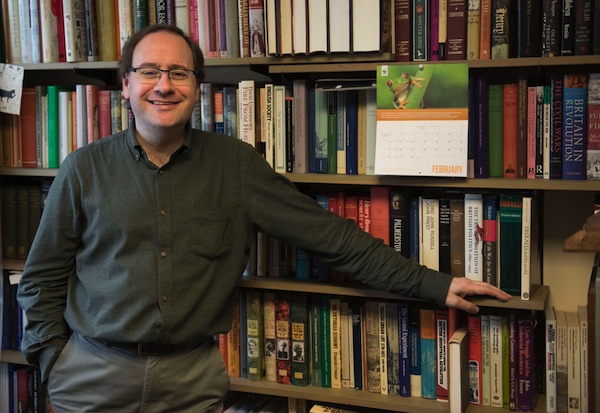
Storyteller Shoshana Litman. (photo from maggidah.com)

Shoshana Litman, Canada’s first ordained maggidah (storyteller), kicked off Kolot Mayim Reform Temple’s 2020-21 monthly lecture series on Nov. 1 with a talk entitled Building Jewish Culture Through Stories and Song.

“We humans are a storytelling species,” Litman told the Zoom audience. “That’s what we do. Whether it’s the conversations we have with each other about what’s going on in our lives or the stories we tell ourselves in our own minds, whether they’re true or false, we are always doing this.

“And we Jews are a storytelling people,” she said. “This is what we do, too. If you look at our core text, it is full of stories. The first two Books of Moses are full of stories.”

Litman’s path towards being a maggidah began as her children grew older and she rejoined the workforce. At the time, she started to become ba’al teshuvah (a secular person who “returns” to Judaism). Based in Victoria, she attended conferences run by the Mussar Institute, which was founded by Vancouverite Alan Morinis, and, ultimately, located a program that trains maggidim.

In the mid-2000s, Litman connected with maggid Yitzhak Buxbaum, a student of Rabbi Shlomo Carlebach, in Brooklyn, and she embarked on a two-year program that was taught via conference calls and semi-annual workshops. Upon completing the program in 2008, Buxbaum said to her, “Shoshana, I see how good you are. Now go, save our people.”

Litman regaled attendees of the Victoria synagogue’s event with a story about the Baal Shem Tov from Buxbaum’s Storytelling and Spirituality in Judaism. It happens in the time just before the Baal Shem Tov’s passing, when he told his disciples what they should do when he was no longer with them.

To his follower Rabbi Yaakov, the Baal Shem Tov advises that he go off and become a storyteller. Rabbi Yaakov is skeptical. How can someone make his living as a storyteller? he wonders.

After two-and-a-half years as a peripatetic purveyor of tales following his teacher’s death, Rabbi Yaakov gets wind of a magnate in Italy who would give a gold coin for each story of the Baal Shem Tov he heard.

When Rabbi Yaakov arrives at the gate of the rich man’s villa, he says to the servant, “Tell your master that the personal assistant of the Baal Shem Tov has come, and I have many wonderful stories to tell from experience and not from hearsay.”

The rabbi is invited in and, after a week of good food and relaxation, Shabbat comes. Following a festive meal replete with songs, it is time for stories. But, just then, something peculiar takes place. All recollections of the Baal Shem Tov evaporate from Rabbi Yaakov’s memory. Every trick he tries to elicit the stories fails. The host tells him not to worry, to go to sleep and try again the next morning.

The next day arrives and nothing has changed. Shabbat passes. The other guests at the magnate’s home grow increasingly doubtful. As it comes time to leave, still no tales have sprung from Rabbi Yaakov’s mouth, yet the magnate gives him a bag of gold anyway.

When the rabbi suddenly recalls everything, as he enters his carriage, the magnate asks him to return and Rabbi Yaakov tells the story of a journey he had taken with the Baal Shem Tov.

The group ended up in a town where angry crowds were drawing lots to carry out violent acts against Jews. Everyone was scared, except the Baal Shem Tov. They came to their lodgings in the town and the great Chassidic master went upstairs and opened a window looking out to the main square. The Baal Shem Tov pointed to a house across the square and out of that house walked a bishop, the man responsible for inciting the townspeople against Jews. The Baal Shem Tov told Rabbi Yaakov to bring the bishop to him.

Rabbi Yaakov went to the stage where the bishop was speaking and told him that the Baal Shem Tov wanted to talk to him. At first, the bishop refused, but, after much pressing, the bishop relented and went to see the Baal Shem Tov.

Rabbi Yaakov admits that he doesn’t know what the bishop and his master discussed. Nonetheless, as he finishes his story, tears are streaming down the rich man’s face.

“I can tell you exactly what the Baal Shem Tov said, for, you see, I was that bishop,” says the magnate. “Fortunately, I had holy relatives who convinced the Baal Shem Tov to save my soul. To do so, I had to do many mitzvot. He said I would know when I had been forgiven when someone comes to me and tells me my story.”

During non-pandemic times, Litman performs at schools (from nursery to university), libraries, senior facilities, theatres, houses of worship and other local, national and international venues. To hear her recent talk in full, including the entire Baal Shem Tov story, visit kolotmayimreformtemple.com/shoshana-litman. For more information on her, visit maggidah.com.

The next Kolot Mayim lecture, which takes place Dec. 6, at 11 a.m., features Jonathon Orr-Stav on the topic Arabic Hebrew: An Introduction to How Modern Israelis Really Speak. For more information, visit kolotmayimreformtemple.com/lectures.

Sam Margolis has written for the Globe and Mail, the National Post, UPI and MSNBC.
Format ImagePosted on November 27, 2020November 25, 2020Author Sam MargolisCategories Performing ArtsTags Baal Shem Tov, education, Judaism, Kolot Mayim, maggidah, Shoshana Litman, storytelling, Vancouver Island, Yitzhak Buxbaum
Kolot Mayim installs rabbi

Kolot Mayim installs rabbi

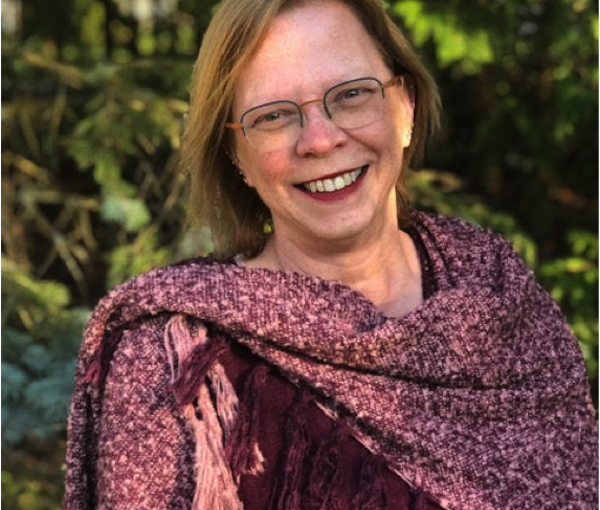
Rabbi Lynn Greenhough represents a series of firsts for the Victoria Jewish community. (photo from Kolot Mayim)

When Lynn Greenhough is officially installed as rabbi of Kolot Mayim Reform Temple in Victoria tonight, Sept. 6, she will bring with her a series of firsts to the city’s Jewish community: its first rabbi born on Vancouver Island, its first Canadian-born rabbi, its first full-time female rabbi with her own congregation and its first rabbi who was not born into Judaism.

A stalwart in Victoria’s Jewish life for nearly 30 years, Greenhough has been Kolot Mayim’s spiritual leader since 2017, while simultaneously completing her rabbinical studies at the program offered by the Jewish Spiritual Leaders Institute (JSLI) in New York.

For someone born and raised in Happy Valley – 15 kilometres west of Victoria – at a time when the area was still a farming community, the rabbinate was not a calling many in the community, or indeed on the Island, might have considered.

Her first taste of Judaism, and some of the recent history of the Jewish people, came in Grade 5, when she found a copy of William L. Shirer’s The Rise and Fall of the Third Reich in her schoolroom library, and her curiosity and sense of connection to Judaism ensued. She recognized that justice had tragically failed Jews during the Holocaust and she felt a need to be part of rebuilding a world where such a failure could never happen again.

“I consciously gravitated towards Judaism because of its inherent sense of justice,” Greenhough told the Independent. “At that early point, I realized, I would be a Jew.”

Life, jobs and family followed. She finished school, married and had a son, helped open Everywoman’s Books in Victoria and then worked for Canada Post as a truck driver for 20 years.

In the 1980s, Greenhough attended a few Jewish events at Victoria’s Congregation Emanu-El. She began to light candles and tried to build a sense of Shabbat into her week. She also looked for a Jewish partner who could help her build a Jewish home. Yet, it wasn’t until she was in her late 30s that she was determined – accompanied by now-husband Aaron Devor – to convert. Devor grew up in a Jewish neighbourhood on Long Island, but was not a regular synagogue attendee. Along the way, the couple became deeply engaged in Jewish life.

By 1992, Greenhough’s conversion was complete and, from then, it was full-on immersion to the point where she became a leader and educator. At Emanu-El, she guided historical tours, joined the board of directors, led services, including chanting Haftarot and Torah, joined the Chevra Kadisha (Burial Society) and served as a funeral officiant.

In 1996, she served as an instructor at the synagogue’s Hebrew school and then began teaching and coordinating b’nai mitzvah classes. In 1998, she began to teach Torah and Haftorah studies for adults and, in 1999, taught an introduction to Judaism course for those interested in conversion.

However, it was the Chevra Kadisha that became her passion. In 2000, Greenhough completed her master’s degree at Royal Roads University under the supervision of Dr. Rabbi Neil Gillman, z”l, from the Jewish Theological Seminary in New York. Her thesis – We Do the Best We Can: Chevra Kadisha in Small Jewish Communities in North America – looked at both the history of Jewish models for care of the dead, and present-day practices and training models from 16 different small Jewish communities.

This work led to further connections. Greenhough, along with Rena Boroditsky of Winnipeg, Man., and David Zinner of Maryland, worked together to organize the first of now 16 international conferences dedicated to learning about these burial practices.

Greenhough has also taught Judaism in the University of Victoria’s religious studies program (2007-09), was scholar-in-residence at Temple Beth Shalom in Phoenix, Ariz. (2009) and taught courses in academic writing at Royal Roads (2012-16).

In 2014, she joined Kolot Mayim as a member and led Torah studies and Shabbat and holiday services as needed, before becoming its spiritual leader in September 2017. Synagogue members are glowing in their praise of Greenhough as their choice.

“She brings a richness of experience as a born and raised ‘Island Girl.’ Indeed, she has attracted, and continues to attract, new members through her wisdom, spirituality, empathy, knowledge and quirky sense of humour,” said Sharon Shalinsky, president of Kolot Mayim.

Kolot Mayim was founded in 1998 by a small group of individuals and families, initially meeting monthly at the Victoria Jewish Community Centre. As the congregation grew, the frequency of services increased, ultimately to a weekly schedule. The synagogue has struggled to find a permanent rabbi and has, at times, been challenged in terms of membership recruitment and retention. The past year, though, it has seen a 70% increase in membership.

To mark the installation of a new rabbi at its westernmost location, Dr. Pekka Sinervo, the head of the Canadian Council of Reform Judaism, will be on hand at the ceremony, as will Rabbi Allan Finkel, who, along with Greenhough, is a 2019 graduate of the JSLI program and now leads services at Temple Shalom in Winnipeg.

Ahead of the occasion, Greenhough reflected, “This was not a career move, but the fulfilment of a dream.”

Sam Margolis has written for the Globe and Mail, the National Post, UPI and MSNBC.
Format ImagePosted on September 6, 2019September 4, 2019Author Sam MargolisCategories LocalTags Judaism, Kolot Mayim, Lynn Greenhough, synagogue, Victoria, women

Posts pagination

Previous page Page 1 … Page 3 Page 4
Proudly powered by WordPress