The “choosing people”

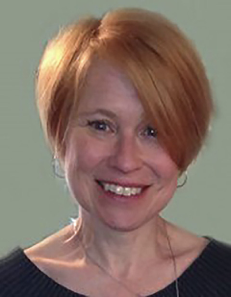
Angelica Poversky (photo from Angelica Poversky)

Temple Sholom Sisterhood’s social action committee invited members of the community to broaden their understanding of who is Jewish and consider how expansive the community could be in the first of its Tikkun Atzmi Series: Healing Ourselves to Heal the World. The Feb. 4 Zoom event featured panelists Carmel Tanaka, a community engagement professional, and poet Angelica Poversky.

Tikkun atzmi, to repair oneself, is considered the first step on the path towards tikkun olam, repair of the world. Along the way, there are also tikkun bayit, strengthening the family, and tikkun kahal, healing the community.

Tikkun atzmi implies looking inwards and reflecting on what should be taking place within the Jewish community, particularly as it pertains to marginalized groups, such as people of colour, LGBTQ+ individuals and others who consider themselves distanced from the tribe. The past year, the organizers said, has highlighted “so many of the inequities that persist in our world.”

“Not only am I deeply invested in making our Judaism grounded in social justice any opportunity I get, I know and love many Jews who feel as though they didn’t have a home in the community and I am invested in changing that,” moderator Dalya Israel began.

Tanaka spoke about coming to terms with the descriptions that derive from being the child of a multi-racial marriage. Often, she would refer to herself as half-Jewish and half-Japanese. “It wasn’t until years later that I realized I am not half of anything – I am fully Jewish and fully Japanese-Canadian. I can be all of these things and celebrate all of these things,” she told the Zoom audience.
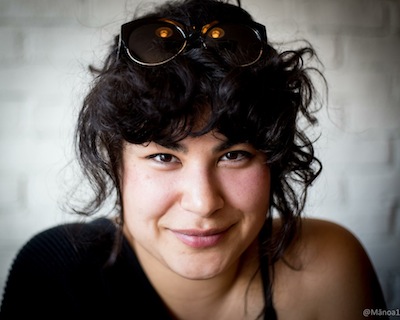
photo - Carmel Tanaka
Carmel Tanaka (photo by Manoa1)

Tanaka recalled experiences of her time as director of the University of Victoria Hillel, where she encountered several students who felt alienated from the community because they were not halachically Jewish. Realizing that it can be traumatic for someone to be told they don’t belong in a group, she endeavoured to create a safe space at UVic for anyone who may be Jewish, Jew-ish or Jew-curious.

Poversky referenced the exclusion that some Jews within the LGBTQ+ community have endured. “It is horrible that people are not fully accepted,” they said. “What is our goal if not to uplift everyone? Why create barriers? Those feelings of persecution can be very painful, so why place them on others?”

The discussion touched on the causes for the limited presence of younger and/or marginalized people in synagogues and other areas of Jewish life. Tanaka recounted a story about her mother who, years ago, was told by a synagogue that she was welcome to come to services but was asked to leave her husband at home.

While attitudes may have improved since then, there is still much more room available for inclusion and diversity, said Tanaka. “I feel, in order for the term Jewish to be more expansive, it needs to expand far enough to be a safe space for anyone who wants to identify as Jewish,” she said.

Israel, citing Sarah Hurwitz’s 2019 book Here All Along: Finding Meaning, Spirituality and a Deeper Connection to Life – in Judaism (After Finally Choosing to Look There), put forward the notion that, instead of thinking of themselves as the “Chosen People,” Jews could be the “choosing people.”

“Every day, we wake and choose to be Jews, and the way we live our life,” Israel said.

“Community happens when we complete ourselves,” Poversky added. They spoke about moving away from “action-based” assumptions about Judaism or sexual identity and attaching more importance to the declaration of one’s identity. That is, one can say they are Jewish without the acts of celebrating Chanukah or reading Torah. Implicit in Poversky’s statement was the “restrictive construct” within institutions that defines or even “polices” the identity of another individual because that person belongs to a marginalized group.

Tanaka shared experiences of visiting synagogues and being asked about her name, her lineage and her proficiency in Hebrew. This line of questioning to Jews of colour and others, she believes, is what has caused people to distance themselves from the Jewish community.

“It is the dance of having to prove who you are through actions,” Tanaka explained. “It is what we call microaggressions. When you have this happen over and over again, it can be emotionally exhausting.”

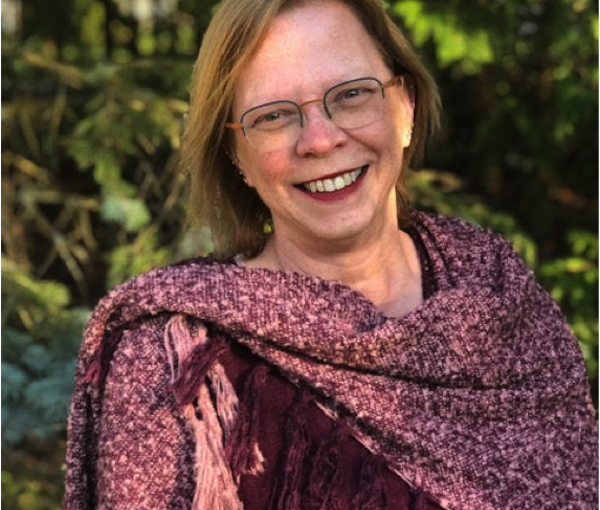
Tanaka, a queer Jewpanese woman of colour, is founder of JQT Vancouver (pronounced “J-Cutie”), Vancouver’s Jewish queer trans nonprofit. She also leads a monthly Zoom call for Jewpanese and their families from all over the world.

Poversky is a queer non-binary Russian-Jewish poet who has more than seven years of facilitation experience. They’ve taught poetry workshops in schools, in libraries, with youth groups, in community centres, and at dozens of festivals across North America. Much of their activism has been devoted to queer and trans celebration.

The Sisterhood’s three Tikkun Atzmi panels are designed to fuel the action committee’s dedication to social justice. Future panels will invite participants to elucidate on ways of bringing awareness to systemic inequity and its impacts on the Jewish community. They will also delve into their Judaism and explore sacred teachings for guidance in caring for and making space for one another.

Sam Margolis has written for the Globe and Mail, the National Post, UPI and MSNBC.

***

To watch the entire Tikkun Atzmi panel discussion, click here (the passcode for the video is !*n?RC1s).
Mussar & tikkun olam

Dr. Rachael Turkienicz (photo from Kolot Mayim)

At a Jan. 3 Zoom lecture organized by Kolot Mayim Reform Temple in Victoria, Dr. Rachael Turkienicz spoke about mussar (Jewish ethics), tikkun olam (repairing the world) and whether there is a commandment to build bridges.

Turkienicz, founder and director of the Toronto-based Rachael’s Centre of Torah, Mussar and Ethics, began at the beginning, explaining why the Torah starts with creation and not with the patriarchs and matriarchs or the first commandment in Exodus.

“We start with Genesis because it is the ‘common’ that all human beings will have, and so Judaism will begin with what we all have in common,” she said. “No person can ever say to another person, ‘My father is greater than your father.’ And Father in this instance can be capitalized. One person creates the great equalizer. We should never fight with one another over this.”

She then showed how tikkun olam follows from creation, and raised the questions, When did the world break and how did it break? As man is finite and God is infinite, cracks will occur in the process of creation, and it is up to humanity to repair them, according to Turkienicz.

How do we repair? Through free will, she explained. “Free will is the most powerful thing next to God. It is so powerful that I can use my free will to deny God.”

The problem, however, is that “nowhere do we have a program that teaches us what free will is and how to use it,” she said.

In the course of daily routines, free will can take a less prominent role in our thinking, as many of us coast along “on automatic,” i.e., we function without making choices. As a result, nothing is being repaired and the world is continuing as it always does, she explained.

One example of being on automatic is when someone poses the question to an acquaintance passing by: “How are you?” The response is frequently: “I’m OK.” Neither the person asking nor the respondent delves deeply into the subject before moving on.

Being able to use free will is further compounded by the number of choices we have in an open society. Citing academic studies, Turkienicz contended that having a vast array of options available can actually hinder our ability to make use of the power of free will.

Enter mussar, a spiritual practice founded on offering a solid framework on living an ethical life. Mussar differs from kabbalah (Jewish mysticism). Whereas kabbalah is knowledge one receives, mussar moves from a person into the world, said Turkienicz.

Mussar stems from the concept that it is all well and good to know the commandments and recite Torah. However, such knowledge in itself does not make someone a mensch. “Mussar is learning to use my free will to repair the world. The commandments are the utensils, the goal is tikkun olam,” Turkienicz explained.

While mussar has been around for more than a millennium, it expanded in the 19th century to communities throughout Eastern Europe. Before the war, it was studied at the top continental yeshivot, but nearly all the leading exponents of mussar were murdered in the Holocaust. Recently, though, there has been a resurgence of the practice in both Orthodox and more liberal branches of Judaism.

Turkienicz compared mussar with other ethical philosophies, using the scenario of a person seated on a bus when an elderly person boards. Most of us are taught that we should give up our seat in such a situation. But what if the elderly person declines the offer? Ethics would say to sit back down, whereas mussar suggests that one should stay standing, because the issue is not about the elderly person but rather one’s own free will.

“Inside of me something said it is not appropriate for me to sit while an older person remains standing. Whether the elderly person sits down or not changes nothing,” she argued.

According to mussar, we are in control of the personal ingredients that comprise us, be they spirituality or patience. We all have the same ingredients, only the measurements are different, said Turkienicz. A person who does not see himself as spiritual still has a degree of spirituality. Likewise, someone who deems herself impatient has an allocation of patience within her. Our free will distributes the measurements.

“My free will chooses what is my perspective and where will I focus,” Turkienicz said.

As to whether there is a commandment to build bridges, she quoted Israel Salanter, a 19th-century rabbi and founder of the modern mussar movement, who said, “A good Jew is not one who worries about his fellow man’s soul and his own stomach, but about his fellow man’s stomach and his own soul.”

Turkienicz concluded that, while there is no commandment to build bridges, “everything else shows us we should do so, because, if we choose not to, we have lived where that leads us, and we don’t want to go there.”

To view the presentation in full, go to kolotmayimreformtemple.com and search “lectures.” Turkienicz’s talk was part of the synagogue’s Building Bridges series, the next instalment of which takes place March 7, featuring University of Calgary art professor Jennifer Eiserman on Canadian Jewish art. Click here for more information.

Sam Margolis has written for the Globe and Mail, the National Post, UPI and MSNBC.

Kirman Library spans the arts

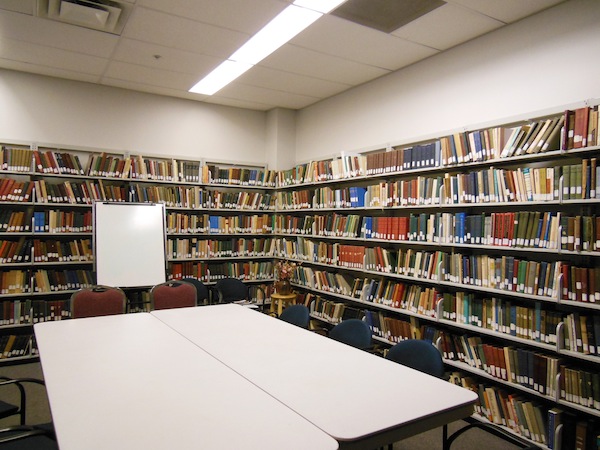
The Kirman English and Yiddish Library at the Peretz Centre for Secular Jewish Culture is available for anyone in the community to access. (photo from Peretz Centre)

“Books are humanity in print” – Barbara Tuchman

The Kirman English and Yiddish Library at the Peretz Centre for Secular Jewish Culture was set up in 1976 by Paula and Shaya Kirman, members of the Peretz Institute – as it was then known – and dedicated Yiddishists. The two main purposes in establishing the library were, first, to collect and preserve the books that were scattered in different places in the community, and, second, to make these books available to the whole community in a lending library.

Paula Kirman, who worked as a cataloguer at the University of British Columbia library, volunteered many hours to set up a card catalogue and shelve the Peretz library in an organized way. Eventually, she resigned from her volunteer position because of a perceived lack of support from the Peretz Institute’s board of directors.

In 1999, in preparation for the construction of the Peretz Centre’s present building (in the same location the institute had been since the 1960s), the library books and card catalogue had to be boxed and removed. With the completion of the new building in 2000-2001, the organization was renamed the Peretz Centre for Secular Jewish Culture and the words of I.L. Peretz, considered by many as the “father” of modern Jewish culture, were prominently displayed above the entrance foyer: “A people’s memory is history; without a history, a people can grow neither wiser nor better.”

Sporadic attempts to restore the library were made, but, when Al Stein returned to Vancouver and joined the centre’s board of directors in 2001, much of the library was still in boxes and Kirman’s card catalogue was in disarray. Stein volunteered to lead the effort to restore the library, if the board would support it in two ways: vote for funding for new shelving and support Stein’s effort to obtain a grant from the Jewish Community Foundation of Greater Vancouver to hire a library technician and digitize the entire library, including the Yiddish books.

The grant proposal was successful. A newly graduated library technician, unfamiliar with Yiddish, was contracted and many hundreds of hours were spent properly transliterating each Yiddish book and journal title, digitizing the entire collection in accordance with the latest electronic library standards, relabeling each book, arranging for electronic hosting of the library catalogue, supervising the installation of new shelving and then, finally, shelving the books and journals in an organized fashion.

Thanks to large and small donations of both English and Yiddish books from individuals, from the Winnipeg Jewish Library and from the Isaac Waldman Jewish Public Library at the Jewish Community Centre of Greater Vancouver, as well as a small number of purchases, the Kirman Library of the Peretz Centre now contains nearly 4,000 books and journals and is almost at capacity. The collection includes titles by kabbalists, rabbis, atheists, historians, politicians, musicians, artists, humourists, and those who wrote fiction, plays and poetry – in other words, the entire spectrum of Jewish creativity, encompassing all the arts.

Most of the collection is now in English and is a unique treasure trove of information and pleasure for the casual reader and the scholar. Two collections are of note. The late Dr. Gersh Winrob donated his English-language collection of Holocaust literature, memoirs, history and analyses, certainly one of the largest in the community. And the late poet Miriam Waddington donated part of her library, mostly English-language literature and essays, with a bit of Yiddish poetry.

The Peretz Centre is a proud member of the Yiddish Book Centre, now the largest Jewish cultural organization in the United States.

The Peretz’s library catalogue may be searched from any computer via the Peretz Centre website, peretz-centre.org: click the Kirman Library tab and then the Catalog link. The library ID is Kirman Library. No password is needed.

Books and periodicals can be borrowed for a $10/year fee. Four items may be borrowed at a time, for a period of four weeks, which may be renewed if no hold has been placed on the item. And the library may be used whenever the Peretz office is open, so call ahead before coming down, or for more information about library policy in general, such as its overdue or lost items policy, or to obtain a library card: 604-325-1812, ext. 1, or execdirector@peretz-centre.org.

If you have any specific questions or comments about the library, or wish to make a donation to it, Stein can be reached at 604 731-1193 or alstein577@gmail.com.

BI hosts Zoom scholar series

On Feb. 16, Congregation Beth Israel welcomed the first of four renowned Jewish scholars in a made-for-Zoom series, The BI Scholars. Canadian-born Dr. Henry Abramson, dean of Touro College in New York and a specialist in Jewish thought and history, kicked off the series with a talk entitled Becoming the People of the Byte: The Internet, Talmud and the Future of the Jewish People.

photo - Dr. Henry Abramson launched The BI Scholars series on Feb. 16
Dr. Henry Abramson launched The BI Scholars series on Feb. 16. (photo from Beth Israel)

His discourse looked at how Jews, over time, and to this day, use and relate to new information technology, and how it changes our modes of learning and disseminating texts. Abramson explained that Jews are generally early adopters of technology, beginning in the second century CE when, under the guidance of Judah Ha-Nasi, we moved from an oral tradition to the documentation of the Mishna in manuscript form, a big change that encountered significant resistance along the way. This was followed by the era of the printing press and, now, digital technology.

These communications technologies allow for significant democratization, and Abramson pointed out the value of the internet in that learning is available to all, whereas “treasured texts were previously not accessible to 50% of the Jewish community – namely, women.”

However, technology also presents dangers in terms of knowing the authenticity and authority of texts. It is our job, said Abramson, “to discover what we can trust and what we can discard.”

One of the female scholars about whom Abramson speaks is Ilana Kurshan, who has completed a remarkable feat of Talmud study – finishing the whole Talmud in seven-and-half years, Daf Yomi, a page a day. Kurshan will speak at the March 9 instalment of the Zoom series about her award-winning memoir If All the Seas Were Ink, which takes readers on a guided tour of the Talmud, while detailing her personal stories of love, loss, marriage and motherhood.

It is, indeed, one of the most unique Talmud commentaries ever written, as she explains: “The memoir is secondary. The way I happened to write this commentary on the Talmud is through my life.”

During her years studying the Talmud, Kurshan, a rabbi’s daughter from Long Island, N.Y., came to discover the terminology to understand her own daily experiences. “Talmud speaks to the human dimension of experience and, in many ways, that does not change,” she said. According to Kurshan, you cannot divorce the human experience from one’s own experience. “Just as the Talmud is a commentary on life, my life became a commentary on Talmud.”

On April 20, Dr. Benjamin Gampel, the Dina and Eli Field Family Chair in Jewish History at the Jewish Theological Seminary, will speak on the topic Riots, Inquisitions and Expulsions, and the Emergence of the Sephardic Diaspora. Gempel is a specialist in medieval and early modern Jewish history.

The series ends with Yuri Vedenyapin from McGill University, whose topic is The Adventures of a Yiddish Teacher. An actor and a singer-songwriter, his areas of academic interest include Yiddish language and culture.

All BI Scholars Zooms start at 7:30 p.m. To register, visit bethisraelvan.ca/happenings/adult-programs/bischolars.

Canadian Jewish art?

Does Canada have Jewish art? What defines Jewish art? University of Calgary art professor Jennifer Eiserman will address those questions on March 7, at 11am. The Zoom event is the fifth in Kolot Mayim Reform Temple’s 2020-21 Building Bridges lecture series.

photo - Prof. Jennifer Eiserman
Prof. Jennifer Eiserman (photo from art.ucalgary.ca)

With a wealth of visual support, Eiserman will introduce the rich esthetic traditions that inform contemporary Jewish art in Canada. The artists to be discussed include Sorel Etrog and his contribution to Canadian Modernism, the figurative work of printmaker Betty Goodwin, and the Jewish fantastical creatures of sculptor David Altmedj, who represented Canada at the Venice Biennale in 2007. Sylvia Safdie’s video installations of flowing water, sand, light and sound advance the traditional concerns of Canadian art with landscape and nature more commonly associated with the Group of Seven.

Growing up in Montreal, Eiserman experienced firsthand the national influence that the Saidye Bronfman Centre had in disseminating Canadian Jewish art. She spent her childhood in Montreal and her adolescence in Alberta’s Cypress Hills. She did her bachelor’s (art history) and master’s (education through the arts) at McGill University in Montreal, and a bachelor of fine arts (visual art) at the University of Regina. Her PhD, one of the first ever to use studio art as its method of inquiry, is from the University of Calgary, where she is now associate professor in the department of art. Her current research is in North American contemporary Jewish art and community-based Jewish art.

Eiserman is also a successful practising artist. She uses mixed media, crochet, watercolour painting, installation and public art projects to explore issues related to Jewish theology, philosophy and identity. Eiserman explains that her work is “what I call ‘visual midrash,’ my artistic response to sacred Jewish texts.”

For more information on and to register for Eiserman’s talk, visit kolotmayimreformtemple.com. For coverage of the Jan. 3 lecture of the Building Bridges series, click here.

A livelihood, not a hobby

So enthralled am I by the sheer volume and calibre of free online Jewish learning opportunities since the start of the pandemic, that I sometimes forget that the people who do the teaching do it as their livelihood, not as a hobby. Therein lies the problem.

We, the students, the partakers of all manner and sorts of online classes and lectures during COVID, gobble up the learning as though it’s candy, or fine wine. We sit in front of our laptops, tablets and smartphones and act for all the world as though we deserve this high level of education. It should rain down upon us. We’re Jews. We’re the People of the Book. We’re entitled. Teach us!

Make no mistake: we are blessed to be the recipients of this stratospheric level of dedication, and we should not and cannot take it for granted.

But, sometimes, we forget.

We forget that the rabbi or rebbetzin or Jewish scholar or educator who is teaching us needs to feed their family and pay their bills. We forget that we need to support them just like they support us. Too often, we blithely go on learning from week to week, month to month, blissfully ignoring this reality. Yet, we expect a paycheque. Or a pension check, if we’re lucky. Why shouldn’t they?

Zoom classes have become as common as dust since the beginning of the pandemic. Every Jewish religious and/or spiritual organization I can think of is offering Zoom classes weekly, if not daily. They have filled the gaping holes that once were our thriving, healthy, “normal” lives. These same Jewish organizations recognize the desperate need for some kind of normalization, some sort of lifesaver for people to hang onto. In the absence of our daily routines of work, socializing and gathering together as a community, there is little left to celebrate, never mind sustain us. Local synagogues have leaped into the abyss to lift us all up, or those of us who needed lifting, anyway. They have rallied together to create curricula, offer Torah classes, general Jewish study courses, podcasts, livestream videos and so much more. Not only because it’s the source of their livelihood, but because they feel our desperate need, the soul’s yearning for Jewish learning.

There is enormous comfort in seeing others – even if only virtually – and knowing that we are studying Jewish topics together, learning as a community. The overwhelming isolation felt by so many people right now is beyond description. The personal losses, the devastating repercussions from COVID-19 can’t be counted. Our lives have been turned upside down in every way imaginable. And then some. But learning offers hope.

Sure, everyone copes differently with the pandemic, but anybody who says they haven’t been affected by it is just plain lying. Being the adaptable creatures that we are, we take comfort (or relief) where we can find it. For some, it’s food, or alcohol, or Netflix. For others, it’s learning. And, for others still, it must be Jewish learning. Something draws us – something draws me – to our heritage, our history, our Judaism. And, suddenly, we are home.

Myriad times, sitting in front of my computer during or after a Zoom class, usually given by a rabbi, I find myself weeping. Partly as a release from all the stress and anxiety I’m feeling right now; but mostly from a deep sense of gratitude. Gratitude that we, as a community of Jews, haven’t been forgotten. That, amid the detritus of COVID, our faith leaders have intuitively known that we need help, that we can’t do this on our own. So they step up to the plate, full of enthusiasm and inspiration, and they fill us up. Not only do the classes inform us and expand our brains, but they benefit us by keeping us moving forward in a meaningful, purposeful way.

So, why am I writing all this? To remind each and every one of us, myself included, that we should be menschen and pay the favour forward. Pay it, literally, to every rabbi and rebbetzin and Jewish scholar or other educator who shares not only their time, but their wisdom, to help us get through this pandemic in the most meaningful way they know how. Make a donation. Show you care. Make as many donations as you’re able. Big or small, the act is a sign of appreciation. A sign that we value the learning. A sign that we know little, and yearn to know more. A sign that we appreciate their caring, knowing that they will do anything in their power to help. And G-d knows we need it right now. So, whatever we do, we shouldn’t forget to support those who support us.

It would be the century’s grossest understatement to say that I’ve learned a lot during the pandemic. Sure, I’ve learned immeasurable things about human nature and caring and compassion. But I’ve also expanded my Jewish learning a hundred-fold, maybe a thousand-fold. The pandemic has given me the time. But those doing the teaching have given me the inspiration, the foundation, the thirst for more. Instead of being overcome with hopelessness, I’m filled with hope. I see a pattern to life, a way out of this. That is no small thing. We need to pay it forward. Or pay it back. Either one will do.

If there’s a global sense of helplessness pervading much of what we do these days, we can counteract that by not only feeling grateful, but showing it. It could be construed as crass to say that we should pay for our Zoom classes and livestream lectures and podcasts. So be it. Call me crass. It wouldn’t be the first time. Just get out that credit card and do the right thing.

Shelley Civkin is a happily retired librarian and communications officer. For 17 years, she wrote a weekly book review column for the Richmond Review. She’s currently a freelance writer and volunteer.

Jewish film fest runs in March

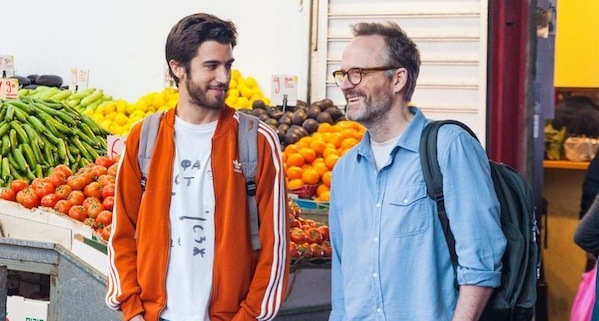
Niv Nissim, left, and John Benjamin Hickey co-star in Sublet, one of the Vancouver Jewish Film Festival’s many offerings this year. (photo from facebook.com/subletfilm)

The Vancouver Jewish Film Festival will take place exclusively online March 4-14. And, while you might think that COVID’s continued presence would necessitate a trimmed-down festival lineup, there are as many high-quality and diverse films being offered this year as in previous years. We give JI readers a small teaser of what’s to come, with more reviews in our next issue.

Sublet explores divides

In the film Sublet, a New York Times travel writer whose shtick is to get a feel for a city in just five days arrives in Tel Aviv. Michael (John Benjamin Hickey) has booked the apartment of film student Tomer (Niv Nissim) but, realizing the student has nowhere to go, the pair end up as temporary roommates.

The somewhat uptight middle-aged Ashkenazi American, standing out like a sore thumb in his semi-casual blazer, is contrasted with the hot-tempered, in-your-face young Sabra. The differences between the two men – and, by extension, between two generations of Jews, of gay (or, in Tomer’s case, possibly bisexual) men, of Israelis and Diaspora Jews – form the heart of the leisurely paced film. Just as Tomer ridicules Michael’s touristy ideas of Tel Aviv’s highlights, the cinematography captures the city at some of its grittiest best.

Is it a generational divide or a cultural one that has Tomer and Michael adopting wildly different sensibilities toward the tragedies of recent Jewish history and the experiences of gay men in the AIDS crisis, which Michael’s first book explored?

“It’s so depressing,” Tomer says of the AIDS pandemic. “Why does everything always have to go back to that?”

A more stark response – and one that is darkly humorous but startlingly confusing to Michael and perhaps many viewers – comes when one of Tomer’s friends is discussing fleeing Tel Aviv for a more successful artistic life in Berlin.

“It’s a bit odd that you’re moving to Germany, the place that symbolizes Jewish tragedy,” Michael observes. The Israeli pair pauses for a moment, then burst into hysterical laughter.

“Berlin’s, like, the coolest place,” Tomer assures Michael.

The theme of patrimony runs through the drama. Michael and his partner are struggling to find a surrogate for a baby they want to parent. Tomer, it turns out, is himself the product of a mother who chose the path of artificial insemination. Michael is wondering if he is getting too old to start afresh as a father. Tomer, in his clumsy way, may be struggling with the absence of his own paternal influences.

The bonds and divisions between generations, between conceptions of the past, between Israel and exile are explored but unresolved in this pleasant (if sometimes PG) film. The brief glimpse of Tomer’s hilariously awful horror film is just a bonus.

A shiva from hell

photo - In Shiva Baby, Danielle (Rachel Sennott) gets her comeuppance.
In Shiva Baby, Danielle (Rachel Sennott) gets her comeuppance. (photo from tiff.net/events/shiva-baby)

When her parents browbeat her into attending a shiva, Danielle does not expect to run into Maya. The two young women have an entwined past, so much so that other attendees can’t remember which one is which. The film Shiva Baby quickly turns into a subtly riotous adventure in the joys and drawbacks of tight-knit communities and the challenges of keeping secrets in a yenta-intensive environment.

Though their shared history is a source of immense awkwardness and brilliantly snarky sparring, for Danielle (Rachel Sennott), this shiva is a house of horrors. Having told so many lies to cover her failure to launch successfully into adulthood, every turn, every new face at the shiva, is an opportunity for sequential interrogations and fresh humiliation. It becomes an unintentional parlour game to piece together the variety of stories Danielle has told of changing majors, areas of specialization and plans for the future. Family, friends and acquaintances compare conflicting tales Danielle has woven over the years, creating an elaborate narrative of mostly imagined endeavours.

Her parents Debbie (Polly Draper) and Joel (Fred Melamed) seem both oblivious dupes and co-conspirators in Danielle’s web of deceptions. The loving but exasperatingly overbearing parents add to their daughter’s discomfort time and again, leading to an understated climax that literally shoves Danielle’s bad choices in her own face.

This “comedy of discomfort” is a masterpiece of interfering adults and world-weary youth. The unifying bond between generations is a shared art for the backhanded compliment and straight-up insults. After Danielle spills coffee all over herself and a friend’s baby, her mother offers solace: “Well, thank God Sheila’s coffee is always lukewarm.”

Shiva Baby, a Canadian-American co-production, features a musical score that amusingly invokes the horror genre to emphasize the nightmare scenario in which Danielle finds herself, almost exclusively of her own design. Any awkwardness on the part of the viewer is alleviated by schadenfreude that whatever she has coming is probably well overdue.

For tickets to the festival, visit vjff.org.

Rejoice or slog? You choose

Over the past two weeks, we’ve dealt with one of the worst household chores during Canadian winter: car repair. We’ve got two old cars. No, I don’t mean gorgeous restored antique cars, stored lovingly in a garage. We’ve got two cars that sit out in the back lane parking area in all kinds of Manitoba weather. We don’t have a garage.

The “younger” car is already 16 years old. This car, inherited from a family friend long ago, was having issues. We needed a new engine or a new car. Shopping for a new car during a pandemic didn’t seem wise. My husband opted for the engine.

While the car waited for its new engine to be installed at the auto repair shop, we had cold weather, as one does during Manitoba’s winter. Nobody at the garage plugged in the block heater or kept the car warm. Three thousand dollars later, while the new engine worked fine, the battery froze. The car had a good 10 kilometres of trouble-free driving back to our house before the battery died entirely. I spent a few days fielding Canadian Automobile Association calls and driving back and forth to the repair shop, accompanied by our kids – at home for remote school – and my husband.

On Jewish topics, well, we’ve just read the Shirat Hayam (Song of the Sea) Torah portion, which is in parashat Beshallach, Exodus 13:17-17:16. This is where we celebrate miracles, like crossing the Sea of Reeds, but not only that. It also details how G-d gave the people water, quail and manna, too. There were a lot of amazing gifts offered to the Israelites. There’s a message of hope here, and of life beyond the drudgery they encountered in Egypt, if they can see it.

There’s also an interesting confluence in that those who study Daf Yomi (a page of Talmud a day) are working through Pesachim right now. This is the tractate where the rabbis debate a lot of rules around Passover. As I learned from both the Torah portion of the week and Talmud, I saw a similarity that gave me pause.

The Israelites escaping from Egypt were in a time of great upheaval, including a plague that had just struck down all of the Egyptian firstborn. The rabbis in Tractate Pesachim are also in an unsettling time – the Temple in Jerusalem was long gone, and they were trying to understand how the Pesach sacrifices were done at the Temple and apply that ritual to a new vision of Jewish life.

Meanwhile, we’re in the middle of a pandemic, with more upheaval, trying to find our way through unrest and difficulties. It’s 2021, Passover is coming, and this will be yet another Zoom holiday, full of unexpected experiences.

When faced with all this, we have choices. We can, of course, complain and grumble, as the Israelites did in the desert, in Exodus 16:2-3. We sure have heard complaining during the COVID-19 pandemic, even among people lucky enough to have food, safety, warm housing and stable income.

In Exodus, Moses told the people that enough manna would be provided each day and how to gather it. The Israelites didn’t believe it, and some of the food got maggots because they didn’t follow the rules. Our Canadian public health officers have been leaders. They have told us how to stay safe and well and, sure enough, (surprise!) some of us haven’t followed the rules and have gotten into trouble.

Finally, we get to that whole “dead car in winter” routine. Could I draw a parallel here between our poor car and Pharaoh’s chariots, maybe? No. Instead, I saw the message the Israelites offered when they crossed the Sea of Reeds. “Who is like you, O Holy One, among the ones who are worshipped?” There is an expression of hope, joy and grateful acknowledgement there.

The thing is, our cars do a lot for us, getting us to work, school and the grocery store. This is essentially the plodding that is just a part of our lives, whether we complain or acknowledge it or not. We can find that drudgery everywhere, in schoolwork, in chores and in our careers. However, we can make a choice here, too.

In Tractate Pesachim, as the rabbis go through every part of Passover, they pause on page 68. In that pause, they reflect on what they are doing in studying Torah. Rabbi Elliot Goldberg, in his introduction to page 68 on the My Jewish Learning website, points it out: “Every 30 days, Rav Sheshet would review what he had learned over the previous month and he would stand and lean against the bolt of the door and say: Rejoice my soul, rejoice my soul, for you I have read scripture, for you I have studied Mishnah.”

In all good Jewish texts, there is a counterargument. Here, the Gemara responds: “But didn’t Rabbi Elazar say: If not for the Torah and its study, heaven and earth would not be sustained, as it is stated: If not for My covenant by day and by night, I would not have set up the laws of heaven and earth. (Jeremiah 33:25)

In other words, study isn’t just a slog. It benefits and nurtures us, and that causes us to rejoice. Also, Jewish tradition and Rabbi Elazar say that our study and work and, therefore, our Jewish action and rituals, uphold the world and keep it running as we know it.

We can see the car dying and its subsequent repairs as a struggle, and it is. We can also rejoice at how long the car has served us, how nice it is to have a break outside, even if it’s to drive back to the shop.

I won’t lie. It would be wonderful if, like manna, a new car appeared instead, but, since that isn’t happening right now, I need to rejoice in what does appear – a new engine, a free replacement battery and an opportunity to pause in the middle of the slog to see how lucky we are. The car died in our back lane, not on a highway. We were warm inside the house, and able to pay for repairs.

We need these ancient narratives – the Shirat Hayam story, rejoicing in freedom and full of hope, as well as the Pesachim reminder about the joys of study. They serve as a much-needed attitude adjustment. In the midst of a truly scary pandemic, in sickness and death, many of us are very lucky souls. It would benefit us to remember it. If a dead car battery or an engine replacement is the worst thing happening to us? We’re lucky indeed.

Joanne Seiff has written regularly for CBC Manitoba and various Jewish publications. She is the author of three books, including From the Outside In: Jewish Post Columns 2015-2016, a collection of essays available for digital download or as a paperback from Amazon. Check her out on Instagram @yrnspinner or at joanneseiff.blogspot.com.

Tu b’Shevat when it’s -30°C

As I went through my undergraduate and graduate school years, I cobbled together several different part-time jobs. One of my favourites was teaching Jewish music at weekend religious schools. This time of year, Tu b’Shevat (aka the New Year of Trees), songs were part of the lesson plan. Often, the kids I taught were just learning Hebrew for the first time, so I taught in English, too. One of my all-time hits was “The Garden Song,” which started with “Inch by inch, row by row, I’m gonna make this garden grow. All it takes is a rake and a hoe and a piece of fertile ground.” My second chart-topper was “Inchworm, inchworm, measuring the marigolds, won’t you stop and try to see how beautiful they are?”

Now, as I write this, I feel transported to a warm, sunny day in my garden, which is good, because it was -30°C with the windchill when I walked my dog in Winnipeg this morning! It’s good to be in touch with both the long-term hopes and dreams of summer and the realities of where we are. Holding that paradox, of both frostbite weather and sunny heat at once, is a great metaphor for where many of us are these days.

As a dual U.S.-Canadian citizen, I’ve been in knots over the unrest “down south” and the U.S. presidential transition. As well, I’m worried about the pandemic and about how poorly vaccine roll out has gone so far in Manitoba, and in Canada overall. I’m both thrilled to hear that all my children’s grandparents have gotten their first vaccine shot in the States, and also so sad to know that our local “adopted” Manitoba grandparents, both over 80, have no idea when they’ll get theirs.

Many people who have been sick with COVID-19 have struggled with challenging effects afterwards, including significant mental health issues. The anxiety and mortality struggles are pretty serious concerns for many of us, even if we haven’t gotten sick. One way my household has succeeded in coping is in burrowing in at home – into learning, good books, art and other DIY projects, building Lego and cooking. Everyone here, from age 9 and up, has kept busy with work and learning. We try to keep positive things in mind as much as we can.

I’ve been thinking about all of this, as I’ve considered what my plans are for the next days, months and even the year. In early January, I celebrated a birthday and the one-year anniversary of starting to study Daf Yomi, a page of Talmud a day. I am proud of finding the time to do this, however brief and poor my attention span may be sometimes. While I struggled with finding good (quick) resources for study, I found an Instagram page, posted by a rabbi, which seemed to summarize each page of study.

Hurray! I thought, I can review this in a glance while I help my kids with remote school lessons. Of course, anything that is in my Instagram feed has to then be kid-safe. Imagine my surprise when my account dumped two Daf Yomi posts with very scary images at me. One showed a person with a plastic bag over her head, struggling to breathe. The other showed someone’s hands, coated and dripping with blood.

Normally, I would simply unfollow this kind of thing without comment. However, these posts about Talmud were written by a rabbi, so I messaged her. “Hey!” I said, “I am so pleased to be doing Daf Yomi. I followed your posts, but I have to unfollow. These images on Tractate Pesachim 57 & 59 are too graphic. I don’t want my kids to see them.”

I got a response that left me, well, reminded that rabbis are just people, and that some of them may miss the mark at times. It was a “sorry to offend” kind of message. She indicated that she was a visual learner, that these posts were meant for those over 18 and that, to her, these seemed essential as an artist/interpreter, and she was guessing others felt the same. While she congratulated me on taking on Talmud study, I was also “othered,” as she, an artist, felt that dedicated followers would prefer this gory imagery in their social media feed.

I was disappointed. Although I am way past age 18, I am choosing, over and over, to focus on what I can gain positively from the talmudic text, even during a hard time. The talmudic rabbis, in parsing what had happened in Temple sacrifice, were trying to understand ritual events that had occurred a long time before. It was a disruptive period in history. Things weren’t stable. In fact, they weren’t actually doing sacrifices or actively harming people who didn’t observe properly. They were ironing out Jewish law for centuries to come, by confronting the past and figuring out the future through discussion, debate and study.

They did this by examining one small thing at a time. Much like the “Inchworm” song, Jewish rabbinic tradition teaches us to examine what is in front of us and to find solutions to challenges. I am distraught when I have to “hold” overwhelming images of rioting in the U.S. Capitol, the pandemic illness and deaths, and even a gory Instagram feed in my mind. Instead, I’m choosing a different path. It’s one that focuses on the next kids’ snack and meal, the next dog walk, and the next time I pick up the warm handknit mitts from the radiator as I face a cold morning outside. Inch by inch, row by row, we will get to sunny days in the garden ahead.

Sometimes, we do best when we embrace the ritual of “one thing at a time.” It’s one wintertime walk and, even, to knit each stitch as it presents itself on the needle to make more mittens. We’ve got a lot on our plate these days. Even so, we must eat only one bite at a time. It’s a metaphor and a paradox that the talmudic rabbis knew well. It might be a cliché but, for us, it also works.

Joanne Seiff has written regularly for CBC Manitoba and various Jewish publications. She is the author of three books, including From the Outside In: Jewish Post Columns 2015-2016, a collection of essays available for digital download or as a paperback from Amazon. Check her out on Instagram @yrnspinner or at joanneseiff.blogspot.com.

Journey of the Soul

Starting in February, a few B.C. Chabads are offering Journey of the Soul: A Fresh Look at Life, Death and the Rest – In Peace, a six-session online Zoom course from the Rohr Jewish Learning Institute (JLI) that answers the question, What happens when we die?

“Participants will embark on a journey that will enlighten them and put them at ease with the topics of life and the afterlife. Practical and powerful, thoughtful and relatable, Journey of the Soul teaches a Jewish perspective on life, that begins before birth and lasts well after a person’s passing,” said Rabbi Yechiel Baitelman, director of Chabad Richmond and a local JLI instructor.

“Death is both mysterious and inevitable,” added Baitelman. “Understanding death as a continuation of life reveals the holiness of life, while putting everything in a dramatically new context. The soul is on one long journey that is greater than each particular chapter.”

According to Baitelman, Journey of the Soul considers what happens to the soul at birth and again at death. It ponders whether there is a better place after this one; whether our loved ones continue to connect with us; the Jewish understanding of reincarnation; and how to relate to an afterlife even if we’re not spiritual. Journey of the Soul is designed to appeal to people at all levels of knowledge, including those without any prior experience or background in Jewish learning. It is open to the public.

Doctors and most mental health professionals can earn CME or continuing education credit by attending the course – visit myjli.com/continuingeducation for more information and a complete accreditation statement.

“The discounted cost of $40 per person takes into account COVID-19, and the fact that so many people have faced illness, job loss, reduced incomes and other challenges. While this is far below the regular price of the course, we ask you to please consider adding a donation of any size to help defray the course costs, if you are able to,” added Baitelman about the fees to attend the Chabad Richmond series. “And feel free to try the first class for free with no commitment.”

Chabad Richmond offers Journey of the Soul starting either Feb. 3 or 4, 7:30 p.m., and running weekly until March 10 or 11, respectively (chabadrichmond.com or 604-277-6427). The course is also being offered by Lubavitch BC Feb. 2-March 9, 7:30 p.m., with Rabbi Dovid Rosenfeld (lubavitchbc.com or 604-266-1313); and Feb. 3-March 10, 7 p.m., with Rabbi Meir Kaplan (chabadvi.org or 250-744-2770). The series cost varies.