Skip to content
  • Home
  • Subscribe / donate
  • Events calendar
  • News
    • Local
    • National
    • Israel
    • World
    • עניין בחדשות
      A roundup of news in Canada and further afield, in Hebrew.
  • Opinion
    • From the JI
    • Op-Ed
  • Arts & Culture
    • Performing Arts
    • Music
    • Books
    • Visual Arts
    • TV & Film
  • Life
    • Celebrating the Holidays
    • Travel
    • The Daily Snooze
      Cartoons by Jacob Samuel
    • Mystery Photo
      Help the JI and JMABC fill in the gaps in our archives.
  • Community Links
    • Organizations, Etc.
    • Other News Sources & Blogs
    • Business Directory
  • FAQ
  • JI Chai Celebration
  • JI@88! video

Recent Posts

  • Story of Israel’s north
  • Sheltering in train stations
  • Teach critical thinking
  • Learning to bridge divides
  • Supporting Iranian community
  • Art dismantles systems
  • Beth Tikvah celebrates 50th
  • What is Jewish music?
  • Celebrate joy of music
  • Women share experiences 
  • Raising funds for Survivors
  • Call for digital literacy
  • The hidden hand of hate
  • Tarot as spiritual ritual
  • Students create fancy meal
  • Encouraging young voices
  • Rose’s Angels delivers
  • Living life to its fullest
  • Drawing on his roots
  • Panama City welcoming
  • Pesach cleaning
  • On the wings of griffon vultures
  • Vast recipe & story collection
  • A word, please …
  • מארק קרני לא ממתין לטראמפ
  • On war and antisemitism
  • Jews shine in Canucks colours
  • Moment of opportunity
  • Shooting response
  • BC budget fails seniors
  • Ritual is what makes life holy
  • Dogs help war veterans live again
  • Remain vital and outspoken
  • An urgent play to see
  • Pop-up exhibit popular
  • An invite to join JWest

Archives

Follow @JewishIndie
image - The CJN - Visit Us Banner - 300x600 - 101625

Tag: Israel

SFU students vote BDS

On April 20, the Simon Fraser Student Society (SFSS) voted in favour of boycott, divestment and sanctions (BDS) against Israel. The motion is in support of Palestinian liberation, which it defines as resistance against Israeli “settler-colonialism” and the occupation of historic Palestine – including the West Bank, Gaza and the present-day state of Israel.

The Hillel chapter at SFU issued a statement on April 20 denouncing the motion.

“Evidently, this motion, and the student council standing in support of it are not concerned with the safety of Jewish students on SFU campus,” reads the statement. “The adoption of the policy, which passed unanimously this evening, and which violates SFU, provincial and federal law, sets a dangerous precedent for Jewish safety, freedom of association and political mobilization on campus.”

The day after the SFSS vote, another campus group also voted on a motion related to debates over Israel.

On April 21, more than 60% of the Queen’s University Faculty Association (QUFA) voted in favour of a motion that opposed the adoption of the working definition of antisemitism from the International Holocaust Remembrance Alliance (IHRA).

The IHRA working definition of antisemitism was adopted in May 2016, and states that antisemitism is “a certain perception of Jews, which may be expressed as hatred toward Jews. Rhetorical and physical manifestations of antisemitism are directed toward Jewish or non-Jewish individuals and/or their property, toward Jewish community institutions and religious facilities.”

The document also lists many examples that could fall into the broader definition of antisemitism. Among the examples are statements about Jewish people and Israel, including “denying the Jewish people their right to self-determination, e.g., by claiming that the existence of a state of Israel is a racist endeavour.”

According to the QUFA motion, this definition threatens academic freedom and intersectional anti-racist and decolonial initiatives.

“The IHRA definition of antisemitism misconstrues antisemitism to include a broad range of criticism of the state of Israel, particularly targeting

decolonial and anti-racist critiques of the policies, structures and practices of Israel,” the motion reads. “Such targeted attacks, which primarily impact racialized faculty and students, will have a negative effect on the academic freedom of our members in the classroom, in their research and in campus politics more broadly.”

Jordan Morelli, QUFA president, said in an email that the motion was brought forward by individual members of the association, as is their right according to the association’s democratic processes. He also said the vote itself was preceded by a balanced discussion in which everybody who wanted to speak was given the opportunity to do so. Morelli further added that Queen’s recently revised policy on harassment and discrimination defines antisemitism in a manner consistent with the Ontario Human Rights Code policies, and that other faculty organizations at other schools, as well as at federal and provincial levels, have expressed similar concerns with the IHRA definition of antisemitism.

Before the vote, Queen’s Hillel published an open letter signed by more than 1,600 people – current Jewish and non-Jewish students, alumni, family members and community members – asking the faculty to vote against the motion.

“This statement contributes to the erasure of Jewish history, religiosity and values. To exclude the Jewish community from impacted ‘racialized faculty and students’ does harm to multi-racial, long-established Jewish communities. It overwrites our lived reality of centuries of constant displacement, colonization, conquest and migration,” the letter reads.

The letter also says that the fears about restricting criticism of Israel and academic freedom do not follow from a “fair” reading of the definition, as Israel is not mentioned in the definition itself, but only in the follow-up examples of what may constitute antisemitism. The letter also questioned why it does not fall to Jewish groups to define their own oppression.

“It is our understanding that a fundamental principle of anti-oppression work is allowing affected communities to define their own oppression,” reads the letter. “It is not the place of any organization external to our community…. It is the Jewish community, and the Jewish community alone, who get to decide this. This double-standard is antisemitic.”

The Hillel letter did note that some of the faculty who proposed the motion are Jewish, but said their views are out-of-sync with the vast majority of Canadian Jews.

After the motion passed, Queen’s Hillel published a statement that said they were “deeply saddened,” called the vote “an utter disgrace,” especially because no actionable steps were suggested in the motion to combat growing antisemitism on campus. However, the statement also said they were “immensely proud” of the support shown across the community.

At McGill, a similar motion in support of Palestinian solidarity that was passed by more than 70% of the Students’ Society of McGill University (SSMU) was not ratified by SSMU’s board of governors. In a statement published on April 22, the board said they could not adopt the policy because it contravened numerous SSMU governing documents, including its constitution, equity policy and Quebec law.

The original version of this article was published by The CJN. For more national Jewish news, visit thecjn.ca.

Posted on May 6, 2022May 4, 2022Author Alex Rose THE CJNCategories NationalTags anti-Zionism, antisemitism, BDS, boycott, campus, Hillel, IHRA, International Holocaust Remembrance Alliance, Israel, McGill, Palestinian solidarity, Queen's, SFU, Simon Fraser Student Society, students
StandWithUs Canada course

StandWithUs Canada course

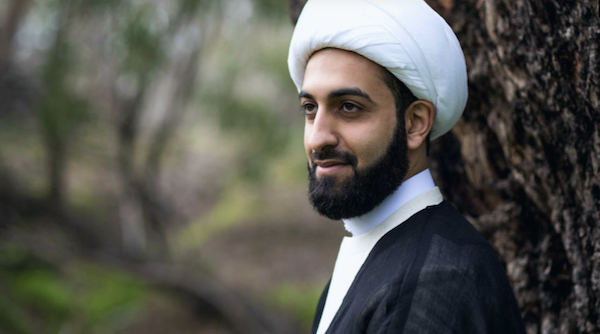
Hussein Mansour Aboubakr (PR photo)

After an almost three-year hiatus due to the pandemic, StandWithUs Canada is again holding events. On May 15, StandWithUs Canada and the Diamond Foundation are presenting the crash course Antisemitism and Anti-Zionism Today: What to Expect on Campus.

The course is a chance for high school (grades 11 and 12) and first-year university students to attend interactive sessions, hear from speakers, meet like-minded students and enjoy a free kosher dinner. Students who register and attend can also receive community service hours and a gift card.

image - Minority of One book coverSpeakers include Penina Edery, high school director, StandWithUs Canada, and Aviv Attia, StandWithUs educator and Israeli speaker. Special guest speaker Hussein Mansour Aboubakr was a dissident imprisoned in his home of Cairo, Egypt, for the crime of wanting to learn more about the country and the people he was raised to hate – Israel and Jews. One of the course sessions will be Aboubakr speaking about his journey. Other sessions will include a panel of students speaking about their experiences with antisemitism and anti-Zionism in high school and university.

The Diamond Foundation is sponsoring this crash course to reach out to Vancouver high school students and their families, to help them learn the skills, get the knowledge and find out about the resources available to support Israel and fight antisemitism. Also involved in presenting the event with StandWithUs Canada are Camp Hatikvah, Masa Israel Journey, King David High School and the Jewish Federation of Greater Vancouver.

The May 15 crash course will take place at KDHS from 4 to 8 p.m. Registration is required to attend. Students can register at forms.gle/hPncontVmAC4Jfor6.

– Courtesy StandWithUs Canada

Format ImagePosted on May 6, 2022May 4, 2022Author StandWithUs CanadaCategories LocalTags anti-Zionism, antisemitism, Camp Hatikvah, Diamond Foundation, education, Hussein Mansour Aboubakr, Israel, Jewish Federation, KDHS, King David High School, Masa Israel Journey, StandWithUs
Mausoleum work to resume

Mausoleum work to resume

The construction site of the mausoleum for Bahá’í leader ‘Abdu’l Bahá, east of Haifa Bay, Israel. (photo by Gil Zohar)

Construction of Vancouver-based architect Hossein Amanat’s mausoleum for Bahá’í leader ‘Abdu’l Bahá (1844-1921) was set back when a fire on April 8 caused significant damage to the main building at the holy site just east of Haifa Bay, Israel.

The Iranian-Canadian architect’s design features a sloping geometric meditation garden rising in a sunburst pattern to form a dome covering the tomb. Amanat’s neoclassical Persian structure extends the Ridván Garden, which was a favourite oasis where ‘Abdu’l Bahá’s father, Bahá’u’lláh (1817-1892) – the founder of the Bahá’í faith – retreated after he was released from Acre Prison in 1877. The modest house in which he stayed during his visits there has been restored. After his father’s death, the Iran-born ‘Abdu’l Bahá’ popularized the new religion outside the Middle East in a series of visits to Montreal, and cities in the United States and Europe.

Amanat, 80, fled his native Iran after the 1979 Islamic Revolution and settled in Canada. He is best known for his Shahyad Freedom Tower in central Tehran, which was dedicated in 1972 to honour the Pahlavi dynasty. Following Iran’s revolution, the monumental 45-metre-high archway was renamed the Azadi Tower, after the square in which it stands.

Amanat also designed a series of Bahá’í administrative buildings on Mount Carmel, including the Seat of the Universal House of Justice, the Centre for the Study of the Sacred Texts, and the Centre for the International Counselors.

photo - Architect Hossein Amanat is best known for his Shahyad Freedom Tower in Tehran, Iran, which is now known as the Azadi Tower
Architect Hossein Amanat is best known for his Shahyad Freedom Tower in Tehran, Iran, which is now known as the Azadi Tower. (photo from flickr)

The April 8 blaze destroyed “several months of work” on the 2,900-square-metre circular platform and piazza, the Universal House of Justice (the governing council of the Bahá’í faith) said in an April 14 statement. Clouds of smoke billowed from the mausoleum, prompting firefighters to evacuate the nearby suburbs of Giv’at Hatmarim and Afgad.

The fire broke out when windblown sparks from welding on the dome ignited scaffolding and plastic forms being used to mold poured concrete, Ynet reported. The completed concrete walls and structures were undamaged, and the 250 million shekel ($77 million US) project – announced in 2019 – is insured, said the Universal House of Justice. The shrine and meditation garden are being paid for by donations from Bahá’í faith’s five million members around the world.

Bahá’í media representative Sama Sabet said construction “will resume soon.” She didn’t estimate the cost of the damage.

For the last century, ‘Abdu’l Bahá has been temporarily entombed in Haifa’s shrine of Siyyid ‘Alí-Muhammad Shírází (1819-1850), popularly known as the Báb (“Gate” in Arabic). Shírází was executed in Tabriz for apostasy after claiming to be the deputy of the promised Twelver Mahdi, or al-Qa’im. According to legend, the firing squad’s initial barrage of bullets failed to hit him, and a second team of shooters was brought in. As a Shiite heretic, his body was fed to dogs. It was rescued and hidden by believers.

In 1908, all Ottoman political and religious prisoners were freed by the Young Turk revolution. Newly released, ‘Abdu’l Bahá smuggled the Báb’s remains to Ottoman Palestine and built his iconic shrine midway up Mount Carmel, near where he himself was living. Its dome, visible from the Haifa harbour along the axis of the German Colony, was gilded in 1953.

screenshot - An aerial view of the Bahá’í shrine, designed by Vancouver-based architect Hossein Amanat, which caught fire on April 8
An aerial view of the Bahá’í shrine, designed by Vancouver-based architect Hossein Amanat, which caught fire on April 8. (screenshot from YouTube)

The mausoleum and garden south of the Tel Akko archeological mound will be one of seven Bahá’í holy sites, ornamental meditation gardens and administrative complexes in a western Galilee pilgrimage route stretching from Mazra’a near Nahariya south through Acre (Akko in Hebrew and Akka in Arabic) to Mount Carmel in Haifa. The serene mausoleums of the Báb and Bahá’u’lláh – together with their adjoining gardens, characterized by their sacred geometry and immaculate landscaping – were registered on UNESCO’s World Heritage List in 2008.

The Bahá’í faith believes in progressive revelation – that God has revealed himself in a series of manifestations, including Moses, Jesus, Muhammad and, most recently, Bahá’u’lláh.

In 1863, Bahá’u’lláh fulfilled the Báb’s prophecies by proclaiming the Bahá’í faith. The new creed eventually evolved into a global religion. Exiled from Persia to Ottoman Baghdad and then the imperial capital Constantinople (today Istanbul) in 1868, Bahá’u’lláh was imprisoned in Acre’s Turkish citadel in remote Palestine. For Israelis, the notorious jail and its gallows are best known for the prison breakout on May 4, 1947, near the end of the British Mandate of Palestine, in which gunmen from the Irgun underground freed 27 incarcerated freedom fighters.

After being released from Acre Prison, Bahá’u’lláh moved six kilometres north to Mazra’a, also called Mazra’ih. Two years later, he settled in the Mansion of Bahjí (meaning “delight”) in Acre. That palatial home was built in 1821 by ‘Abdu’lláh Páshá, then the Ottoman governor of Acre. Bahá’u’lláh remained there until his death in 1892.

In addition to the mausoleums of the Báb and Bahá’u’lláh, Bahá’í pilgrimage sites in Haifa and the western Galilee on UNESCO’s World Heritage List include the Shrine of Bahá’u’lláh and adjoining Mansion of Bahjí and Bahjí Gardens in Acre; the Shrine of the Báb; the 19 terraces of the Bahá’í Gardens and Bahá’í World Centre in Haifa; and the House of ‘Abbud in the Old City of Acre, where the Bahá’u’lláh spent time after being released from prison.

Gil Zohar is a writer and tour guide in Jerusalem.

Format ImagePosted on May 6, 2022May 4, 2022Author Gil ZoharCategories IsraelTags architecture, Bahá’í, development, history, Hossein Amanat, Israel, religion, ‘Abdu’l Bahá
רכישות צבאיות על ידי ממשלת קנדה

רכישות צבאיות על ידי ממשלת קנדה

רכישה ראשונה: קנדה החליטה לרכוש את המטוס המפציץ החמקן אף שלושים וחמש

לאור פלישת רוסיה לאוקראינה הבינו בקנדה שיש להיערך ברצינות לאיומים שבדרך. ממשלת קנדה הליברלית בראשות ראש הממשלה, ג’סטין טרודו, החליטה סוף סוף לרכוש מטוסי קרב אמריקנים חדישים. מדובר על המטוסים המפציצים החמקנים מסוג אף שלושים וחמש, מתוצרת לוקהיד מרטין. כך אישרה בהודעתה לעיתונות שרת ההגנה הקנדית, אניטה אנאנד. ממשלת קנדה העדיפה איפוא את המטוסים האמריקנים על פני מטוסי גריפן של חברת סאאב השבדית. המטוסים החדישים האמריקנים יחליפו את המטוסים הישנים של חיל האוויר הקנדי מסוג סי.אף שמונה עשרה. בעבר ממשלת קנדה השמרנית בראשות ראש הממשלה דאז, סטיבן הרפר, החליטה לרכוש את מטוסי הקרב האמריקנים המפציצים החמקנים החדישים. אך לאחריה ממשלת טרודו הורידה את הנושא מסדר היום שלה לפני למעלה משש שנים, כאמור עד ימים אלה. אין ספק שהמשבר החמור הנוכחי באוקראינה השפיע על ממשלת טרודו, שהודיעה כאמור על פתיחת המשא ומתן רציני עם היצרנית לוקהיד מרטין, לרכישת המטוסים היקרים

ממשלת טרודו תרכוש בסך הכל שמונים ושמונה מטוסים בסכום אדיר של כחמישה עשר מילארד דולר (אמריקני), עבור חיל האוויר הקנדי. בחודשים הקרובים צפויה להיחתם עסקת הענק בין הצדדים. בשלב ראשון יסופקו לקנדה שלושים וחמישה מטוסים מסוג האף שלושים וחמש, וזאת בתוך שלוש השנים הבאות

יצויין שבמקרה חירום צבאות ארצות הברית וקנדה יגנו במשותף על המרחב האוויר של שתי המדינות המקיימות יחסי שכנות ידידותיים הדוקים מאוד. ובמקרה כזה שתי המדינות יוגדרו כמדינה אחת

עם תחילת העבודה של יצור מטוסי המפציצים החמקנים אף שלושים וחמש, שהושקעו בו למעלה מארבע מאות מילארד דולר (אמריקני), גייסו האמריקנים שבע מדינות נוספות, שיתתפו בפרוייקט היוקרתי והיקר. מדובר במדינות הבאות: קנדה, בריטניה, איטליה, הולנד נורווגיה, דנמרק ואוסטרליה. תשע מדינות נוספות הבטיחו לאמריקנים לרכוש אף הן את המטוסים אף שלושים וחמש היקרים. מדובר במדינות הבאות: ישראל, בלגיה, פינלנד, גרמניה, יפן, פולין, סינגפור, דרום קוריאה ושווייץ

רכישה שנייה: אלביט מערכות תספק מערכת אווירית לצבא קנדה בסכום של כתשעה מיליון דולר אמריקני

חברת אלביט מערכות הישראלית אמורה לספק מערכת שליטה ובקרה לצבאי הקנדי, בסכום של כתשעה מיליון דולר (אמריקני). המערכת אמורה להציג תמונה אווירית מלאה ולאפשר תיאום יעיל ובקרה של כלי הטיס במרחב הקנדי. וכן תקשור ליישומים ולמערכות שליטה ובקרה קיימות של צבא קנדה. המערכת החדישה של אלביט מערכות שתסופק לצבאי של קנדה, תתמוך במשימות אוויריות ובפעולות צבאיות משותפות של פיקוד היבשה, פקיוד האוויר והפיקוד המשותף. המערכת האווירית מבוססת על מערכת צבא “יבשה” דיגיטלית שאלביט מערכות פיתחה לפני מספר שנים, ונמצאת בשימוש פעיל על ידי צה”ל

ממשלת קנדה בראשות ראש הממשלה, ג’סטין טרודו, החליטה לרכוש את המערכת של אלביט מערכות הישראלית, במסגרת פרויקט שדרוג מערך התיאום האווירי של הכוחות הטקטיים. הצבא הקנדי יש לציין, רוצה כבר זמן רב מערכת דיגיטלית שתאפשר התמצאות מצבית במרחב האווירי, תוך תיאום אווירי משופר וניהול המערך שלו על ידי מטה הפיקוד הצבאי

יצוין כי אלביט מערכות זכתה לאחרונה במכרז ענקי של חיל האוויר של איחוד האמירויות, לאספקת מערכות הגנה מבוססות לייזר אינפרה אדום, ומערכות לוחמה אלקטרוניות – בסכום של חמישים ושלושה מיליון דולר (אמריקני)

במקביל אלביט מערכות זכתה לאחרונה במכרז נוסף גדול של חיל האוויר של בריטניה, לאספקת מערכות אלקטרוניות להגברת יכולות הלוחמה – בסכום של כמאה מיליון דולר (אמריקני)

Format ImagePosted on May 4, 2022May 4, 2022Author Roni RachmaniCategories עניין בחדשותTags Canada, Canadian Air Force, Elbit Systems, fighter jets, Israel, Justin Trudeau, Lockheed Martin, military, United States, אלביט מערכות, ארצות הברית, ג'סטין טרודו, חיל האוויר הקנדי, ישראל, לוקהיד מרטין, מטוסי קרב, צבאי, קנדה
The scarcity of water

The scarcity of water

The seawater desalination plant in Ashkelon, Israel. (photo from © VID)

The Consulate General of Israel in Toronto and Western Canada marked World Water Day on March 22 with a webinar entitled “Squeezing Water from a Stone.” Dr. Alex Furman of Technion – Israel Institute of Technology in Haifa and Dr. Roy Brouwer of the University of Waterloo focused on Israeli and Canadian perspectives of water conservation and management.

Furman, director of the Stephen and Nancy Grand Water Research Institute at Technion, provided an overview of water management in Israel, describing how a land that is 60% desert – and uses more than 100% of its water – still has water left for use.

“The issue of water scarcity in the future is going to grow as the population grows and we need more water to feed people and for agriculture,” Furman said.

Israel’s population, which has expanded tenfold in the past 75 years, continues to climb. Further, its Western standard of living, including such things as daily showers, presents a further strain on the country’s water supply.

Israel recognized the need for innovation in this area several decades ago. Starting in the 1980s, it began treating wastewater for reuse in agriculture and, in the 2000s, the country started major desalination projects. Desalinated water now constitutes a large amount of the water consumed in Israel, but is not a completely win-win scenario. For example, a detrimental consequence of desalination is that the process also removes essential minerals, such as magnesium.

Another area where Israel is taking the lead is in water-saving technology, such as drip irrigation. Agricultural use of water in Israel has decreased in the past 30 years, a period over which agricultural production increased.

“Instead of irrigating the land, we irrigate the plant. Drip irrigation is providing water for what the plant needs. It’s not the amount of water that is important but the precision in how water is applied,” Furman said.

Concurrently, Furman added, Israelis are doing more to reduce water usage in the home, and the country has developed educational campaigns to inform its citizenry on ways to minimize water consumption.

“We are a very fast-growing country that requires a lot of water and requires the development of new water resources at all times,” Furman said.

Brouwer, an economics professor with an academic interest in water resources, highlighted the broader need for collective international partnership in looking at solutions for water issues through interdisciplinary cooperation, policy expertise and innovation.

“Water disregards boundaries and so must we,” he said, employing the motto of his department at the University of Waterloo.

The working definitions of water security, as put forward by the United Nations, Brouwer explained, are to have stable, peaceful and reliable access to adequate quantities and acceptable quality water. This, in turn, should sustain livelihoods, human well-being, socioeconomic development, protection from pollution and other water disasters, and preservation of ecosystems.

“From an economic point of view,” he said, “we need water to produce all kinds of things.”

As examples, Brouwer showed how much water is needed for basic clothing items: 10,000 litres of water are used to produce a kilogram of cotton, which, therefore, means 2,500 litres are required to make a 250-gram T-shirt and 8,000 litres for an 800-gram pair of blue jeans. For a morning cup of coffee, the equivalent of 1,000 cups of water are needed – from growing the bean, processing it and transporting it to the consumer.

Pressures on the international water supply are further exacerbated as countries such as China, Brazil and India achieve a higher standard of living and demand more goods like Western clothing and coffee.

“We expect that water stress will continue into the future,” Brouwer said, noting that two billion people in the world currently live in areas where water is scarce, including in the Middle East and in Northern Africa.

Global demand for water is, according to Brouwer, expected to grow one percent per year until 2050. By that time, 45% of global output would come from countries experiencing water scarcity. Tel Aviv, along with Sao Paulo, Cape Town and Karachi, is among the cities in the world most at risk of experiencing water shortages.

In a chart, Brouwer showed the skewed distribution of water usage around the world – from the average American, who uses 156 gallons per day to a French person who uses 76, an Indian at 38 and a Malian at three. Canada is the second-largest consumer of water per capita in the world. The average Israeli consumes 40% less water than their Canadian counterpart.

In his final remarks, Brouwer said the widely held view of water abundance in Canada may be a misperception when water quality and access to clean and safe drinking water are taken into consideration.

He concluded that water has value, but that its price is not reflective of its true value. Attention, he said, should be paid to both increasing water supply and policies that reduce water demand, and that water pricing is one way to raise awareness for essential water services.

Technion Canada partnered with the consulate on the World Water Day initiative.

Sam Margolis has written for the Globe and Mail, the National Post, UPI and MSNBC.

Format ImagePosted on April 22, 2022April 21, 2022Author Sam MargolisCategories WorldTags Alex Furman, Canada, Consulate General of Israel, economics, environment, Israel, research, Roy Brouwer, science, Technion, University of Waterloo, water

Celebrate Israel with joy

In the coming days, we celebrate the 74th anniversary of the rebirth of Jewish sovereignty in the land of Israel. By press time, we were still anticipating the first local in-person celebration in three years, a coming together that, if all goes to plan, will be cause for great joy.

Those immersed in the daily news from Israel can lose sight of the forest for the trees. We celebrate the scientific advances, the medical breakthroughs, the cultural triumphs coming out of the small but astoundingly creative Jewish state. Yet it may be only on occasions like Independence Day that we step back to observe the big picture.

The creation and flourishing of the Jewish state is a modern miracle – not only because every advancement has taken place within the context of a nation routinely under siege, but because these accomplishments would be exceptional even in the most conducive situations. There may be no other country that emerged in the postwar period of decolonization that has created a greater model for national development – lessons (like the oft-referenced act of making the desert bloom) that were widely shared with other emerging countries until after 1967, when the anti-Zionist movement snuffed out much of that international cooperation.

As a result of that anti-Zionism, our Zionism sometimes takes on a defensive tone. Young Israelis, traveling after their military service, meet young people from around the world in hostels and on hiking trails and are expected to justify their nation’s policies. Never mind Israelis, Jews in Canada and elsewhere are subjected to litmus tests to determine whether they are, by the standards of the interlocutor, a “good Jew” (anti-Zionist) or a “bad Jew.” (Of course, Zionists also engage in the good Jew/bad Jew game.)

Anti-Zionist voices dismiss claims that hyper-criticism of Israel endangers Jews in countries where mobs condemn the Jewish state in ferocious terms. These dismissals are disprovable through statistics. One could claim that the spike in antisemitic incidents in the Western world is unrelated to the precipitous rise in anti-Israel activism. But is there another case of a group of people in Canada or the United States or Europe telling people that their inflammatory rhetoric risks real-life violence only to have those concerns dismissed as a coincidence or as a trick to divert attention from alleged “war crimes”?

Aside from the physical dangers created by anti-Israel rhetoric, the insistence that none of this is aimed at Jews outside Israel is nonsense. Intent does not trump effect. The vast majority of Jews have familial, historical, religious and/or emotional connections to this land and the agitation against Israel is felt by Jews everywhere, no matter their views or feelings about Israel. Whether the mobs intend to strike fear in the Jews along the parade route is irrelevant – they do. Does this scenario constitute antisemitism? Well, if you seek the destruction of the world’s only Jewish state while striking fear in Jews worldwide and chanting “anti-Zionism is not antisemitism,” you have already demonstrated a spectacular indifference to the well-being of Jews everywhere. Does it really matter what we call that?

The trope that Israel was a consolation prize from the world to the Jews for the Holocaust is perhaps the most common misconception surrounding the history of the region. The world gave Israel nothing but a vote at the United Nations. After that, the Jews of the Levant were left to their own devices to build a state while under internal and external bombardment from neighbours.

Where the creation of the Jewish state intersects with the history of the Holocaust is in the collective global renaissance that the proclamation of the Jewish state meant for Jewish people. As the scope of the Shoah became known, Jews turned collective horror and grief into the constructive project of building a new country. Whether that was direct – fighting in the War of Independence or tilling the soil on a kibbutz – or indirect – supporting Zionist organizations abroad – this was an almost universal mobilization by the Jewish world. The agony of all the irredeemable losses of the past was channeled into reviving Jewish life in a sovereign state. Fairly or not, when Israel is attacked, it is received not, as the perpetrators insist, as “criticism of government policies,” but as an assault on the memory of all those who redirected what could have been existential collective despair into something redemptive.

As we begin the 75th year of Jewish sovereignty, let us situate the celebration in the biggest picture possible: despite all the naysaying, the war of words and the war of bullets and blades, the achievements of Israel are a source of pride for almost every Jew. Israelis, with the support of people like we who will gather at the Vogue Theatre on May 4, have made the desert bloom with agriculture, music and dance, science, medicine, high tech, art and almost every imaginable outlet of human creativity.

This is worth celebrating with unbridled joy.

Posted on April 22, 2022April 21, 2022Author The Editorial BoardCategories From the JITags antisemitism, Holocaust, Israel, Yom Ha'atzmaut, Zionism

Happy 74th birthday, Israel!

Like many Jewish kids who go to religious school twice a week, my understanding of Israel and its history was, well, simplistic. That changed when I was 16.

I went to live, on my own, on Kibbutz Beit HaShita for a year as part of their “American school” program. It was transformative for me in many ways. Among other things, I learned that Hebrew was a living, dynamic language, Jews were a diverse and complex people and that the land’s history was complicated. Also, I found out that, even far away from home, if, heaven forbid, something went wrong, there were, as Mr. Rogers described, helpers all around me. It was like all these strangers were distant relatives, a feeling I’d never experienced before.

I was a teenager, speaking in my third language, at a bus stop late one night in Jerusalem. I was scared I would miss the bus and not make it back to my class or back to the kibbutz. The motherly woman at the bus stop engaged me in small talk. “Oh,” she said, “You sound like you come from Beit HaShita. My cousin lives there. Don’t worry. If you miss the right bus, you can spend the night on my living room couch.” I felt alarmed at the time, but the bus arrived and I got home safely. I still remember that kind person’s offer – and it’s been more than 30 years.

For several reasons, I’ve never been back to Israel. I’ve wanted to go but life got in the way. Also, I did a lot more learning, in undergraduate and graduate school, and the complexity of the political situation felt intense. I navigated the opinions expressed in the Arabic classes I took and those of friends from all over the world. Due to antisemitism or facing someone who “hated Israel,” it sometimes felt hard to explain where I’d lived. I didn’t feel OK about some of Israel’s policy choices at times. I believed (and still do) that Palestinians deserved their own state, much the way many Israelis do, but I wasn’t Israeli so I didn’t vote there. It wasn’t my place to shift their politics. I just didn’t want to erase Israel. Yet, I also wasn’t sure if my very limited travel money should be spent on that tourism industry.

All this began to change after my twins were born. Winnipeg is a city of immigrants. Many newcomers I met in the Jewish community here spoke Hebrew and had lived for awhile in Israel, even if they were born elsewhere. After many years of only using prayer Hebrew, my brain woke up. Modern Hebrew sometimes began coming out of my mouth again. Suddenly, I was standing at the coat racks outside of the preschool classroom, trying to help a 2-year-old new to the school from Israel and, whoa, the preschooler Hebrew just came out of my mouth at a quick pace. My twins were stunned!

After the May 2021 war in Israel and Gaza, I spent time unfollowing and changing my social media habits. I wanted less hate and more nuanced news sources. Some of that news now arrives in Hebrew first, with occasional other languages mixed in. I got back in touch with my Hebrew study partner from university days, who lives in Jerusalem. When we streamed services from synagogue or made a seder, I felt more connected to those prayers about the state of Israel than I had in a long time.

The recent deaths in Israel, caused by terrorists who killed civilians, border patrols and police officers, Jews, Druze, Christians, Israelis and even Ukrainian workers, hit me hard. It felt again like I was losing cousins and friends. Even amid the isolation of pandemic times, I keenly felt the loss of these Israeli souls.

Birthdays are funny things. There are years when my own birthday comes and goes without much fanfare. I make myself a chocolate cake, some relatives or friends call, nothing much happens. I’m not much for big parties. Even before the pandemic, sometimes my early January birthdays were frigid and unremarkable. This year, though, I anticipate Israel’s 74th with a more deeply felt celebration.

I’m not likely to be part of a big event on Yom Ha’atzmaut and, for now, my travel budget remains small. Rising antisemitism in the world makes me worried though. It reminds me of how we need to ensure this safe place for future generations. I am in awe of just how much Israel has accomplished so far – in technology, education, medicine and more.

This is a year when I feel a big need to celebrate Israel and its continued existence amid adversity. Sometimes, bad things happen. Finding a space for gratitude helps remind us of what we do have – places to call home.

Happy birthday, Israel! Wishing you and all your inhabitants a happy, healthy and peaceful year to come. May you grow in mitzvot and success this year – and wishing you many, many productive years to come.

Joanne Seiff has written regularly for CBC Manitoba and various Jewish publications. She is the author of three books, including From the Outside In: Jewish Post Columns 2015-2016, a collection of essays available for digital download or as a paperback from Amazon. Check her out on Instagram @yrnspinner or at joanneseiff.blogspot.com.

Posted on April 22, 2022April 21, 2022Author Joanne SeiffCategories Op-EdTags antisemitism, Arab-Israeli conflict, Israel, Palestine, Yom Ha'atzmaut
25 years since deadly crash

25 years since deadly crash

The monument for the 73 Israel Defence Forces soldiers killed in the 1997 helicopter accident over She’ar Yashuv in northern Israel. (photo by Geoffrey Druker)

This year’s community Yom Hazikaron commemoration on May 3 will mark the 25th anniversary of Israel’s worst air disaster.

On the evening of Feb. 4, 1997, two Israel Air Force helicopters collided into each other. One crashed in Moshav She’ar Yashuv, the second near Kibbutz Dafna. All 73 people on board the helicopters were killed, including eight air crew members. No one on the ground was hurt.

“The presence of Israeli forces in southern Lebanon, following the 1982 operation, led to ongoing battles with the Hezbollah,” explained Geoffrey Druker, who leads the annual Yom Hazikaron (Memorial Day) ceremony, which this year takes place at the Rothstein Theatre. “Many IDF convoys going into southern Lebanon were ambushed and hit by IEDs, so the IDF started flying in its troops.”

photo - The 73 boulders surround a small pool
The 73 boulders surround a small pool. (photo by Geoffrey Druker)

Druker said the accident was devastating. “It was the largest helicopter crash in all helicopter aviation,” he said. “Until, in 2002, a Russian helicopter downed by Chechens killed 127.

“The accident increased the pressure to withdraw from southern Lebanon,” he added, “which happened in May 2002.”

Jewish Federation of Greater Vancouver’s Gesher Chai (Living Bridge) programs connect Metro Vancouver’s Jewish communities with Israel’s Galilee Panhandle communities. One of those connections is that King David High School’s sister school in Israel is Har Vagai, which is located on Kibbutz Dafna, where a part of one of the helicopters fell. In 2017, KDHS Grade 8 students traveled to Israel and spent time with their Har Vagai peers.

photo - Another perspective of the memorial
Another perspective of the memorial. (photo by Geoffrey Druker)

“The students visited the memorial and documented their meeting there, and the video was shown at our Yom Hazikaron ceremony here,” said Druker. “The memorial site is located in the ravine where a helicopter fell, not far from Kibbutz Dafna. On the site are 73 boulders, each the height of a person and all names are recorded on the site – a very moving memorial site.”

The 73 boulders surround a small pool. Among those remembered are three soldiers from our partnership region: Sgt. Tomer Goldberg, from Moshav Dishon; Staff Sgt. Tsafrir Shoval, from Kibbutz Baram; and Staff Sgt. Alejandro (Ale) Hofman, from Kibbutz Merom Golan, who was a graduate of Har Vagai. Hofman was 19 when he died.

In addition to that physical memorial, Druker said, “An annual conference is held in memory of the fallen, attended by the bereaved families. Students from the region participate in the conference. It’s attended by groups of soldiers and, over the years, the prime minister, the president, minister of defence and the chief of staff have attended and spoke at the conference.

“Every year, they focus on another topic, not necessarily on loss and grief – the bereaved families choose to have educational and other topics of interest. This year was about solidarity in times of COVID-19. Due to COVID, only 400 people attended this year, and the chief of staff spoke on behalf of the country’s leadership.”

Druker added, “An interesting point about that conference – the organizers do not adhere to official protocol because that might take away the decision-making from the bereaved families, regarding who can speak and what elements must be included. The wife of the then-chief of staff when the accident happened, Tali Lipkin-Shahak, has taken part in all the events. She personally is committed to be with the bereaved families.” (Amnon Lipkin-Shahak died from cancer in 2012.)

The local Yom Hazikaron ceremony will pay respects not only to the 73 who died in the helicopter accident 25 years ago, but all of Israel’s fallen soldiers and victims of hostile acts.

The commemoration at the Rothstein Theatre on May 3 starts at 7:30 p.m. and registration is required for those wanting to attend in-person, as seats will be limited: jewishvancouver.com/zikaron. The ceremony also will be broadcast live.

Format ImagePosted on April 22, 2022April 21, 2022Author Cynthia RamsayCategories LocalTags Galilee Panhandle, Geoffrey Druker, Gesher Chai, Har Vagai, helicopter crash, IAF, IDF, Israel, KDHS, Kibbutz Dafna, King David High School, memorial, Yom Hazikaron
Immigration challenges

Immigration challenges

Adi Barokas and her husband Barak during their time in Vancouver. (photo from Adi Barokas)

I read a review in an Israeli newspaper of Adi Barokas’ Hebrew-language graphic novel, the title of which translates as The Journey to the Best Place on Earth (and Back). I also read a scathing review of that review on the JI website, written by Roni Rachmani, an Israeli who lives in Vancouver. Disturbed by several aspects of the criticism, I decided to look into the book – and its author and illustrator – myself.

When I made aliyah from Canada in 1975, I had many difficulties acclimatizing to Israel. In reading Adi’s book, it was as though she had written the book I’d always wanted to write about Israel. Her experiences in Canada, which took place three decades after mine in Israel, were decidedly similar.

Aliyah is often thought of as a lofty, spiritual ascent, but, in a practical sense, it is effectively like immigrating to any other country. In the euphoria and joy of making the huge leap, this can be overlooked.

Decades before the internet, cellphones, Skype and WhatsApp, I left my home and family, strongly motivated by Zionist ideals, conveyed to me by my parents’ Israel experience of the 1950s. I longed to live a fuller Jewish life and take part in the developing history of Am Yisrael. Wrapped in a fuzzy cloak of enthusiasm, naïve and wholly unfamiliar with Israeli society, things turned out to be very different than the utopian image I’d envisioned. However, nearly half a century later, I am still grateful to be here.

Adi and her husband Barak met in the mid-2000s. Shortly after they married, Barak was called up to serve in the Second Lebanon War. They wanted to live in a quiet, peaceful society where they could just pursue their lives and careers, so they headed to Vancouver, which is often billed as one of the best places in the world to live. Unfortunately, they met with many unexpected challenges, mostly related to cultural differences. They tried to feel like they belonged, but never overcame feeling like foreigners.

For me, the in-your-face abrasiveness for which Israelis are known was an enormous shock to my more reserved, polite system. In Vancouver, Adi found those Canadian-associated traits off-putting and two-faced.

Adi and Barak were seeking a breather, serenity and space from the intense pace of life in densely populated Israel. With excessively high expectations that everything would be just so, they came to Vancouver. But for them, too, the culture shock was huge. They were not accustomed to so many rigid rules and regulations.

Adi had never lived in such a diverse society and was excited to interact with people of many ethnicities from around the world. It took a long time to catch on to the nuances, the nonverbal cues, of how people in Vancouver socialize – what topics are off limits, for example. Coming from Israel, a very liberal place, where most people freely express their unsolicited opinions, this was challenging.

Adi and Barak found it odd that everything was so quiet and calm in Vancouver. They were used to a lively, noisy society where people mix in close proximity. In Vancouver, everywhere they went, voices were barely audible and, so, they gradually adjusted and lowered their own tone of voice, and limited their conversations to certain topics.

The couple were eager to socialize, especially with their fellow foreign colleagues, with whom they felt more affinity than with Canadians. They initiated get-togethers, extended invitations, but they found everything so formal and stilted and rarely reciprocated. The only safe subjects of conversation were about hockey or the weather, nothing the couple felt was deep or of substance. This hampered their forming close friendships. Their sense of strangeness, that they would never fit in, grew.

On the flipside, schooled in the notion of appropriate table talk in Canada, I would often feel embarrassed at subjects discussed so frankly in Israel. It felt like an infringement on private matters, mostly with regards to money and personal relationships.

In Israel, people stand far less on ceremony, tell others to drop by any time, and mean it. But, to me, these invitations seemed an empty manner of speech. In Hebrew, the word for “to drop by” (tikfetzi) and a less polite version of “buzz off” (tikfetzi li) are the same!

I was baffled when people would ask why I’d come to Israel. It’s obvious to anyone imbued with Zionist and Jewish values that aliyah is a natural step, that Israel is the place to build a future. But, instead of words of praise or encouragement, Israeli peers, if they showed any interest at all, found it amusing that anyone would leave what they assumed was the easy life, to come to what was a troubled society. There was certainly no welcome wagon, no grace period to acclimatize. There were few invitations for holidays or Shabbat. The workplace, where I was often the only non-Israeli, was an even rougher scene – I wasn’t aware of how critical having connections really is, of how offices and organizations operated.

image - The Journey to the Best Place on Earth (and Back) book cover
The Journey to the Best Place on Earth (and Back) was written and illustrated by Adi Barokas.

Across the ocean, Adi and Barak arrived with several science degrees under their belts, and had to swim the stormy seas of academic life in a B.C. university. There was some discrepancy between how they saw themselves – as conveying constructive criticism – and what some of their colleagues and acquaintances shared with them. This created awkward misunderstandings, a lack of candid communication and obstacles to their ability to settle in.

The couple had to wade through seemingly endless red tape through bureaucracy channels. They found it infuriating to jump hoops with indifferent, intransigent civil servants, who never saw them as individuals.

I can completely relate, as I have had to navigate mountains of paperwork, all in Hebrew, which, when I first arrived, was at an afternoon Hebrew school level. English was not widely spoken, and clerks lacked any service orientation – there was scarcely any eye contact. I miss even a perfunctory exchange of pleasantries, which, in Israel, is considered a waste of words. But Israel has come a long way and there is a marked improvement; as well, much can be done online. That’s not to say everyone is pleasant, but at least civil.

Barak and Adi became increasingly frustrated in Vancouver and it began to affect their mental and physical health. They became discouraged, falling into despondency, and their lives were out of their control. Under steadily increased pressure, their goals seemed to be slipping from their grasp, yet they were obligated to stick it out. They would have loved to have returned to Israel much sooner, but honoured their academic commitments, which were critical to enabling Barak to advance in his career in cancer research. Competition is fierce in academia but, eventually, Barak was offered a position at Ben-Gurion University, for which they are grateful.

Adi asked me why I stay in Israel. The answer is that, despite not knowing the ropes initially, having had to master Hebrew and the Middle Eastern mentality, the reasons for coming remain steadfast: unwavering belief in Zionist ideology and the privilege of fulfilling the mitzvah of settling in Eretz Yisrael. Still reserved and well-mannered at my core, I can and will tell someone off in Hebrew if they cut in front of me in line. And driving has forced me to become assertive.

Life in Israel has made me resilient, not automatically accepting of everything that’s dished out, and no longer complacent. My children and grandchildren have none of my social concerns and are rarely bothered by the things that irk me. They do recognize and understand that it hasn’t been a walk in the park for me. They greatly benefit from knowing English, which I spoke at home to my kids and which I also speak with my grandchildren.

Distance has impacted relationships with my relatives, who are all in Canada, and I miss them. But, in Canada, families commonly live far apart and visit only a few times a year. That’s just the norm and how I grew up, too. In Israel, we belong to a close-knit clan, with whom we celebrate holidays and other occasions; regularly helping one another is everything here.

Living in Vancouver, Adi was frustrated by the positive-thinking approach that was all the rage, but didn’t work for her. She needed to be able to share her concerns openly. She wanted practical advice, instead of being brushed off all the time, with people either trying to divert her attention or change the subject. At least the experience forced her to become more self-reliant.

Adi began to delve into other areas beyond academia, having been turned off the sciences for good. She tapped into her creative side, got her driver’s licence, went swimming, started writing. Both she and Barak took up yoga and meditation.

Adi sought therapy and finally found a therapist who was helpful, which contributed to Adi’s bouncing back from within. Time spent in nature, and developing her writing and artistic skills, offered solace.

It was during this process of self-discovery and self-care that the couple decided to start a family, and they had a son.

When an offer came for Barak to take up a post in Leicester, England, it meant once again picking up and leaving, and having to learn their way around a new place. But, it appealed to them, as Leicester was off the beaten track and the small city ambience appealed to them. As well, the move brought them closer to home. Instead of the 10-hour time difference, they were only two hours behind Israel time-wise and a five-hour flight away.

Outside Israel, Jews tend to belong to communities where they gather to share religious and cultural activities and strengthen their bond with Israel. For me, coming to Israel to live in a predominantly Jewish society was enlightening, yet it wasn’t easy to understand the many different customs. I enjoy the Jewish character and vibe of Israel in many facets of the public sphere. Life revolves largely around the Jewish calendar, especially the celebration of Shabbat and festivals. What binds us is our unique, incredible history and heritage.

Had I been better prepared, come with more defined goals, and more socialized in a Jewish environment, I might have fared better. Even when the going was rough, returning was never an option, however. I am living a meaningful life in Israel, where I have mostly resided in the Jerusalem area.

We have all witnessed Israel evolve into a modern, advanced country, making huge strides in every realm imaginable. On occasional visits to Canada, I enjoy the familiar scenery, the cold, the language and pleasantries, though a noticeably different mindset from the locals is apparent.

Immigration is a tremendous and profoundly complex undertaking. It entails much uncertainty and many twists and turns. No matter how much any immigrant plans, one never knows how things will unfold. It is an arduous process that demands full commitment with every fibre of one’s mind, body and soul. Fellow ex-pats can only offer so much support and help. The individual immigrating has to go through the process on their own terms.

Adi and Barak have since returned to Israel. Over a total of eight years away, they learned a great deal about themselves, individually and as a couple. Growing up in Israel, they naturally identified as Israelis, their Jewish identity cultural. While abroad, they realized that they were viewed by others not only as Israelis, but as Jewish, as a minority. This heightened their awareness, added a new dimension.

Time away has changed them, considerably, and they returned to a somewhat changed Israel. They have settled on a kibbutz 20 minutes from Be’er Sheva, where they and their now two children enjoy spectacular scenery in the Negev, a warm climate and a caring community. They have found their home right here, at home.

Adina Horwich was born in Israel to Canadian parents. In 1960, the family returned to Canada, first living in Halifax, then in a Montreal suburb. In 1975, at age 17, Horwich made aliyah, and has lived mostly in the Jerusalem area.

Format ImagePosted on April 22, 2022April 21, 2022Author Adina HorwichCategories BooksTags Adi Barokas, aliyah, bureaucracy, Canada, graphic novel, immigration, Israel, Jerusalem, social commentary, Vancouver

A religious pilgrimage

Bohras in prayer at the marble open-air mosque located on the grounds of Barzilai Medical Centre. (photo from Ron Lobel)

The Barzilai Medical Centre in Ashkelon, Israel, is known for treating victims of border skirmishes with Gaza. It is also the former home of a tomb where a Shi’a Muslim sect known as Dawoodi Bohras (or Bohras) still make pilgrimages. Bohras believe that the head of Husayn ibn Ali, a grandson of the founder of Islam, Prophet Mohammed, was buried here in 680 AD, following his death in battle.

While many Shi’as believe that Husayn’s complete body was buried at Karbala, Iraq, others, like the Bohras, claim that his head was hidden in Ashkelon and then taken away centuries later to Egypt to prevent desecration by European Crusaders. Despite that its final resting place might be in Egypt, the location in Ashkelon continues to attract pilgrims.

Dawoodi Bohras number around one million adherents worldwide – though some estimates are as high as five million – and trace their ancestry to Egypt during the Fatimid Caliphate. They eventually migrated to India via Yemen after the Caliphate ended in 1171 AD. Today, Bohras live mostly in Western India, with smaller communities in Sri Lanka, Pakistan, Kenya and elsewhere.

Dr. Ron Lobel, former deputy director of the medical centre, has met with various pilgrims and described them as “very decent people who visit quietly and respectfully.” He continued, “You hardly notice when they’re here.”

Lobel said, wherever Bohras hail from, they converse in Lisan U Dawat, which is similar to Gujarati, with Arabic and Farsi influences, reflecting their Middle Eastern roots. Unlike the annual Hajj pilgrimage in Saudi Arabia, there is no specific time prescribed to visit Ashkelon. Therefore, pilgrims visit whenever they are able to do so.

Bohras are of the Ismaili Shi’a subdivision and have a centralized leadership, currently headed by the 53rd da’i al-mutlaq: Mufaddal Saifudeen. The Bohras’ leadership lineage can be traced directly to Prophet Mohammed. The Druze, who today live in Israel and the Levant, split off from Ismaili Shi’as in 1017 AD and now identify as a different religion altogether.

The pilgrimage site in Israel has had structures atop that were constantly demolished and rebuilt throughout history. The last standing one was a mosque named Mashhad al-Husayn, which was razed in 1950 by Moshe Dayan despite protests by Shmuel Yeivin, then director of the Department of Antiquities. The Barzilai Medical Centre was opened in 1961, and they contend that they “had no clue that the hill within the premises was a sacred site.”

Although pilgrims had visited prior to 1948, the first known group to visit after Israeli independence came in 1980, shortly after relations between Israel and Egypt were normalized. According to Aliasgher Zakir from Kenya, these pilgrims were Indian and Kenyan Bohras who had recently moved to Egypt for business purposes. Most pilgrims also visit Jerusalem, for its religious and historical significance.

In 2000, the 52nd dai, Mohammed Burhanuddin (the father of Da’i Al-mutlaq Mufaddal Saifudeen), visited during an excavation that uncovered remnants of historic structures barely a metre below the ground. Subsequently, a marble platform was installed, which now serves as an open-air mosque for pilgrims.

“Just like us Jews, they are very stubborn about keeping their old traditions, language and customs alive,” Lobel said with a chuckle. He added that, while Muslims from other sects have also visited, only Dawoodi Bohras show consistency in making pilgrimage as an organized community.

Avi Kumar is an historian and freelance writer. He has lived in six countries and speaks 10 languages. His work has been published in many countries, from his native Sri Lanka to Israel and Ireland, and he has written on a variety of topics, including history, wildlife and linguistics.

Format AsidePosted on April 22, 2022April 21, 2022Author Avi KumarCategories IsraelTags Aliasgher Zakir, Ashkelon, Barzilai Medical Centre, continuity, Dawoodi Bohras, history, Israel, memorial, pilgrimage, religion, Ron Lobel

Posts pagination

Previous page Page 1 … Page 30 Page 31 Page 32 … Page 110 Next page
Proudly powered by WordPress