Skip to content
  • Home
  • Subscribe / donate
  • Events calendar
  • Business Directory
  • FAQ
  • News
    • Local
    • National
    • Israel
    • World
    • עניין בחדשות
      A roundup of news in Canada and further afield, in Hebrew.
  • Opinion
    • From the JI
    • Op-Ed
  • Arts & Culture
    • Performing Arts
    • Music
    • Books
    • Visual Arts
    • TV & Film
  • Life
    • Celebrating the Holidays
    • Travel
    • The Daily Snooze
      Cartoons by Jacob Samuel
    • Mystery Photo
      Help the JI and JMABC fill in the gaps in our archives.
  • Community Links
    • Organizations, Etc.
    • Other News Sources & Blogs
  • JI Chai Celebration
  • JI@88! video

Recent Posts

  • Federation now across BC
  • Israel fighting for its existence
  • Deal strengthens Iran
  • Patriotic belonging diminishes
  • A campaign to engage
  • Upstanders’ first live event
  • Responding to Carney
  • Having your own home
  • Music a family tradition
  • Musical to warm heart
  • Community milestones … June 2026
  • Sharing her passion for Israel
  • Or Shalom reopens its doors
  • JFS from past to future
  • Need holistic approach
  • Sharing stories, advice
  • Journalist shares fears
  • Skills to live together
  • Road to independence
  • Cutting grass with scissors
  • Zionism as a solution
  • Deceit, desire & the divine
  • Reclaiming sacredness
  • Creative project ideas
  • Summer squares and cobbler
  • Thou shalt … summer commandments
  • Legal help for students
  • Revisiting myth of Lilith
  • Wrong person rebuked
  • Canada’s mixed messages
  • Questions for museum
  • Symposium on antizionism
  • Making soccer political
  • CJPAC lauds Pulver’s impact
  • City recognizes Vrba’s legacy  
  • Organ donation saves lives

Archives

Follow @JewishIndie
image - CJN box ad Rockowers 2026

Tag: Israel

Will local go global?

Will local go global?

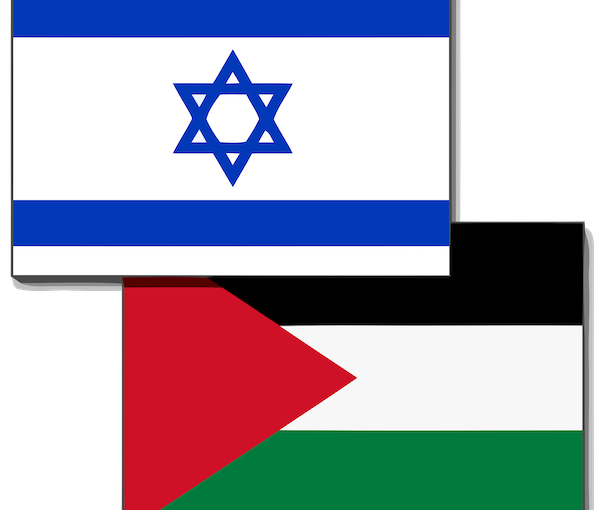
The Independent asked candidates we profiled two additional questions: “Will you (or won’t you) use your position as a platform to discuss international affairs, specifically Palestine and Israel?” and “If so, can you provide a brief explanation of your perspective on the subject?” (image from Wikipedia)

Civic politics generally deals with maintaining roads and sewers, reviewing development applications and a vast range of close-to-the-ground issues. But municipal politics has also been a place where a vast range of other issues are discussed. For example, Vancouver city council voted in 1983 to declare the city a “nuclear weapons free zone” and, formally or informally, members of council have felt free to address topics of national and global concern.

During debate around the city’s adoption of the International Holocaust Remembrance Alliance Working Definition of Antisemitism – which a majority of council voted to refer to committee, effectively defeating it – critics of the definition warned that it could place limits on the right to criticize Israel, despite that the definition explicitly states that it is legally non-binding. While the condemnation of antisemitism is not an international issue, examples accompanying the definition included several relating to anti-Zionism.

Because of the history of using civic positions as platforms for international issues, the Independent asked candidates we profiled two additional questions: “Will you (or won’t you) use your position as a platform to discuss international affairs, specifically Palestine and Israel?” and “If so, can you provide a brief explanation of your perspective on the subject?”

Christine Boyle, the incumbent Vancouver city councilor who voted to refer the IHRA issue to committee, said that commenting on international affairs is not generally part of the role of a city councilor.

“And there are so many important issues and struggles locally that continue to be the focus of my attention,” she said. “But my practice on any topic is to listen to and engage with communities most impacted on an issue, always seeking to uphold human rights, peace and justice.

“I have spent much of my adult life actively engaged in justice work, including opposing and challenging hate and discrimination, and working to strengthen the human rights of all people,” she continued. “I am deeply committed to challenging antisemitism and ensuring that Jewish residents in Vancouver feel safe at home, at worship, and everywhere.

“When a motion came to council asking Vancouver to adopt the IHRA Definition of Antisemitism, council received hundreds of emails on the subject, with a diverse range of perspectives on the topic,” said Boyle. “Even my own Jewish family members didn’t all agree on the issue. What I heard clearly from the community was that, while there wasn’t agreement on this definition, there was absolutely a need for the city to do more to address antisemitism and racism. And so council referred the definition to the City of Vancouver’s Racial and Cultural Equity Advisory Committee, with direction for staff to continue working vociferously to address antisemitism and other forms of racism and hate. Since then I have worked hard each budget cycle to ensure our anti-racism and anti-hate efforts are well funded and supported, and will continue that work.”

Vancouver council candidate Ken Charko told the Independent, “Yes, I would use my position as a city councilor as a platform to discuss international affairs [and] yes support of Israel will be part of that platform…. I support Canada moving its embassy to Jerusalem and recognizing it as the capital of Israel. I would use my position as a Vancouver city councilor and federal Conservative member to outline why Canada should do that under the next Conservative government.”

John Irwin, an incumbent member of the Vancouver Park Board, switched from the Coalition of Progressive Electors last election to Vision Vancouver this election because, he said, “There was a disagreement with COPE regarding their lack of acceptance of the IHRA definition of antisemitism (which was accepted by the Canadian government).”

He added: “As a local politician, I generally use my platform to discuss local issues.”

Carla Frenkel, also a candidate for the Vancouver Park Board, said simply: “I have no intention to use the role of park board commissioner as a platform for international affairs.”

Kyla Epstein, who is seeking a seat on the Vancouver School Board, said that, to her knowledge, international affairs do not regularly come up at the school board table, nor is it generally within the scope of the role of a trustee to take a position on international affairs.

“What I do know is that I bring to the role a deep commitment to human rights and an opposition to antisemitism, Islamophobia, anti-Palestinian racism, anti-Black racism, anti-Indigenous racism, and all forms of discrimination, racism and hatred,” she said. “In addition, my approach to governance is to listen, welcome different perspectives and reduce barriers for public and stakeholder participation – on any issue. I will fight to uphold a public education system that is a place of learning, curiosity and questioning. I will, no matter the issue that comes to the school board table, reach out to communities, listen and learn, and make my decisions to uphold human rights and equality.”

Ellison Mallin, running for council in the District of North Vancouver, said, “I am always discussing international issues with people, as, in this increasingly connected world, events that happen anywhere can affect us here.

“I do not intend to use any municipal specific platforms, or my position, to bring up Israel and Palestine, and will keep discussions on the subject to appropriate venues. I do recognize that, given my religion, there will likely be comments and questions directed to me, which I will not shy away from,” he said. “I strongly believe in Israel’s right to exist. A safe place for Jewish people to live and to foster Jewish identity and culture is needed. Perhaps, sadly, it is needed now more than ever, as we do see a rise in antisemitism in many areas. On that note, I do not deny Palestine’s right to exist, and believe a two-state solution is needed. I would also like to see Israel stop building settlements in the West Bank, as this further creates divides and hostilities.”

Jonathan Lerner, council candidate in Lantzville, said he does not see Middle Eastern affairs coming into play in Lantzville politics. But, he added: “Everyone familiar with my work will know that I am a strong advocate for respectful dialogue on these issues.

“Where I think municipal governments can play a larger role is in diversity, inclusion and anti-racism initiatives,” said Lerner. “Many communities, including the Jewish, Muslim and LGBTQ communities, have been targeted by an increase in hate crimes in Canada. Municipalities have a key role to play in addressing this issue. For example, governments of all levels are considering adoption of the International Holocaust Remembrance Alliance definition of antisemitism, as well as other racism classifications that help to define and address discrimination.”

Format ImagePosted on October 7, 2022October 5, 2022Author Pat JohnsonCategories LocalTags antisemitism, British Columbia, Carla Frenkel, Christine Boyle, elections, Ellison Mallin, IHRA, Israel, John Irwin, Jonathan Lerner, Ken Charko, Kyla Epstein, local government, Palestine, politics
Ballet BC set to start season

Ballet BC set to start season

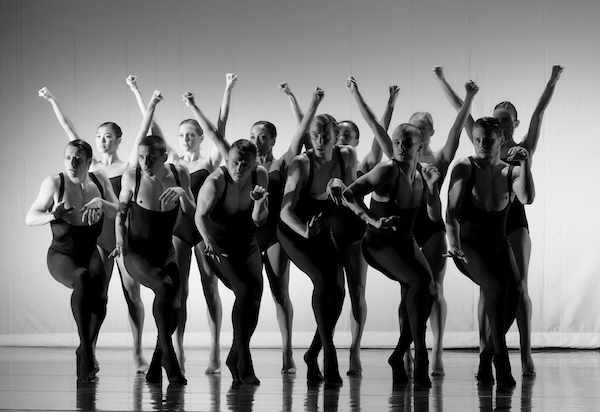
Artists of Ballet BC in a previous presentation of Bedroom Folk by Sharon Eyal and Gai Behar. (photo by Cindi Wicklund)

Ballet BC will share five new commissions as well as beloved audience favourites in its 2022/23 season. From emerging, locally based voices to renowned choreographers with deep connections to the company, and from intimate creations to large-scale ensemble works, there is much to explore.

The season opens Nov. 3-5 with Overture/s, featuring a world première from Dutch sibling duo Imre and Marne van Opstal, co-produced by Finland’s Tero Saarinen Company, the return of Bedroom Folk from Israeli choreographers Sharon Eyal and Gai Behar, and Silent Tides, a work by Ballet BC artistic director Medhi Walerski.

The season continues with Horizon/s March 16-18. Vancouver-based Shay Kuebler and Czech choreographer Jiří Pokorný will each share a world première, new works exploring dichotomies within the human body and mind. Israel’s Adi Salant – former co-artistic director of the Batsheva Dance Company – will be back to share WHICH/ONE, originally commissioned for Ballet BC in 2019. Salant’s work is anchored by a deep sense of presence, navigating between explosive physicality and delicate scarcity. Set to musical excerpts from A Chorus Line, in addition to an original soundscape, the piece highlights the entire company and explores contrasting themes of human performance and mundanity.

The final program of the season, Wave/s, runs May 11-13. It features two world premières from two of today’s top visionaries in contemporary dance. Tel Aviv-based Roy Assaf shares his debut creation for the Ballet BC stage and Sweden’s Johan Inger returns to share an all-new work following the success of Walking Mad and B.R.I.S.A.

Lastly, Ballet BC welcomes Royal Winnipeg Ballet’s Nutcracker back to the Queen Elizabeth Theatre Dec. 9-11.

For tickets to any of the season’s offerings, visit balletbc.com.

– From balletbc.com

Format ImagePosted on October 7, 2022October 5, 2022Author Ballet BCCategories Performing ArtsTags Adi Salant, Ballet BC, choreography, dance, Gai Behar, Israel, Nutcracker, Roy Assaf, Sharon Eyal
Welcomed in Kiryat Gat

Welcomed in Kiryat Gat

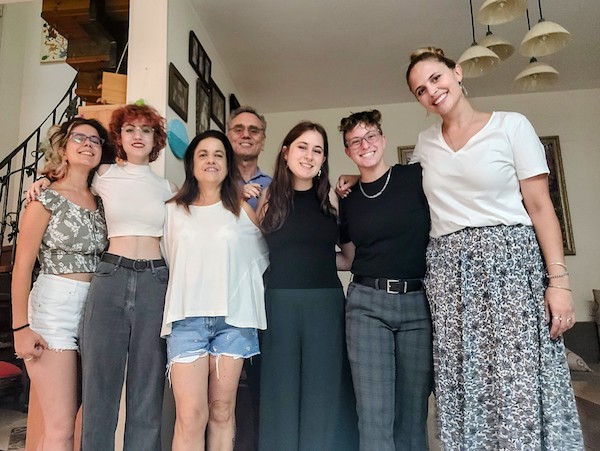
Laura Soda, right, with her host family, the Lipiks, and some of her MITF colleagues at Rosh Hashanah. (photo from Laura Soda)

Growing up as a Jewish young adult in White Rock, I always had mixed feelings about celebrating the High Holidays. On one hand, I enjoyed the traditions and the feeling of community that I experienced when we would go to services. However, early fall has always been a hectic and stressful time for our family as well. Aside from Rosh Hashanah and Yom Kippur, there was the beginning of a new school year, all four family birthdays falling within a month of one another and, finally, Thanksgiving. It’s a six-week family marathon.

During the High Holidays, I also was overwhelmed with the feeling of being the “token Jew” in every class. At the beginning of every school year, I dreaded having to approach the teacher and ask for time off so that I could observe holidays that most of my peers, and even some of my teachers, had never heard of. I almost had a sense of guilt, as if I were inventing holidays just to get out of class. All I wanted was to fit in and be like everybody else. And, in the White Rock of my childhood, there was little cultural, ethnic or religious diversity. There were two other Jewish kids at my school, but we rarely – if ever – acknowledged our mutual Jewish connection outside the context of Hebrew school, synagogue or youth group. It wasn’t that we were actively hiding our Jewishness; for me, I simply felt that any sign of difference was “uncool.”

I am currently on a 10-month program teaching English in Israel with Masa Israel Teaching Fellows (MITF). I am living in Kiryat Gat, a small, mostly religious up-and-coming city in the south of Israel. For the next 10 months, I will be teaching English to the children of the community in which I live. Most of the people here do not speak English, and I feel grateful to be in a place where I can help break language barriers and contribute to English language education. For me, however, it has been quite an adjustment.

With the challenges of settling into a new country, in a town where not many people speak English, I am overwhelmed by the tremendous sense of community and unity. Despite the inconvenience of the train and bus schedules around the holidays, it wasn’t just me being inconvenienced. For the first time in my life, I was in the same situation as everyone around me.

Recently, I celebrated my first Israeli Rosh Hashanah with a host family that I was connected to through the MITF program. The Lipik family welcomed my peers and I, quite literally, with open arms and have made us feel at home. My roommate and I walked to Rosh Hashanah services in the morning and passed many others doing the same. Suddenly, I realized that, although I had been prepared to feel like an outsider in a tight-knit community of people who were more religious than me, my Rosh Hashanah experience was so welcoming. I smiled at the children who listened to the shofar with wonder, and I was reminded that children are simply children, no matter where they live or what language they speak.

Later, we joined our host family at their backyard barbeque along with their extended family and friends, and we ate our hearts out as we basked in the smell of smokey chicken kebabs and toasted marshmallows for dessert. Throughout it all, it sunk in that, this year, I don’t have to explain myself. This year, it is my turn to learn – to watch and listen to how other Jews celebrate, being curious about the differences, but, more often, being surprised by the many similarities in our traditions. My first Rosh Hashanah in Israel taught me that although I am far from my home in Canada, I am exactly where I need to be – I feel right at home.

Laura Soda is currently on a 10-month program teaching English in Israel with Masa Israel Teaching Fellows. For more information on the MITF and other Masa programs, visit masaisrael.org.

Format ImagePosted on October 7, 2022October 5, 2022Author Laura SodaCategories Israel, LocalTags education, Israel, Judaism, Kiryat Gat, Masa Israel Teaching Fellows, memoir, MITF, teaching, White Rock

הבירוקרטיה מנצחת

הבירוקרטיה ממשיכה לנהל את החיים שלנו. חשבתי שסיימנו את הבעיות הביורוקרטיות אך הן ממשיכות לצוץ ולמרר את חיינו. הזכרתי בטור הקודם כי לאחר מותי אמי, אחי ואני נדרשנו לטפל בצוואת ההורים, אך לאור הבירוקרטיה הכל הפך למסובך

הזכרתי עוד כי לאור דרישות בלתי הגיוניות של בנק הפועלים בישראל שמחזיק בחשבון הבנק של הורי, נאלצתי בסוף חודש אוגוסט לטוס לסן פרנסיסקו, כדי להשיג אישור של הקונסוליה הישראלית שם של חתימתי. הפגישה בקונסוליה הממוקמת בבניין משרדים במרכז העסקים של סן פרנסיסקו, נקבעה ליום שלישי (23 באוגוסט) לפני הצהריים. נאמר לי מראש כי אסור לי להביא תיק, מחשב או טלפון, ולכן לקחתי את המסמכים במעטפה. אחרי שעברתי תשאול בטחוני ארוך המתנתי לתורי במשרד. כעבור מספר דקות סימנה לי הפקידה לגשת לדלפק שילדה. הצגתי בפניה חמישה מסמכים משפטיים (בהם זה שעבור הבנק). כל שעליה היה לעשות הוא לאשר שאני חתמתי עליהם. תכננתי לגשת לסניף של פדקס שנמצא בסמוך לקונסוליה לשלוח את המסמכים מהאושרים לאחי בישראל. לתדהמתי הפקידה בקונסוליה הודיעה לי כי הם יבדקו את המסמכים במשך חמישה ימי עבודה, ורק לאחר מכן אוכל לקבל. טענותי כי אני צריך את המסמכים בדחיפות ועל הקונסוליה מוטל רק לאשר את חתימתי, לא הועילו. המתנתי לבואה של סגנית הקונסול שבדקה שאני הוא אני (מול הדרכון הישראלי שלי ותעודת הזהות), ואישרה את חתימתי. שאלתי גם אותה מדוע אינני יכול לקבל את המסמכים המאושרים לידי, והיא הסבירה כי על הקונסוליה לבדוק אותם לעומק. לא עזרו כל תחנוני ונאלצתי לקבל את רוע הגזרה. לאור כך שילמתי לקונסוליה עבור בדיקת המסמכים ועבור המשלוח שלהם מסן פרנסיסקו לביתי בוונקובר. כך שהתנהלות הקונסוליה גרמה לי עיכוב בשליחת המסמכים החתומים לישראל והדבר היה כרוך גם בהוצאות כספיות נוספות

חזרתי לוונקובר ב-28 באוגוסט ושוחחתי עם בנו של אחי שגר בניו ג’רסי. גם הוא נאלץ לאשר את חתימתו מול הקונסוליה הישראלית. הוא בחר לעשות זאת בקונסוליה בניו יורק. לתדהמתי לאחר שחתימתו אושרה הוא קיבל את המסמכים בחזרה לידיו, ובניגוד לקונסוליה בסן פרנסיסקו, הקונסוליה בניו יורק לא החזיקה במסמכים במשך חמישה ימים. זה רק חיזק את הרגשתי שהקונסוליה הישראלית בסן פרנסיסקו פעלה שלא כשורה, ואסור היה לה לבדוק את המסמכים, אלה רק לאשר את חתימתי ולהחזירם אלי מייד

למחרת הגעתי בחזרה לוונקובר, קיבלתי את המעטפה מהקונסוליה הישראלית, בהם חמשת המסמכים החתומים על ידי, שאושרו על ידיה. הלכתי מדי לסניף של פקדס הקרוב לביתי ושלחתי את המסמכים בדואר אקספרס לאחי בישראל. נאמר לי כי בתוך ארבעה ימים (עד ה-31 בחודש) אחי יקבל את המעטפה במשרדו בירושלים. שילמתי על השירות “המיוחד” של פקדס מאה שבעים וחמישה דולר. במשך הימים הבאים בדקתי באתר של פדקס את התנהלות משלוח המעטפה מוונקובר לירושלים. נדהמתי לראות שפקדס עבודת בחוסר יעילות, שגרם לעיכוב במשלוח הדחוף של המעטפה אחי למעלה מחמישה ימים תמימים. המעטפה נשלחה על ידי פקדס משדה התעופה של ונקובר למרכז של פדקס בממפיס טנסי. משם הועברה המעטפה למרכז של פקדס באינדיאנפוליס אינדיאנה. לאחר מכן המעטפה נשלחה לאירופה והגיעה מרכז פקדס בשדה התעופה שארל דה גול פריז. משם היא הועברה למרכז פקדס בקלן שבגרמניה. רק בשבת בערב המעטפה נחתה סוף סוף בנמל התעופה בן גוריון והוחזקה במתקן פקדס עד יום שני בבוקר, עד שהועברה לאחי. כאמור הבירוקרטיה מנצחת ובגדול

Posted on September 21, 2022September 22, 2022Author Roni RachmaniCategories עניין בחדשותTags banks, bureaucracy, consulate, death, Israel, San Francisco, בירוקרטיה, בנקים, ישראל, מוות, סן פרנסיסקו, קונסוליה
Israel’s Christian fellowship

Israel’s Christian fellowship

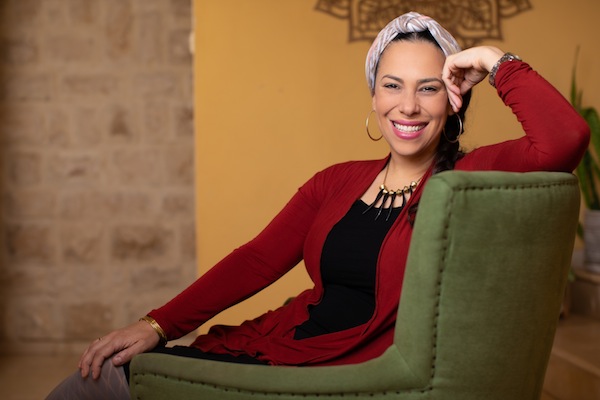
Yael Eckstein, president and chief executive officer of the International Fellowship of Christians and Jews. (photo from IFCJ)

Twice a year, the president and chief executive officer of the International Fellowship of Christians and Jews, Yael Eckstein, heads into Ukraine’s rural districts to visit elderly Holocaust survivors. Eckstein says she prefers to make the three-hour flight to Kyiv from her office in Jerusalem in the winter, when the temperatures in Ukraine have often plummeted, and country roads to small, out-of-the-way villages are overgrown with ice and snow and almost impassable. She knows that’s when these Jews, most of whom are in their 80s and 90s now, will need help most: when the summer’s vegetable harvest is almost gone and there’s no money by which to purchase food, when “it’s freezing, so freezing you can’t feel your fingers and there’s no heat” because there’s also no electricity.

For 18 years, Eckstein has been making this trek to connect with Ukraine’s most vulnerable Jews, those who survived the pogroms and Nazi exterminations in the 1930s and ’40s and are distrustful of their neighbours, so have lived self-sufficiently for decades. For many of these residents, Eckstein said, maintaining formal connections with local Jewish communities is viewed as a risk. “They don’t want to be on any lists of the Jewish community or of the synagogue, because they were the lists that Ukrainians used in order to find the Jews and kill them [during the Holocaust].” And so, for decades, they have done their best to live on what they can grow and preserve themselves.

“That’s a lot of hard, physical labour and work. When they get to 80 or 90 years old, suddenly they can’t do that any more. They can’t go chop wood [for their wood-burning stoves]. They can’t grow the vegetables,” said Eckstein. And they can’t haul enough water from the well ahead of winter to store in their kitchens when it’s icy, “so it leaves them literally starving, without heat and water.”

This past winter, those needs became even more pressing. The IFCJ was already networking with the country’s many small Jewish communities when Russia began amassing its forces at the Ukrainian border. About 200,000 Jews in the former Soviet Union were receiving humanitarian aid, including life-saving aliyah to Israel. A war could further jeopardize Ukraine’s most vulnerable residents.

“Around four days before the war broke out in Ukraine, I flew into Kyiv and assessed the needs on the ground,” said Eckstein. “When I got back [to Israel] the first thing I did was [give] a $1 million emergency preparedness grant to Jewish communities across Ukraine.” She urged them to use the money to buy canned food, mattresses and other emergency supplies in case war broke out. Eckstein said they also connected with major charities in Ukraine, to formulate a broader plan for helping Jewish refugees displaced by the conflict.

As a Jewish philanthropy organization whose success is largely driven by Christian donors, the IFCJ holds a unique role in garnering support for Israel and Jewish causes. It remains one of the largest pro-Israel charities in the world and its data show that it has raised more than $2.6 billion US for Israeli and Jewish causes since its inception in 1983. Since this February, the organization has contributed more than $6 million in aid to Ukrainian Jewish communities, with $1.5 million coming through its Canadian affiliate, the IFCJ Canada.

When it comes to raising funds and support for aliyah, the IFCJ is a powerhouse. In 2021, it brought more than 5,500 olim (immigrants) to Israel. Another 4,000 were resettled this year, including 38 Holocaust survivors who got to Moldova on stretchers. The cost of the transportation to Israel and medical treatment were paid for by the IFCJ, “but the second they landed in Israel, the Israeli government took full responsibility,” said Eckstein.

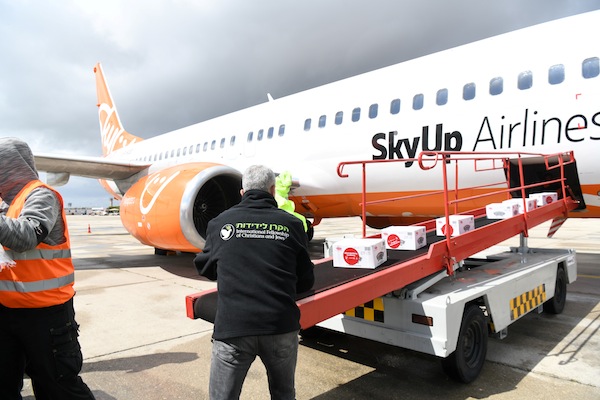
But, as stated, aliyah isn’t the only way that the IFCJ has provided aid to Ukrainian Jews. In February, the Moldovan government opened its airspace so that the IFCJ could land a plane carrying 15 tons of supplies for Ukrainian refugees displaced by the conflict.

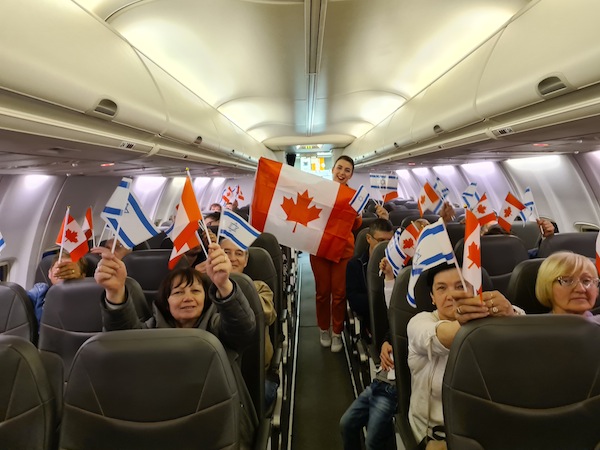
“We off-loaded the 15 tons of humanitarian aid to our partners on the ground to drive it to [refugees] inside of Ukraine and then we loaded the plane with 180 Jewish refugees who were making aliyah and flew them to Israel. When we had enough olim to fill two flights, we immediately flew two flights,” Eckstein said.

photo - Partnering with other Jewish aid organizations has been key to the International Fellowship of Christians and Jews’ efforts to provide aid for Ukraine refugees
Partnering with other Jewish aid organizations has been key to the International Fellowship of Christians and Jews’ efforts to provide aid for Ukraine refugees. (photo by Jhanelle Alleyne / IFCJ)

Partnerships are key to the success of many of IFCJ’s programs, especially to getting food and clothing to those in need. “We gave the [Joint Distribution Committee (JDC)] and Chabad, for example, millions of dollars. The IFCJ often works with the Jewish Agency in Israel, as well. We create the criteria and the program and they are able to implement it on the ground,” explained Eckstein. “[In] areas like Moldova, when there’s no one else who is able to do it, the fellowship creates the programmatic ability and implements the life-saving plans” that are then carried out by partners.

The IFCJ (initially called the Holyland Fellowship of Christians and Jews) was launched in 1983 by Yael Eckstein’s father, the late Rabbi Yechiel Eckstein. According to the organization’s website, its mission was “to fulfil his vision of building bridges of understanding and cooperation between Christians and Jews,” a focus that was reflected in the rabbi’s writings, speeches and broadcasts. In 1990, with the collapse of the Soviet Union, the fellowship launched its On Wings of Eagles program to fund the transport of Soviet Jews to Israel.

In 2003, the fellowship’s sister organization, IFCJ Canada, was launched to connect with Canadian donors. It contributes to a variety of global humanitarian programs.

“In regard to aliyah,” said IFCJ Canada executive director Jackie Gotwalt, “we work on the ground with local partners providing support and resources for newly landed olim to help them start their new lives in the Holy Land.”

photo - The International Fellowship of Christians and Jews chartered planes and facilitated the aliyah of thousands of Jews this year
The International Fellowship of Christians and Jews chartered planes and facilitated the aliyah of thousands of Jews this year. (photo by Jhanelle Alleyne / IFCJ)

Since 2003, the Canadian organization has raised more than $120 million from its largely Christian donorship, which goes both to supporting aliyah and humanitarian aid in the former Soviet Union and other countries with at-risk Jewish populations, such as Ethiopia, Venezuela and, recently, France.

“The IFCJ focuses on support from Christian friends of the Jewish people to further efforts we support to address the humanitarian crisis in Ukraine and in bordering countries and, in particular, assist members of the Jewish community caught in this tragic conflict,” Steven Shulman said.

Shulman serves as the president and chief executive officer of Jewish Federations of Canada-UIA, which ensures direction and control of charitable funds raised by Jewish federations throughout Canada. He said the Jewish federations across Canada and IFCJ fundraise independently, though they both work with the Jewish Agency and the American JDC to further the same goals, which are to facilitate aliyah for those who request it and provide humanitarian aid to Jewish communities in the region.

Eckstein said there are many reasons why their Christian donorship contributes to the IFCJ, but at the core is a sense of obligation and a belief that they are doing their part to help Israel stay strong.

“It’s really biblical. Protestant and Evangelical Christians are mostly our donor base. What makes them unique from the other streams of Christianity is that they put a big focus on the Torah. They read the Tanach, what they call the Old Testament,” which places an emphasis on helping the Jewish people return to Israel, Eckstein explained.

“What I’ve seen in the past 18 years of working with Christian friends of Israel is they feel so lucky to be able to play a small part in both saving Jewish lives who [they feel] have been forgotten, neglected [or] persecuted by [others]. [The fact that] now, as Christians, they are able to help them, is something they feel [is] an opportunity and privilege.”

Jan Lee is an award-winning editorial writer whose articles and op-eds have been published in B’nai B’rith Magazine, Voices of Conservative and Masorti Judaism and Baltimore Jewish Times, as well as a number of business, environmental and travel publications. Her blog can be found at multiculturaljew.polestarpassages.com.

Format ImagePosted on September 16, 2022September 14, 2022Author Jan LeeCategories WorldTags Canada, fundraising, IFCJ, International Fellowship of Christians and Jews, Israel, Jewish Federations of Canada-UIA, philanthropy, Steven Shulman, Yael Eckstein

Extremism not helpful

Over the Labour Day weekend, while many Canadians were soaking up the declining rays of summer or doing last-minute back-to-school shopping, Middle East politics eclipsed everything else – well, for those of us who track these things closely, which, it turns out includes Jagmeet Singh, leader of Canada’s New Democratic Party.

In fairness, it is not clear when Singh hit send on an email that made the rounds over the holiday weekend. But the contents led the Centre for Israel and Jewish Affairs to send out not one but two urgent emails on the issue, both of which included the word “outraged” in the subject line.

And “outrage” is a fair reaction to the contents of Singh’s missive.

“We believe Israel’s illegal occupation of the Palestinian territories is at the centre of the challenges facing the Palestinian and Israeli people,” wrote Singh. This essentialist view ignores the reality that the occupation continues due to a complex interplay between anti-Israel terrorism, a lack of political will, and intractability around a two-state solution or some other coexistence plan that would lead to greater peace, which includes a lack of willingness to coexist from factions on both sides of the conflict.

“We all want to see a future where Israelis and Palestinians can live side by side, in peace,” Singh writes. But then he goes on to outline a list of grievances that places responsibility only on Israelis and which, therefore, is unlikely to do anything to realize such a future.

The demands include that the Canadian government increase funding to the United Nations Relief and Works Agency, “which supports Palestinian refugees.” The letter makes no reference to the controversial nature of UNRWA’s definition of refugees, which has refugee status passing down generations, thereby continually increasing their number, perpetuating rather than ameliorating the problem. Nor does the NDP letter mention the organization’s Palestinian education curriculum, which contains antisemitic elements that directly impede any progress towards peace in the region; allegations of corruption and mismanagement of the agency; and even UNWRA’s witting or unwitting aid of the terrorist group Hamas, with tunnels reportedly being found under UNRWA schools and rockets stored on their premises. Instead, the letter calls on Canada to “condemn the Israeli government’s attacks on civil society in Israel and Palestine, including the recent designation of six Palestinian human rights groups as ‘terrorist.’”

There are wishes for “peace in Israel and Palestine” in the NDP letter, but the lack of peace is blamed solely on one side, without acknowledging the violence and harms inflicted on Israelis. The fundamental fact of the issue is that no blatantly one-sided position will make things better for either Palestinians or Israelis and any position that places all the blame on one side will not lead to a resolution. Such a stance will only perpetuate conflict. Peace and coexistence in that region will depend on compromise on both sides.

In the larger scheme of world events, an imbalanced missive from the leader of a Canadian political party is largely irrelevant. Singh’s catalogue of blame will move the dial in Israel and Palestine not an inch. What it does is inflame the issue here at home and reinforce the trend in Canadian politics that sees this issue as a political football. At the same time as there are legitimate and important critiques of Israel’s behaviour and treatment of Palestinians, particularly those under occupation, Jewish self-determination should not be anyone’s campaign talking point.

There is a lesson here for those who support Israel, too. There is a strain that sees Israel supporters as more moral, more fair and more realistic than the activists who march against “apartheid,” “genocide” and what Palestinian leader Mahmoud Abbas recently called “50 holocausts” against Palestinians. However, the incessant and dishonourable contesting of the very existence of Palestinian people – if you haven’t seen it, you’re not on Jewish social media – does nothing to advance the cause of Jewish self-determination or end the human suffering or move anyone towards peace.

Extremism is not a Canadian value, nor a Jewish one  – and it will not result in an end to the Israeli-Palestinian conflict. Nor will it solve any of the countless challenges we are facing around the world. We need to resist the attraction of simplistic solutions to complex human problems. We need to do, think and behave better. And we need to demand that our leaders to do so, as well.

Posted on September 16, 2022September 14, 2022Author The Editorial BoardCategories From the JITags extremism, Israel, Israeli-Palestinian conflict, Jagmeet Singh, NDP, Palestine, peace
Photographic chronicle

Photographic chronicle

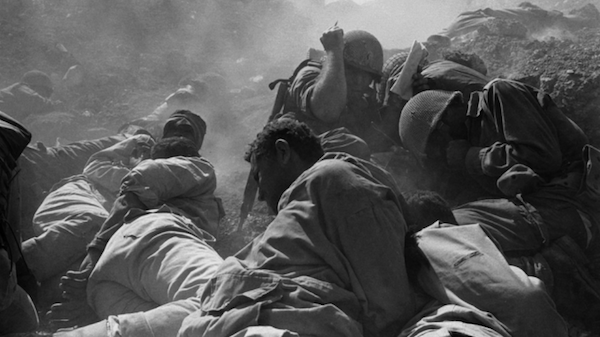
Image from 1341 Frames of Love and War, a photo by Micha Bar-Am.

Photographer Micha Bar-Am, now 92, is considered perhaps the foremost visual chronicler of Israeli history. In 1341 Frames of Love and War, filmmaker Ran Tal creates what amounts to a family reminiscence among Bar-Am, his wife Orna and sons Barak and Nimrod, complete with snippy retorts and full-throated arguments. All of this is set against thousands of Bar-Am’s photos, creating a barrage to the senses of blown-up buses, dancing hippies, funerals and the scope of Israeli life captured in still photos. The family, whose voices make up the narration of the documentary, are seen only in the pictures.

Although Bar-Am was present to immortalize in images the Eichmann trial and the liberation of the Western Wall, his work is mostly of ordinary Israeli people and events, including war, which has been all too “ordinary” for the country and its people. The photos predictably begin in black-and-white – the first colour photo in the film appears during the 1967 war, perhaps not merely a sign of changing technology but also of the before and after times of the occupation.

A photo from the time – an image Bar-Am captured of a soldier praying at the newly liberated Kotel – is a prism through which Micha and Orna chronicle their own changing views of their country. The soldier had fashioned an ammunition belt into a makeshift prayer shawl. Orna explains how they loved the photo at first, apparently as a symbol of resistance and survival. After a few years, they came to detest it as a representation of the connection between religion and power. Now, in their later years, they are agnostic about the thing.

“That’s how it was then,” Orna says. “We don’t have to feel love or hate toward it. That’s how it was.”

Bar-Am acknowledges that he was a shy young man and the camera was an excuse to get closer to things, to understand people better. Through his eyes, and the immortality of his images, Israelis and others can perhaps view themselves and the world around them more closely.

The film is an intimate exploration into the work of a legendary craftsman and, through him, a snapshot into the past.

For the full film festival schedule, visit viff.org.

Format ImagePosted on September 16, 2022September 16, 2022Author Pat JohnsonCategories TV & FilmTags history, Israel, Micha Bar-Am, photography, Vancouver International Film Festival, VIFF
Masa Canada visits the coast

Masa Canada visits the coast

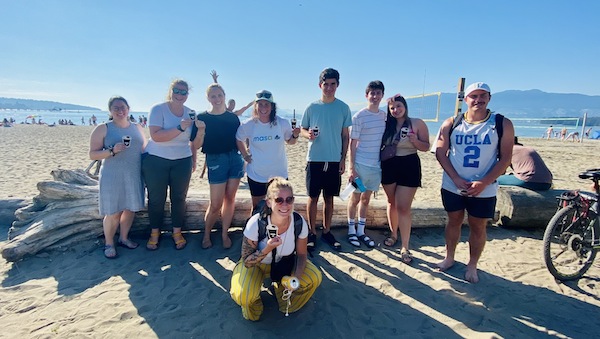
Mahla Finkleman, Canadian national manager of partnership and outreach for Masa Israel Journey (standing, fourth from the left), at Kits Beach in July with participants of the Shalom U’Lhitraot event. (photo from Masa Canada)

While the skies were closed for the first waves of the pandemic, with many organizations canceling their Israel trips, Masa Israel Journey saw an increase of almost 40% of North American students and young professionals traveling to Israel to partake in immersive four-to-10-month programs.

Since its establishment in 2004 by the Jewish Agency and the government of Israel, Masa has served more than 180,000 Jewish students and young professionals ages 16 to 35, from more than 60 countries. Offering experiences in gap, academic and career segments, Masa provides an unmediated and challenging journey into Israeli society, culture, politics and history, as well as access for global Jewry to Israeli businesses, social enterprises and academic institutions. Masa strengthens the Jewish leadership pipeline through the Impact and Leadership Centre, based in Jerusalem. When fellows return from Israel, they are ready to engage as active members in their community and many take on leadership roles.

Masa has regained a strong presence in Canada, with a new Canadian national manager of partnership and outreach, Mahla Finkleman, who sits within the Federation of Greater Toronto, and visits communities across the country. Since Finkleman started just over one year ago, Masa has sent more Canadians than ever before to Israel on programs.

This past summer, working from Vancouver, Finkleman partnered with the Community Kollel for a Shabbat dinner for Tu b’Av. Some 60 to 70 young professionals, including many Birthright alumni, gathered to learn about Masa opportunities and ways to get back to Israel for a meaningful experience, living like a local.

Earlier in the summer, in July, the first of three Shalom U’Lhitraot events took place, welcoming back Masa alumni from Israel and sending off others to Tel Aviv University, Masa Israel Teaching Fellows (MITF) and other programs.

A new condensed version of MITF is available now. MITF is an option for 21-to-35-year olds who have a bachelor’s or associate degree and whose mother tongue is English. Applications are due Nov. 1, with three city options to choose from: Rishon LeZion, Bat Yam and Ramle. The program, which costs $720 US, runs in 2023 from Jan. 5 to July 2, and is an exclusive partnership with Israel Experience.

Each city offers its own unique charm. In Bat Yam, you can take surf lessons and deep dive into the Israeli-Russian community. Rishon is Israel’s fourth largest city, with malls, parks, beaches and a zoo. And, in Ramle, an ancient city with mixed cultures and a rich history, the Pool of Arches is a top attraction, as is the Ramle market – additional perks are the spacious homes and a pool pass.

For more information, visit masaisrael.org/canada or the North American site, masaisrael.org. Anyone who has questions can also email Finkleman directly at [email protected].

This Rosh Hashanah, look out for Masa alumni postcards on the seats of your local Vancouver shul.

Format ImagePosted on September 16, 2022September 14, 2022Author Masa CanadaCategories Israel, NationalTags Canada, education, Israel, leadership, Mahla Finkleman, Masa Canada

Solace in accomplishments

When I assess all the positive things that Jews have contributed to humanity, and contrast that with the treatment my people have undergone as recompense, I am at a loss.

Jews conceived a supreme being responsible for the creation of the material world. They also saw that this being insisted on moral laws to be obeyed by the humans He brought into being to be masters of the planet He had peopled. The Jews believed that this unitary deity, replacing the multiplicity of single-purpose idols and demigods, would reward the righteous who obeyed His laws with a future beyond the grave that all humans face. They also hoped these laws would make it easier for humans to live together in peace. The ideas were so powerful that, even though they were transmuted and altered through Christianity and Islam, they ultimately captured the hearts of millions and, today, billions.

In its early days, as they struggled for wider support, the Jewish followers of Jesus, and some of those they recruited, altered some of the tenets of Jewish observance and deified their leader. Further, the church established in Jesus’s name adopted the New Testament, which they established to replace the Hebrew Bible, containing the assertion, not borne out by available historical record, that his fellow Jews killed Jesus.

With the ultimate success of the new church, Jews have faced millennia of murder, forced conversion, exclusion and persecution from Christianity’s adherents. And Islam followed suit in condemnation because Jews would not accept their version of the story Jews had been telling.

Out of this crucible of trial by fire and sword, hate and exclusion, remnants have survived over the centuries, since most Jews left their native lands. Treated as strangers everywhere they ended up, they maintained a culture that has bred individuals of extraordinary talent, wisdom and ingenuity out of all proportion to their numbers.

When Jews were at last liberated from the restrictions placed upon them by various rulers of various lands, the contribution that Jews began to make to the welfare of their communities exploded across the whole range of human activity. Yet, hatred of Jews, official and random, remains a fact of life nearly everywhere.

As a youngster, I grew up in Canada, in a time when there were places in which Jews could not buy property. There were jobs from which Jews were excluded. There were courses in university where enrolment of Jews was limited.

One of my childhood acquaintances, the product of a Jamaican father and a German mother, lived in similar circumstance to ourselves, in an area on the edge of being a slum. We often spoke of our aspirations for future advancement. He had a talent for drawing. If I had a talent for anything, it was not obvious.

 Almost a lifetime later, we reengaged and had a number of debates. When I mentioned some of the contributions Jews had made to humanity, making particular reference to recent discoveries made by scientists in Israel, they appeared of little significance to him. He cautioned me about being too tribal, indicating that national origins were irrelevant. Then, he stated that the creation of Israel had been a world blunder.

The contributions being made in Israel dispute that point. That it exists at all is a miracle. The current rallying of nations around the world to support Ukraine was not in evidence when Israel confronted the armies of seven invading Arab countries, in addition to internal terrorism, at the time of its birth in 1948.

An arid country, Israel converts seawater to freshwater with solar power. That solar power fills much of its energy needs, as it lacks natural resources. It is a pioneer in agricultural techniques that it markets to the world to conserve water.

It commits one of the highest percentages of the national budget to research and development, funding medical and technological advances that are being used around the world. Its medical advances have enabled people who couldn’t, for whatever reason, to walk, to hear or to see. It used its entire population to identify the best methods for preventing the spread of COVID-19.

No emergency anywhere in the world lacks an Israeli team if their aid is welcome, and they are often the first on the scene to save lives. It has one of the highest patent applications per million people in the world.

And Israel is a haven for any Jew in distress around the world. Its initial Jewish population was 800,000. After almost 75 years, it is more than six million, in a country of more than nine million, most of the balance being Arabs with citizenship.

Yet, some, even many, consider all this a blunder! And, as Jews, we face challenges to our safety and survival wherever we are located.

The outsize contributions made by Jews in every field, out of all proportion to their numbers, is a matter of public record. The explanation for it is puzzling. My conclusion centres on the nature of the Jewish community in the diaspora and in the Israeli national consciousness.

Communities in the diaspora inherited their format, as dictated by religious authorities in ancient Israel. Each community was responsible for meeting the needs all its inhabitants, children’s education and care for the poor included. This was reenforced in the diaspora by hostile surroundings, with internal literacy and educational priorities being in stark contrast to what existed in environments around them.

Most importantly, I believe, was a sense of common destiny, each Jew knowingly accepting responsibility for the welfare of one’s fellows. I believe that, when Jews entered the wider world, this individual consciousness was transmuted into a drive to be of service to the public as a whole. And these feelings dictated the choice of careers and the values of Jewish entrepreneurs. The community priority on education did the rest in the pursuit of excellence.

The wrongs of the past, it seems, will not be righted. We must earn our satisfactions from our accomplishments.

Max Roytenberg is a Vancouver-based poet, writer and blogger. His book Hero in My Own Eyes: Tripping a Life Fantastic is available from Amazon and other online booksellers.

Posted on September 16, 2022September 14, 2022Author Max RoytenbergCategories Op-EdTags antisemitism, Israel
Some basics of goalball

Some basics of goalball

This past summer, Israel’s male youth goalball team won the European ParaYouth Games. (photo by  Lilach Weiss)

Can you imagine a sporting event in which the audience sits in silence? Well, this is how goalball is played. Why? So that the visually challenged players can hear the bells inside the game ball.

And, speaking of the ball, it differs quite a bit from a soccer ball. In addition to having eight small holes in it – which allow the players to hear the two bells inside of it – the hard rubber ball is approximately 76 centimetres in circumference and weighs 1.25 kilograms. By contrast, a standard soccer ball has a circumference of 68 to 70 centimetres and weighs significantly less, between 400 and 450 grams.

To ensure fair competition, goalball participants must wear opaque eye shades. All international athletes must be legally blind, meaning they have less than 10% vision and are classified as B3 (partial sight), B2 (less sight than B2) or B1 (totally blind).

The goalball court has slightly raised markings so each player knows where their post is and the game is played indoors on a court measuring 18 metres long and nine metres wide, usually with short walls to help keep the ball inside. Again, this is different from soccer, which is played on a field that is 125 metres by 85 metres.

Each game is broken down into two 12-minute sessions with a three-minute break between the first and second halves. There are six players on a goalball team, with just three members playing at any one time.

Each goalball player has a specific job. The centre is the most responsible for defence, as they have the ability to support the left or right wing. The right winger defends the right-hand side of the goal and the left winger the left, but both are also main attacking players. The objective, as with most such games, is to score the most goals.

The team area is the first defence section, which starts from the goal line. In this area, defenders are allowed to block and control the ball to stop it from entering the goal.

The landing area starts at the end of the defence line. In this section, the attacking player can move around to take a shot at the opposing goal. The neutral areas are safe zones that provide space for defending teams to hear the ball coming towards them.

Here is how the game is played in a few situations. When the defending team blocks the ball, thus preventing a goal, the game continues. When the ball is blocked and then crosses the sideline, the play is restarted by the team that blocked the ball. When the ball is thrown over the sideline, the other team restarts the game.

Players protect the goal on their hands and knees. Unlike in soccer, the ball is not kicked, it is thrown from either a standing position underarm, or rolled. To reduce the sound and make it difficult for the opponents, players try to release the ball close to the floor. They can also make the ball quieter by spinning it. The team is given a foul if their player doesn’t throw the ball within 10 seconds of touching it.

Blind soccer, another sport played by visually challenged players, differs from goalball in several ways. For instance, while players in both games wear eye covers, players in blind soccer chase the ball in an upright position. Blind soccer halves are longer, at 20 or 25 minutes, and, in blind soccer, each team has five players on the pitch at any time, four outfield players who are visually impaired and a goalkeeper – who need not be visually challenged.

Israeli goalball coach Raz Shoham said most of the injuries in the game come from over-use of the body and not from being hit by the ball. In Israel, players’ free time is limited by the fact that almost all of them work or study.

photo - Goalball player Lihi Ben David in action at the Toyko Paralympic Games in 2020
Goalball player Lihi Ben David in action at the Toyko Paralympic Games in 2020. (photo by Keren Isaacson)

Before each practice, there is a 40-minute warmup session in which players exercise their torso, hands and legs. Practices are held on Thursdays and Fridays in four locations: Beer Sheva, Jerusalem, Tel Aviv and Afula. Men and boys practise mostly in Afula, while the women practise mostly in Jerusalem. Practice times are a function of when the sports auditorium is available.

Traveling can sometimes be an issue. Shoham explained that a strong player showed up at the team’s summer camp and wanted to continue playing after the summer ended, but there was a problem getting her from her village to practices. On the other hand, sometimes players leave the sport for a stretch of time and then return. Take Orel, who started playing while still in elementary school, left for a few years and now, at the age of 15, is a key player on the male youth team.

According to Shoham, goalball players range in age. At the moment, the oldest person who comes out to play is a 65-year-old grandmother. Currently, on the official playing teams, the oldest player is 35. The official team players get a few thousand shekels for playing, but it is not like regular soccer, in which team members frequently earn high salaries.

Israeli goalball players are expected to attend some 25 practices a month. And there have been good results from the hard work. Just this past summer, Israel’s male youth goalball team – players Asad Mahamid, Doron Hodeda, Shai Avni, Ariel Alfasi and Orel Ybarkan – won the European ParaYouth Games.

Coach Snir Cohen knew before the tournament that he had good players, but said he just didn’t know how good. His goal is developing this youth team into a strong adult team.

Nineteen-year-old player Lihi Ben David, who plays left wing, spoke with the Independent about her recent training experience in Brazil. The cost of the trip was largely covered by the Israel Sports Association for the Disabled (ISAD). The Israeli and Brazilian players conversed in English. She said it was refreshing to learn about a different culture. The hard part for Ben David, who is an observant Jew, was playing during the nine mourning days of the Hebrew month of Av.

Deborah Rubin Fields is an Israel-based features writer. She is also the author of Take a Peek Inside: A Child’s Guide to Radiology Exams, published in English, Hebrew and Arabic.

Format ImagePosted on September 16, 2022September 14, 2022Author Deborah Rubin FieldsCategories IsraelTags goalball, inclusion, Israel, Raz Shoham, sports

Posts pagination

Previous page Page 1 … Page 29 Page 30 Page 31 … Page 111 Next page
Proudly powered by WordPress