Skip to content
  • Home
  • Subscribe / donate
  • Events calendar
  • Business Directory
  • FAQ
  • News
    • Local
    • National
    • Israel
    • World
    • עניין בחדשות
      A roundup of news in Canada and further afield, in Hebrew.
  • Opinion
    • From the JI
    • Op-Ed
  • Arts & Culture
    • Performing Arts
    • Music
    • Books
    • Visual Arts
    • TV & Film
  • Life
    • Celebrating the Holidays
    • Travel
    • The Daily Snooze
      Cartoons by Jacob Samuel
    • Mystery Photo
      Help the JI and JMABC fill in the gaps in our archives.
  • Community Links
    • Organizations, Etc.
    • Other News Sources & Blogs
  • JI Chai Celebration
  • JI@88! video

Recent Posts

  • Federation now across BC
  • Israel fighting for its existence
  • Deal strengthens Iran
  • Patriotic belonging diminishes
  • A campaign to engage
  • Upstanders’ first live event
  • Responding to Carney
  • Having your own home
  • Music a family tradition
  • Musical to warm heart
  • Community milestones … June 2026
  • Sharing her passion for Israel
  • Or Shalom reopens its doors
  • JFS from past to future
  • Need holistic approach
  • Sharing stories, advice
  • Journalist shares fears
  • Skills to live together
  • Road to independence
  • Cutting grass with scissors
  • Zionism as a solution
  • Deceit, desire & the divine
  • Reclaiming sacredness
  • Creative project ideas
  • Summer squares and cobbler
  • Thou shalt … summer commandments
  • Legal help for students
  • Revisiting myth of Lilith
  • Wrong person rebuked
  • Canada’s mixed messages
  • Questions for museum
  • Symposium on antizionism
  • Making soccer political
  • CJPAC lauds Pulver’s impact
  • City recognizes Vrba’s legacy  
  • Organ donation saves lives

Archives

Follow @JewishIndie
image - The CJN - Visit Us Banner - 300x600 - 101625

Tag: Israel

Pondering peace post-Oct. 7

Pondering peace post-Oct. 7

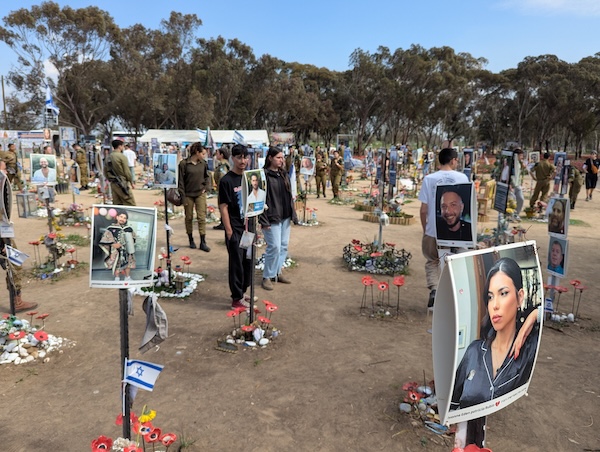
Commemorations of individuals murdered at the Nova festival. (photo by Pat Johnson)

Since I returned home to Vancouver from Israel a few weeks ago, it has taken me time to write about my reflections. There’s the usual getting over jetlag, catching up with work, dealing with the odds and ends that pile up after a five-week absence. I have also experienced a degree of avoidance. In some ways, there is so much to say I don’t know where to begin. In other ways, what can I possibly say that hasn’t been said before?

Unlike Israelis, I have had the luxury of putting my head in the sand, to some extent, in the days since I returned to my ridiculously quiet suburban home. My experiences – including a visit to the Gaza Envelope, Kibbutz Re’im and the Nova festival site, and conversations with scores of Israelis – have been percolating. In recent days, I have been immersed in video testimonies and other reports from survivors of the Oct. 7 attacks. 

One of the reasons I have avoided writing so far, I think, is that the parallel I feel compelled to make is one that I hate to invoke. I intentionally avoid making comparisons with the Holocaust, as almost any contrast cheapens the sanctity of that event’s memory. It also is unavoidably an exaggeration – nothing can compare to the Holocaust. And so, we should not be in the business of raising false equivalencies.

But not everyone subscribes to my hesitancy. More than one Israeli I spoke to referred to Kibbutz Be’eri as “Auschwitz.”

Although I was guided around the sites of the Oct. 7 atrocities by a senior Israeli military official, we were denied entry to Be’eri, which came as a relief. I didn’t want to make the choice not to go in, but I was glad that decision was made for me.

I had to ask myself – as other people asked me – why I was compelled to visit these places in the first place? I had not, for example, taken the opportunity to watch the footage that screened in Vancouver last year of the most terrible carnage from Oct. 7. I believed that I knew enough of what happened that I did not need to be exposed to the images so graphically. (There are people, on the other hand, who I think should be forced to watch such footage.)

I could say no to the video but, in Israel, I felt an obligation to bear witness in what small way I could by visiting the Nova festival site and other locations, including Highway 232. My guide, who was among the first on the scene during the morning of Oct. 7, provided (as you can imagine) a jarring play-by-play of what he witnessed, saw, heard and smelled that day.

As I watch documentaries and continue to read about the events, and hear from eyewitnesses, including those who defended their kibbutzim, and military personnel who were among the first on the scene, it is almost impossible for the mind not to go to historical parallels.

I hear stories of people pretending to be dead for hours while murderous attackers surrounded them. Testimony recounts the nonchalant murder of the elderly, babies, anyone and everyone the terrorists could kill – as   well as the collaboration of “ordinary” civilians.

The ripping apart of families. Parents shielding their children from gunshots. Families huddling as they are engulfed in flames. Survivors’ stories of screams still ringing in their ears. Jews recalling what they were sure were the last moments of their life. Acts of brutality that defy human imagination. Sadistic jubilation while perpetrating acts that make most people recoil. Residents of a village reconnoitring after the catastrophe to determine who remains alive.

The parallels are, to me at least, unavoidable.

There is, of course, a quantitative chasm between this modern horror and that of the Shoah. It is this difference that also makes comparisons so incredibly problematic. But it is the qualitative experiences, the grotesque similarities between Nazi atrocities and those of Hamas, that force the mind to go in that direction.

While visiting Jerusalem, I stumbled upon a pathway that begins at Yad Vashem, the Holocaust memorial museum and research centre, and winds through the military cemeteries in which the casualties of Israel’s successive defensive wars and endless terror attacks are buried, as are most of the country’s prime ministers, presidents and other leading figures. The pathway ends at the tomb of Theodor Herzl, the man most credited with making real the dream of a Jewish state, and adjacent to the museum that tells his life story.

The message here is that, from the moral abyss of the Holocaust to the sustaining of national self-determination as envisioned by Herzl, the path has had an unimaginable human cost.

The promise of the state of Israel, in Herzl’s mind, was that a people who were no longer stateless would not be subject to the predations of their brutalizing neighbours. Like so much else Herzl envisioned – he imagined that Jews would be welcomed for the positive contributions they bring to the region – a state has not ushered in the lasting peace for which he had hoped.

photo - An empty Shabbat table set for missing loved ones at Hostages Square in Tel Aviv
An empty Shabbat table set for missing loved ones at Hostages Square in Tel Aviv.  (photo by Pat Johnson)

We have known this since the moment Israel’s independence was declared and the new country was immediately invaded by the massed armies of its neighbouring countries. The Arab states unanimously rejected coexistence and soon Jews from across the Middle East and North Africa were expelled or otherwise forced to flee, most finding a home in the new Jewish state. The Arabs who were not within Israel’s border at the time of the 1949 ceasefire – and their generations of descendants – have been held as stateless people ever since in one of history’s most cynical acts.

What is still able to shock, even in a world where we have become inured to inhumanity, is that there are people who experience joy at Jewish death and thrill at the opportunity to torture, terrorize and kill Jews. A state has not removed that possibility from the world.

If there was one single objective for the existence of a Jewish state, this was it: the basic security of the Jewish person. On Oct. 7, that promise was broken. 

While many Israelis told me that Oct. 7 demonstrated that coexistence with Palestinians is impossible, other people told me that it merely made them redouble their commitment to building a future of peace and coexistence. If I went back to those who said Oct. 7 taught us to work harder for peace with Palestinians, would they see a cognitive dissonance in my position as I do with theirs?

If the existence of a Jewish state cannot prevent the most basic thing it was created to realize, is the entire enterprise a failure?

A Jewish state does not guarantee, obviously, that Jews will not still and again experience the atrocities that have befallen them historically. It is, nevertheless, the best defence, however imperfect.

The Israelis who told me they must work harder for peace believe that, when our ideal falls short, rather than give up, we have to do more to attain it. For them, that means doubling down on peace activism. I admire their idealism.

For me, any realistic plan for peace is worthy of consideration. But I will also double down and say that the answer to a Jewish state that fails to live up to its core mission of keeping Jewish people from reliving the horrors of the past is also not to give up – but to continue building a Jewish state that is impermeable, unparalleled in strength and impervious to the genocidal assaults of its neighbours.

Reflecting on the thousands I saw buried along the pathway between Yad Vashem and Herzl’s tomb, I believe that, until Israel’s neighbours are incapable of the sorts of atrocities we have seen, Israelis must work for peace, on the one hand, while assuming their neighbours won’t change, on the other. 

Format ImagePosted on April 11, 2025April 10, 2025Author Pat JohnsonCategories Op-EdTags Hamas, Israel, Israeli-Palestinian conflict, Oct. 7, peace, terrorism

Birthday musings on mitzvot

It’s almost Israel’s 77th birthday! And a birthday is a good opportunity to reflect on things.

When my kids attended Chabad preschool, they celebrated their birthdays at school. The teachers encouraged them to think about a mitzvah (commandment) to take on to mark the occasion. Listening to preschoolers discuss what they’ve chosen and why is such a celebration of Jewish life! I’d invite you to try this out at the next available opportunity. You can ask any Jewish person what mitzvah they’d take on, it’s amazing to hear. Israel isn’t a person and can’t take on a mitzvah, but maybe we can help with that to celebrate its birthday.

One thread in our tradition follows certain steps: we improve the world and our behaviour, and that brings about the Messiah, or the Messianic Age, the next world and a better place. Ideas differ on how we do that and why, and even on what the Messianic Age will be like. We don’t agree on the specifics – and that’s fine. However, a recent page of Talmud that I studied in the tractate Sanhedrin, on page 98, really highlighted this concept. It’s a story, of course.

Rabbi Yehoshua ben Levi asks Elijah the Prophet when the Messiah will come. Elijah says, “Go and ask him.” Rabbi Yehoshua ben Levi says, “Well, where is he?”

Elijah describes him as sitting at the entrance of Rome, far away from where they are in the Galilee, at Mount Meron. The rabbi asks how he’ll recognize the Messiah. Elijah explains that the Messiah is sitting with all the other poor, sick people, but that the Messiah doesn’t untie all his bandages at once to replace them. Instead, he unties and reties them one at a time, so he’ll always be ready to bring about the redemption.

Rabbi Yehoshua ben Levi goes all the way to Rome, identifies the Messiah, and asks him “When will the Master come?”  The Messiah says, “Today.”

Rabbi Yehoshua ben Levi travels all the way back to the Galilee to see Elijah. Elijah asks him what the Messiah said and the rabbi tells him, “Well, he lied. He said the Messiah was coming today, and it didn’t happen.” Elijah says no, this is what he really said: he said he will come “today, if you listen to his voice.” (Psalms 95:7) 

Sue Parker Gerson, who wrote the introductory essay for this page of Talmud on My Jewish Learning, points out several things. First, that the traditional commentators inferred that we must do more mitzvot to bring about the Messiah. Additionally, she steps in with something that is a bit deeper: Rabbi Yehoshua ben Levi visits all these sick people with bandages, talks to one person, and then leaves. He didn’t stay to help any of the people. Perhaps, Gerson suggests, we need to put the “do the mitzvah” message into practice, to help people in need and fix wrongs we see in the world. Elijah saw that Rabbi Yehoshua ben Levi failed the test, so to speak, not helping when he should have.

Then, I read a Jewish advice column online. A parent is organizing a bat mitzvah and asks, “Should I invite relatives with whom I disagree politically? They also won’t like the liberal way we practise Judaism, but, if I invite them, they’ll likely come.”

The columnist suggests that, since COVID, it has been OK to make smaller guest lists and exclude people. Also, if the kid doesn’t want to invite these relatives, you don’t have to invite them. The columnist says briefly at the end, well, families usually invite everyone, and that’s what families do, but if you don’t want your happy occasion to include these people, that’s OK, too.

My gut reaction was that this answer failed the test. The columnist fails to behave Jewishly and recommend including everyone in a lifecycle celebration. The choice to exclude could cause bad feelings for years.

But, instead of a “failure” lesson, I have been considering what I might embrace about taking on mitzvot instead. I think a lot about turning negatives into positives lately. I’m the mom-chauffeur of junior high-age twins. I hear lots of negativity from the backseat! 

To begin: be the energy you want to see. If Rabbi Yehoshua ben Levi wanted the Messiah to come today, he had to do more to fix the world, including caring for the sick. Visiting the sick is a positive commandment. We should take care of one another, and it’s often not enough to just visit.

Also, don’t leave people out. If we want our lives, including our Jewish lives, to be inclusive, we can’t just ditch people. Even if a Jewish person, aka a family member, has different viewpoints, votes or behaves differently, within reason, we should invite them in, rather than leave them out. Offering unity and a “big tent” approach is the kind thing to do.

I just read Amir Tibon’s The Gates of Gaza, and its anecdotes echoed this. When Tibon’s family was trapped in their safe room in Kibbutz Nahal Oz on Oct. 7, 2023, his parents raced south with only a pistol to save them. His father, a retired, secular Israeli general, spent a harrowing day attempting to save Israelis, both soldiers and civilians, on the way to Nahal Oz. After exchanging deadly fire with the enemy, he ends up with a soldier’s weapon and his helmet, but he still wore civilian clothing, which confused soldiers under pressure. A religious soldier nearby helped. The soldier took off his army issue tallit katan (an undershirt with tzitzit, ritual fringes, on it) and handed it to him. Tibon, clothed in borrowed tzitzit and a helmet, weapon in hand, was ready for battle. The soldier’s inclusivity and flexibility saved lives. Saving a life, a huge mitzvah in Jewish tradition, outweighs everything else.

Helping each other and skipping negativity contribute to our people’s unity. We may disagree with one another and vote differently. Just this week, I’ve signed two petitions and written several letters to voice disagreement; in Israel, protests are part of life. Also, this week, a cousin of ours was inducted into the Israel Defence Forces. When it counts, we’re there for one another. Regarding issues of life and death, we protect one another.

Finally, sometimes restraint is the better part of valour. Occasionally, the first word out of our mouths is no, or a defensive or harsh response. Holding back, listening and considering the situation may help us make thoughtful choices that better reflect the people we wish to be. Israel’s birthday is a chance for all of us to celebrate, listen and include. Like everyone and every nation, Israel has flaws, but embracing positive steps may change lives, or even save them, in the years to come. 

Joanne Seiff has written regularly for the Winnipeg Free Press and various Jewish publications. She is the author of three books, including From the Outside In: Jewish Post Columns 2015-2016, a collection of essays available for digital download or as a paperback from Amazon. Check her out on Instagram @yrnspinner or at joanneseiff.blogspot.com.

Posted on April 11, 2025April 10, 2025Author Joanne SeiffCategories Op-EdTags commandments, good deeds, Israel, lifestyle, mitzvah, Talmud, Yom Ha'atzmaut
Flowers for those murdered

Flowers for those murdered

A new daffodil garden at Beth Israel commemorates the 1,200 people murdered by Hamas on Oct. 7, 2023. (photo by Cynthia Ramsay)

“It’s not much, but I wanted those in the Jewish community to know that they are not forgotten, and they are not alone,” Lora Anjos told the Independent.

On the morning of April 27, at Congregation Beth Israel, there will be a dedication ceremony in memory of the 1,200 people murdered in the Hamas terror attack on Israel on Oct. 7, 2023. To be dedicated is a new daffodil garden at the synagogue’s southwest corner, at 28th Avenue and Oak Street. The garden was inspired by Anjos.

Just over a year ago, Beth Israel member Alan Farber paid a visit to Anjos. Farber, a retired lawyer, and Anjos, also a lawyer, shared office space for many years. During that time, they became close friends. When Farber saw Anjos in February 2024, he said, “Lora expressed to me how upset she was over the horrific events of Oct. 7 and how sorry she felt for her Jewish friends over the rise of antisemitism. Lora said she would like to do something as a memorial to the innocent victims of the slaughter, and suggested planting 1,200 daffodil bulbs that would bloom annually in memory of the fallen. She wanted to place it at a Jewish location but truly didn’t know how to go about it. I was inspired by her idea and told her to leave the organization to me.”

Farber approached Beth Israel’s Rabbi Jonathan Infeld with the idea of a garden and Infeld “simply said do it,” Farber shared.

“Everyone I dealt with in organizing the planting was fully on board and inspired by the commitment made to our community by a non-Jewish person,” said Farber. “Grade 11 students came in October and helped plant 1,200 bulbs.”

Anjos came to that October event, spoke to the King David High School students and helped plant bulbs with them and members of the congregation, said Farber.

“There are a few stories I could tell that would explain it. But this one stands out,” Anjos told the Independent of her reason for wanting to do something for the Jewish community. She was influenced, in part, by a conversation she had with a former Dalhousie University classmate, Robert Astroff, who was part of the small Jewish community in Halifax. Some of his family members had been killed in the Holocaust and, she said, “If I recall correctly, he started keeping kosher after visiting the camps, in honour of those who lost their lives. He was gracious in all respects, including the sharing of his faith, through stories and food, hospitality and kindness, as an act of community.

“Sometime after graduation, he came to Vancouver,” she said. “We met and had lunch at the Vancouver Art Gallery. We sat outside on the terrace. It was a hot and sunny day. We talked about many things. But, at some point, the discussion turned to traveling. I mentioned the unexpected feeling I had experienced years earlier when I flew into Amsterdam after a four-month backpacking trip to Europe. As the plane descended over the flat green fields and dykes of Holland, I was reminded of Richmond, where I grew up, and immediately felt a sense of peace, as if I was landing at home. What happened next has never left me. Robert said he felt the same thing when he flew to Israel for the first time. I asked him why – because my sense of home and peace had stemmed from the similarity of the terrain between the Netherlands and Richmond, while Israel and Nova Scotia looked nothing alike. He said: Because, Lora, when they come for us again, Israel will be the only country that will protect us.

“Those words shook me,” said Anjos. “I had no doubt as to the heartfulness of Robert’s feelings. But I did not believe that that would happen. I did not believe I would live to see a pogrom. And I did not believe that, if such hatred took place, Israel alone would stand against it. I was left incredibly sad that Robert thought his fellow citizens, his friends, his colleagues and his country would not protect him. I could not fathom that. Then, Oct. 7, 2023, happened.”

Anjos spoke fondly of Farber and his late wife, Felicia Folk, who died in August 2023, as well as other Jewish friends and colleagues who have shown her kindness over the years, including Janet Stern.

“She had worked at Mills Brothers in Halifax, which I frequented often,” said Anjos. “When I was set to leave Halifax for the last time, she took a tired and broke student out to the most glorious lunch. It was so unexpected and so appreciated, I remember it still. Kindness from people who knew me well, and not so well.”

To attend the dedication, register at bethisrael.ca. 

Format ImagePosted on April 11, 2025April 10, 2025Author Cynthia RamsayCategories LocalTags Alan Farber, Beth Israel, Israel, Lora Anjos, memorials, Oct. 7
New draw to Ben-Gurion site

New draw to Ben-Gurion site

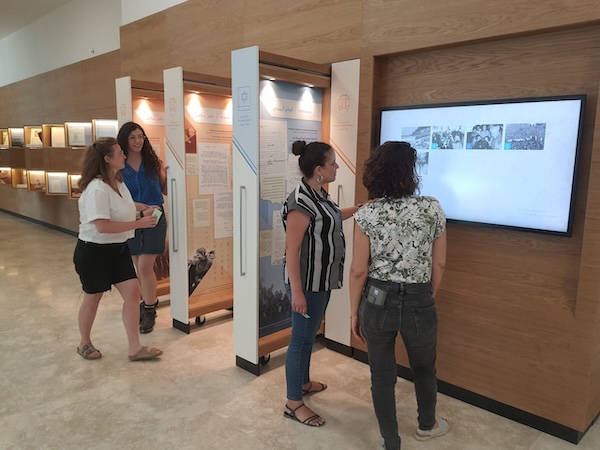
In 2023, Ben-Gurion University of the Negev opened a new home in Sde Boker for the David Ben-Gurion archives. (photo from Ben-Gurion University)

For visitors to Israel – and for Israelis looking for an engaging getaway – there is a relatively new destination in the country’s south.

In 2023, Ben-Gurion University of the Negev opened a new home for the David Ben-Gurion archives, with a dramatic exhibition hall to attract visitors. In addition to the many artifacts and documents on display, the exhibitions include interactive activities that allow visitors to speculate how the first prime minister would have responded to various scenarios.

Ben-Gurion was Israel’s first prime minister and the dominant political figure for the country’s first decade-and-a-half, during which time he served concurrently as minister of defence. In addition, no individual is more associated than Ben-Gurion with Israel’s development of the Negev and the entire south of the country.

The new archives facility rounds out a network of Ben-Gurion-related sites in the Sde Boker area, where Ben-Gurion built a desert home and enjoyed his retirement.

David Berson, Ben-Gurion University Canada’s executive director for British Columbia and Alberta, says the facility makes Sde Boker even more of a must-see for visitors to Israel. 

There had been an archive at the Sde Boker campus, allowing deep research into Ben-Gurion’s papers and other materials, but these were photocopies because the university did not have the archival capacity to accommodate the originals in the environment they required. The originals were held in Tel Aviv at an Israel Defence Forces archive.

“Everything was there, but it was a reasonable facsimile, as we like to say,” said Berson.

That changed with the opening two years ago of the purpose-built Ben-Gurion Heritage Archive, which includes a 280-square-metre (more than 10,000-square-foot) exhibition hall.

“All the real, genuine archives have been transferred there,” Berson said. “The exhibition hall is basically an interactive tale of David Ben-Gurion’s heritage and questions about things like the ultra-Orthodox serving in the army, his relationship to the diaspora, the Altalena affair, all sorts of different things, as well as his correspondence with Hebrew school students from all over the world, leaders, his perspectives on religion, etc., etc.”

The facility is a partnership between BGU and the Ben-Gurion Heritage Institute, an educational and commemorative organization committed to keeping Ben-Gurion’s ideals alive, especially his emphasis on developing the Negev. Among other things, they operate the museum at Ben-Gurion’s kibbutz home and other educational programming.

The Ben-Gurion Promenade, a project designed to honour his legacy and connect significant landmarks associated with his life, takes visitors on a 3.5-kilometre walk from his residence at Kibbutz Sde Boker to his burial site overlooking Nahal Zin, and taking in the new archives and exhibition hall. The accessible path is lined with native desert plants and interpretive signs about Ben-Gurion’s life and vision.

photo - The David Ben-Gurion archives includes a 280-square-metre exhibition hall
The David Ben-Gurion archives includes a 280-square-metre exhibition hall. (photo from Ben-Gurion University)

The archives are part of a larger complex that also houses the Ben-Gurion Research Institute for the Study of Israel and Zionism, and the Azrieli Centre for Israel Studies. 

Ben-Gurion’s eponymous university has three campuses in the country’s south.

The main Marcus Family Campus, in Beersheva, is home to the university’s faculties of engineering and sciences, health sciences, humanities and social sciences, business and management, computer science and cybersecurity, among others, and several advanced research institutes. It is adjacent to the Soroka University Medical Centre, where BGU medical students train. The campus is also home to the 10-year-old Advanced Technology Park, which is a joint venture of BGU, the City of Beersheva and real estate development company Gav Yam. The park is part of a national effort to develop the Negev region into a global centre for cybersecurity, defence technologies and tech innovation.

At the Sde Boker campus, about 30 kilometres to the south of Beersheva, specialties include desert studies, environmental science, hydrology, solar energy, sustainability and climate research, and arid agriculture. It is also home to the Jacob Blaustein Institutes for Desert Research.

The Eilat campus, at the country’s southern-most tip, on the Red Sea, specializes in marine biology and biotechnology, hospitality and tourism management, regional development studies, and interdisciplinary undergraduate programs that allow students from the south to do their initial studies in the area before completing their degrees at the Beersheva campus or elsewhere.

Sde Boker has always been a sort of pilgrimage site for Ben-Gurion fans and history buffs. But, because tourism to Israel has plummeted in the past year-and-a-half, most of the visitors so far have been comparative locals, Berson said, including leaders of the security services and military, educators and other Israelis.

When tourism picks up, Berson hopes the archives will make Sde Boker even more of a destination on the visitors’ map.

“It’s a wonderful national treasure,” said Berson. “But it’s also something that’s not on people’s radar screens abroad. We really want to encourage people to come and visit there, put it on their itineraries.” 

Format ImagePosted on April 11, 2025April 10, 2025Author Pat JohnsonCategories Israel, TravelTags archives, Ben-Gurion University, David Ben-Gurion, history, Israel, Israeli history, Sde Boker, tourist attractions, travel
Ruchot Hatzafon headlines

Ruchot Hatzafon headlines

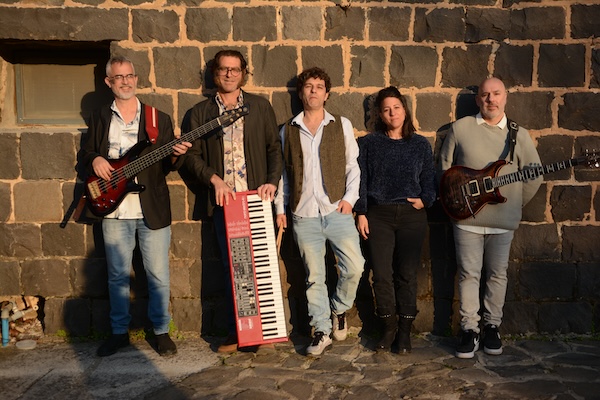
Ruchot Hatzafon members, left to right: Gil Melamood (bass guitar), Adam Halfi (keyboards), Ofir Baz (drums), Liraz Moalem (stage manager) and Eyal Shavit (vocals and electric guitar). (photo by Yannay Shifron)

“We will dance again” is the theme of this year’s Yom Ha’atzmaut community gathering on April 30 to celebrate Israel’s 77th anniversary amid the heartache that continues since Hamas’s Oct. 7, 2023, terror attacks. In addition to Nova Festival survivors, other special guests will be the band Ruchot Hatzafon, some of whose members still have not returned to their homes in Israel’s northern region because of the continued threat from Hezbollah in Lebanon.

“Better now, but it was very traumatic for everyone,” Eyal Shavit told the Independent about how he and his fellow musicians were doing since Oct. 7. “It’s difficult to put to words. We all live very close to the Lebanese border. A couple of us, Liraz [Moalem] and Gil [Melamood], live right on that border, in Kibbutz Malkiya and in Kibbutz Kfar Giladi, so they had to move to more central places in Israel and to this day they still haven’t come back to their homes.

“For the rest of us, it wasn’t as bad, but it still affected our lives in so many ways. Not to mention financially, as well as the mental trauma, the fear and the grief. However, we are among the luckiest ones in the grander scheme of things and we do what we have to do, both as individuals and as a people. We keep living, we keep moving forward and we keep celebrating our lives, all the while remembering [those] who are still held in Gaza by Hamas and grieving with anyone and everyone who has suffered the most terrible losses on that day.”

Shavit said he left his kibbutz, Kfar Szold, a couple of days after Oct. 7, “because the feeling at the time was that it can happen again at any given moment by Hezbollah in Lebanon, but, within a couple of weeks, I realized that it would be safe enough to go back … so I’ve stayed there since.”

Shavit is Ruchot Hatzafon’s lead vocalist and he plays the electric guitar. (He is also, as it happens, co-author of the book Hilarious Hebrew with Hebrew teacher Yael Breuer, which the Independent reviewed in 2016: jewishindependent.ca/from-nonsense-knowledge.) In Vancouver, Shavit will be joined by Melamood (bass guitar), Adam Halfi (keyboards), Ofir Baz (drums) and Sapir Breier (vocals).

“In this instance, Sapir will be with us in Vancouver, as Vered [Sasportas] couldn’t join us this time,” said Shavit of the band’s other primary vocalist.

Moalem is the band’s stage manager.

The group has been together about six years, and Shavit explained its evolution. 

“It was a bit of luck really,” he said about his joining. “I’d just returned from the UK to Israel, having lived in Brighton, England, for 13 years, where I studied music and made my living playing gigs in pubs and events.”

Friends from high school – Melamood (who also was in a military band with Shavit during their army service) and Baz – contacted Shavit and asked him to be a part of the band, along with another high school friend, Halfi, so that they could play at an event.

“We then immediately got booked for a second event by Liraz Moalem, who then became our band manager,” said Shavit. “It was a lot of fun and a nice opportunity. We all aspired to do this for a living.”

A couple of years after that, he said, Sasportas, who they met through a mutual friend and colleague, became part of the group and, said Shavit, “she fit right in, as well as being a brilliant singer and performer.”

Ruchot Hatzafon – which translates as the Northern Winds – has two types of shows.

“One is an energetic set of very popular songs both in Hebrew and in English that everyone likes to dance to, and the other show is a tribute to Israel’s army bands, who have a huge legacy in Israeli culture and used to dominate the charts back in the ’60s up until the mid-’70s,” explained Shavit. “That show includes a bit of storytelling and mostly wonderful and famous songs by the old army bands.

“In Vancouver, we will play our party music set, along with some special requests, like ‘Yerushalayim Shel Zahav’ by Naomi Shemer, for example.”

Other songs that Vancouverites will hear on April 30 include “Ahava Besof Ha’Kayitz” (“Love at the End of Summer”) by Tsvika Pik; “Ein Makom Acher” (“No Other Place”) by Mashina; “Naarin Shuva Elay” (“My Boy, Come Back to Me”) by Margalit Tsan’ani; “Natati La Chayai” (“I Gave Her My Life”) by Kaveret; and some Israeli Eurovision songs.

“And, in English, probably ‘Think’ by Aretha Franklin, ‘I Will Survive’ by Gloria Gaynor, ‘Don’t Stop Me Now’ by Queen and more,” said Shavit.

The band members have similar musical tastes, he said, perhaps because they all grew up on a kibbutz. “We’re generally more drawn to Western-influenced rock and pop music and songs in English, rather than Mediterranean-influenced songs, which are another genre of cover bands in Israel,” he said. “We play only a few of those.”

This will be Ruchot Hatzafon’s first time performing outside of Israel. They’ll arrive April 28 and return home on May 2, but Shavit said they’re thinking about extending their stay a couple of days.

“I can say for all of us that we feel this is an honour and a privilege to be invited to play for the Jewish communities in Vancouver – especially after what we’ve all been through as a people,” Shavit said. “We are thrilled to come and celebrate with everyone there.

“In addition, we get to visit a little bit of Canada, which, personally, I’ve always wanted to visit.”

Tickets ($18) for the Yom Ha’atzmaut event must be bought in advance. To do so, visit jewishvancouver.com/israelhere.  

Format ImagePosted on March 28, 2025March 27, 2025Author Cynthia RamsayCategories LocalTags "We will dance again", Eyal Shavit, Israel, music, Oct. 7, Ruchot Hatzafon, Yom Ha'atzmaut
Ellis gives needed context

Ellis gives needed context

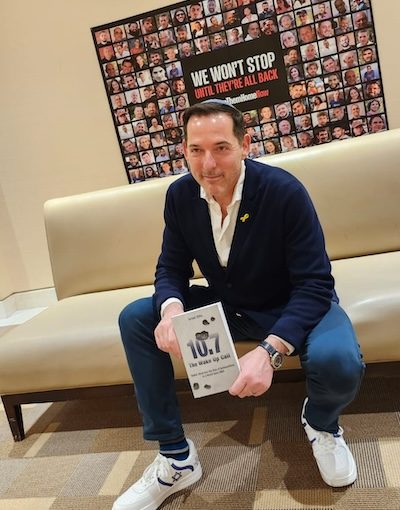
Author Israel Ellis with his new book, The Wake Up Call, after a Feb. 10 talk at Beth Tikvah Synagogue in Toronto, where he joined journalist Dave Gordon in conversation. (photo by Dave Gordon)

In his new book, The Wake Up Call: Global Jihad and the Rise of Antisemitism in a World Gone MAD, author Israel Ellis brings the events of Oct. 7, 2023, into a compelling, fact-based and easy-to-read focus.

Backed up by scores of footnotes and references, the book is a no-nonsense look at the Hamas terror attack of Oct. 7 and, poignantly, the attack on democracy Ellis believes happened in the months prior to them. The addition of personal stories from Oct. 7 survivors and family members adds another level of documentation to an already all-encompassing book.

Ellis weaves in his own lived experience and perspective as a Jewish Canadian in the diaspora with firsthand accounts of contemporary antisemitism and his reflections on being the father of an Israel Defence Forces lone soldier fighting in Gaza. His personal observations allow the reader to connect with him, as well as better understand the interconnectedness of Jews, no matter where they live, and Israel.

For non-Jews, it can be daunting to begin learning about what happened on Oct. 7, and the global repercussions. Many non-Jews do not know the history of the Middle East, how the state of Israel fits into this history, or what the definition of “antisemitism” is. Ellis helps fill in these blanks, and this is why I am so excited to introduce this book to my friends.

Since Oct. 7, 2023, Canadians (and people from other countries) have seen large pro-Palestine protests in the streets of all the major cities and in academic spaces, with large university encampments set up across the country. Most people in the Jewish community see these protests for what they are: pro-terror and anti-democratic. But, for a Canadian with little knowledge of what the Israeli/Palestinian conflict is, these protests and encampments can look like a fight for human rights. No doubt, some individuals believe they are marching for human rights while chanting  “intifada revolution,” but many are there to show support for Hamas, to some degree or another. This is why the knowledge, geopolitical insight and historical context Ellis brings with his writing is so vitally important.

I read a lot of books on Israel, as a non-Jewish Canadian interested in educating myself, and Ellis’s new book has become a favourite. One of the reasons is that Ellis writes about many protests and political events that are still fresh in our minds. He discusses protests that took place in Toronto and the encampments at McGill University (and others). He shows the utter incompetence of Canadian politicians, such as Toronto Mayor Olivia Chow, in handling the rise of radical Islam. He strongly condemns Canada’s minister of foreign affairs, Mélanie Joly, who shook the hand of Mahmoud Abbas, leader of the Palestinian Authority, in what is a now-famous Ramallah photo-op. These events, along with many others, are documented in Ellis’s book, illustrating a pattern of political complicity and complacency that he says has contributed to the eroding of Canada’s moral backbone. 

As a Canadian university student, I have experienced firsthand my peers sympathizing with and rallying for terrorist organizations. The university institutions have been complacent in protecting neutral academic spaces, allowing terrorist propaganda to infiltrate our lectures and giving some professors the ability to promote hatred of Israel and the Jewish people.

A quote from The Wake Up Call that gave me chills reads: “There is no coming invasion. It is already here. Jihad has already been invited into our universities, professions, communities and public institutions. October 7 was a wake-up call. It is an example of the hunger for Global Jihad, and what can happen if it is allowed to be satiated. To think that these events are restricted to a narrow strip on the Mediterranean is a complete miscalculation of reality.”

The Wake Up Call should be read by anyone – uninformed or well-informed, Jew or non-Jew – who wants to better understand the political, social and historical context behind the current rise in anti-democratic, pro-terror narratives that have taken over many Western spaces. 

Zara Nybo, a fourth-year student at the University of British Columbia, is a StandWithUs Canada Emerson Fellow. Connect with her via Instagram: @zaranybo.

Format ImagePosted on March 28, 2025March 27, 2025Author Zara NyboCategories BooksTags Israel, Israel Ellis, Israel-Hamas war, jihad, Oct. 7, terrorism, The Wake Up Call
Israel has so much to see

Israel has so much to see

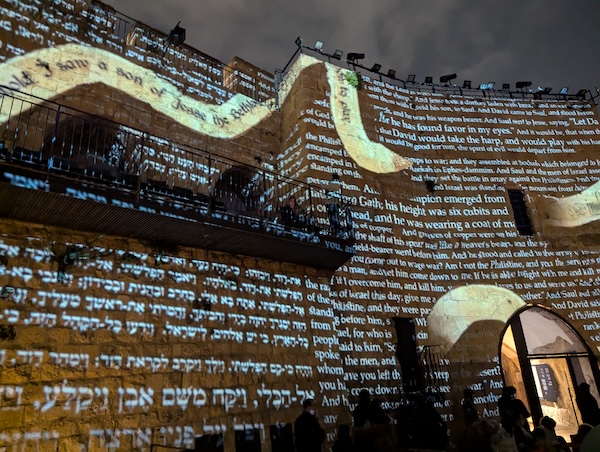
Light projections on the internal walls of the Tower of David, in Jerusalem, part of the Night Spectacular. (photo by Pat Johnson)

Tourism to Israel plummeted after Oct. 7, 2023. For example, January 2024 saw an 80% drop in visitors from a year previous. Those who did travel to Israel were often on solidarity missions or volunteer programs.

In March, I visited for 10 days, speaking with scores of Israelis about the situation, their grief, determination and changed attitudes, among other things. During that period, there was not a single siren in central Israel, though, days after my departure, the ceasefire ended and war in earnest began again.

It may seem frivolous or disrespectful to speak of “tourism” or “sightseeing” in moments such as these. The example of Israelis, however, is, as ever, resilience and getting on with it. Museums are open and, no matter what brings you to Israel, making time for recreation is necessary and, in many cases, adds depth to the understanding of what is happening now. A few of my destinations and choices are a bit odd – not what every visitor might choose – but others, like the Tower of David, should be on your must-see list.

Story of Jerusalem

The Tower of David Museum tells the story of Jerusalem. With a multimillion-dollar investment in new technologies upgrading the experience, the centrality of the city of Jerusalem in multiple traditions is underscored by the imagery of the city as the “navel of the world.” 

From 5,000-year-old idols and 3,000-year-old stamps indicating a thriving bureaucracy, to Theodor Herzl and the modern state, the museum tells the story of a place with more history than geography.

A not-to-be-missed component is the immersive, after-dark sound and light show called the Night Spectacular. Perhaps less informative than just, well, spectacular, the 40-minute program projects the epochs of the city’s history (that is, its litany of invasions) onto the interior walls of the imposing citadel. Combo tickets to the museum, permitting evening entry for the show, are available. The effect is all-immersing, more powerful and moving than I could have anticipated. It will captivate visitors of every age. 

History of Jewish militias

Like the Haganah Museum in Tel Aviv (see below), the Museum of the Underground Prisoners Jerusalem takes a politically ecumenical approach to the history of Jewish militias fighting the British in pre-state Israel. 

Located in the former British Mandate-era jail, the museum tells the story of resistance fighters from the Haganah, the main defence force of the pre-state Jewish community, the Revisionist Irgun (Etzel) and the more radical Lehi (“Stern Gang”).

Jewish prisoners were captured and punished for sabotage against the British, including the smuggling of Holocaust survivors and others into Palestine. Some of the prisoners were executed in the prison yard and these lives are commemorated movingly. 

Holocaust remembrance

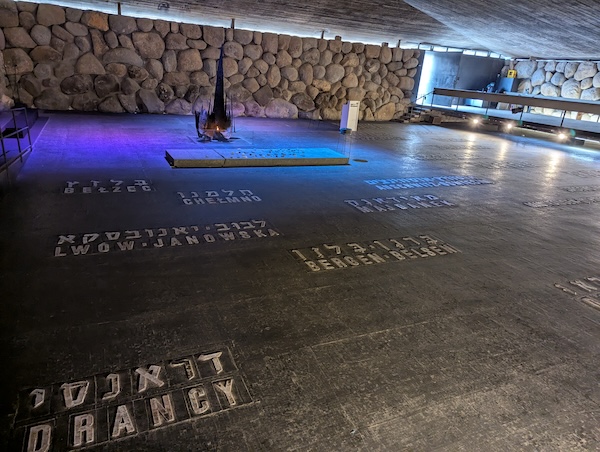
Yad Vashem: The World Holocaust Remembrance Centre is always a moving pilgrimage. The primary exhibit space – an A-frame hall with windows at the peak, reminding us that the events took place in full view of the world (and, arguably, God) – provides a chronological history of the Shoah. The slash across the top of the Moshe Safdie-designed building also represents the permanent scar this history has left on humankind. 

Like the Tower of David, Yad Vashem has had a huge infusion of money to update the exhibits and add high-tech components. 

photo - The eternal flame, at Yad Vashem
The eternal flame, at Yad Vashem. (photo by Pat Johnson)

A simple, but crucial, aspect of the exhibit is at the start, after visitors traverse the “bridge to a vanished world,” and a short film loops the story of the pre-Shoah Jewish civilization that was destroyed. This contextualizing of what was lost is an irreplaceable part of the experience.   

The permanent exhibit, including the emotional Hall of Names, is what the public most often sees and it provides the history of the Holocaust for people of all levels of knowledge. The vast work of the centre remains mostly out of sight, with archives, research, recording and publication being a less visible but no less important component of Yad Vashem’s mandate. 

Har Herzl Pathway

For a British Columbian, it is hard to fathom what Israelis call “mountains.” The Mount of Remembrance (home to Yad Vashem) and Mount Herzl (or Har Herzl) are hardly recognizable as distinct geographic places, let alone mountains.

photo - Monument to Israeli victims of terror, part of the many cemeteries on Mount Herzl, final resting place of soldiers, leaders and the fallen
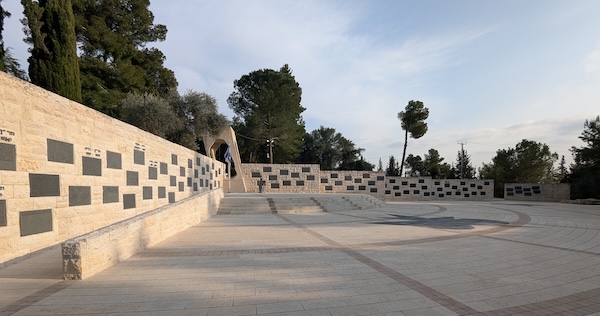
Monument to Israeli victims of terror, part of the many cemeteries on Mount Herzl, final resting place of soldiers, leaders and the fallen. (photo by Pat Johnson)

In any event, from Yad Vashem, it is a relatively short walk to the Herzl Museum, which is adjacent to the grave in which the founder of political Zionism was reinterred in 1949 from his original resting place in Vienna.

Between these two destinations are the resting places of most of Israel’s leaders, as well as cemetery after cemetery filled with soldiers and civilians killed in Israel’s successive wars and terror attacks.

It was only by happenstance – well, if you are arriving by foot, you can’t miss it, but those arriving by vehicle might – that I discovered a memorial walking path between Yad Vashem and the Herzl Museum, snaking through these sad, chronological rows of graves.

The trail, as a distinct entity, is a bit of a mystery. A post-trip web search indicates there is seemingly not even an agreed-upon name for the path. The information at the entryway says that it was developed by Jewish youth movements but the specific groups go unnamed. The signage is likewise a bit perplexing, without always clear directions or explanations. The larger message, though, does not require plinths: Israel and thousands of Israeli families have paid an enormous price for the country’s existence. 

Learning about Herzl

Having meandered through the sombre cemeteries of Israel’s war dead and the resting places of most of the country’s prime ministers, presidents and other historical greats, you arrive at the imposing grave of Theodor Herzl. Nearby, the museum bearing his name tells the story of the man with the crazy dream of a Jewish state.

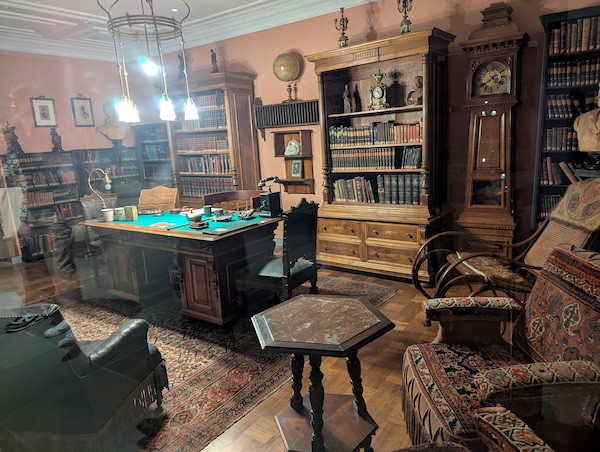
photo - Replica of Theodor Herzl’s office, including his original desk and other artifacts, at the Herzl Museum, Jerusalem
Replica of Theodor Herzl’s office, including his original desk and other artifacts, at the Herzl Museum, Jerusalem. (photo by Pat Johnson)

Museum-goers are given a guided tour from room to room, following a cheesy video of a pair of dramatic impresarios didactically directing an actor preparing for the role of Herzl but who has no idea who the man was. The actor (and, not at all subtly, the visitor) is educated on the Dreyfus Affair, which was the polarizing moment when the secular, assimilated Herzl concluded the Jews would never be free without a state of their own. The displays take visitors through his activism, and we eventually join delegates at the First Zionist Congress.

The museum includes the re-creation of Herzl’s home office and many important relics of his life.  

Connecting past, present

Gush Katif Museum is an unexpected little museum in Jerusalem’s Nachlaot neighbourhood, which tells the story of the 17 Jewish settlements that were evacuated during the “disengagement plan” from Gaza in 2005. 

The Israeli government withdrew from Gaza two decades ago in hopes of allowing a sort of pilot project in Palestinian self-government. In the process, and amid (yet another) emotional national dialogue, Jewish settlements in the enclave were evacuated.  

With a decidedly political agenda, the museum finds relevance today, as many Israelis look at the situation in Gaza and, with 20/20 hindsight (or something like it), question every decision that may have led to today’s realities. 

In an interesting thought experiment, a Jewish resident evacuated from Gaza, speaking in the museum’s introductory film, inverts the common perception of Jewish settlements in the area. Rather than the probably prevailing view of Jewish settlements as an imposition on Palestinian land, he makes the case that Israel gave 90% of Gaza to the Arabs and some still wanted to erase the Jewish presence entirely. (Ignoring the ideological point and contesting the details, Jewish settlements in the Gaza Strip took up something around 20% of the land in the small area.) It’s a perspective that challenges the idea that, even absent a negotiated two-state solution, the Palestinians deserve 100% of the occupied territories. Presumably, it is just this type of questioning the museum hopes to engender.

The Gush Katif Museum explores more than modern history, of course, going back to the earliest Jewish settlement in the area, and the successive expulsions by the Romans and the Turks. 

Origins of the IDF

Moving on to Tel Aviv, the Haganah Museum tells the story of the Jewish militia that morphed, upon statehood, into the Israel Defence Forces.

The museum is located on Rothschild Boulevard, in one of Tel Aviv’s oldest buildings, originally the home of Eliyahu Golomb, a founder and ideological leader of the Haganah.

photo - The home of Eliyahu Golomb, founder and ideological leader of the Haganah. This was the site of many clandestine and pivotal meetings of the underground resistance
The home of Eliyahu Golomb, founder and ideological leader of the Haganah. This was the site of many clandestine and pivotal meetings of the underground resistance. (photo by Pat Johnson)

While there were other military operatives, the Haganah was the de facto militia of the Yishuv, the pre-state Jewish community. The museum, though, takes a broader view, beginning with the role of “tower and stockade settlements” on the peripheries of the proto-state, through the First World War Zion Mule Corps, the Jewish Legion (which helped the rise to prominence of Revisionist leaders like Ze’ev Jabotinsky), and touches on the roles of Revisionist Etzel (the Irgun) and its breakaway group Lehi (the “Stern Gang”) in taking the fight to the British. In an ideological and military skirmish after independence, these groups would be forcibly unified into the IDF.

The museum includes the crucial role the Haganah played in the Aliyah Bet, the illegal migration of Jews into pre-state Israel during the period of British blockade of Jewish refugees.

At the entry to the building is a relief mural by Israeli sculptor Moshe Ziffer, with figures in traditional kibbutz-style clothing, linking the movement to the pioneering Zionist ethos, as well as fighters shielding and defending Jewish families. There are also ancient symbols in the artwork, implying the Maccabean revolt, and including modern symbols of the transition to statehood, in 1948.

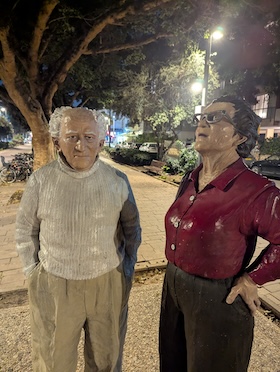
photo - Statues of David Ben-Gurion and his wife Pola, by artist Ruth Kestenbaum Ben-Dov, on Tel Aviv’s Independence Trail
Statues of David Ben-Gurion and his wife Pola, by artist Ruth Kestenbaum Ben-Dov, on Tel Aviv’s Independence Trail. (photo by Pat Johnson)

Independence Trail

The Haganah Museum is a central part of the cobbled-together tourist route branded “Independence Trail.” What would ostensibly be the centrepoint of the trail – Independence Hall, the home of Tel Aviv’s first mayor, Meir Dizengoff, and the place where David Ben-Gurion read aloud Israel’s Declaration of Independence on May 14, 1948 – is surrounded by scaffolding amid ongoing renovations without a set date for reopening.

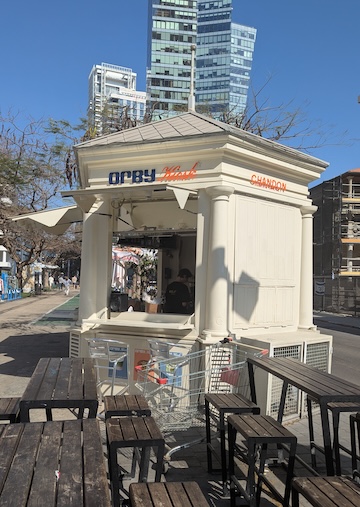
An easy-to-follow map of the ambling tour is available at the tourism kiosk in the pedestrian boulevard between the Haganah Museum and Independence Hall. The tour begins (if you want to do it in un-Israeli orderly fashion) at the city’s first kiosk, a restoration of which still serves refreshments to Tel Avivians and tourists. 

photo - The site of the first kiosk in Tel Aviv. The location is still a destination for refreshments
The site of the first kiosk in Tel Aviv. The location is still a destination for refreshments. (photo by Pat Johnson)

The walk continues past the Nahum Gutman Fountain, which depicts the history of Jaffa and its sister-city-come-lately Tel Aviv, from the setting-off place of Jonah on his way to the fish’s belly, through Egyptian invaders, Crusaders, Napoleonic forces on up to Herzl and to the Declaration of Independence that took place a few steps away.

Other stops on the trail include the site of Herzliya Hebrew Gymnasium, the world’s first modern Hebrew-language high school; the Palatin Hotel, the resting stop for famous names of the 20th century; Tel Aviv’s Great Synagogue; several buildings that are notable more for being examples of the Bauhaus or International Style of architecture than for historical import; the Tel Aviv Founders Monument; a statue of Dizengoff, astride his horse; and several others. The map and trail provide a quick and easy guide to important sites that you might otherwise overlook in a small area of central Tel Aviv.

Tragic walking tour

An unusual, if not terribly uplifting, activity is the Tragic Tel Aviv Walking Tour, which visits sites in the city centre where terror and even Second World War attacks killed civilians. 

photo - Easily missed: A monument to one of Tel Aviv’s many terror attacks
Easily missed: A monument to one of Tel Aviv’s many terror attacks. (photo by Pat Johnson)

On Sept. 9, 1940, Italian war planes operating from the island of Rhodes, made sorties over Haifa and Tel Aviv, killing 137 people, with many more injured. The attacks targeted no Allied (that is, British) military infrastructure and shattered what, to then, had been a feeling of relative isolation from the European war among the residents of pre-state Palestine. The monument to the bombing in Mikhoels Square, at the corner of Levinsky and Aliyah streets, is modest and easily overlooked if you are not explicitly seeking it – or even if you are. 

Led by former Torontonian Jeffrey Levi, the tour then proceeds through sadly seemingly endless locations of suicide bombings and other terror attacks, many of which took place during the Second Intifada. In some cases, the historical events that left Israelis dead or wounded are not commemorated at all, or are marked by likewise inconspicuous markers.

If there is an uplifting message in this tour, it is in the innocuous manner in which most of these historical tragedies are commemorated (or not). As Levi recounts the devastations of the past, Tel Avivians hustle by, literally and figuratively moving past the past. 

Format ImagePosted on March 28, 2025March 27, 2025Author Pat JohnsonCategories Israel, TravelTags Dizengoff, Eliyahu Golomb, Gush Katif Museum, Haganah Museum, Israel, Museum of the Underground Prisoners, terrorism, Theodor Herzl, walking tours, Yad Vashem

אייר קנדה חוזרת לטוס לישראל בחודש מאי הקרוב

חברת התעופה הלאומית של קנדה, אייר קנדה, תחזור לטוס לישראל במהלך חודש מאי הקרוב. זאת, בכפוף למצב הביטחוני שישרור באזור הנחשב לאחד המסוכנים העולם. ואם המלחמה תסתיים סוף סוף ולא צפויים משברים נוספים קרובים

במקור הייתה אמורה אייר קנדה לחזור לטוס לישראל במהלך חודש אפריל, אך כאמור לסוף הוחלט בחברה הקנדית לדחות את הטיסות לתל אביב בחודש ימים. כך מסבירה מנכ”ל אייר קנדה בישראל, רות בן צור. היא הוסיפה: “יש לנו ביטחון מלא בקו, ברגע שיכולנו לחזור זה הדבר הראשון שעשינו”

אייר קנדה הפסיקה לחלוטין לטוס לישראל לאור המשבר הביטחוני הקשה במזרח התיכון, המלחמה בעזה והמלחמה בלבנון, במהלך חודש אפריל שנה שעברה. אז אמרו בחברה הקנדית כי: “הפעילות של אייר קנדה לתל אביב וממנה תישאר מושעית לעתיד הנראה לעין, לאחר מעקב אחר ההתפתחויות באזור. אנו מתחייבים לחדש את הטיסות לישראל וממנה ונעשה זאת ברגע שזה יהיה בטוח עבור לקוחותינו והצוותים שלנו”

כאמור במהלך חודש מאי הקרוב, אייר קנדה צפויה לחדש את הטיסות מטורונטו ומונטריאול לתל אביב. יצויין כי כיום אין טיסות ישירות מקנדה לישראל, לאחר שחברת התעופה הלאומית של ישראל אל על, הפתיעה בהודעתה כי החל מחודש אוקטובר שנה שעברה, היא ביטלה את הטיסות הישירות לטורונטו ומונטריאול. וזאת, מחוסר כידאיות כלכלית בזמן שעדיף היה להסיט את המטוסים לקווים רווחים יותר. בקהילות של הישראלים והיהודים באזורי טורונטו ומונטריאול קיבלו את הפסקת הטיסות הישירות של אל על מישראל לקנדה ובחזרה, בתדהמה ובכעס רב

בשנת אלפיים עשרים ושלוש הטיסה אייר קנדה כמאה ותשעים אלף נוסעים בקווים בין טורונטו ומונטריאול לתל אביב. שנה קודם לכן מספר הנוסעים בקווים אלה עמד על כמאה שבעים וחמישה אלף

במקביל הודיעה לאחרונה אייר קנדה כי היא מוסיפה קו חדש בין קנדה לפורטוגל, שיכלול טיסות בין מונטריאול לפורטו. הטיסות שיחלו בארבעה בחודש יוני, במשך ארבעה ימים בשבוע, ימשכו כל הקייץ ועד סוף חודש ספטמבר. באייר קנדה מאמינים שקוו חדש זה יהיה רווחי במהלך הקיץ של שנה זו. יצויין כי לאייר קנדה יש טיסות קבועות בין טורונטו לבירת פורטוגל – ליסבון, וכן בין מונטריאול לליסבון. קווים אלה הוכיחו את עצמם בשנה שעברה ולכן התווסף גם קו לפורטו

באייר קנדה קיימת אופטימיות בנוגע לטיסות לשווקים שונים באירופה כולל פורטוגל, תוך הוספת קווים חדשים והגדלת הקיבולת בקווים קיימים של החברה הקנדית. בנוסף לקו לפורטו אייר קנדה מתכננת להוסיף קווים חדשים גם לאיטליה וצ’כיה, בהם בין טורונטו לנאפולי, ובין טורונטו לפראג. מדובר בשלוש טיסות שבועיות שיחלו במהלך חודש מאי

לעומת זאת באייר קנדה נערכים לקיצוץ בטיסות שבין קנדה לארה”ב לאור מלחמת הסחר נגד קנדה עליה הכריז נשיא ארה”ב דונלד טראמפ. לא מעט קנדים התבטאו לאחרונה על רצונם להחרים את ארה”ב ובמסגרת זו, לא לרכוש עוד מוצרים אמריקאיים ולא לטוס לארה”ב

לאור הירידה המסתמנת בביקוש לטיסות בין קנדה לארה”ב, באייר קנדה נערכים לקצץ במספר הטיסות בין שתי המדינות השכנות. בין הקווים שעשויים להיפגע – באם הביקוש לטיסות לארה”ב יקטן – הם לאזורים “חמים” המיועדים לבילויים כמו פלורידה, לאס וגאס ואריזונה

בסקר אחרון שנערך הודיעו כחמישים ושישה אחוז מהקנדים כי הם מוכנים לבטל את הטיסות שלהם לארה”ב, או להימנע מלטוס לארה”ב. באם טראמפ יחריף בסנקציות נגד קנדה, אחוז הקנדים שיסרבו לטוס לארה”ב צפוי לגדול משמעותית

Posted on March 19, 2025March 4, 2025Author Roni RachmaniCategories עניין בחדשותTags Air Canada, boycott, Europe, flights, Israel, Ruth Ben Tzur, security situation, travel, Trump, United States, war, אייר קנדה, אירופה, ארה"ב, החרים, טוס, טראמפ, ישראל, מלחמה, מצב הביטחוני, רות בן צור
The people’s army of Israel

The people’s army of Israel

Volunteers with Sar-El in Israel last March. (photo from Marina Sonkina)

Last year, about this time, I was in Israel, volunteering with Sar-El, an organization that connects the Israel Defence Forces with volunteers from more than 30 countries, who provide the army with non-combat support. So many others had wanted to help after Oct. 7 that I had to wait several months for my documents to be processed.

The mood was understandably sombre. Not just the trauma of the Hamas terror attacks, with hostages captive, but also the antisemitism that engulfed the Western world like fire. 

I asked some of my fellow volunteers why they had come to Israel during such a dangerous time. The answers I got, especially from non-Jews, both surprised and comforted me. A Christian volunteer from Detroit wanted Israel to know that it did not stand alone. A middle-aged Australian had been sponsored by her church in Sydney to help people of the Holy Land under an attack. Two Romanian girls didn’t speak a word of Hebrew or English, but answered me in Italian: “Aiuto” (“Help”).

“I had a very good life. I had a chance to travel all over the world. But, until now, I’ve been traveling horizontally,” a Parisian Jew of Algerian descent told me. “Now, it’s time to travel vertically,” she said, raising her eyes to the sky. “This land is sacred. I feel it here like nowhere else. And now it’s in peril.”

In spite of rockets being fired into Israel from Lebanon, Gaza and Yemen, the volunteers felt more protected in Israel than they did back home. Many felt relieved that, finally, there was no need to conceal one’s true feelings or to hide one’s Jewishness.

“I don’t feel safe in the US anymore,” said a New York lawyer who had been attacked from behind in the streets of Manhattan, his yarmulke yanked off his head.

A German woman from Munich was on her 10th visit to Israel. “I’m not Jewish, and I can’t explain it,” she said. “All I know is that I love people here. Love their warmth. Chaos? Yes! They talk loud, they are emotional, but I don’t mind that. I plan to spend half a year here once I retire.”

Initially, I wasn’t sure how we, civilians, could help the IDF fight Hamas in Gaza, but my first day at the medical military base near Tel Aviv made it clear. Hundreds of different medications and medical devices that had come from warehouses across the country had to be sorted out, their expiration dates checked. Those who accuse Israel of racism should see these medicines, each labeled in four languages: Hebrew, Arabic, English and Russian. (Thanks to Soviet antisemitism and, lately, to Putin’s war on Ukraine, 15% of Israel’s population comes from Russia.) 

On the military base, I saw clearly what is best in Israel: its people. The IDF mirrors the diversity and inclusiveness of a society that, in its short history, has accepted refugees from more than 100 countries. 

Without Moshe, for example, we would have had no idea how to sort the truckloads of medications arriving every day. Having come to Israel from Bukhara (in Central Asia) as a child, Moshe kibitzed in three languages, instructing us by means of his hands while talking on his cellphone. From his easy smile, I would never have guessed that his wife had recently died of cancer, that his two sons were fighting in Gaza and that, every day after his work with us, he went to a synagogue to pray. One morning, Moshe directed us to place boxes in long rows on the floor, in an unusual configuration. The next morning, a group of children with autism and down syndrome came to finish the sorting, also helping their people’s army.

Paul, a mathematician who came from France, was in charge of the military base’s math department. Ruth, who had made aliyah from the Netherlands as a teenager, was serving as one of the madrichot (female soldiers tasked with organizing and looking after Sar-El’s volunteers); after the army, she hoped to become a specialist in Japanese culture.

On another military base, about 20 kilometres from Gaza, in the Negev Desert, one of our tasks was to assemble care packages for soldiers spending Passover at the front, away from home. In two days, we filled 15,000 boxes with grape juice, matzah and other traditional items. A  soldier with a distinct Californian accent came to help us. He was a “lone soldier,” a soldier who has no family in Israel. Various families take turns welcoming lone soldiers for Shabbat, feeding them and giving them a sense of home.

photo - The cover of a Haggadah that Sar-El volunteers inserted into thousands of Passover boxes that were sent to Israeli soldiers in Gaza. It shows the multicultural character of the Israel Defence Forces
The cover of a Haggadah that Sar-El volunteers inserted into thousands of Passover boxes that were sent to Israeli soldiers in Gaza. It shows the multicultural character of the Israel Defence Forces. (photo from Marina Sonkina)

Once, an officer joined us, helping make up the boxes, which was unusual, given his rank. Later, I saw him in the mess hall speaking in Hebrew to the base commander, who was originally from India. I found out that the officer was Druze. Living mainly in the country’s north, in the Galilee region, the Druze community enjoys all the civil rights of other Israelis, while maintaining their Arabic language and customs. Many Druze reach high echelons in the army, in medicine and other professions. When a Hezbollah rocket struck the Druze town of Majdal Shams, killing 12 children playing soccer, Prime Minister Binyamin Netanyahu went there, addressing community members as “brothers and sisters.” He promised that Hezbollah would “pay a heavy price” for killing their children, and he kept his word.

When I think of the soldiers I met and talked to, one thing sets them apart from young people of their age in North America: a seriousness of purpose, and the burden of responsibility. They know that the survival of Israel lies on their shoulders. They also know that, while defending their  country, they may not survive. Death lurks behind every corner in Gaza and Lebanon. It has hidden in an effigy of a child pleading, in Hebrew, for help, but booby-trapped with explosives. It was underground, in the tunnels, some going 50 kilometres deep. It disguised itself in doctors’ scrubs, inside Kamal Adwan Hospital in Gaza, which was appropriated by Hamas terror operatives.

Every fallen soldier is loved and mourned as one’s own child. Army service acts as a social glue in a country into which millions of refugees, speaking different languages, have poured. The IDF is still the backbone and pride of this society.

At a party for troops just returned from Gaza, I saw a religious Jew in a yarmulke (skullcap) and tzitzit (prayer shawl) hanging from under his uniform, with a baby girl in each arm and an automatic rifle dangling behind his back. I talked to a medic, a corporal who was more outspoken than many – a college history teacher in times of peace, he had three young children at home.  

“Is there any possibility of peace between Palestinians and Jews?” I asked him.

“Before Oct. 7, I supported a two-state solution because I wanted peace, but the Palestinians do not want peace,” he responded. “We’ve tried it many times in the past. They want only one state, an Islamic Caliphate with Sharia rule. We, Jews, are in their way and they want us dead…. We have to fight – if we want to survive.”

“What about your children?” I asked. “Will they have to fight, too?”

“Yes, them, too,” he said. “They’ll be left with no other choice.” 

I shook my head in distress but said nothing.

“Look,” said the man, “illusions cost us very dearly. We can’t afford them anymore.”

I remembered Golda Meir’s words, spoken in 1957: “Peace will come when the Arabs will love their children more than they hate us.”

There is a truce in Gaza now. But, while some 20,000 Hamas fighters have been eliminated, 10,000 armed fighters are still at large. 

Marina Sonkina is a fiction writer, and teaches in the Liberal Arts Program 55+ at Simon Fraser University.

Format ImagePosted on March 14, 2025March 13, 2025Author Marina SonkinaCategories IsraelTags antisemitism, IDF, Israel, Israel Defence Forces, Israel-Hamas war, Oct. 7, Passover, Sar-el, volunteerism
Unique Cochin rituals

Unique Cochin rituals

Cochin Jews at the 450th year celebration of the Paradesi synagogue, December 2017. (photo by Shalva Weil)

A study on the Purim traditions of the Cochin Jewish community by Prof. Shalva Weil of Hebrew University was published in the Journal of Modern Jewish Studies. It examines the historical and cultural significance of effigies in Purim celebrations among Cochin Jews, tracing their evolution from the 16th century to the modern day.

The Cochin Jewish community, numbering no more than 2,400 at its peak in 1948, lived in harmony with their Hindu, Christian and Muslim neighbours. Unlike other Jewish communities, they never experienced antisemitism in India, except during the Portuguese conquest of the 16th century. Their unique Purim celebrations featured role reversals that symbolically challenged societal hierarchies based on caste, religion and gender. This inversion of power structures was most vividly expressed through the construction and destruction of effigies representing adversaries, a practice embedded in the communal and ritualistic fabric of Cochin Jewry.

By the 20th century, Cochin Jews increasingly aligned themselves with the global Jewish community. Following the establishment of the state of Israel in 1948, the majority of Cochin Jews made aliyah by 1954, leaving behind only a small number of Paradesi and Malabar Jews scattered across the state of Kerala. The once-thriving Cochin Jewish community on the Malabar Coast is nearly extinct, and traditional Purim celebrations have all but disappeared. With only one Paradesi Jew remaining there and a handful in other former Cochin Jewish locations, synagogue services now rely on visiting Jewish tourists.

In stark contrast, in Israel, where an estimated 15,000 descendants of Cochin Jews now reside, Purim is celebrated in ways that reflect broader Jewish and Western cultural traditions. Children dress up as superheroes, soldiers and biblical figures; they participate in school parties and exchange hamantashen. Observant Jews continue to read the Book of Esther in synagogue and hold festive meals, incorporating their heritage into mainstream Jewish customs.

Weil, who has been awarded this year’s Yakir Yerushalayim honour as a distinguished citizen of Jerusalem due to her lifelong research into ethnicity and gender, highlights in her research the transition of Cochin Jewry from a localized, community-bound identity to an integrated and globalized Jewish experience. While their presence in India has nearly vanished, the legacy of Cochin Jews continues to thrive in Israel and beyond. 

– Courtesy Hebrew University

Format ImagePosted on March 14, 2025March 13, 2025Author Hebrew UniversityCategories Celebrating the Holidays, WorldTags anthropology, Cochin, customs, history, India, Israel, Purim, rituals, traditions

Posts pagination

Previous page Page 1 … Page 9 Page 10 Page 11 … Page 111 Next page
Proudly powered by WordPress