Skip to content
  • Home
  • Subscribe / donate
  • Events calendar
  • Business Directory
  • FAQ
  • News
    • Local
    • National
    • Israel
    • World
    • עניין בחדשות
      A roundup of news in Canada and further afield, in Hebrew.
  • Opinion
    • From the JI
    • Op-Ed
  • Arts & Culture
    • Performing Arts
    • Music
    • Books
    • Visual Arts
    • TV & Film
  • Life
    • Celebrating the Holidays
    • Travel
    • The Daily Snooze
      Cartoons by Jacob Samuel
    • Mystery Photo
      Help the JI and JMABC fill in the gaps in our archives.
  • Community Links
    • Organizations, Etc.
    • Other News Sources & Blogs
  • JI Chai Celebration
  • JI@88! video

Recent Posts

  • Federation now across BC
  • Israel fighting for its existence
  • Deal strengthens Iran
  • Patriotic belonging diminishes
  • A campaign to engage
  • Upstanders’ first live event
  • Responding to Carney
  • Having your own home
  • Music a family tradition
  • Musical to warm heart
  • Community milestones … June 2026
  • Sharing her passion for Israel
  • Or Shalom reopens its doors
  • JFS from past to future
  • Need holistic approach
  • Sharing stories, advice
  • Journalist shares fears
  • Skills to live together
  • Road to independence
  • Cutting grass with scissors
  • Zionism as a solution
  • Deceit, desire & the divine
  • Reclaiming sacredness
  • Creative project ideas
  • Summer squares and cobbler
  • Thou shalt … summer commandments
  • Legal help for students
  • Revisiting myth of Lilith
  • Wrong person rebuked
  • Canada’s mixed messages
  • Questions for museum
  • Symposium on antizionism
  • Making soccer political
  • CJPAC lauds Pulver’s impact
  • City recognizes Vrba’s legacy  
  • Organ donation saves lives

Archives

Follow @JewishIndie
image - The CJN - Visit Us Banner - 300x600 - 101625

Tag: Israel

Oslo not a failure: Aharoni

Oslo not a failure: Aharoni

Dina Wachtel of Canadian Friends of the Hebrew University, and Ido Aharoni, a former top Israeli diplomat who now teaches at various universities. (photo by Pat Johnson)

Zionism is as popular now as it has ever been on North American campuses, according to a former top Israeli diplomat who now teaches at multiple American universities.

The bad news, he added, is that Zionism was never a hit on North American campuses.

“Zionism was never popular in academia,” said Ido Aharoni, speaking with the Independent during a trip to Vancouver as a guest of Canadian Friends of the Hebrew University. “In fact, I would argue that … we’ve never had so many Zionists in North America as we have today.”

Protests on campuses and reports of professors inculcating anti-Israel ideas are disturbing, he said, but it’s not new. 

“The people that are at the front of the effort, that spearhead the effort, are different,” he said, arguing that the vanguard now is comprised of foreign students and descendants of immigrants from societies where antisemitism is endemic. “But it’s the same thing, the same messaging that was designed by the Soviet Union.”

Aharoni is a 25-year veteran of Israel’s foreign service, a public diplomacy specialist, and founder of the Brand Israel program, which, since 2002, has sought to reposition Israel in the public mind globally. He served in the Israeli consulate in Los Angeles in the 1990s and was consul general of Israel in New York and the Tri-State Area from 2010 to 2016.  

Since retiring from government in 2016, Aharoni has lectured and spoken at academic institutions including Harvard, Yale, Princeton, Wharton and Berkeley on topics such as Israel’s foreign relations, mass media, the information revolution, public marketing, and nation branding. He has served as a professor of business at Touro University, as a professor of international relations at New York University and is the Murray Galinson Professor of International Relations at University of California in San Diego and San Diego State University’s business school. 

In addition to teaching and lecturing, Aharoni provides advice to international companies to access Israeli innovation. He also helps businesses and agencies communicate with governments. His third focus is strategy and planning, particularly helping clients tell their story. 

Aharoni contests widely held assumptions, including that Israel is unpopular in Western countries. Opinion polls say large majorities of respondents side with the Jewish state, he said. That does not necessarily translate, however, into family vacations in Israel or investments in Israeli enterprises. Changing that mindset could include convincing non-Israelis to consider differently the challenges the country faces.

“Think of terrorism the same way you think of crime in any major urban centre in North America,” he said. “If you only focus on attempts to carry out criminal acts, or the number of criminal acts carried out, then the picture can be very scary.”

If all anyone heard about Vancouver was crime statistics, he said, they might be reluctant to visit or invest. “That’s what happened in Israel,” said Aharoni. “We communicated our problems to the world. At one point, it became the only thing we communicated to the world. As a result, the world doesn’t see us beyond those problems.”

It’s hard to alter a narrative once it is set, he said. And yet, he added, Israel is no more dangerous a place to visit – and far more stable a place to invest – than many other spots in the world. 

“You know how many inflammations of violence we have right now in the world taking place?” he asked. “People are talking about Israelis and Palestinians as if it’s the only conflict in the world and I think there’s something wrong about that.”

Early in his career, Aharoni was involved in the beginnings of the Oslo Peace Process. He was the policy assistant to Uri Savir, director-general of the Israeli foreign ministry under then-foreign minister Shimon Peres. “I was part of a very small group of people that knew about the secret negotiations and my job was mostly to prepare him for meetings,” he said. 

Aharoni rejects the narrative that the entire process is a story of failure. What did fail was the assumption by Israelis and the broader diplomatic world that Yasser Arafat would confront the extremists on his side, get Hamas in hand, end incitement against Israelis and prepare his people to live in peaceful coexistence.

The Palestinians faced their Altalena moment, he said, citing a pivotal incident in the earliest Israeli history, when the prime minister, David Ben-Gurion, ordered the nascent Israel Defence Forces to attack the Irgun ship Altalena, effectively ensuring there would be a single, unified military force in the country.

“If you ask me, this was the biggest mistake: the assumption that Arafat was of that calibre. But the truth is that Arafat was no Ben-Gurion,” said Aharoni. “Arafat was not of that calibre. He was in it way over his head. He didn’t have the skill or the character – nor the desire. To have the desire, you have to have some knowledge of history, you have to have some depth. He had none of that. He was in love with the position of a rebel, of a revolutionary. He thought he was Che Guevara and that was his historical reference. If you ask me, that was the biggest failure.

“Other than that,” he argued, “Oslo was a big success.”

Before Oslo, he noted, Israel did not recognize the existence of the Palestinians and vice versa. The recognition and direct contact between the two sides, for whatever shortcomings that dialogue has had, allows Israel to coordinate anti-terror efforts with the Palestinian Authority.

“A lot of people don’t know that,” he said, “but the Palestinian Authority, which is the creation of the Oslo Accords … they have been very instrumental helping Israelis curb terrorism coming out of the West Bank.”

Oct. 7, 2023, or “10/7,” changed everything, he said.

“Before 10/7, there was this expectation on the part of Israelis that, somehow, we will be able to introduce peace in its full conceptual meaning.… I think, after 10/7, it’s very difficult for people to imagine that kind of peace.”

The best hope now, probably, is what Aharoni calls “a livable arrangement,” which would protect Israel’s security needs and deliver maximal Palestinian civil self-rule, while limiting the Palestinians’ military capabilities. Eliminating the antisemitism and genocidal incitement in the Palestinian and broader Arab education systems is another priority, he added.

Aharoni forcefully rejects the idea that support for Israel has become a partisan wedge issue in the United States, noting that a vote on an Israeli aid package passed the US Congress after 10/7 with 366 in favour, 58 against and seven abstentions.

“It’s true that we pay a lot of attention to the fringes,” he said, citing vocally anti-Israel representatives Ilhan Omar and Rashida Tlaib, who, he said, “represent a very marginalized and very narrow agenda.”

Aharoni was in Vancouver to meet with local supporters of Canadian Friends of the Hebrew University. CFHU will host a public event next month, in which the mayor of Jerusalem, Moshe Lion, will be in conversation with Rabbi Jonathan Infeld. The event, titled Diversity as Strength During Challenging Times, takes place June 9, at 7:30 p.m. Register at cfhu.org/moshe-lion.

Format ImagePosted on May 30, 2025May 29, 2025Author Pat JohnsonCategories LocalTags Canadian Friends of the Hebrew University, CFHU, diplomacy, history, Ido Aharoni, Israel, Israeli-Palestinian conflict, Moshe Lion, Oct. 7, Oslo Accords, peace, politics, Zionism

חוזרים בחזרה לישראל

 בחודשים האחרונים לא מעט ישראלים שעברו לקנדה עקב המלחמה, בעקבות אירועי השבעה באוקטובר, חוזרים בחזרה לישראל. קנדה הפעילה תוכנית מיוחדת עבור הישראלים עקב המלחמה, ואיפשרה להם לקבל רישיון עבודה לשלוש שנים. לאחר מכן יתאפשר להם במקרים מסוימים לקבל תושבות קבע ואזרחות. כמה עשרות אלפי ישראלים ניצלו אפשרות זו ועברו לקנדה בשנה וחצי האחרונות. מרביתם מטבע הדברים עברו לגור בטורונטו שבה יש את הריכוז הגדול ביותר של יהודים וישראלים בקנדה

עתה המצב התהפך ורבים מישראלים אלה חוזרים הביתה לאחר שלא הצליחו להתאים את עצמם למגורים קבועים בקנדה. זאת, בעיקר כיוון שלא תכננו נכונה מראש את החיים הצפויים להם במדינה הקנדית. לפי הערכה כחמישים אחוז מאלה שעברו לקנדה בגלל השבעה באוקטובר יחזרו בסופו של דבר לישראל

רוב הישראלים שחוזרים לישראל אמרו לעצמם נעבור לקנדה ואז נזרום, וזאת כמובן לא תוכנית טובה. רובם הבינו רק בדיעבד שלא תהיה להם אפשרות להישאר בקנדה מעבר לשלוש השנים של קבלת רישיון העבודה. אם הם היו קוראים מידע לפני המעבר או מבררים באתרים ייעודיים, הם היו חוסכים לעצמם עשרות או מאות אלפי שקלים. ישנם גם ישראלים שגילו בדיעבד שבמקום שבו הם נחתו בקנדה – הם לא יוכלו לקבל תושבות ואחרי ששכרו בית, רשמו את הילדים לבית הספר ומצאו עבודה, הם נאלצים לעבור לגור באזור אחר.
ישנם מקרים קיצונים יותר של ישראלים שלצערם לא הצליחו למצוא עבודה, ונאלצו לבקש מחברי הקהילה היהודית עזרה במגורים ומזון. במקרים כאלה הומלץ להם לחזור מייד לישראל, להתארגן מחדש ולנצל את רישיון העבודה שלהם בעתיד

קבוצות הפייסבוק מהוות מקום בו אפשר לשאול ישראלים אחרים את כל השאלות שמטרידות אתם לפני המעבר, אך הבעיה מתחילה כשמקבלים עשר תשובות שונות ורובן אינן נכונות ואף מטעות. כשמתכננים מהלך כזה מורכב, חובה לקבל תשובות מקצועיות, המתאימות למצב האישי של השואל ולא להסתמך על מידע שניתן מאנשים, שחלק מהם היגרו לפני שנים רבות כשמערכת ההגירה היתה שונה והתנאים בקנדה היו שונים. ישנם גם יועצים מטעם עצמם ובעלי אינטרסים כלכליים, שמסתובבים בקבוצות השונות ומחלקים עצות בחינם – גם במקרה הזה חינם עלול לעלות הרבה כסף בטווח הארוך

חלק מסוים מאלפי הישראלים שהגיעו לקנדה ארזו מזוודה, ובהחלטה של רגע הזמינו כרטיס טיסה ועברו. ישנם צעירים, ששמעו מחברים שעברו לקנדה ללא שום תכנון מראש. אך לאחר כמה חודשים בקנדה הבינו שמכיוון ואין להם אפילו תעודת בגרות ולכן יהיה להם קשה לקבל את תושבות הקבע, ועל כן חזרו לישראל

יש ישראלים שחזרו לישראל מקנדה למרות שקיבלו רישיון העבודה והתחילו לעבוד, אך לאחר כמה חודשים הבינו שהחיים בקנדה אינם נוצצים כפי שדמיינו. הם הרגישו מנותקים מהמשפחה והחברים והתקשו להתאקלם בתרבות החדשה. אחרי מספר חודשים, החליטו לחזור לישראל ולהתחיל את חייהם מחדש

המעבר לקנדה כולל גם הסתגלות לשוני תרבותי נרחב. רבים מהישראלים גילו כי התרבות הקנדית שונה באופן משמעותי מזו הישראלית. הקנדים ידועים ברוגע שלהם לעומת הפלפליות הישראלית. כמו כן, הנורמות החברתיות וההתנהלות היומיומית בקנדה שונות מהותית מאלו שבישראל. ישראלים רבים חושבים שכמו בישראל הם יתארחו בבתי חברים וגם ילדיהם יוזמנו על ידי החברים שלהם לאחר יום הלימודים ולחלופין. אך זה לא קורה, כיוון שבקנדה קובעים פגישות חברתיות כולל בין ילדים, מספר ימים או אפילו שבוע מראש, ואין מקום לספונטניות הישראלית

Posted on May 14, 2025April 16, 2025Author Roni RachmaniCategories עניין בחדשותTags Canada, cultural differences, Israel, Oct. 7, work permit, ישראל, קנדה, רישיון עבודה, שבעה באוקטובר, שוני תרבותי
Chim’s photos at the Zack

Chim’s photos at the Zack

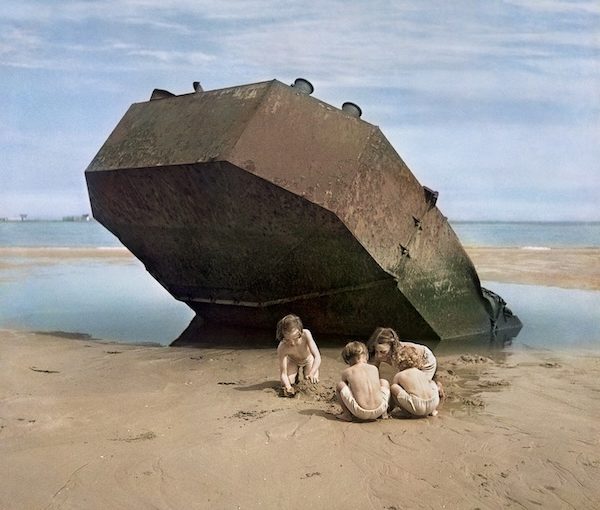
A photograph by David Seymour (Chim) of children in Normandy, in 1947. Part of the exhibit Chim’s Photojournalism: From War to Hope, at the Zack Gallery until June 15. (photo from Ben Shneiderman)

The new show at the Zack Gallery, Chim’s Photojournalism: From War to Hope, features one of the most influential photographers of the 20th century – David Seymour (known as Chim). Chim was killed in 1956, a few days before his 45th birthday, while photographing the Suez Crisis in Egypt, but his legacy lives on even now, almost 70 years after his tragic death. 

Gallery manager Sarah Dobbs told the Independent that Ben Shneiderman, Chim’s nephew and the manager of his estate, approached her about the show.

“I was immediately intrigued,” she said. “I met with him and asked if we could host the exhibition. I recognized its importance to the community at the JCC and also to the city of Vancouver. It is a rare opportunity to showcase such an amazing photojournalist. It made sense to host it during the Festival of Jewish Culture in May. I met with the art committee here, and they agreed.… This is the first time these works will be shown together in Canada.” 

According to Dobbs, the exhibit was initiated by Cynthia Young, a curator at the New York International Centre of Photography, using vintage prints in their collection.

“Then, the Illinois Holocaust Museum & Education Centre produced the 51 modern prints for their showing,” Dobbs said. “Later, they were presented in Portland, Ore., at their Jewish museum and Holocaust education centre. I flew down to Portland to see the exhibition while it was there and chatted with the curators.”

To package and ship the display to Vancouver, Dobbs needed funds. “I applied for grants and approached individuals,” she said. “In addition to the shipping cost, we also had a special wall built inside the gallery. It will serve us for other exhibitions, moving forward.” 

The show preview on April 22 was a joyful event, presided by Shneiderman, who shared with guests his intimate knowledge of his uncle’s work and life. 

David Seymour was born in 1911 in Warsaw. His father, Benjamin Szymin, was a respected publisher of Yiddish and Hebrew books. As a young man, Seymour studied printing in Leipzig and, later, chemistry and science in Paris. He wanted to become a scientist. Meanwhile, photography fascinated him. He started taking photographs and selling them to support himself financially, and unexpectedly found a passion for humanitarian photojournalism. His first credited photographs appeared in the French magazine Regards in 1934. 

Interested in social issues, Seymour photographed labourers and political rallies, famous actors and street scenes. At that time, he adopted his professional name, Chim, a simplification of his last name, Szymin.    

Between 1936 and 1938, as a photojournalist, Chim documented the Spanish Civil War and other international political events. Twenty-five of his Spanish stories were published in Regards. Several of those photos are included in the Zack show. One of them, a close-up of a nursing mother looking up, obviously troubled (1936), is well known. Shneiderman said several history scholars studied this photograph and concluded that it was one of the inspirations of Picasso’s 1937 masterpiece, “Guernica.” Chim’s photo of Picasso in front of “Guernica” positions the painting’s detail of a woman looking up at the falling bombs, right behind the artist. 

In 1939, Chim escaped the unfolding war in Europe for Mexico and, later, the United States. As a multilingual and Sorbonne-educated journalist, he served in the US military intelligence as a photo-interpreter. After the war, he resumed his photojournalism career. 

In 1947, he and a group of his friends, like-minded photographers, founded Magnum Photos, a cooperative run by photographers. Chim served as Magnum president from 1954 until his death. 

Chim’s postwar photographic stories are a blend of anguish and hope. Many of the images are on display at the Zack, divided into several distinct sections. The biggest section is “The Children of Europe.”

In 1948, Chim took a UNESCO assignment to report on the plight of the 11 million European children displaced by the war. He visited Italy, Greece, Hungary, Austria and other European countries. He photographed children who were maimed and orphaned, children playing beside ruins or working in print shops or begging in the streets.

“When LIFE magazine published a spread of those pictures,” Shneiderman said, “together with a list of organizations that accepted donations on behalf of those children, the pouring in of donations was unprecedented.”  

Another series of photographs focused on postwar Germany. One of the most poignant ones in this series shows a section of a beach divided by barbed wire – the border between West and East Germany. A couple of boys lounge on the sand. A young woman in a swimming suit runs towards the water. In the foreground, a border guard in uniform stands grim and watchful with his guard dog and his rifle. Tension thrums through the image, underlined by questions and uncertainties.          

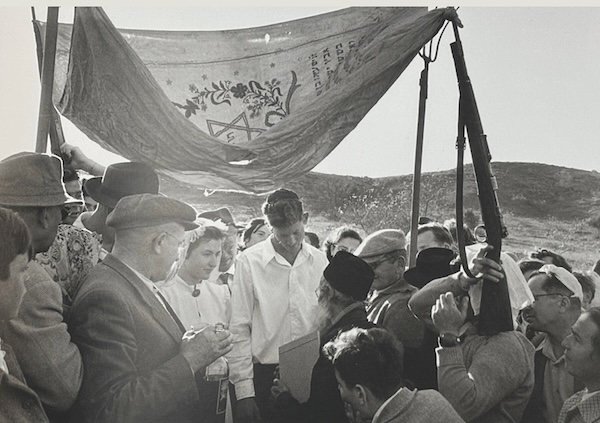
On the other hand, Chim’s Israeli photographs of the early 1950s are infused with hope. A man lifts his baby to the sky in elation – the first baby born in his village. A wedding is celebrated under the chuppah, its makeshift poles including a gun and a pitchfork. An Independence Day parade rolls through Tel Aviv. A team of fishers proudly display their catch of the day to the photographer. 

photo - A photograph by David Seymour (Chim) of a wedding in Israel, in 1952
A photograph by David Seymour (Chim) of a wedding in Israel, in 1952. (photo from Ben Shneiderman)

In all his visual stories, Chim is always there with his subjects. They are his co-authors. 

“It is that emotional connection that made many celebrities willing to pose for him,” said Shneiderman.

Chim photographed Ingrid Bergman and Audrey Hepburn, Sophia Loren and Picasso, and many others. These photographs are not included in the show, but, together with those that are included, they portray their creator as a man of courage, integrity and vision, one of the best photographic artists of the 20th century.    

“Is photojournalism art?” Dobbs mused. “Yes, I think so. Photojournalists capture a moment, an interaction at a specific time. Contemporary art is a mirror of our times. It reflects the societal changes, cultural shifts and significant events that shape our world. It is what the best photojournalists, like Chim, do.” 

Dobbs is certain that Chim’s work is still relevant.

“It continues to inspire and draw attention. It teaches photographers to get close to their subjects,” she said. “His images remind us of the past, of the destruction of war, but also of the humanity that transcends it, and of peoples’ resilience.” 

Chim’s Photojournalism: From War to Hope is on display until June 15. It is sponsored by the Averbach Foundation, Esther Chetner, the Yosef Wosk Family Foundation and the Government of Canada, in partnership with Shneiderman, Magnum Photos, the International Centre of Photography in New York, the Jewish Community Centre of Greater Vancouver and the Jewish Federation of Greater Vancouver.

For more information and to see a selection of photos, visit davidseymour.com. 

Olga Livshin is a Vancouver freelance writer. She can be reached at [email protected].

Format ImagePosted on May 9, 2025May 8, 2025Author Olga LivshinCategories Visual ArtsTags Ben Shneiderman, children, Chim, David Seymour, history, Israel, photography, photojournalism, Sarah Dobbs, war, Zack Gallery
Honouring Israel’s fallen

Honouring Israel’s fallen

Geoffrey Druker leads the Vancouver Yom Hazikaron ceremony at Temple Sholom on April 29. (photo by Pat Johnson)

On the morning of Oct. 7, Sgt. Tomer Nagar started his guard duty at 6 a.m. on the Israel Defence Forces base at Kibbutz Kissufim, near the Gaza border. 

He was alone with his weapon and the standard 675 rounds of ammunition. Half an hour into his shift, the base was hit by massive mortar fire, then swarmed by Hamas terrorists. The surveillance soldier who was monitoring the border told Nagar to retreat because he was massively outnumbered.

Nagar chose to ignore the instructions and remain at his post, intending to prevent or delay the terrorists’ entry into the base, to give his colleagues time to prepare and to fight for their lives. The battle went on for hours. 

“The Kissufim base did not fall into the hands of Hamas,” said Geoffrey Druker, as he began the annual Vancouver ceremony marking Yom Hazikaron, the day of remembrance for the fallen of Israel’s wars and all victims of terror, April 29, at Temple Sholom. “But 13 Golani solders and three from the Egoz unit were killed. When they finally reached Tomer Nagar, they found his body. Around him lay 675 empty bullet casings. He fought ’til his last bullet. He was 21 years old.”

Members of the British Columbia Jewish community lit candles in memory of loved ones, family and friends who have died during the 77 years of Israel’s existence as a state. The day of remembrance closed the following night at Congregation Beth Israel, prior to Yom Ha’atzmaut, Israel Independence Day, celebrations.

Druker, who for many years has led the local commemoration, highlighted instances in which fighters risked and often lost their own lives to prevent the advance of terrorists, thereby saving countless lives.

There were 31 police officers securing the 3,500 or so attendees at the Nova music festival. Equipped mostly with handguns, the officers held off as many infiltrators as possible. In the process, 16 of the 31 were killed, as were another five officers from teams that arrived as reinforcements. 

“Their battle helped prevent the terrorists from penetrating deeper into Israel and attacking other communities,” said Druker. 

Nearby, in the city of Sderot, the police station was attacked by Hamas terrorists in white pickup trucks, armed with anti-tank rockets. Seven police officers raced to the roof of the station to fight off dozens of attackers. With limited ammunition, they held out for nine hours. A special rescue unit managed to reach the scene and save most of the officers, but Mor Shakuri, one of two police on site that day, was killed. She was 28.

Inbar Heyman was a world-renowned graffiti artist, whose works can be seen throughout Tel Aviv under the name Pink. She attended the Nova festival to provide emotional support to the attendees.  

“When the attack started, she hid, and then tried to flee,” Druker said. “Around 1 p.m., she was caught and could be seen taken on a motorcycle into Gaza. Her family waited in fear to hear her fate – 71 days they waited until they were told she was murdered in captivity. She was 27 years old.” 

Inbal Binder and Raz Shifer, friends of Heyman who were with her at the festival, were in Vancouver. They lit a candle in her memory and read Yizkor.

At the IDF base at Nahal Oz, 54 soldiers were killed after the kibbutz was overtaken by Hamas on Oct. 7. These included 15 tatzpitaniyot, female surveillance soldiers. Another seven tatzpitaniyot were taken hostage in Gaza.

“One was later rescued by the IDF,” said Druker, “and one, Noa Matziano, was murdered at the Shifa hospital in Gaza. It took 482 days until the final tatzpitaniyot returned home in January this year.”  

Among those killed at Nahal Oz on Oct. 7 was Roni Eshel, the eldest daughter of Eyal and Sharon Eshel’s three children. 

“She would typically end her text messages to her family, signing off with five emoji hearts, one for each family member,” Druker said. “On the morning of Oct. 7, when attacked, she was texting her parents. It was the last morning of her life. She ended her message with four hearts. Later, her father Eyal said, ‘I should have realized then what she was telling us.’” 

Ruthie Mizrahi, a Vancouverite who is a childhood friend of Eyal Eshel, lit three candles at the ceremony – one for Roni Eshel, one for Rotem Dushi, whose father Yaron was an army friend of Mizrahi, and one for her uncle, Oded Lifshitz, a founder of Kibbutz Nir Oz, whose family had to wait 503 days to hear that his body had been identified. 

Kfar Aza was the first kibbutz Hamas conquered on Oct 7. An estimated 250 terrorists entered the kibbutz, murdering 64 residents and taking 19 hostage.

Vancouverite Micha’el Richenshtein’s father, Eliyahu (Aliko) Reichenstein, was among those murdered. Richenshtein lit a candle in memory of her father and all who were murdered on Kibbutz Kfar Aza.

More than 300 terrorists invaded Kibbutz Be’eri, where they murdered 102 people and took 32 civilians hostage. Among the hostages was Carmel Gat, who was later found executed with five others, murdered as the IDF advanced on their location in Gaza. Lynn Adam Saffery, a British Columbian who is a member of Gat’s extended family, lit a candle of remembrance. 

Mushon Mizrachi recited kaddish for his nephew, Ben Mizrachi, the Vancouver-raised IDF medic who died a hero saving others at the Nova festival.

Other fallen were also commemorated.

Dany Guincher made aliyah with his family from Chile and, in 1967, joined the IDF, became a tank crew member, a commander and then an officer.

“On the sixth of October 1973 – Yom Kippur – Egypt and Syria tacked Israel,” said Druker. Guincher was then studying at university in Pennsylvania, but he managed to find a flight back to Israel. 

“He was greeted at the Ben Gurion Airport by his brother, Lito,” Druker said. “Dany joined the forces in the Sinai and led his tanks into battle in the city of Ismailia. On the 23rd of October 1973, his tank was hit and Dany Guincher was killed.” 

Lito, who was a member of the Vancouver community, has since passed away, but his son-in-law, Jack Micner, who is married to Dany’s niece Karen, lit a candle in Guincher’s  memory and read Yizkor.

Also present was Zev Tanne who, with his 17- and 18-year-old classmates of Mikveh Israel agricultural school, fought in the 1948 War of Independence as part of the elite Palmach unit of the Haganah. He survived a battle in which 11 of his classmates were killed.  

Lihi Shushan and Or Shukrun, shinshiniyot (teen emissaries), honoured fallen soldiers and civilian casualties from Vancouver’s partnership region in the Upper Galil.

Ruchot Hatzafon, headliners of the following evening’s Yom Ha’atzmaut celebration, performed. 

Druker thanked the Jewish Federation of Greater Vancouver for supporting and Temple Sholom for hosting the event, as well as the musicians who performed.

Israel’s deputy consul general for Toronto and Western Canada, Shani Azulai, addressed the event in a recorded video message.

Rabbi Eliahu Barzilai of Congregation Beth Hamidrash recited El Moleh Rachmim.

Format ImagePosted on May 9, 2025May 8, 2025Author Pat JohnsonCategories LocalTags Geoffrey Druker, Israel, memorial, Oct. 7, terrorism, war, War of Independence, Yom Hazikaron
Emergency medicine at work

Emergency medicine at work

Dr. Oren Wacht of Ben-Gurion University of the Negev will be in Vancouver this month, giving a public lecture May 25 and promoting Heartbeat of Education, a project geared to helping more Israeli paramedics further their education in emergency medical services. (photo from BGU Canada BC & Alberta Region)

Dr. Oren Wacht, who heads the department of emergency medicine and is the academic director of the Field Family Medical Simulation Centre at Ben-Gurion University of the Negev, will be in Vancouver May 23 to 25. As part of his visit, he will speak to the community on May 25, 7 p.m., at an event titled Emergency Medicine in Action: Healing the Negev Post-Oct. 7.

An experienced emergency medical technician and the first paramedic in Israel to receive his PhD, Wacht serves, too, as a volunteer paramedic for Magen David Adom, Israel’s national emergency service.  Since Oct. 7, 2023, he has seen months of active service between his teaching and training responsibilities.  Thousands of BGU faculty, staff and students were called to serve after the Hamas attacks.

Wacht said his May 25 talk will be about his department, which trains paramedics, and will briefly touch upon his own experiences as a paramedic. 

“Since the war, I have spent most of the time in the military, in the infantry, as a paramedic,” he told the Independent. “I am trying to combine this with my work at BGU as a head of department and researcher, and, of course, my personal life and family. It is very challenging, but there is no other choice.”

Wacht’s visit to Vancouver will promote Heartbeat of Education, a project geared to helping more Israeli paramedics from all walks of life access and earn a bachelor’s degree in emergency medical services (EMS).

As the national EMS system,  Magen David Adom (MDA) has very close ties with the program. In February 2022, MDA and BGU signed an affiliation agreement as part of an academic initiative designed to improve training for paramedics and EMTs. The affiliation, believed to be the first between a national EMS service and a university, strives to bolster the quality of pre-hospital emergency care in Israel and elsewhere. 

“We want Israel to have the best paramedics and, with the program’s support, we can help our students go through our very intense program with less financial stress,” Wacht said. 

“Our program is unique,” he added, “because students do EMS shifts at MDA from the first year of studies. We are incredibly excited about this opportunity – and being able to support our students, especially since the war, is one of the most important things we need to do.”

In Israel, MDA paramedics are among the first on the scene in emergencies to provide critical care.  However, many paramedics lack the financial means to pursue higher education. The purpose of the Heartbeat of Education program is to enable paramedics to take on more specialized roles within the health-care system, bring enhanced expertise to emergencies and thereby save more lives and improve outcomes, drive innovation and support a diverse, inclusive environment that can provide life-saving services to everyone who lives in Israel.

Wacht also has created a summer program, in English, in emergency medicine at BGU. It will open this year, from July 20 to 30, and is geared towards laypeople and professionals alike. The program uses the extensive experience of tactical medicine – the delivery of care in hostile or high-risk situations that integrates medical and tactical operations to preserve life – at BGU and brings it to people in the course in a realistic environment at the school’s medical simulation centre. In addition to offering graduates a certificate from BGU, the program hopes to provide participants with the confidence to handle demanding medical challenges. 

The Field Family Medical Simulation Centre occupies four floors of the Rachel and Max Javit Medical Simulation and Classroom Building at BGU.  It includes classrooms equipped with medical devices, advanced simulators and research laboratories, and features state-of-the-art medical simulation rooms to train doctors, nurses and paramedics.  The rooms are designed to reflect real-life medical situations, such as cardiopulmonary resuscitation, procedures for trauma victims and emergency surgeries.

Since Oct. 7, many medical teams, from army and civilian organizations, have asked for guidance at the centre, and the centre has helped prepare many Israel Defence Forces teams. 

“Despite the challenges we face, and despite the fact that a significant part of the team has been called up for reserve duty, hospitals and MDA, this is our small contribution, and we stand united with the medical community in these difficult times,” Wacht said in October 2023. 

“The support of Jewish people from around the world gives all of us, and me personally, a lot of strength in these challenging times,” Wacht told the Independent. “We invite readers to visit BGU and see the fantastic work in many fields of research.”

To register for the Metro Vancouver event, visit bengurion.ca/events/vancouver-events. 

Sam Margolis has written for the Globe and Mail, the National Post, UPI and MSNBC.

Format ImagePosted on May 9, 2025May 8, 2025Author Sam MargolisCategories LocalTags Ben-Gurion University, education, emergency medicine, Israel, Magen David Adom, Oct. 7, Oren Wacht, paramedics, speakers, terrorism
An almost great movie 

An almost great movie 

Coexistence, My Ass! follows Israeli activist and comedian Noam Shuster Eliassi as she develops her show of the same name. (photo from DOXA)

Coexistence, My Ass!, directed and produced by Amber Fares, is almost a great documentary. But it fails to ask at least two key questions that would have made for a more in-depth portrayal of an interesting and complex human being. 

Coexistence, My Ass!, whose May 4 screening at the DOXA Documentary Film Festival already has sold out, is about comedian Noam Shuster Eliassi, who was born in Wahat Al-Salam / Neve Shalom / Oasis of Peace, a village in which Jewish and Palestinian Israelis have chosen to live together. It has been considered a model of coexistence and  Shuster Eliassi grew up amid the idealism it represented, and speaks Arabic fluently. She and her best friend (to this day), Ranin, a Palestinian Israeli living in Oasis of Peace, were among the kids trotted out as the generation who would bring peace. 

Shuster Eliassi’s mother is Jewish Iranian and her father is Jewish Romanian. The couple met in high school (in what country is not revealed), so basically grew up together. They decided to live in Oasis of Peace and became, says Shuster Eliassi in her act, what most Israelis love to hate most: woke, progressive leftists. “They believe in the radical idea that Israelis and Palestinians deserve the same equal human rights! Crazy. So radical.”

It seems important to know why Shuster Eliassi’s parents left their respective countries to live in Israel, but especially her mother. With Iran as the main funder of Hamas’s – and other terrorists’ – murderous activities, and the fact that tens of thousands of Jews had to flee after the 1979 revolution, it seems that Shuster Eliassi’s mother’s experience is crucial to understanding Shuster Eliassi. But this question, if ever asked, doesn’t make it into the film.

Shuster Eliassi is an intelligent and accomplished person. By age 15, she had graduated, so to speak, from being one of the kids giving flowers to visiting celebrities (who would often mistake her, because of her dark skin, for being Palestinian – and with such good Hebrew!) to speaking around the world about coexistence and the possibilities for peace. At 21, she got a full scholarship at Brandeis University for being a peace activist. She even met the Dalai Lama, who, she quips, didn’t think she was Palestinian –  “He just thought I was Indian.”

At 25, Shuster Eliassi landed a “peace worker’s dream job” – a position at the United Nations. We don’t learn much about what her job entailed, but there are clips of her speaking about the West Bank and Gaza as being the biggest prisons in the world, and how “the occupation” affects Palestinians and Israelis. Career-wise, she was on a wave of success, she says in her show, when she saw Ukrainian President Volodymyr Zelenskyy’s TV program, made before he was elected, about a comedian who becomes president. Zelenskyy, of course, then did become president, so Shuster Eliassi observes that, if she wanted to take her political career seriously, she needed to start writing jokes.

photo - Comedian Noam Shuster Eliassi in performance
Comedian Noam Shuster Eliassi in performance. (photo from DOXA)

This takes us to where the film begins, with her at Harvard in 2019, where she’s been asked to deliver a peace-building project. She tells them that Coexistence, My Ass! will be that project, and she’s accepted.

In the documentary, we see the development of Coexistence, My Ass! and how Shuster Eliassi’s views change as the political situation in Israel deteriorates and the violence increases. Her parents are often her sounding board, as are friends and fellow comedians. We witness the results of a hate crime – the school in Oasis of Peace was set on fire in September 2020. We see moments of happiness, most unexpectedly, perhaps, when Shuster Eliassi returns to Israel from the United States with COVID and must be quarantined in a hotel, where sick Jews and Palestinians are being isolated from the general population.

“And everyone is radically getting along. This is a 5-star oasis of peace. If they continue getting along, my comedy career is over. Just kidding, you’ve read the news, I have material for years. Netanyahu has my back,” says Shuster Eliassi in her act. “Somebody give him a beeper,” she adds sheepishly, referring to Israel’s taking out of Hezbollah with exploding pagers in September 2024.

Months before Oct. 7, 2023, Shuster Eliassi was disillusioned and would get into yelling matches with Jewish Israelis protesting the Netanyahu government and dangers to democracy because their protests didn’t also explicitly call for equal rights for Palestinians. Whereas pre-COVID, she says, “My biggest responsibility is to speak to my people…. The Jewish audience is where we have to work,” the purpose of Shuster Eliassi’s comedy ceases at some point to be a way to encourage peace and becomes a form of resistance.

After Oct. 7, when some of Shuster Eliassi’s family and friends abandon their belief in coexistence because they feel peace with Palestinians isn’t possible, Shuster Eliassi goes the other way, giving up on coexistence because she feels – though doesn’t state explicitly – that peace with Jewish Israelis is not possible. 

Moria, a comedy writer, advises Shuster Eliassi that people need to hear what Shuster Eliassi has to say, but it can’t just be “genocide, genocide!” The role of a comedian, says Moria, is “to bring people together. To unify. We can’t stop the killing, but we can unify people. To get people to see the world through your eyes.”

“No, that’s not what I’m doing,” responds Shuster Eliassi, who explains that her goal isn’t to unify, it’s “to voice resistance to this insane show of force that has swept everyone up blindly.”

Shuster Eliassi’s friend Ranin reluctantly retains hope for coexistence because, otherwise, she tells Shuster Eliassi, there is no place for Palestinians and Arabs within Israel. For Shuster Eliassi, though, by the end of the film, there seems to be no place for Jews in Israel. She only sees fault with Israel, and somehow thinks that Hamas wouldn’t want to kill all Jews if Israel had dealt with “the occupation.”

If memory serves, Hamas is only mentioned once in the documentary, in a clip from Shuster Eliassi’s show, where it is part of a joke, perhaps one told before 2023, it’s not clear. Why Hamas plays little or no role in Shuster Eliassi’s view of the evolving situation is the second of those two key questions that would have made Coexistence, My Ass! a better film. 

While Shuster Eliassi laments that Israelis – even the coexistence crowd – are not able to meet Palestinians where they’re at, she is unable to meet her fellow Jewish Israelis where they are at. While she is comfortable performing at a Palestinian festival where she’s greeted by a man wearing a “Palestine vs the world” T-shirt that, on the back, has a Palestinian flag over all Israel, she isn’t comfortable with Israelis who would fill out that same map with no Palestinian territories. While she is correct that peace is only possible between equals, she only sees one oppressor – Israel. Not Hamas. Not any other international party, like Iran. Just Israel. 

Many of the people at the sold-out screening of Coexistence, My Ass! will think it’s the most amazing film ever because, despite attempting to be fair – and it seems like Fares honestly did try to present multiple sides – it ultimately heralds their anti-Zionist beliefs and justifies them. Others will be disappointed that Coexistence, My Ass! ends up being just another anti-Israel film, which will, no doubt, win more awards than it has already, despite its critical flaws. 

Format ImagePosted on April 25, 2025April 24, 2025Author Cynthia RamsayCategories TV & FilmTags coexistence, comedy, Gaza, identity, Israel, Israeli-Palestinian conflict, Neve Shalom, Noam Shuster Eliassi, Oasis of Peace, Oct. 7, politics, storytelling, Wahat Al-Salam, war

הדמוקרטיה בישראל נחלשת בזמן שהציבור אדיש

הדמוקרטיה בישראל הולכת ונחלשת וראש הממשלה הכוחני שחושב רק על טובתו מנצל את המצב, בזמן שהציבור הרחב נשאר אדיש. כך דמוקרטיות מוחלפות בדיקטטורות ותופעה מדאיגה זו הולכת וצוברת תאוצה

ראש הממשלה המושחת, בנימין נתניהו, מחזיק במושכות השלטון כבר שבעה עשרה שנים והוא לא חושב לפרוש. הוא מנהל את המדינה ביד רמה, עושה כרצונו ומחליף את אלה שמתנגדים לו בנאמנים חלשי אופי שיסורו למרותו. נתניהו התעשר על חשבון ישראל ולמרות שכיסיו נפוחים הוא לא חושב בכלל לפרוש. יש המאמינים שבבחירות המתוכנות בישראל בסוף השנה הבאה, נתניהו יובס ויעלם מהמפה. אך לא בטוח כלל שזה יקרה כאשר האופוזיציה בישראל היא כה חלשה ולא רלוונטית. מתנגדי נתניהו האמינו שהוא יעלם לאחר אירועי השבעה באוקטובר וזה לא קרה. לאחר מכן הם חשבו שעד סוף שנה שעברה, ממשלת נתניהו תיפול וגם זה לא קרה. הנוכל נתניהו עושה כל הזמן מאמצים עיליים להמשיך להחזיק במושכות השלטון, תוך שהוא מרפד את מקורביו. אצל נתניהו רשימת האחראים לכישלון הנוראי של השעבה באוקטובר היא גדולה וכוללת את ראשי הצבא ומערכת הביטחון, אך לא אותו. כרגיל כמו בכל שנות שלטונו נתניהו מעולם לא לקח אחריות על מעשיו ומחדלים הרבים. הוא זה שטיפח את החמאס בכסף גדול שהגיע קטאר, ולא מן הנמנע שגם הוא קיבל כמה מזוודות של כסף לחשבונותיו בחו”ל. בטימטומו כי רב במקום לחזק את הרשות הפלסטינית ולהחליש את החמאס נתניהו עשה את הבחירה הלא נכונה

לנתניהו יש עדת מעריצים לא קטנה שיעשו הכל כדי שימשיך להישאר על כיסא המלך. זה בכלל לא מעניין אותם שהוא מושחת, שהוא אחראי הראשי לכישלון הביטחוני הגדול ביותר בתולדות ישראל, ושהוא אחראי על פירוק ופילוג החברה בישראל ועוד ועוד. אצל תומכי נתניהו התהליכים המשפטיים נגדו אינם חוקיים והם מנוהלים על ידי גורמים המתנגדים לו. זה הרי לא חדש שעבריינים לא יקחו אחריות על מעשיהם ויאשימו את מערכת המשפט בחוסר צדק. כך גם אצל נתניהו ואנשיו

מכר מהעבר ציין בפני נתניהו ניהל את המלחמה מאז השבעה באוקטובר בהצלחה מרובה ומגיע לו ציון לשבח על כך. אני לא זוכר שבישראל מישהו ציין את הצלחתה של ראש הממשלה, גולדה מאיר, לנהל את המלחמה אחרי השישה באוקטובר בה נפתחה מלחמת יום כיפור, לאחר האחריות הגדולה שלה לכישלון ההוא, שהוא מתגמד לעומת הכישלון של נתניהו בשבעה באוקטובר. מאיר חשבה אפילו להתאבד לאחר פריצת מלחמת יום כיפור אך זה לא יקרה אצל נתניהו, כי הרי מי שלא לקח מעולם אחריות על מחדליו הרבים ישן בשקט גם לאחר השבעה באוקטובר

אותו מכר מצא גם במדויק את האשם האחראי למחדל השבעה באוקטובר. אצלו כמובן זה לא נתניהו אלה “אלוהים שהעניש אותנו”. דברי שטות הבל אלו מוכיחים עד כמה בישראל של היום לא מנסים להוריד את נתניהו, אלה דווקא מנסים לחזק אותו

כאמור הדמוקרטיה בישראל הולכת ונחלשת וזה לא טעות, אלה מעשה מכוון על ידי נתניהו ואנשיו. אך ראוי לציין כי באותו זמן מרבית הציבור הישראלי נשאר אדיש, לא יוצא לרחובות ולא עושה מספיק כדי להיפטר מנתניהו הנוכל

האופוזיציה בישראל חלשה בצורה מבישה ולא נמצאים מנהיגים רציניים שיכולים לאיים על הכוחנות של נתניהו. באם הציבור בישראל לא יתעשת במהרה ויפעל בכל דרך להחליף את נתניהו, ישראל תמשיך בשקיעתה אל מחוזות גרועים מאוד

Posted on April 16, 2025Author Roni RacCategories עניין בחדשותTags democracy, Israel, Netanyahu, Oct. 7, politics, דמוקרטיה, ישראל, נתניהו, פוליטיקה, שבעה באוקטובר
Healing from trauma of Oct. 7

Healing from trauma of Oct. 7

Healing Space has treated more than 20,000 people since it began in response to the trauma caused by the Oct. 7 terror attacks and the ensuing war. (photo from Healing Space)

“It’s important to talk about it because there are still hostages who have been living Oct. 7 every day for over a year-and-a-half. It’s important to talk about it because antisemitism around the world is growing stronger, and there are people who deny or justify the horrors we went through that day. This is not a political matter – it’s a matter of humanity. It’s about human lives,” Raz Shifer, a survivor of Hamas’s horrific terror attack on the Nova music festival, told the Independent.

Shifer, who lives in Giv’atayim, Israel, will be joining Vancouver’s community Yom Hazikaron ceremony on April 29 and Yom Ha’atzmaut celebration on April 30. Another Nova survivor, Inbal Binder, from Petah Tikva, will be coming here as well, and she and Shifer will, among other activities, participate in the events, visit several local Jewish schools and address Federation’s Regional Communities Conference.

Also coming to Vancouver is Dr. Ilana Kwartin, chief executive officer of Healing Space Rishpon, where both Shifer and Binder have participated in workshops and treatments. She has some meetings lined up, but the Israel-related events are the main purpose of the visit.

“In addition, I’m happy to meet people one-on-one or book speaking engagements for groups, communities and teams, where we can share the story of our work and, through that, the story of Israel at this time,” she said.

Healing Space Rishpon was created by Dr. Lia Naor in response to the trauma caused by the Oct. 7 attacks and the ensuing war. With Ra’anan Shaked, therapists and volunteers, Naor set up a centre at Ronit Farm in Sharon that operated for just over a month. With Patrizio Paoletti and Rani Oren, a permanent base was then established in Rishpon. Since Healing Space began, more than 140 therapists have given almost 60,000 hours to treating more than 20,000 people in 16 trauma-healing modalities. 

Kwartin became CEO right after Oct. 7. She and her family live in Eliav, a yishuv she helped found, which is in the northern Negev, abutting the separation barrier.

“The Black Shabbat of Oct. 7 upended my life, like it did for so many others, and as we – individuals, families, communities and a nation – mourn, work to pick up the pieces, mend what can be repaired and rebuild where it cannot, I put my personal and professional background to use as the CEO of this one-of-a-kind haven,” she told the Independent.

photo - Dr. Ilana Kwartin, chief executive officer of Healing Space Rishpon, is coming to Vancouver with Nova music festival survivors Raz Shifer and Inbal Binder for Yom Hazikaron and Yom Ha’atzmaut
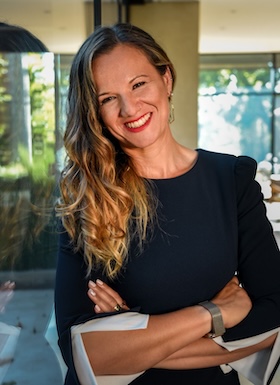
Dr. Ilana Kwartin, chief executive officer of Healing Space Rishpon, is coming to Vancouver with Nova music festival survivors Raz Shifer and Inbal Binder for Yom Hazikaron and Yom Ha’atzmaut. (photo from Healing Space Rishpon)

Kwartin was born in the former Soviet Union and made aliyah in 1987, growing up in Jerusalem. “As an officer in the IDF, I served as a tatzpitanit [spotter] in Nachal Oz and later as a founding commander of the Netzarim observation post, and the tragedy of the tatzpitaniyot struck me deeply,” she said, referring to the female military unit that warned of a potential terrorist attack and whose soldiers were among the first killed and kidnapped on Oct. 7.

With BAs in law and psychology from Hebrew University of Jerusalem, Kwartin earned an MA in conflict resolution from Ben-Gurion University of the Negev. Her book, Imprisoned, came from her PhD dissertation on honour-based confinement, which she did at Bar-Ilan University. The stories have inspired activist initiatives across Israel and informed legislation, she said.

Kwartin lectured in law at Sapir College, where she built their legal internship placement program and founded a centre of legal activism, A House of their Own. “More recently,” she said, “I spent three years on shlichut in Los Angeles as the director of Jewish Agency operations on the West Coast. With the outbreak of war in Ukraine, I traveled to the Ukrainian border to help rescue Jewish refugees and bring them to Israel.”

Kwartin’s work at Healing Space Rishpon changes every day. “The programs are so varied and cover many groups of the Israeli population,” she said. “But the most meaningful part is the people who work here – very similar to me, they left everything they were doing and started working at Healing Space to repair the emotional damage we all see around us. They work tirelessly, in uncertain conditions, long hours, doing the hardest work imaginable. It is thanks to the team that Healing Space makes such a big difference in people’s lives.”

Binder found out about Healing Space inadvertently.

“I had heard there was a treatment centre you could go to, but I wasn’t in a mental state that allowed me to reach out for it,” she explained. 

“Later on, I was looking for something that could get me out of the house in the mornings and help create a daily routine. By chance, I came across an ad for a new rehabilitative employment program at Healing Space and it sounded amazing – working with my hands, being in a warm and supportive environment, where I could focus on myself and begin a new movement in my life.”

Binder worked as a beautician before Oct. 7 and, while not currently working, she is taking courses, most recently completing one in conscious psychotherapy. She started going to Healing Space early in the war. It “was the first time I realized that another way was possible – that someone was truly listening to me,” she said.

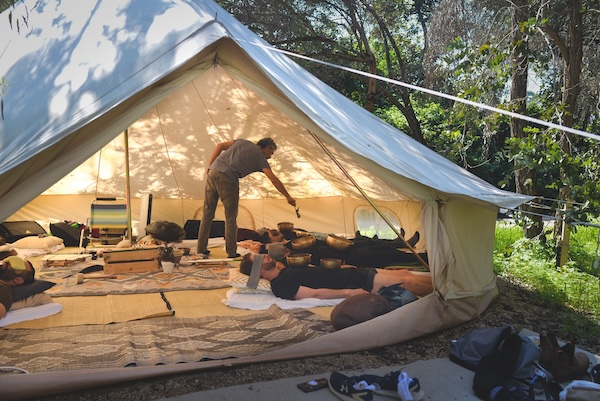
“More than that, I got to experience treatments I never imagined I’d try, like sound healing and yoga therapy. These are treatments I still do to this day, to help maintain my emotional balance and regulate my body.”

At Healing Space, she added, “Even my mom, who was never really drawn to holistic healing, found a deep connection with one of the therapists and opened her heart to her – that really moved me.”

photo - Group gathered outside at Healing Space Rishpon
A group gathered outside at Healing Space Rishpon. (photo from Healing Space)

From a place of not wanting to do anything or face anything, Binder said, “I now want to grow. I want to move forward and live a good life. And none of this would have happened without the process I went through over the past six months.”

Binder’s Vancouver visit will be the first time she is telling her story publicly. 

“Honestly,” she said, “it’s a little overwhelming to come and talk about my healing journey. It also means recognizing my story – and that alone is a challenge for me. I feel both excited and nervous – telling my story for the first time and receiving acknowledgment for it.

“It’s important for people to hear about the massacre because it was a Holocaust repeating itself,” she said. “The Jewish people are once again in danger, and it’s crucial to echo these stories, to make sure people know and remember.

“Beyond that, the connection between Jews in Vancouver and Jews in Israel – to build strong, deep connections across Jewish communities around the world – that connection is what has always kept us strong as a people.”

Binder attended the Nova festival with her sisters.

“It was actually the first evening that my sister’s boyfriend was introduced to our parents,” she said. “From there, the four of us drove to the party in the south.

“In the morning, when the rockets started, I called my mom to let her know and said we were heading home. We got delayed near the party because one of our friends had a panic attack, and we waited with her.

“We made it to the car, but it took time to decide what to do. At 8:30 a.m., the boyfriend took the lead, called his father, picked us up in the car, and we escaped through the fields. His father navigated him over the phone throughout the whole drive, and that’s how we managed to get out safely. Which is crazy in itself – the reality was so different for so many others. It felt like we were in a divine bubble that protected us.”

“It was the scariest day of my life,” said Shifer of Oct. 7. “I didn’t know if I would make it back home or not, and I didn’t know which of my friends would survive. It was a feeling of helplessness, complete loss of control and sheer terror.”

Unlike Binder, who is only now beginning to share her story, Shifer – who is an actor, singer and artist – has been interviewed by media around the world and has spoken at schools, universities and synagogues.

“I also found myself advocating and telling our story through music during performances,” she said. “In addition, I led tours for people who came to the Nova site and shared my personal story with them.”

Initially, Shifer refused to leave her house after Oct. 7.

“Friends told me there was a place where survivors go to heal, but I was too afraid to go outside and couldn’t bring myself to get there,” she said. “Then, one day, a volunteer came to my home and helped me take that first step – to leave the house and arrive at Healing Space. From that day on, something opened up in me, and I began coming every week.”

Healing Space has helped Shifer cope with her trauma in many ways.

“First of all, the location,” she said. “You arrive at a place full of trees and greenery – everything is peaceful and calming.

“There’s something comforting about sitting among people who have been through something similar to me,” she continued. “The therapists at the centre are kind and embracing. The shared music circles helped me find my way back to music. But, more than anything, it’s the feeling that I’m not alone. That I am seen. That there’s a place that can hold me.”

photo - People at Healing Space Rishpon have had similar experiences
People at Healing Space Rishpon have had similar experiences. (photo from Healing Space)

The body treatments have allowed Shifer to release some stress and start letting down her defences.

“The long-term project I joined under Healing Space gave me the tools to return to a routine and become an active human being again,” she said. “Healing Space is a deeply meaningful part of my recovery process – and I honestly don’t know what I would have done without them.”

To register to attend Yom Hazikaron or buy tickets ($18) for Yom Ha’atzmaut, visit jewishvancouver.com. 

Format ImagePosted on April 11, 2025April 10, 2025Author Cynthia RamsayCategories LocalTags healing, Healing Space Rishpon, health, Inbal Binder, Israel, Jewish Federation of Greater Vancouver, Nova music festival, Oct. 7, Raz Shifer, trauma, Yom Ha'atzmaut, Yom Hazikaron
Film Fest starts soon

Film Fest starts soon

Sabbath Queen is a film about the life of Amichai Lau-Lavie, part of a rabbinic dynasty going back 38 generations. (still from film)

The 36th annual Vancouver Jewish Film Festival runs April 24 to May 4, beginning with opening night film Midas Man, which “offers Beatles fans a fresh look at the pivotal role Brian Epstein played in the band’s meteoric rise.” An enormous range of dramatic and documentary films, features and shorts, fill out the festival’s run, and the Independent reviews some of them here.

Tradition!

Hester Street, based on Abraham Cahan’s 1896 Lower Eastside immigrant novel Yekl, was released in 1975, about the same time as Fiddler on the Roof. The movie approaches some of the same topics of assimilation and tradition, without the song and dance.

Yankl (now Americanized Jake, played by Steven Keats) transforms from a yeshivah bocher to a shmatte sweatshop worker. Along comes Gitl, the wife who had waited behind in Russia, and young son Yossele who, payos cut off, becomes Joey.

The 50th anniversary of the film’s release reminds us that the 1970s were a time of nostalgia and of Jewish narratives that both idealized and lamented the American dream. In Hester Street, which is in black-and-white for mood, the boarder Bernstein (Mel Howard) represents tradition and continuity, contrasting with Jake in the fight of money versus learning, of getting ahead versus getting an education. Bernstein’s presence in the home of the primary couple puts Gitl in a predictable three-cornered bind both romantic and cultural.

Hester Street, which is filmed in black-and-white for mood, confronts the themes of tradition and assimilation
Hester Street, which is filmed in black-and-white for mood, confronts the themes of tradition and assimilation. (still from film)

Younger viewers might take some time to recognize Gitl (Carol Kane) as the kooky landlady from Unbreakable Kimmy Schmidt. Meanwhile, the tough-talking landlady in Hester Street is recognizable as Doris Roberts, who contemporary viewers will recognize as the buttinsky mother-in-law from Everybody Loves Raymond.

There are subversive components of the film, including the role of divorce in perpetuating traditional values. Subversion twists again and indeed Gitl assimilates in her particular ways. As the last line in the film declares ambivalently, “We mustn’t be too quick to say this or that.”

Director Joan Micklin Silver was a pioneering woman in male-dominated 1970s Hollywood. 

Kosher queen

Tradition, continuity and modern times are absolutely the themes of Sabbath Queen, a film by Sandi DuBowski about the life of Amichai Lau-Lavie.

The scion of a rabbinic dynasty going back 38 generations, Amichai is the son of politician, ambassador (“and we suspect a spy”) Naphtali Lau-Lavie and nephew of Israel Meir Lau, former chief rabbi of Israel. Filmed over 21 years, the documentary follows Amichai as he is ordained as a rabbi, via the Conservative movement’s Jewish Theological Seminary. But choosing the Conservative movement over orthodoxy is the least of Amichai’s rifts with his traditional family.

In 1993, Amichai was outed as a gay man in a news report and, it seems, he never looked back. After fleeing to New York a couple of years later and getting involved with the Radical Faeries, a queer, shamanistic spirituality group, “one vodka too many” leads to his alter ego emerging “out of my head like Athena.” 

The drag queen Hadassah Gross – a Hungarian sex advisor, kabbalist, matchmaker and widow of six rabbis – was born. Amichai describes his drag persona as “something between channeling and performing” and it is all about exploring the intersections of feminine and masculine. (“What the goyim call the yingele and the yangele,” says Hadassah.)

“Artists are the new rabbis,” he declares, but eventually seems to decide that being an artist is not enough and he seeks his rabbinical smicha, in large part, it seems, to combat his brother and the larger establishment on Orthodox dogma.

He becomes the spiritual leader of a decidedly unorthodox congregation called Lab/Shul. And, when his officiating of interfaith partnerships clashes with the Conservative movement, the rabbi faces the consequences.

Amichai’s brother, father and mother have their reservations, to put it mildly, about Amichai’s activities.

“We’re pushing a lot of boundaries here,” he acknowledges. Or, as his Orthodox rabbi brother puts it, not entirely sympathetically, “He’s playing with Judaism.” 

One feels invasive as the camera goes close up on Amichai at his father’s funeral and that sense of voyeurism repeats throughout the film, as does the feeling that the documentary’s subject is something of an emotional exhibitionist.

The relationship between Amichai and his immediate family represents the larger cultural dissonance between queer and other nonconforming Jews and the orthodoxy of the tradition, though there is an astonishing, uplifting conclusion to some of these challenges by the film’s ending.

A family affair

I first saw A Real Pain on a flight home from Israel last month. Selecting a Hollywood treatment of two cousins doing a Holocaust road trip to their grandmother’s hometown in Poland, I girded myself for cringe-inducing, inappropriate or otherwise disappointing fare. My expectations were pleasantly upended. This is a profound, beautifully presented film that hits the right notes in so many ways.

I am not the only one impressed. Unbeknownst to me when I chose it, the script and the acting were already grabbing accolades worldwide. Costars Jesse Eisenberg (who won the BAFTA Award for best original screenplay) and Kieran Culkin (who won both an Oscar and a Golden Globe for best supporting actor) deliver moving and multidimensional characters. 

David (Eisenberg) and Benji (Culkin) are the proverbial odd couple but what I had somehow anticipated to be slapstick comedy turned out to be deeply touching. As we find out more about Benji’s story, his erratic behaviour makes more sense.

Moments that could come off as didactic – almost documentary-like scenes at the Polin Museum and the Monument to the Ghetto Heroes, among others – somehow work even when you think they shouldn’t. The British tour guide James (Will Sharpe) is repeatedly challenged by Benji and acknowledges his own shortcomings as a non-Jewish facilitator, inviting viewers to ponder insider/outsider roles in the immediate and larger story.

If you ever wondered what corner Baby from Dirty Dancing ended up in, here she is – Jennifer Grey – playing a supporting role as one of the members of the cousins’ small tour group.

Spousal secrets

It is hard to write about Pink Lady without giving too much away. A seemingly ordinary religious Jerusalem couple with three happy kids and an involved extended family are upended when the husband is subjected to violence and blackmail. 

Director Nir Bergman’s Hebrew-language feature film sees Lazer (Uri Blufarb) and Bati (Nur Fibak) pondering the most existential questions of how God challenges even his most dedicated adherents. A deeply serious film with both laugh-out-loud incongruities and eye-covering discomfiture, Pink Lady is a slice-of-life with deep theological questions.

Oct. 7 revisited

image - Of Dogs and Men, which deals directly with the attacks of Oct. 7, 2023, is a blend of fiction and documentary
Of Dogs and Men, which deals directly with the attacks of Oct. 7, 2023, is a blend of fiction and documentary. (still from film)

At least two films in the festival deal directly with the attacks of Oct. 7, 2023.  

Of Dogs and Men is a blend of fiction and documentary. Director Dani Rosenberg’s film follows 16-year-old Dar (Ori Avinoam, also cowriter) as she sneaks back into Nir Oz, her vacated kibbutz, in search of her missing dog Shula. 

While the quest for the dog may be a stand-in for the larger search 

Israelis have undertaken as individuals and collectively to discover the fate of missing people – Dar’s mother’s fate remains unknown – it is hard not to wonder if the choice to centre a (missing) dog in the story is not meant to invite dissonance among overseas viewers. Given the indifference and even celebration with which some people worldwide have responded to the Oct. 7 attacks, is the tragedy of a lost dog a statement on the qualitative value the world places on Jewish life?

Dar tags along with a woman who rescues animals in the abandoned and war-torn areas.

“Aren’t you afraid of dealing with those dogs?” she asks the woman.

“Look what human beings did. So, I should be afraid of dogs?” the woman responds. “There’s no creature more awful, crueler than human beings and I still live among you.”

Through the imagery of destruction and the litany of names of victims, the film breaks down distinctions between Israeli and Palestinian victims.

The documentary 6:30 provides a harrowing, minute-by-minute narrative of Oct. 7 events from different locations and perspectives. The interviews with survivors just a week after the attacks show raw emotion.

Some of the Nova festival-goers thought they were hallucinating as the hellish day unfolded. Several people, including first responders, speak of detachment, of a disconnect between what they were seeing and what they could believe. In retrospect, one survivor wonders if his liberation is real or if he died and that is what he is now experiencing. Others talk of the emotional burdens they will carry forever.

Linor Attias, a United Hatzalah volunteer who arrived at Kibbutz Be’eri in a mass casualty event vehicle, notes with pride that Arabs and Jews were united among the rescue workers trying to save the lives of victims. She loaded people into ambulances, where they released piercing shrieks of agony, having held them in for hours of silence in order to save their lives.

“That howl of pain cuts through the soul,” she says.

The most chilling thing about the film is realizing, amid all these horror stories, that these are the testimonies of the lucky ones.

Full details and tickets are available at vjff.org. 

Format ImagePosted on April 11, 2025April 10, 2025Author Pat JohnsonCategories TV & FilmTags drama, history, identity, immigration, Israel, movies, New York, Oct. 7, thrillers, Vancouver Jewish Film Festival
War is also fought in words

War is also fought in words

David Jablinowitz, opinion editor for the Jerusalem Post, answers a question at one of his March talks at Congregation Beth Israel. (photo by Pat Johnson)

The intensely emotional debate in Israel right now centres on whether the government and military should be negotiating with Hamas for release of the hostages, extending the war or finding some combination of approaches to the situation.

David Jablinowitz, opinion editor for the Israeli English-language newspaper and media platform Jerusalem Post, spoke in Vancouver March 20. He shared with audiences at Congregation Beth Israel the rock and the hard place Israelis – including Israeli media – are between in the current crisis. Beth Israel’s Rabbi Adam Stein introduced Jablinowitz and emceed the discussion. The journalist spoke again the next night, at Shabbat services.

The Israeli government estimates that there are 59 remaining hostages in Gaza, of which 24 are believed to be alive. Testimony from rescued and released hostages say Hamas terrorists are poised to murder the captives if Israel Defence Forces ground troops approach – and this danger is in addition to the possibility that Israeli military strikes could unintentionally kill or injure Israelis held in Gaza. 

“This is why there is such an emotional dispute in Israel right now,” Jablinowitz said. “Are we going to lose these 24? Because some Hamas terrorists, of whatever level, the highest or the lowest, have orders that the moment the Israelis get close, you kill the hostages.”

At the same time, Hamas is unsurprisingly not negotiating in good faith, he said. Although the terror regime has been significantly weakened, they continue to behave as though they have the upper hand.

“Hamas is playing hardball,” he said. When an individual or a group is in a weakened position, rational behaviour would see them become more amenable to compromise. Hamas appears to respond otherwise, making counter-demands that Jablinowitz characterizes as “totally unacceptable.”

“Why are they doing that? Why does Hamas have the gall to do this?” he asks. “Because it plays into their own hands.”

Israeli intelligence officials, he said, know that Hamas has been using ceasefires as an opportunity to rebuild and prepare for fresh rounds of violence.

“They keep saying, ‘No, that proposal by Israel is not good.… That’s almost good, but do that, so I can do this,’” he said. “While negotiations are going on, weeks and weeks and weeks, what’s happening on the ground in Gaza is the rebuilding of infrastructure [and] recruiting terrorists. They are just building themselves up because, as far as they are concerned, if they have their way, there will be another Oct. 7 – because the dispute with Hamas is not a dispute over territory. Hamas does not want Israel anywhere. Their charter says so. They won’t accept a Jewish state – any non-Muslim state at all, but certainly not a Jewish state.”

Another reason why Hamas feels emboldened, he said, is because the international community, like the European Union, often treats Israel and Hamas as two legitimate actors on an equivalent moral plane.

The role of Qatar, which has been wrongly accepted by world leaders as a legitimate intervenor in the conflict, deserves a far more critical eye, argued Jablinowitz.

Qatar should be on the list of state sponsors of terrorism, he said. “They are pulling the wool over the eyes of the world.” 

Qatar is pretending to be a constructive party, while funding Palestinian terror, providing a haven to terrorists, and flooding the world with jihadist propaganda on social media and through their funding of courses in North American and European universities, Jablinowitz said. 

This support for propaganda, among other factors, helps explain the world’s approach to the conflict.

“I’m not saying Israel is all good, I’m not saying there aren’t innocent Palestinians,” said Jablinowitz. But he takes exception to the widespread expressions of concern around blameless Palestinian civilians.

“I have to tell you, soldiers who have served there, and among the [freed] hostages themselves [in] their testimony, have said, ‘Don’t give me the “civilian innocent” business. We were there, we saw the people. There was nobody, nobody, who came to our rescue.’”

Palestinian kids and other civilians came to see where the hostages are and, Jablinowitz said, “Nobody, nobody lifted a finger to do anything.”

Relatedly, the pass the world community seems to give the Palestinians is not extended to Israel’s military, even when it goes out of its way to minimize Palestinian casualties.

“What other countries say to a terrorist, or to their enemy, ‘At 4 o’clock Wednesday afternoon, I’m attacking you, and I’m attacking you here’? But that’s what we do in order to keep down the civilian deaths,” he said. “How does the world report it? What do European and other leaders say? ‘Oh, Israel is evicting the Palestinians.’ We are trying to save their lives and save our lives at the same time. We are better to Palestinian civilians in Gaza than Hamas is to Palestinian civilians in Gaza.”

The rebuilding of Gaza, if and when it occurs, must address not only the physical devastation but the indoctrination of kids, who have been taught that “Jews are bad people, the Jews were meant to be killed,” said Jablinowitz.

“As long as you’re going to have that education, there’s no point in doing anything,” he said. 

Jablinowitz acknowledged at least two contesting attitudes toward Israel’s overseas PR battle.

One side, typified in a Jerusalem Post op-ed by Alan Baker, Israel’s former ambassador to Canada, is that Israel should ignore global criticism.

“Enough. There is no point,” Jablinowitz summarizes this approach. “We have to do what we have to do.

“An alternative opinion is that maybe it’s not the hasbara [PR approach] that’s a problem, but the government’s policies,” he said.

He thinks the answer may be simpler.

“I honestly think that our cause is not as appealing. The Palestinians are so good at it because they are the downtrodden,” said Jablinowitz. 

Israel had good PR when they were seen in the world’s eyes as the David to the Arab world’s Goliath.

“We were doing great in 1967, when … [it would have been] so easy to just decimate our country,” he said. “We were popular.”

That changed after Israel won the Six Day War, which remains contested in terms of who started the conflict, since Israel attacked its neighbours as they were preparing an offensive.

“That’s why we preempted in 1967,” Jablinowitz said. “You see what happens when we don’t preempt? Oct. 7 happens when we don’t preempt.” 

Format ImagePosted on April 11, 2025April 10, 2025Author Pat JohnsonCategories LocalTags David Jablinowitz, Gaza, Hamas, hasbara, history, Israel, Israel-Hamas war, Jerusalem Post, media, PR

Posts pagination

Previous page Page 1 … Page 8 Page 9 Page 10 … Page 111 Next page
Proudly powered by WordPress