Skip to content
  • Home
  • Subscribe / donate
  • Events calendar
  • News
    • Local
    • National
    • Israel
    • World
    • עניין בחדשות
      A roundup of news in Canada and further afield, in Hebrew.
  • Opinion
    • From the JI
    • Op-Ed
  • Arts & Culture
    • Performing Arts
    • Music
    • Books
    • Visual Arts
    • TV & Film
  • Life
    • Celebrating the Holidays
    • Travel
    • The Daily Snooze
      Cartoons by Jacob Samuel
    • Mystery Photo
      Help the JI and JMABC fill in the gaps in our archives.
  • Community Links
    • Organizations, Etc.
    • Other News Sources & Blogs
    • Business Directory
  • FAQ
  • JI Chai Celebration
  • JI@88! video

Recent Posts

  • Hateful messages intensify
  • Creating entrepreneurs
  • Wrong choice to host Piker
  • Attack on Jewish kids
  • Multiple benefits of a break
  • Dialing up the perfect thriller
  • Empowerment & more
  • Songs in war of peace
  • Successful trip to Cuba 
  • Tackling antizionism head on
  • Thinking of leaving Canada?
  • Kindness as a matter of fact
  • Personal stories, vital lessons
  • Connecting generations
  • Vancouver to Vienna
  • Recipes a form of resistance
  • Community milestones … February 2026
  • Generations … It’s all yours!
  • נתניהו לא מתבייש להאשים את ביידן באחריות להרג חיילים ברצועת עזה
  • Last hostage home
  • New bill targets hate crimes
  • Concerning actions
  • Recipes not always required
  • Survivor urges vigilance
  • Seniors profoundly affected
  • Farm transforms lives
  • Musical legacy re-found
  • A range of Jewish literature
  • A concert of premieres
  • Variety telethon on Feb. 22
  • Victoria club’s many benefits
  • Avodah dedicated to helping
  • Artists explore, soar, create
  • Life’s full range of emotions
  • Community needs survey closes March 29
  • Jerusalem marathon soon

Archives

Follow @JewishIndie
image - The CJN - Visit Us Banner - 300x600 - 101625

Tag: Ben Shneiderman

A family of storytellers

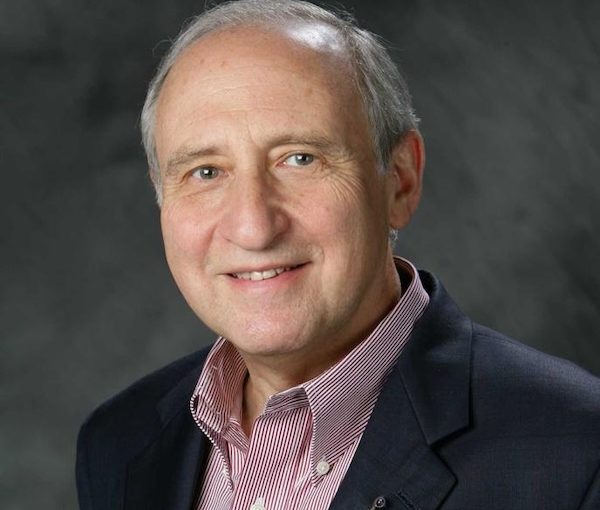
Ben Shneiderman, a retired computer scientist who lives in Vancouver, is a member of an extraordinary family. Recently, he promoted his Uncle Chim’s photography exhibition at the Zack Gallery, as well as the new English translation of his father’s book about the Spanish Civil War (1937-1939). 

photo - Ben Shneiderman
Ben Shneiderman (photo from Ben Shneiderman)

It all started with Shneiderman’s grandfather, Benjamin Szymin, a respected publisher of Yiddish and Hebrew books in Warsaw before the Second World War. His daughter Halina (later Eileen) and son David (Chim) grew up surrounded by culture and tradition, inspired by the conversations of the best Polish-Jewish writers, artists and scientists. 

“My mother Halina studied at the Warsaw university before she met my father,” Shneiderman said in an interview with the Independent. “After they married, in 1933, they moved to Paris.”

Shneiderman’s father, Samuel, was cut from the same cloth. He is considered one of the first Jewish war correspondents in Europe and America. In the 1930s, he published multiple articles and books in Polish and Yiddish on Jewish issues and social developments in Europe.

Ben Shneiderman remembered that his parents both decided early on that only his father would get a byline. “The times were different,” he said with a smile. “But they worked as a team. Mother did a lot of research. She typed the texts Father dictated, and then she edited and re-typed and fact-checked, until they were both satisfied. When Father went to Spain in 1937 to report on the Civil War, Mother went with him – she had her trusted typewriter with her.” 

In 1938, Samuel Shneiderman compiled his reportages from Spain into the book War in Spain, which was published in Yiddish.

“The book included photographs taken by my uncle, Mother’s brother David, the legendary photographer Chim,” said Shneiderman. “Chim was also in Spain at the time, reporting on the war.”

In the past few years, the book has experienced an unexpected revival. “I had nothing to do with it, but I was glad,” said Shneiderman. “The book was published in Polish in 2021. Then, in 2023, it was translated into Spanish. In 2024, the English translation came from the Yiddish Book Centre.” 

The English translation’s title is Journey Through the Spanish Civil War (translator Deborah A. Green), and Shneiderman gave a slide presentation on it and his family last month at the Jewish Community Centre of Greater Vancouver, under the aegis of the Cherie Smith JCC Jewish Book Festival. He explained that his parents left Europe just before the Second World War, but they couldn’t get his grandparents out of Poland. The older generation of his family did not survive the Holocaust. 

As soon as his parents arrived in New York, they became immersed in the Yiddish writing and journalism milieu, and they both started publishing in English, as well. Together and separately, they covered the themes of postwar Europe, Israel, and Jewish life in the United States. Shneiderman’s father, in addition to writing articles for such publications as The National Jewish Monthly, the New York Times, Hadassah Magazine and The Reporter, also wrote non-fiction books, poetry and movie reviews. Plus, he edited several books by prominent Yiddish writers. 

Growing up in a family steeped in writing and journalism, and with his uncle being a famous photographer, it might have been expected that Shneiderman would follow in their footsteps. His older sister did, in a way. “She moved to Israel in 1963 and taught English there,” he said. But he chose a different path. 

“I was always interested in photography, like Chim,” he said. “I even won a photography contest in high school.” But, in college, he studied physics and math. “I had a cousin who was a physicist. He influenced me, but I was never much into physics. Mostly, I was entranced with math and with computers. I worked as a programmer for a couple physicists while still in college. I also took psychology classes, and philosophy. I wanted to know everything.”

He kept taking photos as a hobby, and that interest persists to this day. “I photographed many of my colleagues – pioneers of computer sciences. My pictures of them were published by a number of magazines,” he said. “Overall, I have over 40,000 photos. I also published them in my book Encounters with HCI Pioneers: A Personal History and Photo Journal, in 2019.” 

HCI stands for human-computer interaction, which is Shneiderman’s primary field of research. “In 1973, I got the first PhD in computer sciences at my college,” he said. 

In 1977, as part of an American delegation, he went to Russia on an exchange program. “We visited Moscow and Novosibirsk,” he said. “I met many interesting people there. One of them, a local computer scientist, Simon Berkovich, told me in confidence that he wanted to emigrate to the US and asked me if I could help. I said I would try. When he left Russia some time later, he had a stopover in Rome, like many other Soviet immigrants. Some of them went on to Israel, but Berkovich contacted me, and I wrote him a letter that I needed him for my work. He was able to come to the US with this letter. We even wrote a paper together. He is a professor now at George Washington University.”

Shneiderman recalls fondly his visit to a synagogue in Moscow: “Several of us went. I was concerned about our safety, but nothing bad happened. It was fun,” he said. 

On the professional front, Shneiderman has always maintained that the current trend of developing artificial intelligence (AI) as autonomous machines wasn’t the way to go. In 1980 – 45 years ago – he even wrote a book on the subject, called Software Psychology: Human Factors in Computer and Information Systems.

“AI should be a tool, not a creator,” he said. “I don’t think a software should write books or paint pictures or drive cars autonomously. I think it should make people’s jobs easier, assist humans, not replace them. After all, a camera doesn’t take photos – I do. But my smart camera helps me manage the focus, the lighting and other parameters. Apple agrees with me. I worked for them as a consultant for five years.”

Shneiderman has been a firm proponent of this point of view for decades. He has expressed it in his publications and at industry conferences. In 1982, he co-founded what is now known as the Conference on Human Factors in Computing Systems. He also coined the term “direct manipulation,” which is the way we move objects on a screen with a mouse or a finger. He thinks humans should be an integral part of computer interactions, because only humans can make ethical decisions. No AI can ever know what it feels like to be a person. “There is no ‘I’ in AI,” he joked. 

Shneiderman and his wife have been living in Vancouver since 2020, when they moved here from Bethesda, Md. “My daughter teaches anthropology at UBC,” he said. “We visited her often for years and even bought an apartment here. We liked it here. Then, COVID happened, while we were visiting, so we stayed in Vancouver. My wife was born in Canada and always had a Canadian passport, and I became a citizen last year.”

From Warsaw at the beginning of the 20th century to Vancouver 100 years later, this family continues to share stories.

“Grandfather told them in Yiddish,” Shneiderman said. “My uncle told them in pictures. My parents told their stories in words. And I told them in data, using computers as my medium. We are a family of storytellers.” 

Olga Livshin is a Vancouver freelance writer. She can be reached at [email protected].

Posted on June 27, 2025June 26, 2025Author Olga LivshinCategories LocalTags artificial intelligence, Ben Shneiderman, computer sciences, family, history, photography, storytelling
Chim’s photos at the Zack

Chim’s photos at the Zack

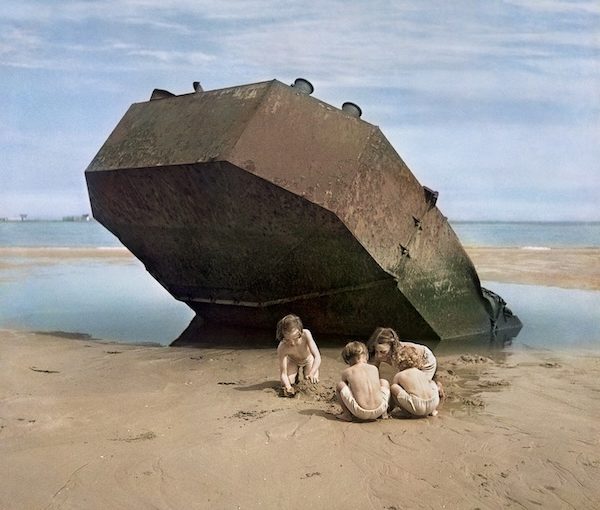
A photograph by David Seymour (Chim) of children in Normandy, in 1947. Part of the exhibit Chim’s Photojournalism: From War to Hope, at the Zack Gallery until June 15. (photo from Ben Shneiderman)

The new show at the Zack Gallery, Chim’s Photojournalism: From War to Hope, features one of the most influential photographers of the 20th century – David Seymour (known as Chim). Chim was killed in 1956, a few days before his 45th birthday, while photographing the Suez Crisis in Egypt, but his legacy lives on even now, almost 70 years after his tragic death. 

Gallery manager Sarah Dobbs told the Independent that Ben Shneiderman, Chim’s nephew and the manager of his estate, approached her about the show.

“I was immediately intrigued,” she said. “I met with him and asked if we could host the exhibition. I recognized its importance to the community at the JCC and also to the city of Vancouver. It is a rare opportunity to showcase such an amazing photojournalist. It made sense to host it during the Festival of Jewish Culture in May. I met with the art committee here, and they agreed.… This is the first time these works will be shown together in Canada.” 

According to Dobbs, the exhibit was initiated by Cynthia Young, a curator at the New York International Centre of Photography, using vintage prints in their collection.

“Then, the Illinois Holocaust Museum & Education Centre produced the 51 modern prints for their showing,” Dobbs said. “Later, they were presented in Portland, Ore., at their Jewish museum and Holocaust education centre. I flew down to Portland to see the exhibition while it was there and chatted with the curators.”

To package and ship the display to Vancouver, Dobbs needed funds. “I applied for grants and approached individuals,” she said. “In addition to the shipping cost, we also had a special wall built inside the gallery. It will serve us for other exhibitions, moving forward.” 

The show preview on April 22 was a joyful event, presided by Shneiderman, who shared with guests his intimate knowledge of his uncle’s work and life. 

David Seymour was born in 1911 in Warsaw. His father, Benjamin Szymin, was a respected publisher of Yiddish and Hebrew books. As a young man, Seymour studied printing in Leipzig and, later, chemistry and science in Paris. He wanted to become a scientist. Meanwhile, photography fascinated him. He started taking photographs and selling them to support himself financially, and unexpectedly found a passion for humanitarian photojournalism. His first credited photographs appeared in the French magazine Regards in 1934. 

Interested in social issues, Seymour photographed labourers and political rallies, famous actors and street scenes. At that time, he adopted his professional name, Chim, a simplification of his last name, Szymin.    

Between 1936 and 1938, as a photojournalist, Chim documented the Spanish Civil War and other international political events. Twenty-five of his Spanish stories were published in Regards. Several of those photos are included in the Zack show. One of them, a close-up of a nursing mother looking up, obviously troubled (1936), is well known. Shneiderman said several history scholars studied this photograph and concluded that it was one of the inspirations of Picasso’s 1937 masterpiece, “Guernica.” Chim’s photo of Picasso in front of “Guernica” positions the painting’s detail of a woman looking up at the falling bombs, right behind the artist. 

In 1939, Chim escaped the unfolding war in Europe for Mexico and, later, the United States. As a multilingual and Sorbonne-educated journalist, he served in the US military intelligence as a photo-interpreter. After the war, he resumed his photojournalism career. 

In 1947, he and a group of his friends, like-minded photographers, founded Magnum Photos, a cooperative run by photographers. Chim served as Magnum president from 1954 until his death. 

Chim’s postwar photographic stories are a blend of anguish and hope. Many of the images are on display at the Zack, divided into several distinct sections. The biggest section is “The Children of Europe.”

In 1948, Chim took a UNESCO assignment to report on the plight of the 11 million European children displaced by the war. He visited Italy, Greece, Hungary, Austria and other European countries. He photographed children who were maimed and orphaned, children playing beside ruins or working in print shops or begging in the streets.

“When LIFE magazine published a spread of those pictures,” Shneiderman said, “together with a list of organizations that accepted donations on behalf of those children, the pouring in of donations was unprecedented.”  

Another series of photographs focused on postwar Germany. One of the most poignant ones in this series shows a section of a beach divided by barbed wire – the border between West and East Germany. A couple of boys lounge on the sand. A young woman in a swimming suit runs towards the water. In the foreground, a border guard in uniform stands grim and watchful with his guard dog and his rifle. Tension thrums through the image, underlined by questions and uncertainties.          

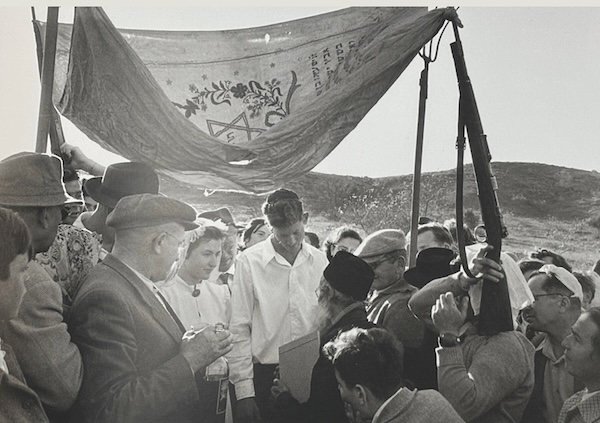
On the other hand, Chim’s Israeli photographs of the early 1950s are infused with hope. A man lifts his baby to the sky in elation – the first baby born in his village. A wedding is celebrated under the chuppah, its makeshift poles including a gun and a pitchfork. An Independence Day parade rolls through Tel Aviv. A team of fishers proudly display their catch of the day to the photographer. 

photo - A photograph by David Seymour (Chim) of a wedding in Israel, in 1952
A photograph by David Seymour (Chim) of a wedding in Israel, in 1952. (photo from Ben Shneiderman)

In all his visual stories, Chim is always there with his subjects. They are his co-authors. 

“It is that emotional connection that made many celebrities willing to pose for him,” said Shneiderman.

Chim photographed Ingrid Bergman and Audrey Hepburn, Sophia Loren and Picasso, and many others. These photographs are not included in the show, but, together with those that are included, they portray their creator as a man of courage, integrity and vision, one of the best photographic artists of the 20th century.    

“Is photojournalism art?” Dobbs mused. “Yes, I think so. Photojournalists capture a moment, an interaction at a specific time. Contemporary art is a mirror of our times. It reflects the societal changes, cultural shifts and significant events that shape our world. It is what the best photojournalists, like Chim, do.” 

Dobbs is certain that Chim’s work is still relevant.

“It continues to inspire and draw attention. It teaches photographers to get close to their subjects,” she said. “His images remind us of the past, of the destruction of war, but also of the humanity that transcends it, and of peoples’ resilience.” 

Chim’s Photojournalism: From War to Hope is on display until June 15. It is sponsored by the Averbach Foundation, Esther Chetner, the Yosef Wosk Family Foundation and the Government of Canada, in partnership with Shneiderman, Magnum Photos, the International Centre of Photography in New York, the Jewish Community Centre of Greater Vancouver and the Jewish Federation of Greater Vancouver.

For more information and to see a selection of photos, visit davidseymour.com. 

Olga Livshin is a Vancouver freelance writer. She can be reached at [email protected].

Format ImagePosted on May 9, 2025May 8, 2025Author Olga LivshinCategories Visual ArtsTags Ben Shneiderman, children, Chim, David Seymour, history, Israel, photography, photojournalism, Sarah Dobbs, war, Zack Gallery
One family’s influence

One family’s influence

Ben Shneiderman was the featured speaker at Jewish Senior Alliance’s Spring Forum May 26. (photo from hai.stanford.edu)

On Sunday, May 26, the Jewish Seniors Alliance presented their annual Spring Forum. Featured speaker Ben Shneiderman spoke about his family’s influence on journalism, photojournalism and the development of human-computer interactions.

Shneiderman was introduced by Gyda Chud, a past president of JSA and chair of the program committee. He told those gathered at the Peretz Centre for Secular Jewish Culture about his family history, keeping the audience enthralled throughout. 

Shneiderman is an emeritus distinguished professor of computer science at the University of Maryland. He has received six honorary doctorates in recognition of his pioneering contributions to human-computer interaction and information visualization. He has published more than 20 books, most recently, Human-Centered AI (Oxford University Press, 2022), which won the Association of American Publishers award in the computer and information sciences category.

However, Shneiderman did not begin with his own cultural contributions, but with those of his parents, Samuel and Eileen (née Szymin) Shneiderman. They began their journalistic partnership in Warsaw, writing for the many Yiddish publications that existed then. Their lives mirrored the turbulent events of those years. They moved from Warsaw to Paris, where they continued to contribute to Yiddish publications. They did major reporting from Spain during the Spanish Civil War. In 1938, Samuel published a collection of his work on the Spanish Civil War in Yiddish, titled Krig in Shpanyen: Hinterland. This coverage earned him the title of being “the first Yiddish war reporter.” This book was later published in Polish and then in Spanish. It will appear soon for the first time in English as Journey through the Spanish Civil War, translated by Deborah Green and published by the Yiddish Book Centre’s White Goat Press.

In 1940, with the help of the Yiddish press in New York, the family was able to immigrate to the United States and escape the war. Samuel worked with the Yiddish press and published many other books, including editing The Diary of Mary Berg, by an American woman who was incarcerated in the Warsaw Ghetto and described harrowing details of life there. Samuel wrote of the Kielce Pogrom in Between Fear and Hope. The Weitzman National Museum of American Jewish History has two virtual exhibits: one on Samuel and Eileen’s partnership, and the second on Ben Shneiderman’s computing contributions and the photojournalism of David Seymour, Eileen’s brother, who was known as Chim. 

Chim’s humanistic style of reporting influenced modern visual storytelling. One of his photos, related to the war, may have inspired a painting by Picasso. Chim’s war photos were widely published in many magazines and journals, and he became known for his unique photographs of children who had become orphans during the conflict. He also took photos of many celebrities, such as Audrey Hepburn, Maria Callas, Ingrid Bergman, and many others. Some of these images were published in popular media such as Life magazine.

Chim took some interesting shots of life in the state of Israel in the early 1950s. Of note is a photo of a wedding taken outdoors, possibly in the Judaean Hills. The chuppah is torn in a few places and one side is being held up by a rifle and a pitchfork. Chim was killed while photographing the Suez Crisis for Newsweek in 1956. He was 45 years old.

Throughout the presentation, Shneiderman replied to questions and comments, Marilyn Berger, a past president of JSA, thanked him for his inspiring words.

The next JSA event is A Summer Afternoon of Music on June 24, featuring a live concert of classical music, showtunes and Jewish songs by Trio du Souvenir – Rudy Rozanski (piano), Yu Tsai (cello) and Arnold Kobiliansky (violin). Co-sponsored with the Kehila Society and Congregation Beth Tikvah, the concert and lunch take place at Beth Tikvah. To attend, RSVP by June 21 to Toby Rubin, [email protected] (lunch is $15). 

Shanie Levin is a Jewish Seniors Alliance Life Governor. She is also on the editorial committee of Senior Line magazine.

Format ImagePosted on June 14, 2024June 13, 2024Author Shanie LevinCategories LocalTags Ben Shneiderman, computer sciences, history, Jewish Seniors Alliance, journalism, JSA, photojournalism
Proudly powered by WordPress