Skip to content
  • Home
  • Subscribe / donate
  • Events calendar
  • News
    • Local
    • National
    • Israel
    • World
    • עניין בחדשות
      A roundup of news in Canada and further afield, in Hebrew.
  • Opinion
    • From the JI
    • Op-Ed
  • Arts & Culture
    • Performing Arts
    • Music
    • Books
    • Visual Arts
    • TV & Film
  • Life
    • Celebrating the Holidays
    • Travel
    • The Daily Snooze
      Cartoons by Jacob Samuel
    • Mystery Photo
      Help the JI and JMABC fill in the gaps in our archives.
  • Community Links
    • Organizations, Etc.
    • Other News Sources & Blogs
    • Business Directory
  • FAQ
  • JI Chai Celebration
  • JI@88! video

Recent Posts

  • האלימות בישראל מורגשת בהרבה מגזרים
  • טראמפ עוזר דווקא לנושא הפלסטיני
  • New rabbi settles into post
  • A light for the nations
  • Killed for being Jewish 
  • The complexities of identity
  • Jews in time of trauma
  • What should governments do?
  • Annie will warm your heart
  • Best of the film fest online
  • Guitar Night at Massey
  • Partners in the telling of stories
  • Four Peretz pillars honoured
  • History as a foundation
  • Music can comfort us
  • New chapter for JFS
  • The value(s) of Jewish camp
  • Chance led to great decision
  • From the JI archives … camp
  • עשרים ואחת שנים להגעתי לונקובר
  • Eby touts government record
  • Keep lighting candles
  • Facing a complex situation
  • Unique interview show a hit
  • See Annie at Gateway
  • Explorations of light
  • Help with the legal aspects
  • Stories create impact
  • Different faiths gather
  • Advocating for girls’ rights
  • An oral song tradition
  • Genealogy tools and tips
  • Jew-hatred is centuries old
  • Aiding medical research
  • Connecting Jews to Judaism
  • Beacon of light in heart of city

Archives

Follow @JewishIndie
image - The CJN - Visit Us Banner - 300x600 - 101625

Tag: emergency medicine

A light for the nations

A light for the nations

Linor Attias, deputy director of international emergency operations for United Hatzalah, inspired Raquel Esrock’s bat mitzvah project: Maple Syrup and Mitzvahs. (photo by Robin Esrock)

In a critical medical emergency, life and death depend on the help one receives and how quickly it arrives. By the time an ambulance shows up, it can be too late to stabilize the victim of a heart attack, apply a life-saving torniquet or deliver CPR. However, United Hatzalah, a rapid medical response service in Israel, can get trained medics on site within 90 seconds of an emergency call.

Linor Attias, the deputy director of international emergency operations for United Hatzalah, addressed a small fundraiser at a living room in West Vancouver on Dec. 2. She wore the orange vest of a first responder, shared stories of everyday heroes, tearing up over the tragedy of Oct. 7. As the emcee for the event, I knew there was much to discuss, but I started with a simple fact. Founded in Jerusalem in 2006, United Hatzalah has responded to more than seven million medical emergencies and saved the lives of tens of thousands of people. 

Supporting both patients and Magen David Adom, UH has become an integral part of the Israeli cultural fabric. A lifesaving group of more than 8,000 unpaid volunteers, including Jews, Arabs, Druze and Christians, treat everyone and anyone in need, without charging a penny. 

After a six-month training period and on-call internship, volunteers use an app that geo-locates their proximity to a medical emergency. When someone calls one of Israel’s three emergency numbers for help (instead of one number, 911, for all emergencies, Israel has different numbers for medical, fire or police) United Hatzalah’s system immediately locates the nearest five volunteers. It pings their app, and they can be on site in three minutes with a fully stocked medic bag. The paramedic volunteer stabilizes the patient, performs life-saving first-aid if needed, and remains until an ambulance arrives. 

photo - United Hatzalah’s volunteer paramedics can be on site within 90 seconds of an emergency call
United Hatzalah’s volunteer paramedics can be on site within 90 seconds of an emergency call. (photo from UH)

“It’s not just about the person who is not well or injured,” explained Attias. “Everyone surrounding them feels calm and safe knowing someone is handling the situation. When the ambulance arrives, they take over.” 

If a volunteer happens to be at work that day, they could be back at their desk within 20 minutes.

Volunteers sign up from all backgrounds: rich, poor, religious, secular, shopkeepers, teachers, accountants, surfers, mechanics, students, and retired grandparents, too. If they’re unavailable, they simply toggle a switch in the app and the algorithm automatically moves to the next volunteer. 

UH volunteers are registered, well-trained and passionate to help. Like Attias, many found their way to UH after being impacted personally by a medical emergency. In her case, it was hearing how an ambulance showed up too late to save her uncle, the victim of a bombing attack. For an Arab volunteer, it was the Jewish UH volunteer who saved his father during a heart attack. Two books have been published filled with incredible stories of universal compassion and head-scratching rescues. 

At UH’s headquarters in Jerusalem, there are Haredi staff and volunteers working alongside Muslim and secular colleagues. Attias also has directed UH volunteer groups to disasters abroad, rushing to underserved areas after earthquakes in Morocco and Türkiye. 

“They hate Israelis in Türkiye,” she told those gathered. “Then they see the Israeli flag on the vest of the rescue worker saving their life, and it’s ‘thank you Israel, thank you!’ We saved 19 people from the rubble.” She still keeps in touch with the family of a 7-year-old girl she saved in Türkiye; the father sent messages of support on Oct. 8. 

Attias suffers post-traumatic stress disorder from what she witnessed during the Hamas attack in 2023. She was on the ground, a first responder, her own life at risk; other UH volunteers were murdered and kidnapped. She was part of a UH team that set up critical triage camps to treat the wounded. When a UH volunteer livestreamed the number of bodies, Attias could not believe it was real. Today, UH operates a psycho-trauma unit to help volunteers and the public deal with what they experienced that day. 

Attias spoke about how United Hatzalah is preparing for the next Oct. 7. United Hatzalah plans to be better prepared to save more lives. They are running simulated training exercises for volunteers, complete with smoke machines and make-up artists, hoping to acclimatize responders to the chaos that would exist. In the aftermath of Oct. 7, UH has seen a boost in volunteers. People are signing up to give something back, to show their appreciation and to feel less powerless, said Attias. 

The ubiquitous orange vests of UH volunteers are seen throughout Israel, often riding a distinctive Ambucycle or Ambuscooter, skirting traffic or entering public markets. This is a crowdsourced, localized and turbocharged emergency medical response system that is being studied and adopted by other parts of the world, including India and Brazil, and the state of Idaho. Jeff Klein, who sits on the board of United Hatzalah Canada, shared that Vancouver City Council was also exploring the model before UH Canada shifted its efforts to support Israel in the wake of Oct. 7. Countries and communities have different cultural attitudes when it comes to volunteering and liability, but a model that works in Israel can work anywhere, with adaptations. 

United Hatzalah is funded entirely by donors and receives no money from the Israeli government. 

“We don’t call them donors, we call them partners,” explained Attias. Funds go directly towards life-saving medical equipment, she said, and partners receive updates about how that equipment – be it an Ambucycle, oxygen kit or medic bag – has been used. It’s all transparent, and UH is widely regarded as one of the key charities making a meaningful difference in modern Israel. 

Attias showed us a picture of all-female volunteer group gathered in a circle after a recent training exercise. There are women wearing hijabs next to Orthodox Jews wearing wigs. Secular, religious, people of all shades, all smiling, all participating in a noble cause greater than oneself. Attias believes this is Isaiah’s prophecy of Israel acting as “a light for the nations” in action, spreading universal compassion, community and life-saving technology where and when it is needed most. 

It’s impossible not to be inspired. A doctor in the room, non-Jewish, donated a rapid response ebike. Even my daughter, Raquel, gearing up for her bat mitzvah, committed to a crowdsourced fundraiser for three life-saving oxygen kits – to contribute towards her UH Maple Syrup and Mitzvahs project, which is raising funds for both the oxygen kits and two child-resuscitation kits, visit tinyurl.com/55ur7fm7.

To become a United Hatzalah partner and learn more, visit UH’s website, israelrescue.org.

Robin Esrock is the bestselling author of The Great Canadian Bucket List, and a travel columnist for Canadian Geographic.

Format ImagePosted on December 19, 2025December 18, 2025Author Robin EsrockCategories Israel, LocalTags emergency medicine, fundraising, Israel, Linor Attias, medicine, philanthropy, United Hatzalah
Emergency medicine at work

Emergency medicine at work

Dr. Oren Wacht of Ben-Gurion University of the Negev will be in Vancouver this month, giving a public lecture May 25 and promoting Heartbeat of Education, a project geared to helping more Israeli paramedics further their education in emergency medical services. (photo from BGU Canada BC & Alberta Region)

Dr. Oren Wacht, who heads the department of emergency medicine and is the academic director of the Field Family Medical Simulation Centre at Ben-Gurion University of the Negev, will be in Vancouver May 23 to 25. As part of his visit, he will speak to the community on May 25, 7 p.m., at an event titled Emergency Medicine in Action: Healing the Negev Post-Oct. 7.

An experienced emergency medical technician and the first paramedic in Israel to receive his PhD, Wacht serves, too, as a volunteer paramedic for Magen David Adom, Israel’s national emergency service.  Since Oct. 7, 2023, he has seen months of active service between his teaching and training responsibilities.  Thousands of BGU faculty, staff and students were called to serve after the Hamas attacks.

Wacht said his May 25 talk will be about his department, which trains paramedics, and will briefly touch upon his own experiences as a paramedic. 

“Since the war, I have spent most of the time in the military, in the infantry, as a paramedic,” he told the Independent. “I am trying to combine this with my work at BGU as a head of department and researcher, and, of course, my personal life and family. It is very challenging, but there is no other choice.”

Wacht’s visit to Vancouver will promote Heartbeat of Education, a project geared to helping more Israeli paramedics from all walks of life access and earn a bachelor’s degree in emergency medical services (EMS).

As the national EMS system,  Magen David Adom (MDA) has very close ties with the program. In February 2022, MDA and BGU signed an affiliation agreement as part of an academic initiative designed to improve training for paramedics and EMTs. The affiliation, believed to be the first between a national EMS service and a university, strives to bolster the quality of pre-hospital emergency care in Israel and elsewhere. 

“We want Israel to have the best paramedics and, with the program’s support, we can help our students go through our very intense program with less financial stress,” Wacht said. 

“Our program is unique,” he added, “because students do EMS shifts at MDA from the first year of studies. We are incredibly excited about this opportunity – and being able to support our students, especially since the war, is one of the most important things we need to do.”

In Israel, MDA paramedics are among the first on the scene in emergencies to provide critical care.  However, many paramedics lack the financial means to pursue higher education. The purpose of the Heartbeat of Education program is to enable paramedics to take on more specialized roles within the health-care system, bring enhanced expertise to emergencies and thereby save more lives and improve outcomes, drive innovation and support a diverse, inclusive environment that can provide life-saving services to everyone who lives in Israel.

Wacht also has created a summer program, in English, in emergency medicine at BGU. It will open this year, from July 20 to 30, and is geared towards laypeople and professionals alike. The program uses the extensive experience of tactical medicine – the delivery of care in hostile or high-risk situations that integrates medical and tactical operations to preserve life – at BGU and brings it to people in the course in a realistic environment at the school’s medical simulation centre. In addition to offering graduates a certificate from BGU, the program hopes to provide participants with the confidence to handle demanding medical challenges. 

The Field Family Medical Simulation Centre occupies four floors of the Rachel and Max Javit Medical Simulation and Classroom Building at BGU.  It includes classrooms equipped with medical devices, advanced simulators and research laboratories, and features state-of-the-art medical simulation rooms to train doctors, nurses and paramedics.  The rooms are designed to reflect real-life medical situations, such as cardiopulmonary resuscitation, procedures for trauma victims and emergency surgeries.

Since Oct. 7, many medical teams, from army and civilian organizations, have asked for guidance at the centre, and the centre has helped prepare many Israel Defence Forces teams. 

“Despite the challenges we face, and despite the fact that a significant part of the team has been called up for reserve duty, hospitals and MDA, this is our small contribution, and we stand united with the medical community in these difficult times,” Wacht said in October 2023. 

“The support of Jewish people from around the world gives all of us, and me personally, a lot of strength in these challenging times,” Wacht told the Independent. “We invite readers to visit BGU and see the fantastic work in many fields of research.”

To register for the Metro Vancouver event, visit bengurion.ca/events/vancouver-events. 

Sam Margolis has written for the Globe and Mail, the National Post, UPI and MSNBC.

Format ImagePosted on May 9, 2025May 8, 2025Author Sam MargolisCategories LocalTags Ben-Gurion University, education, emergency medicine, Israel, Magen David Adom, Oct. 7, Oren Wacht, paramedics, speakers, terrorism
Applicable knowledge

Applicable knowledge

Left to right: Gyda Chud (co-chair), Serge Haber, Jackie Weiler (co-chair) and Dr. Kendall Ho. (photo by Binny Goldman)

Jewish Seniors Alliance of Greater Vancouver’s annual spring forum – this year with the topic An App a Day Keeps the Doctor Away – drew a large and curious crowd to the Peretz Centre for Secular Jewish Culture on April 3.

JSA president Marilyn Berger welcomed attendees and thanked pianist Stan Shear for opening the forum. Shear would add the harmonica and his voice to his later performance, but first shared that his wife, Karon Shear, JSA coordinator, had suggested the opening song, “Accentuate the Positive, Eliminate the Negative,” by Johnny Mercer, as she thought it embodied the message JSA tries to instil in its approach to helping others.

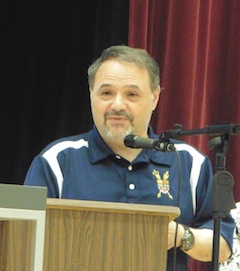
Berger then surprised the audience by introducing Dan Ruimy, who is the Liberal member of Parliament for Pitt Meadows-Maple Ridge, where he owns and operates Bean Around Books and Tea.

photo - Dan Ruimy, Liberal Party of Canada MP for Pitt Meadows-Maple Ridge
Dan Ruimy, Liberal Party of Canada MP for Pitt Meadows-Maple Ridge. (photo by Binny Goldman)

Ruimy said that living in Maple Ridge doesn’t give him much opportunity to meet many Jews, so it was only on a recent trip to Israel as a parliamentarian that he rediscovered his Jewish roots. He said he was especially happy, honored and touched to talk to a group of his “compadres,” referring to those gathered at the forum. He said that seniors have given their life, blood sweat and tears to the building of Canada and he hopes to help the government become better equipped to meet the needs of seniors.

JSA is run by volunteers, said Berger – from peer support to education programming to advocacy – and its membership is diverse. As she called upon Larry Shapiro to introduce the forum’s keynote speaker, Dr. Kendall Ho, she noted that Shapiro had been volunteering with JSA since his arrival in Vancouver from Montreal. Smiling, Shapiro denied he had volunteered to be part of JSA, but rather had been shlepped in – and now would have to be hauled away from doing what he loves.

A practising emergency physician at Vancouver General Hospital, Ho is founding director of Digital Emergency Medicine within University of British Columbia’s department of emergency medicine. He praised the creativity of the day’s topic title – An App a Day Keeps the Doctor Away – which was penned by Berger. Ho said he was turning to mobile apps as a way of helping patients help themselves. There are many new ones in the market, he said, that can help people achieve better health and even strive for excellent health. Some of these apps are free.

Mobile technology can also supply life-saving information and provide immediate access to life-saving help. About the use of such technology by seniors, Ho gave some of the statistics from a recent study: 63% use wearable data for monitoring, 76% read online reviews to select a doctor, 74% book online appointments and pay bills, 73% of doctors use mobile devices to share information, 61% are interested in 3-D printing for prosthetic and hearing aids, and 57% use cutting-edge devices.

In choosing an app, Ho advised asking yourself the following questions: Is this a worthy tool and how effective is it? Is this technology good for me? Is it safe? Is my privacy/identity protected? Is it easy?

Ho demonstrated how easy it is to download a free app and encouraged the audience to download it as he went through the procedure step by step.

Of the available free apps, he recommended:

  • Canadian Red Cross’ First Aid app, which helps users maintain their life-saving skills
  • Medisafe Medication Reminder, available for a free trial period, which helps people manage the pills they have to take, including sending an alarm to their phone or watch as a reminder
  • MindShift, which was developed in British Columbia to track the symptoms of anxiety and offers ways in which to cope with anxiety
  • BellyBio Interactive Breathing, for relaxation
  • Instant Heart Rate, monitors users’ heart rate
  • Sleeptime, detects users motion while they’re sleeping, and can be programmed to allow you to complete your dream, as it can detect when you are in REM
  • My Fitness Pal, a calorie counter and diet plan, and one of Ho’s personal favorites – it helped him lose 10 pounds.

Ho also suggested some important websites: healthlinkbc.ca to connect to a nurse or a health professional, myehealth.ca to get the results of a blood test (deleted after 30 days) and medlineplus.gov (research) for basic health information written in everyday language.

He advised the audience to ask their medical advisor which apps would work best for them, and to discuss results with the medical professional, so as not to cause themselves unnecessary anxiety by misinterpreting the data.

There are sensors available now, he said, such as wristbands, orthotics, helmets that detect concussions, a UV patch, a wand that monitors hydration (for cyclists) and T-shirts with sensors in the fabric.

Patient engagement, said Ho, is the blockbuster “drug” of the century. Using these types of technology, 88% of patients feel engaged in their health care. Using wearables shows a reduction of cardiac-related deaths and there is a 76% reduction in overall mortality when a patient is involved in his or her own health care.

Ho said that studies show that two out of three seniors 65 and over want to use technology to support their own health and access outcome-related data. Seniors now are tech savvy, he said.

Ho would like to see the use of health-related technology spread to the entire province; involve doctors, nurses, patients, governments and tech companies; be studied for its benefits, patient satisfaction and safety; and be further developed, with new sensors and devices over time.

The audience was reluctant to allow Ho to end his talk. Nonetheless, event co-chair Gyda Chud, who along with Jackie Weiler convened the forum, stepped in to ask if there were any questions for the doctor.

Ho was visibly moved when Al Stein said he would be forever grateful to Ho, as Ho had saved his life when he was having a cardiac problem and was admitted to emergency. Others who had been similarly helped thanked Ho fervently, as well.

Questions included whether there was an app for drug interaction and, yes, there is, but only for professionals. Attendees were also concerned that apps would reduce the amount of time doctors would spend with them. Ho said that apps were there to help both patients and doctors, but there was still the need for the right doctor to guide patients on their health journey.

It is safe to say that many in the audience felt that Ho would be the best guide and that the best mobile app would be Ho.

Chud thanked Ho, coining a slogan that Ho enjoyed: “Beat the stats, use more apps.”

Barbara Bronstein and Shapiro organized the refreshments, which Chud provided, and countless volunteers were everywhere from set-up to shalom. Karon Shear and Rita Propp also were integral to the whole event, while Stan Shear not only performed but, with son David, recorded the proceedings. The video can be found at jsalliance.org.

Binny Goldman is a member of the Jewish Seniors Alliance of Greater Vancouver board.

Format ImagePosted on April 15, 2016April 13, 2016Author Binny GoldmanCategories LocalTags Dan Ruimy, emergency medicine, JSA, Kendall Ho, seniors, technology
Proudly powered by WordPress