Skip to content
  • Home
  • Subscribe / donate
  • Events calendar
  • Business Directory
  • FAQ
  • News
    • Local
    • National
    • Israel
    • World
    • עניין בחדשות
      A roundup of news in Canada and further afield, in Hebrew.
  • Opinion
    • From the JI
    • Op-Ed
  • Arts & Culture
    • Performing Arts
    • Music
    • Books
    • Visual Arts
    • TV & Film
  • Life
    • Celebrating the Holidays
    • Travel
    • The Daily Snooze
      Cartoons by Jacob Samuel
    • Mystery Photo
      Help the JI and JMABC fill in the gaps in our archives.
  • Community Links
    • Organizations, Etc.
    • Other News Sources & Blogs
  • JI Chai Celebration
  • JI@88! video

Recent Posts

  • Federation now across BC
  • Israel fighting for its existence
  • Deal strengthens Iran
  • Patriotic belonging diminishes
  • A campaign to engage
  • Upstanders’ first live event
  • Responding to Carney
  • Having your own home
  • Music a family tradition
  • Musical to warm heart
  • Community milestones … June 2026
  • Sharing her passion for Israel
  • Or Shalom reopens its doors
  • JFS from past to future
  • Need holistic approach
  • Sharing stories, advice
  • Journalist shares fears
  • Skills to live together
  • Road to independence
  • Cutting grass with scissors
  • Zionism as a solution
  • Deceit, desire & the divine
  • Reclaiming sacredness
  • Creative project ideas
  • Summer squares and cobbler
  • Thou shalt … summer commandments
  • Legal help for students
  • Revisiting myth of Lilith
  • Wrong person rebuked
  • Canada’s mixed messages
  • Questions for museum
  • Symposium on antizionism
  • Making soccer political
  • CJPAC lauds Pulver’s impact
  • City recognizes Vrba’s legacy  
  • Organ donation saves lives

Archives

Follow @JewishIndie
image - CJN box ad Rockowers 2026

Tag: Israel

Start of a bumpy ride

A clip from the vintage TV show Golden Girls has been making the rounds recently, in which the adorable dolt Rose Nylund, played by Betty White, champions the idea of solving the Middle East conflict by moving the Palestinians to Greenland.

Fast forward to the 47th president of the United States, who last week stunned the world with a proposal that he take over the Gaza Strip and, apparently viewing the war-ravaged territory as a real estate opportunity, promised to turn it into the “Riviera of the Middle East.”

Trump said Israel would hand over the Gaza Strip to the United States, the two million Palestinians there would be relocated, and the US would then “level the site” before presumably constructing a sort of Levant Vegas. Some have begun referring to the enclave as the MAGA Strip. 

Donald Trump is a grifter whose lengthy CV is filled mostly with hucksterism and bankruptcy. In so far as he has intellectual tricks up his sleeve, his modus operandi is to distract his patsies with one hand while snatching their valuables with the other and offering spoils to his sycophantic gaggle of oligarchs.

This is to take nothing away from his skill. He is, it seems, outstanding at grifting. For his audience, however, the current reboot of the Trump show has the potential for less reality TV circus fun than train wreck tragedy.

Having dabbled with daddy’s money in the suburban New York real estate market and a few adventures into higher stakes insolvency – even successfully bankrupting a casino, which seems a feat of special skill – he is now (again) gambling at the highest levels imaginable. Only this time, he is gambling with the lives of Palestinians and Israelis, and possibly with the safety and security of people (including Jews) around the world.

The line between maniac and genius often seems perilously trifling, something we are reminded of not only watching the president, but also his newest billionaire tech bro sidekick (or is that side-president?) Elon Musk. Both share the habit of making wildly impolitic remarks (or gestures) that leave observers arguing over whether they have witnessed a policy balloon, the start of Nazi-style fascism, or some sort of sophomoric trolling. Are they serious, we ask ourselves, or is this another bait-and-switch in which one of them pulls a rabbit out of the hat over here so you don’t see the other one pilfering through pockets over there? More likely, it is both.

In other words, is this bizarre Gazababble a serious proposition? And, if not, what is he trying to distract us from?

Among the eye-popping phenomena we’ve seen in the days since the president’s remarks during his visit with Israel’s Prime Minister Binyamin Netanyahu have been the reactions from media and other public figures. The guy is, after all, the president of the United States. Media have to report his ramblings as though they are serious ideas to be weighed against alternative options like, say, not annexing one of the world’s most troubled strips of land and evicting (aka ethnically cleansing) the millions of people who live there, causing upheaval in a region already in turmoil, alongside increasing global hostility and potential for danger for the world’s only Jewish state and the world’s Jews.

Global media have reported Saudi, Jordanian and Egyptian leaders declaring Trump’s idea out-of-bounds which, by their very seriousness in rejecting it, seems to grant it some in-bounds validity.

Democrats in the United States and other observers are still poking through the entrails of last November’s election to understand why Americans rejected Kamala Harris’s mantra about “not going back.” There may be a million reasons why Trump won but high among them is the determination by many voters that they didn’t like the status quo. Trump is a disrupter. Whether you like or dislike disruption is irrelevant – no one, regardless of political persuasion, can deny this fact.

If you subscribe to the definition of insanity as repetition while anticipating a different outcome, the world’s approach to the conflict seems kooky. What we’ve been doing hasn’t brought peace closer but has seemed to push it further away. Peace and coexistence have rarely seemed so remote.

But, while doing the same thing and expecting a different outcome may be the definition of insanity, inverting the equation to its exact opposite does not guarantee success. Disruptive ideas are not in and of themselves dangerous, but what are the disruptive ideas that would bring both Israelis and Palestinians peace, security and dignity?

Clearly, something needs to change and fresh ideas are needed. Those are the ideas we should be considering. It is, presumably, possible to redirect a wayward train onto a different siding without derailing it entirely. How much more true when the disruption impacts millions of people’s lives, destroys communities, and would be a moral stain.

To carry on the metaphor, we are only days into the (presumably) four-year journey on this Trump train. The only thing that seems predictable is that it is going to be a bumpy ride. We must consider what each of us will do to ensure the bumps are not catastrophic. 

Posted on February 14, 2025February 13, 2025Author The Editorial BoardCategories From the JITags colonialism, Donald Trump, Gaza, geopolitics, Golden Girls, Israel
US long interested in Mideast

US long interested in Mideast

A photograph of Gen. Lewis Cass taken by Mathew Brady, circa 1860-65. In 1837, Cass dropped the anchor of the USS Constitution off Jaffa. (photo from US National Archives and Records Administration)

President Donald Trump’s unconventional proposal on Feb. 5  to annex the Gaza Strip isn’t the first time the United States has expressed territorial ambitions in the Middle East.

In 1837, Gen. Lewis Cass (1782-1866) dropped the anchor of the USS Constitution, “Old Ironsides,” off Jaffa. (Until British dynamite cleared the rock-strewn harbour in the 1920s, rowboats connected the port with the ships anchored offshore.) Together with several US Navy officers, Cass proceeded inland, planning to survey the uncharted Dead Sea – the lowest point on earth – but the poorly equipped mission was a failure. Ill from sunstroke and dehydration, the sailors barely managed to return to their vessel alive.

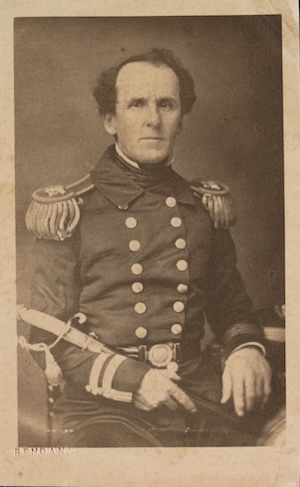
A decade later, Lieut. William Francis Lynch (1801-1865) of the US Navy led a better-provisioned 17-man expedition to explore the Jordan River and Dead Sea. Camels hauled the prefabricated boats specially manufactured of copper and galvanized iron overland from the Mediterranean Sea to Lake Kinneret (Sea of Galilee). Lynch then ventured down the Jordan River, which is a creek by most standards. In tandem, a party proceeded on land. The mission mapped the Jordan’s hitherto unknown 27 rapids and cascades. Though it is only 100 kilometres from the freshwater Lake Kinneret to the Dead Sea, the Jordan River’s winding course was 322 kilometres long. Lynch described the Jordan as unsuitable for navigation, calling it “more sinuous even than the Mississippi.”

photo - Lieut. William F. Lynch, circa 1861-62. In the mid 1800s, Lynch led a 17-man expedition to explore the Jordan River and Dead Sea
Lieut. William F. Lynch, circa 1861-62. In the mid 1800s, Lynch led a 17-man expedition to explore the Jordan River and Dead Sea. (photo from Naval History and Heritage Command Photograph Collection, NH 367)

While advancing “the cause of science,” Lynch was also at “the service of American commerce with the region.” He reported “an extensive plain, luxuriant in vegetation and presenting … a richness of alluvial soil, the produce of which, with proper agriculture, might nourish a vast population.”

While Congress shelved Lynch’s report recommending colonization, it helped spark the United States’s fascination with the Holy Land – and led to the establishment of American colonization projects in Jaffa and Jerusalem.

At Tel Aviv’s south end is a cluster of wooden clapboard buildings straight out of New England known as the American Colony. The story begins shortly after the American Civil War: on Aug. 11, 1866, 157 members of the Palestine Emigration Colony – including 48 children under the age of 12 – set sail from Jonesport, Me., for Jaffa on the newly built, three-masted vessel USS Nellie Chapin.

George Jones Adams (1811-1880), leader of the 35 New England families, hoped to develop the Land of Israel in preparation for the biblically prophesized return of the Jews. This would hasten the second coming of the Christian messiah. Adams had been a follower of the Mormon Church, but quit the religion following the assassination of Mormon founder Joseph Smith in 1844. Most of the congregants of the Church of the Messiah that Adams founded lived in Maine.

Departing the United States, Adams stated: “We believe the time has come for Israel to gather home from their long dispersion to the land of their fathers. We are going [to Jaffa] to become practical benefactors of the land and people, to take the lead in developing its great resources.”

Proto-Zionists, their purpose was not to missionize but to assist the Jewish people in returning to their ancestral land. However, though equipped with the latest agricultural tools, 22 pre-fab houses and religious fervour, the colonists’ mission was doomed. Arriving in Jaffa, they learned that Adams had not yet purchased the land on which they planned to settle. Instead, they pitched their tents on the beach near a cemetery where the victims of a recent cholera epidemic were buried. Within six months, 22 of the 157 settlers, including nine children, were dead.

Disease was not the settlers’ only problem. After finally buying the property for their neighbourhood, the first outside of Jaffa’s Ottoman ramparts – Tel Aviv would only be founded 43 years later, in 1909 – the pioneers quickly learned that farming in the arid Middle East was nothing like agriculture in rainy New England.

Facing starvation and soaring mortality, Adams sought solace in alcohol. Within two years after their arrival, all but two dozen or so members of the American Colony had returned to the New World. Their buildings were sold to newly arrived German evangelical Christians. Known as Templars, the Germans developed seven colonies across Palestine until being arrested by the British in 1939 as Nazi sympathizers. They were deported  to Australia or sent back to the Third Reich in prisoner exchanges.

Among the Americans who remained was Rolla Floyd (1832-1911), a pioneer of Israel’s tourism business. In 1869, he opened the stagecoach service from Jaffa to Jerusalem on the newly paved road. The journey from the coast to the mountains took 14 hours: today’s high-speed train covers the same distance in 29 minutes, with a stop at Ben-Gurion Airport.

The Maine settlers were not forgotten, thanks to Reed Holmes: in 1942, the historian met an elderly woman who had been 13 when the Nellie Chapin dropped anchor. After four decades of research, Holmes published The ForeRunners. Around the same time, he organized a tour of Israel. Among the participants was Jean Carter, a licensed contractor from Massachusetts. Touring the former American Colony, she was aghast to learn that the decrepit, historic wooden houses were about to be torn down.

Raised in a Protestant church, Carter had a master’s degree in Jewish studies and was fluent in Hebrew. She persuaded the Israeli government to declare the former colony a heritage site, received a promise that any structure that could be preserved would be spared demolition, and got the Tel Aviv municipality to erect a plaque on the beach where the Maine colonists had landed.

Holmes and Carter fell in love and eventually married. In 2002, they purchased Wentworth House – one of the remaining American Colony buildings. With the help of specialists in 19th-century building preservation techniques from Maine, the couple spent two years restoring the ruin and removing later additions. Today restored as the Maine Friendship House, it houses a museum about Jaffa’s American Colony.

The Holmes, who live in Peace Valley, Me., were honoured in 2004 by the Maine Preservation Society – the first time the group recognized a project outside of New England.

Unrelated to Jaffa’s American Colony is a Jerusalem settlement of the same name. The eponymous luxury hotel where foreign journalists like to belly up to the bar was founded in 1881 as a commune – Israel’s first kibbutz – by members of a Protestant utopian society led by Horatio Spafford of Chicago (1828-1888), who penned the Evangelical hymn “It Is Well With My Soul.”

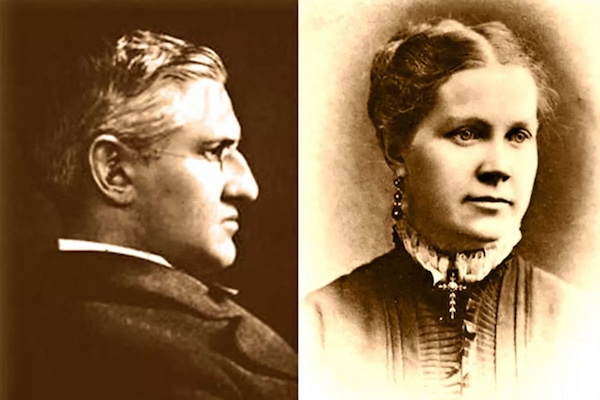
Spafford and his wife Anna (1842-1923), together with a group of 14 adults and five children, expected Jesus’s second coming imminently. While waiting, the members of the pietistic settlement of Yankees and Scandinavians served the Holy City’s many destitute by opening soup kitchens, hospitals, orphanages and other charitable ventures.

photos - Horatio Gates Spafford and Anna Spafford, circa 1873. In 1881, a Protestant utopian society led by Horatio Spafford founded the American Colony in Jerusalem
Horatio Gates Spafford and Anna Spafford, circa 1873. In 1881, a Protestant utopian society led by Horatio Spafford founded the American Colony in Jerusalem. (photos from Manuscript Division, Library of Congress)

Much of that charity was funded by the American Colony Photo Department, which became the community’s primary income. Many of those early images fall into the category of Orientalism, for which the West had a seemingly insatiable appetite. But part of that artistic achievement was due to fortuitous timing – the colony’s photographers began operating at a time when tourism to the Holy Land, especially from America and Europe, was beginning en masse.

Moreover, “with the advent of halftone printing in the 1880s, images were now becoming more accessible to the public via printed matter – books, magazines and newspapers – where they were now reproduced alongside text,” notes Tom Powers in his 2009 work Jerusalem’s American Colony and Its Photographic Legacy. (Before that, photographs could only be pasted into books by hand, as individual prints.)

A third factor was getting off to a good start, thanks to plain luck. The first sizeable project of the American Colony documentarians was the1898 state visit of Imperial Germany’s Kaiser Wilhelm II and Empress Augusta Victoria to the Holy Land.

Interested in seeing the American Colony Photo Department’s 22,000 historic photographs archived at the Library of Congress in Washington, DC? Visit loc.gov/pictures/collection/matpc/colony.html. 

Gil Zohar is a writer and tour guide in Jerusalem.

Format ImagePosted on February 14, 2025February 13, 2025Author Gil ZoharCategories IsraelTags American Colony, colonialism, history, Israel, photography, United States

מדינה במשבר

אירוע השבעה באוקטובר הנורא גרם לטראומה קשה מאוד אצל ישראלים רבים. ישראל מעולם לא חוותה אירוע כל כך קשה שגרם נזק נפשי גדול לתושבי המדינה שנמצאת במשבר שהולך ומתעצם

חלק מהישראלים מנסה לחזור לשגרת היום יום ויש אחרים המתסכלים החוצה אל מה שקורה בעולם. יש שרוצים לעזוב את ישראל ועל פי נתונים רשמיים כבר למעלה משמונים אלף עבור לגור בחו”ל. בפועל המספר צפוי להיות גדול יותר. אחרים רוצים לתפוס קצת מנוחה בחו”ל למספר ימים וכידוע נסיעה לחו”ל היא אחד התחביבים הידועים של הישראלים. המשבר הנוכחי יצר אף תופעה חדשה של ישראלים המלכלכים על העולם שלא עצר מלכת, או שמחפשים נקודות תורפה במדינות שנות – כדי לטעון שהחיים ישראל טובים יותר. ישראלים אלו שותפים לרגשי התעמולה הלאומנית שתפחו לאור השבעה באוקטובר. לא מפתיע כי בעת שראש ממשלת ישראל מפעיל מכונת רעל כנגד כל מי שמתנגד לו, יש אזרחים שמפעילים מכונת רעל כנגד כל דבר שהוא לא ישראלי בהן  מדינות בעולם. כידוע הנשק הטוב ביותר לפתור בעיות מבית הוא להתקיף את האחרים הזרים

לאחרונה מספר ישראלים שלחו לי לינקים על קנדה ונקודות התורפה שלה. כמו הומלסים, מהגרים, פשע ואנטישמיות. אכן האנטישמיות מרימה ראש במדינות רבות בעולם כולל קנדה וזו תופעה חמורה ביותר. אך לא פחות חמור הוא שישראלים ויהודים בעולם מתעלמים לחלוטין מהסיבה לאנטישמיות בגל הנוכחי. הם מציינים כי העלייה באנטישמיות הנוכחית החלה לאור השבעה באוקטובר. אך “שוכחים” את מעובדה לא פשוטה שעדיף להתעלם ממנה, במסגרת מסע הלאומניות השוטף את ישראל ויהודי העולם. והיא: שההרג של עשרות אלפים אזרחים חפים מפשע בעזה, הוא זה שהביא לאנטישמיות הקשה שאנו חווים כיום. אין שום הצדקה לאנטישמיות נגד עם שאיבד כמחציתו בשואה, אך עם שאיבד את מחציתו בשואה, לא יכול לאפשר הרג של אזרחים ברצועת עזה, כולל נשים וילדים רבים

על מנת להסביר עוד יותר עד כמה כיום הישראלים הם לאומניים אזכיר כיצד הם מתייחסים “ודואגים” לילדי עזה המסכנים שאף אחד לא יכול להאשימם במעשי השנאה הבלתי אנושית של החמאס ושאר ארגוני הטרור. סיפרתי לידידה ישראלית שגרה שנים בארה”ב על מופע של זמרת אמריקאית ידועה שהופיעה בחודש שעבר בוונקובר. אמרתי לשמאוד נהנינו בהופעה. ומה היא אמר בתגובה: אני שמחה שנהניתם בהופעה אך אני פחות שמחה שהוצאת כסף על כך, והזמרת תתרום חלק מההכנסות לילדי עזה. נדהמתי מהתגובה הזו והחלטתי שלא להגיב. זאת, למרות שכמעט עניתי לידידתי כי צה”ל ידאג לכך שעוד מעט לא ישארו ילדים חיים בעזה כך שאלה לא יזדקקו עוד לתרומות

מספר ישראלים שלחו לי דברי ביקורת קשים על ראש הממשלה “הנורא” של קנדה, ג’סטין טרודו, שגרם לנזק גדול למדינה. הופתעתי שפתאום הישראלים הפכו למומחים בנושאי קנדה. מכל מקום טרודו סוף סוף הודיע בימים האחרונים על התפטרותו וחבל שלא עשה זאת קודם. לגבי הישראלים: הם האחרונים שיכולים לבקר ראשי הממשלות של מדינות אחרות. ומדוע? כי במשך כשבעה עשרה שנה עומד בראש ממשלת ישראל, בנימין נתניהו הנוכל. הוא הרס כל חלקה טובה במדינה אותה הפך לבובת הסמרטוטים שלו. נתניהו הוא אחראי הראשי והראשון למחדלי השבעה באוקטובר ולרבים רבים מתחלואות מדינת ישראל בעשורים האחרונים. מי שלא הצליח להחליפו שלא יחפש ללכלך על מדינות אחרות בעולם ועל המנהיגים שלהן. הלאומניות הישראלית לא תוביל את הישראל להצלחה

Posted on February 5, 2025January 14, 2025Author Roni RachmaniCategories עניין בחדשותTags antisemitism, Canada, Gaza, Israel, nationalism, Netanyahu, Oct. 7, Trudeau, אנטישמיות, בנימין נתניהו, ג'סטין טרודו, הלאומניות, ישראל, עזה, קנדה, שבעה אוקטובר
Weekly vigils enter new year

Weekly vigils enter new year

Kfir Bibas was abducted before his first birthday. His second birthday is this Saturday. (photo by Pat Johnson)

The Gregorian calendar has turned over a new year, but the vigils for the Israeli hostages continue without interruption.

Daphna Kedem, who has organized the weekly events since hours after the Oct. 7, 2023, terror attacks, acknowledged that it has been effectively an additional full-time job and that the commitment has taken a toll.

“But it’s also given me energy to continue, in a strange way,” she told the Independent in the moments before the vigil at Vancouver City Hall last Sunday. “I have to be here. I have to do it. I can’t be anywhere else.”

Inevitably, numbers have dwindled from the initial weeks, and some people have suggested to Kedem that she alter the events from weekly to monthly to get the numbers up. She’s not confident that would make a difference and, she added, that would send a negative message. To shift from the weekly routine would imply “that we are normalizing and accepting the situation of the hostages” and that is a message she will not accept, she said.

Ari Mansell is a core volunteer who is present for setup and teardown every week, as well as occasionally playing violin.

“I come here as the smallest thing I can do to help my community,” he said. “It’s a labour of love for me. It’s hard for me to stay away.”

His participation has made him feel more connected to his community.

“I’ve increased my community around me,” he said. “Moving here eight years ago [from Edmonton], I didn’t really know anyone here. This unfortunate event has brought us together and I’m so thankful for the people that I’ve got to know over this time – the musicians, Daphna, the organizers – it’s enriched my life. I don’t do it for me, but at the same time it’s helped me.”

Joanita Nakasi is one of many Christians who attend on a regular basis. She has always prayed for Israel, she said, and so, when Oct. 7 happened, she felt moved to stand with the local Jewish community. She urges others to accompany her.

“They should also come and join,” she said. “We stand together until all our brothers and sisters are back.”

Richard Lowy, who has performed music and sung at many of the vigils, lauded the community for coming together across ideological lines.

“The idea that you’re secular, you’re religious, you’re nonreligious, you’re right-wing, you’re left-wing, you’re for Trump, you’re for Biden, you’re Jewish – it doesn’t matter,” he said. “It doesn’t matter what you think. When the Nazis came, they came for the Jews regardless of your beliefs or where you stood.”

He recounted an experience he had during the process of writing a book about the Holocaust experiences of his father, Leo Lowy, a “Mengele twin.” The book will be released on Jan. 27, which is International Holocaust Remembrance Day.

“While I was working [on the book], I’m reliving the horror of Auschwitz and looking at the faces of the people that are in this concentration camp and the families and the people that were brutalized and I had to take a break because it’s just so horrific,” he said. “As I walk out to the front, where the bike lane is, there is a group of young kids riding their bicycles with their Palestinian flags yelling, ‘From the river to the sea’ right in front of my house. It’s just so devastating to see this.”

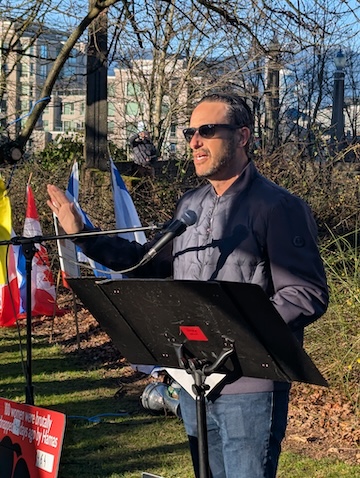
In the cold sunshine Sunday, Jonathon Leipsic asked to be described solely as “part of klal Yisrael.” 

Leipsic said he was asked to speak about antisemitism, but demurred.

“For me, antisemitism is a relatively irrelevant topic,” he told those gathered. “You may say have I lost my mind. What about this rising antisemitism?”

photo - Jonathon Leipsic, “part of klal Yisrael,” fears sinat chinam, baseless hatred, more than antisemitism
Jonathon Leipsic, “part of klal Yisrael,” fears sinat chinam, baseless hatred, more than antisemitism. (photo by Pat Johnson)

He said the Jewish community has done a good job teaching the next generations about antisemitism and the Shoah, to be good stewards of memory.

“We as a people undoubtedly will suffer, but we are eternal,” he said. “At the end of the day, we are eternal if we follow the words and the guidance provided to us.”

What worries him more, he said, is sinat chinam, baseless hatred.

“Baseless hatred among klal Yisrael and division and a lack of shalom bayit [peace in the home] within our people – this is, by far, and has always been, the only true threat to the eternity of am Yisrael. Our rabbis teach us that the First Temple was destroyed because of the most profound and abominable sins one could imagine that could be happening within a place of Hashem…. But yet, what brought down the Second Temple? Sinat chinam. Baseless hatred among klal Yisrael.”

He urged the audience to embrace the diversity of opinion within the community and “be less afraid of antisemitism and much more concerned about sinat chinam.”

Ohad Arazi moved to Canada from Israel in 2006 and has spent two decades bringing together Israeli and Canadian technology companies and people. As a son of a diplomat, he has spent more time living outside Israel than in it.

He reacted negatively when, prior to moving to Canada, his mother warned him that, as a Jew, “The only place you will ever feel truly safe is here in Israel.”

“I was so angry at her. I said, ‘I am a child of the world,’” Arazi recalled. “I am moving to one of the most liberal and pluralistic countries in the world. Please, Ima, don’t project your scarred Holocaust psyche on me.”

Then Oct. 7 happened.

“On that day, the world witnessed unspeakable atrocities as Hamas launched a brutal attack on Israel, resulting in the loss of innocent lives and the abduction of many,” he said. “But one more thing happened that day, which is that Canadians got their first glimpse of where our country could be headed. Shortly after the news of the scope of the atrocities began coming to light, revelers and anti-Israel protesters took to the streets in Canada.… Across governments, schools, unions and media, a toxic environment has emerged, fueling hostility against Canadian Jews.”

Israel’s war against Hamas, Hezbollah and the Houthis is proceeding successfully, he said. “But our war, as Jews in the diaspora, the war we are facing day in and day out, is a war of ideas, a war of words, ideology and truth,” said Arazi. “Our Canada should be the model for building a future where the values of humanity triumph over hatred and where every hostage is safely returned to their loved ones.”

Aliya Oran Dobres, a 15-year-old Grade 9 student at King David High School, shared her harrowing experiences of being pursued by a threatening group at a mall because of her Star of David necklace, as well as the threats her friends have experienced. In the days after Oct. 7, her fellow students covered their uniforms when in public, she said.

“We should not be scared for who we are,” she said. “As Jews, we must stick together and be strong.”

Ebube Anachebe is a fourth-year electrical engineering student at the University of Calgary, who is in Vancouver for an internship. She returned days ago from her second trip to Israel in the past year, with a Christian organization called Passages.

“The aim of the mission is to bring Christian students to the Holy Land to walk in the footsteps of Jesus,” she said. “However, since Oct. 7, they have been shifting their focus toward not just bringing students to the Holy Land, but also mobilizing Christian students to stand alongside their Jewish brothers and sisters against antisemitism.”

About 100 others joined Anachebe on the nine-day tour. 

“We experienced the Jewish roots of our faith, we experienced the love of our saviour, gifted to us by you guys, our Jewish brethren,” she said. “We encountered modern Israel and we bore witness to the realities of what happened on Oct. 7.”

She shared several memorable encounters with Israeli individuals, including Shahar, a resident of Kfar Aza.

“His beloved community was torn apart and ransacked by Hamas terrorists. When we asked him why he returned, he said, ‘Israel is my home, this kibbutz is my home, I have nowhere else that I would want to go.’

“The group’s tour guide, Danny, recounted how, on Oct. 7, when awakened by sirens at 6:30 am, his son asked him, ‘Daddy, why won’t the bad people let Israelis sleep?’

“He shared about the difficult moment when, a couple of hours later, he was called to the reserves and he had to tell his son, ‘I won’t be here for your birthday tomorrow,’” Anachebe said.

She said that, when Oct. 7 happened, “it awoke two different camps of people.”

“It awakened the antisemites, who had been slumbering,” she said. “But I tell you it also woke up leaders who didn’t even realize that they were leaders until they were called up for such a time as this, to stand up against this evil of antisemitism. This is what I witnessed when I went to Israel. I witnessed leaders who will rise up and pray for Israel, the hostages and the brokenhearted.”

Anachebe said, “We Christians see you, our Jewish brothers and sisters, as mishpachah, family. We are standing and we are standing alongside you. Am Yisrael chai.” 

Format ImagePosted on January 17, 2025January 14, 2025Author Pat JohnsonCategories LocalTags Aliya Oran Dobres, Ari Mansell, Daphna Kedem, Ebube Anachebe, hostages, interfaith, Israel, Joanita Nakasi, Jonathon Leipsic, Klal Yisrael, Oct. 7, Ohad Arazi, rallies, Richard Lowy, volunteering
Their wait to return home

Their wait to return home

Thomas Hand and the survivors of the massacre at Kibbutz Be’eri hope to return home in 2026. (photo by Gil Zohar)

Kibbutz Hatzerim, eight kilometres west of Be’er Sheva, best known for its drip-irrigation plant, also houses the newly established quarter here for the survivors of Hamas’s Oct. 7, 2023, massacre of more than 130 of Kibbutz Be’eri’s 1,071 residents. Emily Hand and her Dublin-born father Thomas, 64, are among the 200 refugees living there. In 2026, they hope to move back to rebuilt homes in their community alongside the Gaza Strip.

“We’re still in the stage of demolishing the houses beyond repair,” Hand said. A quarter of Be’eri’s housing is unsalvageable.

Some vegetation has been planted around the new temporary bungalows at Hatzerim, and the site is beginning to resemble a kibbutz neighbourhood. But little else is normal.

The Hands marked the anniversary of Emily’s release from imprisonment in the tunnels of Gaza on Nov. 26. A week earlier, the Irish-Israeli celebrated her 10th birthday. Thomas no longer allows his daughter to be interviewed by the media. The probing questions she faced raised horrific memories of captivity that she is still struggling to process, said her father. She has engaged in various therapies, including seeing a psychologist weekly, horse riding and puppy love with their pooch, Johnsey.

“She’s living day to day, enjoying every day,” her father said.

The Hands moved to their home at Hatzerim shortly before Rosh Hashanah and Emily started the new school year there. Before then, they had been sheltered at Kibbutz Ein Gedi’s hotel by the Dead Sea.

Like his daughter, Hand too is struggling. In the days after Oct. 7, he was initially informed his daughter had been murdered. After a month, that assessment was revised to missing. After more uncertainty, she was then declared a hostage – and finally released in a swap for Hamas gunmen and other terrorists.

The Hand household is still decorated with balloons from Emily’s recent birthday party. Among the guests were fellow hostages Noa Argamani, Ra’aya Rotem and Hila Rotem Shoshani, who surprised Emily with a cake and candles. Argamani, who was imprisoned with Hand, was rescued on June 8, after 245 days in captivity, in a joint operation by the Israel Defence Forces, Shabak (Israel’s security agency) and Israel Police.

Hand said Emily is adjusting “incredibly well.” But then he contextualized what that means: “She still sleeps with me. Usually in my bed.”

“She was captured from a MaMaD [safe room]. And that’s a trigger,” he said.

The constant roar of jets flying overhead to and from the nearby Hatzerim Air Base adds to their ill-ease. Hand’s conversation is punctuated by sighs and tears. “Don’t mind me,” he said. “It’s just part of the process.”

None of the kibbutz’s protected spaces had bulletproof doors, he noted. His own MaMaD wasn’t equipped with a lock, he added. “I just had to hope and pray.”

Other general tactical mistakes included storing the kibbutz’s guns and ammo in a central location rather than having them distributed among people’s homes. Half the members of Be’eri’s emergency response team were gunned down trying to reach the armoury, Hand said.

His first concern on Oct. 7 was for Emily, who was sleeping over at a friend’s house 300 metres away. With bullets flying, there was no chance to run there to attempt to rescue her, he recalled.

He left his shelter at 10 a.m. Armed with his pistol, two magazine clips and a bullet in the chamber, he positioned himself by his kitchen window, which offered a wide field of fire. The Hand family house was relatively untouched apart from shrapnel damage.

“While I couldn’t protect my daughter, I was able to protect three houses,” he said.

Hand remained at his post until 11:30 p.m., when IDF soldiers arrived.

“The amount of guilt that I felt at not going to save her [Emily] even at the risk of my own life…. But I knew I would be dead, and she would be an orphan. It was a very big thing afterwards. At the time, I was just in survival mode.”

With self-deprecating humour, Hand remembered he only had two cans of beer in the fridge that Saturday morning. It’s a mistake he has never repeated, he said, now always having a case of suds on hand.

Another cause of guilt is not being able to work. He had previously been employed at Be’eri’s printshop, and then as a painter at its toy and furniture factory. While the workshop has reopened, Hand is unable to commute the 90 minutes there, since he must stay close to his daughter. “I have to keep her normalized,” he said.

“They’ve given me a lot of leeway,” Hand said of the kibbutz secretariat.  In the meantime, he devotes a lot of time to hostage issues.

Looking wistful, he concluded: “I will not feel safe going back to Be’eri with this government in power, and without Hamas being completely crushed.” 

Gil Zohar is a writer and tour guide in Jerusalem.

Format ImagePosted on January 17, 2025January 15, 2025Author Gil ZoharCategories IsraelTags Israel, Kibbutz Be’eri, Oct. 7, Thomas Hand

Surveying Canadian Jews

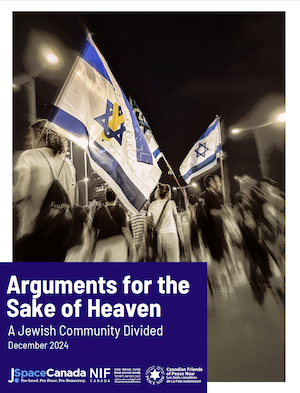
“Canada’s Jewish community is divided over Israeli and domestic Canadian politics, even though rising antisemitism and war seem to have increased the emotional attachment of Canada’s Jews to Israel,” writes sociologist Robert Brym in the executive summary of Arguments for the Sake of Heaven: A Jewish Community Divided. The report imparts the results of a poll sponsored by the New Israel Fund of Canada, JSpaceCanada, and Canadian Friends of Peace Now.

From Aug. 28 to Sept. 16, 2024, the polling firm Leger surveyed 588 Canadian Jews. The sample “was drawn from a large online panel of Canadian adults. It was weighted by characteristics of the Canadian Jewish population based on the 2021 Census of Canada and the 2018 Survey of Jews in Canada,” which was prepared by Brym, Keith Neuman and Rhonda Lenton for the Environics Institute, University of Toronto, and York University. The composition of the sample “is believed to be broadly representative of Canadian Jewry.”

“We undertook this survey in response to conservative establishment Jewish institutions and anti-Zionist Jewish groups co-creating a polarized, black-and-white public debate that didn’t reflect the diverse, nuanced Jewish community we know and love,” write Maytal Kowalski, JSpaceCanada executive director, Gabriella Goliger, national chair of Canadian Friends of Peace Now, and Ben Murane, executive director of NIF Canada, in the introduction to the report, which was released last month.

“Our research confirms that there is no such thing as ‘the Jewish community’s opinion’ as a monolith, nor can any segment of the community (or any institution) claim to speak for all others. In many cases, we see no majority opinion as well as high levels of uncertainty. Therefore, not only are claims of monolithic support misrepresentations of Canadian Jewish diversity, they also erase the spirited nature of Jewish life in Canada.”

image - Arguments for the Sake of Heaven coverExplaining the report’s title, they note: “One of the noblest ideals in Judaism is ‘arguments for the sake of heaven’ – that disagreement and debate are in fact coveted and celebrated as long as the disagreement is ‘for the sake of heaven,’ meaning an argument that seeks to uncover truth.”

They call upon “Jewish communal leaders to uphold and support the variety of opinions and ideas held by Canadian Jews – and to foster arguments for the sake of heaven,” and warn that “Canadian political leaders must engage all of Canada’s Jewish communities and not stereotype us based on a false monolith.”

Brym lists the poll’s highlights, which include that “Canadian Jews express stronger emotional attachment to Israel than in four previous surveys dating back to 2018. Specifically, 84% of Canada’s Jews say they are ‘very’ or ‘somewhat’ emotionally attached to Israel [compared to 79% in 2018]. Ninety-four percent support the existence of Israel as a Jewish state.”

Brym notes, “Just 3% say Israel lacks that right, while another 3% say they don’t know or don’t answer the question. Belief in Israel’s right to exist does not vary significantly by gender, educational attainment, income or denomination. It does vary significantly by age and political party support. Ninety-eight percent of those over the age of 34 say Israel has the right to exist as a Jewish state, compared to 81% of those under the age of 35. Ninety-seven percent of Conservative and Liberal party supporters say that Israel has the right to exist as a Jewish state. Some 79% of NDP supporters concur, although the number of NDP supporters in the sample is too small to provide a highly reliable estimate.”

When asked “Do you consider yourself a Zionist?” however, 51% of respondents said yes, 15% claimed ambivalence, 27% said no and 7% said they didn’t know, or didn’t answer the question.

“Given their strong emotional attachment to Israel and their nearly universal belief that Israel has the right to exist as a Jewish state, one might be tempted to speculate that more Canadian Jews do not consider themselves Zionists because they confuse Zionism with certain policies of the Netanyahu government that they find objectionable,” writes Brym. “Future research needs to probe this issue.”

When asked whether continued building of Jewish settlements in the West Bank helped, harmed or didn’t make a difference to the security of Israel, 34% of respondents said it hurts Israel’s security while 27% said it helps, 22% thought it made no difference and 18% didn’t know or didn’t answer.

Half of respondents favoured a two-state solution, while 25% wanted an Israeli state (the annexation of West Bank and Gaza), while 8% believe that “the best resolution to the conflict is a single, secular, binational state that favours equal rights for Jews and Palestinians.”

“When asked whether Canadian politicians should increase pressure on Israel and the Palestinians to engage in a meaningful peace process, 55% of Canadian Jews agree and 23% disagree,” summarizes Brym. “When asked whether politicians should sanction Jewish West Bank settlers who engage in acts of vigilante violence against Palestinian civilians, 35% of Canadian Jews agree and 41% disagree. When asked whether politicians should recognize a Palestinian state in the near future, 21% of Canadian Jews agree and 53% disagree. When asked whether Canadian politicians should impose an embargo on the arms trade with Israel, 69% of Canadian Jews say no and 10% say yes.”

The survey also asked respondents to rank, in view of an upcoming federal election, their priorities among 11 different issues. From most to least important were cost of living, antisemitism, health care, housing, Israel-Palestine conflict, climate change and environment, crime and public safety, immigration, threats posed by China and Russia, discrimination against Indigenous people, and Islamophobia.

The question was asked, “Which political party did you vote for in the last (2021) federal election?” and also “If a Canadian federal election were held tomorrow, which party, if any, would you vote for?”

“Among decided voters, support for the New Democratic Party remained steady at about 9% between 2021 and 2024,” writes Brym. “Support for the Liberal party fell from 39% to 26%. And support for the Conservative party increased from 36% to 55%. These trends are similar to those in the general population, but the decline in Liberal support and increase in Conservative support is more pronounced among Jews.”

The whole report can be found at jspacecanada.ca/arguments_sake_of_heaven. It includes much more data – including more analysis of responses according to age, gender, level of education, household income, denominational identification and political party support – as well as commentary and recommendations from the survey’s three sponsoring organizations. 

Posted on January 17, 2025January 14, 2025Author Cynthia RamsayCategories NationalTags Canada, Canadian Friends of Peace Now, Canadian Jews, government policy, Israel, JSpaceCanada, Judaism, New Israel Fund of Canada, opinion polls, politics

אייר קנדה מרחיבה את טיסותיה בשדה התעופה של ונקובר

אייר קנדה הודיעה לאחרונה על הרחבת טיסותיה מבסיסה שבשדה התעופה של ונקובר. חברת התעופה הלאומית של קנדה לא הודיעה בשלב זה על מועד חידוש טיסותיה לישראל

אייר קנדה החברה מציעה עתה שלושה קווים חדשים לארצות הברית: לטמפה, ראלי ונאשוויל. זאת במקביל להרחבת הטיסות משמעותית ליעדים הרגילים בארה”ב: אוסטין, דנבר ומיאמי. כך שגדל הגיוון של טיסות מקנדה לארה”ב באמצעות אייר קנדה

יחד עם שותפתה האמריקנית יונייטד איירליינס, אייר קנדה תציע עד קרוב לשמונת אלפים מושבים בשישים טיסות יומיות – ובאופן ישיר – לעשרים ואחד יעדים בארה”ב בקיץ הבא. מדובר בעלייה של כאחד עשר אחוז בקיבולת המושבים של אייר קנדה לעומת הקיץ שעבר. כל הטיסות לארה”ב זמינות כעת למכירה באתר החברה, דרך מרכזי השירות של אייר קנדה ודרך סוכני נסיעות

באייר קנדה מציינים  כי הם שמחים להרחיב עוד יותר את הבסיס שלהם בוונקובר עם טיסות חדשות כל השנה לטמפה, קווים עונתיים לראלי ונאשוויל. וזאת עם קיבולת נוספת לאוסטין, דנבר ומיאמי. אייר קנדה ממשיכה לחזק את מעמדה כחברת התעופה המובילה בין קנדה לבין ארה”ב, עם טיסות חדשות לאזורים מטרופולינים שצומחים במהירות. וכן ליעדים מבוקשים, שעמם ללקוחות במערב קנדה יהיו ​​יותר אפשרויות לגלות את כל מה שיש לארה”ב להציע. ובמקביל לאפשר ללקוחות האמריקנים של החברה הקנדית לחקור ולגלות את קנדה. הקווים החדשים ביותר של אייר קנדה מחזקים עוד יותר את האסטרטגיה שלה, של גישור יעיל יותר בין החלקים השונים של צפון אמריקה. וכן הגדלת יעדים בינלאומיים ברחבי אזור אסייה-פסיפיק, באמצעות שדה התעופה של ונקובר

בשדה התעופה של ונקובר שנמצא בעיר ריצ’מונד הסמוכה לוונקובר, מקבלים בסיפוק את הודעת אייר קנדה. בהנהלת השדה אומרים כי הם מאוד שמחים לראות כי הרשת הרחבה של אייר קנדה מוונקובר לארה”ב ממשיכה לצמוח, ולספק לנוסעים יותר מבחר ונוחות. הקווים החדשים של אייר קנדה מספקים גם לנוסעים יותר גמישות מארה”ב וכן גישה ישירה לכל מה של מחוז בריטיש קולומביה יש להציע. זאת, כולל חיבורים למגוון היעדים הגלובליים משדה התעופה של ונקובר

אייר קנדה מתכננת לאסור על תיקי יד בטיסות ולגבות מחיר עבור בחירת מושבים עבור לקוחותיה, שבוחרים את הכרטיסים הזולים ביותר. השינויים ייכנסו לתוקף בראשית השנה החדשה. זאת, במסגרת מדיניות החברה על פיה הנחות במחירים צפויות יותר ויותר למיינסטרים

כאמור החל מהשלושה בחודש ינואר, נוסעים בתעריף בסיסי והזול ביותר לטיולים בתוך צפון אמריקה וכן אל יעדי שמש החמים, יאלצו לשלם עבור תיקים אישיים, מזוודות על גלגלים שמתאימות למטוסים ותרמילים גדולים, שלושים וחמישה דולר עבור פריט אחד וחמישים דולר עבור שני פריטים. פריט אישי קטן כמו ארנק או תיק למחשב נייד יורשו לעלות על הסיפון בחינם, כמו גם עגלות, עזרי ניידות ומכשור רפואי

באייר קנדה אומרים כי החל מהעשרים ואחד בינואר, לקוחות מהדרג הנמוך יצטרכו לשלם – אם הם רוצים לשנות את המושב שהוקצה להם בזמן הצ’ק-אין. מדיניות זו השעתה על ידי אייר קנדה רק יומיים לאחר יישום מוקדם יותר השנה על רקע תגובה נגד מטיילים

המהלכים מסמנים מעבר לעבר הצעה בסגנון חברת תעופה תקציבית מחברת הדגל של קנדה, שיחד עם המתחרות מסתמכת יותר ויותר על עמלות נלוות עבור שירותים שנכללו בעבר, החל ממזוודות נשלחות ועד חטיפים על הסיפון וגישה לאינטרנט אלחוטי

אייר קנדה אומרת שהשינויים מיישרים את מבנה התעריפים שלה עם אפשרויות כרטיס דומות מחברות קנדיות אחרות ומבדילים טוב יותר את מותגי הטיסות שלה

Posted on January 8, 2025December 17, 2024Author Roni RachmaniCategories עניין בחדשותTags Air Canada, ancillary fees, checked baggage, flights, Israel, onboard snacks, wireless internet access, אייר קנדה, גישה לאינטרנט אלחוטי, חטיפים על הסיפון, טיסות, ישראל, מזוודות נשלחות, עמלות נלוות

אין סוף לאנטישמיות

לבעיית האנטישמיות כנגד יהודים וישראלים בעולם. אין ספק שמדינות המערב נכשלו בטיפול שורש בבעייה חמורה זו ואני חושש למראות קשים יותר בעתיד

גל האנטישמיות הנוכחי החל צובר תאוצה לאור הריגתם בעזה של עשרות ואלפי אזרחים בהם נשים וילדים רבים. יש מקום להעביר ביקורת על ישראל ולהפגין כנגדה בכל מקום בעולם. אך אסור בשום פנים ואופן לנקוט באלימות נגד תושבי ישראל והיהודים ברחבי העולם ולקרוא להשמדת המדינה. שנאה שכזו לא תביא לשום תוצאות חיוביות וכאמור על מדינות המערב להתחיל ולפעול בחריצות כנגדה

ישראלים רבים רואים את תמונת המצב בשני צבעים בלבד: שחור ולבן. מבינתם לאחר אירועי השבעה באוקטובר משנה שעברה עם ההתקפה הנוראית של הטרוריסטים מהחמאס וארגונים נוספים, מותר לישראל לעשות כרצונה – בדרך לחסל את הטרור בעזה, גם אם מדובר בהריגת עשרות אזרחים. אצל הישראלים – לאחר השבעה באוקטובר – אין שום מקום להעביר ביקורת על ישראל. וכל ביקורת היא אנטישמיות לשמה. הישראלים אומרים במפורש כי מה שלארה”ב ומדינות נוספות היה מותר לעשות באפגניסטן, עיראק, ויאטנם ומדינות נוספות, מותר גם לישראל לעשות. עמדה זו לא מקובלת עלי ואני טוען כי אין לישראל לגיטימציה לעשות את מה שמדינות אחרות עשו כיוון שמדובר בדברים חמורים מאוד. וכן אסור לשכוח לרגע שרצועת עזה נמצאת לפיתחה של ישראל והתוצאות האיומות של הרג אזרחים והריסת כשבעים אחוז מהבניינים לא יעלמו פתאום

לאור מחדלי ואירועי השבעה באוקטובר חלק מהישראלים מתקשים לעכל זאת, והפתרון נמצא בדת. אלוהים העניש את ישראל והנקמה (המוצדקת אגב) מתבצעת בשמו. בכך הם מורידים אחריות מהמדינה לגודל המחדלים שקדמו לשבעה באוקטובר, והופכים את החיים בישראל לקלים יותר

אני לא מזלזל באמונה של אלה שמאמינים באלוהים דעתי ידועה היא כי כל אחד יחיה באמונתו. אך אין מקום להכניס אמונות לנושאים אקטואליים ומעשיים כמו השבעה באוקטובר. האמונות מסוות למשל את חומרת המחדלים של ישראל בכל הרמות. האמונות כביכול נותנות מענה למצוקה הקשה והאישית עקב הדבר הנורא הזה שקרה לישראל אך אין בהם להביא לשום פתרון מעשי. אומר שוב: השבעה באוקטובר שהוא האירוע החמור ביותר לעם היהודי מאז ימי השואה, קרה בגלל שורת מחדלים קשה ביותר של ראש ממשלת ישראל, ממשלתו, הצבא וגורמי הביטחון. שום אמונה לא תשנה עובדה זו

יש לזכור שבישראל עצמה לאור שנים מתנהלת אנטישמיות נגד מתנגדי ראש הממשלה, בנימין נתניהו, וזה עובר יחסית בשתיקה. אין מספיק תגובות נגד הביביסטים שמתקיפים באלימות את משפחות החטופים. הביביסטים קוראים ליוצאי אירופה כמוני “אתם חזרו לאירופה כדי שהיטלר יחסל אתכם”. האם זו לא אנטישמיות שפלה ביותר? הגדילה לעשות שרת התחבורה, מירי רגב, שאמרה בצורה מבישה “הקפלניסטים הגיעו לבית של ביבי לסיים מה שחיזבאללה לא הצליח”. האם זו לא אנטישמיות

קודם כל צריך תסתכל טוב טוב במה שקורה בתוך ישראל לפני שמעבירים ביקורת על העולם. אני בטוח שיותר קל לדבר על זרים מאשר על חלק לא מבוטל ממדינת ישראל

לסיכום העניין יש לציין כי מצבה של ישראל והיהודים ברחבי העולם הוא מסובך ביותר. ישראל הפכה לאחת המדינות השנואות בעולם כיום והישראלים והיהודים בעולם נמצאים בסכנה מוחשית של אלימות ממשית. לאף אחד לא ברור עוד כמה זמן תימשך לחימת ישראל בעזה ורבים מתושבי המדינה היה רוצים כבר לראות את הסוף ושחררור החטופים שרובם כבר לא בחיים

Posted on December 25, 2024December 17, 2024Author Roni RachmaniCategories עניין בחדשותTags Amsterdam, antisemitism, Bibiists, Gaza, hostages, Israel, Oct. 7, אמסטרדם, אנטישמיות, ביביסטים, חטופים, ישראל, עזה
Writing the human condition

Writing the human condition

Maya Arad and Eshkol Nevo are featured in the JCC Jewish Book Festival prologue event Jan. 19.

The JCC Jewish Book Festival begins its 40th year with a discussion that’s sure to be as intriguing as it is relevant. The two Israeli writers featured in the festival prologue event Jan. 19 – Maya Arad and Eshkol Nevo – are keen observers and talented communicators, even as their characters are not.

Boundaries, generational differences, family, love, work, politics, social mores, and other themes run through both Arad’s  (New Vessel Press, 2024) and Nevo’s Inside Information (Other Press, 2023). Each book comprises three novellas, though Nevo’s very loosely connects all the narratives, so dubs itself a novel, despite the stories being almost completely unrelated. Melancholic would best describe the mood of both works.

While the English version of Arad’s The Hebrew Teacher was published just this year – translated by Jessica Cohen – the Hebrew version came out in 2018. Its stories retain their immediacy, and readers will be able to relate to some aspect(s) of every one.

image - The Hebrew Teacher book coverThe title story, “The Hebrew Teacher,” is brilliant. When Ilana arrived in the United States from Israel in 1971 and started teaching, her Hebrew classes, both children and adult, at her synagogue and at the university, were packed: “Parents wanted their children to be able to chat in Hebrew, not just recite the prayers…. Everyone wanted to know a little Hebrew before they visited Israel. They wanted to learn the new songs.” Of course, those songs are far from new at this point in Ilana’s career, yet she still holds them and their visions of Israel dear.

But enrolment in the Hebrew-language university courses has been dropping for almost two decades, both because “Israel was a tough sell these days. It wasn’t the fledgling little country of 45 years ago. Nor was Ilana the same beaming young woman who’d arrived, thick copper braid over one shoulder, to regale the riveted students with stories about hiking from the Mediterranean to the Sea of Galilee, working on a kibbutz, and firing an Uzi when she served in the Israel Defence Forces.”

Into Ilana’s tenuous professional world – her husband has just retired from the university and other key allies have moved on – comes a new hire, Yoad Bergman-Harari, who’d been born Yoad Harari but had “added on his father’s original name, Bergman.” When Ilana asks why, he responds, “‘To negate the negation of the diaspora’ … as though it were the most obvious thing in the world.”

The differences in their worldviews – particularly on the Israeli-Palestinian conflict – and approach to collegiality are stark. While Ilana has taught at the university for decades, she holds none of the cards here, as Yoad is the latest newfangled intellectual thing, and a professor, so can pretty much write his own ticket, and does.

In “A Visit (Scenes),” Miriam comes to the States for a three-week visit with her only child, Yoram, his wife Maya and their son Yonatan. Miriam makes the journey because her son rarely returns to Israel and she has yet to meet her grandson in person. In a string of short snippets, mostly from Miriam’s perspective but also from Yoram’s and Maya’s, we are privy to what everyone is feeling – which boils down to a lot of unhappiness. The lack of honest, open communication contributes to the tensions and dissatisfactions, which build as the visit goes on.

The final story, “Make New Friends,” is kind of mystifying at first, as we watch Efrat, an educated, successful woman with a good husband, start to spiral as she tries to protect their unpopular teenaged daughter from being hurt by so-called friends. She gets way too involved, even entering the teen social media universe, and it’s only when Efrat realizes that she herself doesn’t belong to any group or have any real friends that she begins to understand her reactions (and actions) to her daughter’s situation. 

One review of The Hebrew Teacher comments that Arad, in these novellas, “probes the demise of idealism and the generation gap that her heroines must confront.” This is an apt description. And it could be said that Nevo also explores the demise of idealism in Inside Information, which was translated from Hebrew into English by Sondra Silverston.

image - Inside Information book coverThe first two stories of the novel have similar plotlines – men who are led by their sexual desires to act in illegal or inappropriate ways. The main difference between the protagonists is that the “hero” in “Death Road,” Omri, goes mostly willingly towards his potential downfall while Dr. Caro, the main character of “Family History,” tries to convince himself that he did nothing wrong.

In “Death Road,” while on a trip to Bolivia following the recent breakup of his marriage, Omri runs into newlyweds Ronen and Mor. Once back in Israel, he reads in the newspaper about the death of Ronen in a cycling accident in Bolivia. He decides to go to the shiva – as he drives there, his “mind filled with more and more images of Mor’s surprise nocturnal visit to my room two weeks earlier.”

As Omri lays out the story, he proves an unreliable narrator. Nothing ultimately ends up being what it seems at first. More details become known. Questions arise. It’s a thriller of sorts, but one that doesn’t seem all that original or urgent. There are twists but nothing that’ll stop readers in their tracks.

The femme fatale reappears in the next story, “Family History,” this time in the form of a young medical resident who supposedly mistakes the ostensibly paternal gesture of the respected Dr. Caro for sexual harassment and files a complaint that threatens the good doctor’s reputation. Even as Caro tells his story, he’s trying to convince himself as much as us about the purity of his motivations. But he’s a widower who obviously loved his wife, he seems well-liked at work and good at his job. He is a more empathetic character than Omri, and the twist in this story does elicit some surprise, and puts Caro’s actions into an even darker light.

The last part of the novel, “A Man Walks Into An Orchard,” is a direct rift on the talmudic tractate about four Jewish sages who went into pardes, which means both paradise and orchard, and only one came out unharmed. In Nevo’s story, husband and wife Ofer and Chelli go for one of their regular Saturday walks in the orchard. This Saturday, though, Ofer needs to pee, so he gives his phone to Chelli and goes into the trees, while she waits on the road. And waits. He never comes back. He is never found. 

The way in which Chelli and her two children work through their loss is emotionally engaging. She and her son become estranged, while she and her daughter become closer as they search Ofer’s blogs for clues to his potential whereabouts. He had intended to complete 100 stories of 100 words each, and then publish a book. He had posted his 99th story the week before he disappeared.

There is something satisfying in this third tale, though it takes a detour into Chelli’s drug-induced visions to somewhat resolve the mystery of Ofer’s disappearance. It highlights our desire for things to make sense, to know what happened. When that’s impossible, storytelling can fill in the blanks. 

The Maya Arad and Eshkol Nevo event on Jan. 19 takes place at 1 p.m., at the Jewish Community Centre of Greater Vancouver. Olga Campbell gives a talk on her memoir (jewishindependent.ca/a-multidimensional-memoir) and its exhibit on Jan. 23, 7 p.m., at the Zack Gallery. The book festival and the Vancouver Holocaust Education Centre present a talk by Roger Frie on his book Edge of Catastrophe: Erich Fromm, Fascism and the Holocaust on International Holocaust Remembrance Day, Jan. 27, 7 p.m. The festival itself opens Feb. 22 – with Selina Robinson in conversation about her new memoir, Truth Be Told – and runs through Feb. 27. Events will be posted at jccgv.com/jewish-book-festival as they are confirmed.

Format ImagePosted on December 20, 2024December 19, 2024Author Cynthia RamsayCategories BooksTags Eshkol Nevo, fiction, Israel, JCC Jewish Book Festival, Maya Arad, novellas, novels, translation

Coffee and sympathy

In Startup Nation, Dan Senor and Saul Singer’s 2009 book about Israel’s successes in innovation and entrepreneurship, the authors credit the hothouse environment created by the country’s many challenges not as a barrier but as a catapult to its accomplishments.

For example, mandatory military service, made necessary by Israel’s tough neighbourhood, has helped cultivate leadership, teamwork, technical skills and adaptability under pressure. Put simply, young people who have made life-and-death decisions for themselves and their unit while still in their teens may be less daunted than other people when confronted with the risks required to succeed in business or other life challenges.

In what may be an unanticipated twist on this resilience and adaptability, a chain of cafés has emerged in Israel with a very specific clientele. Restaurateur Tamir Barelko launched Café Otef, a chain with two outlets and plans for more. Otef refers to the Gaza “envelope” area where the Oct. 7 invasion took place. 

A Jewish Telegraphic Agency article last week on the coffee shops tells the story of Israelis’ sometimes unconventional approaches to resilience and recovery.

The cafés, staffed entirely by survivors of the Oct. 7, 2023, attacks on southern kibbutzim, feature products from affected communities: cheeses from Kibbutz Be’eri, honey from Kibbutz Erez and other foods and products, like T-shirts, aprons and water bottles, sourced from entrepreneurs affected by the tragedy.

The first such storefront, Café Otef-Re’im, named after the kibbutz adjacent to the Nova festival site and where seven residents were murdered and four taken hostage, is owned and run by Reut Karp. Her former husband, Dvir Karp, was murdered in front of their three children. Dvir was a chocolatier and his recipes are enjoyed by café customers.

Karp and other staff credit the cafés with getting them out of bed in the mornings. One displaced kibbutznik who experienced culture shock in Tel Aviv finds the clientele can appreciate his dark humour in ways locals cannot.

Karp emphasizes that the café’s association with the tragedy is not a “gimmick.” While Tel Aviv is sometimes derided as a “bubble” removed from the realities faced by Israelis in other parts of the country, the central location, she explains, is a benefit that allows displaced residents from the country’s north and south to meet and share experiences.

Comfortable Canadians can hardly imagine either the inescapable grief of Israelis directly affected by Oct. 7 or the daily challenges of living with the memories. Enjoying coffee and chocolate in an environment explicitly created for working through the pain of that day and its aftermath might seem counterintuitive to those who have never experienced anything remotely similar. It may be a distinctly Israeli response to face the realities head-on.

At the same time, Karp acknowledges that her café does not push the tragedy in customers’ faces. One could drop in, stay awhile and leave without ever knowing the motive behind the place. One unavoidable sign, however, is a work of art made up of text messages sent on the tragic day.

Two new cafés are planned for the near future, including Café Otef-Sderot, named for the southern town that has always been on the frontline of Gaza rockets, and Café Otef-Kiryat Shmona, honouring evacuees from the northern town, which is in the Vancouver Jewish community’s partnership region. Barelko, the café’s founder, aims to recruit wounded soldiers from the ongoing war as the chain expands. 

Canadian Jews, like Jews worldwide, are confronting a changed environment. Having the good fortune of comparative comfort for generations, we have not had to develop the mechanisms for coping with disasters like our Israeli cousins have been forced to cultivate. Of course, history has always presented Jews with challenges and Israelis, we might say, are a concentrated embodiment of Jewish resilience and constructive response to challenges. Café Otef is one small example of that response and an example for others facing challenges. As we conclude 2024, a year of continuing tests for our people, we should take a moment of reflection and pride in how we have adapted and responded since Oct. 7, 2023.

Many Canadian Jews feel overwhelmed and struggle to find positivity in the current moment. This is completely understandable. Nevertheless, our community has responded to changed circumstances with determination and toughness. This should be a source of immense pride. We should also focus on the extraordinary strength of Israelis as a model for facing our own difficult moments. The potent unity of Jews worldwide in the past year is a testament to kol Yisrael arevim zeh bazeh, all Jews are responsible for one another. The solidarity showed by diaspora communities has inspired and strengthened Israelis. We should not miss the opportunity to be inspired by their resolve as we confront on own very different but related troubles. 

Posted on December 20, 2024December 19, 2024Author The Editorial BoardCategories From the JITags Café Otef, coffee, Diaspora, healing, Israel, resilience

Posts pagination

Previous page Page 1 … Page 10 Page 11 Page 12 … Page 111 Next page
Proudly powered by WordPress