Skip to content
  • Home
  • Subscribe / donate
  • Events calendar
  • News
    • Local
    • National
    • Israel
    • World
    • עניין בחדשות
      A roundup of news in Canada and further afield, in Hebrew.
  • Opinion
    • From the JI
    • Op-Ed
  • Arts & Culture
    • Performing Arts
    • Music
    • Books
    • Visual Arts
    • TV & Film
  • Life
    • Celebrating the Holidays
    • Travel
    • The Daily Snooze
      Cartoons by Jacob Samuel
    • Mystery Photo
      Help the JI and JMABC fill in the gaps in our archives.
  • Community Links
    • Organizations, Etc.
    • Other News Sources & Blogs
    • Business Directory
  • FAQ
  • JI Chai Celebration
  • JI@88! video

Recent Posts

  • טראמפ עוזר דווקא לנושא הפלסטיני
  • New rabbi settles into post
  • A light for the nations
  • Killed for being Jewish 
  • The complexities of identity
  • Jews in time of trauma
  • What should governments do?
  • Annie will warm your heart
  • Best of the film fest online
  • Guitar Night at Massey
  • Partners in the telling of stories
  • Four Peretz pillars honoured
  • History as a foundation
  • Music can comfort us
  • New chapter for JFS
  • The value(s) of Jewish camp
  • Chance led to great decision
  • From the JI archives … camp
  • עשרים ואחת שנים להגעתי לונקובר
  • Eby touts government record
  • Keep lighting candles
  • Facing a complex situation
  • Unique interview show a hit
  • See Annie at Gateway
  • Explorations of light
  • Help with the legal aspects
  • Stories create impact
  • Different faiths gather
  • Advocating for girls’ rights
  • An oral song tradition
  • Genealogy tools and tips
  • Jew-hatred is centuries old
  • Aiding medical research
  • Connecting Jews to Judaism
  • Beacon of light in heart of city
  • Drag & Dreidel: A Queer Jewish Hanukkah Celebration

Archives

Follow @JewishIndie
image - The CJN - Visit Us Banner - 300x600 - 101625

Tag: human rights

Response to death sentence

Response to death sentence

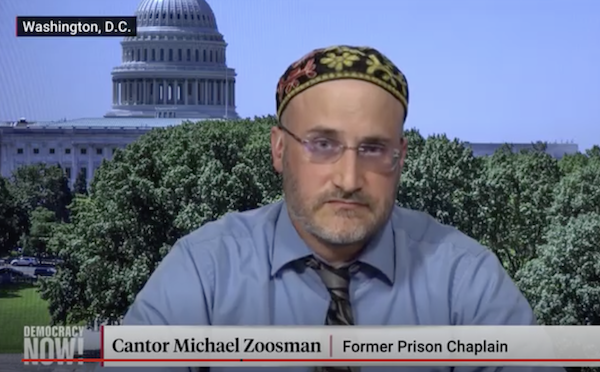
L’chaim! Jews Against the Death Penalty co-founder Cantor Michael Zoosman on Democracy Now! with Amy Goodman on Aug. 2, 2023, reiterating L’chaim’s opposition to the death penalty for the Pittsburgh Tree of Life synagogue shooter – and in all cases. (screenshot)

Recently, the American TV show Democracy Now! with Amy Goodman approached me in my role as co-founder of L’chaim! Jews Against the Death Penalty – which has roughly 2,700 members worldwide – to explain our opposition to the death sentence that the U.S. federal government issued for Robert Bowers, the perpetrator of the Pittsburgh Tree of Life shooting on Oct. 27, 2018. This was the deadliest antisemitic attack in American history and a crime of unspeakable horror that took the lives of the 11 Tree of Life martyrs, z”l.

My journey to becoming L’chaim’s co-founder was a direct result of my service as the cantor of Vancouver’s Congregation Beth Israel from 2008 to 2012. During my time at BI, that wonderful kehillah granted me the opportunity to serve as an agent of the Canadian government as Jewish prison chaplain for the 11 federal prisons within the Pacific region of Correctional Service Canada, which I did from 2009 to 2012. That experience was integral in the formation of my stance as a firm opponent of capital punishment in every case. During my years in that position, I got to know many individuals whose crimes might have qualified them for the death penalty in various states or federally in the United States. I saw firsthand how many of these individuals changed, while they remained incarcerated.

Since 2020, L’chaim’s members and I have been in touch with all individuals with active execution warrants in the States, as well as all Jewish men and women on American death rows. This includes my longtime penpal Jedidiah Murphy, a Jewish man with dissociative identity disorder who is the next human set for execution by Texas. The Lone Star State – the most prolific state killer in the United States – plans to kill Jedidiah on Oct. 10, which is World Day Against the Death Penalty. To do so, Texas will use the most common American form of execution, which is lethal injection.

Lethal injection was first implemented in this world by the Nazis as part of the Aktion T4 protocol used to kill people deemed “unworthy of life.” That protocol was first devised by Dr. Karl Brandt, the personal physician of Adolf Hitler. Every use of lethal injection carries on this direct Nazi legacy. This is the method by which the federal government likely will put to death Robert Bowers. Various states employ gas chambers to put their inmates to death, with Arizona even offering Zyklon B, as used in Auschwitz.

The members of L’chaim who, like me, are direct descendants of Holocaust survivors, know very well that the death penalty is not the same as the Shoah. And yet, members also know the dangers of giving a government the power to kill prisoners. Holocaust survivor and human rights activist Elie Wiesel articulated this most prophetically when he famously said in a 1988 interview: “With every cell of my being and with every fibre of my memory, I oppose the death penalty in all forms…. I don’t think it’s human to become an agent of the angel of death.”  He later added of capital punishment: “death should never be the answer in a civilized society.”

There are no exceptions. For Wiesel, Martin Buber, Gershom Scholem, Nelly Sachs and other Jewish human rights activists in the wake of the Shoah, this included staunch opposition to Israel’s execution of Nazi perpetrator Adolf Eichmann, which Buber called a “great mistake.” For the thousands of members of L’chaim! Jews Against the Death Penalty who carry this torch, the mistake applies as well to Robert Bowers.

In his “Reflections on the Guillotine,” Albert Camus concluded: “But what then is capital punishment but the most premeditated of murders, to which no criminal’s deed, however calculated it may be, can be compared?” From my personal experience in communicating daily over email, letters and phone with condemned men and women counting down their final months, weeks, days and hours, I can attest to this psychological torture. I can confirm that there is no humane way to put prisoners to death against their will.

The death penalty condemns the society that enacts it infinitely more than the human beings it condemns to death. Canada realized this decades ago, when it abolished the death penalty. The west African nation of Ghana was the latest country to join Canada as an abolitionist nation, just weeks ago, during the Tree of Life capital trial. I pray that, one day, the United States will join Ghana, Canada and the more than 70% of world nations who stand against the consummate human rights violation that is capital punishment.

For those who remain unconvinced, as I was before I became a prison chaplain, consider the words of the late Jewish U.S. Supreme Court justice Louis Brandeis, the namesake of my alma mater. In his dissent for a renowned 1928 case, Brandeis wrote: “Our government is the potent, the omnipresent teacher. For good or for ill, it teaches the whole people by its example. Crime is contagious.”

When the government imposes and then carries out a death sentence, it teaches everyone that unnecessary lethal violence is an appropriate problem-solving tool. Pittsburgh resident and death penalty abolitionist Fred Rogers (children’s educator and entertainer Mister Rogers) recognized this when he said of the death penalty “it just sends a horribly wrong message to children.” In every single case, state-sponsored murder under the disproven pretence of deterrence is not an appropriate tool to punish an offender who is no longer a threat behind bars. As Brandeis and Wiesel knew: the government should set a moral and ethical example.

The ruling in favour of state killing perpetuates the cycle of violence. It leaves the door open to the man-made Angel of Death – a door that allowed the United States to execute a severely mentally ill prisoner in Missouri on Aug. 1 and a prisoner “volunteer” for state-assisted suicide in Florida on Aug. 3. The United States was joined that week by Iran, which executed 12 human beings. The previous week, Singapore hanged a man and a woman for drug charges, and Bangladesh hanged two other human beings.

America – and human civilization – must do better. If not, the Pandora’s box of death can lead to what the world has seen with the execution of political protesters in Iran, the recent “kill the gays” law passed in Uganda, which allows execution for homosexual sex crimes, and the calls for the death penalty for abortion, which at least four American states have proposed since the overturning of Roe vs. Wade.

Let there be no doubt that those immediately impacted by the Pittsburgh shooting – including surviving family members – have been divided in their attitudes about the death penalty for the shooter. On a congregational level, two of the three targeted synagogues within the Tree of Life building have asked the federal government not to pursue the death penalty. This includes Dor Hadash, which hosted leaders in L’chaim for a program to help their community mobilize to abolish the death penalty. Still, quite understandably, most immediate family members indeed advocated death for the shooter. Far be it from me or anyone to judge them for how they feel. As a hospital chaplain, I regularly counsel mourners that, when grieving, they should be allowed to feel the full gamut of human emotion, including rage, and even the desire for vengeance where applicable. Any civilized society has a responsibility to protect and honour all such mourners, while simultaneously upholding the fundamental human rights upon which the world stands. Most basic to these, of course, is the right to life.

May Americans and Jews everywhere honour the victims of Pittsburgh’s Tree of Life – Eitz Chaim in Hebrew – by reaffirming the sanctity of life. Instead of more killing, may they follow the example of the inspiring Jewish community of Pittsburgh. Earlier in the week before the verdict of death, in what was but the latest example of that community’s unflagging proverbial steel resolve, it hosted a life-affirming parade to celebrate the dedication of a new Torah – known also as an Eitz Chaim – in loving memory of Joyce Fienberg, z”l, one of the 11 Tree of Life martyrs, and her late husband, Dr. Steven Fienberg, z”l. That sacred community once again has brought new life to the exhortation that has motivated Jewish people for millennia: “Am Yisrael chai,” “The people of Israel live.”

To this profound demonstration of the very best of Jewish values and resilience, I fervently add the resounding response to the Tree of Life verdict from the thousands of members of L’chaim! Jews Against the Death Penalty, chanting “l’chaim!” – “to life!”

The Democracy Now! TV interview ended with a video clip of the El Maleh Rachamim for the 11 Tree of Life martyrs that I chanted in front of the U.S. Supreme Court while the trial was taking place, as part of the Annual Fast and Vigil to Abolish the Death Penalty. No matter where TV viewers and readers stand on the death penalty, it is most appropriate for that memorial prayer for the victims to be the final words here.

Zichronam livracha, may the beloved memories of the 11 Tree of Life martyrs be for an everlasting blessing.

May their neshamot / spirits be loving guides for us all.

May their loved ones be comforted among all the mourners of Zion and Israel from a grief the likes of which most human beings like me never could begin to fathom.

May the killings end.

Cantor Michael J. Zoosman, MSM, BCC, served as cantor of Congregation Beth Israel 2008-2012 and as Jewish prison chaplain for Correctional Service of Canada, Pacific Region, 2009-2012. He is the co-founder of L’chaim: Jews Against the Death Penalty and an advisory committee member of Death Penalty Action.

Format ImagePosted on September 1, 2023August 29, 2023Author Cantor Michael J. ZoosmanCategories Op-EdTags crime, death penalty, human rights, Pittsburgh, Robert Bowers, Tree of Life
Not your parents’ Netanyahu

Not your parents’ Netanyahu

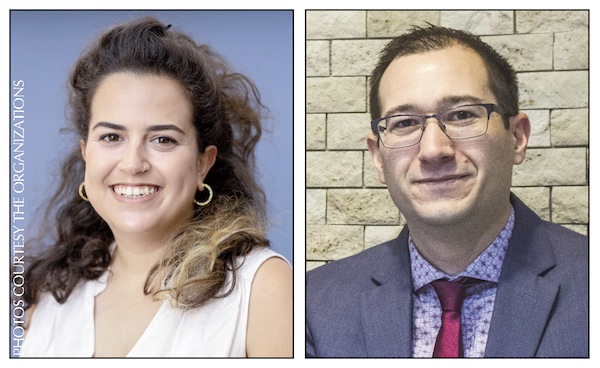
Lihi Shmuely of Israel Hofsheet and Ben Murane of the New Israel Fund of Canada. (photos from the organizations)

Binyamin Netanyahu is the longest-serving Israeli prime minister and should be a known quantity. The government he leads now, however, is unlike anything the country has seen in the past, according to a leading Israeli activist who participated in a cross-Canada speaking tour.

“This is different,” said Lihi Shmuely, deputy director of Israel Hofsheet. “This is completely new to us. This is a very extreme, radical government that we’ve never seen before.”

Israel Hofsheet (Israel Be Free) works to increase freedom and equality in the areas of religion and state, as well as Jewish pluralism in Israel, particularly focusing on civil options for marriage, gender equality, pluralistic Shabbat in the public realm and LGBTQ+ rights.

Even some voters who supported parties that are now in the governing coalition are expressing regret, she said. Many supported right-wing parties based on national security issues or a range of other policies.

“Now they understand that it comes as a whole package, that these people who promised national security … [are] not just racists but also chauvinists and homophobes and misogynistic people who are promoting legislation that will hurt the very core, the liberal and democratic core, of Israel,” said Shmuely.

She warned that people should take members of the new government seriously when they advance what appear to be extreme policy positions. To contextualize what is happening, she compared the reaction in the United States when the U.S. Supreme Court overturned Roe versus Wade, the precedent-setting reproductive rights case.

“We thought this was already set in stone, the Supreme Court has decided and that’s it,” Shmuely said. Returning to the Israeli situation, she warned that some people do not believe that the more extreme statements or policies – even the formally agreed-upon coalition agreements – will actually be codified in legislation or policy. “They will do what they say they’ll do. So, we need to take it very, very seriously.”

Evidence suggests many Israelis are taking it seriously. Rallies throughout the country against the range of legislation and proposals – most notably the subjugation of the Supreme Court to the elected Knesset, as well as women’s equality and LGBTQ+ rights, the status and rights of Palestinians in the West Bank, and encroachments of religion into the public sphere. People who have never been political in the past are getting involved and even attending the mass rallies that take place every weekend.

“We don’t have this privilege anymore, to say, I will not get involved,” Shmuely said, adding that Israelis are facing existential questions. “I feel like we are asking ourselves, what are we? Are we a Jewish state? Are we a democratic state? Are we a liberal democracy? Is there a contradiction between all of them? It feels like these days we are writing the rest of our history.”

Shmuely’s grandmother is a Holocaust survivor and, in recent months, has been saying, “This is not the country that I ran away from Europe for.”

While emphasizing urgency, Shmuely counters that it is not too late to alter course.

“I do think we are under terrible threat and I do think that it’s not too late,” said Shmuely. “It’s almost – but it’s not yet. We still have a lot to do.”

A major focus for opposition groups is this October’s municipal elections across Israel.

“These are sort of like the midterms in the States,” she said. Aside from this, municipal governments also have power to push back against national trends. For example, some municipalities have expanded transportation services to Shabbat.

Shmuely was supposed to be in Vancouver March 1 for a program at Or Shalom synagogue. However, she was stuck in Toronto after contracting COVID and appeared virtually. In person was Ben Murane, executive director of the New Israel Fund of Canada. His group supports civil society organizations in Israel that advance socioeconomic equality, religious freedom, civil and human rights, shared society and anti-racism efforts. Their Vancouver event was co-sponsored by Or Shalom, and the advocacy groups Peace Now and Ameinu.

Murane highlighted what he sees as recent positive developments.

“We couldn’t have anticipated that every Saturday there would be 100,000 protesters coming out – 300,000 last weekend,” he said. Security officials, business leaders, the heads of universities, lawyers, the press council and others who might previously have remained silent on contentious issues are speaking out, said Murane, and high-tech businesses are giving employees time off to attend protests.

“We couldn’t have anticipated that, in the past few weeks, major Diaspora voices who, between you and me, are usually the ones arguing against criticism of Israel, would be coming out saying, please criticize the government of Israel,” he said. “The Jewish Federations of North America issued a very surprising and precedent-breaking statement against the court override. You see individuals like [former Canadian justice minister] Irwin Cotler coming out, you see [former head of the Anti-Defamation League] Abraham Foxman and, for whatever it’s worth, Alan Dershowitz also saying something.”

He cited the resignation of Avi Maoz from cabinet last week as a positive outcome, partly due to public opposition. Maoz is head of the far-right Noam party, which advocates against equality for women and LGBTQ+ people. He resigned from cabinet, though not from the governing coalition, when he realized that Netanyahu was unlikely to implement numerous of his priorities.

“Avi Maoz came in with very bold intentions and then met all of this intense resistance and found that his agenda is not going to be as easily advanced,” he said. The rest of the coalition realized, according to Murane, that it would cost a great deal of political capital for the government to allow Maoz to get his way. “We are seeing them say, Avi, you’re not going to get everything you want, and he quits in a huff.… This is evidence that some of this is actually working, that it may appear a pyrrhic victory, but these are the dribs and drabs of what impact looks like in these moments.”

The role of groups like his and its partners on the ground in Israel is eternal vigilance, Murane said.

“Part of the role of civil society is to let nothing go unchallenged. Nothing,” he said. “Even if our odds of actually completely forestalling it are slim, part of the victory is to make an atrocious thing merely bad and to make the political powers that are advancing these initiatives expend a great deal of political capital in order to get what they want, by making them waste time and energy.”

Murane addressed the extraordinary violence that took place in the Palestinian village of Huwara Feb. 26, where rampaging Jewish settlers engaged in what has been called by some a “pogrom” that left one person dead, almost 400 wounded, and homes and businesses set afire. The attack was revenge for a terror attack the same day, in which Israeli brothers Hallel Yaniv, 21, and Yagel Yaniv, 19, were murdered.

“We’ve seen settler violence,” said Murane. “It’s been on the increase. It’s a real thing. It’s a fact of life for Palestinians from the territories. But to have dozens of settlers go into a village with impunity and commit the violence they committed, that is a new thing.”

He said civil society organizations must draw as much attention as possible to such incidents, including promoting the use of body cameras for police and wider availability of video cameras for civilians.

Incidents like these cloud the reality of evolving Israeli views on Arab-Jewish political cooperation, he said. Over the last several election cycles, opinion polls have indicated a steep increase in the proportion of Israelis who support Arab-Jewish political cooperation, from about 30% a couple of years ago to a majority today. The inclusion of an Arab political party in the last coalition government was groundbreaking.

“That’s a huge change in Israeli society that, a year ago, we didn’t even imagine it was possible,” Murane said. In the 2022 election, he said, “unless you are voting for the right-wing, you are implicitly voting for more Jewish-Arab political partnership.”

Or Shalom’s Rabbi Hannah Dresner introduced the event.

“I think it’s an important time for me to acknowledge that the democracy that I imagine as part of that beautiful place that I called Israel through my whole growing up and adulthood is really a selective democracy, a democracy for some and not for all,” she said. “That is a very important aspect of my concern at the moment – not just what happens with the loss of democracy but what is that democracy and how can it be a democracy that serves all who live in the land of Israel?”

Format ImagePosted on March 10, 2023March 9, 2023Author Pat JohnsonCategories IsraelTags Ben Murane, elections, governance, human rights, Israel, Israel Hofsheet, Lihi Shmuely, Netanyahu, New Israel Fund, NIF, politics, protesters

Standing by our family

If a member of your family were in crisis, would you abandon them? Even if the crisis were partly self-inflicted, of course you would stand by them.

In a metaphorical way, this is the issue facing Diaspora Jews in considering Israel right now. Whether you agree or disagree with the direction of the new government, it is undeniable that Israel is in a crisis. Each weekend, for several weeks, between 100,000 and 300,000 people have marched in the streets in opposition to a range of government policies, particularly proposed judicial “reforms” that many critics view as a threat to the fundamental democratic character of the country.

Watching from afar, these events are discouraging and worrying – and these emotions mingle with what might already be a degree of ambivalence, disappointment and many other sentiments. It is not always easy to be a supporter of Israel overseas. We have struggled in the face of decades of condemnation, some legitimate, some outlandish exaggerations. It would be easier, for some of us, to walk away.

Israelis do not have the luxury of walking away. And if one looks at Israel today and says, “That does not reflect my Judaism, my politics, my values,” remember: it does not reflect the Judaism, politics or values of most Israelis either.

The Israeli government we see today is the result of a tail wagging the dog, a reality facilitated by coalition politics and the desperation of Binyamin Netanyahu to regain power at almost any cost.

In many instances, people who voted based on concerns about national security find themselves appalled at policies around women’s equality, LGBTQ+ rights, the place of minorities in the country, the treatment of Palestinians in the West Bank and, of course, the overriding threats perceived in the attempts to meddle with the infrastructure of the Israeli judiciary – the wellspring from which much of Israel’s liberal character has come.

Most Israelis did not knowingly vote for leaders who would see the settler violence against Palestinians in the village of Huwara and endorse it, vindicate the perpetrators and incite further, even more destructive and possibly murderous violence. This latter example – of politicians (or anyone else, for that matter) openly celebrating and inciting racist violence – should disgust everyone, no matter their political stripe.

Overseas organizations that are connected with Israel – not least the Jewish Federations of North America – have spoken out officially in ways that are unprecedented in the history of Israel-Diaspora relations. Some of these statements have been comparatively mild in the minds of many observers, who view this as genuinely a time for full-throated disapproval. The fact that they are speaking out at all, however, is significant.

One of the side effects of all this is the debunking of the popular accusations that the tendency to keep negative comments within the family reflects “uncritical support for Israel.” This idea, that Zionism is a form of congenital disorder unrooted in reason, has never been true but it is now discredited. For what that’s worth.

Relatedly, individuals and groups who for years have been slandering Israel with hyperbole are now learning that they have exhausted the arsenal of vocabulary when actual events call for some strong language.

There is some reason for optimism. Isaac Herzog, Israel’s president, who has been cast by events into a role unlike the relatively ceremonial function that the office usually carries, said this week that a compromise may be in the offing on the contentious judicial reforms. Moreover, the resignation from cabinet last week of Avi Maoz, a far-right extremist, appears to be evidence that the government is wearying of fighting a multiple-front war. It is believed that Maoz realized the government wasn’t going to impose his racist, misogynistic and homophobic policies and so took his marbles home. There are reports of more turmoil in the ranks, which could drag the government and the country back toward a little sanity.

On the one hand, this should not invite a slackening of the pressure. There is a movement afoot among Diaspora Jews (and others) to discourage world leaders from meeting with extremist members of the Israeli government. Whether or not that will have much effect on anything, it is a valuable expression of revulsion for people who, like Bezalel Smotrich, incited (and then walked back) his call to “wipe out” the Palestinian village where Jewish settlers recently attacked innocent civilians.

On the other hand, anyone who is considering walking away from Israel, of abandoning the emotional energies of this fight, should consider who it is they would be abandoning in the process. A government is fleeting – although the lasting damage a single government can do is significant. But, Israel is the embodiment of the Jewish people’s national self-determination. To walk away from that is to walk away from more than bad government policy. It is to walk away from history. To walk away from everything that one’s ancestors hoped for, prayed for and built.

More importantly, it is to abandon to their own devices the very people in Israel with whom we probably most closely agree, who are struggling nobly to preserve the vision of Israel that many or most of us believe to be an ideal.

When a family member is in crisis, we do not abandon them. We engage. We help. We confront and intervene, if necessary. We do not walk away. In fact, this is precisely the moment when we dig deepest into our resources and do everything we can to make right what is wrong.

Posted on March 10, 2023March 9, 2023Author The Editorial BoardCategories From the JITags Diaspora, elections, governance, human rights, Huwara, Israel, Netanyahu, settlers, violence

Rail against extremism

Coalition negotiations continue in Israel after the fifth election in less than four years. And the signs are ominous for the future of Israeli democracy, for women’s equality, for religious pluralism, for LGBTQ+ rights, for peace and for coexistence.

Bezalel Smotrich, head of the Religious Zionist party, will be a major player in the new government, as will the leaders of two parties with whom he ran in an electoral slate: Itamar Ben Gvir, head of Otzma Yehudit (Jewish Power), and Avi Maoz, head of the religious extremist faction Noam.

Smotrich will apparently have unprecedented influence over the growth and governance of West Bank settlements. The explosive issue of “who is a Jew” – which determines eligibility for immigration under the Law of Return – will fall in part to Maoz, who wants to delegitimize non-Orthodox conversions and narrow the parameters under which an immigrant is permitted under the Law of Return from grandchildren of Jews to those born to Jewish parents. In addition to determining Jewish identity, Maoz has a preoccupation with homosexuality and has promised to ban Pride Parades and  oppose equality for gay Israelis. (Netanyahu has said he won’t allow Maoz to diminish gay rights.) Netanyahu has promised to hand Maoz control over a NIS 2 billion budget (about $790 million CDN) for “external programming” in public schools.

Yair Lapid, the outgoing prime minister, railed against this allocation.

“If we don’t stop them, Avi Maoz and his unenlightened gang will put unenlightened, racist, extremist, misogynistic and anti-LGBT content into our children’s schools,” said Lapid.

Ben Gvir and his party call for the expulsion of Arabs they deem disloyal and he has suggested that the anti-Zionist religious sect Neturei Karta should be put “on a train.” Ben Gvir’s party advocates the absorption of the West Bank which, by necessity, would eliminate either the Jewish identity or the democratic nature of Israel – and we do not need to speculate on which Ben Gvir would be willing to discard.

The three horsemen have endorsed banning public transit and sports on Shabbat, eliminating a department that promotes women in the military, and snatching the power to appoint judges from a nonpartisan panel and putting it in the hands of politicians, in addition to a host of other far-right policy fetishes.

“This Israel is not going to be governed by talmudic law,” Netanyahu said in defence after attacks on his coalition agreements. This is precisely the direction his partners are headed, however, and the very fact that he was moved to make such a disclaimer is proof of how dangerously close the new government will be to crossing a religious-secular divide that the pioneers of the state consciously erected.

The jigsaw puzzle parliament is not Netanyahu’s fault – any prime minister was going to have to cobble together a mismatched majority. What is Netanyahu’s fault is the particularly rancid aspects of the coalition. Seeing the unlikelihood of the most hateful and divisive minor parties reaching the electoral threshold in the previous election cycle, Netanyahu personally intervened to urge them to band together to get into the Knesset. An historical precedent is worth reiterating: when the fundamentalist Rabbi Meir Kahane was elected to the Knesset in 1984, the entire chamber stood up and walked out when he spoke. By contrast, when Kahane’s ideological descendants were facing electoral oblivion in 2020, Netanyahu stepped in to help ensure their success. There are many cases in Israel (and other divided parliamentary democracies) where the extremist tail wags the more mainstream dog. In this case, to mix canine metaphors, the ostensibly mainstream leader laid down with dogs and woke up with fleas.

The controversies in Israel have already swept across the ocean. Diaspora Jewish communities are aflame in concern and condemnation. The longstanding divides between Israeli and Diaspora Jews are already being exacerbated – and the new government hasn’t even been sworn in.

The most stalwart voices of Diaspora Zionism are issuing warnings. Abe Foxman, longtime head of the Anti-Defamation League, came out of retirement to harrumph that his support for Israel is not unconditional. The usual suspects in the anti-Israel camp are crowing that their prognostications have proved spot-on. But, more worrying, are middle-of-the-road Jewish and non-Jewish voices who are looking at developments and wondering what it is they defend when they defend Israel. The multi-partisan support Israel has largely enjoyed in the United States, Canada and some other places will be further challenged by Israel’s nationalist, anti-pluralist and generally extremist policies.

In this space, we have repeatedly said that it is up to Israelis alone to determine what defence strategies are necessary to preserve life and limb against terrorist and other threats in Israel. It is Israelis who put their lives and the lives of their children on the line in national defence.

That exclusivity does not extend to policies like teaching homophobia in schools or limiting the role of women in the military – and it certainly doesn’t extend to policies, like the Law of Return, that directly affect Diaspora Jews.

People who care about the pluralist, democratic, inclusive Israel that was dreamed of and built by generations who came before us have a right – an obligation, in fact – to rail against what appears to be on the horizon for the country we care so deeply about, are invested in so much, and count on for Jewish safety and survival.

Posted on December 9, 2022December 7, 2022Author The Editorial BoardCategories From the JITags coalition, democracy, Diaspora, human rights, Israel, Netanyahu, politics, theocracy

Racism talk versus action

When George Floyd was murdered by a Minneapolis police officer in 2020, it reawakened awareness about police violence and institutional racism in the United States and beyond. Nearly three years later, many of the anti-racist pledges made during that time remain unfulfilled.

“Do you know that most of those commitments have not been met and there is no accountability for not doing this?” said June Francis, special advisor to the president of Simon Fraser University on anti-racism, director of the Institute for Diaspora Research and Engagement, co-founder of the Black Caucus at SFU and an associate professor in the Beedie School of Business. “Companies said they were going to do X,Y and Z, research shows they’re not doing it. Accountability is everything. If we don’t see change and there are no repercussions … then we get tired, society goes back.”

Francis was speaking Nov. 3 at an event titled From Talk to Action: Challenging Racism in Canada Today. The panel discussion, at Robson Square, was presented by the Simces & Rabkin Family Dialogue on Human Rights in partnership with the Canadian Museum for Human Rights and Equitas, an international human rights education organization.

Francis aimed a particularly sharp critique at academic institutions.

“When students arrive at a university, they are being groomed to become racist people,” she said. “I say this honestly because what they are taught is any ideas worth knowing emanate out of white supremacists. White ideas are the enlightened [ones], the primitive becomes us, our art is considered primitive, our work is always denigrated. It’s only recently that Indigenous knowledge has become a thing, only because we’ve totally destroyed the planet and now we’ve suddenly awakened and, even then, we have a certain category of it as being nonscientific. Universities are founded on these ideas that are meant to create this idea that some people are superior to others and we perpetuate this every day. Then we go on to only fund research that does that. We go on to promote people who do that research. We go on to insist that our students who dare to challenge the system don’t graduate unless they do what we tell them to do.”

Annecia Thomas, who joined Francis on the panel, was mobilized to action in the aftermath of Floyd’s murder, as well as when students at her Kamloops high school made light of the murder in an online post. She was afraid to speak up, she said.

“But, I think, through this fear I gained another fear – that was not speaking up,” she said. “Without speaking up, it would just continue.”

Also on the panel was Daniel Panneton, director of allyship and community engagement at the Friends of Simon Wiesenthal Centre for Holocaust Studies. He addressed online hate and how it can transmute into real-world violence, citing the case of Dylan Roof, the South Carolina man who was radicalized online and, in 2015, murdered nine people in an African-American church.

Concerns about free speech rights, which are sometimes invoked to defend racist, misogynistic or otherwise bullying behaviours online are specious, he argued. These actions effectively deter members of historically marginalized communities from running for public office and participating in the public sphere, he said.

“The tolerance of hate and threatening speech in our society threatens the free-speech rights of vulnerable communities,” said Panneton.

The panel was moderated by Niigaan Sinclair, an Anishinaabe man who is head of the department of Indigenous studies at the University of Manitoba and is a frequent commentator in national media.

“I grew up as a refugee, but I didn’t know it,” he said, referring to Canadian governments who forced his ancestors off their lands. “In every other country of the world, that would be called ethnic cleansing, but in Canada they call it progress.”

He said the ultimate goal of racism is to erase its own history.

“The outcome of violence is always silence, not to talk about it, to make sure that it happens in perpetuity and that it’s somehow legal and justified,” said Sinclair.

Zena Simces and Dr. Simon Rabkin, who launched the annual series four years ago, spoke of their motivations.

“We established the dialogue on human rights because we saw a void in Vancouver with respect to a dedicated program on human rights for everyone in the community, for all groups,” said Simces, a consultant in health, social policy and education and a former leader in the now-defunct Canadian Jewish Congress.

“To combat racism, we first need to understand it, think about the background and understand the history,” said Rabkin, a professor at the University of British Columbia medical school who has provided health care to underserviced areas in northern Canada and in Kenya. “Talk and reflection is not enough, it won’t move us forward. We need a vision of the future in order to provide a guidepost and a goal to aim towards.”

Posted on November 11, 2022November 9, 2022Author Pat JohnsonCategories LocalTags Annecia Thomas, anti-racism, Daniel Panneton, human rights, June Francis, Niigaan Sinclair, racism, Simon Rabkin, speakers, Zena Simces

A new philanthropic strategy

The Elie Wiesel Foundation for Humanity (EWF) in New York is launching a new impact-driven philanthropic strategy to advance human rights around the world.

The foundation, led by Elisha and Marion Wiesel, will adopt a hybrid approach that will not only grant funds but also work with organizations directly as partners, offering access to innovative thinking partners and acting as an emblematic megaphone to champion their cause.

The foundation’s recalibrated grantmaking program will seek to fund organizations that embody Nobel Peace Prize winner Elie Wiesel’s legacy as an educator and activist. Grants to educators will support moral educational programs inspired by Jewish values. The foundation is seeking to support programs and projects that foster dialogue, especially in engaging ways.

Activist grants, meanwhile, will focus on programs that restore the rights and dignity of the Uyghur population, in keeping with Elie Wiesel’s belief that “sometimes we must interfere. When human lives are endangered, when human dignity is in jeopardy, national borders and sensitivities become irrelevant. Whenever men or women are persecuted because of their race, religion or political views, that place must – at that moment – become the centre of the universe.”

The foundation will be awarding one or more grants in each portfolio for its next cycle, ranging in size from $50,000 to $200,000. Applicants must be financially sound 501(c)(3) tax-exempt organizations or have a U.S.-based fiscal sponsor at the time of application, and be able to demonstrate realistic plans for carrying out the program or project for which they seek funding. Submissions will be reviewed internally through various stages and finalists will be considered by a group of notable names, passionate about the respective value track. Grant applications are being accepted online through the foundation’s website (eliewieselfoundation.org) and are due by Dec. 15, 2022.

“The values my father stood for – combating indifference, educating youth, calling out injustice and defending human rights – continue to be the moral bedrock of the Elie Wiesel Foundation,” said Elisha Wiesel. “We are so excited to announce our new grantmaking program to provide nonprofits that embody those values with the resources to achieve lasting impactful change.”

“Elie Wiesel was my dear friend and trusted partner in the fight for human rights around the world. I think it is very appropriate that his foundation put the fate of the Uyghur people as one of its main priorities and will be focused on delivering resources and moral support to those advocating for the Uyghurs,” said human rights activist and EWF advisory board member Natan Sharanksy. “The free world cannot stay silent about China’s horrific persecution of its Uyghur minority. I know firsthand the power of outside support to those standing bravely against totalitarian regimes. That is why I am glad to serve as an advisory board member at the Elie Wiesel Foundation, dealing with this issue.”

Other members of the advisory board on the Uyghur crisis include Mark Hetfield, president and chief executive officer of the Hebrew Immigrant Aid Society, the oldest resettlement organization in the world; and Gulhumar Haitiwaji, the daughter of a Uyghur woman who survived a Chinese re-education camp.

The advisory board on moral educational programs includes neuroscientist, actress, podcast host and author Mayim Bialik, an outspoken activist for mental health and Jewish causes; Dr. Mehnaz Afridi, a professor of religious studies and the director of the Holocaust, Genocide and Interfaith Education Centre at Manhattan College; and Sarah Idan, the founding chief executive officer of Humanity Forward, a multi-dimensional organization that promotes education and peace.

The Elie Wiesel Foundation was established after Wiesel was awarded the Nobel Peace Prize in 1986. Under the direction of Wiesel and his wife Marion, the foundation developed, implemented and funded several critical humanitarian programs in Israel, including the Beit Tzipora Centres and the Darfurian Refugee Program. This new direction will allow the foundation to widen its scope through meaningful, action-driven partnerships.

Posted on October 28, 2022November 3, 2022Author Elie Wiesel FoundationCategories WorldTags education, Elie Wiesel Foundation for Humanity, grants, human rights, Uyghurs
Thirteen calls for action

Thirteen calls for action

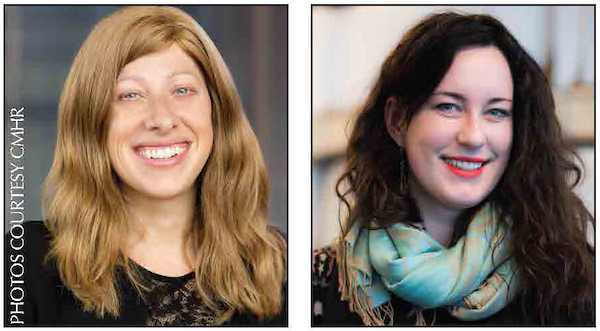
The recently released report, Twice Blessed 2.0: The Jewish LGBTQ2SIA+ Initiative, offers a hint of just how diverse the Metro Vancouver Jewish community is. In that diversity lies challenges and opportunities.

“Embarking on Twice Blessed 2.0: The Jewish LGBTQ2SIA+ Initiative has been an important step in acknowledging our gaps and our commitment to learn and work towards diversity and inclusion in the Jewish community,” write Carmel Tanaka, founder and executive director of JQT Vancouver, and Tanja Demajo, chief executive officer of Jewish Family Services Vancouver, in the final report’s preamble. “It is important to identify the work that has and has not been done. Taking pause and asking ourselves: Where are we today? What prevents us from engaging deeper into these conversations about diversity and inclusion? And where do we want to go?”

“The word diversity is used so often these days, but it is not easy to define what it means on a day-to-day basis in an environment such as JFS,” Demajo told the Independent. “This process started simply by acknowledging ‘we don’t know what we don’t know’ but we are willing to learn. Carmel and I started conversations about the LGBTQ2SIA+ community and how open JFS is to their members. Saying everyone is welcome is not enough, it takes much more commitment and work. There could have been other ways to engage in that conversation, but we started with the training and learning about the work done in 2004.”

“We are honoured to have collaborated with Dr. Jacqueline Walters, who did the 2004 survey that never saw the day of light,” said Tanaka. “It is so rare to be able to include those who have come before us in ways that help with continuity and give the opportunity for healing. A lot has changed since 2004, not just in the Jewish community on LGBTQ2SIA+ inclusion, but also more broadly, especially surrounding language and terminology. So, we paid homage to the 2004 questions and updated how these questions were asked in 2022.”

Developed from the 2004 community needs assessment conducted by JFS, many of the 2022 questions were the same, but others were added or reworded to reflect changing times or for clearer results. The survey was distributed over a two-month period this past spring, and 111 people responded, compared to 56 responses in 2004; there were three people who responded to both surveys.

The majority of respondents to the 2022 survey were in the 30-39 age bracket (or older) and ethnically self-identified as Jewish, in addition to being Canadian and of varying European identities. Of the 111 respondents, 31.8% identified as disabled (mental health, chronic pain, etc.) and 24.1% as neurodivergent (ADHD, autism, anxiety, PTSD). In 2022, half of respondents identified themselves as cultural Jews, with one-third practising other religions or ways of life; 50% were in multi-faith/racial/ethnic/cultural relationships.

These were just some of the findings indicating that there is broad diversity within the Jewish community. The findings, in part, were generated by the open-endedness of many of the questions.

“JQT approached the creation of the 2022 survey with great care and intention – a love letter to the Jewish queer and trans community,” said Tanaka. “It was and remains extremely important to JQT that the experience of filling out this survey was not triggering for those who are on the spectrum of Jewish and LGBTQ2SIA+ identities. All too often, these types of surveys, which ‘study’ our communities, don’t allow for self-identification (are not asking open-ended questions), instead forcing those being surveyed into checking boxes – boxes that either don’t fully encompass who we are and/or other us and/or are hurtful to us.”

When she saw the results, Demajo said, “I had this moment of realization that there is much social justice work that we need to do in order to reach out to those who need the support. One of the questions we ask ourselves often is ‘who are we missing and why?’ This survey and the answers we received made it clear that the community we are supposed to serve is very diverse and requires us to wrestle with questions of gender, race and religion. Some may argue that these are political questions but, for us, these are questions that impact our service delivery. If someone doesn’t feel welcomed in our space, no matter how dire their needs are, they will not accept the support.”

image - Twice Blessed 2.0 cover“The finding that most resonated with my personal experience is that, today, so many of us in the JQT community are mixed like me and/or are in mixed relationships like my family – mixed racially, culturally, ethnically, religiously, etc.,” said Tanaka, who self-describes as queer, neurodivergent and Jewpanese. “Growing up in Vancouver’s Jewish community as a mixed kid was pretty isolating. It’s great to see that the future of the Jewish community is mixed!

“The finding that surprised me the most was how many Jewish queer and trans people identify as white or Caucasian when asked about their ethnicity and race,” she added. “It wasn’t too long ago when Jews were not considered white, so it’s sobering to learn of this shift in identity.

“The finding that made me the most sad,” she said, “was how the JQT community, especially our seniors, feel about aging and entering long-term care. Honestly, it’s terrifying.”

Some of the comments made by seniors who responded to the survey were: “As a transgendered Jew long-term care is a frightening prospect as transgendered seniors are often abused in long-term care”; “Worry that my relationship will not be seen as real”; and “I fear that it will be primarily heterosexual and that I will have to go back into the closet.”

Among the 13 calls for actions made in the report are: “Develop inclusive care services for Jewish LGBTQ2SIA+ seniors” and “Ensure that senior care home intake adequately assesses the needs of LGBTQ2SIA+ residents.”

Jewish Federation of Greater Vancouver supported the survey, and one of the other recommendations is to allocate some of the annual campaign funds to the “operational costs of providing year-round Jewish LGBTQ2SIA+ programming for all ages and community outreach in both Jewish and LGBTQ2SIA+ communities.” More education is recommended, including diversity, equity, inclusion (DEI) training, and more “open discussion with rabbis, synagogues and boards to adopt an ‘open tent’ policy regarding intermarriage.” To see the full set of recommendations, visit jqtvancouver.ca/twice-blessed-2.

That all four of the 2004 recommendations still apply – more education of community leaders, a larger Jewish presence at LGBT activities, inclusion of LGBT Jewish community members on Jewish committees and boards, and increased LGBT presence at Jewish events – indicates the challenges of change, the report notes. However, Twice Blessed 2.0 also highlights some progress, including JQT’s recent partnering with the Vancouver Jewish Film Festival on a queer Jewish film, with the Zack Gallery on the first Jewish LGBTQ2SIA+ art exhibit and with the Jewish Museum and Archives of British Columbia on the first B.C. Jewish Queer and Trans Oral History.

As for JFS, Demajo said the agency’s priorities for the next year are “allocating funds for further training and awareness building” and to “partner on initiatives with LGBTQ2SIA+ agencies, ensure LGBTQ2SIA+ friendly Jewish mental health support, [and] adjust our policies to include DEI.”

She said, “JFS is in a unique position in the community to touch lives of a diverse community. At the same time, those we support don’t always reach out to us, we need to reach out to them. And, in order to do that, sensitivity, understanding of social justice and intersection of culture, gender, race and religion is essential for our ability to do the work in a sensitive and uplifting way.”

Another of the calls for action is for the adoption of a “Nothing about us without us” approach and Tanaka thanked Demajo and JFS for doing just that.

“Building trust between the JQT community and JFS, learning from one another, is the key to building a healthier Jewish community,” said Tanaka, noting that JQT is a volunteer-run group and “the only homegrown Jewish LGBTQ2SIA+ nonprofit in Canada in operation today,” funded solely by donations and grants.

JQT has presented the findings to the JFS board and in staff training, and would like the opportunity to present them to other local Jewish organizations. However, response to the report has been quiet, said Tanaka, who postulated that there is a “fear of airing dirty laundry.”

“The truth is that we’re not here to point fingers,” she said. “We’re here so that queer and trans Jews – and, in general, marginalized Jews on the periphery of the Jewish community, whether they be Jews of Colour, patrilineal Jews, disabled Jews, queer and/or trans Jews, etc. – can also benefit and have access to the same infrastructure as the mainstream Jewish community.”

Cynthia Ramsay is a member of the JQT Vancouver board.

Format ImagePosted on July 22, 2022July 21, 2022Author Cynthia RamsayCategories LocalTags Carmel Tanaka, diversity, human rights, inclusion, Jewish Family Services, JFS, JQT, LGBTQ2SIA+, surveys, Tanja Demajo

New era in U.S. politics

The explosive debate around abortion spurred by the U.S. Supreme Court’s rejection of a woman’s right to reproductive self-determination reminds us that the Jewish perspective on the topic is nuanced.

“Jewish law approaches each case according to its particular circumstances,” notes an article at chabad.org. This central dictum of halachah, Jewish law, makes generalizations difficult. One thing is almost universally accepted: abortion can be halachically required if the life of the mother is in danger.

In 2015, 83% of American Jews told Pew Research Forum that abortion should be legal in all or most cases, which is more than any other religious group, a finding around Jewish support for reproductive choice that has been true for decades. However, a story from the Jewish Telegraphic Agency recently noted that a growing alignment between some Orthodox Jews and the Republican party in the United States has led a minority of Jews to adopt what has been largely a conservative Christian approach to the subject.

The Orthodox Union released a statement that they are “unable to either mourn or celebrate” the court’s overturning of Roe. Their position is that an outright ban is unacceptable under Jewish law, but that abortion should be limited to cases where the mental or physical health of the mother is at stake, with an emphasis on the preservation of life. Further, they stated that abortion should be available regardless of someone’s economic status.

The tectonic decision by the court, overturning 49 years of precedent set by the landmark Roe v. Wade case, has set in motion frenetic activity across that country and beyond. State officials have had the issue thrown into their laps. The United States will become a patchwork of regulations on the subject. The ruling has led to triumphant celebrations by opponents of abortion and it has reenergized those endorsing reproductive freedom. What all of this will mean, not only for abortion rights but for social movements and society more broadly, can only be remotely imagined at this point.

The abortion decision was only one of several massive reversals of existing norms the U.S. court issued in its session. In other cases, the court made it more difficult for lower jurisdictions to limit access to firearms, weakened the power of federal agencies to address climate change and struck down a ruling that limited prayer in public schools (in this specific case, Christian prayer at school football games).

The succession of cases throws down a gauntlet that most people – whatever their opinions – knew was coming when the former president appointed three justices to the court, creating a 6-3 conservative majority.

In many cases, though, these decisions are deeply out of step with what the majority of the population believes. Of course, court rulings should not necessarily mirror societal norms. Historically, courts have made society-altering decisions in spite of opposition – desegregating public schools against the wishes of white racists, for instance. Leaving aside philosophy, public opinion may not be able to impact a Supreme Court packed with political appointees (three of whom testified in their nomination hearings that the abortion question was settled law) but public opinion will change society.

Anti-abortion activists (and anti-climate, anti-secularism and anti-gun control activists) have been celebrating their big wins in these cases.

In 1973, as pro-reproductive choice activists were celebrating their Supreme Court win, a new movement was gaining its footing. It would develop into one of the biggest, most powerful movements in American history, a new conservatism that led, among many other social and economic changes, to the elections of Ronald Reagan, two Bushes and Donald Trump. And it accomplished one of the core objectives it set out to address: it tipped the scales of the Supreme Court and stripped women of rights they have had since 1973.

Those who were celebrating in 1973 are today experiencing a vast array of emotions: grief, disillusionment, fear. But also rage, determination and purpose.

As the Roe decision did in 1973, last month’s ruling will launch a new movement that, like the new conservatism before it, will address a broad range of social issues and injustices. It was impossible, 49 years ago, to foresee the changes that would come. Whichever side one may be on, be assured that we have entered a new era.

Posted on July 8, 2022July 7, 2022Author The Editorial BoardCategories From the JITags abortion, human rights, Judaism, law, politics, United States
Working for human rights

Working for human rights

A gift of Elie Wiesel’s Night was among the forces that influenced Madeleine Schwarz’s career path.

Madeleine Schwarz is one of the kindest people I’ve ever met. Not the kind you would expect to build much of her career prosecuting or aiding in the prosecution of war criminals around the world, including the Nazi war criminal known as the “Beast of Bolzano,” who was living on Commercial Drive in Vancouver.

Now based in Toronto, working with the Refugee Board of Canada, Schwarz spoke with the Jewish Independent about a few of her accomplishments.

Raised Catholic, Schwarz was one of seven kids on the block who frequented our house in Vancouver back in the 1960s and early ’70s. Little did we know that she would soon be making history.

She told the Independent that her passion for international criminal law began when she was a teenager and learned about the genocide of the Jewish people.

My parents, Joyce and Bernie Freeman, helped her along her journey by giving her Night by Elie Wiesel, an account of his terrifying time in Auschwitz.

“Your house was very much an introduction to Judaism,” she said. “Yours was a very open, friendly Jewish family. I recall coming to your house for Shabbat dinner in my convent school uniform.”

While studying international relations at the University of British Columbia, Schwarz had a number of Chilean friends who had family members in camps under the dictator Augusto Pinochet. That was her “introduction” to contemporary war crimes and crimes against humanity.

In 1994, Schwarz graduated with her bachelor of laws at Dalhousie University. In 2003, she obtained her master of laws at the University of Ottawa, specializing in international criminal law.

Her first job involving war crimes was at the Canadian Department of Justice. From 1999 to 2005, she worked closely with RCMP officers on investigations into crimes against humanity, war crimes and genocide in Ukraine, Belarus, Italy and Rwanda.

When Italy found Michael Siefert, a former S.S. guard at a transit camp in Bolzano, guilty in absentia of 11 murders during the Holocaust, Schwarz put together the case to revoke his Canadian citizenship. She interviewed many people in Italy, including former resistance fighters who had witnessed his crimes.

“Seifert was quite a young man during the war. He was an old man during the proceedings. But he had committed horrendous crimes,” she said.

One of the documents Schwarz saw during the investigation made the Holocaust all so terribly real.

“I remember that we had an invoice confirming the transfer of a number of people to Auschwitz. That was one of the most horrific pieces of evidence I’ve ever seen.”

In 2003, as a result of her work and that of the legal teams who came afterwards, the B.C. Supreme Court ordered Siefert’s extradition and, in 2007, the Federal Court upheld a decision to strip him of his Canadian citizenship. In 2008, Siefert, aged 83, was sent back to Italy. His residence in Vancouver as a free man for more than 50 years was over.

During her time with the Department of Justice, Schwarz interviewed many victims and witnesses of war crimes. She said that, even when, after 15 minutes, she knew that she couldn’t use their story, she would sit there and listen for the whole two hours.

“When I’ve asked someone to tell me their story,” she said, “it’s incumbent on me to listen.… I might be the only person they will be able to tell their story to [in their lifetime].”

From 2006 to 2010, Schwarz lived in Tanzania, where she was one of the trial attorneys on the largest multi-accused trial for the United Nations International Criminal Tribunal for Rwanda. Part of her work there was interviewing perpetrators of the genocide in the Butare prefecture.

She confided that this part of her job was very hard on her. “I remember interviewing three suspects alleged to have committed genocide in a row. I told my colleague – I need a break before I can talk to the fourth man.”

When it came to the trial, Schwarz and her team secured convictions of all six accused, including the first woman charged with ordering rape as a war crime.

“I think, as a lawyer and particularly a prosecutor, you are assessing the evidence and being critical. You have to be pretty surgical about it,” said Schwarz.

A few years later, at a UN conference, a co-presenter from Butare approached her and told her that his entire family had been wiped out by the genocide there. “And he said thank you very much for your work. And I practically burst into tears because I felt humbled that somebody would say that … it was not something I felt I should be thanked for, nor any of us should be thanked for because it shouldn’t have happened in the first place.”

As a commissioner looking into the killings in Les Cayes prison in Haiti during 2010, Schwarz led an international team and supervised the final report with recommendations on future prosecutions, penal reform, justice reform and police training.

Schwarz was in Kenya in 2013, working as the human rights and justice advisor to the UN Special Envoy in the Great Lakes region of Africa, a region encompassing 13 countries, including the Democratic Republic of the Congo, Rwanda, Uganda and Burundi. With a team of experts, she collaborated with myriad different organizations to create strong networks of people who would work together to promote better communication, peace and understanding in the region.

“There are so many layers that need to be addressed if you are ever going to deal with root causes of conflict, that range from ensuring people have access to clean water, food, lodging and education, to building trust and confidence among the leaders and civil society, to advocating for accountability for past crimes…. It takes a lot of time,” she said.

From 2016 to 2019, Schwarz worked as a trial lawyer and deputy team leader at the International Criminal Court in The Hague. It was there that she prepared arrest warrants for individuals alleged to have committed crimes in Libya since 2011.

Despite seeing the very worst of humanity, Schwarz still has hope for the human race. “I’ve seen some pretty horrible things,” she acknowledged. “I’ve also seen people who do tremendous things to try and make change or try and help people.”

And she had this to say about the International Criminal Court.

“I think that investigations and prosecutions of individuals for war crimes, crimes against humanity and genocide are incredibly important,” said Schwarz. “I wouldn’t necessarily say we’re always getting the complete truth and I do not think we always get it right. However, I do think we get some truth and some accountability that is important for victims, as well as for countries moving out of conflict. I think that is important. And it’s a different way of telling the story than a novelist or historian.”

Cassandra Freeman is a freelance writer living in Vancouver. During the early 1980s, she was part of the Jewish student movement that called for the extradition of Nazi war criminals living in Canada.

Format ImagePosted on February 11, 2022February 10, 2022Author Cassandra FreemanCategories UncategorizedTags genocide, Holocaust, human rights, international law, Madeleine Schwarz, Michael Siefert, Rwanda, war crimes
Who stops the hate?

Who stops the hate?

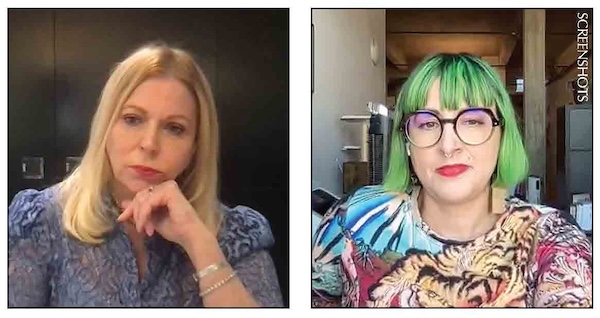
Taylor Owen speaks at the third annual Simces and Rabkin Family Dialogue on Human Rights, Nov. 9. (screenshot)

Canada, like most of the world, is behind in addressing the issue of hate and violence-inciting content online. In attempting to confront this challenge, as the federal government will do with a new bill in this session of Parliament, it will be faced with conundrums around where individual freedom of expression ends and the right of individuals and groups to be free from hateful and threatening content begins.

The ethical riddles presented by the topic were the subject of the third annual Simces and Rabkin Family Dialogue on Human Rights, Nov. 9, in an event titled Is Facebook a Threat to Democracy? A Conversation about Rights in the Digital Age.

The annual dialogue was created by Jewish Vancouverites Zena Simces and her husband Dr. Simon Rabkin. It was presented virtually for the second year in a row, in partnership with the Canadian Museum for Human Rights.

The featured presenter was Taylor Owen, who is the Beaverbrook Chair in Media, Ethics and Communications, the founding director of the Centre for Media, Technology and Democracy, and an associate professor in the Max Bell School of Public Policy at McGill University. He presented in conversation with Jessica Johnson, editor-in-chief of The Walrus magazine.

The advent of the internet was seen as a means to upend the control of a society’s narrative from established media, governments and other centralized powers and disperse it into the hands of anyone with access to a computer and the web. Instead, as the technology has matured, online power has been “re-concentrating” into a small number of online platforms like Facebook, Twitter and YouTube, which now have more global reach and cultural power than any preexisting entity.

“Understanding them and how they work, how they function, what their incentives are, what their benefits are, what their risks are, is really important to democratic society,” said Owen.

These are platforms that make money by selling ads, so it is in their interest to keep the largest number of people on the platform for the longest time possible, all while collecting data about users’ behaviours and interests, Owen said. These demands prioritize content that is among the most divisive and extreme and, therefore, likely to draw and keep audiences engaged.

The sheer volume of posts – in every language on earth – almost defies policing, he said. For example, in response to public and governmental demands that the company address proliferating hate content and other problematic materials, Facebook has increased resources aimed at moderating what people post. However, he said, 90% of the resources dedicated to content moderation on Facebook are focused on the United States, even though 90% of Facebook users are in countries outside of the United States.

A serious problem is that limitations on speech are governed by every country differently, while social media, for the most part, knows no borders.

Canada has a long precedent of speech laws, and Parliament is set to consider a controversial new bill intended to address some of the dangers discussed in the dialogue. But, just as the issues confounded easy answers in the discussion between Owen and Johnson, attempts to codify solutions into law will undoubtedly result in fundamental disagreements over the balancing of various rights.

“Unlike in some countries, hate speech is illegal here,” said Owen. “We have a process for adjudicating and deciding what is hate speech and holding people who spread it liable.”

The United States, on the other hand, has a far more libertarian approach to free expression.

An example of a country attempting to find a middle path is the approach taken by Germany, he said, but that is likely to have unintended consequences. Germany has decreed, and Owen thinks Canada is likely to emulate, a scenario where social media companies are liable for statements that represent already illegal speech – terrorist content, content that incites violence, child exploitative content, nonconsensual sharing of images and incitement to violence.

Beyond these overtly illegal categories is a spectrum of subjectively inappropriate content. A single media platform trying to accommodate different national criteria for acceptability faces a juggling act.

“The United States, for example, prioritizes free speech,” he said. “Germany, clearly, and for understandable historical reasons, prioritizes the right to not be harmed by speech, therefore, this takedown regime. Canada kind of sits in the middle. Our Charter [of Rights and Freedoms] protects both. The concern is that by leaning into this takedown regime model, like Germany, you lead platforms down a path of over-censoring.”

If Facebook or YouTube is threatened with fines as high as, say, five percent of their global revenue if they don’t remove illegal speech within 24 hours, their incentive is to massively over-censor, he said.

Owen said this will have an effect on the bottom line of these companies, just as mandatory seatbelts in cars, legislation to prevent petrochemical companies from polluting waterways and approval regimes governing the pharmaceutical industry added costs to those sectors. Unfortunately, the nuances of free speech and the complexities of legislating it across international boundaries make this an added burden that will probably require vast resources to oversee.

“It’s not like banning smoking … where you either ban it or you allow it and you solve the problem,” said Owen. There are potentially billions of morally ambiguous statements posted online. Who is to adjudicate, even if it is feasible to referee that kind of volume?

Rabkin opened the dialogue, explaining what he and Simces envisioned with the series.

“Our aim is to enhance the understanding and create an opportunity for dialogue on critical human rights issues, with the hope of generating positive actions,” he said.

This year’s presentation, he said, lies at a crucial intersection of competing rights.

“Do we, as a society, through our government, curtail freedom of expression, recognizing that some of today’s unsubstantiated ideas may be tomorrow’s accepted concepts?” he asked. “Unregulated freedom of speech, however, may lead to the promulgation of hate towards vulnerable elements and components of our society, especially our children. Do we constrain surveillance capitalism or do we constrain the capture of our personal data for commercial purposes? Do we allow big tech platforms such as Facebook to regulate themselves and, in so doing, does this threaten our democratic societies? If or when we regulate big tech platforms, who is to do it? And what will be the criteria? And what should be the penalties for violation of the legislation?”

Speaking at the conclusion of the event, Simces acknowledged the difficulty of balancing online harms and safeguarding freedom of expression.

“The issue is, how do we mitigate harm and maximize benefits?” she asked. “While there is no silver bullet, we do need to focus on how technology platforms themselves are structured. Facebook and other platforms often put profits ahead of the safety of people and the public good.… There is a growing recognition that big tech cannot be left to monitor itself.”

The full program can be viewed at humanrights.ca/is-facebook-a-threat-to-democracy.

Format ImagePosted on December 10, 2021December 8, 2021Author Pat JohnsonCategories LocalTags democracy, Facebook, free speech, hate speech, human rights, legislation, politics, Simon Rabkin, social media, Taylor Owen, Zena Simces

Posts pagination

Previous page Page 1 Page 2 Page 3 … Page 7 Next page
Proudly powered by WordPress