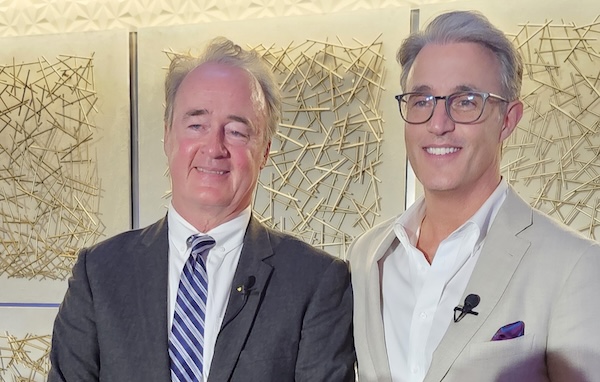
Warren Kinsella, left, and Ben Mulroney at Montreal’s Beth Israel Beth Aaron Synagogue June 19. (photo by Dave Gordon)
In 1980, when Warren Kinsella was in Calgary performing with his punk rock band, one of his friends tapped him on the shoulder to say some men in the crowd were giving a Nazi salute.
“I didn’t believe him. I didn’t think it was possible,” said Kinsella, now a Toronto Sun columnist, at a recent talk. “There, in fact, were three big guys, shaved heads, T-shirts, jeans, suspenders, Doc Martin boots, coloured laces, and they were making Nazi salutes.”
Kinsella confronted one of them, twice asking him to stop the salutes, and was greeted with an expletive and the word “Jew.” As the Irish-Catholic Kinsella tells it, a fist came his way, he hit back – a fight involving his buddies and the skinheads erupted. Eventually, the “skinheads retreated, battered or bruised,” said Kinsella. After the show, one of them pointed at Kinsella, saying, “We’ll be back.”
“And the truth, my friends, is they never really left.”
On June 19, at Montreal’s Beth Israel Beth Aaron Synagogue, Kinsella was joined by syndicated radio host Ben Mulroney, who acted as the moderator of the event called Weaponizing Genocide: Exposing Propaganda and Hate in the Age of Misinformation. It was a fundraiser for the Foundation for Genocide Education, which was founded in 2014 by Heidi Berger, a child of Holocaust survivors. The nonprofit aims to ensure that the subject of genocide is taught in North American high schools.
Since that incident 45 years ago, Kinsella has battled Jew-hatred as a lawyer and as a journalist – at times with rifles jammed in his chest, police protection, bomb threats and death threats.
“I’ve seen lots of hate, but I have never seen it as bad as it is,” he said at the June event. What the Jewish people are fighting is not only a seven-front military war, but a propaganda war “we are losing,” he said.
Kinsella, the author of 10 books, will soon publish The Hidden Hand: The Information War and the Rise of Antisemitic Propaganda, along with an accompanying documentary.
Exactly 18 months before Oct. 7, 2023, social media profiles started popping up all around the Muslim world, Kinsella said. They had “very few followers” and were filled with “stuff about soccer matches and celebrities and pictures of kittens.” On the morning of the seventh, as Hamas and its allies were attacking Israel, thousands of these social media profiles came to life, he said, noting those that had just a few followers suddenly had half a million.
“They pushed out lies,” he said, such as “there had been no murder, no rapes.”
“It was an indication of how sophisticated and how effective these guys were, as they were able to get that word out into the stratosphere,” said Kinsella.
“Antisemites,” he added, “know that … this is the greatest political, cultural and economic revolution of our lifetimes,” with Generation Z’s primary source of information being TikTok, “one of the principal platforms for antisemitism on the planet.”
After the event, Berger told the Jewish Independent that social media literacy for students is critical, to “learn when the term genocide is being used to manipulate their views and their emotions.”
In his remarks, Kinsella said some three million members of Gen Z in Canada believe Israel should be wiped off the map and that Hamas was justified in its actions. Weeks before Israel sent troops into Gaza, he said, young people across Western democracies were chanting the lies that they had seen online.
These were organized campaigns of protests, with professionally made signs, and the “disrupting and terrorizing of Jewish neighbourhoods with military precision,” said Kinsella. “They had talking points. They had food, drink, transportation. They even had legal representation for free….And many of them were being paid to show up.”
He said, “It was principally a campaign to seize the sympathies of our young. And it’s a campaign that’s winning.”
Kinsella, president of Daisy Consulting Group, who has worked for various high-profile US and Canadian political campaigns, noticed that protesters used pithy phrases “very much like what political mainstream parties do,” such as “from the river to the sea” and “free Palestine.”
“Who’s against freedom?” he asked. “It’s nice.”
Media, government and nongovernmental organizations continue to take Hamas at its word, said Kinsella, citing an early example. On Oct. 17, 2023, when the Gazan Health Ministry declared that Al-Ahli Arab Hospital in Gaza City had been bombed by Israel and that 500 people were dead, it made headlines around the world. “The bombing was cited as evidence of Israel’s genocidal war,” yet evidence later showed it was a Palestinian Islamic Jihad rocket that hit the parking lot, and perhaps a few dozen were killed.
The day of the Montreal talk, Iran bombed Soroka Medical Centre in Beer Sheva, Israel – a war crime that almost no media reported on, said Kinsella.
“The line I always use with politicians: facts tell, but stories sell,” said Kinsella. “That’s why they try to overwhelm us, because they know if our story gets heard, if it gets seen, if it gets read, they will be defeated, because, at the end of the day, their story is a litany of hate.”
Dave Gordonis a Toronto-based freelance writer whose work has appeared in more than 100 publications around the world. His website is davegordonwrites.com.
Richmond Jewish Day School and ORT Canada’s first-ever Pickleball & Pastrami fundraising event was held June 23. (photos from RJDS)
On June 23, the gymnasium of Richmond’s Belvedere Club was filled with the sounds of laughter, cheers and paddles in motion as Richmond Jewish Day School (RJDS), in partnership with ORT Canada, hosted its first-ever Pickleball & Pastrami fundraising event. What began as a simple idea to bring families and community members together through sport evolved into a high-energy, heartwarming event that raised critical funds to enhance student access to technology.
The event began at 9:30 a.m. as guests arrived and checked in before heading onto the eight indoor courts. Players scanned QR codes posted throughout the venue to view the game schedule, locate their assigned courts, and meet their doubles partners. For those not playing, there was plenty to enjoy, including student STEM displays created in partnership with ORT, a 50/50 raffle and a silent auction.
The auction raised more than $1,000, and many donors stepped up with pledges towards the purchase of a class set of iPads, which will allow for enriched learning experiences in coding, research, presentation and creative expression in both general and Judaic studies classrooms.
Following two hours of pickleball, guests gathered for a deli-style pastrami lunch. The room buzzed with conversation as people enjoyed food and connected with fellow parents.
Members of the organizing committee – including Marie Doduck, Jeff Topp, Mindy Zimmering, Beverly Pinsky, Mary Tobin, Jordan Sukkau and Sabrina Bhojani – spoke, expressing gratitude to attendees, sponsors and volunteers. Winners of the auction and 50/50 draw were announced, bringing a close to the formal portion of the day.
“This event truly captured everything RJDS stands for, including joyful learning, meaningful connection and community support,” said Bhojani, principal of RJDS. “We’re so grateful to everyone who helped make this day such a success, from our committee and volunteers to every person who donated, played or simply showed up in support of our students.”
The fundraiser was not only a financial success but also a reminder of what’s possible when community comes together around a shared purpose. RJDS is still accepting contributions toward its iPad initiative. Donations can be sent via etransfer to info@rjds.ca with “iPad” in the message.
To learn more about RJDS and its programs, visit rjds.ca or follow the school on Facebook and Instagram.
People from many cultures show love via food and, of course, Jews are no exception. And what a palate our culture has, since we have lived in so many places. Two children’s books from Collective Book Studio, one new and one from recent years, highlight the flavourful diversity of Jewish culture, while teaching other valuable lessons.
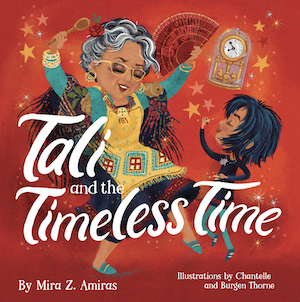
Coming out this August, Tali and the Timeless Time by Mira Z. Amiras, with illustrations by Chantelle and Burgen Thorne, shares the love of a granddaughter for her grandmother, and vice versa. Every Friday, Tali helps her nona get ready for Shabbat. Nona gives hugs, tells stories, still tries to get Tali to nap, even though she’s older now. When Nona dozes off, Tali explores in the backyard, cleans up the small fountain there, feeds the goldfish. When Nona awakes, it’s time to cook.
“We bake!” says Tali. “Today, it’s bourekas, yummy for eating. Nona makes them with filo (which it turns out is cheating). She says her nona let her ’cause it doesn’t need kneading.”
The week before, the pair made stuffed grape leaves – yaprakas, dolma or dolmades. Nona’s favourite dish is huevos (eggs) cooked in tomatoes with feta and arroz (rice).
While Tali’s grandmother might get Tali’s name wrong, or forget a word or two, she has these recipes ingrained in her.
“I’m having big thoughts,” says Tali, “but Nona’s not listening – she’s singing ‘chakchouka,’ it’s sometimes called, not just huevos, in the Holy Land, Tunisia and the land of the pharaohs. In Mexico, it’s a lot like huevos rancheros….” But Nona loses focus, she starts dancing with “her zills and her fans.” Tali finishes making dinner, the pair eat together, then dance some more.
In another role reversal, Tali tucks Nona into bed for the night, not sure she should leave her alone. Luckily, Tali and her family live nearby.
It’s a lovely book, “timeless time” being a beautiful description of a day spent with a loved one, doing this and that, in no particular order, sharing stories, mixing up past with present, making memories that will adapt over time.
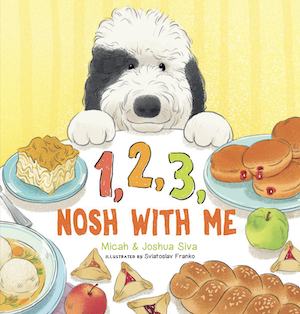
Family and food are also at the heart of 1, 2, 3 Nosh with Me, written by Micah and Joshua Siva, and illustrated by Sviatoslav Franko, which was published a couple of years ago. In it, the dog Buckwheat shows us the yummy food the family eats, starting with the “One golden challah, to celebrate Shabbat…” We work our way up to “Ten crispy latkes, served by candlelight.” In between, we have matzah balls, matzot, kugel, knishes, apples for a sweet new year, sufganiyot, bagels and hamantashen. (It’s not clear why the Hanukkah treats are separated, but that’s a quibble.)
Tali covers a few Sephardi staples and Buckwheat has the Ashkenazi favourites down. Between the two books, the breadth of world Jewry, as seen through just some of its traditional foods, is impressive.
Ira Pettle, middle, with actors Dave Francis and Cedar Lynn Dobbin. (photo from Ira Pettle)
Laugh Out LIVE! will be hitting the road in the fall. On the list of cities and towns it will be visiting are Pemberton, Squamish, North Vancouver and Bowen Island, with classes on the North Shore coming this winter.
Known as a children’s entertainer for the last 25 years, Ira Pettle began producing Laugh Out LIVE! in December 2021 in Whistler with funny woman and partner, Rebecca Mason.
“Comedy has always been on my radar. Laughter is the best medicine and it lights me up to bring joy to others. Being raised on SNL, In Living Color, and a countless number of comedy films, TV shows, actors and the like, I feel like I’ve always known this was one of the paths for me,” Pettle recently told the Jewish Independent.
Currently, Laugh Out LIVE! brings stand-up, improv and sketch comedy shows to packed houses at various venues in Whistler, including the Maury Young Arts Centre, Rainbow Theatre, Whistler Conference Centre, Dusty’s Bar & BBQ, and the Garibaldi Lift Co. Bar & Grill (GLC). Pettle performs in all three shows.
The Marquee Variety Show is devoted to a mix of different comedic acts and can involve improv, sketch, musical comedy, film and parody. The Improv Battle pits teams against each other weekly “to claim unscripted victory,” and Stand-Up Standoff is a monthly competition where the best comics win $500 in prize money. There are also opportunities for writers, theatre technicians, stage managers and filmmakers on the show’s website.
Pettle began his improv and sketch career at the Second City Conservatory program in Toronto but was drawn to comedy from an early age.
“As a kid, I was always drawn to and fascinated by comedy. Watching The Carol Burnett Show, and SCTV (Second City Television) with John Candy, Eugene Levy, Andrea Martin, Catherine O’Hara, Rick Moranis … those were the most influential comedy shows for me as a young, aspiring performer,” said Pettle, who lists Jerry Seinfeld, Mel Brooks, Gene Wilder, Adam Sandler and Bob Einstein as the Jewish comics he has been most influenced by.
Pettle has a master’s of education and has taught improv, acting and music to thousands of kids, teens and adults. In 2022, his debut children’s album, A Little Bit, co-written with Juno Award-winning singer/songwriter Norman Foote, was nominated for children’s artist of the year at the 2023 Western Canadian Music Awards. His next record is slated for release this winter.
Known as “DJ Ira” throughout the Sea-to-Sky Corridor, Pettle is a sought-after family entertainer. As a key player in the BC performing arts scene, he was named the 2019 Champion of Arts and Culture at the Whistler Excellence Awards, with another nomination at the 2023 awards.
“I discovered very early in my life that I was a performer,” he said. “An entertainer. I remember as a kid, the joy I felt bringing a smile to someone or soliciting a laugh. In those early days, it was my coming to the dinner table on all fours, pretending I was an ape, making my mom giggle, or going to the Blue Jays baseball game when I was 14 with my buddies and pretending to fall down the stadium stairs, getting 500 people sitting in the stands to simultaneously gasp.”
Today, when he’s not entertaining children or performing comedy, Pettle leads a number of improv, stand-up comedy, public speaking and presentation workshops. He uses improvisation as a tool to “release tension, awaken joy and return to the present moment.”
Many of the performers on his improv stage started out taking classes with him.
Pettle grew up in Toronto and says that learning about Judaism was a huge turning point in his life.
“Having been raised Reform, and being the grandchild of a Holocaust survivor, I was always told how important my Jewish roots were,” he shared. “But, because my family’s religious practices were very surface level, I was confused and became deeply confronted by what I was told versus what I was doing in my daily life as a ‘Jew’ and, through a series of divine interventions, became committed, for the first time, to seeking out a deeper understanding of my Jewish roots.”
Pettle eventually found out about the yeshivah Ohr Somayach and studied with them in Israel.
“I felt ready (and passionately interested) in making a clear choice on whether to declare myself Jewish definitively and pursue/develop a more conscious connection to Judaism, or allow my Jewish roots to remain as is, or simply fall by the wayside/disappear. I needed to dive deep into the learning at the source.”
Pettle’s connection to Judaism was affirmed and, with a renewed and more solid understanding of his cultural roots and heritage, he remains, he said, “very honoured to be Jewish.”
To contact Pettle regarding his work as a kids entertainer, go to irapettle.com. For Laugh Out LIVE! inquiries, contact him via laughoutlive.com.
Cassandra (Cass) Freeman is a Vancouver improviser and journalist.
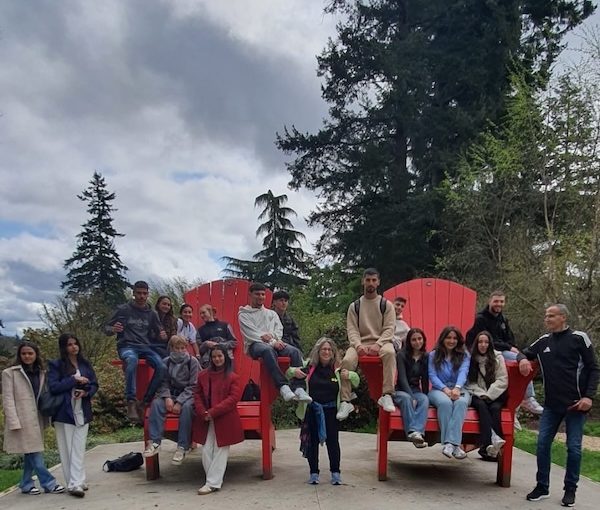
Last month, 16 students from three different high schools in the Galilee visited Vancouver, where they participated in several activities. (photo by Kristin McIlhenney)
“It is nearly impossible to put into words the profound experience we had in Vancouver,” Dr. Rachel Ravid, co-director of Galilee Dreamers, told the Independent. “For the first time, host families welcomed us directly at the airport – a moment of emotion I will never forget. The level of care and thought given to our visit was evident even before our arrival, through a preliminary Zoom meeting during which we shared about the Galilee Dreamers program and the backgrounds of the students they would be hosting. From afar, we could already feel the warmth that awaited us.”
Galilee Dreamers is a program of Oranim College of Education, in Israel. Established nearly a decade ago, it “brings together Jewish and Arab high school students from northern Israel, cultivating dialogue, empathy and mutual respect, while helping participants explore their personal and collective identities,” Ravid said.
A key aspect of the program is connecting these Israeli students with peers abroad and Galilee Dreamers groups have traveled to cities in several countries, including Canada, where Toronto has participated in previous years. Last month, 16 students from three different high schools in the Galilee came to Vancouver, where they were hosted by 12 local families, visited a few schools and participated in several activities. The delegation then headed to Seattle.
There were six students from Akhva-brotherhood High School in Yarka, a Druze school; five students from Jewish schools Einot Yarden and Misgav Regional High School; and five students from Atid Bir al-Maksur, a Muslim school representing a Bedouin way of life, said Ravid. “The students ranged in age from 16 to 18 and were selected for their leadership potential and their capacity to develop leadership skills.”
The co-director of Galilee Dreamers, Dr. Malek Hujeirat, who is deputy principle at Atid, led the group from there, and Diana Mulla, a Druze English teacher, led the delegation from the Druze school. “I was responsible for accompanying the Jewish students and overseeing the delegation,” said Ravid.
While the process of planning the April 18-25 trip was challenging, Ravid said “the spirit of volunteerism and support from community members in Vancouver was truly remarkable. Marion Rom led the planning team with vision and dedication, alongside Dalia Margalit, who offered support from both near and afar.
Galilee Dreamers participants at Tsleil-Waututh Nation siʔáḿθət School. (photo by Kristin McIlhenney)
“The intention was to create as many opportunities as possible for interaction with different parts of the Vancouver community, in order to better understand the local realities and challenges,” said Ravid. “In parallel, we aimed to connect the visiting students with the natural environment, the region’s history and its diverse cultures.
“Alongside school visits with Jewish students – where we discussed the core values of the Galilee Dreamers and universal values such as solidarity, listening, compassion and empathy – our students also learned what daily life looks like for peers their own age in a different society.
“A key element of the itinerary was community volunteering,” said Ravid, and, at the Jewish Community Garden, the group spent some time working and learning.
The host families also “initiated activities rooted in their own strengths and passions, allowing each student to experience something unique within each household,” added Ravid.
One of those families – Tal and Avital Jarus Hakak, who had two Jewish students stay at their home – “hosted a dinner that included another host family of two Druze students and a hike afterwards. One of us also helped with a tour of UBC,” the couple said.
“The positive impact of this trip on the students’ attitudes towards their peers and teachers from different communities and cultures was heartwarming. We felt like these impacts have a great importance for the future,” said the couple, who were motivated to take part because, they said, “The idea of a youth program for facilitating dialogue between Jewish, Arab and Druze sounded very appealing and interesting, particularly in this time of local and global conflicts.”
Kristin McIlhenney found out about the visit from a friend.
“Knowing I had previously hosted international students, she encouraged me to consider it,” said McIlhenney, who hosted a student from the Bedouin school and teacher Hujeirat, “who also serves as the principal overseeing multiple schools in his village.”
“As an educator, I deeply believe in the transformative power of travel and intercultural exchange to build empathy and global awareness,” she said. “That belief, combined with my background, made me genuinely enthusiastic about supporting the Galilee Dreamers by becoming a host.”
Beyond providing room, board and transportation for her guests, McIlhenney said “the experience organically evolved into something much richer. Groups often gathered in the evenings, leading to shared dinners and deeper connections, both in our home and in others’. It was incredibly moving to hear three languages spoken under our roof, and to learn everything from simple cultural details – like the high price of sushi where they live – to complex and personal perspectives on life in a conflict-affected region.”
For McIlhenney, there were two particularly special benefits of being a host. “First,” she said, “my two elementary-aged sons formed a strong bond with the student who stayed with us. A gifted soccer player, he spent hours playing with them and they even accompanied him to a match where they watched [Lionel] Messi play against the Whitecaps – a memory they’ll cherish for years. Second, as a former educator, I deeply appreciated the profound conversations I had with the principal. Whether while preparing meals, driving or winding down in the evening, our discussions gave me a rare and meaningful glimpse into his reality – and helped me reflect more critically on my own.”
Both McIlhenney and the Jarus Hakaks would “absolutely” host again. And trip co-organizer Rom would “definitely help bring those kids in the northern Galilee next year if they want to come back.”
Rom, Margalit’s brother and Galilee Dreamers co-founder Dr. Desmond Kaplan all went to high school together in South Africa, explained Rom of the local connection to the program and how the Vancouver stop came to be.
Rom and Margalit found the host families, and Margalit, who was out of town when the visit took place, “gave this program ‘legs’ in the early stages of planning,” said Rom.
“I wanted to help because I believe that dialogue and interaction of the Jewish, Bedouin and Druze high school youth in the northern Galilee is one of the most impressive paths to peace in that region,” said Rom.
“The most moving part,” she added, “was when the youth and host families all met together one evening to talk about life in northern Israel since Oct. 7, 2023, and what this program means to them.”
“For my part,” said Margalit, “I agreed to assist in arranging the visit when I heard that the group would be made up of students from the Bedouin, Druze and Jewish communities. At this time of tensions between Israel and Palestine, I felt this was a particularly important aspect of the visit, and of daily life in Israel, that would be very important for the Vancouver Jewish community to hear about.”
“As the region faces heightened tensions and conflict, the lack of mutual understanding and shared vision between Arab and Jewish communities threatens the very fabric of society,” said Ravid. “These divisions are compounded by systemic separations: Jewish and Arab teenagers grow up in separate neighbourhoods and towns, attend schools where different languages are spoken, and rarely – if ever – encounter one another in meaningful ways that could challenge stereotypes and foster understanding. Frameworks that nurture mutual respect, empathy and collaboration are critically absent.
“This reality not only affects the people of Israel,” she said, “but also perpetuates a global lack of awareness about the rich and diverse voices that make up Israeli society. Around the world, young people often have little understanding of the complexities of life in Israel and few models for overcoming divisions to build shared futures.”
Galilee Dreamers “creates safe and meaningful spaces where young people from different backgrounds – who might otherwise remain strangers – build real relationships based on trust, empathy and common purpose,” said Ravid.
“Equally important is the program’s impact on the communities that host us – whether in Israel or abroad,” she continued. “By sharing their personal stories and experiences of living in a complex, multicultural society, Galilee Dreamers offer host communities a window into what grassroots peacebuilding can look like. These encounters inspire interfaith dialogue, foster global solidarity and leave lasting impressions on local families, educators and youth who engage with the group. The mutual learning is profound, and many host communities describe the visit as hopeful, eye-opening and deeply moving.”
While some communities and institutions in Israel and the diaspora “have become more cautious about engaging with programs like Galilee Dreamers” since Oct. 7, “the program continues to operate, with participants expressing a renewed commitment to dialogue and understanding,” Ravid said.
Galilee Dreamers students visited Jewish and other institutions, including Peace Mennonite Church, while they were in Vancouver. (photo by Kristin McIlhenney)
The students who participated in the delegation that came to Vancouver shared with Ravid “that they had never experienced such a meaningful and warm form of hospitality. They spoke about the deep love and care shown to them, and how much the host families prioritized their personal well-being,” she said. “They expressed sincere gratitude for the time and attention their hosts gave to hearing their personal stories – and the stories of their families. The connection was so strong that many of the students affectionately referred to their hosts as their ‘second parents.’
“In addition to the emotional connection, the students also appreciated the opportunity to take part in activities they had never experienced in Israel: from ice hockey games and bike rides, to hiking in nature, riding a ferry, and taking a cable car up a snow-covered mountain. Perhaps most enthusiastically, they spoke about the unique food experiences, especially the sheer number of donuts they joyfully consumed without pause!”
For Ravid, “One of the most emotional moments of the trip was the community gathering toward the end of our stay,” she said. “Each of us shared reflections and feelings from the journey. I was particularly moved by the words of Ezra Shanken, chief executive officer of the Jewish Federation of Greater Vancouver, who said that the Galilee Dreamers’ visit brought out the strengths of the local Jewish community and its ability to mobilize around a meaningful initiative. His emphasis on solidarity was incredibly powerful and deeply relevant – especially in these days, when personal and collective security in Israel and around the world feels fragile.”
Both the Jewish Community Centre of Greater Vancouver and the Jewish Federation contributed to the local visit, the latter helping with the planning as well as funding. There were many other organizations and people that Rom, Margalit and Ravid thanked.
“On the day of departure,” said Ravid, “I saw many tears and heartfelt hugs – testament to the meaningful connections and impact this journey had on both the students and the families.”
The Nova Exhibition commemorates the massacre at the Nova music festival on Oct. 7, 2023. The exhibit is in Toronto until June 8. (photo by Lorraine Katzin)
My friend Karen Shalansky and I, from Congregation Har El, went on a Jewish National Fund tour to Israel in April 2024, traveling with some congregants from Congregation Beth Israel. We were based in Tel Aviv but drove to the south to see the Nova Festival Memorial and the car cemetery. (See jewishindependent.ca/reflections-on-april-mission.)
When I heard of the Nova Exhibition, which had been traveling to New York, Los Angeles and then Miami, I Googled to see if it was going to be in Toronto. While we live in Vancouver, my husband and I were going to be heading to Toronto for our granddaughter’s Grade 1 siddur celebration. I was able to purchase tickets to the exhibition for May 6, during the time we (and our daughter) were going to be in the city.
Normally, when we go to Toronto, we attend Saturday morning services at our son’s synagogue, the Village Shul. It just so happened that, on the Shabbat of our visit, the guest speaker was Ophir Amir, one of the founders of the Nova music festival and one of the producers of the Nova Exhibition. Amir was shot in both legs by Hamas terrorists on Oct. 7, 2023. He survived, but so many of his friends did not. He shared: “While I was hiding from the terrorists, I thought about my wife, who was pregnant, and that’s what saved me.”
(photo by Lorraine Katzin)
The Nova Exhibition tells the stories of the victims and helps this community begin to heal – we will dance again.
The first part of the exhibit is a movie. It shows people having fun, enjoying life, singing and dancing, until 6:29 a.m. on Oct. 7, when the music stops and security starts shouting “Red alert! Tzeva adom!” as they could see the rockets flying over Israel. They tell everyone to go home. The movie ends.
We were then led to another room for a reenactment of what came next. There were different TV screens showing how the Hamas terrorists came through the fence, the continuous firing of their weapons, the continuous shouting of “Allah Akbar!”
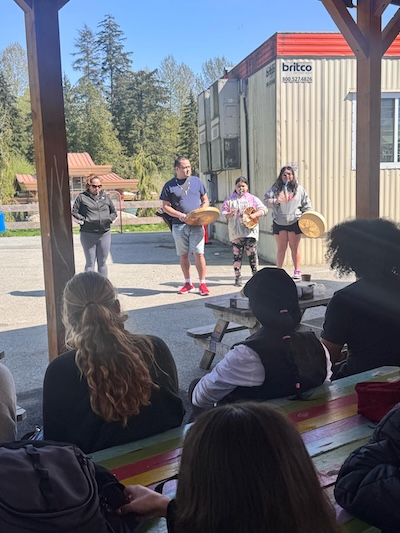
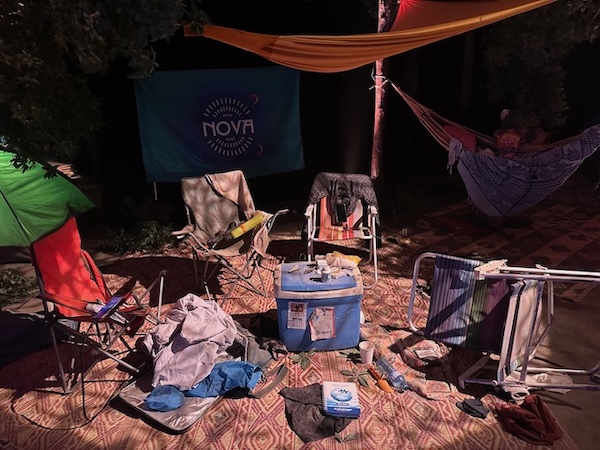
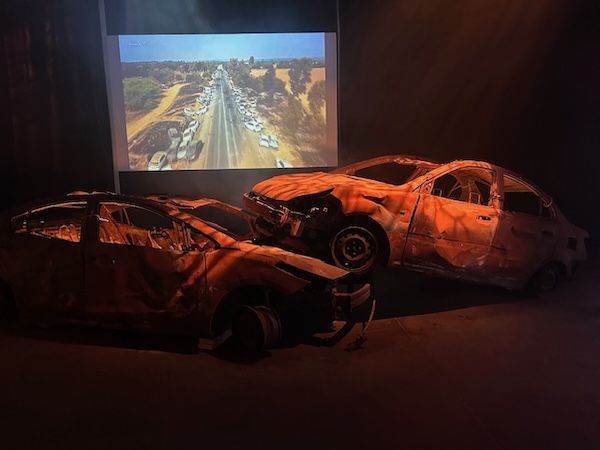
The next area is filled with belongings from the festival, which include tents, sleeping bags, chairs, clothes, snacks, trees, the market, featuring various items, portable toilets, the bar, freezer chests, burnt-out cars, shelters, and more. By each display there is a TV screen with a survivor telling their story. One young girl lost 15 friends, another young man lost more than 40 friends, a mother lost two of her daughters. Many different stories of loss, as well as stories of heroism.
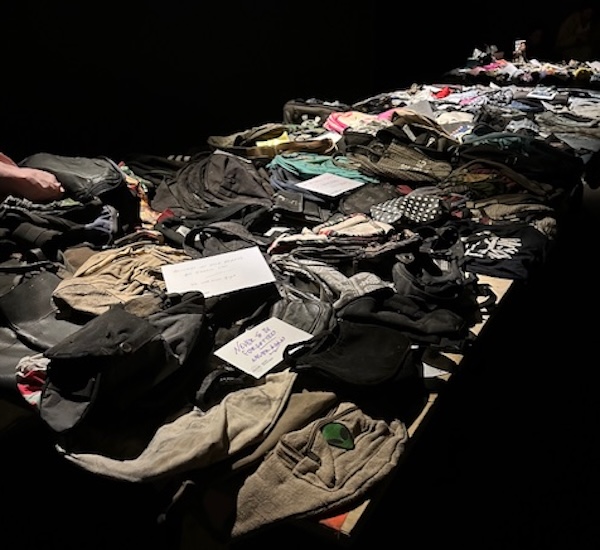
On one wall of the exhibit are photos of the Nova hostages still held in captivity by Hamas. On another wall are photos of all the people at the Nova festival who were murdered on Oct. 7 – as well as their hats, shoes, other clothing and knickknacks.
(photo by Lorraine Katzin)
As you walk through the exhibit, it shows how the larger community is helping with the psychological trauma, the grieving process, the bereavement, the difficulties of survivors to function day-to-day. All the proceeds from the exhibition are dedicated to helping heal and rehabilitate survivors, commemorate those who were lost, and support the bereaved families.
We spent two-and-a-half hours walking around and reading testimonies. We came out emotionally drained. Our Israeli brethren are resilient, they have ruach, spirit, and they are dancing again.
The Nova Exhibition runs until June 8 at 1381 Castlefield Ave., in Toronto. For more information, visit novaexhibition.com.
Images from the exhibition:
(photo by Lorraine Katzin)(photo by Lorraine Katzin)(photo by Lorraine Katzin)(photo by Lorraine Katzin)
Bay Area klezmer trio Veretski Pass returns to Klezcadia, which runs in-person and online June 10-15. (photo from Klezcadia)
Klezcadia, a festival of klezmer music and Yiddish culture, is back for a second year. The June 10-15 event can be experienced in-person in Victoria or virtually from around the world.
The 2025 festival, free for all who register, features author and playwright Michael Wex, who will be offering a two-part webinar titled Jews, Germans and Jive: Yiddish as a Language of Resistance.
Wex, the author of the bestseller Born to Kvetch and Just Say Nu, will be delivering the talks from his home in Toronto. No stranger to Vancouver audiences, his play, The Last Night at the Cabaret Yitesh (Di Letste Nakht Baym Yitesh), in which he also performed, closed the 2024 Chutzpah! Festival.
Laura Rosenberg, the director and driving force behind Klezcadia, said Wex “is arguably the most famous person to interpret the public impact of the Yiddish language on the English language.”
She told the Independent that the festival’s mission, operating principles and format will be the same as they were in its inaugural season. “The performance and workshop content, on the other hand, will be completely new for 2025, though obviously within the same klezmer music and Yiddish culture arena as last year, and involving many of the same artists and faculty members,” she said.
Between in-person and virtual attendees, Klezcadia had more than 500 participants from 21 countries in 2024 and the 2025 registration looks to be at least on par with those data, according to Rosenberg.
“Everything from concerts to workshops to open rehearsals is designed to equalize as much as possible the experience of in-person and virtual participants,” she said. “And, thanks to our generous donors, registration is once again free.”
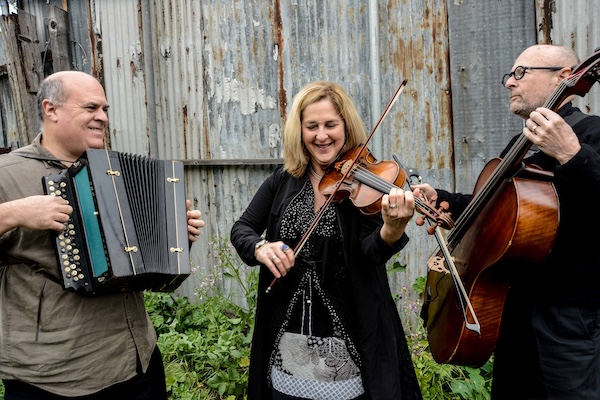
Other notable appearances this year include returning Bay Area klezmer trio Veretski Pass, who will appear on both the concert and workshop rosters. Members Cookie Segelstein (violin), Joshua Horowitz (19th-century button accordion) and Stuart Brotman (bass) play a wide variety of East European numbers. This year, they will offer “band-to-band master classes” with two Victoria-based klezmer ensembles.
Vancouver singer/songwriter Geoff Berner, joined by Segelstein, will perform songs from his upcoming album – Berner’s first to be completely in Yiddish. Over the past 25 years, Berner has toured in 17 countries, opened for rock stars in stadiums and, the Klezcadia notes state, “played nearly every dirty little café bar in Western Europe.”
Klezcadia 2025 will see the Victoria debut of Jordan Wax, a rising star on the Yiddish singer/songwriter scene, who will share music from his newly released album, The Heart Deciphers, on the Borscht Beat label. The New Mexico musician blends many influences, from the Missouri Ozarks to the Indo-Hispanic world and the entire Ashkenazic diaspora.
Christina Crowder, director of the Klezmer Institute, based in Yonkers, NY, will be on hand to perform century-old music rediscovered in Ukraine’s Vernadsky Library, which recently was published for global use via the Kiselgof-Makonovetsky Digital Manuscript Project.
As it did in 2024, this year’s festival will conclude with the entire Klezcadia cohort performing a finale concert at the Stage in the Park (Cameron Bandshell) in Victoria’s Beacon Hill Park.
Billing itself as “A Safer Shtetl,” Klezcadia’s hybrid environment prioritizes the safe experience of immunocompromised and high-risk participants, for the performers, crew and volunteers, and for attendees. Indoor activities feature the use of protective protocols such as supplemental air purification, required masking and daily onsite COVID testing.
“We learned from our inaugural-season experience that our fully hybrid format was extremely valuable, both to our immunocompromised and high-risk participants, but also to a vast number of people who, for geographic or financial reasons, were unable to attend in person,” Rosenberg said.
Rosenberg gives credit to other members of the Klezcadia team for helping with the various technical tools needed to put together a hybrid festival. She said some of the evolving challenges faced in viral safety and communal safety, and the current cross-border political situation, have provided added appreciation to how much a hybrid design can be adapted at short notice, if needed.
People who were not able to attend a live event in 2024 have expressed their thanks to Rosenberg in the lead-up to this year’s festival.
“One of my greatest delights in the intervening year since our inaugural season has been hearing what a difference Klezcadia made to our immunocompromised and high-risk attendees,” she said. “Whether local or halfway across the world, many of these people have felt shut out of their communities, including their Jewish cultural communities, and they expressed in heartfelt terms how life-changing it was for them to be able to participate in a cultural festival that prioritized their safety but was open to everyone.”
All Klezcadia events will take place within a 10-minute drive from downtown Victoria. Specific venue information will be provided only after registration, and only to in-person participants. For more information, visit klezcadia.org.
Sam Margolishas written for the Globe and Mail, the National Post, UPI and MSNBC.
A nationwide Upstanders Canada keynote lecture to mark Yom Hashoah (Holocaust Remembrance Day) last month reminded the Zoom audience that the belief that Jews simply cowered, while the atrocities around them were being committed during the Second World War, is erroneous.
“The idea of Jewish passivity is part of the narrative, but it is not the truth. Jews, individually and collectively, engaged in acts of resistance and rescue,” said Pat Johnson, founder of Upstanders Canada, at the start of the event.
That people should know this fact “is crucial,” said Johnson, “because it corrects a flawed narrative. It is crucial additionally, not only for Jews but for every person and every people in the world, to see the potential for resistance and courage against authoritarianism hatred and inhumanity.”
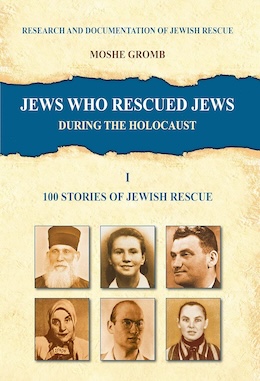
The April 27 event, titled Jews Who Rescued Jews During the Holocaust, was presented by Rinat Dushansky-Werbner. She was introduced by Moshe Gromb, author of a 15-volume series with the same title, which Dushansky-Werbner and Pnina Jacobi-Yahid translated into English fromHebrew. In her talk, Dushansky-Werbner, a member of the Action Committee for Recognizing Jews Who Rescued Jews During the Holocaust, highlighted several Jewish heroes during the Shoah – their names not widely known.
“There were operations inside the death camps. There werepeople smuggling people across borders. They were hiding children in monasteries. They were falsifying documents,” Dushansky-Werbner said.
“The Jews were very, very creative, and tried to think of any possible way to save their brethren. Sadly, many of these Jewish rescuers were caught and murdered by the Nazis. Even though they could have escaped and saved themselves,” she said, “most of them decided not to do so. [They] decided to stand where they are, and try and rescue as many people as possible.”
The people discussed represented a range of backgrounds, ages, geographic locations and levels of religious observance, and were but examples from a much larger number of Jews who took on tremendous risks and used remarkable ingenuity to rescue other Jews during the Holocaust. Thus far, Dushansky-Werbner’s action committee has collected information on more than 2,500 Jewish rescuers and documented more than 50 rescue methods.
Many of the Jewish rescuers, Dushansky-Werbner said, did not see themselves as great heroes, but rather as people who did what they were compelled to do, and saddened they could not do more.
“There is something very humble about these people,” she said.
Jews rescued other Jews wherever the Germans operated – throughout Europe, North Africa and even the Philippines –and their operations began once the Nazis rose to power and continued throughout and after the war. Often, their operations involved collaborations with non-Jews.
In Belarus, four brothers named Bielski – Tuvia, Zus (Alexander Zeisal), Asael and Aron – founded a partisan unit, a wandering communal rescue army, that established a family camp in the Naliboki Forest. The camp operated for more than two years during the war, moving occasionally from place to place in the forest, and included a synagogue, a school, a courthouse, a clinic, an armoury and more. It is estimated that the Bielski brothers rescued 1,236 Jews in what became known as the “Jerusalem of the Forests.” Their story is among the more celebrated of Jewish rescuers and was turned into a 2008 film, Defiance, starring Daniel Craig.
In France, the Loinger family, led by George, who passed away in 2018 at the age of 108, smuggled hundreds of Jewish children across the border to Switzerland, while his wife, Flora, managed the houses in which they hid Jewish children.
George would play soccer with the children. When the ball flew over to the other side of the border, one or two children would be sent to safety to the other side without the local guard noticing, Dushansky-Werbner explained.
George’s sisters also helped. Fanny hid children in monasteries; Emme prepared abandoned monasteries for Jewish orphans and ran one of the children’s houses; the youngest, Ivette, 13, rode with Jewish children on trains, hiding their money and keeping them calm during the journey.
French pantomime Marcel Marceau and his brother Alain – who were George’s cousins – forged papers for Jews on the run and helped George smuggle Jewish children out of France.
“Marcel would help keep them calm and would just basically be the clown. He would be like a mother, a father, a brother, and he would make them laugh. And this is how many of them stayed calm and agreed to go from one place to another,” said Dushansky-Werbner, who went on to share another story of heroism.
In Volos, Greece, Rabbi Moshe Shimon Pesach was ordered by a German commander to draw up a list of all the Jews in the city. He turned to his friend, Metropolitan Joachim Alexopoulos, who recommended the Jews leave the city immediately.
At the age of 74, the rabbi gathered the members of the community and led them to the hills surrounding Volos with the help of the metropolitan and the city’s mayor, and hid them in homes and other buildings. This effort would save 746 of the 882 Jews in Volos.
Dushansky-Werbner ended her talk with the words of Marion Pritchard, a non-Jew who rescued Jews in the Netherlands: “If we do not acknowledge the bravery of those Jewish rescuers who, if caught, were in graver danger than the Righteous Among Nations, that would be a distortion of Holocaust history. It also adds to the false notion that the Jews were led like lambs to the slaughter as cowards. This is far from the truth,” said Pritchard.
Upstanders Canada is a national organization that seeks to mobilize primarily non-Jewish Canadians to stand with the Jewish people and against antisemitism. For more information, visit upstanderscanada.com.
Sam Margolis has written for the Globe and Mail, the National Post, UPI and MSNBC.
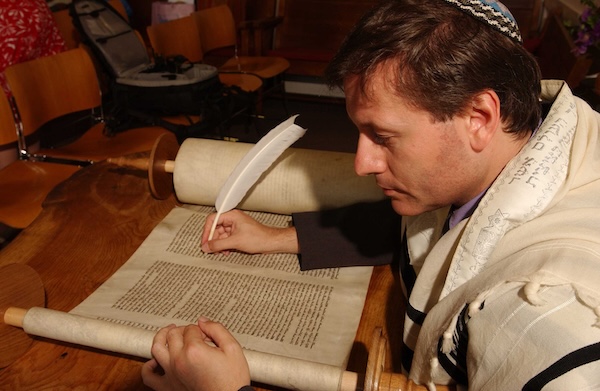
Scribe Marc Michaels concluded Kolot Mayim Reform Temple’s 2024/25 Kvell at the Well series with the talk Torah Tales: Adventures in Scribal Art. (photo from Marc Michaels)
On April 6, Marc Michaels spoke about his experiences as a Jewish scribe (sofer, in Hebrew) in the final webinar of the 2024/25 Kvell at the Well series. Titled Torah Tales: Adventures in Scribal Art, the event was organized by Victoria’s Kolot Mayim Reform Temple.
Based in London, Michaels has been writing Torah scrolls, Megillat Esther, ketubot and the scrolls inside mezuzot and tefillin for more 30 years. He is a Cambridge scholar, earning a PhD in Jewish manuscripts from University of Cambridge’s faculty of Asian and Middle Eastern studies.
A Jewish scribe writes and restores holy works using quills, parchment and special inks, all the while following a strict set of rules, explained Michaels. Indeed, there are many, many rules, which Michaels came back to through the course of the talk.
The scribal art, he said, goes far beyond calligraphy and requires a detailed knowledge of Jewish law and a relatively high level of religious observance.
Michaels provided a recipe for the special ink a scribe might use, which includes gum arabic, gallnuts (from oak trees), iron sulfate and water. The gallnuts are crushed to form tannic acid, mixed with the other ingredients and cooked on an open flame until a residue is left. The larger lumps of gallnuts are strained out and the mixture is left for six months to turn black and be used as ink.
For quills, Michaels believes that a swan’s quill is too soft and a goose quill too hard and prefers a turkey quill. “As Goldilocks would say, it is just right,” he said.
Quills, Michaels warned, must be adjusted in such a way to limit the risk of a scribe sneezing because, if that happens on parchment, it is impossible to remove. Scribes shifted to quills on the move to Europe, he said. Beforehand, they used reeds – which were used to write the Dead Sea Scrolls.
“We switched to quills because that’s what the Christians were using and they were getting a much finer, nicer point on their calligraphy,” he said.
A large part of a scribe’s job is repairing scrolls. Returning again to the rules, he said, “It only takes one letter to be wrong, and that means maybe the ink has come off or it’s broken or whatever, for the whole scroll to be pasul (invalid).”
If a scroll is deemed pasul, Michaels told the audience, then it must be placed in the ark with an indicator to show it’s invalid, such as arranging its belt outside of its mantel. Jewish law states that it must be repaired within 30 days, but, he said, it may take much longer.
Among the Torah scroll repair horrors presented by Michaels were gauze that joined seams together, stains from tape that had to be scraped out, and a patch that was sewn onto the scroll.
Typical repairs, he said, are not so extreme and mostly involve fading and broken letters, which require much overwriting. On occasion, whole columns no longer exist, having been completely rubbed away by time. Sometimes, members of a congregation might mark the scrolls with a pencil or ballpoint pen. In one slide Michaels displayed, someone had drawn a flower onto the scroll.
In his career, Michaels has also encountered incorrect spellings, deletions and Hebrew characters that were mistakenly joined together. Missing words, mixed-up letters and omitted characters from various Torah scrolls were shown to the Zoom crowd as well.
“And then you get wear and tear, dirt, holes, rips and things like that. You have to be very careful. You can patch a Torah, but you’re not allowed to do half patches,” he said.
What’s more, accidents can happen, especially when lifting the Torah during times when one side is much heavier than the other, ie., at the start and at the end of the yearly reading cycle. In one example, a Torah was torn through columns, thus the columns had to be removed and rewritten in the style of the original scribe.
Perhaps topping the list of Torah misadventures is the case Michaels came across of a young person studying for her bat mitzvah and the family dog chewed through a section of the Torah.
“It was literally the best excuse for not learning a bat mitzvah portion – the dog ate my portion,” Michaels joked.
“I had to do an emergency fix because there wasn’t enough time. I repaired it in the style of the original scroll, but only part of it, which you’re not normally supposed to do except in the case of an emergency – and this was a massive emergency. Because the parchment was much older than the shiny new parchment, I coated it with Yorkshire Tea. And it worked.”
A prolific author, designer and presenter, Michaels designed the prayer book for the Movement for Reform Judaism and has written numerous books and articles on scrolls, the Bible and art; he wrote the children’s book The Dot on the Ot. Michaels is currently working with Kolot Mayim to restore a Torah scroll.
Sam Margolishas written for the Globe and Mail, the National Post, UPI and MSNBC.
Dr. Oren Wacht of Ben-Gurion University of the Negev will be in Vancouver this month, giving a public lecture May 25 and promoting Heartbeat of Education, a project geared to helping more Israeli paramedics further their education in emergency medical services. (photo from BGU Canada BC & Alberta Region)
Dr. Oren Wacht, who heads the department of emergency medicine and is the academic director of the Field Family Medical Simulation Centre at Ben-Gurion University of the Negev, will be in Vancouver May 23 to 25. As part of his visit, he will speak to the community on May 25, 7 p.m., at an event titled Emergency Medicine in Action: Healing the Negev Post-Oct. 7.
An experienced emergency medical technician and the first paramedic in Israel to receive his PhD, Wacht serves, too, as a volunteer paramedic for Magen David Adom, Israel’s national emergency service.Since Oct. 7, 2023, he has seen months of active service between his teaching and training responsibilities.Thousands of BGU faculty, staff and students were called to serve after the Hamas attacks.
Wacht said his May 25 talk will be about his department, which trains paramedics, and will briefly touch upon his own experiences as a paramedic.
“Since the war, I have spent most of the time in the military, in the infantry, as a paramedic,” he told the Independent. “I am trying to combine this with my work at BGU as a head of department and researcher, and, of course, my personal life and family. It is very challenging, but there is no other choice.”
Wacht’s visit to Vancouver will promote Heartbeat of Education, a project geared to helping more Israeli paramedics from all walks of life access and earn a bachelor’s degree in emergency medical services (EMS).
As the national EMS system,Magen David Adom (MDA) has very close ties with the program. In February 2022, MDA and BGU signed an affiliation agreement as part of an academic initiative designed to improve training for paramedics and EMTs. The affiliation, believed to be the first between a national EMS service and a university, strives to bolster the quality of pre-hospital emergency care in Israel and elsewhere.
“We want Israel to have the best paramedics and, with the program’s support, we can help our students go through our very intense program with less financial stress,” Wacht said.
“Our program is unique,” he added, “because students do EMS shifts at MDA from the first year of studies. We are incredibly excited about this opportunity – and being able to support our students, especially since the war, is one of the most important things we need to do.”
In Israel, MDA paramedics are among the first on the scene in emergencies to provide critical care.However, many paramedics lack the financial means to pursue higher education. The purpose of the Heartbeat of Education program is to enable paramedics to take on more specialized roles within the health-care system, bring enhanced expertise to emergencies and thereby save more lives and improve outcomes, drive innovation and support a diverse, inclusive environment that can provide life-saving services to everyone who lives in Israel.
Wacht also has created a summer program, in English, in emergency medicine at BGU. It will open this year, from July 20 to 30, and is geared towards laypeople and professionals alike. The program uses the extensive experience of tactical medicine – the delivery of care in hostile or high-risk situations that integrates medical and tactical operations to preserve life – at BGU and brings it to people in the course in a realistic environment at the school’s medical simulation centre. In addition to offering graduates a certificate from BGU, the program hopes to provide participants with the confidence to handle demanding medical challenges.
The Field Family Medical Simulation Centre occupies four floors of the Rachel and Max Javit Medical Simulation and Classroom Building at BGU.It includes classrooms equipped with medical devices, advanced simulators and research laboratories, and features state-of-the-art medical simulation rooms to train doctors, nurses and paramedics.The rooms are designed to reflect real-life medical situations, such as cardiopulmonary resuscitation, procedures for trauma victims and emergency surgeries.
Since Oct. 7, many medical teams, from army and civilian organizations, have asked for guidance at the centre, and the centre has helped prepare many Israel Defence Forces teams.
“Despite the challenges we face, and despite the fact that a significant part of the team has been called up for reserve duty, hospitals and MDA, this is our small contribution, and we stand united with the medical community in these difficult times,” Wacht said in October 2023.
“The support of Jewish people from around the world gives all of us, and me personally, a lot of strength in these challenging times,” Wacht told the Independent. “We invite readers to visit BGU and see the fantastic work in many fields of research.”