Skip to content
  • Home
  • Subscribe / donate
  • Events calendar
  • News
    • Local
    • National
    • Israel
    • World
    • עניין בחדשות
      A roundup of news in Canada and further afield, in Hebrew.
  • Opinion
    • From the JI
    • Op-Ed
  • Arts & Culture
    • Performing Arts
    • Music
    • Books
    • Visual Arts
    • TV & Film
  • Life
    • Celebrating the Holidays
    • Travel
    • The Daily Snooze
      Cartoons by Jacob Samuel
    • Mystery Photo
      Help the JI and JMABC fill in the gaps in our archives.
  • Community Links
    • Organizations, Etc.
    • Other News Sources & Blogs
    • Business Directory
  • FAQ
  • JI Chai Celebration
  • JI@88! video

Recent Posts

  • Zionism wins big in Vegas
  • Different but connected
  • Survival not passive
  • Musical celebration of Israel
  • Shoppe celebrates 25 years
  • Human “book” event
  • Reclaiming Jewish stories
  • Bema presents Perseverance
  • CSS honours Bellas z”l
  • Sheba Promise here May 7
  • Reflections from Be’eri
  • New law a desecration
  • Resilient joy in tough times
  • Rescue dog brings joy
  • Art chosen for new museum
  • Reminder of hope, resilience
  • The national food of Israel?
  • Story of Israel’s north
  • Sheltering in train stations
  • Teach critical thinking
  • Learning to bridge divides
  • Supporting Iranian community
  • Art dismantles systems
  • Beth Tikvah celebrates 50th
  • What is Jewish music?
  • Celebrate joy of music
  • Women share experiences 
  • Raising funds for Survivors
  • Call for digital literacy
  • The hidden hand of hate
  • Tarot as spiritual ritual
  • Students create fancy meal
  • Encouraging young voices
  • Rose’s Angels delivers
  • Living life to its fullest
  • Drawing on his roots

Archives

Follow @JewishIndie
image - The CJN - Visit Us Banner - 300x600 - 101625

Need to value what we have

Every fall, we go apple picking. For my husband and me, it was one of our first dates, apple picking together in upstate New York. Over time, it has become a family outing, with each kid eating lots of fresh apples with the promise of applesauce and pie on the horizon. The timing is often perfect for the fall holidays, too.

This year, though, the pandemic has drastically increased unemployment. Many people are hungry. All around our (relatively well-off) neighbourhood, there are apple trees heavy with fruit. Here in Manitoba, frost is on the horizon. I have felt a huge pressure to put up food to share, and to pick more apples. This could be a long winter.

The first apple tree we helped pick was that of an elderly neighbour. She just lost her adult son, who was disabled. She was in mourning, terribly sad and frail looking, but also isolated by the pandemic. We all masked up immediately as she came out to greet us. Her smile was meaningful. Watching my kids cleaning up the fallen apples was important. She told us a visiting relative had made her pie. I got the sense she enjoyed that, as she is overwhelmed by the quantity of apples on the tree and the effort required to make anything from them for herself, these days.

A couple days later, I dropped off four 125-millilitre (four-ounce) canning jars of applesauce and a takeout container with two generous slices of apple pie. We canned pints of applesauce, made pie and apple chips for lunches. We still had way too many apples. We took a trip to the food bank and my husband donated 100 pounds (45 kilograms) of apples, more or less, at the self-serve donation bin. He also saw squash and other large amounts of produce from Winnipeg’s gardeners and I was relieved. It sounds like our mayor’s encouragement to citizens to grow more vegetables might have worked.

A couple weeks passed. We didn’t think we had more apple tree picking on our schedule as school approached. I continued studying Talmud as I had time. In Eruvin 29, there is a section that discusses what kinds of food should be given to the poor. The list is specific, including nuts, peaches, pomegranates and a citron. It stipulates that support for the poor should offer them dignity. In essence, poor people should have access to the same kinds of good foods as everyone else. Also, the food should be luxurious enough so that, if they were to sell it, it might be equivalent to two meals of something else. The food support should be dignified. It should offer poor people the same autonomy to choose, as anyone else might.

We received an email from another neighbour. Her apple tree had grown a lot of fruit this year. She still had a lot of apples left. Did we want to come?

We began to pick what looked like an untouched, heavily laden tree. It had so many low-hanging apples that my 9-year-old twins and I easily reached up to pick many with our hands. Again, we picked far more than we could use. The apples were so ripe though, that we had a lot of “drops.” These are the apples that fall when you jostle a branch even slightly – you just can’t catch them all.

We make the drops into applesauce or apple chips, but bruised apples have to be processed quickly. You don’t want to donate them to the food bank. I remembered this part of Eruvin, which reminds us that the best produce, not the bruised ones, should go to the hungry. Meanwhile, I tired of pleading with my boys to be careful, that they were wasting food. To them, it was just a bruised apple.

I tried to help them see it differently – to imagine it as the apple in a kid’s lunch. You’d be hungry without it. Days later, we are still processing bruised apples, but donated at least 100 more pounds of nice apples to the food bank. The tree’s owner asked us to come back again if we could manage it before the first frost.

At the end of Eruvin 29 and the beginning of the next page, Eruvin 30, there’s a reminder that we can’t allow the customary practices of the wealthy to be the ruling for everyone, including the poor. The way it’s explained is through the roasted meat that Persians eat (the wealthy are extravagant) and the fact that even a small scrap of fabric is valuable to the poor, so it matters if it should become impure or soiled.

During the pandemic, we’re all now wearing masks – small amounts of fabric that were previously considered waste. I made many kids’ masks from cotton shirting fabric I’d bought long ago, sold in small rectangles as discount samples. This experience is a reminder that is reinforced at this time of year – although we often live in a “land of plenty,” Yom Kippur helps us remember what it is to be hungry. Sukkot reminds us to value harvest. Scraps of fabric and apples make a difference. We can pick the apples before they fall, and offer others the same gorgeous produce that we take for granted.

In some ways, the Talmud seems ancient, but, thousands of years later, issues around disease, hunger and waste are still relevant. It’s great to have “roasted meat,” but even fabric scraps and bruised apples are important. It’s a Jewish thing to try to be grateful and value small things, even though we might have been tempted to waste them. We can use every fabric scrap and apple – and we should, because, as Rav Abaye notes, not everyone can afford lush roasted meat meals.

Joanne Seiff has written regularly for CBC Manitoba and various Jewish publications. She is the author of three books, including From the Outside In: Jewish Post Columns 2015-2016, a collection of essays available for digital download or as a paperback from Amazon. Check her out on Instagram @yrnspinner or at joanneseiff.blogspot.com.
Posted on September 25, 2020September 23, 2020Author Joanne SeiffCategories Op-EdTags COVID-19, food, gratitude, High Holidays, Judaism, lifestyle, parenting, Sukkot, Talmud, tikkun olam, Yom Kippur
Negev campaign goes virtual

Negev campaign goes virtual

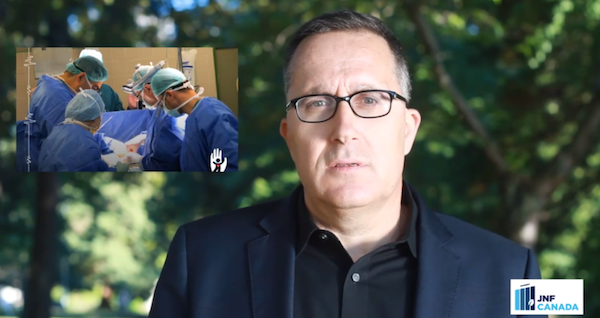
In closing the Heart Stirring Negev Event on Zoom, Ilan Pilo, executive director of JNF Pacific Region, talked about the important work done by Save a Child’s Heart, the organization at the centre of this year’s fundraising campaign. (screenshot)

Jewish National Fund of Canada, Pacific Region, held its first virtual Negev campaign event on Aug. 30. The original Zoom was recorded and shown again on Sept. 13 and 16. The object of the fundraising campaign is Save a Child’s Heart (SACH), an Israeli-based global organization with the mission of improving “the quality of pediatric cardiac care for children in developing countries.”

“This year, we’re collaborating with Save a Child’s Heart to build a treatment room in the pediatric surgical wing,” explained Lance Davis, chief executive officer of JNF Canada. “Thanks to your support, JNF can fund the bricks and mortar to house the wonderful doctors and staff who perform life-saving surgeries. JNF will literally fund the foundation of the [new children’s] hospital to provide the necessary facilities to advance this beautiful tikkun olam project. Together with you, our generous donors, we truly are building Israel.”

This tagline – “Building Israel Together” – forms part of the new logo for JNF Canada. The change comes in part because, while JNF Canada continues in its environmental mission, it has become more involved in social infrastructure projects, such as youth centres, playgrounds and healthcare facilities. The current Negev campaign is the latest example of this shift: the treatment room is one of possibly two that JNF Canada will fund (depending how much the campaign raises), which are being constructed in the International Pediatric Cardiac Centre at Wolfson Medical Centre in Holon, Israel.

After Ethan Doctor, a King David High School student, sang O Canada, and Beth Hamidrash’s Rabbi Shlomo Gabay sang Hatikvah, Bernice Carmeli, JNF Pacific Region president, welcomed everyone to the virtual Negev event, which was emceed by JNF Pacific Region past president David Goldman.

Dr. Saul and Lindsay Isserow were honourary chairs of the evening. “Our family became aware of Save a Child’s Heart when my oldest daughter, Jenna, volunteered there one summer,” said Lindsay Isserow. The chance to support an Israeli organization that highlights the contributions Israel makes to the world and to the region is another reason the family was part of this event, said her husband, who specializes in preventive cardiology, among other areas. “The cardiology [aspect] is important to me, obviously, because this is something that’s treatable,” he said.

A video showed some of the work SACH has done – it has saved the lives of more than 5,400 children from 62 countries.

Co-campaign chairs Lana and Doug Pulver first visited Wolfson Medical Centre years ago. “I was moved by the way that this organization takes care of children from all over the world regardless of their background, regardless of where they come from, and ensures that their lives are saved,” said Lana Pulver, who was so taken with SACH that she joined its national board a few years ago.

“Each child that is saved is a whole world – and those worlds learn of the compassion of the Jewish people and the nation of Israel,” said Dr. Lior Sasson, lead surgeon at SACH, in his remarks and thanks.

The remainder of the evening was spent with David Shore, one of the producers of The Good Doctor and of House, interviewing Israeli TV show Fauda’s co-author, Avi Issacharoff, and actor Itzik Cohen, who plays the character of Captain Ayub (Gabi). They talked about many topics, including Fauda’s international popularity; how Cohen, a comedian who does musicals, got his (very serious) part as an interrogator; some of Issacharoff’s and Cohen’s favourite scenes; and, of course, SACH.

Ilan Pilo, executive director of JNF Pacific Region, wound up the program by thanking all those who made the event possible: the donors, the boards, staff and others.

After the Sept. 16 streaming, Pilo spoke with the Independent. About 250 people viewed the event over its three nights, he said, noting that it was just the first of two main parts to the local Negev campaign. The next is called Join Us in the JNF Virtual Sukkah, on Oct. 8, 7pm. “It is a Jewish cardiologist panel,” said Pilo. Isserow will spearhead that conversation, and the cardiologists on the panel with him are Drs. Arthur Dodek, Zach Laksman and Joshua Wenner. For more information and registration, visit jnf.ca/vancouver/campaigns/negev-campaign.

The annual Negev Dinner would have normally taken place in the spring or summer. Looking back to March, when COVID hit in full force, Pilo said, “We had plans, and then we were thinking about doing something in April or May, but we realized that people were not going to leave their homes and we had to reconsider our plans…. We had to do everything very quickly. In a month we had to put together an event. And it’s different. On the one hand, it’s in a way easier because you don’t have to serve dinner. On the other hand, you have to be very creative and prepare everything in advance for the online campaign.

“For instance, we have made videos of local young Vancouverites who had volunteered in the past for SACH,” he said. To do this, the former volunteers had to be tracked down and convinced to record themselves. “This way,” said Pilo, “they became part of the online campaign…. You need to get people’s attention and interest and this was a great way [to do that].”

He hoped that the Heart Stirring Negev events would inspire people to contribute to the SACH’s project, “a cause that brings so much pride to the Jewish people everywhere.” Donations are still being accepted at vannegevdinner.ca, 604-257-5155 and [email protected].

Format ImagePosted on September 25, 2020September 23, 2020Author Cynthia RamsayCategories LocalTags Fauda, healthcare, Ilan Pilo, Isserow, Jewish National Fund Canada, JNF Canada, JNF Pacific Region, Lance Davis, Negev campaign, philanthropy, Pulver, SACH, Save a Child's Heart
Louis Brier and the pandemic

Louis Brier and the pandemic

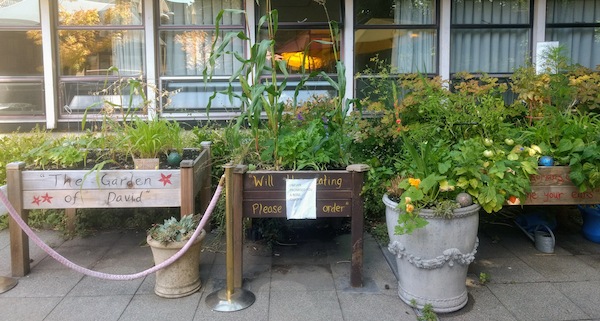
The garden in the courtyard of the Louis Brier. (photo by David J. Litvak)

It hasn’t been easy for any of the staff and companions working at Dr. Irving and Phyliss Snider Campus for Jewish Seniors – which comprises the Louis Brier Home and Hospital and the Weinberg Residence – during the pandemic. Nor has it been easy for the residents and their families. However, seeing a 100-year-old Holocaust survivor happily walking down the hall or a beaming bubbe (who was born in Lithuania) wheeling herself from one end of the facility to the other, or another resident greeting everyone with a hearty “Aye Yai Yai,” I can’t help but smile. Despite the challenges, we have been lucky here, so far, to have escaped the worst of COVID-19.

My pandemic journey at the Louis Brier began in January, when I was hired on a permanent, part-time basis as a mashgiach (kosher supervisor) during an influenza outbreak that foreshadowed what lay ahead. I was hired to replace one of the Brier’s longtime mashgiachs – the facility employs two on a part-time basis – and I had big shoes to fill. The previous mashgiach not only provided kosher supervision in the kitchens but entertained residents with his piano playing, puppet shows and conducting of services in the Louis Brier synagogue on Saturday mornings and weekdays.

Being employed as a mashgiach at the Louis Brier during the pandemic has had many challenging moments – slicing meat and deboning turkey were particularly painful for me because I am a vegetarian, but, luckily, I am no longer required to perform those tasks. Anyways, prior to the pandemic, Shabbat services would be held on Saturday mornings, with a Kiddush lunch afterwards that featured herring, gefilte fish, pastries, challah and grape juice. It was a real highlight for the residents, particularly the lunch. However, due to the pandemic, the weekly services and special meal were canceled. In addition, the monthly Shabbat services that were led by Cantor Yaacov Orzech and the Kol Simcha Choir were canceled, as were Friday night services. It is only recently that Louis Brier chaplin Chazzan Rob Menes has resumed the Friday night services and, in response to a personal request from one of the residents, informal Saturday morning services have also returned.

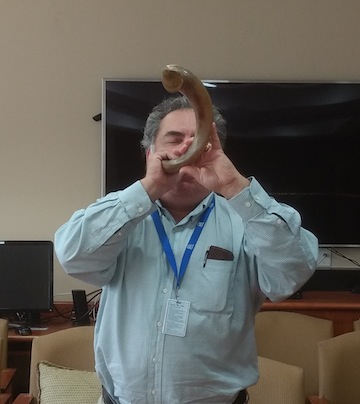
photo - Chazzan Rob Menes sounding the shofar at the Weinberg Residence
Chazzan Rob Menes sounding the shofar at the Weinberg Residence. (photo by David J. Litvak)

On Rosh Hashanah, a full service for the residents was offered, thanks to Richard Wood and Adam Ben Dov, members of the Louis Brier’s religious committee, and Rabbi David Rosenfeld of Chabad, who sounded the shofar for the residents. Menes has been blowing the shofar every morning at the Louis Brier, as well as at the Weinberg Residence, on occasion. While no family members were able to join the services, Rosh Hashanah was celebrated, albeit in a low-key manner.

Other holidays that have occurred since the pandemic have also been observed quietly. Passover at both the Brier and Weinberg was particularly stressful, as kosher-for-Passover products that would normally be available could not be ordered. The facility’s food services manager valiantly persevered to make sure people were provided kosher food during the holiday, however, and the other mashgiach and I – with the help of Rabbi Mendy Feigelstock and Schneur Feigelstock of Kosher Check – worked to keep the home kosher and chametz free. It wasn’t easy. It was a subdued Passover in another way, because the seders at the Weinberg were canceled to ensure that the residents were kept safe from the virus.

That has been the underlying principle since the pandemic began – keeping residents safe. From the outset in March, the Louis Brier’s chief executive officer, David Keselman, has shown foresight. For example, he canceled the annual Purim Megillah reading and Purim parties, which would have taken place just as the coronavirus was taking off.

In addition, from the outset of the outbreak, companions and other employees at the Louis Brier have been prohibited from working at more than one job. These decisions and the dedication of the staff and administration ensured the safety of the residents. Not one resident of the Louis Brier or the Weinberg Residence has contracted the virus.

To show his appreciation of the job that has been done at the Louis Brier, one resident, a fellow North End Winnipegger, nominated the administration for the Order of British Columbia, the Order of Canada and the Nobel Peace Prize. The resident, who started the badminton club at the home and maintains a tulip garden in its courtyard – the only outdoor space residents have been able to go for fresh air during the pandemic – marveled at how lucky he and other residents are. In the Daily Blah, a newsletter he published, he noted: “The Louis Brier does not have the virus, has a beautiful garden and we can play badminton.”

While it is true that the residents have been physically safe and have not contracted the virus, the pandemic has taken a psychological toll on everyone in the building. Until recently, due to provincial prohibitions, residents were not allowed outside visitors, other than seeing loved ones through the glass of the front lobby, and talking to them on their cellphones. Now, residents are allowed to have scheduled visits with loved ones outside the front entrance of the Louis Brier and outside the Weinberg, as well. It is a small victory that will hopefully boost the morale of the residents.

As for me, I just keep thinking of 100-year-old Louis Brier resident who tells me that, as long as he can eat, talk and walk, it’s a good day! The resilience of residents like him reminds me to always be grateful for the basic things in life.

David J. Litvak is a prairie refugee from the North End of Winnipeg who is a freelance writer, former Voice of Peace and Co-op Radio broadcaster and an “accidental publicist.” His articles have been published in the Forward, Globe and Mail and Seattle Post-Intelligencer. His website is cascadiapublicity.com.

Format ImagePosted on September 25, 2020September 23, 2020Author David J. LitvakCategories LocalTags coronavirus, COVID-19, healthcare, Jewish life, Louis Brier, seniors, Weinberg Residence

JSA adapts to the times

The Jewish Seniors Alliance of Greater Vancouver held its annual general meeting on Sept. 10 via Zoom. Because of the pandemic, we were unable to have our usual format – the AGM followed by a gala dinner and the honouring of three volunteers, nominated by the seniors organizations with whom they work. In spite of these obstacles, we succeeded in holding a meeting that dealt with our ongoing activities and resolutions for our future. More than 50 supporters attended online.

JSA’s co-president, Gyda Chud, focused her remarks on the hard work of the peer support program volunteers, who have been putting in extra time, contacting their clients by phone several times a week. She thanked Grace Hann and Charles Leibovitch for their support of the volunteers during these demanding times. And she also thanked the rest of the JSA staff: Liz Azeroual, executive administrator; Rita Propp, administrative assistant; Jenn Propp, graphic designer and webmaster; and Wendy Lo, bookkeeper. She mentioned two new staff members – Margot Beauchamp, quality assurance liaison, and Rochelle Garfinkel, donor relations and philanthropy – and asked for a minute of silence to remember the members and supporters who had passed away over the last year.

JSA co-president Larry Shapiro explained how the formal part of the meeting would be conducted, with the use of the chat line and voting via on-screen polling. The minutes from JSA’s 2019 AGM were approved as well as the agenda for the 2020 meeting.

JSA’s financial statements were presented by treasurer Alan Marchant, then Shapiro gave a short president’s report. In it, he commented on the harmony of working with Chud, and also with the board members of JSA. He emphasized the importance of the peer support program and its work with lonely and isolated seniors. He expressed the hope that JSA’s finances would enable us to continue training and supporting the volunteers, and he urged everyone to stay in touch and to read Senior Line magazine.

Tony DuMoulin, who is in charge of governance issues, presented a special resolution for a change to the constitution. This involved removing the word “Jewish” in the section saying that JSA works with Jewish seniors, since it interacts with all seniors. He emphasized that the name of the organization, Jewish Seniors Alliance, would remain the same, and, after some discussion, the resolution was approved with 82% support.

Next, DuMoulin proposed a special resolution to change a number of the bylaws – that all donors automatically become members; meetings may be held electronically; officers would be elected by the board not by the members; and an extended term for members. These changes were approved by 88%.

Shapiro thanked DuMoulin for all his work on the bylaws, while Ken Levitt, head of the nominations committee, thanked Larry Meyer and Pam Ottem, who are retiring from the board, for their years of work on behalf of JSA. He moved that the number of directors on the board be changed from 20 to 21 and this was passed by 97%. He read out the nominations for the upcoming board and these were passed by acclamation.

Various committee chairs reported next, and these reports are available on the JSA website. The highlights include the following:

Peer support services chair Rita Roling, who is taking over from Ottem, noted that they are presently handling 100 cases and would like to increase the service.

Lyle Pullan, membership, stated that JSA has 517 members and 102 life members. He believes that many of the new members came as a result of reading Senior Line. He said new members should be listed in the magazine as an incentive.

Serge Haber reported on fundraising, including the fact that JSA has a contract with Vancouver Coastal Health for $70,000 annually to stabilize the organization. And I reported for the program committee, which is planning a fall forum for November and an Empowerment Series event in October, to be held via Zoom.

Senior Line editor Dolores Luber thanked Jenn Propp for her graphic design and collaboration, as well as the members of the editorial committee. The July issue of the magazine was different, as there had been no public events and nothing to review, but it was full and informative.

DuMoulin spoke on behalf of the advocacy committee, which has established collaboration with COSCO and anti-poverty groups. They have approached the provincial government about making the enhanced flu shot free for seniors. They want the government to make improvements in long-term care homes, increase pensions and the number of free Lifeline pendants available for low-income seniors.

After a short video showing the work of the peer support program, Haber thanked an anonymous donor, who has been giving $25,000 annually for the past five years, for helping JSA in its mission of outreach, advocacy and peer support for seniors.

Shapiro adjourned the meeting.

Shanie Levin is an executive board member of Jewish Seniors Alliance and on the editorial board of Senior Line magazine.

Posted on September 25, 2020September 23, 2020Author Shanie LevinCategories LocalTags advocacy, AGM, coronavirus, COVID-19, Jewish Seniors Alliance, JSA, philanthropy, seniors
Riders raise funds for STEM

Riders raise funds for STEM

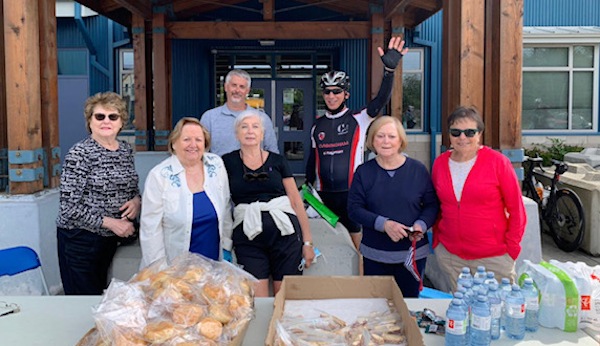
In back, left to right, are Marshal Stern and Mel Moss. In the front are, left to right, some members of the ORT committee: Marie Doduck, Mary Tobin, Bess Hirsch, Lane Stein and Beverly Pinsky. (photo from ORT Vancouver)

photo - Left to right, event co-chairs Mel Moss, representing ORT, and Jeff Topp, representing Richmond Jewish Day School
Left to right, event co-chairs Mel Moss, representing ORT, and Jeff Topp, representing Richmond Jewish Day School. (photo from ORT Vancouver)

ORT Vancouver and Richmond Jewish Day School co-sponsored the Aug. 23 Ride for STEM (science, technology, engineering, math). They are the first Vancouver Jewish organizations to hold such an event and the donated funds are designated to students so that they have the opportunities that arise from the knowledge and skills that STEM education can provide.

ORT’s goal is to bridge the gap between ability and opportunity by providing state-of-the-art education both locally and around the world. World ORT reaches 300,000 children who benefit from STEM education in 37 countries, including here in Canada.

photo - Riders prepare to head out
Riders prepare to head out. (photo from ORT Vancouver)


Format ImagePosted on September 25, 2020September 23, 2020Author ORT VancouverCategories LocalTags education, kids, ORT, philanthropy, Richmond Jewish Day School, RJDS, STEM
Community milestones … Green Thumb & Klein

Community milestones … Green Thumb & Klein

Patrick McDonald will hand the artistic reins of Green Thumb Theatre to Rachel Aberle in January. (photo from Green Thumb Theatre)

After a distinguished 32-year tenure, Patrick McDonald recently announced that he will be stepping aside as artistic director of Green Thumb Theatre at the end of 2020. After several seasons working closely with McDonald, Green Thumb’s associate artistic director and award-winning theatre artist, Rachel Aberle, will assume the role, effective Jan. 1, 2021.

McDonald has led Green Thumb Theatre since 1988. The theatre organization, which was founded in 1975, tours to schools and other venues across the country and internationally. McDonald’s dedication to placing youth engagement and artistic integrity on an even plane has underpinned the organization’s mission of providing socially engaged professional live performance to young people, regardless of geographic or economic status.

“I am proud of how, as a company, we have stayed to course over the last three decades continuing to create new, engaging and challenging work about the issues young audiences are dealing with,” said McDonald. “ I am especially proud of the number of scripts we have brought forward that are now a part of the growing canon of theatre for young audience scripts produced worldwide.”

As performing arts organizations across the globe face uncertainty and calls for innovative programming, McDonald is confident he is leaving the theatre in good hands, stating: “Rachel Aberle, in collaboration with general manager Breanne Harmon and our current staff, will, without doubt, continue this legacy and meet the current challenges head-on. They are ready, and they will do well.”

Aberle, who made her professional performance debut with the company, has penned two critically acclaimed plays for the organization. Her play Still/Falling, which explores themes of adolescent mental health, premièred in 2015 and has been performed more than 180 times across North America and received a Jessie Richardson Theatre Award for significant artistic achievement. The Code, which explores themes of consent and cyberbullying, premièred in 2018 and was recognized with a Jessie Award for outstanding production, the Sydney J. Risk Prize for outstanding original script by an emerging writer, and was included on Tapeworthy blog’s Best of Stage 2018 – selected out of almost 200 shows worldwide. Aberle has held the position of associate artistic director with Green Thumb since 2017.

“I am humbled and honoured to be asked to serve as Green Thumb’s next artistic director,” remarked Aberle, who is a member of the Jewish community. “I have grown up at Green Thumb, under the mentorship and guidance of Patrick McDonald. During these difficult times, I take this role on with a deep appreciation of the complex challenges the company faces. I believe that now, more than ever, young people deserve opportunities to explore the struggles they face on a daily basis. This is the work that Green Thumb has always done, and work that I am excited to continue to do.”

During his tenure, McDonald has commissioned more than 50 new plays from emerging and established playwrights, and has directed more than 75 productions. He has been recognized for his work, including the 2009 Jessie for career achievement and, in 2013, the Vancouver Mayor’s Arts Award. In addition to the school touring program, McDonald established mainstage production partnerships with more than 20 arts organizations nationwide and internationally.

“We are humbled to have worked with Patrick and marvel at his creativity and tenacity in moving youth theatre forward,” said Cheryle Beaumont, chair of the board. “With a long and committed history with Green Thumb and a wealth of experience to bring to her new role, we are most pleased to welcome Rachel Aberle to the position of artistic director this coming January.”

Harmon, said, “Patrick’s long history at Green Thumb has seen him mentor hundreds of emerging artists, administrators and playwrights, offering endless opportunities and truly elevating theatre for young people across the country. He will be leaving Green Thumb with a strong legacy.”

Looking to the future, Harmon, who is also a member of the Jewish community, added, “Rachel is passionate, knowledgeable and a true champion of ensuring young voices are represented truthfully. I look forward to our new partnership.”

***

photo - Alison Klein
Alison Klein

Alison Klein has been accepted to the master of arts, interdisciplinary studies, in the faculty of humanities and social sciences at the University of Athabasca. The focus of her learning is disability and how services are offered to persons with disability in Canada. She plans to use her studies to inform her work on The Self Advocate, her podcast featuring people with cognitive disabilities who advocate for themselves.

Format ImagePosted on September 25, 2020September 23, 2020Author Community members/organizationsCategories LocalTags Alison Klein, disabilities, education, Green Thumb, inclusion, Patrick McDonald, podcasts, Rachel Aberle, theatre, youth
New talk show

New talk show

Poet Ieden Wall is the host of the new late night talk show Canadian Jewish TV. (photo from OMNI 1)

Canada’s newest late night talk show, Canadian Jewish TV (CJTV), kicks off Oct. 1 on OMNI 1. Hosted by poet Ieden Wall, the show will feature interviews and performances from some of Canada’s most notable Jewish figures.

Canadian producer Robert Lantos said late night fans across Ontario, in British Columbia and in the Atlantic provinces can expect a unique viewing experience. “Late Night shows are usually hosted by actors and comedians but very rarely do we see a poet get the job,” he said.

Wall is also a journalist, host and media producer, based in Toronto. He burst onto the scene in the 1990s with his reality/comedy series called The Dream Chaser. Since then, he has kept busy producing documentaries, medical marketing videos and commercials for his own production company. His first collection of spoken-word films aired in Australia and the United Kingdom.

In keeping with Wall’s background, CJTV will also feature a spoken-word short-film series based on new poems from Wall’s upcoming book, The Wisdom of the Wall 2. His first book of poetry, Wisdom of the Wall, has sold more than 30,000 copies.

With the loss of established national Jewish media like the Canadian Jewish News, CJTV is aiming to fill the void with a “traditional”-style Jewish show that avoids getting hung up on extreme sides of the political spectrum.

“When you are doing a show like this, you can’t please everybody, so my objective with CJTV is to do a show that my bubbe would be proud of,” said Wall. “My Bubby Bella escaped Eastern Europe before the Holocaust, but not without her share of violent antisemitism. She was not Orthodox in the pure sense, but she lit the Shabbos candles and taught us all to be proud of our Jewish heritage. This show is for her.”

A weekly half-hour show, CJTV will celebrate the contributions that Jews have made to art, history and culture in Canada’s largest city and in all cities across the country. The guest lineup for Season 1 is a “who’s who” of the Canadian media and entertainment industry, including Lantos, Paul Godfrey, Mark Breslin, Dan Shulman, Libby Znaimer and Heather Reisman, as well as an appearance by former prime minister Stephen Harper.

CJTV makes its season debut on Oct. 1 across Ontario. For more about the show, visit cjtv.ca. For more information about viewing times in British Columbia, visit omnitv.ca/bc/en next month.

Format ImagePosted on September 25, 2020September 23, 2020Author OMNI 1Categories TV & FilmTags Canadian Jewish TV, CJTV, Ieden Wall, OMNI, poetry, spoken word, talk show
Seeking to understand views

Seeking to understand views

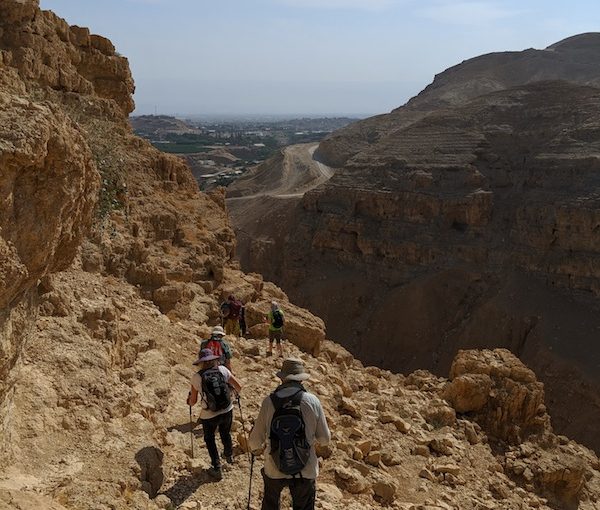
Descending into Jericho through “the Grand Canyon of the Middle East.” (photo by Kevin Keystone)

In this three-part series, the author recounts some of his experiences on Masar Ibrahim Al-Khalil, the Path of Abraham the Friend, in the West Bank, which he visited in 2019. The articles have been adapted from a few of the letters he wrote home to family. The events and people described are real but, for reasons of privacy, the names are fictitious. To read Part 1, click here; for Part 3, click here.

Tuesday was, by far, the hardest day of the trail. We climbed and descended two mountains: 1,500 feet up, 1,400 feet down; 1,000 feet up, 1,200 feet down. It’s 10 feet to a storey, so divide by 10 and think of them as flights of stairs, except that they’re rocky paths strewn with slippery rubble and spiky brambles.

Shrubs aside, Monday and Tuesday were thorny for other reasons. Our guide, Ismail, seemed very friendly. Jolly, with a wide smile and open face, he spoke English well and with a quirky British accent. He was nearly 40, married, had one young child and another on the way. He’s been a hiker and guide for a long time: trained at university, he is an expert in local fauna, flora and history. When a member of our group fell and cut his arm, Ismail was right there with bandages and fracture assessments. There was no question: he was a professional.

Ismail, though, had a satirical sense of humour, which, given the political landscape, was risky. He explained the settlers’ justification for occupying land in the West Bank. “They say that God gave it to them,” he said. The relevant verse from the Torah bubbled up in my memory. “Go forth from the land that I will show you, and I will make of you a great nation,” goes Genesis 17. I knew it because I had chanted it for my bar mitzvah.

“If God gave it to them, what did God give to us? Nothing?” Ismail said. He was smiling, but wasn’t joking. “If they get this, we’ll take Spain. We don’t need to do archeological digs – our mosques are still there to prove it.” I chuckled along with the group, appreciating the irony. But I stood back, polishing my sunglasses.

“They say they are special,” he continued, “that they are ‘the chosen ones,’ but what does that mean? That they are made of gold and jewels, while the rest of us are mud?”

“And I will take you to be my people,” God says to Abram, also Genesis 17. “And I will make my covenant with you and your descendants and through all the generations.” This idea of “chosenness” has been interpreted, reinterpreted and, at times, even rejected in our history: Reconstructionist Jews, for example, changed the relevant lines of the Aleinu prayer. Thinking of ourselves that way certainly hasn’t done us any favours. But, still, Ismail’s comments stung a little.

Writing this, I suppose his humour was a bit like my dad’s: irreverent and occasionally tasteless. I had never been offended by my dad’s jokes; his topics were largely inconsequential to me. Here, with so much at stake, it was hard to not feel Ismail’s satire more deeply. I wanted to tell him I was offended, but part of me resisted.

Sue, on the other hand, had no problem speaking up. That evening, we gathered around to discuss plans for the next day. “Tomorrow,” Ismail said, laying out a map, “will be the hardest day on the trail. There are three options: we can either hike the whole day; stop halfway and take a car; or stop near the end and take a car.” We all agreed we’d hike the whole day. Sue sat back against the bench.

“Are you OK?” he asked her. “You looked scared.”

“I’m not,” Sue replied. “I’m fine.”

“Are you sure?” he insisted. Sue was in her 70s: it seemed like he was singling her out because she was older, and possibly because she was female. “I am sorry if I scared you.”

“I’ve walked a thousand miles before,” she cut in. “I’m not scared.”

Eve laughed and said to Ismail, “Sue’s fine. It’s the two of us,” referring to her husband Oliver, herself, and their combined lack of hiking experience, “that you should be worried about.”

After the route was settled, Sue pulled Ismail aside. She pointed out to him the ageism and sexism implied in his doubting of her abilities. She was brisk; he was deeply apologetic.

“It’s fine,” she said, when he didn’t stop apologizing. “You apologized. It’s over. Howard and I fight, we apologize, it’s done.” After another round of reassurances and with parting words to the group, Ismail left for the night. I congratulated Sue on standing up for herself.

“Well, I’m an old lady,” she laughed. “I don’t have an issue speaking my mind.”

“Yeah,” I said, smiling. “Howard said you don’t take shit from anybody.” She laughed again. “But, still,” I said, “good for you for saying something.”

“Thank you, Kevin,” she said, looking at me. Even with her fortitude, I wondered if it had cost her to say something. Maybe, in some ways, it always does. “I appreciate it,” she said.

photo - A rest break, at 3 a.m., hiking to catch sunrise over the Dead Sea
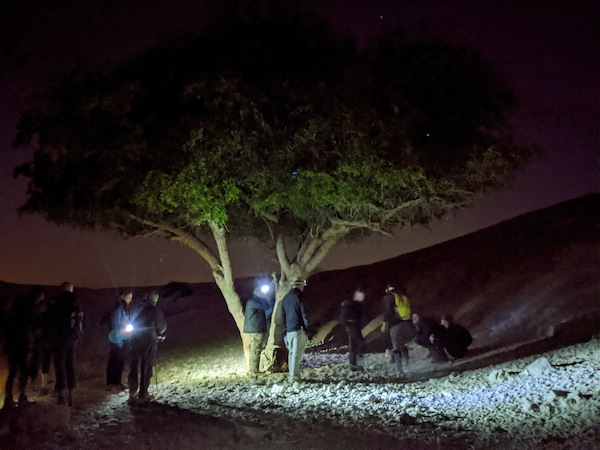
A rest break, at 3 a.m., hiking to catch sunrise over the Dead Sea. (photo by Kevin Keystone)

* * *

The next day, I found myself quietly pleased at Ismail’s dressing down from Sue. Somehow it felt vindicating; even if I couldn’t find the words to speak my mind, at least someone else did.

“Before we start,” he said, “I need to show you something.”

He turned his smartphone to us and pressed play. The footage was of a road tunnel with an exit at the far end and a truck askew, blocking the way. There was shouting and then a hand flicking angrily towards a young man, yelling at him to walk. He did, with his back to the camera, one hand raised in surrender, the other halfway, awkwardly carrying a backpack. He couldn’t have been older than me. He kept walking, slowly, towards the truck and the tunnel exit. Just before he reached the truck, a shot fired. He cried out and sank to the ground.

Israeli Channel 13 News leaked the video – of an Israel Border Police officer shooting a Palestinian in the back with a rubber bullet, along with text messages sent by the shooter’s fellow officer, who had bragged about the shooting to his girlfriend. “I’m a pro, don’t you think?” he wrote.

This act of violence earned the shooter a removal from the police force. She was sent back to the Israeli army to finish her compulsory service. A year after the footage was discovered, the police internal investigations unit still hadn’t pressed charges. The apparent impunity is shocking. Compared to this, my grievances seemed trivial.

“Do you ever take Israelis on this hike,” someone asked Ismail.

“No, we don’t. We can’t, it’s too risky,” he said. “If something were to happen, if one of them gets hurt, we would all be in big trouble. Their government would say it is our fault, and we would have many, many problems.

“There are Jewish that come on the Masar,” he said. I wasn’t sure if he avoided looking at me. “We know; we don’t ask. But we will not take Israeli; we can’t.”

As the day wore on, I worked up my nerve to talk to him. I rehearsed my opener and hiked up beside him.

“So, what are your plans for after the hike,” I asked.

We didn’t talk about anything important, but it felt important to talk. I had time after the hike and didn’t have plans. I asked his advice on where I should go. I also asked him what I should say at the border if stopped.

“Just talk about the Abraham Path, how we’re all children of Abraham, peace, these kinds of things,” he said. “They like that.”

“Do you believe it?” I asked him.

“No,” he said. I tried to hide my disappointment. “You know,” he continued. “It isn’t the Jewish, it’s the Zionists. They are crazy, they think they are super-human. Every time the people are coming together, they want to separate, to make them apart. As long as this is the case,” he said, “I don’t think there will be peace.”

* * *

At lunch, I lay down to rest, settling in the shade of an olive tree. In the breeze, the leaves revealed twin shades of green, one on each side: rich, verdant forest green and pale, suede sage. There were no olives on this tree: likely, they had been recently picked. The absence they left made way for a cottony, afternoon light to filter through. As I nodded in and out of sleep, I caught glimpses of the sky. It was blue and clear.

Zionists come in many varieties, but I knew the ones Ismail was referring to. The imprecision of his language didn’t change the point. Yitzhak Rabin wasn’t assassinated by a Palestinian; he was assassinated by a Jew. A fanatical religious Zionist, a fervent supporter of the settlements and a deep-seated opponent of the peace process. Ismail didn’t have a problem with Jews, he had a problem with fanatics. That, I could get behind. I felt the same way.

Kevin Keystone is a Toronto-based freelance writer, editor and researcher. When not hiking long-distance trails, he can be found reading, spending time with friends and family, or with his beloved partner, Aaron. His writing has been published in the Literary Review of Canada, the Jewish Independent and Good Old Boat.

Format ImagePosted on September 25, 2020October 8, 2020Author Kevin KeystoneCategories IsraelTags education, hike, Israel, Israeli-Palestinian conflict, Masar Ibrahim Al-Khalil, Palestine, Path of Abraham the Friend, peace, politics, separation wall, Siraj Centre
“Right of return” a poison pill?

“Right of return” a poison pill?

Among Middle East observers, there has long been a view that the demand for a Palestinian “right of return” is a bargaining chip that would be negotiated away in a final status agreement, perhaps in exchange for a symbolic but small number of Palestinian refugees admitted to Israel and a substantial amount of money as compensation.

In a new book, two prominent Israeli progressives argue that this assumption is wrong, that the right of return is an unwavering demand from the Palestinian side and, as a result, represents a poison pill that guarantees no resolution to the conflict or to Palestinian statelessness.

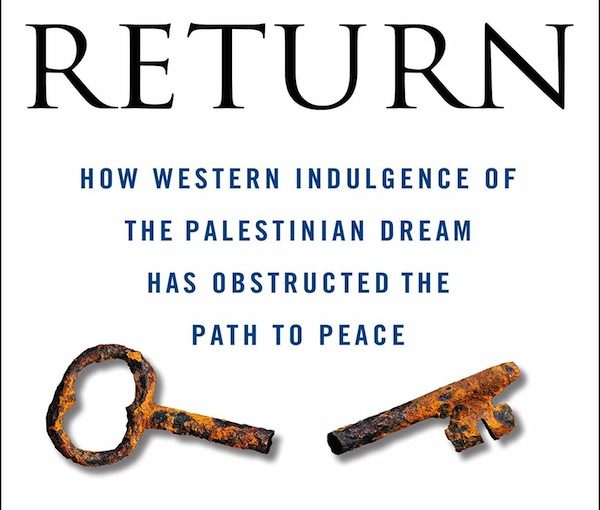
“The Palestinian conception of themselves as ‘refugees from Palestine,’ and their demand to exercise a so-called right of return, reflect the Palestinians’ most profound beliefs about their relationship with the land and their willingness or lack thereof to share any part of it with Jews,” write Adi Schwartz and Einat Wilf in the book The War of Return: How Western Indulgence of the Palestinian Dream has Obstructed the Path to Peace (All Points Books, 2020).

Wilf, a former Labour member of the Knesset, and Schwartz, an academic and journalist for Ha’aretz, have undeniable left-wing credentials. But, while the Israeli left has long been associated with the idea of compromise and idealism, the authors contend that there is little room for any sort of resolution as long as Palestinians cling to the idea that five million or more of them have the right to citizenship in Israel. Part of the failure of successive peace plans, they write, stems from the inability of negotiators to recognize the Palestinians’ tenacity in holding fast on this core issue – and argue that Israelis need to recognize that truth.

“[D]ecades of shuttling, strong-arming the sides, and endless hours of negotiations came to naught because none of the diplomats or negotiators truly understood and dealt with the root causes of the conflict, choosing instead to turn away and focus on that which appeared easier,” they write.

The status of Palestinian refugees is unique in the world. They have their own international agency devoted to the issue: UNRWA, the United Nations Relief and Works Agency for Palestine Refugees in the Near East, while all other refugees fall under the United Nations High Commissioner for Refugees. In this sole instance, the definition of “refugee” has been amended to become an inheritable status, meaning that the several hundred thousand Palestinian Arabs dislocated by wars in 1948-1949 and 1967 have ballooned to more than five million – even though many or most of the original refugees have died and the vast majority of those seeking “return” have in fact never lived or set foot in the state they claim for their own.

While exponentially more people were made refugees in the same era – in Europe, in the Indian subcontinent and at least 800,000 Jews forced from Arab- and Muslim-majority lands across the Middle East and North Africa – Schwartz and Wilf argue that Palestinians view themselves as having experienced a unique injustice.

They quote Aref al-Aref, a Palestinian writer who was mayor of East Jerusalem under Jordanian rule in the 1950s: “We have been afflicted by a catastrophe, we the Arabs in general and the Palestinians in particular, during this period of time in a way in which we have not been subjected to catastrophe in centuries and in other periods of time.…” Another Palestinian scholar, in 1950, wrote: “It is the most terrible disaster befalling the Arabs and the Muslims in modern history.… It is a deep-rooted disaster, far-reaching and full of dangers. It is an evil growing by the day and by the hour.” Another writer compared it with the Muslims losing Spain in the Middle Ages.

This almost apocalyptic language precludes compromise on what Palestinians have been promised through the generations by their leaders, according to the book. And, while plenty of voices, including academics, activists and politicians, have argued that the right of return would not be such a terrible thing for Israel’s well-being, the authors provide plenty of evidence that the proposed migration of millions of Palestinian Arabs into Israel is perhaps less about justice for refugees than it is about doing to the country through demographics what the Arab world has been unable to do militarily.

“It is well known and understood that the Arabs, in demanding the return of the refugees to Palestine, mean their return as masters of the homeland and not as its slaves. With greater clarity, they mean the liquidation of the state of Israel,” said a senior Egyptian politician in 1949, at the beginning of the refugees’ long history.

As an article in a Lebanese newspaper put it, the Palestinians’ return would “create a large Arab majority that would serve as the most effective means of reviving the Arab character to Palestine while forming a powerful fifth column for the day of revenge and reckoning.” Arab League Secretary-General Azzam Pasha viewed the refugees’ return as making it possible for “an irregular army that would be in a position to cause a great deal of inconvenience to the Jews by acts of sabotage.”

To ensure that the plan was not foiled, no matter how long it took to reach fruition, a now-seven-decade-old scheme was hatched to prevent Palestinian refugees in Syria, Lebanon, Jordan and elsewhere from putting down roots, argue the authors.

“The rehabilitation of the refugees in Arab countries would have meant the end of the war, but that was not what the Arabs wanted,” they write. While the Palestinians were made pawns of the Arab League’s campaign of “denormalization” against Israel, the book portrays most refugees as at least semi-willing players. Attempts to find resolutions to their statelessness have been met with outrage. When Canada’s foreign minister suggested some Palestinian refugees might find a permanent home in Canada, he was burned in effigy in Nablus.

UNRWA, which was presumably begun with the best of intentions, has been consumed by politics and corruption and usurped into what the authors contend is effectively a globally funded branch of the Palestinian liberation movement. Agency-funded textbooks used in Palestinian schools have been shown for decades to inculcate Jew-hatred, venerate terrorists and incite violence. Nevertheless, Palestinians receive through UNRWA among the most per capita humanitarian aid in the world and live a life of which most refugees – and the poor in most Arab countries – can only dream.

From the start, UNRWA’s first annual report, in 1951, noted that many or most refugees were enjoying a better way of life than they had before 1948, receiving universal free education and quality healthcare. The UNRWA schools, now with more than three generations of alumni, have created a uniquely well-educated population of refugees, but, along with reading, writing and arithmetic, the curriculum has created “an embittered, angry and frustrated generation, raised on myths about ethnic cleansing by the Jews, the perfidy of Arab leaders, a sense of victimhood and a refusal to take responsibility for the results of the Palestinians actions in the years and months before Israel’s birth and thereafter,” Wilf and Schwartz write.

The book does not paint an optimistic picture. Western diplomats, peacemakers and politicians refuse to recognize the Palestinian demand of return seriously and continue to believe it can be negotiated away.

“If return were truly just a bargaining chip,” write the authors, “it could have and would have been bargained long ago for a Palestinian state. Rather, it is a Palestinian state that is repeatedly bargained away in order to keep fighting for return.”

There are plenty of issues to discuss – if there were negotiations occurring – but, they argue, the entire Palestinian case rests on the thing Israel must reject.

“The one article that Israel could absolutely not agree to, as it entailed its very suicide, was the one without which the conflict would never end,” write Schwartz and Wilf.


Format ImagePosted on September 25, 2020September 23, 2020Author Pat JohnsonCategories BooksTags Adi Schwartz, conflcit, diplomacy, Einat Wilf, Israel, Palestine, peace, politics, right of return
Lubeck shul sees restoration

Lubeck shul sees restoration

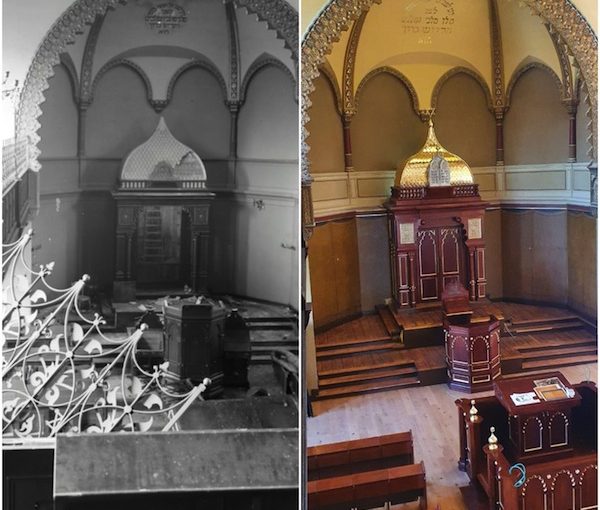
Israel’s Lavi furniture factory recreated Carlebach Synagogue’s original ark from three prewar black-and-white photos. (photo from IMP)

Viewing the restored Carlebach Synagogue in Lubeck, Germany, brings to mind the biblical prophecies of consolation, where the Jewish people are reassured that the day will come when not only will they be restored to their land, but their houses of worship will likewise be restored. Sadly, neither the shul’s rabbi nor any other of the original community members are alive today to revel in the synagogue’s reinstated glory; however, in an interesting twist, several of the rabbi’s grandchildren are the children of founding members of Kibbutz Lavi, whose furniture factory designed and built the synagogue’s ark and other holy articles.

Rabbi David Alexander Winter, rabbi of the Carlebach Synagogue, fled Lubeck in 1938, together with most of his community. Several months later, on Kristallnacht, when many of Germany’s synagogues were torched and burned to the ground, the Lubeck shul was damaged and looted, but not destroyed – the building had been sold to the municipality and the contract, signed by the rabbi, was inside the synagogue, in plain view.

For Winter’s grandchildren, seeing the restoration of their grandfather’s synagogue is especially moving. “It’s a feeling of coming full circle,” said Yehudit Menachem, who visited Lubeck last year, seeking to learn more about her family history. Dr. Ariel Romem, a pediatrician and one of the grandsons, remarked that the restoration is symbolic of the re-blossoming of the Winter family and of the Jewish people as a whole. “They may have ruined the shul, but they never succeeded in breaking us,” he said.

In the seven decades since the Holocaust, the once-stately synagogue, established in 1880, has suffered looting, a firebombing, squatters and general neglect. German architect Thomas Schröder-Berkentien began working on its restoration in 2010, but the project was stuck due to a lack of funding. In 2016, the federal government dedicated a sizable sum, with other funding arriving from the Schleswig-Holstein state, the Lubeck-based Possehl Foundation and UNESCO, which had declared the Old City of Lubeck a World Heritage Site. The total cost of the project amounted to almost $10 million.

Schröder-Berkentien was intent on finding the best craftspeople for the synagogue furniture, and also felt that it was only right that the furniture should come from Israel. He found the Lavi furniture factory online and, after several inquiries and a visit to the carpentry workshop along with his team, was assured that they had the necessary experience and expertise to perform the research and produce items of quality and beauty. Indeed, in its 60 years of operation, Lavi has designed and produced interiors for synagogues in more than 6,000 Jewish communities around the world, including for new and restored synagogues in Germany.

Motti Namdar, the factory’s chief planner, described the challenge, and ultimate satisfaction, of creating replicas of the original items. “We only had three prewar black-and-white photos to go by,” he explained. “The photos showed only one angle and even that was not very clear. It was difficult to make out a lot of the detailing or which metals were used, especially for the ark, which you can see from the photos is very unusual.”

Ultimately, much of Namdar’s work had to be done by deduction and a knowledge of the history of the period. “I traveled to Lubeck to see the synagogue and examine the parts that had not been damaged. Part of the ladies’ gallery was intact. The architect had hired restoration experts who carefully removed the layers of paint from the walls, exposing the original murals. The synagogue as a whole had been built in the Moorish style, and I proceeded in that direction.”

In one of the photos, it’s possible to make out the pointed roof-like structure at the top of the ark, which Namdar designed to include 1,500 “scales,” all coated in pure gold. Under Namdar’s direction, the Lavi factory completed all the articles by the deadline. “The hardest part wasn’t the tight schedule, but, rather, building everything such that it could be taken apart, packed and shipped, and then reassembled so that everything fit perfectly.”

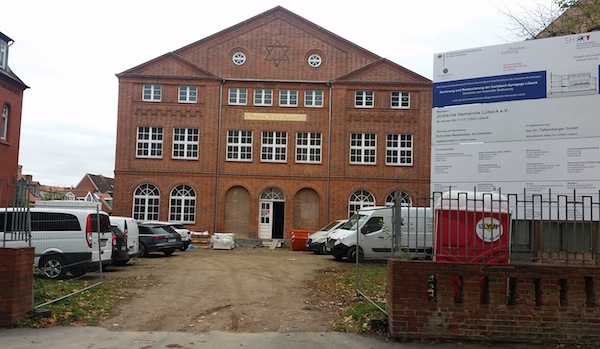
photo - Since its restoration, Carlebach Synagogue in Lubeck, Germany, has been serving as a spiritual hub for Lubeck’s 700-strong Jewish community
Since its restoration, Carlebach Synagogue in Lubeck, Germany, has been serving as a spiritual hub for Lubeck’s 700-strong Jewish community. (photo from IMP)

But while it was clear to the craftspeople at Lavi that they wanted to produce replicas that were as authentic as possible, the project’s architect, Schröder-Berkentien, was intent that the structure itself, which was restored to be a national monument, should serve as a testament and, in his words, “like a wound,” as a painful reminder of the events of 1938. This was the reasoning behind his decision not to redo the synagogue’s original ornate façade, which, together with the cupola and other elements, had been destroyed on Kristallnacht. “The plain red brick tells the story of what happened,” he said. “A rebuilt façade would ignore that part of history, failing to show the suffering of the era. This is what makes it such a unique monument among other German synagogues.”

When news of the coronavirus pandemic first broke in January, the factory began working overtime so that everything would be ready for the gala re-inauguration, which was to have been attended by high-ranking German officials, including Chancellor Angela Merkel, members of the restoration committee and local community figures, as well as Winter’s grandchildren from Kibbutz Lavi. However, when it was finally time for the assembly and installation of the furniture, the world was already in COVID-19 lockdown. As soon as it was possible, Lavi sent their own experts from England to complete the work. Now, the synagogue stands in all its resplendent glory, but the ceremony has been postponed indefinitely.

The important thing is that the synagogue is open and operating, serving as a spiritual hub for Lubeck’s 700-strong Jewish community. “This synagogue is not only a place of prayer, but a symbol of the revival of Jewish life in Lubeck, throughout Germany and around the world,” said the current spiritual leader of Lubeck, Rabbi Nathan Grinberg.

– Courtesy International Marketing and Promotion (IMP)

Format ImagePosted on September 25, 2020September 23, 2020Author Sharon Gelbach IMPCategories WorldTags Carlebach Synagogue, coronavirus, COVID-19, David Alexander Winter, Germany, history, Holocaust, Israel, Jewish life, Kibbutz Lavi, Lubeck, restoration

Posts pagination

Previous page Page 1 … Page 248 Page 249 Page 250 … Page 664 Next page
Proudly powered by WordPress