Skip to content
  • Home
  • Subscribe / donate
  • Events calendar
  • News
    • Local
    • National
    • Israel
    • World
    • עניין בחדשות
      A roundup of news in Canada and further afield, in Hebrew.
  • Opinion
    • From the JI
    • Op-Ed
  • Arts & Culture
    • Performing Arts
    • Music
    • Books
    • Visual Arts
    • TV & Film
  • Life
    • Celebrating the Holidays
    • Travel
    • The Daily Snooze
      Cartoons by Jacob Samuel
    • Mystery Photo
      Help the JI and JMABC fill in the gaps in our archives.
  • Community Links
    • Organizations, Etc.
    • Other News Sources & Blogs
    • Business Directory
  • FAQ
  • JI Chai Celebration
  • JI@88! video

Recent Posts

  • New rabbi settles into post
  • A light for the nations
  • Killed for being Jewish 
  • The complexities of identity
  • Jews in time of trauma
  • What should governments do?
  • Annie will warm your heart
  • Best of the film fest online
  • Guitar Night at Massey
  • Partners in the telling of stories
  • Four Peretz pillars honoured
  • History as a foundation
  • Music can comfort us
  • New chapter for JFS
  • The value(s) of Jewish camp
  • Chance led to great decision
  • From the JI archives … camp
  • עשרים ואחת שנים להגעתי לונקובר
  • Eby touts government record
  • Keep lighting candles
  • Facing a complex situation
  • Unique interview show a hit
  • See Annie at Gateway
  • Explorations of light
  • Help with the legal aspects
  • Stories create impact
  • Different faiths gather
  • Advocating for girls’ rights
  • An oral song tradition
  • Genealogy tools and tips
  • Jew-hatred is centuries old
  • Aiding medical research
  • Connecting Jews to Judaism
  • Beacon of light in heart of city
  • Drag & Dreidel: A Queer Jewish Hanukkah Celebration
  • An emotional reunion

Archives

Follow @JewishIndie
image - The CJN - Visit Us Banner - 300x600 - 101625

Tzimmes celebrates 35 years

Tzimmes celebrates 35 years

The Tzimmes sextet, in 2019. Left to right are Saul Berson, Phil Belanger, Tim Stacey, Amy Stephen, Yona Bar-Sever and Moshe Denburg. Also part of the ensemble in the new recording, but not pictured here, is Fabiana Katz. (photo from Tzimmes)

Vancouver Jewish musical ensemble Tzimmes celebrates its 35th anniversary this year. To mark the occasion, the group, led by Moshe Denburg, has released a new album, The Road Never Travelled, its first in 23 years.

Denburg, who is also a classical composer, founded Tzimmes in Victoria in 1986. Throughout that time, the ensemble’s modus operandi has been to incorporate as many types of Jewish music as possible – traditional Ashkenazi, Sephardi and Mizrahi, along with more contemporary and secular styles.

The new album is comprised of two discs. Disc 1 offers secular pieces, while Disc 2, Liturgy Lane, presents listeners with original music based on sacred texts.

The repertoire includes “Hahmi-ini” (“Let Me Hear Your Voice”), which was written in 1966, when Denburg was in his teens; the title track, “The Road Never Travelled,” from 2005; and “other original arrangements of more recent vintage,” such as “Oyfn Veg” (“On the Way”). Some of the songs on Disc 1, including the title track, are English pop/folk/world music. And not all the songs on the album are Jewish. There is, for example, a rendition of the Beatles’ “In My Life.”

image - The Road Never Travelled album coverThe recording and mixing history for the collection stretches 28 years. When it became clear that this was more material than could fit on one album, Denburg decided to turn it into two.

“For a number of years,” he told the Independent, “we had some tracks that were on the back burner, so to speak – unfinished recordings that were begun in 2005-06. Tzimmes kept working in general – some concerts, lots of simchas, but completing a new recording was not in the cards, mainly because my own work was focused on founding and husbanding the Vancouver Inter-Cultural Orchestra (VICO).

“A few years ago, I wound down my administrative duties with the VICO, and started considering, in earnest, completing a new Tzimmes recording. The final impetus occurred when I turned 70, in 2019. I brought the group together, worked on a lot of new, and older, material, and took them into the studio to complete the older tracks and to lay down some fresh ones,” he said.

The Road Never Travelled features many past members, and several other musicians who have collaborated over the past 20 years, to become the Tzimmes of today. Denburg (voice, guitar) is joined by Fabiana Katz (voice), Yona Bar-Sever (lead guitar, voice, electric bass), Saul Berson (clarinet, flute, saxophone), Amy Stephen (voice, accordion, whistle, lever harp), Tim Stacey (bass, electric bass) and Phil Belanger (drums) to form the ensemble. A dozen other musicians, including guitarist Itamar Erez, cellist Finn Manniche and vocalist Myrna Rabinowitz – as well as international instrumentalists Joseph “Pepe” Danza, Yuji Nakagawa and Adel Awad – also appear, among others.

Tzimmes’ last album, KlezMyriad, was released in 1998, though the ensemble has performed at concerts and larger-scale projects since then. While changes have taken place over the past many years, it continues to be a tight-knit group of musicians.

When asked about the ensemble’s longevity and how it has maintained its cohesion, Denburg explained, “I believe Tzimmes has steered clear of the more difficult conflicts that are legion where artistic collaborations are concerned. But, as a bandleader, it has taken the wisdom that comes only with much experience to keep one’s passion alive while allowing for the artistic expression of one’s colleagues. This is what a good bandleader ought to do.

“Tzimmes is more a family than an enterprise, at least that’s the way I look at it,” he continued. “So, as in all families, there is the joy of knowing that everyone is basically rooting for each other and, yet, at the same time, conflicts do occur. We have lived long enough together, and have matured as people together, to have buried most of the hatchets and be guided by our natural affections for each other, and our love of our common purpose – the making of music.”

About the ensemble’s history, Denburg said, “Over 35 years, ensemble members come and go, and, actually, no one who was with me in 1986, when Tzimmes was formed in Victoria, is with me today. Tzimmes has changed and evolved over the years. Of today’s members, some have been with the ensemble for 30 years, some for over 20, and others are newer additions. One of the hallmarks of the new recording is that almost all Tzimmes members, of yesterday and today, are part of the recording.

“Tzimmes has always been dedicated to presenting Jewish music in all its facets,” Denburg concluded. “The challenge has always been to deal with the variety of these musical expressions in a non-superficial way, to make an original contribution to Jewish music-making.”

As the pandemic eventually fades, there are plans for a concert to herald the release of the CD and celebrate the ensemble’s 35 years. And Denburg sees many possibilities in providing musical services of various kinds.

“Speaking for myself, in the longer term, it would be nice to see Tzimmes continue with some next-generation musicians,” he said, “to carry on the tradition of original Jewish music-making in Vancouver.”

For information on buying tracks and sheet music, visit tzimmes.net.

Sam Margolis has written for the Globe and Mail, the National Post, UPI and MSNBC.

Format ImagePosted on September 10, 2021September 9, 2021Author Sam MargolisCategories MusicTags Jewish music, milestones, Moshe Denburg, Tzimmes

Election amid chaggim

Much has been made of the challenges facing Canadians as the country engages in its 44th federal general election while still in the grips of a pandemic. For Jewish voters, the succession of holidays in the weeks leading up to the Sept. 20 election makes scheduling events like community forums with candidates extra confounding.

Nevertheless, the Centre for Israel and Jewish Affairs (CIJA), along with partner agencies, will present a number of events across the country. Here in Metro Vancouver, there will be a virtual town hall on Sept. 14, 4 p.m., co-presented, as is tradition, with SUCCESS, the United Chinese Community Enrichment Services Society. Topics addressed will include racism and hate crimes; seniors’ care; post-pandemic economic recovery; immigrants and refugees; safe and healthy communities; and the sustainability of charitable and nonprofit organizations.

Two days earlier, on Sept. 12, a Richmond-focused virtual town hall will take place at 5 p.m., co-presented by CIJA and the Kehila Society of Richmond.

Tucked in between, on Sept. 13, is a national town hall, presented virtually from Toronto, again hosted by CIJA, this time in partnership with The CJN. All events are accessible from the website cija.ca/election.

Locally on Sept. 13, there is an all-candidates meeting on seniors issues for the ridings of Vancouver Granville and Vancouver South, co-hosted by Jewish Seniors Alliance. To register for it, visit jsalliance.org.

CIJA also has released a federal issues guide, outlining what it considers to be priorities on matters of domestic and foreign policy.

Among the recommendations is a request to supplement the Security Infrastructure Program, which provides funds to enhance security at institutions such as synagogues and community centres, with a program modeled after the Community Security Trust in the United Kingdom, which trains volunteers to provide patrols, situational awareness and threat prevention.

The guide urges amending the criminal code to make Holocaust denial an indictable offence and developing a standardized national social studies curriculum on antisemitism and the Holocaust.

The document, which is downloadable from the CIJA website, calls on the next government to address online hate through education and enforcement, including a social literacy campaign to “sensitize Canadians to the potent role social media plays in bullying, harassment, intimidation, dissemination of hate, and threats.” It calls for reestablishing provisions in the Canadian Human Rights Act to combat hate speech and strengthening Canadian tax laws to prohibit charities from promoting or inciting antisemitism or violent extremism.

The foreign affairs section calls on the government to ensure that Canadian humanitarian aid to Palestinians “goes where it is intended” and to oppose one-sided United Nations resolutions singling out Israel. It also calls on the government to demand that the Palestinian Authority stop the “paid to slay” program that rewards terrorism. It also calls for putting pressure on Iran until it “demonstrates meaningful improvements in comes into full compliance with its international obligations.”

Other CIJA recommendations include:

  • Implementing the United Nations Declaration on the Rights of Indigenous Peoples “as an important step toward truth and reconciliation.”
  • Putting pressure on Eastern European countries “that have evaded their responsibility to pass meaningful restitution laws” for Holocaust survivors and their descendants.
  • Strengthening immigration and refugee policies particularly to support those targeted for their identity, such as Christians and Yazidis in Iraq, LGBTQ2+ people in Chechnya and Iran, and Rohingyas in Myanmar.
  • Reintroducing the question about religion in the census “to prevent continued underreporting of Jewish Canadians.”
  • Ending the three-month celibacy requirement for LGBTQ2+ blood donors.

The full document is downloadable at cija.ca/election.

The Canadian Jewish Political Affairs Committee (CJPAC) is also busy during the campaign.

CJPAC engages “Jewish and pro-Israel Canadians in the democratic process” and helps community members build relationships within the Canadian political arena. Their website, cjpac.ca, has links to all major political parties, as well as links to volunteering and getting involved in campaigns. There is a final volunteer training webinar available at noon Pacific time on Sept. 13.

For information on your riding, where to vote and a list of candidates, go to the Elections Canada website at elections.ca.

Posted on September 10, 2021September 9, 2021Author Pat JohnsonCategories Local, NationalTags Canada, Canadian Jewish Political Affairs Committee, Centre for Israel and Jewish Affairs, CIJA, CJPAC, elections, Jewish Seniors Alliance, JSA, politics
Two Jews are on ballot

Two Jews are on ballot

Jewish community members Tamara Kronis (Conservative party) and Avi Lewis (NDP) are running in the upcoming federal election. (photos from candidates)

British Columbia’s comparatively small Jewish community has produced a number of senior political figures, including the province’s first Jewish premier, Dave Barrett, and the current minister of finance, Selina Robinson, and minister of environment and climate change strategy, George Heyman. In this federal election, there appear to be just two candidates in British Columbia who are Jewish.

Tamara Kronis is the Conservative Party of Canada candidate for Nanaimo-Ladysmith. The riding is being closely watched by national observers as it is home to one of only two Green party MPs. Paul Manly, the incumbent, once sought an NDP nomination but was rejected by the party, apparently due to controversy over his positions on Israel and Palestine. While the other Green MP, former leader Elizabeth May, is seen as safe in her riding of Saanich-Gulf Islands, Manly appears to be in (at least) a three-way race with Kronis and New Democrat Lisa Marie Barron. Michelle Corfield is the Liberal candidate.

Kronis is a lawyer and heads a jewelry manufacturing and retail business. Until last month, she was associate chair of the Ontario Human Rights Tribunal and an independent director of Toronto Hydro. Earlier in her career, she served as director of advocacy for EGALE Canada, the national LGBTQ+ organization. She was a trial assistant at the International Criminal Tribunal for the former Yugoslavia.

Across the water and across the spectrum, Avi Lewis is the New Democratic Party candidate in West Vancouver-Sunshine Coast-Sea-to-Sky Country. A scion of Canada’s left-wing dynasty, Lewis is the son of journalist Michele Landsberg and Stephen Lewis, a former Ontario NDP leader and Canadian ambassador to the United Nations. His grandfather, David Lewis, was the leader of Canada’s NDP, from 1971 to 1975.

Avi Lewis is a journalist and activist who recently produced and co-wrote the Emmy-nominated animated short film about the Green New Deal, Message from the Future, with U.S. Representative Alexandria Ocasio-Cortez.

Lewis co-authored “The Leap Manifesto,” which was “a call to action on climate and inequality that was launched by an historic coalition of Indigenous leaders, unions and environmentalists, and signed by more than 50,000 Canadians,” according to Lewis’s website.

Lewis has an uphill climb. The riding, which straddles some of Canada’s wealthiest voters and the disparate communities along Howe Sound, has back-and-forthed between the Liberals and Conservatives in recent years. It is held by two-term Liberal MP Patrick Weiler, who is beating back a challenge from former Conservative MP John Weston. In 2019, the NDP candidate came fourth, well behind the Green party.

Format ImagePosted on September 10, 2021September 9, 2021Author Pat JohnsonCategories Local, NationalTags Avi Lewis, British Columbia, Canada, elections, politics, Tamara Kronis
Environment a Jewish issue

Environment a Jewish issue

Or Shalom members Lorne Malliin and Marianne Rev organized a demonstration at the office of Harjit Sajjan, federal minister of national defence and MP for Vancouver South. (photo from Lorne Mallin)

The heat dome that sent much of British Columbia into an unprecedented spell of sweltering weather, followed by wildfires that have destroyed vast swaths of western North America, including the B.C. town of Lytton, and extreme weather events like Hurricane Ida have put climate and the environment at the top of many people’s priorities. With the federal election now days away, all federal parties have honed their pitches to voters on issues of the environment.

Jewish activists have been vocal on these issues recently, reflecting the growing realization that impacts of climate change are not a remote future potential but an immediate and measurable phenomenon.

Marianne Rev, a member of the tikkun olam committee at Or Shalom synagogue, was one of many Jewish people who participated in a series of demonstrations at the offices of scores of members of Parliament on July 29. With her friend and fellow Or Shalom member Lorne Mallin, Rev organized an event at the office of Harjit Sajjan, federal minister of national defence and MP for Vancouver South. Other local demonstrations took place at the offices of Vancouver Quadra MP Joyce Murray and North Vancouver MP Jonathan Wilkinson, who is also the federal minister of environment and climate change.

“It was part of an action organized by 350.org,” Rev told the Independent. The organization 350.org was founded in 2008 to build a global climate movement and was so named because 350 parts per million is the safe concentration of carbon dioxide in the atmosphere. (Concentrations are now 414.6 parts per million.)

“I’ve been increasingly involved in climate action, political action, climate justice,” said Rev, a retired physician.

While she was told in advance that Sajjan would not be available to meet on July 29, Rev was disappointed that, when her group of about 25 activists arrived at the office, it was closed. Nevertheless, she and a small group of others met with the minister on Aug. 9.

“We had an excellent meeting,” she said. “There were two very specific asks.”

Her group, as well as those participating across the country, asked MPs for a moratorium on all new or expanded production and transporting of fossil fuels, including the Trans Mountain Pipeline expansion. Second, they demanded a “just transition” away from fossil fuels to allow workers in those industries to shift to other sectors.

Rev said the response her group got from Sajjan was voiced by Wilkinson in the media.

“He blurted out the party line, which, shockingly, Wilkinson repeated many times over on the morning of the ninth, when the [Intergovernmental Panel on Climate Change] put out their report saying that we are code red for humanity,” she said. “[The government says] that we need the TMX to fund the transition to renewables. As such, it’s completely false.… It’s totally fallacious political B.S. that has been put out on the population for decades. Renewable energy is free. It’s not free to get there, but wind and sun is free.”

Rev gives credit to Adam v’Adamah, one of British Columbia’s pioneering Jewish environmental groups, and said that the environment and climate are logical concerns for Jews.

“Jews have always been very interested and driven regarding social justice, and the environment and climate are very much climate justice issues,” she said.

Rabbi Dan Moskovitz, senior rabbi at Temple Sholom, concurs.

“I’ve been involved with [environmental issues] informally for my entire life, but formally, as a congregation, three years ago we launched an initiative to make clear that the climate and the environment is a Jewish issue,” he said. “I see it in very religious terms in the sense that we are commanded to be guardians of the earth, stewards of the earth. So, it’s a mitzvah, a religious obligation, to be good stewards of the earth. I challenged my congregation to join me in that effort and I challenged our Jewish community and they’ve responded, to put this on our community agenda, to see this as a pressing concern for the Jewish community and for the Jewish people. The Jewish Federation has an environmental task force now. We have been talking with CIJA [the Centre for Israel and Jewish Affairs] to get it on their list of priorities and to get the politics out of it and to see it for what it is, which is an existential threat to this world that we are commanded to be caretakers and stewards of.”

As Jewish voters ponder their ballot choices, Moskovitz has some thoughts.

“Rhetoric is lovely and nice and, for the most part, all the campaigns, as I hear them, say basically the right things about the environment,” he said. “But who is doing something or who is in a position to do something? The time for talking is over.… If you don’t do what you’re preaching or praying for, then it’s just noise and we can’t afford more noise because, if we’ve seen anything over this past summer, with the fires here and in the States, and, as we saw the impact of what staying home during the early part of COVID did for our environment in allowing it to rest and to have its own sabbatical year … we can see that we can’t keep using and abusing this God-given gift, which is the world we live in. We are just renters here. We don’t own it.”

Format ImagePosted on September 10, 2021September 9, 2021Author Pat JohnsonCategories Local, NationalTags 350.org, Canada, climate change, Dan Moskovitz, demonstrations, elections, environment, Lorne Mallin, Marianne Rev, Or Shalom, politics, Temple Sholom, tikkun olam

Parties back JCC plan

The leading federal political parties have pledged their support to the redevelopment of the Jewish Community Centre of Greater Vancouver. Kailin Che, the Conservative Candidate for Vancouver Granville, issued a release Sept. 1, saying that a Conservative government would commit to the redevelopment of the facility. The Conservative campaign did not commit to a dollar amount.

The federal Liberals also made a commitment. Taleeb Noormohamad, the Liberal candidate in Vancouver Granville, announced the next day that a reelected Liberal government would contribute $25 million to the project – the same contribution that the province has committed to and the amount JCC officials requested.

The entire project is budgeted at $427 million, including $155 for a new community centre, childcare spaces and seniors care and $272 million to construct 500 to 600 units of mixed-use rental housing. The new centre is estimated for completion in late 2024 and the housing component is anticipated in 2027-28.

Posted on September 10, 2021September 9, 2021Author Pat JohnsonCategories LocalTags Canada, elections, JCC, Jewish Community Centre, politics, redevelopment

Volunteer during election

Oct. 21, 2019, seems like a lifetime ago, doesn’t it? That was the date of the last Canadian federal election. Since then, it’s been a world of endless uncertainties and instability.

The Jewish community has witnessed levels of antisemitism that haven’t been seen for decades. Hate crime numbers are way up. The aura of anti-Israel sentiment, especially following the conflict earlier this year in Gaza, has created an environment that has many feeling unsafe and anxious. The silence of many within the political sector has been cause for concern. On top of all of this, the havoc of the COVID pandemic is still felt daily.

Let’s be real: people are upset and worried. The past 22 months since the last election have presented incredible challenges to our well-being and shown that nothing is guaranteed. The Canadian Jewish community has demonstrated its resilience and fortitude but there is a lot more to do, especially when it comes to elections. We’ve seen firsthand what an important role the government plays in our lives, especially regarding the pandemic, so it’s vital that we extend our efforts more effectively in the political realm.

The Jewish community makes up less than 1.1% of the population and is concentrated in just a handful of ridings – 10 out of 338. That’s only three percent. Our numbers are continuing to decline. In politics, relationships matter. If we limit ourselves to involvement in only three percent of ridings and three percent of candidates, we are at a major disadvantage when it comes to our community and the things we care about.

To ensure our voices are heard, members of the Jewish community must continue to build relationships and educate MPs in ridings from coast to coast. This starts with political engagement, and it starts with each of us. As Rabbi Tarfon said, “It is not your duty to finish the work, but neither are you at liberty to neglect it.”

The good news is that we have the tools to get engaged so we can work beyond the local ridings where we vote. While the Canadian Jewish Political Affairs Committee (CJPAC) does not engage in or facilitate lobbying and advocacy, we do act as a concierge, helping members of our community to get engaged politically.

Another important factor is that change is inevitable with elections. In 2019, 98 first-time MPs (27%) were elected, 60 of whom were in ridings that flipped seats. A third of those 60 MPs defeated the second-place finisher by less than five percent of the vote. As for this election, at the time we wrote this, 26 incumbents had decided not to run for reelection. Many more ridings will change hands. This means that, no matter which way the election goes, our community will need to build new relationships with new parliamentarians.

We can jumpstart that process. Community members like you can volunteer and acquaint yourselves with candidates from beyond your own riding and across the country. Every campaign is in dire need of volunteers, and even just a few hours can be a huge help. Often just a few more volunteers can make the difference between winning and losing a race. Plus, the appreciation for a volunteer’s work – no matter how big or small – is something that’s not easily forgotten.

There is, of course, one element that’s changed the game with this election: COVID. While it’s still possible to engage in traditional methods of volunteering – door-knocking, handing out literature in the community, putting up lawn signs or working in a polling station – understandably, some are hesitant to participate under pandemic circumstances.

But fear not: there are many physically distanced ways to volunteer, including from your own home. And you don’t have to be politically experienced to do it. All you have to do is raise your hand and show up. CJPAC will connect you to the campaign of your choice.

For those who feel more comfortable with a bit of instruction, CJPAC’s team makes it simple by training you on the basics of campaign volunteering. You can volunteer in your local riding or in one of the other many ridings where a strong Jewish presence is absent. Perhaps that means traveling 20 to 30 minutes away from your home or simply making phone calls from your couch for a candidate in a more remote part of the country.

The first step is to sign up at cjpac.ca/volunteer, and CJPAC will connect you with the campaign or candidate of your choice.

As Jews, we are committed to community service and contributing to the greater society. While it’s been a rough several months, we don’t have to stand alone. It doesn’t matter what party you align with: it’s vital to the health and safety of the Canadian Jewish community to build relationships with all parties. We can accomplish that together by getting engaged.

Jeffrey Feldman is chair of the Canadian Jewish Political Affairs Committee and Mark Waldman is the executive director of CJPAC. This op-ed was first published on thecjn.ca.

Posted on September 10, 2021September 9, 2021Author Jeffrey Feldman & Mark Waldman CJPACCategories NationalTags Canada, Canadian Jewish Political Affairs Committee, CJPAC, democracy, elections, politics, volunteering

Heroic work continues

An important – and surprising – court decision in Poland last month is a small victory in a longer battle over the history of Polish behaviour during the Second World War.

On appeal, two Holocaust scholars had an earlier decision reversed. University of Ottawa professor Jan Grabowski and Barbara Engelking, a Polish historian of the Holocaust, had earlier been ordered to apologize to a Polish woman who brought a suit against the two, arguing that her family’s name had been tarnished by the historians’ depictions of her uncle’s actions during the war. The case was watched closely, and its appeal is significant, as it could portend how Poland’s judiciary approaches a comparatively new law that proscribes negative depictions of Polish complicity during the war.

Poland’s ruling Law and Justice party is a right-wing nationalist movement that seeks to glorify Polish heroism during that era and erase – indeed, outlaw – records that demonstrate the complicity in atrocities by individual Poles and segments of that society during the Holocaust.

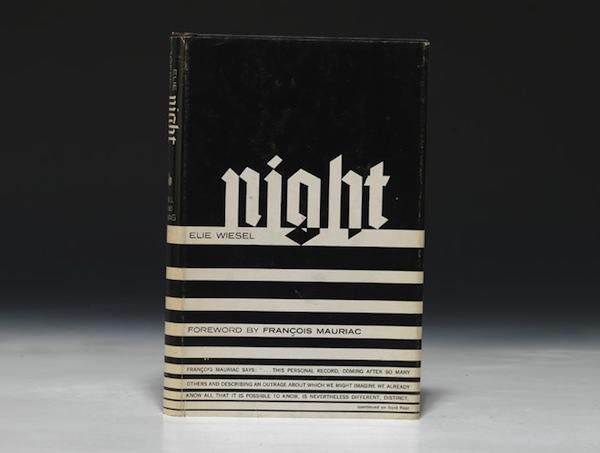
Grabowski and Engelking are on the frontlines of that conflict. They head a team of researchers that produced Night Without End: The Fate of Jews in Selected Counties of Occupied Poland, a compendious 1,700-page documentation of Polish atrocities during the war. The researchers, at risk to themselves, delved into often-untouched archival records in small and remote communities across Poland. In a presentation in Vancouver three years ago, Grabowski explained that, after the war, a surprising number of Poles felt no obligation to hide or embroider their activities during that period, content that their neighbours, if not history, would judge them kindly. The researchers plumbed files that had not been opened since 1945 and discovered harrowing tales of neighbour turning on neighbour, of Jews in hiding listening as their former friends pointed out their whereabouts to the Nazis and their collaborators.

The work is monumental and is being translated into English. It also indicates the breadth and depth of Holocaust history that has yet to be even remotely explored. The big picture, certainly, is well known – to the extent that plenty of people complain that it is time to move on from the topic. But the work of Grabowski et al reminds us that, in terms of millions of stories of individuals, heroic and wicked, we have hardly scratched the surface.

This is why the Polish law, and the intent behind it, is so dangerous. The problem is not merely the suppression of what we already know to be true, it is the very tangible possibility that current scholarship will be curtailed and that potential future scholars will choose less arduous fields of study. In either case, the crucial primary research still underway could be squelched.

This urgency was underscored by the publication Tuesday of a new book, Into the Forest: A Holocaust Story of Survival, Triumph and Love by Rebecca Frankel, former executive editor of Foreign Policy magazine. Writing in the New York Times Sunday, Frankel shared the story of one family who survived the war in Poland by hiding in the forests. The “Jews of the forest,” as she calls them, are an example of a massively underexplored facet of Holocaust history. The narratives of these Jews – some of whom survived the war, many or most of whom apparently did not – are absent from most chronologies because, by definition, those who survived (or did not) by disappearing into the forests were not included in the record-keeping of the Nazis and their collaborators.

We know from opinion surveys that there is an enormous amount of ignorance, particularly among the young in North America and Europe, about the Holocaust. In a notable irony, a major survey of European societies discovered that the countries where the largest number of people believes that there is too much emphasis on the Holocaust are the same countries where ignorance of the facts is greatest. In other words, it seems that those who know the least about that history are the ones most determined to close their ears to it.

Prof. Grabowski, who was born in Poland, was evasive in his visit to Vancouver in 2018, deflecting assertions that his work is heroic. Instead, he credited the courage of the on-the-ground researchers in Poland. There should be enough admiration to go around for the researchers, historians, writers and teachers who continue the necessary work of studying and sharing knowledge of that time.

As we have seen from the past seven decades, knowledge of the past does not preclude repetitions of genocide. But ignorance will almost certainly hasten its frequency and severity.

Posted on September 10, 2021September 9, 2021Author The Editorial BoardCategories From the JITags Barbara Engelking, education, education antisemitism, genocide, Holocaust, Jan Grabowski, law, Rebecca Frankel

Relationship with the earth

At the dinner table, I asked my family what I should write. One of my kids, age 10, immediately said, “Climate change. People think the problem’s all hot air, but the problem’s really hot water.” There was a smirk at his joke, but his twin nodded in agreement.

Hurricane Ida’s just made landfall and is churning its way up through swaths of the United States as I write this. Haiti is in shambles from its most recent earthquake, only compounded by the storm that followed. In Manitoba, we’ve lived through a hot, smoky summer, surrounded by wildfires and besieged by drought. When it finally rained, there was so much of it that some places flooded.

The weather has, at times, felt apocalyptic. While I’m not superstitious, the recent uptick in truly awful weather and world events made me think back to Yom Kippur, 20 years ago.

In 2001, my husband and I sat in Yom Kippur services in Durham, N.C., where we lived at the time. Just a little over two weeks after Sept. 11, the terrorist acts in New York, Pennsylvania and at the Pentagon were on most people’s minds in that congregation.

Like many, I have images burned in my brain from that time, as both my family near D.C. and my husband’s in New York City, were alive, thank goodness, but personally affected. At synagogue, when we reached the prayer Unetaneh Tokef, the room fell silent, electrified. This ancient prayer, perhaps written by Yannai in the sixth century, is familiar to most who’ve attended services on the High Holidays or listened to Leonard Cohen:

“On Rosh Hashanah will be inscribed and on Yom Kippur will be sealed – how many will pass from the earth and how many will be created; who will live and who will die; who will die after a long life and who before his time; who by water and who by fire, who by sword and who by beast, who by famine and who by thirst, who by upheaval and who by plague, who by strangling and who by stoning. Who will rest and who will wander, who will live in harmony and who will be harried, who will enjoy tranquility and who will suffer, who will be impoverished and who will be enriched, who will be degraded and who will be exalted. But Repentance, Prayer and Charity mitigate the severity of the Decree.”

In Temple Beth El in Durham, there was loud sobbing and then, the most elemental keening and grief that I’ve ever heard. Twenty years later, I can’t forget my brother-in-law running down Broadway as the second tower fell behind him, covered in its dust as he escaped Manhattan on the Staten Island ferry, or my father-in-law, who walked five miles through Manhattan in the middle of the street, only to stand in Central Park, afraid to go indoors. My father and brother, away from D.C. on business trips, waited days, unable to get home. My sister-in-law, stuck in D.C. overnight, was finally able to leave the city and walked home to her apartment in Virginia, only to suffer through continual sonic booms, as fighter pilots raced overhead, shaking her high-rise building.

I will never hear this prayer, which is primarily part of the Ashkenazi liturgy, without being shaken by that keening sound.

However, just as I remember it, it’s also helpful to keep reading. It says that, by doing repentance, prayer and charity, we can change the severity of the outcome. We’re taught clearly that repentance is not simply feeling badly about past behaviour, it’s about making amends. We must apologize to those we’ve wronged and try to fix our mistakes. Our prayers are not simply rote, but must come from our hearts, with the right kind of kavannah, or intention.

Finally, it mentions we must do tzedakah, which some translate as charity, but really also means righteousness. It is the obligation to do the upstanding, just thing, and to act with integrity.

Although I can’t help but think of this prayer in context of those who died, both on Sept. 11 and those who, each year, aren’t written in the Book of Life for the next year, it’s not just about that. This prayer says we must act now to make change and to stop bad things from happening to us.

Even for those who don’t believe in its literal power, the message is clear. If we want to be able to live with ourselves later, we’re taught that we must repair our relationships promptly, practise introspection through prayer, and make a big effort to step up and do the right thing.

Those who’ve lived through floods, wildfires, earthquakes and hurricanes this summer would argue that bad things are happening. The rest of us, living through the pandemic, would be hard-pressed to disagree. Yet, Jewish tradition teaches us that we aren’t passive observers. We aren’t meant to simply submit and accept this.

More than one rabbi has told the joke about the man on top of his roof in the middle of a flood. He ignores the orders to leave, turns down a neighbour’s offer of a ride, says no to the rescue boat and refuses to be saved by helicopter.

The floodwaters rise higher. He drowns. Then he gets to speak with G-d. He says, “Lord, I believed in you. Why didn’t you save me?” And G-d responds, “Well, I sent you an evacuation order, a carpool, a boat and a helicopter!  What else do you want?”

While we battle a pandemic, forest fires, rising temperatures in ocean waters and on land, it’s helpful to remember that our tradition teaches us that “G-d helps those who help themselves.”

This is a strange year, where some of us, used to sitting in synagogue, will instead be streaming services at home again, or perhaps spending time praying outdoors. It could also be the year where we decide that, upon reflection, it’s important to repair our relationship with the earth and to start doing the right thing personally. Climate change is upon us. It’s going to take everyone’s efforts to make a difference.

Wishing you an easy fast. May you be written for good in the Book of Life.

Joanne Seiff has written regularly for CBC Manitoba and various Jewish publications. She is the author of three books, including From the Outside In: Jewish Post Columns 2015-2016, a collection of essays available for digital download or as a paperback from Amazon. Check her out on Instagram @yrnspinner or at joanneseiff.blogspot.com.

Posted on September 10, 2021September 9, 2021Author Joanne SeiffCategories Op-EdTags 9/11, climate change, High Holidays, repentance, Rosh Hashanah, terrorism, Unetaneh Tokef, Yom Kippur

Controversy over instructor

A proposed fall semester course at the University of Victoria has raised concerns that it will become what B’nai Brith Canada described as “a forum for antisemitism.” The concerns were sparked by inflammatory comments the course’s instructor, Dr. Shamma Boyarin, wrote on social media earlier in the year.

In a May 26 Twitter post, for example, Boyarin used an obscene verb before labeling Abraham Foxman, former president of the Anti-Defamation League, a “Zionist pig.” On June 3, he ridiculed an individual who had been the recipient of a torrent of antisemitic abuse online. This was followed the next day by a post in which Boyarin remarked, “[It’s] hard for North American Jews to admit the truth: What is happening in Israel is ethnic cleansing and slow genocide.”

An online description of the UVic course, entitled Introduction to Antisemitism, has been modified since it was first posted. At an earlier stage, the description began, “What is antisemitism? As soon as one attempts definitions, it becomes clear that even the most fundamental aspects of antisemitism are controversial.” The course’s current title is also different from the original, which was Towards an Understanding of Antisemitism. Gone, too, is a study of present-day antisemitism.

photo - Prof. Shamma Boyarin
Prof. Shamma Boyarin (photo from uvic.ca)

The changes occurred in early August after B’nai Brith, among others, raised objections to UVic about Boyarin teaching a class on modern antisemitism. The course’s subtitle on the UVic website now reads, “A Historical Survey of Key Texts and Moments from Augustine to Luther.” Its description: “What is antisemitism? The term itself was coined in the late 19th century, but when does the phenomenon begin? Is it the same or different from ‘anti-Judaism’? Should we spell it ‘anti-Semitism’ or ‘antisemitism’? Beginning with these basic questions, we will focus on the particular role Christianity has played in developing and sustaining antisemitism in Europe.”

“Moving this course away from modern antisemitism is an important first step,” said Michael Mostyn, chief executive officer of B’nai Brith Canada. “However, we are still concerned that, instead of educating students on the scourge of Jew-hatred, there is a risk, albeit a reduced one, that hostility toward Jews will instead be promoted.

“UVic must provide assurances to the Jewish community that academic freedom will not be used as cover to falsely accuse Jews, as a whole, of contributing to genocide, among other antisemitic canards,” he added.

When contacted by the Independent, UVic expressed the position that it “does not condone antisemitism” and “that it is highly committed to equity, diversity and inclusion and to social justice in its many forms.”

“We are aware that a faculty member has expressed personal views in public communications which are disturbing to people. Those views are personal. They have not been made on behalf of the university or in the context of their work,” said Karen Johnston, a spokesperson for the university.

“Canadians have a constitutional right to free speech, subject to limits under the law,” she said. “And so it cannot be the role of the university to judge or censor its employees’ exercise of free speech in their private lives. While all faculty enjoy the privilege of academic freedom, there are also limitations to this right. In this specific instance, there is no evidence at this time that the faculty member has or will exceed those limitations in teaching this course.”

The university also said it “will act on any allegation that there has been a violation of university policies against discrimination or harassment, which apply to all members of our community.”

Rob Philipp, executive director at Hillel BC, has been monitoring the situation and has spoken with Dr. Kevin Hall, the president of UVic. Philipp said, “If the course does run, we will check to see what the reading material is and what is being taught.” However, he added, while the organization is keeping on top of things, there is not much that can be done to stop the course from going ahead.

Jeff Kushner, president of the Jewish Federation of Victoria and Vancouver Island (JFVVI), said they, too, will be following the UVic course and will remain in contact with senior administration staff.

“The JFVVI does not have any serious concerns about the course material, such as we know it,” said Kushner. “Our concerns are more about the academic and emotional safety of the students enrolled in the course. In this particular case, a professor at UVic made some very objectionable comments on his private Twitter feed. We wish that he had not made such incorrect and inflammatory statements, both in his role as an academic and as a Jew.

“He has not made these comments in any official capacity, and the university has been very clear that these objectionable views are not the views of the university. Our concern is that an individual having these views, and expressing them as he has, may find it difficult to leave them at the classroom door and, through explicit statements or implicit actions, may create an unsafe learning environment for Jewish students holding views contrary to his own.”

In a letter to the university, B’nai Brith urged UVic to publish the syllabus of the revised course online, to cancel the course if it is used to attack the Jewish community in any way and to follow other universities, such as Oxford and Cambridge, in adopting the International Holocaust Remembrance Alliance Working Definition of Antisemitism to “avoid future confusion.”

Boyarin has taught at the University of Victoria since 2008 in religious studies and medieval studies, and in the English department since 2009. According to his profile at UVic, his current research and teaching interests include medieval literature (particularly the literature of Spain and the Near East), comparative literature (particularly Hebrew and Arabic), literature and religion, Jewish studies, and the religious roots of antisemitism. He has additional expertise, his profile continues, in the connections between medieval and contemporary culture, especially as they manifest in heavy metal music and white supremacist ideologies.

The Independent tried to reach Boyarin for comment, but had not heard back from him at the time of publication.

Sam Margolis has written for the Globe and Mail, the National Post, UPI and MSNBC.

Posted on September 10, 2021September 9, 2021Author Sam MargolisCategories LocalTags antisemitism, B'nai B'rith, education, Federation, Jeff Kushner, JFVVI, Karen Johnston, Michael Mostyn, Rob Philipp, Shamma Boyarin, UVic, Victoria
Exploring her family’s past

Exploring her family’s past

Afterlife is Isa Milman’s first work of nonfiction. (photo by Shea Lowry)

Midway through Isa Milman’s Afterlight, which came out this week, the author cites Reb Nachman of Breslov, who said, “The whole world is a very narrow bridge.” In Victoria-based Milman’s new work, we encounter bridges of various sorts: those that serve as a crucial lifeline to the survival of the denizens of cities, particularly at a time of war, and the bridges that bring together people from different continents in the pursuit of understanding an unconscionably horrific time in Eastern Europe.

And then there are the bridges that link us poignantly to our past – to those we know through words and photos but have never met. In Afterlight, one such bridge connects Milman to her mother’s twin sister, her aunt Basia, who perished in the Holocaust, and who, like Milman, wrote poetry. (Milman is a recipient of the Canadian Jewish Book Award for poetry.)

Milman’s journey began in 2013, when, following her mother’s death, she sought to find Basia’s poems from the 1930s. The book alternates between the present and the past (the war years), as Milman tries to uncover a layered tale. She travels to Europe where, at times, her quest for information leads to dead ends and, at other times, she finds details in unlikely places – a photograph in Amsterdam, for example.

At one stage, Milman finds poetry written in a Polish publication from the 1930s. She writes, “Reading the children’s poems, I felt a terrible nostalgia rise up – a dangerous nostalgia. Even now it hurts too much, this intense longing for a conversation with Basia, for a meeting, a recognition that we’ve lived on the same planet, come from the same earth, share blood and bone. We share a love of poetry, but I shall never know her, not even as smudged ink on a page.”

At one point in her exploration, Milman pens a poem to her aunt. “How many tiny flowers make one lilac sprig? / How many stars in the night sky have names? / How many yet to be seen? They disappear with morning sun too soon but in darkness or in light tucked in their beds they remain,” the poem reads.

image - Afterlife book coverBasia’s story is but one piece of the book. Afterlight also traces the journey of Milman’s parents and her other surviving aunts through the Holocaust and examines questions about the trauma, displacement and identity caused by the Holocaust to succeeding generations.

“I’d lived my life in a black hole of absence, of never having the experience of grandparents, of feeling rooted and at home with extended family. And this was not because of a tsunami, an earthquake, forest fire or plague. It was because of tribal hatred,” Milman writes.

As well, she explores the issue of reconciling the Poland that Jews thought of as their home with rampant antisemitism and the brutality of the war years. “Why couldn’t I choose how to think about Poland, even if it meant going against most everything I’d learned?” Milman asks. “Why couldn’t I revise my notion and accept that Poland is a place that I can love as well as despise and fear? Why must it be either/or? Was it possible to live in the uncomfortable in-between, where both realities coexist?”

Afterlight is Milman’s first work of nonfiction. At first, Milman, whose collections of poetry include Prairie Kaddish, Between the Doorposts and Something Small to Carry Home, was reluctant to write a nonfiction account of the Holocaust. However, recent surges in antisemitism around the world led her to change her mind.

“The lessons of the Holocaust need to be taught, and not just by citing facts and reportage,” she said. “Telling stories about real people and their experiences is the most effective way of reaching and teaching people about how evil can happen, and how we must fight our worst human inclinations and speak out against hatred and inhumanity.”

A big part of her decision to write a memoir was realizing that her family’s story did not match a more common Holocaust narrative. Hers is a lesser-told account of Jews from eastern Poland, some murdered in what’s known as “the Holocaust of Bullets” and others, like her parents, who survived because of deportation by the Soviets to the Gulag.

“I loved entering the world of creative nonfiction,” she said. “Using my imagination to create scenes where I clearly was not present enabled me to inhabit the places and people I needed to describe. Everything became more real as I entered into the minds of my characters, who happened to be my parents and close family.”

Sam Margolis has written for the Globe and Mail, the National Post, UPI and MSNBC.

Format ImagePosted on September 10, 2021September 9, 2021Author Sam MargolisCategories BooksTags Afterlight, history, Holocaust, Isa Milman, memoir, Poland

Posts pagination

Previous page Page 1 … Page 190 Page 191 Page 192 … Page 651 Next page
Proudly powered by WordPress