Skip to content
  • Home
  • Subscribe / donate
  • Events calendar
  • News
    • Local
    • National
    • Israel
    • World
    • עניין בחדשות
      A roundup of news in Canada and further afield, in Hebrew.
  • Opinion
    • From the JI
    • Op-Ed
  • Arts & Culture
    • Performing Arts
    • Music
    • Books
    • Visual Arts
    • TV & Film
  • Life
    • Celebrating the Holidays
    • Travel
    • The Daily Snooze
      Cartoons by Jacob Samuel
    • Mystery Photo
      Help the JI and JMABC fill in the gaps in our archives.
  • Community Links
    • Organizations, Etc.
    • Other News Sources & Blogs
    • Business Directory
  • FAQ
  • JI Chai Celebration
  • JI@88! video

Recent Posts

  • Story of Israel’s north
  • Sheltering in train stations
  • Teach critical thinking
  • Learning to bridge divides
  • Supporting Iranian community
  • Art dismantles systems
  • Beth Tikvah celebrates 50th
  • What is Jewish music?
  • Celebrate joy of music
  • Women share experiences 
  • Raising funds for Survivors
  • Call for digital literacy
  • The hidden hand of hate
  • Tarot as spiritual ritual
  • Students create fancy meal
  • Encouraging young voices
  • Rose’s Angels delivers
  • Living life to its fullest
  • Drawing on his roots
  • Panama City welcoming
  • Pesach cleaning
  • On the wings of griffon vultures
  • Vast recipe & story collection
  • A word, please …
  • מארק קרני לא ממתין לטראמפ
  • On war and antisemitism
  • Jews shine in Canucks colours
  • Moment of opportunity
  • Shooting response
  • BC budget fails seniors
  • Ritual is what makes life holy
  • Dogs help war veterans live again
  • Remain vital and outspoken
  • An urgent play to see
  • Pop-up exhibit popular
  • An invite to join JWest

Archives

Follow @JewishIndie
image - The CJN - Visit Us Banner - 300x600 - 101625

JCC team welcomes Cristall

JCC team welcomes Cristall

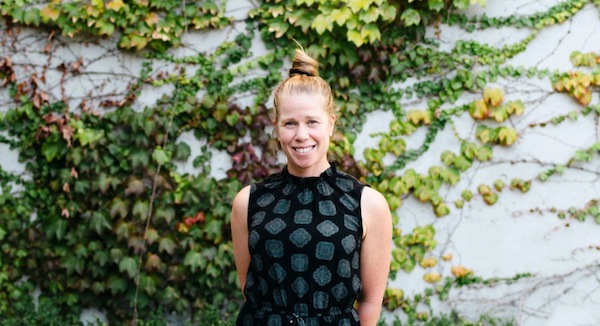
Alison Cristall is the new assistant executive director of the Jewish Community Centre of Greater Vancouver. (photo from Alison Cristall)

Alison Cristall feels that she has come full circle, as she assumes her new job as assistant executive director of the Jewish Community Centre of Greater Vancouver. Among her earliest recollections are times at the Davis YM-YWHA in Montreal: going to preschool, taking swimming lessons and attending summer camps.

“I used to wait for my mom to finish her aerobics class while I hung out at the café eating French fries and doughnuts. Needless to say, I have extremely fond memories of my childhood, and our JCC was a very big part of it. My hope is that I can be a part of creating memories for others that are foundational to their lives,” she said.

Cristall officially started at the JCC on Feb. 7 and, in a recent interview, she affirmed her excitement about the new role and shared some of her thoughts.

“My priority is to listen to the staff, the community, members and stakeholders,” she said. “We are at an interesting time. In this time of change, I think understanding where our community is at, where our funders and stakeholders are, and understanding what their priorities are, is going to be foundational to how I proceed with the team.”

Cristall will be taking over many of the same responsibilities as Debbie Tabenkin, the recently retired director of programming and strategic initiatives, though in a reprised assistant executive director’s position. The last person to hold that job was current JCC executive director Eldad Goldfarb.

Cristall arrives at 950 West 41st Avenue with a wealth of experience around recreation centres and helping people be physically active. The Montreal native moved to British Columbia to obtain a degree in human kinetics and pursue her passion of health promotion and recreation.

While at the University of British Columbia, she developed Active U, a student-led health promotion program designed to increase physical activity and healthy eating for students living on campus. Upon graduation, she started work immediately on ACTNowBC, an initiative run by the provincial government to encourage a healthy and active lifestyle.

After the 2010 Winter Olympics, Cristall held a position with SportMedBC, where she oversaw the Sun Run in Training Program and its sister program, Aboriginal RunWalk, a provincially funded initiative to bring health and wellness programming to 100 Indigenous communities in the province.

For the past six years, she has been the recreation supervisor of the Trout Lake Community Centre, a job that did not get any less hectic due to the pandemic, because a building with an ice rink still needed to be maintained and some operations, such as summer day camps, continued.

“I had the time of my life at the centre,” Cristall said. “It solidified for me that running a community centre is my true passion.”

She added, “I am completely motivated by creating a safe, vibrant and relevant space for people to feel connected. When the opportunity came up to take this position at the JCC, I knew it was the right choice to leave the Park Board.”

Cristall recognizes that these are unprecedented times, and she hopes to take part in the development of new programs as the JCC begins to restart activities.

“The way centres have traditionally operated will change. We need to move forward and provide services that people need and are ready to participate in,” she said, emphasizing that an understanding of where people are emotionally, psychologically and spiritually in the return to some semblance of normalcy is crucial.

She points out that with this transition come opportunities for the JCC to grow. For example, a switch to providing some hybrid activities could open up what the JCC has to offer to a broader group of people around the city and beyond.

“It’s a good time to do an evaluation of programs and services and conduct needs assessments around the community, and to think towards the future,” she said.

Cristall spoke in glowing terms regarding her connection to the Vancouver Jewish community, from the time she first met her husband at a Hanukkah party to the present.

“This is such a lovely Jewish community and you can really find the areas where you fit in,” she said. “It is a community that is integrated yet still very close, and they take care of each other in a very amazing way, and the JCC is at the centre of it. There is something so grounding about having a JCC that can be the home for programs and services or some need within the community.”

The JCC board and staff are equally excited to have Cristall join them.

“Alison is an accomplished and experienced professional,” said Goldfarb. “She will help set the course and lead our team as we continue serving our community as well as gearing up towards the creation and building of our new JCC and community hub…. I look forward to working with her, our dedicated team and board as we shape the future of our community.”

Sam Margolis has written for the Globe and Mail, the National Post, UPI and MSNBC.
Format ImagePosted on February 11, 2022February 10, 2022Author Sam MargolisCategories LocalTags Alison Cristall, Eldad Goldfarb, JCC, Jewish Community Centre of Greater Vancouver
Working for human rights

Working for human rights

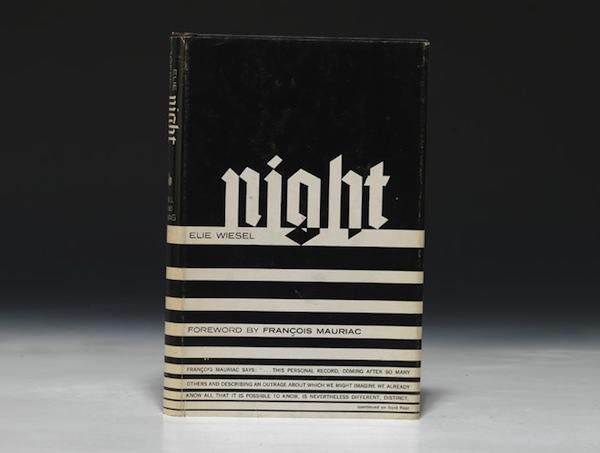
A gift of Elie Wiesel’s Night was among the forces that influenced Madeleine Schwarz’s career path.

Madeleine Schwarz is one of the kindest people I’ve ever met. Not the kind you would expect to build much of her career prosecuting or aiding in the prosecution of war criminals around the world, including the Nazi war criminal known as the “Beast of Bolzano,” who was living on Commercial Drive in Vancouver.

Now based in Toronto, working with the Refugee Board of Canada, Schwarz spoke with the Jewish Independent about a few of her accomplishments.

Raised Catholic, Schwarz was one of seven kids on the block who frequented our house in Vancouver back in the 1960s and early ’70s. Little did we know that she would soon be making history.

She told the Independent that her passion for international criminal law began when she was a teenager and learned about the genocide of the Jewish people.

My parents, Joyce and Bernie Freeman, helped her along her journey by giving her Night by Elie Wiesel, an account of his terrifying time in Auschwitz.

“Your house was very much an introduction to Judaism,” she said. “Yours was a very open, friendly Jewish family. I recall coming to your house for Shabbat dinner in my convent school uniform.”

While studying international relations at the University of British Columbia, Schwarz had a number of Chilean friends who had family members in camps under the dictator Augusto Pinochet. That was her “introduction” to contemporary war crimes and crimes against humanity.

In 1994, Schwarz graduated with her bachelor of laws at Dalhousie University. In 2003, she obtained her master of laws at the University of Ottawa, specializing in international criminal law.

Her first job involving war crimes was at the Canadian Department of Justice. From 1999 to 2005, she worked closely with RCMP officers on investigations into crimes against humanity, war crimes and genocide in Ukraine, Belarus, Italy and Rwanda.

When Italy found Michael Siefert, a former S.S. guard at a transit camp in Bolzano, guilty in absentia of 11 murders during the Holocaust, Schwarz put together the case to revoke his Canadian citizenship. She interviewed many people in Italy, including former resistance fighters who had witnessed his crimes.

“Seifert was quite a young man during the war. He was an old man during the proceedings. But he had committed horrendous crimes,” she said.

One of the documents Schwarz saw during the investigation made the Holocaust all so terribly real.

“I remember that we had an invoice confirming the transfer of a number of people to Auschwitz. That was one of the most horrific pieces of evidence I’ve ever seen.”

In 2003, as a result of her work and that of the legal teams who came afterwards, the B.C. Supreme Court ordered Siefert’s extradition and, in 2007, the Federal Court upheld a decision to strip him of his Canadian citizenship. In 2008, Siefert, aged 83, was sent back to Italy. His residence in Vancouver as a free man for more than 50 years was over.

During her time with the Department of Justice, Schwarz interviewed many victims and witnesses of war crimes. She said that, even when, after 15 minutes, she knew that she couldn’t use their story, she would sit there and listen for the whole two hours.

“When I’ve asked someone to tell me their story,” she said, “it’s incumbent on me to listen.… I might be the only person they will be able to tell their story to [in their lifetime].”

From 2006 to 2010, Schwarz lived in Tanzania, where she was one of the trial attorneys on the largest multi-accused trial for the United Nations International Criminal Tribunal for Rwanda. Part of her work there was interviewing perpetrators of the genocide in the Butare prefecture.

She confided that this part of her job was very hard on her. “I remember interviewing three suspects alleged to have committed genocide in a row. I told my colleague – I need a break before I can talk to the fourth man.”

When it came to the trial, Schwarz and her team secured convictions of all six accused, including the first woman charged with ordering rape as a war crime.

“I think, as a lawyer and particularly a prosecutor, you are assessing the evidence and being critical. You have to be pretty surgical about it,” said Schwarz.

A few years later, at a UN conference, a co-presenter from Butare approached her and told her that his entire family had been wiped out by the genocide there. “And he said thank you very much for your work. And I practically burst into tears because I felt humbled that somebody would say that … it was not something I felt I should be thanked for, nor any of us should be thanked for because it shouldn’t have happened in the first place.”

As a commissioner looking into the killings in Les Cayes prison in Haiti during 2010, Schwarz led an international team and supervised the final report with recommendations on future prosecutions, penal reform, justice reform and police training.

Schwarz was in Kenya in 2013, working as the human rights and justice advisor to the UN Special Envoy in the Great Lakes region of Africa, a region encompassing 13 countries, including the Democratic Republic of the Congo, Rwanda, Uganda and Burundi. With a team of experts, she collaborated with myriad different organizations to create strong networks of people who would work together to promote better communication, peace and understanding in the region.

“There are so many layers that need to be addressed if you are ever going to deal with root causes of conflict, that range from ensuring people have access to clean water, food, lodging and education, to building trust and confidence among the leaders and civil society, to advocating for accountability for past crimes…. It takes a lot of time,” she said.

From 2016 to 2019, Schwarz worked as a trial lawyer and deputy team leader at the International Criminal Court in The Hague. It was there that she prepared arrest warrants for individuals alleged to have committed crimes in Libya since 2011.

Despite seeing the very worst of humanity, Schwarz still has hope for the human race. “I’ve seen some pretty horrible things,” she acknowledged. “I’ve also seen people who do tremendous things to try and make change or try and help people.”

And she had this to say about the International Criminal Court.

“I think that investigations and prosecutions of individuals for war crimes, crimes against humanity and genocide are incredibly important,” said Schwarz. “I wouldn’t necessarily say we’re always getting the complete truth and I do not think we always get it right. However, I do think we get some truth and some accountability that is important for victims, as well as for countries moving out of conflict. I think that is important. And it’s a different way of telling the story than a novelist or historian.”

Cassandra Freeman is a freelance writer living in Vancouver. During the early 1980s, she was part of the Jewish student movement that called for the extradition of Nazi war criminals living in Canada.

Format ImagePosted on February 11, 2022February 10, 2022Author Cassandra FreemanCategories UncategorizedTags genocide, Holocaust, human rights, international law, Madeleine Schwarz, Michael Siefert, Rwanda, war crimes

Enhanced care for survivors

Jewish Family Services (JFS) and Vancouver Holocaust Education Centre (VHEC) have formed a new partnership to serve Greater Vancouver’s Holocaust survivor community.

Beginning last month, JFS is now administering both the socialization and social services Claims Conference grants, which have traditionally been split between the two organizations. This move consolidates the work of managing and reporting the grant within JFS, streamlining the administrative process, while preserving the delivery of socialization programs through the VHEC.

Holocaust survivor socialization programs include four to six events every year, as well as regular group meeting for Russian-speaking and child Holocaust survivors. Preserving the services at the VHEC means that survivors will continue to access these programs without disruption, as well as maintain their ownership over what the programs entail.

This organizational partnership will also include a JFS case manager on-site at the VHEC one day a week, increasing access to JFS social services and resources among the survivor population. Case management and assistance with Claims Conference applications will continue to be available through the VHEC.

Cindy McMillan, JFS director of programs and community partnerships, said, “JFS and VHEC have always had a close working relationship and we’re very excited for this opportunity to enhance supports in the community. It means that our resources can spread more naturally across the survivor population as we work together to ensure Holocaust survivors are able to age at home safely and with dignity.”

“As a museum founded by Holocaust survivors, the Vancouver Holocaust Education Centre prides itself in being considered a second home to many in our survivor community,” added Nina Krieger, VHEC executive director. “Through strengthening our partnership with JFS, we are very pleased to streamline the administration of survivor services in our community, ensuring that survivors continue to access supports at the VHEC, while enjoying thriving socialization programs such as the child survivor and Russian-speaking survivor groups via the centre.”

The Claims Conference grants are specifically for organizations that assist Jewish victims of Nazism and projects that promote research, education and documentation of the Shoah. Grants are given to social service agencies worldwide that provide vital services for Holocaust survivors, such as home care, food and medicine.

– Courtesy Jewish Family Services and Vancouver Holocaust Education Centre

Posted on February 11, 2022February 10, 2022Author JFS & VHECCategories LocalTags Cindy McMillan, Claims Conference, Jewish Family Services, JFS, Nina Krieger, social services, survivors, Vancouver Holocaust Education Centre, VHEC
Catering through pandemic

Catering through pandemic

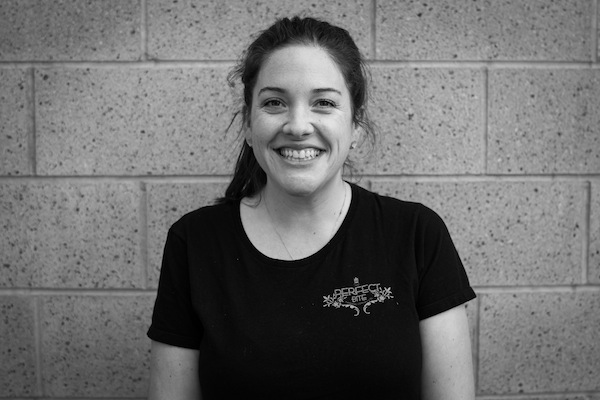
Ricci Segal, owner of Perfect Bite Catering Co. (photo from Perfect Bite)

The Perfect Bite Catering Co. works out of Vancouver Talmud Torah’s kosher kitchen. In addition to providing hearty lunches for VTT students, staff and parents of children who attend the school, the company caters events in the Jewish community. As well, since 2019, the Perfect Bite has been catering to many in the larger Metro Vancouver community, through its online store.

Perfect Bite owner Ricci Segal has always known that she wanted to be a chef. Born in South Africa, her family moved to Canada when she was 6 years old. Segal remembers, as a kid in South Africa, cooking with her mom, who was “a fantastic cook.”

In high school, Segal’s first restaurant job was at Coco Pazzo, where she assisted the chefs and ran the dishwashing room. She got her first experience in the catering industry when she worked for two years in Arizona for her aunt’s kosher catering company. It is there that she got her first taste of the business.

“I learned so much from working with my aunt,” said Segal. “She has a staff of 30 and she threw me right into the mix.”

She added, noting her gratitude, “By working there, I picked up all I know of catering and it helped me create my business.”

Before starting her own company, Segal attended culinary school at Vancouver Community College. While a student at VCC, she was asked to be a support member of Culinary Team Canada. The team competes on behalf of Canada for all culinary competitions, including the IKA Culinary Olympics, which takes place every four years. According to Segal, “it was an amazing experience.” The team traveled to Switzerland, Luxembourg, Germany and Chicago to compete and they won several gold medals. Being on Culinary Team Canada allowed Segal “to learn from the best chefs in Canada.”

“It definitely molded me into the chef I am today,” she said.

Segal did her apprenticeship at three top restaurants in Vancouver: the Pear Tree, the Four Seasons Hotel and Le Crocodile. It was in this period that she really honed her skills. The Four Seasons at that time was the top kosher hotel in Vancouver and Segal was able to be a part of some of the most luxurious kosher events.

In 2010, she parlayed her extensive experience into her own business and established the Perfect Bite Catering Co., while also moonlighting as a chef instructor at VCC.

About her decision to open a kosher catering company, she said, “There was a need for a different style of kosher catering food in Vancouver and it happened naturally from there.”

What makes the Perfect Bite unique, Segal said, is that its staff – who were recruited from her stints teaching at VCC or from working with them at various establishments – “are all French-trained chefs who have worked in the best restaurants.

“That is what we bring to the kosher world in Vancouver,” she said.

She noted that her company specializes in gourmet food, “so most of our clients are foodies.”

photo - Perfect Bite Catering offers a range of kosher meal options
Perfect Bite Catering offers a range of kosher meal options. (photo from Perfect Bite)

Segal officially moved into Talmud Torah’s kitchen in September 2019. Prior to that, she had a retail location on Fraser Street and 28th Avenue, which was not kosher, but she would do her kosher catering for Jewish functions out of Congregation Schara Tzedeck’s facilities. When she moved her business to VTT, she made it into a full-service kosher catering company that is supervised under B.C. Kosher.

Like many businesses affected by the pandemic, the Perfect Bite has been forced to adapt to survive. According to Segal, the biggest challenge was the loss of all the events, which made up the majority of the company’s business.

“The silver lining is that it has given us time to create an online store, where we sell fresh and frozen foods to help with everybody’s busy lives,” said Segal. “We have great oven-ready meals and are expanding into some weekly fresh options.”

Some of the items available include power bowl salads, sandwiches, lasagna, butter chicken, sweet-and-sour chicken, caramelized onion brisket and Moroccan chickpea stew, to name a handful. A three-course weekend dinner is also available every other week for pick up on Friday at VTT.

“My long-term goals are to continue servicing the Vancouver kosher market with great healthy ready-to-eat meals, as well as doing full-service catering events like bar and bar mitzvahs and weddings once we are able to do so safely,” said Segal.

To access the Perfect Bite’s online shop, visit theperfectbite.ca.

David J. Litvak is a prairie refugee from the North End of Winnipeg who is a freelance writer, former Voice of Peace and Co-op Radio broadcaster and an “accidental publicist.” His articles have been published in the Forward, Globe and Mail and Seattle Post-Intelligencer. His website is cascadiapublicity.com.

Format ImagePosted on February 11, 2022February 10, 2022Author David J. LitvakCategories LocalTags business, catering, Culinary Team Canada, entrepreneur, kosher, Ricci Segal, The Perfect Bite, Vancouver Talmud Torah, VTT
Leading amid change

Leading amid change

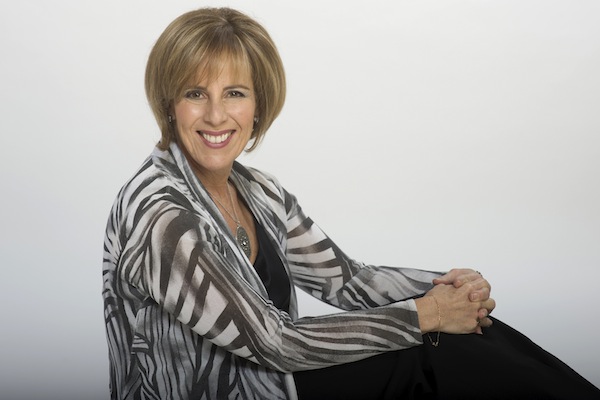
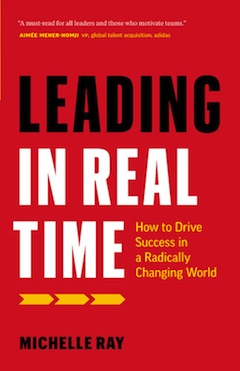
Michelle Ray’s latest book is Leading in Real Time: How to Drive Success in a Radically Changing World. (photo from espeakers.com)

Michelle Ray was recently inducted into the Canadian Speaking Hall of Fame, which is bestowed, in part, for excellence in “educating others to excel.” Of course, it is awarded to exemplary speakers, but Ray also educates using the written word. Her articles have appeared in various publications and she is now the author of two books: Lead Yourself First! Indispensable Lessons in Business and in Life, which was released in 2014, and Leading in Real Time: How to Drive Success in a Radically Changing World, which just came out in the fall of 2021.

Originally from Australia, Ray started her career in media and advertising while living there. She established her own business – as a professional speaker, leadership educator and consultant – in 1995, after she settled in Vancouver. In the conclusion of her new book, she shares what she learned from her parents, who were Holocaust survivors and faced several other challenges in their lives. Though they passed away many years ago, Ray writes, “the enormity of their respective losses is still with me…. They were truly my greatest mentors, and I believe there will never be another generation like theirs. As leaders, we have much to learn, appreciate and apply from their timeless legacy.”

The three lessons Ray highlights in this chapter are to be prepared for unanticipated events, to be optimistic and resilient in the face of difficulties, and to control what you can: “The now is all we know. It’s what we have. It’s the sum total of present moments and what we choose to do with them that prepares us for the unknown.”

image - Leading in Real Time book coverRay started writing Real Time in 2018, taking notes while traveling for speaking engagements and doing other work. Her schedule got so busy that the book project was set aside until January 2020. “Several months into the process,” she writes, as the pandemic hit, “it occurred to me that my teachings about leaders remaining relevant, flexible and open to new ideas applied to me. Realizing that the world had forever changed, I found myself questioning not only what lay ahead, but my own identity as a leadership expert and whether or not I had the energy to persevere in the face of so much uncertainty. I developed a deeper affinity with the challenges and struggles my clients faced, wanting to explore them further. I became more intrigued by their passion, ongoing success and commitment to the well-being of their workforce during a very difficult period.”

There are eight traits of a “real-time leader,” according to Ray. A real-time leader is transformative, emotionally intelligent, open-minded, humble, exceptional at listening, optimistic, consistent and trustworthy, and authentic. She explains each of these characteristics in more depth and examines the ways in which the workplace, workers and the economy have changed, and continue to change. She offers takeaways at the end of every chapter, as well as some homework, or what she calls real-time action steps. She suggests ways in which leaders having trouble with any aspect of leadership can improve, including hiring a coach or working with a mentor.

It’s not just a matter of personal growth. “There is a high cost to poor leadership choices,” she writes. “Especially when rolling the dice on leaders who are unprepared or who are incapable of immediately assessing real-time situations, including ongoing volatility, pressure from key stakeholders, and shifts in employee expectations.”

And yet, according to Gallup research cited by Ray, “companies in an array of industries put the wrong leaders into the wrong job over 80% of the time” and “65% of managers are not engaged or are actively disengaged. That’s not the workforce,” she writes. “That’s the leadership.”

It might sound obvious that disengagement compromises employee retention but Ray notes how often leaders do not move with the times, and hold on to outdated approaches. She recommends change management education so that leaders can model behaviour for their team regarding adapting to such things as technological innovation, as well as social advances, like women’s equality. Accountability is key and Ray offers readers of her book many ways “to recognize when they have a me problem rather than a we problem.” For example, do you step in to help when needed, are you respectful of others, do you keep your promises?

In the chapter on the human factors at play in running a business, Ray notes that “intelligence and self-awareness are traits that do not always come hand in hand.” But being self-aware and capable of learning – from experiences and from other people, including those working for you – is vital for someone wanting to be a capable leader.

For more on Ray, her books and learning programs, visit michelleray.com.

Format ImagePosted on February 11, 2022February 10, 2022Author Cynthia RamsayCategories BooksTags business, education, leadership, Michelle Ray
Novel informed by life

Novel informed by life

Alina Adams, author of The Nesting Dolls, spoke at a recent Zoom webinar organized by the Jewish Community Centre of Victoria. (photo from alinaadams.com)

New York City-based writer Alina Adams, author of the 2020 novel The Nesting Dolls – about three generations of Russian-Jewish women – spoke at a Jan. 27 Zoom webinar organized by the Jewish Community Centre of Victoria.

Adams began with her personal story. Born in the port city of Odessa, she spent the first seven years of her life in a communal apartment: a dwelling, including kitchen and bathroom, that was shared by two families.

“As I mention in The Nesting Dolls, these relationships were not always positive. My parents were lucky in that they got along well with the people they were assigned to share with,” said Adams.

In 1976, her parents decided to emigrate. Two years earlier, the United States had passed the Jackson-Vanik Amendment, which linked U.S. trade with the free movement of Jews and other groups in the Communist bloc.

“I like to say we were traded for wheat,” Adams quipped.

To those leaving the USSR, she said, “it was like stepping off the edge of the earth. You didn’t know where you were going, you didn’t know what life would be like when you were there, and you certainly knew you couldn’t come back.”

The family’s first stop was Vienna. From there, they took a bus to Rome, where they stayed for four months before traveling on to North America in January 1977, first to New York and then to San Francisco.

Adams recounted some of the reactions upon coming to America in the 1970s as a young child: for example, the surprise of watching a television screen in full colour. It was television, namely soap operas, that Adams later credited for helping her learn English.

The young immigrant started out in a Jewish day school, where the differences in various customs – her life in the new versus the old world – became very apparent. Parents in North America, she recalled, did not send their kids to school in the same dress every day; they used Band-Aids instead of green antiseptic to treat cuts; and, if their child had the sniffles, they did not place the child’s feet in hot water and then into socks filled with dried mustard.

Over time, Adams and her family got the hang of life in America. She graduated high school and college. All along, she knew she wanted to be a writer.

“My parents claim my first words were ‘pencil’ and ‘paper,’” said Adams. “And what’s the advice all writers get? Write about what you know. Well, what did I know? I knew about being a Soviet immigrant. I knew about living a culture that wasn’t mine.”

Publishers, at first, were not interested in those themes. Nonetheless, an editor at Avon Publishing did like her writing and contacted Adams, asking if she would write a Regency romance. This would become The Fictitious Marquis, a unique book in the Regency romance genre in that Jews are central characters.

Adams now has more than a dozen titles to her credit, including mysteries, books on figure skating (non-fiction) and other romances.

image - The Nesting Dolls book coverAbout four years ago, Adams’ literary agent told her that editors were becoming interested in Russia, and this led Adams to write The Nesting Dolls. The novel begins in the Soviet Union of the 1930s and ends in 21st-century, pre-pandemic Brighton Beach, in New York City. It focuses on the lives of three generations of Russian Jewish women in one family; the periods parallel those of Adams’ grandmother, mother and herself.

For Adams, it is the everyday events that are the most fascinating part of writing historical fiction. “Anyone can look up which date Nikita Khrushchev denounced Joseph Stalin, but it is the small details which make historical fiction compelling,” she said.

As an example, she pointed to a personal account she used in the novel. According to her mother, Adams did not want to be breastfed. This caused her mother to go to a doctor and ask him to write up a prescription for yogurt. “These are the little things, in this case how difficult it was to get regular foodstuffs in the Soviet Union, that bring a situation to life and show the reader what an era was like,” said Adams.

The novel was scheduled to be released in 2019 but was delayed to 2020, which, for Adams, turned out to be a blessing for the story’s timeline, in that she wasn’t finishing it during the pandemic. The last section of the book takes place in pre-pandemic Brooklyn in summer. “The things my characters do in the summer of 2019, they could not have done in the summer of 2020,” she said.

Adams lives in New York with her husband and their three children. She has written about her interracial, interfaith and intercultural family for Interfaith Family Magazine and the Forward, and has written columns and articles for dozens of publications.

Sam Margolis has written for the Globe and Mail, the National Post, UPI and MSNBC.
Format ImagePosted on February 11, 2022February 10, 2022Author Sam MargolisCategories BooksTags Alina Adams, immigration, memoir, romance novels, Russia, United States, Victoria JCC, writing

Turning tragedy to hope

The year 2016 was a milestone for Kalman and Malki Samuels. It marked the inauguration of a dream years in the making – the opening of the Shalva National Centre, one of the largest centres of disability care and inclusion in the world. Built not far from the entrance to Jerusalem, the 12-storey world-class complex features an auditorium, a gymnasium, hydrotherapy and semi-Olympic pools, a virtual reality therapy suite, a research and study institute, a café, some of whose workers have developmental disabilities, and accommodations for 100 respite sleepovers per night.

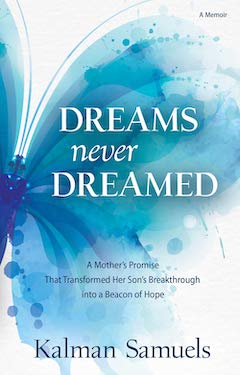
How was it that Kalman and Malki Samuels came to create this extraordinary organization that assists 2,000 children with disabilities each week, while empowering families and promoting social inclusion? The answer lies in the subtitle of Vancouver native Kalman Samuels’ Dreams Never Dreamed: A Mother’s Promise That Transformed Her Son’s Breakthrough into a Beacon of Hope (Toby Press, 2020) – it was a mother’s promise.

In 1977, the couple’s healthy, lively baby boy, two weeks short of his first birthday, was checked by a doctor at a Jerusalem clinic before receiving his second DTP inoculation; and all his developmental milestones were fine, so the nurse gave him the shot.

But Malki knew the same day that something was wrong. “I took Yossi home and followed the instructions they’d given me at the clinic…. I bathed him, gave him baby paracetamol and let him sleep. The moment he woke, I knew my baby was gone. He looked up at me with shiny eyes as if to say: ‘What have you done to me?’”

Only later did the couple discover that, on that October afternoon, “Israel’s health authorities had already known for almost five months that the vaccine batch they were using … was dangerously flawed.” The defective pertussis (whooping cough) component was from the Connaught Laboratories of Canada. The diphtheria and tetanus components were from the Israeli company Rafa, which had combined the three.

Thus began a saga of almost 40 years of anguish, faith, research, perseverance, legal battles and, ultimately, the realization of dreams, not only for the injured Yossi, but for thousands of other children with disabilities.

image - Dreams Never Dreamed book coverDreams Never Dreamed is written chronologically, beginning with Kalman’s personal story of visiting Israel as a college student in the 1960s, eventually becoming Orthodox, making aliyah and marrying his life partner. He writes his family’s spellbinding story with an honesty and openness that opens and pierces our hearts as well.

Yossi was ultimately diagnosed as legally blind – though he loved to wear glasses because it helped him feel more competent – and legally deaf. He is also severely hyperactive.

The Samuels left their home in Israel for New York, following every medical lead in search of help for their son. While her son was attending the Lighthouse – a famous specialized school for the visually impaired – Malki made a pact with God: “… I promise You this. If You ever decide to help my Yossi, I will dedicate my life helping so many other mothers of children with disabilities whom I know are crying with me for their children.”

Some challenges were especially painful, like when children teased Yossi, or when an important Jerusalem rebbetzin, visiting New York, said to Malki, “It’s not fair to yourselves or your healthy children…. You should consider moving this child out of the house, so you can get on with your lives.” Malki answered her: “You have no faith in God.” She invited the rebbetzin to wait 20 minutes, till Yossi came home from school. She saw a child nicely dressed, with glasses and hearing aids, carefully navigating the steps and hugging and kissing his mother, happy to see her. The rebbetzin cried and asked forgiveness.

A few years later, the couple learned that a lawsuit could only be filed in Israel, since that was where the vaccination had been administered. They found an excellent Israeli lawyer and doctors willing to testify, and the family returned home. Samuels describes the legal battles in excruciating detail. In October 1983, five years after the vaccination and after exhaustive paperwork and research, the couple filed suit against the Canadian Connaught Laboratories, the Israeli Rafa pharmaceutical company, the city of Jerusalem and the State of Israel. (The lawsuit ended in a settlement that, even according to the judge, was less than they deserved, but would save them more years of expensive and aggravating legal action.)

At the age of 8, Yossi experienced a “Helen Keller” moment, when Shoshana Weinstock, a warm and loving teacher who was deaf herself taught him his first word – shulchan (table) – using finger spelling. “All of a sudden, he lit up and he got it,” Kalman is quoted as telling the Jerusalem Post. “She taught him the 22 letters of the Hebrew alphabet. Another speech therapist taught him how to speak Hebrew and, slowly, he began to talk.” After that, Yossi was unstoppable. He learned to type on a Braille typewriter, to pray and to speak to those who were able to understand him.

Spurred on by their son’s breakthrough, in 1988, the couple wrote the first proposal for an outreach program that would help other families with children with disabilities. In 1990, that proposal became Shalva, the Israel Association for the Care and Inclusion of Persons with Disabilities, which began as an afterschool program for six children in the Samuels’ Har Nof apartment. The name Shalva is derived from Psalm 127 and means serenity, but, like any new enterprise, the road to success was challenging. The book is filled with anecdotes about how chance meetings on airplanes, or through conversations with a friend or a neighbour, Kalman reached donors who kept Shalva going and led to its development and expansion.

In addition to giving her life and creativity to making sure the professional programs would be the best they can be, Malki, the powerhouse engine behind Shalva, was involved in every aspect of the design and building of the Shalva National Centre, right down to the tiles. She was determined that it feel like a home, not an institution. Renowned Israeli artist David Gerstein, deeply moved by the Shalva story and appreciating Malki’s vision, created a magnificent 20-foot-high mobile of metallic butterflies that hangs in the Shalva atrium.

Around 2005, a gifted young musician, Shai Ben-Shushan, offered his services to Shalva. He had been a member of the Duvdevan special forces unit in the Israel Defence Forces and suffered severe injuries from a grenade attack while pursuing terrorists. He told Kalman, “Like a baby, I had to learn again to eat and to talk. My life was destroyed … I learned what it was like to be helpless and dependent on others  … and I began to think about going back to music and sharing it with others who have similar challenges.”

By the end of a year, Shai had created the now world-renowned Shalva Band, signaling to all that having disabilities does not mean one cannot reach for the stars and make dreams come true.

In 2020, Shalva graduated its first program of young men who entered the IDF as soldiers in the Home Front Command unit. Israel’s Ministry of Foreign Affairs brings heads of state and diplomats to Shalva, just as they take them to Yad Vashem: World Holocaust Centre and to Mount Herzl, the burial place of soldiers who died defending the state of Israel.

Dreams Never Dreamed is alternately inspiriting, infuriating, funny and enlightening, but, for me, Malki’s voice and her photograph are missing. If you want to “meet” her, you can watch a mesmerizing Shalva-produced film on YouTube, About Yossi – A Film About Yossi Samuels.

The Yossi of today is smart, learned, eloquent and brave, with a sharp sense of humour. He can type, read, and daven in Braille, and particularly enjoys high-level Torah literature and magazines. He has traveled the world, met with celebrities and presidents (in Israel and America), is a horseback rider and a certified wine connoisseur. Kalman writes, “[Yossi’s] close friends number in the hundreds and acquaintances in the thousands.”

As his walking ability and balance worsened, Yossi eventually required a wheelchair. “Our blind and deaf son said, ‘For the first time in my life, I feel handicapped,’” writes Kalman. “Yossi had never referred to himself as blind or deaf, but rather ‘low vision’ and ‘hard of hearing.’”

Kalman recalls in the book how his daughter, Nechama, told him that he was like Forrest Gump: “Mommy had her dream and told you, ‘Run, Kalman, run!’ You’ve never stopped; it has coloured your life and all of ours.”

And the lives of thousands more.

Toby Klein Greenwald is an award-winning journalist, the artistic director of Raise Your Spirits Theatre, a poet, a teacher and the editor of wholefamily.com. This review first appeared in the Fall 2021 issue of Jewish Action.

Posted on February 11, 2022February 10, 2022Author Toby Klein GreenwaldCategories BooksTags aliyah, health, inclusion, Israel, Kalman Samuels, Malki Samuels, memoir, Shalva Centre, Yossi Samuels
Singing on social issues

Singing on social issues

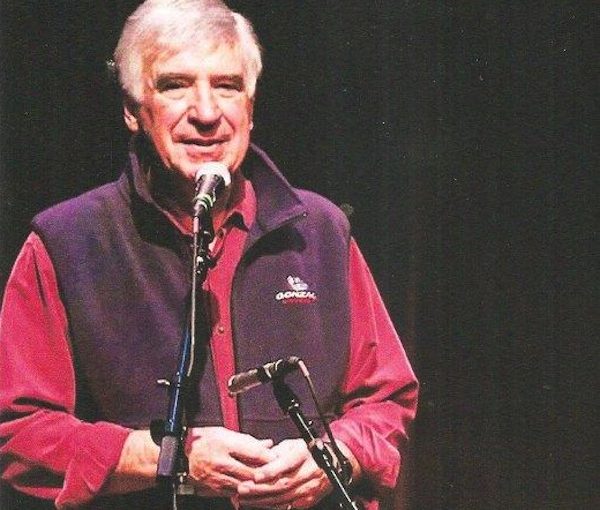
Mike Kobluk (the Chad Mitchell Trio) is one of the musicians featured in Under the Radar, by David Eisenstadt. (photo from Trail Times)

image - Under the Radar book coverUnder the Radar: 30 Notable Canadian Jewish Musicians, which I wrote with Alan L. Simons (editor), takes an historical approach, covering musicians of most genres and genders, some alive and others having passed on, all skilled, but excelling somewhat out of sight. This is the third in a three-part series of excerpts from the book, which was released last November, and is available in paperback and as an ebook from amazon.ca. The excerpts feature performers with B.C. roots: Robert Silverman, Ben Mink and Mike Kobluk.

In 1958, as students attending Gonzaga University in Spokane, Wash., William Chadbourne Mitchell, Mike Kobluk and Mike Pugh formed the Chad Mitchell Trio. Their repertoire criticized the Cold War and the Vietnam War while championing civil rights. Many of John Denver’s early songs were part of their songlist.

Kobluk, who is Jewish, was born in Trail, B.C. As a child, he sang for fun, but “singing for a career … never entered [his] mind.” He majored in English and math at Gonzaga. He spent 10 years – the longest-serving vocalist with the trio – before leaving in 1969.

But, going back. In the summer of 1959, a friend of Mitchell’s “hatched the plan that started us on a professional career” and the trio journeyed to New York to begin that chapter in their lives, according to Kobluk.

By May 1960, they signed with Harry Belafonte’s management company and performed with Belafonte, Pat Boone and Arthur Godfrey.

After two albums were pressed – The Chad Mitchell Trio and In Concert – Everybody’s Listening – Pugh left the group in the fall of 1960 to return to university. Mitchell and Kobluk auditioned more than 150 vocalists, including Tom Paxton. They chose Joe Frazier and, according to The Virgin Encyclopedia of Popular Music, the group cut nine albums together.

Initially, the trio recorded on the Colpix label. Their sound soared recording for Kapp Records, with tunes like “Lizzie Borden” (about the accused axe murderer), “Mighty Day” (remembering the Galveston, Tex., hurricane of 1900) and the Prohibition-era tune “Rum by Gum.” Other songs included “The Ides of Texas” (about financier Billie Sol Estes) and “The John Birch Society.” On their live album, they sang “Moscow Nights” in Russian, a controversial decision at the time.

Interviewed by the Trail Times, Kobluk said that, “in the early 1960s, we worked with Belafonte, culminating in a Carnegie Hall concert he hosted featuring Miriam Makeba, Odetta, the Belafonte Singers and us.” As part of a U.S. cultural exchange program, the trio also toured South America in 1962.

“Over time,” he added, “we’d renew our association with Belafonte and, years later, when the Selma, Ala., march with Dr. Martin Luther King was being organized, our reputation put us on Belafonte’s list.”

They left Belafonte Enterprises in 1962 for Mercury Records, adding provocative songs like “The Draft Dodger Rag” and “Barry’s Boys,” the latter of which lampooned Barry Goldwater’s Republican 1964 presidential run.

Mitchell quit the band in 1965, replaced by John Denver, then a relatively unknown singer/songwriter. The musicians retained the well-known Mitchell Trio name with Denver, “who stayed for three years, writing many of the group’s songs,” notes The Virgin Encyclopedia. In 1966, Frazier was replaced by David Boise. In 1969, when Kobluk departed, Michael Johnson joined. Because of contract legalities, the Mitchell name could no longer be used and the group became known as Denver, Boise and Johnson. But it was shortlived – they disbanded in 1969.

Kobluk told the Trail Times, “[We] performed songs of political and social commentary, not exclusively, but such material was an important part of any program. Equal opportunity and voting rights for all were high on our personal and professional priority list and fodder for such commentary.”

Kobluk, Frazier and Boise moved to careers outside the music business, Mitchell cut various solo albums and Denver’s career as a solo performer soared. Johnson recorded more than 15 solo albums and Frazier became an Episcopal Church priest.

On Nov. 15, 2014, in Bethesda, Md., the trio shared a final stage at a “farewell” concert, with singer/guitarist Ron Greenstein replacing Frazier, who died in March of that year.

Format ImagePosted on February 11, 2022February 10, 2022Author David EisenstadtCategories BooksTags Chad Mitchell Trio, Mike Kobluk, music, Under the Radar
Alarming population decline

Alarming population decline

Since 1970, the population sizes of mammals, birds, fish, amphibians and reptiles have declined by 68% – or more. (photo from CABGU)

Over the past 24 years, Living Planet Report has been published biannually by the Zoological Society of London and the World Wildlife Fund. It highlights the major declines that some 20,811 vertebrate populations, representing 4,392 species monitored around the world, have experienced globally. The 2020 report (which is the latest one) showed that, on average, the population sizes of mammals, birds, fish, amphibians and reptiles declined by 68% between 1970 and 2016.

As large as that decline is, a paper published in the journal Nature last month by a group of scientists based in Israel – Drs. Gopal Murali and Gabriel Caetano from Ben-Gurion University were lead authors of the paper – shows that it might greatly underestimate the situation.

As part of their research, the authors analyzed the overlap of the monitored populations with protected areas. They then compared these to a random sample of locations and the placement of the global network of protected areas. They found that the populations sampled in Living Planet are much more likely to be found inside protected areas than would be expected to occur by chance.

“This is truly alarming,” said Caetano. “If populations inside protected areas – where we focus a lot of our conservation efforts – are doing so badly, those that reside outside protected areas are probably worse off. The true situation of nature – mostly not monitored or protected – may be much worse.”

The authors highlight the need for proper accounting of the status of nature when making generalizations (as they have done in their paper). However, they also advocate for greater monitoring of populations and species in different locations and stress that many animal populations and natural environments will be lost forever without concentrated and direct action.

The world is experiencing massive transformations that are expected to intensify in the coming decades and have fundamental and dire consequences for the natural world. Prof. Shai Meiri from Tel Aviv University, also a co-author of the Nature article, said, “Rather than discourage us from action, we feel that our work should be viewed as a call to arms. Rapid and comprehensive changes in how we view our relationships with nature are needed – and the onus is on us to make sure they happen before it is too late.”

– Courtesy Canadian Associates of Ben-Gurion University of the Negev, B.C. & Alberta Region

Format ImagePosted on February 11, 2022February 10, 2022Author CABGU - BC & Alberta RegionCategories IsraelTags Ben-Gurion University, BGU, climate crisis, endangered species, environment, Gabriel Caetano
Rabbi talks of healing

Rabbi talks of healing

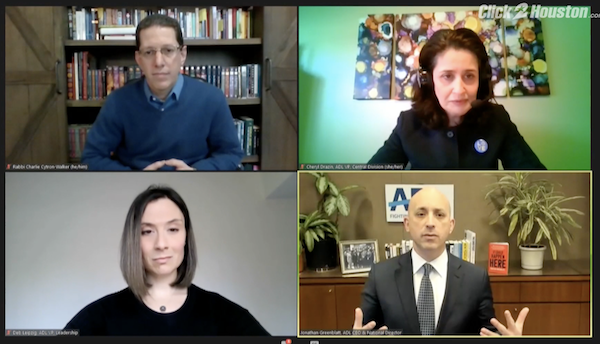
Clockwise from top left: Rabbi Charlie Cytron-Walker of Congregation Beth Israel in Texas speaks with the Anti-Defamation League’s Cheryl Drazin, Jonathan Greenblatt and Deb Leipzig. (screenshot)

Rabbi Charlie Cytron-Walker was bustling around Congregation Beth Israel, in the Dallas suburb of Colleyville, Tex., getting ready for Shabbat morning services. There was a knock on the synagogue’s door and the rabbi welcomed a stranger who was looking for shelter from the unusually cold morning. Cytron-Walker prepared the man a cup of tea and made conversation.

“There were no initial red flags,” the rabbi recalled Jan. 20, in an Anti-Defamation League web event that included the director of the Federal Bureau of Investigation. The man exhibited no signs that he would be a danger, said Cytron-Walker.

“The sense of nervousness, the darting around, those kinds of things that you might expect,” were absent, said the rabbi. “He was calm, he was appreciative, he was able to talk with me all the way throughout, look me in the eye.… I didn’t have a lot of suspicions.”

The unexpected guest was, of course, Malik Faisal Akram, an armed British man who would take the rabbi and three congregants hostage in an 11-hour standoff on Jan. 15. In the end, for all the responders mobilized and crisis negotiators assembled, the incident ended when the rabbi threw a chair at the attacker and the four hostages escaped.

Cytron-Walker explained how he put together the man’s motivations by listening to his rantings and the conversations he was having by phone. Akram was seeking the release of Aafia Siddiqui, a convicted terrorist known as Lady Al Qaeda, who is incarcerated in an American prison not far from Beth Israel synagogue. The hostage-taker apparently subscribed to antisemitic ideas, including the belief that the United States would do whatever was necessary to save the lives of Jewish hostages and that pressure by Jews could lead to his demands being met. At some point, Akram became aware of Rabbi Angela Buchdahl, senior rabbi at Central Synagogue in New York City, and demanded to speak with her during the incident.

“I don’t know how or why he chose her exactly, other than the fact that he thought that she was the most influential rabbi,” said Cytron-Walker. “And I was thinking, this guy really believes that Jews control the world.… I tried to explain to him to the best of my ability that it doesn’t work that way.”

The rabbi credited law enforcement for their response, and spoke at length about the security preparations that synagogues and other Jewish institutions take, with the support of groups like UJA Federations, the Anti-Defamation League, the Secure Community Network and the FBI.

“We had a security plan in place,” said Cytron-Walker. “All of it was helpful, and yet, one of the things that we are aware of is that no matter how good the plan is, no matter how good the security is, these kinds of things can still happen.”

Christopher Wray, director of the FBI, expressed solidarity with not just those immediately affected by the incident but the entire Jewish community.

“We understand all too well that these kinds of attacks are terrifying and that they are not only terrifying to the individuals directly and physically involved, they are also terrifying for all the members of Congregation Beth Israel and, really, for the entire Jewish community, many of whom understandably worry about other threats still out there,” Wray said. “Our joint terrorism task forces across the country will continue to investigate why this individual specifically targeted Congregation Beth Israel on their day of worship.”

Neither Wray, nor any other individual on the livestream, addressed remarks by the FBI’s special agent in charge of the case. As the hostage-taking in the synagogue was unfolding, Matthew DeSarno told media that the assailant was “singularly focused on one issue, and it was not specifically related to the Jewish community, but we are continuing to work to find motive.” His remarks have been condemned as erasing the antisemitic motivations of the terrorist.

While none of the hostages was physically harmed, Cytron-Walker spoke of the emotional recovery that he, the other hostages and the broader community are undergoing.

“It’s going to be one step at a time for us,” he said. “We are doing the best we can to heal. We’re going to have services on Shabbat evening, we’re going to have services on Shabbat morning, we’re going to have religious school on Sunday and we already had a beautiful healing service on Monday night that was so meaningful – to actually see people, to be able to hug people.… But it’s one step at a time.… I’m getting the care that I need. I’m trying to make sure that I take care of my family and, at the same time, one of those pieces that we’re going to have to get past is that sense of fear.

“There was something traumatic that happened within the congregation,” he continued, “and we know that it’s not just our congregation that feels a sense of fear. It’s something that a lot of people and a lot of Jewish people in particular, our people, are living with.… We want to be able to go to services and pray and be together because one of the most important things is to be with one another within that sense of community. That’s needed right now more than anything else.”

Jonathan Greenblatt, chief executive officer of the Anti-Defamation League, moderated the online event.

Format ImagePosted on January 28, 2022January 27, 2022Author Pat JohnsonCategories WorldTags ADL, Anti-Defamation League, antisemitism, Charlie Cytron-Walker, hostage-taking, security, terrorism, Texas

Posts pagination

Previous page Page 1 … Page 183 Page 184 Page 185 … Page 662 Next page
Proudly powered by WordPress