Skip to content
  • Home
  • Subscribe / donate
  • Events calendar
  • News
    • Local
    • National
    • Israel
    • World
    • עניין בחדשות
      A roundup of news in Canada and further afield, in Hebrew.
  • Opinion
    • From the JI
    • Op-Ed
  • Arts & Culture
    • Performing Arts
    • Music
    • Books
    • Visual Arts
    • TV & Film
  • Life
    • Celebrating the Holidays
    • Travel
    • The Daily Snooze
      Cartoons by Jacob Samuel
    • Mystery Photo
      Help the JI and JMABC fill in the gaps in our archives.
  • Community Links
    • Organizations, Etc.
    • Other News Sources & Blogs
    • Business Directory
  • FAQ
  • JI Chai Celebration
  • JI@88! video

Recent Posts

  • Sharing her testimony
  • Fall fight takes leap forward
  • The balancing of rights
  • Multiple Tony n’ Tina roles
  • Stories of trauma, resilience
  • Celebrate our culture
  • A responsibility to help
  • What wellness means at JCC
  • Together in mourning
  • Downhill after Trump?
  • Birth control even easier now
  • Eco-Sisters mentorship
  • Unexpected discoveries
  • Study’s results hopeful
  • Bad behaviour affects us all
  • Thankful for the police
  • UBC needs a wake-up call
  • Recalling a shining star
  • Sleep well …
  • BGU fosters startup culture
  • Photography and glass
  • Is it the end of an era?
  • Taking life a step at a time
  • Nakba exhibit biased
  • Film festival starts next week
  • Musical with heart and soul
  • Rabbi marks 13 years
  • Keeper of VTT’s history
  • Gala fêtes Infeld’s 20th
  • Building JWest together
  • Challah Mom comes to Vancouver
  • What to do about media bias
  • Education offers hope
  • Remembrance – a moral act
  • What makes us human
  • המלחמות של נתניהו וטראמפ

Archives

Follow @JewishIndie
image - The CJN - Visit Us Banner - 300x600 - 101625

Connecting from heart

Connecting from heart

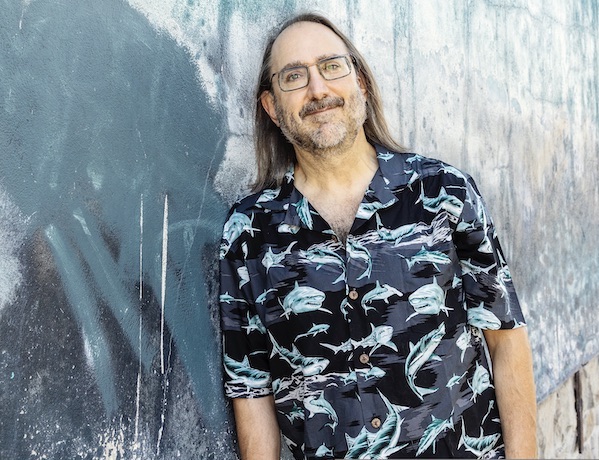
Zelik Segal teaches an ongoing, free class in Nonviolent Communication. (photo from Zelik Segal)

We’ve all had an experience in which someone is short-tempered with us for no apparent reason, or doesn’t respond to us as we would like. We have a choice in that moment to react in kind or to pause, understanding that they may be having a bad day, or are dealing with chronic pain, or any number of things that have little or nothing to do with us. In situations like these, something called Nonviolent Communication (NVC) might come in handy.

In a nutshell, NVC teaches how to observe a conflict with objectivity, in place of subjective evaluations of right and wrong or appropriate and inappropriate. It also teaches how to sort out your own feelings and understand what needs of yours are in play, then how to determine what action might fulfil your needs in a conflict without taking away from the needs of the other person or people.

Want to experiment with that process? Zelik Segal teaches an ongoing, free class in NVC in Vancouver that helps people who are experiencing conflict and are ready to address it. It could be a marital problem or an ongoing argument with a friend or family member.

Segal took his first course in NVC in 2012 and has been facilitating and practising for the past six years; he is working on his certification. Segal began studying NVC after he retired from 18 years as a bus driver with Coast Mountain Bus Company. Prior to that, he worked as Lower Mainland regional coordinator for the B.C. Head Injury Program, under the ministry of health.

“When coming into a group to teach NVC, I also experience learning together and creating community that feeds my soul,” Segal told the Independent. “And having the good fortune to have discovered this jewel of living a more rewarding life, I like to share my good fortune with anyone else willing to learn.”

Segal calls himself an “empathy coach.” As such, he sometimes helps NVC students unravel difficult situations in their lives.

“Teaching NVC is the most immediate and direct way I can fulfil the talmudic statement from Rabbi Tarfon, who said, ‘You are not responsible to complete the task (of repair, tikkun olam), nor are you free from doing your part.’”

Segal recognizes that NVC is not always effective in resolving conflict and that it can take a lot of patience to sort through complex situations. He told the Independent that it did, however, change his life.

“While my connections to people and activities have remained the same as they were before I began to practise NVC, the way I connect and experience these connections are significantly different and far more satisfying,” he said. “I have learned to apply my learning to my marriage, to my employment as a bus driver prior to my retirement, to my retirement, to family and to my own self.”

Psychologist Marshall Rosenberg developed NVC in the 1970s. In part, it was his reaction to the bullying he went through in school because of his Jewish surname. In his book Nonviolent Communication: The Language of Life, he states that bullying is a “tragic expression of unmet needs.”

Segal further explained that Rosenberg’s nine categories of needs are safety, sustenance, love, empathy, community, creativity, recreation, meaning and autonomy.

Rosenberg became famous for creating dialogue between people around the world who were involved in violent conflicts, including Israelis and Palestinians. Trainers in NVC today are continuing his work.

“While NVC teaches the use of compassionate understanding to achieve resolution of conflict, it supports the use of force in situations where there is a threat to life, where the other party is unwilling or unable to enter into conversation and presents a threat,” said Segal.

Rosenberg suggested that, in times of conflict, people respond by defending themselves, attacking the other or withdrawing from the situation, sometimes even experiencing complete collapse, explained Segal.

“Learning that emotions are rooted in previous learning and part of a complex, unconscious process in the brain and directly rooted in the degree to which needs are fulfilled, one can then respond with curiosity and reflection in place of old patterns of reaction,” he said.

Segal sees NVC as a way to practise Judaism’s emphasis on social justice and “apply many of the maxims expressed by the rabbis in Pirkei Avot [Ethics of Our Fathers],” he said.

If you have questions about NVC or are interested in Segal’s classes, you can contact him at [email protected]. Rosenberg’s books are available online and the Centre for Nonviolent Communication, which he founded, offers international training and certifies individuals as trainers: cnvc.org.

“NVC is about connecting with ourselves and others from the heart,” it says on the centre’s website. “It’s about seeing the humanity in all of us. It’s about recognizing our commonalities and differences and finding ways to make life wonderful for all of us.”

Cassandra Freeman is a freelance writer living in Vancouver.
Format ImagePosted on July 21, 2023July 20, 2023Author Cassandra FreemanCategories LocalTags classes, education, Judaism, Marshall Rosenberg, nonviolent communication, NVC, psychology, relationships, Zelik Segal
Meet a total mensch

Meet a total mensch

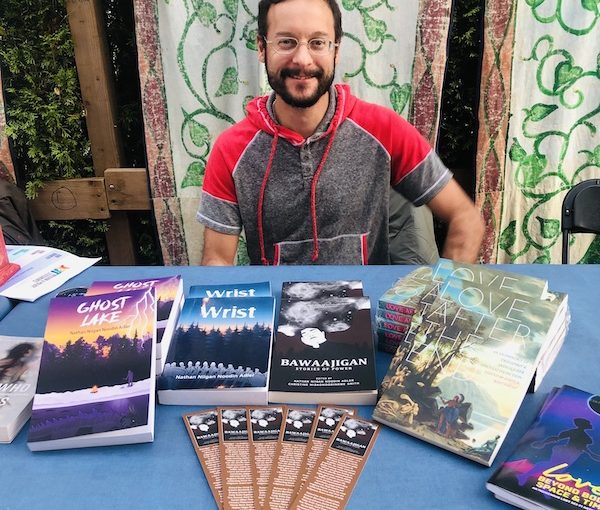
Nathan Niigan Noodin Adler at the JQT Vancouver artisan market last fall at Or Shalom for Sukkot. (photo by Carmel Tanaka)

When you enter Massy Books in Chinatown, one of the main Indigenous authors featured in the centre book aisle is Nathan Niigan Noodin Adler. I smile every time I pop in because I see signed copies of his award-winning young-adult horror fiction for sale – Wrist and Ghost Lake, both published by Kegedonce Press. Of course, Nathan would take the time to sign each book! He’s a total mensch, and we met in the best of ways.

I was having brunch with my dear friend Evelyn Tauben of Fentster Gallery at Toronto’s Pow Wow Café, owned and operated by Nathan’s brother, Shawn, an Indigenous Jewish chef. We bonded over being “Jewish&” and he mentioned that he had a sibling out west and that we should connect. So, I reached out over Facebook and we met up at the Fountainhead Pub in Davie Street Village, Vancouver’s “gaybourhood,” a few months later. Since then, Nathan has become a good friend, and you’ll also see him around JQT events, sometimes tabling as a JQT artist or just showing up to enjoy the festivities and the food.

I caught up with Nathan when he was guest curating Centring Indigenous Joy: A Celebration of Literature, Arts and Creativity with Word Vancouver for Indigenous Peoples’ Day last month. The Jewish Independent asked me to attend the event and interview Nathan for the paper.

CT: In your opening remarks, you state that you are Jewish, Anishinaabe, Two-Spirit and a member of Lac des Mille Lacs First Nation. You go on to say that your father is a Holocaust survivor and that your mother is a residential school survivor. What has the journey been like for you? How has the way you introduce yourself evolved over time?

NA: Part of my idea behind the Centring Indigenous Joy event was related to the number of emotional film programs I’ve attended that are about processing historical trauma – really important work, but also kind of a downer. Sometimes a late-night shorts program full of zombies and gore is more cathartic somehow? I wanted people to come away feeling uplifted and happy rather than heavier, you know? Especially since it was an event for Indigenous Peoples’ Day, I wanted it to be celebratory. We’re more than our trauma.

Me and two of my siblings recently traveled to Europe to work on a documentary about our great-uncle who didn’t survive the Holocaust and, after visiting so many museums, memorials, internment camps and historical sites, all I wanted to do was … party!? I insisted my brother quit his delivery job so we could spend an extra two weeks outside our work on the documentary to just have fun, do touristy stuff, go to clubs and the beach. I think balance is needed.

I don’t usually include stuff about my parents being survivors in my introductions, but I felt it was part of my thought process behind the theme for the event (Indigenous joy), and I wanted people to know it wasn’t some kind of toxic positivity in the face of harsh realities, but something that I’d deeply considered. It was more about a shift in focus.

CT: How did your parents meet? And what was their families’ reaction to their union?

NA: They met in French class at the University of Guelph in 1967. My mom missed a class and asked my dad what she missed. That’s how they started talking to each other. My mom mentioned the ballet was in town (“a leading question,” she says) and he asked her out. There were very few Native people in university at that time, so it’s pretty unlikely they [would even meet], but that’s how it happened.

My Jewish grandparents were not happy about the fact he was dating a non-Jew, at least until the babies started coming – then all was forgiven!

All my mom’s family said about it was: “Oh, he’s too old for you” [a five-year age difference], but she also probably looked much younger than him at 19 years old.

CT: Where do Jewish and Indigenous cultures meet?

NT: Food and community and tradition, though the types of foods and traditions are different. Also, the inheritance of historical trauma, and overcoming oppression. You know, just a few minor things.

CT: When did you realize that you were Jewish and Indigenous? Was there a moment?

NA: I don’t remember a specific moment. I think I always just knew? We spent most weekends either going to visit our Ojibwe grandmother or our Jewish grandparents. We did the Jewish High Holidays, Passover, Hanukkah, Purim, etc., and we went to Sunday school for awhile, and in the summer our mom took us up to the reserve or out on the powwow trail and to Native community events in Guelph, where our aunt lives; there were always feasts and ceremonies. So, we always had that grounding in our cultures, where we come from. It wasn’t always a full picture though, it was also marked by absence of knowledge, language and people – relatives who didn’t survive, the knowledge that didn’t get passed down, a lot of unknowns and absences that also becomes part of who we are. Those gaps also become markers of identity.

CT: What has been your experience of being Indigenous and Two-Spirit in the Jewish community (here in Vancouver and elsewhere)? And vice versa?

NA: Well, I think it’s been pretty great here in Vancouver, thanks to the work of JQT, which really helps build community and creates space. When I lived in Peterborough, Ont., there was also a pretty cool alternative Jewish and queer scene. I went to a memorable queer Passover there once, which is one of the few gay and Jewish events I’ve been to; a gay-Jewish-boy networking I stumbled on in Toronto once; and then the JQT events I’ve attended or participated here in Vancouver, like the arts markets and the Shabbos Queen event. And I’ve been to many Two-Spirit-specific events – my twin brother helps organize the 2-Spirit Ball in Ottawa as part of the Asinabka Festival – and, recently, I went to the 2-Spirit Powwow at Downsview Park in Toronto. It’s actually pretty great being part of these communities. Queers are everywhere, so are Jews and NDNs – add in the arts scene and social networks, and it makes it easier to find community in a new place.

CT: Your jam is horror fiction and documentary filmmaking. What draws you to these genres?

NA: I love all things horror and urban fantasy. I went through a Goth phase, and I’m still a Goth at heart. So, when it comes to making my own work, it just makes sense to work in those genres. I also picked up a lot of film and video post-production skills when I attended OCAD [Ontario College of Art & Design] University in the 2000s. But I feel like fiction isn’t for everyone. A lot of people are turned off by anything that isn’t steeped in the conventions of the here and now. They see anything with an element of fantasy, and it’s too far removed from reality – though I think the opposite is true, the fantastic can make a great metaphor for exploring the realities of this world. But some stories feel like they need to be told as they are, they don’t need any dramatization or embellishment. So, it just depends on the story. The story should dictate how it gets told.

CT: You teach post-secondary creative writing, and your work is showcased in numerous art and film festivals. What are you currently working on? What is coming up next? What’s your dream project?

NA: I’m working on a short story for a horror anthology that Kegedonce Press is planning on putting out – though the story isn’t very scary so far, so I may need to write something else. I’m curating a few panels for Word Vancouver in September as part of their Literary Arts Festival, and I’ll be pretty busy with teaching again in September, which takes up a lot of time.

There is the documentary I mentioned about our Uncle Emanuel that we need to sit down and edit (many, many hours of footage to sift through to put the story together). I also have a graphic novel project that’s been on the back burner that needs to be done asap.

I’d love to write those Y/A [young adult] novels I’ve had in the back of my head for awhile, plus the next novel that’s in an unfinished state. Too many unfinished projects! Dream project: finish these ones first before I tackle anything new.

CT: Have you or your family come up with any fusion Indigenous Jewish recipes?

NA: That might be a question for my brother Shawn – he’s the chef! Though, a lot of my knowledge of Jewish cooking comes from my mom, who learned how to do a lot of cooking from her mother-in-law. I think that’s a type of fusion. Learning how to cook Jewish food by way of my Anishinaabekwe mom – even my Jewish food is Indigenous.

Follow Nathan on Instagram @rivvenrivven or on Twitter @nathan_adler.

Carmel Tanaka is the founder and executive director of JQT Vancouver, and curator of the B.C. Jewish Queer & Trans Oral History Project (jqtvancouver.ca/jqt-oral-history-bc) and the Jewpanese Oral History Project (Instagram: @JewpaneseProject).

Format ImagePosted on July 21, 2023July 21, 2023Author Carmel TanakaCategories LocalTags books, filmmaking, LGBTQ+, Nathan Niigan Noodin Adler, Word Vancouver, writing
Jews and superheroes

Jews and superheroes

Mark Leiren-Young (photo from Mark Leiren-Young)

From a neurotic gentleman who dresses like a bat, to a wise-cracking human spider, to a Super-Mensch appearing in the bulrushes, not to mention a green golem – it is impossible to escape the Jewish influences of comic superheroes, says Mark Leiren-Young, a creative writing instructor at the University of Victoria.

Put another way, Leiren-Young told the Independent, “It would be simpler to name the iconic comic superheroes who were not shaped by Jewish immigrants. It’s a very small list: Wonder Woman and Shazam. That’s it.  That’s all of them.”

In his classes, Leiren-Young and his UVic students examine and analyze the origins of the classic superheroes, almost all of whom were created by Jewish immigrants in the United States. In the first half of the 20th century, these creators were working in comics at least in part because they were not allowed to get jobs in advertising or journalism at the time. In other words, Jews were permitted to do the low-class work that “proper people” would not consider.

Superman, Batman, Spider-Man, Green Lantern, the Flash, Dr. Strange and numerous others on the superhero roster were all products of Yiddishkeit, according to Leiren-Young, whose classes on the DC Universe and the Marvel Universe are among the most popular electives at the university.

“One of the things that fascinated me when I did a deep dive into this – all of these Jewish creators were creating characters who were not shy about their religion, though there were none who overtly identified as Jewish. For example, Spider-Man’s sense of humour is absolutely Borscht Belt humour. It is Stan Lee’s humour,” he said, referring to the character’s creator. “Now, you’re seeing the actor playing Spider-Man (Andrew Garfield) saying he just assumed he was a Jewish character. That’s how he reads.”

The perceived Jewishness of the early manifestations of comic superheroes was not lost on the Nazis. In 1940, a copy of Look magazine, featuring a two-page segment on how Superman would end the war, made its way to the desk of Das Schwartze Korps, the weekly publication of the SS, in Germany. The Nazis attacked Superman’s creator, writing, “Jerry Siegel, an intellectually and physically circumcised chap who has his headquarters in New York, is the inventor of a colourful figure with an impressive appearance, a powerful body, and a red swim suit who enjoys the ability to fly through the ether.

“The inventive Israelite named this pleasant guy with an overdeveloped body and underdeveloped mind ‘Superman.’ He advertised widely Superman’s sense of justice, well-suited for imitation by the American youth. As you can see, there is nothing (they) won’t do for money!”

The Nazis, led by Joseph Goebbels, their chief propagandist, were concerned about Superman’s sense of justice, Leiren-Young contends. The effects of the German invective against Superman and his creators carried over to these shores as well, with DC Comics being picketed by American Nazis in 1940.

“The creators of Superman were living in a Jewish section of Cleveland and were emphatically impressed with the idea of social justice,” Leiren-Young said.

The Superman-going-to-war spread in Look magazine preceded another daring Jewish-inspired comic – Captain America punching Hitler – that would be published in 1941, before the United States entered the war.

The Jewish creators of Superman and Captain America essentially were going to war and defining Hitler as the enemy before any American troops were involved, Leiren-Young explained.

“Captain America was created to punch Hitler. He looks like a nerdy Jew until he gets the super serum and then turns into the All-American Hero, which also created protests from the American Nazi Party. These were controversial because there were still so many Americans who were really not keen on the United States going to war,” said Leiren-Young.

Such imagery continued after the war. In the 1961 comic “The Death of Superman,” for example, the setting for the trial of Lex Luthor, Superman’s archenemy, strongly resembles the trial of Adolf Eichmann in Israel.

In another postwar Jewish connection, the scientist who invented Captain America in the comic series looks increasingly like Albert Einstein as the story progresses.

Leiren-Young developed an interest in comics at an early age, “raiding” his uncle’s collection after Shabbat dinners. “He had everything, but for me it was all about the DC Comics. I remember there were all sorts of different comics, but a lot of DC superheroes,” said Leiren-Young, who has more than 15,000 comic books in his collection.

In 2014, when Swerve magazine asked writers across Canada to name the most influential book they read as a youth, Leiren-Young responded, “I’ve written a few stories about how and why I fell in love with comics, but I never imagined that having a collection of 15,000-plus comics would launch my career as a television writer or become a job qualification for teaching certain university classes,” he tells his students.

Leiren-Young has written and/or developed animated shows for Netflix, BBC Kids, ABC, Teletoon and other broadcasters. He has also written for BBC’s live-action CGI superhero series Ace Lightning, and his other cartoon credits include scripts for ReBoot, Transformers: Beast Wars, RollBots, Class of the Titans and Pucca.

Beyond his classes and comics, Leiren-Young is a playwright, author, journalist, filmmaker and performer. The Hundred-Year-Old Whale, a film he wrote and directed, received the 2017 Writers Guild of Canada award for best documentary. His memoir, Never Shoot a Stampede Queen, won the 2009 Stephen Leacock Memorial Medal for Humour.

Leiren-Young recently gave a talk about comic superheroes at Victoria’s Congregation Emanu-El and hopes to address a Vancouver audience about the subject in the near future. His knowledge and enthusiasm for comics extends well beyond the confines of a standard newspaper article. He recommends Up, Up and Oy Vey by Simcha Weinstein, Stan Lee: A Life in Comics by Liel Leibowitz and Is Superman Circumcised? The Complete Jewish History of the World’s Greatest Hero by Roy Schwartz for further reading on the subject.

Sam Margolis has written for the Globe and Mail, the National Post, UPI and MSNBC.

Format ImagePosted on July 21, 2023August 1, 2023Author Sam MargolisCategories LocalTags comics, education, Holocaust, immigrants, Mark Leiren-Young, superheroes, University of Victoria, UVic
Empowered by piano, song

Empowered by piano, song

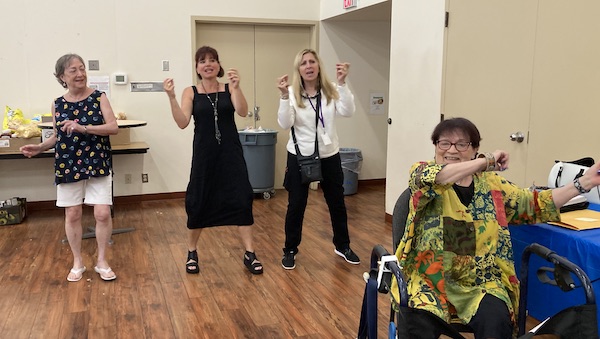
From left to right: Leslie Rosen, Toby Rubin, Tammy Klass and Marilyn Berger dance to the music of singer and pianist Miriam Davidson. (photo from JSA)

The last session of the Jewish Seniors Alliance-Snider Foundation Empowerment 2022-23 season was held on June 26 at Beth Tikvah Synagogue in Richmond. It featured Miriam Davidson playing and singing show tunes, and people joined in and even danced.

The event was co-sponsored by JSA, Kehila Society’s Seniors Program and Beth Tikvah. Attendees were treated to a BBQ lunch of hamburgers, hot dogs and veggie dogs with all the trimmings. More than 60 seniors from around the Lower Mainland attended.

photo - Miriam Davidson
Miriam Davidson (photo from JSA)

The crowd was welcomed by Toby Rubin, the coordinator of the Kehila program. She explained that Lester Soo, the scheduled entertainer, was unable to perform, but that Davidson, a pianist and vocalist, was able to step in.

Davidson began with some songs from The Sound of Music that were very familiar to the audience, and she encouraged everyone to sing along. The program included such tunes as “Ain’t Misbehavin’,” “Fly Me to the Moon” and “Only a Paper Moon.” She played “Memory” from the musical Cats and a request for Abba’s “Dancing Queen” had the audience swaying and waving their arms in time to the music. There was even a bit of dancing.

The concert ended with “Here Comes the Sun” by the Beatles.

The afternoon wrapped up with greetings from Tammi Belfer, president of the JSA, and a thank you to Davidson, who was wonderful.

Shanie Levin is a Jewish Seniors Alliance Life Governor. She is also on the editorial committee of Senior Line magazine.

Format ImagePosted on July 21, 2023July 20, 2023Author Shanie LevinCategories MusicTags Empowerment Series, Jewish Seniors Alliance, JSA, Kehila Society, Miriam Davidson, piano
Burquest film now online

Burquest film now online

screenshot - Burquest Community CentreScreenshots from Burquest: Past, Present & Future.

The 37-minute film Burquest: Past, Present & Future – about Burquest Jewish Community’s history – includes photos and interviews with founders and past leaders, and is scored with original music written by Burquest members and supporters. It premièred at a wine and cheese event on June 25 and is now available at burquest.org.

Format ImagePosted on July 21, 2023July 20, 2023Author Burquest Jewish Community AssiociationCategories Local
JI wins four Rockowers

JI wins four Rockowers

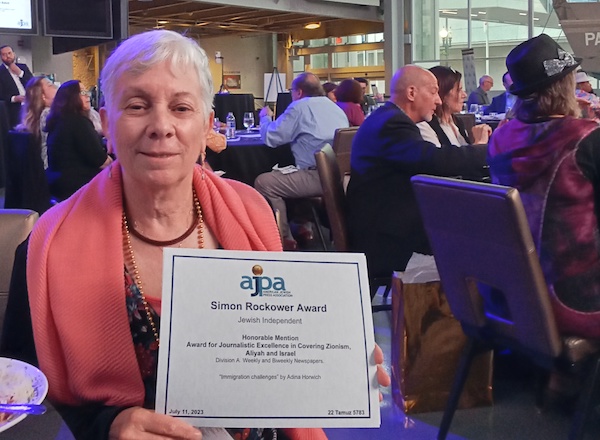
Adina Horwich at the 42nd annual Rockowers Awards. She received an honourable mention for journalistic excellence in covering Zionism, aliyah and Israel. (photo from Adina Horwich)

The Jewish Independent won four Simon Rockower Awards for Excellence in Jewish Journalism this year. The awards, which are given out by the American Jewish Press Association, were for work done in 2022. The JI has had a few Rockower hat tricks in its history, but this is the first time the paper has garnered four honours in one year.

The awards were presented on July 11 at the Higgins Hotel and Conference Centre in New Orleans, La., where the AJPA’s annual conference was held. The JI mainly competed in the division of weekly and biweekly newspapers, but there were some categories for which the competition was between all types of media (print and online); awards were given for first and second place, and sometimes honourable mention.

Writer Adina Horwich traveled from her home in Israel to New Orleans to receive her award in person. She won the JI an honourable mention for journalistic excellence in covering Zionism, aliyah and Israel for her article “Immigration challenges” (jewishindependent.ca/immigration-challenges-2). The piece both reviews Adi Barokas’s Hebrew-language graphic novel, The Journey to the Best Place on Earth (and Back), about Barokas’s experience trying to immigrate to Vancouver from Israel, and shares Horwich’s experience making aliyah from Canada. The jury commented: “Extremely readable story, that skilfully explores from a personal perspective the nitty gritty of making aliyah.”

The JI’s Pat Johnson also received an honourable mention – his article “Oasis in the Caucasus” (jewishindependent.ca/oasis-in-the-caucasus) garnered recognition for excellence in writing about Jewish heritage and Jewish peoplehood in Europe. The jury said about his piece:

“A terrific look into the Jewish community of Azerbaijan that most of us, unfortunately, don’t have on our ‘Must-Go Places to Visit.’ Pat Johnson’s very nice story strongly suggests otherwise. Johnson paints a wonderful picture of this tucked-away ‘shtetl’ where the residents say they have never faced antisemitism. If only we could feel so lucky here in the United States! And while most of us do well playing ‘Jewish geography,’ actual world geography is often more of a challenge. Having Johnson admit having to Google Azerbaijan before traveling there to report this story added a nice touch that connects with readers who may also be unfamiliar with the country – but now more knowledgeable thanks to this feature.”

Johnson was recognized for another of his articles, “Maus not too graphic” (jewishindependent.ca/maus-not-too-graphic), which placed second for excellence in education reporting. Johnson sat in on Anna-Mae Wiesenthal’s Holocaust and Genocide Studies class at King David High School, and listened as students discussed the graphic memoir Maus by Art Spiegelman.

“Lots of people laughed when a Tennessee school board pulled Maus from the curriculum because of the drawing of a naked cat. That was too much for board members and they banished the Pulitzer Prize-winning graphic novel,” wrote the Rockower jury. “Viewing the book through the eyes of five students at a Jewish high school subtly portrays the board decision’s absurdity.”

Rounding out the JI wins was a first place for excellence in editorial writing – where all entries competed in the same division. The JI editorial board of Johnson, Basya Laye and me were honoured for the set of editorials that included “Every person has a voice” (about Elon Musk, hatred and misinformation online, and how people can counter such forces), “Extremism not helpful” (about New Democratic Party leader Jagmeet Singh’s views on the Israeli-Palestinian conflict) and “New era in U.S. politics” (about the U.S. Supreme Court’s rejection of a woman’s right to reproductive self-determination, as well as the Jewish perspective on abortion).

About these editorials the Rockower jury wrote: “These pieces are good examples of what editorials should be – thoughtful examination of pressing issues, using clear reasoning in looking at both sides, then coming to a well-reasoned conclusion. Local tie-ins strengthen opinions.”

All of us at the JI appreciate the AJPA’s recognition of the hard work that goes into producing an independent Jewish newspaper, magazine or website, and we congratulate all of our colleagues on their achievements. For the full list of Rockower winners, visit ajpa.org.

The JI couldn’t do what we do without our subscribers, donors and advertisers – thank you for all your support. For readers who are thinking about subscribing, donating or advertising, please consider doing so to help us continue producing a high-quality, independent Jewish newspaper that connects community members from across the religious and political spectrums; covers lifecycle events and local, national and international news; and documents our community history as it happens. Visit jewishindependent.ca/support-the-ji, email [email protected] or call 604-689-1520.

Format ImagePosted on July 21, 2023July 20, 2023Author Cynthia RamsayCategories LocalTags Adina Horwich, AJPA, American Jewish Press Association, Basya Laye, Cynthia Ramsay, Jewish Independent, Jewish journalism, milestones, Pat Johnson, politics, Rockower Awards, social commentary
Community milestones … Federation, Glustein, Adler & Sadoff

Community milestones … Federation, Glustein, Adler & Sadoff

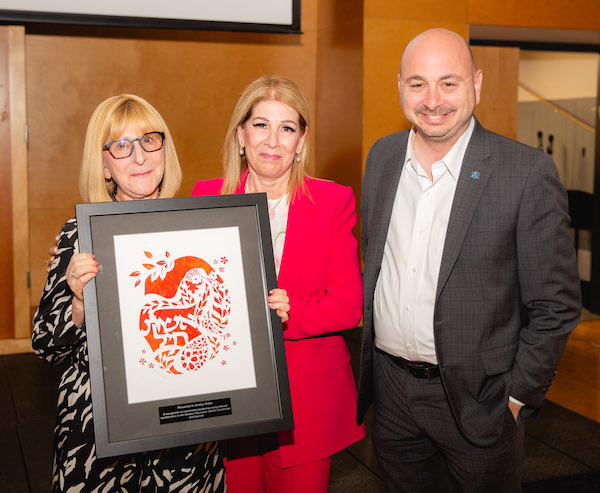
Shelley Rivkin, left, Candace Kwinter and  Ezra Shanken

Jewish Federation of Greater Vancouver’s annual general meeting on June 27 at King David High School celebrated Shelley Rivkin, vice-president of local and global engagement, for her contributions to the community. The meeting also honoured several volunteers for their leadership and contributions: Catherine Epstein (Dennis Frankenburg Award), new board chair Lana Marks Pulver (Harry Woogman Award), Stan Shaw (Bob Coleman Award), Brent Davis (Young Leadership Award) and SUCCESS (Community Partner of the Year).

In an email sent after the meeting, chief executive officer Ezra Shanken and immediate past board chair Candace Kwinter shared their joint message that will appear in Federation’s 2022-2023 annual report. In it, they cover much ground, noting that the organization’s “impact resonates farther afield than what the ‘Greater Vancouver’ in our name might suggest. From the Sea-to-Sky to Langley, and all points in between, Jewish community life is thriving – and we are proud to be at the centre of it through our Connect Me In program. On Vancouver Island and in Kelowna, we are now providing security training for volunteers and professionals in their growing Jewish communities.

“As part of her role on the Jewish Agency’s board of governors, Candace traveled to Ethiopia and accompanied some of the 3,000 Jews who were making aliyah. Together, we traveled to Mexico City with the Jewish Agency to see more of their international work, and from Ukraine to Turkey and Syria and beyond, we helped those in need when disaster struck.

“We continued to improve the quality of life for residents of our partnership region in northern Israel. Our work is focused on strengthening the region’s development and regionalism through leadership development and capacity-building while investing in academic excellence. Our long-term investments are helping residents tackle some of the most difficult and complex challenges they face living in Israel’s periphery.

“The political situation in Israel has proven challenging for many in our local community who care deeply about the country,” continue Shanken and Kwinter. “We and our partners have offered multiple events over many months to help people learn more about what is happening and to facilitate discussions.

“Here at home, inflation continued to take a toll on our partners and the people they serve. Across the board, our partners report that inflationary pressures are affecting every part of their work. Ninety-one percent are concerned or very concerned that inflation will affect community members’ ability to fully participate in Jewish life. And 100% of our social service partners are concerned or very concerned that inflation will affect their ability to support their clients’ needs.

“For five years, we have been bringing community together around issues of affordability. Together with key partners, we co-hosted an Affordability Summit on the experiences of children and youth in low-income homes. The three areas of focus identified by our planning council are advocacy for a national breakfast program, creation of a single application point for assistance from multiple organizations, and development of more inclusive, respectful processes.

“This year, we made strides in combatting antisemitism. We were proud to see Vancouver city council and Richmond city council adopt the International Holocaust Remembrance Alliance (IHRA) working definition of antisemitism and the province of B.C. commit to using it as a tool to identify and combat hatred. Identifying antisemitism is the first step in combatting it, which makes these milestones important for all of us, and we want to thank our partners and our advocacy agent, the Centre for Israel and Jewish Affairs, for their work on this.”

Federation also has started “an organizational design initiative intended to build significant capacity within the Federation over the next several years with greater potential for scalability, efficiency, excellence and agility going forward.

“Our unparalleled impact is possible thanks to the strength of our partnerships and the cherished trust of our donors,” Shanken and Kwinter write. “Collective giving is deeply rooted in our tradition, and we play a leadership role in raising the funds our community needs to grow from strength to strength. We invest strategically in initiatives that keep our community strong today, tomorrow and for years to come – as well as in times of crisis. Our partners depend on us to generate the support they need to deliver the vital programs and services on which thousands of people rely.”

The 2022 annual campaign generated more than $13 million for the community: $10.24 million directly through the campaign and $2.91 million in additional support, including special project funding, community relief and emergency relief. The Jewish Community Foundation’s contributions this year surpassed $12.7 million.

“This is more than double the contributions received in the previous fiscal year, which itself exceeded the contributions of the year before that,” write Shanken and Kwinter. “The Foundation strategically disbursed a total of $3.7 million into local, national and worldwide causes, including funding for the Foundation’s Unrestricted Grant Program, which allows response to critical emerging needs in the community.

“JWest also achieved unprecedented milestones. As one of the three lead organizations working together to bring JWest to life, we are excited at the progress made this year. From announcing the capital campaign cabinet to securing $75 million in funding and philanthropic gifts to a $36 million matching gift, this project has gained tremendous momentum.”

* * *

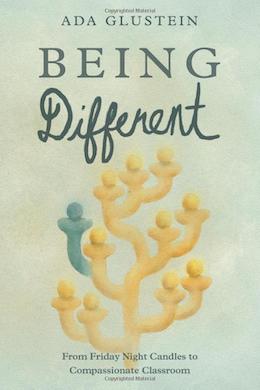
Ada Glustein received a silver medal for Canada-West Region, non-fiction, in this year’s Independent Publisher Book (“IPPY”) Awards for Being Different (self-published).

image - Being Different coverThe “IPPY” Awards are a broad-based, unaffiliated awards program open to all members of the independent publishing industry worldwide who produce books written in English that are appropriate for the North American market. The awards are intended to bring increased recognition to the thousands of exemplary independent, university and self-published books released each year.

A memoir, Being Different tells a universal story about feeling different and longing to belong. Glustein recounts tales of growing up in a Jewish immigrant family during and following the Second World War, and the experiences that stand out during her school days, not knowing how to fit in to the world beyond home. She reflects on her years of teaching diverse children who also experienced life as “different.” She finds her own sense of belonging through helping those children find theirs.

* * *

photo - Barbara Adler
Barbara Adler

Barbara Adler is the new artistic director of the Only Animal Theatre.

“After a rigorous national search by a leadership transition committee comprising board members and affiliated artists, we are delighted to have Barbara take the lead at the Only Animal,” said board chair Eleanor Stacey. “When we began the search process, we knew it would be an immense challenge to find a successor to founding artistic director Kendra Fanconi, who built such a visionary and essential company. Barbara’s distinctive combination of experience, artistry and vision for the future positions her uniquely to lead the company into its next chapter.”

Adler is an interdisciplinary artist and performer whose practice incorporates text, music, event-making and design. Recent projects centre slow and process-led creations that focus work around relational time and seasonal cycles. As a poet and musician, Adler spent over a decade touring North America, Europe and rural British Columbia as a solo artist and with ensembles, including the Fugitives, Proud Animal and Ten Thousand Wolves. She holds a master of fine arts (interdisciplinary studies) and a bachelor’s in art and cultural studies from Simon Fraser University.

Adler is “thrilled to join a company whose irresistible artistry and deeply held ecological values have brought both innovation and care to the climate crisis.” She added, “The Only Animal’s vision of enduring environmental stewardship reminds me that none of us will individually finish the work. I am honoured to add myself to the beautiful story that Kendra and the company have told for 17 years, and humbled by this opportunity to prepare the way for the next generation of voices in the climate struggle.”

* * *

photo - Rabbi Susan Tendler, her husband Ross Sadoff and their kids
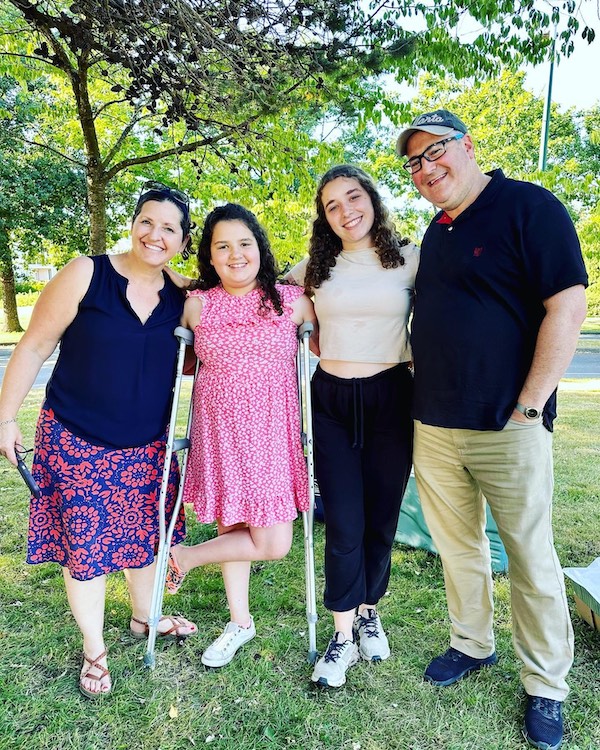
Rabbi Susan Tendler, her husband Ross Sadoff and their kids.

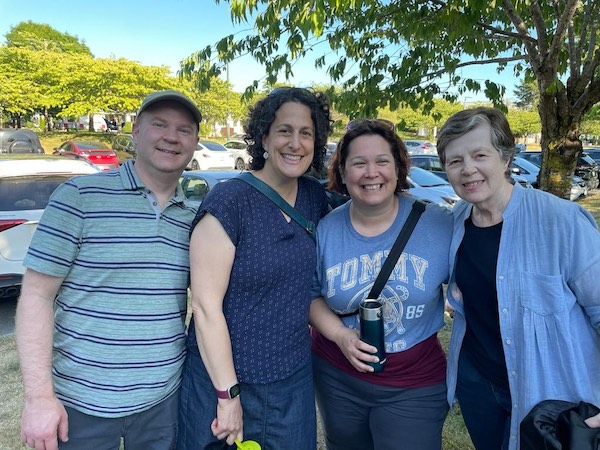
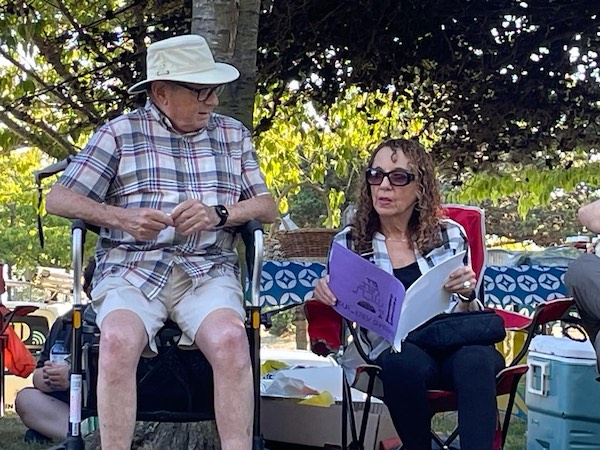
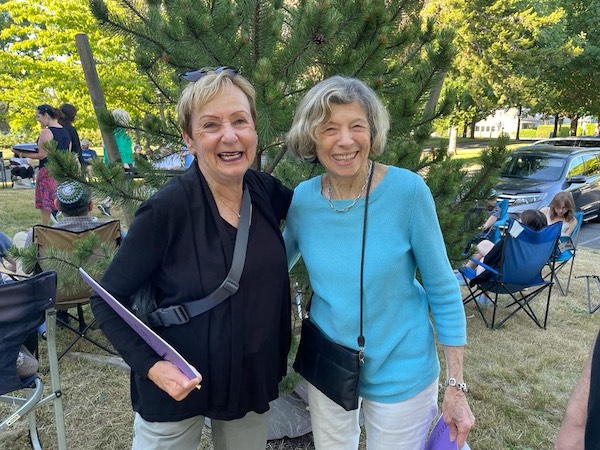
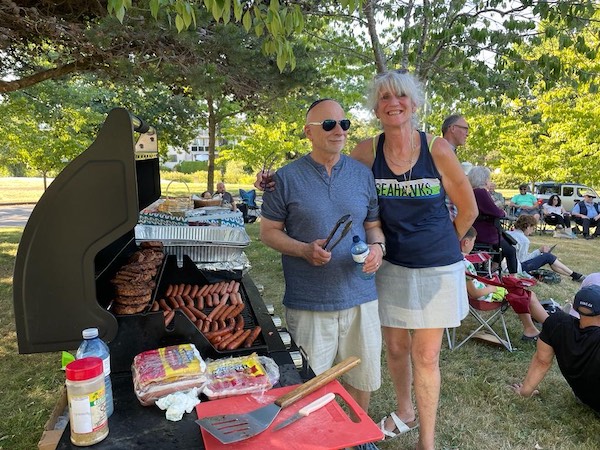
Beth Tikvah Congregation brought the community together for a Shabbat BBQ at Gary Point Park July 7. Sponsored by the Sadoff family in honour of Ross Sadoff’s birthday and under the leadership of Rabbi Susan Tendler, the event drew around 100 attendees. Amid a picturesque setting, the atmosphere buzzed with ruach(spirit). Laughter and joy filled the air as families and friends relished the food, conversations and Shabbat traditions.

photo - Left to right: Ian Felgar, Elena Felgar, Yvette Tarko-Sabi and Donna Felgar
Left to right: Ian Felgar, Elena Felgar, Yvette Tarko-Sabi and Donna Felgar
photo - Roy Freedman and Caryl Koshen
Roy Freedman and Caryl Koshen
photo - Estelle Bleet, left, and Ann Kramer
Estelle Bleet, left, and Ann Kramer
photo -  Jeff Rothberg and Stacey Kettleman of Star Catering
Jeff Rothberg and Stacey Kettleman of Star Catering.
photo - Libby Seltzer, left, and Mindy Zimmering
Libby Seltzer, left, and Mindy Zimmering


Format ImagePosted on July 21, 2023July 20, 2023Author Community members/organizationsCategories LocalTags Ada Glustein, annual campaign, Barbara Adler, Beth Tikvah, birthdays, IPPY Awards, Jewish Federation, Ross Sadoff, Shelley Rivkin, the Only Animal

IDF incursion into Jenin

As in the instance of many complicated issues, we cannot begin a discussion of specific issues without providing background and context. Earlier this month, the Israel Defence Forces entered Jenin, located in what many Jews call Judea and Samaria. This portion of the originally mandated territory is in Area A under the governing authority of the Palestinian Authority in accordance with international agreements called the Oslo Accords.

This agreement was voluntarily implemented by Israel because the accords were never signed by the PA, then under the leadership of the now-deceased Yasser Arafat. At that time, there was the international aspiration that there might be a two-state solution to the Israeli-Palestinian conflict. Under the agreement, the disputed territory occupied by Israel after three wars was divided into three areas. Area C, the largest piece, was essentially vacant land with little population and was solely under Israeli governance. Area B was under joint Israel-PA governance. Area A, which was the most populated and had all-Arab cities, was under sole PA governance. Jenin is one of those cities.

Under the accords, Israel retained overall responsibility for security, including responsibility for maintaining security for all borders.

Over the years, Israel made a number of offers to the PA to resolve differences. The PA declined to consider any of them. They insisted on a return to 1948 Armistice borders and independent statehood with their own armed forces. Based on Israel’s experience with Gaza and Lebanon, this was unacceptable to Israel.

The goodwill toward Palestinians that was evidently held by an important element of the Jewish population seems mostly to have been forfeited over time. An appreciation has grown that there is no acceptable solution for the Arab side that would allow for a viable Jewish state. Consequently, for many, the idea of a two-state solution is no longer feasible.

Meanwhile, the PA has maintained a hostile attitude to Israel, educating young Arabs to hate Jews and to aspire to murder them, and paying the families of deceased and jailed terrorists substantial pensions. Many suicidal activists have been incentivized in their actions by these awards for their families. These payments are a part of the PA budget.

Further, popular support from the Arab population has shifted from the PA to the terrorist organizations headquartered in Gaza and in Beirut, Lebanon. Elections for PA leadership have continually been postponed to avoid the takeover by Hamas that occurred in Gaza. Hezbollah controls the government of Lebanon. Both these entities are now financed by Iran, which has publicly announced their intention to eradicate the Jewish state.

The situation has been aggravated by the increasing incapacity of current leadership. PA President Mahmoud Abbas is reportedly in ill health. There is now competition as to who will replace him. This has caused further internal conflict, which has impaired PA functioning. Measures aimed at controlling terrorist operations or crime gangs would not encourage popularity.

With this background, we can turn to consideration of the Jenin event.

While there is theoretical cooperation with the PA on security matters, more and more it has fallen to Israeli forces alone to carry out this task. Although the PA claims statehood, more and more it has failed to build the infrastructure required. Particularly over the last two years, security in the major Palestinian centres under their jurisdiction has been lacking. Crime is rife and terrorist organizations have used the vacuum to establish a network aimed at destroying Israel, financed primarily by Iran.

In recent months, Israel has suffered 58 attacks having their origins in Judea and Samaria. Often, the perpetrators escape to hide in sanctuaries established within the Arab population centres in the region. Arms and monies have been smuggled into that area from Jordan. One diplomat from Jordan has been arrested and charged in this regard.

The IDF exercise involving a brigade-strength force is likely the first of a number that will try and establish a return to law and order in Area A, in Judea and Samaria. Remarkably, the IDF was able to carry out its mission in densely populated Jenin while avoiding any civilian casualties. Sadly, there were two IDF fatalities.

The failure of the PA to carry out its responsibilities leaves Israel with no alternative. Even with the IDF’s efforts, many of the terrorists in this specific area escaped. Four locations in the local network were disrupted, one of them located in a mosque basement. Arms caches were removed along with funds that were found, which were being used to finance terror activities. Almost 100 operatives were arrested and 18 were killed – all were combatants.

The situation indicates that this is only the first of similar necessary exercises to discourage attacks on innocent civilians. We will probably see this not only in Jenin but in other population centres in the region. We may see the program carried out despite efforts by many parties around the world seeking to vilify the Jewish state.

Max Roytenberg is a Vancouver-based poet, writer and blogger. His book Hero in My Own Eyes: Tripping a Life Fantastic is available from Amazon and other online booksellers.

Posted on July 21, 2023July 20, 2023Author Max RoytenbergCategories Op-EdTags history, IDF, Israel Defence Forces, Israeli-Palestinian conflict, Jenin, Oslo Accords

Sharing the load as a team

The greatest triumph of our summer so far is moving 10 cubic yards of gravel. Obviously, there’s a story in this! When we moved to our present house, we knew that the landscaping (along with the plumbing, electricity, insulation, boiler and more) needed work. A previous owner created rock-filled beds in both the front and backyards. This wouldn’t have been our chosen landscaping technique, but, when we moved in, these beds had so many weeds and enough scattered rock that it would be hard to remove them, so we chose to improve on what was here already.

We found an advertisement offering an entire dump truck’s worth of (slightly used) gravel for a low price. I made bad geology jokes about “new” versus “used” gravel after that, but we called them up. Soon after, we received two huge piles of gravel in our driveway, dumped efficiently by a Hutterite colony that found they had too much on hand. We had saved cardboard and put it down to kill weeds. Then the cardboard was covered with the slightly dusty and dirty (used) gravel.

The first pile of gravel, for the front of the house, was moved by the end of May long weekend. Through trial and error, I found a successful system that one mom (me) and twins (age 12) could manage. It involved using beach sand buckets and plastic flowerpots. Each person filled up two of these, and we pretended to do weightlifting as we marched from the pile to the landscape bed, over and over. My much larger partner filled a heavy wheelbarrow full of gravel with a shovel and moved it instead. We also had help from a kind neighbour who loaned us a second garden cart, which could be operated by the twins if (and only if) they cooperated.

The backyard gravel pile took longer. It wasn’t in the way as much, not as publicly in view and, well, some of our enthusiasm for the project had worn off. We finally moved it all into the backyard by mid-July. There are, of course, people who hire landscapers using Bobcats, or workers with multiple wheelbarrows, but we did the physical labour, for free, as a team. It worked for us. As neighbours commented on the hardworking “mama and twins” and the disappearing piles, we felt proud of our efforts.

This gravel experience reminded me of other Jewish traditions around summer, with Tisha b’Av coming. This day of mourning, where we remember the destruction of the Temple in Jerusalem, has a lot of upsetting stories attached to it. One reason the rabbis give about why the Temple was destroyed is “sinat chinam” or “baseless hatred.” In other words, there was so much infighting between Jewish factions that it caused the Romans to be able to destroy Jerusalem and the Temple.

The Roman Empire was big and powerful. Probably there were many reasons its leaders wanted to conquer more territory, including Jerusalem and the Temple. Yet, the talmudic rabbis give multiple examples of how individuals’ bad behaviour resulted in the fall of the entire Jewish world. Was every single one of these painful stories of bad behaviour completely historically factual? Well, maybe not. It’s hard to say from here.

Regardless, the personal stories of hatred remain powerful thousands of years later. I thought of this stuff as we trudged back and forth with our little buckets of stones. I also nearly joked with my children about Sisyphus, forced to push his rock uphill for eternity, as they occasionally complained, but Sisyphus was Greek, not Roman, and I didn’t want to mix metaphors while hauling gravel.

What I found most interesting about moving the gravel, or cleaning up construction messes as a family, is that, after initial grumbling, we all settle down into a rhythm together. We put in the work. We all pull in the same direction and, well, with all four of us working, things get done.

This struck me as the absolute opposite of sinat chinam, or baseless hatred. We are faced so often with hard tasks – as individuals, as families, in neighbourhoods or in the wider Jewish community. Not every task is physical labour either. It’s easy to fall apart and bicker over everything instead of finding a common cause and working efficiently together. However, if we search for what we have in common, including big goals, it’s amazing what we can accomplish.

Jewish people are like everyone else – we’re all very different individuals, prone to disagreement and conflict. Some of us will avoid haircuts, washing clothes, eating meat and then fast on Tisha b’Av. Others may skip those rituals altogether. Whatever we do or don’t do for Jewish holiday observance, we also might forget that we have things in common, too. If we choose to pull in the same direction to make changes about things that matter to us, we can do it.

I’m not claiming to know what matters for all of us or how to fix it, because in my mind, that, too, is part of our work. The work we have to do together, as people who care about one another, as part of a larger community. Perhaps identifying common goals is a hard part of our task, too.

This summer, my family moved gravel. It wasn’t world peace and it didn’t end homelessness or poverty. It was just a step closer to restoring our character home, which needs so much more done to it. Each time I see my family working together, wiping up endless drywall dust or moving small stones, I think about how much we accomplish and build as a family “team” and how proud I am to be a part of this one.

As community members, we’ve also got a “team” and, together, we can do so much to improve the world if we pull in the same direction. If we base our efforts in love, we can find common ground and work together. It might not bring about the rebuilding of the Temple in Jerusalem (and not everybody even yearns for that) but it might make the world we live in a much better place in the meanwhile.

Joanne Seiff has written regularly for CBC Manitoba and various Jewish publications. She is the author of three books, including From the Outside In: Jewish Post Columns 2015-2016, a collection of essays available for digital download or as a paperback from Amazon. Check her out on Instagram @yrnspinner or at joanneseiff.blogspot.com.

Posted on July 21, 2023July 20, 2023Author Joanne SeiffCategories Op-EdTags history, Judaism, lifestyle, Talmud, Tisha b'Av

אירופה וקנדה מתחממות עד להפחיד

חזרתי מביקור של שבועיים באירופה במהלך חודש יוני והופתעתי לרעה עד כמה היה חם ביבשת זו. הביקור כלל את הערים ציריך שוויץ ואמסטרדם הולנד. לא חשבתי כלל שכבר בחודש יוני החום בערים אלה יהיה גבוה מאוד וממש בלתי נסבל

דווקא באמסטרדם אותה אני מכיר היטב ובעבר הרביתי לטייל בה החום הפעם העיק בצורה קשה והגביל את תנועתי. במקום לצאת מהמלון בשעות הבוקר ולחזור בחשיכה נאלצנו בתי זוגתי ואנוכי לחזור מדי צהריים למלון, כדי לנוח מהחום הקשה, להתקלח וליהנות קצת מהמזגן, עד היציאה בערב. ובקיצור שעות לא מעטות בוזבזו על החדר במלון, במקום על הליכה בעיר

אל החום הכבד הצטרפה עם לחות גבוהה כך שהטמפרטות באמסטרדם עברו בקלות את רף השלושים מעלות. וזה לא נעים. בדרך כלל במדינות אירופה במרכז ובצפון שרר באביב מזג אוויר נוח, אך לא הפעם

פגשנו באמסטרדם לא מעט מקומיים שהתלוננו אף הם על החום הקשה שהם לא רגילים בו. במקרה אחת מלצרית בבית קפה עשתה טעות בחשבון שהוגש אלינו. להגנתה היא טענה שהחום אשם בכך

בביקור בציריך גם כן החום היה גבוה במיוחד ולצערנו במלון שם לא היה מזגן ולכן נאלצנו לפתוח את החלונות כמעט לכל אורך חמשת הימים שהיינו בו

אם החזרה לוונקובר פגשנו מזג אוויר נוח יותר שאפשר לנו חזרה קלה יותר לחיי היום יום והעבודה

אך לא שכחנו את המראות בחדשות באירופה על שריפות ענק בקנדה לאורכה ולרוחבה, שגרמו לאובך קשה מאוד גם בארצות הברית השכנה

השריפות שפשטו בקנדה במהלך יוני שרפו יחד כמעט אחד עשר מיליון דונם,  שזה פי חמש עשרה מהשטח הממוצע הנשרף בתקופה הזו של השנה. בקוויבק לבדה כבר עלו באש יותר משני מיליון דונם. עונת השריפות הנוכחית היא חסרת תקדים בקנדה, לא רק בשל היקף השטח; היא החלה מוקדם במיוחד השנה, מספר מוקדי השריפה השונים הוא חסר תקדים, וגם מיקומן. בעוד שריפות יער במדינה בוערות בדרך כלל באזורים מרוחקים ודלים מאוכלוסייה, מאות מהן השנה בוערות גם סמוך לאוכלוסייה עירונית

בקנדה לא הצליחו לשלוט לבד בגובה הלהבות, ונאלצו להזעיק עזרה בינלאומית. כארבע מאות כבאים מצרפת, ארה”ב וספרד הגיעו לקוויבק. עשרות אלפים נאלצו להתפנות מבתיהם, ומעבר לגבול, ערים ובהן ניו יורק, וושינגטון די.סי ופילדלפיה חוו גם כמה מאיכות האוויר הגרועה ביותר שלהן זה שנים

בסך הכל ברחבי קנדה בערו כארבע מאות וחמישים שריפוץ. רוחות בדרך כלל נושאות עשן משריפות באזור קוויבק מזרחה והחוצה לים, אך אזור לחץ נמוך הוביל את העשן דרומה לארצות הברית. תחזית ממשלת קנדה מציבה את המדינה כולה בסיכון גבוה מהממוצע לשריפות בחודשי הקיץ, מאלברטה במערב ועד נובה סקוטיה על קו החוף האטלנטי

השריפות המשמעותיות בקנדה אינן אירוע בודד, וייתכן כי בעתיד אירועים אלו ילכו ויתגברו, וכך גם הנזק ההיקפי אותו הם גורמים. שינויי האקלים שנגרמו על ידי האדם מעלים את הסבירות לאירועי שריפות משמעותיים, שכן הם מתדלקים את תנאי מזג האוויר המניעים שריפות עוצמתיות. החום הגובר והבצורות המתמשכות הופכים סביבה רגישה יותר לשריפה, שכן טמפרטורות חמות יותר מתנדפות יותר לחות מהאדמה והצמחייה, מייבשות עצים, שיחים ועשבים והופכות נשורת עלים וענפים שהתייבשו על הקרקע לחומר בעירה. מדענים מזהירים שאירועים דוגמת השריפות בקנדה עתידים להמשיך לשבש את חיי היומיום ככל שכדור הארץ מתחמם וליצור את הסביבה האידאלית לשריפות קשות ותכופות יותר

Posted on July 12, 2023July 7, 2023Author Roni RachmaniCategories עניין בחדשותTags Canada, Europe, fires, global warming, heat, אירופה, חום, כדור ארץ מתחמם, קנדה, שריפות

Posts pagination

Previous page Page 1 … Page 124 Page 125 Page 126 … Page 667 Next page
Proudly powered by WordPress