Hillel BC’s Holocaust Education Week takes place on campus at the University of British Columbia Jan. 29-Feb. 2. Every day of that week, there will be something going on to attend and learn from, including the exhibit from Yad Vashem called Shoah: How Was It Humanly Possible?, which will be on display the whole week.
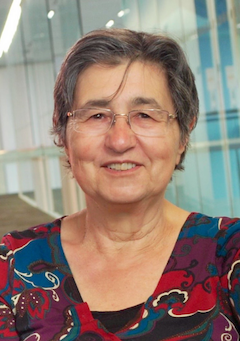
Rachel Mines (photo from Hillel BC)
Jan. 29, 6 p.m.: Unheard Echoes: Jews in Lithuania Before, During and After the Holocaust. Presentations about the Jewish connection to Lithuania throughout history, focusing on the Holocaust, by Rachel Mines and Gene Homel, two members of the Lithuanian community. Register at forms.office.com/r/s4uAFqv8gc.
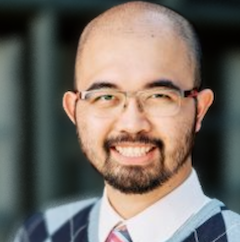
Jan. 30, 6 p.m.: Unheard Echoes: The Far Reach of the Holocaust in Asia. Ryan Sun is a PhD candidate in the department of history at UBC, working with Prof. Leo Shin and Prof. Richard Menkis. His transnational project expands the geography of Jewish exile outside Europe and beyond Shanghai, and onto the British colonies of Hong Kong and Singapore. He is particularly interested in Jewish refugees’ ship-bound experiences, how transiting colonial port-cities and encountering local inhabitants informed their understanding of “the Orient,” as well as how these ship-moments disrupt the standard narratives of the Holocaust and survivor testimonies. Register at forms.office.com/r/aQx4LG2Fhi.
Ryan Sun (photo from Hillel BC)
Jan. 31, 5 p.m.: In a partnership between Hillel, brothers of the AEPi chapter of Vancouver and Chabad UBC, there will be a reading of the names of those who were murdered in the Holocaust. Meet at Hillel, then walk over to the fountain at the main mall, where the reading of the names will begin at 5:30 p.m. The reading can also be joined online, live on Hillel BC Facebook and Instagram, as well as the Instagram page for AEPi.
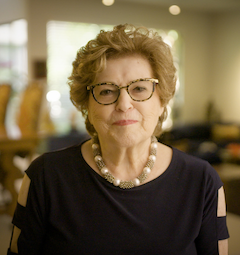
Marie Doduck (photo from Hillel BC)
Feb. 1, 5 p.m.: A Fireside Chat and Q&A with Survivor Marie Doduck & Dr. Lauren Faulkner Rossi. Marie (Mariette) Rozen Doduck was born in Brussels, Belgium, in 1935. She immigrated to Canada in 1947 as a war orphan with three of her siblings and settled in Vancouver. She is actively involved in Holocaust education and is a cofounder of the Vancouver Holocaust Education Centre.
Rossi is currently researching child survivors of the Holocaust, the significance of their memoirs to Holocaust studies and the shared language of trauma among child survivors of different genocides.
Feb. 2, 5 p.m.: Students-only Shabbat Dinner with Honoured Guests: Holocaust Survivors will feature a candlelighting ceremony and survivors spread out among the dining tables with students. Students can register at forms.office.com/r/ayufQr3Zmy.
For more information or help with the registration links, email [email protected] or call 604-224-4748.
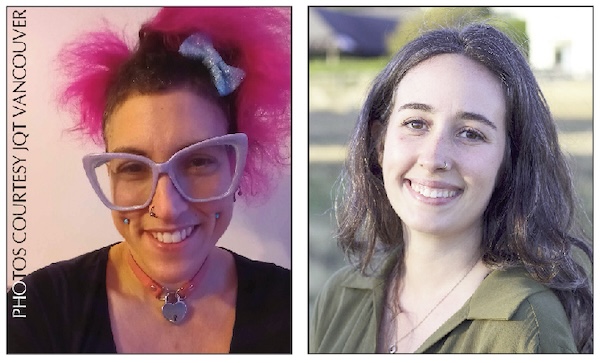
The first session in the new JQT-JFS mental health series will be facilitated by Alycia Fridkin, left, and supported by Anat Kelerstein. Listen & Be Heard takes place Feb. 11, 1 p.m., at Or Shalom.
“JQT and JFS are working together to answer the Jewish LGBTQ2SIA+ community’s explicit request for more mental health support in our newly launched JQT Mental Health Support Series,” said Aviva Rathbone, JQT chair. “This series will offer a steady flow of targeted workshops and events throughout the calendar year to get the JQT community talking, moving, crafting, laughing, vibing and healing together.”
The new JQT (Jewish Queer Trans) Vancouver and Jewish Family Services Vancouver program begins Feb. 11, 1pm, at Or Shalom Synagogue with Listen & Be Heard, a gathering for Jewish queers, transfolk and enbys in an intentional space for sharing and listening to each other’s perspectives on the Palestine/Israel conflict, including recent events in Gaza.
Facilitated by Alycia Fridkin and supported by Anat Kelerstein, the three-hour session will address “the elephant in the room – the Israel/Palestine conflict,” said JQT executive director Carmel Tanaka. “This was already identified in our 2022 community needs assessment as an extremely taxing topic that continues to negatively impact our community’s mental health, regardless of one’s stance. It is important that we create spaces that are not binary and welcome all perspectives.”
Fridkin is an equity and anti-racism consultant in health care. Kelerstein is a registered social worker and clinical counselor.
The JQT Mental Health Support Series, made possible with the support of the Jewish Community Foundation of Greater Vancouver and private donations, was developed in partnership with JFS Vancouver, following a 2022 community needs assessment that identified mental health support as a critical service gap for the Jewish LGBTQ2SIA+ population. The new mental health series as a whole answers nine of the needs assessment’s 13 calls to action. (See jewishindependent.ca/thirteen-calls-for-action.)
Future programs in the mental health series currently include (subject to change) a mindfulness kiddush cup clay workshop with Reuben King; a spoken word/music jam evening with fanny kearse; a screening of Sarah White’s documentary film Not Quite That; a cross-cultural history talk and demo of mahjong with Tanaka; a theatrical performance of Florida! You Kill Me! with Berlin’s Nana Schewitz (sponsored by the Goethe-Institut); a belly dancing workshop with Rathbone; a townhall conversation on the needs of parents of JQT youth; a JQT Pride Party; drop-in group therapy sessions; and the launch of the JQT Mental Health Toolkit.
The next session in the series is JQT Death Café at Mountain View Cemetery on Feb. 25, at 1 p.m. A townhall-style conversation on the status of Jewish queer trans dying and death services in British Columbia, people are invited to come learn, bring questions and voice their ideas at this hybrid event hosted by the JQT Seniors Initiative.
Registration for the mental health series events is free and required in advance. Details can be found at jqtvancouver.ca/events. To donate to the series, visit jfsvancouver.ca/donate and type in “JQT Mental Health” as the designated program. To learn more about the series, go to jqtvancouver.ca/jqt-mental-health.
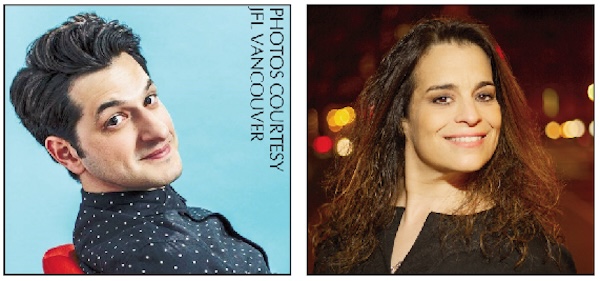
Ben Schwartz and Jessica Kirson are on the lineup of this year’s Just for Laughs Vancouver.
Just for Laughs Vancouver, which runs Feb. 15-24 at various venues in the city, features several members of the Jewish community.
All three of Brett Goldstein’s shows Feb. 16-18 at Queen Elizabeth Theatre have almost sold out. Goldstein was a co-executive producer, co-writer and co-star of Ted Lasso. He is also the creator and executive producer of the comedy Shrinking, alongside Jason Segel and Bill Lawrence, and of Soulmates, with Will Bridges. Goldstein is host of the podcast Films to be Buried With, which finds him in conversation with guests as they discuss the films that have shaped them.
Rafi Bastos performs at the Rio Feb. 17-18. Many of his viral stand-up clips come from nightly performances at the Comedy Cellar. In his home-country of Brazil, he was one of the first comedians to pioneer the art of American-style stand-up comedy. He has starred in movies, had his own talk show, been an infield journalist and hosted reality show Ultimate Beastmaster. He is co-founder and owner of Comedians, the largest comedy club in South America.
Ben Schwartz and friends take to the Orpheum stage Feb. 18. Schwartz is part of the cast of The After Party, as well as the second season of Space Force. He was in the comedy series House of Lies and Parks and Recreation. As a writer, he has published four books and written television shows and movies for many major studios.
Jessica Kirson is at the Vogue Feb. 18. Her countless comedic character videos have racked up more than 200 million views on social media. She produced the feature-length documentary Hysterical. In addition to her one-hour special, called Talking to Myself, she is a regular on This Week at the Comedy Cellar and has appeared on many other shows.
At the Rio Feb. 23-24 is Catherine Cohen, best known for her comedy special The Twist…? She’s Gorgeous. She can be seen in the feature film At Midnight and in the upcoming series What I Was Doing While You Were Breeding. In 2021, she published her first book, God I Feel Modern Tonight, a collection of comedic poetry.
Comic, podcaster, writer and actress Annie Lederman will be at the Biltmore Feb. 21-22. Lederman is co-host of the podcast Trash Tuesdays. Most recently, she can be seen in the documentary miniseries The Comedy Store, alongside Jay Leno, David Letterman, Joe Rogan, and many other Comedy Store legends. She wrote and starred in Stand Ups, Impractical Jokers and Borat, among other things.
The full JFL lineup and tickets are available at jflvancouver.com.
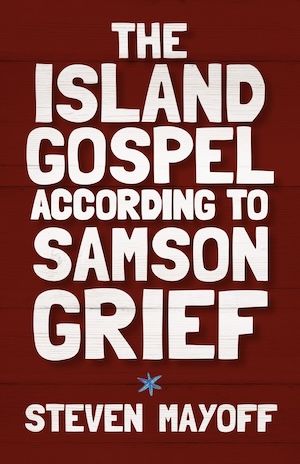
For all intents and purposes, it shouldn’t work, but Steven Mayoff’s The Island Gospel According to Samson Grief is a grand work of, let’s say, magical fiction that uses humour in large measure to elicit some very serious thoughts about art, politics, law, love, faith, community and more.
Mayoff takes part in two events during the Cherie Smith JCC Jewish Book Festival: on Feb. 11, he presents at Burquest Jewish Community Association in Coquitlam and, on Feb. 12, he is at the Jewish Community Centre of Greater Vancouver, along with Jeffrey Groberman, author of Globetrotting Strikes Again! Groberman also presents at Har El in West Vancouver on Feb. 11.
It is hard to describe simply the plot of The Island Gospel According to Samson Grief. The title character is a middling artist who, when we meet him, is struggling to finish a painting. Outside his window, he has just seen – after a break of 13 years – three figments of his imagination. The Figs, as he calls them, present themselves in the forms of Judas, Fagin and Shylock, and they have returned with an important mission for Grief.
“The Supreme One,” who the Figs represent, was impressed by Grief’s scandalous, and most famous, painting of Prince Edward Island icon Anne of Green Gables as a Holocaust survivor, which Grief described in an interview as a statement “on the post-911 world we’re living in, where nobody is safe anymore and the primary victim is the delusion of our collective innocence.” Despite that Grief has not had much artistic or other success in the years since that painting – and that he is not actively involved in the island’s Jewish community – the Supreme One wants Grief to build PEI’s first synagogue. Once complete, the province will be consecrated as the new Promised Land, according to the Figs.
Among Grief’s many challenges – once he decides to take on the mission – is that the Supreme One has decreed that the synagogue must be built on a particular plot of land, a once-sacred place that has become a garbage dump and the focus of much political intrigue. It is hard to keep track of all the political manoeuvrings in this novel, but they sadly resonate, with some reality in their self-serving and unscrupulous nature.
It takes Mayoff awhile to set up the many pieces of his narrative puzzle. The characters are numerous, and quirky only begins to describe them. The societal issues that arise as Grief tries to achieve his mission, the role played by the media – both conventional and unconventional – in what ends up happening, the reliability and unreliability of friendship and love … so many factors are up in the air and changing as the story progresses. Somehow Mayoff juggles them all in a way that allows readers to follow along, discovering various elements as Grief does, and losing our naiveté as he does.
The Island Gospel According to Samson Grief is an ambitious novel that delivers beyond its promise.
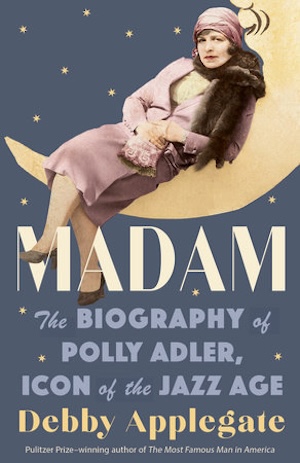
The immigrant experience is rarely if ever easy. It is hard to imagine sending a 13-year-old girl from Russia to the United States on her own, but, in 1913, the year that Pearl (“Polly”) Adler came through Ellis Island, “the Hebrew Sheltering and Immigrant Aid Society estimated that 13,588 ‘unaccompanied Jewish girls’ came through the port of New York, out of the 101,330 Jews who immigrated from eastern Europe,” writes Debby Applegate in Madam: The Biography of Polly Adler, Icon of the Jazz Age.
The revelations abound in Madam and most do not centre around statistics, though there are some intriguing ones, like the fact that, in 1925, New York’s White Light District, with Times Square at its core, had “more than 2,500 speakeasies and 200 nightclubs, up from 300 saloons before Prohibition, all vying to offer the youngest girls, bawdiest songs, and hottest dance bands.”
Polly Adler was a major part of this scene, having entered the world of prostitution when she was 17. She had managed to avoid the lechers who recruited girls coming off the boats, and even got a couple years of education living with extended family in Springfield, Mass. But, once the minimum amount of schooling required was reached – a fourth-grade level of English – she had to work. And working in a factory wasn’t a way to get oneself out of poverty. So, with a little help from unscrupulous men, she started on a different career, one that would have her become the most well-known madam in New York, with clients that may even have included President Franklin Delano Roosevelt.
It was a harsh world, though, filled with gangsters, crime, violence, and it wasn’t even that lucrative because of all the payoffs and the immense levels of corruption at every turn: police, lawyers, judges, politicians. But Adler could literally take the punches, and she was “determined to be the best goddam madam in all America.” She achieved her goal and was successful, if measured by fame and money. However, she never achieved the approval and acceptance she sought, having been cared for as a child but never really loved.
Applegate’s biography of Adler is a page-turner, which is an accomplishment given its comprehensiveness and the amount of detail she covers: there are 33 pages of notes and the bibliography runs 13 pages. Readers will really feel as if they’ve met Adler and walked a few feet in her shoes.
Applegate will talk about Madam in the Cherie Smith JCC Jewish Book Festival event on Feb. 11, which she shares with Roberta Rich, author of The Jazz Club Spy (see jewishindependent.ca/mysteries-to-be-solved).
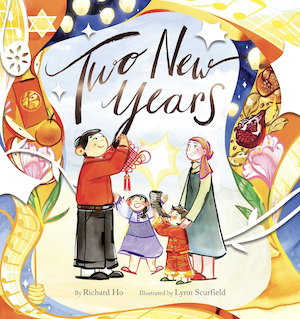
It would be fun to be a fly on the wall at Vancouver Talmud Torah on Feb. 14 as Richard Ho reads from his book Two New Years, illustrated by Lynn Scurfield, and discusses it with the children. Being that the story is based on his own life experience, he will likely be quite animated (pun intended) and his enthusiasm, combined with Scurfield’s bright, colourful and joyful art, will no doubt hold their attention.
Ho has several kids books to his credit and, according to his website, more on the way. Two New Years highlights the differences and similarities between Rosh Hashanah and the Lunar New Year, both of which he celebrates.
The book notes the differences first: Rosh Hashanah takes place in the fall, is based on the Jewish calendar and began in the Middle East, and the Lunar New Year generally falls in spring, is based on the Chinese calendar and began in East Asia. “They represent different peoples with different histories, cultures and traditions,” he writes. “But in many ways they are also alike.” The many similarities include that each holiday is a chance to “try on new beginnings,” to “bring family home” and “remember the ancestors who live in our hearts,” to eat “foods that symbolize togetherness and the heartfelt sharing of good wishes,” among several other things.
In the author’s note, Ho shares that he converted to Judaism as an adult and that “the blending of two cultures was a conscious choice” for him. These days, he revels in experiencing both new years through the eyes of his children. “The best part?” he asks. “They’re not alone! All over the world, families with mixed backgrounds are blurring the barriers between cultures and customs. With the guidance of parents, grandparents and extended family on all sides, many children are weaving an increasingly diverse tapestry of celebration.”
The book features an eight-page illustrated glossary that’s as interesting to read as the story: it explains what a lunisolar calendar is, and some of both holidays’ rituals and symbols. It is followed by questions that readers can use to facilitate a discussion with others about their own traditions.
Lemon loaf using a recipe by Jo-Anna Rooney, creator of A Pretty Life in the Suburbs. (photo from aprettylifeinthesuburbs.com)
So, a husband walks into Costco … with no shopping list. And what happens? He comes out with $200 worth of steak, a 10-pound bag of lemons (which, by my calculations, will make about 300 whiskey sours), 12 jars of capers, eight boxes of latex gloves, a snow blower, two big boxes of chocolate truffles and 98 rolls of toilet paper.
I am left wondering: what the hell am I supposed to do with a snow blower? We live in an apartment in Vancouver. And we’re not the caretakers. I ask my husband, “What’s up with the snow vehicle?” He just shrugs. Like, maybe he plans on relocating us to Winnipeg? “It was on sale,” he says.
I continue my interrogation. “So, are you planning to resell it on Facebook Marketplace, since you have it on good authority that there’s going to be a monstrous snowstorm coming to Vancouver? Or did you buy it as a gift for our cousins in Michigan?”
Just when I think he’s going to take up the challenge of my inquest, he demurs. I guess it’s not the snow hill he wants to die on.
My very next thought is: what the heck am I supposed to do with 10 pounds of lemons? Don’t say “make lemonade,” because, well, that’s seasonal. I consult with my BFF, Google, and she tells me that the best thing I can do with lemons is make lemon loaf. By now, she’s figured out that I love old school recipes. Being the compliant (and lazy) baker that I am, I gather my ingredients and have at it. Despite that it’s a classic 1960s/1970s dessert, I’ve never made it before. But, since everyone tell me a chimpanzee could make it (like that’s supposed to make me feel better about myself), I can hardly sidestep the challenge.
Long story marginally shorter, my husband and I demolished the whole lemon loaf in less than 24 hours. OK, make that 12 hours. I’m pleading the fifth. Wow, look what I just did with the math there. Anyhow, I baked, I fought, I ate. The fighting came into play when the last piece of lemon loaf was left.
LEMON LOAF (a recipe by Jo-Anna Rooney)
1/2 cup butter (or margarine) 1 cup granulated sugar 2 large eggs 1 1/2 cup all-purpose flour 1 tsp baking powder 1/4 tsp salt 1/2 cup milk zest of 1 medium lemon (but not the juice) ** juice of 1 medium lemon 1/4 cup granulated sugar
Preheat oven to 350°F and then prepare an eight-inch-by-four-inch loaf pan by lining it with parchment paper. Set it aside.
With a mixer, cream together the butter and sugar. Add in the eggs, one at a time.
In a separate bowl combine the flour, baking powder and salt. Add half of the flour mixture to the butter mixture. Then add half of the milk. Add the remaining flour mixture. Mix in the remaining milk and lemon zest. Bake for 45-55 minutes, or until a toothpick inserted into the centre comes out clean.
While the cake is baking, combine the juice from one lemon with 1/4 cup granulated sugar.
When the cake is baked, take it out of the oven and pierce holes in it with a thick bamboo skewer or a sharp knife – make sure to pierce to the bottom of the loaf so the lemon juice mixture can get right down into the cake. Pour the lemon juice/sugar mixture over the warm cake. Let it sit. This cake is even better the next day, and there is no need to refrigerate it.
Tip: I used parchment paper, like the recipe called for, but, next time, I’d just grease the loaf pan and bake it that way. The parchment paper allows for easier removal from the pan so that you can present it prettily on a plate, but who are we kidding, it won’t last a day, so just eat it straight out of the loaf pan. You’re welcome.
After I made the lemon loaf, I realized it was almost time for dinner. Not feeling particularly inspired, I browsed through my mother’s old National Council of Jewish Women Cookbook from the 1960s, hoping for a quick fix. Honestly, I have no idea how housewives raising families in the ’50s and ’60s managed to come up with a different dinner day in and day out for decades. Donna Reed, with her poodle skirt and kitten heels. How did she do it? I can only surmise that she wasn’t serving Michelin Star meals every night. It was probably more like shepherd’s pie, liver and onions, fish sticks or TV dinners (if the kids were lucky). Then I saw it: tuna noodle casserole! Thankfully, it wasn’t my mom’s version, which tragically included chow mein noodles and canned mandarin oranges on top. I want to gag just thinking about it. My version was neat but not gaudy, and it practically made itself. Once again, you’re welcome.
TUNA NOODLE CASSEROLE
2 cans of tuna fish 1 can of mushroom soup approx. 1 cup frozen carrots and peas approx. 1 cup grated cheese (any kind) pasta of your choice (enough for a few people) Panko crumbs salt & pepper to taste
Preheat the oven to 400°F. Boil pasta as per the package and grate the cheese.
Once the pasta is ready, drain the water and add the mushroom soup, tuna, peas and carrots, and salt and pepper. Mix it all together. Pour it into a large casserole dish and top it with the grated cheese and Panko crumbs. Bake for about 20 minutes or until the cheese bubbles and gets slightly brown.
Sure, you could fancy this up using Gruyere cheese and organic, gluten-free pasta, with chopped up fiddlehead greens instead of carrots and peas, but, seriously, why would you want to? Stick to the KISS principle – keep it simple, silly. The proof is in the pudding: my husband and I both loved it. Judging by how he hoovered it down, he probably wouldn’t mind if I made it at least once a week. Hmm … maybe that’s why he just bought 36 cans of tuna at Costco.
I’m fully aware of how unsophisticated this recipe is but, hey, I never claimed to be a connoisseur of food. I did, however, claim the title of accidental balabusta. And it fits, right? Bon appetit!
Shelley Civkin, aka the Accidental Balabusta, is a happily retired librarian and communications officer. For 17 years, she wrote a weekly book review column for the Richmond Review. She’s currently a freelance writer and volunteer.
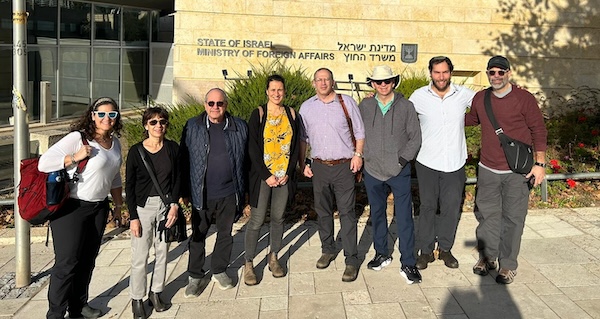
Left to right: Rabbis Susan Tendler, Hannah Dresner, Philip Bregman, Carey Brown, Andrew Rosenblatt, Jonathan Infeld, Philip Gibbs and Dan Moskovitz in Israel last month. (photo from facebook.com/jewishvancouver)
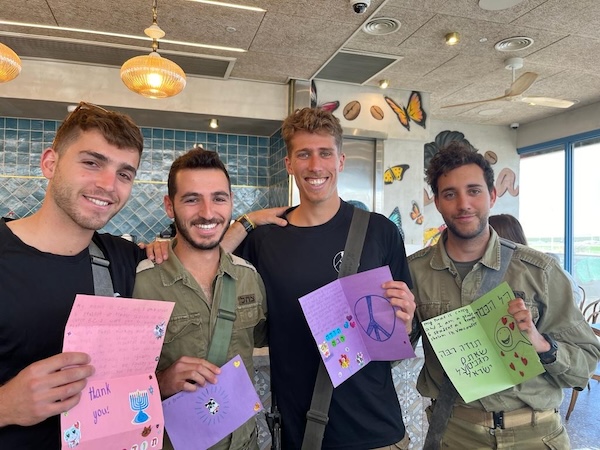
Eight Vancouver-area rabbis recently visited Israel where, among many other things, they handed out cards and letters prepared by Jewish day school students and members of Vancouver’s Jewish community to soldiers and other Israelis. The response, according to one of the rabbis, was overwhelming.
“I saw soldiers taking these cards and then dropping down to the sidewalk and crying,” said Rabbi Philip Bregman. “Holding them to their chest as if this was a sacred piece of text and just saying, ‘Thank you. To know that we are not forgotten….’”
The rabbis’ mission included the delivery of thank you cards to Israeli soldiers. (photo from facebook.com/jewishvancouver)
Bregman, rabbi emeritus at the Reform Temple Sholom, was almost overcome with emotion while recounting the experience, which he shared in a community-wide online presentation Dec. 17. The event included seven of the eight rabbis who participated in the whirlwind mission, which saw them on the ground for a mere 60 hours. Rabbi Andrew Rosenblatt of the Orthodox Congregation Schara Tzedeck was part of the mission but did not participate in the panel because he extended his time in Israel.
According to Ezra Shanken, chief executive officer of the Jewish Federation of Greater Vancouver, who emceed the event, the Vancouver mission was unique in Canada and possibly in North America for bringing together rabbis from across the religious spectrum. The close connection of most local rabbis, facilitated by the longstanding Rabbinical Association of Vancouver (RAV), set a foundation for the mission, which took place in the second week of December.
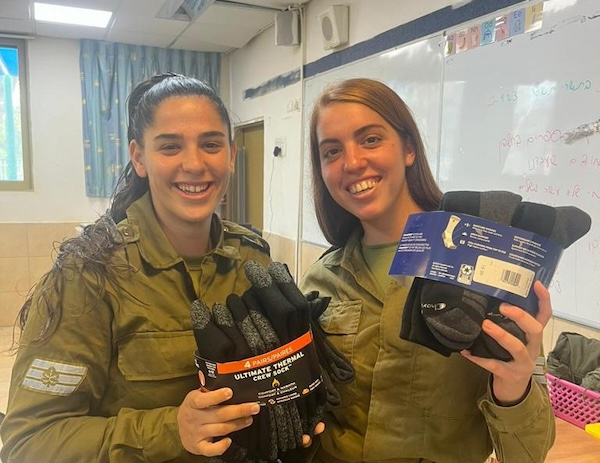
The eight rabbis transported 21 enormous duffel bags, filled with gear like socks, gloves, toques and underwear, mostly for military reservists.
The rabbis delivered warm clothing, including socks, to Israeli soldiers. (photo from facebook.com/jewishvancouver)
Shanken, who visited Israel days earlier with Federation representatives and five Canadian members of Parliament, said nothing prepared him for what he encountered there. Bregman echoed Shanken’s perspective.
“It’s one thing to have that as an intellectual understanding,” said Bregman, “It’s another thing when you are actually there to witness the absolute pain and trauma. People have asked me how was the trip. I say it was brutal.”
The reception they received from Israelis was profound, several of the rabbis noted.
“I’ve been to Israel dozens of times,” Bregman said. “People are [always] happy to see us. Nothing like this.”
Rabbi Dan Moskovitz, senior rabbi at Temple Sholom, said the mission was to bear witness and also was a response to what rabbis were hearing from congregants about the centrality of Israel in their lives. He told the Independent that he was able to connect with two philanthropists in Los Angeles who funded the mission. Rabbi Carey Brown, associate rabbi at Temple Sholom, and Rabbi Susan Tendler, rabbi at the Conservative Beth Tikvah Congregation, in Richmond, handled logistics, with input from the group.
The unity of Israelis was among the most striking impressions, said Brown.
“It’s so all-encompassing of the society right now … the sense that everyone’s in this together,” she said. The unity amid diversity was especially striking, she noted, when the rabbis visited the central location in Tel Aviv known as “Hostage Square.”
Brown said Israelis asked about antisemitism in Canada and seemed confounded by the fact that there is not more empathy worldwide for the trauma their country has experienced.
Tendler reflected on how Israelis were stunned and touched by the fact that a group of Canadians had come to show solidarity.
The rabbis were able to experience a microcosm of Israeli society without leaving their hotel. At the Dan Panorama Tel Aviv, where they stayed, they were among only a few paying guests. The hotel was filled with refugees from the south and north of the country who are being indefinitely put up in the city.
Several rabbis spoke of incidental connections in which they discovered not six degrees of separation between themselves and people they ran into, but one or two.
Rabbi Jonathan Infeld of the Conservative Congregation Beth Israel, who is chair of RAV, told of being approached by members of a family staying at their hotel who heard they were from Vancouver. They asked if the rabbi knew a particular family and he replied that he not only knew them but that a member of that family had just married into his own.
Likewise, Tendler ran into people who went to the same summer camp she did and the rabbis found many other close connections.
“The idea [is] that we are spread out but, at the heart of it all, we honestly really are one very small, connected people,” said Tendler. “We are one family, one community and that was the most important, amazing thing of all.”
Close connections or not, the rabbis were welcomed with open arms. Rabbi Philip Gibbs of West Vancouver’s Conservative Congregation Har El told of how he was walking past a home and glanced up to see a family lighting Hanukkah candles. They insisted he come in and mark the occasion with them.
Gibbs also noted that the political divisions that had riven the society before Oct. 7 have not disappeared, but that the entire population appears to have dedicated themselves to what is most important now.
The rabbis met with scholars, including Israeli foreign ministry experts and many ordinary Israelis, including Arab Israelis, as well as the writer Yossi Klein Halevi, who told them that many Israelis feel let down by their government, intelligence officials and military leadership.
The rabbis traveled to the site of the music festival where 364 people were murdered, more than 40 hostages kidnapped and many more injured on Oct. 7. They saw scores of bullet-riddled and exploded vehicles. All of them will be drained of fuel and other fluids before being buried because they contain fragments of human remains that ZAKA, Israel’s volunteer rescue, extraction and identification agency, could not completely remove from the vehicles.
Rabbi Hannah Dresner of the Jewish Renewal-affiliated Or Shalom Synagogue was not the only rabbi to compare the mission with a shiva visit.
“I was just so amazed at the care that was being given, that each of these vehicles was now being siphoned of any remaining flammable materials so that each one of them could be buried according to our halachah,” Dresner said, “so that none of the human remains would be just discarded as junk. I found that overwhelmingly powerful.”
Relatedly, the group visited an exhibit at Expo Tel Aviv, which recreates the music festival site and features unclaimed property from the site, including the historically resonant sight of hundreds of pairs of shoes.
The visiting rabbis went to an exhibit at Expo Tel Aviv, which featured unclaimed property from the music festival site where hundreds were murdered. (photo from facebook.com/jewishvancouver)
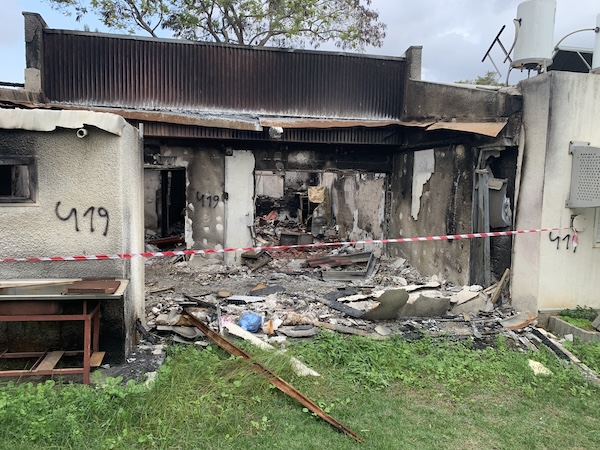
The rabbis visited Kibbutz Be’eri, where more than 100 people were murdered, and saw the devastation and destruction, some of it not from Oct. 7 but from days after, when explosives planted on that day detonated. It was also at this kibbutz that the Israel Defence Forces found a copy of the Hamas playbook for the atrocities.
“It sounded as if it could have been written by Eichmann or Hitler,” said Bregman. “[The intent] was not only to destroy the body but to destroy the mind, the soul, the psychology, the emotional and spiritual aspect of every Jew.”
The plan included strategies for setting fire to homes in order to force residents out of safe rooms, then specified the order in which family members were to be murdered – parents in front of their children.
As part of their mission to Israel, Vancouver rabbis visited kibbutzim that were attacked by Hamas on Oct. 7. (photo from facebook.com/jewishvancouver)
While the trip may have had the spirit of a shiva visit, the mood of the Israelis, Dresner said, was “can-do resourcefulness.”
“It’s felt to me over the past couple of years that Israelis have been kind of depressed,” she said, referring to divisive political conflicts. “But they are full force embracing their ingenuity and turning the energy of the resistance movement into this amazing volunteer corps to supply really whatever is needed to whatever sector.”
Groups that had coalesced to protest proposed judicial reforms pivoted to emergency response, she said, ensuring that soldiers and displaced civilians have basic needs met and then creating customized pallets of everything from tricycles to board games, bedding and washing machines, for families who will be away from their homes for extended periods.
The rabbis also went to Kibbutz Yavneh and paid their respects at the grave of Ben Mizrachi, the 22-year-old Vancouver man and former army medic who died at the music festival while trying to save the lives of others. They had a private meeting with Yaron and Jackie Kaploun, parents of Canadian-Israeli Adi Vital-Kaploun, who was murdered in front of her sons, an infant and a 4-year-old.
On the final evening of their visit, the rabbis hosted a Hanukkah party for displaced residents of Kiryat Shmona, the northern Israeli town that is in the Vancouver Jewish community’s partnership region.
At the party, Temple Sholom’s Rabbi Brown spoke with a woman whose two sons are in Gaza fighting for the IDF.
“I told her that we do the prayer for tzahal, for the IDF, in our services in our shul,” Brown said, “and she was so surprised and touched, and she said, ‘Keep praying, keep praying.’”
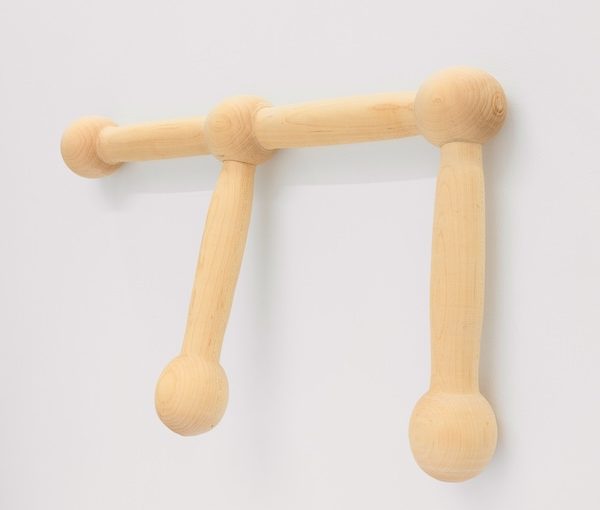
“Constellation” by Rosamunde Bordo. (photo by Sol Hashemi)
Every true artist at the start of their career undergoes a period of intense search: for their voices, for their themes, for their artistic expressions. Rosamunde Bordo is at that exciting stage now. She is searching. Her show at the Zack Gallery, Morning Star, reflects her creative explorations.
A professional artist today, Bordo has always loved art.
“As a child, I went to a school with a strong art program. I painted. I played saxophone. My parents always encouraged my interest in art,” she said in an interview with the Independent.
Rosamunde Bordo’s solo exhibit, Morning Star, is at the Zack Gallery until Feb. 7. (photo from Rosamunde Bordo)
After a bachelor’s in liberal arts and print media at Concordia University in Montreal (2014) and master of fine arts degree in visual art at the University of British Columbia (2020), Bordo teaches printmaking at UBC. But her artistic interests range much wider than printmaking. Her newly emerging passions include the creation of installations and woodworking.
“I started woodworking last spring,” she said. “In this show, I use different woods: maple, cherry, walnut. I’m fascinated by the process of turning wood into sculptures. In a way, woodworking is similar to printmaking. Both use technology but, unlike two-dimensional printmaking, woodworking offers three dimensions. In woodworking, I try to find the story of the material, try to immerse in material-based research to investigate the self as a created subject.”
Bordo began woodworking when she started her ongoing installation project, The Denise File.
“It is almost a work of detective fiction, written through physical space,” she explained. Using found postcards written to someone named Denise, Bordo “wanted to reconstruct who the elusive Denise is, to figure out what the letters meant, to show her essence through objects, sculptures and drawings.”
She built some wooden furniture for The Denise File – a screen and a chair – and wanted to do more, to explore all she could do with wood. Her current show, comprised mostly of several sculptures, has its roots in a Jewish magic class she took at her synagogue in 2021.
“I wanted to understand Jewish history, its mysticism and its superstitions,” she said.
Each figure on the gallery wall could have originated from the ancient writings of many nations.
“It could be ancient Hebrew or Aramaic or even Greek,” Bordo mused. “All the cultures in that region were interconnected. I see the entire show as a healing amulet, but I didn’t want to assign my own meanings to the individual figures. I wanted them to be mysteries for my viewers to investigate. I wanted the viewers to be detectives and I didn’t want to influence them with my personal vision, didn’t want to limit their imagination.”
That’s why she titled every “Constellation” figure with a number. “They could be stick figures – they are very simple – but I see them as constellations, stars connected to each other,” she said. “That’s why the show is called Morning Star. The world is a difficult place right now, and the morning star is a symbol of renewal.”
Bordo’s constellations are deceptive, looking a bit like wooden hieroglyphs, or perhaps molecular structures, each with its own character.
“The one with a leg sticking out of the wall – it wanted to be playful, maybe escape from the wall,” she said. “I was looking for harmony when I worked on them, but I didn’t want to force them into locked shapes. I wanted to give them their own personalities. Besides, I try to respect the wood I work with. It is alive. There are many ways one could interpret a wooden sculpture.”
In addition to the constellations on the gallery walls, there is also a video called Potion, which comprises four minutes of rotating green abstract patterns. Postcards with a single image from the video form another part of the installation. The text on the back of the postcards reveals the artist’s motto for this show: “Ideas are to objects as constellations are to stars.”
There is also a small table with a slab of pink salt on it.
“Placing salt in your pockets and in the corners of rooms was a well-known Jewish superstition to ward off malevolent spirits,” Bordo said. The table with the salt stands in the corner of the gallery, hopefully repulsing malice. We all need that in our troubled times, she explained.
The show opened Jan. 5 and will be on display until Feb. 7. To learn more, go to the artist’s website, withoutimages.com.
Olga Livshin is a Vancouver freelance writer. She can be reached at [email protected].
For Jews around the world, 2023 was among the most traumatizing years in recent memory. The advent of a new secular year, the turning of the calendar page to 2024, presents a figurative new beginning, some optimism and hope for a potentially better time. These emotions do not come easily right now, which is why the results of a recently released opinion poll seem right for the times, reflecting a little darkness and a little light.
An Angus Reid poll asked Canadians their opinions on the prevalence of antisemitism and anti-Muslim hatred and prejudice in Canada.
Addressing both types of prejudice – toward Jews and Muslims – 11% of respondents say there is “not really a problem at all in Canada.” However, about one in 10 respondents viewed antisemitism as a “minor problem” (11%), while 14% said the same about anti-Muslim hatred. More than half of respondents described antisemitism (52%) and anti-Muslim hatred (53%) as “a problem, but one among many others.” And just over one-quarter of respondents, 26%, said antisemitism is “a major problem requiring serious attention,” while 22% said the same about anti-Muslim hatred.
The overall impression left by the poll is that, among Canadians, there is genuine concern and recognition of these bigotries as an issue. Where more worrying numbers arise is when results are teased out based on Jewish and Muslim survey respondents. In both instances, perhaps unsurprisingly, members of the affected groups express the belief that the problems are of much greater severity than the general population seems to think. On the issue of anti-Muslim hatred and prejudice, 48% of Muslim respondents say it is a major problem, while 38% of overall respondents say it’s a problem, but one among many. The first number – with almost half of Muslims saying it is a major problem – is double that of overall respondents.
Meanwhile, 75% of Jewishrespondents said antisemitism is a major problem – almost triple the number of overall respondents who thought so. While a vast majority of respondents see antisemitism as a problem, to varying degrees, Jewish respondents are far more likely to view the severity of antisemitism as greater. Conversely, Muslim respondents were almost three times as likely as overall respondents (32% versus 11%) to say antisemitism is “not really a problem at all in Canada.” Fully 49% of Muslim survey respondents said antisemitism is a minor problem or not really a problem, indicating a schism in appreciation of the problem between these communities. Jewish respondents were slightly more acknowledging than overall respondents toward anti-Muslim bias, with 26% calling it a serious problem (compared with 22% overall), 55% as a problem but one among many (versus 53%) and only 4% saying it is not really a problem at all (versus 11%).
Polling is an imperfect science and recent electoral surprises have indicated its shortcomings in dramatic ways. Nevertheless, a poll of this sort probably captures fairly effectively the zeitgeist of Canadian opinion.
One indication seems to be that members of groups affected by prejudice and discrimination view them as much more serious problems than people who are not directly affected. It is human nature to be more concerned about things that affect us directly. However, when there are significant divergences of opinion around the seriousness of a social problem between people who are directly affected and those who are not, it is, at a minimum, a sign of a communication issue and potentially signals a threat to multicultural cohesion.
One might wonder whether those who experience antisemitism and anti-Muslim bigotry are not doing an effective job of explaining their experiences to the larger community, or whether the larger community is not listening – or, perhaps, a combination of both circumstances is at play.
It is often said that the first step in confronting a problem is the simple acknowledgment of its existence. What is absolutely encouraging is the apparently overwhelming recognition that these are problems that need addressing. There has been, in human nature and across history, a tendency among many people who are not affected by racism to be oblivious to it or to actively deny that it exists. We are fortunate that, if this poll is to be believed, we do not need to convince our neighbours that bias and discrimination are issues.
As we look ahead to the rest of 2024, as Jews and Canadians, let’s dedicate ourselves to tangible solutions to these problems and to really listening to other communities when they tell us they are facing prejudice and discrimination. These are two of the challenges we need to rise to meet.