בתקופה שבה מדינות מתועשות בכל העולם מתמודדות עם ירידה בילודה והזדקנות כוח העבודה, קנדה מהמרת על כך שהגירה תצליח למנוע הידרדרות של הכלכלה. לאוכלוסיית קנדה, אחת המדינות הדלילות ביותר בתושבים בעולם ביחס לשטחה, נוסף מדי שנה מספר תושבים השווה לתושבי סן פרנסיסקו. באחרונה היא עברה לראשונה את רף הארבעים מיליון תושבים, והצמיחה צפויה להימשך בקצב מהיר ככל שיגיעו למדינה עוד ועוד מהגרים, פליטים וסטודנטים
עבור ממשלתו של ג’סטין טרודו, ניסוי ההגירה המסיבי הזה הוא גם דרך להרחיב את שוק העבודה, בזמן שהתחרות על עובדים מקצועיים נהיית קשה יותר. הניסוי הזה גם משקף את השאיפה של קנדה לטווח הארוך להרחיב את הנוכחות הבינלאומית שלה ולצאת מהצל הכבד של שכנתה ארה”ב, שבה חיים פי שמונה יותר אנשים, והתמ”ג שלה גדול כמעט פי שתיים עשרה
עכשיו, כשאנשים נכנסים לקנדה בקצב חסר תקדים, היא מתמודדת עם אתגר מיידי: כיצד לעודד את הצמיחה באזורים הכפריים שזקוקים נואשות לדם חדש, תוך מזעור הפגיעה במרכזי הערים העמוסים באנשים
לכאורה, היתרונות הכלכליים ברורים מאליהם. הגידול באוכלוסייה הגביר את גיוסי העובדים והצריכה, ועזר לכלכלה לעמוד איתנה בפני שורה של העלאות ריבית שביצע הבנק המרכזי של קנדה, עד כדי כך שהחודש נאלץ הבנק המרכזי לחזור להדק את המדיניות המוניטרית לאחר הפסקה. ואולם בקנדה, ששוק הנדל”ן שלה היה במשך תקופה אחד הלוהטים בעולם, התוכנית של הממשלה גררה ביקורת על כך שהעלאת יעדי ההגירה רק מגדילה את התמ”ג, בלי להעלות את רמת חייהם של התושבים
התמ”ג הריאלי לנפש בקנדה כמעט שלא השתנה בעשור האחרון, וצפוי ליפול מהשיא שרשם אשתקד, על פי תחזית הבנק המרכזי של קנדה. הצמיחה בפריון לא זזה, וההכנסה הפנויה לא עומדת בקצב עליית מחירי הבתים. אפילו כלכלנים בולטים שתומכים בהגירה אומרים עכשיו שקנדה הרחיקה לכת
לא הגיוני להגדיל מהר כל כך את האוכלוסייה בפרק זמן קצר כל כך, אומר דיוויד דודג’, לשעבר בכיר בבנק המרכזי של קנדה, שעבד לפני כמה עשורים במערכת שממנה התפתחה תוכנית ההגירה הנוכחית. המהירות של השינוי הזה מגדילה את העלויות ומפחיתה את הפריון שנוסף משום שאין מספיק זמן לאנשים להסתגל
ממשלתו של טרודו הציבה יעד של הוספת חצי מיליון תושבי קבע מדי שנה. עם זאת, בשנה שעברה, סטודנטים זרים, עובדים זמניים ופליטים היו קבוצה גדולה אף יותר ממהגרי הקבע, מה שהביא את סך הכניסות של מהגרים לשיא של מיליון. קנדה רשמה גידול שנתי של כשלושה אחוזים באוכלוסייה, המהיר ביותר בקרב הכלכלות המפותחות, וכזה שנרשם דווקא במדינות מתפתחות
בקנדה התושבים מסבירי פנים כלפי מהגרים יותר מבמדינות אחרות, הודות למסגור ההגירה כמדיניות כלכלית ובזכות הגיאוגרפיה המבודדת יחסית, שמגבילה הגירה לא חוקית. מאז אלף תשע מאות שישי ושבע, קנדה נשענת על מערכת שבה מהגרים מקבלים ניקוד על פי גיל, השכלה, הזדמנויות תעסוקה בקנדה וידע באנגלית ובצרפתית, מה שמאפשר לה לנצל עובדים בעלי כישורים מקצועיים
אבל עד כה, ההגירה הייתה בעיקר לערים המאוכלסות ביותר של קנדה שבהן צמחו קהילות אתניות גדולות, שמושכות אליהן מהגרים חדשים שמחפשים לשמר תחושת שייכות במדינה החדשה. זה חיזק עוד יותר את הביקוש לנדל”ן בערים שכבר סבלו קודם לכן ממחסור בבתים, העלה את החסמים בפני בעלות על בתים ודחק מיליונים מהשוק, מה שפגע הן במהגרים והן בתושבים מקומיים במיוחד הצעירים שבהם
בחודש יוני מלאו תשע שנים לעבודתי בחברה הפיננסית פרוגרסה. החברה מספקת הלוואות לי שיש לו קרדיט גרוע ולכן לא יכול לקבל הלוואה מהבנק. מרבית הלקוחות מגיעים מחברות הגבייה בקנדה, שמציעות לחייבים לקבל הלוואה כדי להסדיר את חובם. אז גם יש להם אפשרות לשפר את הדקריט ואם יתמידו בכך, הם יוכלו לקבל הלוואות מבנקים שהם כידוע הרבה יותר זולות
אם כן במחצית מחיי כאן בוונקובר אני עובד בפרוגרסה שהפכה לחלק בלתי נפרד מחיי. בשבע השנים האחרונות אנ משמש מבקר החברה (על תקן מנהל) ושש השנים האחרונות אנו עובד מהבית (ללא קשר למגיפת הקוביד)
עלי מוטלת האחריות לבדוק שהכל מתנהל כשורה, שהעובדים במחלקת התפעול מנפיקים הלוואות כראוי ובהתאם למדיניות מחלקת הסיכונים. במקביל אני בודק בקביעות את רשימת הלקוחות שלא עומדים בתשלומים מסיבות שונות, וכן אני בודק אם התשלומים בוצעו נכונה על ידי מחלקת הכספים בתיקים הלוואות השונות. ישנן עוד משימות שונות שאני אחראי עליהן מדי יום, בהתאם למה שמתרחש בחברה
לחברה כמו פרוגרסה יש זכות קיום לאורך שרבים בקנדה חייבים כספים שאינם יכולים לשלם את חובם בזמן. הבנקים מעינים אשראי רק ללקוחות עם קרדיט טוב ורבים רבים לא יכולים ליהנות מכך, כיוון שהקרדיט שלהם נמוך. לכן הם נאלצים לקבל הלוואות מחברות בסב-פריים כמו החברה שלנו. וכידוע הלוואות כאלה הרבה יותר יקרות הלוואות מבנקים
המצב הכלכלי הקשה במשק הקנדי רק מגביר את זרם הלקוחות הפונים לקבל הלוואות סאב-פריים. ומצד שנים בכלל המצב במשק ויוקר המחייה הגבוה לרבים אין אפשרות לשלם את תשלומי ההלוואות הזמן. תופעה זו צפויה רק להחריף בחודשים הקרובים
הבנק המרכזי של קנדה העלה את הריבית ברבע אחוז לרמה של כמעט חמישה אחוזים. מדובר ברמה הגבוהה ביותר מזה עשרים ושתיים, ותוך שהוא מפתיע את השווקים שצפו שהריבית תישאר ללא שינוי, זאת אחרי בכל המדינות מדובר על רמות הריבית הגבוהות ביותר מזה עשור לפחות. לפני שנה אף אחד בעולם לא האמין שזו תהיה סביבת הריבית העולמית כעבור שנה בלבד אבל העולם המערבי מנסה להילחם באינפלציה. וכלי הנשק העיקרי שלו דומה העלאות ריבית
אבל האם זה סוף ההעלאות – כנראה שלא. הריבית כנראה תמשיך לעלות כאשר הבנק המרכזי של קנדה רמז שגם אם הוא יבצע הפוגות בהעלאת הריבית, זה לא אומר שהעלאות הריבית ייפסקו
האינפלציה בקנדה עומדת נכון לאפריל האחרון על כארבעה אחוזים גבוהה כמובן מתחום היעד אבל נמוכה באופן יחסי זו הרמה הנמוכה ביותר מזה תשעה עשר חודשים. האינפלציה במדינה כבר הגיעה שיותר משונה אחוזים ומאז היא בירידה. אינפלציית הליבה (ללא מזון ואנרגיה), המשקפת טוב יותר את הביקוש בתוך קנדה, יורדת כבר חמישה חודשים לכארבעה אחוזים
העלאת הריבית של בנק אוף קנדה כנראה שאיננה האחרונה, זאת על רקע העליות בשוק הדיור והאינפלציה הבסיסית הדביקה, אומר דר’ גיל בפמן, הכלכלן הראשי של בנק לאומי. לדבריו בההודעת הבנק צויין שצמיחת הצריכה ברביע הראשון הייתה חזקה באופן מפתיע. ההודעה ציינה את המשך הביקוש החזק לעבודה וגם שהביקוש העודף במשק נראה מתמשך יותר מהצפוי. על רקע זה הבנק המרכזי התריע מפני מצב שבו האינפלציה יכולה להיתקע באופן מהותי מעל יעד לש שני אחוזים. הבנק ציין כי ההחלטה על ההעלאה התבססה על הדעה כי המדיניות המוניטרית לא הייתה מגבילה מספיק בכדי להחזיר את ההיצע והביקוש לאיזון ולהחזיר את האינפלציה ברציפות ליעד של שני אחוזים
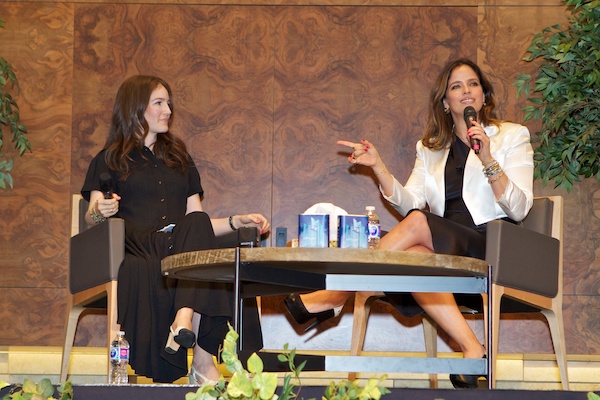
Noa Tishby, right, responds to a question from Danielle Ames-Spivak at the Jewish National Fund of Canada Pacific Region’s Negev event June 29. (photo by Robert Albanese)
The Jewish National Fund of Canada (JNF) Pacific Region hosted its annual Negev event on June 29 at Congregation Beth Israel. The first in-person iteration of the Vancouver gathering since the pandemic, the evening’s emcee, Howard Jampolsky, vice-president of JNF Pacific Region, noted that the event drew a record number of first-time attendees.
The evening featured Noa Tishby, an Israeli actress, producer, writer, and activist against antisemitism and the delegitimization of Israel. Funds raised went to support Carmel Farms, a horseback riding ranch in northern Israel catering to children and young adults with special needs, and Vancouver’s Southlands Therapeutic Riding Society (STaRS), which provides similar programming locally. A video was shown about the farm in Israel and Ann Thomson, board president of STaRS, spoke at the event.
There were several activities before the main part of the evening’s program. Mike and Lisa Averbach, event co-chairs, offered welcoming remarks, sharing that they had a son on the autism spectrum and know firsthand the good work that STaRS does. After Benjamin Jacobson led the audience in O Canada and Hatikvah, Shannon Gorski, president of the JNF Pacific Region board, spoke, as did Nathan Disenhouse, board president, and Lance Davis, chief executive officer, of JNF Canada.
Disenhouse presented past-president Bernice Carmeli with the President’s Pin, commending her leadership, especially during the pandemic, and he gave the Lifetime Achievement Award to “one of the greatest friends JNF has ever had,” Ruth Freeman, for her commitment to JNF Canada over more than three decades. Harvey Dales was presented with the Bernard M. Bloomfield Medal for his dedication to the Jewish community, including decades to JNF.
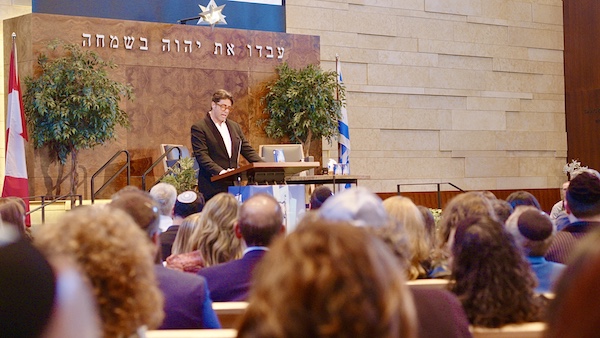
Harvey Dales speaks at the JNF Negev event after being honoured with the Bernard M. Bloomfield Medal for his dedication to the Jewish community. (photo by Robert Albanese)
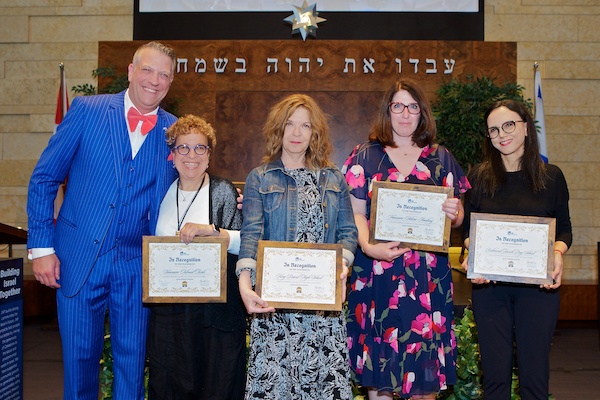
Michael Sachs, executive director of JNF Pacific Region, presented the Educators Award, honouring the commitment of the community’s educators during the pandemic, to representatives from the four Jewish day schools: Myra Michaelson (Vancouver Talmud Torah), Anna-Mae Wiesenthal (King David High School), Lisa Altow (Vancouver Hebrew Academy) and Bat Sheva Michaeli (Richmond Jewish Day School).
Michael Sachs, executive director of JNF Pacific Region, presented the Educators Award to representatives from the four Jewish day schools, left to right: Myra Michaelson (VTT), Anna-Mae Wiesenthal (KDHS), Lisa Altow (VHA) and Bat Sheva Michaeli (RJDS). (photo by Robert Albanese)
In the fireside chat-style interview, Tishby was joined by her close friend and Vancouver Jewish community native, Danielle Ames-Spivak, who is executive vice-president and chief executive officer of the American Friends of the Israel Philharmonic. The two discussed Tishby’s background, rising antisemitism in North America, and the future of Jewish pride and Zionism in today’s political landscape.
Tishby – who was Israel’s first-ever special envoy for combating antisemitism and delegitimization – is a prominent voice in the media for fighting antisemitism and defending Israel. While she chose this task, she said it has put a target on her back. But she was appalled by the misrepresentation of Israel in the United States and enraged by the strong – “insane” was the word she used – opinions about a country Americans have little knowledge about. And so, about her activism, she said, “To me, it was a very easy choice.”
Tishby views her work as “what is supposed to be the low-hanging fruit,” and she finds it surprising when people label her as brave for defending the only democracy in the Middle East. “The safety and security of the state of Israel is not a Jewish or Israeli issue,” she said. “It is an international security and Western values issue.”
Tishby’s 2021 book Israel: A Simple Guide to the Most Misunderstood Country on Earth is intended to provide a digestible resource for Israel supporters in need of more knowledge in order to defend the country in discussions or debates. In addition to taking on the responsibility of explaining the complexities of Israel in a clear and relatable manner, Tishby shared that she often sees herself as “part author, part activist and part therapist.” With the peril of rising antisemitic attacks, the Jewish community is stressed, she explained – “people need to vent.”
When Ames-Spivak asked from where Tishby drew her strength, the activist attributed it to her upbringing. “When you grow up in Israel, you live a very particular life,” surrounded by political tension and neighbouring threats, she explained. Under these conditions, Tishby said she has become highly functioning under pressure, which allows her to fight antisemitism daily on social media. An example of her work is a video highlighting the hypocrisy of the BDS movement, which promotes boycotting, divesting from and sanctioning against Israel. The video showcases Tishby talking about various Israeli innovations commonly used in everyday life that people would have to forego if they followed BDS – a list that includes so many things, from cherry tomatoes to cellphone chips.
At the JNF event, Tishby addressed the influence of social media, noting that supermodels Gigi and Bella Hadid, who have millions of followers, hold “extraordinarily anti-Israel views” and mobilize their followers accordingly. “Numbers-wise, we’re behind,” she said about social media activism against antisemitism.
And what is antisemitism, according to Tishby? Firstly, she emphasized how one cannot separate anti-Zionism from antisemitism. “The connection of Jewish people and the land of Israel is unbreakable,” she said, noting that Zionism is not a political movement, but rather a part of the ethnoreligious identity of the Jewish people. “Our entire religion is indigenous and connected to a place – Israel,” she said.
“What’s been happening over the past few years is swapping ‘the Jew’ with ‘the Zionist,’” she explained. Throughout history, Jews have often been scapegoats for societal problems. Tishby asked, “Today, what is the worst thing to be?” She named three things: racist, white supremacist and colonialist. So, these days, Israel – and, by extension, the Jewish people as a whole – are blamed for being racist, white supremacist and colonialist.
She pointed again to BDS, whose advocates often use the language of apartheid in an attempt to dismantle Israel. “Every country in the world has issues, yet Israel is the only one whose existence is being questioned,” she said, explaining that, when BDS activists use terms such as ethnic cleansing and colonialism, the Jewish community is reminded of an extensive history of antisemitic rhetoric. “We’ve heard this before, and we know where this can lead,” she said.
Ames-Spivak drew attention to the fact that there were elected officials in the audience who had advocated for the adoption of the International Holocaust Remembrance Alliance (IHRA) definition of antisemitism. She asked Tishby why this definition is so important.
The IHRA definition is a key parameter to understanding antisemitism, said Tishby. It highlights the prejudice and anti-Zionism that antisemitism entails, she explained. In her opinion, it is crucial to adopt the IHRA definition at all levels of government.
Tishby described antisemitism as “a shapeshifting conspiracy theory.” It’s not just “punching down,” considering Jews as lesser than, but “it’s also punching up” and a “conspiratorial thing,” which sees Jews as having disproportionate wealth and control over the media, for example. Antisemitism is the oldest form of hate that is still being practised and, oftentimes, tolerated, she said.
Directly addressing the college students in the audience, Tishby said, “Instilling in the younger generation how miraculous the state of Israel is is my life’s work.” Calling them “the most important people in the room,” she highlighted that 50% of college students feel the need to hide their Jewish identities on campus. She urged this age group to not only educate themselves about the history of Israel, but to “find out why being Jewish is great.” She believes that, by doing so, a person becomes unassailable.
Ames-Spivak concluded the discussion by asking Tishby about the future of Jewish pride and Zionism. In response, Tishby reminded the audience of the unbreakable strength of Jewish traditions and values – even in an uncertain or hateful world, she said, women will continue to light candles on Shabbat.
“I’m very hopeful,” she said, noting that, to this day, Israel’s existence and prosperity defies the odds. “The greatest innovation of Israel is Israel.”
Alisa Bressleris a fourth-year student at Queen’s University in Kingston, Ont. She is an avid reader and writer, and the online director of the arts and culture publication MUSE Magazine. Bressler is a member of the Vancouver Jewish community, and the inaugural Baila Lazarus Jewish Journalism Intern.
In Canada, one woman is killed in a violent act every 48 hours. The spike in domestic violence that began during the pandemic is not diminishing and instead continues to increase. It has increased in Canada by 27% since 2019.
In Israel, the situation is just as critical. In the first year of the COVID-19 pandemic, 20,140 domestic violence complaints were lodged with police, an increase of 12% from the previous year, and, in 2022, the rate of femicide in Israel increased by 50%. In the first five months of this year, 16 women have been murdered.
Join CHW (Canadian Hadassah-WIZO) Vancouver Centre for the CHW Vancouver Walk on Sunday, Aug. 13, from 10 a.m. to noon at Jericho Beach. This annual event raises funds in support of CHW’s SOS – Starting Over Safely – summer campaign to empower victims of domestic violence.
The CHW Vancouver Walk is an opportunity for the community to come together and make a difference. By participating in this event, you will not only support essential programs that empower women to break the cycle of violence, but also raise awareness about the issue of domestic abuse.
The programs supported by this cause are WIZO services for domestic abuse survivors, Michal Sela Forum in Israel and Franny’s Fund in Canada. These programs will:
provide help for parents and families in need of an urgent response,
provide women and their children with specially trained protections dogs,
provide women and their children with the basic essentials to start over safely,
provide awareness materials to help women recognize the signs of abuse,
fund respite summer camp experiences for at-risk youth,
provide access to critical resources, including legal counsel and therapeutic counseling services, and
assist with social and personal support to help break the cycle of violence.
CHW encourages everyone to come to Jericho Beach, where the event will kick off promptly at 10 a.m. To donate and to register to walk, jog or run, go to chw.ca/vancouver-walk (free for kids under 18). Strollers and dogs are welcome. No matter how you choose to participate, your presence and support will make a meaningful impact. Together, we can create a safer and more secure environment for those affected by domestic abuse.
Also, save the date: on Aug. 22, CHW will launch a 27-hour online crowdfunding campaign. Funds raised that day will be matched three more times by a loyal community of donors, the Matching Heroes, so please visit chwsos.ca sometime during those 27 hours and donate.
Zelik Segal teaches an ongoing, free class in Nonviolent Communication. (photo from Zelik Segal)
We’ve all had an experience in which someone is short-tempered with us for no apparent reason, or doesn’t respond to us as we would like. We have a choice in that moment to react in kind or to pause, understanding that they may be having a bad day, or are dealing with chronic pain, or any number of things that have little or nothing to do with us. In situations like these, something called Nonviolent Communication (NVC) might come in handy.
In a nutshell, NVC teaches how to observe a conflict with objectivity, in place of subjective evaluations of right and wrong or appropriate and inappropriate. It also teaches how to sort out your own feelings and understand what needs of yours are in play, then how to determine what action might fulfil your needs in a conflict without taking away from the needs of the other person or people.
Want to experiment with that process? Zelik Segal teaches an ongoing, free class in NVC in Vancouver that helps people who are experiencing conflict and are ready to address it. It could be a marital problem or an ongoing argument with a friend or family member.
Segal took his first course in NVC in 2012 and has been facilitating and practising for the past six years; he is working on his certification. Segal began studying NVC after he retired from 18 years as a bus driver with Coast Mountain Bus Company. Prior to that, he worked as Lower Mainland regional coordinator for the B.C. Head Injury Program, under the ministry of health.
“When coming into a group to teach NVC, I also experience learning together and creating community that feeds my soul,” Segal told the Independent. “And having the good fortune to have discovered this jewel of living a more rewarding life, I like to share my good fortune with anyone else willing to learn.”
Segal calls himself an “empathy coach.” As such, he sometimes helps NVC students unravel difficult situations in their lives.
“Teaching NVC is the most immediate and direct way I can fulfil the talmudic statement from Rabbi Tarfon, who said, ‘You are not responsible to complete the task (of repair, tikkun olam), nor are you free from doing your part.’”
Segal recognizes that NVC is not always effective in resolving conflict and that it can take a lot of patience to sort through complex situations. He told the Independent that it did, however, change his life.
“While my connections to people and activities have remained the same as they were before I began to practise NVC, the way I connect and experience these connections are significantly different and far more satisfying,” he said. “I have learned to apply my learning to my marriage, to my employment as a bus driver prior to my retirement, to my retirement, to family and to my own self.”
Psychologist Marshall Rosenberg developed NVC in the 1970s. In part, it was his reaction to the bullying he went through in school because of his Jewish surname. In his book Nonviolent Communication: The Language of Life, he states that bullying is a “tragic expression of unmet needs.”
Segal further explained that Rosenberg’s nine categories of needs are safety, sustenance, love, empathy, community, creativity, recreation, meaning and autonomy.
Rosenberg became famous for creating dialogue between people around the world who were involved in violent conflicts, including Israelis and Palestinians. Trainers in NVC today are continuing his work.
“While NVC teaches the use of compassionate understanding to achieve resolution of conflict, it supports the use of force in situations where there is a threat to life, where the other party is unwilling or unable to enter into conversation and presents a threat,” said Segal.
Rosenberg suggested that, in times of conflict, people respond by defending themselves, attacking the other or withdrawing from the situation, sometimes even experiencing complete collapse, explained Segal.
“Learning that emotions are rooted in previous learning and part of a complex, unconscious process in the brain and directly rooted in the degree to which needs are fulfilled, one can then respond with curiosity and reflection in place of old patterns of reaction,” he said.
Segal sees NVC as a way to practise Judaism’s emphasis on social justice and “apply many of the maxims expressed by the rabbis in Pirkei Avot [Ethics of Our Fathers],” he said.
If you have questions about NVC or are interested in Segal’s classes, you can contact him at [email protected]. Rosenberg’s books are available online and the Centre for Nonviolent Communication, which he founded, offers international training and certifies individuals as trainers: cnvc.org.
“NVC is about connecting with ourselves and others from the heart,” it says on the centre’s website. “It’s about seeing the humanity in all of us. It’s about recognizing our commonalities and differences and finding ways to make life wonderful for all of us.”
Cassandra Freeman is a freelance writer living in Vancouver.
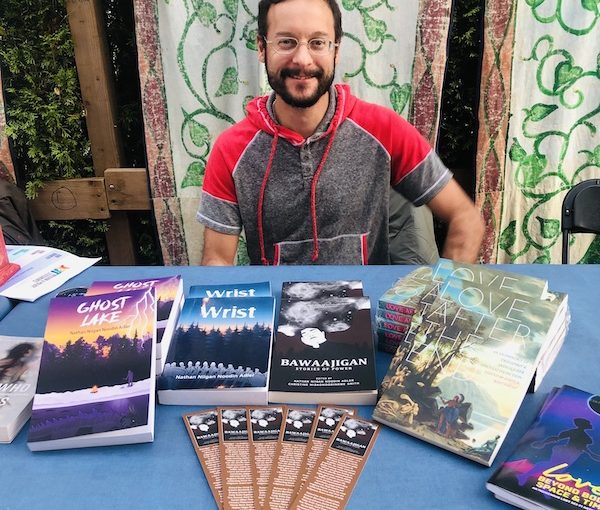
Nathan Niigan Noodin Adler at the JQT Vancouver artisan market last fall at Or Shalom for Sukkot. (photo by Carmel Tanaka)
When you enter Massy Books in Chinatown, one of the main Indigenous authors featured in the centre book aisle is Nathan Niigan Noodin Adler. I smile every time I pop in because I see signed copies of his award-winning young-adult horror fiction for sale – Wrist and Ghost Lake, both published by Kegedonce Press. Of course, Nathan would take the time to sign each book! He’s a total mensch, and we met in the best of ways.
I was having brunch with my dear friend Evelyn Tauben of Fentster Gallery at Toronto’s Pow Wow Café, owned and operated by Nathan’s brother, Shawn, an Indigenous Jewish chef. We bonded over being “Jewish&” and he mentioned that he had a sibling out west and that we should connect. So, I reached out over Facebook and we met up at the Fountainhead Pub in Davie Street Village, Vancouver’s “gaybourhood,” a few months later. Since then, Nathan has become a good friend, and you’ll also see him around JQT events, sometimes tabling as a JQT artist or just showing up to enjoy the festivities and the food.
I caught up with Nathan when he was guest curating Centring Indigenous Joy: A Celebration of Literature, Arts and Creativity with Word Vancouver for Indigenous Peoples’ Day last month. The Jewish Independent asked me to attend the event and interview Nathan for the paper.
CT: In your opening remarks, you state that you are Jewish, Anishinaabe, Two-Spirit and a member of Lac des Mille Lacs First Nation. You go on to say that your father is a Holocaust survivor and that your mother is a residential school survivor. What has the journey been like for you? How has the way you introduce yourself evolved over time?
NA: Part of my idea behind the Centring Indigenous Joy event was related to the number of emotional film programs I’ve attended that are about processing historical trauma – really important work, but also kind of a downer. Sometimes a late-night shorts program full of zombies and gore is more cathartic somehow? I wanted people to come away feeling uplifted and happy rather than heavier, you know? Especially since it was an event for Indigenous Peoples’ Day, I wanted it to be celebratory. We’re more than our trauma.
Me and two of my siblings recently traveled to Europe to work on a documentary about our great-uncle who didn’t survive the Holocaust and, after visiting so many museums, memorials, internment camps and historical sites, all I wanted to do was … party!? I insisted my brother quit his delivery job so we could spend an extra two weeks outside our work on the documentary to just have fun, do touristy stuff, go to clubs and the beach. I think balance is needed.
I don’t usually include stuff about my parents being survivors in my introductions, but I felt it was part of my thought process behind the theme for the event (Indigenous joy), and I wanted people to know it wasn’t some kind of toxic positivity in the face of harsh realities, but something that I’d deeply considered. It was more about a shift in focus.
CT: How did your parents meet? And what was their families’ reaction to their union?
NA: They met in French class at the University of Guelph in 1967. My mom missed a class and asked my dad what she missed. That’s how they started talking to each other. My mom mentioned the ballet was in town (“a leading question,” she says) and he asked her out. There were very few Native people in university at that time, so it’s pretty unlikely they [would even meet], but that’s how it happened.
My Jewish grandparents were not happy about the fact he was dating a non-Jew, at least until the babies started coming – then all was forgiven!
All my mom’s family said about it was: “Oh, he’s too old for you” [a five-year age difference], but she also probably looked much younger than him at 19 years old.
CT: Where do Jewish and Indigenous cultures meet?
NT: Food and community and tradition, though the types of foods and traditions are different. Also, the inheritance of historical trauma, and overcoming oppression. You know, just a few minor things.
CT: When did you realize that you were Jewish and Indigenous? Was there a moment?
NA: I don’t remember a specific moment. I think I always just knew? We spent most weekends either going to visit our Ojibwe grandmother or our Jewish grandparents. We did the Jewish High Holidays, Passover, Hanukkah, Purim, etc., and we went to Sunday school for awhile, and in the summer our mom took us up to the reserve or out on the powwow trail and to Native community events in Guelph, where our aunt lives; there were always feasts and ceremonies. So, we always had that grounding in our cultures, where we come from. It wasn’t always a full picture though, it was also marked by absence of knowledge, language and people – relatives who didn’t survive, the knowledge that didn’t get passed down, a lot of unknowns and absences that also becomes part of who we are. Those gaps also become markers of identity.
CT: What has been your experience of being Indigenous and Two-Spirit in the Jewish community (here in Vancouver and elsewhere)? And vice versa?
NA: Well, I think it’s been pretty great here in Vancouver, thanks to the work of JQT, which really helps build community and creates space. When I lived in Peterborough, Ont., there was also a pretty cool alternative Jewish and queer scene. I went to a memorable queer Passover there once, which is one of the few gay and Jewish events I’ve been to; a gay-Jewish-boy networking I stumbled on in Toronto once; and then the JQT events I’ve attended or participated here in Vancouver, like the arts markets and the Shabbos Queen event. And I’ve been to many Two-Spirit-specific events – my twin brother helps organize the 2-Spirit Ball in Ottawa as part of the Asinabka Festival – and, recently, I went to the 2-Spirit Powwow at Downsview Park in Toronto. It’s actually pretty great being part of these communities. Queers are everywhere, so are Jews and NDNs – add in the arts scene and social networks, and it makes it easier to find community in a new place.
CT: Your jam is horror fiction and documentary filmmaking. What draws you to these genres?
NA: I love all things horror and urban fantasy. I went through a Goth phase, and I’m still a Goth at heart. So, when it comes to making my own work, it just makes sense to work in those genres. I also picked up a lot of film and video post-production skills when I attended OCAD [Ontario College of Art & Design] University in the 2000s. But I feel like fiction isn’t for everyone. A lot of people are turned off by anything that isn’t steeped in the conventions of the here and now. They see anything with an element of fantasy, and it’s too far removed from reality – though I think the opposite is true, the fantastic can make a great metaphor for exploring the realities of this world. But some stories feel like they need to be told as they are, they don’t need any dramatization or embellishment. So, it just depends on the story. The story should dictate how it gets told.
CT: You teach post-secondary creative writing, and your work is showcased in numerous art and film festivals. What are you currently working on? What is coming up next? What’s your dream project?
NA: I’m working on a short story for a horror anthology that Kegedonce Press is planning on putting out – though the story isn’t very scary so far, so I may need to write something else. I’m curating a few panels for Word Vancouver in September as part of their Literary Arts Festival, and I’ll be pretty busy with teaching again in September, which takes up a lot of time.
There is the documentary I mentioned about our Uncle Emanuel that we need to sit down and edit (many, many hours of footage to sift through to put the story together). I also have a graphic novel project that’s been on the back burner that needs to be done asap.
I’d love to write those Y/A [young adult] novels I’ve had in the back of my head for awhile, plus the next novel that’s in an unfinished state. Too many unfinished projects! Dream project: finish these ones first before I tackle anything new.
CT: Have you or your family come up with any fusion Indigenous Jewish recipes?
NA: That might be a question for my brother Shawn – he’s the chef! Though, a lot of my knowledge of Jewish cooking comes from my mom, who learned how to do a lot of cooking from her mother-in-law. I think that’s a type of fusion. Learning how to cook Jewish food by way of my Anishinaabekwe mom – even my Jewish food is Indigenous.
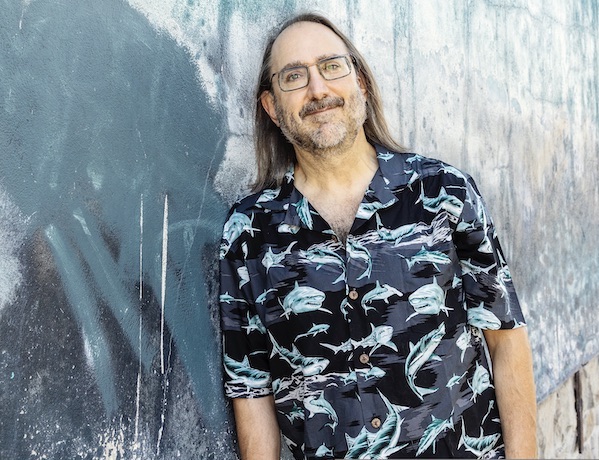
From a neurotic gentleman who dresses like a bat, to a wise-cracking human spider, to a Super-Mensch appearing in the bulrushes, not to mention a green golem – it is impossible to escape the Jewish influences of comic superheroes, says Mark Leiren-Young, a creative writing instructor at the University of Victoria.
Put another way, Leiren-Young told the Independent, “It would be simpler to name the iconic comic superheroes who were not shaped by Jewish immigrants. It’s a very small list: Wonder Woman and Shazam. That’s it. That’s all of them.”
In his classes, Leiren-Young and his UVic students examine and analyze the origins of the classic superheroes, almost all of whom were created by Jewish immigrants in the United States. In the first half of the 20th century, these creators were working in comics at least in part because they were not allowed to get jobs in advertising or journalism at the time. In other words, Jews were permitted to do the low-class work that “proper people” would not consider.
Superman, Batman, Spider-Man, Green Lantern, the Flash, Dr. Strange and numerous others on the superhero roster were all products of Yiddishkeit, according to Leiren-Young, whose classes on the DC Universe and the Marvel Universe are among the most popular electives at the university.
“One of the things that fascinated me when I did a deep dive into this – all of these Jewish creators were creating characters who were not shy about their religion, though there were none who overtly identified as Jewish. For example, Spider-Man’s sense of humour is absolutely Borscht Belt humour. It is Stan Lee’s humour,” he said, referring to the character’s creator. “Now, you’re seeing the actor playing Spider-Man (Andrew Garfield) saying he just assumed he was a Jewish character. That’s how he reads.”
The perceived Jewishness of the early manifestations of comic superheroes was not lost on the Nazis. In 1940, a copy of Look magazine, featuring a two-page segment on how Superman would end the war, made its way to the desk of Das Schwartze Korps, the weekly publication of the SS, in Germany. The Nazis attacked Superman’s creator, writing, “Jerry Siegel, an intellectually and physically circumcised chap who has his headquarters in New York, is the inventor of a colourful figure with an impressive appearance, a powerful body, and a red swim suit who enjoys the ability to fly through the ether.
“The inventive Israelite named this pleasant guy with an overdeveloped body and underdeveloped mind ‘Superman.’ He advertised widely Superman’s sense of justice, well-suited for imitation by the American youth. As you can see, there is nothing (they) won’t do for money!”
The Nazis, led by Joseph Goebbels, their chief propagandist, were concerned about Superman’s sense of justice, Leiren-Young contends. The effects of the German invective against Superman and his creators carried over to these shores as well, with DC Comics being picketed by American Nazis in 1940.
“The creators of Superman were living in a Jewish section of Cleveland and were emphatically impressed with the idea of social justice,” Leiren-Young said.
The Superman-going-to-war spread in Look magazine preceded another daring Jewish-inspired comic – Captain America punching Hitler – that would be published in 1941, before the United States entered the war.
The Jewish creators of Superman and Captain America essentially were going to war and defining Hitler as the enemy before any American troops were involved, Leiren-Young explained.
“Captain America was created to punch Hitler. He looks like a nerdy Jew until he gets the super serum and then turns into the All-American Hero, which also created protests from the American Nazi Party. These were controversial because there were still so many Americans who were really not keen on the United States going to war,” said Leiren-Young.
Such imagery continued after the war. In the 1961 comic “The Death of Superman,” for example, the setting for the trial of Lex Luthor, Superman’s archenemy, strongly resembles the trial of Adolf Eichmann in Israel.
In another postwar Jewish connection, the scientist who invented Captain America in the comic series looks increasingly like Albert Einstein as the story progresses.
Leiren-Young developed an interest in comics at an early age, “raiding” his uncle’s collection after Shabbat dinners. “He had everything, but for me it was all about the DC Comics. I remember there were all sorts of different comics, but a lot of DC superheroes,” said Leiren-Young, who has more than 15,000 comic books in his collection.
In 2014, when Swerve magazine asked writers across Canada to name the most influential book they read as a youth, Leiren-Young responded, “I’ve written a few stories about how and why I fell in love with comics, but I never imagined that having a collection of 15,000-plus comics would launch my career as a television writer or become a job qualification for teaching certain university classes,” he tells his students.
Leiren-Young has written and/or developed animated shows for Netflix, BBC Kids, ABC, Teletoon and other broadcasters. He has also written for BBC’s live-action CGI superhero series Ace Lightning, and his other cartoon credits include scripts for ReBoot, Transformers: Beast Wars, RollBots, Class of the Titans and Pucca.
Beyond his classes and comics, Leiren-Young is a playwright, author, journalist, filmmaker and performer. The Hundred-Year-Old Whale, a film he wrote and directed, received the 2017 Writers Guild of Canada award for best documentary. His memoir, Never Shoot a Stampede Queen, won the 2009 Stephen Leacock Memorial Medal for Humour.
Leiren-Young recently gave a talk about comic superheroes at Victoria’s Congregation Emanu-El and hopes to address a Vancouver audience about the subject in the near future. His knowledge and enthusiasm for comics extends well beyond the confines of a standard newspaper article. He recommends Up, Up and Oy Vey by Simcha Weinstein, Stan Lee: A Life in Comics by Liel Leibowitz and Is Superman Circumcised? The Complete Jewish History of the World’s Greatest Hero by Roy Schwartz for further reading on the subject.
Sam Margolishas written for the Globe and Mail, the National Post, UPI and MSNBC.
Screenshots from Burquest: Past, Present & Future.
The 37-minute film Burquest: Past, Present & Future – about Burquest Jewish Community’s history – includes photos and interviews with founders and past leaders, and is scored with original music written by Burquest members and supporters. It premièred at a wine and cheese event on June 25 and is now available at burquest.org.
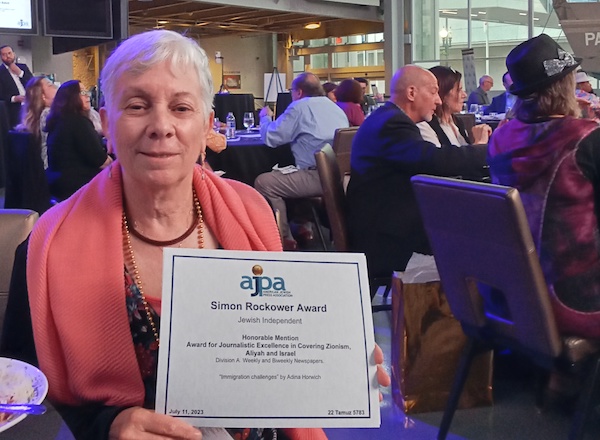
Adina Horwich at the 42nd annual Rockowers Awards. She received an honourable mention for journalistic excellence in covering Zionism, aliyah and Israel. (photo from Adina Horwich)
The Jewish Independent won four Simon Rockower Awards for Excellence in Jewish Journalism this year. The awards, which are given out by the American Jewish Press Association, were for work done in 2022. The JI has had a few Rockower hat tricks in its history, but this is the first time the paper has garnered four honours in one year.
The awards were presented on July 11 at the Higgins Hotel and Conference Centre in New Orleans, La., where the AJPA’s annual conference was held. The JI mainly competed in the division of weekly and biweekly newspapers, but there were some categories for which the competition was between all types of media (print and online); awards were given for first and second place, and sometimes honourable mention.
Writer Adina Horwich traveled from her home in Israel to New Orleans to receive her award in person. She won the JI an honourable mention for journalistic excellence in covering Zionism, aliyah and Israel for her article “Immigration challenges” (jewishindependent.ca/immigration-challenges-2). The piece both reviews Adi Barokas’s Hebrew-language graphic novel, The Journey to the Best Place on Earth (and Back), about Barokas’s experience trying to immigrate to Vancouver from Israel, and shares Horwich’s experience making aliyah from Canada. The jury commented: “Extremely readable story, that skilfully explores from a personal perspective the nitty gritty of making aliyah.”
The JI’s Pat Johnson also received an honourable mention – his article “Oasis in the Caucasus” (jewishindependent.ca/oasis-in-the-caucasus) garnered recognition for excellence in writing about Jewish heritage and Jewish peoplehood in Europe. The jury said about his piece:
“A terrific look into the Jewish community of Azerbaijan that most of us, unfortunately, don’t have on our ‘Must-Go Places to Visit.’ Pat Johnson’s very nice story strongly suggests otherwise. Johnson paints a wonderful picture of this tucked-away ‘shtetl’ where the residents say they have never faced antisemitism. If only we could feel so lucky here in the United States! And while most of us do well playing ‘Jewish geography,’ actual world geography is often more of a challenge. Having Johnson admit having to Google Azerbaijan before traveling there to report this story added a nice touch that connects with readers who may also be unfamiliar with the country – but now more knowledgeable thanks to this feature.”
Johnson was recognized for another of his articles, “Maus not too graphic” (jewishindependent.ca/maus-not-too-graphic), which placed second for excellence in education reporting. Johnson sat in on Anna-Mae Wiesenthal’s Holocaust and Genocide Studies class at King David High School, and listened as students discussed the graphic memoir Maus by Art Spiegelman.
“Lots of people laughed when a Tennessee school board pulled Maus from the curriculum because of the drawing of a naked cat. That was too much for board members and they banished the Pulitzer Prize-winning graphic novel,” wrote the Rockower jury. “Viewing the book through the eyes of five students at a Jewish high school subtly portrays the board decision’s absurdity.”
Rounding out the JI wins was a first place for excellence in editorial writing – where all entries competed in the same division. The JI editorial board of Johnson, Basya Laye and me were honoured for the set of editorials that included “Every person has a voice” (about Elon Musk, hatred and misinformation online, and how people can counter such forces), “Extremism not helpful” (about New Democratic Party leader Jagmeet Singh’s views on the Israeli-Palestinian conflict) and “New era in U.S. politics” (about the U.S. Supreme Court’s rejection of a woman’s right to reproductive self-determination, as well as the Jewish perspective on abortion).
About these editorials the Rockower jury wrote: “These pieces are good examples of what editorials should be – thoughtful examination of pressing issues, using clear reasoning in looking at both sides, then coming to a well-reasoned conclusion. Local tie-ins strengthen opinions.”
All of us at the JI appreciate the AJPA’s recognition of the hard work that goes into producing an independent Jewish newspaper, magazine or website, and we congratulate all of our colleagues on their achievements. For the full list of Rockower winners, visit ajpa.org.
The JI couldn’t do what we do without our subscribers, donors and advertisers – thank you for all your support. For readers who are thinking about subscribing, donating or advertising, please consider doing so to help us continue producing a high-quality, independent Jewish newspaper that connects community members from across the religious and political spectrums; covers lifecycle events and local, national and international news; and documents our community history as it happens. Visit jewishindependent.ca/support-the-ji, email [email protected] or call 604-689-1520.
Shelley Rivkin, left, Candace Kwinter and Ezra Shanken
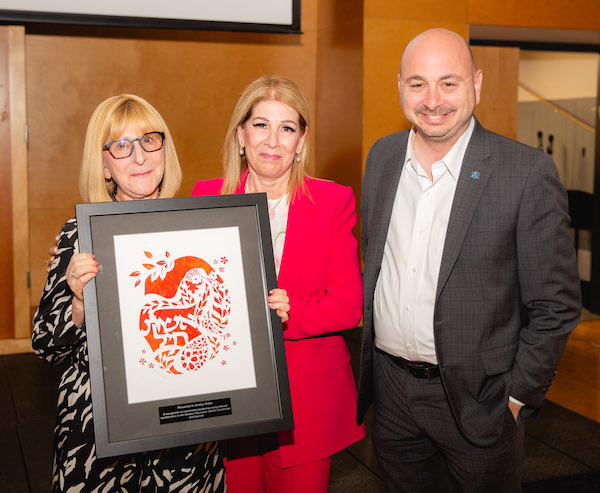
Jewish Federation of Greater Vancouver’s annual general meeting on June 27 at King David High School celebrated Shelley Rivkin, vice-president of local and global engagement, for her contributions to the community. The meeting also honoured several volunteers for their leadership and contributions: Catherine Epstein (Dennis Frankenburg Award), new board chair Lana Marks Pulver (Harry Woogman Award), Stan Shaw (Bob Coleman Award), Brent Davis (Young Leadership Award) and SUCCESS (Community Partner of the Year).
In an email sent after the meeting, chief executive officer Ezra Shanken and immediate past board chair Candace Kwinter shared their joint message that will appear in Federation’s 2022-2023 annual report. In it, they cover much ground, noting that the organization’s “impact resonates farther afield than what the ‘Greater Vancouver’ in our name might suggest. From the Sea-to-Sky to Langley, and all points in between, Jewish community life is thriving – and we are proud to be at the centre of it through our Connect Me In program. On Vancouver Island and in Kelowna, we are now providing security training for volunteers and professionals in their growing Jewish communities.
“As part of her role on the Jewish Agency’s board of governors, Candace traveled to Ethiopia and accompanied some of the 3,000 Jews who were making aliyah. Together, we traveled to Mexico City with the Jewish Agency to see more of their international work, and from Ukraine to Turkey and Syria and beyond, we helped those in need when disaster struck.
“We continued to improve the quality of life for residents of our partnership region in northern Israel. Our work is focused on strengthening the region’s development and regionalism through leadership development and capacity-building while investing in academic excellence. Our long-term investments are helping residents tackle some of the most difficult and complex challenges they face living in Israel’s periphery.
“The political situation in Israel has proven challenging for many in our local community who care deeply about the country,” continue Shanken and Kwinter. “We and our partners have offered multiple events over many months to help people learn more about what is happening and to facilitate discussions.
“Here at home, inflation continued to take a toll on our partners and the people they serve. Across the board, our partners report that inflationary pressures are affecting every part of their work. Ninety-one percent are concerned or very concerned that inflation will affect community members’ ability to fully participate in Jewish life. And 100% of our social service partners are concerned or very concerned that inflation will affect their ability to support their clients’ needs.
“For five years, we have been bringing community together around issues of affordability. Together with key partners, we co-hosted an Affordability Summit on the experiences of children and youth in low-income homes. The three areas of focus identified by our planning council are advocacy for a national breakfast program, creation of a single application point for assistance from multiple organizations, and development of more inclusive, respectful processes.
“This year, we made strides in combatting antisemitism. We were proud to see Vancouver city council and Richmond city council adopt the International Holocaust Remembrance Alliance (IHRA) working definition of antisemitism and the province of B.C. commit to using it as a tool to identify and combat hatred. Identifying antisemitism is the first step in combatting it, which makes these milestones important for all of us, and we want to thank our partners and our advocacy agent, the Centre for Israel and Jewish Affairs, for their work on this.”
Federation also has started “an organizational design initiative intended to build significant capacity within the Federation over the next several years with greater potential for scalability, efficiency, excellence and agility going forward.
“Our unparalleled impact is possible thanks to the strength of our partnerships and the cherished trust of our donors,” Shanken and Kwinter write. “Collective giving is deeply rooted in our tradition, and we play a leadership role in raising the funds our community needs to grow from strength to strength. We invest strategically in initiatives that keep our community strong today, tomorrow and for years to come – as well as in times of crisis. Our partners depend on us to generate the support they need to deliver the vital programs and services on which thousands of people rely.”
The 2022 annual campaign generated more than $13 million for the community: $10.24 million directly through the campaign and $2.91 million in additional support, including special project funding, community relief and emergency relief. The Jewish Community Foundation’s contributions this year surpassed $12.7 million.
“This is more than double the contributions received in the previous fiscal year, which itself exceeded the contributions of the year before that,” write Shanken and Kwinter. “The Foundation strategically disbursed a total of $3.7 million into local, national and worldwide causes, including funding for the Foundation’s Unrestricted Grant Program, which allows response to critical emerging needs in the community.
“JWest also achieved unprecedented milestones. As one of the three lead organizations working together to bring JWest to life, we are excited at the progress made this year. From announcing the capital campaign cabinet to securing $75 million in funding and philanthropic gifts to a $36 million matching gift, this project has gained tremendous momentum.”
* * *
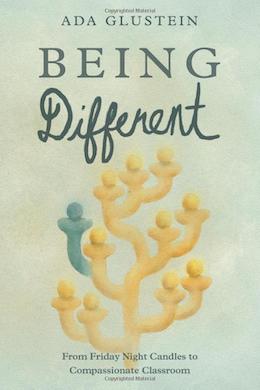
Ada Glustein received a silver medal for Canada-West Region, non-fiction, in this year’s Independent Publisher Book (“IPPY”) Awards for Being Different (self-published).
The “IPPY” Awards are a broad-based, unaffiliated awards program open to all members of the independent publishing industry worldwide who produce books written in English that are appropriate for the North American market. The awards are intended to bring increased recognition to the thousands of exemplary independent, university and self-published books released each year.
A memoir, Being Different tells a universal story about feeling different and longing to belong. Glustein recounts tales of growing up in a Jewish immigrant family during and following the Second World War, and the experiences that stand out during her school days, not knowing how to fit in to the world beyond home. She reflects on her years of teaching diverse children who also experienced life as “different.” She finds her own sense of belonging through helping those children find theirs.
* * *
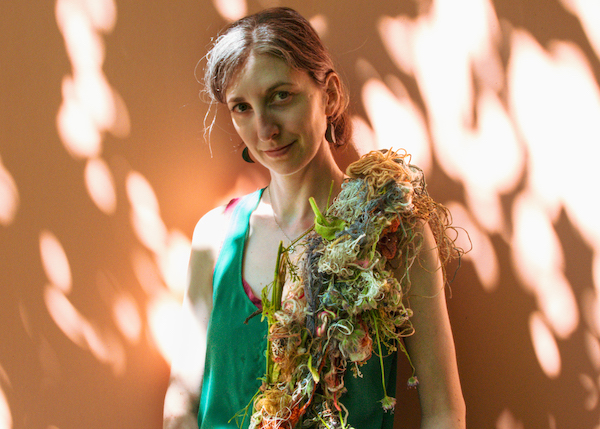
Barbara Adler
Barbara Adler is the new artistic director of the Only Animal Theatre.
“After a rigorous national search by a leadership transition committee comprising board members and affiliated artists, we are delighted to have Barbara take the lead at the Only Animal,” said board chair Eleanor Stacey. “When we began the search process, we knew it would be an immense challenge to find a successor to founding artistic director Kendra Fanconi, who built such a visionary and essential company. Barbara’s distinctive combination of experience, artistry and vision for the future positions her uniquely to lead the company into its next chapter.”
Adler is an interdisciplinary artist and performer whose practice incorporates text, music, event-making and design. Recent projects centre slow and process-led creations that focus work around relational time and seasonal cycles. As a poet and musician, Adler spent over a decade touring North America, Europe and rural British Columbia as a solo artist and with ensembles, including the Fugitives, Proud Animal and Ten Thousand Wolves. She holds a master of fine arts (interdisciplinary studies) and a bachelor’s in art and cultural studies from Simon Fraser University.
Adler is “thrilled to join a company whose irresistible artistry and deeply held ecological values have brought both innovation and care to the climate crisis.” She added, “The Only Animal’s vision of enduring environmental stewardship reminds me that none of us will individually finish the work. I am honoured to add myself to the beautiful story that Kendra and the company have told for 17 years, and humbled by this opportunity to prepare the way for the next generation of voices in the climate struggle.”
* * *
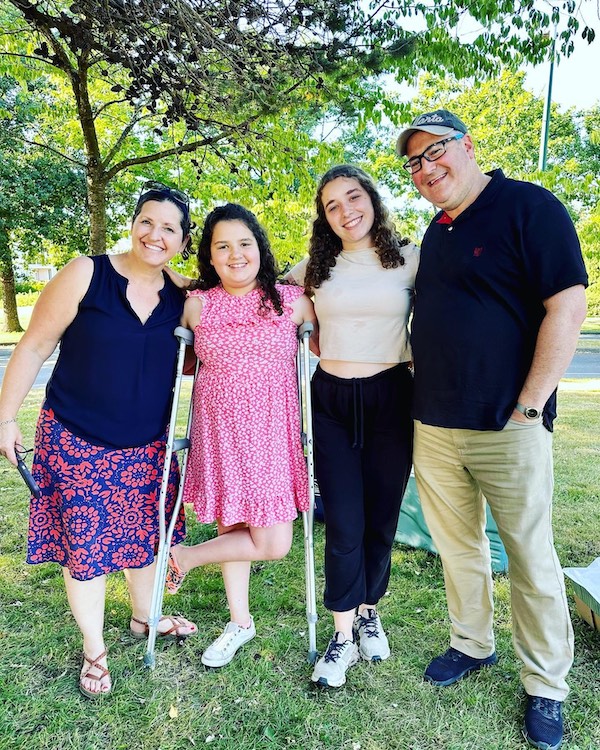
Rabbi Susan Tendler, her husband Ross Sadoff and their kids.
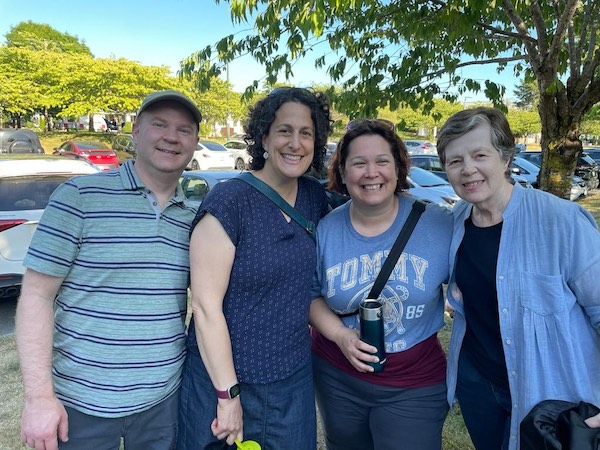
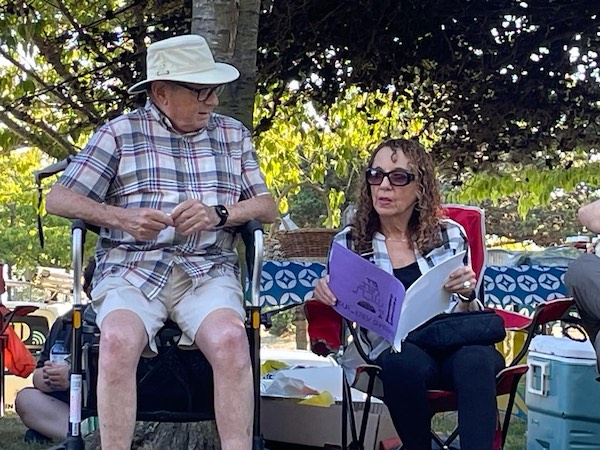
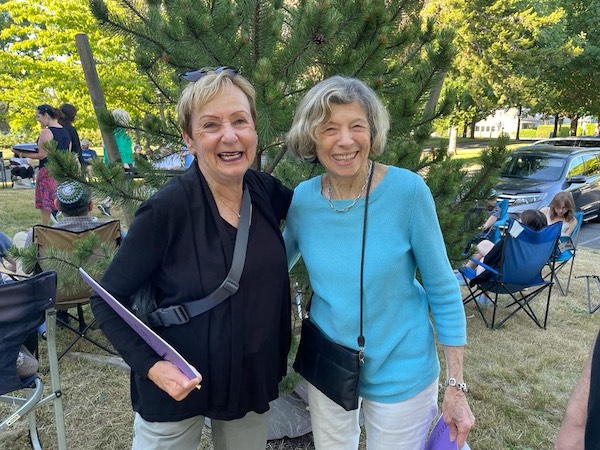
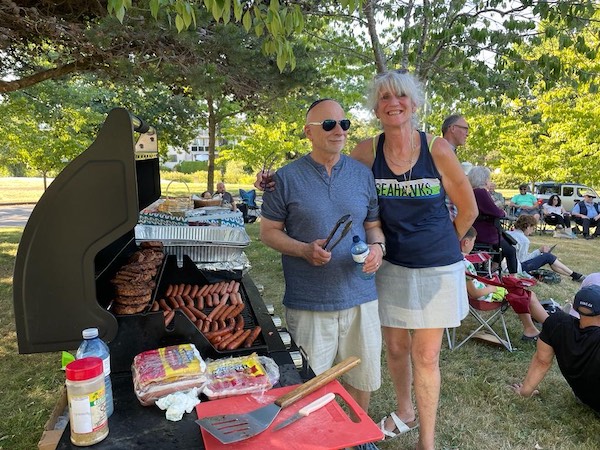
Beth Tikvah Congregation brought the community together for a Shabbat BBQ at Gary Point Park July 7. Sponsored by the Sadoff family in honour of Ross Sadoff’s birthday and under the leadership of Rabbi Susan Tendler, the event drew around 100 attendees. Amid a picturesque setting, the atmosphere buzzed with ruach(spirit). Laughter and joy filled the air as families and friends relished the food, conversations and Shabbat traditions.
Left to right: Ian Felgar, Elena Felgar, Yvette Tarko-Sabi and Donna FelgarRoy Freedman and Caryl KoshenEstelle Bleet, left, and Ann KramerJeff Rothberg and Stacey Kettleman of Star Catering.Libby Seltzer, left, and Mindy Zimmering