Skip to content
  • Home
  • Subscribe / donate
  • Events calendar
  • News
    • Local
    • National
    • Israel
    • World
    • עניין בחדשות
      A roundup of news in Canada and further afield, in Hebrew.
  • Opinion
    • From the JI
    • Op-Ed
  • Arts & Culture
    • Performing Arts
    • Music
    • Books
    • Visual Arts
    • TV & Film
  • Life
    • Celebrating the Holidays
    • Travel
    • The Daily Snooze
      Cartoons by Jacob Samuel
    • Mystery Photo
      Help the JI and JMABC fill in the gaps in our archives.
  • Community Links
    • Organizations, Etc.
    • Other News Sources & Blogs
    • Business Directory
  • FAQ
  • JI Chai Celebration
  • JI@88! video

Recent Posts

  • Zionism wins big in Vegas
  • Different but connected
  • Survival not passive
  • Musical celebration of Israel
  • Shoppe celebrates 25 years
  • Human “book” event
  • Reclaiming Jewish stories
  • Bema presents Perseverance
  • CSS honours Bellas z”l
  • Sheba Promise here May 7
  • Reflections from Be’eri
  • New law a desecration
  • Resilient joy in tough times
  • Rescue dog brings joy
  • Art chosen for new museum
  • Reminder of hope, resilience
  • The national food of Israel?
  • Story of Israel’s north
  • Sheltering in train stations
  • Teach critical thinking
  • Learning to bridge divides
  • Supporting Iranian community
  • Art dismantles systems
  • Beth Tikvah celebrates 50th
  • What is Jewish music?
  • Celebrate joy of music
  • Women share experiences 
  • Raising funds for Survivors
  • Call for digital literacy
  • The hidden hand of hate
  • Tarot as spiritual ritual
  • Students create fancy meal
  • Encouraging young voices
  • Rose’s Angels delivers
  • Living life to its fullest
  • Drawing on his roots

Archives

Follow @JewishIndie
image - The CJN - Visit Us Banner - 300x600 - 101625

Category: News

המדינות הטובות בעולם

המדינות הטובות בעולם

קנדה הגיעה למקום השלישי, לפי סקר שנתי חדש של ארגון יו.אס ניוז אנד וורד ריפורט לשנה הנוכחית. (צילום: Maliz Ong)

שוויץ היא המדינה הטובה בעולם לפי סקר שנתי חדש של ארגון יו.אס ניוז אנד וורד ריפורט לשנה הנוכחית. גם אשתקד שוויץ תפסה את המקום הראשון מבין שמונים מדינות שנסקרו. קנדה הגיעה למקום השלישי והמכובד לעומת מקום שני אשתקד. ואילו ישראל הגיעה השנה למקום העשרים ותשעה לעומת מקום שלושים אשתקד. הנתונים לסקר נאספו מראיונות שבוצעו עם לא פחות מכעשרים ואחד אלף איש ברחבי העולם.

להלן עשר המדינות הטובות בעולם לפי הסקר החדש: ראשונה-שוויץ (אשתקד ללא שינוי במקום הראשון), שנייה-יפאן (אשתקד במקום החמישי), שלישית- קנדה (אשתקד במקום השני), רביעית-גרמניה (אשתקד במקום השלישי), חמישית-בריטניה (אשתקד במקום הרביעי), שישית-שבדיה (אשתקד ללא שינוי במקום השישי), שביעית-אוסטרליה (אשתקד ללא שינוי במקום השביעי), שמינית-ארה”ב (אשתקד ללא שינוי במקום השמיני), תשיעית-נורבגיה (אשתקד במקום שניים עשר) ועשירית-צרפת (אשתקד במקום התשיעי)

להלן העשירייה השנייה בסקר: אחד עשר-הולנד (אשתקד במקום העשירי), שניים עשר-ניו זינלד (אשתקד במקום השלושה עשר), שלושה עשר-דנמרק (אשתקד במקום האחד עשר), ארבע עשר-פינלנד (אשתקד ללא שינוי במקום הארבע עשר), חמישה עשר-סינגפור (אשתקד במקום השישה עשר), שישה עשר-סין (אשתקד במקום העשרים), שבעה עשר-בלגיה (אשתקד לא דורגה כלל בסקר), שמונה עשר-איטליה (אשתקד במקום החמישה עשר), תשעה עשר-לוקסמבורג (אשתקד במקום השמונה עשר) ועשרים-ספרד (אשתקד במקום התשעה עשר).

להלן העשירייה השלישית: עשרים ואחד-אירלנד (אשתקד ללא שינוי במקום העשרים ואחד), עשרים ושניים-דרום קוריאה (אשתקד ללא שינוי במקום העשרים ושניים), עשרים ושלושה-איחוד האמירויות הערביות (אשתקד ללא שינוי במקום העשרים ושלושה), עשרים וארבעה-רוסיה (אשתקד במקום העשרים ושישה), עשרים וחמישה-פורטוגל (אשתקד במקום העשרים וארבעה), עשרים ושישה-תאילנד (אשתקד במקום העשרים ושבעה), עשרים ושבעה-הודו (אשתקד במקום העשרים וחמישה), עשרים ושמונה-ברזיל (אשתקד במקום העשרים ותשעה), עשרים ותשעה-ישראל (אשתקד במקום השלושים), שלושים-יוון (אשתקד במקום העשרים ושמונה).

להלן העשרייה הרביעית: שלושים ואחד-קטאר (אשתקד במקום השלושים וחמישה), שלושים ושניים-ערב הסעודית (אשתקד במקום השלושים ושבעה), שלושים ושלושה-פולין (אשתקד במקום השלושים ושניים), שלושים וארבעה-טורקיה (אשתקד במקום השלושים וארבעה), שלושים וחמישה-מקסיקו (אשתקד במקום השלושים ואחד), שלושים ושישה-קרואטיה (אשתקד במקום החמישים), שלושים ושבעה-דרום אפריקה (אשתקד במקום השלושים ותשעה), שלושים ושמונה-מלזיה (אשתקד במקום השלושים וארבעה), שלושים ותשעה-ויאטנם (אשתקד במקום הארבעים וארבעה), ארבעים-מצרים (אשתקד במקום הארבעים ושניים).

להלן חמשת המקומות הבאים בסקר: ארבעים ואחת-צ’כיה (אשתקד במקום הארבעים ושניים), ארבעים ושניים-מרוקו (אשתקד במקום הארבעים ושבעה), ארבעים ושלושה-אינדונזיה (אשתקד במקום הארבעים ואחת), ארבעים וארבעה-קוסטה ריקה (אשתקד במקום הארבעים וחמישה), ארבעים וחמישה-סרילנקה (אשתקד במקום החמישים ואחד).

מה אומרים עורכי הסקר על מצבה הכלכלי של קנדה: קנדה שהיא המדינה השנייה בגודלה בעולם מבחינת שטח, היא מדינת היי טק תעשייתית עם רמת חיים גבוהה. מגזר השירותים הוא הנהג הכלכלי הגדול ביותר בקנדה, המדינה היא יצואנית משמעותית של אנרגיה, מזון ומינרלים. קנדה מדורגת במקום השלישי בעולם ברמת עתודות הנפט המוכחות שלה, והיא בפועל מפיקת הנפט החמישית בגודלה בעולם.

ומה אומרים עורכי הסקר על מצבה הכלכלי של ישראל: למרות שמדובר במדינה קטנה יחסית לישראל יש תפקיד חשוב בכלכלה העולמית. למדינה כלכלה שוק הון חזקה והיצוא העיקרי שלה כולל בעיקר: טכנולוגיהמתקדמת, חיתוך יהלומים ותרופות. המדינה מפותחת מאוד במונחים של תוחלת חיים, השכלה, הכנסה לנפש ואינדיקטורים נוספים של מדד הפיתוח האנושי. מצד שני הכלכלה של ישראל נחשבת לאחת הכלכלות הכי לא שוויונית בעולם המערבי, עם פערים משמעותיים בין עשירים לעניים.

Format ImagePosted on February 6, 2019February 6, 2019Author Roni RachmaniCategories עניין בחדשותTags best countries in the world, Canada, Israel, ישראל, קנדה
Emerging from terrible abyss

Emerging from terrible abyss

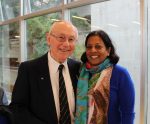
Robbie Waisman and Dr. Uma Kumar spoke Jan. 24 at UBC’s Hillel House. (photo from Hillel BC)

History’s resonance in the present was a recurring theme at a commemoration of International Holocaust Remembrance Day last week.

The event at Hillel House on the University of British Columbia campus, featured Holocaust survivor Robbie Waisman speaking about his experiences in Buchenwald concentration camp and his life before and after the Shoah.

Thirteen survivors of the Holocaust lit yahrzeit candles, after which Hillel’s Rabbi Philip Bregman chanted the Mourners’ Kaddish.

Before Waisman’s presentation, the audience watched a 1985 video from CBC television’s national program The Journal, which followed Waisman as he traveled to Philadelphia to meet Leon Bass, the American soldier who had liberated him from the camp 40 years earlier.

Bass, an African-American, was the first black person Waisman had ever seen. At the age of 13, Waisman thought Bass and his fellow American soldiers must be angels.

“Indeed, they were,” he said.

At the event Jan. 24, which was co-sponsored by the Vancouver Holocaust Education Centre, Hillel BC, the Centre for Israel and Jewish Affairs and UBC’s department of Central, Eastern and Northern European Studies (CENES), Waisman said the thing that kept him and his fellow survivors alive was the hope of being reunited with family.

“The enormity of the Holocaust was not yet known to us,” said Waisman. When it did become known, he said, “we had to find a way to deal and cope with the huge loss of all our loved ones.… How are we going to live with all these horrors?… Has anyone survived? If not, what is the point of my own survival?”

He and his father had seen one of Waisman’s brothers murdered, and his father died later in the same camp. He would learn that his mother and his other three brothers were also murdered, as were his uncles, aunts, cousins and friends. Of the family, only Waisman and his sister survived.

“I search for answers,” he said. “I only find more questions. How could anyone remain sane and functioning as a human being when humanity was destroyed in front of our eyes? Worst of all, how do you come to terms with the tragic loss of all our loved ones, fathers, mothers, brothers, sisters, friends that we grew up with, all innocent – everything gone – how is it possible? We started questioning the existence of God. How could this happen to us?… Before the war, we all came from Orthodox homes, rich in heritage and traditions. After coming out of the terrible abyss, the darkness, we questioned angrily. But what we learned in the home, from our parents, was not lost. The sense of humanity slowly returned to us. Our faith was shaken yet, in spite of it all, we remained true to it.”

Waisman said his experience in the Holocaust, and the experience of other survivors, has taught that “evil must be recognized and that we all have a responsibility to make sure that it never happens again to anyone. And yet … what is the world doing about it now?”

He reflected on the concept of “Never again.”

“Noble, thought-provoking words, but only if we act upon them,” he said. “Today, over 70 years after my liberation, the promise of never again has become again and again. There have been a number of situations that have tested the world’s resolve, in Cambodia, the former Yugoslavia, in Darfur and in Syria – I could go on and on.

“When I speak at high schools, I try to convey to students the pain of my experience in order to inspire them to prevent such events from occurring again,” he said. “The world must learn from the past in order to make this a better place for now and the future. We must teach compassion, we must eradicate racism and religious persecution. We must teach ourselves, teach our children, each generation must learn.”

photo - IHRD at Hillel, right to left, Michael Lee, Rabbi Philip Bregman, Robbie Waisman, Sam Heller (Hillel BC), Joyce Murray
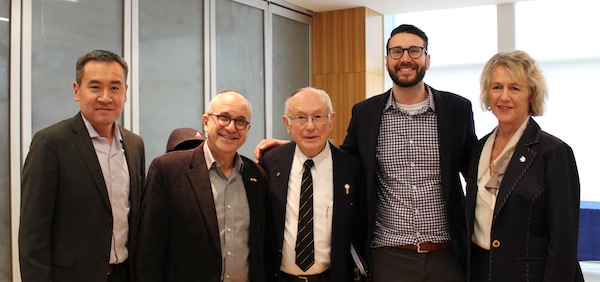
IHRD at Hillel, right to left, Michael Lee, Rabbi Philip Bregman, Robbie Waisman, Sam Heller (Hillel BC), Joyce Murray. (photo from Hillel BC)

Also at the Jan. 24 event, Dr. Uma Kumar, a lecturer with CENES, noted recent reports that indicate many Canadians and others are ignorant of the most basic facts of the Holocaust.

“Nearly half of Canadians cannot name a single concentration camp or ghetto that existed in Europe during the Shoah,” she said. “However, there is a positive point: 85% of the respondents of the study said that it was important to keep teaching about the Holocaust so that it does not happen again. Hence, there is a pressing need for more and better Holocaust education at schools and universities in Canada. We, as Holocaust educators, still have a lot of work to do.”

Joyce Murray, member of Parliament for Vancouver Quadra, brought greetings on behalf of the federal government and also reflected on her visit last year to Auschwitz.

“The Holocaust reality, for me, shifted from being a part of history that I thought I understood and regretted to a reality that I feel in my body and in my heart,” she said. “Commemorating mass atrocity and genocide in the continued sharing of the story of survivors is a vital part of prevention. These stories serve as a reminder of the dangers of hate, prejudice and discrimination, the dangers of seeing human beings as ‘us’ and ‘them,’ the dangers of excessive nationalism to the detriment of others that is stalking so many nations today.”

Murray also mentioned the Canadian government’s recent apology for refusing admission to passengers on the MS St. Louis in 1939 and reminded the audience that Canada is not immune to bigotry.

Michael Lee, member of the B.C. legislature for Vancouver-Langara, was also present.

International Holocaust Remembrance Day was officially marked worldwide on Jan. 27, the date when Allied forces liberated the Auschwitz-Birkenau concentration camps in 1945. Another ceremony and a film screening took place Sunday at the Peretz Centre.

For more about Waisman’s Holocaust experience, see the Independent story Feb. 28, 2014, at jewishindependent.ca/holocaust-survivor-robbie-waisman-receives-national-honor.

Posted on February 1, 2019January 29, 2019Author Pat JohnsonCategories LocalTags education, genocide, Holocaust, remembrance, Robbie Waisman, Uma Kumar

Jewish way to lend

This Shabbat (Feb. 2), in parashat Mishpatim, the Torah commands, “If you lend money to my people … do not act toward them as a creditor; you may not charge them interest.” This law, along with Maimonides’ teaching that the greatest level of tzedakah is to support a fellow Jew by endowing them with a gift or loan to strengthen their hand, are the guiding principles of the Hebrew Free Loan Association of Vancouver (HFLA).

HFLA provides interest-free loans to help Jewish individuals from British Columbia overcome financial challenges and build better lives. HFLA fosters economic stability and opportunity among low- and moderate-income members of the community by providing access to affordable credit in the form of a no-interest loan.

Over the years, the types of loans the organization has given out have evolved greatly. In the 1980s and ’90s, with a wave of immigrants from the former Soviet Union, the majority of HFLA’s loans went to helping immigrants finance vocational training. While HFLA still helps many new immigrants, its focus now also includes helping people with the rising costs of living in the Lower Mainland.

“With the bulk of people’s income going towards housing costs, many people have very little left over when unexpected bills arise,” said Joanna Wasel, executive director of HFLA. “We are able to be there for people during times of financial stress. A loan from us can help cover things like emergency dental work, physical therapy and short-term home care.”

HFLA is also here to help members of the community when they need support to start a Jewish family through fertility treatments or adoption, host a bar or bat mitzvah, finance university or start a new business. The goal of these loan programs is to help community members build better lives and avoid falling into high-interest debt.

HFLA recently unveiled a new webpage, hfla.ca. The new site is clear, concise and includes a step-by-step guide to applying for an HFLA loan. Potential borrowers can complete and submit an application online.

“We really want to make the process as easy as possible for our borrowers. Every step has been designed with great care to ensure that people’s dignity and confidentiality are respected and protected,” said Wasel.

In the past 40 years, HFLA Vancouver has made more than 1,900 loans. There is no other organization like it in the community and those in need, or with friends in need, are encouraged to seek more information about HFLA’s services by visiting its website or calling 604-428-2832.

Posted on February 1, 2019January 29, 2019Author Hebrew Free Loan AssociationCategories LocalTags Hebrew Free Loan Association, HFLA, Jewish life, loans, tikkun olam
Events around town this month – Sisterhood Choir, community artists & Netta

Events around town this month – Sisterhood Choir, community artists & Netta

photo - Temple Sholom Sisterhood Choir under the direction of Joyce Cherry with pianist Kathy Bjorseth
(photo from Gordon Cherry)

Temple Sholom Sisterhood Choir under the direction of Joyce Cherry with pianist Kathy Bjorseth performed an afternoon concert of Jewish music at the Weinberg Residence on Jan. 13. Featured were three works by Joan Beckow, a resident of the Louis Brier Hospital and a Temple Sholom member. Beckow was an active composer and music director in Los Angeles and, for a time, was Carol Burnett’s music director. The 23-voice Sisterhood Choir has sung for the annual Sisterhood Service for a number of years, but the recent concert at the Weinberg was a first for them outside of Temple Sholom.

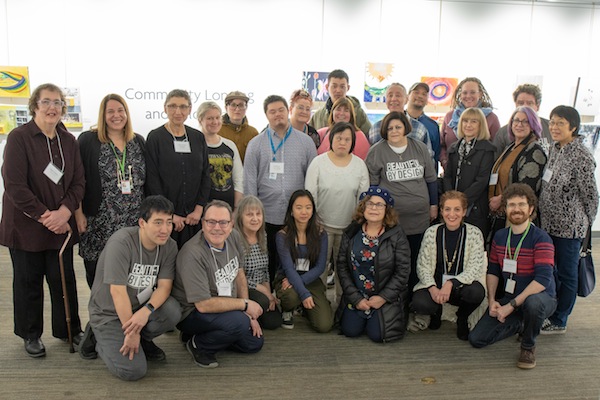
photo - Some of the artists on opening night of the group show Community Longing and Belonging, Jan. 15 at the Zack Gallery
(photo by Jocelyne Hallé)

Some of the artists on opening night of the group show Community Longing and Belonging, Jan. 15 at the Zack Gallery. The exhibit marked Jewish Disability Awareness and Inclusion Month and ran until Jan. 27.

photo - Eurovision 2018 winner Netta Barzilai, right, with Carmel Tanaka, emcee of the night with IQ 2000 Trivia
(photo by Corin Neuman)

Eurovision 2018 winner Netta Barzilai, right, performed at the Jewish Community Centre of Greater Vancouver on Jan. 26 to help celebrate the 18th anniversary of Birthright Israel. Here, she is pictured with Carmel Tanaka, emcee of the night with IQ 2000 Trivia. The dance party was presented by the Jewish Federation of Greater Vancouver in partnership with Axis Vancouver, Hillel BC and the JCCGV.

Format ImagePosted on February 1, 2019January 29, 2019Author Community members/organizationsCategories LocalTags art, Carmel Tanaka, disabilities, JDAIM, Joyce Cherry, Netta, Sisterhood Choir, Taglit Birthright, Temple Sholom, Weinberg Residence, Zack Gallery
ראש ממשלת קנדה: אמשיך להתנגד לארגון הקורא להחרמת ישראל

ראש ממשלת קנדה: אמשיך להתנגד לארגון הקורא להחרמת ישראל

(צילום: Pixabay)

ראש ממשלת קנדה, ג’סטין טרודו, הודיע כי ימשיך להתנגד לארגון הבינלאומי הקורא להחרמת ישראל – הדי.בי.אס. דבריו של טרודו נאמרו בשבוע שעבר במסגרת כנס בחירות פתוח לכל שהתקיים בעיר סנט קטרינס שבמחוז אונטריו. ראש הממשלה השיב לאחד מהשואלים שביקש לבדוק האם הוא מתכוון להתנצל על כך, שגינה בעבר את ארגון הדי.בי.אס. טרודו אמר בתגובה לשאלה: “כשיש ארגונים כמו הדי.בי.אס שמחפשים להציג דמוניזציה ודה-לגיטימציה למדינת ישראל, וכשיש סטודנטים שמפחדים להגיע  לאוניברסיטאות ולמכללות בקנדה בגלל דתם, חייבים להכיר בכך שיש דברים שלא מקובלים כלל. אסור לאף אחד להפלות אם לגרום לאנשים להרגיש שלא בטוח בגלל הדת שלהם. וזה בדיוק מה שארגון הדי.בי.אס עושה. אנטישמיות הייתה קיימת ומוכרת בעבר. וגם היום המתקפות נגד העם היהודי מהוות אחוז גבוה בקרב פשעי השנאה בקנדה ובעולם כולו. עלינו להבין שחלק מהאנטישמיות כיום מנוהלת לא רק נגד יחידים, אלא גם נגד מדינת ישראל בכלל. עלינו להיזהר לכן שלא לתמוך באנטשימיות החדשה הזו – שמבקרת וקוראת לעשות חרם על ישראל”.

תסריט שעוסק בגזענות נגד יהודים עלה לגמר פסטיבל סרטי נעורים

שני אחים שעלו עם משפחתם מקנדה לישראל וגרים כיום באשקלון, זאת לאחר שהם ומשפחתם סבלו לטענתם מגל אנטישמיות. האחים החליטו לעשות על זה סרט. התסריט שהוא בעצם מתאר את סיפור חייהם המעניין, עלה לשלב גמר תחרות של פסטיבל סרטי נעורים ארצי בישראל. כעת הם ממתינים לתוצאות הגמר שיפורסמו קרוב לוודאי במהלך החודש הקרוב.

האחים חיים (בן השמונה עשרה) ומנחם (בן השבעה עשרה) לבית סמיערק, לומדים כיום במגמת תקשורת בישיבת צביה אשר באשקלון. התסריט שלהם משתתף בגמר התחרות הארצית של התסריט הטוב ביותר בפסטיבל סרטי נעורים, לזכרו של התלמיד מתן בד”ט שנפטר לפני שש עשרה שנים (שתיים עשרה שנים שנים לאחר שמוחו נפגע בצורה קשה מהלך תאונת צלילה באילת, כאשר היה זה בזמן טיול שנתי בכיתה י”ב). בגמר התחרות משתתפים בנוסף עוד ארבעה תסריטים נבחרים. זאת מתוך שבעים תסריטים שהגיעו לשלב הראשון בתחרות מכל רחבי הארץ.

התסריט אותו כתבו כאמור שני האחים עוסק בנושא גזענות כלפי יהודים בקנדה בכלל, וכלפי המשפחה שלהם בפרט. הגזענות לדבריהם היא זו שגרמה למשפחה לעזוב את קנדה ולעלות לישראל לפני כשנתיים.

האחים סמיערק נחשבים עדיין בישראל על תקן של עולים חדשים, לומדים כיום בישיבת צביה באשקלון. המשפחה כולה המונה שבע נפשות עלתה לישראל: שני ההורים, שני האחים ושלוש אחיות. הם בחרו לגור באשקלון.

בקנדה שני האחים למדו במגמת תקשורת ועתה הם ממשכים את לימודיהם באותה מגמה בישיבה באשקלון. אל הפרוייקט הקולנועי שלהם מצטרפים שני בוגרי מגמת התקשורת בישיבה (אביב סיאני ומאור מיכאלי) אשר יפיקו את סרט, עם יזכה במקום הראשון בתחרות. השופטים בגמר התחרות (בהם: נציגי עיריית רעננה, נציגי בנק מזרחי-טפחות ונציגי משרד החינוך) וכן גם נציגי המשפחות התרשמו מאוד מהתסריט והסיפור האישי של שני האחים.

חיים סמיערק אומר על הפרוייקט שלו ושל אחיו הצעיר מנחם: “אני חושב שזה תסריט ממש טוב. מדובר בסיפור האישי שלנו שחווינו בקנדה. חשוב לנו לספר זאת לכולם. נפלה בידינו ההזדמנות לעלות לגמר תחרות הסרטים. במידה ונזכה בתחרות וכך גם יתאפשר להקהל נרחב לצפות בסרט שלנו – תהיה זאת ממש גאווה בשבילנו”. במהלך החודש הקרוב יקבלו האחים תשובה אם התסריט שלהם זכה במקום הראשון בתחרות החשובה.

Format ImagePosted on January 30, 2019January 24, 2019Author Roni RachmaniCategories עניין בחדשותTags antisemitism, BDS, boycott, Canada, film, Israel, Justin Trudeau, youth, אנטישמיות, ג'סטין טרודו, די.בי.אס, ישראל, להחרמת, סרטים, פסטיבל סרטי נעורים ארצי בישראל, קנדה
Let’s talk mental health

Let’s talk mental health

Michael Landsberg will deliver the talk Darkness and Hope: Depression, Sport and Me on Feb. 13, as part of Jewish Family Services’ Family Life Education Series. (photo from JFS)

Michael Landsberg is a Canadian sports journalist and former host of Off the Record for TSN. He is also a passionate advocate for removing the stigma around mental illness, and will be coming to Vancouver next month to deliver the talk Darkness and Hope: Depression, Sport and Me. A Jewish Family Services (JFS) Family Life Education event, the talk will be held at Congregation Beth Israel on Feb. 13, with all proceeds going to support JFS mental health initiatives in the community.

Landsberg, who suffers from depression and generalized anxiety disorder, has in recent years been an ambassador for Bell Let’s Talk, an initiative that raises awareness and encourages dialogue about mental health. In 2013, his documentary, Darkness and Hope: Depression, Sports and Me, was nominated for a Canadian Screen Award for best history or biography documentary program or series. The Canadian Alliance on Mental Illness and Mental Health has named Landsberg one of its Champions of Mental Health. Landsberg is known for his Twitter hashtag #sicknotweak, which encourages discussion around mental health and creates a forum for those needing help.

“We’re thrilled and delighted to have Michael Landsberg come and do a talk at Beth Israel,” said Alan Stamp, clinical counseling director at JFS. “He has become an ambassador and a pioneer for mental health. He took a risk coming out about his struggles, [and] for him to come out and share his experiences is quite captivating. What he does best of all is he addresses stigma and, when someone in his role can speak out, it helps to lessen the suffering of the one in five Canadians – which is a conservative estimate in my opinion – who experiences a mental health concern over their lifetime.”

In Vancouver, Landsberg will be doing a one-hour talk with a question-and-answer period afterwards. He spoke to the Jewish Independent about helping people struggling with mental health issues.

“In general, sports mimics life,” he said. “When I speak about life and the stigma around mental health, I know we’re not as far ahead as we think we are. I don’t think we’re nearly as far ahead as we would want to believe. We’ve been working hard and it’s way better, yet I hear from people in the sports world all the time who are still in the closet, or they’re feeling shame.”

A major focus of Landsberg’s work is combating the idea that mental illness is a sign of weakness or is something “self-inflicted.”

“That is the arrogance of mental health,” he said. “Mentally healthy people sometimes believe that they would have been able to overcome the illness – they don’t understand the reality that people with mental health issues face, and how unchosen and beyond their control it can actually be. I try to educate the non-sufferer to better understand what mental illness is, and that it is like any other illness, no different from a physical ailment.”

There are a number of reasons why both Stamp and Landsberg feel sport is a good entry point for this discussion.

“I’m a huge believer that the best way to break people of the stigma is to find really strong people, like Clara Hughes, who have struggled with this, to talk about it,” said Landsberg.

Hughes, a Canadian cyclist and speed skater who has won multiple Olympic medals in both sports, has struggled with depression. “If [Hughes] was close at the end of the race, she would win. If you find that even a person of that strength and accomplishment can suffer from depression, it changes your perspective,” said Landsberg. “Everyone with depression feels that they are not understood, [but] when you hear someone else talk about it, then you know we all feel some things in common, and … that is incredibly empowering. Real-life examples are great.”

Landsberg has also partnered with firefighters who suffer from mental health issues, encouraging them to share their stories.

Landsberg and Stamp believe that reaching youth is key to changing the future, and sports can be key in doing that.

“We have to help younger people to understand that mental health concerns are a natural part of being alive,” said Stamp. “We have to do that much younger, like 6 or 7 years old. They need to know that when you feel distress, there is a way out.

“We have to start with language,” he said. “How do we describe somebody who is struggling? Children can be injured by the labels we use … we should be teaching youth and adults how to be listeners, how to approach someone and see if they need help. Having some education around a mental health problem is tremendously impactful. We need to be kinder, gentler and more empathic in our dealings with people.”

Tickets to hear Landsberg speak are $10 and are available from jfsvancouver.ca or 604-257-5151.

Matthew Gindin is a freelance journalist, writer and lecturer. He is Pacific correspondent for the CJN, writes regularly for the Forward, Tricycle and the Wisdom Daily, and has been published in Sojourners, Religion Dispatches and elsewhere. He can be found on Medium and Twitter.

Format ImagePosted on January 25, 2019January 24, 2019Author Matthew GindinCategories LocalTags healthcare, Jewish Family Services, JFS, mental health, Michael Landsberg, sports
Mary Kitagawa’s civil courage

Mary Kitagawa’s civil courage

Mary Kitagawa was honoured with the Wallenberg-Sugihara Civil Courage Award on Jan. 20. (photo by Pat Johnson)

At a convocation ceremony at the University of British Columbia in 2012, a group of graduates stood out from the rest. Twenty-one elderly Japanese-Canadians, ranging in age from 89 to 96, were awarded honorary degrees in recognition of an historic injustice that had taken place 70 years earlier.

In the winter of early 1942, right after Japan’s attack on Pearl Harbour, the Government of Canada ordered all Japanese-Canadians to be relocated from the coast. This included students at UBC. For the next seven decades, the injustice went unrectified and largely unrecognized by the university until Mary Kitagawa, a community leader whose own family history was ruptured by the events of the war years, took up the cause. It was her tenacity that led the university to acknowledge and make some amends for its complicity in the injustice. It awarded honorary degrees to 96 students – most of them posthumously.

For this achievement, and others, Kitagawa was honoured with the Wallenberg-Sugihara Civil Courage Award on Sunday afternoon, Jan. 20. This was the 14th annual Vancouver commemoration of Raoul Wallenberg Day, which, since 2015, has coincided with the presentation of the Civil Courage Award.

In her remarks upon receiving the award, Kitagawa reflected on the social conditions that permitted the internment of Canadians of Japanese descent.

“This happened because those in power in Canada at that time forgot that this was a democratic country, sending her men and women to war to preserve our freedom,” she told a packed auditorium at the H.R. MacMillan Space Centre. “The excuse they used for incarcerating us was that we were a security risk. However, if you read all the newspaper headlines of the 1930s and ’40s, you will find that the B.C. politicians’ hatred of Japanese-Canadians was deep and abiding. They wanted to ethnically cleanse this one small group of people from the province.”

Kitagawa said that, at a January 1942 meeting in Ottawa to address “the Japanese problem,” a B.C. representative declared, “The bombing of Pearl Harbour was a heaven-sent gift to the people of British Columbia to rid B.C. of Japanese economic menace forevermore.”

“My family was swept away from our home in this storm of hatred,” Kitagawa said. From their home on Salt Spring Island, the family was transported to Hastings Park, in East Vancouver, which served as an assembly point for dispersal to the interior of the province.

“Our journey through incarceration was brutal and dehumanizing,” she said. The family was separated from her father for six months and they feared the very worst. Eventually, the family was reunited, but they were moved from place to place around the interior of British Columbia and in Alberta a dozen times during seven years of incarceration.

When the War Measures Act, under which the internment was justified, ceased its effect at the end of the war, Parliament passed successive “emergency” laws to permit the continued incarceration through 1947, and it was April 1949 before Japanese-Canadians were granted freedom of movement and permitted to return to the coast. Her father and mother, aged 55 and 50 respectively, took the family back to Salt Spring and began all over again.

“It wasn’t just the material things that they lost,” Kitagawa reflected. “They lost the dream for the future they had planned, their community, their opportunities, education for their children, their friends, their youth, their culture, language and heirlooms. But never – they never lost their pride nor their dignity.… My parents believed in forgiveness. Like Nelson Mandela, they believed that forgiveness liberates the soul. They refused to look back in anger. Instead, they chose to continue to move forward with the same resolve that helped them to survive their terrible experience.”

In 2006, Kitagawa read in the Vancouver Sun that a federal building on Burrard Street in Vancouver was being named to honour Howard Charles Green, a longtime Conservative member of Parliament from Vancouver and a leading advocate of Japanese-Canadian internment. “Immediately, I knew that I had to have that name erased from that building. To me, no person who helped destroy my parents’ dream and made them suffer so grievously was going to be so honoured.”

With help from a quickly mobilized group of activists and sympathetic media coverage, Kitagawa successfully had Green’s name stripped from the building, which was renamed in honour of Douglas Jung, another Conservative MP, but the first MP of Chinese-Canadian heritage.

Kitagawa also led an initiative that saw Hastings Park declared an historic site related to the internment.

In her talk on Sunday, Kitagawa emotionally credited an “unsung hero,” her husband Tosh, who, among other efforts he played in supporting Kitagawa’s activism, spearheaded the reprinting of the 1942 UBC yearbook to include information about the internment and biographies of the students affected. It was also through his persistence that they were able to track down the 23 living students and the families of those who had passed away.

The Civil Courage Award is presented by the Wallenberg-Sugihara Civil Courage Society, which was formed by members of the Swedish and Jewish communities in Vancouver.

Raoul Wallenberg was a Swedish architect, businessman, diplomat and humanitarian who became Sweden’s special envoy to Hungary in the summer of 1944, several months after the Nazi deportation of Hungarian Jews had begun. He issued protective passports and sheltered people in buildings that were declared to be Swedish territory, saving tens of thousands of Jews. He was taken into Soviet captivity on Jan. 17, 1945, and was never seen again.

Chiune Sugihara was a Japanese diplomat who served as the vice-consul in Lithuania during the Second World War. Acting in direct violation of his orders at great risk to himself and his family, he issued transit visas that allowed approximately 6,000 Jewish people from Poland and from Lithuania to escape probable death.

The award presentation was followed by a screening of the 1995 film The War Between Us, which dramatizes the events of the Japanese-Canadian experience through the lives of a single family.

Councilor Pete Fry, Vancouver’s deputy mayor, read a proclamation from the city. Consular officials from Sweden and Japan were in attendance.

Format ImagePosted on January 25, 2019January 24, 2019Author Pat JohnsonCategories LocalTags human rights, Mary Kitagawa, racism, UBC, Wallenberg Day, Wallenberg-Sugihara Civil Courage Award
NDPer sponsors anti-JNF bid

NDPer sponsors anti-JNF bid

Ayalon Canada Park in the Ayalon Valley is one of the projects JNF supports. (photo by Guy Asiag, KKL-JNF photo archive)

A member of Parliament has agreed to sponsor an e-petition that calls on the government to revoke the charitable status of the Jewish National Fund of Canada (JNF).

This is the first time an MP has lent support to an effort to rescind JNF’s tax-exempt charitable status in Canada and marks the latest development in a long-running battle by those opposed to the JNF’s charitable status.

Quebec NDP MP and national revenue critic Pierre-Luc Dusseault has agreed to sponsor petition E-1999, which, as of this writing [Jan. 21], had garnered more than 1,400 signatures. It went online on Jan. 9 and will close for signatures on May 9.

E-petitions are an official system whereby petitions that are sponsored by an MP and receive 500 signatures will be tabled in the House of Commons. The government must then respond within 45 days.

It was submitted by Independent Jewish Voices of Canada (IJV), which is considered an outlier within the Jewish community, due to its support for the boycott, divestment and sanctions movement against Israel.

On its website, IJV calls itself “a grassroots organization grounded in Jewish tradition that opposes all forms of racism and advocates for justice and peace for all in Israel-Palestine.”

The JNF was recently the subject of a scathing story by the CBC, which reported that the charity was under a Canada Revenue Agency audit for using charitable donations to build infrastructure for the Israel Defence Forces, “in violation of Canada’s tax rules.”

The JNF responded by saying that it stopped funding projects on Israeli military bases in 2016 and that the projects only “indirectly” involved the IDF, because they were for children and youth on land owned by the IDF.

In a subsequent interview with the CJN, JNF Canada’s chief executive officer, Lance Davis, said the charity is working with the CRA on its review and issued staunch defences of JNF’s financial transparency and donor accountability.

The e-petition, which is addressed to the minister of national revenue, says JNF Canada “engages in discriminatory practices, as its landholdings are chartered for exclusively Jewish ownership, lease and benefit, as noted by the United Nations, the U.S. State Department, a former attorney general of Israel and the JNF itself.”

It says evidence “strongly indicates” that JNF Canada violates the Income Tax Act, common law and Canada Revenue Agency policy over its IDF-related projects.

As well, it claims the charity violates Canadian and international law “by enabling physical changes within occupied territory, thereby helping Israel effectively annex land within occupied territory, and, in the case of east Jerusalem, deepen control over land already annexed illegally.”

“Notably,” it adds, “the JNF Canada-funded Canada Park was built on the lands of three Palestinian villages destroyed following the 1967 war in direct violation of the Fourth Geneva Convention.”

It also accuses JNF Canada materials of depicting “occupied territory as part of Israel, a representation that runs contrary to Canadian foreign policy and international law.”

It calls on the minister of national revenue to revoke JNF’s charitable status, if the charity is found to violate the Income Tax Act, or CRA guidelines and policies.

It was initiated by Rabbi David Mivasair, a longtime IJV activist now based in Hamilton, Ont. He called the e-petition “part of an ongoing process” to hold public officials accountable.

“It’s incontrovertibly factual that JNF Canada is in violation of Canada’s tax laws,” Mivasair claimed. “It has been for decades. It’s been reported for decades.”

This latest campaign “is not something that I take any pleasure in doing, but feel is morally necessary to be done,” he added.

According to guidelines for MPs, no debate is permitted when a member presents a petition. An MP “may make a brief factual statement (referring to the petition being duly certified, to its source, to the subject matter of the petition and its request, and to the number of signatures it carries), but members are not allowed to read petitions nor are they to indicate their agreement or disagreement with them.”

In 2017, IJV submitted an 85-page complaint about JNF Canada to the CRA and the national revenue minister. That followed many other campaigns designed to pressure federal officials.

This is the first time IJV has submitted a parliamentary petition and it’s “just one way of drawing public attention to this,” said the group’s national coordinator, Corey Balsam. “We’re assuming [officials] will look into it and not much more than that. [But] it’s definitely a big step for our campaign.”

He said Dusseault is “not someone who’s very engaged [in the issue], but he heard the concerns and saw the evidence.”

Dusseault did not reply to the CJN’s requests for comment.

In a statement posted to its website, JNF called the e-petition “as empty and scurrilous as earlier efforts to delegitimize the outstanding work of the JNF and, by extension, the existence of the state of Israel.”

JNF said its outreach suggests “that those who are applying any degree of critical thinking see the petition for what it is and are dismissing it as not worthy of engagement.”

For Jewish National Fund of Canada’s response to the Jan. 11 Jewish Independent editorial, click here.

Format ImagePosted on January 25, 2019January 24, 2019Author Ron Csillag CJNCategories NationalTags CRA, David Mivasair, IJV, Independent Jewish Voices, Jewish National Fund, JNF, Lance Davis, taxes3 Comments on NDPer sponsors anti-JNF bid
Seeing with the brain

Seeing with the brain

Prof. Amir Amedi of the Hebrew University answers questions from attendees at a Jan. 16 presentation. (photo by Pat Johnson)

A white cane has been used for generations to help guide the mobility of people who are blind. Researchers at the Hebrew University of Jerusalem created the EyeCane, which added technology that indicates to the user the distance to obstructions. From there, other technological advances were added to identify the types of items in the area – a couch, chairs, table, lamp – and convey the information to the user’s ear. Still not satisfied, the scientists combined the invention with artificial intelligence and complex auditory accompaniments so that the user could identify the size, shape, colour, brightness and other attributes of the space around them to get a full “picture” of their surroundings.

Presented by the Vancouver chapter of the Canadian Friends of the Hebrew University, Prof. Amir Amedi spoke at Schara Tzedeck Synagogue Jan. 16. Amedi is a professor in Hebrew University’s department of medical neurobiology and an adjoint research professor at the Sorbonne in Paris. He is currently a visiting professor at McGill University in Montreal.

The interdisciplinary marriage of computer science, neurology, philosophy, rehabilitation, physics and other fields is leading to unprecedented advances in aids for people with disabilities. Some of the foremost innovation is taking place at Hebrew University, where Amedi works with a large team across many faculties.

The EyeCane is just one example of the sorts of tools being developed in Amedi’s lab, items that are known as sensory-substitution devices (SSDs). The most common SSD is the written word, Amedi explained. For millennia, humans communicated only verbally. Written language is a device that substitutes two senses – speaking and hearing – into a different form: writing and reading.

Amedi discussed the development of agriculture, then cities, then written language, then printing, each of which took tens of thousands of years to evolve, allowing the human brain plenty of time to accommodate the changes. Today, though, new technologies come flying at us daily and the question this raises, according to Amedi, is how our brains are able to adapt so readily to such sudden changes – an issue Amedi refers to as a “real estate problem” in the brain.

“How can the brain, in the slow evolutionary process, adapt to more and more information, more and more technologies?” he asked.

One theory posits that parts of the brain get recycled to deal with cognitive tasks it has not previously confronted.

A parallel invention of Amedi’s lab is an auditory process that allows blind people to “see” with their brain. Sight is really a function of the brain, not the eyes, he said. The eyes are the conduit, but the brain does the cognitive work of seeing. Bypassing the non-functional eyes and going through the ears directly to the part of the brain where sight is computed, Amedi and his team have been able to create a complex musical language that allows blind people to absorb immense amounts of information about the environment around them.

In a demonstration, Amedi walked the audience through the first lesson users of the technology are taught. Simple sounds – similar to Morse code – represent lines. A musical scale going up or down represents stairs. A smile is depicted by a falling then rising tone. Pitch is added to determine height. Timbre is introduced to depict different colours. In a remarkably short time, blind people are able to ascertain immense awareness of their visual environments.

Significantly, Amedi added, brain imaging indicates that the part of the brain processing the information is identical, whether a sighted person is looking at something with their eyes or a blind person is “looking” at something using the auditory sensory-substitution process.

More information about Amedi’s work is online at brain.huji.ac.il.

Format ImagePosted on January 25, 2019January 24, 2019Author Pat JohnsonCategories LocalTags Amir Amedi, EyeCane, Hebrew University, science, technology, visual aids
Children are also stressed out

Children are also stressed out

The most important thing as a parent is to be able to identify when your child is stressed. (photo from Psychology Foundation of Manitoba)

Despite the numerous technological advances we have achieved to make our lives easier, we are more stressed than ever. Even children are affected.

American psychologist Dr. Robin Alter moved to Toronto in 1980 to work at the city’s mental health centres. Her focus is on children’s health and, over her 36-year career, she has helped treat more than 10,000 families.

“If you’re just in private practice, you don’t get to do that…. You can’t see that many people,” Alter told the Independent. “So, I started thinking that I really need to start writing down what I’ve learned from this incredible experience and try to give it back.

“A lot of the things I was learning on the ground, in those face-to-face meetings, were things I couldn’t read about. It was not written in the studies I was reading. My experience, and what works for people or doesn’t, is different than what was written in books or journals.”

In addition to numerous articles, many of which can be found on her website (docrobin.com), Alter is the author of the book Anxiety and the Gift of Imagination and The Anxiety Workbook for Kids.

When she was in university, Alter’s teacher, Judy Levy, helped steer her toward working with children.

“I loved talking with them and finding ways they could express themselves so we could understand what they were feeling and why they were behaving the way they were,” said Alter. “Then, I came to Canada. I walked into these children’s mental health centres and looked around and I found all these people who shared the same mission as me…. I was ecstatic, realizing that I’m not doing this by myself. I’m doing this with an army of people who are passionate, who are inspired to dedicate their lives and energy to helping children and families.”

When the system switched to providing such care in a hospital setting, Alter opted to work from the outside, to educate people about how changes in society are affecting kids.

According to Alter, the effects of stress start at infancy for many kids, as they are thrust into a daycare environment for eight to 10 hours a day.

“That’s very hard for kids if you think about it,” she said. “When you’re with your family, you can let your hair down, right? You can be yourself, be relaxed. You’re protected, cared for, special. When you’re in a large group of other kids – even if it’s a good place – they have a number of kids to look after … there is always stress involved, some kids who want the toy you want to play with.

“You don’t have the skills yet to figure out a compromise, so you’re just fighting over the toy or feeling left out. Everybody seems to be playing with somebody and you don’t have anybody to play with. And, you know, there’s not always going to be an adult who notices that you’re under stress.

“The children leave their home early in the morning, spend all day in a competitive environment, and [are] picked up at the end of the day just to have dinner, a bath and go to bed…. Going to bed, too, is stress-inducing for all of us, but especially for kids. And we wonder why they are having trouble keeping up.

“I think there’s an epidemic of sleep deprivation,” she added. “Kids really don’t know how to unwind at night, how to take their worries and put them aside. I know most parents have a fairly good bedtime routine, where they read to their kids and turn out the lights, but I think it can be improved. Kids need to learn how to turn off their minds and put the day to rest.”

Alter has conducted nearly 6,000 psychological assessments and continues to do more. For this, there is a form that parents fill out – in 90% of these assessments, parents identify problems with sleep.

According to Alter, Vancouver’s Dr. Gabor Maté, an expert on child development, believes that many kids who are identified as ADHD (attention deficit hyperactivity disorder) are really just sleep deprived and misdiagnosed. And, if they get diagnosed as having ADHD, they will likely get medication – medication that causes sleep deprivation, further intensifying the problem.

The most important thing as a parent, said Alter, is to be able to identify when your child is stressed. The key to doing this is paying attention mainly to what is not being said. “Look for the cues,” she said. “Kids have a different response, but, usually, it’s a change in behaviour. They stop and, sometimes, their eyes get wider. We can do things to alleviate that stress, explain things to them. For example, the other night, at dinner, I drank a little bit of water, and then I was talking to Lewis [her 2-year-old grandson] and he turned to me and said, ‘Baba, you just spit at me!’

“He looked horrified at that. Why would his grandmother spit at him? Something he’s learned in daycare is that you don’t spit. He looked like I had just done this horrible thing. We explained to him that I didn’t spit at him, that it was water that came off my lips and that I’d never spit at him. Then he became unstressed.

“So, sometimes, just explaining what’s going on; giving the kid a good explanation can alleviate the stress. Those are minimal stresses. But, sometimes, there are big stressors going on.”

While stress can be overwhelming, it is important to remember that we don’t want to completely eliminate it. “Stress is our passport, or what we need to have an interesting life,” said Alter.

We have to learn that stress is a part of life and that we need to learn ways to de-stress. This is a main focus of the Psychology Foundation of Canada program Kids Have Stress Too, for kids 3 to 5 years old.

One of the strengths of the program is that it relays that stress is normal, everybody gets stressed. “And, you know, you can identify it in other kids,” said Alter. “When other kids are stressed, you can identify it in yourself and you can help yourself to feel better…. You can learn how to come back, bounce back from stress.

“I was at a session, my own personal professional session with a mother. She was very stressed by her daughter, who was 5 years old and had been diagnosed with epilepsy. The mother was very stressed by the diagnosis and the symptoms. The kids were in the room.

“The 5-year-old heard her mother talking about how stressed she was – and the kid had actually been through the Psychology Foundation program Kids Have Stress Too. Her ears perked up at the word ‘stress’ and she said, ‘Mom, I know what to do when you get stressed.’ The mother said, ‘You do?’ And the kid said, ‘You sing a song.’ She had a song she learned in the program and she sang it to her mother, and it was very cute and helpful, and the mother laughed. Laughter is a good way to alleviate stress.

“Another good way of helping kids alleviate stress is to encourage them to be helpful to others. When we are kind to others, when we reach out and give people food, and share – all those things alleviate our stress.”

The Kids Have Stress Too program teaches children to be aware of when they are stressed. Some kids feel nausea or a rush, as if an alarm system is going off in their body. Some kids feel it in their tummies. Others feel it in their heads. Once they learn what these feelings mean, it normalizes it and then it is not so scary. So, they are able to take care of themselves and sometimes take care of others.

“If you see other kids going through the program, someone stressed, they sometimes put their arm around them and say, ‘It’s OK. Everything’s alright, so let’s go play, let’s go do something fun,’” said Alter. “And that’s what it’s all about.

“There are wonderful little techniques,” she said. “The one I like most is the cloud push. You stand up and put your hands up and push the clouds away, like you’re pushing all the stress away. You’re getting rid of all the things you don’t want. Push them into the sky. Let them fly away.”

Alter shared a story about visiting a junior kindergarten class, where she read the kids a book about animals having a bad day and getting stressed. She was taken aback by the responses she got from the 4-year-olds when she asked them if they had ever had a bad day.

“I turned to them and said, ‘Well, the orangutan is having a bad day. Have you ever felt that way?’ And, I look up to see this whole sea of faces, all shaking their heads as hard as they can, saying, ‘No. No. Never!’ And, I was shocked. I realized that, even at this age, the peer pressure of how we’re not supposed to feel that way, not supposed to admit to others that we feel bad, was already instilled so early.

“Then, they went to little tables independently. We gave them crayons and paper, and each one of them drew these amazing pictures of things in their life that stress them out. One kid drew a picture of his mom having cancer and going to the hospital. Another kid drew a picture of his father leaving the family. And, I realized that they got the message, what I was reading about. They were not going to admit it in the group, but they were very eager to talk about it individually.

“We need to help kids realize that they are not alone with these problems or feelings,” said Alter. “That’s one of the biggest strengths of the program – an adult can help kids, too, by talking about their stresses.”

Parents need to be sharing their feelings with their kids, and then showing them how we move past them, she said.

“Kids don’t so much listen to what we say as much as what we do,” said Alter. “Kids are more doers. And so, for example, getting them out to the yard and doing exercise – throwing a ball around or something – is a good way to alleviate stress.

“Many kids stop talking because we use words they don’t understand, and they just don’t understand what we’re talking about. But, they understand action and behaviour. So, doing things with them and encouraging them to do things is a lot more helpful. Also, laughing is a way to alleviate stress. So, telling a joke, being silly, or just letting … stress out that way is great.

“Kids need to know that when they are out there in the ‘jungle’ of school that their parents are behind them and that they are not alone in whatever is going on,” she said. “Our daughter had a lot of trouble in grades 4 to 6 – bullying, mistreating stuff. Every night, we’d strategize what she could do, have long conversations. None of them worked. She’d say, ‘I tried that. It didn’t work.’ She knew that we were behind her, that she wasn’t alone. She had a team who understood how difficult the situation was. I think all those things help.”

For more information on the Kids Have Stress Too program and more, visit psychologyfoundation.org.

Rebeca Kuropatwa is a Winnipeg freelance writer.

Format ImagePosted on January 25, 2019January 24, 2019Author Rebeca KuropatwaCategories NationalTags healthcare, lifestyle, parenting, Robin Alter, science

Posts pagination

Previous page Page 1 … Page 165 Page 166 Page 167 … Page 323 Next page
Proudly powered by WordPress