Skip to content
  • Home
  • Subscribe / donate
  • Events calendar
  • Business Directory
  • FAQ
  • News
    • Local
    • National
    • Israel
    • World
    • עניין בחדשות
      A roundup of news in Canada and further afield, in Hebrew.
  • Opinion
    • From the JI
    • Op-Ed
  • Arts & Culture
    • Performing Arts
    • Music
    • Books
    • Visual Arts
    • TV & Film
  • Life
    • Celebrating the Holidays
    • Travel
    • The Daily Snooze
      Cartoons by Jacob Samuel
    • Mystery Photo
      Help the JI and JMABC fill in the gaps in our archives.
  • Community Links
    • Organizations, Etc.
    • Other News Sources & Blogs
  • JI Chai Celebration
  • JI@88! video

Recent Posts

  • Federation now across BC
  • Israel fighting for its existence
  • Deal strengthens Iran
  • Patriotic belonging diminishes
  • A campaign to engage
  • Upstanders’ first live event
  • Responding to Carney
  • Having your own home
  • Music a family tradition
  • Musical to warm heart
  • Community milestones … June 2026
  • Sharing her passion for Israel
  • Or Shalom reopens its doors
  • JFS from past to future
  • Need holistic approach
  • Sharing stories, advice
  • Journalist shares fears
  • Skills to live together
  • Road to independence
  • Cutting grass with scissors
  • Zionism as a solution
  • Deceit, desire & the divine
  • Reclaiming sacredness
  • Creative project ideas
  • Summer squares and cobbler
  • Thou shalt … summer commandments
  • Legal help for students
  • Revisiting myth of Lilith
  • Wrong person rebuked
  • Canada’s mixed messages
  • Questions for museum
  • Symposium on antizionism
  • Making soccer political
  • CJPAC lauds Pulver’s impact
  • City recognizes Vrba’s legacy  
  • Organ donation saves lives

Archives

Follow @JewishIndie
image - CJN box ad Rockowers 2026

Category: Local

Climate hot topic at Limmud

Climate hot topic at Limmud

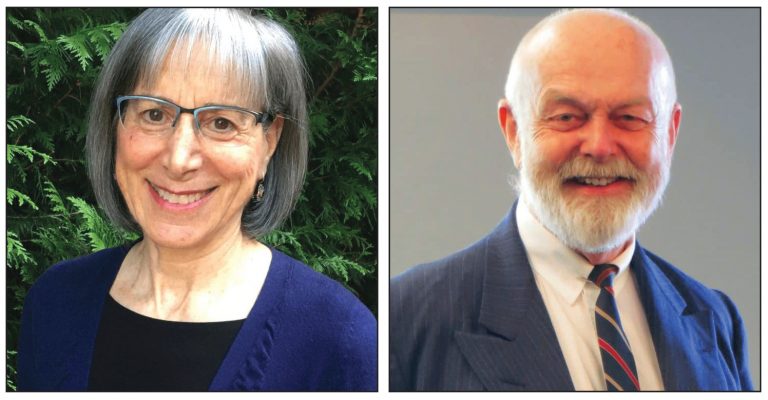
Dr. Larry Barzelai and Maayan Kreitzman will talk about environmental activism at Limmud on March 1. (photos from the interviewees)

Environmental activism is among Canada’s top news stories in recent days and the issue will be confronted from both a Jewish and a broader perspective by two leading voices at Limmud Vancouver next month.

Dr. Larry Barzelai, a Vancouver family doctor, assistant professor at the University of British Columbia’s faculty of medicine and B.C. chair of Canadian Association of Physicians for the Environment (CAPE), will present alongside Maayan Kreitzman, a PhD candidate at the Institute for Resources, Environment and Sustainability at UBC. The pair acknowledges that they come at the topic using different tactics, but aim for the same objective.

Kreitzman has been among those blockading the port and traffic.

“The actions happening in the streets right now are in response to this Coastal GasLink natural gas pipeline construction on Wet’suwet’an land,” she said. But this is only one element of the much larger picture, which is that oil and gas development is “occurring unabated and greenhouse gas emissions and ecological destruction is continuing unabated throughout the world, when we know that these activities are threatening our life-support system and are putting billions of people at risk over the next decade. People are already being impacted today.”

The issue brings together a host of concerns, she said, including “indigenous rights and sovereignty, the Canadian government’s complicity in a climate-unsafe future … as well as the business side of that from the private sector.”

Kreitzman has heard the complaints that disruptive protests may turn off potential allies and anger the general public.

“I think people’s emotions are valid and there is a valid concern about disrupting ordinary people that need to make a living and need to take care of their families,” she told the Independent. “On the other hand, I think many of the people that sometimes make these kind of complaints aren’t really the people that are struggling to feed their families. People that come from a place of privilege need to recognize that these protests inconveniencing them is a small price to pay for the types of progressive changes that will benefit all of us, including their children.”

Kreitzman said she and Barzelai will “bring a concise summary of the latest science to people so that they really understand the magnitude of the situation that we’re in.”

She said, “We’ll be speaking to a spectrum of different actions, from the personal to the more conventional campaigning type of approaches, like report-writing, research, lobbying, letter-writing, to direct-action approaches, which is what I’m most interested in, where people that have privilege start putting their bodies on the line and breaking the law on purpose, using the message of nonviolent civil resistance, which has been successful in many movements throughout history.”

Barzelai takes a more conventional approach to advocacy, but shares Kreitzman’s sense of urgency.

“Climate change, which we’re calling a climate emergency, is upon us,” he told the Independent. “It’s dramatic and we have to take big steps to do something about it. Maayan is taking a bit more radical approach to this. Myself and my group are a bit more middle-of-the-road, shall we say, but I think we both have the same endpoint in mind – that things have to change dramatically.”

CAPE, which has been around for about 25 years, focuses on the health impacts of environmental decisions and climate change.

“We see diseases that are spreading, we see cancers that are becoming more rampant, we are seeing the floods and the wildfires and the temperature changes that are dramatically affecting people’s health and we figure it’s our responsibility as doctors to look at climate change from a health perspective and to inform people of what’s going to happen unless we make dramatic changes,” he said.

Fracking is one area where he thinks British Columbia is “really going down the wrong path.”

“They’ve bought this myth that natural gas is clean energy, which it is absolutely not, and they are doing their best to increase rather than decrease global warming, and we think that’s the crucial issue that needs to be discussed in Canada and especially in B.C.,” he said.

Kreitzman and Barzelai will speak at Limmud Vancouver on March 1.

Tickets and more information can be found at limmudvancouver.com.

Format ImagePosted on February 21, 2020February 19, 2020Author Pat JohnsonCategories LocalTags climate crisis, education, environment, Larry Barzelai, Limmud Vancouver, Maayan Kreitzman, tikkun olam
Many ideas at Limmud

Many ideas at Limmud

At LimmudVan’20, Anna-Mae Wiesenthal will present on The “Othering” of Germany’s Jews and Canada’s First Nations. (photo from Anna-Mae Wiesenthal)

The latest local incarnation of the global Jewish learning festival Limmud takes place Feb. 29 and March 1. LimmudVan’20, which is being held at Congregation Beth Israel, begins with Havdalah and a few musical and intellectual appetizers on the Saturday night, followed by a day of presentations on a diverse array of topics on Sunday.

Anna-Mae Wiesenthal, a teacher at King David High School and a PhD candidate in Holocaust and genocide studies, will present on The “Othering” of Germany’s Jews and Canada’s First Nations.

Originating from Winnipeg, Wiesenthal has long had an interest in First Nations issues and has been involved in community programs there. She is aware of the sensitivities around paralleling these histories.

“There is a lot of controversy surrounding the use of the word genocide and First Nations, but I approach it from an examination of looking at different viewpoints and different research that argue both sides,” she told the Independent. “What do these two experiences of these two people have in common?” The point, she said, is not to come to any firm conclusions.

“I want to leave it open to the audience to process the information and to assess the commonalities and the differences,” Wiesenthal said. “I’m certainly there to point some of them out, but I think it’s to provide a different perspective that will engage and inspire discussion and curiosity among the participants to go further with it.”

Also not promising any proscribed conclusions is Rabbi Philip Gibbs, who will ask: Would the rabbis approve of Uber? Gibbs, who is spiritual leader of Congregation Har El, in West Vancouver, said that even issues as seemingly modern as an app that permits ride-sharing can be addressed through ancient wisdom.

Traditional arguments around fair and unfair competition have remained with him since rabbinical school and came to the fore in recent weeks as British Columbia argued over, and then slowly and somewhat clunkily implemented, ride-hailing services like Uber and Lyft. Some of the issues that could arise include whether a company keeps money in the community it serves or extracts it to some distant parent company. But don’t expect him to come down clearly on one side.

“If you’ve ever looked into a question of Jewish ethics, you know that you can make the joke of saying two Jews will have three opinions,” said Gibbs. “Maybe, through the discussion, someone else will tell me what it seems like I’m thinking, but really I think the goal is just to be more attuned to what some of the issues are so that, as we begin to make choices of who do we call up for a ride to the airport, that we’re taking into account a wider range of values than simply how little we want to pay for it.”

Other presenters will talk about crafting Jewish children’s books (see jewishindependent.ca/new-publisher-set-to-launch); how Leonard Bernstein used the music of Selichot to create West Side Story; the rich and poor among Portuguese Jews in Amsterdam’s Golden Age; building Jewish micro-communities through co-housing; healing Christian antisemitism; analyzing the Israeli smash TV show Shtisel; and many other topics.

Tickets and more information can be found at limmudvancouver.com.

Format ImagePosted on February 21, 2020February 19, 2020Author Pat JohnsonCategories LocalTags Anna-Mae Wiesenthal, children's books, education, First Nations, genocide, Holocaust, Limmud Vancouver, music, Philip Gibbs, ride-sharing
Increased cancer risks

Increased cancer risks

Libby Znaimer was the keynote speaker of the inaugural BRCAinBC event One in 40: From Awareness to Empowerment. (photo from zoomerradio.ca)

An estimated 200 people gathered at Congregation Beth Israel last month for One in 40: From Awareness to Empowerment, the inaugural event of a project to increase knowledge of the cancer risks connected to the BRCA1 and BRCA2 gene mutations.

The Jan. 8 event title is based on the fact that, for people with Ashkenazi Jewish heritage, there is a one-in-40 risk of carrying the BRCA genes, which increase the risk of genetically linked cancers. This rate is 10 times that of the general population. Elizabeth Wurzel, author of the bestselling memoir Prozac Nation, who passed away in January from breast cancer and was found to carry the gene mutation, called BRCA “the curse of the Ashkenazi Jews.”

One in 40 was organized by BRCAinBC, a provincial group spearheaded by members of the family – wife Jane and daughter Catriona – of Geoff Remocker, who died of aggressive prostate cancer. BRCAinBC’s objectives are to increase awareness among community members and health professionals, educate community members about genetic testing options and reduce the fear and stigma that can surround genetic testing. (See jewishindependent.ca/brcainbcs-inaugural-event.)

Toronto-based broadcaster Libby Znaimer, the keynote speaker, led the audience through her story. In January 2009, after enduring a six-and-a-half hour operation, the only possible cure for pancreatic cancer, she didn’t consider the odds of survival that favourable. Pancreatic cancer is the only form of cancer for which the survival rate is in the single digits, said Znaimer in her talk.

She not only has survived pancreatic cancer, but breast cancer, which was also BRCA-related.

Znaimer has made a film about her experience, Cancer Saved My Life. “It’s more than just a catchy title to get eyeballs on my documentary. It’s true. And I am living proof that, when it comes to the BRCA mutations, there is good news, in addition to the bad news,” she said in her remarks to the audience, which she shared with the Independent.

When Znaimer found out she had breast cancer in 2006, she was not surprised. Because of her family history, she knew that she was at a greater risk. However, she said, she did not think breast cancer would kill her.

“I remember being at a boozy dinner just a few days after being told I had cancer. I was very lucky that a former neighbour of mine was visiting,” she said. “She was working in the States as the head of breast radiology at one of the famous Mayo clinics and, based only on what she knew about my family history, she pointed her finger at me and said, ‘Sweetheart, you have bad genes and, if I were you, I’d bite the bullet and have both my breasts and my ovaries removed … as quickly as possible.’”

Znaimer cited a study in Toronto in which Jewish women were tested for the mutation regardless of family history. Fifty percent of those who tested positive would not have qualified for testing because of their family history. Results from similar studies in the United Kingdom and Israel produced similar outcomes.

“And, having one of those mutations doesn’t just mean you’re at an exponentially higher risk of getting those cancers once,” she warned. “You are also more likely to contract a second cancer, not a recurrence – a completely new other cancer.

“It is especially gratifying for me that my case has helped others and to be here to talk about the importance of getting tested,” she said. “It is the dawn of a new decade. My second decade as a survivor since Cancer Saved My Life.”

The Jan. 8 educational evening also included panelists Dr. Rona Cheifetz, medical lead of the Hereditary High Risk Clinic, B.C. Cancer Agency; Dr. Intan Shrader, co-medical director, BCCA Hereditary Cancer Program; Len Gross, president of the Prostate Cancer Foundation of British Columbia; and Tovah Carr, a BRCA carrier.

BRCAinBC arose from the realization that many in the Jewish community are not aware of the risks of carrying the BRCA genes. They hope to support improvements in access to genetic testing throughout the province for members of the Jewish community, and to protect BRCA carriers from the potentially negative consequences of positive carrier status; in obtaining insurance, for example. For more information, visit BRCAinBC.ca.

Sam Margolis has written for the Globe and Mail, the National Post, UPI and MSNBC.

Format ImagePosted on February 21, 2020February 19, 2020Author Sam MargolisCategories LocalTags BRCA, BRCAinBC.ca, cancer, health, Libby Znaimer, One in 40, Remocker
Survivors reflect on liberation

Survivors reflect on liberation

Dr. Ilona Shulman Spaar moderates a panel with Holocaust survivors, left to right, Janos Benisz, Amalia Boe-Fishman, Dr. Peter Suedfeld and Alex Buckman. (photo by Pat Johnson)

One survivor of the Holocaust who spoke at a panel recently believes that, in a generation or two, people will largely forget about the catastrophic events of that time.

“I think the world will forget about Auschwitz,” said Dr. Peter Suedfeld, a professor emeritus in the department of psychology at the University of British Columbia. “The world has already forgotten about ‘never again.’ We’ve had a fair number of genocides since 1945, in which the world did not intervene. A recent poll that I saw … apparently, the proportion of people who remember anything about how many Jews were killed in the Holocaust, what Auschwitz was, what the Holocaust was and so on, is not all that much above 50%.

“This is going to go on generation after generation,” he continued. “The survivors won’t be here to push the story any further. Their children will for awhile, but they have other things to do and other things to be concerned about and their children even more so. In a few more generations, it will be in the history books and people will say, yeah, I read about that or thought about that in grade whatever but, in terms of remembering it as something in your gut, something that arouses an emotion, something that has a personal connection to you, I don’t think it’s going to last all that much longer. I’m sorry to say that, but that’s what I think.”

Suedfeld, who weeks earlier was invested into the Order of Canada for his decades of work on the psychological and physical effects of extreme and challenging environments, was speaking at Hillel House, on the UBC campus, on International Holocaust Remembrance Day, Jan. 27. He was part of a panel of four survivors sharing their reflections 75 years after liberation.

Suedfeld, who was born in Hungary, survived under false papers and a back story as an orphaned Roman Catholic child. He recalled successive bombardments of the various sanctuaries he was in near the end of the war, as Allied bombers repeatedly blew buildings apart while Suedfeld and other children hid in the cellars.

After liberation by Russian forces, Suedfeld was eventually reunited with his father; his mother had been murdered. The lesson he took from the experience, he told the packed afternoon audience, was to cherish and defend the values of freedom.

“Freedom to be who you really are, but freedom of speech, freedom of association, freedom of religion, freedom of everything,” he said. After moving to the United States, Suedfeld became a powerful advocate of the First Amendment, which guarantees freedom of religion and expression. Since coming to Canada, he has been a similar champion of the Charter of Rights and Freedoms, he said.

Suedfeld’s admittedly pessimistic perspective on the future of Holocaust remembrance was contested by Alex Buckman, a fellow survivor on the panel.

As long as organizations exist like the Vancouver Holocaust Education Centre, which co-sponsored the event with Hillel BC, and children of survivors and others who have been touched by their experiences share the lessons they have learned, the future will be better, he said.

“Maybe our children will pick up, speaking on our behalf,” said Buckman. “Maybe they will remember because we will tell them what happened.”

Like Suedfeld, Buckman survived by being hidden by Catholics; in his case, in Belgium.

“They told us that the war was over and that we should rejoice and be happy and our parents would come and pick us up and everything would be hunky-dory,” he recalled. “At 6-and-a-half in an orphanage, nothing was that rosy. We saw parents come and pick up their children and take them home, but nobody came for us. I was there with my sister Annie and she was crying and wondering why our parents weren’t coming and I tried to tell her that I’m sure that they will come. But, like her, I didn’t know why they weren’t coming.”

The pair were moved back to Brussels and put in the care of the Red Cross, which posted the names of orphaned and unclaimed children on sheets around the city. Eventually, a paternal uncle showed up and took the two children to Annie’s parents – who, since little Alex had believed himself to be Annie’s brother, he reasonably concluded were also his parents. The truth came out in a cruel way, when another cousin, in a pique of anger, blurted out to Alex that his parents were dead and that Annie’s parents were not his.

“I took a step back and, for the first time, I realized I was alone,” Buckman recalled. His aunt and uncle did care for him, though, despite the uncle’s misgivings, because of the aunt’s insistence based on a promise she made to the heavens when she learned of her sister’s death.

Also on the panel was Amalia Boe-Fishman, who was born in the northern Netherlands in 1939 and also survived thanks to a Christian family. Like many survivors, her liberation story is not one of joyous freedom but of confusion and fear of the future.

“Liberation should have been a real happy time for me. It wasn’t,” she said. “I was told we were free, but what did that mean? What did that mean to a frightened 5-year-old girl who had been in hiding for three years? What did it mean to be free? I was told that, for the first time I could remember … I would now be able to go outdoors. I didn’t know what to expect. What was there? What was waiting for me outdoors? Indoors had become my entire life. Indoors was where I felt secure and safe. Indoors was all I knew.”

Her first venture out was harrowing. It was odd enough to be surrounded by throngs of strangers after her entire life had been confined to just a few familiar faces. After a victory parade, the girls she knew as her “sisters” decided to walk to the town centre. While crossing a bridge with scores of others – Amalia had never seen a bridge before – a rumour started that the Nazis had returned and panic swept the crowd. Pushing and shoving was accompanied by screaming and concern that the bridge was about to collapse.

“Here I was, trapped outdoors, in a crowd of panicked strangers and I was terrified,” she said. “The bridge didn’t collapse, but, as you can imagine [it was] a very long time before I would ever cross a bridge again.”

Another ostensibly joyous aspect of liberation was also clouded with confusion and fear.

“I was told that I had a real family. I had a real father, a real mother, an older brother and a baby brother,” said Boe-Fishman. “Miraculously, out of many different hiding places, all four of them had survived the war.… But who were these people? They were strangers. So, this is what liberation means to me. To leave the only family I ever had known to go outdoors to a place of terrified strangers, to strange people in a strange home.… I had to adapt to a new and also frightening world.”

For Janos Benisz, liberation was similarly conflicted. As a child, he had seen his father and his grandmother dead in the streets. His mother had been killed earlier by Nazi collaborators, during what was to have been a routine medical procedure.

Young Janos was transported from his hometown of Esztergom, Hungary, to Budapest, where Jews were divided up, many being sent directly to death camps including Auschwitz.

“I ended up in an Austrian slave labour camp,” he said, remaining there for seven or eight months before the Russians liberated them.

“I had the body of a 4-year-old,” he recalled. “At my bar mitzvah, I was under five feet.”

Making his way back to his hometown, he found squatters in the family’s house and learned that, of his immediate family of eight uncles, two aunts and 29 cousins, only Janos and one uncle had survived the Nazis.

Benisz was put in a Jewish orphanage in Budapest, then sent to Halifax, where he was put on a train to Winnipeg. He was bounced from foster home to foster home, back to an orphanage and then to a reformatory.

“I couldn’t fit in,” he said. At 18, he got a job at the Winnipeg Free Press as a copy boy.

“I spent the next 15 years in the newspaper business, then I became a salesman on my own, retired in ’71,” he said. He noted the figurative and literal centrality of the Jewish Community Centre of Greater Vancouver in his life today. He lives 40 yards from the centre, he said, and much of his social life is focused there.

“It’s my second home,” he said. “I work out there. I shmooze there. I’ve got a group of guys I call the ‘kosher nostra.’ I’m very happy. I absolutely adore this country of Canada. It’s been good to me ever since I turned 18.”

Prior to the panel, Holocaust survivors lit candles of remembrance. Vancouver Mayor Kennedy Stewart read a proclamation declaring International Holocaust Remembrance Day in the city. Rob Fleming, British Columbia’s minister of education, spoke on the importance of Holocaust education and credited the partnership of the Vancouver Holocaust Education Centre (VHEC). Student Adam Dobrer shared his family’s Holocaust legacy. Prof. Nancy Hermiston, director of voice and opera at the University of British Columbia, provided opening remarks. Nina Krieger, executive director of the VHEC, introduced the program and spoke of the importance of remembrance and the power of the memory of Auschwitz on the 75th anniversary of its liberation. Dr. Ilona Shulman Spaar, education director and curator of the VHEC, moderated the panel. Rabbi Philip Bregman, chaplain of Hillel BC, chanted El Maleh Rachamim and the Mourners’ Kaddish.

Many other commemorations and events took place throughout the province on and around Jan. 27.

Format ImagePosted on February 14, 2020February 12, 2020Author Pat JohnsonCategories LocalTags Alex Buckman, Amalia Boe-Fishman, commemoration, Holocaust, Janos Benisz, Peter Suedfeld, VHEC
Community planning critical

Community planning critical

Alex Cristall, chair of the board of directors of the Jewish Federation of Greater Vancouver. (photo from JFGV)

Long active in the Jewish community, Alex Cristall started his current volunteer position as chair of the board of directors of the Jewish Federation of Greater Vancouver in June 2019. He spoke to the Jewish Independent about the role, and where he sees the organization as it enters a new decade.

JI: Could you go over your professional background and your work with Jewish organizations?

AC: I grew up in this community and was always surrounded by a culture of volunteerism. My professional background is in real estate investment, and my family’s values always drove our approach to business and to community involvement. From my grandparents to my parents to the way my wife Jodi and I are raising our children, giving back and getting involved with community has always been a priority, both in and out of the office. I started volunteering as a young adult and it’s grown from there.

JI: How did you become chair of Federation?

AC: Before taking on the role of board chair, I held a number of other leadership positions with Jewish Federation and with other organizations. At Federation, I served as chair of the 2016 and 2017 Federation annual campaigns, as chair of major donors, chair of men’s philanthropy and as a member of the board.

Anyone who knows me knows my love of sports, so my previous involvement with the JCC Maccabi Games and with Maccabi Canada came about very naturally. I also chaired the JCC Sports Dinner.

Serving as vice-president and then president of the JCC [Jewish Community Centre of Greater Vancouver] was instrumental in giving me a unique perspective that has been indispensable as chair of Jewish Federation. I got to see firsthand how important the partnerships between the organizations are, and how much partners rely on the community planning and fundraising expertise that Jewish Federation brings. At the time, Jewish Federation organized local missions, where we visited various partners, including the Jewish Food Bank and Tikva Housing Society, and learned about the range of needs in our community – and the range of responses.

It was very eye-opening, and that was when I got involved in men’s philanthropy at Jewish Federation and decided to learn more about the community. That ultimately led to a role on Jewish Federation’s allocations committee, where we were fully immersed in the entire breadth and depth of need – and opportunity for impact – in our community.

In my mid-30s, I was fortunate to travel to Ethiopia with members of Jewish Federation’s National Young Leadership Cabinet to see the work we were doing there with two of our international partners, the Joint Distribution Committee and the Jewish Agency for Israel. That was where I really began to understand the big picture of what we can accomplish for world Jewry in need.

More recently, I was able to visit our partnership region in Israel and learn about the particular challenges of living in the north, and the impact we’ve been able to make there as the result of a long-term strategic focus.

I’ve been in Israel many times, but, in terms of our partnership region and Beit Vancouver, this past spring was my first visit. It’s such a successful country overall, but I really saw the inequity that exists in the periphery. To see the contributions of our community and the future development plans of the region was inspiring, as was seeing what our Israel and overseas affairs committee, through annual campaign funds, and many local families are doing there with their investments…. It was very rewarding.

We need to continue to raise up that entire region…. Every mayor of our region came to greet us and that’s how you know how important our dollars are for youth. So many different things going on. When you see the respect that the different mayors have for the work we do and the people involved, it’s clear that our impact matters.

JI: What are your goals looking ahead?

AC: Our community is growing and changing all the time. As a Federation, we have been changing alongside it, which is positioning us to effect positive change in ways that can make an impact now and into the future.

We have a unique role in the community in terms of our planning function, and it’s a critically important piece that we bring to the table. We are focused on planning strategically to identify and prioritize needs locally, as well as in our partnership region in Israel. Our donors and fund-holders at the Jewish Community Foundation help us meet these needs. The partnerships we have developed over the decades are key to being able to get the work done in ways that are going to create lasting change.

We have made progress on every one of the areas of opportunity we identified in the strategic priorities, from affordability and accessibility, to seniors, engagement and, of course, community security. With big picture issues like these, the outlook is for the long term and so the work is ongoing.

At the end of the day, I would like people in our community to say that we made it easier for them to live Jewishly – whether that’s because we helped make a Jewish program more affordable, because we reached out to them where they live, because their aging parents were able to access a seniors’ program, or what have you.

JI: What challenges do you see before you?

AC: Our community is growing and its needs are constantly evolving, so there is always a lot of work to do, and that makes it exciting. I love a good challenge, and there are challenges everywhere we turn.

This community looks so different from when I was a child here. Even in the last decade it’s changed considerably. We’re more spread out and we’re more diverse.

More than half of our community is comprised of children, youth and young families, many of whom are really crunched by the high cost of living, and many of whom see their Jewish community engagement in ways that are very different from previous generations. At the same time, we have a growing population of Jewish seniors who need to stay connected and supported as they age. These are two of the big challenges facing our community right now. We also need to continue to meet our community’s needs through diverse revenue sources.

And last, of course, is the upcoming redevelopment of the JCC site into a true community hub. It’s still in the early stages, but Jewish Federation is poised to play an important role in this when the time comes. We’re proud to have entered into a memorandum of agreement with the JCC. [See jewishindependent.ca/historic-jcc-fed-agreement.]

JI: What excites you about the role?

AC: I feel very fortunate to work with an incredible group of volunteer leaders and professional staff, all of whom genuinely care about this community and about Israel.

From a personal perspective, some of the best lessons I’ve learned have come from volunteering with different community members and working with the Federation staff…. It’s very rewarding to meet with people in the community and see the reach and the impact of the good work we’re doing.

JI: What accomplishments are you most proud of thus far?

AC: One thing I am very proud of is how our donors have come to rely on Jewish Federation for our breadth of knowledge of community needs, our strategic approach and the strong relationships we’ve developed. Many of them trust us with all of their Jewish community philanthropy, and they come to us first when they have questions about where and how they want to make an impact.

I think we can be very proud of how we have taken a very strategic approach to growing the financial resources we generate, whether that’s through the annual campaign, through special project funding, or through legacy giving at the Jewish Community Foundation. As a result, our partners have more ways to access funding for the vital programs and services that align with high-priority community needs.

Community security is an area where we wish we didn’t have to focus our attention, but the reality is that we do. It was the first thing I really championed as chair of the annual campaign in 2016, and it was one of the first areas of strategic investment that we addressed from our 2020 Strategic Priorities [ourcommunity2020.jewishvancouver.com]. Since then, our community security advisory committee has taken an active role in addressing needs in this area and, on their advice, we hired a director of community security. Together, they are creating a culture of security consciousness.

Sam Margolis has written for the Globe and Mail, the National Post, UPI and MSNBC.

Format ImagePosted on February 14, 2020February 12, 2020Author Sam MargolisCategories LocalTags Alex Cristall, Jewish Federation, philanthropy, tikkun olam, volunteerism
Inherent love for business

Inherent love for business

Ben Silverman (photo from Ben Silverman)

Ben Silverman is the managing director and co-founder of Integral Artists, a talent agency based in Vancouver. He’s also the president of media investment firm Various Things Entertainment and co-founder of James Charles Properties, a real estate development company focused on B.C. holdings. It takes a lot of energy, but Silverman, who was named on Business in Vancouver’s 2019 Forty Under Forty list, has a mind that’s always working.

“Even if I am trying to relax on vacation, my brain doesn’t seem to want to shut off the part which is observing the world around us and processing it in search of new opportunities and/or improvements,” he said. “As a lifelong student of the art of calculated risks and plan execution, I am naturally compelled to the life of an entrepreneur.”

The 39-year-old grew up in a creative environment, enjoying writing and performing.

“Growing up in Richmond, I used to perform in the Prozdor musical theatre productions put on by Joan Cohen at Beth Tikvah,” he recalled. “My entire family would partake – my brothers on stage with me, my dad playing in the live orchestra and my mom helping organize the program. Prozdor was a real contributor to my enjoyment and pursuit of the performing arts.”

While he continued that pursuit, which included obtaining an undergraduate degree in creative writing, his taste for the entrepreneurial was taking shape as well. In 2003, he launched his first formal start-up, Astone Fitness, off the back of an infomercial he produced for a product he trademarked – Ripcords Resistance Bands.

Now, the film and television industry is where he brings his passions together. “Film and TV are commercial art forms which I have always been drawn to as forms of great entertainment and storytelling,” he told the Independent. “There is an inherent overlap and compromise required between the creative and the business side in film and TV.”

This overlap is where he does his best work, he said, harnessing his communication skills and his ability to relate to the needs of his creative clients, as well as his business acumen.

Outside of his work endeavours, Silverman remains active in the Jewish community, and is connected to the Bayit.

“I have tremendous respect for Rabbi Levi Varnai, who is inspiring and doing incredible work galvanizing the community around him and helping people from all walks of life feel like they belong,” Silverman said. “The shul’s [past] president, Mike Sachs, is also one of the hardest working and dedicated individuals I know. Together, their approach is inspiring and makes me feel like my contributions matter, which motivates me to participate however possible, whether financially or with my time.”

Silverman continues to dream big. Last year, Various Things Entertainment acquired feature film distribution company levelFILM, which had seven movies at the 2019 Toronto International Film Festival, including Hope Gap, starring Annette Bening and Bill Nighy, and Ordinary Love, starring Liam Neeson.

As for Integral Artists, which also has offices in Toronto, Silverman said the agency is in “active discussions regarding a further expansion within North America. Our goal is to be the largest talent agency headquartered in Canada.”

Shelley Stein-Wotten is a freelance journalist and comedy writer. She has won awards for her creative non-fiction and screenwriting and enjoys writing about the arts and environmental issues. She is based on Vancouver Island.

Format ImagePosted on February 14, 2020February 12, 2020Author Shelley Stein-WottenCategories LocalTags Bayit, Ben Silverman, business, Business in Vancouver, entrepreneurship, levelFILM, Richmond, Various Things Entertainment
Richmond marks the Shoah

Richmond marks the Shoah

Left to right: Councilor Kelly Greene, Councilor Bill McNulty, Bayit past president Michael Sachs, Richmond Mayor Malcolm Brodie, Bayit president Keith Liedtke, Councilor Chak Au and Councilor Alexa Loo at the Bayit, after the mayor officially proclaims Jan. 27 as International Holocaust Remembrance Day in the city of Richmond. (photo by Cynthia Ramsay)

On Jan. 22, emotions were near the surface in a Holocaust commemoration that included the official proclamation of Jan. 27 as International Holocaust Remembrance Day in the city of Richmond. In a packed sanctuary at the Bayit, a synagogue in the province’s second-largest Jewish community, survivors, rabbis, community leaders and a host of elected officials from all levels of government were on hand to mark what was billed as an historic day.

Writer and teacher Lillian Boraks-Nemetz spoke as a survivor of the Holocaust and shared her first-person account, as well as the moral implications of what happened and the weight of survival.

photo - Lillian Boraks-Nemetz
Lillian Boraks-Nemetz (photo by Cynthia Ramsay)

“Not a day passes when I don’t ask myself why did I survive when six million perished, 1.5 million children and among them my 5-year-old sister,” said Boraks-Nemetz. “And I survived. Why? When every European Jewish child was automatically sentenced to death by Hitler, I won. Was my survival a miracle? A twist of fate? The will of God? Why me?”

She recalled the day everything changed, Sept. 1, 1939.

“I was alone on the porch of my grandfather’s summer home when masses of airplanes passed over my head. I heard shots, explosions, my dad ran to get me and we barely made it to the shelter, where the sight of crying children and frightened people confirmed my own fears,” she said. The Nazis invaded her Polish homeland. Jews lost all human rights, her father lost his right to practise law, her uncle was prevented from practising medicine. Teachers, professors and businesspeople were all kicked out of their positions. Jewish children did not attend schools and they were bullied, a precursor of the much graver fate to come.

Soon the Jews of Warsaw were imprisoned in the ghetto, where a Nazi-created dystopia developed.

“People stole food from each other,” she said. “All morality ceased to exist in an amoral world.”

Young Lillian was smuggled into the factory where her mother was a slave labourer. Lillian’s grandmother had bought a small house in a village and promised it to a man in exchange for posing as her husband, creating a pretext of a non-Jewish Polish family. Lillian was then smuggled from the ghetto through bribery and survived the war with her grandmother and the man.

“What were my chances of surviving? The rate of a child’s surviving the ghetto was seven percent,” she said. “We were liberated in 1945 by the Russians. But liberation isn’t liberating to survivors.”

While adults worked to reestablish their lives in a new country, children were left largely to their own devices to assimilate all that had happened. Psychiatry or any professional help was largely nonexistent.

“I was told to forget and to let go by people who didn’t have a clue what was on my mind or my soul,” she told the audience. “This was not a physical wound that results in a bruise or a scab, which then falls off and mostly disappears. This is a branding on the soul of fire caused by man’s inhumanity to man, woman and child. The enormity of the Holocaust is still largely incomprehensible and still emotionally inaccessible to those who were born here.”

photo - Judy Darcy
Judy Darcy (photo by Cynthia Ramsay)

Judy Darcy, British Columbia’s minister of mental health and addictions, shared the story of how her father survived the Holocaust and subsequently hid his Jewish identity to everyone, including his own children, until the last years of his life, when he tried to reconcile his experiences in meetings with the late Toronto rabbi Gunter Plaut. Darcy’s story was featured in the Independent (Feb. 24, 2017, jewishindependent.ca/mlas-father-hid-past).

photo - Rabbi Levi Varnai speaks as Keith Liedtke looks on
Rabbi Levi Varnai speaks as Keith Liedtke looks on. (photo by Cynthia Ramsay)

Rabbi Levi Varnai, spiritual leader of the Bayit, recalled his family’s survival during the Holocaust, and Ezra Shanken, chief executive officer of the Jewish Federation of Greater Vancouver, spoke of the human potential for good and evil.

“We must understand that we as human beings have the capacity for immense love but also to create immense pain and it’s only through disciplining ourselves through education and through moments like this that we ensure that the community that I think we all want, which is a community of love, is what will remain,” Shanken said.

photo - Ezra Shanken
Ezra Shanken (photo by Cynthia Ramsay)

Richmond’s Mayor Malcolm Brodie spoke at the event. In an interview with the Independent after, he noted that he often receives requests for proclamations. Recently, the urgency for making a statement and standing with Jewish people was accentuated when a Richmond auction house had to be pressured to cancel the sale of Nazi military memorabilia. Participating in the commemoration with the Jewish community was significant for him, said the mayor, and the past is a lesson for the future.

“I found it quite moving,” said Brodie, noting the remarks by Boraks-Nemetz and Darcy. It is important, he said, “to remind people, and the greater community, to watch out for the signs, because something like this – hopefully never on the scale – but something could happen again.… There have been enough times recently that antisemitism is still a real thing. It is something that we don’t hear too much about but it is something that is very real. In addition to honouring these millions who died, we have to educate young people to make sure that everybody knows the facts and we make sure that it never happens again.”

Michael Sachs, a Jewish community activist and past president of the Bayit, was pivotal in organizing the event – which was co-hosted by the Bayit, Vancouver Holocaust Education Centre, Centre for Israel and Jewish Affairs, Kehila Society of Richmond and Jewish Federation of Greater Vancouver – and ensuring the attendance of the elected officials. Among the attendees were the mayor, most of Richmond’s city councilors, all four of the city’s members in the Legislature, Member of Parliament Alice Wong and former MP Joe Peschisolido, as well as others.

“There were 100 chairs and it was standing room only,” Sachs said afterward. “It’s historic because it’s the first time in Richmond that this proclamation has been made. To have such an outpouring of elected officials, VIPs and all these people coming out – it’s the first in history in Richmond.”

Sachs was effusive in his praise for the mayor for his actions. While many commemorations are taking place because it is the 75th anniversary of the liberation of Auschwitz, that was not a prime motivator of the Richmond event, said Sachs.

“It’s the first step of many that will come,” he said. “It’s the beginning of a real public acknowledgement that will lead to more public education. We had someone who was there, one of the aides of an elected official, and he came up to me afterwards and he said, ‘I didn’t know anything about the Holocaust.’ That’s one person right there,” Sachs said. “And, hopefully, this moment continues to help bring Holocaust education into every classroom in this province.”

Format ImagePosted on January 31, 2020January 28, 2020Author Pat Johnson and Cynthia RamsayCategories LocalTags Bayit, Holocaust, Malcolm Brodie, Michael Sachs, Richmond
War heroism recalled

War heroism recalled

Prof. George Bluman speaks at the 15th annual Raoul Wallenberg Day commemoration, Jan. 19. (photo by Masumi Kikuchi)

Japanese diplomat Chiune Sugihara was honoured in Vancouver this month with a lecture on his wartime heroism – by a man who owes his life to the actions of Sugihara when the diplomat served as consul for the Imperial Japanese government in Lithuania, near the start of the Second World War.

George Bluman, a professor emeritus of mathematics at the University of British Columbia, spoke at the 15th annual Raoul Wallenberg Day commemoration Jan. 19, which was held at the H.R. MacMillan Space Centre. The annual event is presented by the Wallenberg-Sugihara Civil Courage Society and took place 75 years and two days after Wallenberg, a Swedish diplomat in Hungary whose actions saved the lives of tens of thousands of Jews, was last seen alive. The actions of Sugihara, vice-consul of the Japanese embassy in Kaunas, Lithuania, paralleled those of Wallenberg in that he issued visas and took extraordinary actions to save the lives of the threatened Jews of Europe.

Bluman’s parents, Nathan and Susan Bluman, fled to Lithuania after Germany invaded Poland in 1939. There, they received transit visas from Sugihara, which enabled them to travel through the Soviet Union to Japan. They then obtained temporary permits to enter Canada and they were aboard the last ship sailing from Japan to Vancouver prior to the attack on Pearl Harbor.

An estimated 15% of Sugihara survivors became Canadians, many of them remaining in Vancouver, including the Bluman family, which has come to number 23, now including great-grandchildren of Susan and Nathan. It is estimated that Sugihara’s actions facilitated the escape of thousands of Jewish refugees.

In addition to the Sugihara descendants living in Vancouver, Bluman noted an additional local connection. On his way to Europe for the series of diplomatic postings that would lead to his heroic acts, Sugihara and his wife Yukiko arrived by ship in Vancouver in 1937, then took a transcontinental train to the East Coast to board another ship, which would take them to Europe.

A 2017 poll in a Tokyo publication rated Sugihara as the most important Japanese person ever. “Why?” Bluman asked. “Against advice from his superiors in Tokyo, he issued transit visas to Japan that ended up saving about 2,100 Jewish refugees who otherwise would have been likely murdered. Those saved included my parents as well as one of my uncles and his wife.… Perhaps as many as 40,000 people owe their lives due to the extraordinary heroic deeds of Sugihara.”

Two diplomats from the Netherlands played crucial roles in Sugihara’s heroics, Bluman said. After the Nazi occupation of that country, in May 1940, an anti-Nazi Dutch government-in-exile was established in London and remained in charge of all Dutch embassies. The anti-Nazi Dutch ambassador in Latvia, L.P.J. de Decker, dismissed his pro-Nazi Lithuanian honorary consul, replacing him with Jan Zwartendijk, a Dutch engineer heading Philips electronics in Kaunas.

“Two young Dutch rabbinical students approached Zwartendijk, requesting documentation to go to Curaçao, a Dutch colony in the West Indies, with the aim of traveling east through the Soviet Union, Japan, the Pacific Ocean and the Panama Canal to tiny Curaçao, an island off the coast of Venezuela, about one-sixth the size of Metro Vancouver. They also sought permits for their mostly Polish classmates.

“Why Curaçao?” asked Bluman. “Because no visa was required to enter Curaçao. The local governor had sole authority to permit entry. But this was rarely granted. Zwartendijk was given permission by de Decker, the Dutch ambassador in Riga [Latvia], to issue permits to Curaçao to their fellow rabbinical students that stated, in French, ‘A visa for entry is not required,’ leaving out the condition of the governor’s permission. Moreover, Zwartendijk courageously agreed to issue such permits to all Jewish refugees who applied for them.”

A delegation of Jewish refugees approached Sugihara about obtaining Japanese transit visas, a necessary step for the scheme’s success.

“Without permission from Tokyo, and after getting Soviet approval, signed by Stalin, for refugee transit through the Soviet Union, Sugihara issued transit visas valid for a stay of 10 days in Japan, based on the seemingly sufficient Zwartendijk Curaçao permits,” said Bluman. “Zwartendijk signed 2,300 such permits, until his office was forced to close on the day Lithuania was annexed by the Soviet Union.… The scam worked.”

With the annexation of the Baltic states to the Soviet Union, all foreign embassies were ordered closed. Though Zwartendijk left, Sugihara managed to stay on for a further four weeks to continue writing transit visas – even for Jews who had not obtained a visa from Zwartendijk.

“These Jews included my parents, who approached Sugihara’s office six days after Zwartendijk had left,” Bluman said.

Ultimately, about 80% of the Jewish refugees issued Sugihara visas survived and about three-quarters made it to Japan. Almost half carried on to Shanghai, China, to wait out the war.

Sugihara’s diplomatic career effectively ended in Romania, where he was posted at the end of the war. When the Soviets occupied Bucharest, Sugihara and his family were imprisoned in a prisoner-of-war camp for 18 months.

Back in Japan in 1946, Sugihara was dismissed from diplomatic service and spent the next several decades in low-key positions in Japan and Moscow. His retirement from service was ostensibly a matter of downsizing, but some have speculated that his heroic insubordination was a cause.

Only in 1968 did Sugihara learn that most of the Jews he had helped had survived. In 1985, he was recognized by the state of Israel, receiving the Righteous Among the Nations award from Yad Vashem, as well as perpetual Israeli citizenship for himself and his family. Zwartendijk was posthumously honoured in 1997. Sugihara died in 1986, at the age of 86. Bluman retains close contact with the family in Japan.

“In my family,” Bluman concluded, “there is one great hero we always carry in our hearts and to whom we will be forever grateful: Chiune Sugihara.”

After Bluman’s presentation, attendees watched the film Persona Non Grata: The Story of Chiune Sugihara. Earlier, Alan La Fevre, president of the Wallenberg-Sugihara Civil Courage Society, welcomed guests, including the deputy mayor of the city of Vancouver, Christine Boyle, who read a proclamation declaring Raoul Wallenberg Day. Diplomats from Japan and Ukraine were in attendance.

The Wallenberg-Sugihara Civil Courage Society was formed in 2013 by members of the Swedish and Jewish communities. The society continues the legacy of the annual Wallenberg Day events in Vancouver, recognizing and honouring individuals who, at great personal risk, have helped others by acting against unjust laws, norms or conventions.

Format ImagePosted on January 31, 2020January 28, 2020Author Pat JohnsonCategories LocalTags Chiune Sugihara, George Bluman, Holocaust, Wallenberg-Sugihara Civil Courage Society
Mark and Seth Rogen honoured

Mark and Seth Rogen honoured

Left to right: Lauren Miller Rogen, Seth Rogen, Mark Rogen, Sandy Rogen and Danya Rogen at the ceremony in New York City at which Mark and Seth were honoured with the Generation to Generation Activism Award from the Workmen’s Circle. (photo from Mark Rogen)

Vancouver’s Mark and Sandy Rogen have good reason to be proud of their children and the Jewish values with which they raised them. Some of those values were highlighted as 2019 came to a close, when Mark Rogen and his actor, writer and producer son Seth were honoured on Dec. 2 with the Generation to Generation Activism Award from the Workmen’s Circle in New York.

The award recognizes the Rogens’ work promoting Jewish culture and traditions, while also carrying on the traditions of tikkun olam, repairing the world.

“What made it meaningful for us and for everyone who came was that it was an award about values,” Mark Rogen said in an interview with the Jewish Independent after a game of basketball at the Jewish Community Centre of Greater Vancouver. “It wasn’t about someone giving $2 million to get their name on a hospital. It was about recognizing people living in a positive way.”

Rogen said he and Sandy have always preached that value to their kids, along with the idea that they should always strive to “be a blessing.”

“That’s the way Sandy and I tried to raise Danya and Seth – to try to be a blessing and do what you can,” he explained. “Doing something one-to-one is just as good as doing something internationally. It’s where your heart is and I think Sandy and I are very happy to see that’s how Danya and Seth live their lives. That’s the pride.”

Rogen noted that, when his kids were young, they experienced many blessings. In those years, he said, the family had little money and institutions like Vancouver Talmud Torah, the JCC and Camp Miriam treated his children well, and “didn’t charge us a lot. So, Danya and Seth spent their formative years in the Vancouver Jewish community, and their friends today are from those years. Seth met Evan [Goldberg, his writing partner] at the JCC doing karate, and then they did bar mitzvah classes together.”

Knowing that his children are giving back as adults is important, said Rogen, who worked for the Workmen’s Circle for two years when the family temporarily moved to Los Angeles when Seth filmed Freaks and Geeks. Among other things, Seth and wife Lauren Miller Rogen founded Hilarity for Charity, which raises money for Alzheimer’s care, research and support.

That the recent award was a joint honour made it more meaningful to Seth Rogen. “To be honoured in any capacity is rare and lovely for me, but, to be honoured alongside my father was truly special and memorable,” he told the Independent. “My dad has always been dedicated to helping others and spreading goodness wherever he can. He worked for nonprofits most of my childhood and always strived to make the world a better place. He is someone I always go to for advice and his guidance is consistently geared towards not just what’s good for me, but what’s good for everyone.”

As for the Jewishness he often displays on screen, the actor said he rarely separates that part of himself from his work. “Being Jewish is inseparable from my identity in many ways, so it’s something I’ve always thought was good to acknowledge and integrate into my work,” he explained. “I simply am Jewish and I’m proud of myself and what I’ve done with my life.”

Seth Rogen’s biggest Jewish role, however, might be coming in the soon-to-be-released American Pickle, in which he plays a young man who comes to the United States in 1918 from a European shtetl, then gets trapped and preserved in a pickle barrel for 100 years before being united with his grandson in Brooklyn.

Danya Rogen – who is currently on the board of Vancouver Talmud Torah, on the personnel committee for Habonim Dror Camp Miriam and a regular participant on the JCC softball league team her father captains – joined many family members and friends in New York for the ceremony honouring her father and brother. She remembers her parents raising their awareness of important issues at a very young age.

“My parents, and my dad in particular, taught us to stand up for what we believe in and stand up for others who can’t do it for themselves,” she said. “My parents were also incredibly kind and generous, even when we didn’t have so much ourselves. All of those values have stuck with me my whole life. “I hope to live up to being a blessing and can pass those values on to my own children. I suppose the fact that I have become a social worker isn’t that surprising.”

Kyle Berger is Jewish Community Centre of Greater Vancouver sports coordinator, and a freelance writer living in Richmond.

Format ImagePosted on January 31, 2020January 28, 2020Author Kyle BergerCategories LocalTags family, Judaism, milestones, Rogen, tikkun olam, Workmen’s Circle
Community milestones … Suedfeld, Averbach, Phillip, Gutteridge, BI

Community milestones … Suedfeld, Averbach, Phillip, Gutteridge, BI

Dr. Peter Suedfeld with Governor General Julie Payette at Rideau Hall. (photo by Sgt. Johanie Maheu)

On Nov. 21, 2019, Vancouver’s Dr. Peter Suedfeld was among those invested into the Order of Canada by Governor General Julie Payette during a ceremony at Rideau Hall in Ottawa.

The Order of Canada is one of the country’s highest civilian honours. Its companions, officers and members take to heart the motto of the order: “Desiderantes meliorem patriam” (“They desire a better country”).

Suedfeld was invested as an officer of the order. The honour’s website notes that his “groundbreaking research expands our notions of resilience and transcends academic fields. Professor emeritus at the University of British Columbia and a prolific writer, he is internationally acclaimed for documenting previously ignored positive psychological and physical effects of extreme and challenging environments. His work has taken a critical look at the impacts on humans experiencing polar isolation, space exploration, sensory deprivation, decision-making during international crises, and such traumatic experiences as genocide. He is highly regarded both as a mentor and active member of his community.”

Created in 1967, the Order of Canada recognizes outstanding achievement, dedication to the community and service to the nation. Close to 7,500 people from all sectors of society have been invested into the order. Those who bear its iconic snowflake insignia have changed Canada’s measure of success and, through the sum of their accomplishments, have helped build a better country.

Appointments are made by the governor general on the recommendation of the Advisory Council for the Order of Canada. For more information about the Order of Canada or to nominate someone, visit gg.ca/en/honours.

* * *

photo - Gary Averbach at the Israeli Scout’s facilities in the city of Ra’anana
Gary Averbach at the Israeli Scout’s facilities in the city of Ra’anana.

JNF Canada is proud to have completed renovating the infrastructure of the Israeli Scout’s facilities in the city of Ra’anana, to be more accessible for children and youth with disabilities. This project was the focus of the JNF Vancouver 2017 Negev Dinner, honouring the Averbach family.

The Israeli Scouts, Tzofei Tzamid, run programming for more than 80,000 members aged 9-21 (including more than 2,500 with disabilities) throughout Israel. They bring together children and youth from across the spectrum of Israeli society to learn leadership skills and the value of inclusive community, and to enhance their self-image.

A special thank you to Gary Averbach, Michael Averbach and Shannon (Averbach) Gorski, and the entire Vancouver community for taking this vision forward and helping JNF improve the lives of the members of Tzofei Tzamid. To learn more about the project, visit jnf.ca/tzofei-tzamid.

* * *

photo - Rob Philipp will start his position as chief executive officer of Hillel BC in June
Rob Philipp will start his position as chief executive officer of Hillel BC in June.

Rob Philipp has been appointed to the position of chief executive officer of Hillel BC, effective in June.

Philipp’s appointment follows a Canada-wide process engaged by the search committee of the Hillel board of directors, comprised of Gordon Brandt (chair), Eric Andrew, Rebecca Recant, Frank Cohn, Talia Magder, Alexis Pavlich, Rachael Segal and Isaac Thau (board president). Philipp was the unanimous recommendation of the search committee and unanimous choice of the board of directors.

Philipp has a long history with the Vancouver Jewish community, having served on several boards, including 20 years on the board of Temple Sholom and being president of that organization. He participated in the Vancouver Wexner Heritage Leadership Group, which was a selected group of local Jewish leaders that studied and learned together for two years.

Philipp brings a unique and impressive set of experience, credentials and passion to Hillel. After graduating from the University of British Columbia, where he was an active member of Hillel, he worked as a chartered professional accountant. He then developed his career in sales, marketing and management in both for-profit and nonprofit organizations, most recently as the chief executive officer of the Fraser Valley Real Estate Board and as interim executive director of Temple Sholom.

He is known for being a creative and innovative leader, with a warm and strong team approach and a people-first mentality. His experience in developing and executing strategy, program development and delivery, combined with his business, governance and financial acumen, will be tremendously valuable to the continued growth of Hillel based on the strong foundation built by Rabbi Philip Bregman and Sam Heller in recent years.

* * * 

photo - Jessica Mann Gutteridge is the new artistic managing director of the Rothstein Theatre and Chutzpah! Festival
Jessica Mann Gutteridge is the new artistic managing director of the Rothstein Theatre and Chutzpah! Festival.

The Jewish Community Centre of Greater Vancouver welcomes Jessica Mann Gutteridge as the new artistic managing director of the Norman and Annette Rothstein Theatre and Chutzpah! Festival. The position was previously held by Mary-Louise Albert, who is leaving after 15 successful years. The JCC thanks Albert for her excellence in service and dedication to the community and the arts.

Gutteridge joins the JCC from Boca del Lupo, where she managed Performance Works on Granville Island. She was also a founding board member of the Granville Island Theatre District. She held positions of managing director and education manager at Carousel Theatre for Young People. Her work as a dramaturg has included new plays for young audiences and playwrights from Shakespeare to Genet to Edwin Sánchez.

She received her master’s in fine arts from the Yale School of Drama’s department of dramaturgy and dramatic criticism, and studied directing at Wesleyan University. Born and raised in New York, she returned to the theatre after nearly two decades as a lawyer specializing in advertising and trademark law. At Columbia Law School, she was editor-in-chief of the Columbia-VLA Journal of Law and the Arts. Her nonprofit board work has included serving as co-president of Landmark on Main Street (a performing arts and community centre on Long Island, N.Y.), the Vancouver International Burlesque Festival, and the Bayview Treehouse Preschool. She was a member of the 2018-19 Cultural Leadership Program at the Banff Centre in Alberta.

“I look forward to continuing to bring diverse, world-quality artists to present their work to Chutzpah! Festival audiences and to reach a new generation with exciting performances. I am also delighted to steward the Rothstein Theatre as a gem appreciated by professional artists and community members throughout Metro Vancouver.”

The JCC is excited to see Gutteridge apply her industry experience and talents to the management of the centre’s fully equipped 318-seat performance venue, and the creative direction of the Chutzpah! Festival, one of the major art events in Vancouver’s cultural calendar.

* * *

At Congregation Beth Israel’s annual general meeting Dec. 5, several volunteers were recognized. Mazal tov to Howard Mickelson and Keren Gertsman (President’s Award), Lloyd Baron (Board of Directors Special Service Award), Michael Harris (Board Recognition Award) and Lissa Weinberger (Special Service Volunteer Award).

The congregation also welcomed its incoming board for 2019-2020: Helen Pinsky (president), David Silver (vice-president), Heather Sirlin (secretary), Keren Gertsman (treasurer), Lisa Averbach, Anton Bloem, Alexis Doctor, Kevan Jacobson, Lisa Marcoe, Christie Menzo, Dale Porte, Jennifer Wolf and David Woogman.

Format ImagePosted on January 31, 2020January 28, 2020Author Community members/organizationsCategories LocalTags Averbach, Beth Israel, Chutzpah!, Hillel BC, Jessica Mann Gutteridge, JNF Canada, Order of Canada, Peter Suedfeld, Rob Philipp

Posts pagination

Previous page Page 1 … Page 98 Page 99 Page 100 … Page 181 Next page
Proudly powered by WordPress