Skip to content
  • Home
  • Subscribe / donate
  • Events calendar
  • News
    • Local
    • National
    • Israel
    • World
    • עניין בחדשות
      A roundup of news in Canada and further afield, in Hebrew.
  • Opinion
    • From the JI
    • Op-Ed
  • Arts & Culture
    • Performing Arts
    • Music
    • Books
    • Visual Arts
    • TV & Film
  • Life
    • Celebrating the Holidays
    • Travel
    • The Daily Snooze
      Cartoons by Jacob Samuel
    • Mystery Photo
      Help the JI and JMABC fill in the gaps in our archives.
  • Community Links
    • Organizations, Etc.
    • Other News Sources & Blogs
    • Business Directory
  • FAQ
  • JI Chai Celebration
  • JI@88! video

Recent Posts

  • BGU fosters startup culture
  • Photography and glass
  • Is it the end of an era?
  • Taking life a step at a time
  • Nakba exhibit biased
  • Film festival starts next week
  • Musical with heart and soul
  • Rabbi marks 13 years
  • Keeper of VTT’s history
  • Gala fêtes Infeld’s 20th
  • Building JWest together
  • Challah Mom comes to Vancouver
  • What to do about media bias
  • Education offers hope
  • Remembrance – a moral act
  • What makes us human
  • המלחמות של נתניהו וטראמפ
  • Zionism wins big in Vegas
  • Different but connected
  • Survival not passive
  • Musical celebration of Israel
  • Shoppe celebrates 25 years
  • Human “book” event
  • Reclaiming Jewish stories
  • Bema presents Perseverance
  • CSS honours Bellas z”l
  • Sheba Promise here May 7
  • Reflections from Be’eri
  • New law a desecration
  • Resilient joy in tough times
  • Rescue dog brings joy
  • Art chosen for new museum
  • Reminder of hope, resilience
  • The national food of Israel?
  • Story of Israel’s north
  • Sheltering in train stations

Archives

Follow @JewishIndie
image - The CJN - Visit Us Banner - 300x600 - 101625

Category: TV & Film

The first Shtisel book

The first Shtisel book

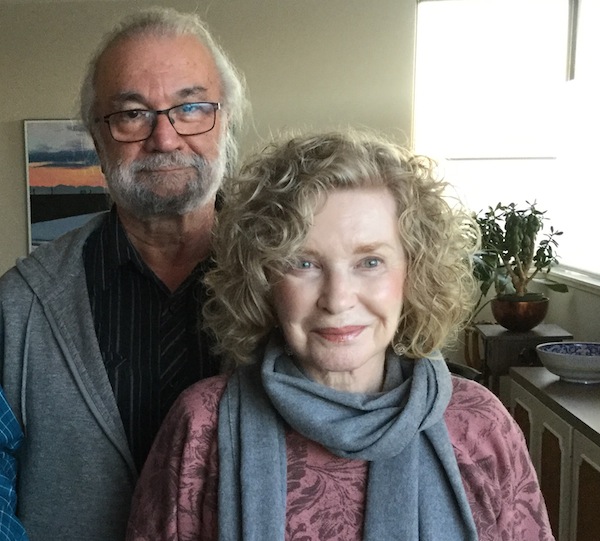
Maurice Yacowar and wife Anne Petrie. (photo from Yacowars)

Shtisel, the unlikely yet addictive hit television series about a Charedi family in Jerusalem, is now the subject of a new book, Reading Shtisel: A TV Masterpiece from Israel, an episode-by-episode analysis penned by Victoria writer and critic Maurice Yacowar, which he will share at the Jewish Community Centre of Victoria June 2.

Yacowar, a retired film professor, began his project in December 2018, as Netflix started airing the series that has become de rigueur viewing among Jews and non-Jews alike. As with many of the show’s aficionados and binge watchers, he was hooked, but his is the only book on Shtisel written thus far. The book’s first printing took place in March.

From his perspective, the show transcends what some may initially dismiss as soap-operatic tendencies. Not a character, not a scene, not an action in the two-season, 24-episode show is out of place, according to Yacowar.

“People (and animals) come and go, some questions may seem unanswered, but those elements are not relevant to the story. Nothing in the show is superfluous or unnecessary. Everything has a reason. We enter their domain, and we leave it, just at the right time,” he recently told the Jewish Independent at a Victoria restaurant.

Hence, the use of the word masterpiece in the book’s subtitle. “People from all cultures are able to relate to the drama and the compassion,” Yacowar explained.

“What’s more, no character stands for a safe idea,” he added. Shulem, the patriarch of the Shtisel family, is the most confounding of them all. At times, he is bullying to the point of being dictatorial; at other times, gentle and caring.

All involved do things that are not “in character,” said Yacowar, which takes viewers along various side streets or smaller stories within the story. There is the studious Zvi Arye, who, after watching a video taken in childhood, laments having had a shot at singing stardom thwarted; the scheming Lippe, who, for a time, abandons his family, though exhibits moments of great kindness and affection to those closest to him; and the show’s least sympathetic character, Nuchem, who doesn’t want his daughter, Libbi, to marry a deadbeat artist, aka his nephew Akiva, Shulem’s son.

Throughout the series are connections to the world outside the strict ultra-Orthodox confines of the Geula neighbourhood in Jerusalem, said Yacowar. Grandmother Malka is fixated by American daytime dramas, Giti’s need for money after her husband departs for Argentina leads her to seek work as a housekeeper for a clothing store manager, and cellphone use among this set of Charedim is ubiquitous.

It is Akiva’s desire to be an artist, though, which perhaps represents the greatest struggle between the secular and the religious in the show, not to mention the personal psychological conflict for the character himself. There are times, particularly those when he is immersed in his art, that Akiva appears to shift seamlessly from one world to another. And others, such as the scene where Akiva is presented with an award and funds for his art at an elite gallery, when the distinction between the pious Shtisel family and mainstream Israeli society could not be more pronounced.

Akiva, Yacowar pointed out, manages to rise in his battle and become his own person as the series concludes at the end of Season 2, no longer shackled by the vagaries of his father’s moods. In contrast, Shulem’s flaws – his conceit and ego, his inability to accept his son’s success in that other world – are on full display.

Yacowar doesn’t expect everyone to agree with his assessment of the series. “Other critics may well choose different points of emphasis, different connections and implications in phrase, situation or device,” he writes. “That’s the beauty, magic of connecting with a drama of such extraordinary richness and complexity.”

There is one point, however, on which he does expect readers of his book to be in agreement: “Let there be the illumination of a Season 3 – but only from the same creators and the same depth and integrity.”

Yacowar has written more than a dozen books on subjects ranging from the films of Alfred Hitchcock to the comic art of Mel Brooks and Woody Allen. He has written two books about The Sopranos and a humorous work, Mondays with Moishe.

Reading Shtisel: A TV Masterpiece from Israel is available online and at Congregation Emanu-El and the JCC of Victoria. Yacowar’s June 2 presentation at the JCC will start at 11 a.m.

Sam Margolis has written for the Globe and Mail, the National Post, UPI and MSNBC.

Format ImagePosted on May 24, 2019May 23, 2019Author Sam MargolisCategories TV & FilmTags JCCV, Maurice Yacowar, Shtisel, social commentary, television, Victoria
D-Day: heroism, horror

D-Day: heroism, horror

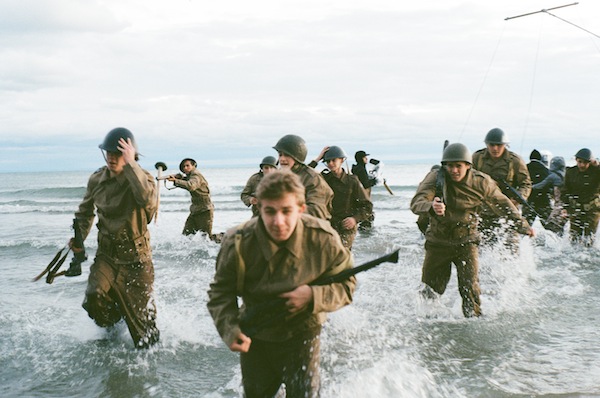
The fear, bloodshed and massive loss of life in the cause of freedom are illustrated through remarkable – and convincing – dramatic reenactments in D-Day in 14 Stories. (photo from YAP Films and the History Channel)

The horrors and heroism of D-Day took place 75 years ago June 6. A remarkable new documentary, with distinct Canadian and Jewish connections, will air on the History Channel June 1. D-Day in 14 Stories includes firsthand recollections from Allied and German soldiers and French civilians – many of them kids or teenagers at the time of the conflict.

The massive battle of the Second World War saw more than 150,000 Canadian, American, British and other Allied soldiers storm the beaches of France, marking the turning point of Nazi – and Allied – fortunes.

D-Day in 14 Stories is a social history of D-Day, a joint production of YAP Films and the History Channel. The events on that long-ago day in 1944 are illuminated by eyewitness accounts from some of the few remaining veterans of that historic battle.

On D-Day alone, 359 Canadian soldiers were killed. More than 5,000 Canadian soldiers died during the succeeding weeks of fighting in Normandy. The fear, bloodshed and massive loss of life in the cause of freedom are illustrated through remarkable – and convincing – dramatic reenactments, visual effects and historical footage, including a trove of colour film taken by a soldier using an early Bell and Howell handheld movie camera.

Many soldiers on both sides were just following orders but, as Morton Waitzman recounts in the documentary, some Jewish soldiers felt a particular motivation.

“Being of the Jewish faith myself, and so many of my comrades, we knew we had to get over there as soon as possible to do whatever we could to stop this terrible curse,” he said. As a communications specialist, he connected American and British forces with members of the French Underground to help coordinate the battle.

photo - D-Day in 14 Stories makes the effort to capture the particular experiences of African-American and First Nations soldiers
D-Day in 14 Stories makes the effort to capture the particular experiences of African-American and First Nations soldiers. (photo from YAP Films and the History Channel)

The Germans were anticipating an attack, but had no idea when, where or how large a force the Allies would assemble. The documentary follows a wall of soldiers parachuting through a cascade of tracers. In all, 13,000 Americans dropped inland by air to support the amphibious landing and undermine the German response.

While one Allied soldier says, “Anybody who says they weren’t afraid is not telling the truth,” a German soldier recounts, tellingly: “We had no fear. We were convinced that we would win.”

Until D-Day, the British Air Force had strafed the Normandy coast, but returned to their island redoubt. French residents of the area were familiar with the routine: take shelter when the alarms go off and come back out when they ring again.

Bernard Marie was a 5-year-old child in Normandy at the time.

“The big difference is that, on June 6th, the siren never came back,” he said.

In all, 7,000 vessels embarked from Britain to the French coast. The Allies had no illusions about the cost of the operation. Casualties were anticipated to reach 25 to 30%.

Emotionally powerful dramatizations follow 16- and 17-year-olds as they face the life-and-death moment for themselves and the free world.

“Some never got off the boat,” recalled one soldier. “They were shot, bodies laid all over, boats turned upside down, real chaos. We still kept going forward.… Soldiers.”

One survivor remembers that, despite the explosions all around him, his sole consideration when coming ashore at Normandy was that his socks were soaked through.

The average soldier was carrying 35 kilograms on his back and, for those whose vessels did not manage to make it close to shore, jumping off the ship, in many cases, led to almost instantaneous drowning.

If they survived the initial landing, the soldiers had to confront the German enemy firing down from above at Allied soldiers who were effectively sitting ducks. A German soldier recalls: “We merely had to point that machine gun and it was like cutting wheat with a scythe. For the odd miss, we had a thousand hits.”

The film admirably makes the effort to capture the particular experiences of African-American and First Nations soldiers.

Waitzman, the Jewish American soldier, went on to fight in Europe and participated in the liberation of concentration camps.

“We became eyewitnesses to the Holocaust by what we saw,” he says in the film. “We were very compelled to tell the details to young people. We had to talk, to fight this as much as possible.”

Another veteran of the battle reflects on the loss of life, but ponders the alternative: “God knows what would’ve happened if we hadn’t done it.”

Format ImagePosted on May 24, 2019May 23, 2019Author Pat JohnsonCategories TV & FilmTags D-Day, history, Holocaust, Second World War, television
Documentary breaks silence

Documentary breaks silence

Prof. Yehudit Silverman’s The Hidden Face of Suicide is helping people talk about a topic still surrounded by stigma. (photo from yehuditsilverman.com)

Concordia University professor Yehudit Silverman’s award-winning documentary The Hidden Face of Suicide focuses on the world of survivors – those who have lost loved ones to suicide – and reveals their remarkable stories.

Wanting to learn the story behind the silence in her own family, Silverman offered suicide survivors a creative way to express themselves – using masks. In the documentary, she highlights the danger of secrets and the cost of silence.

Produced and directed by Silverman, The Hidden Face of Suicide features the Montreal group Family Survivors of Suicide. It has screened at Cinema du Parc in Montreal, Curzon Theatre in London, England, on PBS television in the United States, and at various international festivals and theatres. It was also shown at the Montreal Museum of Fine Arts, as part of the Seeds of Hope project, and is being used in diverse locations in Montreal as an education tool around the issue of suicide.

At Concordia, Silverman leads a graduate program that trains therapists in three different programs – art, drama and music therapies – with the goal of soon adding dance therapy.

The Hidden Face of Suicide, which was released in 2010, came out of a five-year research project about suicide.

“I was interested in the stigma that surrounds it and the fact that it’s not talked about or mentioned,” Silverman told the Independent. “I did a lot of reading about it. Then, I found the Montreal group Family Survivors of Suicide and I met the woman who was the facilitator, named Caroline, and then she invited me to the group.

“I started attending the group and hearing the stories. They all lost family to suicide. I listened and, after I got to know them … I was there for about six months and I wrote down some of the themes that came up, kind of field research – identifying common themes … and a lot of it was having to hide, having people turn away, having to wear a mask.

“And so, out of that, I asked if they would be part of a film. Then, we started working on the film and part of it was them creating masks, since that had come up for them. So, they created masks, wore them and worked with them. And that became a very powerful tool and also a metaphor for those who are left behind.”

image - The Hidden Face of Suicide facilitates difficult conversations
The Hidden Face of Suicide facilitates difficult conversations.

Doing this research also spurred Silverman to ask her parents about her uncle’s suicide for the first time. She did so on camera. “I was intrigued with the fact that I had never known about this,” she said. “And, why was that … why was there shame and stigma?”

As well, during high school, Silverman knew fellow students who had taken their own lives – and these suicides, too, were never talked about. She felt compelled to learn more about why that was and to create a film to help break the silence.

While the release of the film and its being so well received was a high point, Silverman also noted an article she wrote reflecting on the whole process – called “Choosing to Enter the Darkness – A Researcher’s Reflection on Working with Suicide Survivors: A Collage of Words and Images” – which was published in Qualitative Research and Psychology.

“I wanted the audience to hear the experience of survivors – what it’s like to be left behind – and to also break the stigma and shame around it. And, it has. People in the audience often stand up and share their own stories for the first time,” she said. “I had a woman in one of my screenings and she said, ‘I’m 84. When I was 24, my mother took her own life and I’ve never talked about it until now. I was too ashamed.’ So, for 60 years she held that in.

“So, that was the goal. I feel like it has been helpful in terms of … breaking the silence. It’s also been used a lot to encourage discussion for people to talk about it, and it’s in universities, libraries and all the suicide organizations.”

Silverman contends that using art to broach such taboo topics allows people to confront issues without feeling overwhelmed. This approach fits with her therapy practice in general, as she uses art as a gateway for patients to share emotions they likely would not share otherwise.

“Talking can often just go around and around in circles, where nothing new is actually being discovered,” she explained. “I’m not saying that always happens. But, I think that using art as another tool can be incredibly powerful.”

Silverman has received positive feedback about the film, including from people who said they were feeling suicidal and that the film helped, as it talked about suicide openly and showed the pain of those left behind.

“I think it can be used to initiate a discussion in a safe way,” said Silverman. “It would be great if someone would use it to create an educational kit…. For me, the emphasis is that, if suicide is still surrounded by shame and stigma, it’s harmful for those who are suicidal. If they feel like people are so ashamed that they can’t even mention it, then how can they reach out for help? So, that’s my message. It feels very sad to me that I made the film in 2010 and I still feel like there’s a lot of stigma around suicide.”

On the other hand, Silverman said she thinks some things are slowly getting better; for example, that clergy are discussing the topic more with their congregations.

“Some rabbis, priests and ministers now mention the word ‘suicide,’” she said. “I’ve been to a few funerals where it’s mentioned very sensitively, but honestly, with, of course, the family’s permission. I think that’s helpful for everyone there, because everyone knows.

“I feel like schools are trying to deal with it in a better way, too. We recently had a suicide at Concordia. I was called in to help with the response. And so, I feel like there is a real desire now to be more honest about it and to try and find the best way, because college kids are very susceptible.”

According to Silverman, suicide is the biggest killer of adolescents and people in their early 20s in Canada, though different cultures and populations experience different rates. The elderly are also vulnerable, due mainly to loneliness.

“With the Inuit population, First Nations, there’s a really high incidence of suicide,” added Silverman. “I’ve gone out north and it’s really sad. They’re also doing some wonderful grassroots stuff to address that.”

Silverman’s film can be rented or purchased online. Visit reelhouse.org/yehuditsilverman/the-hidden-face-of-suicide for more information.

Rebeca Kuropatwa is a Winnipeg freelance writer.

Format ImagePosted on May 17, 2019May 16, 2019Author Rebeca KuropatwaCategories TV & FilmTags health, suicide, Yehudit Silverman
Dr. Ruth a force of nature

Dr. Ruth a force of nature

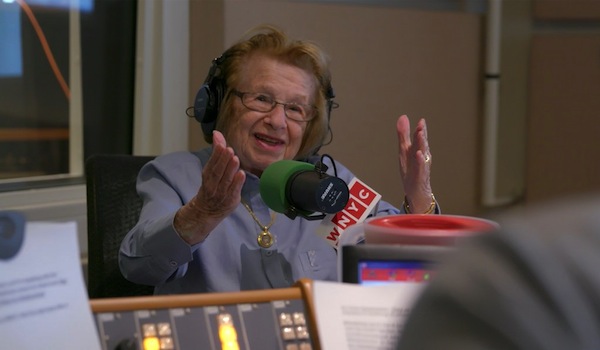
Celebrity sex therapist Dr. Ruth Westheimer started life as Karola Ruth Siegel in Weisenfeld, Germany. (photo from Mongrel Media)

Before she rocketed to 1980s TV fame as sex advisor Dr. Ruth, she was simply Ruth Westheimer. And long before she was Ruth Westheimer, she was Karola Ruth Siegel of Weisenfeld, Germany.

It is those formative early years that provide the most resonant and affecting passages in Ryan White’s solid documentary Ask Dr. Ruth, which is scheduled to open in Vancouver May 10. I’ll go even further: They provide the film with its raison d’etre.

Sure, lots of people were helped in ways big and small by Dr. Ruth’s high-profile acceptance of (almost) every form of sexual behaviour and by her uninhibited, direct language about intimate acts and love relationships. But what lifts Ask Dr. Ruth above a “where are they now” profile of an old-media, pop-culture celebrity is Karola Ruth Siegel’s experiences before, during and immediately after the Second World War.

Most audiences, especially non-Jewish viewers, will come to Ask Dr. Ruth for the sex. The mitzvah of the film, as it were, is that they will get the Holocaust.

To be clear, Dr. Ruth doesn’t see herself as a Holocaust survivor. She is “an orphan of the Holocaust,” which is the most poignant and wrenching phrase you’ll encounter all week.

Born in 1928, Karola Ruth was the sole child of observant Jewish parents. She was too young to fully understand when the Nazis sent her father to a labour camp in the 1930s. And, as bright as she was, she couldn’t fully grasp the long-term implications when her parents put her on a train to Switzerland with a group of Jewish children.

Placed in an orphanage, Karola Ruth and the other Jewish kids were handed housekeeping duties and some responsibilities for caring for the Swiss kids. They received food and shelter, but zero love and little compassion. A natural ringleader – on the train, she’d organized a sing-along to distract the homesick youngsters – Karola Ruth figured out ways to educate and entertain herself.

She discovered boys, of course, and the film accompanies her abroad to a warm reunion with her first boyfriend, Walter Nothmann. It’s pretty chaste stuff, presented by Westheimer with nostalgia and charm, which conveys universal attitudes of adolescence.

At the same time, though, Karola Ruth was devouring and savouring every letter and poem she received from her mother and father – until weeks, and then months, passed without any communication. (She preserved and protected these treasures throughout her travels, and keeps them in plastic sleeves in a notebook.)

The animation style used by filmmaker White to illustrate Karola Ruth’s Swiss period is annoyingly juvenile, unless one presumes that children are one of the intended audiences of Ask Dr. Ruth. Admittedly, those experiences are as accessible and relevant to today’s children as Anne Frank’s, if not more so, but parents and guardians would need to know that the focus of a documentary about a sex therapist isn’t, uh, sex.

At some point after the war, Westheimer accepted that her parents had been killed by the Nazis, but she never sought out the details. All these years later, while visiting Israel during the filming of Ask Dr. Ruth, she goes to Yad Vashem and learns that her father died in 1942 in Auschwitz. The notation for her mother is “disappeared/murdered.”

Ask Dr. Ruth skilfully weaves three threads and three distinct time frames: its subject’s biography from the 1930s to the 1960s, her high-profile heyday in the 1980s and 1990s, and her peripatetic schedule of speaking engagements and family contacts, climaxing with her 90th birthday last June.

The trek to Israel, fascinatingly, includes a visit with a friend from Kibbutz Ramat David, where Ruth Siegel – persuaded that Karola was too German, she dropped it – landed in Palestine at age 17. This remarkable chapter of her life includes ceding her virginity, being trained as a Haganah sniper and, on her 20th birthday during the War of Independence, being injured so badly in a bombing that there was a question whether she’d be able to use her feet again.

The next 70 years of Dr. Ruth Westheimer’s life, spanning Paris, New York, three husbands, two children, a doctorate at age 42, a radio show, household name recognition and four grandchildren, are acutely interesting. But the imprint of coming of age during the war, without her parents but with determination, resourcefulness, intelligence and humour, defined Karola Ruth Siegel and infuses Ask Dr. Ruth with timeless importance.

“From my background, all of the things I’ve survived,” Westheimer declares, “I have an obligation to live large and make a dent in this world.”

Michael Fox is a writer and film critic living in San Francisco.

Format ImagePosted on May 10, 2019May 9, 2019Author Michael FoxCategories TV & FilmTags documentary, Dr. Ruth, history, Holocaust, Ruth Westheimer
Disney’s first coming out

Disney’s first coming out

The cast of the Disney Channel’s Andi Mack included, left to right: Asher Angel as Jonah Beck, Peyton Elizabeth Lee as Andi Mack, Joshua Rush as Cyrus Goodman and Sofia Wylie as Buffy Driscoll. (photo by Disney Channel/Mitch Haaseth)

Before it was canceled two weeks ago, after three seasons, the Disney Channel’s Andi Mack covered new ground. The tween coming-of-age show not only had a Jewish character, Cyrus Goodman, but he was the first openly gay character on the channel. The coming-out storyline, which aired earlier this year, received high praise for the way it was handled. The show’s inclusivity is one reason fans are still fighting – via social media – to keep the show on the air. New episodes will run through the end of summer.

Joshua Rush, who played Cyrus, is Jewish himself. On the ABC TV show Good Morning America, Rush, who is 17, said that the response was overwhelmingly positive. “I’ve really gotten to see the myriad ways that both this new coming-out scene for Cyrus, and this Jewish representation of his family, has affected the fans,” Rush said.

The scene in which Cyrus comes out to his friends is set in front of a buffet spread of traditional Jewish food at his grandmother Bubbe Rose’s shivah. While explaining the foods, such as kugel, classic bagels and lox and gefilte fish, he blurts out that he is gay. The episode, called “Once in a Minyan,” was written by Jonathan Hurwitz, whose credits include The Daily Show. Hurwitz shared in a guest post for GLAAD (Gay and Lesbian Alliance Against Defamation) that he was driven from personal experience to write this episode as “someone who’s Jewish, has dealt with long-term anxiety and has come out to his friends and family.”

photo - Joshua Rush played the first openly gay character on the Disney Channel: Cyrus Goodman on the show Andi Mack
Joshua Rush played the first openly gay character on the Disney Channel: Cyrus Goodman on the show Andi Mack. (photo by Disney Channel/Mitch Haaseth)

Cyrus’s Judaism allowed the writers and show’s creative team to incorporate Jewish traditions and rituals. In one episode, Cyrus has a bar mitzvah – and, in it, Rush recites the same Torah portion from his own bar mitzvah. Another example is the shivah scene, where the writers included Jewish bereavement rituals like covering mirrors and the recitation of the Mourner’s Kaddish; there is also a yahrzeit candle on display.

Prior to the announcement of the show’s cancelation, the Jewish Independent spoke with Rush, who was born in Houston, Tex., but now resides in Los Angeles.

JI: Did you have any input in the character being Jewish?

JR: Our show’s creator, Terri Minsky, is Jewish, and so am I. From the beginning, there had been discussions of the character being Jewish, but actually acting on it in the context of the bar mitzvah and shivah episodes came later, after the character was more fleshed out. The storylines themselves were all Terri’s though.

JI: Did you suggest the bar mitzvah storyline, since you had recently had one?

JR: After learning of the character’s Judaism and being more comfortable with Terri and the writing staff, I was immediately very excited at the idea of giving Cyrus a bar mitzvah. I loved mine but, because I celebrated mine in Israel, I didn’t get all the accoutrements of an American bar mitzvah, so I really enjoyed the massive party we had for the “bash mitzvah”!

JI: What kind of feedback have you gotten from family, friends and fans about your character being gay? Being Jewish?

JR: The feedback has been overwhelmingly positive. I think, a lot of the time, the media, and especially kids shows, display Jewish characters in side plots. See Chanukah being “Jewish Christmas,” Pesach being “Jewish Easter,” etc. With this great representation of the religion in the cast and writer’s room, we were able to show a Jewish character who is a main character, who has his own life, his own story, and being Jewish is just a part of that. Not being the butt of jokes as a result of his faith has given me a lot pride.

JI: What messages do you hope viewers will get from your storylines?

JR: I think something that’s really special about Cyrus is that he knows that he doesn’t know everything about the world and about himself. But he’s never afraid to ask the tough questions about who he might be and what that means for his life. That’s an incredibly honourable thing, and I think we can all learn from that.

JI: On a personal note, does your family celebrate Jewish holidays?

JR: We celebrate most holidays and being Jewish is a big part of our household. The show was very flexible with allowing us to celebrate Yom Kippur, Rosh Hashanah, and we even cooked traditional Jewish foods for Chanukah every winter, much to the delight of the crew. (My dad makes the best matzah balls on planet earth!)

Alice Burdick Schweiger is a New York City-based freelance writer who has written for many national magazines, including Good Housekeeping, Family Circle, Woman’s Day and The Grand Magazine. She specializes in writing about Broadway, entertainment, travel and health, and covers Broadway for the Jewish News. She is co-author of the 2004 book Secrets of the Sexually Satisfied Woman, with Jennifer Berman and Laura Berman.

Format ImagePosted on May 10, 2019May 9, 2019Author Alice Burdick SchweigerCategories TV & FilmTags Andi Mack, Disney, inclusion, Joshua Rush, television
Propaganda is all around us

Propaganda is all around us

Ai Weiwei is among the artists featured in Propaganda: The Art of Selling Lies, a documentary by Larry Weinstein, which will screen twice during DOXA. (photo from DOXA)

This year’s DOXA Documentary Film Festival lineup includes Propaganda: The Art of Selling Lies, which “explores a diverse range of mediums, from well-recognized symbols of fascist movements, to more subtle forms in political satire and online slander.” Ahead of the festival, veteran filmmaker Larry Weinstein spoke with the Jewish Independent. Propaganda screens twice during the festival, on May 9 and 10.

JI: Can you share a bit about your background a few key moments on your path to being a documentary filmmaker?

LW: I’ve been directing for 35 years and have made close to 40 films in that time. But I actually started in high school and especially became interested in documentary (and propaganda) when I made a film about a slaughterhouse soon after I had become a vegetarian. It was the usual stuff – slow-mo shots of slit jugular veins and unborn calves being ripped from their slaughtered mothers all set to the music of Debussy.

After the film screened in my school, a good percentage of the students became vegetarian and I realized that, with this power to persuade, I wanted to make more documentaries. But, my first professional film 10 years later was quite different and a bit more subtle – Making Overtures: The Story of a Community Orchestra was a film which seemed like a home movie but it did very well, including an Oscar nomination. It set me on the road to a long series of music films, especially those about composers like Ravel, Schoenberg, Falla, Rodrigo, Weill, Beethoven and Mozart. It’s hard to refer to key moments. Each of the films is special to me. I’ve been very lucky.

JI: The topics you’ve covered are wide-ranging, from music and the performing arts to global politics to Dreaming of a Jewish Christmas and the documentary on Maya Farrell. How do you choose your subject matter?

LW: Originally, all my films were music based but, more recently, I’ve made three sports-based films. The latest, The Impossible Swim, is on three generations of marathon swimmers and was co-directed with my filmmaker daughter, Ali – something very special for me.

photo - Filmmaker Larry Weinstein
Filmmaker Larry Weinstein (photo from DOXA)

Our Man in Tehran is a documentary about the 1979 hostage crisis that corrects the inaccuracies of Argo; Inside Hana’s Suitcase is [a] Holocaust film. But, to tell you the truth, many of the music films also deal with history, with science, with politics, with culture and they are quite varied in form as well as content. Many of the films have come out my own dreams and interests. Many have been suggested by broadcasters and other sources, but those must also become internalized and feel like they come from me before I can really proceed with them.

JI: Propaganda has existed since humans appeared on earth. The DOXA blurb asks, “How do we know what we know?” But is it possible to not sell a specific perspective, if not a lie. Someone’s truth is another’s lie? What’s your diagnosis of the problem and do you have a suggested remedy? Or is propaganda a problem that can never be solved?

LW: Propaganda has indeed existed from the beginning. It was born along with the birth of art, of language, of spiritual thought. Orwell said that all art is propaganda. That’s debatable but probably accurate.

Propaganda is mind-control. It’s not necessarily sinister but I subtitled the film The Art of Selling Lies because I was in a bad mood, often reading Trump’s tweets first thing in the morning, fed up with his lies. Nothing he says is the truth; seeing that he was directly inspired by rhetoric of Stalin and by the speeches of Hitler. But propaganda is everywhere – it surrounds us and seems to be flung at us exponentially with social media – whether politically, socially, economically, religiously, too. We are fed lies and untruths from the moment we are born. Coke tastes good. You want a Barbie doll. You want a Corvette. This political party will save you; that one will destroy you. Religion is your salvation. There is an omnipotent, omniscient God who loves you but you’re [screwed] if he’s angry. All that stuff. Lies. Propaganda.

The remedy? Think about what you are being force-fed. Be rational about it. Propaganda feeds on emotion, on your fears, on your anxiety, on your superstitions. Resist and don’t accept crap just because somebody says it’s true, when it’s obviously questionable.

Propaganda screens May 9, 8:30 p.m., at SFU Goldcorp Centre for the Arts, and May 10, noon, at Vancity Theatre. The May 10 screening is part of Rated Y for Youth and includes a post-film discussion. Tickets to DOXA can only be purchased online: doxafestival.ca. For more information about the festival, which runs until May 12, call 604-646-3200.

Format ImagePosted on May 3, 2019May 1, 2019Author Cynthia RamsayCategories TV & FilmTags documentary, DOXA, Larry Weinstein, politics
Hoffman’s new Crave special

Hoffman’s new Crave special

Comedian Robby Hoffman in action. (photo from Bell Media)

Onstage, her energy is barely contained. She delivers lines in a clipped, almost angry fashion, sporting a tight bun and dark clothes. From contemplating pizza’s puzzling popularity, to sharing how one customs officer saw the fire in her that she never knew she had, to musing about what it’s like to be the seventh of 10 children, the fashion choices of antisemites, her sexual prowess and the cost of duotangs, Robby Hoffman is very funny. It is no wonder that Robby Hoffman: I’m Nervous is among the new stand-up comedy specials Bell Media released last month on Crave.

Produced with Just for Laughs and Counterfeit Pictures, Robby Hoffman: I’m Nervous was filmed last September at Toronto’s Longboat Hall during the JFL42 comedy festival.

“It’s huge deal. It was always a dream of mine to have a special, to have a TV special specifically, and to do an hour,” L.A.-based Hoffman told the Independent in a phone interview from London, England, where she was doing gigs, and visiting her girlfriend, writer and director Ally Pankiw, who was there for work. In contrast to her stage persona, Hoffman was relaxed and chatty on the phone.

A lot of comedians self-produce amazing albums or routines in smaller increments of time, said Hoffman, but, “for me, in stand-up, it always felt like the pinnacle to have an hour…. It was a really great way to cap off all the work I’ve been doing since I started, and, to have an hour that was sharp, it felt like everything. And to do it with Just for Laughs, name of all names, it was everything and it was incredibly fun.”

Hoffman’s numerous writing credits include The Chris Gethard Show on TruTV, which just wrapped up last year, episodes of PBS’s Odd Squad (which has won an Emmy for writing), and CBC’s Workin’ Moms and Baroness von Sketch Show. Most recently, she wrote for eight episodes of the series Mind Fudge. The Crave special allowed her to jump back into stand-up full-time.

“To be doing stand-up night after night until this hour was great. And I had never recorded the hour all at once,” she said. “I was doing it in small increments of 10-minute spots, 15-minute spots, seven-minute spots, so when I recorded the hour, it was the first time I had done that hour. I had to nail it, working through all the themes … making sure it all cohesively worked, even though I only really worked on it in portions. So, agonizing over the different portions coming together and working on the transitions from different themes so that they flowed.”

And they do flow, somehow, despite the vast diversity of topics. She said that (apparent) randomness is a signature of hers. She uses it both to take audiences off guard, but also as part of the joke. As well, she uses it to prepare people for what’s coming. For example, she drops hints along the way to warn the audience well in advance that she will be talking about the Holocaust, so that, when she gets there, they will have been with her for some time. Then, she said, when “we’re really in the thick of it together … I’ll reward you with hand-job material or whatever.”

While Hoffman said she doesn’t have any red lines when it comes to comedy, she said, “I talk through my own experiences only. I’m never going to step into a territory that I don’t feel is mine to speak about. But, beyond that…. If it’s something within my realm of what I could talk about and you tell me not to talk about it, that’s what I want to talk about more. For instance, the Holocaust is taboo, and some people are really offended by [jokes about] it. I feel, as a Jew, I’m reclaiming it and, if you’re telling me not to talk about it, I’m going to.”

She said, “I think that Jewish people can talk about Jewish experience. I think black folk can talk about black experience. I don’t think there’s anything off limits within the Jewish community for me. I do think everything is off limits to me with regards to communities I’m not a part of or I don’t have a firsthand experience. My comedy is very firsthand – I’m not doing observational humour that are these one-liners that can relate to anyone. My comedy is unique, such that I’m the only person who could say my comedy…. You hear of big comedians having writers – I don’t feel like that would work for me simply because my comedy is so personal. I’m the only person who can write my own comedy.”

And Hoffman’s background is unique, indeed. Born in Brooklyn, she grew up in Montreal, where her mother raised her and her nine siblings as a single parent, having divorced Hoffman’s father and having left the Chassidic community. Hoffman came out as lesbian in her late teens, left home at 18 and kept kosher until about the same time. She started her working career as an accountant.

“I wanted to have a Plan B,” she explained, “and I knew that the arts was always something free, that if I wanted to do it, I could do it on my own, and I could find a way that wasn’t with the structure of school to do it. But a financial backup plan was not something as easily attained for me, so I went into accounting. I thought, well, I can always get a good job.”

With a laptop from her employer and a regular paycheque every two weeks, Hoffman said, “I felt like a billionaire. I can’t even explain what it was like…. It was just the best to be able to sleep at night. Being worried about money is not something a lot of my peers thought about. I felt very alone in that sort of stuff.”

Once she “felt safe and comfortable,” that’s when her “creative juices went wild,” she said, and that’s when she discovered stand-up.

“I didn’t grow up with it, I wasn’t somebody who had the albums and all this stuff, but, once I knew about it, I immediately thought, ‘Oh, I feel like I could do that.’ I don’t mean to say, ‘Oh, it looks easy.’ A lot of people think they could do it – I felt like it was me. I felt, ‘Oh, my God.’ It felt like me already. And I got started immediately.”

Thinking that all stand-ups wrote, she started writing. Noting that it was only later that she realized how little comedians also write, she said, “I wrote a pilot and, even though it never got made, it did get me rep and it got me writing on other shows and it started my writing career. But it’s amazing how many times I’ve been the only active stand-up and writer in a writers’ room, which I didn’t know.”

Hoffman is driven by her love of the work.

“What’s so incredible about doing what I do and making a living doing what I do is … I never imagined it possible. I didn’t know these careers as careers. I didn’t know writing was even a thing, let alone what you got paid for a script, nothing like that. But waking up and not dreading where I go to work every day is still something I don’t take for granted.”

She started as a writer’s assistant. “I was first one in, would get there early, have my coffee, enjoy. I was last one out. I was never more motivated – and it’s still to this day. I would have to be literally on death’s door not to go into work because I love it so much.

“I’m also really lucky in that the shows that I do work on, I choose to work on them for a certain reason. There’s something about them that either gives me growth or it gives me a challenge or I really just love it. And it’s a pleasure to work creatively all day, every day, and to be valued for it.”

As for what lies ahead, Hoffman said, “I have so many goals. Think of the biggest goal you can imagine, and that’s what I have for myself. Yes, my own show. Yes, who knows, my own studio. I don’t even know where it could go. I just want to try for the biggest, best thing. I want my life to be as much as I want it to be. There’s no limit on wanting that for yourself. There shouldn’t be a limit on dreaming. I never want to lose that.

“I almost, for a second, lost my childhood curiosity and dreaming and spirit, for a second, because, when you are poor and you want to be normal, and you want to make ends meet, you do give up a lot, and I was never somebody who was able to dream. We weren’t told to dream, we weren’t taught to dream, we weren’t taught we could be anything we wanted to be, almost nothing. There was not a lot of encouragement, so I gave that all to myself…. I always want to tell myself to reach for the biggest, best, whatever that is, and that changes for everyone. Within my career and within my capabilities, I want to continue growing forever.”

Format ImagePosted on March 29, 2019March 27, 2019Author Cynthia RamsayCategories TV & FilmTags comedy, Robby Hoffman, stand-up
Things aren’t a person

Things aren’t a person

Camera in model, from 306 Hollywood. (photo from El Tigre Productions)

Annette Ontell, the New Jersey grandmother at the centre of the glorified home movie 306 Hollywood, lived an ordinary middle-class Jewish existence for six decades at that Newark address.

She didn’t come close to the achievements of RBG heroine Ruth Bader Ginsburg, nor the fame (and heartache) of Love, Gilda star Gilda Radner. Nor did Ontell have the tabloid TV highs and lows of the separated brothers in Three Identical Strangers, yet another documentary with Jewish protagonists that made waves at the box office last year.

Of course, one needn’t get her name in the paper or his face on a screen to live a productive, satisfying life. More to the point, plenty of wonderful and profound documentaries have been made about the small-scale triumphs and travails of everyday people. 306 Hollywood, which received a brief theatrical release in 2018 and airs on PBS’s POV series in the coming weeks, is not one of them.

Siblings Elan and Jonathan Bogarin affect an imaginative and stylized “dig” into their dear grandmother’s objects and possessions to the accompaniment of a kinda whimsical, kinda wistful indie-film score. Their strategy yields a parade of eye-catching images and bizarre set pieces that, individually and collectively, provide no insight into this, or any, American life.

The upshot is that 306 Hollywood combines the lacquered sheen and pastel palette of long-form television with the naiveté-masquerading-as-perceptiveness of a film-school project.

photo - The directors’ grandmother’s silhouette, from their film 306 Hollywood
The directors’ grandmother’s silhouette, from their film 306 Hollywood. (photo from El Tigre Productions)

To be sure, the filmmakers’ goals, in addition to crafting a work of commercial art, are worthwhile: to uncover and grasp the meaning in a person’s life, and to honour and preserve the memory of a beloved relative whom they visited (with their mother) almost every Sunday for 30 years.

The Bogarins opt to catalogue and focus on the massive detritus – from radios and vacuum cleaners to rubber bands and fashion magazine clippings – that Ontell amassed over the 63 years she resided in the house, most of it spent with her husband. (Her brother lived with them, but he died in his late 40s.)

Ontell had a career as a dress designer and dressmaker, but the creative person she once was doesn’t emerge in the prosaic interviews that her grandchildren filmed with her over the last decade of her life. Instead, to conjure a person (and a personality) from her inanimate objects, the filmmakers enlist a “fashion conservator.” To invoke the metaphysical resonances of time and memory, they turn to physicist and author Alan Lightman.

Perhaps in a nod to Ontell’s artistic impulses, the Bogarins stage a fashion show with her original evening dresses in the yard at 306 Hollywood, and a ballet of young women modeling mid-20th-century lingerie. These sequences are visually impressive but self-indulgent. They aren’t as misguided, however, as the excruciatingly long home-movie scene of the filmmakers’ mother cajoling Ontell (her mother) into disrobing and donning one of her vintage dresses from the 1950s.

The pained presence of an older woman prodded into revisiting the past through her garments does have one benefit: it frees 306 Hollywood from the bonds of hagiography. But none of this gets us any closer to appreciating Ontell, or any emblematic Jewish mother, or to gleaning significance from the connection that human beings have to their possessions. The filmmakers’ choices are so showily ineffective, in fact, that we only rarely reflect on the emotions triggered by the absence and memories of our own forebears.

The most gifted documentary filmmaker I know at transforming the personal into the universal and the banal into the profound is Alan Berliner. The Jewish New Yorker’s masterful family portraits Intimate Stranger (1991) and Nobody’s Business (1996) can be streamed for free through Kanopy, accessible with many public library cards.

306 Hollywood airs March 30, 11 p.m., on KCTS 9 and on WTVS April 4 (check local listings for the time).

Michael Fox is a writer and film critic living in San Francisco.

Format ImagePosted on March 15, 2019March 14, 2019Author Michael FoxCategories TV & FilmTags documentaries, Elan Bogarin, Jonathan Bogarin, PBS
Accountant in Seattle

Accountant in Seattle

Auschwitz survivor Eva Kor forgives former SS officer Oskar Gröning. (photo from TLNT Productions)

The Accountant of Auschwitz is more than the latest documentary to successfully convey the horrors of antisemitic genocide to an audience 75 years removed from those events. It exemplifies the emergence of a coterie of young filmmakers eager to tell the stories of the Holocaust to their peers and to future generations.

For Toronto director Matthew Shoychet and producer Ricki Gurwitz, the trial of nonagenarian SS officer Oskar Gröning in his Lower Saxony hometown in 2015 provided the entry point to explore an ambitious array of historical, legal and moral concerns. The approach they chose for their debut feature documentary, however, was as important as the facts and the message.

“The way we put it together with the editors, we knew we didn’t want to play it chronologically,” the 32-year-old Shoychet explained. “The film opens with fast-paced, happy music with animation, then right into the trial, then back. You’re challenging the audience, but in a fresh, exciting way. You don’t see many Holocaust films that are told that way.”

The Accountant of Auschwitz screened at the Vancouver Jewish Film Festival last fall and is part of the Seattle Jewish Film Festival, which opens March 23.

Shoychet’s path to The Accountant of Auschwitz was unusual in that his family was not directly affected by the Holocaust. He was interested in films about the Holocaust, but he wasn’t instilled with the kind of painful personal history that was (and still is) the catalyst for many filmmakers.

In 2013, Shoychet went on the March of the Living to Poland and Israel, where he received his first close-up exposure to the Final Solution and Holocaust education. A friend he made on that trip went to work for the Neuberger Holocaust Education Centre in Toronto, and that contact led to Shoychet directing the short film Anne Frank: 70 Years Later (2015), which screened at Auschwitz-Birkenau and the University of Warsaw.

Shoychet joined that year’s March of the Living as a chaperone, where he met Bill Glied, a Serbian native who’d been deported from Hungary to Auschwitz in 1944. When Glied remarked that he was going to Germany to testify at Gröning’s trial, Shoychet and Gurwitz put a pitch together to the Government of Ontario, the Rogers Documentary Fund, CBC’s Documentary Channel and a couple of private investors.

“It came together fast,” said Shoychet, who arrived on the scene in Lüneburg, Germany, in the midst of the trial.

photo - For Toronto director Matthew Shoychet, the trial of SS officer Oskar Gröning in 2015 provided the entry point to explore an ambitious array of historical, legal and moral concerns
For Toronto director Matthew Shoychet, the trial of SS officer Oskar Gröning in 2015 provided the entry point to explore an ambitious array of historical, legal and moral concerns. (photo from TLNT Productions)

Gröning’s job, as The Accountant of Auschwitz makes clear, wasn’t loading Zyklon B into the gas chambers or machine-gunning Jews. Thanks to a change in German law, it is no longer necessary to prove that a Nazi pulled the trigger. His presence at the scene and involvement in crimes is sufficient to decide guilt.

“Oskar was on the ramp [when the trains arrived and where selections occurred], taking suitcases and calming chaos,” Shoychet said. “But it was all part of the mass murder operation.”

Among the issues that The Accountant of Auschwitz takes on is the purpose and value of trying a 94-year-old man for war crimes. The film makes a convincing argument on multiple grounds, beginning with the extent of the cover-up that took place in Germany after the war.

“Ninety-nine percent of the judges in West Germany from 1945 to 1967 were members of the Nazi party,” Shoychet noted. “Hardcore believers. Of the 800,000 SS officers, 100,000 were investigated between 1945 and today, just over 6,000 were brought to trial and 124 received life sentences.”

That paltry number minimizes the scale of the crimes and serves to bury the past. The film asserts that Gröning’s confirmation under oath of his work at Auschwitz was a public and irrefutable rebuttal to Holocaust deniers and other antisemites.

“Even if you say he’s too old – and even the survivors say they don’t care if he goes to prison – for history’s purposes, the fact that a Nazi perpetrator is sitting in a German courtroom with German judges, saying, ‘Yes, these things happened, I was there,’ that makes the trial worthwhile,” Shoychet said.

A loquacious interview subject, even on the phone from Israel, where he had presented The Accountant of Auschwitz at the Jerusalem Jewish Film Festival a few months ago and was presently working on a project of the One Family Fund (he’s a board member), Shoychet confided that the process of making his feature doc debut was one of learning as he went. For example, until he went to Germany, he had never heard of John Demjanjuk, a Ukrainian who had been convicted of crimes at Sobibor yet consistently denied any involvement. Demjanjuk’s tangled tale, which, among other things, raises the subject of putting an elderly man on trial, ended up being a 20-minute segment in the film.

The Accountant of Auschwitz is rife with revelations and messages, but one gets the sense in talking with Shoychet that his main goal was conveying his own experiences of discovery, discussion, inspiration and outrage – with respect to Nazis and survivors, as well as contemporary justice-seekers and neo-Nazis – to viewers his own age.

“There may not be an ISIS fighter who will be deterred by a 94-year-old Nazi being prosecuted,” Shoychet allowed. “It’s making the connection of the past to the present. Trying to take a younger person and put them in the shoes of the survivors.”

Shoychet’s affinity for provoking questions and debate among the audience bodes well for his next efforts behind the camera.

“I never actually thought I would make a documentary,” he said with a trace of bemusement. “My passion is scripted narratives.”

For tickets to The Accountant of Auschwitz and the film festival schedule, visit seattlejewishfilmfestival.org. For another perspective on the impact of Gröning’s trial, see jewishindependent.ca/witnessing-her-history.

Michael Fox is a writer and film critic living in San Francisco.

Format ImagePosted on March 8, 2019March 6, 2019Author Michael FoxCategories TV & FilmTags Auschwitz, documentary, history, Holocaust, justice, Matthew Shoychet, Oskar Gröning, Seattle Jewish Film Festival, SJFF
Beautifully acted film

Beautifully acted film

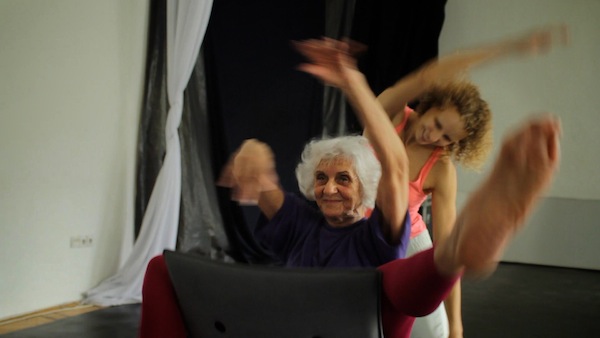
Recent Empowerment series session featured the screening of the film A Song for Marion (Unfinished Song). (photo from JSA)

On Jan. 16, more than 60 older adults gathered in the auditorium of the Jewish Community Centre of Greater Vancouver to watch the heart-tugging film A Song for Marion (Unfinished Song), starring Vanessa Redgrave and Terrance Stamp. This was the second session of the 2018-19 Empowerment series, and it was co-sponsored with JCC Seniors.

Before the film, attendees were welcomed by the smell of fresh popcorn, provided by Lisa Cohen Quay, coordinator of JCC Seniors program. She introduced the film and welcomed the audience. The JSA’s Gyda Chud gave an introduction describing the alliance and the Empowerment series.

The film portrayed the relationship between an elderly couple, husband and wife, with very different personalities. Marion, who is suffering from terminal cancer, is an outgoing and friendly person who is very involved in a community seniors choir. Arthur, on the other hand, is a grouchy character, who is over-protective of his wife and disdainful of the choir. After Marion’s death, Arthur is lost, but he honours her memory by joining the choir that brought her so much joy. His journey of self-discovery helps him build bridges with his estranged son.

This thought-provoking, beautifully acted movie delivered several messages, one of which is to open yourself up to new experiences and not be afraid to be you; to allow yourself to think beyond the scope of what is, and reach for what could be. It was an empowering experience.

After the movie, there was coffee, pastry and shmoozing. The work of Cohen Quay, Liz Azeroual and Raylene Burke made this event successful.

This year’s Empowerment series is on the theme of renewing and reinventing ourselves as older adults. The first session, The Role of Stories, was held Nov. 30, with the Sholem Aleichem Seniors of the Peretz Centre for Secular Jewish Culture. The next event will take place on March 5, 2:30 p.m., at the Weinberg Centre.

Shanie Levin is an executive board member of Jewish Seniors Alliance and on the editorial board of Senior Line magazine.

Format ImagePosted on February 22, 2019February 21, 2019Author Shanie LevinCategories TV & FilmTags JCC, JSA, movies, seniors

Posts pagination

Previous page Page 1 … Page 11 Page 12 Page 13 … Page 24 Next page
Proudly powered by WordPress