Skip to content
  • Home
  • Subscribe / donate
  • Events calendar
  • News
    • Local
    • National
    • Israel
    • World
    • עניין בחדשות
      A roundup of news in Canada and further afield, in Hebrew.
  • Opinion
    • From the JI
    • Op-Ed
  • Arts & Culture
    • Performing Arts
    • Music
    • Books
    • Visual Arts
    • TV & Film
  • Life
    • Celebrating the Holidays
    • Travel
    • The Daily Snooze
      Cartoons by Jacob Samuel
    • Mystery Photo
      Help the JI and JMABC fill in the gaps in our archives.
  • Community Links
    • Organizations, Etc.
    • Other News Sources & Blogs
    • Business Directory
  • FAQ
  • JI Chai Celebration
  • JI@88! video

Recent Posts

  • עשרים ואחת שנים להגעתי לונקובר
  • Eby touts government record
  • Keep lighting candles
  • Facing a complex situation
  • Unique interview show a hit
  • See Annie at Gateway
  • Explorations of light
  • Help with the legal aspects
  • Stories create impact
  • Different faiths gather
  • Advocating for girls’ rights
  • An oral song tradition
  • Genealogy tools and tips
  • Jew-hatred is centuries old
  • Aiding medical research
  • Connecting Jews to Judaism
  • Beacon of light in heart of city
  • Drag & Dreidel: A Queer Jewish Hanukkah Celebration
  • An emotional reunion
  • Post-tumble, lights still shine
  • Visit to cradle of Ashkenaz
  • Unique, memorable travels
  • Family memoir a work of art
  • A little holiday romance
  • The Maccabees, old and new
  • My Hanukkah miracle
  • After the rededication … a Hanukkah cartoon
  • Improving the holiday table
  • Vive la différence!
  • Fresh, healthy comfort foods
  • From the archives … Hanukkah
  • תגובתי לכתבה על ישראלים שרצו להגר לקנדה ולא קיבלו אותם עם שטיח אדום
  • Lessons in Mamdani’s win
  • West Van Story at the York
  • Words hold much power
  • Plenty of hopefulness

Archives

Follow @JewishIndie
image - The CJN - Visit Us Banner - 300x600 - 101625

Author: Izzy Abrahmson

Dream warms frozen flames

Dream warms frozen flames

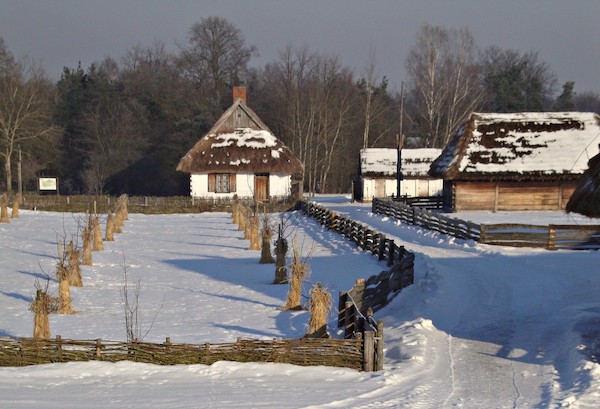
It was just before sunset on the last night of Chanukah, the coldest it had ever been in Chelm. (photo from pxhere.com)

It was a cold day in the village. It was so cold that when Reb Cantor, the merchant, sneezed without covering his mouth, his mucus solidified and blew a hole through the window of his shop, which his wife fixed by throwing a cup of tea at his head. He ducked, and the tea hit the windowpane and froze into place. It was that cold.

It was so cold that the flame of the eternal light in the synagogue froze solid. Instead of flickering brightly, it stood still, like red and yellow glass.

The villagers were frightened. It was just before sunset on the last night of Chanukah. Soup froze on its way from the pot to the table. Vodka oozed as it was poured into a glass. Chanukah candles snapped at the slightest touch. Reb Cantor’s matches broke into splinters. Stoves were almost useless. Warm challahs froze into rocks in seconds. Axes had to be warmed or else, when they struck the firewood, the blades shattered as if they were made of crystal. The Uherka River had frozen solid, trapping in its icy clutches a flock of geese late to leave the area.

It seemed as if the end was near. Everyone was hungry. They were afraid to go outside because the wind sucked the heat from their skin. The air itself left their lips numb. Kissing could be dangerous.

The day had been dark and cold, and the night would be darker and colder. Meals were uncooked and uneaten. Chanukah candles, set in their menorahs, were unblessed and unlit. Families stayed in their homes, huddled together in bed.

Even in the house of the wisest man in the village of fools, the menorah was dark.

Rabbi Kibbitz shivered in his bed with his wife, Channah Chaipul (she kept her maiden name, which, as you know, is another story). The two of them lay fully dressed beneath four sheets, three blankets, two quilts and seven coats – everything warm that they owned. Still, his teeth were chattering. For the first time in his life, he regretted not owning a dog or a cat.

“Channah,” the rabbi said. “We have to light the candles.”

“You do it,” she said. “I’ll watch from here.”

“My hand is too unsteady. The shammos will blow out. You are better at that sort of thing.”

“I’m almost warm,” she said. “You do it.”

“I’m nearly frozen,” he answered.

“So? You want me to get out of bed, light the candles, and come back in with icy cold feet?”

He shuddered. The last time she had put a cold foot on his ankle, his heart nearly stopped.

He sighed and closed his eyes. Maybe in a few minutes he would….

“Are you awake?” she said, elbowing him in the ribs.

“Channah!” he said, suddenly sitting up. “I had a dream!”

“Are you crazy? Lie down, you’re letting in a draft.”

“No, Channah, I’ve had a dream. Quickly! Get up! We need to gather everyone together in the synagogue.”

Mrs. Chaipul squinted at her husband. She hadn’t seen him this excited since he’d beaten Rabbi Abrahms, the schoolteacher, at canasta. “What did you dream?”

“I can’t tell you,” he answered. He slid out of bed and gasped as the frigid air slapped his neck like an icy wet towel. “Tell everyone to bring their menorahs and come to the synagogue. Quickly!”

Grumbling and shivering, Mrs. Chaipul stood, and nearly stopped right there. She wondered if it was possible for blood to freeze. Then, the rabbi went one way and his wife went the other, banging on doors and windows. They ran as fast as they could (which was remarkably briskly, considering their ages), waking villagers and telling them to gather in the synagogue.

“What? Why? Are you crazy?”

“Yes, I am,” said Mrs. Chaipul. “But the rabbi has had a dream. So you can freeze in your house or freeze in the shul. It’s up to you.”

Parents groaned. Children were wrapped in blankets. Doors were pried open. Menorahs were carried carefully, lest they crack into pieces on the short trip to the synagogue.

The small shul filled quickly.

Rabbi Kibbitz stood at the front, on the bimah, with five tallisim wrapped around his shivering old shoulders. He stood beneath the eternal light, staring at the still-frozen flame.

“Is everyone here?” he asked. Everyone looked around and nodded. No one was missing. “Then, please, somebody shut the door!”

“It’s shut,” came a shout from the back.

“Oy,” muttered the chilled rabbi.

“So, Rabbi, what is it?” said Reb Cantor. “What is so important that you asked us to risk life and limb to come to the synagogue on a night so cold my eyeballs almost froze?”

“I had a dream,” the rabbi said.

“So, I heard,” answered Reb Cantor. “You maybe want to tell us what the dream was?”

“I dreamed,” Rabbi Kibbitz sighed, “that all the villagers of Chelm gathered together in the synagogue.”

“Yes? Yes?”

“Well, in my dream, it was a cold, cold night, and the Chanukah candles weren’t yet lit.”

“Yes? Yes?” the villagers repeated.

“And everyone, all of you, came here to the synagogue.”

“Yes? Yes?”

“That’s it.” The wise rabbi shrugged. “We were all here. Then Channah nudged me, and I woke up.”

“That’s not much of a dream,” muttered Mrs. Chaipul.

The citizens of Chelm stared in disbelief at their beloved rabbi.

“You’re crazy!” shouted Reb Cantor. “You yanked us out of our moderately warm beds and dragged us here to tell us that you had a dream that we were all here? That’s it? Rabbi Kibbitz has finally lost his mind! Rabbi Abrahms, it is time for you to become the chief rabbi of Chelm.”

The villagers began to grumble and argue and stamp their feet. A wave of exasperated hot air lifted to the ceiling as their voices rose into shouts.

“Wait, wait!” Rabbi Kibbitz said. “Please, listen.”

Just then a child’s voice shouted, “Look! Look!”

It was young Doodle, the orphan, and one of the most foolish boys in the village of Chelm.

Doodle was pointing up at the eternal lamp. The pale light was thawing – flickering faintly, but growing brighter as it filled the synagogue with its glow of red, orange, yellow and gold.

Reb Cantor himself lifted Doodle up. “Careful, careful now,” he whispered, as the young boy touched his shammos to the light of the eternal flame.

That candle was passed back and forth throughout the shul, as every family lit their own shammos. Everyone held their breath, wondering whether the wind and the cold would extinguish the thin flames.

Then, at long last, the villagers of Chelm said the blessings all together. The shammosim touched the other candlewicks. Soon, for each family, one flame became eight (plus the shammosim).

Now the synagogue was full of light, and the villagers began to sing.

Reb Cantor swept the old rabbi up in a bear hug. “That was some dream!”

Everyone laughed and danced.

They stayed there all night, and the candles burned so slowly that it was well past dawn before the last one burned out.

That morning, when the doors to the synagogue were opened at last, a warm breeze left the shul and spread out over the village.

The ice on the Uherka River cracked, and the flock of trapped geese took flight. All the villagers watched and cheered as the birds sped south.

And, from the east, the sun rose higher, and its rays felt warm with promise.

Izzy Abrahmson is a pen name for author and storyteller Mark Binder, who  lives in Providence, R.I., and tours the world – virtually and in-person. Abrahmson’s Winter Blessings: Warm Stories from the Village was a National Jewish Book Awards finalist.

Format ImagePosted on November 19, 2021November 18, 2021Author Izzy AbrahmsonCategories Celebrating the HolidaysTags Chanukah, Chelm, fiction, storytelling

משמיצים את ונקובר כדי לקדם הוצאת ספר – חלק ב

עדי ברוקס שגרה בוונקובר במשך שמונה שנים הוציאה ספר קומיקס המתאר את מעלותיה הקשים בוונקובר. היא בחרה דרך מקורית לקדם את הספר: פרסום ריאיון בעיתון “לאישה”  על ונקובר, ללא תגובה של אף אחד מאלה שגרים כאן. הריאיון מלא מידע לא נכון וברוקס משליכה את בעיותיה האישיות והמקצועיות שלה ושל בעלה על ונקובר, ומאשימה בעצם את העיר במה שקרה לה.

ברוקס ממשיכה להשמיץ את קנדה והיא טוענת שאין כאן תרבות. אם היא צודקת מדוע עברה לכאן? היא יכלה לעבור למדינות “תרבויות” יותר.

היא ממשיכה בהאשמות והפעם על התייחסות קנדה לילידים ובעצם המדינה לדעתה מתעלמת לחלוטין מהנושא. בורקס צודקת שיחסה של קנדה לילידים בעבר היה מחפיר, אך אי אפשר לטעון שכיום קנדה מתעלמת מהנושא. ההיפך הוא הנכון: קנדה מנסה לשפר את רמת החיים של הילידים, לקדם פרויקטים שונים לטובתם ולא פחות חשוב להודות בדברים חמורים ביותר שנעשו להם בעבר. מי שטוען שזו התעלמות לא יודע מה הוא אומר. ועוד לטעון שהקנדים לא מדברים על כך? שקר מוחלט. ממומלץ אגב לישראלים שלא לבקר את קנדה בנושא הילידים, כי יכולים לא מעט לבקר את ישראל בנושא הפלסטינים.

ברוקס צודקת שבוונקובר אין את רמת השמש לה רגילים הישראלים בישראל. אך אין חדשimage - Adi Brooks comics cover תחת השמש וזו בעיה פרטית שלה. כלום לא ידעה ברוקס שיש כאן הרבה פחות ימי שמש מאשר בישראל? האם צריך להתאמץ כדי למצוא מידע בנושא זה? האם זה סוד שמגלים אותו רק כאשר עוברים לכאן?

ברוקס ממשיכה במסע הלכלוכים האינסופיים שלה על ונקובר או בעצם על קנדה בכלל, תוך שהיא טוענת שאין כאן חוש הומור, או סרקזם. “שום בדיחה לא עובדת כי אנשים מבינים כל דבר כמו שהוא”. היא מוסיפה כי “כולם שם (כאן) בקטע של טיולים וספורט… אבל אם לוקחים מהמקום את הטבע, לא נשאר בו כלום”. לברוקס היו כנראה מספר בעיות נפשיות קשות והיא השליכה אותם על קנדה וונקובר בפרט. מדוע היא באה לכאן בכלל? עדיף היה שלא הייתה עוזבת את ישראל. היא עשתה מעשה שלא יעשה והכל לקדם את ספר האיורים שלה.

ברוקס מודה קצת שבגלל בעיות אישיות שלה ושל בעלה היא מצאה את ונקובר כקורבן לכך: “ברור שהתפיסה שלנו את ונקובר נצבעה במאבק האישי שלנו, וברור שבתנאים היה יכול להיות לנו אחרת… אנחנו הגענו לשם (לכאן) לשם מטרה מסוימת: כדי שברק (בעלה) יפרסם מאמר מבוסס מחקר ויקבל משרה בארץ. מה שקרה לברק זה שהוא עבד על מחקר שמראש לא היה לו סיכוי להצליח”. אז מה רוצה היא מוונקובר?

ברוקס ממשיכה להמציא דברים וטוענת שבוונקובר קיימת התפיסה ששליליות ודיכאון מידבקים. אני גר כאן כשבעה עשרה שנים ומעולם לא שמעתי על דברי שטות שכאלה. בכל מקום במערב כולל ישראל מנסים למשוך אותנו לכיוון החיוביות והאופטימיות וזה טבעי לכולם, חוץ כנראה מלברוקס.

היא ממשיכה לתאר עד כמה ונקובר רעה בעברית עילגת טוענת כי “בוונקובר יש אלפי הומלסים שמגיעים מכל קנדה כי עאלק חם שם (כאן). גם שם (כאן) הם מתים בקור, ראינו במו עינינו גופות ברחוב”. האמת מרה: בוונקובר יש הרבה הומלסים שהגיעו מרחבי קנדה, כי אכן זהו המקום החם בקנדה, ואין על כך עוררים. יש לפעמים מתים ברחובות אך הסיבה לכך היא שימוש יתר בסמים ולא בגלל הקור.

Posted on November 10, 2021November 19, 2021Author Roni RachmaniCategories עניין בחדשותTags "לאישה", Adi Brooks, comic book, interview, L’Isha, Vancouver, ונקובר, ספר קומיקס, עדי ברוקס, ריאיון
A child survivor reflects

A child survivor reflects

At 80, Dr. Robert Krell opens up in his new book.

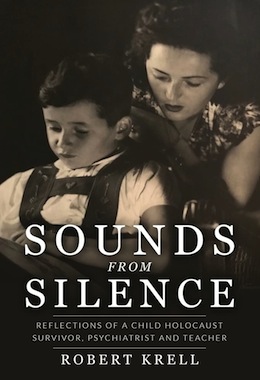
Dr. Robert Krell, child survivor, psychiatrist, community leader and founding president of the Vancouver Holocaust Education Centre, is probably known to most readers. But few people, perhaps even those closest to him, know him as well as they will after reading his extraordinarily vulnerable new memoir.

Krell acknowledges that he has held much back from the public and his closest family and friends. But, at 80, he has decided to open up in a book called Sounds from Silence: Reflections of a Child Holocaust Survivor, Psychiatrist and Teacher (Amsterdam Publishers).

Krell begins by talking about the duality of his life – the hidden child who, as an adult, tried to remain hidden versus the public figure whose career and community activities have placed him at the fore of various fields; the sadness at his core versus the upbeat visage he presents to the world.

“I have allowed family members and friends to see my inherent optimism and love of life. I live with few regrets,” he writes. “Blessed with a fascinating career, lasting friendships and an incredible family, I have kept at a distance my profound sadness, chronic fears, devastating shame, incapacitating shyness, and nightmares and preoccupations shaped by my earliest experiences and forged in an atmosphere of potential annihilation.”

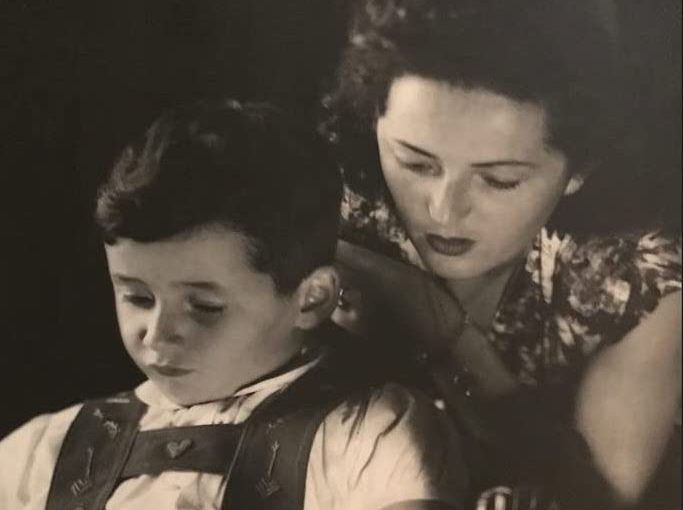
Krell was 2 years old when his Dutch Jewish parents placed him in hiding with the Munnik family, who he would come to view as his actual parents. He was reunited at age 5 with his birth parents, Emmy and Leo Krell – a miracle on many fronts given the small proportion of Dutch Jews to survive to 1945.

image - Sounds from Silence book cover“After liberation, life became very complicated,” he writes. He had been treated well by his rescuing family, unlike some Jewish children, “but strangely, even those ‘good’ circumstances exacted a psychological toll that never quite healed. After all, my relatively ‘benign’ circumstances were still completely off the scales of what is normal, including separation from my parents, shattering of security, and vague awareness of persecution that contributes to the feeling of shame experienced by a child as having done something wrong to cause the situation. Years later, as a child psychiatrist, I would see this phenomenon in children who, faced with parental separation, assumed responsibility.”

His parents also survived in hiding and his mother in particular never stopped mourning the complete loss of both sides of their extended families.

“I was raised by psychologically wounded parents, no less so than if they had been in the camps,” says Krell. “For three years, they lived in fear of being caught, and that fear exacted a psychological toll that one cannot underestimate.”

Trying to recreate a life, they considered making aliyah to the new state of Israel, but their business before the war had been furs and the climate in Canada was more conducive to that specialty. They came to Vancouver in 1951.

Like many survivors, the Krells found new “family” at Schara Tzedeck Synagogue. Despite many survivors bearing a “burning rage against G-d,” the shul was a second home. His father refused to open a prayer book. And yet, years later, when he was in a position to be philanthropic, he spoke with Rabbi Mordechai Feuerstein and donated $30,000 to buy prayer books for the High Holy Days so that congregants wouldn’t have to carry them to and from synagogue on those days.

“Why would a man who no longer prayed purchase prayer books?” asks Krell. “The rabbi characterized Dad as ‘a man of faithful disbelief.’”

Habonim, the labour Zionist youth movement, was a major stabilizing force for young Robbie. He would attend weekend events, summer at Camp Miriam and do normal Canadian teenage things like matinees at the Stanley Theatre on Granville.

A late-in-life baby, his brother Ronnie, was born in 1956, and his mother’s disordered parenting shifted from the first born to the younger.

“Her subsequent attention to Ronnie grew so intense that even my 16-year-old self realized that he fulfilled her need to replay the years in which I had been lost to her. That need virtually enslaved my younger brother and freed me.”

While building a career as a clinical psychiatrist, professor and academic administrator, Krell and wife Marilyn were raising three daughters.

“I can barely believe that my survival as a young boy has led to the rebirth of an entire Jewish family that now includes nine gorgeous grandchildren,” he writes. “My good fortune scares me. Our world looks so dangerous, and the future of life – Jewish life – remains so precarious. But day-to-day, we are a close family, and every day brings much joy – so far.”

Krell was a leader in Canadian Jewish Congress regionally and nationally. In Vancouver, he became immersed in Holocaust remembrance and education. Kristallnacht commemorative lectures and other Holocaust remembrance events were often begun under the auspices of CJC.

With theologian William Nicholls and English literature teacher Graham Forst, Krell launched what has become a decades-long annual symposium for high school students on the Holocaust.

He was also among the first people anywhere to begin video recording the testimonies of Holocaust survivors.

Krell was also pivotal in the organizing of a succession of world conventions: first, for Holocaust survivors and, later, for “child survivors,” a term he acknowledges was not in use until the 1980s. Hidden children were not viewed as Holocaust victims in the way that survivors of the camps or partisan fighters were. Krell is among a small number of people who helped usher in a reconsideration of the wartime experiences of these children.

In 1984, he gathered 18 survivors and children of survivors in his living room and committed to creating a Holocaust education centre in Vancouver. But some of the older attendees remembered an as-yet unfulfilled promise to create a permanent local memorial to the Shoah, so the group decided to keep that commitment first.

“The memorial was unveiled on Yom Hashoah, April 26, 1987, in the presence of 1,300 members of the community,” notes Krell. “The survivors now had a metzeivah, a ‘burial site,’ albeit symbolic, to visit and to grieve.”

In 1994, the Vancouver Holocaust Education Centre opened, with Krell as founding president.

One time, when he was on the national board of CJC, the organization considered ending their efforts to bring (by then aging) war criminals to justice.

“I argued for continuing the effort,” says Krell. “My measure of success was different. I told my colleagues that it was not only about successful prosecution but also their knowing that, one day, they might hear a knock on the door. The sleep of Nazis should be no less disturbed than that of Holocaust survivors.”

Throughout the book, Krell recalls brushes with history and the figures who make it.

On a trip to Israel as a young adult, he was able to get a seat at the Eichmann trial, thanks to an aunt who had married into the family of Gideon Hausner, the prosecutor of the case. On the same trip, Krell went to Sde Boker and ran into David Ben-Gurion.

A few years later, Krell volunteered to serve in the 1967 war as a doctor fresh out of his internship but, given the chronology of the Six Day War, by the time he got to Europe, the conflict was over.

Two years after that, on another trip to Israel, his plane was hijacked by the Popular Front for the Liberation of Palestine.

Krell was able to attend the ceremony when his family-in-hiding – Albert and Violette Munnik and their daughter Nora – were inducted by Yad Vashem as Righteous Among the Nations (posthumously for Albert).

Krell’s book evokes an array of emotions. The psychiatrist’s self-assessment provides a sometimes startling look inside.

“I kept my rage suppressed, not repressed,” he writes. “It was not unconscious. I knew that it was there. I felt in danger from it and feared losing control. I played, studied and worked hard, surrounded by good friends.”

Format ImagePosted on November 5, 2021November 4, 2021Author Pat JohnsonCategories BooksTags autobiography, child survivor, family, Holocaust, memoir, Robert Krell, survivor
Unflaggingly supportive

Unflaggingly supportive

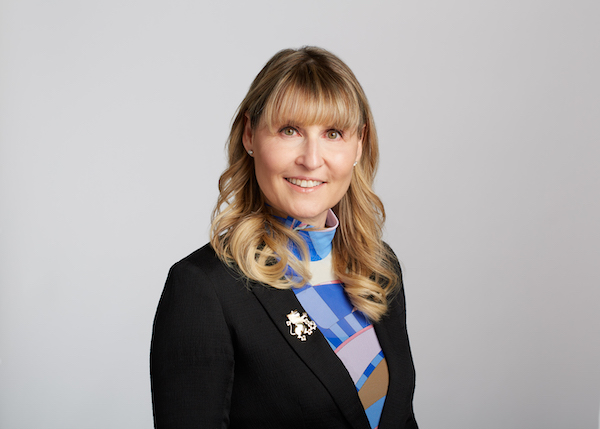
Lana Marks Pulver, Jewish Federation of Greater Vancouver annual campaign chair. (photo from JFGV)

The Jewish Federation of Greater Vancouver’s annual campaign is entering the homestretch with an ambitious set of goals. This year, the theme is “strengthened by where we have been, inspired by where we can go.”

“The goal for this year’s campaign is both quantitative and qualitative,” campaign chair Lana Marks Pulver told the Independent. “We aim to raise a minimum of $9.5 million, and we want to strengthen the culture of gratitude within the Federation organization, that affects all constituents, including donors, volunteers and staff.”

As has often been said in the past 21 months, these are times like no other in recent memory. The pandemic has touched us all, yet, for some, the campaign points out, it has “caused a cascading effect of challenges.”

“The goals haven’t shifted due to the pandemic, but the needs have certainly increased because of it. Therefore, we hope to raise more than our financial target to ensure all our partner agencies survive the current uncertainty in which everyone is operating and all community needs are being met,” Marks Pulver said.

“The past year-and-a-half was extremely tough on our community and our partner agencies. However, with the incredible show of support from donors and volunteers, our community proved to be resilient. Our partner agencies were able to survive the uncertainty and continue to provide their much-needed services because of the support from Jewish Federation and our donors.”

Groups within the community that were already vulnerable have faced more challenges. Among the groups Federation is helping are low-income individuals, the elderly and youth struggling with mental health concerns.

Well before COVID-19 hit, the region was one of the most expensive places in the world in which to live and it has become increasingly unaffordable; many, as a result, are left with hard choices regarding paying for rent, bills and food. Meanwhile, most seniors in the community are eager to reconnect socially and spiritually after extended separations from their families and communities.

Increasing numbers of youth, too, are contending with anxiety and depression as they encounter isolation from their peers and continued disruptions to their routines. At one local Jewish school this past year, the demand for counseling services doubled. In light of such statistics, Federation has formed a committee of local professionals and volunteers to develop a comprehensive approach to assist both youth and their families.

The basic plan involves employing a community mental health professional to offer counseling at community locations; collaborating with other mental health organizations in supplying professional development to those working directly with children and youth; and encouraging youth to take leadership roles in raising awareness among their peers about the importance of accessing appropriate support.

The pandemic has had a negative impact on youth mental health globally, including in Federation’s partnership region in Israel. The Mervo’ot HaHermon Regional Council has witnessed a rise in troubling behaviour among youth, especially those whose routines and social opportunities have been disrupted and who may not have supportive adults in their lives. Demand for services in the Israeli municipality has grown by 35%, according to Federation. Because of the need, and based on a successful pilot program in the spring of 2021, Federation is helping efforts to enhance counseling services and create new educational and social programming, in the hope that early intervention will lead the youth in this region along a healthier path.

Marks Pulver concedes that, while there are hurdles to overcome in organizing a campaign in the midst of a pandemic, the community response has been unflaggingly supportive.

“Typically, the campaign goes hand-in-hand with community gatherings,” she said. “A big part of campaign is the opportunity to connect with other community members at events. The pandemic has prevented us from having these gatherings in person and, instead, we have resorted to virtual ones. However, people are ‘Zoomed out’ and tired of the online events; therefore, making it more challenging to get people together.

“Recent experiences, however, have demonstrated the strength of our community and how we come together to help others in a time of need,” she stressed. “This show of support, both financially and with volunteerism, is beyond inspiring and I, personally, am incredibly grateful to be part of this community, that steps up and makes a difference.”

Marks Pulver, who has served as women’s philanthropy chair at Federation and was major donors chair for the past few years, sees her role as campaign chair as a natural progression and feels honoured to lead this year’s effort.

“I am proud to be serving alongside women chairs of both Federation and the Jewish Community Foundation. I believe you get out of life what you put in, and it is this belief that inspires me to volunteer. I also thoroughly enjoy working with others in the pursuit of helping others, and feel grateful for the opportunity to be able to make a difference.”

To donate to the campaign, go to jewishvancouver.com.

Sam Margolis has written for the Globe and Mail, the National Post, UPI and MSNBC.

Format ImagePosted on November 5, 2021November 4, 2021Author Sam MargolisCategories LocalTags annual campaign, fundraising, Jewish Federation, Jewish Federation of Greater Vancouver, Lana Marks Pulver, philanthropy

The climate is in our hands

Everybody talks about the weather, but nobody does anything about it, goes an old saying often attributed to Mark Twain. This was funnier a century ago, when humans were unaware that, in fact, our behaviours are altering the weather and the climate. The ring of truth now is that gatherings like the United Nations Climate Change conference in Scotland this week, despite all the good intentions, may very well end up changing almost nothing.

To confront the dangers we face, not just governments but every organization, business and household on the planet will need to change the way we operate. The volume and type of foods we consume, the methods of transportation we employ, the consumer goods we purchase and discard, the ways we build our homes, the very expectations we have of what defines the “good life” – all these things will need a fundamental reconsideration.

Almost all nations and people acknowledge the problem and our individual and collective roles in it. But the steps needed to effectively combat climate change are often viewed as a step too far.

Look at Greta Thunberg, the Swedish environmental wunderkind. To visit North America, she traveled on a carbon-neutral sailing ship that took 14 days to reach the American shore. By contrast, attendees at the Glasgow huddle almost all arrived by air, some on private jets. Outrage at the hypocrisy is muted because most of us understand the balance of options. The world’s top government officials and scientists cannot afford, say, two weeks on a sailboat to attend a few meetings. On a much smaller scale, each of us makes similar choices based on a range of considerations every day.

The profit motive is, in many ways, how we got into this mess. Since the beginning of the Industrial Revolution, maximizing profits has often come hand-in-hand with destroying the environment – dumping refuse into waterways rather than disposing of it appropriately, exploiting non-renewable resources, encroaching on animal habitats to expand human settlement, manufacturing products with deliberately short lifespans to ensure a perpetual market for the commodities. This is not nearly a comprehensive accounting.

Is it too much to imagine that the human motivation that got us into this mess can get us out? Could capitalism save the planet? Given the litany of optimistic promises made and broken by governments around the world on this issue, trusting in businesses may be no more or less misplaced than relying on the basket of government into which we have put the eggs of our collective future.

Israel, the “Startup Nation,” seems to be an incubator for private sector climate solutions, which often involve partnerships with academia.

In one instance, Aleph Farms is creating synthetic beef that, according to a study, “reduced the carbon footprint by 92%, water footprint by 78% and land footprint by more than 95%, compared with conventional ways of producing meat.” That said, reducing or eliminating any kind of meat in our diets is a better environmental solution.

Another firm, Wiliot, has developed a smart tag – a label, basically – that can be placed on any transportable item, sending signals to a designated recipient to know whether the shipment (fresh produce, say, or pharmaceuticals) is getting to the right place at the right time at the right temperature. In addition to reduced spoilage and the lessons the comparatively simple device can provide on shipping more efficiently, the product makes it easy to measure exactly the carbon footprint of any item transported.

Beewise is a computer-assisted, automated process to ensure that bees are provided with the ideal habitat, nourishment and security needed to thrive, massively reducing the number of bee colonies lost every year due to pesticides, global warming, disease and other threats.

EcoPeace Middle East brings together Jordanians, Palestinians and Israelis to create shared water solutions, recognizing that human-created borders have no meaning in the climate conversation.

These are a tiny sampling of a universe of ecological initiatives taking place in Israel, primarily in the private sector. Closer to home, environmental activism is flourishing, too. There are climate activists like those in Extinction Rebellion, which is a very visible group that does not shun controversy, and there are far more activists working quietly toward climate justice. Individual members of the Jewish community are among the activists and communal agencies that are, to varying degrees, active on the issue.

Interesting, too, is the role of the private sector here. West Coast Reduction Ltd., a multi-generational family business owned by the Diamond family, is combining business with environmental improvement. Serving restaurants, butchers, farms, feedlots and supermarkets, WCRL collects byproducts and food waste, then transforms them into components for animal feed and renewable energy, among other things.

Realizing that what is good for the environment can also be good for the economy may be key to realistic solutions to the climate crisis. “Going green” is not all about sacrifices without immediate benefit. It can create jobs, manufacture new products and technologies and draw a new map for a sustainable economy.

Developing carrots as well as sticks is crucial because, in a democracy, convincing people to give up things we take for granted can be political suicide. For our governments to be successful in this fight, they need to know that voters are prepared to accept the steps. For businesses to be successful in this endeavour, they need to know that we will pay a little (or a lot) more for products that do not destroy our habitat and imperil our future.

This brings the onus back to us. Individually and collectively, it is we who will determine whether government and business will do what is necessary to combat climate change. Each of us makes dozens of choices every day that affect the situation we are in. We vote. We shop. We drive and fly. We walk and cycle. We recycle. We….

Whatever our leaders decide in Glasgow this week, the success or failure will depend on the response of the people who sent them there: us.

Posted on November 5, 2021November 4, 2021Author The Editorial BoardCategories From the JITags climate crisis, environment, innovation, Israel, lifestyle, technology

Help in facing antisemitism

Canada recently made several important commitments to the Jewish community, with plans to target hate and fund initiatives to educate and fight antisemitism. While good news, for some of us, these also feel like vague promises. Many of us have felt vulnerable because of our Jewish identities. It has gotten worse recently, with a sharp rise in both physical violence and hate online.

This fall, I signed up for a virtual program run by the Jewish Federation of Winnipeg, featuring Rabbi Matt Liebl in conversation with Centre for Israel and Jewish Affairs (CIJA) chief executive officer Shimon Koffler Fogel. The event was called Antisemitism in Canada: Pushing Back against Hate. The conversation was intellectual and insightful but, when it ended, I was unsatisfied. The overall message was that perhaps 80% of the antisemitic events in Canada were due to ignorance. To fix this, we must educate people. So, I asked a question during the Q&A period. It was something like, “What resources are available to us, as we go forth to educate, both online and in the Canadian context?”

The answer didn’t meet my needs, although it wasn’t wrong, either. Koffler Fogel responded by first saying that the internet (Facebook, etc.) had no borders, so we needed better Canadian policy and international law around hate online. Second, he suggested that “we” older folks had no real power to stop this antisemitic stuff on social media, but that, if it was possible to enlist some 17-year-old influencers, they could help.

Right, I’m just a middle-aged nobody. I’m no big name social media influencer. However, as a Gen Xer, I’ve lived with email since its infancy. I’ve been on the web for more than half my life. I’ve also been the target of hate online, as well as through the (far more retro) postal service and telephone. Some might say this is because I write on Jewish topics, but I’m just not that famous. Right after I moved to Canada, my Winnipeg house was egged on Chanukah when somebody saw the menorah in the window. I wasn’t even writing Jewish articles here yet, and I doubt the people who egged my house had read any of the ones published in the United States.

I could produce a list of bad experiences that occurred before moving to Canada, and these had nothing to do with being “public” about my Jewish identity. Yet, too much has happened since moving here in 2009. Recent attacks on social media this spring and summer, including being harassed and banned by a Canadian knitwear designer who strongly supported Palestinian issues, weren’t my first Canadian antisemitic experiences. I’ve mostly kept this to myself, even though the harassment was scary and painful. These attacks were directed towards me because I’m Jewish and spoke up for Israel’s right to exist. I was harassed even though I don’t vote in Israel and don’t always agree with Israel’s policies. Being Jewish and speaking out was enough.

The October anniversary of the Pittsburgh Tree of Life shootings reminded me of what greeted my family that awful Sunday morning in 2018. My kids and I went to a playground near where a lot of Jewish families live. It was easy to see an enormous swastika and other hate graffiti on the side of the nearby swimming pool building. The senior citizens, many of them Jewish, living across the street in apartment buildings, could see those hate symbols, too.

When my twins were done playing, I walked them, one holding each hand, indoors to the pool front desk to report the swastika graffiti. I then drove home and spent way too long trying to report what was obviously a hate crime to the police, the B’nai Brith and one of my editors at the time. The worst part was hearing, “Well, did you take photos?” The answer was no. I didn’t have a third hand to let go of my kids and take photos, which would have signaled to them how very distressed I was. It was another chance to feel isolated, vulnerable and angry. Not only did I experience the hate but, apparently, I should have documented it (to prove it existed) and take on the task of reporting it multiple times. The graffiti was cleaned up but, for me, the hateful message lingered.

After the virtual CIJA/Jewish Federation event, there was a follow-up note with a couple of links. One offered an entire page of antisemitism resources to read. Another link was “Report an antisemitic incident.” While I deeply appreciated the form online as being easier than what I’ve gone through previously when trying to report hate, the form didn’t say where the submitted information went. It didn’t suggest what supports were available. It didn’t say who would read submissions or when. I contacted the Winnipeg Jewish Federation to ask that this be added to the site but haven’t received a reply.

For me, the worst part of dealing with hateful messages, graffiti, assault or social media attacks is feeling alone and unsafe. Maybe most antisemitism comes from ignorance. That doesn’t make it any less hurtful or intimidating.

So, what are solutions? Yes, we need to educate others and invest in better laws and in security for Jewish institutions. We also need to invest in ourselves. Advocacy organizations and community institutions should be part of the solution. Give everybody useful tools and information for how to combat hate – because we never know who will need it next.

Also, let’s follow up and support those in our community who have faced hateful incidents. We may never erase all the hate in our midst, but our communities can offer better security, kindness, counseling or, heck, a (COVID-safe!) hug to those who experience antisemitism.

We need non-Jewish allies, too. Intellectually, I know that these incidents – graffiti, the egg on my window and even reporting a threatening email to the police – were not a big deal. These incidents can shake us up anyway. If those affected by hate crimes feel afraid, isolated and vulnerable, we can help by showing up for one another more consistently. There’s safety in numbers. Next time somebody submits one of these antisemitic incident forms, here’s hoping a friend in the community follows up, too. We can deal with the after-effects when we’re not alone. We can do that for one another. It’s time to try.

Joanne Seiff has written regularly for CBC Manitoba and various Jewish publications. She is the author of three books, including From the Outside In: Jewish Post Columns 2015-2016, a collection of essays available for digital download or as a paperback from Amazon. Check her out on Instagram @yrnspinner or at joanneseiff.blogspot.com.

Posted on November 5, 2021November 4, 2021Author Joanne SeiffCategories Op-EdTags antisemitism, Centre for Israel and Jewish Affairs, CIJA, identity, Jewish Federation of Winnipeg, lifestyle, Matt Liebl, Shimon Koffler Fogel
Odd Couple now on

Odd Couple now on

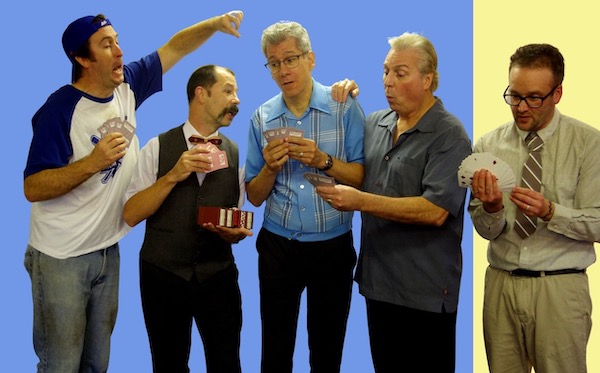
Left to right: Rob Stover, Kimball Finigan, Adam Abrams, Michael S. Weir and Adrian Maxwell in Metro Theatre Vancouver’s The Odd Couple. (photo by Tracy-Lynn Chernaske)

Neil Simon’s famous comedy The Odd Couple opened Oct. 30 on the Metro Theatre Vancouver stage. It runs until Nov. 14.

We meet divorced sportswriter Oscar Madison (played by Rob Stover) as his buddies arrive for their weekly poker game. One of the friends welcomed into Oscar’s messy abode is news writer Felix Unger (played by Adrian Maxwell), who is also divorced, but exists on the opposite end of the neat-and-tidy spectrum. The fact that the men are opposites in so many ways does not prevent Oscar from inviting Felix – who is so depressed it worries Oscar – to move in. Of course, they drive each other nuts.

Jewish community member Adam Abrams plays Roy, a regular at Oscar’s Friday night poker games, in the Metro Theatre production, which is directed by Catherine Morrison.

Abrams has been a part of the local theatre scene for more than 20 years, including many musical theatre productions. “I also played Richard in North Van Community Players’ The Trouble With Richard,” he told the Independent. “A personal favourite was portraying Abraham Goldstein, builder of the Sylvia Hotel, in Kol Halev Performance Society’s Two Views from the Sylvia, back in 2017. That was my last time on the stage, and it’s so great to be back, as part of the return of live theatre, after such a long and trying time for all of us.”

He said that, in real life, he is more like Felix than Oscar.

“My wife Christine will vouch for that – and would readily admit to being much more of an Oscar!” said Abrams. “When Felix is fussing over his London broil dinner or imploring Oscar’s guests to use a coaster, I very much see myself, the chef of the family and the one who is always keeping things tidy. After years of sharing a home, Christine and I have negotiated a much more successful arrangement than anything seen in the play. But our relative household peace has depended on us both accepting each other’s style to some degree.”

As for the character he plays in the show, Abrams said, “I like Roy, though he is somewhat crankier and more blunt than I’d be. He’s a voice of reason for Oscar, imploring him to do what’s right – stop gambling, and pay his debts. No surprise, as he’s Oscar’s accountant!

“My favourite scene in the show is the date with the Pigeon sisters, Oscar’s upstairs neighbours,” added Abrams. “The conflicting attitudes to divorce – a mere inconvenience to the sisters, pure heartache to Felix – and how he both derails Oscar’s hopes for the evening and endears himself to the sisters, is a delight. And, while it’s hilarious, there’s an undercurrent of true emotion that I find touching even as I’m laughing, which I do every time I see it!”

For tickets to the live theatre production of The Odd Couple, visit metrotheatre.com/the-odd-couple, email [email protected] or call the box office at 604-266-7191.

Format ImagePosted on November 5, 2021November 4, 2021Author Cynthia RamsayCategories Performing ArtsTags Adam Abrams, Carousel Theatre for Young People, comedy, Metro Theatre, Neil Simon, Odd Couple
Reviving history in theatre, song

Reviving history in theatre, song

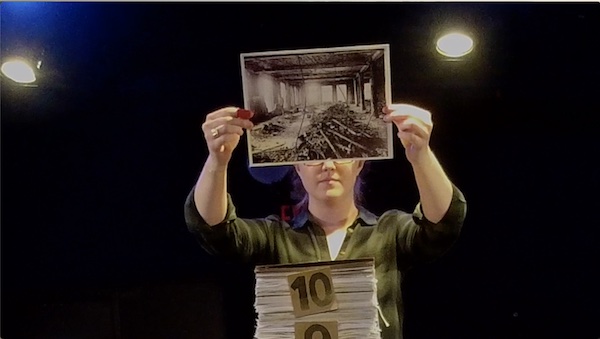
Surplus Production Unit’s Briony Merritt. (photo by Alex McLean)

No matter how well we document history, it matters little unless people are aware of it. Two very different productions at this year’s Chutzpah! Festival, which began this week, were born of personal discoveries of documents from the past – in one case, a trial transcript; in the other, Yiddish compositions. The artists’ unique interpretations help ensure that important aspects of our culture are not forgotten.

Halifax-based Surplus Production Unit, under the direction of Alex McLean, performs A Timed Speed-Read of the Triangle Shirtwaist Factory Fire Trial Transcript on Nov. 21 and 22 at the Jewish Community Centre of Greater Vancouver, in the Wosk Auditorium. Montreal’s Josh “Socalled” Dolgin performs music from his album Di Frosh with a local quartet at the JCC’s Rothstein Theatre Nov. 19 in a concert that will also be livestreamed.

“I had never heard of the Triangle Shirtwaist fire until 2010, when I was doing research for an MA in Toronto,” McLean told the Independent. “I was totally fascinated by the case and got especially swept up in the extensive trial transcript.”

Triangle Shirtwaist Company owners Max Blanck and Isaac Harris were put on trial for manslaughter after a fire at their factory on March 25, 1911, killed 146 people – mostly women and girls – in part because one of the exit doors was locked.

“I think the gender politics were what initially stood out to me – it was an all-male jury, the case hinged on the discrediting of female witnesses, and it was all taking place at a time when women weren’t able to vote in either Canada or the United States. I also knew that this was a time when the labour movement was massive globally and that the Ladies Garment Workers Union had waged its major strike just a couple years earlier. The way that this all reads as subtext in the trial transcript was fascinating to me. I knew that I wanted to work with the material somehow, but wasn’t sure how.”

In 2011, during the 100th anniversary year of the fire, McLean saw an interview with Charles Kernaghan, director of the Institute for Global Labour and Human Rights, who mentioned the Hameen factory fire in Dhaka, Bangladesh. “And then there was the Tazreen factory fire in 2012 and then the collapse of the Rana Plaza building in Dhaka in 2013,” said McLean. “It all made the record of what happened in New York in 1911 hauntingly relevant.

“Somewhere around this time,” he said, “I got a small grant to create a verbatim script from the transcript. I started work on it but it felt lifeless, like a bad ‘historical drama.’ So, I gathered a few actors who I knew and trusted and who were interested in the material. We started playing around with ways to approach the material that felt honest and the current production grew from there.”

McLean believes “it is endlessly worthwhile to think about the hidden costs in our global economy and the conditions under which so many of the products we consume are created.” At the same time, he added, “I was very aware that my life – like those of my colleagues – was radically different from the lives of the people in the trial transcript. None of us are immigrants, none of us are Jewish or Italian (as were almost all of the Triangle victims). As middle-class Canadians in the 21st century, I felt that we had to acknowledge the gulf between us and those New York factory workers in 1911. We had to build this distance into the structure of the show, and so this idea emerged that we would actually sit the trial transcript on the stage and the performance would be a group of people engaging with this historical record, rather than trying to represent it realistically. This felt like the only way we could approach the material respectfully.”

photo - Briony Merritt, left, Kathryn McCormack and Richie Wilcox bring A Timed Speed-Read of the Triangle Shirtwaist Factory Fire Trial Transcript to the Chutzpah! Festival Nov. 21-22
Briony Merritt, left, Kathryn McCormack and Richie Wilcox bring A Timed Speed-Read of the Triangle Shirtwaist Factory Fire Trial Transcript to the Chutzpah! Festival Nov. 21-22. (photo by Alex McLean)

Throughout the trial, said McLean, “witnesses, especially women, were treated with palpable disrespect. Max Steuer, the lawyer defending the factory owners, repeatedly tried to cast suspicion on witness testimony. This came to a head in his cross-examination of Kate Alterman, the ‘star witness’ for the prosecution. Knowing that Alterman’s English wasn’t great, Steuer had her repeat her testimony multiple times to make it appear rehearsed. This ultimately worked for him.

“There’s also a fascinating class dynamic at play: Steuer and his clients, Isaac Harris and Max Blanck, were themselves Jewish immigrants who had worked their way up in New York’s garment district. While at times they appear callous towards the victims and survivors, there is also this sense that they come from the same place. The prosecutor, on the other hand, comes across as much more of a patrician and, at times, this results in condescension. To him, the victims are helpless little girls, while the defence tries to portray them as streetwise conspirators plotting their revenge. Their actual messy humanity gets lost in the crossfire.”

Justice was not served by the trial, nor other legal measures, but there were positive changes that resulted from the tragedy.

“Part of what the case revealed was that workplace safety regulations at the time had no teeth, so the silver lining was that a host of new laws were introduced,” explained McLean. “Frances Perkins, the first woman to serve in a U.S. cabinet, actually witnessed the Triangle Shirtwaist fire and described it as a pivotal moment in her life. She became secretary of labour under FDR [Franklin D. Roosevelt] and was a major player in ushering in the New Deal.”

In terms of lessons learned, however, “we seem doomed to continually forget the inequality that animates our world,” he said. “Going to work under dangerous conditions seems like a reasonable choice to many people in impoverished conditions. As long as those conditions exist, workplace tragedies are likely to occur.”

He added, “There’s a fascinating historian of the Triangle Shirtwaist fire, Michael Hirsch, who argues that it’s a mistake focusing anger and blame on the factory owners. He uncovered the names of several bodies that were unidentified in 1911, and he makes a yearly pilgrimage to the victims’ graves…. To me, Harris and Blanck do appear negligent, but acknowledging systemic imbalances is also important. Economic inequality has proven a difficult problem to solve, but that doesn’t give us the right to forget about it. My sense is that we need a new New Deal today.”

A love of Yiddish music

Josh Dolgin has many artistic interests and musical styles – from composing to photography to puppeteering, from hip-hop to musicals to Yiddish music. As different as they may be, Dolgin said, “all the passions stem from an attraction to ‘realness,’ to things that just deeply move me, spark inspiration, speak to my soul.”

For him, the 2018 album Di Frosh “was a kind of return to a pure, more ‘traditional’ Yiddish music, even though it’s a project of ‘new’ music. I had experimented with using Jewish music sounds in contemporary ways,” he explained, “sampling, mixing, collaborating and fusing to create hip-hop, rap and funky pop music. In so doing, I became rather immersed in the form – in klezmer, in Yiddish folk, art, theatre music, cantorial sounds from the synagogue and Chassidic music – by collecting old records looking for sources. Listening to all that music, I eventually fell in love with the source material … I wanted to play and sing it! I eventually started learning the songs as a pianist, as an accordionist and singer. I wanted to just perform that music, without mixing it, without adding beats, just to play and sing it as is.

photo - Josh “Socalled” Dolgin performs Yiddish music from his album Di Frosh with a local quartet Nov. 19 in a concert that will also be livestreamed
Josh “Socalled” Dolgin performs Yiddish music from his album Di Frosh with a local quartet Nov. 19 in a concert that will also be livestreamed. (photo from Chutzpah! Festival)

“In the meantime, I started getting into four-part harmony singing and collecting choral arrangements, then directing choirs at synagogues and music camps. That love of harmony mixed with my love of singing Yiddish songs and I thought, hmm, it would be cool to present this repertoire in an almost classic style, maintaining all that beautiful real harmony from arrangements from the ‘time.’ Some friends and I created new arrangements based on old sources – all the arrangements are ‘new,’ this repertoire for string quartet never existed before, so it’s ‘new’ music, but it’s more traditional than my fusion/pop experiments.”

Dolgin went to Hebrew school and was raised Jewishly. But, while he “adored” the “holidays and rituals and foods and songs,” he said, “I never was very inspired by the religious aspect of my cultural history, or the establishment ritual practice. When I started to find old records of Yiddish music looking for samples to make hip-hop music, I had stumbled on a part of my cultural identity that I could take pride in, that spoke to me, something I had never been exposed to with the more ‘mainstream,’ ‘modern,’ ‘reform’ version of Judaism I had experienced as a child.”

Musically, he started piano lessons at a young age and “was bribed and forced to keep at it, until I finally was allowed to study ‘jazz,’ i.e., not classical music. Then I got into the ‘rap music’ of my peers, and wanted to participate in that, to make a current music from today. I started looking into studio production techniques, sampling, using drum machines and computers to sequence and combine sounds and compose. Finding the Yiddish sounds and repertoire gave me a voice in hip-hop culture.”

Dolgin has always been one to seek out things that were “off the beaten path” and “a bit more hidden.”

“That led me as a teenager, in the days before the internet, to develop a real love of Brazilian music and funk, by digging and exploring,” he said. “The digging required to find sounds to sample in hip-hop led me unearth … a whole universe of Yiddish music and culture. I never heard Yiddish growing up! I had no idea! It was so fun to discover these treasures of my own cultural history, these sounds, modes, rhythms, poems and songs that were developed by my Eastern European ancestors. I dug around and really got into trying to find as much as I could, and that was more fun for me than having a whole repertoire handed to me on a silver platter.”

Dolgin chose his favourite songs for Di Frosh, ones “that weren’t the same top five Yiddish ‘chestnuts’ that everyone has already sung. Even though it’s not at all a well-known repertoire, there are a few songs that keep coming up, and they’ve been sung and presented enough, thank you very much. I wanted cool, rare repertoire. These could be things I heard from old records, or things I found as piano and choral arrangements on paper that could be brought to life in new arrangements.

“I thought it would be nice to have a range of repertoire from the various sub-genres of Yiddish music, from theatre music, from folk song, from Chassidic song, from postwar things, Holocaust songs, and even some ‘originals’ from contemporary Yiddish writers. Those ‘high concept’ factors were at the back of my mind when putting the program together, but it was mostly just a very subjective process of picking my favourite songs, the songs that blow my mind lyrically, harmonically or melodically.”

He went through another selection process when he was asked by a bass player from Vienna to do some Yiddish songs with a big band. Dolgin said he picked “out a whole new repertoire of more Yiddish songs I was interested in presenting, sent charts and recordings to them and they created arrangements for an actual 19-piece big band! I showed up in Salzburg and, after one rehearsal, performed with them to a sold-out jazz festival audience – it was magical! We have since done the show several times, including this summer with the Toronto Jazz Orchestra for the Ashkenaz Festival.”

They were about to travel with the show in Germany and Austria when COVID struck; the plan is now for a spring tour. During the lockdowns, said Dolgin, “I did manage to write quite a few more arrangements of Yiddish songs for string quartet, so hopefully a Frosh 2 is possible.”

The best part of this project, he said, has been “meeting new string quartets around the world and bringing this new repertoire to them, and then bringing the music to new audiences who may not be too familiar with these songs, with these sounds.

“After recording the music to make the Di Frosh record, with the amazing Kaiser Quartett based in Hamburg,” said Dolgin, “I’ve since presented this music all around the world with ‘local’ quartets: in Vienna, in London, in Venice, New York, Toronto, Montreal, Boston, Paris…. I’m very excited to be in Vancouver and meet Elyse Jacobson and the musicians she will put together for this program.


The Chutzpah! Festival opened Nov. 4 and runs until Nov. 24. For tickets and the full lineup, visit chutzpahfestival.com or call 604-257-5145.

Format ImagePosted on November 5, 2021November 4, 2021Author Cynthia RamsayCategories Performing ArtsTags Alex McLean, Di Frosh, globalization, human rights, immigration, Josh Dolgin, labour laws, theatre, Triangle Shirtwaist, Yiddish music
Exploring our humanity

Exploring our humanity

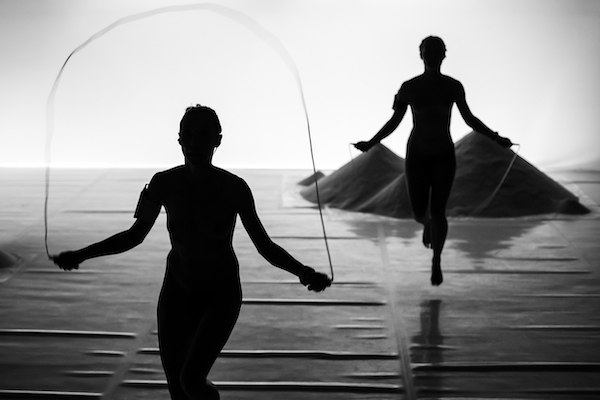
Body Line of Thought (BLOT) examines “our microbiome as a collection of organisms in perpetual transformation.” (photo by Ionut Rusu)

Vanessa Goodman (Action at a Distance) and Simona Deaconescu (Tangja Collective) explore aspects of our humanity in their dance and art. Their collaborative Body Line of Thought (BLOT) is a four-video installation that “aims to strip the body of social meanings and rethink it as an interconnected system.”

BLOT runs Nov. 24-28, 1-4 p.m., at KW Studios as part of the Dance Centre’s 13th biennial Dance in Vancouver.

“In BLOT, we are interested in examining our microbiome as a collection of organisms in perpetual transformation,” explained Goodman. “The human body contains trillions of microorganisms, that outnumber human cells by 10 to one. Each person’s bacterial composition acts as an ersatz fingerprint: when two people touch, they exchange parts of this identity. With each point of contact we essentially ‘infect’ each other with bacteria. We incorporate these themes of communication and contamination on a physical level. We are interested in the banality and the danger of such exchanges.

“One of the main focuses of BLOT is centred around bacteria being an agent of infection and salt becoming a cleaning and restructuring force in our bodies,” she continued. “We are not scientists, but we are fascinated by how these basic elements of our biological makeup can drastically inform our mental and physical health. Both salt and bacteria transform organic material, and we are drawn to transformation within our work. We are interested in applying these relationships to our art practice, and this has allowed us to create a new space to explore conceptually and physically.”

Without salt, “senses are dulled, muscles can’t fire, and nerves cease to function,” Goodman said. “In BLOT, salt acts as a conductor for our creativity. We explore salt as a staging material and incorporate many of its tactile qualities across various mediums, providing a textural through-line between visuals, sound and movement. We try to reframe the banality of sweat, a ubiquitous element of every dance, as a thematic focus instead of a mere byproduct.”

As part of their research, Goodman and Deaconescu went to Portugal, where they were in residence with Bio-Friction at Cultivamos Cultura. There, said Goodman, “we learned how to cultivate our own bacteria in agar dishes and studied this information and imagery to build BLOT.

“Our work in dance and art aims to speak not only about widely discussed issues but also about the unseen life that shapes our body and connects it with the outside world,” she said. “We seek reciprocity in our practice, parallel to that of a healthy immune system: to become stronger, one must first be vulnerable and exposed.” (BLOT includes nudity.)

BLOT was presented as a three-video installation at Left on Main last year, via 20 personal Zoom performances. Its creators, Goodman and Deaconescu (who is also a filmmaker), connected when they were both choreographers at Springboard Danse Montréal in 2019.

“During this intensive working period, we realized how many artistic interests we share,” said Goodman. “We both use a deconstructed vernacular that flirts with pop culture and is mediated by the lens of conceptual and physical landscapes. We are interested in looking at the body as a biological technology that can be altered by its environment, which is especially relevant today.”

Dance in Vancouver features many ticketed and free events at various locations. This year’s festival was co-curated by Australia-based Angela Conquet with Michelle Olson and Starr Muranko of Vancouver’s Raven Spirit Dance. Some performances, films and events will also be available online. For tickets and information, visit thedancecentre.ca/event/dance-in-vancouver-2021.

Format ImagePosted on November 5, 2021November 4, 2021Author Cynthia RamsayCategories Performing ArtsTags biology, BLOT, dance, philosophy, Vanessa Goodman
Gritty, moving, funny stories

Gritty, moving, funny stories

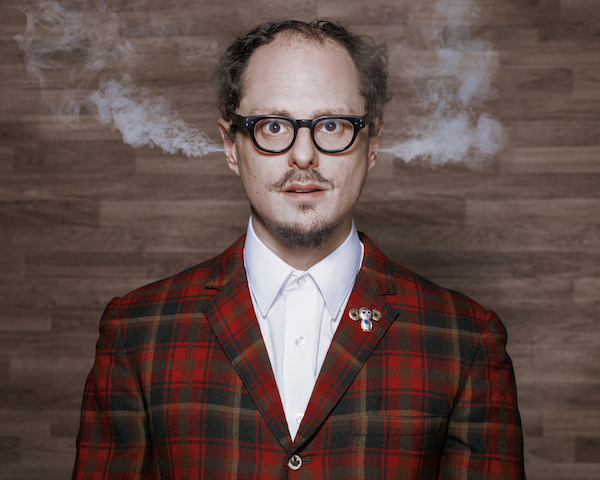
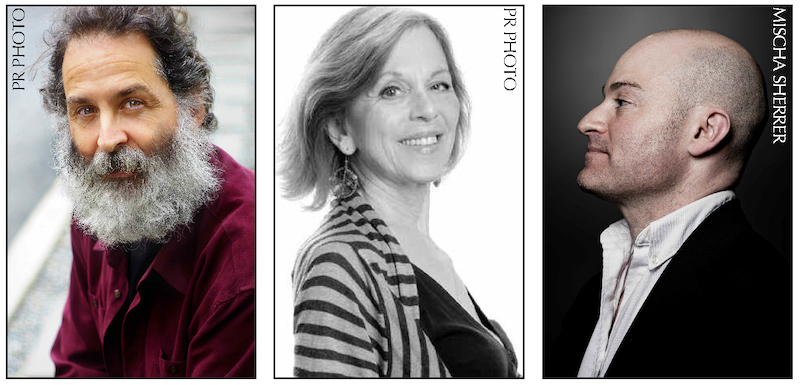
Stephen Aberle, Nicola Lipman and Geoff Berner will perform stories from Vilna My Vilna: Stories by Abraham Karpinowitz, as translated by Helen Mintz, as part of Western Gold Theatre’s Virtual Gold series.

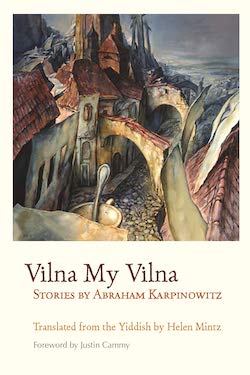
Vilna My Vilna: Stories by Abraham Karpinowitz (Syracuse University Press, 2016) is a collection of 13 short stories and two brief memoirs by Abraham Karpinowitz (1913-2004), translated from Yiddish into English by local storyteller Helen Mintz.

Thanks to Mintz, “more of us can now visit Karpinowitz’s Vilna – a city full of colourful characters, both real and not, and share in a small part of their lives.” (jewishindependent.ca/vilna-the-place-its-people) And, thanks to Western Gold Theatre, even more people will be able to visit Karpinowitz’s Vilna this Chanukah.

When Vilna My Vilna was published, actor Stephen Aberle both helped present the book and interviewed Mintz at the JCC Jewish Book Festival.

“As part of the presentation, Helen and I read excerpts from several of the stories. I was struck immediately by how engaging and naturally theatrical these stories and characters were, and I’ve been thinking ever since that a dramatic rendition would be a great thing,” Aberle told the Independent. “Then, earlier this year, Tanja Dixon-Warren, Western Gold Theatre’s artistic director, approached me with the idea of curating one of their Virtual Gold series around Chanukah time. I immediately thought of Vilna My Vilna as the perfect material for such a project, pitched it to Tanja, and she loved the idea, as did Helen. So, I set about to recruit my luminously wonderful co-presenters, Geoff Berner and Nicola Lipman, to be part of it all.

“When Helen and I first began talking about some kind of performance of these stories, we thought of Geoff and it just clicked perfectly. His ‘klezmer-punk’ material and presentation and his beautiful selection and rendition of Yiddish songs provide exactly the flavour to suit these rather gritty stories,” said Aberle. “And I had got to know Nicola through working together on the development of a wonderful new play by Manami Hara, Courage Now (coming soon to a theatre near you – but that’s another story) about Chiune Sugihara, the Japanese diplomat who helped thousands of Polish and Lithuanian Jews escape the Nazis.”

Lipman was “another perfect fit,” said Aberle. “And here we are!”

Western Gold Theatre will release individual video recordings of the selected stories, one at a time, throughout Chanukah, said Aberle, “and Geoff will frame each of them with some of his stirringly beautiful Yiddish music – an intro and an ‘extro,’ if you like – thematically linked to the content of the story. I won’t say a lot more except to add that, when Geoff and I were talking about which songs to do where, what connections to make and so forth, I think we both found it haunting and moving. Chills.”

image - Vilna My Vilna book coverDeciding which of the short stories to include in the production wasn’t easy.

“I have pages and pages of notes about the stories, characters, settings, arc of the narrative and so forth,” said Aberle. “In the end, I felt like a lot of my choosing was helped along by the format: we’ll be recording ourselves reading over Zoom, so we need to keep things fairly simple, with not too many characters and not too much complex action. I chose stories where the scenes tend to involve one or two characters at a time, so the performers can dig in and work off each other.

“I also tried to choose a variety of themes and moods. The stories are written against the backdrop of the writer’s awareness of what was to come: the Nazi annihilation of Vilna’s Jewish community. We have to be true to that bleak awareness; at the same time, there’s a lot of joy and humour. I tried to make choices to honour the depth and balance Karpinowitz brings to his work.”

Of the stories to be presented, the production’s press release highlights “Vilna Without Vilna,” describing it: “A Vilna native (a pickpocket in his youth, now grown up and respectable) comes back to visit his home city and finds that not a trace of what he remembers remains.”

In “The Folklorist,” a “researcher into Yiddish folklore finds himself professionally drawn to the Vilna fish market – and personally drawn to one particularly expressive fishwife.” And “Chana-Merka the Fishwife” picks up this story, “continuing the adventures of the Vilna fishwife and the school of Yiddish Institute scholars who swim after her.”

Finally, “Tall Tamara” recounts how a “Vilna prostitute and her friend find their way out of the brothel and into very different lives.”

The performances will all be online.

“Theatres are just starting to re-reopen up to in-person performances, but, for this project, we’re sticking to video presentations,” said Aberle, thanking Dixon-Warren and Western Gold “for their vision in creating the Virtual Gold series.”

“When the pandemic shut things down,” he said, “they decided they weren’t going to let it stop their work. They also decided it was important to provide opportunities to artists from a diverse spectrum of communities. And to make all the presentations free! That all takes courage and generosity of spirit.”

For those who watch the Virtual Gold series, Aberle said, “I think I can pretty much guarantee there will be laughs; there may be a few tears. It’s an honour to help share these works so more people can get to know them.”

The stories from Vilna My Vilna will be posted throughout the week of Chanukah, Nov. 28-Dec. 6, at westerngoldtheatre.org/virtual-gold. The full name of the series is Look! Listen! and Learn! Virtual Gold, and the Learn! segment will feature a video interview with Mintz about Vilna, Karpinowitz and being a translator, which will be posted on the Virtual Gold page, as well as on Western Gold Theatre’s YouTube page.

Format ImagePosted on November 5, 2021November 4, 2021Author Cynthia RamsayCategories Performing ArtsTags Abraham Karpinowitz, Geoff Berner, Helen Mintz, music, Nicola Lipman, Stephen Aberle, storytelling, theatre, Vilna, Yiddish

Posts pagination

Previous page Page 1 … Page 182 Page 183 Page 184 … Page 649 Next page
Proudly powered by WordPress