Skip to content
  • Home
  • Subscribe / donate
  • Events calendar
  • News
    • Local
    • National
    • Israel
    • World
    • עניין בחדשות
      A roundup of news in Canada and further afield, in Hebrew.
  • Opinion
    • From the JI
    • Op-Ed
  • Arts & Culture
    • Performing Arts
    • Music
    • Books
    • Visual Arts
    • TV & Film
  • Life
    • Celebrating the Holidays
    • Travel
    • The Daily Snooze
      Cartoons by Jacob Samuel
    • Mystery Photo
      Help the JI and JMABC fill in the gaps in our archives.
  • Community Links
    • Organizations, Etc.
    • Other News Sources & Blogs
    • Business Directory
  • FAQ
  • JI Chai Celebration
  • JI@88! video

Recent Posts

  • BGU fosters startup culture
  • Photography and glass
  • Is it the end of an era?
  • Taking life a step at a time
  • Nakba exhibit biased
  • Film festival starts next week
  • Musical with heart and soul
  • Rabbi marks 13 years
  • Keeper of VTT’s history
  • Gala fêtes Infeld’s 20th
  • Building JWest together
  • Challah Mom comes to Vancouver
  • What to do about media bias
  • Education offers hope
  • Remembrance – a moral act
  • What makes us human
  • המלחמות של נתניהו וטראמפ
  • Zionism wins big in Vegas
  • Different but connected
  • Survival not passive
  • Musical celebration of Israel
  • Shoppe celebrates 25 years
  • Human “book” event
  • Reclaiming Jewish stories
  • Bema presents Perseverance
  • CSS honours Bellas z”l
  • Sheba Promise here May 7
  • Reflections from Be’eri
  • New law a desecration
  • Resilient joy in tough times
  • Rescue dog brings joy
  • Art chosen for new museum
  • Reminder of hope, resilience
  • The national food of Israel?
  • Story of Israel’s north
  • Sheltering in train stations

Archives

Follow @JewishIndie
image - The CJN - Visit Us Banner - 300x600 - 101625

Month: February 2020

A soap-opera comedy

A soap-opera comedy

Yaniv Biton as Assi, left, and Kais Nashif as Salam in Tel Aviv on Fire, which screens Feb. 28 as part of the Vancouver Jewish Film Festival. (photo from Cohen Media Group)

Palestinian writer-director Sameh Zoabi achieves something altogether remarkable with his second feature film, particularly at this moment in time: he finds humour in the tattered relationship between Israelis and Palestinians.

“The whole idea of Tel Aviv on Fire is that we have more in common than we want to admit,” Zoabi said in an interview before his movie screened in the San Francisco Jewish Film Festival last year. It screens on Feb. 28, 1 p.m., at Fifth Avenue Cinemas, as part of the Vancouver Jewish Film Festival, which runs Feb. 7-March 8.

“We have to break these stereotypes and talk about what’s in common between us and not what divides us,” he said. “Let’s remind people how humanity can prevail in times where the politics of post-Oslo is, ‘Let’s dehumanize the other to be able to survive.’ I want to do the opposite.”

A sharp, insightful and winning comedy that juxtaposes the delicious absurdity of melodrama with the real-life absurdity of the occupation, Tel Aviv on Fire centres on an underachiever, Salam, who works as a gofer on his uncle’s hit Palestinian soap opera. Through a barely plausible combination of chance, chutzpah and desperation, the shlemiel is elevated to writer. Then he runs afoul of the Israeli commander of the checkpoint he crosses every day, whose wife is a loyal fan of the show.

Salam has to use every iota of guile and cleverness to navigate the opposing agendas that he’s caught between – and to win back the heart of a woman he had dumped. (Even while he’s landing political japes, Zoabi cheerfully seizes every opportunity to lampoon the conventions of both soap operas and movies.)

One of nine children, Zoabi grew up in a village outside of Nazareth, where people went to his grandfather’s barbershop for his humorous stories as much as for a haircut.

“In general, my village is very funny,” Zoabi related. “That’s maybe why comedy has become very easy for me, because I grew up in a place where they don’t take anything seriously.”

Zoabi studied at Tel Aviv University and then at Columbia University in New York, where he discovered the need for Palestinian stories. Returning to Israel, he made a short film, Be Quiet, in 2005 and his feature debut, Man Without a Cell Phone, in 2010. Zoabi’s experience of receiving government funding was the genesis of Tel Aviv on Fire (2018).

“You take money from the Israelis, so suddenly you are watched immediately,” he explained. “Israelis are making sure you are not becoming too Palestinian for them. And the Palestinians are watching, ‘He took money, maybe he’s a sellout, he’s doing a comedy.’”

After presenting Tel Aviv on Fire at several international festivals, Zoabi debuted the film in Haifa and in Nazareth. It was equally well received by both audiences, which didn’t surprise him. But he did have an epiphany.

“All the screenings led to this moment,” Zoabi declared. “Finally I understood – people are fed up. People are fed up of the reality that exists, which is managing the occupation.

“[The film] reminds people of the possibility that used to exist, the feeling that we can be normal people and just get along. I think that’s a fantasy that existed among the Israelis, that we can eat hummus together in Damascus one day. But they aren’t able to see the occupation as a major reason for that not to happen.”

It’s a measure of Zoabi’s skill that the current-events commentary in Tel Aviv on Fire goes down easily for viewers across the political spectrum. The means to that success, in large measure, is Salam’s evolution of necessity from hapless underdog to diplomatic savant.

“I’m attracted to people who don’t wake up knowing what they really want,” Zoabi said. “I think they’re more inspirational for me than black-and-white [characters]. Actually, people who know exactly what they want terrify me. You can’t be so certain all the time.”

For his part, Zoabi grew up in a milieu of group interaction and lots of soap operas, because those were the only two channels the family had. He wasn’t exposed to art, theatre and film until his late teens.

“I always say I’m not an artist, really,” he confessed. “I’m probably a barber of a new era in my family.”

Tel Aviv on Fire is in Hebrew and Arabic with English subtitles.

For the Vancouver Jewish Film Festival schedule, visit vjff.com.

Michael Fox is a writer and film critic living in San Francisco.

Format ImagePosted on February 14, 2020February 12, 2020Author Michael FoxCategories TV & FilmTags Israel, movies, Palestinians, peace, Sameh Zoabi, Tel Aviv on Fire, Vancouver Jewish Film Festival, VJFF
Finding ’n’ riding the WAHVE

Finding ’n’ riding the WAHVE

Sharon Emek, founder and owner of Work at Home Vintage Experts (WAHVE). (photo from WAHVE)

Sharon Emek’s company, Work at Home Vintage Experts (WAHVE), celebrates its 10th anniversary this year.

WAHVE matches experienced professionals who are transitioning into retirement with businesses that are looking for the professionals’ specific skills and expertise. One of the draws for what WAHVE calls “pretirees” is that the pretiree can work from home. “By removing the requirement that workers be in the office, we break down the walls that confine businesses to a smaller talent pool,” notes the website. “Wherever the best talent is for the job, we help make it happen.”

Company founder Emek was raised in a moderate Chassidic home, but her parents refused her request to pursue a higher education. Nonetheless, she went to university, earned a doctorate and became a professor. Being computer and tech savvy, however, she started consulting for companies that were developing efficiency procedures and protocols. In the early 1980s, she went into business for herself.

When she was consulting for brokers in New York, New Jersey and Connecticut, she said, “The insurance companies began noticing how the work I was doing helped them run a better operation, so they asked if I’d like to start my own insurance brokerage firm. They said, ‘We don’t have any women,’ so I said, ‘Great. I’ll be happy to.’ I’d never actually sold insurance before, but I know a lot of people, so I wrote a business plan.”

Emek’s agency became one of the largest female-owned agencies in the area, before it merged with a larger brokerage firm in 2003.

“The industry began to worry about a potentially huge talent drain to come … everyone was turning grey,” said Emek. “It was a huge boomer industry. Young people hadn’t come into the industry and everyone was concerned at what we were going to do and how we’d get our work done.

“For me,” she said, “for every problem, there’s a solution. The research started to show that the more active you are, the more you engage your brain, and the longer you live.”

Within a few years, smartphones came out and laptops were gaining popularity. A couple of years later, voice systems and video calls became commonplace.

“You can [work] … at home and no one would know that you weren’t in the office, so it occurred to me, why don’t people do that? I bet people want to continue to work, but they don’t want to be in an office any longer,” said Emek. “After 30 years of driving to work, they are ready to retire from the regular office setting … but they’re not ready to retire from work.

“We did a whole survey in the industry of people over 55, asking them about that. All of them said that they love what they do, that they don’t want to stop working – they just don’t want to work in the office. And, also, that they are worried they don’t have enough money for retirement. So, all that came together in my head and I woke up one day and said, ‘Duh!’”

While people were ready to work from home, brokerage firms did not know how to make that a reality, so Emek developed a methodology for qualifying people interested in going this route. Creating a matrix of questions similar to dating sites, but for business purposes, she assessed 50-to-80-year-olds and helped them create a resumé to qualify them for remote positions in the insurance industry.

For the past 10 years, WAHVE has been connecting “vintage” experts with brokerage positions, filling needs on both sides of the spectrum.

Neither side meets in person, she said, so the potential employer has no idea of the applicant’s ethnicity or physical attributes.

“Our clients fill out a whole job request that includes their work culture, their daily functions, etc.,” said Emek. “We created this very sophisticated software and the whole point is to transform how everyone views retirement. These people are ‘un-retiring’ … retiring from the office, not from work. That’s the key.”

While Emek acknowledges that many other industries could benefit from this type of worker, her focus for now is on the insurance and financial services sectors.

“People are still old-fashioned, thinking the only way to supervise is to see you in the office, but they are beginning to understand that they can have a flexible work environment. They also realize that you can’t always find the right talent in your backyard,” she said.

Although many younger people also would love the opportunity to work from home, Emek recommended that they start by working in an office, to gain experience and expertise.

“That’s the problem with millennials,” said Emek. “They want to work from home, but they don’t have institutional knowledge yet. How are they going to learn it unless they work with people? A 25-year-old has to be trained. They don’t yet have the knowledge to work from home.

“My customers will hire my people because they know they are experts with 25 or 30 years of experience. Within two days, they are 100% productive. My people fill a need immediately. And there’s no turnover, they aren’t looking for a promotion – they just want steady work for the rest of their lives.

“WAHVE is more than a placement agency,” she said. “It provides support to clients, insurance and tech support…. In a sense, it provides home office management services, so professionals can do their jobs. I call it the ‘independent contractor model.’”

Emek gave the example of a woman who contacted WAHVE several months ago. In an email of thanks, the woman shared, “I moved to be near my daughter and granddaughter. I’ve been in the business 30 years and I have excellent credentials, but, every time I walk into the office for an interview, they’d see my age and that I have a limp. So, for over a year, almost a year-and-a-half, I could not find a job. I applied on WAHVE and, within a month-and-a-half, I now have a job I love. And nobody knows how old I am or that I have a limp.”

Of this, Emek said, “That’s why, that’s the purpose of WAHVE.”

WAHVE is not yet in Canada, but Emek would like to see it branch out here and beyond. “At this point,” she said, “we are trying to finish penetrating the big insurance companies. Once we do that, we’ll head to Canada – in two years, we hope.”

For more information, visit wahve.com. 

Rebeca Kuropatwa is a Winnipeg freelance writer.

Format ImagePosted on February 14, 2020February 12, 2020Author Rebeca KuropatwaCategories WorldTags aging, business, Sharon Emek, WAHVE, workforce
Pink Rabbit opens festival

Pink Rabbit opens festival

Riva Krymalowski as Anna, in the film, which opens the Vancouver Jewish Film Festival Feb. 27. (photo from betacinema.com)

The Vancouver Jewish Film Festival opens the night of Feb. 27 with the film When Hitler Stole Pink Rabbit, which offers a peek at a pivotal event in writer and illustrator Judith Kerr’s life.

Kerr passed away just under a year ago, at her home in London, England, at the age of 95. She had dozens of children’s books to her credit, including The Tiger Who Came to Tea and Mog the Forgetful Cat; Mog became a series, ultimately totaling 17 picture books.

Born in Berlin, Kerr and her family – parents and older brother – fled Germany in 1933, in the days leading up to the election that brought Hitler into power. Her father, Alfred Kerr (né Kempner), a journalist and writer, was a vocal critic of the Nazis even at that time and was warned that the police were about to arrest him. The story of the family’s journey to Switzerland, then France and, ultimately, England, is told in the children’s book When Hitler Stole Pink Rabbit, which was published in 1971.

The film, obviously, is based on that book, and it captures the fear, excitement, frustration and other feelings experienced by the family as a whole, but mainly by 10-year-old Judith – named Anna in both the book and film. We see that Anna copes, in part, by drawing and colouring pictures of disasters, such as a shipwreck or an avalanche. She, her brother and parents are close, thankfully, as they are uprooted more than once and the family unit is the only constant in their lives.

When Hitler Stole Pink Rabbit is both charming – the family’s interactions – and disturbing, in that the family is fleeing a danger that killed millions. It also raises current-day issues of what it means to be a refugee. Anna and her brother Max are given one night to pack. They are allowed one toy and two books. Anna’s choice of her stuffed dog over her pink rabbit gives the story its name.

For more on the film festival, visit vjff.org.

Format ImagePosted on February 14, 2020February 21, 2020Author Cynthia RamsayCategories TV & FilmTags children's books, Holocaust, Judith Kerr, memoir, movies, When Hitler Stole Pink Rabbit
Help save local media

Help save local media

(photo from arkells.com)

In what seems like a random act of kindness, the Canadian rock band the Arkells has put out an offer to their fans. Subscribe to a community newspaper and get a swag T-shirt from the band.

Musicians are facing their own challenges these days, as streaming services are upending the traditional royalty and revenue streams of their industry. But they are perhaps not yet at the level of near-desperation the print media sector has been facing in recent years. The advent of the internet and other factors (but mostly the internet) have made people expect for free things we used to access primarily through purchasing.

Oddly, perhaps, many of us are prepared to pay for multiple subscription services for media – Spotify for music, Netflix, Crave, Disney and an ever-growing number of video services – but most people still react to paywalls on print media by finding a free (to them) alternative. As a result, print outlets from the New York Times and the Globe and Mail to, well, the Jewish Independent have struggled to find alternative sources of revenue and the means to compensate for the reality that readers are demanding (and getting) for free what they once paid for.

In keeping with the issue-driven approach to songwriting for which the Hamilton-based band is known, it was a pleasant and heartfelt message that the Arkells – whose lead singer, Max Kerman, is a member of the Jewish community – put out to their fans.

“If you’re an engaged member of your community, you’re probably thankful for the people who report the news. And even if you’re not, you’re probably still reassured to know that someone is keeping tabs,” they write.

“Good reporting not only keeps us in the loop, but also makes sure our big wigs are held accountable – to ensure there is no sneaky biz.

“Somewhere along the way, we took this for granted. We forgot that we have to pay for this vital service, and that reporting the news isn’t free. In our own city, we’ve seen our local newspaper continue to shrink, and we worry about its future and the future of other local newspapers.”

The band invites their fans to join them in investing in “the things that truly matter.”

“Let’s start,” they write, “by supporting your local paper or a daily publication you really admire. It’s been years in the making. No more running from that paywall.”

They are asking listeners to take out a year-long paid subscription to a print or online media platform (or gift one to a friend) and to let them – the Arkells – know. Then the specially designed band T-shirt will be on its way to you.

Obviously, a gesture like this is not going to save the industry. But it is sweet nonetheless, especially to see someone without a vested interest making this case. Then again, maybe their point is that every citizen does have a vested interest in the success, or at least survival, of local media.

For the Jewish community in British Columbia … that’s us! For 90 years now, the Independent and our previous incarnation the Jewish Western Bulletin have been printing the first draft of our community’s history. At the risk of sounding self-aggrandizing, there are times when we write stories as much for posterity as for this week’s readers. We know that the archives of this paper is often the first destination for people researching aspects of our community’s history. We believe that, decades hence, researchers will see in a visit to Vancouver by a renowned researcher or an act of tikkun olam or a project by local high school students as the germ of a movement, or a way-station in the progress of an idea, that is significant in its own right but also speaks to a larger trend in our community or society. Or maybe someone will just enjoy the read. In other words, we view our work as immediate and, ideally, enduring in some manner even we cannot foresee.

While in many cities across North America, the local paper is operated by the Jewish federation, here it has been run for well more than a half-century now by independent business operators taking a not insignificant risk for the community’s benefit. Operating a Jewish newspaper was never going to be the route to riches. The remarkably small number of people who have led this endeavour over the past nine decades knew this at the outset. But the challenges of the 21st century are particularly acute.

We thank you for your support and humbly ask you to recommit to our shared enterprise in this, our 90th, year. Perhaps a gift subscription to family or friends – especially younger generations, whose engagement is critical not only for the future of our newspaper but for our community. Or simply a gift to help sustain the paper, which would mean a great deal to the small team that puts this package together each week and, we believe, to the strength and future viability of our community. Plus, you could get a cool shirt for you, your kids or grandkids if you let the Arkells know about it!

Format ImagePosted on February 14, 2020February 12, 2020Author The Editorial BoardCategories From the JITags Arkells, history, journalism, newspapers, tikkun olam
Worst traffic in the OECD

Worst traffic in the OECD

In central Tel Aviv, a driver slotted their car in between two properly parked vehicles. (photo from Ashernet)

Traffic density on Israel’s roads averages about 2,800 vehicles per kilometre, worst of all the OECD countries, for which the average is around 800 vehicles/kilometre; after Israel, Spain comes in at number two, with 1,300 vehicles/kilometre. As both the standard of living in Israel and the country’s population increase rapidly, the road and rail infrastructure, as well as the development of public transportation, are not keeping pace, even though there is a high price to pay for congestion. Israel’s Ministry of Finance put the cost of congestion in Israel at approximately $10 billion per year.

Format ImagePosted on February 14, 2020February 12, 2020Author Edgar AsherCategories IsraelTags Israel, parking, traffic
Community planning critical

Community planning critical

Alex Cristall, chair of the board of directors of the Jewish Federation of Greater Vancouver. (photo from JFGV)

Long active in the Jewish community, Alex Cristall started his current volunteer position as chair of the board of directors of the Jewish Federation of Greater Vancouver in June 2019. He spoke to the Jewish Independent about the role, and where he sees the organization as it enters a new decade.

JI: Could you go over your professional background and your work with Jewish organizations?

AC: I grew up in this community and was always surrounded by a culture of volunteerism. My professional background is in real estate investment, and my family’s values always drove our approach to business and to community involvement. From my grandparents to my parents to the way my wife Jodi and I are raising our children, giving back and getting involved with community has always been a priority, both in and out of the office. I started volunteering as a young adult and it’s grown from there.

JI: How did you become chair of Federation?

AC: Before taking on the role of board chair, I held a number of other leadership positions with Jewish Federation and with other organizations. At Federation, I served as chair of the 2016 and 2017 Federation annual campaigns, as chair of major donors, chair of men’s philanthropy and as a member of the board.

Anyone who knows me knows my love of sports, so my previous involvement with the JCC Maccabi Games and with Maccabi Canada came about very naturally. I also chaired the JCC Sports Dinner.

Serving as vice-president and then president of the JCC [Jewish Community Centre of Greater Vancouver] was instrumental in giving me a unique perspective that has been indispensable as chair of Jewish Federation. I got to see firsthand how important the partnerships between the organizations are, and how much partners rely on the community planning and fundraising expertise that Jewish Federation brings. At the time, Jewish Federation organized local missions, where we visited various partners, including the Jewish Food Bank and Tikva Housing Society, and learned about the range of needs in our community – and the range of responses.

It was very eye-opening, and that was when I got involved in men’s philanthropy at Jewish Federation and decided to learn more about the community. That ultimately led to a role on Jewish Federation’s allocations committee, where we were fully immersed in the entire breadth and depth of need – and opportunity for impact – in our community.

In my mid-30s, I was fortunate to travel to Ethiopia with members of Jewish Federation’s National Young Leadership Cabinet to see the work we were doing there with two of our international partners, the Joint Distribution Committee and the Jewish Agency for Israel. That was where I really began to understand the big picture of what we can accomplish for world Jewry in need.

More recently, I was able to visit our partnership region in Israel and learn about the particular challenges of living in the north, and the impact we’ve been able to make there as the result of a long-term strategic focus.

I’ve been in Israel many times, but, in terms of our partnership region and Beit Vancouver, this past spring was my first visit. It’s such a successful country overall, but I really saw the inequity that exists in the periphery. To see the contributions of our community and the future development plans of the region was inspiring, as was seeing what our Israel and overseas affairs committee, through annual campaign funds, and many local families are doing there with their investments…. It was very rewarding.

We need to continue to raise up that entire region…. Every mayor of our region came to greet us and that’s how you know how important our dollars are for youth. So many different things going on. When you see the respect that the different mayors have for the work we do and the people involved, it’s clear that our impact matters.

JI: What are your goals looking ahead?

AC: Our community is growing and changing all the time. As a Federation, we have been changing alongside it, which is positioning us to effect positive change in ways that can make an impact now and into the future.

We have a unique role in the community in terms of our planning function, and it’s a critically important piece that we bring to the table. We are focused on planning strategically to identify and prioritize needs locally, as well as in our partnership region in Israel. Our donors and fund-holders at the Jewish Community Foundation help us meet these needs. The partnerships we have developed over the decades are key to being able to get the work done in ways that are going to create lasting change.

We have made progress on every one of the areas of opportunity we identified in the strategic priorities, from affordability and accessibility, to seniors, engagement and, of course, community security. With big picture issues like these, the outlook is for the long term and so the work is ongoing.

At the end of the day, I would like people in our community to say that we made it easier for them to live Jewishly – whether that’s because we helped make a Jewish program more affordable, because we reached out to them where they live, because their aging parents were able to access a seniors’ program, or what have you.

JI: What challenges do you see before you?

AC: Our community is growing and its needs are constantly evolving, so there is always a lot of work to do, and that makes it exciting. I love a good challenge, and there are challenges everywhere we turn.

This community looks so different from when I was a child here. Even in the last decade it’s changed considerably. We’re more spread out and we’re more diverse.

More than half of our community is comprised of children, youth and young families, many of whom are really crunched by the high cost of living, and many of whom see their Jewish community engagement in ways that are very different from previous generations. At the same time, we have a growing population of Jewish seniors who need to stay connected and supported as they age. These are two of the big challenges facing our community right now. We also need to continue to meet our community’s needs through diverse revenue sources.

And last, of course, is the upcoming redevelopment of the JCC site into a true community hub. It’s still in the early stages, but Jewish Federation is poised to play an important role in this when the time comes. We’re proud to have entered into a memorandum of agreement with the JCC. [See jewishindependent.ca/historic-jcc-fed-agreement.]

JI: What excites you about the role?

AC: I feel very fortunate to work with an incredible group of volunteer leaders and professional staff, all of whom genuinely care about this community and about Israel.

From a personal perspective, some of the best lessons I’ve learned have come from volunteering with different community members and working with the Federation staff…. It’s very rewarding to meet with people in the community and see the reach and the impact of the good work we’re doing.

JI: What accomplishments are you most proud of thus far?

AC: One thing I am very proud of is how our donors have come to rely on Jewish Federation for our breadth of knowledge of community needs, our strategic approach and the strong relationships we’ve developed. Many of them trust us with all of their Jewish community philanthropy, and they come to us first when they have questions about where and how they want to make an impact.

I think we can be very proud of how we have taken a very strategic approach to growing the financial resources we generate, whether that’s through the annual campaign, through special project funding, or through legacy giving at the Jewish Community Foundation. As a result, our partners have more ways to access funding for the vital programs and services that align with high-priority community needs.

Community security is an area where we wish we didn’t have to focus our attention, but the reality is that we do. It was the first thing I really championed as chair of the annual campaign in 2016, and it was one of the first areas of strategic investment that we addressed from our 2020 Strategic Priorities [ourcommunity2020.jewishvancouver.com]. Since then, our community security advisory committee has taken an active role in addressing needs in this area and, on their advice, we hired a director of community security. Together, they are creating a culture of security consciousness.

Sam Margolis has written for the Globe and Mail, the National Post, UPI and MSNBC.

Format ImagePosted on February 14, 2020February 12, 2020Author Sam MargolisCategories LocalTags Alex Cristall, Jewish Federation, philanthropy, tikkun olam, volunteerism
Hurdles to become a doctor

Hurdles to become a doctor

Ruth Simkin with her dog, Kelly. (photo by Chris Wilson)

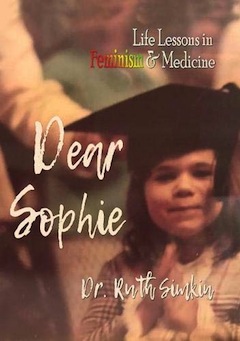
Feminism is really true equality between women and men; nothing more, and nothing less,” Ruth Simkin writes in her new book, Dear Sophie: Life Lessons in Feminism & Medicine, a memoir dedicated to her great-niece.

“There are many people who scoff at the word ‘feminism,’” Simkin adds. “But consider this – when I was in my first year of medical school, I, and any other woman, could not get a credit card in our own name. Until 1974, a husband’s signature was needed for women to have credit cards. At that time, I met women who were teachers who lost their jobs because they and their husbands wanted to start a family and they became pregnant – a no-no for working teachers until 1978. I could go on and on with examples like this to show why feminism was, and still is, such an important part of all our lives.”

Born in Winnipeg in 1944, Simkin has prevailed over many obstacles throughout her life and career. In Dear Sophie, readers join her as she struggles to get into medical school.

“There was stiff competition to get into an innovative medical program launched at the University of Calgary in the late 1960s,” she told the Independent from her home in Victoria. “I was one of 32 of roughly 1,200 applicants to be accepted.”

Admission to the program, however, would turn out to be an easier hurdle than those that were yet to come during her schooling and subsequent training. The length of her time in med school is replete with stories of sexual harassment and discrimination by both fellow classmates and senior members of the faculty.

“Male doctors, on more than one occasion, did all they could to get me expelled from med school, but I stood my ground,” Simkin said.

She managed to complete her residency, despite being blocked at almost every step, and clashing with the established medical community. But she prevailed. She was the first U of C med school graduate to open a practice – one that thrived – while also working as a professor and preceptor at the school.

image - Dear Sophie book coverIn the memoir, Simkin details her experiences from that time to the present and uses her account as a way to demonstrate to Sophie, and to other women, how to live a happy, feminist life. She hopes that Sophie, a pre-adolescent during the time Simkin was writing the book, will learn from her experiences before entering adulthood.

Simkin’s long and varied career has seen her undertake many ventures. In the 1980s, she learned acupuncture in Shanghai and, ultimately, became the first physician to be approved by the Alberta College of Physicians and Surgeons to incorporate acupuncture in a medical practice. Later that decade, she went to London, England, to study with Dr. Katharina Dalton, who brought premenstrual syndrome to the world’s attention and also coined the term.

Upon her return to Canada, Simkin opened the first PMS clinic in Western Canada. She also has opened Western Canada’s first hologram gallery, produced concerts, been involved in theatre projects and started the lesbian and gay political action group CLAGPAG.

In the 1990s, she moved to Salt Spring Island, where she became a farmer – growing “yuppie” veggies. A return to medicine saw her become the first fellow to study palliative care at the University of British Columbia. In 2014, she was honoured with a life membership from the College of Family Physicians of Canada.

Among her other published works, Simkin has written What Makes You Happy, a collection of short stories, both autobiographical and fictional; The Y Syndrome, a medical thriller set in 1990s Calgary; and Like an Orange on a Seder Plate, a feminist Haggadah. The Jagged Years of Ruthie J (2012) is an autobiographical account of her experiences in Winnipeg before medical school.

Over the years, she has written scores of medical papers and contributed to textbooks, as well as mixed media presentations. Having travelled extensively, she has an (as-yet) unpublished book, Come Away with Me, about her journeys through China.

Dear Sophie received the 2019 Rainbow Award in the LGBT biography/memoir category. In its review of the book, the prize committee said, “Dear Sophie is a flawless memoir that is not only a story of Dr. Ruth Simkin, but a story of feminism and women in Canada and the field of medicine, skilfully woven together with valuable life lessons.”


Sam Margolis has written for the Globe and Mail, the National Post, UPI and MSNBC.

Format ImagePosted on February 14, 2020February 12, 2020Author Sam MargolisCategories BooksTags family, feminism, history, LGBTQ+, medicine, memoir, Ruth Simkin, Victoria
Inherent love for business

Inherent love for business

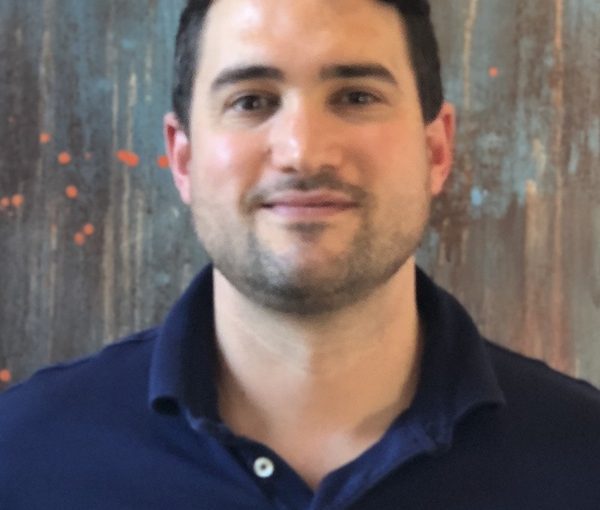
Ben Silverman (photo from Ben Silverman)

Ben Silverman is the managing director and co-founder of Integral Artists, a talent agency based in Vancouver. He’s also the president of media investment firm Various Things Entertainment and co-founder of James Charles Properties, a real estate development company focused on B.C. holdings. It takes a lot of energy, but Silverman, who was named on Business in Vancouver’s 2019 Forty Under Forty list, has a mind that’s always working.

“Even if I am trying to relax on vacation, my brain doesn’t seem to want to shut off the part which is observing the world around us and processing it in search of new opportunities and/or improvements,” he said. “As a lifelong student of the art of calculated risks and plan execution, I am naturally compelled to the life of an entrepreneur.”

The 39-year-old grew up in a creative environment, enjoying writing and performing.

“Growing up in Richmond, I used to perform in the Prozdor musical theatre productions put on by Joan Cohen at Beth Tikvah,” he recalled. “My entire family would partake – my brothers on stage with me, my dad playing in the live orchestra and my mom helping organize the program. Prozdor was a real contributor to my enjoyment and pursuit of the performing arts.”

While he continued that pursuit, which included obtaining an undergraduate degree in creative writing, his taste for the entrepreneurial was taking shape as well. In 2003, he launched his first formal start-up, Astone Fitness, off the back of an infomercial he produced for a product he trademarked – Ripcords Resistance Bands.

Now, the film and television industry is where he brings his passions together. “Film and TV are commercial art forms which I have always been drawn to as forms of great entertainment and storytelling,” he told the Independent. “There is an inherent overlap and compromise required between the creative and the business side in film and TV.”

This overlap is where he does his best work, he said, harnessing his communication skills and his ability to relate to the needs of his creative clients, as well as his business acumen.

Outside of his work endeavours, Silverman remains active in the Jewish community, and is connected to the Bayit.

“I have tremendous respect for Rabbi Levi Varnai, who is inspiring and doing incredible work galvanizing the community around him and helping people from all walks of life feel like they belong,” Silverman said. “The shul’s [past] president, Mike Sachs, is also one of the hardest working and dedicated individuals I know. Together, their approach is inspiring and makes me feel like my contributions matter, which motivates me to participate however possible, whether financially or with my time.”

Silverman continues to dream big. Last year, Various Things Entertainment acquired feature film distribution company levelFILM, which had seven movies at the 2019 Toronto International Film Festival, including Hope Gap, starring Annette Bening and Bill Nighy, and Ordinary Love, starring Liam Neeson.

As for Integral Artists, which also has offices in Toronto, Silverman said the agency is in “active discussions regarding a further expansion within North America. Our goal is to be the largest talent agency headquartered in Canada.”

Shelley Stein-Wotten is a freelance journalist and comedy writer. She has won awards for her creative non-fiction and screenwriting and enjoys writing about the arts and environmental issues. She is based on Vancouver Island.

Format ImagePosted on February 14, 2020February 12, 2020Author Shelley Stein-WottenCategories LocalTags Bayit, Ben Silverman, business, Business in Vancouver, entrepreneurship, levelFILM, Richmond, Various Things Entertainment
Sharing legends of Mossad

Sharing legends of Mossad

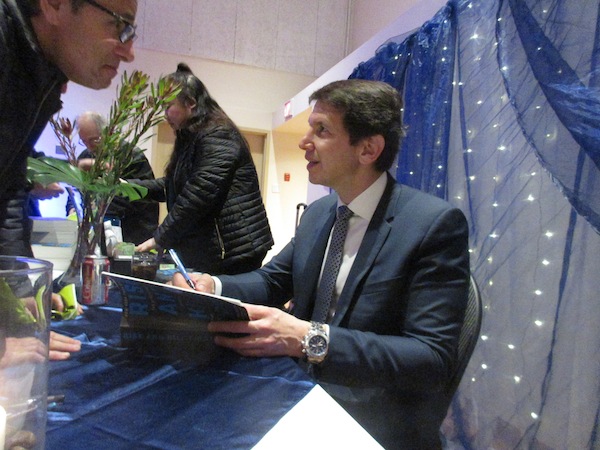
Ronen Bergman signs a copy of his book Rise and Kill First: The Secret History of Israel’s Targeted Assassinations for an attendee of his talk at Congregation Beth Tikvah Feb. 2. (photo by Pat Johnson)

Ronen Bergman, perhaps the leading historian on Israeli intelligence, spoke in Richmond recently, engaging a packed sanctuary at Congregation Beth Tikvah Feb. 2 with stories that make Ocean’s Eleven pale in comparison.

Bergman, a staff writer at The New York Times Magazine and senior political and military analyst for the Israeli daily Yedioth Ahronoth, shared the history of the Mossad as told in his bestselling book Rise and Kill First: The Secret History of Israel’s Targeted Assassinations. One had an extremely timely conclusion.

Imad Mughniyeh was the military commander of Hezbollah, who Bergman called “the most wanted and most capable and most diabolical terrorist who ever walked the face of the earth.” Mughniyeh is believed responsible for the 1983 bombing of the U.S. embassy in Beirut and truck bombings in the same city, which killed hundreds of U.S. and French military personnel, and also was involved in the 1992 bombing of the Israeli embassy in Buenos Aires and the 1994 bombing of the AMIA Jewish community centre there, as well as countless other atrocities worldwide.

“He was wanted by 41 different countries and the only thing they had from him is a vague photograph from 1983,” said Bergman. Finally, the Mossad located Mughniyeh in a safe house in Damascus, but, since Israel does not have diplomatic relations with Syria and, therefore, does not have an embassy there, they were at a disadvantage. Embassies are a great boon to spies, he said.

“You can have diplomatic immunity, you have cars, you have diplomatic mail, you can smuggle, it’s wonderful,” he said. “But they couldn’t get to him, they couldn’t kill him in Damascus, because it was so hard to operate, so Mossad turned to the only organization that could: the CIA. Because the CIA had something that Mossad will never have in Damascus: an embassy.”

The CIA required permission from then-U.S. President George W. Bush, so Ehud Olmert, who was then Israel’s prime minister, flew to Washington for a secret meeting with Bush and urged the president to help Mossad take out the terrorist, noting the number of Americans Mughniyeh had killed.

“George Bush was convinced, but he said on one condition – no collateral damage,” Bergman said. No bystanders or associates were to be harmed.

Working with the CIA, the Mossad set up the scenario and then aborted the operation 53 times because the target was not within the defined kill zone or because he was not alone or because, on one occasion, his identity could not be 100% verified because he was wearing a scarf due to inclement weather.

On Feb. 12, 2008, Mughniyeh left the safe house and the Mossad was about to push the button when they realized he was not alone.

“He’s walking with a man,” Bergman recounted. “Someone looks at the monitor and says, oh that’s not just a man, that’s Good Dog. Good Dog was the codename for Qasem Soleimani,” the top Iranian general and commander of the Quds Force, responsible for clandestine operations and global terror.

“So, someone said, how wonderful, let’s take them both,” said Bergman. “They called Meir Dagan [director of Mossad], who was sitting shivah for his mother. He calls Olmert and Olmert says no, abort, I promised President Bush that only Mughniyeh is killed.”

Later that same day, Mughniyeh was found alone outside the safe house and killed by an exploding car as he passed on foot. But Soleimani would live another dozen years – until he was killed Jan. 3 of this year, on orders of U.S. President Donald Trump, sparking a conflict that nearly led to all-out war between the United States and Iran.

Bergman, a lawyer and author of six bestselling books, recently received the Sokolov Prize, Israel’s equivalent of the Pulitzer. In undertaking Rise and Kill First, Bergman discarded all previous work on the subject and interviewed 1,000 intelligence officials and others with inside information on the Mossad and its operations. The book is now being turned into an HBO series.

Bergman recounted how, in 2018, Israel stunned the world when Prime Minister Binyamin Netanyahu invited the media to view a massive cache of documents and other materials related to the Iranian nuclear project. The moment was the culmination of two years of planning, involving 500 operatives, including 18 who located and infiltrated a secret archive outside Tehran, then swooped in, with a five-and-a-half-hour window in the middle of the night, to execute the deed and escape, relocating the ayatollah’s nuclear secrets to Israel.

Even with the Mossad’s expertise at safe-cracking, the team knew that they would not have time, once inside the archive, to fiddle with locks.

“So, Mossad establishes a front company in Europe who orders two empty safes from the same Iranian manufacturer. They ship the safes to Paris, then ship them to the Mossad lab in Tel Aviv, where they start drilling into them, trying to find what’s the fastest way to open them.”

They determined that it would require at least 3,600 degrees Fahrenheit to break into the archives’ security.

“Now imagine what sort of energy you need to shlep with you to Tehran in order to create such energy and do that in four different places because you need to open all the vaults,” said Bergman. They also had to bypass other security systems and interfere with video surveillance to make the cameras continue broadcasting as if nothing untoward was happening.

In the morning, when the heist was discovered by archives security officials, Bergman said, “no less than 12,000 troops, Revolutionary Guards, policeman, army” and others descended on the place, but could not discern how anyone could get in, grab all the contents and get out undetected. It would be two months until Netanyahu went public and the Iranians could finally confirm that the perpetrators were Mossad.

“Someone could ask, why should we write a book about the history of the Mossad? This is secret, right?” Bergman said. He acknowledges he left out a great number of secrets, some of which he will take to the grave, but added that it is impossible to tell the story of Israel without telling the story of the Mossad because any major decisions, any turning points in the dramatic story of the country, have the imprint of the intelligence services on it.

He warned, though, that this is not all derring-do and triumph. “If you want to read a book just glorifying Israeli intelligence, I suggest you don’t read Rise and Kill First,” he said. “Sometimes, the Jewish James Bond looks more like Inspector Clouseau.”

Many people ask Bergman how he got the top intelligence officials in the country – former heads of agency, high-level operatives, spies and agents – to talk, usually quite freely and almost always on the record.

“It was easy,” he said. “I smiled. When you smile to people, they feel comfortable to talk. But that’s not the whole answer. These people wanted to talk because they wanted people to know … what they have done in order to keep Israel safe.”

Some interviewees said they told Bergman things they had never told their spouses. But, when subjects were not forthcoming, he had a trick.

“If someone was not that enthusiastic to speak, I did to him or her the one thing that makes Israelis more ballistic and furious than anything else,” Bergman said. “I told him someone else took credit for his operations.”

He mooted a typical response: “What? He said that he was behind enemy lines, that he planned the operation, that he risked his life? Now I’m going to tell you the truth,” Bergman deadpanned. “Always works.”

In a remarkable number of the interviews, a single phrase frequently stood out: a quote from the Babylonian Talmud: “Whoever comes to kill you, rise up and kill him first.”

“Because the way they saw it, they had no other choice,” said Bergman, noting that outsiders cannot understand the DNA, the genome, the motives of Israelis, without understanding the imprint of the Holocaust and the determination to never be powerless again.

Hamas has bragged that they have more volunteers for suicide bombings than they have suicide belts.

“It turns out the only thing that stops these people from coming is the most extensive campaign of targeted killing ever launched in history – and not against the suicide bombers,” said Bergman. “When the Shin Bet [Israel’s internal security service] and Israeli Air Force started to target the layer above them – the bomb-makers, the indoctrinators, the recruiters, the regional commanders – then it turns out that these people who have no problem with sending everybody to their death, once the price tag is attached to themselves and their families, they say, well, we’ll die, but maybe not today.”

The targeting approach, said Bergman, was adopted by the United States, whose military leaders came to realize that taking out the top leadership of the enemy was ultimately less lethal and costly than the alternatives.

“And so, the CIA started following the successful Israeli experience, started to perform targeted killings,” said Bergman. “Do you know the president who organized the largest number of targeted killings in history? Barack Obama, because he realized that this is the weapon that, at the end of the day, takes less human lives than going into an all-out war. And it’s effective.”

Leanne Hazon, Beth Tikvah’s vice-president of programming, welcomed the audience and noted the size of the crowd despite it being Super Bowl Sunday. Rabbi Adam Rubin introduced Bergman. The author signed copies of his book after his talk.


Format ImagePosted on February 14, 2020February 12, 2020Author Pat JohnsonCategories BooksTags Beth Tikvah, journalism, Mossad, Ronen Bergman

When Joseph went missing

A friend recently went through a scary time and, as a result, I did, too. His niece in Minnesota, a young mother, simply disappeared. She went out on a date and didn’t come home. Her mother was with the woman’s children. When she didn’t know what to do, she contacted police, the story was in the media and the important, informal networks of the Missing and Murdered Indigenous Women and Girls (MMIWG) swung into action.

Like many friends, I tried to pass the word along about a woman who was missing. Her family needed her. My friend couldn’t sleep. He worried. I worried. The worst part seemed to be not knowing how to help, what to do and what happened. Things seemed very dangerous.

Some in the Jewish community may say, this isn’t about me. They would be wrong on several levels. First, and most apparent, your prejudice is showing. There are many Jewish community members who have ties to multiple other communities in Canada. Yes, there are indigenous Jews; as well, there are many other cross-cultural, interreligious and inter-ethnic family connections of which you may not be aware.

Second, anyone can be at risk. Missing people and human trafficking are as old as time. When Joseph’s brothers throw him into a pit and then sell him to the Ishmaelites (Genesis 37:28), they’re participating in human trafficking and slavery. They turn Joseph into a missing person. His parents go through the anguish of not knowing what happened to their child. If you’re a parent or, heck, if you’ve ever lost a pet, it’s not hard to imagine this anguish.

Rashi’s commentary says that Joseph was sold several times. According to Midrash Tanhuma, he’s sold from the Ishmaelites to the Midianites and, from there, into Egypt. This description is not unlike what happens now to women captured in wartime. News reports offer similar stories of women enslaved today – by Boko Haram or, to mention refugees closer to home, Yazidi women who were enslaved by ISIS, some of whom have found homes in Canada.

Some believe slavery is a thing of the past, tied to faraway, evil people – like the narratives I’ve heard from Canadians about the American South. People might be evil, but they aren’t far away. This is a modern issue. Once a person is being trafficked, it’s very hard to break free. She’s possibly been forcibly confined, addicted to drugs, beaten and sexually assaulted. She may be hidden, unable to get help, and brainwashed by those who kidnapped her.

There are charities that work against human trafficking, and many nongovernmental organizations do, as well. However, I was recently invited to participate in a raffle. The business offered a prize in exchange for donating to an anti-trafficking organization. I got as far as clicking through to the organization’s donation page before I saw that it did its work through a lens of Christian evangelizing. Here’s what I found: “Agape International Missions has an incredible team of staff members and volunteers who faithfully carry out our mission, day in and day out. At AIM, we believe that Christ through His Church will defeat the evil of sex trafficking, so we invite you, the Church, to join us in this fight!”

Further, if you wanted to work for them, and you’re not Christian? Too bad. Here’s what their job search info looked like: “You should consider pursuing a career with AIM if: You’re a Christian; You agree wholeheartedly with our Statement of Faith. As the foundation for all we do, our Christian faith is a uniting factor among volunteers and staff.”

Essentially, this Christian organization uses an “us” versus them narrative, in which this religiously motivated group is all good. They are out to conquer this evil that happens to faraway (non-Christian) others. Sadly, if you change the religious ideology, I’m not sure Jewish communities are much different in how we portray social action issues.

Kidnapping, human trafficking, using sex as a weapon – many people like to think these terrible things don’t happen to “us.” However, this naïve view harms victims, perpetuating the idea that these things only happen to people far away or long ago, or who somehow did something wrong to deserve it.

Joseph, according to Jewish tradition, was our relative, a part of our family. His brothers kidnapped and sold him. My friend’s niece went missing this winter. This isn’t some ancient or distant problem. Some argue that, if Joseph hadn’t been his father’s favourite, or if he’d behaved better, this wouldn’t have happened to him – this is blaming a victim.

In Joseph’s case, he lived. He was found, and he flourished over time, in Egypt. My friend’s niece came home to her mother and children after a week. It’s still unclear what happened to her. It sounds like something like human trafficking may have taken place. We (helpers outside the family) may never know.

Every time a missing person is found safe, it’s lucky – but it’s not a sure thing. Often, many hundreds of people’s efforts go into finding someone, and keeping others safe.

If you’re sent a missing person’s information, don’t judge whether or not the person is “worthy.” Send it onwards. Just imagine if your relative or friend went missing – wouldn’t you want everyone’s help, without judgment or religious prejudice?

Joanne Seiff has written regularly for CBC Manitoba and various Jewish publications. She is the author of three books, including From the Outside In: Jewish Post Columns 2015-2016, a collection of essays available for digital download or as a paperback from Amazon. Check her out on Instagram @yrnspinner or at joanneseiff.blogspot.com.

Posted on February 14, 2020February 12, 2020Author Joanne SeiffCategories Op-EdTags human trafficking, Judaism, lifestyle, slavery, tikkun olam, Torah, women

Posts pagination

Previous page Page 1 … Page 3 Page 4 Page 5 Page 6 Next page
Proudly powered by WordPress