Skip to content
  • Home
  • Subscribe / donate
  • Events calendar
  • News
    • Local
    • National
    • Israel
    • World
    • עניין בחדשות
      A roundup of news in Canada and further afield, in Hebrew.
  • Opinion
    • From the JI
    • Op-Ed
  • Arts & Culture
    • Performing Arts
    • Music
    • Books
    • Visual Arts
    • TV & Film
  • Life
    • Celebrating the Holidays
    • Travel
    • The Daily Snooze
      Cartoons by Jacob Samuel
    • Mystery Photo
      Help the JI and JMABC fill in the gaps in our archives.
  • Community Links
    • Organizations, Etc.
    • Other News Sources & Blogs
    • Business Directory
  • FAQ
  • JI Chai Celebration
  • JI@88! video

Recent Posts

  • Sharing her testimony
  • Fall fight takes leap forward
  • The balancing of rights
  • Multiple Tony n’ Tina roles
  • Stories of trauma, resilience
  • Celebrate our culture
  • A responsibility to help
  • What wellness means at JCC
  • Together in mourning
  • Downhill after Trump?
  • Birth control even easier now
  • Eco-Sisters mentorship
  • Unexpected discoveries
  • Study’s results hopeful
  • Bad behaviour affects us all
  • Thankful for the police
  • UBC needs a wake-up call
  • Recalling a shining star
  • Sleep well …
  • BGU fosters startup culture
  • Photography and glass
  • Is it the end of an era?
  • Taking life a step at a time
  • Nakba exhibit biased
  • Film festival starts next week
  • Musical with heart and soul
  • Rabbi marks 13 years
  • Keeper of VTT’s history
  • Gala fêtes Infeld’s 20th
  • Building JWest together
  • Challah Mom comes to Vancouver
  • What to do about media bias
  • Education offers hope
  • Remembrance – a moral act
  • What makes us human
  • המלחמות של נתניהו וטראמפ

Archives

Follow @JewishIndie
image - The CJN - Visit Us Banner - 300x600 - 101625

Tag: philanthropy

Father-son campaign leaders

Father-son campaign leaders

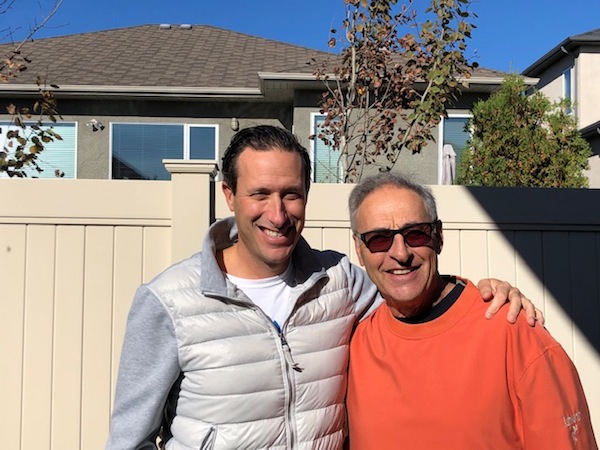
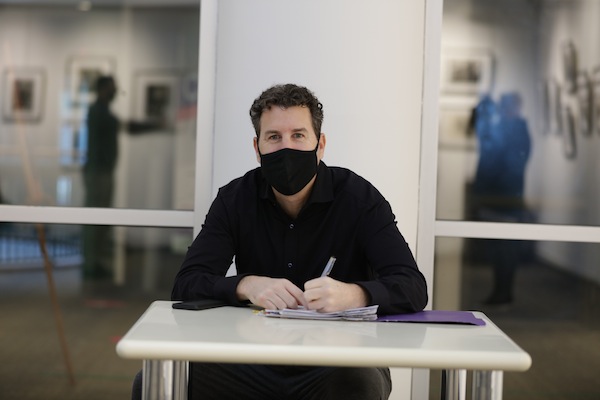
Jonathon Leipsic is chair of the Jewish Federation of Greater Vancouver’s annual campaign, and his father, Peter Leipsic, is co-chair of the annual campaign of the Jewish Federation of Winnipeg. (photo from Leipsics)

Father and son, Peter Leipsic and Jonathon Leipsic, are chairing the Jewish Federation annual campaigns in their respective hometowns. Peter is co-chair, with Neil Duboff, of the Winnipeg fundraising effort, while Jonathon is in his third consecutive year of leading the fundraising here in Vancouver.

For Peter, “growing up, helping others was something that just got ingrained in you. You see somebody in trouble, you reach down and help them. My father served in Europe and following in his steps I went to Israel as a volunteer, in the ’67 war. It was just an automatic.

“I remember being at our synagogue and … on the cover of Time Magazine, I guess May of ’67 … there was a picture of 800 Syrian tanks, 600 Egyptian and Iraqi…. It made Israel look like they were going to be toast. At the synagogue, they were asking for money from all the members and I remember the cheques being torn up and being returned to people … saying, that, ‘No, we’re not interested in this. We’re interested in a cheque that hurts. Don’t give us your $1,000…. We want $10,000.’

“When I saw that,” said Peter, “I was probably 21. I think that just sort of instilled in me how to look out for the underdog. People would make fun of me for handing out money to people on the street and I’d say to them, ‘Where are you sleeping tonight? Are you having a shower or not?’”

Peter has been raising money for the Combined Jewish Appeal (CJA) for more than 50 years now, and he has learned that, with some people, giving is automatic, one doesn’t even need to ask. “In the end, we all end up in the same place. Eventually, I don’t know where the cemeteries are in Vancouver, but, in Winnipeg, they’re in the North End – we’re all going to end up there, and you ain’t taking it with you!”

The Leipsics do their best to help out beyond the Jewish community, as well. Peter established a scholarship program at Winnipeg’s Gordon Bell High School, where applicants are judged, not according to scholastic achievements, but on how much of a mensch they are. This past year, there were nine recipients – the highest number yet. “They sent the bios on these people, and, they were just gut-wrenching,” said Peter. “After reading the bios, I said, ‘OK. Can I add another $1,000?’ And, of course, I sent [the list] to Jonathon, too. Well, I raised it to $6,000 and Jonathon doubled it, up to, I think, $11,000. So, instead of them getting $400 per person, they each were given $1,018. And Jonathon, of course, explained to them the significance of 18 in Jewish life. To me, I’m tickled … to actually be able to see somebody’s face, and how I changed that face – taking a massive weight off of them.”

While both Peter and Jonathon are calling on people to help, they each have their own unique styles, with Peter being more direct and Jonathon having a more diplomatic approach.

“I probably burned a couple of bridges,” said Peter of his method. “When you know that somebody has the ability and you tried to explain to them the need, yet they back off and they back off … and, at some point, they say, ‘Do you want me to hang up on you now?’ Some people just don’t get it.”

Even in times such as these, some people, like the Leipsics, are downplaying the negative aspects and focusing on the needed work at hand.

“I mentioned in my campaign opening address that we, the Jewish people, certainly have known challenges greater than COVID,” said Jonathon. “While the challenges are profound, I always like to remind people that, even though, in the last 1,000 years, the challenges were seemingly insurmountable, we overcame and moved from strength to strength by never forgetting our call from Sinai and the centrality of community and Klal Yisroel. I think that COVID has been an eye-opener for people of my generation and younger. It has to start at home, I think.”

Jonathon said that he has really learned from his father’s commitment and that it has set the tone. “We’re taught in our homes and taught through Torah … we have to make community a priority, and my father has always done that,” said Jonathon. “Whether he does it by giving more, giving his time and whatever we were in the position to be able to do, he made those decisions up front – not after all our spending was done, rather at the beginning. ‘First things first,’ as they say. He showed me the way to a life of tzedakah, commitment and meaning…. To be in the same position with him, I think, is actually really, really special.”

Having had the benefit of helping fundraise in Winnipeg, Jonathon understands the different challenges that exist in Vancouver. “We have a bigger community, but it’s spread out,” he noted. “And, as a result, the binding of the community is less tight than it was when our community was more closely tied to Oak Street [in the past, and in] the North End of Winnipeg.”

Learning from both campaigns, Jonathon said, “We work together and do what we can. At the end of the day, food security and access to safe housing is becoming more and more challenging. And then, the isolation with COVID, obviously, is really profound with the elderly and those who can’t get out…. I can imagine, when it’s raining all winter or cold, the social isolation will become even more profound … the potential [effects] it can have on them, but also, their sense of community. I think, more than ever, these sorts of community initiatives are essential.”

“If you want Jewish life to continue,” Peter added, “you must reach down and support the people that are in need. You never know who the next leaders of your community are going to be. A lot of people that have received help had nowhere else to turn, and they may turn out to be your future leaders.”

As far as both Leipsics are concerned, Judaism is defined by the talmudic words, Klal Yisroel areivim zeh bah zeh (all of Israel is a guarantor for one another).

Rebeca Kuropatwa is a Winnipeg freelance writer.

Format ImagePosted on November 13, 2020November 13, 2020Author Rebeca KuropatwaCategories NationalTags annual campaign, fundraising, Jewish Federation, Leipsic, philanthropy
Help for BGU students

Help for BGU students

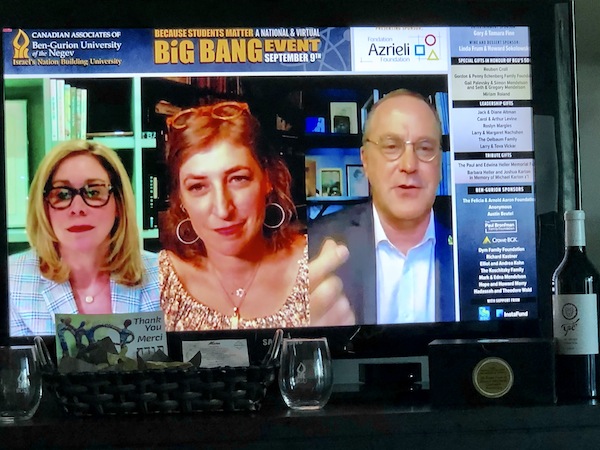
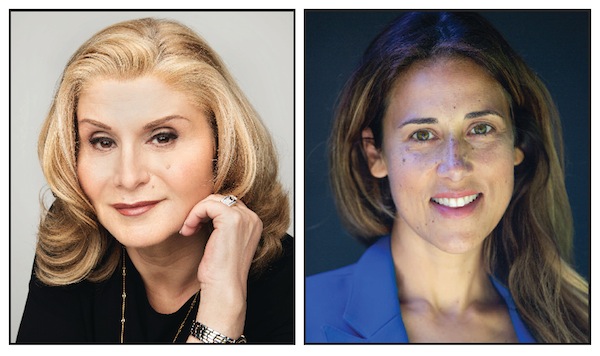
Left to right, Senator Linda Frum, actor Mayim Bialik and BGU president Danny Chamovitz participated in the virtual Big Bang event, hosted by Canadian Associates of Ben-Gurion University of the Negev on Sept. 9. (photo by David Berson)

On Sept. 9, the Canadian Associates of Ben-Gurion University of the Negev hosted its first national virtual gathering. The Big Bang Event to “save the class of COVID-19” was an urgent move to support the university’s 20,000 students.

With many students having lost their jobs in the sudden economic slowdown, they are unable to fund their tuition or even their basic needs. Rather than forfeiting a generation of leaders to financial hardship, BGU launched a student assistance program in July, with the goal of raising $6 million for 6,000 individuals.

While it is Israel’s newest university, BGU is a leader in academic research and technological development. With three campuses, it is credited as a trailblazer in both the humanities and the sciences – nanotechnology, robotics, cybersecurity, Israel studies, Jewish thought, neuroscience, medicine, business and management – addressing some of the world’s biggest problems, such as drought and hunger. The university’s reach is local as well as international, serving the immediate community in the Negev, including both the immigrant and indigenous Bedouin populations.

BGU was founded in 1969, following the vision of David Ben-Gurion, Israel’s first prime minister. Ben-Gurion sought to establish a university which would act as a “source of moral inspiration and courage, rousing people to a sense of mission: noble, creative and fruitful.” He believed that the Negev Desert would be critical to the future of the new country – the desert covers 60% of the country, and Ben-Gurion saw it becoming an economic, academic, scientific and cultural hub.

The Big Bang Event featured guest speaker Mayim Bialik, well-known for her roles in the 1990s show Blossom and, more recently, in her award-winning role as Amy Farrah Fowler in Big Bang Theory. In addition to acting, Bialik earned a doctorate in neuroscience from the University of California, Los Angeles, in 2007; her dissertation examined the role of oxytocin and vasopressin in obsessive-compulsive disorder in adolescents with Prader-Willi syndrome. A mother of two, Bialik is also an accomplished writer and musician.

Quirky, vivacious and searingly intelligent in her remarks, watching her speak at the Big Bang Event brought to mind the Yiddish proverb, “The heart is small and it embraces the whole wide world.” Bialik spoke from the heart, telling the audience about her own family story and the genesis of her Jewish identity. She spoke about her heritage, how she raised her children and how she carries her Jewish identity into her professional life in a fireside chat-style with Canadian Senator Linda Frum.

Also speaking at the event was BGU president Danny Chamovitz, who addressed the audience from his home in Israel at what would have been 2:30 a.m. his time. Chamovitz was in isolation, having recently returned from Europe, and, following the event, he did indeed test positive for coronavirus, but has since made a full recovery.

Chamovitz described his office’s emergency response to the pandemic. Members of the university community were invited to submit proposals and, as a result, more than 70 initiatives are in progress, including the development of tests for COVID-19 that drastically reduce turnaround times.

“Across the country, more than 380 households purchased tickets and more than 800 people watched the program,” said David Berson, CABGU regional executive director, in a recent email interview. “We have raised over $1.3 million with 50% of that being raised locally. In our region, 83 households purchased tickets and more than 200 people watched the program.”

In addition to raising money, he said, “The event was a great success motivating many new people to support CABGU. It has set the bar, the gold standard, for how to properly execute a national virtual event. Regarding the campaign itself, the rate of unemployment in Israel is 50% for the under-34 age bracket. By the opening of the academic year on Oct. 18, more than 5,000 students had applied for support from this student assistance fund. Where we had been fearful that enrolment would drop because of the financial impact of the pandemic, it turns out that enrolment for undergrad studies increased by 32%. The funds raised have been vital in creating accessibility for so many students hit hard by this unprecedented situation.”

While the Big Bang audience was scattered from coast to coast, a warm ambience was created locally, with hand-delivered baskets of sweet and savoury delicacies: quiches and bourekas, as well as exquisitely decorated handmade chocolates, from Café FortyOne; and BGU wine tumblers and a bottle of red wine.

The local business sponsor was Instafund and Instafund’s Adam Korbin, who was the Metro Vancouver chair of the event, thanked Bialik at the end of the program.

“We were very fortunate to have dozens of local sponsors for the event,” said Berson. “Details of the sponsors can be found on our website, bengurion.ca.”

Regional board chair Si Brown “was thrilled with the generous response from and participation of our local community,” Berson added. “Since reestablishing CABGU in Metro Vancouver seven years ago, it has been gratifying for me to watch how our community has slowly and surely begun to embrace this young and dynamic Israeli university in the Negev.”

Format ImagePosted on November 13, 2020November 11, 2020Author Shula Klinger and Cynthia RamsayCategories UncategorizedTags Adam Korbin, Big Bang, CABGU, Café FortyOne, Canadian Associates of Ben-Gurion University of the Negev, Danny Chamovitz, David Berson, education, fundraising, Instafund, Linda Frum, Mayim Bialik, Negev, philanthropy, Si Brown
Celebrating community

Celebrating community

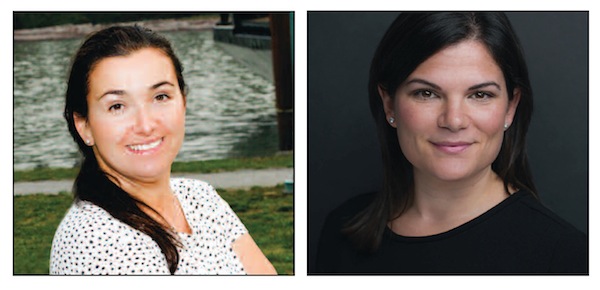
Featured speakers at this year’s Choices are Hannah Amar, left, and Michelle Hirsch. (photo from Jewish Federation)

Hannah Amar wants people to keep in mind two words when they listen to her story: resilience and connection.

Toronto-born Amar was 10 years old when she and her parents were hit by a drunk driver in a catastrophic car accident. She was the sole survivor. She went to live with an aunt and uncle, in a home with little to no Jewish identity. Her quest to regain her Jewish identity and the difference it made at the most difficult moment of her adult life is a story she will share next month at Choices.

Choices is an annual celebration of the Jewish Federation of Greater Vancouver. (Click here for an interview with Federation’s women’s philanthropy co-chairs.) It brings together hundreds of Jewish women who have made a choice to support the community through volunteerism, professional work, engagement or a financial gift. This year’s event takes place virtually on Nov. 8, and will recognize the power of women’s individual and collective contributions. The keynote speaker this year is Michelle Hirsch, a Cleveland woman who mobilized her circle to support the Jewish community of Houston after Hurricane Harvey wreaked havoc on that city in 2017. Amar is the community speaker.

When Amar came to the University of British Columbia, she sought out Hillel, the Jewish student organization, in an effort to reconnect with her Jewishness. This was her initial foray into the community.

After university, she was working in a corporate office and met a man with whom she had two sons, 16 months apart. That relationship ended and he largely disappeared. With two kids and no child support, Amar struggled to make ends meet.

With no family to fall back on, Amar put her belongings in storage and spent the better part of a year with no fixed address. She had some savings intended for her kids’ education, which was all that kept the three of them off the streets or in a homeless shelter. At one point, she was living in a room above a Starbucks, reached through a long set of steep stairs – she was eight months pregnant and had a 1-year-old.

Earlier, though, when she was still at her office job, Amar passed by the Ohel Ya’akov Community Kollel, on West Broadway. Since leaving university, and Hillel, she had not been in close contact with the Jewish community. Coming from a kickboxing class, dressed in her hot pink hoodie, she stopped outside the Kollel and was wondering whether to go in when a rabbi came down the stairs with a lollipop in his mouth.

“I thought, I can totally approach this rabbi because he’s eating a lollipop,” she recalled.

Rabbi Levi Feigelstock invited her to services on Shabbat and, the following week, she was at his family’s Shabbat table. It was the beginning of a solid connection. Both of her sons had their bris at the Kollel.

As her relationship collapsed and her housing situation became critical, it was that connection with community that provided a safety net.

A few weeks ago, Amar and her kids – Sam, 7, and Judah, who is almost 6 – moved into a three-bedroom townhome at the Ben and Esther Dayson Residences in the River District of South Vancouver. The Dayson Residences are a project of Tikva Housing, a nonprofit society that provides access to affordable housing, primarily for Jewish low- to moderate-income adults and families. The neighbourhood, which opened in 2019, consists of 32 townhomes.

“My kids are so happy, I’m so happy,” said Amar. “It’s a life-changer. It really is.”

Around Sukkot, Chabad visited with their mobile sukkah and all the kids in the residences came out. Amar loves walking around and seeing Shabbat candles in windows.

“The sense of community here – it is remarkable,” she said. “Going from no fixed address and only being the three of us for so many years to finally reaching out and dipping our toes in community and now having that.… Reaching out to the Jewish community helped me.”

The kids have already made best friends in the neighbourhood and Amar is enjoying having neighbourhood kids dogpiling on her living room floor.

“The amount of stress that’s left my body is unbelievable,” she said. “I had pain every day. Just yesterday, I woke up and I had none, so that’s pretty remarkable. I feel it leaving my body.”

Two generations ago, when Amar’s grandparents arrived in Toronto from Morocco, they, too, were aided by the Jewish community organizations that were there to help.

“It just really goes to show you how the connection in the Jewish community is amazing and how the help there is also amazing,” she said.

The keynote speaker for the Choices event, Hirsch, will share the story of how a small act of tzedakah snowballed into a huge relief effort for the Jewish community of Houston.

Hirsch is senior vice-president of her family’s business, an insurance brokerage.

“We joke that our family’s business is not just insurance for people but it’s also in our blood to ensure the future of the Jewish community,” she said. Growing up in Akron, south of Cleveland, Hirsch saw the model her grandparents and parents set in that city’s relatively small Jewish community.

“Everyone was involved because everyone was involved,” she said. “Every Jew knew every Jew and that’s just how it was.”

Hirsch became active locally and internationally, with the Jewish Federations of North America’s Young Leadership Cabinet and, more recently, with the National Women’s Philanthropy Board. She also serves on the board of the Jewish Agency for Israel North America and as chair of Cleveland’s Women in Philanthropy.

When Hurricane Harvey hit, her Young Leadership Cabinet colleagues in Houston were posting photos of the disaster on the group’s social media page. “Everyone was asking what can we do to help,” Hirsch recalled. “Some of the people in Houston were saying, we need things: people need diapers, we need cleaning supplies, none of the stores are open, the roads are blocked. We can’t just go to the store or order something to get delivered.”

Courier companies and Amazon were not delivering in Houston, but private vehicles were permitted to enter the city. Hirsch connected with colleagues in Dallas and asked if it would be possible to corral supplies there and transport them to Houston. One of the donors to the Dallas Federation owns a shipping company, so they obtained a cargo truck.

Hirsch made a preliminary Amazon wish list – toiletries, cleaning supplies, toothbrushes, other necessities – and posted on her personal social media, asking colleagues from Young Leadership Cabinet and other connections to share it. She went to bed and, eight hours later, awoke to find more than 1,000 items had been purchased and were on their way to the Dallas JCC.

“We kept adding additional items and, a few days went by, and then the Amazon trucks just started rolling in,” she said. The cargo truck made its way from Dallas to Houston well before couriers resumed services. The Houston JCC became their warehouse and volunteers came, opened the boxes, sorted the items and prepared them for community members to collect what they needed.

A couple of weeks later, some of the organizers made the trip themselves, including Hirsch. They helped out on the ground, rummaging through the flooded JCC preschool to see what toys and other items could be salvaged.

“It sounds like a sad story,” Hirsch said, “but really it’s an inspiring story, not of just mobilizing but the idea of a community that was facing such destruction that just rose up together to really come together and put back the pieces. It’s just a beautiful story of people coming together.”

More of both these women’s stories will be shared at the Choices event. For information and to register, visit jewishvancouver.com/choices-form.

Format ImagePosted on October 30, 2020October 30, 2020Author Pat JohnsonCategories LocalTags annual campaign, Choices, Dayson Residences, Hannah Amar, Jewish Federation, Michelle Hirsch, philanthropy, tikkun olam, women
Choices event will inspire via Zoom

Choices event will inspire via Zoom

Jewish Federation of Greater Vancouver women’s philanthropy co-chairs Sue Hector, left, and Shawna Merkur. (photos from Jewish Federation)

There’s good news and bad news for the annual Choices gala, which celebrates Jewish women’s philanthropy in Metro Vancouver. The good news is Choices will be held this year, despite COVID-19. The bad news is it will be held exclusively on Zoom, as there is no alternative safe way to convene a large gathering during the pandemic.

The 16-year-old event raises tens of thousands of dollars each year for Jewish Federation of Greater Vancouver’s annual campaign. Last year, 240 donors raised $52,302. Average attendance is 500 and has been as high as 620 some years.

“Every year, the amount raised varies, based on the different expenses of the event and the amounts raised through games, raffles and silent auctions,” said Sue Hector, who co-chairs Federation’s women’s philanthropy with Shawna Merkur.

“Choices is, at its essence, an event that inspires women of all ages to give to the Jewish community or to get involved in our community,” Merkur said. “It’s all generations in the room, all coming together for Jewish Federation to help our community. It’s really quite a beautiful thing.”

In fact, Choices has been so successful over the years that there have been complaints from the men’s campaign because they have no event like it, Hector said.

When the event is in person, the cost per person is $54, which covers the expenses of the actual event, while the Federation fundraising component comes from raffles, silent auctions and games held during the event. However, women need to make their Federation annual donation when they register for Choices and the minimum donation is $136. That said, no one is turned away based on their inability to afford that donation.

This year, because there will be no food served and no physical venue required, there’s no cost to the event. Instead, organizers are asking women to make an optional $54 donation to Federation’s COVID relief fund.

“That fund is being used to help agencies in the Jewish community manage the stress of the pandemic, from the Jewish schools to the Jewish food bank,” Hector said. “A task force has come together to work on this, interview the different agencies to find out what their needs are and determine how they’ll distribute the funds raised.” (See jewishindependent.ca/the-road-to-recovery.)

The virtual event Nov. 8 at 5 p.m. will feature a community speaker, Hannah Amar, a young single mother who benefited from Tikva Housing’s programs. She will share her journey from near-homelessness to a new home at the Ben and Esther Dayson Residences. “I think her story will really speak to the women watching,” Merkur said.

A main event speaker, Michelle Hirsch, will deliver her talk from Cleveland, Ohio. A member of Jewish Federations of North America’s national women’s philanthropy board and the Jewish Agency for Israel North America, Hirsch organized the Amazon Prime initiative on behalf of the National Youth Leadership Council in response to Hurricane Harvey. (For more on both speakers, click here.)

“In some ways it’s easier this year because we don’t have a lot to organize – no raffle, no caterer or venue and no silent auction,” Hector said. “But, we still wanted everyone to come together in some fashion, and Zoom is the only way. In such crazy, uncertain times, it’s nice to have something familiar and, hopefully, this virtual event will uplift people and give them courage and hope to face what we still have to face.”

To register for Choices – chaired this year by Courtney Cohen, Leanne Hazon and Sherri Wise – visit jewishvancouver.com/choices-form.

Lauren Kramer, an award-winning writer and editor, lives in Richmond. To read her work online, visit laurenkramer.net.

Format ImagePosted on October 30, 2020October 29, 2020Author Lauren KramerCategories LocalTags annual campaign, Choices, fundraising, Jewish Federation, philanthropy, Shawna Merkur, Sue Hector, tikkun olam, women
Lucky to do what she loves

Lucky to do what she loves

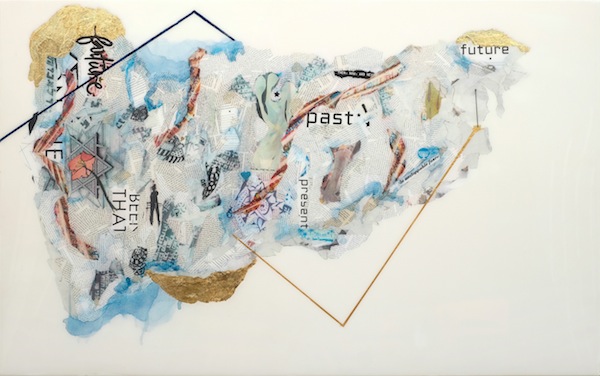
Stacy Lederman’s “past present future” is one of the works she will be sharing at the Eastside Culture Crawl this month.

Despite the pandemic, the Eastside Culture Crawl is not only back this year, but it’s offering “an expanded celebration of the creative resilience of the Eastside Arts District’s visual arts community.” The annual free event will take place over two weekends, Nov. 12-15 and Nov. 19-22, with the opportunity to view the artwork online, as well as schedule an appointment to join a limited in-person visit to the studios of your choice.

Participating artists in the Crawl include many Jewish community members, such as Miriam Aroeste, Suzy Birstein, Olga Campbell, Lori Goldberg, Lynna Goldhar Smith, Karly Leipsic, Stacy Lederman, Shevy Levy, Rebekah McGurran (Hive Printing), Lauren Morris, Ideet Sharon and Zohar. The Jewish Independent has featured several of these artists over the years. Lederman is a first-time Crawl participant.

“I was born in Vancouver and grew up in Tsawwassen. I have lived in Vancouver since I was 17 and also spent one year in San Diego,” Lederman told the Independent by way of introduction. “Obviously, things are different now with travel, but I used to spend a lot of time in New York and spent extended periods of time visiting in the summers. Exploring and being able to immerse myself in such a vibrant, energetic city was what led me to my career in art.”

Lederman has a background in corporate sales and fashion. She said she stopped working outside the home when her children were born.

“I started art lessons after a summer in New York, with the intention of having a hobby for myself and trying something completely new,” she said. “My ‘ah-ha’ moment came slowly, after a few years of learning, when I realized that friends were asking where I bought the art in my home. I would say, ‘Oh, I made that. You can have it if you like.’ After a few times, I realized that I could do this as a career, as people seemed to like my work.

“My first meeting with a gallery, I was offered to do a show and I thought that was amazing and unexpected, so let’s see where this goes. I am so grateful the show was a success and, with this, my full-time art career began. Although I had been involved in creative industries before, such as fashion, starting art lessons in 2014 was my first time giving it a try. I feel so lucky to be able to do what I love and feel like it came to me organically because it was really what I was meant to pursue.”

photo - Stacy Lederman
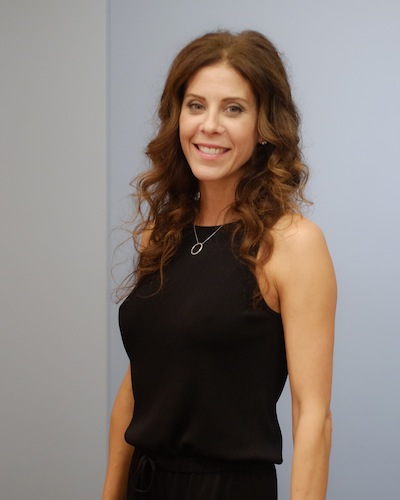
Stacy Lederman (photo from Eastside Culture Crawl)

Lederman has had several solo shows and exhibits since. She works in mixed media, which, she said, allows her “to be creative without expectation of perfection.

“I wouldn’t work well as a literal painter, as I would get lost in the perfection and most likely never finish a piece,” she explained. “Mixed media allows me to feel confident as an artist and make pieces that reflect a moment or feeling. Sometimes, it’s a lyric in a song, or a bit of graffiti, or an image I see on the street or in a magazine that inspires me to create. Blending different mediums allows me to use my inspiration when it comes and evolve the piece organically instead of worrying about the outcome. I can draw on all areas of creativity, from photography, painting, texture, abstract and collage, to create works that are meaningful and tell a story or spark a conversation. Also, my brain is always firing and so different mediums allow me to use different techniques, so I can always find a way to create and grow as a mostly self-taught artist.”

As for her interest in urban settings, she said she often features them in her work, “because, generally, big cities feed my soul. I love to be in nature and have calm moments, but there is something about the vibrancy of a big city, the potential of excitement, and taking a moment to slow down within the chaos and see all the unexpected and overlooked beauty. This environment fuels my creative spirit.”

And her creativity extends to the naming of her works, which doesn’t always seem to match up with what is depicted.

“The names of my pieces either reflect the meaning behind how the idea for the piece came to me, or a detail within it, if I am doing a series and just letting it flow naturally,” she said. “Sometimes, a work of mine comes from a moment or specific image and so then I will then choose a name that reflects the inspiration. Other times, I will get lost in the process of a series and a certain detail will catch my eye and start to dictate the direction of the piece – in that case, I would use the detail, or a representation of the details, as the name. Occasionally, there is a meaning within the numbers and/or letters I use that appear random but they are always intentional. It isn’t often but, occasionally, I will use the deeper meaning that isn’t obvious within the piece and I explain that to the person who purchases it.”

Lederman both sells her work and donates it. With her art, she has supported such causes as Arts Umbrella Splash, Zajac Ranch, Music Heals, Face of Today and York House School.

“Although I was not raised with the idea of tikkun olam, it has always been important to me to give back and I became very involved and aware of the importance of philanthropic endeavours in university,” she said. “There are so many ways to contribute to the greater good, either with time, money or donations. I am happy to help in whatever way I can and love helping to raise funds for such important and necessary causes. Art can bring joy in many ways – being able to give back to the community is something I am grateful to be able to contribute to and brings me joy as well.”

While she may not have been raised with the concept of tikkun olam, Lederman said, “Jewish culture definitely plays a role in my family’s life. We celebrate the Jewish holidays and have been involved with the community here in Vancouver in many different ways over the years. Two years ago, my children and I traveled to Israel for the first time. It was an incredible experience and I was so inspired in both Jerusalem and Tel Aviv that I created a collection based on the experience, energy and imagery from these cities. I felt that Israel was like no other place I have ever visited and the combination of cultures and raw energy inspired me to want to capture the feeling of the country.”

During the Eastside Culture Crawl, Lederman’s studio – Eastside Atelier Building, 14-1310 William St. – will be open for viewing, both virtually and in-person.

“This year has had its share of challenges for us all,” she said, “and I am thrilled to be able to share what I love with local art lovers.”

To see Lederman’s latest collections or schedule a private appointment with her, check out stacylederman.com. For the full schedule and to register for the Crawl, visit culturecrawl.ca. There is also a “sneak peak” of Crawl activities being offered virtually Nov. 2–9, which features a selection of workshops, demonstrations and talks, as well as the annual Moving Art exhibition.

Format ImagePosted on October 30, 2020October 29, 2020Author Cynthia RamsayCategories Visual ArtsTags art, coronavirus, COVID-19, Eastside Culture Crawl, mixed media, philanthropy, Stacy Lederman, tikkun olam
JNF panelists focus on heart

JNF panelists focus on heart

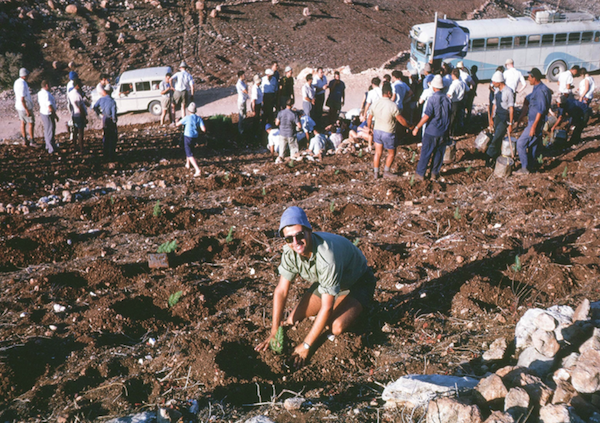
Panel speaker Dr. Arthur Dodek in 1963, planting a Jewish National Fund tree as part of the second World Jewish Youth Convention. Dodek was in Israel representing the Student Zionist Organization of North America. (photo from Arthur Dodek)

The Zoom event in Jewish National Fund, Pacific Region’s virtual sukkah on Oct. 8 was seamless and stimulating. Moderator and presenter Dr. Arthur Dodek led the presentation on heart health with a five-minute overview of risk factors. Drs. Saul Isserow, Zach Laksman and Josh Wenner each presented as well, enlightening the audience in easy-to-understand language on topics of cardiology, also in just five minutes each.

But why was JNF Pacific Region hosting a talk on heart health? Well, every year, JNF hosts a Negev Dinner, raising funds for a specific project. This year, in collaboration with the Israeli organization Save a Child’s Heart (SACH), the fundraising supports the building of a cardiac treatment room, as well as a Holter (a heart-rhythm test) room, at the Wolfson Medical Centre in Holon. The sukkah event was the second in the campaign, the first having been held on Aug. 30, for which Dr. Saul and Lindsay Isserow were honourary chairs (jewishindependent.ca/negev-campaign-goes-virtual). Isserow being a prominent cardiologist led to the idea for this second event, an educational panel on heart health.

The funds raised by this Negev campaign will help SACH focus on doing what they do best – saving the lives of some of the most vulnerable children in the world who are born with heart defects. According to Ilan Pilo, executive director of JNF Pacific Region, many of the young patients are from the Palestinian territories and some come from Lebanon and Syria. As well, there are a number of patients from African nations who have been brought to Israel for surgery, accompanied by their families. “There is a beautiful house for the families, like Ronald McDonald House, but it is an African island in suburban Israel,” said Pilo.

At the Oct. 8 panel, Dodek – using data from a variety of studies – summarized the main lifestyle and medical coronary risk factors. At the top of his list was cigarette smoking, which has decreased in prevalence by nearly 30% since 1965. Diet and cholesterol were other major factors of heart disease, with a Mediterranean or Japanese diet recommended to reduce the chance of cardiovascular events. Blood pressure is also a key issue, and Dodek touched on the benefits of a lifestyle that includes stress and weight reduction, as well as exercise.

Isserow picked up on this theme. In providing a practical, Jewish-oriented take on the best way to maintain long-term cardiac health, he said, “The best bang for your buck from a cardiac point of view is simply getting off your tuches and walking for 30-40 minutes per day.” He mentioned having a l’chaim with friends as a way to lower blood pressure, while stressing that having physical activity as part of a daily routine is beneficial not only for the heart but for myriad other areas of health.

Taking things to another level of complexity, Laksman successfully simplified the subject of atrial fibrillation (a chaotic and irregular heart beat). He spoke about the heart’s rhythm and the causes of heart rhythm disorders, as well as treatment options. He explained that age is the number one cause of atrial fibrillation, but added, “Bad habits, alcohol, probably being number one.” Other factors include genetics, really intense endurance exercise, stress and pollution. Laksman discussed how it feels to experience atrial fibrillation and offered some easy tips, including that people should learn how to take their own pulse, to determine their condition.

Wrapping up the cardiologist panel was Wenner, the youngest of the doctors. Having volunteered for Save a Child’s Heart in Israel before entering his cardiology program, Wenner had a firsthand connection with SACH’s work. But the focus of his talk was COVID-19 and the heart. One of the most important takeaways was the importance of continuing to take heart medications appropriately and regularly to maintain health regardless of rumours in the media about contraindication with COVID. One of the other points Wenner made was that people should go to the hospital if necessary. “Based on the raw data, in March and April … the overall death rate, excluding COVID patients, was significantly higher and the best theory for that is that people were staying home with their acute cardiac and other conditions,” explained Wenner.

JNF Pacific Region president Bernice Carmeli concluded the evening with a more detailed explanation of the fundraising goals and the collaboration with Save a Child’s Heart.

The event proceeded with limited breaks between speakers and short comments by the moderator. “I was asked to give my best 45-minute talk in 12 minutes and I said I can’t do it, but it turned out to be my best talk,” commented Dodek.

For those who weren’t able to attend the event, most of the program was recorded and can be accessed on YouTube or by contacting Pilo at the JNF Pacific Region office, 604-257-5155 or [email protected]. More information can be found, and donations made, at jnf.ca/vancouver/campaigns/negev-campaign.

Michelle Dodek is a freelance writer, who also happens to be the daughter-in-law of the moderator (for full disclosure). Her husband, who is a doctor, says she has the medical knowledge of a third-year medical student.

Format ImagePosted on October 30, 2020October 29, 2020Author Michelle DodekCategories LocalTags Arthur Dodek, cardioloy, fundraising, health, Ilan Pilo, Jewish National Fund, JNF Pacific Region, Josh Wenner, Negev campaign, philanthropy, SACH, Saul Isserow, Save a Child's Heart, Sukkot, tikkun olam, Wolfson Medical Centre, Zach Laksman
Community milestones … NCJW, JFS, Digby-Klein, Peretz, Federation, VHEC

Community milestones … NCJW, JFS, Digby-Klein, Peretz, Federation, VHEC

Newcomer to Vancouver and longtime National Council of Jewish Women of Canada member Rachel Ornoy, left, cheers the Purse Project volunteer gang on.

Members of National Council of Jewish Women of Canada, Vancouver section, under the guidance of Cate and Jane Stoller, stuffed purses with cosmetics, toiletries, comfort candles, chocolates, gift cards, pyjamas and other useful items on the morning of Sept. 27 for partner agency Atira Women’s Resource Society, a not-for-profit organization committed to the work of ending violence against women.

Thank you to everyone who dropped off purses, helped fill the bags and collect their contents – more than 100 purses were delivered to Atira. Also thank you to Jane Stoller for putting together the hostess table with coffee and Timbits. It was a lovely pre-Kol Nidre morning mitzvah and it was great to have a socially distant visit with our NCJWC Vancouver friends.

* * *

This year’s Project Isaiah campaign required Jewish Family Services (JFS) to change the way it looked at the traditional food drive. From Sept. 8 to Sept. 29, JFS ran its very first virtual community food drive, ending with a COVID-19-safe drive-thru drop off.

Despite the needs being greater than ever – more than double compared to last year – this year’s Project Isaiah campaign has been the most successful food drive in the past 10 years. Thanks to donors, the Jewish Food Bank will be able to feed 700 clients (up from 450 last year) over the next four to six months; recipients include 175 children and 118 elders within our community.

* * *

photo - Aaron Klein and Carolyn Digby
Aaron Klein and Carolyn Digby

Carolyn Digby and Aaron Klein were wed in a romantic ceremony, surrounded by family and friends, Nov. 9, 2019, at VanDusen Botanical Garden in Vancouver. The couple resides in Toronto, where both are pursuing studies, Carolyn in a clinical psychology counseling master’s program, and Aaron in aerospace engineering, doctorate program.

* * *

The Peretz Centre has appointed Liana Glass to lead the centre’s pnei mitzvah program. The Peretz pnei mitzvah – pnei (faces) rather than b’nei (“sons of”), to reflect a gender-neutral descriptor – is a two-year program in which students meet once every second week for two hours, culminating in a group ceremony. The next intake period is this fall.

photo - Liana Glass
Liana Glass

Glass, who has earned a master’s of community and regional planning at the University of British Columbia, has considerable experience in teaching and facilitating groups from diverse backgrounds, most recently as a research intern with Vancouver’s Social Purpose Real Estate Collaborative.

Glass’s path to secular Judaism was not a straight one. After studying Yiddish at the Vilnius Yiddish Institute’s summer program in 2017, she found that “Yiddish opened up a secular avenue for me to explore my Judaism and connect with it on a different level. It allowed me to reexamine Judaism in the larger context of my life and as part of my cultural identity. The prospect of helping pnei mitzvah students find that sense of connection through the various subjects we’ll explore in class is extremely exciting.”

“In our search, we indicated that we were looking for a candidate who is dynamic, enthusiastic and firmly committed to secular Jewish ideals and learning. Liana brings all that and so much more. We’re looking forward to working with her and seeing where she’ll be taking the program next,” said David Skulski, Peretz Centre general manager.

* * *

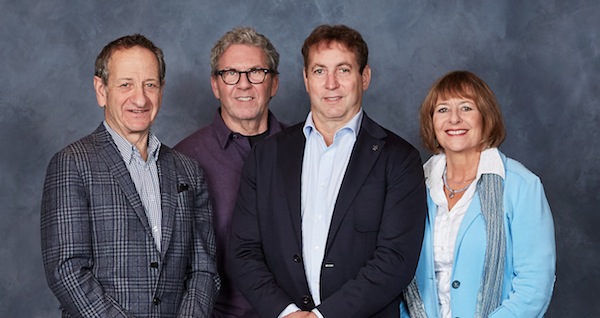
Jewish Federation of Greater Vancouver elected its 2020-2021 volunteer board of directors at its annual general meeting Sept. 30. New directors, elected for a two-year term, are Hodie Kahn, Shay Keil, Kyra Morris, Lisa Pullan and Stan Shaw. Each of them brings a background of community leadership and past contributions to Jewish Federation.

Kahn is currently chair of Jewish Federation’s Jewish Day School Council, whose work addresses the ongoing enrolment and financial stability needs facing the day schools; she is also a member of the Community Recovery Task Force. Keil is chair of major gifts for the Federation annual campaign and a member of the Jewish Day School Council; he is a past co-chair of men’s philanthropy. Morris is the new chair of the Axis steering committee, which oversees Federation’s programs for young adults. Pullan has lent her fundraising and leadership expertise to Federation for many years, including chairing women’s philanthropy and serving on the board in that capacity. And Shaw has held several leadership roles with Federation; he co-chaired the Food Security Task Force and is now bringing his cybersecurity expertise to the new cybersecurity and information protection subcommittee.

Returning directors elected for a two-year term are David Albert, Bruce Cohen (secretary), Alex Cristall (chair), Jessica Forman, Rick Kohn (treasurer) and Lianna Philipp. They join the following directors who are in the middle of a two-year term, and will be continuing their service on the board: Jim Crooks, Catherine Epstein, Marnie Goldberg, Candace Kwinter (vice-chair), Melanie Samuels and Pam Wolfman.

Joining or continuing to serve on the board are Sue Hector (women’s philanthropy co-chair), Karen James (immediate past chair), Jonathon Leipsic (campaign chair), Shawna Merkur (women’s philanthropy co-chair) and Diane Switzer (Jewish Community Foundation chair).

For more information, visit jewishvancouver.com.
* * *

At its Oct. 14 annual general meeting, the Vancouver Holocaust Centre Society confirmed the society’s board of directors: Rita Akselrod, Marcus Brandt, Jeremy Costin, Michelle Guez, Belinda Gutman, Helen Heacock-Rivers, Philip Levinson, Michael Lipton, Shoshana Krell Lewis, Jack Micner, Talya Nemetz-Sinchein, Ken Sanders, Joshua Sorin, Al Szajman, Robbie Waisman and Corinne Zimmerman. For more information, visit vhec.org/who-we-are/#board.

Format ImagePosted on October 30, 2020October 29, 2020Author Community members/organizationsCategories LocalTags Aaron Klein, AGM, Carolyn Digby, Jewish Federation of Greater Vancouver, Jewish Food Bank, JFS, Liana Glass, National Council of Jewish Women, NCJW, Peretz Centre, philanthropy, Project Isaiah, Purse Project, tikkun olam, Vancouver Holocaust Centre Society
The road to recovery

The road to recovery

Risa Levine, chair of Jewish Federation of Greater Vancouver’s Community Recovery Task Force. (photo from Jewish Federation)

The Jewish community and its agencies have been dramatically affected by the COVID pandemic and its economic implications. But not a single agency has folded – and not a single employee has lost their job – in part because of the coordinated efforts of the Jewish Federation of Greater Vancouver.

That is the assessment of Risa Levine, who is chairing Federation’s Community Recovery Task Force. Levine, a retired justice who served on the Supreme Court of British Columbia and the B.C. Court of Appeal, was chosen to lead the major initiative, which will address the impacts of the pandemic on community agencies and help guide a possible rethinking of how programs and services might be delivered more efficiently or effectively in future.

The resilience of Jewish agencies stands in stark contrast to a much bleaker climate for nonprofit agencies in the general community. Among the many individuals and agencies the task force has heard from is Alison Brewin, executive director of Vantage Point, a resource agency for nonprofits in the province. “Alison told us that they expect about 25% of the nonprofits in British Columbia not to make it, to shut down,” said Levine. “Some already have and they expect that many of them won’t continue to operate.”

One of the things that Federation did almost immediately at the beginning of the emergency was intervene with a disbursement of emergency funds – $505,000, plus additional tranches released by individuals and families through their respective funds at the community foundation. In addition to this season’s annual campaign, canvassers are asking donors, if they are able, to make an additional contribution to the COVID emergency fund.

Levine was asked by Alex Cristall, chair of the board of the Jewish Federation of Greater Vancouver, to head the task force.

“I was on the allocations committee for Federation for 10 years, so that’s really directly related to what I’m doing now,” she said. “I had time and I think it’s crucial work to be done for our community, so I was honoured to be asked.”

Other task force members are Andrew Altow, Jill Diamond, Michelle Gerber, Hodie Kahn, Candace Kwinter, Shawn Lewis, David Porte, Justin L. Segal and Isaac Thau.

As well as confronting immediate needs of agencies, the task force presents an opportunity to consider the future more comprehensively, said Levine.

“The task force is taking a longer-term, holistic, strategic approach to look at how the community might look or how we think it should look coming out of this,” she said. The team is uniquely qualified to confront the challenges because of the diverse identities and experiences of the people on the task force, she said.

Task force members, collaborating with staff members Marcie Flom, executive director of the Jewish Community Foundation of Greater Vancouver, and Shelley Rivkin, Federation’s vice-president, planning, allocations and community affairs, are reaching out to all community partner agencies.

The crucial initial step is to determine how each agency has been impacted by COVID, what their immediate needs are, and what their requirements are likely to be for them to survive and continue their work.

“It’s just amazing and very impressive how resilient and responsive the agencies have been,” Levine said. “They are affected in different ways, depending on what their function is in the community and what they are doing.”

Jewish Family Services is on the very frontline, she said, addressing food security and housing for the most vulnerable in the community. They have expanded beyond their food bank to provision of meals, and providing delivery, which they did not do before.

“They are providing financial support for people, mental health support and so on,” said Levine. “Their client load has doubled, at least, since March and they’ve had to add to their staff and they are all working remotely. It’s been huge. And they’ve been amazing in terms of what they have been able to do.”

Synagogues have also stepped up in preparing and delivering meals to congregants, especially seniors and others who are particularly vulnerable and lack mobility because of transportation challenges and the reduced accessibility to routine services, she said.

She cited the Jewish Community Centre of Greater Vancouver’s nearly instant transition to online delivery of services. Smaller agencies, however, face greater challenges because they may not have the hardware, software and institutional capacity to make that kind of technological shift. Helping those agencies adapt to the technological and parallel needs was one of the priorities addressed at the outset, Levine said.

As the emergency campaign unfolds, the task force will continue assessing the situation.

“Ultimately,” said Levine, “the task force will be making recommendations for distribution of those monies, the Community Recovery Fund, and that will be based on the information we are gathering now about what the needs are and our assessment of how those funds can be strategically distributed to meet the needs of the community as they have changed and evolved through this crisis.”

Format ImagePosted on October 9, 2020October 8, 2020Author Pat JohnsonCategories LocalTags annual campaign, Community Recovery Task Force, coronavirus, COVID-19, economics, Jewish Federation, philanthropy, Risa Levine
Negev campaign goes virtual

Negev campaign goes virtual

In closing the Heart Stirring Negev Event on Zoom, Ilan Pilo, executive director of JNF Pacific Region, talked about the important work done by Save a Child’s Heart, the organization at the centre of this year’s fundraising campaign. (screenshot)

Jewish National Fund of Canada, Pacific Region, held its first virtual Negev campaign event on Aug. 30. The original Zoom was recorded and shown again on Sept. 13 and 16. The object of the fundraising campaign is Save a Child’s Heart (SACH), an Israeli-based global organization with the mission of improving “the quality of pediatric cardiac care for children in developing countries.”

“This year, we’re collaborating with Save a Child’s Heart to build a treatment room in the pediatric surgical wing,” explained Lance Davis, chief executive officer of JNF Canada. “Thanks to your support, JNF can fund the bricks and mortar to house the wonderful doctors and staff who perform life-saving surgeries. JNF will literally fund the foundation of the [new children’s] hospital to provide the necessary facilities to advance this beautiful tikkun olam project. Together with you, our generous donors, we truly are building Israel.”

This tagline – “Building Israel Together” – forms part of the new logo for JNF Canada. The change comes in part because, while JNF Canada continues in its environmental mission, it has become more involved in social infrastructure projects, such as youth centres, playgrounds and healthcare facilities. The current Negev campaign is the latest example of this shift: the treatment room is one of possibly two that JNF Canada will fund (depending how much the campaign raises), which are being constructed in the International Pediatric Cardiac Centre at Wolfson Medical Centre in Holon, Israel.

After Ethan Doctor, a King David High School student, sang O Canada, and Beth Hamidrash’s Rabbi Shlomo Gabay sang Hatikvah, Bernice Carmeli, JNF Pacific Region president, welcomed everyone to the virtual Negev event, which was emceed by JNF Pacific Region past president David Goldman.

Dr. Saul and Lindsay Isserow were honourary chairs of the evening. “Our family became aware of Save a Child’s Heart when my oldest daughter, Jenna, volunteered there one summer,” said Lindsay Isserow. The chance to support an Israeli organization that highlights the contributions Israel makes to the world and to the region is another reason the family was part of this event, said her husband, who specializes in preventive cardiology, among other areas. “The cardiology [aspect] is important to me, obviously, because this is something that’s treatable,” he said.

A video showed some of the work SACH has done – it has saved the lives of more than 5,400 children from 62 countries.

Co-campaign chairs Lana and Doug Pulver first visited Wolfson Medical Centre years ago. “I was moved by the way that this organization takes care of children from all over the world regardless of their background, regardless of where they come from, and ensures that their lives are saved,” said Lana Pulver, who was so taken with SACH that she joined its national board a few years ago.

“Each child that is saved is a whole world – and those worlds learn of the compassion of the Jewish people and the nation of Israel,” said Dr. Lior Sasson, lead surgeon at SACH, in his remarks and thanks.

The remainder of the evening was spent with David Shore, one of the producers of The Good Doctor and of House, interviewing Israeli TV show Fauda’s co-author, Avi Issacharoff, and actor Itzik Cohen, who plays the character of Captain Ayub (Gabi). They talked about many topics, including Fauda’s international popularity; how Cohen, a comedian who does musicals, got his (very serious) part as an interrogator; some of Issacharoff’s and Cohen’s favourite scenes; and, of course, SACH.

Ilan Pilo, executive director of JNF Pacific Region, wound up the program by thanking all those who made the event possible: the donors, the boards, staff and others.

After the Sept. 16 streaming, Pilo spoke with the Independent. About 250 people viewed the event over its three nights, he said, noting that it was just the first of two main parts to the local Negev campaign. The next is called Join Us in the JNF Virtual Sukkah, on Oct. 8, 7pm. “It is a Jewish cardiologist panel,” said Pilo. Isserow will spearhead that conversation, and the cardiologists on the panel with him are Drs. Arthur Dodek, Zach Laksman and Joshua Wenner. For more information and registration, visit jnf.ca/vancouver/campaigns/negev-campaign.

The annual Negev Dinner would have normally taken place in the spring or summer. Looking back to March, when COVID hit in full force, Pilo said, “We had plans, and then we were thinking about doing something in April or May, but we realized that people were not going to leave their homes and we had to reconsider our plans…. We had to do everything very quickly. In a month we had to put together an event. And it’s different. On the one hand, it’s in a way easier because you don’t have to serve dinner. On the other hand, you have to be very creative and prepare everything in advance for the online campaign.

“For instance, we have made videos of local young Vancouverites who had volunteered in the past for SACH,” he said. To do this, the former volunteers had to be tracked down and convinced to record themselves. “This way,” said Pilo, “they became part of the online campaign…. You need to get people’s attention and interest and this was a great way [to do that].”

He hoped that the Heart Stirring Negev events would inspire people to contribute to the SACH’s project, “a cause that brings so much pride to the Jewish people everywhere.” Donations are still being accepted at vannegevdinner.ca, 604-257-5155 and [email protected].

Format ImagePosted on September 25, 2020September 23, 2020Author Cynthia RamsayCategories LocalTags Fauda, healthcare, Ilan Pilo, Isserow, Jewish National Fund Canada, JNF Canada, JNF Pacific Region, Lance Davis, Negev campaign, philanthropy, Pulver, SACH, Save a Child's Heart

JSA adapts to the times

The Jewish Seniors Alliance of Greater Vancouver held its annual general meeting on Sept. 10 via Zoom. Because of the pandemic, we were unable to have our usual format – the AGM followed by a gala dinner and the honouring of three volunteers, nominated by the seniors organizations with whom they work. In spite of these obstacles, we succeeded in holding a meeting that dealt with our ongoing activities and resolutions for our future. More than 50 supporters attended online.

JSA’s co-president, Gyda Chud, focused her remarks on the hard work of the peer support program volunteers, who have been putting in extra time, contacting their clients by phone several times a week. She thanked Grace Hann and Charles Leibovitch for their support of the volunteers during these demanding times. And she also thanked the rest of the JSA staff: Liz Azeroual, executive administrator; Rita Propp, administrative assistant; Jenn Propp, graphic designer and webmaster; and Wendy Lo, bookkeeper. She mentioned two new staff members – Margot Beauchamp, quality assurance liaison, and Rochelle Garfinkel, donor relations and philanthropy – and asked for a minute of silence to remember the members and supporters who had passed away over the last year.

JSA co-president Larry Shapiro explained how the formal part of the meeting would be conducted, with the use of the chat line and voting via on-screen polling. The minutes from JSA’s 2019 AGM were approved as well as the agenda for the 2020 meeting.

JSA’s financial statements were presented by treasurer Alan Marchant, then Shapiro gave a short president’s report. In it, he commented on the harmony of working with Chud, and also with the board members of JSA. He emphasized the importance of the peer support program and its work with lonely and isolated seniors. He expressed the hope that JSA’s finances would enable us to continue training and supporting the volunteers, and he urged everyone to stay in touch and to read Senior Line magazine.

Tony DuMoulin, who is in charge of governance issues, presented a special resolution for a change to the constitution. This involved removing the word “Jewish” in the section saying that JSA works with Jewish seniors, since it interacts with all seniors. He emphasized that the name of the organization, Jewish Seniors Alliance, would remain the same, and, after some discussion, the resolution was approved with 82% support.

Next, DuMoulin proposed a special resolution to change a number of the bylaws – that all donors automatically become members; meetings may be held electronically; officers would be elected by the board not by the members; and an extended term for members. These changes were approved by 88%.

Shapiro thanked DuMoulin for all his work on the bylaws, while Ken Levitt, head of the nominations committee, thanked Larry Meyer and Pam Ottem, who are retiring from the board, for their years of work on behalf of JSA. He moved that the number of directors on the board be changed from 20 to 21 and this was passed by 97%. He read out the nominations for the upcoming board and these were passed by acclamation.

Various committee chairs reported next, and these reports are available on the JSA website. The highlights include the following:

Peer support services chair Rita Roling, who is taking over from Ottem, noted that they are presently handling 100 cases and would like to increase the service.

Lyle Pullan, membership, stated that JSA has 517 members and 102 life members. He believes that many of the new members came as a result of reading Senior Line. He said new members should be listed in the magazine as an incentive.

Serge Haber reported on fundraising, including the fact that JSA has a contract with Vancouver Coastal Health for $70,000 annually to stabilize the organization. And I reported for the program committee, which is planning a fall forum for November and an Empowerment Series event in October, to be held via Zoom.

Senior Line editor Dolores Luber thanked Jenn Propp for her graphic design and collaboration, as well as the members of the editorial committee. The July issue of the magazine was different, as there had been no public events and nothing to review, but it was full and informative.

DuMoulin spoke on behalf of the advocacy committee, which has established collaboration with COSCO and anti-poverty groups. They have approached the provincial government about making the enhanced flu shot free for seniors. They want the government to make improvements in long-term care homes, increase pensions and the number of free Lifeline pendants available for low-income seniors.

After a short video showing the work of the peer support program, Haber thanked an anonymous donor, who has been giving $25,000 annually for the past five years, for helping JSA in its mission of outreach, advocacy and peer support for seniors.

Shapiro adjourned the meeting.

Shanie Levin is an executive board member of Jewish Seniors Alliance and on the editorial board of Senior Line magazine.

Posted on September 25, 2020September 23, 2020Author Shanie LevinCategories LocalTags advocacy, AGM, coronavirus, COVID-19, Jewish Seniors Alliance, JSA, philanthropy, seniors

Posts pagination

Previous page Page 1 … Page 10 Page 11 Page 12 … Page 19 Next page
Proudly powered by WordPress