Skip to content
  • Home
  • Subscribe / donate
  • Events calendar
  • News
    • Local
    • National
    • Israel
    • World
    • עניין בחדשות
      A roundup of news in Canada and further afield, in Hebrew.
  • Opinion
    • From the JI
    • Op-Ed
  • Arts & Culture
    • Performing Arts
    • Music
    • Books
    • Visual Arts
    • TV & Film
  • Life
    • Celebrating the Holidays
    • Travel
    • The Daily Snooze
      Cartoons by Jacob Samuel
    • Mystery Photo
      Help the JI and JMABC fill in the gaps in our archives.
  • Community Links
    • Organizations, Etc.
    • Other News Sources & Blogs
    • Business Directory
  • FAQ
  • JI Chai Celebration
  • JI@88! video

Recent Posts

  • Sharing her testimony
  • Fall fight takes leap forward
  • The balancing of rights
  • Multiple Tony n’ Tina roles
  • Stories of trauma, resilience
  • Celebrate our culture
  • A responsibility to help
  • What wellness means at JCC
  • Together in mourning
  • Downhill after Trump?
  • Birth control even easier now
  • Eco-Sisters mentorship
  • Unexpected discoveries
  • Study’s results hopeful
  • Bad behaviour affects us all
  • Thankful for the police
  • UBC needs a wake-up call
  • Recalling a shining star
  • Sleep well …
  • BGU fosters startup culture
  • Photography and glass
  • Is it the end of an era?
  • Taking life a step at a time
  • Nakba exhibit biased
  • Film festival starts next week
  • Musical with heart and soul
  • Rabbi marks 13 years
  • Keeper of VTT’s history
  • Gala fêtes Infeld’s 20th
  • Building JWest together
  • Challah Mom comes to Vancouver
  • What to do about media bias
  • Education offers hope
  • Remembrance – a moral act
  • What makes us human
  • המלחמות של נתניהו וטראמפ

Archives

Follow @JewishIndie
image - The CJN - Visit Us Banner - 300x600 - 101625

Tag: philanthropy

Riders raise funds for STEM

Riders raise funds for STEM

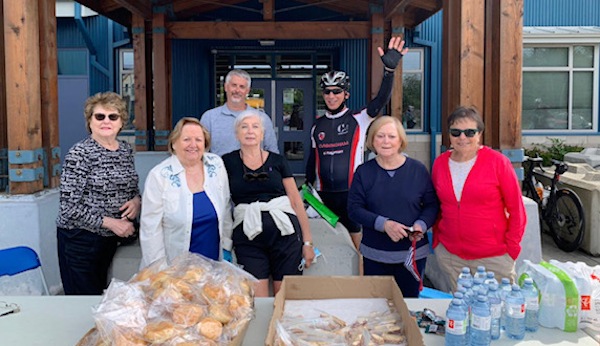
In back, left to right, are Marshal Stern and Mel Moss. In the front are, left to right, some members of the ORT committee: Marie Doduck, Mary Tobin, Bess Hirsch, Lane Stein and Beverly Pinsky. (photo from ORT Vancouver)

photo - Left to right, event co-chairs Mel Moss, representing ORT, and Jeff Topp, representing Richmond Jewish Day School
Left to right, event co-chairs Mel Moss, representing ORT, and Jeff Topp, representing Richmond Jewish Day School. (photo from ORT Vancouver)

ORT Vancouver and Richmond Jewish Day School co-sponsored the Aug. 23 Ride for STEM (science, technology, engineering, math). They are the first Vancouver Jewish organizations to hold such an event and the donated funds are designated to students so that they have the opportunities that arise from the knowledge and skills that STEM education can provide.

ORT’s goal is to bridge the gap between ability and opportunity by providing state-of-the-art education both locally and around the world. World ORT reaches 300,000 children who benefit from STEM education in 37 countries, including here in Canada.

photo - Riders prepare to head out
Riders prepare to head out. (photo from ORT Vancouver)


Format ImagePosted on September 25, 2020September 23, 2020Author ORT VancouverCategories LocalTags education, kids, ORT, philanthropy, Richmond Jewish Day School, RJDS, STEM
New residences open

New residences open

The Ben and Esther Dayson Residences, on East Kent Avenue North, opened its doors to tenants last month. (photo from Tikva Housing)

The first tenants at the Ben and Esther Dayson Residences started moving into their new homes in late August. Managed by Tikva Housing, the 32 townhomes are located west of the River District, on East Kent Avenue North, a block from Riverfront Park.

The residences comprise four two-bedroom units (1,045 square feet), 24 three-bedroom units (1,175 square feet) and four four-bedroom units (1,305 square feet). The units were open to Vancouver-based families with one to six children, within a range of income levels. The site includes two towers that will be managed by the Fraserview Housing Co-op.

A part of the Vancouver Land Trust project, the residences share a number of amenities, such as green space and a playground. Rent will be targeted to approximately 30% of gross household income to a rent maximum. Tenants are expected to pay for hydro, phone, internet and contents insurance.

Anat Gogo, Tikva Housing’s manager of programs and donor relations, expressed her enthusiasm upon the launch. “I feel so excited for the community,” she said. “It will be a concentrated Jewish community. When you build neighbourhoods, you build community.

“The residences will also provide a home for essential workers, such as teachers, in our community,” she added.

The Dayson Residences are situated close to several daycares, elementary and high schools, as well as banks, shopping centres, grocery stores, libraries and hospitals.

The strong need for affordable housing in the region has been a prevalent concern for many years. A 2011 survey of the Greater Vancouver Jewish community identified more than 4,000 people (or 16% of the total community) who were low-income; the number included 600 children and 550 single-parent families.

To many local renters, Vancouver holds the unenviable distinctions of having the highest rents and the lowest vacancy rates in the country. At the start of the year, the rent for an average one-bedroom apartment in the city was more than $1,500 per month, while vacancy levels hovered around one percent.

Tikva Housing helps those who would be deemed “working poor” and cites the limited “life options” available to them in this expensive city. For example, to a person earning $2,000 a month, the affordable level for their rent should be a maximum of $600 per month. For the past decade especially, rents in the Lower Mainland have risen far beyond that level – thus leaving little money to set aside for food, medicine, utilities, transport or education to improve job skills.

“They save people from being on the streets. They save people from unsafe situations,” said Steve, a tenant at Tikva Housing’s Diamond Residences in Richmond. “It’s given me security. I don’t have to worry about making rent. It’s affordable. I buy our groceries. It puts me in a wonderful frame of mind. It allows me to be a good father. Without Tivka, I would not have been able to give proper care to my children.”

Tikva Housing’s stated mission is to provide a safe, stable and affordable home to every Jewish person in Metro Vancouver who needs one. Its services are geared primarily at low- and moderate-income adults and families.

It also operates the 11-unit Dany Guincher House apartments in Marpole and the 18-unit Diamond Residences cited above. Opening in early 2021 is the Arbutus Centre on the West Side – as part of a partnership with the City of Vancouver, the YWCA and the Association of Neighbourhood Houses of British Columbia – which will bring another 18 studios and 19 one-bedroom units to low- and moderate-income members of the community.

As might be expected, the number of people turning to Tikva Housing has increased during the COVID-19 pandemic. In July alone, it approved a record number of eight recipients for the Tikva Housing Rent Subsidy Program.

“The subsidy allocation for the past five months amounted to just shy of $27,000 in addition to the existing allocations, and the need continues to grow,” Gogo said.

In August, Alice Sundberg, Tikva’s director of operations and housing, announced, “I am in conversation with a few private developers and nonprofit housing providers regarding potential projects in Vancouver, Burnaby, Richmond and Surrey. I can’t say more about these opportunities at this time.”

Ben Dayson was a prominent figure in Vancouver and Richmond real estate and a philanthropist. Together with his wife Esther, they worked to help many charitable causes. Helping those in need find affordable housing was one of their primary objectives, through funds provided by the Ben and Esther Dayson Charitable Foundation.

“Our family is focused on providing funding to areas of basic needs,” said their daughter, Shirley Barnett. “Obviously, housing is one of these areas we choose to support. As my parents, Ben and Esther Dayson, were in real estate development, it seemed natural to fund a complex such as this in their memory.”

For more about the Tikva Housing Society, visit tikvahousing.org.

Sam Margolis has written for the Globe and Mail, the National Post, UPI and MSNBC.

Format ImagePosted on September 11, 2020September 10, 2020Author Sam MargolisCategories LocalTags Alice Sundberg, Anat Gogo, Ben Dayson, Esther Dayson, housing, philanthropy, Shirley Barnett, tikkun olam, Tikva Housing Society
Cemeteries get an upgrade

Cemeteries get an upgrade

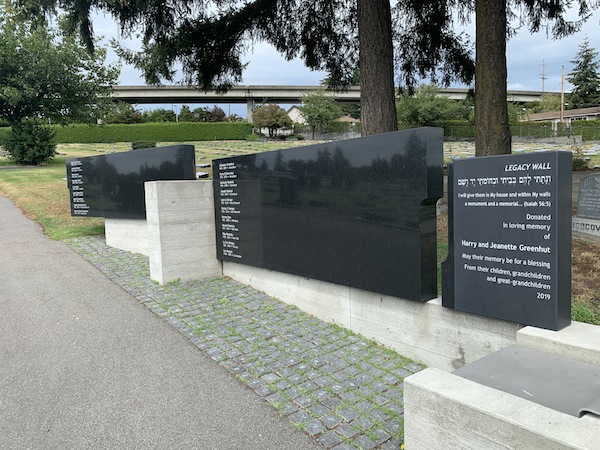
The new black granite memorial wall at Schara Tzedeck Cemetery in New Westminster allows people to memorialize loved ones buried in other cities. (photo from Schara Tzedeck)

What’s new at the cemetery? Not a question one tends to ask, but the Schara Tzedeck cemeteries in New Westminster and Surrey have seen some significant upgrades and additions in recent months.

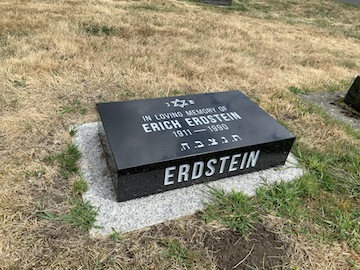
At the New Westminster cemetery, which saw its first burial in 1929, 50 graves that did not have headstones have received permanent markers. More than 100 others will ideally also see stone markers added in the coming years as the cemetery board’s Chesed Shel Emet Fund is replenished.

There are plenty of reasons why a grave might not have a permanent headstone, according to Howard Jampolsky, executive director of the Schara Tzedeck Cemetery Board.

“Sometimes, somebody had no family, maybe they were destitute, alone in the world,” he said. “Sometimes, the families just don’t have money; sometimes, one spouse dies and they get a headstone and the other spouse dies and there is no one to put the headstone.”

Whatever the reasons, the graves, some dating back to the 1950s, had temporary markers.

The Chesed Shel Emet Fund was set up primarily with donations from cemetery board members, Jampolsky said, and the first batch of 50 headstones was purchased for these unmarked graves and placed in the last few months.

photo - One of 50 headstones placed on graves that, until now, had only temporary markers
One of 50 headstones placed on graves that, until now, had only temporary markers. (photo from Schara Tzedeck)

“We were hoping to do a big unveiling ceremony, where all the graves would be unveiled and we would invite the community,” he said. But COVID intervened. He hopes such a ceremony will occur in the future.

The headstones cost about $525 each and the board is welcoming donations from the community to the fund so they can proceed with placing more stones.

Also at New Westminster, a new black granite memorial wall has been created to commemorate people who are buried in other places.

“Sometimes, someone lives in Vancouver their entire life and they die and get buried in another place, maybe they’re sent to Toronto or Israel or somewhere else,” Jampolsky said. “This is an opportunity to memorialize somebody who lived in the city and contributed to the city’s life and they don’t have a headstone here. The other possibility is people who have parents or family buried in other places where they live and don’t have the ability to go and visit. If you want to come on the yahrzeit, you can come and put a rock on top of that.”

The New Westminster cemetery also has seen a green irrigation initiative recently completed.

“We spend a lot of money irrigating our green grass here, a lot of water,” he said. “We used potable city water.”

They have now drilled a well and are also capturing rainwater, which is pumped through the irrigation system. Not only is this better for the environment, Jampolsky said, but the $150,000 cost will be recouped in about eight years at current water rates. He sees the greening initiative as in keeping with Jewish burial tradition, which is respectful of the land, rejects concrete casings and does not include embalming.

In other significant news, the Surrey cemetery, which had its first burial about a dozen years ago, now has a chapel. Until now, funerals at the Surrey site were graveside only. A sad irony is that the pandemic has meant that, after the first couple of funerals in the new chapel, services had to be again curtailed to graveside only, and with limited attendance.

The $500,000 structure was completed in late 2019 and reflects the philosophy of the board, Jampolsky said, that all members of the community be treated equally. Those being buried in New Westminster had funerals in a chapel, while those in Surrey did not. The new Surrey chapel was funded within the existing budget, but, if a community member wanted to contribute to the chapel, Jampolsky said, naming opportunities could be considered.

“The other thing we’re doing in Surrey is spending more time and effort and money to make Surrey look a lot nicer,” he said. “We are doing more landscaping work, we’re planting flowers and doing things that make it look very, very nice. We’re putting a lot of effort into that property.”

The Surrey cemetery contains about 2,000 plots while the much older New Westminster site has about 10,000. While approximately 5,000 of the New Westminster plots are filled, Jampolsky acknowledges that he can’t accurately predict how long the cemetery has before it is full.

“It really depends,” he said. There are about 80 burials annually in New Westminster. That would suggest about 60 years before it is full. But the community is growing quickly, so perhaps it would be only 50 years. At the same time, a plot may be purchased and not used for decades, he said. If a young family purchased plots today, it is reasonable to assume some burials might not occur until the 22nd century.


Format ImagePosted on September 11, 2020September 10, 2020Author Pat JohnsonCategories LocalTags burial, environment, headstones, Howard Jampolsky, Judaism, New Westminster, philanthropy, Schara Tzedeck Cemetery, Surrey, tikkun olam
Helping Israel’s lone soldiers

Helping Israel’s lone soldiers

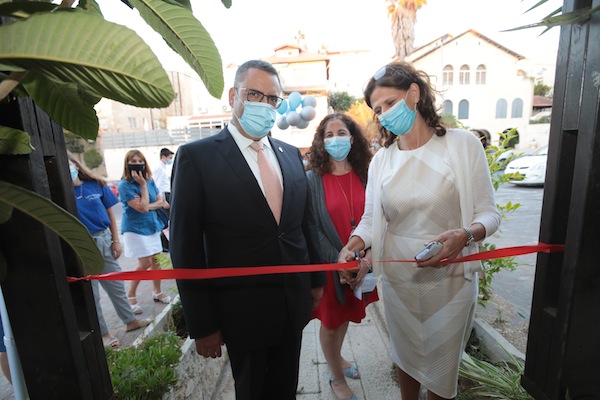
MK Michal Cotler-Wunsh, right, with Michal Berman, chief executive officer of the Lone Soldier Centre in Memory of Michael Levin, and Jerusalem Mayor Moshe Leon at the inauguration ceremony in August of a new home for female lone soldiers in Jerusalem. (photo by Yossi Zamir)

Michal Cotler-Wunsh was an 18-year-old new immigrant from Canada when she enlisted for the Israel Defence Forces some 30 years ago. Unlike most of her fellow recruits, she had no home to go to on weekends.

“I was a ‘lone soldier,’ without close family in Israel. There was no real framework that supported us – but much has changed since then, as this matter has become more acute,” she said.

Now a Knesset member (as a representative of the Blue and White coalition faction led by Benny Gantz), Cotler-Wunsh has taken up the welfare of the more than 6,300 lone soldiers lacking family in the country: immigrants, volunteers, orphans and youths estranged from their families.

“In retrospect, serving in the army was the most amazing exposure to Israeli society in many ways,” said Cotler-Wunsh, whose father Irwin Cotler was Canada’s minister of justice and attorney general from 2003 to 2006. “I did a squad leaders course and served in a very ragged anti-tank base at Nitsanim. The company slept in tents and went on marches in the dunes.”

The army gave her rent support and, on weekends, she stayed in a room in a Jerusalem apartment. “I lived with an elderly man who usually went away on weekends, so I was alone in the apartment,” she said. “To this day, I have connections with people from the Machane Yehuda market, especially the owner of the marzipan shop and the Tzidkiyahu delicatessen. These two would prepare boxes of food for lone soldiers at the end of Friday business, and we would get to Jerusalem after everything was already closed, go through the market and take the boxes of food prepared for Shabbat. To this day, I don’t forget them and they don’t forget me.”

Beyond material needs, she recalled the psychological hardship of being far from home.

“I know how important it is for lone soldiers to have their parents accompany them,” said Cotler-Wunsh, who served in the days before digital communication. “One aspect that has changed is parents’ involvement in day-to-day matters. Nowadays, it’s possible to convey to the lone soldiers’ parents a reality that they do not understand – and there’s no chance that they will understand – but they’re very concerned about. This communication calms both them and the lone soldier throughout their military service.”

“Lone soldiers need somewhere to live, a hot meal on Friday night … things other soldiers take for granted,” Michal Berman, chief executive officer of the Lone Soldier Centre in memory of Michael Levin, a nonprofit organization that looks after their welfare.

The LSC, established in memory of an American immigrant soldier killed in the 2006 Second Lebanon War, currently operates nine apartment homes, offering low-rent housing to about 100 soldiers in Jerusalem, Petach Tikva, Herzliya and Ramat Hasharon, as well as social clubs catering to about 1,000 soldiers in Tel Aviv, Jerusalem and Be’er Sheva. Only financial restraints are preventing the opening of more facilities and programs.

Beyond the social-psychological aspects, soldiers’ needs are often prosaic. “They need basic things like clean underwear, a toaster, somebody to look after them when they are sick,” Berman explained. “We have hundreds of volunteers who cook and do their laundry for them – many of them former lone soldiers or others immigrants.”

The organization’s staff also provide advice on how to navigate Israel’s bureaucracy, and attend military ceremonies, taking the place of their parents who cannot be there. “They say this means the world to them,” Berman said.

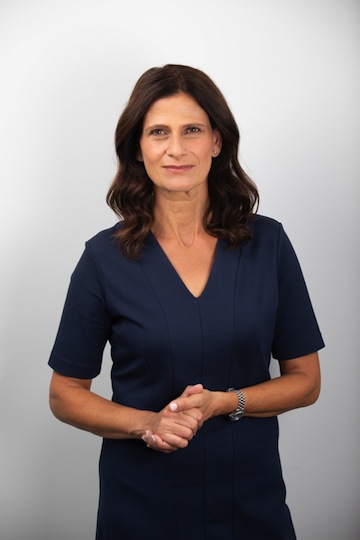
photo - MK Michal Cotler-Wunsh
MK Michal Cotler-Wunsh (photo by Avishai Finkelstein)

“The difficulties continue beyond their army service,” noted Cotler-Wunsh, who returned to Canada after studying law at the Hebrew University of Jerusalem. “After 13 years in Israel and with a small baby, for the first time in my life I missed my family. I was pregnant with my second child and also wanted to do a second degree, at McGill University, and took the opportunity to be close to my parents.”

She returned to Israel 10 years later with four children and pursued a legal career that led her to the Knesset, where she has taken up a host of social issues, including the welfare of lone soldiers before, during and after their service.

“Nowadays, when they do have a support system, the loneliness hasn’t disappeared – it’s just been postponed. It’s harder when you’re used to an all-embracing system then, suddenly, to find yourself really alone. In any case, getting out of the army is a shock. For a lone soldier, it’s even harder to go from a hierarchic system to being an independent citizen who has to make decisions that will affect their life. That’s part of the reason why so many young Israelis go traveling after their army service.”

Over the High Holidays, the LSC is launching a global crowdfunding campaign to help lone soldiers get through the toughest time of their lives. For more information, visit charidy.com/lsc.

Daniel Ben-Tal was a lone soldier serving as a paratrooper before becoming a journalist. Over three decades he has penned hundreds of articles in a host of journals and websites around the world. Formerly an editor at the Jerusalem Post and the English version of Haaretz, he is now an Israel-based freelance writer, editor and translator.

Format ImagePosted on September 11, 2020September 10, 2020Author Daniel Ben-TalCategories IsraelTags army, IDF, Israel Defence Forces, lone soldiers, Michal Cutler-Wunsh, philanthropy
Rediscovering Judaism

Rediscovering Judaism

Sarah Hurwitz will help launch Jewish Federation of Greater Vancouver’s annual campaign on Sept. 8. (photo from Jewish Federation)

Sarah Hurwitz, who for seven years served as head speechwriter for former first lady Michelle Obama, will be a featured speaker at the Jewish Federation of Greater Vancouver’s annual campaign opening on Sept. 8, which will be held virtually.

Hurwitz spoke to the Independent about her new book, Here All Along: Finding Meaning, Spirituality, and a Deeper Connection to Life – in Judaism (After Finally Choosing to Look There), and her upcoming Vancouver talk, which, before the pandemic, she had planned to deliver in person.

Here All Along traces Hurwitz’s personal journey back to her Jewish roots, a journey that began after an introduction to Judaism class in 2014. Before that time, she said, her main points of contact with the faith had been at “dull, incomprehensible” High Holiday events and a “lifeless” seder.

Her book delves into such areas as the Jewish traditions of questioning, debating and interpreting religious texts, “freeing God from his human-shaped cage,” and marking holidays and lifecycle events.

“What most surprised me (after taking the class) was the depth of spiritual and ethical wisdom Judaism had to offer,” she said. “I had always been proud to be Jewish and considered myself a ‘cultural Jew,’ but I knew almost nothing about Judaism. Once I started learning, I discovered thousands of years of profound wisdom about what it means to be human – how to live a worthy life, how to be a good person, how to find spiritual connection, and so much more.”

When asked how this discovery has affected her life, she explained: “My Judaism informs how I live every day of my life. It informs the ethical decisions I make each day about how to treat others, especially when it comes to the words I speak to and about them. It’s helped me develop an adult spirituality – beyond simplistic notions of the divine as a man in the sky who controls everything and punishes us when we’re naughty – which allows me to feel greater awe, wonder and gratitude each day. And it’s brought me into an amazing community of people, not just in the U.S., but across the globe – spiritual leaders, scholars and Jewish professionals who’ve become my dearest friends, mentors and teachers.”

Study, Hurwitz said, is a big part of her Jewish practice these days, though she would not label it an “intellectual pursuit.”

“Law school was an intellectual endeavour. Jewish study is deeply spiritual and emotional for me. I don’t study Jewish texts to gain information or facts, or to hone my analytical skills. I study them to glean the deepest wisdom of my ancestors about how to live my life,” she explained.

Currently, she is studying Psalms in chavruta (partnership) with a friend. Every week, they connect on Zoom and discuss the language and themes of the Psalmists. She also had a recent series of one-on-one study sessions with a rabbi that focused on Chassidic texts.

Selected last December by the Forward as one of the 50 most influential Jewish Americans, Hurwitz helped the former first lady put together many well-received speeches – including her 2016 Democratic National Convention address – and traveled with Obama around the world. She also worked on policy issues, as a senior advisor to the White House Council on Women and Girls.

Before working at the White House, Hurwitz was chief speechwriter for Hillary Clinton during Clinton’s 2008 presidential primary campaign. She then joined the Obama campaign, serving as a senior speechwriter for then-Senator Barack Obama and helping Michelle Obama draft her 2008 Democratic National Convention speech.

Prior to the Clinton and Obama campaigns, Hurwitz served as deputy chief speechwriter for Senator John Kerry’s 2004 presidential run and also worked as a deputy chief speechwriter for General Wesley Clark’s primary bid, as well as for Senator Tom Harkin. Earlier in her career, she was a lawyer at the Washington, D.C., office of WilmerHale. Presently, she is working on a proposal for another book and, while she does not write speeches at the moment, she does “help people out with remarks they’re giving, or offer edits.”

Hurwitz’s Vancouver talk will explore a wide range of subjects, such as working for Michelle Obama in the White House, spiritual and ethical insights in Judaism that have most transformed her life, and some thoughts on the future of Judaism. She will be joined at the virtual launch by fellow keynote speaker Nigel Savage, president and chief executive officer of Hazon (jewishindependent.ca/the-world-needs-us-to-change). To register for the Sept. 8 campaign opening, visit jewishvancouver.com/faco2020.

Sam Margolis has written for the Globe and Mail, the National Post, UPI and MSNBC.

Format ImagePosted on August 28, 2020August 27, 2020Author Sam MargolisCategories LocalTags annual campaign, books, Hillary Clinton, Jewish Federation, Judaism, lifestyle, Michelle Obama, philanthropy, politics, Sarah Hurwitz

Thank you to all who contributed to the Aug. 28/20 issue!!!

image - Thank you to all who contributed to the Aug. 28/20 issue ad from paper

Format ImagePosted on August 28, 2020September 1, 2020Author The Editorial BoardCategories From the JITags JI, journalism, philanthropy
Best years ahead: Shanken

Best years ahead: Shanken

Jewish Federation of Greater Vancouver chief executive officer Ezra Shanken holding a T-shirt featuring Dr. Patricia Daly, vice-president of public health and chief medical health officer for Vancouver Coastal Health. The Facebook post thanks Daly for always being there, throughout COVID-19, “behind the scenes providing valuable support.” (photo from facebook.com/jewishvancouver)

The largest capital project in the history of British Columbia’s Jewish community – the redevelopment of the Jewish Community Centre of Greater Vancouver site – is going ahead as planned, despite the pandemic. This and many other projects are continuing as planned, says Jewish Federation of Greater Vancouver chief executive officer Ezra Shanken, in part because the agency has been preparing for a crisis for more than a decade.

As the Jewish Federation is set to launch the 2020-21 annual campaign, the Independent spoke with Shanken about the achievements and challenges of a year that started out relatively normally and veered suddenly into the utterly extraordinary.

While the COVID-19 crisis wreaked havoc on communities worldwide, and upended 2020 in unpredictable ways, Shanken said that Federation has been prepared for a crisis and that means the community remains in a position of economic and social health. After the 2008 economic recession, the organization launched a multi-year planning and allocations process intended to smooth economic ripples and equip partner agencies with reliable income expectations.

Federation raised $10.3 million this year – $8.9 million through the 2019 annual campaign and $1.4 million in special targeted funds from donors toward specific high-priority community needs such as supplemental education, to expand Jewish Family Services’ food hubs and to increase outreach to suburban and remote Jewish communities. Dr. Jonathon Leipsic was campaign chair. Alex Cristall, Federation board chair, and Shanken, provided a comprehensive overview of the year’s achievements in the 2019-20 annual report, available online at jewishvancouver.com.

When the pandemic struck, Federation launched an emergency campaign to help agencies meet the challenge of providing services to their constituencies while confronting the health crisis and its associated economic implications. The amount raised so far is not being announced, but $505,000 in funding has been released, for services like food and housing supports through JFS; to the JCCGV to help with service delivery; to supplemental and day schools to assist with tuition subsidies and transitions to online learning; for emotional support for seniors through the Jewish Seniors Alliance; and more.

A crisis like COVID, said Shanken, can have unintended consequences in helping communities overcome divisions and work together to reduce duplications of effort.

“Crisis often opens the door for opportunities for collaboration that never would have existed before for myriad political reasons,” he said. “People have far greater clarity around what the big picture looks like when they are in crisis. They are willing to forgo those smaller, often political complications that don’t allow for the advancement of big-ticket projects.”

Programs and projects that were underway before COVID include a Jewish Day School Council, chaired by Hodie Kahn, which began a year ago to undertake a benchmark study on the costs of education for each of the five schools in Metro Vancouver’s Jewish community. The findings of the report are expected to point the direction toward new funding models for Jewish education.

Community security also remains top of mind. This year saw the largest number of community organizations receive federal funding for security upgrades to facilities – Federation’s community security advisory committee, chaired by Bernard Pinsky, helped secure more than $225,000 from the federal Security Infrastructure Program. Security training sessions were provided to 160 community members.

A significant portion of campaign funds support programs abroad, including in Israel, especially in Vancouver’s partnership region, the Upper Galilee Panhandle. A connection with Jews in far-eastern Russia is also enjoying support from Vancouver’s campaign.

The challenges presented by the pandemic brought out the best in the community, Shanken said.

“It’s unprecedented in its negativity and it’s unprecedented in its positivity,” he said. “It’s unprecedented in the way that we are seeing need but it’s also unprecedented in the way that we are seeing cooperation to address that need. It’s really been a beautiful thing to see the community come together, agencies across the spectrum working together to ensure that we really have a great community as we come out of this.”

He recalls a phone call he received at the height of the lockdown.

“Somebody called me up one time when we were knee-deep in this thing and said to me, you know, Ezra, if you want to go through a crisis, go through it with the Jewish community, because we do it better than anybody,” he said. “I actually think that there is some truth to that. We really are very, very good at coming together at these critical moments. You see that materializing in the way that our agencies are working together, the way our donors are working together, the way our volunteers are coming now to serve, people are delivering food packages, over 1,300 people are being fed a week, that’s being done on the backs of volunteers and amazing professionals, multiple agencies working in conjunction with each other to make that happen. And that’s only possible because people’s best selves are emerging during this moment.… What strikes me is we really, really do, as a Jewish community, show our best selves in times of crisis.”

Shanken credits Eldad Goldfarb, executive director of the Jewish Community Centre of Greater Vancouver, for forging ahead with plans for the redevelopment of the site.

“I think people are still very passionate about seeing this project move forward,” said Shanken. “We are committed to continue to walk down the road. I can’t tell you when we will get a shovel in the ground, but I will tell you we have not put this on hold.”

Though this has been a most unusual year, so far, Shanken is bullish on the Metro Vancouver Jewish community.

“I believe it in my soul that the best years for our community have yet to happen,” he said. “We have had an amazing run over the past decade or more. Our community is incredibly strong, well positioned to emerge from COVID better than it’s ever been. But, for us to emerge in that way, it requires a commitment from our community to seize on the moment and bring us to that place that I know we can get to. The call that I would have for people is to join up, because we have an unprecedented opportunity to do truly great things for this community and to make us even stronger than we’ve ever been.”

Format ImagePosted on August 21, 2020August 20, 2020Author Pat JohnsonCategories LocalTags annual campaign, education, Ezra Shanken, Israel, Jewish Federation, philanthropy, Russia, security, seniors
The world needs us to change

The world needs us to change

Nigel Savage, president and chief executive officer of Hazon, is one of the keynote speakers for Jewish Federation of Greater Vancouver’s annual campaign opening on Sept. 8. (photo from JFGV)

Nigel Savage, president and chief executive officer of Hazon, is looking forward to addressing the Vancouver Jewish community Sept. 8 as one of the keynote speakers for Jewish Federation of Greater Vancouver’s annual campaign opening. “The pandemic is a reminder of why we have and why we need central institutions like federations for the Jewish community,” he said.

“Hazon is working to turn the Jewish community outwards, address environmental sustainability and to use that process to strengthen Jewish life,” explained Savage in an interview with the Independent. “I think of the Vancouver Jewish community as one made of people who choose to live in the Pacific Northwest and have a sensibility of caring for the world and its natural resources, so I want to sketch out what may be possible for all of us in the long term.”

Savage was a professional fund manager in London, England, where he worked for NM Rothschild and was co-head of UK equities at Govett. After nine years in the financial world, he opted to take a sabbatical year and study at Pardes in Jerusalem. “I had an amazing time and stayed on in Israel as I tried to figure out what I wanted to do with my life,” he recalled.

A friend invited him to join a hike from the Mediterranean Sea to the Sea of Galilee, and Savage, who described himself as “a chubby, nerdy, intellectual English kid who grew up in Manchester and never really set foot outdoors,” agreed. He loved the hike and, as he began doing more physical activities outdoors, recognized it as a great way to bring Jewish tradition to life and connect with others. “We didn’t enter Jewish history in a synagogue or JCC. We entered it in relationship to the land of Israel, with a relationship to food, land, climate, language. That’s what the Torah is a record of,” he said.

Savage’s time in Israel was the impetus for the creation of what is today one of the largest faith-based environmental organizations in the United States. Hazon’s goal is to strengthen Jewish life and contribute to a more environmentally sustainable world. It calls itself the “Jewish lab for sustainability” and strives to effect change through immersive experiences and by inspiring individuals and communities to commit to change – particularly with respect to food systems.

Hazon is focused on Jewish outdoor, food, farming and environmental education (JOFFE) and, since its inception in 2000, has been dedicated to helping establish and inspire change. “In the Bay Area, there’s Urban Adama and Wilderness Torah, and, in north San Diego, there’s Coastal Roots Farm. In Boulder, there’s the Milk and Honey Farm and, in Toronto, we have Shoresh,” he said.

“In each place, people are doing slightly different programs with similar goals,” Savage explained. “Those goals are to reconnect the Jewish community to land and food, to reconnect people to Jewish tradition, to reconnect people to each other and to use that process to strengthen Jewish life and create the kind of world we believe in.”

Savage’s list of accolades suggests that he is achieving his goal at Hazon. In 2015, he was awarded an honourary doctorate by the Jewish Theological Seminary and he’s been named a member of the Forward 50, the annual list of the 50 most influential Jewish people in the United States, on two occasions.

He noted that September 2022 is the start of a new seven-year cycle in Jewish life. “Imagine if the Vancouver Jewish community began to envision Jewish life in Vancouver over the next seven years. If we wanted the Vancouver Jewish community to be on the cutting edge of Jewish communities around the world around issues of sustainability by 2029, what would that look like?”

Savage suggested that every Jewish institution in the city could begin a process to establish a coherent food plan over the next seven years. It might include policies regarding use of plastic bottles, whether to serve meat and soda, carbon neutrality goals for community buildings, and other actions in relation to food and land use.

“At Hazon, we want to treat these questions as real questions and involve people in the Jewish community, from teenagers to rabbis. We want to start a real conversation which draws on Jewish tradition, the best of what’s happening in Vancouver and Canada, and use that process so that, by 2029, the Vancouver Jewish community has integrated food polices in all its institutions that reflect our values.”

Hazon’s goal is to invite communities to unpack questions like these and to act as a resource on matters of sustainability and Jewish efforts to promote it.

“If we think about the nature of obesity, diabetes and heart disease, these are chronic illnesses,” Savage noted. “The world needs us to slowly and steadily change how we’re living so that all these people can live sustainably on this planet. Right now, we have a 10- or 15-year window to change the trajectory of Jewish civilization. We can’t complete this task by ourselves, but neither are we free to desist from it.”

Savage will be joined at the Federation campaign launch by fellow keynote speaker Sarah Hurwitz, author of Here All Along: Finding Meaning, Spirituality and a Deeper Connection to Life – in Judaism (After Finally Choosing to Look There) and former speech writer for the Obamas. To register for the event, which starts at 5 p.m., go to jewishvancouver.com/faco2020.

Lauren Kramer, an award-winning writer and editor, lives in Richmond. To read her work online, visit laurenkramer.net.

Format ImagePosted on August 21, 2020August 20, 2020Author Lauren KramerCategories LocalTags annual campaign, environment, food security, Hazon, health, Jewish Federation, Nigel Savage, philanthropy
Discussion, wine, food

Discussion, wine, food

Mayim Bialik headlines a Sept. 9 event to raise funds for the SOS: Support Our Students Assistance Fund at Ben-Gurion University. (photo from CABGU)

Across five time zones, two scientists and a Canadian senator will virtually get together to talk science, Judaism, veganism, Israel and the empowerment of young women. Join the Canadian Associates of Ben-Gurion University of the Negev on Wednesday, Sept. 9, at 4:30 p.m. (Pacific) for their first national virtual event, inspired by the appeal to address the dire needs of BGU’s students as a result of the coronavirus. The event will feature actress, neuroscientist and author Mayim Bialik, PhD, star of the TV series The Big Bang Theory and the sitcom Blossom; BGU president Prof. Danny Chamovitz; and special guest moderator, Senator Linda Frum. They will offer three perspectives on some of the most pressing issues facing the Jewish community, Israel and the world.

The economic crisis caused by the pandemic has forced thousands of BGU students to question their ability to continue their studies this fall. The event will benefit the recently launched SOS: Support Our Students Assistance Fund at Ben-Gurion University – a fund designed to save the class of COVID -19.

“Our event brings together three highly intelligent and socially engaged speakers that will captivate the 500 people we expect from across Canada,” said Mark Mendelson, chief executive officer of CABGU, speaking from Montreal.

“Mayim’s story has relevance and appeal for the next generation, especially during these turbulent times when many are wrestling with how to realize their social responsibility,” said David Berson, CABGU’s executive director for Western Canada. Regional chairperson for the event, Adam Korbin, added: “Equally important is the fact that she knows how to make people laugh, something we all could use right now.”

In addition to the discussion, guests will be treated to a bottle of award-winning red wine from the Yatir Winery in Israel’s Negev region and sweet and savoury kosher treats prepared by Café 41. Tickets are $180 per household, which includes a partial tax receipt; sponsorships are also available.

To purchase tickets or for further information, go to bengurion.ca or contact Berson at [email protected] or 604-266-2680. Tickets are limited and this event will likely sell out.

Format ImagePosted on August 21, 2020August 20, 2020Author Canadian Associates of Ben-Gurion UniversityCategories NationalTags Adam Korbin, Ben-Gurion University, CABGU, Danny Chamovitz, David Berson, education, Israel, Linda Frum, Mayim Bialik, Negev, philanthropy
Supporting HU scholarships

Supporting HU scholarships

Lenny and Faigel Shapiro (photo from CFHU)

Calgary resident and philanthropist Lenny Shapiro recently announced that he and his wife Faigel are expanding their scholarship program at Hebrew University in Jerusalem. As part of a new five-year commitment, the couple is increasing the number and value of scholarships they will be awarding to students pursuing their university studies after completing their mandatory service in the Israel Defence Forces (IDF).

A strong believer in the concept of tzedakah, Lenny Shapiro has donated to many nonprofit organizations in both Canada and Israel. He has long supported students at HU, having provided scholarships to hundreds of students over the years and, in July, he decided to make a substantial donation to be used over the next five years for scholarships for students who have served in the IDF. To add to the impact, Canadian Friends of Hebrew University (CFHU) and Hebrew University will be matching a portion of his contribution.

At the heart of this action is Shapiro’s longstanding respect and appreciation for those who risk their lives in defence of Israel.

“I’m in love with the soldiers,” he said. “They put their lives on the line. Many have lost friends in battle. For those that then go on to study at Hebrew University who I can help, I feel they’re like my family. I see myself as being like a grandfather for them. Their needs are my needs, and I’m so pleased to do what I can to help them get their degree as they make their way through life.”

Shapiro has shared his passion for Hebrew University with the next generation in his family. One of his daughters, Robin Murphy, is a member of CFHU’s national board.

Born in Montreal, Lenny Shapiro grew up in modest conditions. After graduating from Sir George Williams University (now Concordia University) with a bachelor of commerce, he went on to head Allied Resources Management, part of the petroleum industry in Alberta.

Shapiro has always operated according to the principle that there’s no better exercise for your heart than reaching down and helping to lift someone up. His impact is reflected in the many letters he’s received over the years from HU students for whom his scholarships have allowed them to complete their studies.

“With the financial support I received from you, it’s easier for me to concentrate on my studies,” Julia Arziantzev wrote to Shapiro during the second year of her master’s degree in cultural studies at HU. “Without your scholarship, I doubt I would be able to keep up my average or even keep studying. Thank you for your generous assistance. It makes me optimistic to know there are people like you who are willing to help in such a tremendous way.”

Format ImagePosted on August 21, 2020August 20, 2020Author Canadian Friends of Hebrew UniversityCategories NationalTags CFHU, education, Hebrew University, IDF, Israel Defence Forces, Lenny Shapiro, philanthropy, scholarships

Posts pagination

Previous page Page 1 … Page 11 Page 12 Page 13 … Page 19 Next page
Proudly powered by WordPress