Tag: philanthropy
Need for Courage increases
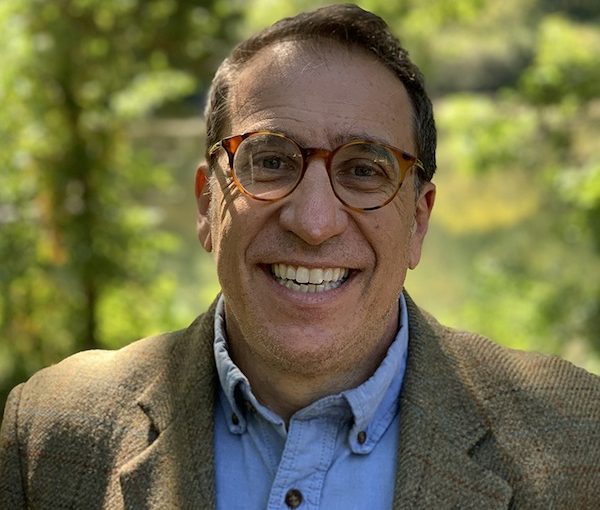
Corey Hirsch is among the honorees of this year’s Courage to Come Back Awards. (photo from Courage to Come Back)
“Believe me when I say that the stories we share are true journeys of bravery, resilience and strength in the face of adversity. They will leave you inspired and optimistic – a weekly dose of courage that I believe we need now, more than ever,” Lorne Segal, longtime chair of the Courage to Come Back Awards, told the Independent.
While the annual gala event had to be canceled because of COVID-19, every week this month, one of the five award recipients is being announced, and a video of their stories shared.
“We’re also sharing videos highlighting some of the incredible work of Coast Mental Health’s frontline workers during COVID-19,” said Segal. These can be viewed at couragetocomeback.ca.
“Every year,” said Segal, “the Courage to Come Back Awards raise critical funds that support over 40 of Coast Mental Health’s programs, which provide food security, mental health support for youth, peer support services and so much more. They are vital to the recovery of vulnerable people living with mental illness.
“In community mental health, the only way to meet this crisis is to increase capacity – that’s where Coast Mental Health comes in. Coast provides shelter, a roof overhead, a support system of caring individuals, and the dignity of a job and training through employment opportunities, all for individuals, young and old, dealing with mental health challenges.
“This life-saving work would simply not be possible without the generous support we receive during the Courage to Come Back Awards,” he stressed. “I invite people to watch, and share these incredible videos of courage. Then, if you can, I’m asking you to join me in supporting Coast Mental Health as they prepare for the second wave of this pandemic, a mental health crisis potentially as devastating as the first wave of COVID-19.”
At press time, three of the award recipients had been announced: Corey Hirsch in the mental health category, Amanda Staller in the addiction category and Rumana Monzur in the physical rehabilitation category; the youth and medical categories are still to come.
Hirsch was the first honoree announced. While not Jewish, he said, his surname is and, that “[t]here is very much the possibility that I have Jewish ancestry; it’s just never been investigated.”
A former NHL goaltender and goaltending coach, Hirsch is a commentator with Sportsnet, as well as being a public speaker and an advocate for mental health and wellness. Born and raised in Alberta, he was drafted by the New York Rangers in 1991 and was a member of the team when they won the 1994 Stanley Cup. Also in 1994, he won a silver medal with the Canadian men’s hockey team in the Olympics at Lillehammer. In 1995, he was traded to Vancouver, where he began losing his struggle with mental illness, but eventually reached out for help, and was diagnosed with obsessive-compulsive disorder.
Of the Courage to Come Back Award, he said, “It was very humbling to realize that I was in that category of people. And it was probably the first time it opened my eyes to realizing that what had happened – with coming out with my story in the Players Tribune [in 2017] – made a colossal impact on the world of mental health.
“There were people that came before me,” he acknowledged, pointing to Sheldon Kennedy, Theo Fleury and Clint Malarchuk. “Their stories helped me get my story out and made me feel safe,” he said.
Kennedy and Fleury were both abused by a coach when they were in junior hockey. Malarchuk, a fellow goalie and a friend, struggled with post-traumatic stress disorder after his jugular vein was accidentally severed by another player’s skate, as well as with obsessive-compulsive disorder, even attempting suicide.
Hirsch also mentioned sports journalist Michael Landsberg. “I met with Michael and Clint before my story came out because I was just terrified. Those two guys really helped me,” he said. (For coverage of talks by Landsberg in Vancouver, see jewishindependent.ca/lets-talk-mental-health and jewishindependent.ca/illness-not-weakness.)
“OCD, typically, doesn’t start from childhood trauma,” explained Hirsch, adding, “Most people I know can tell you the time, place, where they were at when their brains just kind of broke. There could be childhood trauma with people, but, for me, [there wasn’t any]. I was on my way to the NHL, I had athletic talent as a kid, lots of friends, no real signs of mental health [issues]. I had anxiety issues, [but] a lot of kids do.”
Hirsch grew up in Calgary, with parents he described as loving, and an older brother. Sports were encouraged. “Hockey was something that, you know, it’s a religion in Canada,” said Hirsch who, at age 16, moved to Kamloops to play the sport. “I had a really good junior career, won a national championship. From there, I went on to the Olympics. Things were looking like I was going to make millions playing in the NHL. I was on the road.”
Hirsch describes in detail the type of OCD with which he struggles in his article on the Players Tribune media platform.
“I think that what people thought OCD was, was the hand-washers, someone that’s organized and all that. There was a misconception, through stigma and other things, about OCD and people thought it was that,” he told the Independent. “So, how bad is that? You wash your hands too much. They didn’t take it very seriously … because that’s how OCD was portrayed.”
Hirsch is concerned about overall mental health, not only OCD. “I want to change the stigma to all of it,” he said.
As to why the stigma remains, he said, “Well, people don’t like to look inside, afraid of what they might find out. But, what you find out is that there’s a better life out there and you learn things…. Fear keeps people from getting help, stigma keeps people from getting help. It’s a great built-in excuse to say that you’re a man and men don’t get help; it’s a great built-in excuse if you don’t want to look internally. I get a lot of that.
“I got help, I live a great life. I’m not perfect – I’ll never say I am – but I still play hockey. I can still drink beer, I can still fix cars, I can still do all those things that are considered manly – I haven’t lost any of that. And the people around me are better for it. It’s tough to look inside and a lot of people don’t want to, but I know now it’s the best thing I’ve ever done.”
One of the reasons Hirsch decided to open up about his experiences is that, back when he was at his worst, in the mid-1990s, there was no readily available information on what he was experiencing.
“I scoured bookstores,” he said. “I did everything I could to try and find some hope, or even self-diagnose or [determine] that I wasn’t going to be like this the rest of my life. I felt so alone. I found nothing…. Part of it was because I didn’t even know what to look for, and I always said to myself, if I got better, that, one day, I would tell my story.
“I didn’t tell anybody anything, other than people close to me, for 20 years. I kept it in my chest. [But then] I met another NHL player who was active, in my retirement, and I met him, and he was in rehab for drugs. We got to talking, and I know now that mental health and addiction go hand in hand, so I spilled my story to him. And he looked at me and he said, that’s exactly what I’m going through.”
That was when Hirsch realized his story could help others who are suffering. “I need to let them know that they’re not alone,” he said.
Vancouver-based Hirsch is waiting out the pandemic in Toronto with his girlfriend. He is writing a memoir about his life with OCD, he plays golf, and spends time playing his guitar. “I’m terrible,” he said. “But I love it,” he said. “It’s been incredibly freeing. Music is so powerful and great for mental health. Any kind of art, it’s a great way to express, therapeutically, yourself.”
He is continuing his work in mental health and would like to see it become part of the curriculum in schools.
“If I could have known what I had when it happened to me and I could have gotten help the next day, I would have never ended up making an attempt on my life,” he said. “I don’t know what my NHL career would have looked like, but I would have never suffered and gone through what I went through for all those years, because early diagnosis is crucial with mental health.
“It’s not hard to teach our kids in high school, middle school, about anxiety, depression, OCD, bipolar, those things. They need that information. Why are we withholding it from them?”
Hirsch pointed to a U.S. Centre for Disease Control study finding that the suicide rate among people aged 10 to 24 increased 56% from 2007 to 2017 (see cdc.gov/nchs/ data/databriefs/db352-h.pdf).
“It’s like anything – teach our kids in school and then give them the tools and then hopefully we can put a dent in it,” he said, citing a need for a countrywide curriculum in health class. “That’s where we’re going to end the stigma … and suicide needs to stop being a taboo topic, it really does. It’s real and it’s happening and pretending it isn’t happening doesn’t make it go away.”
Community Recovery Task Force appointed
COVID-19 continues to impact our community. Jewish Federation of Greater Vancouver estimates that local needs may increase by 50% over the next year. Therefore, it has established the Community Recovery Task Force, chaired by Risa Levine.
The purpose of the task force is to examine the myriad operational and financial issues facing our community as a result of COVID-19, and to assist Jewish Federation in responding to these challenges and changes, both presently and in the long-term. Through consultation with Federation’s partner agencies, the task force will be assessing the consequences of the pandemic on vulnerable community members, as well as on the ability of community organizations to deliver their core programs and services. Task force members will be looking to new, innovative approaches to enhance community organizations’ capacity, and recommending solutions that will support a strong, resilient and financially stable recovery as well as future sustainability.
The task force members have all held leadership roles with a variety of community organizations, and collectively represent the diversity of our community in terms of geography and life stage. In addition to Levine, they are Andrew Altow, Jill Diamond, Michelle Gerber, Hodie Kahn, Candace Kwinter, Shawn Lewis, David Porte, Justin L. Segal and Isaac Thau.
The task force is an integral part of Federation’s response to COVID-19, as is its three-phase approach to recovery. In phase one, it released targeted emergency funds in the first few weeks of the pandemic to address immediate and urgent community needs. As a second phase, it is currently working closely with major donors to maintain their support through the next two annual campaigns and to consider making contributions above and beyond their campaign gifts to support community recovery. In the third phase, every community member will have an opportunity to make a difference in our community’s recovery through participating in the annual campaign, which officially launches in September.
To learn more about the task force, to read the latest annual report or to donate, visit jewishvancouver.com.
– excerpted from the weekly email message of Jewish Federation of Greater Vancouver chief executive officer Ezra Shanken
Thank you to all who contributed to the July 24/20 issue!!!
Thank you to all who contributed to the July 10/20 issue!!!
Thank you to all who contributed to the June 26/20 issue!!!
Providing meals, warmth
Several years ago, Chabad Richmond launched the Light of Shabbat program with the purpose of helping Richmond Jewish seniors celebrate Shabbat and feel connected. At first, the program involved making and delivering a free, homemade, kosher kugel and challah to six or seven Jewish seniors in the community every other week. As the program has grown, more people are receiving Shabbat meals, which now include soup, salad, a main dish, vegetables, dessert, Shabbat candles and grape juice.
Because of the COVID-19 crisis, the Light of Shabbat has expanded, and now approximately 140 meals are delivered every week to people in Richmond and beyond – an increase of more than 80%. And that number continues to grow. Now, not only seniors, but younger individuals, families and those in need can receive a Light of Shabbat meal weekly. Chabad Richmond hopes to expand the program even more.
A program like this doesn’t happen in a vacuum. More than 44 Light of Shabbat volunteers do everything from shopping, to food preparation, cooking, baking, packing and delivering the meals. Every volunteer plays an integral role.
Reaching out to help those in need is a core Jewish value. As we all know, the pandemic has resulted in people self-isolating, and many have little or no access to stores. Some have difficulty cooking, and others are simply feeling the desperation of social disconnection.
Supported through individual donations and foundation funding, Chabad Richmond’s year-round partner for the Light of Shabbat program is the Kehila Society. During the COVID-19 crisis, the Jewish Federation of Greater Vancouver has stepped forward and been supportive. In addition, Chabad Richmond has received donations of goods from Urist Cosmetics (hand sanitizer) and Real Canadian Superstore, Dan-D-Pak (food items), and a donor who wishes to remain anonymous provided facemasks.
Several of the Light of Shabbat volunteers were recently interviewed. When asked about their personal experiences volunteering, many said they deliver the Shabbat meals. The volunteers deliver not only to seniors (some of whom have mobility issues), but also to people who have lost their jobs, people struggling with physical and mental health issues, and those who are grieving alone. As one volunteer said: “You just don’t know what people are going through right now.”
Several volunteers have gotten to know Light of Shabbat recipients quite well, have become part of their lives and have forged strong connections with them. A number of volunteers say they feel like a lifeline for the people they deliver to.
One volunteer started doing deliveries with his son before his son’s bar mitzvah a few years ago. Acknowledging that his own family is fortunate, he said: “It’s a way to show my son the importance of helping others, and expose him to a wide range of experiences.”
Every volunteer’s experience is different, but they all have one thing in common: they all enjoy volunteering and feel that they benefit as much if not more than those receiving the meals. “The socially distanced shmoozing and forming of new friendships is important to the people we deliver to,” said volunteer Jill Topp. “And to me, too.”
While the Light of Shabbat program is primarily for the Jewish community, volunteer Topp said that she delivers a weekly meal to a local Muslim family. The head of the family told her: “I don’t know what we would do without you.”
As for what motivates the volunteers, giving back to the community is key. One volunteer, who chose to remain anonymous, said she treasures celebrating Shabbat with her own family, and wants others to have that experience too, even if it’s only to eat a Shabbat meal.
Volunteer Michelle Zychlinski said, “Not only do the recipients appreciate the meal, but they really appreciate the social interaction,” even if it’s from a safe distance of two metres. “So, if I can help in some way, I’m happy to.”
Volunteer Yael Segal said, “I feel it’s my responsibility, as a part of this Jewish community, to help others. It’s my honour and privilege to do it.”
Yet another volunteer, Shannon Gorski, said she gets back tenfold what she puts into it and volunteer John Samuel said, “It’s so important that people have community support. They deserve to have a kosher meal on Shabbat and to feel connected.” Another volunteer said that this opportunity has “enlarged my life,” and she wants to do more.
The connections made between volunteers and recipients will likely last beyond the COVID-19 crisis, with quite a few volunteers saying that they definitely plan to visit with their newfound friends after it’s all over.
Segal said she rekindled an old friendship when she delivered the Shabbat meal to someone she hadn’t seen in years. “One of the Russian families I deliver to recognized me from when I first immigrated to Canada as a small child. I built a rapport with them and have a little visit each week. They really look forward to the visit and the Shabbat meal. Some of the people feel very isolated.”
In the end, it’s all about building relationships with members of the community. As one interviewee put it, “It’s so important for people in the community to know that they are not forgotten about. And it’s good to know that I’m making a difference. The Light of Shabbat program is a great means to connect with secular members of the community, too, and demonstrate that Chabad cares about them.”
Topp added, “I encourage anybody to volunteer – it’s a great thing for everyone involved.”
If you know someone who could benefit from the Light of Shabbat program, contact Chabad Richmond at 604-277-6427. If you would like to get involved as a volunteer with the program, go to chabadrichmond.com/lightofshabbat.
Thank you to all who contributed to the June 12/20 issue!!!
PORCHpics Project
Lianne Cohen prepares to take a “PORCHtrait” of the Gorski family. (photo from Kehila Society)
As a fundraiser for Kehila Society of Richmond and/or Pathways Clubhouse, professional photographers Lianne Cohen, Jocelyne Hallé and Adele Lewin are volunteering their time (in a safe way) to photograph your family in front of your home. Dress up, stay in your PJs, hold a sign, whatever you feel like – be creative, have fun! These photos are intended to be a positive memory, to serve as a reminder of all the time you got to spend with your families in quarantine. The photographs are by a suggested minimum donation of $54 to kehilasociety.org/content/make-donation-kehila-society-richmond or pathwaysclubhouse.com/donate. A full tax receipt will be provided, along with your photographs. Bookings are available until June 7. To register, email [email protected] or call 604-241-9270.