Skip to content
  • Home
  • Subscribe / donate
  • Events calendar
  • News
    • Local
    • National
    • Israel
    • World
    • עניין בחדשות
      A roundup of news in Canada and further afield, in Hebrew.
  • Opinion
    • From the JI
    • Op-Ed
  • Arts & Culture
    • Performing Arts
    • Music
    • Books
    • Visual Arts
    • TV & Film
  • Life
    • Celebrating the Holidays
    • Travel
    • The Daily Snooze
      Cartoons by Jacob Samuel
    • Mystery Photo
      Help the JI and JMABC fill in the gaps in our archives.
  • Community Links
    • Organizations, Etc.
    • Other News Sources & Blogs
    • Business Directory
  • FAQ
  • JI Chai Celebration
  • JI@88! video

Recent Posts

  • Sharing her testimony
  • Fall fight takes leap forward
  • The balancing of rights
  • Multiple Tony n’ Tina roles
  • Stories of trauma, resilience
  • Celebrate our culture
  • A responsibility to help
  • What wellness means at JCC
  • Together in mourning
  • Downhill after Trump?
  • Birth control even easier now
  • Eco-Sisters mentorship
  • Unexpected discoveries
  • Study’s results hopeful
  • Bad behaviour affects us all
  • Thankful for the police
  • UBC needs a wake-up call
  • Recalling a shining star
  • Sleep well …
  • BGU fosters startup culture
  • Photography and glass
  • Is it the end of an era?
  • Taking life a step at a time
  • Nakba exhibit biased
  • Film festival starts next week
  • Musical with heart and soul
  • Rabbi marks 13 years
  • Keeper of VTT’s history
  • Gala fêtes Infeld’s 20th
  • Building JWest together
  • Challah Mom comes to Vancouver
  • What to do about media bias
  • Education offers hope
  • Remembrance – a moral act
  • What makes us human
  • המלחמות של נתניהו וטראמפ

Archives

Follow @JewishIndie
image - The CJN - Visit Us Banner - 300x600 - 101625

Tag: Israeli-Palestinian conflict

Bias in Mideast reporting

Bias in Mideast reporting

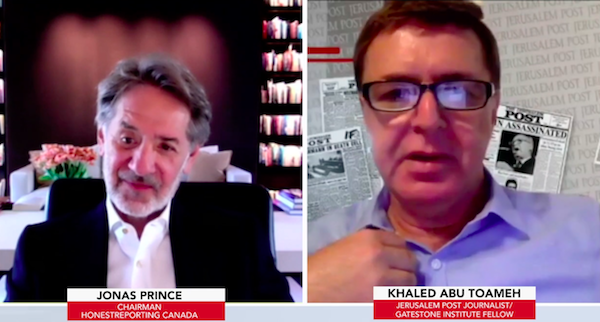
Israeli Arab journalist Khaled Abu Toameh knows firsthand that foreign correspondents routinely send back reports that are wildly prejudicial against Israel. He spoke to HonestReporting Canada cofounder and chairman Jonas Prince in an April 25 webinar. (screenshot)

Western reporters “parachute” into Israel and routinely send back reports that are wildly biased against Israel, while ignoring panoramic human rights violations and corruption in the Palestinian territories. This is the firsthand observation of an Arab Israeli journalist with decades of experience shepherding foreign reporters around the region.

Khaled Abu Toameh is a senior distinguished fellow at the Gatestone Institute. For almost two decades, he has been a reporter on Palestinian affairs for the Jerusalem Post. He spoke to a Canadian audience April 25, in a webinar presented by HonestReporting Canada, an organization promoting fairness and accuracy in Canadian media coverage of Israel and the Middle East. He was interviewed by the organization’s cofounder and chairman, Jonas Prince.

“It’s not about being pro-Israel or pro-Palestine,” Toameh said. “It’s about telling the truth. Being able to … portray a balanced picture to your readers.”

Toameh has worked with hundreds of international reporters and journalists, helping guide them around the complexities of the conflict between Israelis and Palestinians. But, he said, complexity is not something for which many journalists are looking.

“I would say that most of them, the majority, they look at this conflict as a conflict between good guys and bad guys,” he said. “The good guys are the poor Palestinians and the bad guys are Israel…. Some of them come to this part of the world already with this perception and it’s like, Khaled, please don’t confuse us with the facts.”

Many of these journalists wake up in the morning and search for any story that reflects negatively on Israel, he said.

“Why is it that many of these journalists turn a blind eye to corruption in the Palestinian Authority, to lack of freedom of speech under the Palestinian Authority in the West Bank and under Hamas in Gaza? These are questions that we need to ask,” he said.

If, during the Oslo process, Western media had more broadly reported the misuse of billions in foreign aid to Palestine, Toameh said, Western governments might have been pressured to hold Yasser Arafat and other leaders to account.

“Only a few journalists did,” he said. “Yasser Arafat got away with the corruption. He deprived his people of the international aid. That played into the hands of Hamas and look where we are now. It’s a total mess.”

Toameh said some foreign reporters tell him that they are afraid.

“We can’t report [about Palestinian corruption] because we need to go back to Ramallah, we need to go back to Gaza, it’s dangerous,” Toameh paraphrased. “I tell them, excuse me, if anyone should be afraid, it’s me, the local Arab journalist who is living here. You guys have embassies, you have consulates, you have your own governments that will protect you. Secondly, why are you going to cover a conflict if you’re going to allow yourselves to be intimidated by one party? You will never be able to do your job. You need to quit journalism and go find yourself another job.”

He added: “Ironically, some of these journalists sometimes tell me, we can’t report anything that reflects negatively on the PLO, Hamas, because it’s not like Israel, it’s not a democracy.”

Other, less physical, fears also inhibit balanced reporting, Toameh said.

“Some of the foreign journalists are afraid that, if they report positive stories about Israel, they will be accused of working for the Jewish lobby or they will be accused of being Zionist agents or they will be accused of being anti-Palestinian or propagandists,” he said. “That’s how it is. That’s the last thing they want. But there are many good stories out here. There is no shortage of good stories. The question we always need to ask ourselves is, who wakes up in the morning and decides what the story is? Who sets the agenda?”

Some of the reporters, whom Toameh calls “parachute journalists,” arrive preprogrammed with false information.

“I’ve met other journalists who have asked me to take them to see the mass graves in Jenin where Jews massacred thousands of Palestinians in 2002,” he said, referring to a false report of a mass killing, a lie that remains today, unaltered, on the website of the BBC. “You can’t send someone who is covering sports in France to do stories over here. It doesn’t work like that.”

Palestinian society does not have the tradition of press freedom or civil criticism that democracies enjoy, he said. Journalists in Palestine operate under very different constraints than those in Israel or the West.

“I don’t think there’s anything unusual about reporting about corruption, for example, in the Palestinian Authority,” he said. “Why is that considered a taboo? Why is it that, when an Arab writes about Arab corruption, he becomes a Zionist agent? While, if a Jew writes about the corruption of the Israeli government, he’s praised as a liberal, as progressive and things like that? I can understand where it comes from, because I come from a culture – the Arab culture, the Muslim culture, the Palestinian culture, if you want – where criticism of the government and the president and the prime minister, or of your people, is considered an act of treason.”

While Palestinian and overseas media may shy away from reporting Palestinian corruption, ordinary Palestinians are fully aware of the situation, Toameh said. Protests during a short-lived “Palestinian Spring” were crushed by Hamas in Gaza and the Palestinian Authority in the West Bank. And Palestinians know there could be repercussions for any complaints.

“Not only are people afraid of being arrested or killed or harassed by these two governments – the Palestinian Authority and Hamas – they’re also afraid of losing their jobs,” he said. “The Palestinian Authority is the largest employer in the West Bank and people are worried. They don’t want to lose their jobs. They don’t want their relatives to be deprived of jobs, so that’s one of the reasons you don’t see this intifada or uprising against bad government.”

Toameh has been lionized as a hero for the work he does. But he dismisses the accolades.

“There is nothing heroic about telling the truth,” he said. “I don’t understand. Since when are people awarded for telling the truth, for not lying?”

Not everyone admires Toameh’s work, of course. Since he began uncovering Palestinian corruption for the Post, in 2002, foreign outlets that used to employ his expertise have abandoned him.

“I lost 95% of my work with the international media,” he said. “Why? Because I dared to challenge the narrative that says, in this conflict, the Israelis are the bad guys and the Palestinians are the good people and we don’t want to hear anything [different]…. I don’t fit into the category of journalists who are known for their severe criticism of Israel and who are ready to give the Palestinians a pass on everything. In that sense, I consider myself to be more pro-Palestinian than many of them. Being pro-Palestinian does not mean that you spew hatred against Israel. Being pro-Palestinian, for me, is when you demand reform, democracy, good government for the Palestinians … when you criticize Palestinian leaders for arresting journalists, for arresting social media users, for skimming the money of their own people. That’s what is really pro-Palestinian.”

Toameh was speaking before the latest conflagration between Hamas and Israel. But the long-range possibility of people remains dependent on the whims of two Palestinian factions.

“The Palestinian Authority, in public, say we support the two-state solution,” Toameh summarized. “But they are also saying, Israel must give us 100% of what Israel took in 1967, which means give me all of East Jerusalem, give me all of the West Bank, give me all of Gaza and then we will talk about the right of return for the Palestinian refugees and other issues. But give me 100% and there will be a deal.

“Hamas, on the other hand, have their own vision. They haven’t changed. I’ve been following Hamas from Day One. I was actually sitting in Gaza at the press conference when Hamas was established in 1988 and I give them credit for being very honest, very consistent and very clear about their strategy and it’s very simple. They say: listen folks, this land, all of it, from the Mediterranean Sea to the Jordan River is wakf land, land that belongs to the Muslim trust. No non-Muslim is entitled to any part of it. We want to replace Israel with an Islamic state and, if there are some Jews who would like to live as a minority under our new Islamic state, they are welcome. Otherwise, all of you get out of here or we will kill you and destroy you. These are the two visions that we have so far.”

Mike Fegelman, executive director of HonestReporting Canada, told the audience that, since its founding 17 years ago, the organization has inspired 2,500 corrections, retractions and apologies in different Canadian media outlets and has an overall success rate of 80%.

Format ImagePosted on May 28, 2021May 27, 2021Author Pat JohnsonCategories IsraelTags free speech, Hamas, HonestReporting, Israeli-Palestinian conflict, Jonas Prince, journalism, Khaled Abu Toameh, Middle East, Mike Fegelman, Palestinian Authority, politics, terrorism, violence

Antisemitism unleashed

As Israel announced a ceasefire in its latest conflagration with Hamas in Gaza, the world sifted through the entrails to declare victors. In reality, neither “side” has won. Both “sides” have lost a great deal. There are, of course, implications for domestic politics on both sides, with Israeli Prime Minister Binyamin Netanyahu apparently benefitting politically from the conflict and Hamas achieving their goal of seizing the Palestinian narrative from the Palestinian Authority. These factors aside, this conflict was avoidable and, when civilians die, it is morally dubious to discuss “winners.” We are deeply distressed by this latest round of hostilities and the loss of life and security experienced by all the people of Israel and Palestine.

We also note, once again, that the conflict between Israel and its neighbours seems to attract global interest that eclipses any other issue on earth – demonstrated, among other things, by the litany of United Nations General Assembly resolutions that single out the Jewish state while ignoring or giving short shrift to victimized populations everywhere else on the planet. Indeed, the overseas reactions to the events in Israel and Palestine over recent weeks are illuminating, as “pro-Palestinian” activists have taken to the streets in cities around the world, in large numbers.

Not unrelated, in recent days, there has been a horrific spike in antisemitic incidents around the world, including in Canada. Identifiably Jewish people, businesses and institutions have been attacked. Pro-Israeli demonstrators in Toronto have been physically assaulted, and rocks have been thrown at them in Montreal; there have been reports of people seeking out Jews to harass in cities across our country. Jews walking in New York City and dining in Los Angeles have been assaulted, synagogues have been defaced in Chicago, Skokie and Tucson.

Then there are those like the BBC journalist who posted “Hitler was right” or the CNN contributor who posted “the world today needs a Hitler.” Members of groups who invaded a pro-Israel rally in Chicago a few days ago chanted, “Kill the Jews.” The Anti-Defamation League said there were more than 17,000 tweets using variations of the phrase “Hitler was right.”

There is a phrase that Israel’s critics repeat like a mantra: anti-Zionism is not antisemitism. This supposed tautology, uttered as though the speakers can make something true simply through repetition, has always been problematic. Some anti-Zionism is absolutely and undeniably antisemitic, such as when it veers into blood libels, Holocaust analogies and stereotypical representations of Jews and power. Part of the reason that a large number of people are able to spout such words is that they lack knowledge or understanding of the expressions and permutations of antisemitism in previous eras and don’t have the self-awareness to see the bigotry they are obliviously replicating. That’s to say nothing of their complete lack of any awareness or knowledge of Jewish history, cultural and religious traditions, scholarship, heritage or epistemology.

Are these people anti-Zionists? Who knows. Are they “pro-Palestinian”? Well, if scaring Jews is pro-Palestinian, then sure. But there is no doubt about the other part. This is antisemitism, in its most recognizable form.

In the past days, we have seen more overt Jew-hatred and incitement to harm and kill Jews, from more sources, than most of us have seen in our lifetimes. Not criticism of Israel, mind you. Outright, murderous Jew-hatred. A number of Canadian Jewish leaders have said this time feels different.

Here is the bigger problem: while far too many people are screaming, tweeting or otherwise expressing explicitly antisemitic hatred, far more appear to be sitting on the sidelines, somehow convinced that there are complexities around the subject.

There are deep complexities in Israel-Palestine, yes. But, when Jewish people and institutions are targeted around the world because of a conflagration in Israel and Gaza, that conflict is not a cause; it’s an excuse.

Good people of the world should be coming to the aid of Jewish people. In a conflict with a genocidal terrorist entity that launches thousands of rockets at civilians, the world should stand with Israel, too, but let’s leave that aside for today. Some political leaders, religious figures and others have expressed disgust with the antisemitism and expressed solidarity with Jewish people. But we should be seeing a global grassroots uprising in defence of Jews – and we’re not.

We hope that the ceasefire between Israel and Hamas holds. We hope for a return to negotiations that will result in a just two-state solution with Israelis and Palestinians in their own respective homelands. We hope, as always, for lasting peace. And we should all commit to doing our part to end the occupation and secure a democratic Jewish homeland. But, in the aftermath of this latest “round” in the conflict, we have learned another lesson. There are many people in the world who look at explicit calls for the murder of Jews, the annihilation of Israel, assaults on individuals and institutions and conclude there are better things to devote their energies to fighting.

Of course, there are well-informed critics of Israel who are not motivated by anti-Jewish animus. But these people – whatever their numbers are – seem untroubled to be part of a larger movement that is absolutely fueled by the worst impulses. They have, almost to a person, chosen to welcome support for their cause whatever hateful strings are attached.

Recent events have shown how easy it is still – despite all our advances in the area of human rights – for so many people to slide right into antisemitism, whether from anti-Zionism or other perhaps not even conscious feelings about Jews.

Posted on May 28, 2021May 27, 2021Author The Editorial BoardCategories From the JITags anti-Zionism, antisemitism, human rights, Israeli-Palestinian conflict, Jew-hatred, terrorism

Love note across the divide

Eighteen years ago, when I lived in southern Israel, the region that is getting hammered by rockets as I write this, my boyfriend at the time – Muhammed – was a Bedouin Muslim, also living in the area. I went to visit my mother in Berkeley, Calif., for a month or so. During my visit, I was hanging out with a friend of mine, who had grown up a secular Jew, then married a religious Moroccan Muslim. She had been inspired by her husband’s religious devotion to explore her own religious tradition, starting to keep kosher, go to Orthodox synagogue, and so on.

She and I were driving through downtown Berkeley, when we got stopped at a red light. As it so happened, to the right of us was an anti-Israel demonstration and to the left of us was a pro-Israel demonstration. The crowds were shouting slogans, slogans that flew across the street, over our heads in the car, the two of us, Jewish women in relationships with Arab Muslim men. We turned to each other, held our gaze for a minute, then burst out laughing hysterically. When the light turned green, we took off, leaving the Arabs and Jews behind us, yelling at one another.

When we feel threatened, we can get into a defensive posture, Us-Them thinking, unproductive fact-flinging, conversations from the brain instead of from the heart. We can go around and around the same circle of thought and narrative, as, meanwhile, people’s lives are torn apart by trauma and tragedy. I believe that the path to peace is not through political conversations, but, rather, through emotionally intimate relationships with individuals – getting to know and care about them, listen to their stories, understand the complexities and nuances of their lives. So that there is no Us and Them, but rather, there is just Us, the human family.

Prior to my relationship with Muhammed, I was a very political person. I did not just attend rallies; I organized them. As an indigenous Middle Eastern Jew, the daughter of a refugee from Iraq, I certainly had a lot to yell about: I am a direct descendant of the people of ancient Israel, which was destroyed 2,600 years ago by the Babylonians, who took my ancestors as captives to Babylon – the land of today’s Iraq. My ancestors stayed on that land through the Arab-Muslim conquest of the region 1,300 years ago and up through the modern day, until shortly after the Farhud – the pro-Nazi wave of genocidal violence against Jews in Baghdad – following which, my family fled to Israel.

Despite the brutal violence, exile and traumatic uprooting my family endured, along with the material loss – all Jewish personal and communal property was confiscated and nationalized by the Iraqi government – and, despite the personal, intergenerational trauma that carried forward through the years, in Israel and the United States, my family story was invisible in public discourse about Arabs and Jews, in both the Arab and Jewish narratives. This was the case despite the fact that indigenous Middle Eastern Jews made up the majority of Israel’s Jewish population, and that there were 900,000 indigenous Middle Eastern Jewish refugees worldwide in the 20th century, with stories mirroring those of my family.

I spent 20 years of my young adult life devoted to getting these stories out there, with a mission of changing the way people think. I spoke at respected institutes, published in prestigious media, my work reaching the eyes and ears of tens of millions of people. Then, my thinking changed – not about the history or politics, which remained the same – but about what to do with the history and politics, how to interface with them.

Because Muhammed and I were together amid a volatile environment of Arab-Jewish enmity, we kept things apolitical in our relationship. Paradoxically, this led to what was perhaps the most political act of all: Arab-Jewish love, visible for others to witness. My neighbours went from cautioning me against dating Muhammed to asking if I was still with Muhammed, to asking how Muhammed was doing. They feared him at first, but then got to know him and care about him. Experiencing that transformation, in turn, made me realize that the simple things in life, the connection we feel in someone’s presence, can be more powerful and important than all the high-brow intellectual discourse in the world, the litany of things we may have to say, no matter how valid those things may be.

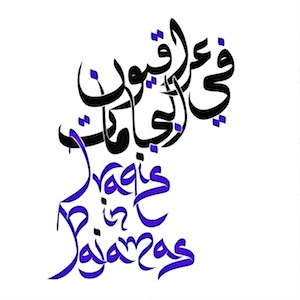
image - The author’s forthcoming album, Iraqis in Pajamas, includes songs in response to the violence in the Middle East
The author’s forthcoming album, Iraqis in Pajamas, includes songs in response to the violence in the Middle East.

In addition, after getting diagnosed with cancer and choosing to heal from it naturally, I radically shifted my values and priorities – with joy, peace and ease shooting up to the top of my list. As part of my transformation, I returned to my lost love of music and started writing songs that were deeply personal, from the heart, and, as far as I knew, entirely apolitical – leaving me surprised when, after a performance, a man told me not only that he loved my music but that it was very political. My music disarms people, he and others have told me, specifically because I have no agenda, no interest in persuading anyone of anything; rather, I am just sharing – my story, my life, my journey. The simplicity and space of it all allows people to open their hearts, listen and, ironically, after all those years trying to change people’s minds – transform the way people think.

I don’t know the solution to this conflict that has been raging on for decades, endangering the lives of my family and friends, Jews and Muslims alike. I do, however, know this: as individuals, we have the choice not to participate in divisive thinking, to instead use conflict as an opportunity to reach out to people across the divide and get to know one another, in the most basic human ways, whether playing basketball or playing music or going for a walk and enjoying the sunset. In our cynical world, putting love at the forefront of our consciousness may sound hokey or impractical. But, at the end of the day, I think it’s the only thing with the hope to effect change.

Loolwa Khazzoom (KHAZZOOM.com) is an Iraqi-American Jewish musician, writer and educator. Her work has been featured in top media, including the New York Times, the Washington Post and the Boston Globe. Her forthcoming album, Iraqis in Pajamas, with her band by the same name, includes songs in response to the violence in the Middle East.

Posted on May 28, 2021May 27, 2021Author Loolwa KhazzoomCategories Op-EdTags history, interfaith, Iraq, Israel, Israeli-Palestinian conflict, love, music, politics, relationships

Complex issues up for debate – IHRA definition

I met my husband long ago at Cornell University Hillel events. One event celebrated what looked like the success of the Israel-Palestinian peace process. It was part of the Oslo Accords and, in October 1994, the Nobel Peace Prize was awarded to Yasser Arafat, Yitzhak Rabin and Shimon Peres. It was a sunny, warm day, but things have shifted often since then. These are thorny political issues, but one can hope.

I recently completed studying the talmudic tractate of Pesachim. When finishing a tractate, one says a prayer called Hadran. It ends with Kaddish, much like what’s said at any Jewish service. It ends with praying for peace. We have lots of prayers for peace.

Meanwhile, my husband, now a biology professor, asked me to look at a motion from his faculty union. It claimed a deep concern with academic freedom. The motion proposed rejecting the IHRA’s definition of antisemitism. (The IHRA stands for International Holocaust Remembrance Alliance.) This motion theoretically responded to a student union motion that supported the IHRA’s definition. Many countries, including Canada, have adopted the IHRA’s working definition.

The politics behind this are tangled. Many on the political left suggest that to truly support truth and reconciliation and BIPOC (Black and Indigenous People of Colour), one must support all Indigenous movements worldwide. According to this argument, Palestinians must be supported as the sole true Indigenous people – against the colonial-settler narrative of Israel. There are issues with this position. One is that Britain is the colonial power whose actions helped lead to the creation of Israel. Also, Jews have been indigenous to, or lived in what is now, Israel for thousands of years.

There are practical consequences when universities debate these topics. North American Jews are a minority. This vote, which affects us, is one where we have no majority voting power. We rely on non-Jews to advocate for us and support anti-discrimination guidelines. We often must confront those who feel these definitions threaten them intellectually – while we’re feeling threatened in reality.

Jewish students on campus feel attacked. Jewish academics are forced to step up and speak out. In some cases, Jewish professors and students face discrimination as a result of this advocacy.

Just before Passover this year, at a special meeting, the faculty union put forth its agenda. The meeting agenda was to consider this motion that opposes the IHRA’s working definition of antisemitism. Those attending the meeting wouldn’t approve the agenda. (Note that approving the agenda is usually not a big deal.) Without an agenda, the motion couldn’t go forward. There was no vote.

Some attendees suggested that the entire union membership should vote. First though, they said, this motion should be considered by the cultural diversity and academic freedom committees. In the end? This meeting’s outcome just puts off the problem for the Jewish community.

Multiple professors in relevant fields spoke out against this motion, which opposed using a working definition of antisemitism. Behind the scenes, the local Jewish federation got involved. The motion was problematic – and it’s still out there. It could be voted on at another meeting, potentially one with even less notice or publicity.

It’s particularly troublesome that those voting on whether one can use the IHRA definition at this university in teaching or research aren’t all relevant experts. Most aren’t professors in religious studies, Jewish studies, Holocaust studies, Near Eastern studies. Most of the voting representatives won’t be Jewish. In their argument to maintain “academic freedom,” they’re proposing to limit the freedoms of colleagues. This limits others’ right to use whatever definitions they prefer when they speak about anti-Jewish discrimination.

There’s a bigger argument here. If Canadian universities want to show ally-ship with Indigenous communities and to be partners in truth and reconciliation, the way is clear. It starts much closer to home. Stand with Canada’s Indigenous peoples on the issues that matter to them. For instance, pressure the government to provide all Canadians with clean drinking water. Support Indigenous students at universities. Hire and appoint Indigenous peoples (First Nations, Inuit and Métis) to academic positions. The list is long. To start, read the Truth and Reconciliation Commission of Canada’s 94 calls to action.

None of these feuds are new. My husband and several other Jewish professor friends spent a lot of time on how to address this motion. This is “their” problem because they’re Jewish, but not because this is in their fields of research.

This gut-wrenching position is familiar. Does supporting academic freedom mean that antisemitism is up for discussion? It shouldn’t mean this, but antisemitic incidents are on the rise. Freedom of speech shouldn’t mean danger to minority students and professors.

Complexity isn’t resolved easily. Delving into these issues without lots of prior knowledge reflects badly on this faculty union and, by extension, the university. Smart people know there aren’t easy answers to entrenched political problems. Motions such as this one show a lack of rigour.

Canadian university professors should be sophisticated enough to know that complex issues aren’t resolved by simply opposing a working definition. It’s useless virtue signaling. Just as it shouldn’t be up to Black people or Indigenous people to fight every battle without allies, we, as Jewish people, shouldn’t have to keep fighting these battles alone over how to define antisemitism.

My husband and I met with a hope for peace. We care about human rights, but this union issue just seems to be wasting time during a pandemic. Opposing this working definition that protects a minority population, because it could possibly affect free speech? This really isn’t what a biology professor wants to be doing at work – even if he’s Jewish.

If Canadians care about peace, truth and reconciliation, and about the well-being of all people, we shouldn’t be attacking one group to elevate others. We shouldn’t have to keep fighting over definitions about discrimination against minorities.

Perhaps, we can leave the global political issues and their definitions up to the relevant experts. For us, it might be simple: we should show up to care for one another with respect instead. Advocate for better conditions close to home: safety without discrimination, fresh food, clean water, housing security, and economic and social supports. Even at their preschool, my children learned about key Jewish concepts like “Shalom Ba-bayit.” In other words, peace and tolerance start at home.

Joanne Seiff has written regularly for CBC Manitoba and various Jewish publications. She is the author of three books, including From the Outside In: Jewish Post Columns 2015-2016, a collection of essays available for digital download or as a paperback from Amazon. Check her out on Instagram @yrnspinner or at joanneseiff.blogspot.com.

Posted on April 2, 2021March 31, 2021Author Joanne SeiffCategories Op-EdTags academic freedom, antisemitism, discrimination, freedom of speech, IHRA, International Holocaust Remembrance Alliance, Israel, Israeli-Palestinian conflict, Judaism, university campuses

IHRA definition stifles speech

On June 25, 2019, the Liberal government of Justin Trudeau adopted the International Holocaust Remembrance Alliance (IHRA) definition of antisemitism, as part of Canada’s anti-racism strategy. Widely proposed around the world, the definition has evoked fierce debate.

In Canada, the NDP will consider a resolution against the definition at its national convention this month, one penned by B.C. former MPs Libby Davies and Svend Robinson. Meanwhile, a coalition of 100 Canadian Jewish organizations has objected to the NDP resolution.

Wherein lies the controversy with the IHRA definition?

The definition, though vague, is not, in itself, controversial: “Antisemitism is a certain perception of Jews, which may be expressed as hatred toward Jews. Rhetorical and physical manifestations of antisemitism are directed toward Jewish or non-Jewish individuals and/or their property, toward Jewish community institutions and religious facilities.” IHRA has promoted it as a “non-legally binding working definition.”

As is so often the case, the devil is in the details, and the details here are found in the 11 examples of what the definition considers actionable antisemitism: seven of them concern the state of Israel.

Those who defend the definition argue that Israel is treated unfairly in the media and in international political discourse and see antisemitism as the root of this discriminatory treatment. Yet Israel is a country whose founding wars and subsequent military occupation of the West Bank and Gaza have meant displacement of millions of Palestinians followed by the occupation and policing of that same population. The circumstances of the displacement and occupation are such that even the most generous interpretation of Israeli actions should recognize that an ongoing critical scrutiny of the Israeli state is a moral duty. Voices within and without Israel – and especially the voices of Palestinians and their allies – must be free to speak their experience and, yes, their accusations.

This is exactly the freedom that the IHRA definition would curtail. The burden should not be on those who criticize the Israeli state to prove that their statements are not antisemitic. Rather, the Israeli state, like any other, should bear the burden of demonstrating that criticisms of it are discriminatory, made in bad faith and nonfactual.

The definition’s history

The International Holocaust Remembrance Alliance was initiated in 1998. In 2016, it adopted a definition drafted by Kenneth Stern, director of the Bard Centre for the Study of Hate, to aid in the collection and sorting of possible instances of antisemitism. Stern has acknowledged that the definition has been misappropriated and is being “weaponized” against critics of Israel and has warned against the definition “being employed in an attempt to restrict academic freedom and punish political speech.”

In Canada, the adoption of the definition has been opposed by the B.C. Civil Liberties Association and the Ontario Civil Liberties Association. More than 450 Canadian academics have signed on to an open letter opposing its adoption by governing bodies. In 2021, the New Israel Fund Canada, which had previously urged Ontario to adopt the definition, reversed its position, citing concerns over free speech and academic freedom.

There have already been unjust consequences. Lives, livelihoods and reputations have been damaged, particularly in universities where academics have been harassed, censured and dismissed for teaching about the Israeli-Palestinian conflict or scheduling speakers on that topic – instances where the definition is acknowledged to be in play. The definition also has created what some argue is a limiting of speech critical of the Israeli state on social media platforms like Zoom or Facebook.

In one example, law professor Faisal Bhabha was accused of antisemitism by B’nai Brith Canada for his remarks in a debate that was sponsored by the Centre for Free Expression at Ryerson University. A petition was launched using the IHRA definition, calling for Bhabha to no longer teach human rights classes. The professor’s allegedly antisemitic act was to argue that Zionism as practised today in Israel amounts to “Jewish supremacy,” an opinion shared not only by many human rights organizations and Palestinian activists, but also by many Jews. Yet for those wielders of the definition the question cannot even be debated.

Similar incidents have been reported in the United States. To get a sense of the extreme rhetoric involved, consider that, in 2020, the U.S. State Department announced its intentions to declare the advocacy groups Oxfam, Amnesty International and Human Rights Watch antisemitic and to withdraw U.S. support for these groups. If only advocacy groups in Canada and the United States could find a way to declare criticism of the genocidal actions of the Burmese state to be merely anti-Asian prejudice, what a coup for Myanmar’s military junta that would be.

Not only is the speech of Jews not immune to these accusations, but even Jewish Holocaust survivors are not immune. When survivor Marika Sherwood attempted to give a talk at Manchester University called You’re Doing to the Palestinians What the Nazis Did to Me, Mark Regev, Israeli ambassador to the United Kingdom, intervened. The embassy claimed the title breached the definition and accused the Holocaust survivor of hate speech towards Jews.

Incredibly, the Simon Wiesenthal Centre listed the European Union’s insistence that products made in Israeli settlements must be so labeled as the third most serious antisemitic incident in 2015.

These examples, which are only a sample of many more, should be enough to convince anyone that there are few limits to the measures that Israel’s absolute defenders will take to use the IHRA definition to silence criticism of the Israeli state.

Opinions in Canada

Can the centuries-old hatred of Jews be redefined as criticism of the state of Israel or is this an unacceptable slippage of meaning? A recent (2020) poll indicated that a strong majority of Canadians believe that criticism of Israel is not antisemitic. Considering the importance of holding the state of Israel up to criticism, it must be demonstrated that said criticism is rooted in antisemitism, not assumed.

One of the examples in the IHRA definition states that referring to Israel as a “racist endeavour” is antisemitic, because it denies the Jewish people their right to self-determination. But surely there are methods of national self-determination that can be judged to be racist.

The definition claims that holding Israel to a higher moral standard than other countries is antisemitic. Considering the fact that every government on the planet receives vitriolic criticism, together with the previous claim that calling Israel a “racist endeavour” is antisemitic, one gets the sense that what is sought for Israel is a higher level of exemption from criticism than any other nation receives. We are perfectly free to call Canada a “racist endeavour,” after all. This happens frequently, often by the main victims of Canada’s very real history of racism, Indigenous peoples. Would we want to criminalize such speech in Canada as somehow a form of racism against Anglo-Saxons, or the French? Obviously not, yet our prime minister is willing to penalize the speech of Palestinians calling out Israel’s structural racism.

Most Jews live outside of Israel. Some are not Zionists or do not identify with the Israeli state as part of their Jewish identity. Yet, since Israel was founded as a reclamation of the ancient Jewish homeland and seeks to identify itself as “the Jewish state,” obviously those who hate Jews may hate the Israeli state and attempt to attack it. Yet states are prone, by their very nature, to all kinds of ethical challenges and must be held open to free and vociferous criticism. Again, the burden should be on the Israeli state to demonstrate that criticism of its actions is unfair and rooted in antisemitism. The claim that criticism of Israel is antisemitic should not be the first assumption but rather the last, after the criticisms – or, in the case of the recent investigation of Israel launched by the International Criminal Court, the legal allegations – have been fairly assessed.

Matthew Gindin is an independent journalist, writer and teacher of Jewish studies. You can follow his writing at matthewgindin.substack.com. Marty Roth is a retired professor of American literature and film studies, a freelance writer and member of Independent Jewish Voices.

Posted on April 2, 2021March 31, 2021Author Matthew Gindin and Marty RothCategories Op-EdTags academic freedom, antisemitism, discrimination, freedom of speech, IHRA, International Holocaust Remembrance Alliance, Israel, Israeli-Palestinian conflict, Judaism, NDP, politics, university campuses

IHRA definition a vital tool

Synagogues damaged. Community centres defaced. Children bullied. Threats of violence online. Hate targeting Jewish Canadians is growing. When it comes to hate crime, the Jewish community is the most frequently targeted group. According to Statistics Canada, an anti-Jewish hate crime occurs, on average, once every 24 hours.

We in British Columbia are not immune. The Vancouver Police Department reports that, in 2018, there were 141 hate crimes, of which Jews were the most targeted.

This rising threat is either unseen or misunderstood by most Canadians, which is why the International Holocaust Remembrance Alliance (IHRA) definition of antisemitism is so important. It can empower our political leaders, judges, educators, and others to recognize and address rising antisemitism. After all, if you cannot identify the problem, you will not solve it.

Grounded in decades of research by experts in Holocaust remembrance, antisemitism and Holocaust denial, IHRA, an international group comprising 34 member countries, including Canada, adopted – by consensus – a working definition of antisemitism.

The definition includes 11 illustrative examples that help Canadians understand the evolving nature of antisemitism. In all, the IHRA definition is a vital, non-legally binding instrument to combat antisemitism, one that provides flexibility, consistency and understanding of its many manifestations.

Since its publication in 2016, the IHRA definition has become the most widely supported definition of antisemitism for organizations and governments at home and abroad. It is an important instrument in the coordinated, consistent response to a grave international threat.

In Canada, support for the IHRA definition is widespread – backed by almost every Canadian Jewish organization, including the Canadian Rabbinic Caucus and rabbis and lay leaders of the Canadian Reform movement. The definition is a foundational part of the federal government’s national anti-racism strategy and is supported by the Canadian Human Rights Commission, the Canadian Race Relations Foundation, the Province of Ontario, and many municipalities.

Internationally, the definition has received extensive backing. From the European Union, to the United Nations Secretary General, to the Special Rapporteur on Freedom of Religion or Belief, to governments throughout the world, the IHRA definition of antisemitism is supported by leaders of every political stripe.

Notwithstanding the IHRA definition’s widespread recognition, there is a small but vocal cadre of detractors, unrepresentative of the Canadian Jewish community, who reject the IHRA definition, claiming it is a conspiracy to stifle criticism of the state of Israel. This contention is false.

The IHRA definition states explicitly that, “criticism of Israel similar to that leveled against any other country cannot be regarded as antisemitic.”

Here, the IHRA definition distinguishes between political expression on Israeli policies and hate targeting Israel as a Jewish collectivity. The IHRA definition describes manifestations of antisemitism, such as denying Jewish self-determination and characterizing Israel or Israelis with classic antisemitic images or symbols.

For nearly all Jewish Canadians, a connection with Israel is central to their Jewish identity. For 86% of Jewish Canadians, caring about Israel is an essential or important part of being Jewish, according to the 2018 Study of Jews in Canada. This link cannot be ignored or denied, nor can the link between anti-Zionism and antisemitism. Those denying the Jewish right to self-determination are, in essence, rejecting the heart of Jewish identity: peoplehood – a right to control our own destiny.

This tiny group of detractors also criticizes the IHRA definition as too vague. The IHRA definition is not a checklist. Context is critical. The real world is rarely black and white. When read together with the 11 examples, the IHRA definition provides a nuanced understanding that allows the specifics of a situation to be duly considered.

This unrepresentative faction goes on to assert that “real” antisemitism is rooted exclusively in white supremacy. This one-sided, dangerously narrow view erases Jewish experience, history and identity. While antisemitism is undoubtedly a prominent feature of white supremacy, antisemitism is not confined to any single position on the political spectrum. There is as much antisemitism on the extreme left as on the extreme right.

Antisemitism is not limited to a place, a time, or a specific political ideology. That is precisely one of the reasons that the IHRA definition is important. It is a tool to identify antisemitism wherever it may root, breaking through the subterfuge and identifying antisemitism in a thoughtful and context-specific manner, so that we can stand together as a society against antisemitism, building a better tomorrow.

Visit cija.ca/ihra to learn more about the IHRA definition of antisemitism and how you can get involved.

Geoffrey Druker chairs the Centre for Israel and Jewish Affairs (CIJA) Pacific Region Local Partnership Council. CIJA is the advocacy agent of the Jewish Federations of Canada, including the Jewish Federation of Greater Vancouver. CIJA is a national, non-partisan, nonprofit organization dedicated to protecting Jewish life in Canada through advocacy. It represents hundreds of thousands of Jewish Canadians affiliated with Jewish federations across Canada.

Posted on April 2, 2021March 31, 2021Author Geoffrey DrukerCategories Op-EdTags academic freedom, antisemitism, CIJA, discrimination, freedom of speech, IHRA, International Holocaust Remembrance Alliance, Israel, Israeli-Palestinian conflict, Judaism, university campuses
Olive trees have long history

Olive trees have long history

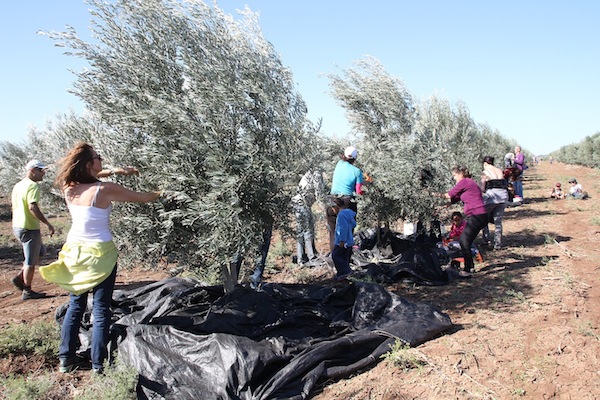
Volunteers help pick olives on a windy day in the fair trade grove of Emek Yizrael. (photo from Yoram Ron)

For thousands of years, olive trees have grown in Israel. Neolithic pottery containing olive pits and remnants of olives have been discovered in Israel’s Mount Carmel region, proving that early people produced olive oil by pulverizing the ripe olives in small pots. Some ancient trees reportedly still exist – in the Palestinian village of al-Walaja, residents claim they have the world’s oldest olive tree, supposedly 5,000 years old. More realistic is Beit Jala’s claim to an 800-year-old olive tree.

Olives for making oil are picked around December or January, so it is probably no coincidence that Chanukah comes so close to the picking season. As you know, Chanukah’s miracle revolves around the story that a very limited amount of olive oil burned in the Temple menorah for eight nights.

While the olive branch is a symbol of peace, the olive harvest in both Israel and the Palestinian territories is a challenging time. For Palestinian olive growers, extremist settlers and Israeli government policy have turned their harvest into an uncomfortable, if not a physically and economically dangerous event. Documented cases show some settlers assaulting Palestinian farmers – threatening them, driving them off their own land, physically attacking them or throwing stones at them. Sometimes, settlers vandalize Palestinian vehicles and damage farming equipment. In other cases, settlers jump-start the harvest, stealing the fruit from hundreds of trees. In the saddest of cases, settlers vandalized hundreds upon hundreds of Palestinian olive trees, in what appears to be a gross violation of Deuteronomy’s 20:19 bal tashchit precept. In this law, we may not uproot or cut down a fruit tree if we do not have an acceptable reason to do so. In the early part of last year’s harvest, the Office for Coordination of Humanitarian Affairs reported that 25 Palestinians were injured, more than 1,000 olive trees were burnt or otherwise damaged and large amounts of produce were stolen.

Since the construction of the separation barrier, some Palestinian olive growers have ended up with their groves located on the other side of the barrier and farmers must obtain special permits and go through special gates to get to their trees. The B’Tselem Organization has documented situations in which Israeli soldiers have blocked the access gates or held farmers up, and there have been reports that soldiers have used anti-riot material on the growers.

In a few cases, the separation between olive groves and homes means that growers have to travel some 25 kilometres round trip. Moreover, the growers are given fixed times to get to their trees and, sometimes, the periods available are not long enough to finish all the picking. Related, Palestinians are sometimes put into a situation in which they have to pick their fruit while the olives are still strongly attached to the branches. Olive picking is largely a manual procedure, so, to dislodge the unripened olives, growers either hit the trees with a rod or shake the trees very hard. This can result in damage to both the trees and the olives.

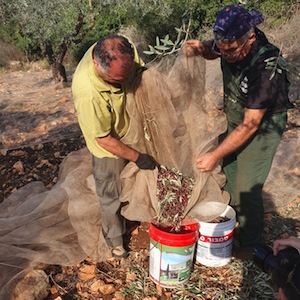
photo - Two men loading freshly picked olives in the organic grove of the Galilee’s Kfar Deir Hanna, November 2020
Two men loading freshly picked olives in the organic grove of the Galilee’s Kfar Deir Hanna, November 2020. (photo by Itiel Zion)

The current pandemic has caused financial havoc all over the world, including in Israel. This harvest season, Jewish Israeli olive growers have had tons of olives stolen. In the Emek Yizrael area, the Border Police found about 10 tons of olives in a nearby sheep pen. The olives had already been bagged and the gathering containers were standing to the side. The alleged thieves live in Zarzir, a village some 10 kilometres from Nazareth. Shomer Hachadash (the New Guard) tries to prevent these incidents using dogs and heat-sensing drones for nighttime surveillance. Some very bold olive thieves have even been spotted in daylight hours.

Despite this gloomy picture, however, there are promising things happening in Israel’s olive industry. Kfar Kanna’s Sindyanna is an olive oil producer. The Galilee operation is a certified fair trade establishment. In addition, it is a nonprofit organization with strong social and political commitments. Their olive oil bottles proudly say that the oil is produced by Jewish and Arab women in Israel.

Sindyanna aims to improve the working conditions and livelihoods of local Arab women, a clearly marginalized group. For example, Sindyanna provides employment training for Arab women. On the political level, Sindyanna is committed to inter-religious understanding by contracting Muslim, Jewish and Christian women. Moreover, the growers who sell their olives to Sindyanna, like the population of the Galilee itself, are a mix of ethnic groups.

Hadas Lahav, Sindyanna’s chief executive officer, said the company strongly affirms sustainable farming. Over the years, it has built strong connections with local farmers, buying olive oil directly from about 100 individual farmers and large family groups. Some of the farmers are organized into large family companies, like Al-Juzur’s seven families of the Younis clan. In Deir Hanna, the 2,500 organic olive trees belong to the Hussein family. In the Birya Forest, there are 10,000 organic olive trees maintained by Hussein Hib.

In the Jezreel Valley, there is a non-organic grove that belongs to Sindyanna in cooperation with the landowners, the Abu Hatum family from Yafi’a. In Iksal, the non-organic groves belong to the Dawawsha family. In Arabeh, the non-organic olive groves belong to the Khatib family and, at Moshav HaYogev, they belong to the Ashush family.

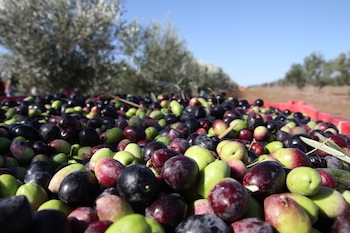
photo - Close-up of freshly picked olives in Sindyanna’s fair trade grove in Emek Yizrael
Close-up of freshly picked olives in Sindyanna’s fair trade grove in Emek Yizrael. (photo from Yoram Ron)

As Lahav pointed out, with olives, there are good years and less good years. The 2020 harvest was significantly smaller than the 2019 harvest. In a way, it was fortuitous that 2020 produced less fruit, as, with COVID-19, few permits were given to seasonal pickers entering Israel from the West Bank.

The olives picked for Sindyanna’s products are Coratina (this olive tree is highly adaptable and produces abundantly in hot dry climates, including rocky soils), Barnea (this olive was bred in Israel for oil production, but is also used for green or black table olives) and Souri (olives that are native to Israel and have been the major variety cultivated traditionally under rain-fed conditions in northern Israel). On average, in irrigated groves, a tree produces five kilograms of olive oil and, in a non-irrigated grove, a tree produces three kilograms of olive oil. The olive oil is kosher.

Here are some factoids about Sindyanna. Many of us are familiar with Dr. Bronner’s soaps, but did you know that Sindyanna of the Galilee’s organic olive oil is an essential ingredient in Dr. Bronner’s Magic Pure-Castile Soaps? KKL-JNF is also involved with Sindyanna of the Galilee – in KKL-JNF’s Birya Forest, the organic olive grove was once part of the now-defunct Qabba’a village. Not too long ago, another organic grove in Wadi Ara (planted on a former Israeli army firing range) was threatened by the construction of high-tension wires; following the protests of local farmers and the village council, the course of the power line was diverted.

Sindyanna of the Galilee sells its olive oil on Amazon and, this year, it will start selling its olive oil on select Canadian websites and in certain food stores.

Deborah Rubin Fields is an Israel-based features writer. She is also the author of Take a Peek Inside: A Child’s Guide to Radiology Exams, published in English, Hebrew and Arabic.

Format ImagePosted on January 15, 2021January 13, 2021Author Deborah Rubin FieldsCategories IsraelTags business, fair trade, farming, history, Israeli-Palestinian conflict, olive oil, olives, Palestinians, politics, Sindyanna
Memoir goes beyond borders

Memoir goes beyond borders

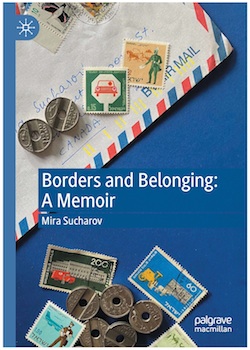
Many Jewish Independent readers will be familiar with the name Mira Sucharov. Whenever the paper ran her op-eds, at least one passionate letter to the editor could be expected. Agree with her or not on the topic of the Israeli-Palestinian conflict, she makes you think. And her latest book, Borders and Belonging: A Memoir, offers insight into how her mind works and how she has come to form her continually evolving ideas on the controversial subject.

But it’s not all politics and there’s no academic speak, though Sucharov is well-trained and has much experience in these areas – she is a professor in Carleton University’s department of political science and is University Chair of Teaching Innovations; she has developed courses for the university and has won teaching awards; she has multiple writing and editing credits. Borders and Belonging explores Sucharov’s political views and their development, but gives more time to childhood experiences, both happy and anxiety-ridden, including being a child of divorce, past romantic crushes, tales from Jewish summer camp, insights gained from living on a kibbutz, and more. It is an at-times cringeworthingly open coming-of-age story.

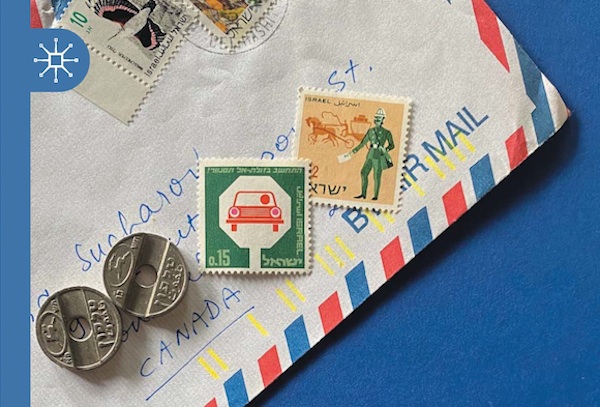
image - Borders and Belonging cover“I gave my dad and my mom parts to read, and I checked the scene about my daughter with her, as I did want at least their tacit blessing that this memoir wasn’t going to cause pain,” said Sucharov when the Independent asked about her candidness. “As for other family members, I basically let the chips fall where they may. I did make an effort to generally not try to ‘score points’ regarding other family members, for the most part. There’s a maxim in writing creative non-fiction (memoir), one that my writing mentor emphasized to me as well: write from scars, not wounds. Not only did I not try to actively make my family and friends appear in a bad light, I tried, most of the time anyway, to spotlight my own foibles and vulnerabilities. I think it makes for a more interesting read anyway. No one wants to read a memoir written by a narrator who is defensive and who is unaware of her own flaws.”

And Sucharov reveals many of her perceived flaws. She has dealt with high levels of anxiety her whole life, it seems, and, in many an instance, her stomach flips or lurches from feelings of rejection, excitement over a boy, worry over being among kids she doesn’t know, pleasure at being in beautiful surroundings, or tension at being confronted by someone who disagrees with her.

In addition to the sometimes-brutal self-assessment, readers will also be struck by Sucharov’s memory. The details – books read, games played, reimagined conversations, etc. – are noteworthy. And Sucharov did take notes, she said. She kept a journal for a couple of summers when she was a camp counselor and when she was in Israel in the early 1990s. But, she said, “I remember a lot. For some childhood scenes, I juxtaposed memories of objects I knew I owned (specific toys, games, clothing and books) with particular events I recall occurring. So, for example, when ‘Leah’ sleeps over, I don’t recall if I read Roald Dahl on that particular night, but I do know that I read lots of Roald Dahl at that point in my life, so I inserted it as a period detail.

“Same with the Archie comic being read in the cabin while I inadvertently undress in front of a boy, causing me great embarrassment. I don’t know for certain whether we were reading Archie comics on that particular day, but I do know that we read Archie comics during that time in our life. Adding these details is a way of setting scene and drawing the reader into a world, rather than writing, ‘we used to read Archie comics.’ I treasured my toys, books and games. I’m still trying to forgive my mom for selling my remote-controlled R2-D2 robot toy at a garage sale for five bucks one summer, while I was away at camp.”

By way of another example, Sucharov said, “As for the separation scene that takes place before I’ve even turned 4: my own memory is that my parents asked me to pick toys to place in one house and in another. Recently, though, my dad gave me a different account: he said that he and my mom took me into their bed, placed me between them and broke the news. I do not recall this. So, instead, I used the memory that I did have, even if it had been partly of my own creation. In that case, it may not have been totally accurate, but it succeeds at capturing the emotional dynamics of the event – me having to cope with my parents’ separation, which was traumatic.”

Other aspects, such as exactly which scary Disney movie she watched at her dad’s, were verified with one of her “all-time favourite tools: IMDb!” And some instances she recounts are composites of multiple moments.

Sucharov has no regrets about laying so much out there publicly. “I’m a firm believer in modeling vulnerability,” she said.

“In writing and in teaching, it creates a crucial connection between writer or professor/instructor and reader or student,” she added. “By introducing our backstage selves, it can help others better learn how to soar. It is an ethic of generosity.”

Format ImagePosted on December 4, 2020December 2, 2020Author Cynthia RamsayCategories BooksTags camp, childhood, family, Israeli-Palestinian conflict, memoir, Mira Sucharov, politics
Contemplating walls

Contemplating walls

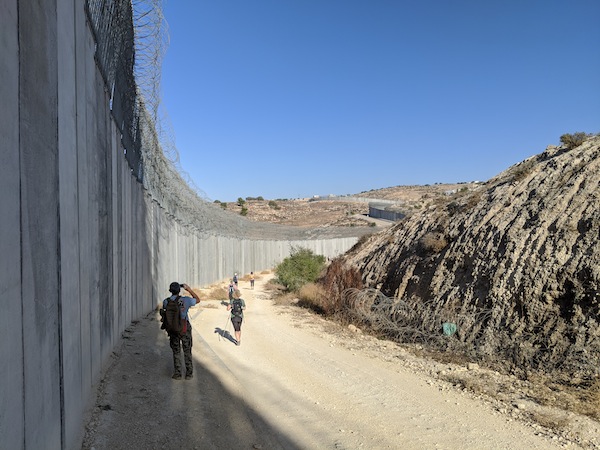
The separation wall, Bayt Mirsim. (photo by Kevin Keystone)

In this three-part series, the author recounts some of his experiences on Masar Ibrahim Al-Khalil, the Path of Abraham the Friend, in the West Bank, which he visited in 2019. The articles have been adapted from a few of the letters he wrote home to family. The events and people described are real but, for reasons of privacy, the names are fictitious. To read Part 1, click here; for Part 2, click here.

Today was our last day on the trail. After many late nights of parlour games, beers and anticipation, we were tired. One of our fellow hikers, Felix, had to stop periodically: the soles of his shoes had worn through, he could feel the tiny stones biting underneath. Uncharacteristically, he was in pain, but he muscled through.

We descended into a valley, dotted with pale green brush, reminiscent of our first days on the trail. The valley opened into expansive views of olive groves, steppes cut into the hills, tidy rows of trees buttressed by stone walls. It could have been Tuscany but was the Middle East, with a warm breeze and soft, popcorn-shaped clouds overhead.

Admiring the scenery, I thought of what lay ahead. I would be spending tonight in Jerusalem. It was a place I hadn’t been since my Birthright trip eight years ago. My rabbi had once invited me on a congregational tour of Israel, in recognition of my service to the synagogue, but I turned it down. A friend rightly pointed out that, as an Arab Muslim, he couldn’t visit the Holy Land as readily as I could. In solidarity, he suggested I shouldn’t go. That seemed fair, so I didn’t. But here I was, so close to Jerusalem and the Wailing Wall. How could I not go?

* * *

It was a hot day on my Birthright tour. We weaved our way through the Old City, through its various souks and alleyways, to arrive at a platform high above the Wailing Wall plaza. Our guides wanted us to see it there first for a clear, unobstructed view. It wasn’t busy, just another day in Jerusalem at the Wall and the holiest site in Judaism. The wide-open plaza was sleek and clean, the great stone wall standing pink and golden.

We descended towards it, and I could feel the heat. I was dehydrated and a bit dizzy. Our guides released us and we ambled forward, dazed, in the wall’s general direction. A man stopped me and asked if I wanted to put on a prayer shawl. I did. He asked me if I wanted to lay tefillin. I had never done it before. He helped me. “Repeat after me,” he said. “Baruch atah Adonai …” as he wrapped the leather band around my forearm.

Prepared, I approached, pulled in by the wall’s gravity. I slipped off my sandals to stand on the ground with my bare feet. I pressed my hand to the mottled stone and closed my eyes. “Baruch atah Adonai,” I began. Strangely, I felt both heavy and light, a yearning and also a surrender. I said the Avot v’Imahot, the prayer that recognizes our descent from Abraham and Sarah, tracing us back through the generations. I didn’t know, then, how important that moment and that prayer would be.

When I was finished, I slipped on my sandals and stepped away.

* * *

“This might be the most beautiful day on the trail,” said Jane, a soft-spoken homeopath, a Mancunian and longtime friend of fellow hikers Eve and Oliver. Her husband George was in business software. He regularly meditated.

She was right. I was worn out but had to agree. It was beautiful. Picturesque, even. Idyllic. We pulled over, as we had during our first week, to have coffee with olive harvesters and help them rake the trees. A young mother with her toddler, husband and parents: harvesting is so often a family affair. Hospitable as ever, much coffee and tea was poured and drank, olives collected, tobacco rolled, puffed and exchanged. We waved our goodbyes – shukran, aleykum salaam – and continued on.

A stretch of valley gave off onto a final stretch of orchards and, as I clambered over the low stones, I looked up and saw the separation wall. From a distance, the 25-foot concrete wall, scrawled with barbed wire, rose through the canopy of the trees. Hesitatingly, I walked towards it, tracing its contour in my mind. In some parts of the West Bank, the barrier is composed of giant slabs of concrete dotted with military towers; in others, it is coiling pyramids of barbed wire or electrified fence bordered by wide swaths of sand to detect trespassers. Here, it is rebar and cement, two-and-a-half storeys high, and cuts through olive groves and the hills around it. I pressed my hand to it; it was cold and abraiding. I closed my eyes and said a prayer for a future without it.

photo - Dawn at the Dead Sea
Dawn at the Dead Sea. (photo from Kevin Keystone)

* * *

Compared to the West Bank, downtown Jerusalem feels like another planet. I spent that night in a small apartment hotel off Jaffa Street, a few blocks from the Old City. It was a one-bedroom suite with a fully equipped kitchen and three-piece bathroom. The water was hot, the shower had walls and a showerhead, and I could drink the water. It was unlike many nights on the Masar.

Jaffa Street reminded me of places like Vienna or Vancouver: the pavement was so clean you could eat off of it. The pedestrian walkways alongside were spacious and wide, paved with smooth and even slate-gray tiles. The streetcars were sleek and punctual. Art galleries and museums, ornamental lights and public transportation, urban and urbane. First world versus developing; moneyed versus struggling. The contrast was deeply uncomfortable.

My friend Marta and I wound our way through the narrow, dreamlike alleyways of Nakhalat Tziyon, the walls lined with thick slabs of golden Jerusalem stone. A playful breeze danced through the trees. We stopped for lunch at a picturesque café, complete with colourful outdoor seating and painfully handsome servers. The food was delicious and expensive; we ordered hummus that came with falafel and sweet lemonade.

“How is this real?” I asked her.

“I know,” she said. “It’s shocking.”

After lunch, I returned to the place I had been many years before. I followed the signs in the Old City, the pull magnetic, feeling a mix of dread and anticipation. I saw it first as before, from above, the top of the staircase leading down to the Kotel.

Few tourists were out today, just the heat and people praying. Orthodox tradition dictates separating the genders; indeed, on the women’s side, a fraction the size of the men’s, Torah scrolls are still officially prohibited. Today, the women’s side was packed, the men’s side dotted with the odd worshipper. At the tefillin tent, an old man shawled me in his tallit. A red-headed, black-hat wearing Charedi named Isaac helped me with the tefillin. He looked about my age, or a few years younger. In another life, I wondered, would I have been him?

“Did you do this yourself?” he asked, pointing to the forearm I had already bound.

“I did,” I said. For a month, in the intervening years, I had done it every morning. “I just can’t remember how to do the hand part.”

“I can help,” he said. Isaac said many things: about God, what God wanted, the prayers I could say at the Wall. “Sometimes, you might feel like the worst Jew ever,” he said. I didn’t. I never felt that way. I wasn’t a “good Jew” or a “bad Jew,” I was just Jewish.

“Say a prayer for all your loved ones, then say a prayer for yourself,” he said. “Then maybe you’ll say a prayer for me, too.”

Blocks of stone peppered with bits of paper: the wall hadn’t changed, but I had. I pressed my hand to it, feeling its soft, pockmarked face, and closed my eyes.

* * *

I’m home now, in Canada, and wonder about my travels. I came back “with eyes wide open,” as my rabbi had prayed: to the painful, joy-filled and resilient lives of the Palestinians I met. I think about the separation wall and the Kotel, how they’re connected and what it meant to pray at them, different but related prayers. If the Wailing Wall is part of us as Jews, then perhaps its future and our spiritual liberation is bound together with the separation wall. Perhaps the Kotel will never truly be honoured until we bring down the separation wall. As I contemplate the stories of our freedom from bondage, I’m reminded of the idea that our liberation, spiritual and otherwise, is bound up with the liberation of others.

Kevin Keystone is a Toronto-based freelance writer, editor and researcher. When not hiking long-distance trails, he can be found reading, spending time with friends and family, or with his beloved partner, Aaron. His writing has been published in the Literary Review of Canada, the Jewish Independent and Good Old Boat. For this series, he thanks the guides and staff of Siraj (the Masar Ibrahim Thru-Hike tour operator), the host families and locals he met along the way and his fellow hikers, as well as friend and editor Matt O’Grady.


Format ImagePosted on October 9, 2020October 8, 2020Author Kevin KeystoneCategories IsraelTags education, hike, Israel, Israeli-Palestinian conflict, Masar Ibrahim Al-Khalil, Palestine, Path of Abraham the Friend, peace, politics, separation wall, Siraj Centre
Seeking to understand views

Seeking to understand views

Descending into Jericho through “the Grand Canyon of the Middle East.” (photo by Kevin Keystone)

In this three-part series, the author recounts some of his experiences on Masar Ibrahim Al-Khalil, the Path of Abraham the Friend, in the West Bank, which he visited in 2019. The articles have been adapted from a few of the letters he wrote home to family. The events and people described are real but, for reasons of privacy, the names are fictitious. To read Part 1, click here; for Part 3, click here.

Tuesday was, by far, the hardest day of the trail. We climbed and descended two mountains: 1,500 feet up, 1,400 feet down; 1,000 feet up, 1,200 feet down. It’s 10 feet to a storey, so divide by 10 and think of them as flights of stairs, except that they’re rocky paths strewn with slippery rubble and spiky brambles.

Shrubs aside, Monday and Tuesday were thorny for other reasons. Our guide, Ismail, seemed very friendly. Jolly, with a wide smile and open face, he spoke English well and with a quirky British accent. He was nearly 40, married, had one young child and another on the way. He’s been a hiker and guide for a long time: trained at university, he is an expert in local fauna, flora and history. When a member of our group fell and cut his arm, Ismail was right there with bandages and fracture assessments. There was no question: he was a professional.

Ismail, though, had a satirical sense of humour, which, given the political landscape, was risky. He explained the settlers’ justification for occupying land in the West Bank. “They say that God gave it to them,” he said. The relevant verse from the Torah bubbled up in my memory. “Go forth from the land that I will show you, and I will make of you a great nation,” goes Genesis 17. I knew it because I had chanted it for my bar mitzvah.

“If God gave it to them, what did God give to us? Nothing?” Ismail said. He was smiling, but wasn’t joking. “If they get this, we’ll take Spain. We don’t need to do archeological digs – our mosques are still there to prove it.” I chuckled along with the group, appreciating the irony. But I stood back, polishing my sunglasses.

“They say they are special,” he continued, “that they are ‘the chosen ones,’ but what does that mean? That they are made of gold and jewels, while the rest of us are mud?”

“And I will take you to be my people,” God says to Abram, also Genesis 17. “And I will make my covenant with you and your descendants and through all the generations.” This idea of “chosenness” has been interpreted, reinterpreted and, at times, even rejected in our history: Reconstructionist Jews, for example, changed the relevant lines of the Aleinu prayer. Thinking of ourselves that way certainly hasn’t done us any favours. But, still, Ismail’s comments stung a little.

Writing this, I suppose his humour was a bit like my dad’s: irreverent and occasionally tasteless. I had never been offended by my dad’s jokes; his topics were largely inconsequential to me. Here, with so much at stake, it was hard to not feel Ismail’s satire more deeply. I wanted to tell him I was offended, but part of me resisted.

Sue, on the other hand, had no problem speaking up. That evening, we gathered around to discuss plans for the next day. “Tomorrow,” Ismail said, laying out a map, “will be the hardest day on the trail. There are three options: we can either hike the whole day; stop halfway and take a car; or stop near the end and take a car.” We all agreed we’d hike the whole day. Sue sat back against the bench.

“Are you OK?” he asked her. “You looked scared.”

“I’m not,” Sue replied. “I’m fine.”

“Are you sure?” he insisted. Sue was in her 70s: it seemed like he was singling her out because she was older, and possibly because she was female. “I am sorry if I scared you.”

“I’ve walked a thousand miles before,” she cut in. “I’m not scared.”

Eve laughed and said to Ismail, “Sue’s fine. It’s the two of us,” referring to her husband Oliver, herself, and their combined lack of hiking experience, “that you should be worried about.”

After the route was settled, Sue pulled Ismail aside. She pointed out to him the ageism and sexism implied in his doubting of her abilities. She was brisk; he was deeply apologetic.

“It’s fine,” she said, when he didn’t stop apologizing. “You apologized. It’s over. Howard and I fight, we apologize, it’s done.” After another round of reassurances and with parting words to the group, Ismail left for the night. I congratulated Sue on standing up for herself.

“Well, I’m an old lady,” she laughed. “I don’t have an issue speaking my mind.”

“Yeah,” I said, smiling. “Howard said you don’t take shit from anybody.” She laughed again. “But, still,” I said, “good for you for saying something.”

“Thank you, Kevin,” she said, looking at me. Even with her fortitude, I wondered if it had cost her to say something. Maybe, in some ways, it always does. “I appreciate it,” she said.

photo - A rest break, at 3 a.m., hiking to catch sunrise over the Dead Sea
A rest break, at 3 a.m., hiking to catch sunrise over the Dead Sea. (photo by Kevin Keystone)

* * *

The next day, I found myself quietly pleased at Ismail’s dressing down from Sue. Somehow it felt vindicating; even if I couldn’t find the words to speak my mind, at least someone else did.

“Before we start,” he said, “I need to show you something.”

He turned his smartphone to us and pressed play. The footage was of a road tunnel with an exit at the far end and a truck askew, blocking the way. There was shouting and then a hand flicking angrily towards a young man, yelling at him to walk. He did, with his back to the camera, one hand raised in surrender, the other halfway, awkwardly carrying a backpack. He couldn’t have been older than me. He kept walking, slowly, towards the truck and the tunnel exit. Just before he reached the truck, a shot fired. He cried out and sank to the ground.

Israeli Channel 13 News leaked the video – of an Israel Border Police officer shooting a Palestinian in the back with a rubber bullet, along with text messages sent by the shooter’s fellow officer, who had bragged about the shooting to his girlfriend. “I’m a pro, don’t you think?” he wrote.

This act of violence earned the shooter a removal from the police force. She was sent back to the Israeli army to finish her compulsory service. A year after the footage was discovered, the police internal investigations unit still hadn’t pressed charges. The apparent impunity is shocking. Compared to this, my grievances seemed trivial.

“Do you ever take Israelis on this hike,” someone asked Ismail.

“No, we don’t. We can’t, it’s too risky,” he said. “If something were to happen, if one of them gets hurt, we would all be in big trouble. Their government would say it is our fault, and we would have many, many problems.

“There are Jewish that come on the Masar,” he said. I wasn’t sure if he avoided looking at me. “We know; we don’t ask. But we will not take Israeli; we can’t.”

As the day wore on, I worked up my nerve to talk to him. I rehearsed my opener and hiked up beside him.

“So, what are your plans for after the hike,” I asked.

We didn’t talk about anything important, but it felt important to talk. I had time after the hike and didn’t have plans. I asked his advice on where I should go. I also asked him what I should say at the border if stopped.

“Just talk about the Abraham Path, how we’re all children of Abraham, peace, these kinds of things,” he said. “They like that.”

“Do you believe it?” I asked him.

“No,” he said. I tried to hide my disappointment. “You know,” he continued. “It isn’t the Jewish, it’s the Zionists. They are crazy, they think they are super-human. Every time the people are coming together, they want to separate, to make them apart. As long as this is the case,” he said, “I don’t think there will be peace.”

* * *

At lunch, I lay down to rest, settling in the shade of an olive tree. In the breeze, the leaves revealed twin shades of green, one on each side: rich, verdant forest green and pale, suede sage. There were no olives on this tree: likely, they had been recently picked. The absence they left made way for a cottony, afternoon light to filter through. As I nodded in and out of sleep, I caught glimpses of the sky. It was blue and clear.

Zionists come in many varieties, but I knew the ones Ismail was referring to. The imprecision of his language didn’t change the point. Yitzhak Rabin wasn’t assassinated by a Palestinian; he was assassinated by a Jew. A fanatical religious Zionist, a fervent supporter of the settlements and a deep-seated opponent of the peace process. Ismail didn’t have a problem with Jews, he had a problem with fanatics. That, I could get behind. I felt the same way.

Kevin Keystone is a Toronto-based freelance writer, editor and researcher. When not hiking long-distance trails, he can be found reading, spending time with friends and family, or with his beloved partner, Aaron. His writing has been published in the Literary Review of Canada, the Jewish Independent and Good Old Boat.

Format ImagePosted on September 25, 2020October 8, 2020Author Kevin KeystoneCategories IsraelTags education, hike, Israel, Israeli-Palestinian conflict, Masar Ibrahim Al-Khalil, Palestine, Path of Abraham the Friend, peace, politics, separation wall, Siraj Centre

Posts pagination

Previous page Page 1 Page 2 Page 3 Page 4 … Page 10 Next page
Proudly powered by WordPress