Skip to content
  • Home
  • Subscribe / donate
  • Events calendar
  • Business Directory
  • FAQ
  • News
    • Local
    • National
    • Israel
    • World
    • עניין בחדשות
      A roundup of news in Canada and further afield, in Hebrew.
  • Opinion
    • From the JI
    • Op-Ed
  • Arts & Culture
    • Performing Arts
    • Music
    • Books
    • Visual Arts
    • TV & Film
  • Life
    • Celebrating the Holidays
    • Travel
    • The Daily Snooze
      Cartoons by Jacob Samuel
    • Mystery Photo
      Help the JI and JMABC fill in the gaps in our archives.
  • Community Links
    • Organizations, Etc.
    • Other News Sources & Blogs
  • JI Chai Celebration
  • JI@88! video

Recent Posts

  • Legal help for students
  • Revisiting myth of Lilith
  • Wrong person rebuked
  • Canada’s mixed messages
  • Questions for museum
  • Symposium on antizionism
  • Making soccer political
  • CJPAC lauds Pulver’s impact
  • City recognizes Vrba’s legacy  
  • Organ donation saves lives
  • Theodore’s March premiere
  • A healing Shabbaton
  • Supplying healthy food
  • A chime of metal tags
  • Yellowknife seder a first
  • Ishai energizes, unifies
  • A Lag b’Omer to remember
  • Expanding the healing
  • Hannah Senesh – a unique hero
  • Community milestones … May 2026
  • Sharing her testimony
  • Fall fight takes leap forward
  • The balancing of rights
  • Multiple Tony n’ Tina roles
  • Stories of trauma, resilience
  • Celebrate our culture
  • A responsibility to help
  • What wellness means at JCC
  • Together in mourning
  • Downhill after Trump?
  • Birth control even easier now
  • Eco-Sisters mentorship
  • Unexpected discoveries
  • Study’s results hopeful
  • Bad behaviour affects us all
  • Thankful for the police

Archives

Follow @JewishIndie
image - The CJN - Visit Us Banner - 300x600 - 101625

Tag: Holocaust

Richmond marks the Shoah

Richmond marks the Shoah

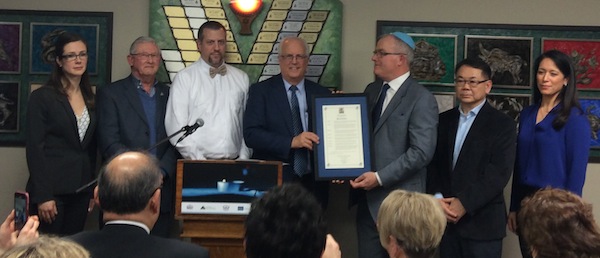
Left to right: Councilor Kelly Greene, Councilor Bill McNulty, Bayit past president Michael Sachs, Richmond Mayor Malcolm Brodie, Bayit president Keith Liedtke, Councilor Chak Au and Councilor Alexa Loo at the Bayit, after the mayor officially proclaims Jan. 27 as International Holocaust Remembrance Day in the city of Richmond. (photo by Cynthia Ramsay)

On Jan. 22, emotions were near the surface in a Holocaust commemoration that included the official proclamation of Jan. 27 as International Holocaust Remembrance Day in the city of Richmond. In a packed sanctuary at the Bayit, a synagogue in the province’s second-largest Jewish community, survivors, rabbis, community leaders and a host of elected officials from all levels of government were on hand to mark what was billed as an historic day.

Writer and teacher Lillian Boraks-Nemetz spoke as a survivor of the Holocaust and shared her first-person account, as well as the moral implications of what happened and the weight of survival.

photo - Lillian Boraks-Nemetz
Lillian Boraks-Nemetz (photo by Cynthia Ramsay)

“Not a day passes when I don’t ask myself why did I survive when six million perished, 1.5 million children and among them my 5-year-old sister,” said Boraks-Nemetz. “And I survived. Why? When every European Jewish child was automatically sentenced to death by Hitler, I won. Was my survival a miracle? A twist of fate? The will of God? Why me?”

She recalled the day everything changed, Sept. 1, 1939.

“I was alone on the porch of my grandfather’s summer home when masses of airplanes passed over my head. I heard shots, explosions, my dad ran to get me and we barely made it to the shelter, where the sight of crying children and frightened people confirmed my own fears,” she said. The Nazis invaded her Polish homeland. Jews lost all human rights, her father lost his right to practise law, her uncle was prevented from practising medicine. Teachers, professors and businesspeople were all kicked out of their positions. Jewish children did not attend schools and they were bullied, a precursor of the much graver fate to come.

Soon the Jews of Warsaw were imprisoned in the ghetto, where a Nazi-created dystopia developed.

“People stole food from each other,” she said. “All morality ceased to exist in an amoral world.”

Young Lillian was smuggled into the factory where her mother was a slave labourer. Lillian’s grandmother had bought a small house in a village and promised it to a man in exchange for posing as her husband, creating a pretext of a non-Jewish Polish family. Lillian was then smuggled from the ghetto through bribery and survived the war with her grandmother and the man.

“What were my chances of surviving? The rate of a child’s surviving the ghetto was seven percent,” she said. “We were liberated in 1945 by the Russians. But liberation isn’t liberating to survivors.”

While adults worked to reestablish their lives in a new country, children were left largely to their own devices to assimilate all that had happened. Psychiatry or any professional help was largely nonexistent.

“I was told to forget and to let go by people who didn’t have a clue what was on my mind or my soul,” she told the audience. “This was not a physical wound that results in a bruise or a scab, which then falls off and mostly disappears. This is a branding on the soul of fire caused by man’s inhumanity to man, woman and child. The enormity of the Holocaust is still largely incomprehensible and still emotionally inaccessible to those who were born here.”

photo - Judy Darcy
Judy Darcy (photo by Cynthia Ramsay)

Judy Darcy, British Columbia’s minister of mental health and addictions, shared the story of how her father survived the Holocaust and subsequently hid his Jewish identity to everyone, including his own children, until the last years of his life, when he tried to reconcile his experiences in meetings with the late Toronto rabbi Gunter Plaut. Darcy’s story was featured in the Independent (Feb. 24, 2017, jewishindependent.ca/mlas-father-hid-past).

photo - Rabbi Levi Varnai speaks as Keith Liedtke looks on
Rabbi Levi Varnai speaks as Keith Liedtke looks on. (photo by Cynthia Ramsay)

Rabbi Levi Varnai, spiritual leader of the Bayit, recalled his family’s survival during the Holocaust, and Ezra Shanken, chief executive officer of the Jewish Federation of Greater Vancouver, spoke of the human potential for good and evil.

“We must understand that we as human beings have the capacity for immense love but also to create immense pain and it’s only through disciplining ourselves through education and through moments like this that we ensure that the community that I think we all want, which is a community of love, is what will remain,” Shanken said.

photo - Ezra Shanken
Ezra Shanken (photo by Cynthia Ramsay)

Richmond’s Mayor Malcolm Brodie spoke at the event. In an interview with the Independent after, he noted that he often receives requests for proclamations. Recently, the urgency for making a statement and standing with Jewish people was accentuated when a Richmond auction house had to be pressured to cancel the sale of Nazi military memorabilia. Participating in the commemoration with the Jewish community was significant for him, said the mayor, and the past is a lesson for the future.

“I found it quite moving,” said Brodie, noting the remarks by Boraks-Nemetz and Darcy. It is important, he said, “to remind people, and the greater community, to watch out for the signs, because something like this – hopefully never on the scale – but something could happen again.… There have been enough times recently that antisemitism is still a real thing. It is something that we don’t hear too much about but it is something that is very real. In addition to honouring these millions who died, we have to educate young people to make sure that everybody knows the facts and we make sure that it never happens again.”

Michael Sachs, a Jewish community activist and past president of the Bayit, was pivotal in organizing the event – which was co-hosted by the Bayit, Vancouver Holocaust Education Centre, Centre for Israel and Jewish Affairs, Kehila Society of Richmond and Jewish Federation of Greater Vancouver – and ensuring the attendance of the elected officials. Among the attendees were the mayor, most of Richmond’s city councilors, all four of the city’s members in the Legislature, Member of Parliament Alice Wong and former MP Joe Peschisolido, as well as others.

“There were 100 chairs and it was standing room only,” Sachs said afterward. “It’s historic because it’s the first time in Richmond that this proclamation has been made. To have such an outpouring of elected officials, VIPs and all these people coming out – it’s the first in history in Richmond.”

Sachs was effusive in his praise for the mayor for his actions. While many commemorations are taking place because it is the 75th anniversary of the liberation of Auschwitz, that was not a prime motivator of the Richmond event, said Sachs.

“It’s the first step of many that will come,” he said. “It’s the beginning of a real public acknowledgement that will lead to more public education. We had someone who was there, one of the aides of an elected official, and he came up to me afterwards and he said, ‘I didn’t know anything about the Holocaust.’ That’s one person right there,” Sachs said. “And, hopefully, this moment continues to help bring Holocaust education into every classroom in this province.”

Format ImagePosted on January 31, 2020January 28, 2020Author Pat Johnson and Cynthia RamsayCategories LocalTags Bayit, Holocaust, Malcolm Brodie, Michael Sachs, Richmond
War heroism recalled

War heroism recalled

Prof. George Bluman speaks at the 15th annual Raoul Wallenberg Day commemoration, Jan. 19. (photo by Masumi Kikuchi)

Japanese diplomat Chiune Sugihara was honoured in Vancouver this month with a lecture on his wartime heroism – by a man who owes his life to the actions of Sugihara when the diplomat served as consul for the Imperial Japanese government in Lithuania, near the start of the Second World War.

George Bluman, a professor emeritus of mathematics at the University of British Columbia, spoke at the 15th annual Raoul Wallenberg Day commemoration Jan. 19, which was held at the H.R. MacMillan Space Centre. The annual event is presented by the Wallenberg-Sugihara Civil Courage Society and took place 75 years and two days after Wallenberg, a Swedish diplomat in Hungary whose actions saved the lives of tens of thousands of Jews, was last seen alive. The actions of Sugihara, vice-consul of the Japanese embassy in Kaunas, Lithuania, paralleled those of Wallenberg in that he issued visas and took extraordinary actions to save the lives of the threatened Jews of Europe.

Bluman’s parents, Nathan and Susan Bluman, fled to Lithuania after Germany invaded Poland in 1939. There, they received transit visas from Sugihara, which enabled them to travel through the Soviet Union to Japan. They then obtained temporary permits to enter Canada and they were aboard the last ship sailing from Japan to Vancouver prior to the attack on Pearl Harbor.

An estimated 15% of Sugihara survivors became Canadians, many of them remaining in Vancouver, including the Bluman family, which has come to number 23, now including great-grandchildren of Susan and Nathan. It is estimated that Sugihara’s actions facilitated the escape of thousands of Jewish refugees.

In addition to the Sugihara descendants living in Vancouver, Bluman noted an additional local connection. On his way to Europe for the series of diplomatic postings that would lead to his heroic acts, Sugihara and his wife Yukiko arrived by ship in Vancouver in 1937, then took a transcontinental train to the East Coast to board another ship, which would take them to Europe.

A 2017 poll in a Tokyo publication rated Sugihara as the most important Japanese person ever. “Why?” Bluman asked. “Against advice from his superiors in Tokyo, he issued transit visas to Japan that ended up saving about 2,100 Jewish refugees who otherwise would have been likely murdered. Those saved included my parents as well as one of my uncles and his wife.… Perhaps as many as 40,000 people owe their lives due to the extraordinary heroic deeds of Sugihara.”

Two diplomats from the Netherlands played crucial roles in Sugihara’s heroics, Bluman said. After the Nazi occupation of that country, in May 1940, an anti-Nazi Dutch government-in-exile was established in London and remained in charge of all Dutch embassies. The anti-Nazi Dutch ambassador in Latvia, L.P.J. de Decker, dismissed his pro-Nazi Lithuanian honorary consul, replacing him with Jan Zwartendijk, a Dutch engineer heading Philips electronics in Kaunas.

“Two young Dutch rabbinical students approached Zwartendijk, requesting documentation to go to Curaçao, a Dutch colony in the West Indies, with the aim of traveling east through the Soviet Union, Japan, the Pacific Ocean and the Panama Canal to tiny Curaçao, an island off the coast of Venezuela, about one-sixth the size of Metro Vancouver. They also sought permits for their mostly Polish classmates.

“Why Curaçao?” asked Bluman. “Because no visa was required to enter Curaçao. The local governor had sole authority to permit entry. But this was rarely granted. Zwartendijk was given permission by de Decker, the Dutch ambassador in Riga [Latvia], to issue permits to Curaçao to their fellow rabbinical students that stated, in French, ‘A visa for entry is not required,’ leaving out the condition of the governor’s permission. Moreover, Zwartendijk courageously agreed to issue such permits to all Jewish refugees who applied for them.”

A delegation of Jewish refugees approached Sugihara about obtaining Japanese transit visas, a necessary step for the scheme’s success.

“Without permission from Tokyo, and after getting Soviet approval, signed by Stalin, for refugee transit through the Soviet Union, Sugihara issued transit visas valid for a stay of 10 days in Japan, based on the seemingly sufficient Zwartendijk Curaçao permits,” said Bluman. “Zwartendijk signed 2,300 such permits, until his office was forced to close on the day Lithuania was annexed by the Soviet Union.… The scam worked.”

With the annexation of the Baltic states to the Soviet Union, all foreign embassies were ordered closed. Though Zwartendijk left, Sugihara managed to stay on for a further four weeks to continue writing transit visas – even for Jews who had not obtained a visa from Zwartendijk.

“These Jews included my parents, who approached Sugihara’s office six days after Zwartendijk had left,” Bluman said.

Ultimately, about 80% of the Jewish refugees issued Sugihara visas survived and about three-quarters made it to Japan. Almost half carried on to Shanghai, China, to wait out the war.

Sugihara’s diplomatic career effectively ended in Romania, where he was posted at the end of the war. When the Soviets occupied Bucharest, Sugihara and his family were imprisoned in a prisoner-of-war camp for 18 months.

Back in Japan in 1946, Sugihara was dismissed from diplomatic service and spent the next several decades in low-key positions in Japan and Moscow. His retirement from service was ostensibly a matter of downsizing, but some have speculated that his heroic insubordination was a cause.

Only in 1968 did Sugihara learn that most of the Jews he had helped had survived. In 1985, he was recognized by the state of Israel, receiving the Righteous Among the Nations award from Yad Vashem, as well as perpetual Israeli citizenship for himself and his family. Zwartendijk was posthumously honoured in 1997. Sugihara died in 1986, at the age of 86. Bluman retains close contact with the family in Japan.

“In my family,” Bluman concluded, “there is one great hero we always carry in our hearts and to whom we will be forever grateful: Chiune Sugihara.”

After Bluman’s presentation, attendees watched the film Persona Non Grata: The Story of Chiune Sugihara. Earlier, Alan La Fevre, president of the Wallenberg-Sugihara Civil Courage Society, welcomed guests, including the deputy mayor of the city of Vancouver, Christine Boyle, who read a proclamation declaring Raoul Wallenberg Day. Diplomats from Japan and Ukraine were in attendance.

The Wallenberg-Sugihara Civil Courage Society was formed in 2013 by members of the Swedish and Jewish communities. The society continues the legacy of the annual Wallenberg Day events in Vancouver, recognizing and honouring individuals who, at great personal risk, have helped others by acting against unjust laws, norms or conventions.

Format ImagePosted on January 31, 2020January 28, 2020Author Pat JohnsonCategories LocalTags Chiune Sugihara, George Bluman, Holocaust, Wallenberg-Sugihara Civil Courage Society

When is never again?

Monday was International Holocaust Remembrance Day. Scrolling through social media, it was jarring to see the juxtaposition of images and ideas reflecting on that terrible history intermingled with the mundane and fantastical miscellany of everyday 21st-century life. This is the reality of our world: the grave realities of yesterday and today poking through the onslaught of witty memes, outrage over a vast range of real and imagined evils, cute kittens and the panorama of detritus and riches available to, and bombarding us, at every moment.

This is how it is. Even as we recommit ourselves to the promise of “never again,” still we carry on with our daily lives. Yet these realities are not, and should not be, disconnected from one another. The memory of the Holocaust and its victims, and the importance of listening to and learning from its survivors and its messages, are sacred obligations. But their lessons and meanings can and should be applied to the more commonplace events we experience. History is a prism through which we should view the present and the future.

Like the jarring extremes that can be found scrolling social media on Holocaust Remembrance Day, this collision of gravity and triviality is problematic. We recoil from inappropriate comparisons. Yet, in a world where legitimate causes struggle to be heard above the competing din, we often fall back on the most incendiary formulations, so every injustice becomes “fascism,” every leader we dislike a “Nazi.” This dilutes the seriousness of the history it invokes – and it also makes it more difficult to identify and draw attention to genuinely grave dangers, including literal fascism or fascist-adjacent ideas and actions emerging in Europe and closer to home.

The number of lessons to be drawn from the Holocaust are as innumerable as there are human behaviours. A relevant one for our time is the fragility of democracy and civil order. The actions of Raoul Wallenberg and Chiune Sugihara (click here to read story) are examples of a dystopic situation where good people are driven to break laws and norms promulgated by evil forces. In situations where democracy and social order are upended, goodness is criminalized and malevolence is institutionalized.

Democracy is under threat in much of the world right now. Human nature is such that we take for granted once-unimaginable wonders – gadgets in our pockets containing the breadth of human knowledge, the perceived right of every individual to live free from fear of tyranny – almost as soon as we access them. We forget that democracy is barely two centuries old and that it is not only imperfect but tenuous. With extraordinary ease, individuals of various stripes have managed to smother or at least severely disfigure nascent democracies in Russia, Poland, Hungary and elsewhere in Eastern Europe. A more established democracy in Turkey has been twisted away from its secularist, pluralist roots. The world’s largest democracy, India, is engaged in serious religious-based oppression.

In Israel, there are social forces and political parties pushing the extremes, as well. The Kahanist party, Otzma Yehudit, is aiming to again contest the March elections and has been rooting around the emerging electoral alliances for a slot. To his credit, Naftali Bennett, head of the New Right bloc and no raging moderate himself, rejects being in a tent with Otzma Yehudit and rightly warns other parties to steer clear.

And, in ways whose significance we may not yet be able to judge, the fabric of American democracy – checks and balances between branches of government – is being threatened. The president, indicted for attempting to extort our ally Ukraine to participate in political dirty tricks in exchange for desperately needed military funding to defend itself against the encroaching Russian military, seems destined to be exonerated by a Senate more concerned with party discipline than the rule of law, the constitution or human decency. If the probable outcome is realized, it will represent a blow to the grand ideals of the world’s oldest contemporary democracy.

Is raising this example itself a symptom of the problem we are discussing? Is it relevant and proper to discuss the American or Israeli situation in the same context as Russia, Poland or Hungary? Do we diminish the memory of the Holocaust by raising this topic in this perspective? Is it equally specious to assert that we won’t know, perhaps until it is too late, whether we should have been more or less vigilant when a man with little or no respect for norms of nicety or constitutionality ascended to the highest office in the democratic world?

This is the line we walk when we say “never again.” The magnitude of the history underpinning this promise is so enormous that we risk lessening it through invocation. Yet, if we isolate that history and its lessons, like good china saved only for the most special occasions, are we not conversely risking the very promise we undertake?

Posted on January 31, 2020January 28, 2020Author The Editorial BoardCategories From the JITags antisemitism, democracy, history, Holocaust, Israel, racism, United States
Auschwitz 75 years on

Auschwitz 75 years on

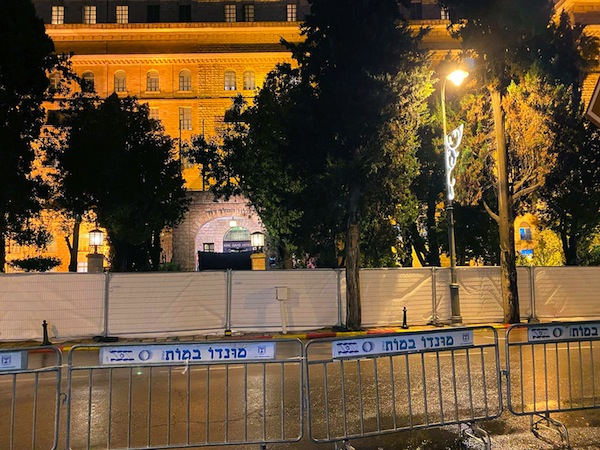
The King David Hotel was partially obscured by a temporary security barrier as part of the preparations that were carried out in Jerusalem for the arrival of leaders from more than 45 countries for in the Fifth World Holocaust Forum, which took place at Yad Vashem this week, and marked the 75th anniversary of the liberation of Auschwitz-Birkenau in Poland. (photo from Ashernet)

Monday marks the 75th anniversary of the liberation of Auschwitz-Birkenau. That date, Jan. 27, has been set aside annually to mark International Holocaust Remembrance Day.

Scores of officials from around the world were to descend on Jerusalem this week to attend a ceremony at Yad Vashem and a forum on the Holocaust. Expected guests include Canada’s Governor-General Julie Payette, Prince Charles, Russian President Vladimir Putin, French President Emanuel Macron, U.S. Vice-President Mike Pence and a long list of royalty, heads of government and others from around the world, especially from Europe.

Among the more attention-grabbing guests is Volodymyr Zelensky, president of Ukraine. Zelensky is a particularly interesting man in a particular role at an interesting time. He will be in Jerusalem alongside Pence and other world leaders at the very moments when the U.S. president is undergoing an impeachment trial initiated as a result of a phone call with Zelensky, probably the only reason most North Americans know his name. But that is among the least remarkable things about the leader.

A political neophyte (aside from playing the Ukrainian president in a satirical TV series), Zelensky was elected on an anti-corruption platform. In advance of his visit to Israel for the commemoration events this week, he engaged in a lengthy and witty interview with the Times of Israel about his family’s history – some relatives live in Israel and he has visited and performed comedy there many times – and his reflections on Jewishness, Israel and contemporary politics.

It caused some curiosity when Zelensky was elected because he has, in his words, “Jewish blood.” It is a common term, perhaps especially in formerly Soviet societies where religion was officially negated and so identities are defined obliquely, but the phrase “Jewish blood” is unfortunate in the context of Ukrainian history.

Among the considerations facing the country at present is the complicity of its citizens in the Holocaust, including in the massacres at Babi Yar, a ravine in the capital of Kyiv, where an estimated 100,000 to 150,000 individuals were murdered during the Nazi occupation, including more than 33,000 Jews on one day in September 1941.

In 1976, Soviet officials erected a monument marking the site and the cataclysm – ignoring the Jewish particularity of the mass murder and lamenting the deaths of Soviet victims of Nazism. It is undeniably true that victims at Babi Yar also included Roma, communists, Ukrainian nationalists and prisoners of war, all of whom deserve to be commemorated and mourned. But the omission of the Jewish identities of most of the victims at the site has been a point of pain and conflict for decades.

Zelensky’s government is remedying this. Begun by civic officials and Jewish leaders and endorsed by Zelensky’s predecessors, a Babi Yar Holocaust Memorial Centre is being constructed, with anticipated completion in 2023. The government is also undertaking a more transparent assessment of the country’s role and its citizens’ collaboration during the Second World War, outpacing most of their eastern European neighbours in addressing this dark past.

Still, some red flags remain. Zelensky claims that there is no antisemitism in Ukraine, an unequivocal statement that bewilders. It would be careless for any leader to ascribe complete innocence of bigotry to their entire citizenry, more so the leader of a country with a history like Ukraine’s.

He is, in some ways, between a rock and a hard place. While making blanket denials of Ukrainian antisemitism, he is also attempting to move his society away from the glorification of nationalist – meaning, among other things, inevitably antisemitic – historical figures. He points to the fact that he, a novice politician with “Jewish blood,” was elected to the country’s top post as evidence of tolerance in Ukrainian society. It does seem encouraging.

Also encouraging is the extensive list of world leaders arriving at Yad Vashem not only for a commemoration but for an educational forum, titled Remembering the Holocaust: Fighting Antisemitism. Israel’s President Reuven Rivlin has said the purpose of the meeting is “to think about how to pass on Holocaust remembrance to generations who will live in a world without survivors, and what steps we must take to ensure the safety and security of Jews, all around the world.”

Seventy-five years after that terrible epoch, the topic remains timely.


Format ImagePosted on January 24, 2020January 22, 2020Author The Editorial BoardCategories From the JITags antisemitism, Auschwitz-Birkenau, Holocaust, Israel, politics, Ukraine, Volodymyr Zelensky, Yad Vashem
Opera urges “never forget”

Opera urges “never forget”

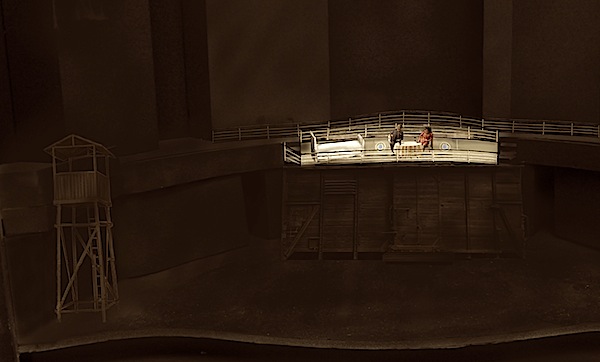
The ship’s cabin in Pasazerka (The Passenger), as envisioned by UBC Opera’s creative team. The opera is part of a series of events at the University of British Columbia marking the 75th anniversary of the liberation of Auschwitz. (photo from UBC Opera)

UBC Opera presents the Canadian première of Mieczyslaw Weinberg’s Pasazerka (The Passenger). Opening Jan. 30 at the Chan Centre for the Performing Arts on the University of British Columbia campus, this will be the first time the work has been presented on any university stage in the world.

The Passenger opens on a luxury liner bound for Brazil. A newly married German woman, Lisa, who, earlier in life, had been an aufseherin, camp guard, at Auschwitz, thinks she recognizes a fellow passenger. The passenger is Martha, a Polish Auschwitz prisoner who was thought to have died at the camp. The effect that their meeting (either actual or imaginary – it’s never made clear) has on the two women, and on Lisa’s marriage to the German ambassador to Brazil, is the subject of this dramatic and powerful opera.

UBC Opera’s production is being created from scratch. The opera has proven so popular no sets or costumes are available for rent; consequently, new sets are being constructed and, at this writing, the students were sewing together dozens of striped prison pajamas for the Auschwitz prisoners’ chorus.

After receiving its world première in 2010 at the Bregenzer Festspiele in Austria, The Passenger has seen frequent performances in various German venues, a highly acclaimed production at the English National Opera in 2011 and, more recently, it has been performed successfully in the United States at the Houston Grand Opera and at the Lyric Opera of Chicago. In spring of last year, it was performed at the new Tel Aviv Performing Arts Centre, and it will be performed in Spain later this year.

The UBC production has received funding from various sources, including the Adam Mickiewicz Institute, which promotes Polish culture around the world, and the Consulate General of the Republic of Poland, as well as Poland’s Department of Public and Cultural Diplomacy and Ministry of Foreign Affairs.

When the president of UBC, Dr. Santa Ono, heard about the project, he committed further funding for the production. Other funding has come from UBC’s dean of arts, Gage Averill, and the David Spencer Endowment Encouragement Fund. The production also has received support from the Vancouver Holocaust Education Centre, Temple Sholom and UBC Hillel House.

“In our time, antisemitism and neo-Nazism has become shockingly prevalent again. Even our own neighbour to the south has witnessed a growing social and political climate which has encouraged disrespect for other human beings and blatant racism,” said Prof. Nancy Hermiston, head of the Voice and Opera divisions at UBC and the director of this production of The Passenger, in a recent interview with the Independent. “In my opinion,” she said, “this has, in part, been released as a result of the behaviour and actions of President Trump. His attitude has given those elements of the world’s population promoting discrimination, hatred, antisemitism and neo-Nazism, a sense that they have a licence to do so. Our opera highlights the consequences of this hatred and racism. Now is the time to remind ourselves of respect and tolerance for others and of our humanity. It is the exact time to remind ourselves of the horror of the systematic extermination of millions of innocent people. Genocides continue to plague our world. Have we learned nothing from the past?

“We can never forget the tragic deaths of those millions of innocent souls nor can we forget those who survived that crime against humanity,” she said. “We cannot let another Holocaust occur.”

The Passenger is sung in Polish, Russian, Czech, French, Yiddish, German and English, which offers a particular challenge to the young singers at UBC. Equally challenging for the singers, according to Hermiston, is the difficulty of dealing emotionally with the subject matter, which, in rehearsal, has led to periods of weeping and feelings of deep sorrow, both for the singers and “even for me,” admitted Hermiston, “especially at the end, when the chorus of prisoners comes downstage and challenges the audience to ‘never forget, never forget.’” (Hermiston has engaged a counseling team to help the singers through their own trauma as they reenact this emotional narrative.)

Performances of The Passenger are set for Jan. 30 and 31 and Feb. 1 at 7:30 pm, and Feb. 2 at 2 p.m. Tickets are available online at music.ubc.ca/opera-pasazerka-the-passenger.

The opera is part of a larger commemoration of the 75th anniversary of the liberation of Auschwitz that is being undertaken by UBC Opera; the UBC Modern European Studies program; the UBC department of Central, Eastern and Northern European studies; the UBC Witnessing Auschwitz International Seminar; and UBC Go Global. During a symposium that runs Jan. 27-30, there will be various symposia and exhibits, and school-outreach programs featuring local survivors and UBC professors and students, as well as the opera The Passenger.

Guest speakers for the symposium include Dr. Michael Berenbaum, Dr. Bozena Karwowska, Dr. Piotr Setkiewicz, Dr. Chris Friedrichs, Aleksander Laskowski, Dr. Richard Menkis, Dr. Dorota Glowacka, Dr. Rima Wilkes, Dr. Anja Nowak, Dr. Peter Suedfeld, Dr. Tricia Logan, Dr. Ilona Shulman Spaar, Janos Benisz, Amalia Boe-Fishman and David Ehrlich, among others. For more information, visit auschwitz75.arts.ubc.ca.

Graham Forst, PhD, taught literature and philosophy at Capilano University until his retirement and now teaches in the continuing education department at Simon Fraser University. From 1975 to 2010, he co-chaired the symposium committee of the Vancouver Holocaust Education Centre.

Format ImagePosted on January 17, 2020January 15, 2020Author Graham ForstCategories Performing ArtsTags Auschwitz, education, Holocaust, Nancy Hermiston, opera, theatre, UBC, UBC Opera, University of British Columbia
Last Cabaret almost sold out

Last Cabaret almost sold out

Joanna Garfinkel is part of the creative team behind the world première production of Berlin: The Last Cabaret, part of the PuSh festival. (photo from the artist)

The world première of Berlin: The Last Cabaret, presented at Performance Works Jan. 23-26 by City Opera Vancouver in association with Sound the Alarm: Music/Theatre, is almost sold out. Part of the PuSh International Performing Arts Festival, the only tickets that remain will be sold at the door, though writer and Jewish community member Joanna Garfinkel told the Independent, “I hope we are able to add more presentation opportunities, as well, since this is truly becoming an exciting and rich production.”

Set in Nazi Germany in 1934, a group of artists must decide whether or not to perform their new political show – which, reads the press release for Berlin, “challenges state media, calls out the Nazi classification of gay individuals as ‘degenerates’ and includes parodic inflection that women are being marginalized” under the new regime – or save themselves.

The opera takes place “two weeks after ‘the Night of Long Knives,’” said Garfinkel, “when the future had been cast, but many were not yet seeing it, including my own family. One thing that interested me a great deal is how people are forced to make compromises under oppression, and even make excuses for what’s happening around them.”

The “Night of the Long Knives” was the June 30, 1934, purge by Hitler of more than 85 members of the Sturmabteilung, the Nazi party’s initial paramilitary wing.

Rather than being a satire itself, Garfinkel explained that Berlin: The Last Cabaret “is more an unearthing of the under-heard Jewish and queer artists who flourished in the Weimar era and were crushed by the Holocaust. The humour we employ is their urgent satire, which feels fresh and relevant with all that is going in the world right now.

“My own family escaped from Berlin to Winnipeg (eventually), so I am both bound to respect and honour the history, and also privy to the dark humour we employ about it.”

City Opera Vancouver approached Garfinkel last spring, she said. They had “heard about me from my dramaturgical work with Playwrights Theatre Centre and the historically based Japanese Problem for my own company, Universal Limited. I was excited by the opportunity to work with an opera company, which would be new to me, but on something quite close to my heart, history and interest.”

The relevance of the opera was one of the reasons she joined its creative team. In regard to choosing projects in general, she said, “Right now, it feels like art must be speaking to the world and on behalf of marginalized voices. Theatre is too much work, and the world too messed up, to work on projects that don’t resonate on an activist level. I am lucky right now to get to choose to work on things that are so resonant.”

Garfinkel, who is billed as librettist for the production, clarified that categorization.

“I contributed story, structure and additional dialogue for this piece,” she said, “but it’s important to note that the songs themselves are historical, written by composers Eisler, Spoliansky, Hollaender and Weil, so I am not, technically, the librettist. However, building a story and play around preexisting songs presents its own challenges. It was of central importance to me that the Jewish/queer and other marginalized artists of the time were centred in our story.

“We were working with excellent (but unavailable!) collaborators in our composers and, together with director Alan Corbishley, music director and historian Roger Parton and choreographer Tara Cheyenne Friedenberg, tried to honour their work and build a vital story around it.”

Cheyenne Friedenberg is also a member of the Jewish community.

Berlin: The Last Cabaret stars actors with a background in music and spoken theatre, rather than traditional opera singers, and each performer, according to the press release, “was involved in the creation of their on-stage characters and storylines.” The production features a live four-person band.

For more information on PuSh, visit pushfestival.ca.

Format ImagePosted on January 17, 2020January 15, 2020Author Cynthia RamsayCategories Performing ArtsTags Berlin, free speech, Hitler, Holocaust, Joanna Garfinkel, LGBTQ+, Nazis, PuSh International Performing Arts Festival, satire, theatre
Annual civil courage tribute

Annual civil courage tribute

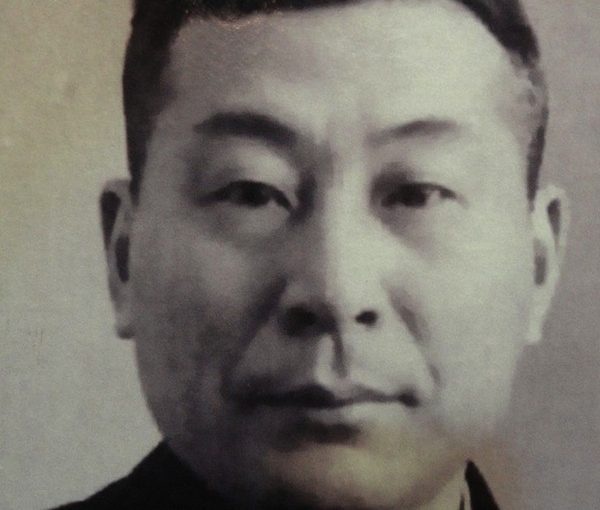
Chiune Sugihara, 1941. This year’s Raoul Wallenberg Day event includes the screening of Persona Non Grata: The Story of Chiune Sugihara. (photo from Vilnius-Green House exhibit)

On Sunday, Jan. 19, the 15th annual Raoul Wallenberg Day event pays tribute to courageous actions by diplomats Raoul Wallenberg of Sweden and Chiune Sugihara of Japan. During the Second World War, they engaged in selfless acts of civil courage, at grave risk to themselves and their families, to rescue many tens of thousands of Jews during the Holocaust.

This year, the Vancouver-based Wallenberg-Sugihara Civil Courage Society focuses on the story of Sugihara. The event features a showing of the biographical film drama Persona Non Grata: The Story of Chiune Sugihara. As a consular official for Japan in eastern Europe during the Second World War, Sugihara saved thousands of refugees by issuing transit visas that allowed people to escape Nazi German forces. Once reviled in Japan, today Sugihara is considered a hero, with museums and a memorial site.

The keynote speaker on Jan. 19 is George Bluman, a local descendent of Sugihara visa recipients and an international expert on Sugihara’s life. Some of those saved by his visas ended up in Vancouver and other parts of Canada.

When possible, the Civil Courage Society also presents an award to an individual associated with British Columbia who, at significant personal risk, helped improve the lives of others while defying unjust laws or norms, past or present. Past recipients include Hon. Ujjal Dosanjh, Chief Robert Joseph and Mary Kitagawa. Their stories inspire Canadians to act with courage and live by their moral values.

This year’s event – sponsored by the estate of Frank and Rosie Nelson, and supported by several organizations and volunteers – is being held at the H.R. MacMillan Space Centre, and it begins at 1 p.m. Admission is free; donations are appreciated. A reception follows. For more information, visit wsccs.ca. New volunteers and nominations for the Civil Courage Award are always welcomed.

Format ImagePosted on December 20, 2019December 18, 2019Author Wallenberg-Sugihara Civil Courage SocietyCategories LocalTags Chiune Sugihara, courage, George Bluman, Holocaust, Righteous Among the Nations, Wallenberg-Sugihara Civil Courage Society
Teaching in new ways

Teaching in new ways

Prof. Ira Robinson of Concordia University’s Institute for Canadian Jewish Studies teaches a wide range of students about the Holocaust and antisemitism. (photo from Ira Robinson)

Ira Robinson is the director of Concordia University’s Institute for Canadian Jewish Studies and a professor of Judaic studies in the department of religions and cultures. A strong believer that an educator shouldn’t teach the same course in the same way year after year, he is always looking for new ways to reach students of all ages.

Born in Boston, Mass., Robinson moved to Montreal with his wife, Sandra, 40 years ago.

“I came to Canada because Concordia offered me a job, and I landed in the right place at the right time,” he told the Independent. “Academics don’t always have a complete choice of where they are going to settle. I came to Montreal and Montreal has a large and interesting Jewish community and a tremendously interesting bilingual culture.”

Though Robinson had never envisioned writing a book about antisemitism or the Holocaust, he did so, publishing A History of Antisemitism in Canada in 2015.

Robinson was trained by students of the late Salo Baron, a Polish-American historian, who once said, “If you want to understand the totality of Jewish history, you have to take into consideration that the pogroms and the massacres take only an infinitesimal amount of time, even though they wreak great havoc.”

According to Robinson, “Ninety-nine percent of the time, we’re dealing with normal life…. Baron and his students decided to look at the Jews as they had lived and not as they had died. That was the lesson that I took.”

For Robinson, this meant he would have to determine his own take on the history of antisemitism in Canada and, hence, “I came out with the book.”

Robinson starts many of his courses by telling students that there is nothing he is going to teach them that is not completely denied by somebody, somewhere. With this message, he is stressing that what he is about to teach is his perspective on what took place.

In looking at the history of antisemitism in Canada, for example, Robinson tried to contextualize the reasons Jews were looked at as guests in the 1920 and 1930s in Canada.

“What I did in this book is create a continuous narrative on antisemitism in Canada from the 18th century through to the present,” he explained. “There have been many very good studies on various aspects of antisemitism in Canada, the most famous of which is [Irving] Abella’s and [Harold] Troper’s None is Too Many. This academic book uniquely made a difference in the political discourse of Canada. Now, whenever anyone debates a refugee issue in Canada, the phrase, ‘None is too many,’ is sure to come into the discourse or debate at some point. That was a great success, but the book only concentrates on the 1920s to the 1940s, and mainly focuses on the Canadian federal government.”

Since the research for Robinson’s book was completed in 2014, antisemitism has increased, he said. For that reason, he decided to find ways to teach about the problem to younger children, kids in grades 4 to 6.

“It presents a challenge, because I have to begin with who they [antisemites] are and where they are,” said Robinson. “And so, I started by talking with them [the kids] about bullying, because bullying, as you understand, is something that kids know about and people talk to them about it.

“If you see somebody bullying somebody else, what are you supposed to do? If you can intervene, you should intervene. If you need to call somebody in a position of authority, you call somebody…. So, I said, ‘imagine that there are kids and you can bully them and nobody is going to stop you. And imagine that, if somebody goes to a person of authority, they will just say, ‘Good for you!’”

Robinson took it a step further, creating a PowerPoint presentation focusing on the wearing of the yellow Jewish star that was imposed upon Jews.

“I showed first a picture of a girl’s dress with the yellow star shown on it – just the dress, nobody in it,” he said. “Then, the next thing I showed was a little girl in a dress with the yellow star. When I changed the slide from just the girl’s dress with the yellow star to the little girl in the dress with a yellow star, I could hear a slight gasp among the students. So, there are ways – you have to talk to the people you have in front of you.”

Robinson gave this presentation in a public school and, as far he knows, there were no Jewish students in the classroom. “I am used to talking to a wide range of people,” he said. “And, in my university classes, for instance, I do expect Jews to enrol, and they do. But, I also expect Muslims and Christians to enrol, and they do, and everybody else, too.”

In Robinson’s view, the challenge of finding ways to disseminate the information effectively is always a worthwhile exercise.

“There are lots of people involved in Holocaust education and I think a lot of them are spending a lot of effort introducing and assisting in educating about the Holocaust in public school systems. The problem, as always, is not lack of good will,” he said, “but that the schools are under great pressure from a whole bunch of different directions. What should our children study? And the mega trend, not merely in public schools, but also in universities, is moving away from the social sciences and humanities, and focusing on other subjects.”

As far as teaching methods regarding the Holocaust and antisemitism, Robinson said, “I think I am able to speak with more depth, because you can’t teach the same course in the same way for decades. You have to develop a scholarly understanding as the field develops and, so, my teaching is informed by my reading and my reading continues to inform me.

“And my power is that I am able to direct students to certain books, certain articles and certain films that I think will help them develop their sense of things. But, before I can even do that, before I can guide anybody, I have to find the things myself, first and foremost.”

Rebeca Kuropatwa is a Winnipeg freelance writer.

Format ImagePosted on December 13, 2019December 12, 2019Author Rebeca KuropatwaCategories NationalTags antisemitism, Concordia University, education, history, Holocaust, Ira Robinson
Dominican Republic a haven

Dominican Republic a haven

The Museum of Jewish History in Sosua is located right next to the city’s synagogue. (photo by Dave Gordon)

Famous for its rum, cigars, resorts, beaches and rich history, the all-season holiday destination of the Dominican Republic attracts 800,000 Canadians each year. Moreover, the country has a relatively unknown past – few people realize, or know, that the country opened its doors wide to Jewish refugees fleeing Nazi persecution.

This era is chronicled at the Museum of Jewish History, in Sosua, which is in the northern section of the country. Located right next to the city’s synagogue, the museum preserves the memory of those Jewish refugees who sought a safe haven on Dominican soil, and left their mark on the region. It houses photographs of early-to-mid-20th-century Jewish immigrants, along with diary entries, ritual items and copies of letters from Jewish agencies during the war.

Before the Second World War, in 1938, U.S. President Franklin D. Roosevelt summoned the Allies to Evian, France, for a conference about how to handle the massive exodus of Jews who desperately sought to flee Nazi persecution. Though most of the participants at the conference expressed their sympathy, no resolution was formulated. Paraphrasing Chaim Weizmann (who would later become the first president of Israel), Central and Eastern European Jews perceived the world as consisting of just two camps: one that hounded and hunted them, and another that closed its gates.

There was, however, one notable exception.

Of the 32 countries that sent delegations to the conference, only the Dominican Republic, led by President Rafael Trujillo, agreed to receive 100,000 refugees, offering land resettlement under generous conditions. A group of experts on refugee affairs, under the leadership of James Rosenberg, was mobilized by the American Jewish Joint Distribution Committee to capitalize on the offer. This was the birth of the Dominican Republican Settlement Association (DORSA).

photo - Inside Sosua’s synagogue
Inside Sosua’s synagogue. (photo by Dave Gordon)

Between 1940 and 1945, the Dominican Republic government issued 5,000 visas for displaced Jewish refugees. Tragically, however, the actual number of immigrant arrivals never reached anywhere near this figure, due to the escalation of the war, and also to what some believe to be mishandling by the Jewish Agency, which resulted in delays. Of the nearly 1,000 Jews who settled in the Dominican Republic, most were from Austria and Germany, although some came from as far away as China, and some from as close as the Caribbean islands.

Little by little, the jungle-like territory was divided into residential lots and communal barracks for arriving refugees. Each refugee was furnished with, as a repayable loan, 80 acres of land, 10 cows, one mule, one horse, and a living wage for a month. They were assisted with training in agriculture and farming techniques, of which most had little previous knowledge.

Jews took to food manufacturing, becoming successful in the production and sale of sausage, milk, cheese, tomato sauce, mashed carrots, stuffed peppers and mashed spinach. Many of these industries continue to this day. The refugees’ earnings enabled them to pay their debts and establish other small industries.

By the 1990s, however, just 36 Jewish families remained in Sosua, as most of the population either died, intermarried or moved to larger Jewish communities.

Interestingly enough, well before the arrival of these refugees, in 1916, the Dominican Republic briefly had a Jewish head of state, President Francisco Henríquez y Carvajal.

Visiting the country

Virtually every major supermarket has plenty of items with kosher certification, including imported canned goods, breads, fish and spreads. A Puerto Plata resort named Lifestyle has an on-site kosher restaurant, though only for guests staying there. Alternately, in Punta Cana, the local Chabad offers à la carte food orders upon request.

If this trip is a do-it-yourself getaway, as opposed to an all-inclusive, here are two suggestions for luxury stays that will offer the feel of home:

Villas Agua Dulce is a jaw-droppingly elegant and spacious facility. Each villa has a fully furnished living room, dining room and a washer/dryer. Three-bedroom villas are available to accommodate a family of seven. Toss in for good measure an outdoor patio, outdoor private pool, a spa centre, tennis and basketball courts, and Bauhaus interior design.

With the beach just a few hundred feet away, Cabarete Palm Beach Condos is centrally located in the Cabarete area. Each condo has a fully equipped kitchen, living room (with big TV), dining area and outdoor patio.

As for suggested adventures in the Puerto Plata area, I have several.

photo - Horsebacking riding is one of the many outdoor adventures one can take in the Puerto Plata area
Horsebacking riding is one of the many outdoor adventures one can take in the Puerto Plata area. 

Monkey Jungle: After enjoying the 4,500-foot, seven-station zip lines overlooking the trees, visit the adjacent capuchin monkey reserve. Scores of these adorable creatures bounce around from tree to tree, hopping on your shoulders and nibbling straight from the fruit plate in your hand.

Ocean World: This is where you can swim with sharks and dolphins and kiss the sea lions.

Tip Top Catamaran: Take a ride on the 75-feet-long and 33-feet-wide catamaran. Tourists are offered the chance to experience the vibrant underwater world through snorkeling Sosua Bay (equipment is provided). Immerse yourself in schools of fish, peer at the coral, get face-time with a puffer fish and play with the sea urchins.

Twenty-seven waterfalls of Rio Damajagua are tucked away in the hills of the Northern Corridor mountain range, behind tall stalks of sugar cane. In addition to the mélange of outdoor activities – such as cliff jumping into natural waters and climbing through caves – you are surrounded by forest. And, depending on the season, fruit will be growing from coconut, avocado, coffee bean and mango trees.

Kiteboarding: Think of yourself hovering over the ocean on a surfboard, propelled by a giant inflatable kite, and you have kiteboarding. Dare2Fly provides kiteboarding packages, lessons and rentals.

Rancho Luisa y Tommy: Try a morning horseback ride. Run by 30-year-old Tommy Bernard, a Quebec expat, he’s an affable fellow who’ll treat you to engaging conversation on topics including animals, his adopted country, and most anything in life.

Dave Gordon is a Toronto-based freelance writer whose work has appeared in more than 100 publications around the world.

Format ImagePosted on December 13, 2019December 12, 2019Author Dave GordonCategories TravelTags Dominican Republic, history, Holocaust, immigration, museums, synagogues, tourism
Canada’s legacy of trauma

Canada’s legacy of trauma

Lillian Boraks-Nemetz and Senator Murray Sinclair. (photo by Jerry Nussbaum)

A succession of unjust Canadian laws piled one upon the other in the last part of the 19th century, enabling the federal government to take indigenous children from their homes and eradicate their cultural identities. The full scope of those laws – and their impacts on generations of First Nations people to today – was outlined by Senator Murray Sinclair, former head of the Truth and Reconciliation Commission, who spoke at the University of British Columbia last week.

The impact of residential schools and the laws that created and sustained them was the theme of Sinclair’s talk, which was presented by the UBC faculty of education and the Janusz Korczak Association of Canada.

Prior to Sinclair’s presentation, Vancouver author Lillian Boraks-Nemetz, a board member of the Korzcak association and a child survivor of the Holocaust, contextualized the lecture in the spirit of Korczak’s legacy.

Korczak was an educator and pedagogue who ran orphanages, including one in the Warsaw Ghetto, where Boraks-Nemetz was also confined. Korczak was a respected figure in Polish society, considered by many the originator of the concept of children’s rights.

photo - Dr. Charles Ungerleider, professor emeritus of educational studies at the University of British Columbia and a former B.C. deputy minister of education, left, and Jerry Nussbaum, president of the Janusz Korczak Association of Canada, present an award to Stephanie Black, 2019 recipient of the Janusz Korczak Scholarship
Dr. Blye Frank, dean of the faculty of education, University of British Columbia, left, and Jerry Nussbaum, president of the Janusz Korczak Association of Canada, present an award to Stephanie Black, 2019 recipient of the Janusz Korczak Scholarship. (photo from Tiffany Cooper)

“Korczak observed and listened to children, never judging, criticizing or showing intolerance,” said Boraks-Nemetz. He cultivated their self-esteem and believed that children should grow into who they want to be, not who others want them to become.

“During the Nazi persecution, Korczak, when offered a reprieve from the depredations of the Warsaw Ghetto, he would not abandon his children in their last journey to the cattle cars heading for Treblinka, the death camp,” she said. “He refused, saying, ‘My children need me. I deplore desertion.’ He went with them and they all perished.”

Sinclair then painstakingly outlined the conspiracy of legal barriers to justice that the government erected to perpetuate what has been termed cultural genocide.

As the federal government began to expand Canada westward in the 1870s, it entered into treaties with the indigenous peoples. One of the demands indigenous negotiators insisted upon in exchange for being limited to reserves was that the federal government create and fund schools on those reserves.

Sir John A. Macdonald sent a representative to the United States to see how they were running schools for Native Americans. In direct repudiation of the treaties, the federal government opted for a similar system and his government created what they called “industrial schools.”

Sinclair said MacDonald believed that, if children went to school on reserves, “the kids would go to the schools in the daytime and they would then return home to their parents, who are nothing but savages, and we would be teaching those children basic skills that all children learn from schools and what we’re going to end up with at the end of the day is nothing but savages who can read and write.”

Because the government wanted to “do it on the cheap,” said Sinclair, “they decided to involve the churches, who were quite willing to get involved because it was great for the churches as well to gain numbers through their missionary zeal.”

Children were punished for speaking their languages and for talking with their friends and siblings, “because they wanted to break your ties to those relationships…. Everything was done in the schools to break down cultural bonds that existed in those children.”

Those who were not physically or sexually abused lived in fear that they would be, Sinclair said.

“And, of course, the children, when they came home, would tell their parents what happened in those schools,” he said.

The natural inclination to stop it from happening led to a cascade of legislative injunctions that took away the most fundamental rights of First Nations peoples.

“In the 1880s, the government passed the law that amended the Indian Act and said that it was an offence, a legal breach of law, if you did not send your child to a school when the Indian agent told you to send the child,” said Sinclair.

When parents tried to hide their children, the parents would be prosecuted and go to jail. Faced with the prospect of indigenous people taking the government to court over the issue, the government passed another law, making it impossible to go to court against the government for anything done under the Indian Act “unless you get permission from the minister of Indian Affairs first.” The government soon made it illegal for indigenous people to consult with a lawyer on anything relating to the Indian Act – with the punishment for the lawyer being disbarment. Then, another step was added, making it illegal for a white Canadian to speak to a lawyer on behalf of an indigenous person.

When it seemed parents might protest the situation, the government made it illegal, in 1892, for three or more First Nations people to gather together in order to discuss a grievance against the government of Canada. It was made illegal for indigenous people to attend large gatherings like the traditional sundances or the potlatch, “not just because of the religious aspect of it but also because, at these gatherings, that’s when Indians got together in order to discuss their grievances,” said Sinclair.

Fears of a violent uprising were dismissed by Northwest Mounted Police in documentation Sinclair has seen, which, he summarized: “We don’t have to worry about the Indians taking up arms against the government because we have their kids. They are not going to go to war against us.”

Children who returned from the schools were scarred and often unable to communicate with their parents in a shared language.

“Their ability to know how to hunt, fish or trap, which is what the communities depended upon, was lost to them,” said Sinclair.

Estimates are that about 35% of indigenous children attended residential schools, but the damage extended to the other 65%, who were taught in public schools the same white superiority/indigenous inferiority curriculum as those who were taken away.

When those children grew up and had children, they had no learned skills at parenting and were burdened with their own demons, said Sinclair. As a result, when child welfare systems were burgeoning in the 1950s, it was mostly indigenous children who went into care. It was, and is, disproportionately indigenous people who are incarcerated.

Indigenous Canadians have the highest suicide rates of any cultural group in the world, said Sinclair. High school dropout rates, substance abuse and violent crime affect indigenous Canadians in exponentially greater numbers than non-indigenous Canadians.

The problems will not be resolved, Sinclair said, by spending more money on child welfare, policing or incarceration. The education system and society must help indigenous young people realize who they are as Anishinaabe, Cree, Sto:lo or Mohawk.

“The educational system is just not giving them what they need,” he said. “We have a lot of work to do, but, if we address that one aspect of how our society is functioning, we will see the most dramatic change that will resolve or redress the history of residential schools in Canada on indigenous people, on indigenous youth in particular.… It begins with recognizing that … indigenous youth, in particular, must be given their chance to develop their sense of self-respect first, and that’s going to take some time to do.”

Format ImagePosted on November 29, 2019December 1, 2019Author Pat JohnsonCategories LocalTags First Nations, Holocaust, human rights, Janusz Korczak, JKAC, Lillian Boraks-Nemetz, Murray Sinclair, residential schools

Posts pagination

Previous page Page 1 … Page 18 Page 19 Page 20 … Page 44 Next page
Proudly powered by WordPress