Skip to content
  • Home
  • Subscribe / donate
  • Events calendar
  • Business Directory
  • FAQ
  • News
    • Local
    • National
    • Israel
    • World
    • עניין בחדשות
      A roundup of news in Canada and further afield, in Hebrew.
  • Opinion
    • From the JI
    • Op-Ed
  • Arts & Culture
    • Performing Arts
    • Music
    • Books
    • Visual Arts
    • TV & Film
  • Life
    • Celebrating the Holidays
    • Travel
    • The Daily Snooze
      Cartoons by Jacob Samuel
    • Mystery Photo
      Help the JI and JMABC fill in the gaps in our archives.
  • Community Links
    • Organizations, Etc.
    • Other News Sources & Blogs
  • JI Chai Celebration
  • JI@88! video

Recent Posts

  • Legal help for students
  • Revisiting myth of Lilith
  • Wrong person rebuked
  • Canada’s mixed messages
  • Questions for museum
  • Symposium on antizionism
  • Making soccer political
  • CJPAC lauds Pulver’s impact
  • City recognizes Vrba’s legacy  
  • Organ donation saves lives
  • Theodore’s March premiere
  • A healing Shabbaton
  • Supplying healthy food
  • A chime of metal tags
  • Yellowknife seder a first
  • Ishai energizes, unifies
  • A Lag b’Omer to remember
  • Expanding the healing
  • Hannah Senesh – a unique hero
  • Community milestones … May 2026
  • Sharing her testimony
  • Fall fight takes leap forward
  • The balancing of rights
  • Multiple Tony n’ Tina roles
  • Stories of trauma, resilience
  • Celebrate our culture
  • A responsibility to help
  • What wellness means at JCC
  • Together in mourning
  • Downhill after Trump?
  • Birth control even easier now
  • Eco-Sisters mentorship
  • Unexpected discoveries
  • Study’s results hopeful
  • Bad behaviour affects us all
  • Thankful for the police

Archives

Follow @JewishIndie
image - The CJN - Visit Us Banner - 300x600 - 101625

Tag: Holocaust

Illustrating Holocaust stories

Illustrating Holocaust stories

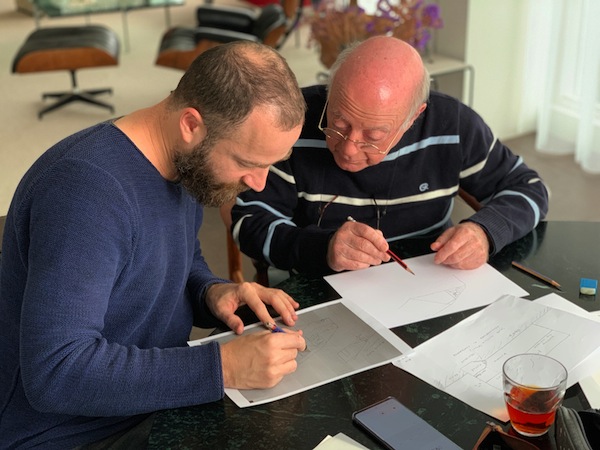
Gilad Seliktar, left, and Rolf Kamp in Amsterdam. They are drawing the last hiding place of Nico and Rolf Kamp in Achterveld, which was liberated in April 1945 by Canadian troops. (photo from UVic)

A University of Victoria professor is orchestrating an international project that links Holocaust survivors with professional illustrators to create a series of graphic novels, thereby bringing the stories of the Shoah to new generations.

Charlotte Schallié, a Holocaust historian and the current chair of UVic’s department of Germanic and Slavic studies, is leading the initiative, which connects four survivors living in the Netherlands, Israel and Canada with accomplished graphic novelists from three continents.

The project, called Narrative Art and Visual Storytelling in Holocaust and Human Rights Education, is supported by the Social Sciences and Humanities Research Council of Canada. Its aim is to teach about racism, antisemitism, human rights and social justice while shedding more light on one of the darkest times in human history.

UVic is partnering with several organizations in the project, including the Canadian Museum for Human Rights in Winnipeg, the Anne Frank House in Amsterdam and the Vancouver Holocaust Education Centre.

Many historians of the genre have argued that the rise of graphic novels as a serious medium of expression is largely due to the commercial success of Art Spiegelman’s Maus in 1986. Maus, the first graphic novel to win a Pulitzer Prize, depicts recollections of Spiegelman’s father, a Shoah survivor, with Jews portrayed as mice, Germans as cats and Poles as pigs.

Schallié told the Independent that the idea for the project came from observing the interest her 13-year-old son has in graphic novels and the appeal Maus has had among her students, who have continually selected it as one of the most poignant and memorable materials in her classes.

“Though a graphic novel, Maus could hardly be accused of treating the events of the Holocaust frivolously,” she said from her office on the campus of the University of Victoria.

As most survivors are now octogenarians and nonagenarians, the passage of time creates an ever more compelling need to tell their stories as soon as possible.

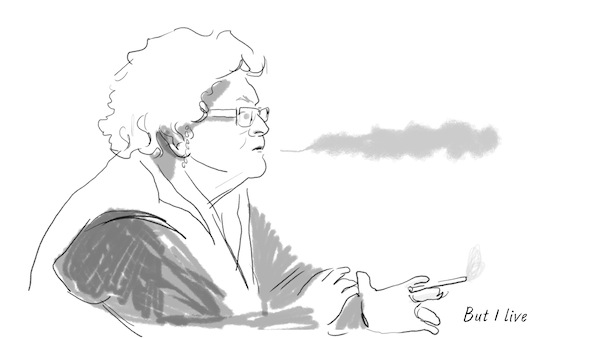
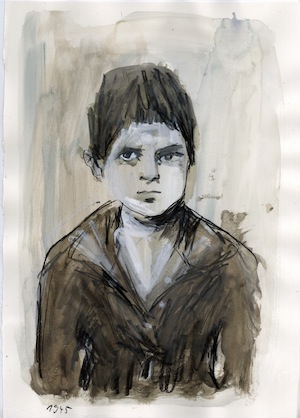
image - Barbara Yelin’s illustration of Emmie Arbel, now
Barbara Yelin’s illustration of Emmie Arbel, now. (image from UVic)
image - Barbara Yelin’s illustration of Emmie Arbel, then
Barbara Yelin’s illustration of Emmie Arbel, then. (image from UVic)

“Given the advanced age of survivors, the project takes on an immediate urgency,” said Schallié. “And what makes their participation especially meaningful is that each of them continues to be a social justice activist well into their 80s and 90s. They are role models for the integration of learning about the Shoah and broader questions of human rights protection.”

The visual nature of a graphic novel allows it to bring in elements or depict scenes that are not possible with an exclusively written work, according to Schallié. A person may describe an event in writing but leave out aspects of a scene that might add more to the sense of what it was like to be there at the time.

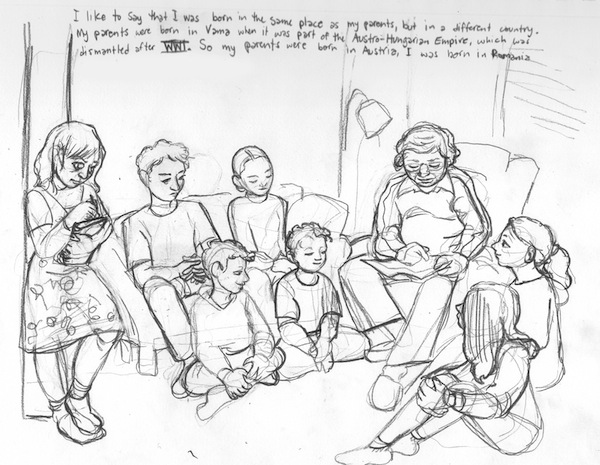
One of the survivors participating in the project, David Schaffer, 89, lives in Vancouver. He is paired with American-Israeli comic artist Miriam Libicki, who is also based in the city. The two met in person in early January so that Libicki could learn the story of how he survived the Holocaust as a child in Romania.

In 1941, Schaffer was forcibly sent with his family to Transnistria, on the border of present-day Moldova and Ukraine, by cattle car. There, they suffered starvation and were subjected to intolerable and inhumane living conditions.

image - One of the illustrations by Miriam Libicki, who is working with survivor David Schaffer
One of the illustrations by Miriam Libicki, who is working with survivor David Schaffer. (image from UVic)

“The most important thing is to share the story with the general population so they realize what happened and to avoid it happening again. It’s very simple. History has a habit of repeating itself,” said Schaffer.

Libicki, who was the Vancouver Public Library’s Writer in Residence in 2017, is the creator of jobnik!, a series of graphic comics about a summer she spent in the Israeli military. An Emily Carr University of Art + Design graduate, she also published a collection of essays on what is means to be Jewish, Toward a Hot Jew. (See jewishindependent.ca/drawing-on-identity-judaism.)

“The more stories, the better. The wiser we can be as people, the more informed we can be as citizens and the more empathy we can have for each other,” Libicki said. “Graphic novels are not just a document in the archives; they’re something people will be drawn to reading.”

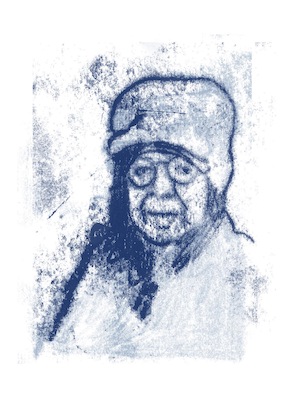
image - Gilad Seliktar drew this sketch of Rolf Kamp
Gilad Seliktar drew this sketch of Rolf Kamp. (image from UVic)

The other illustrators are Barbara Yelin, a graphic artist living in Germany, and Gilad Seliktar, who is based in Israel. Yelin is the recipient of a number of prizes for her work, including the Max & Moritz Prize for best German-language comic artist in 2016. Seliktar has illustrated dozens of books – from publications for children to adult graphic novels – and his drawings frequently appear in leading Israeli newspapers and magazines.

Brothers Nico and Rolf Kamp in Amsterdam and Emmie Arbel in Kiryat Tiv’on, Israel, are the other three survivors who are providing their accounts of the Holocaust.

The books will be available digitally in 2022. A hard copy version of each book is planned, as well. When finished, the graphic novels will be accompanied by teachers guides and instructional material designed for schools in Canada, Germany, Israel, the Netherlands, the United Kingdom and the United States.

UVic hopes to match a larger number of survivors with professional illustrators in the future. To learn more, contact Schallié at [email protected]. You can also visit the project’s website at holocaustgraphicnovels.org.

Sam Margolis has written for the Globe and Mail, the National Post, UPI and MSNBC.

Format ImagePosted on April 3, 2020April 1, 2020Author Sam MargolisCategories BooksTags art, Charlotte Schallié, David Schaffer, graphic novel, history, Holocaust, Miriam Libicki, survivors, University of Victoria, UVic
1,300 survivors found refuge

1,300 survivors found refuge

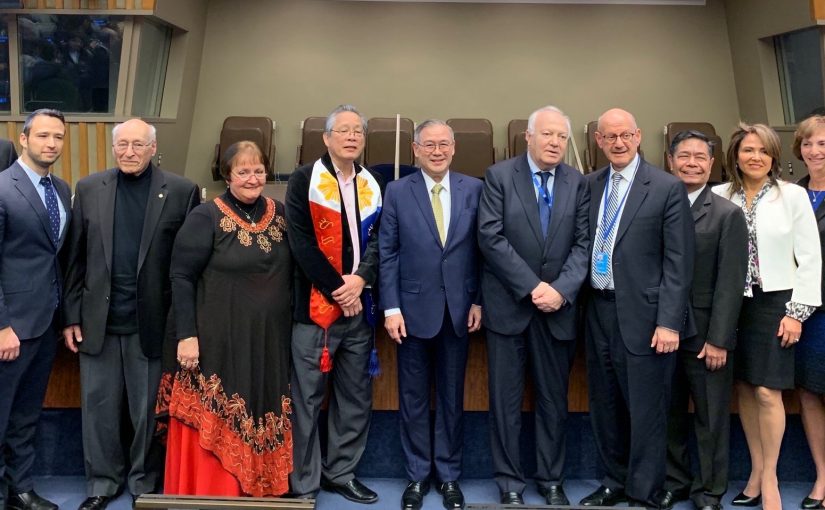
On Holocaust Remembrance Day, Jan. 27, B’nai Brith International (BBI) honoured former Philippine leader Manuel L. Quezon with a special panel discussion at the United Nations in New York City. BBI chief executive officer Dan Mariaschin is fifth from the right. (photo from BBI)

On Holocaust Remembrance Day, Jan. 27, B’nai Brith International (BBI) honoured a former Philippine leader at the United Nations building in New York, for having saved Jews during the Holocaust.

At a time when the Philippines was still under American sovereignty, the appointed Philippine president, Manuel L. Quezon, invited and welcomed 1,300 refugee Jews who were fleeing Nazi persecution.

Quezon, who was born in 1878 and died in 1944, was a statesman, soldier and politician. He served as president of the Commonwealth of the Philippines from 1935 to 1944.

According to Philippine Secretary of Foreign Affairs Teodoro Locsin, the reason why Quezon chose to help when many other world leaders refused to do so, is that he acted in the tradition of “Do unto others as you would have done unto you.”

Not only did Quezon welcome as many Jews as he could get visas for, he also offered them his private land to grow food and develop a kibbutz.

“I think it’s a case of, there are individuals who, I’m a firm believer in this, whose moment comes at the most opportune time,” said Daniel S. Mariaschin, BBI chief executive officer. “In the case of Manuel Quezon, I think he was a good-hearted individual. There was nothing in this for him.

“He really was a compassionate person who heard this story, thousands and thousands of miles away, and was moved to act. And now we are finding out, as more becomes known, that he was willing to save many, many more … and was, unfortunately, not able to do so. I think he stands very high … as one of the Righteous Among the Nations, who acted to save Jews.”

At that time, from 1937 to 1941, as news reports were revealing Hitler’s plans, Quezon secured the necessary visas from the American visa office for a Jewish-American family by the name of Frieder, who manufactured cigars in Manila.

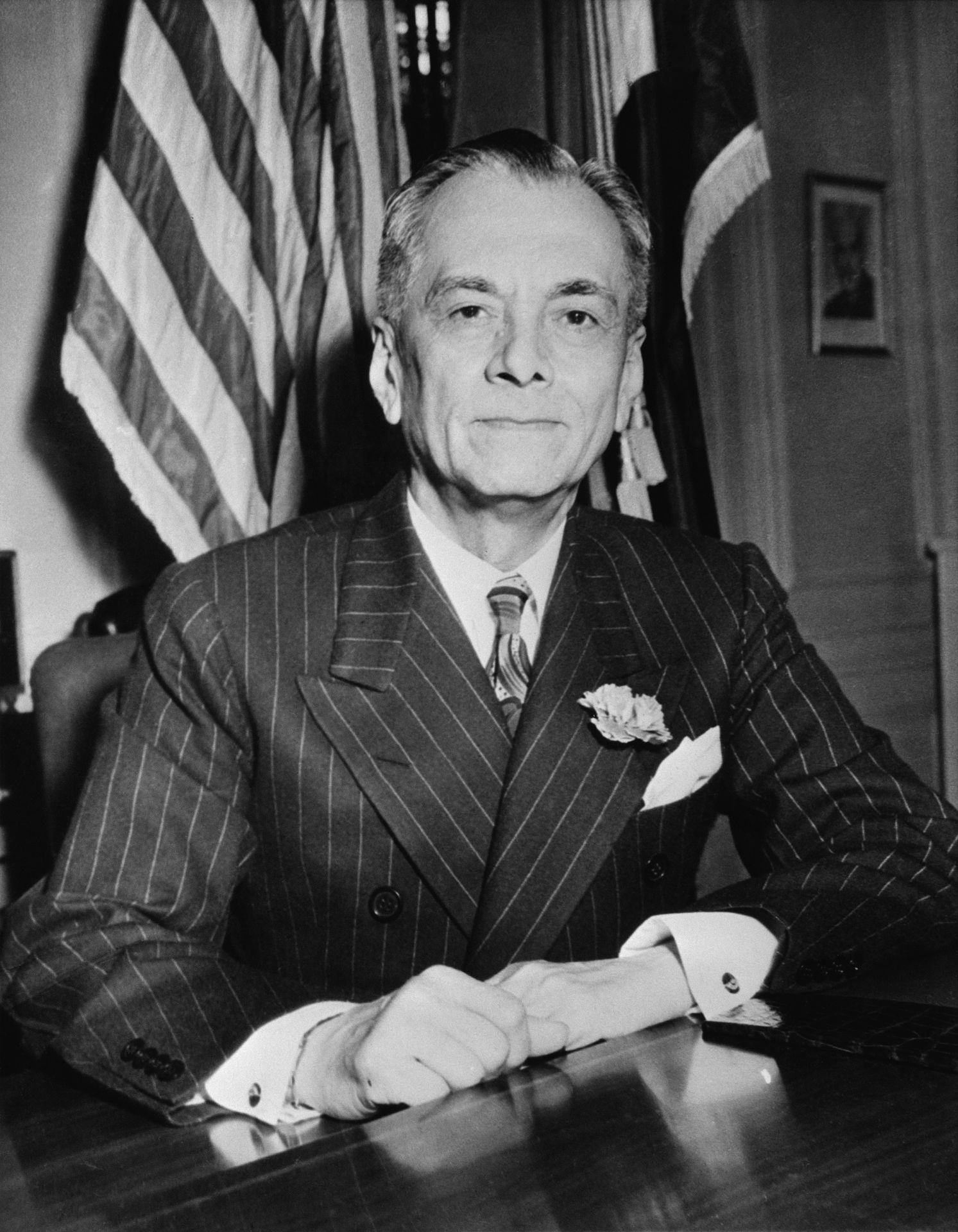
Photo - Former Philippine President Manuel L. Quezon invited and welcomed 1,300 refugee Jews who were fleeing Nazi persecution
Former Philippine President Manuel L. Quezon invited and welcomed 1,300 refugee Jews who were fleeing Nazi persecution. (photo from U.S. Library of Congress LC-USW33-019075-C)

“I think the family, together with the president, were able to get word out, they were able to get those visas … although, again, unfortunately, when he wanted to save more, the ability to get more visas was just not available to him,” said Mariaschin.

Years later, the Philippines was the only Asian nation to vote for the Partition Plan in 1947, to form the state of Israel in 1948, which continued to pave the way for the positive relations Israel has with the Philippines to this day. In 2009, in Rishon Lezion, a monument was erected to honour Quezon.

The BBI event in January was well-attended and included remarks from Locsin, Mariaschin, historian Bonnie Harris, and Hank Hendrickson, who is the executive director of the U.S.-Philippines Society and a refugee who was personally saved by Quezon.

In between the various speakers, director Noel (Sunny) Izon, who made the documentary about Quezon called An Open Door: Holocaust Haven in the Philippines, shared a clip from the film. According to Izon, some 11,000 descendants of the refugees Quezon saved owe their life to him and Izon is one of them. He explained that one of the refugees Quezon saved was a doctor who saved his father’s life soon after arriving in Manila.

Another highlight of the January event was having refugee Ralph Preiss present. Preiss had been saved by Quezon, and shared his experience with attendees.

While no one from Quezon’s immediate family attended, nearly half the attendees were of Filipino descent who now live in New York.

Mariaschin said, while the event was in recognition of Quezon, it was, by extension, “in recognition of the Philippines.”

“The books, the films, the documentaries and the stories will live on from this point, forever,” said Mariaschin about other recent recognitions of Quezon’s actions. “That’s the best tribute you can have, that, rather than have this be just considered a footnote of history, it’s now becoming an important piece of the story … of the courageousness, the humanitarian impulses, of a relatively few individuals.”

According to Mariaschin, Quezon is on equal standing with the handful of other leaders who had a hand in saving Jews during the Second World War, and he said we need to continue highlighting their stories before we lose our few remaining survivors.

“I think we have to do this while there are still survivors who are living,” said Mariaschin. “Unfortunately, the clock is running down on that. In the lifetimes of those people who they saved, it’s extremely important that we say thank you.

“And we were fortunate, as I said, to have one refugee at our program, to have them say thank you and to talk about their story. It’s something that really we need to do every year now and in between, in order to memorialize those who saved Jews.”

Five years ago, the International Raoul Wallenberg Foundation posthumously bestowed Quezon with the Wallenberg Medal, which also acknowledged the Philippines as a whole for having saved Jews during the Holocaust. In Winnipeg, the local B’nai Brith branch is working to organize an event, together with the Winnipeg Filipino community, to honour the former president.

To view the video of the BBI event in New York, visit webtv.un.org and do a search for “Safe Haven: Jewish Refugees in the Philippines – Panel Discussion.”

Rebeca Kuropatwa is a Winnipeg freelance writer.

Format ImagePosted on April 3, 2020April 5, 2020Author Rebeca KuropatwaCategories WorldTags B'nai B'rith, Daniel S. Mariaschin, Holocaust, Manuel L. Quezon, Philippines, Teodoro Locsin, UN, United Nations

We are shaped by history

A few weeks ago, my husband got an email out of the blue from a distant relative in Israel. This Israeli was working on some family genealogy. He was stunned to discover that he had many U.S. relatives he never knew about. Together, my husband and this distant relative took on a big extended family project, even as COVID-19 shut down borders and isolated us in our homes.

Suddenly, my husband in Winnipeg and his dad, aunts, uncles and cousins in New Jersey were emailing, sending photos and stories to one another. They tried to iron out all the stories they’d heard and fit the puzzle pieces together. My husband’s paternal grandparents (z”l) were from Mezritch, Poland. They spent the Second World War on the run. They were in a Siberian Gulag work camp. Then, they lived in a shantytown near Tashkent, Uzbekistan. After the war, they stayed in a series of displaced persons camps in Germany before U.S. relatives found them. They arrived in the United States, with their three children, in 1950.

Discovering what may have happened to each relative 75 years ago, and documenting it, has taken on an urgency for both my husband and this “new” Israeli relative. In part, it’s because his oldest aunt, who was 9 when she came to the United States, remembered it all and discussed it with her mother in detail, over and over, as those who’ve gone through huge upheaval sometimes do. For my husband’s aunt, this childhood experience defines much of her worldview. Now, though, her mother, my husband’s grandmother, has died. His aunt is still alive, but unwell. She’s unable to recount the stories or identify the people in photos anymore. The family is racing to record as much of their family history as they can before even more of the pieces are lost forever.

In the midst of this nightly family email exchange, I read a book called Gateway to the Moon by Mary Morris. This novel makes connections between the Sephardi Jews who fled Spain after the Inquisition, the crypto-Jews of New Mexico and the history behind the family connections and modern-day Jewish practice. The author explained that the idea for the book came to her when she met someone long ago. This New Mexican seemed convinced that his family had been Jewish. Indeed, now we know through DNA analysis that many Spanish-speaking people throughout the world have Sephardi Jewish roots.

Gateway to the Moon was graphic, full of historically correct violence, and direct. It took me a long time to get through. It was powerful, but also hard to grasp the scope of the suffering faced during the Inquisition. This religious violence chased Jewish families for hundreds of years through Spain, Portugal, Mexico and beyond.

Morris does a good job of connecting people throughout history in her narrative. This was particularly powerful when a character tastes a lamb dish in Morocco, on vacation, and is instantly transported to her grandmother’s table in New Mexico. Even as their identity was hidden or forgotten, familiar recipes remained. Just the taste of that lamb stew connected the character to the family’s lost past and their Sephardi Jewish identity.

The ramifications of these huge experiences – violence, trauma, colonization, wars, genocides, terrorist attacks and pandemics – will shape us and future generations. We, as Jews, and as people, are forever shaped by these things. We’re about to celebrate Passover. It recounts a huge event in our people’s story – slavery, freedom and migration. This experience shapes us, though it happened (if it happened) long ago. As we say at the seder, Avadim hayinu: Once we were slaves in Egypt, and now we are free. We’re commanded to remember this as though we personally left Egypt.

As I write this, we’re suffering a pandemic, another huge, worldwide and scary experience. My husband and I are Gen Xers. We’ve been shaped by the Holocaust experiences of our families and friends. We were raised hearing their stories and traumas, and it was part of who they, and we, are.

Now, I pray that we, and all our families, and everyone in our community, live to think about what the ramifications of this next event will be. It will impact us all.

My family and I wish you everything good – a chag sameach, zissen Pesach – a happy holiday. Most importantly, may you enjoy it in good health.

Joanne Seiff has written regularly for CBC Manitoba and various Jewish publications. She is the author of three books, including From the Outside In: Jewish Post Columns 2015-2016, a collection of essays available for digital download or as a paperback from Amazon. Check her out on Instagram @yrnspinner or at joanneseiff.blogspot.com.

Posted on April 3, 2020April 2, 2020Author Joanne SeiffCategories Op-EdTags Diaspora, genealogy, history, Holocaust, lifestyle, pandemic, Passover
Heart-felt and pain-filled memoir

Heart-felt and pain-filled memoir

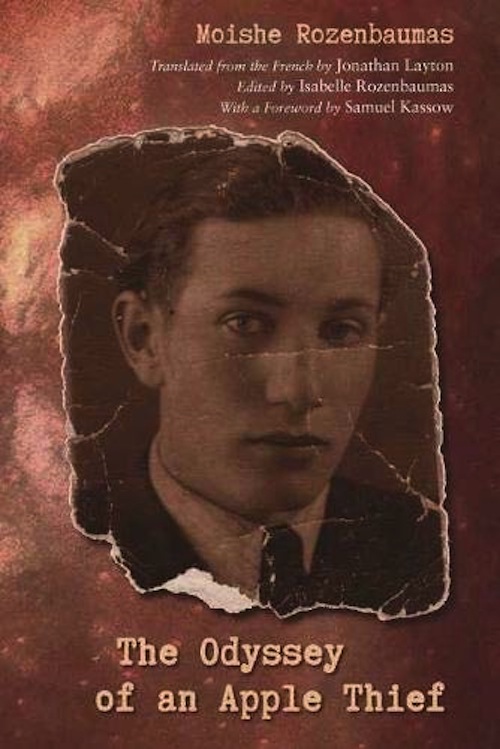
From the page before the opening of Moishe Rozenbaumas’s incisive, heart-felt memoir, we already feel the pain that will inhere in much of his story. Even before we begin reading this autobiography, we see a photocopy of the author’s dedication, handwritten in Yiddish, to the memory of his mother and three brothers, with the dates they were murdered by the Germans’ Lithuanian collaborators in August 1941, in Telz, where Rozenbaumas (1922-2016) was born.

Many people know Telz as the name of the famous yeshivah that was located there, but The Odyssey of an Apple Thief (Syracuse University Press, 2019) by Rozenbaumas – translated from the French by Jonathan Layton and edited by Isabelle Rozenbaumas – takes us into the city, depicting a vibrant Jewish culture, zeroing in on housing, way of life, learning and sports. The title comes from little Moishe’s sneaking into the bishop’s orchard next door and nabbing apples, and the author gives us an historian’s sweep of an area, with a memoirist’s penchant for detail.

For instance, his description of a middle-class household’s Sabbath meal. Although Jews lived “in poverty, hand to mouth,” middle-class Jews had munificent Sabbath meals. Typical to Eastern European towns, the housewife prepared the cholent pot at home, then brought it to the baker, whose oven was heated all Friday night long throughout the Sabbath. Then, around noon on Shabbat, the woman would go and pick up her cholent. Most Jews didn’t have the sort of meals that Rozenbaumas describes, which are at odds with the reigning poverty in Telz.

When the Germans occupy Lithuania, Rosenbaumas accents the avid cooperation between the Lithuanians and the Germans, who murdered 90% of Lithuania’s Jews. He writes that the situation of the Jews in Lithuania was no worse than in other countries; they weren’t loved but they were tolerated. However, in the very next sentence, we read that once, when the president of Lithuania addressed an antisemitic rally, he said that nobody should be stupid enough to slaughter a productive cow while it’s still giving milk.

image - The Odyssey of an Apple Thief book coverRozenbaumas provides what he considers a needed reassessment of the yizkor bikher, the memorial books that survivors of various towns assembled after the Holocaust, which always accented the people’s “piety, purity and morality,” even though there were all kinds of individuals. What is often omitted from these yizkor bikher, Rosenbaumas states, is the miserable poverty of Jews who lived in lightless cellars, had only black bread dipped in powdered sugar for food, froze in winter, and dressed in rags.

During the financial crisis in the late 1920s, his father’s successful fabric shop began slipping. Rather than declaring bankruptcy, the father ran away to Paris, where he had sisters. Despite continuing promises, the father never sent any support to his wife and children, and was unaware of what happened to his family until after the war.

Without a father, the author’s mother and her four boys slowly sank into poverty and hunger. Rozenbaumas becomes an apprentice to a poor tailor with 10 children who live in squalid quarters. Soon, he is the sole breadwinner for his family. But, when the Germans invade, he flees eastward to the Soviet Union, just like his father had fled westward. But the author doesn’t notice the irony of the breadwinner again fleeing alone. True, Rozenbaumas asks his mother to come, but she refuses; he doesn’t ask any of his brothers to join him in his flight.

In the Soviet Union, life wasn’t easy. First, Rozenbaumas served four years on the front, undertaking dangerous reconnaissance missions; he was wounded and decorated several times. He regrets that Jewish former soldiers from other lands never mention the half million Jews who fought with the Red Army, including hundreds of Jewish generals and other high-ranking officers.

When Rozenbaumas’s unit liberates Lithuania, first thing he does is go to his house in Telz, where he finds Lithuanians occupying his now-emptied home. He learns where his family was massacred and longs for revenge, which soon comes. After volunteering as a translator for the Russians, he gets the satisfaction of hunting for the Lithuanian murderers, finding them, watching their trials and immediate executions. He even found the murderer of his youngest brother, Leybe, “who may have been,” Rozenbaumas adds, “his playmate.”

When Rozenbaumas finally decides to leave communist-controlled Lithuania, he describes the nightmare of leaving, taking the great risk of paying an exorbitant fee for forged papers that would guarantee his exit. He makes it, finally, across the border into Poland, with suspense and fright accompanying him like a second skin. It was not until he got to Vienna that he could breathe freely.

One day, Rozenbaumas met a man who knew about his father in Paris and thus was able to find him. But the father-son relationship was uneasy. The father never expressed a word of emotion regarding the murder of his wife and his three sons.

Coincidence also plays another crucial role. Rozenbaumas, by chance, bumps into his old girlfriend, Roza, and later marries her.

Rosenbaumas concludes his touching narrative with the hope that the stories of the European Jewish civilization that was brutally erased from the face of the earth will not be forgotten.

 Curt Leviant’s most recent novel is Katz or Cats; Or, How Jesus Became My Rival in Love.

Format ImagePosted on April 3, 2020April 2, 2020Author Curt LeviantCategories BooksTags history, Holocaust, memoir, Moishe Rozenbaumas, Yiddish
Family history informs his art

Family history informs his art

Much of artist Seth Book’s work has been influenced by his maternal grandfather, who was a Holocaust survivor, including “A Series I Don’t Want to Continue” – “One work to symbolize each character tattooed on his arm, and each million Jewish people that were massacred,” explained Book. (photo from Seth Book)

“My art began as solely for the enjoyment of creating work that was esthetically pleasing, but it has since changed to serve a didactic purpose and to provide awareness to social issues and histories that are important to me and my family,” Seth Book told the Independent. “A significant part of my work is to keep the legacy of my grandfather, survivors, and Jewish history alive.”

Book is a member of the third generation. “My mother’s father was a Holocaust survivor, originally from Romania. He went through a few camps, Auschwitz being one of them. Since seventh grade, I have completed a significant amount of research on his story, directly with him while he was alive, as well as after his passing, and, like many other survivors, he had an unbelievable journey,” explained Book, whose work will be on display at Art Vancouver April 16-19, in the unlikely event that the spread of COVID-19 is under control by then and the fair is allowed to take place.

“His presence in my early life has been extremely impactful on the way I live and see the world,” said Book of his grandfather, “and this is what has influenced my art. I truly believe that, in school, work and life in general, I have gotten my tenacity, conscientiousness and resilience from my zaide. As I learned more about his life and what he fought so hard to build for my family, he became a strong source of motivation and drive to succeed in my life. I still uncover bits and pieces about his life after the Holocaust.”

While his art for the past few years has been primarily concerned with his grandfather, the Holocaust, survivors in general, and present-day antisemitism, Book said the past year has been “transformational.”

“My connection to my grandfather allowed me to begin my work at this starting point relative to my own history,” he said, “but it has since expanded to include broader focuses, such as the current generation living on the legacies of survivors, as well as generational trauma and current events affecting the global Jewish community.”

Book, who works at a branding agency doing graphic design and writing copy for clients, is set to finish his bachelor of fine arts degree at the University of British Columbia. His coursework has allowed him to learn about and use many different mediums, he said, “including drawing, digital media, photography, painting and metalwork.”

Born in Vancouver, Book has lived in the Dunbar area his entire life. He attended Vancouver Talmud Torah from preschool to Grade 7, and then went to St. George’s School for his secondary education. He continued his involvement in the Jewish community via Temple Sholom, he said, “where I participated in the confirmation class in 10th grade and then taught at the Sunday school in 11th and 12th grade. I was also lucky enough to travel to Israel with my family on the Temple Sholom trip after my bar mitzvah.”

He was well-versed in diverse media long before his university years.

“Growing up, I was always interested in creativity: building structures, doing crafts, colouring, and especially playing with LEGO,” he said. “I recall being hilariously picky with colours and colouring inside the lines when drawing with other kids as early as preschool; I always find it funny to this day how much it bothered me as a toddler to see other toddlers using odd colour combinations or messy drawing.

“This interest in art was then supplemented by Colette Leisen’s art class all throughout VTT – it was probably my favourite in elementary school. This carried on into various art classes in high school, including drawing, animation, graphic design, ceramics and painting.”

photo - Seth Book
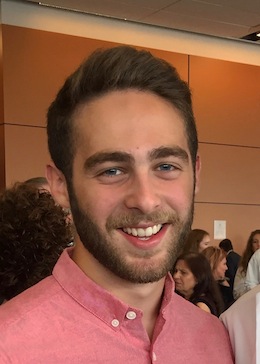
Seth Book (photo from Seth Book)

Book said it is hard to define his artistic style because he has always been interested in finding new mediums and approaches. But he has less need for such definition since he began university. Since then, he said, “I have been able to let go of that and continue exploring what interests me rather than being labeled as a ‘painter’ or a ‘photographer.’ I always find that different mediums have such an incredibly unique ability to succeed in accomplishing a piece better than others. In other words, certain mediums are more effective than others in conveying certain ideas or concepts for varying projects. That being said, I try to use the best option I can for each work, trying not to limit myself in expertise. I can always try and learn! I did not work with metal until late 2019, and have already created two works using it, and I am very satisfied with how they turned out.”

Book, who has a background in business management in addition to his art training, said he first heard about Art Vancouver through a summer internship program he took part in a couple years ago, and has kept in close contact with the team there since. “I have loved working with the organizers and enjoyed attending the event every year,” he said. “I quite like the efforts they make to advance the art scene in my hometown and can’t wait to be a part of it as an artist this time.”

Hopefully, he will get that chance, but, even if Art Vancouver is canceled or postponed because of COVID-19, Book is an emerging artist whose works will available at other venues at other times.

He was able to tell the Independent about two pieces he was planning on bringing to the art fair. While he had not firmly decided on all the pieces yet, he said, “I selected the works from my portfolio which I have found to be the most striking, the works that I have received most compliments about, as well as the works which I feel represent my wide practice the best when shown together.”

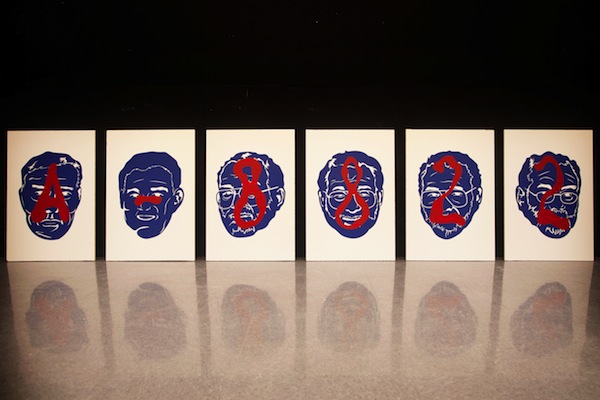
One of those creations is called “A Series I Don’t Want to Continue,” which comprises six digitally rendered vinyl decals adhered to six two-foot-by-three-foot melamine sheets.

“A series opens an idea and simultaneously closes it,” reads the work’s description. “The values in between the first and last work tell a story or convey some sort of meaning through the relationships formed with the works in between.”

It continues, “A series of works in any media all relate to one another through consecutive nature. Labeling a group of entities as part of a series can bind them together, locking them out from further creation or reproduction. This is where the concept of my work integrates itself reflexively within the format of a series work. Through this work, I explore the contained value of past events, and particularly the Holocaust, in relation to my grandfather’s story.

“When he passed away, the evaluation of his extreme tenacity and hard work to establish our family and provide futures for generations to come was recognized more than ever. ‘Never again,’ the words that often cross our mind, could not be stronger upon recounting the horrors he endured. Never again, but also never forget. These events happened. They must be taught and preserved, but they are contained, and must never grow…. One work to symbolize each character tattooed on his arm, and each million Jewish people that were massacred. There will not be a seventh work in this series.”

The other piece that Book wanted to bring for sure to Art Vancouver is called “Untitled Crowd (The Stars, The Blues, The Ashes).” The 22-inch-by-30-inch ink-on-paper work is also related to the Holocaust. The description reads, in part, that the Nazis’ attention to detail was “dual-edged.”

“On one hand,” it notes, “they kept extremely particular and accurate data records of the prisoners murdered. Ironically, on the other hand, the attention to human detail was nonexistent. When Jewish people were funneled through various camps, they were stripped of their belongings and identities. They were nothing but a number.”

In “Untitled Crowd,” Book writes, “I attempt to discuss this specific lack of attention and elimination of one’s person. Each work is a recreation of real people who either survived or perished during the Holocaust. In order to illustrate the lack of respect and attention given to these unfortunately abused people, I spent a specifically short time on depicting them in the piece. Each face was dedicated about six minutes, to correspond with the six million lives lost. The faces are all overlapping with one another to represent not only the crowds of people who were murdered and their brutal living conditions, but also the morphing of individuals into a mess of numbers and bodies rather than human beings.”

The piece’s three parts carry added symbolism. “The first work is done with shades of mustard yellow to signify the yellow stars Jewish people were forced to use as identification, and the shades are more distinct in overlapping to show not all identity had yet been lost,” writes Book. “The second work is completed with shades of blues to represent the blue-striped pyjamas prisoners wore, and the difference in tone decreases to create a more homogenized look as they lost identity. The final work uses the greyscale to convey the ashes of those perished, and the gaining age of survivors around the world.”

For more on Book, visit his website, sethbook.ca. For more on Art Vancouver, see artvancouver.net.

Format ImagePosted on March 20, 2020March 17, 2020Author Cynthia RamsayCategories Visual ArtsTags antisemitism, Art! Vancouver, Holocaust, intergenerational trauma, multimedia, Seth Book
Life with inherited trauma

Life with inherited trauma

Dr. Gita Arian Baack, author of The Inheritors: Moving Forward from Generational Trauma. (photo from Gita Arian Baack)

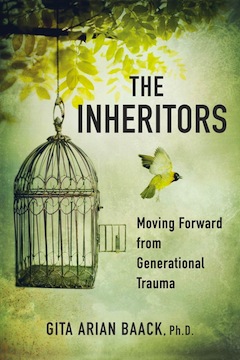
Dr. Gita Arian Baack, author of The Inheritors: Moving Forward from Generational Trauma, was in town earlier this month to speak at the Cherie Smith JCC Jewish Book Festival and hold a three-day experiential workshop with the Second Generation Group in Vancouver.

The Ottawa-based counselor began her festival presentation with a quote from the late Israeli novelist Amos Oz, who wrote, “Our past belongs to us, but we do not belong to it.” For Baack, the quote underscores her message to inheritors of the Shoah – that “we were given life and an obligation to bear witness and honour the martyrs and heroes of the Holocaust. And that we also have the right to live full and joyful lives.”

“Generational trauma stems from devastating events which transpired before we were born,” Baack told the Independent. “In the case of the Holocaust, we have experienced it from birth; it is as if we were there. We carry an unrelenting sadness, sense of absence and betrayal.”

The ultimate question her book explores is: “How can we live a full life despite the difficult trauma we inherited?”

Prior to writing The Inheritors, Baack conducted doctoral research into the subject of intergenerational trauma and resilience, yet what she uncovered did not fit or go deeply enough into either. Often, resilience is described as bouncing back with support from others. But, she said, “You don’t bounce back from the Holocaust!”

She was resolved to unravel answers to these and other questions, such as why are so many of us resilient and compassionate despite our inherited trauma? Do we carry memory from one generation to another? How do we move forward, when the usual therapies for trauma have proven not to work for us?

“We are also faced with the difficulty of piecing together our family stories,” said Baack. “Much of our family stories are full of holes, unknowns and even secrets, our roots destroyed. Understandably, we have strong emotions but don’t know how to deal with them; for example, excessive sadness, fear of authority, worry, lack of trust, lack of safety, etc.”

Further, inherited trauma is often frozen, embedded in the brain stem, also known as the primitive brain – accessing it is difficult, but it can be done, she said.

Baack noted that ancient wisdom, the Bible and new epigenetic scientific research explain that trauma is passed onto generations in the DNA, and even the cells, for as many as seven generations. She strongly believes that this is the case if it is acknowledged and processed; if it is not, then it can take longer than seven generations.

image - The Inheritors book coverThough Baack’s own experience is being a child of Holocaust survivors, The Inheritors encompasses others who have been victimized: Canada’s indigenous population, survivors of the Rwandan genocide and of several other horrible episodes of recent history. The book also looks at trauma on a personal level, from those who have suffered as a result of natural disaster, an accident, economic hardship, the justice or education system, illness or loss of a loved one.

The intent of The Inheritors is to serve as a tool for moving forward, said Baack. The book is filled with dialogues, poetry and stories from people of different backgrounds. Readers are invited to explore their story, and there are questions at the end of each chapter to help them process that story and, in so doing, transform their pain. At the least, in the end, they will have a written story as a legacy to their descendants.

The Inheritors has had other, unexpected, impacts. For example, the conductor of the North Carolina State University orchestra commissioned composer and flutist Allison Loggins-Hull to write a piece for an upcoming performance and she has chosen to write a work inspired by the book – Inheritors Overture will première on April 5 in Raleigh, N.C.

The group dialogues that Baack conducts offer a means of validation through other people with similar experiences and various experiential tools that can help further a deeper exploration of their trauma stories, the “undiscussables” and the unknowns. Group participants, she said, are often surprised by the creativity, laughter and camaraderie that arise.

The Inheritors is dedicated to (and inspired by) Baack’s two half-siblings. “From my earliest beginnings, I remember carrying a great sadness for my siblings, Henush and Halina Arian, who were only 4 and 3 years old, respectively, when they were killed,” she writes. There was no information about the circumstances of their death or burials, “But their existence was real and has mattered to me in an extraordinary way. And so I don’t fight the sadness; I embrace it. It has a special place. I am the carrier of their memory. This burden is the most cherished of all my burdens.”

At the age of 4 or 5, Baack had what she describes as a “knowing” or “inherited memory.” A “felt sense” told her, even at that young age, that her siblings, two of 1.5 million children killed by the Nazis, had both been shot in the back. When she asked her father how her half-siblings died, he said he didn’t know. Nonetheless, the memory (and feeling) she had inherited persisted, and could be placed on a spot in the middle of her back, with a knowing that her half siblings had been shot in that place.

Her research revealed that the timing of their deaths was before gas chambers had been built, and children under 5 were regularly shot. In 2019, a tour guide in Krakow pointed to the very street where the children and their mother were shot. To Baack, it was a stunning confirmation of her lifelong memory.

Baack has been consulting and coaching individuals and organizations for more than 30 years. She recently founded the Centre for Transformational Dialogue to help individuals and communities that have inherited devastating legacies. She also has written a book of verse, Poems of Angst and Awe, published in 2017.

For more information, visit gitabaack.com. Baack continues to research inherited memory and wishes to hear from others on the subject. She can be reached at [email protected].

Sam Margolis has written for the Globe and Mail, the National Post, UPI and MSNBC.

Format ImagePosted on February 28, 2020February 26, 2020Author Sam MargolisCategories BooksTags genocide, Gita Arian Baack, health care, Holocaust, intergenerational trauma, mental health, second generation
Many ideas at Limmud

Many ideas at Limmud

At LimmudVan’20, Anna-Mae Wiesenthal will present on The “Othering” of Germany’s Jews and Canada’s First Nations. (photo from Anna-Mae Wiesenthal)

The latest local incarnation of the global Jewish learning festival Limmud takes place Feb. 29 and March 1. LimmudVan’20, which is being held at Congregation Beth Israel, begins with Havdalah and a few musical and intellectual appetizers on the Saturday night, followed by a day of presentations on a diverse array of topics on Sunday.

Anna-Mae Wiesenthal, a teacher at King David High School and a PhD candidate in Holocaust and genocide studies, will present on The “Othering” of Germany’s Jews and Canada’s First Nations.

Originating from Winnipeg, Wiesenthal has long had an interest in First Nations issues and has been involved in community programs there. She is aware of the sensitivities around paralleling these histories.

“There is a lot of controversy surrounding the use of the word genocide and First Nations, but I approach it from an examination of looking at different viewpoints and different research that argue both sides,” she told the Independent. “What do these two experiences of these two people have in common?” The point, she said, is not to come to any firm conclusions.

“I want to leave it open to the audience to process the information and to assess the commonalities and the differences,” Wiesenthal said. “I’m certainly there to point some of them out, but I think it’s to provide a different perspective that will engage and inspire discussion and curiosity among the participants to go further with it.”

Also not promising any proscribed conclusions is Rabbi Philip Gibbs, who will ask: Would the rabbis approve of Uber? Gibbs, who is spiritual leader of Congregation Har El, in West Vancouver, said that even issues as seemingly modern as an app that permits ride-sharing can be addressed through ancient wisdom.

Traditional arguments around fair and unfair competition have remained with him since rabbinical school and came to the fore in recent weeks as British Columbia argued over, and then slowly and somewhat clunkily implemented, ride-hailing services like Uber and Lyft. Some of the issues that could arise include whether a company keeps money in the community it serves or extracts it to some distant parent company. But don’t expect him to come down clearly on one side.

“If you’ve ever looked into a question of Jewish ethics, you know that you can make the joke of saying two Jews will have three opinions,” said Gibbs. “Maybe, through the discussion, someone else will tell me what it seems like I’m thinking, but really I think the goal is just to be more attuned to what some of the issues are so that, as we begin to make choices of who do we call up for a ride to the airport, that we’re taking into account a wider range of values than simply how little we want to pay for it.”

Other presenters will talk about crafting Jewish children’s books (see jewishindependent.ca/new-publisher-set-to-launch); how Leonard Bernstein used the music of Selichot to create West Side Story; the rich and poor among Portuguese Jews in Amsterdam’s Golden Age; building Jewish micro-communities through co-housing; healing Christian antisemitism; analyzing the Israeli smash TV show Shtisel; and many other topics.

Tickets and more information can be found at limmudvancouver.com.

Format ImagePosted on February 21, 2020February 19, 2020Author Pat JohnsonCategories LocalTags Anna-Mae Wiesenthal, children's books, education, First Nations, genocide, Holocaust, Limmud Vancouver, music, Philip Gibbs, ride-sharing
From Soviet to Nazi rule

From Soviet to Nazi rule

Aileen Friesen has researched how Mennonites living the area of current-day Ukraine reacted to the Nazis. (photo from Aileen Friesen)

An event titled Jews, Mennonites and the Holocaust took place in Winnipeg at the Rady Jewish Community Centre a few months ago. Organized by the Jewish Heritage Centre of Western Canada, it featured Mennonite historians Aileen Friesen, executive director of the D.F. Plett Historical Research Foundation, and Hans Werner, a retired University of Winnipeg professor, who discussed Russian Mennonite reaction as the Nazis invaded Russia during the Second World War.

“I am from a Mennonite background,” said Friesen in a post-event interview with the Independent. “That is, on both sides of my family – one side came to Canada in the 1870s, with the migration of Mennonites from the Russian Empire during that time, and the other part of my family came to Canada in the 1920s, with the migration from the Soviet Union.”

The Nov. 5 discussion focused on the area that comprises current-day Ukraine, which, during the time of the Nazi invasion, was occupied by what was then the Soviet Union. Mennonites who were in the region at that time were not of German heritage, but they spoke German and were viewed by the Nazis as allies. As well, the Russians expected that these Mennonites would be sympathetic to Germany and did what they could to relocate them to eastern Russia prior to the Nazi invasion.

“The way we think of this nation’s state … is just not what it is in the 18th century,” said Friesen. “It’s a very multi-ethnic space in which we have a lot of German speakers, and we talk about the Polish-Lithuanian commonwealth as a very multi-ethnic territory.

“We don’t have the concentration camps – we have a lot of mass shootings that are going to take place in this territory. So, Mennonites are living in a space that becomes under Soviet control, and they live under Stalinism. And then, it will become occupied by German forces, and then they will be living under German occupation.”

As the Nazis invaded, they were looking for people from the local population with German affiliation to integrate into the administrative system, while targeting the Jewish population – to have them register, to wear the Star of David and to separate them from other sections of the population.

According to Friesen, many Mennonites looked at the Nazis as liberators from the Stalinist occupation, which oppressed the Mennonite community in the area and enforced an atheistic existence. The responses of other Mennonites to the Nazi treatment of Jews were mixed: some responded in horror, but most remained silent.

“Sometimes, they say in memoirs that they said something to the German occupying forces, that they can’t do this,” said Friesen. “But, this is a time when people have been demoralized by Stalinism and have learned to keep their mouths shut…. But you will see that some people are very upset about what’s happening to the Jewish population…. Where there is a mix of Mennonites and Jews, there is also some intermarriage, so there were people who felt a great affiliation with their Jewish neighbours and felt very upset about this.

“My topic, specifically, focuses on a segment of the Mennonite population that joined into the secret police (SS), the local police, and are, therefore, implicated in the massacres that took place, as the local police were participants in these massacres.” Friesen said there were “Ukrainians, Mennonites and other types of ethnic Germans in the Ukrainian local police.”

As the Nazis invaded, they ranked the population, placing the Mennonites higher than the Ukrainian/Russian population, as they were considered by the Nazis to be Volksdeutsche (German folk). This allowed Mennonites access to more resources and they were better treated.

Before the Nazis invaded, she said, Mennonites and Jews “occupied a space together.” For example, “in Chortitza, there was a synagogue and there was also a Russian Orthodox church, and a Mennonite church that was in operation before the Soviets took power. It’s a space in which people organized and interacted with each other and, yet, these forces that get imposed upon them, there’s a reaction from within the local community that, in the case of the Mennonites, I don’t think that was a response that served them … at least some people … bought into these ideas that the Germans brought into this territory. It dovetails with some of the ideas they had of their own suffering under the Soviet regime and they accepted the dehumanization and sometimes participated in the dehumanization of others, which is really a sad story.”

Friesen encouraged readers to watch the event video on YouTube.

“There were some interesting questions and responses from the audience,” said Friesen. “We had a good turn out, from both the Mennonite and the Jewish communities, discussing these very difficult issues. I think the lectures online will give you a much better background to this story than I’ve been able to share.”

Rebeca Kuropatwa is a Winnipeg freelance writer.

Format ImagePosted on February 21, 2020February 19, 2020Author Rebeca KuropatwaCategories NationalTags Aileen Friesen, history, Holocaust, Mennonites
Survivors reflect on liberation

Survivors reflect on liberation

Dr. Ilona Shulman Spaar moderates a panel with Holocaust survivors, left to right, Janos Benisz, Amalia Boe-Fishman, Dr. Peter Suedfeld and Alex Buckman. (photo by Pat Johnson)

One survivor of the Holocaust who spoke at a panel recently believes that, in a generation or two, people will largely forget about the catastrophic events of that time.

“I think the world will forget about Auschwitz,” said Dr. Peter Suedfeld, a professor emeritus in the department of psychology at the University of British Columbia. “The world has already forgotten about ‘never again.’ We’ve had a fair number of genocides since 1945, in which the world did not intervene. A recent poll that I saw … apparently, the proportion of people who remember anything about how many Jews were killed in the Holocaust, what Auschwitz was, what the Holocaust was and so on, is not all that much above 50%.

“This is going to go on generation after generation,” he continued. “The survivors won’t be here to push the story any further. Their children will for awhile, but they have other things to do and other things to be concerned about and their children even more so. In a few more generations, it will be in the history books and people will say, yeah, I read about that or thought about that in grade whatever but, in terms of remembering it as something in your gut, something that arouses an emotion, something that has a personal connection to you, I don’t think it’s going to last all that much longer. I’m sorry to say that, but that’s what I think.”

Suedfeld, who weeks earlier was invested into the Order of Canada for his decades of work on the psychological and physical effects of extreme and challenging environments, was speaking at Hillel House, on the UBC campus, on International Holocaust Remembrance Day, Jan. 27. He was part of a panel of four survivors sharing their reflections 75 years after liberation.

Suedfeld, who was born in Hungary, survived under false papers and a back story as an orphaned Roman Catholic child. He recalled successive bombardments of the various sanctuaries he was in near the end of the war, as Allied bombers repeatedly blew buildings apart while Suedfeld and other children hid in the cellars.

After liberation by Russian forces, Suedfeld was eventually reunited with his father; his mother had been murdered. The lesson he took from the experience, he told the packed afternoon audience, was to cherish and defend the values of freedom.

“Freedom to be who you really are, but freedom of speech, freedom of association, freedom of religion, freedom of everything,” he said. After moving to the United States, Suedfeld became a powerful advocate of the First Amendment, which guarantees freedom of religion and expression. Since coming to Canada, he has been a similar champion of the Charter of Rights and Freedoms, he said.

Suedfeld’s admittedly pessimistic perspective on the future of Holocaust remembrance was contested by Alex Buckman, a fellow survivor on the panel.

As long as organizations exist like the Vancouver Holocaust Education Centre, which co-sponsored the event with Hillel BC, and children of survivors and others who have been touched by their experiences share the lessons they have learned, the future will be better, he said.

“Maybe our children will pick up, speaking on our behalf,” said Buckman. “Maybe they will remember because we will tell them what happened.”

Like Suedfeld, Buckman survived by being hidden by Catholics; in his case, in Belgium.

“They told us that the war was over and that we should rejoice and be happy and our parents would come and pick us up and everything would be hunky-dory,” he recalled. “At 6-and-a-half in an orphanage, nothing was that rosy. We saw parents come and pick up their children and take them home, but nobody came for us. I was there with my sister Annie and she was crying and wondering why our parents weren’t coming and I tried to tell her that I’m sure that they will come. But, like her, I didn’t know why they weren’t coming.”

The pair were moved back to Brussels and put in the care of the Red Cross, which posted the names of orphaned and unclaimed children on sheets around the city. Eventually, a paternal uncle showed up and took the two children to Annie’s parents – who, since little Alex had believed himself to be Annie’s brother, he reasonably concluded were also his parents. The truth came out in a cruel way, when another cousin, in a pique of anger, blurted out to Alex that his parents were dead and that Annie’s parents were not his.

“I took a step back and, for the first time, I realized I was alone,” Buckman recalled. His aunt and uncle did care for him, though, despite the uncle’s misgivings, because of the aunt’s insistence based on a promise she made to the heavens when she learned of her sister’s death.

Also on the panel was Amalia Boe-Fishman, who was born in the northern Netherlands in 1939 and also survived thanks to a Christian family. Like many survivors, her liberation story is not one of joyous freedom but of confusion and fear of the future.

“Liberation should have been a real happy time for me. It wasn’t,” she said. “I was told we were free, but what did that mean? What did that mean to a frightened 5-year-old girl who had been in hiding for three years? What did it mean to be free? I was told that, for the first time I could remember … I would now be able to go outdoors. I didn’t know what to expect. What was there? What was waiting for me outdoors? Indoors had become my entire life. Indoors was where I felt secure and safe. Indoors was all I knew.”

Her first venture out was harrowing. It was odd enough to be surrounded by throngs of strangers after her entire life had been confined to just a few familiar faces. After a victory parade, the girls she knew as her “sisters” decided to walk to the town centre. While crossing a bridge with scores of others – Amalia had never seen a bridge before – a rumour started that the Nazis had returned and panic swept the crowd. Pushing and shoving was accompanied by screaming and concern that the bridge was about to collapse.

“Here I was, trapped outdoors, in a crowd of panicked strangers and I was terrified,” she said. “The bridge didn’t collapse, but, as you can imagine [it was] a very long time before I would ever cross a bridge again.”

Another ostensibly joyous aspect of liberation was also clouded with confusion and fear.

“I was told that I had a real family. I had a real father, a real mother, an older brother and a baby brother,” said Boe-Fishman. “Miraculously, out of many different hiding places, all four of them had survived the war.… But who were these people? They were strangers. So, this is what liberation means to me. To leave the only family I ever had known to go outdoors to a place of terrified strangers, to strange people in a strange home.… I had to adapt to a new and also frightening world.”

For Janos Benisz, liberation was similarly conflicted. As a child, he had seen his father and his grandmother dead in the streets. His mother had been killed earlier by Nazi collaborators, during what was to have been a routine medical procedure.

Young Janos was transported from his hometown of Esztergom, Hungary, to Budapest, where Jews were divided up, many being sent directly to death camps including Auschwitz.

“I ended up in an Austrian slave labour camp,” he said, remaining there for seven or eight months before the Russians liberated them.

“I had the body of a 4-year-old,” he recalled. “At my bar mitzvah, I was under five feet.”

Making his way back to his hometown, he found squatters in the family’s house and learned that, of his immediate family of eight uncles, two aunts and 29 cousins, only Janos and one uncle had survived the Nazis.

Benisz was put in a Jewish orphanage in Budapest, then sent to Halifax, where he was put on a train to Winnipeg. He was bounced from foster home to foster home, back to an orphanage and then to a reformatory.

“I couldn’t fit in,” he said. At 18, he got a job at the Winnipeg Free Press as a copy boy.

“I spent the next 15 years in the newspaper business, then I became a salesman on my own, retired in ’71,” he said. He noted the figurative and literal centrality of the Jewish Community Centre of Greater Vancouver in his life today. He lives 40 yards from the centre, he said, and much of his social life is focused there.

“It’s my second home,” he said. “I work out there. I shmooze there. I’ve got a group of guys I call the ‘kosher nostra.’ I’m very happy. I absolutely adore this country of Canada. It’s been good to me ever since I turned 18.”

Prior to the panel, Holocaust survivors lit candles of remembrance. Vancouver Mayor Kennedy Stewart read a proclamation declaring International Holocaust Remembrance Day in the city. Rob Fleming, British Columbia’s minister of education, spoke on the importance of Holocaust education and credited the partnership of the Vancouver Holocaust Education Centre (VHEC). Student Adam Dobrer shared his family’s Holocaust legacy. Prof. Nancy Hermiston, director of voice and opera at the University of British Columbia, provided opening remarks. Nina Krieger, executive director of the VHEC, introduced the program and spoke of the importance of remembrance and the power of the memory of Auschwitz on the 75th anniversary of its liberation. Dr. Ilona Shulman Spaar, education director and curator of the VHEC, moderated the panel. Rabbi Philip Bregman, chaplain of Hillel BC, chanted El Maleh Rachamim and the Mourners’ Kaddish.

Many other commemorations and events took place throughout the province on and around Jan. 27.

Format ImagePosted on February 14, 2020February 12, 2020Author Pat JohnsonCategories LocalTags Alex Buckman, Amalia Boe-Fishman, commemoration, Holocaust, Janos Benisz, Peter Suedfeld, VHEC
Pink Rabbit opens festival

Pink Rabbit opens festival

Riva Krymalowski as Anna, in the film, which opens the Vancouver Jewish Film Festival Feb. 27. (photo from betacinema.com)

The Vancouver Jewish Film Festival opens the night of Feb. 27 with the film When Hitler Stole Pink Rabbit, which offers a peek at a pivotal event in writer and illustrator Judith Kerr’s life.

Kerr passed away just under a year ago, at her home in London, England, at the age of 95. She had dozens of children’s books to her credit, including The Tiger Who Came to Tea and Mog the Forgetful Cat; Mog became a series, ultimately totaling 17 picture books.

Born in Berlin, Kerr and her family – parents and older brother – fled Germany in 1933, in the days leading up to the election that brought Hitler into power. Her father, Alfred Kerr (né Kempner), a journalist and writer, was a vocal critic of the Nazis even at that time and was warned that the police were about to arrest him. The story of the family’s journey to Switzerland, then France and, ultimately, England, is told in the children’s book When Hitler Stole Pink Rabbit, which was published in 1971.

The film, obviously, is based on that book, and it captures the fear, excitement, frustration and other feelings experienced by the family as a whole, but mainly by 10-year-old Judith – named Anna in both the book and film. We see that Anna copes, in part, by drawing and colouring pictures of disasters, such as a shipwreck or an avalanche. She, her brother and parents are close, thankfully, as they are uprooted more than once and the family unit is the only constant in their lives.

When Hitler Stole Pink Rabbit is both charming – the family’s interactions – and disturbing, in that the family is fleeing a danger that killed millions. It also raises current-day issues of what it means to be a refugee. Anna and her brother Max are given one night to pack. They are allowed one toy and two books. Anna’s choice of her stuffed dog over her pink rabbit gives the story its name.

For more on the film festival, visit vjff.org.

Format ImagePosted on February 14, 2020February 21, 2020Author Cynthia RamsayCategories TV & FilmTags children's books, Holocaust, Judith Kerr, memoir, movies, When Hitler Stole Pink Rabbit

Posts pagination

Previous page Page 1 … Page 17 Page 18 Page 19 … Page 44 Next page
Proudly powered by WordPress