Skip to content
  • Home
  • Subscribe / donate
  • Events calendar
  • Business Directory
  • FAQ
  • News
    • Local
    • National
    • Israel
    • World
    • עניין בחדשות
      A roundup of news in Canada and further afield, in Hebrew.
  • Opinion
    • From the JI
    • Op-Ed
  • Arts & Culture
    • Performing Arts
    • Music
    • Books
    • Visual Arts
    • TV & Film
  • Life
    • Celebrating the Holidays
    • Travel
    • The Daily Snooze
      Cartoons by Jacob Samuel
    • Mystery Photo
      Help the JI and JMABC fill in the gaps in our archives.
  • Community Links
    • Organizations, Etc.
    • Other News Sources & Blogs
  • JI Chai Celebration
  • JI@88! video

Recent Posts

  • Or Shalom reopens its doors
  • JFS from past to future
  • Need holistic approach
  • Sharing stories, advice
  • Journalist shares fears
  • Skills to live together
  • Road to independence
  • Cutting grass with scissors
  • Zionism as a solution
  • Deceit, desire & the divine
  • Reclaiming sacredness
  • Creative project ideas
  • Summer squares and cobbler
  • Thou shalt … summer commandments
  • Legal help for students
  • Revisiting myth of Lilith
  • Wrong person rebuked
  • Canada’s mixed messages
  • Questions for museum
  • Symposium on antizionism
  • Making soccer political
  • CJPAC lauds Pulver’s impact
  • City recognizes Vrba’s legacy  
  • Organ donation saves lives
  • Theodore’s March premiere
  • A healing Shabbaton
  • Supplying healthy food
  • A chime of metal tags
  • Yellowknife seder a first
  • Ishai energizes, unifies
  • A Lag b’Omer to remember
  • Expanding the healing
  • Hannah Senesh – a unique hero
  • Community milestones … May 2026
  • Sharing her testimony
  • Fall fight takes leap forward

Archives

Follow @JewishIndie
image - The CJN - Visit Us Banner - 300x600 - 101625

Tag: Holocaust

Jewish Poland in 1932

Jewish Poland in 1932

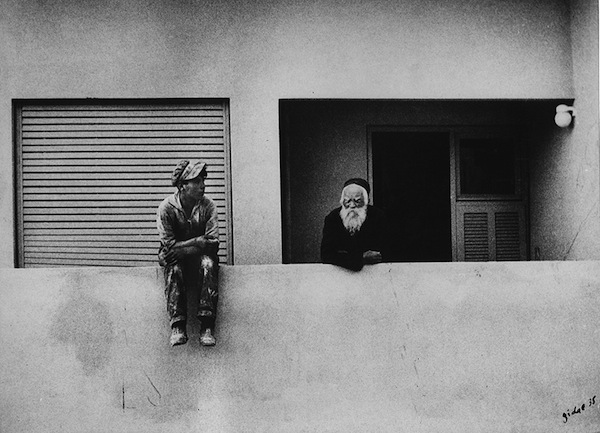
This photo, called “Generations,” was taken by Tim Gidal in Tel Aviv in 1935. (courtesy Zack Gallery)

The current show at the Sidney and Gertrude Zack Gallery, Invisible Curtain: The 1932 Polish Photographs of Nachum Tim Gidal, was organized in partnership with the Cherie Smith JCC Jewish Book Festival, which runs Feb. 20-25. Gidal (better known as Tim Gidal or Tim N. Gidal) was a renown photojournalist of the last century and the exhibit’s images come from the new book Memories of Jewish Poland: The 1932 Photographs of Nachum Tim Gidal. (For a review, click here.)

The driving force behind the book’s publication was Yosef Wosk, who wrote its preface. Wosk approached Zack Gallery director Hope Forstenzer and Jewish Book Festival director Dana Camil Hewitt about a year ago, Forstenzer told the Independent. “He suggested we have a Tim Gidal show at the gallery to coincide with the festival and his newly published book,” she said.

Both Wosk and Forstenzer curated the exhibit. “Together, we chose about 50 images for the show, as many as the gallery could fit. It couldn’t include all the images in the book, of course,” said Forstenzer.

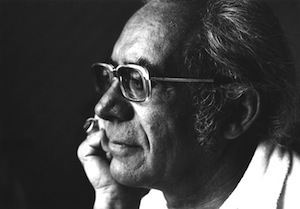
photo - A self-portrait by photographer Tim Gidal, taken in 1974
A self-portrait by photographer Tim Gidal, taken in 1974. (courtesy Zack Gallery)

The history of the photographs is best described by the photographer himself in the book’s introduction. In 1932, Gidal, then 23, traveled with two friends to Poland from his hometown of Munich, Germany. It was his first trip abroad. “My knowledge of the political, economic and social conditions of the Jews in Poland didn’t seem to square with my feelings about their spiritual life,” he wrote. “So I decided to go and see for myself.”

Gidal, who passed away in 1996, took numerous photographs of people and places, as he went from shtetl to shtetl on his three-week “little odyssey.” He wrote: “I encountered spiritual and material heights and depths: material well-being and abject poverty, rejuvenation and dissolution. Some were rich, but many more were very poor. It was a hopeless poverty, endured with an incredible humility. I met men of faith and hypocrites … atheists, socialists and communists, Zionists and Bundists, Orthodox and assimilationists. We also experienced the all-pervading Jewish humor.”

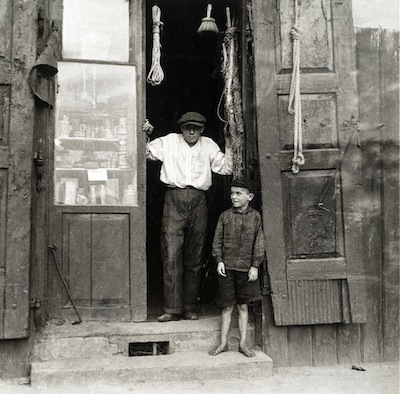
photo - Tim Gidal’s cousin Gershon in the doorway of the family’s rope shop, in Lowicz, Poland. The photo was taken by Gidal in 1932
Tim Gidal’s cousin Gershon in the doorway of the family’s rope shop, in Lowicz, Poland. The photo was taken by Gidal in 1932. (courtesy Zack Gallery)

Everything the young photographer experienced was reflected in his images, including those now on display at the Zack. We see children laughing and women looking far older than their real years. We see ancient eyes and tired, worn hands. We see educated men reading in front of a synagogue, and broken windows and peeling walls the next street over. And we know something Gidal didn’t know at the time, which makes this book and the show all the more poignant: not many years later, most of these people would be murdered in the Holocaust, and they and their entire way of life would be lost. But, in Gidal’s photos, his subjects remain alive. According to Wosk, “Each photograph is a monument, a letter in light.”

Gidal’s 1932 Polish photo essay comprises only a small portion of the master’s body of work. His photography journey spanned almost seven decades and encompassed most major players and momentous events of the 20th century.

One of the pioneers in the field of modern photography, Gidal made his debut in 1929 with his first published photo report. He was a proponent of the style of the “picture story” and he captured most of his subjects unaware, instead of staging elaborate scenes. Very few of his subjects posed for his photos, and every image tells a story.

Four years after his trip to Poland, Gidal moved to Palestine. During the Second World War, he served as a staff reporter for a British army magazine. A wanderer and a chronicler of life, he traveled a lot and lived in the United States for awhile. He taught and illustrated books. He exhibited widely.

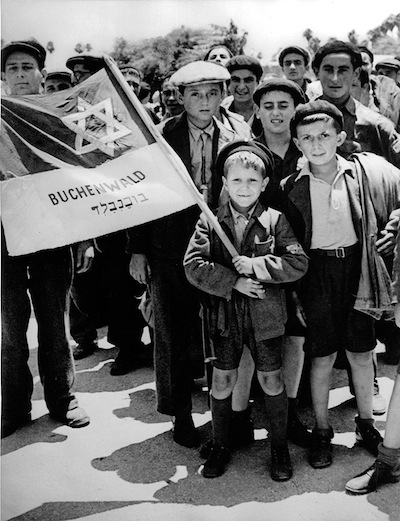
photo - Tim Gidal took this photograph of Buchenwald survivors arriving in Palestine in 1945. It is one of the images featured in the exhibit Invisible Curtain, on display until Feb. 25
Tim Gidal took this photograph of Buchenwald survivors arriving in Palestine in 1945. It is one of the images featured in the exhibit Invisible Curtain, on display until Feb. 25. (courtesy Zack Gallery)

A portion of the Zack exhibition is dedicated to Gidal’s artistic photography after 1932. The pictures demonstrate his technical progress, as well as his breadth of interests and subjects. There is a lyrical photo, “Generations,” taken in Tel Aviv in 1935 and another – a dramatic portrait of the youngest survivors of Buchenwald, taken in 1945 upon their arrival in Palestine. There is a photo of Mahatma Gandhi at the All-India Congress in Bombay in 1940 and the fascinating picture called “Handshake,” taken in Florence in 1934, which shows two men shaking hands in front of a wall covered with multiple posters of Mussolini.

Half a century before Photoshop was invented, Gidal experimented with his images, compiling them in different combinations and creating something unique, like his triptych of Winston Churchill of 1948 or the Rhomboid photomontage of 1975.

As a photo reporter, Gidal used his camera to record the 20th century in all its glorious and painful contradictions, and his early 1932 Polish photographs serve as a symbol of his multifaceted canon.

Invisible Curtain opened on Jan. 5 and the exhibit will continue until Feb. 25. To see the show’s digital equivalent, visit online.flippingbook.com/view/891736. To book an appointment to see it at the gallery, email Forstenzer at [email protected]. To attend the virtual book launch on Feb. 11, 7 p.m., and to see the full book festival lineup, visit jccgv.com/jewish-book-festival.

Olga Livshin is a Vancouver freelance writer. She can be reached at [email protected].

Format ImagePosted on January 29, 2021January 29, 2021Author Olga LivshinCategories Books, Visual ArtsTags books, Cherie Smith JCC Jewish Book Festival, history, Holocaust, Hope Forstenzer, Invisible Curtain, Israel Museum, photography, Poland, Tim Gidal, Yosef Wosk, Zack Gallery
Gidal’s photos speak volumes

Gidal’s photos speak volumes

The book Memories of Jewish Poland: The 1932 Photographs of Nachum Tim Gidal lets the photos do most of the talking. And they speak strongly and with passion of a lively, bustling and diverse community, the vast majority of whom were killed in the Holocaust.

“Of the 3.3 million Jewish residents of Poland before World War II, only 380,000 were still alive by 1945,” notes the book’s curator, local scholar, writer and philanthropist Yosef Wosk, in the preface. Wosk will help launch the release of Memories of Jewish Poland on Feb. 11, in a “prologue” event of the Cherie Smith JCC Jewish Book Festival, which opens Feb. 20. He also helped organize Invisible Curtain, the current exhibit of Gidal’s work that is being co-presented by the festival with the Zack Gallery.

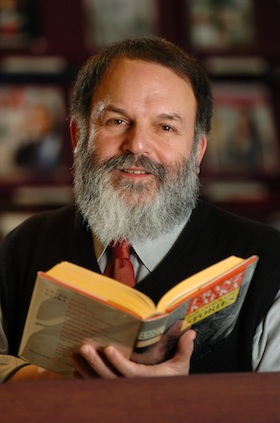
photo - Yosef Wosk will launch the book Memories of Jewish Poland: The 1932 Photographs of Nachum Tim Gidal on Feb. 11 at a virtual Jewish Book Festival event
Yosef Wosk will launch the book Memories of Jewish Poland: The 1932 Photographs of Nachum Tim Gidal on Feb. 11 at a virtual Jewish Book Festival event. (photo by Joshua Berson)

Wosk was friends with Gidal, who he met in Jerusalem, where Gidal lived. Born in Munich in 1909, Gidal had made aliyah in 1936, but then lived in various places before returning to Jerusalem in 1970; he passed away in 1996. It was not only Gidal’s dying wish that the 1932 Polish photos be published in book form, but that they be allowed to “speak for themselves.” And that request has been honoured. In addition to Wosk’s brief preface, the book opens with some notes written by Gidal for a 1984 exhibit and includes an introduction to Gidal’s work by photography historian, researcher, author and curator Nissan N. Perez, founder of the Israel Museum’s photography department. At the end, there is a list of the plates included in the book and a brief biography of Gidal. A map of Poland, indicating the locations in which the photos were taken, bookends the commentary and photographs.

“This book illustrates the largest number of photographs from Gidal’s Polish photo essay ever assembled. It is not, however, a catalogue raisonné: more than 20 images are not included,” writes Wosk. The reproductions included in the volume are taken from prints in Wosk’s collection and that of the Israel Museum. Wosk thanks Diane Evans, “master teacher, photographer, bookseller and friend in photography,” for serving “as a patient, experienced and disciplined midwife in giving birth to this book.”

Gidal – born Ignaz Nachum Gidalawitsch – was motivated to travel to Poland “by his desire to know more about his family’s background,” writes Perez. The photographs Gidal took were “actually a rather small chapter of his oeuvre at the beginning of his outstanding career, an exercise in perfecting his vision.”

“He gains the interest of the viewer not by staging elaborate scenes, but by capturing expressions and gestures that can only be described as both intimate and straightforward,” explains Perez. “As he said in one of the many meetings conducted toward the exhibition in 1995, ‘My photographs, I like to think, are variations on the everlasting tragicomedy of human life.’”

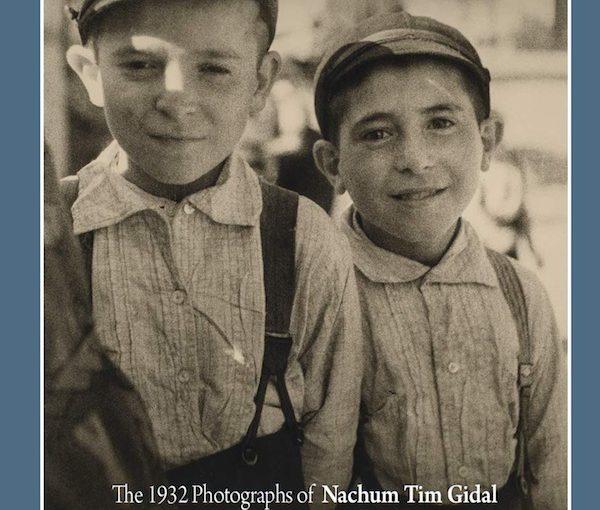
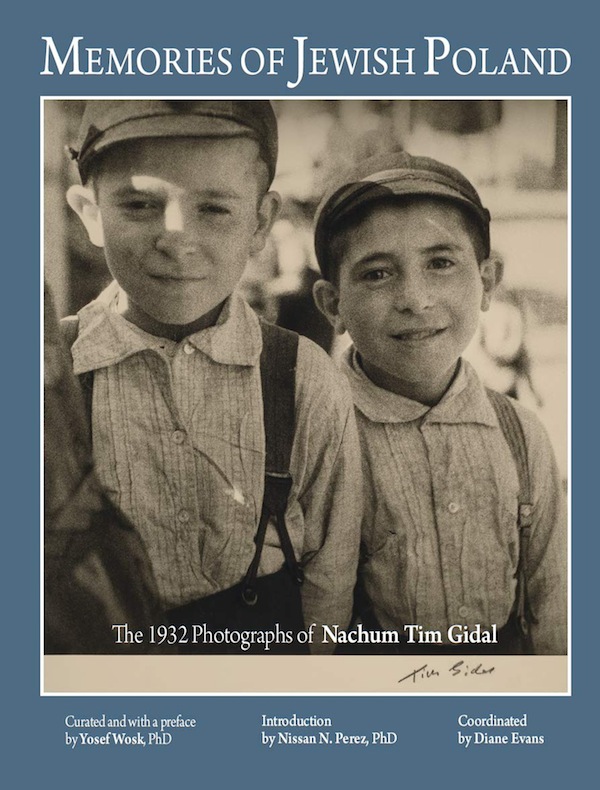
image - Memories of Jewish Poland: The 1932 Photographs of Nachum Tim Gidal book cover

The images in Memories of Jewish Poland are prime examples of Gidal’s ability to capture images of life as it is happening, in all its unromantic but beautiful distinction.

“In the heterogenous assembly of the Polish galut (diaspora), I myself became immersed in the flow of Jewish life from the past to the future,” wrote Gidal for the 1984 exhibit. “When we left Poland after three weeks, I had passed through an invisible curtain, which had separated East and West. Now the curtain had opened, and I was made to feel the unifying presence of Jewry.”

A selection of Gidal’s 1932 Polish photos is currently on display at the Zack Gallery (for the full story, click here). The Memories of Jewish Poland book will be launched at a virtual Cherie Smith JCC Jewish Book Festival prologue event Feb. 11, 7 p.m. For tickets to the prologue and other Jewish Book Festival events, visit jccgv.com/jewish-book-festival.

Format ImagePosted on January 29, 2021January 27, 2021Author Cynthia RamsayCategories BooksTags Cherie Smith JCC Jewish Book Festival, history, Holocaust, Israel Museum, photography, Poland, Tim Gidal, Yosef Wosk
Hope amid challenges

Hope amid challenges

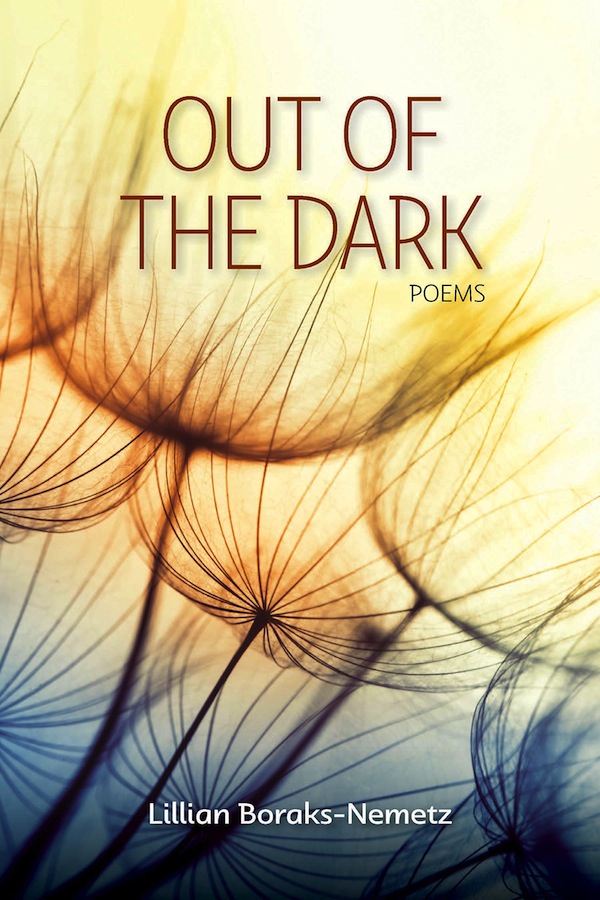
Lillian Boraks-Nemetz’s latest collection of poems offers comfort, even though she does not shy away from the tragedy of her Holocaust experience and ever-present memories of that period. From the very title, Out of the Dark, she gives hope. If she can still see beauty and love, then we can, too.

An established and award-winning writer, Boraks-Nemetz has published many books and her poems have appeared in literary anthologies. A child survivor of the Warsaw Ghetto, she is an eyewitness to some of the most cruel aspects of humanity and openly wrestles, in these poems, with the death she has seen, with the hiding she was forced into and can’t completely shake the habit of, with the stark contrast of her life before coming to Vancouver and the world she has created here. While deeply marked by suffering, she makes space for the pain that others experience.

image -Out of the Dark book cover

Out of the Dark is divided into three sections: Survival, Flickers in the Dark, and Into the Light. Even the most sombre first part, which includes poems about those murdered in the Holocaust, the impacts of war and the existence of antisemitism, starts with a poem called “Flowers of Survival,” in which a daughter recalls the words of her father, from whom she has been separated, forever: “‘Let the wind thrash us if it will // And the foul earth open to swallow us,’ you said, / ‘for in the end / neither the violent wind nor / the foul earth will succeed.’”

In midsection of the book, Boraks-Nemetz gives voice not only to her sadnesses and joys of making a new life in Vancouver, but of the immigrant experience in general. She writes of the difficulties of living in another place, both with regards to location but also in her mind and body, as well as in time, so different is British Columbia than Poland, so changed is Warsaw now from how it was during the war, so renewed a person is she, yet, she advises, in the poem “Identity,” “when they tell you / forget the past – let it go / they are in error // your past is your memory / and memory – a bridge / to you.”

As people are marked by what happens to them, internally and externally, so is nature, and Boraks-Nemetz has included several poems about its splendour, what it has witnessed and how we humans are threatening it, despite its strong will to survive.

There are many poems in Out of the Dark that are dedicated to family, friends, poets and others, but the bulk of them are in the final section. Boraks-Nemetz seems to be saying that, despite our capacity as humans for brutality and destruction, we need one another and we are the only ones who can fix what we have wrought, and make the world a better place.

Format ImagePosted on January 29, 2021January 27, 2021Author Cynthia RamsayCategories BooksTags Holocaust, hope, Lillian Boraks-Nemetz, poetry, writing

Courage of journalists

Journalists in Canada do not face the sorts of threats – sometimes life-endangering ones – that colleagues in many other countries do. But other factors impinge on the right of Canadians to diverse and thorough reporting of contentious issues, says an academic on the subject.

Robert Hackett, professor emeritus of communication at Simon Fraser University, spoke on the civil courage of journalists as part of the annual Raoul Wallenberg Day in Vancouver. The virtual commemoration, sponsored by the Wallenberg-Sugihara Civil Courage Society Jan. 17, featured a number of recorded events, including the screening of two films.

In recent decades, there has been a return to “partisan media,” said Hackett.

“Media, going back a couple of hundred years, were initially partisan media, reflecting the viewpoint of particular factions or parties,” he said. “We see that returning with a vengeance since the 1980s, with Fox News and so on.”

The internet has lowered attention spans and the “growing entertainment orientation” of the news media has changed the way reporting is done. Contradictory forces have upset the journalism sector in recent decades, he said. On the one hand, concentration and monopoly have placed control of “legacy media” – daily news, for instance – in fewer and fewer hands, reflecting a narrowing of perspectives. On the other hand, digital media and journalism startups have led to a fragmentation of public attention.

As the revenue structures of journalism have become strained due to competition for advertising avenues, resources for newsroom staff have declined, with commensurate impacts on the quality of reporting. Journalists who are expected to pump out several stories a day are unable to do the sort of investigative work common a generation or two ago and so rely on media releases. General reporters have replaced beat reporters with deep contacts and extensive background knowledge in an area of expertise. These structural changes have been accompanied by growing cultural skepticism toward expertise and even the definition of truth, said Hackett.

“It’s a different cognitive world,” he said. “We no longer seem to even have a shared reality.”

Some of Hackett’s recent research, in conjunction with the Canadian Centre for Policy Alternatives, has focused on fossil fuel industries and their influence on Canada’s press. He sees Canada’s largest print media company, Postmedia, as a booster of fossil fuels.

While Canadian journalists are fortunate not to face some of the life-threatening risks of reporters in many other places, there remain serious challenges to the ideal of a free media.

“There is still a certain degree of legal harassment and risk, especially for freelancers who don’t have a big organization behind them,” said Hackett. “The cost of a lawsuit for defamation, even if it’s a spurious lawsuit, is prohibitive. It’s intimidating. I know for a fact that freelancers have said they aren’t proceeding with stories because of fears of being sued.”

In addition, he added: “We don’t have effective shield or whistleblower laws, by and large, that would allow journalists to protect their sources.”

The online event, marking the 16th annual commemoration of Raoul Wallenberg Day in Vancouver, also featured two documentaries.

A Dark Place was produced by the Organization for Security and Cooperation in Europe’s Representative on Freedom of the Media. It follows female journalists around the world and the threats they receive online in reaction to their reporting on contentious stories. Threats of rape and murder, as well as other forms of intimidation, are almost ubiquitous. One study said that 60% of female journalists have experienced some form of online harassment or threats, according to the film. A panel discussion featured the film’s director, Javier Luque, and Arzu Geybulla, an Azerbaijani journalist who endured harrowing harassment and accusations of being a “traitor” for coverage of conflicts in the Caucasus.

The other documentary, Mohamed Fahmy: Half Free, by filmmaker David Paperny, follows Egyptian-Canadian journalist Mohamed Fahmy, who was jailed in Egypt for his reporting on the Arab Spring uprising in Cairo. Fahmy’s experience is one of many that journalists face daily in conflict zones and under repressive regimes, risking their freedom and their lives to report on events. Fahmy spent 438 days in an Egyptian prison before being pardoned by the country’s president, Abdel Fattah el-Sisi. Fahmy is now an adjunct professor at the University of British Columbia.

Alan Le Fevre, a director of the Wallenberg-Sugihara Civil Courage Society, welcomed participants to the annual event, which highlights the Second World War heroism of Raoul Wallenberg and Chiune Sugihara.

Wallenberg, a Swedish diplomat in Hungary, issued “protective passports” that identified bearers as Swedish subjects awaiting repatriation, thereby preventing their deportation from Hungary to death camps in Poland. Wallenberg disappeared in 1945 after the Soviets invaded Hungary. In 1957, the Soviet Union released a statement dated 1947, saying that Wallenberg had died of natural causes that year. Reports that Wallenberg was seen alive after 1947 have added to confusion and controversy around his fate.

Sugihara was vice-consul of the Imperial Japanese legation in Lithuania. At risk to his career and his life, Sugihara issued thousands of transit visas permitting Jews to travel through the Soviet Union to Japan and across the Pacific. Ostensibly, because a destination was required for a transit visa, the holders were destined for Curaçao. Many of those who escaped ended up on the West Coast of North America and there are several Vancouver families who owe their lives to “Sugihara visas.”

Posted on January 29, 2021January 27, 2021Author Pat JohnsonCategories LocalTags Alan Le Fevre, Arzu Geybulla, Chiune Sugihara, commemoration, David Paperny, free speech, freedom, history, Holocaust, Javier Luque, journalism, Mohamed Fahmy, Raoul Wallenberg Day, Robert Hackett, SFU, Simon Fraser University, Wallenberg-Sugihara Civil Courage Society
A moving documentary

A moving documentary

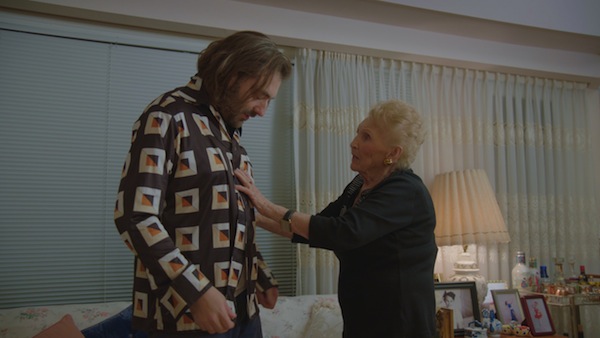
A scene from the documentary Martha, in which director Daniel Schubert is given a more appropriate shirt by his grandmother, Martha Katz. (Courtesy NFB)

Two very different scenes in the National Film Board of Canada’s short documentary film Martha – which will be released on International Holocaust Remembrance Day, Jan. 27 – combine to highlight the joy and pain that is life. Directed and co-written by Daniel Schubert, a grandson of the film’s subject, Martha Katz, there is a funny and relatable interaction where his grandmother questions his choice of shirt for the filming and provides him with a more appropriate one. This lighthearted exchange contrasts with the heart-wrenching tour that Katz takes with her grandson through the Holocaust Museum LA.

Born in Berehove, Czechoslovakia, Katz is 14 years old when she’s taken to the ghetto, then to Auschwitz. Both of her parents and two of her brothers were murdered in the Holocaust; she, along with two other brothers and two sisters, survived the concentration camps. She speaks, with emotions near the surface, about some of her experiences. The documentary is a mix of seemingly spontaneous moments, while other parts are scripted reenactments or prepared questions being asked and answered.

“My original idea for the documentary,” Schubert told the Independent, “was to track Martha and her two sisters’ incredible journey together through the ghettos and, eventually, Auschwitz. After Auschwitz, they were even forced to work at a German bomb factory together in Allendorf, manufacturing the bombs. The fact that Martha and her two sisters managed to stay together and survive through all of the horrors of the concentration camps, to me, was a miracle. I thought that would make an amazing documentary.

“But, as we developed it at the NFB, we realized that a more traditional cinéma vérité documentary could be a viable way to tell her story, too. I did not know many of the facts beforehand, so many of the things she told me in the film came as a surprise. My grandmother and I have a warm and loving relationship and I thought, why not show that on screen as I find out all of these amazing things?

“The other thing about my grandmother,” added Schubert, “is she’s hilarious. She’s the classic Jewish grandmother and I wanted that to come across. I wanted this to also be a real picture of a grandmother and her grandson and how we naturally interact.

“We also decided that in between these cinéma vérité moments would be cinematic vignettes narrated by my grandmother herself. There were many more amazing things she went through, but, due to time constraints, I picked those stories.”

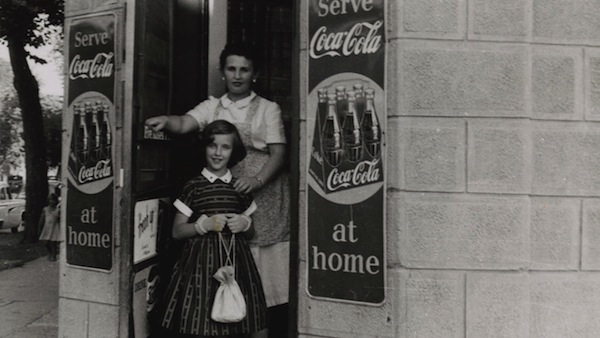
One of the stories is how, after the war, in Vienna, his grandmother met and married Bill Katz, who had been in a labour camp. The couple went to Winnipeg, with $200 they had saved up. They had two children – Jack and Sharon – and struggled financially. It was his grandmother who suggested they go into business for themselves. She went to night school, then saw an ad for a grocery store for sale – she bought it, learning on the job. There are some wonderful photos and video in this part of the film.

photo - Martha Katz saw an ad for a grocery store for sale – she bought it, learning on the job
Martha Katz saw an ad for a grocery store for sale – she bought it, learning on the job. (photo from NFB)

It was her goal in life for her two children to have whatever they wanted and she talks about her happiness at having had them. “We had to have a life again,” she says, stressing that this doesn’t mean she doesn’t think about the Holocaust all the time, because she does – “I hope it should never happen again. That’s all.”

“Bringing her to the museum was a bit of a tough decision, but she encouraged us to go,” said Schubert. “The intention was to see whether there was anything new that she and I could both learn about the atrocities committed. And, as it turned out in the film, there was; specifically, about the excruciating length of time the gas chamber took, in some cases, to exterminate those poor victims trapped inside, including my great-grandmother and her young son. Suffice to say, it took way longer than expected, and neither of us knew how long they may have had to suffer inside.”

It was for health reasons that Katz, who is now 90 years old, moved to Los Angeles.

“My grandmother suffered from chronic bronchitis since the war and, because of Winnipeg’s frigid winters, the doctors advised her to move somewhere warmer, or else her life could be at risk,” explained Schubert. “My grandfather’s brother lived in Los Angeles, so they helped them get settled there. They came to Winnipeg from Europe in 1948 and moved to Los Angeles in 1964.”

The 22-minute documentary is dedicated to the memory of Katz’s older sister, Rose Benovich. The statement at the film’s end notes: “Her courage in Auschwitz is the reason I am alive today.”

Format ImagePosted on January 15, 2021January 13, 2021Author Cynthia RamsayCategories TV & FilmTags Auschwitz, biography, Daniel Schubert, education, Holocaust, Martha Katz, memoir, National Film Board of Canada, NFB, survivors

I owe a Dutch family my life

The following article was published in the Globe & Mail, as “A Dutch family hid me from the Nazis: I owe them my life,” in advance of Remembrance Day, Nov. 11, 2020. It is reprinted here with permission, in recognition of International Holocaust Remembrance Day, Jan. 27.

I can never pass Remembrance Day without reflection. This year, we marked the 75th anniversary of the liberation of the Netherlands. It meant freedom for Dutch men, women and children after a brutal five-year occupation by German military forces. More than 5,000 Canadian soldiers rest in Dutch soil and are mourned and remembered there annually. They were our liberators and will never be forgotten, for Canadians and Canada are seared into the collective memory of the population. I myself saw Canadian tanks chasing German half-tracks down the streets of The Hague. On May 4, 1945, I was looking out the window of my mother’s small apartment, where she had been hiding. A man across the street opened his door one day too early. He was shot by a retreating German soldier. I was dragged away from the window. I was not yet 5 years old.

Unlike most Dutch children who began their lives anew after the war, I was a Jewish child hidden with Albert and Violette Munnik and their daughter, Nora, from November 1942 to May 1945. I became Robbie Munnik and was returned to my parents, who had miraculously survived, the only survivors of their families of origin. My grandparents, aunts, uncles and numerous cousins had all been murdered. For Jews, the postwar world offered precious little solace or hope: it was a world of death and of mourning. Liberation did not feel particularly liberating. Within that depressing atmosphere, I made the transition from Robbie Munnik back to Robbie Krell.

For this Remembrance Day 2020, I want to honour the memory of my Christian Vader, my second father.

When my mother passed me on to Moeder (Mother), who agreed to take me for a few weeks while she secured a hiding place, Vader accepted me without hesitation. Did he know of the risk to his family, hiding a Jewish child? If not in 1942, certainly he did by 1943. But, unlike many in this situation, he did not dwell on possible consequences. He simply set about loving me.

Early in my hiding, they allowed Nora to take me out, but that was a mistake. A woman recognized me. She happened to know my mother and asked Nora why she was looking after me. Vader contacted her immediately to ensure she remained silent. From then on, I was housebound. He read to me and made toys for me. His brothers and a sister all kept the secret of my presence. One slip could lead to betrayal. I was beyond lucky. Vader worked hard, loved deeply and enjoyed his hobbies, which included playing the piano by ear and carving wood and shaping metal. He was talented.

The danger increased. Only after the war would we learn that more than 80% of Dutch Jews were deported and murdered, primarily in Auschwitz and Sobibor. Of 108,000 souls sent to the death camps, only about 5,000 returned. And of about 14,000 children in hiding, more than half were betrayed, as was Anne Frank and her family in Amsterdam.

Because of his modest nature, Vader stands in danger of being forgotten. Of course, not by me. Unlike so many, including princes and popes, presidents and prime ministers, industrialists and intellectuals, he defied the Nazis and accepted the risk of my presence. So, while the names of the Nazis that murdered us linger on, as do the names of leaders who either did not lift a finger, or worse, actively prevented Jews from reaching safe havens, he might have been forgotten. So, I choose to remember him. In the hour of need, he included me in his life then and thereafter. His only reward was that I called him “Vader” and that he had, in addition to his daughter, a son.

In 1965, he and Moeder were brought to Vancouver by my parents to attend my graduation from medical school. My fellow graduates were drawn to him especially. He spoke no English, but the twinkle in his eyes spoke volumes. He was a people magnet. When they returned for my wedding in 1971, he fell ill shortly after and was briefly hospitalized at St. Vincent’s in Vancouver. There, he enchanted the nurses. When I came to visit, everyone on staff already knew him. They flocked to him. He radiated good humour and optimism. He did not know from anger, fear or bitterness. He hoped that I would not be consumed with anger over the Holocaust of my people, and that I would not turn away from Judaism or from Israel. And then, in 1972, he died. I do not know what he would have thought about the resurgence of antisemitism, the BDS movement and the antipathy toward Israel. But I can guess. And so can you.

But Vader will be remembered because Albert, Violette and Nora Munnik have been inscribed among “the Righteous” at Yad Vashem, the official site of Holocaust remembrance in Jerusalem. A tree planted as a seedling in 1981 grows at the site of the plaque bearing their names. And, in Vancouver, at Vancouver Talmud Torah Jewish day school, a sanctuary has been named in their memory and the entire story of their heroism lines the walls.

So, this year my memory is not consumed by what took place in Auschwitz and Sobibor, where so many of my family perished; this year, I will concentrate on remembering Albert Munnik, my Christian Vader, on Remembrance Day, and the Canadian troops that freed us.

Dr. Robert Krell is professor emeritus, department of psychiatry, University of British Columbia, distinguished life fellow of the American Psychiatric Association and founding president of the Vancouver Holocaust Education Centre.

Posted on January 15, 2021January 13, 2021Author Robert KrellCategories Op-EdTags Albert Munnik, gratitude, Holocaust, IHRD, International Holocaust Remembrance Day, memoir, Remembrance Day, Righteous Among the Nations
Justice slams the UN

Justice slams the UN

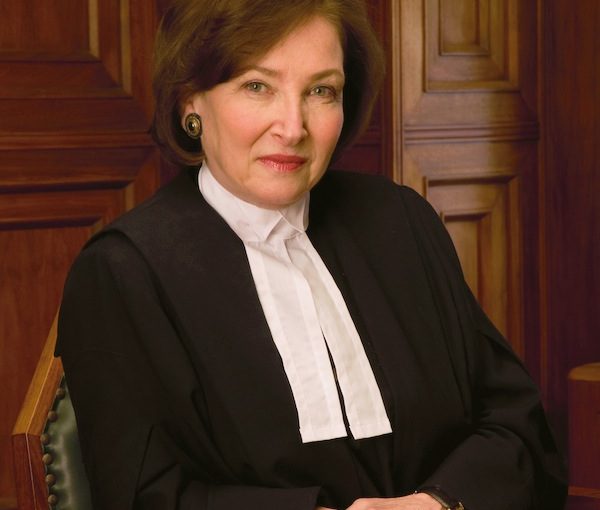
On Dec. 9, the Honourable Rosalie Silberman Abella, a justice of the Supreme Court of Canada, delivered the inaugural Elie Wiesel Lectureship in Human Rights. (photo by Philippe Landreville)

The Honourable Rosalie Silberman Abella, a justice of the Supreme Court of Canada, last week delivered an emotional, scathing indictment of the world’s failures to live up to the promise of post-Holocaust human rights protections.

Abella, a daughter of Holocaust survivors who herself was born in a displaced persons camp in Germany, in 1946, delivered the inaugural Elie Wiesel Lectureship in Human Rights. She spoke Dec. 9 on the 72nd anniversary of the United Nations’ adoption of the Convention on the Prevention and Punishment of the Crime of Genocide and the day before the 72nd anniversary of the adoption of the Universal Declaration of Human Rights. The promise of those documents – and the justice represented by the Nuremberg trials of Nazi war criminals – has been betrayed and ignored, she said.

“These were the powerful legal symbols of a world shamefully chastened,” Abella said in the streamed virtual presentation. “But although Nuremberg represented a sincere commitment to justice, it was a commitment all too fleeting.”

As the West’s triumph over fascism gave way to conflict with communism, Germany transformed in the diplomatic imagination from an enemy conquered to a potential ally to be wooed, she said. Britain issued a communiqué to all Commonwealth countries to abandon prosecutions of Nazi war criminals.

“The past was tucked away and the moral comfort of the Nuremberg trials gave way to the moral expedient of the Cold War,” Abella said.

As the fight against communism eclipsed the fight for justice over past crimes, expedience led Western countries to welcome Nazi scientists and others to contribute to the military-industrial strategy – even as Jewish victims of Nazism, like Abella and her parents, sat stateless in DP camps.

To Abella, Nuremberg represented an acknowledgement of the failure of Western democracies to respond when they should have and could have.

“And so, the vitriolic language and venal rights abuses unrestrained by anyone’s conscience anywhere in or out of Germany turned into the ultimate rights abuse: genocide,” she said.

Some justice did in fact emerge in the aftermath of Nuremberg and remarkable progress has been made in some quarters, she said. “But we still have not learned the most important lesson of all – to try to prevent the abuses in the first place. All over the world, in the name of religion, domestic sovereignty, national interest, economic exigency or sheer arrogance, men, women and children are being slaughtered, abused, imprisoned, terrorized and exploited with impunity.… No national abuser seems to worry whether there will be a Nuremberg trial later because usually there isn’t. And, in any event, by the time there is, all the damage that was sought to be done has been done.”

Abella reflected on the preoccupation among jurists with the rule of law, noting that the atrocities of the Nazi era all took place legally under German laws. She said we should be focused on “the rule of justice, not just the rule of law.”

Itemizing the myriad genocides that have occurred since 1945, including ones happening now, Abella decried a lack of global will to confront atrocities before they occur.

“Clearly what remains elusive is our willingness as an international community to protect humanity from injustice,” she said, launching a broadside against the failures of the United Nations.

“It can hardly be said to have been the avatar of human rights we hoped it would be when it was created,” she said. “We changed the world’s institutions and laws after World War II because they had lost their legitimacy and integrity. Are we there again? Not so much because our human rights laws need changing, but because a good argument can be made that our existing global institutions, and especially the UN’s deliberative role, are playing fast and loose with their legitimacy and our integrity.”

She acknowledged the successes of some UN agencies, such as UNICEF, but lamented the body’s failures to meet its core objectives.

“The UN had four objectives: to protect future generations from war, to guard human rights, to foster universal justice and to promote social progress,” she said. “Since then, 40 million people have died as a result of conflicts all over the world. The UN eventually reacted in Libya and wagged its finger at Syria, but I waited in vain to wait to hear what it had to say about Iran, Venezuela and China, for example. Isn’t that magisterial silence a thunderous answer to those who say things would be a lot worse without the UN? Worse how? I know it’s all we have but does that mean it’s the best we can do? Nations debate, people die. Nations dissemble, people die. Nations defy, people die. We need more than the words and laws of justice. We need justice.”

Abella acknowledged the need to address climate change but suggested a moral climate crisis is upon us.

“We have to worry not only about how the climate is changing the world but how the moral climate is creating an atmosphere polluted by bombastic anti-intellectualism, sanctimonious incivility and a moral free-for-all,” she said. “Everyone is talking and no one is listening. We are rolling back hard-fought human rights for minorities, immigrants, refugees, workers and women.

Abella approached global justice through the eyes of a single family. Her parents were married in Poland on Sept. 3, 1939, the day the Nazis rolled over the border and as the Second World War began. Her parents spent four years in concentration camps. The brother she never knew was murdered at the age of two-and-a-half. The only survivors of her extended family were her parents and one grandmother.

“My life started in a country where there had been no democracy, no rights, no justice,” she said, struggling to maintain her composure. “No one with this history does not feel lucky to be alive and free. No one with this history takes anything for granted and no one with this history does not feel that those of us who are alive have a duty to wear our identities with pride and to promise our children that we will do everything humanly possible to keep the world safer for them than it was for their grandparents, a world where all children regardless of race, colour, religion or gender can wear their identities with dignity, with pride and in peace.”

Her own existence is a statement of the resilience of human hopefulness, she said.

“In an act that seems to me to be almost incomprehensible in its breathtaking optimism, my parents and thousands of other survivors transcended the inhumanity they had experienced and decided to have more children,” she said. “I think it was a way to fix their hearts and prove to themselves and the world that their spirits were not broken.”

Abella dedicated her lecture not only to Elie Wiesel, the late Nobel Peace Prize laureate, but also to Irwin Cotler, who introduced her prior to her presentation and who Abella called Wiesel’s “spiritual heir.”

Cotler, a former Canadian justice minister, is the founder and chair of the Raoul Wallenberg Centre for Human Rights, which sponsored the lecture along with faculties of law at McGill University and the Université de Montréal, the Lord Reading Law Society and the International Bar Association’s Human Rights Institute.

Cotler, who last month was appointed Canada’s special envoy on preserving Holocaust remembrance and combating antisemitism, noted that Abella was the youngest person ever appointed to the Canadian judiciary, at age 29.

“She was the first refugee ever appointed to the judiciary and she was the first Jewish woman ever appointed to the Supreme Court of Canada,” Cotler said, noting that he was the justice minister who nominated her to the highest court. “She has been a remarkable trailblazer. A quintessential Renaissance jurist, public intellectual, educator and judge.”

Among Abella’s recognitions, Cotler noted, are 39 honorary doctorates.

To watch the lecture, click here.

Format ImagePosted on December 18, 2020December 16, 2020Author Pat JohnsonCategories NationalTags Elie Wiesel, genocide, Holocaust, human rights, justice, Raoul Wallenberg Centre, Rosalie Silberman Abella, survivors, UN, United Nations
Honouring history amid virus

Honouring history amid virus

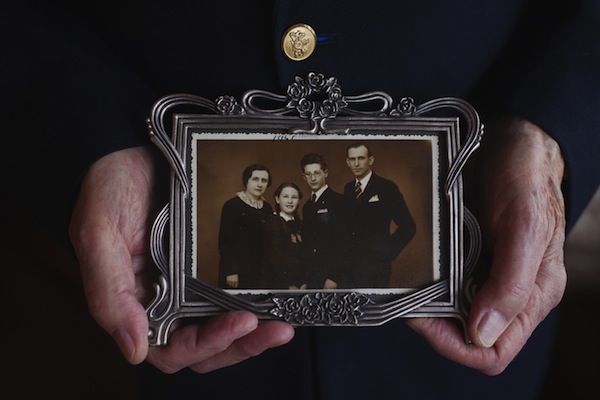
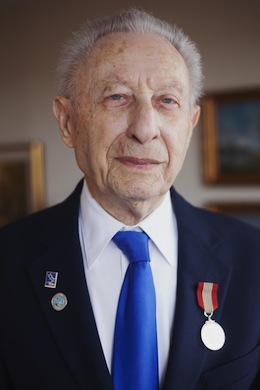
Leslie Vértes shares a family photograph. Vértes is one of the survivors featured in the Montreal Holocaust Museum exhibit Witnesses to History, Keepers of Memory. (photo from Montreal Holocaust Museum)

Collective memory has always played an important role in Jewish life and traditions. For thousands of years, Jews have celebrated holidays, mourned loss and memorialized history together as a people. And, most often, we have done so in person.

We say Kaddish as a community, celebrate a bris among a gathering of peers and family and come together every year to retell over dinner the story of the exodus of the Jewish people from ancient Egypt. The 20th-century philosopher and historian Isaiah Berlin noted, “All Jews who are at all conscious of their identity as Jews are steeped in history.” The late Lord Rabbi Jonathan Sacks expressed it another way: “Memory for Jews is a religious obligation.”

This past year has presented huge challenges for those institutions that strive to educate the public about history in general and, specifically, the Holocaust. During the pandemic, many museums and educational centres have been forced to choose alternative venues to connect with their members and the larger community. On Yom Hashoah and Kristallnacht, organizations across the world turned to recordings and interactive discussions in their effort to remind people that the Shoah’s messages remain relevant, even if their institution’s doors were temporarily closed.

Finding ways to continue that education and connection on a daily basis has required some creative thinking, said Sarah Fogg, who serves as the head of marketing, communications and PR for the Montreal Holocaust Museum. The museum, which was founded by Holocaust survivors, had been planning to launch a special photographic exhibit this year, highlighting the lives and wartime experiences of 30 survivors from the Montreal area.

“[The exhibit] was something that we had dreamt of for a really long time,” said Fogg. The museum had planned to narrate each of the stories visually using a triptych of personal images and the sharing of an artifact that the survivors had preserved: a father’s cap that he was required to wear at Auschwitz, a woman’s prayer book, an irreplaceable but tattered passport to freedom. But how could such stories be presented in the midst of a pandemic?

“The pandemic completely forced us to change, to rethink, to overhaul the plan we had for the exhibit,” said Fogg, who admitted there was a sense of urgency to the exhibit’s launch. Some of the speakers are now in their 90s and have already retired as volunteers. Plus, 2020 marked the 75th anniversary of the liberation of the concentration camps (and the 41st anniversary of the museum’s founding). This year, 2020, was the ideal time to launch the exhibit.

photo - Leslie Vértes
Leslie Vértes (photo from Montreal Holocaust Museum)

“[The online presentation] is the result of many brainstorming sessions where we discussed … how we could present this exhibit in a way that is different to other portrait exhibits that have happened around the world,” said Fogg. “And so, the ‘triptych’ as we have been calling it, the three photos, was really the result of wanting to showcase more than one portrait of the survivor and really wanting to showcase their uniqueness and their personalities.”

Fogg said it was in the middle of one of the photography sessions that the staff suddenly realized what was needed to translate this photographic essay to an online presentation. It was the survivors’ own accounts of why their personal artifacts held irreplaceable significance. It was also the story of how they had survived and how it had transformed them, once they began their new lives in Canada.

“So often when we talk about the stories of Holocaust survivors, the narrative tends to end when they leave Europe,” Fogg said. “But there is so much more to talk about.” Many of the survivors, who were children or young adults when they arrived in Montreal, went on to raise a family. All became volunteer speakers through the museum and other organizations in order to educate people about the Holocaust. Some became published authors and teachers. All, Fogg said, became inspiring leaders of their community.

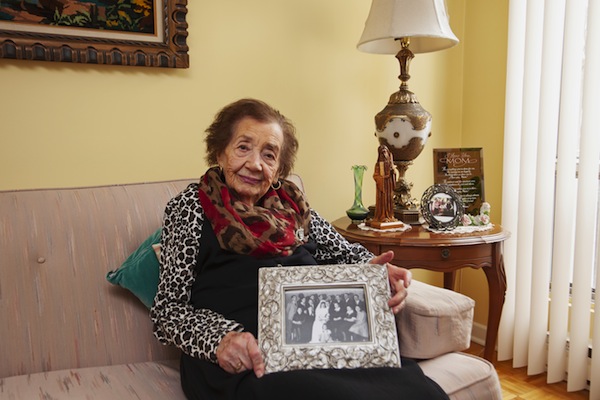
photo - Margaret Newman Kaufman with her wedding photograph
Margaret Newman Kaufman with her wedding photograph. (photo from Montreal Holocaust Museum)

“If I had to summarize what the lesson or the inspiration would be for viewers, it’s resilience. I mean, not only are they incredible survivors who escaped the Holocaust, but they come to Canada, they build new lives, they start careers, they make families and they find happiness again. They are this embodiment of resilience.”

Taken on their own, the artifacts tell dozens of unique and often heart-rending stories about the Holocaust. But they are also testimony to the survivors’ remarkable ability to draw meaning, purpose and even beauty from the darkest of memories. Sarah Engelhard’s black-and-white snapshot tells the story of her first Passover in Canada. Ted Bolgar’s touching account gives renewed significance to friendship and the value of a precious tea set. Marguerite Elias Quddus’s last memory of her father, as he was arrested, is embodied in a bitter-sweet tale about his forgotten eyeglasses.

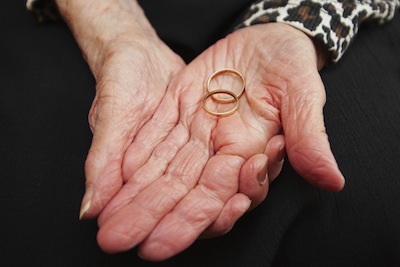
photo - Margaret Newman Kaufman displays her wedding rings
Margaret Newman Kaufman displays her wedding rings. (photo from Montreal Holocaust Museum)

Following the Second World War, Montreal became a second home for thousands of Holocaust survivors, some who saw it as a temporary port of refuge, and many who stayed to make it their home. The museum was opened in 1979 by members of the Association of Survivors of Nazi Oppression as a means to educating the public about the dangers of antisemitism and racism. More than four decades after its founding, the museum’s legacy still continues to be relevant, Fogg said. And, like the testimonies and artifacts that illumine these stories, the message it carries is an intensely human and important one.

“You know, we’re not talking about numbers or figures, we’re talking about Ted, Leslie, Liselotte and Daisy. These are real people that we love and care about and they are real people whose families and lives were torn apart by the Holocaust,” said Fogg. “And so, I think we can make a parallel to situations today, where real people are continuing to be impacted and devastated by genocide.

“I think what’s beautiful about the exhibit and working with survivors is that they are real people. What better way to understand history and especially difficult, complex and painful history than to hear it from such wonderful and caring and generous individuals,” she said. “They are the best educators and we are so lucky to learn from them, and we’re so lucky that they wanted to be a part of this exhibit.”

The museum’s effort to reach virtual audiences during the pandemic does appear to be working. Fogg said that, since its launch in September, the exhibit has not only been seen by viewers around the world, but has won three international awards for its visual presentation and design. The pandemic may have temporarily limited the world’s physical ability to connect, but it hasn’t stopped innovation or the heartfelt effort to care about others.

To see the Montreal Holocaust Museum’s exhibit, Witness to History, Keepers of Memory, visit witnessestohistory.museeholocauste.ca.

***

Montreal Jewish history in brief

The first Jews in the Montreal area were Sephardim serving in a British regiment. One was Aaron Hart, whose son would later be elected to the legislature to represent the Trois-Rivières area.

By the early 19th century, Ashkenazim from Eastern Europe had begun to trickle in and, by the early 20th century, more than 7,000 Jews had made their way to Montreal, most fleeing antisemitism in the Russian Empire and Europe. Many would arrive to find that prejudice and discriminatory policies weren’t exclusive to distant geography. The election of Ezekiel Hart to the legislature would later inspire a resolution to ban Jews from serving in office. It take another 60 years before a law would be enacted that would give Jews in Lower Canada the right to self-representation.

By the 1930s, Montreal’s Jewish population had increased to 60,000, making it the largest Jewish hub in the country. Many worked in the growing garment industry or owned stores and restaurants in the city. A smaller number moved to the country to become farmers and use skills they brought with them from the old country.

Distrust toward Jews and the growing number of Jewish refugees looking desperately for a new home before and after the Holocaust made immigration to Canada virtually impossible in the early 1940s. It took the efforts of organizations like the Canadian Jewish Congress to push for changes to immigration laws and open doors to refugee families. By the early 1950s, another 9,000 Jewish refugees eventually made their way to Montreal’s port. By the 1970s, those numbers had swelled again, reaching close to 120,000.

Today Montreal’s Jewish community is much smaller, for many reasons, including out-migration from the 1970s to 1990s. But the early Jewish pioneers, those who arrived in Montreal in the 18th and 19th centuries, are not only credited with building new businesses and opportunities for a growing city, but for planting the seeds for Canada’s diverse Jewish community.

Jan Lee’s articles and blog posts have been published in B’nai B’rith Magazine, Voices of Conservative and Masorti Judaism, Times of Israel, as well as a number of business, environmental and travel publications. Her blog can be found at multiculturaljew.polestarpassages.com.

Format ImagePosted on December 18, 2020December 16, 2020Author Jan LeeCategories NationalTags coronavirus, COVID-19, history, Holocaust, Leslie Vértes, Margaret Newman Kaufman, memory, Montreal, Montreal Holocaust Museum, museums, Sarah Fogg, survivors
Complexities of Poland’s past

Complexities of Poland’s past

Andrzej Mańkowski, Poland’s consul-general in Vancouver, shared some reflections on his country’s history with the Jewish Independent, including about the Ładoś Group, which tried to help Jews escape the Nazis by the issuing of fake passports. (photo from Andrzej Mańkowski)

The wartime actions of Poland and its people provide a prime example of the human capacity for good and evil. Many Poles today proudly point out that there are more of their compatriots recognized in Yad Vashem’s Garden of the Righteous Among the Nations than there are heroes of any other nationality. By contrast, the work of Polish-Canadian historian Jan Grabowski and a team of researchers in Poland chronicles in great detail the collaboration by Polish officials and ordinary citizens in assisting the Nazis in the goal of executing the “Final Solution” in that country.

Poland’s government prefers to focus on the more positive fact. So sensitive and contentious is the history that, in 2018, Poland passed – then, in the face of international outrage, rescinded – a law that criminalized expressions of Polish complicity in the Holocaust. At the time, Israel’s President Reuven Rivlin acknowledged that many Poles had aided Jews during the war era, but also that “Poland and Poles had a hand in the extermination” of Jews during the Holocaust.

Poland’s consul-general in Vancouver spoke to the Jewish Independent last week and shared some personal reflections on his country’s history – including how his own grandfather was murdered in Auschwitz.

Andrzej Mańkowski wanted readers of the Independent to know of a recently discovered story of a group of Polish diplomats in Switzerland who provided faked passports to help Jews flee Europe.

Called the Ładoś Group, after Aleksander Ładoś, the Polish envoy in Bern from 1940 to 1945, the six individuals included four Polish diplomats, one of whom was Jewish, and two representatives of Jewish organizations that conspired with the officials. The RELICO Assistance Committee for the Jewish Victims of the War, established by the World Jewish Congress, and the Agudat Yisrael worked with Ładoś and his colleagues.

In addition to Ładoś himself, three other Polish diplomats were members of the group: Stefan Ryniewicz, Konstanty Rokicki and Juliusz Kühl. The two members of Jewish organizations in Switzerland who rounded out the group were Abraham Silberschein of RELICO and Chaim Eiss of Agudath Israel.

Beginning in 1941 (or possibly earlier) until the end of 1943, the six men illegally purchased passports and citizenship certificates from Latin American countries, primarily Paraguay. The documents were sent to Jews in nations under German occupation, where possessing them increased chances of survival.

“Many of those passports came too late to save people,” Mańkowski said. “The recipients or the holders of the passports ended up in Auschwitz in spite of already having the false passports in their hands.”

As many as 10,000 forged passports may have been obtained, but most reached their intended recipients – primarily German and Dutch Jews, as well as some Polish Jews – too late. Of about 3,200 passports issued to individuals whose names are known, it is estimated that about 800 individuals – approximately 25% – survived the war.

Mańkowski’s own family history is deeply impacted by the horrors of the Nazi era. His grandfather, Emeryk Mańkowski, fled Ukraine after the 1917 Bolshevik revolution and settled in central Poland, where his wife’s family owned land. Part of that land was forested and, during the German occupation, Nazi officials discovered a radio communications device in the forest on the property. Unable to identify the owner of the contraband device, they arrested 10 members of the local intelligentsia – including Emeryk Mańkowski – and sent them to Auschwitz as a warning to the rest of the population.

At the time, Polish inmates were permitted 100 zlotys per month from their family. During the second month of his incarceration, Mańkowski’s family had their monthly stipend returned, with a message telling them that the prisoner was no longer present in the camp.

“The German Nazi bureaucracy was so precise and honest to send back money after killing the victim,” said his grandson, the consul-general.

image - As many as 10,000 forged passports may have been obtained, but most reached their intended recipients too late. Of about 3,200 passports issued to individuals whose names are known, it is estimated that about 800 individuals survived the war
As many as 10,000 forged passports may have been obtained, but most reached their intended recipients too late. Of about 3,200 passports issued to individuals whose names are known, it is estimated that about 800 individuals survived the war. (image from Andrzej Mańkowski)

While Poles suffered at the hands of the Nazis, Mańkowski acknowledges the magnitude is incomparable. Three million Polish Jews died during the Holocaust and, during the same period, three million non-Jewish Poles also died, he said. This represented about 10% of the larger Polish population, but 90% of the Jewish population. After the war, he said, a Polish family of 10 would have a relative missing from their holiday table. A Polish Jew from a family of 10 would be alone.

The consul lamented that Poles and Jews have incompatible narratives.

“We have two separate histories,” he said, citing the visits by Israeli students to the memorial sites of the Shoah in Poland. “These groups of Jewish youths from Israel walk around in Warsaw and see only ghetto, only death all around. They never see us, living Poles. They are coming with bodyguards, they are insulated from Poles.”

The controversy around the now-rescinded law proscribing discussion of Polish complicity led to a major diplomatic eruption with Israel, and Polish Prime Minister Mateusz Morawiecki acknowledged that it was not any respect for civil liberties or historical veracity that led to the reversal, but international pressure.

“Those who say that Poland may be responsible for the crimes of World War II deserve jail terms,” Morawiecki said at the time. “But we operate in an international context and we take that into account.”

Chrystia Freeland, then Canada’s minister of foreign affairs, wrote on Twitter that Canada is “concerned by the potential impact on free speech” of the Polish law and urged that country to “ensure open discussion and education about the horrors of the Nazi death camps.”

The consul emphasized that the law didn’t apply to scientific publication, research or artistic activity, as these fields were excluded from the jurisdiction of this law.

World attention has focused on Poland in recent years not only because of concerns around free expression and inquiry into Holocaust-era history. Poland has been called the worst country in the European Union for gay rights. Expressions of hate speech are leveled against LGBTQ+ Poles by individuals at the highest levels of government. There is a lack of legal protections for sexual minorities and criminal charges have been laid against individuals exhibiting Pride flags. Dozens of Polish communities have declared themselves “LGBT-free zones.”

Mańkowski acknowledged that Poland is a conservative country. Last month, a new abortion law was promulgated, banning abortion in almost all cases.

“It’s a question of some conservative attitudes and opinions on the part of Polish society,” he said. “We are quite conservative, that’s true…. It’s a hot discussion within Polish society and, if you follow polls and opinion research, you will see the real judgment of Polish society and maybe the political system is not following the tendencies of the changing trends.”

Format ImagePosted on December 18, 2020December 22, 2020Author Pat JohnsonCategories WorldTags Andrzej Mańkowski, Auschwitz, history, Holocaust, human rights, LGBTQ+, Poland
Painting survivors, life

Painting survivors, life

A portrait of Robbie Waisman, by artist Carol Wylie. Part of the exhibit They Didn’t Know We Were Seeds, at the Zack Gallery to Jan. 4.

Even via a wobbly Zoom-led tour, the impact of Saskatoon artist Carol Wylie’s portraits – nine of Holocaust suvivors and nine of residential school survivors – can be felt.

The title of the solo exhibit at the Zack Gallery until Jan. 4 is They Didn’t Know We Were Seeds. It is taken from the proverb: “They buried us … they didn’t know we were seeds.” And the choice of 18 portraits was deliberate.

“It was quite quick and early in the process I decided that 18 had to be the number,” said Wylie at the exhibit’s virtual opening Nov. 19, “because there’s so much darkness in the stories but there’s so much light and life in the survival… [T]here’s three of the Holocaust survivors who are involved with the March of the Living and to actually go back to the camps, to Auschwitz, and to make that walk when you were there; I can’t imagine the courage it takes. And they do it so that others are educated. That’s the rising above it and making something really powerful out of a black, dark experience.

“And I see the same thing with residential school survivors, like Gilbert [Kewistep] and like Eugene [Arcand], who spend so much of their time going around to schools and speaking in public about their experiences to make sure people are educated about that. And, again, reliving what they went through every time they tell it, I’m sure.

“So, the 18 and the connection to chai, to life, came really early in the process. It had to be 18, because that validation of life that these people represent … had to be present.”

The scale of the paintings was also chosen purposefully. “I want these portraits to take up space and to be very present and, for when you’re standing in front of them, to have them fill up your field of vision, so that you can’t wander past, uninterested and unengaged,” said Wylie.

The project started several years ago, she explained. “I saw Nate Leipciger speak at the Holocaust memorial service in Saskatoon and, it’s ridiculous, I’ve been [attending] for lots of years but, for some reason, that year, it hit me for the first time how elderly all these people are getting.”

The firsthand experience that is so powerful is soon to be lost, she said, and “I felt there was something that I had to do to help to preserve that.” And she would do it with the best tool she had, her passion and ability to create portraits.

“What I have learned over the years,” she said, “is that, when you capture the nuances of a person’s face, you really reflect who they are and much of their history and how they’re made up of that history. Even though it’s not like hearing a verbal story, it’s seeing a story in a different form.

“I started this idea to do a series of portraits of Holocaust survivors. And then, as I entered into it, little things started to pop up that were connecting the Jewish survival to the residential school experience. It started with a community seder at our local synagogue, where our rabbi, who is very forward-thinking, always has elements on the tables that recognize other groups … and, that particular year, he had made special mention of making sure that we understand – especially in Saskatchewan, where we have a really dark history of residential schools – the experience of the Indigenous people that we live with.

“And I started thinking, it’s not a parallel experience, but it’s an experience that is shared in terms of pain and suffering and then survival and rising above it…. And, because I live in Saskatchewan, this is part of the history of the land that I call home, that I’m a settler in, that this is a time of truth and reconciliation, it’s a time of trying to address these issues, so, as a personal step towards reconciliation, I can sit down, listen to the stories of some of these residential school survivors and bear witness to them and bring them in to be part of this project, so that they can converse through their portraits, as a group of survivors.”

It was only after making this decision that Wylie discovered that people like Vancouver’s Robbie Waisman – who is among those featured in the exhibit – were already meeting with residential school survivors to share ideas and experiences.

The project took about three-and-a-half years to complete. Waisman is the only Vancouver-based subject. “All the other Holocaust survivors were from Toronto, Edmonton and Saskatoon, and all the residential school survivors are from Saskatchewan,” said Wylie in an email interview with the Independent.

“I had to be really careful,” she noted at the exhibit opening. “There’s a very, very fraught history of non-Indigenous artists and non-Indigenous photographers representing Indigenous peoples and I knew I was stepping into this murky ground. All the way along, I had to keep asking myself questions about my own integrity around this, what are the reasons for why you’re doing this and does every single survivor that you talk to understand fully what this project is about and [are they] fully on board with it. At the end, I thought, if there are people who are criticizing it, that’s fine, but, I feel, after conversations I’ve had with many residential school survivors, that it’s more important that we raise this issue and more important that I make this step towards reconciliation than be fearful of doing something that maybe I shouldn’t be doing or that the art world might perceive that I shouldn’t be doing.”

When the work was completed, Arcand and Kewistep “smudged the work before it went off on its first exhibition. Then they gave me a smudge kit that I could use myself, if I wanted to, in the future. It was extremely meaningful to me; it was almost like they’d given it their stamp of approval, as well as imbuing it with these good graces and these good thoughts and this positive energy before the work went anywhere and anyone had a chance to see it.”

The exhibit has been shown in various places and will travel elsewhere after its time at the Zack.

Wylie’s general process in doing portraits is to speak with her subjects first.

“I think that, in order for the mask that we all wear in the world to protect ourselves, in order for that to drop, there needs to be time spent talking,” she said. “There’s this very strange artificial intimacy that happens when you’re sitting two feet – before COVID times – away from somebody that you’re drawing, and you’re talking and you’re looking intently at them…. So, I always wait until that couple of hours of conversation and visiting is over and then I pull out my camera.

“I need to work from photographs because I like to get a strong resemblance and I can’t have people coming back endlessly to sit for me…. But that’s when I take them, is after that time has been spent, that conversation has happened, and their mask has come down and they are open.”

The openness that is seen in the subject’s faces, stressed Wylie, “is not something that I put there, it’s something that they had. Seriously, I paint what I see… And that captures what they have, what they are, because it’s all within there, it’s all in their face.”

Given the caveat that there is something intangible about what makes a good portrait, Wylie said in an email, “I believe a portrait should bear resemblance to the subject. But, in addition, it should feel like the portrait is inhabited; like it contains the spirit of an individual. You often hear people comment about the eyes in a portrait following them. I think that’s the sensation of some element of the person, and not just their resemblance, being present. I also like to see evidence of the artist in the work in the form of brushstroke, colour choices, etc. This trace of the artist distinguishes a painted portrait from a photo.”

She described her need to create portraits as “a compulsion I’ve had since I was a child. Even then,” she said, “I drew people, made my own paper dolls. In my grad school investigations I discovered, I believe, that it’s because of a fascination I have with the mystery of consciousness, and the fact that we can never share another’s consciousness. We learn about ourselves through our interactions with others and these connections enrich our being.

“The face is a major part of how we communicate and is strongly connected to our identity,” she said. “Yet, we cannot see ourselves the way others see us, so there’s this mystery around faces. What do they hide? What do they reveal? How do you feel as ‘you’ wearing your face? How do I communicate as ‘me’ wearing my face? I am just never tired of painting a portrait, but am always excited when I begin a new one.”

The exhibit opening was hosted by gallery director Hope Forstenzer, who credited her predecessor, Linda Lando, for bringing this show in. The exhibit is open by appointment and via onlyatthej.com. A commemorative book, being prepared with Wylie’s help, is in the works, as well, said Forstenzer.

On Dec. 9, 6-8 p.m., the gallery is having a Zoom event with Waisman and Wylie, as well as Lise Kirchner from the Vancouver Holocaust Education Centre and Shelley Joseph from Reconciliation Canada. Readers interested in attending should email Forstenzer at [email protected].

Format ImagePosted on December 4, 2020December 2, 2020Author Cynthia RamsayCategories Visual ArtsTags art, Carol Wylie, Holocaust, Hope Forstenzer, JCC, portraiture, residential schools, Robbie Waisman, survivors, Zack Gallery

Posts pagination

Previous page Page 1 … Page 14 Page 15 Page 16 … Page 44 Next page
Proudly powered by WordPress