Skip to content
  • Home
  • Subscribe / donate
  • Events calendar
  • Business Directory
  • FAQ
  • News
    • Local
    • National
    • Israel
    • World
    • עניין בחדשות
      A roundup of news in Canada and further afield, in Hebrew.
  • Opinion
    • From the JI
    • Op-Ed
  • Arts & Culture
    • Performing Arts
    • Music
    • Books
    • Visual Arts
    • TV & Film
  • Life
    • Celebrating the Holidays
    • Travel
    • The Daily Snooze
      Cartoons by Jacob Samuel
    • Mystery Photo
      Help the JI and JMABC fill in the gaps in our archives.
  • Community Links
    • Organizations, Etc.
    • Other News Sources & Blogs
  • JI Chai Celebration
  • JI@88! video

Recent Posts

  • Or Shalom reopens its doors
  • JFS from past to future
  • Need holistic approach
  • Sharing stories, advice
  • Journalist shares fears
  • Skills to live together
  • Road to independence
  • Cutting grass with scissors
  • Zionism as a solution
  • Deceit, desire & the divine
  • Reclaiming sacredness
  • Creative project ideas
  • Summer squares and cobbler
  • Thou shalt … summer commandments
  • Legal help for students
  • Revisiting myth of Lilith
  • Wrong person rebuked
  • Canada’s mixed messages
  • Questions for museum
  • Symposium on antizionism
  • Making soccer political
  • CJPAC lauds Pulver’s impact
  • City recognizes Vrba’s legacy  
  • Organ donation saves lives
  • Theodore’s March premiere
  • A healing Shabbaton
  • Supplying healthy food
  • A chime of metal tags
  • Yellowknife seder a first
  • Ishai energizes, unifies
  • A Lag b’Omer to remember
  • Expanding the healing
  • Hannah Senesh – a unique hero
  • Community milestones … May 2026
  • Sharing her testimony
  • Fall fight takes leap forward

Archives

Follow @JewishIndie
image - The CJN - Visit Us Banner - 300x600 - 101625

Tag: Holocaust

New exhibit at Uvic

New exhibit at Uvic

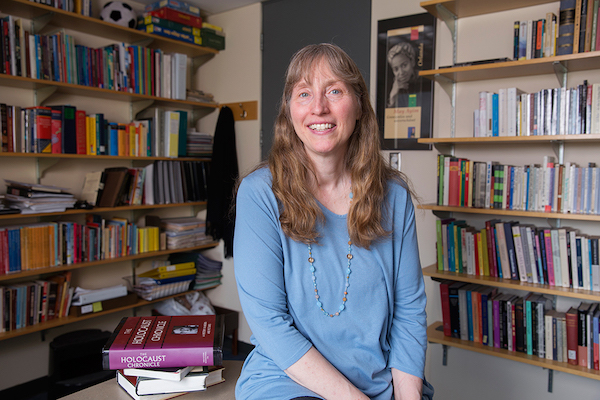
Dr. Helga Thorson of the University of Victoria. (photo from uvic.ca)

The University of Victoria unveiled its Stories of the Holocaust: Local Memory and Transmission exhibit – a project that was part of a combined undergraduate and graduate seminar on Holocaust and memory studies – during an online launch on April 15.

The exhibit is the result of a collaborative effort. Ten community members, comprising Holocaust survivors and descendants of survivors, from Vancouver, Victoria and Salt Spring Island, were paired with 10 UVic students to present wide-ranging and diverse stories from the Shoah in a context both personal and relevant to future Holocaust education.

“Students worked one-on-one with a community partner to figure out the best way to tell each story. This, as they discovered, was no easy task,” said UVic professor Dr. Helga Thorson, the course’s instructor. The students had to learn new technological skills, go over an extensive reading list and develop interpersonal skills, which included “relationship-building and the ethical dilemmas that come into play when telling somebody’s story that is not your own.”

“The engagement and involvement of the 10 students, who took the class assignment seriously, will go a long way in helping us remember the Shoah and the story passed on by their community partner,” said Thorson. “Remembering the past also helps us reflect on the present and what this means for us in today’s world as we continue to grapple with antisemitism, racism and other forms of violence, hatred and injustice.”

Ireland Good, one of the students involved in the project, thanked the Jewish community members for “their courage and their trust in us to tell their stories and to create this exhibit. I have thoroughly enjoyed this experience,” said Good, “even with its low moments, as I am sure it is with all the other students.”

The stories represent varied experiences, including having hid in order to survive and having been sent to a Soviet gulag. They come from Hinda Avery, Lillian Boraks-Nemetz, Rudolf Deman, Ilserl Fränkel, Julius Maslovat, Micha Menczer, Isa Milman, Fred Preuss, Claire Sicherman and Hester Waas.

Maslovat was the youngest prisoner ever at Buchenwald, and he is the subject of a recent film, Why Am I Here?: A Child’s Journey Through the Holocaust. The day of the launch, April 15, had a special significance for Maslovat, as it marked the 76th anniversary of his liberation from Bergen-Belsen. He was just under 3 years old at the time.

“My story did not come to me in a neat package. There were people who knew parts of it and contributed. Other parts I had to dig out of archives in Israel, Germany, Sweden, Britain, Poland, U.S. and Finland. I have tried to tell my story by putting together the pieces like a jigsaw puzzle. This time, I have included material I have not spoken about before,” said Maslovat, explaining his contribution to the archive.

“Despite what people may think about Holocaust survivors writing their memoir or speaking about their experience, we are not navel-gazing,” said writer Boraks-Nemetz, who escaped from the Warsaw Ghetto and lived in hiding. “We who have stared into the abyss of the atrocity that was the Shoah can never erase it from our memories. When I speak about my experience, I always think of the survivors and the victims, of the injustice wrought by a madman who destroyed lives – lives of children, of my little 5-year-old sister, who was brutally murdered for being a Jewish child … of the 1.5 million children who needlessly died.”

Boraks-Nemetz continues to explore the personal and broader impacts of the Holocaust through recent works, the novel Mouth of Truth and a collection of poetry, Out of the Dark.

Dr. Richard Kool is the son of Waas, who hid in the Netherlands during the war. He spoke of the importance of conveying the story to future generations. “I’ve really understood that, as Hester’s child and the oldest of my siblings, I have a responsibility as a carrier of a message that helps me keep looking forward towards recipients, towards recipients who have more life in front of them than behind, recipients who may not even be alive yet,” he said.

“We, the survivors and their children, must look forward and consider the powerful message for future individuals and generations,” he added. “Messages that say, ‘Don’t wallow in despair, worry and victimhood, but act, now, to do what you can with the tools at your disposal and the people around you to help co-create a fairer, healthier, more just, more peaceful community and society.’”

To view the exhibit, go to omekas.library.uvic.ca.

Sam Margolis has written for the Globe and Mail, the National Post, UPI and MSNBC.

Format ImagePosted on May 7, 2021May 6, 2021Author Sam MargolisCategories LocalTags education, Helga Thorson, Holocaust, Julius Maslovat, Lillian Boraks-Nemetz, Richard Kool, storytelling, survivors, University of Victoria, UVic
B.C. observes Yom Hashoah

B.C. observes Yom Hashoah

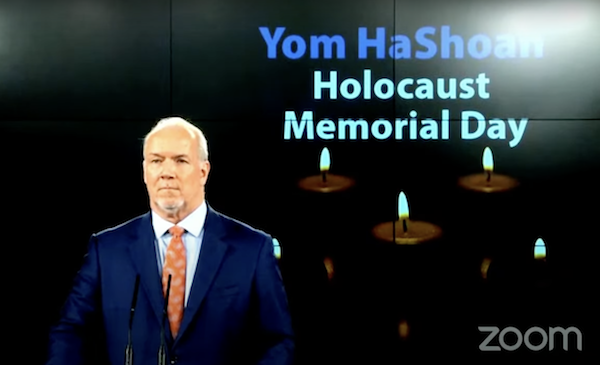
B.C. Premier John Horgan opened the commemorative event. (screenshot)

A uniquely British Columbian virtual commemoration of Yom Hashoah, Holocaust Remembrance Day, took place April 8, convened by the Government of British Columbia in partnership with the Vancouver Holocaust Education Centre (VHEC) and the Centre for Israel and Jewish Affairs, Pacific Region.

Premier John Horgan opened the event.

“On Yom Hashoah, we remember the six million Jewish lives that were lost during the Holocaust. We also remember and honour the millions who lost their lives or were murdered because of their ethnicity, sexual identity or disability,” said the premier. “Today, we also pay tribute to Holocaust survivors and, as that community grows smaller, it’s all the more important that we work together to carry that message forward – that we will never forget and it will never happen again, especially in light of the ongoing threats of violence and discrimination Jewish people are facing worldwide today.”

Horgan noted an incident in Victoria where a Chabad centre was defaced with antisemitic graffiti a day earlier.

“These are the types of acts we must stand together and fight against with a united voice, regardless of where we come from, regardless of our orientations or ethnicities or our faith. We must stand against antisemitism and racism whenever we see it,” said Horgan. “As we light the candles at Yom Hashoah in remembrance, we must remain vigilant and, as we take action today and honour those who lost their lives and those who have struggled since the Holocaust, we must again remember that we cannot repeat our past.”

Michael Lee, MLA for Vancouver-Langara, also spoke.

“As the living memory of the Holocaust fades, the important act of remembering and coming together each year grows in importance,” he said. “It is our collective responsibility to ensure that we never forget and such a thing never happens again, because, sadly, this is not just about remembering history, but about standing together today against the racism, bigotry and antisemitism that still exists in our world.… As a community, now and every day, we must stand against these acts of hate and bigotry.

“Today, on Holocaust Remembrance Day, we are reminded of why it is so important to come together, to reflect and to ensure that the past is not forgotten. We must remember both the parts of this dark, dark history that we must not let be repeated and the acts of heroism that took place amid such tragedy. Even during a period of humanity’s darkest chapters, there was still good in the world, people who risked their lives to hide and save others from the Shoah. Amidst the horrors and atrocities, there were tales of love, hope and bravery, including with the many righteous among nations, people who demonstrated that light can triumph over darkness. Today, we reaffirm our commitment to never forget; remember the victims, the survivors and the heroes; and we pledge to build a better world in their memory.”

Dr. Robert Krell, founding president of the VHEC, lit six memorial candles. The premier lit a seventh candle “to honour the millions of Roma, Slavic, LGBTQ2+ and people with disabilities who lost their lives.”

Krell, speaking on behalf of Holocaust survivors, noted that 1.5 million of the six million Jews murdered in the Holocaust were children. An estimated 93% of Jewish children in Europe were murdered, which makes his survival extremely remarkable. The fact that both his parents survived, when more than 80% of Dutch Jews were killed, is additionally miraculous.

screenshot - Dr. Robert Krell spoke on behalf of Holocaust survivors
Dr. Robert Krell spoke on behalf of Holocaust survivors. (screenshot)

“I had lost all grandparents, uncles and aunts,” Krell said. “One first cousin remained. The war left its mark and I bear a special responsibility to remember what happened and try to derive lessons from that unfathomable tragedy. The tragedy was unique in its objectives, its focus and its ferocity. Jews were extracted wherever they resided, whether Paris, Prague or Vienna, whether city or countryside or the isles of Rhodes or Corfu. The enemy pursued us and tortured and murdered without mercy, without exception.”

While Dutch citizens remember the Canadian military’s role in liberating that country, Krell also noted Canada’s failure to save European Jews before the war.

Krell also addressed the issue of the International Holocaust Remembrance Alliance’s Working Definition of Antisemitism. Around the world, he said, 34 countries have adopted the definition, as has the province of Ontario.

“As a survivor who has been deeply involved in Holocaust remembrance and education, it strikes me as unconscionable not to accept the IHRA definition to assist us all in recognizing the signs and symptoms of the scourge of Jew hatred,” he said.

Yom Hashoah fell the day before the federal New Democratic Party convention that was to consider a resolution rejecting the IHRA definition. The matter never made it to the floor, but another resolution condemning Israel passed by an overwhelming margin.

“It is my hope that we will soon see the provincial government’s adoption of the IHRA definition of antisemitism,” said Krell.

Rabbi Dan Moskovitz of Temple Sholom also took up the issue of the antisemitism definition.

“The International Holocaust Remembrance Alliance’s definition of antisemitism is, I think, the tool that guides us in our work to combat anti-Jewish sentiments,” he said. “I want to urge our provincial government to join other jurisdictions in embracing the action that is required to combat both historical and contemporary hatred of the Jewish people.”

He added: “When we think of the death of a human being, we mourn the loss of the body and the soul, but, in my work, standing with too many grieving families at graveside, it is not the body that we miss most, that is merely the vessel for the soul, the part of that person that is unique in all the world,” he said. “That’s the part that we fall in love with and are forever changed by. The soul of another leaves an imprint on our heart. So, today, we remember six million murdered Jewish souls, their lives that have been extinguished, their dreams unrealized, their loves and relationships gone forever. We pray that those dear souls are comforted and embraced under the wings of God’s presence and that now, remembered so publicly, will never be forgotten.”

Moskovitz then chanted El Moleh Rachamim and a version of the Mourner’s Kaddish that includes the names of the Nazi death camps.

In addition to the B.C. event, the Vancouver Holocaust Education Centre also partnered on April 8 with the Neuberger Holocaust Education Centre in Toronto, the Azrieli Foundation, Canadian Society for Yad Vashem, Facing History and Ourselves, Friends of Simon Wiesenthal Centre, March of the Living Canada and UIA in a Canada-wide Yom Hashoah online program that included survivor testimony from individuals across the country and a candlelighting ceremony.

A day earlier, the VHEC partnered with the Montreal Holocaust Museum for a virtual program focusing on the importance of remembrance in the intergenerational transmission of memory. Survivors and members of the second and third generations spoke about their experiences. Video recordings of all three events are available at vhec.org.

Format ImagePosted on April 23, 2021April 22, 2021Author Pat JohnsonCategories LocalTags anti-racism, antisemitism, Centre for Israel and Jewish Affairs, CIJA, Dan Moskovitz, Holocaust, IHRA, John Horgan, Michael Lee, remembrance, Robert Krell, Vancouver Holocaust Education Centre, VHEC, Yom Hashoah
Shoah education continues

Shoah education continues

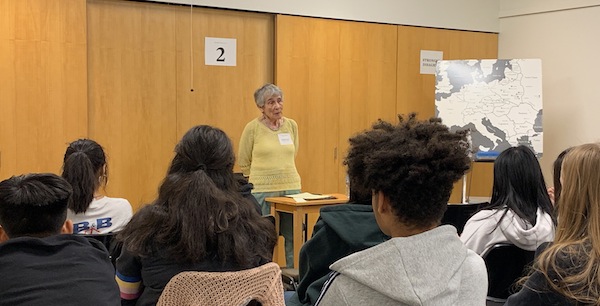
Dr. Claude Romney speaking to students pre-COVID. (photo from Vancouver Holocaust Education Centre)

For many years, people dedicated to educating about the Holocaust and its moral lessons have been adapting to new realities. The declining number of survivors and the need to preserve their eyewitness testimony has necessitated innovative means of conveying these lessons to successive generations. As a result of these preparations, organizations like the Vancouver Holocaust Education Centre (VHEC) have been remarkably prepared to continue their work despite the limitations imposed by a global pandemic.

Dr. Claude Romney has been sharing her wartime experiences with younger audiences for several years. Her father, Dr. Jacques Lewin, was arrested in Paris at the end of 1941 and was among the first prisoners transported to Auschwitz. While Romney and her mother survived the war in southern France, evading numerous close calls, her father survived the most notorious Nazi camp because his skills were useful to the Nazis – he was a doctor who was put into service at the camp. Romney has researched and spoken about the experiences of her father and other “prisoner-doctors.”

Since the pandemic began, Romney has done two virtual presentations to schools and, while she wishes the talks could be in person, she is grateful that the technology exists to allow them to happen at all.

“I personally, and I think the other survivors who continue to talk to students online, have to be grateful both to the [Vancouver] Holocaust Education Centre and, of course, most of all, to the teachers who still get in touch and haven’t given up,” she said. “It’s something which could easily have fallen by the wayside. I think it’s very fortunate that teachers are dedicated enough to continue.”

A year and counting into the pandemic, Romney said the global upheaval could have led to lost opportunities.

“We feel there is some urgency because we’re not getting any younger,” she said. “It’s very important.”

The online events differ, depending on the audience. Some classes that are still meeting in person are set up so that the speaker sees the teacher but not the entire class. When classes are virtual, the speaker is one of many faces on a Zoom call.

“This would never have been possible for students 15 years ago, 10 years ago maybe even,” Romney said. “It makes a big difference because, of course, there are books and articles, but it’s not the same as hearing somebody tell their personal stories.”

While the survivor speakers are talking about their past, the lessons they aim to impart are for the present and future.

“I think it’s vital that the new generations know about what happened because it’s up to them to prevent this kind of thing from happening again,” she said. “And to understand that it’s vital to be tolerant of other people who may be different in some ways because they come from different cultures, different religions. It’s a cautionary tale really.”

Ashley Ross has been teaching a course in genocide studies at Aldergrove Community Secondary School for four years. She can attest that students make connections between the present and the past – and that relevance has been honed more sharply in the past couple of years.

“When I first started teaching it, it was very hard for them to understand the German context of that era,” she said, noting that she was challenged to demonstrate the “slippery slope” of hatred, fear and scapegoating. Sadly, students understand that phenomenon better than just a few years ago. “Right now, they are immediately seeing connections and understanding and seeing it play out in their current world.… More than ever, the lessons of the power of propaganda and the fear and the scapegoating are really resonating in our world. It’s through those historical lessons that we are better equipped to process what we’re currently facing.”

She maintains that the survivor speakers’ virtual events are every bit as powerful on the students as an in-person one. She even sees a benefit in the fact that, when they know they can’t be seen by the speaker, students may be more open with their emotional responses.

“Because the Holocaust survivor is only looking at my face rather than their faces, I find that it’s often more raw for the students. In a large auditorium, it doesn’t have that same personal impact,” said Ross, who has led a student trip to Europe that included a visit to Auschwitz.

Sharing firsthand accounts with young generations puts a human face to a part of history that is enormous in scope and perhaps remote in time from the perspective of a teenager.

“I think there’s a sense of honour to have a direct connection to this history that sometimes feels so far away,” she said. “It’s a reminder that it isn’t so far away. I think it’s really impactful to hear first-person accounts [about] something that can get so bogged down in huge numbers.”

photo - Dr. Ilona Shulman Spaar, education director and curator at the Vancouver Holocaust Education Centre
Dr. Ilona Shulman Spaar, education director and curator at the Vancouver Holocaust Education Centre. (photo from vhec.org)

Dr. Ilona Shulman Spaar, education director and curator at the VHEC, acknowledges that her team did not know what to expect when the pandemic began a year ago. At the same time, the remote delivery of programs and resources that was necessary due to COVID was something for which the centre was already prepared. Not only were Holocaust survivors and other educators delivering virtual talks to student groups in remote parts of British Columbia, a vast digitization process over the past several years has made much of the centre’s collections accessible online, including artifacts, documents, written testimonies and videos.

“In a way, that’s nothing new for us,” she said.

Some research requests saw an uptick as teachers encouraged students to undertake individualized projects – and because the revised provincial curriculum also emphasizes “self-directed learning.”

The VHEC also saw an increase in donations of artifacts and documents. This may be because people are spending more time at home and deciding to clean out attics and closets. Shulman Spaar also thinks people may have a little more time to read the communications they send to supporters, which often include appeals for family records and other items.

Echoing the Aldergrove teacher, Shulman Spaar thinks another factor for increased interest in the VHEC’s programs and resources may be due to current events. Political situations in the United States and around the world, the increased awareness of violence against minority communities and other topics in the news daily underscore the relevance of the organization’s work.

“Ultimately, we are an anti-racism-based Holocaust education centre,” she said. “If you look at what’s going on, it does seem very relevant at the moment.”

There were challenges in rapidly scaling the delivery of virtual programs to more groups. Docents, educators and survivor speakers had to learn the new technologies and adapt their messages to the medium.

Conversely, there have been silver linings. Some survivors who, for health or mobility reasons, could not present their testimonies in person have been able to do so virtually. As capacity has grown for delivering programs remotely, so have requests. The VHEC has welcomed invitations from other provinces, as well as schools in northern British Columbia and other remote parts of the province where survivors are unlikely to visit.

Moreover, said Shulman Spaar, some participants have commented that seeing survivors in their own homes, rather than on a stage, is unexpectedly powerful.

“It’s not the same as an in-person encounter,” she acknowledged, “but, also, hearing the speaker speaking from her or his living room, it’s a different intimate situation that happens. Yes, there is this screen still, but some students and teachers comment how they feel very close and it feels like an intimate encounter rather than being in a big hall and on a stage.

“It’s just different,” she said.


Format ImagePosted on April 2, 2021March 31, 2021Author Pat JohnsonCategories LocalTags Ashley Ross, Claude Romney, education, Holocaust, Ilona Shulman Spaar, Shoah, survivors, VHEC

Yom Hashoah commemorations

There are several opportunities for the local community to commemorate Yom Hashoah this year.

On Wednesday, April 7, 3 p.m., the Vancouver Holocaust Education Centre (VHEC) is partnering with the Montreal Holocaust Museum for an online program focusing on the importance of remembrance and the intergenerational transmission of memory. The program will include survivor testimony clips and comments from members of the second and third generations about their families’ experiences during the Holocaust. Attend live via facebook.com/events/188237616165702. For more information, visit museeholocauste.ca/en/news-and-events/yom-hashoah.

On Thursday, April 8, 3:30 p.m., community members can join Premier John Horgan for a Holocaust Memorial Day service livestreamed from the B.C. Legislature in Victoria, in a gathering organized with the VHEC and the Centre for Israel and Jewish Affairs. Holocaust survivors are invited to a private pre-ceremony reception with Horgan at 3 p.m. – survivors may RSVP to receive a Zoom link by emailing [email protected] or phoning 604-622-4240.

Also on April 8, at 4 p.m., the VHEC, together with the Neuberger Holocaust Education Centre, Azrieli Foundation, Canadian Society for Yad Vashem, Facing History and Ourselves, Friends of Simon Wiesenthal, March of the Living Canada and UIA present a Canada-wide Yom Hashoah program featuring survivor testimony from cities across the country, a candlelighting ceremony and other components that share stories of resiliency, faith and hope. Register via holocaustcentre.com/2021-cross-canada-yom-hashoah.

On Sunday, April 11, at 11 a.m., the Victoria Shoah Project is inviting the community to attend a virtual Yom Hashoah with the theme of “Preserving and Honouring Voices from the Shoah.” The program features a tribute to a survivor originally from Hungary, George Pal, who will speak about his book, Prisoners of Hate, which was published in 2018. The service will also include an historian speaking about the Holocaust in Hungary, a recitation of the Kaddish of the Camps, commemorative music, and a message from Rabbi Harry Brechner of Congregation Emanu-El, Victoria. For the Zoom link, visit victoriashoahproject.ca.


Posted on April 2, 2021March 31, 2021Author The Editorial BoardCategories LocalTags commemoration, Holocaust, remembrance, Shoah, Vancouver, Victoria, Yom Hashoah
R2R fest teaches, entertains

R2R fest teaches, entertains

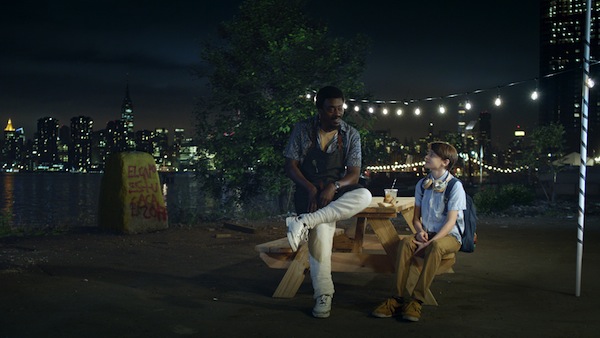
Seu Jorge, left, and Noah Schnapp in a still from Abe. (image from Reel 2 Real)

The upcoming Reel 2 Real International Film Festival for Youth is not just for youth, though younger viewers are its target audience. There are entertaining and engaging films for all ages among the 18 features and 45 shorts that will be available for streaming online April 14-23.

The focus of this year’s festival is “films that explore the impact of social media, racism and discrimination, with a focus on Germany.” While many of the offerings will interest Jewish community members, at least four cover topics of specific relevance.

The American feature Abe was part of the recent Vancouver Jewish Film Festival. It is carried by the impressive acting of Noah Schnapp as 12-year-old Abe and that of Seu Jorge as Chico, the Brazilian-American chef that Abe idolizes. The food, glorious food, is an added bonus.

While the writing of Abe’s family dynamics is clunky and without nuance – his father’s side is Muslim, his mother’s Jewish, and never the twain shall meet on religion or the Palestinian-Israeli conflict – Abe himself is charming. He puts his heart into trying to bring everyone together, in part, by creating a fancy dinner that comprises several of his grandmothers’ traditional recipes. The grumpy but caring Chico helps, having reluctantly taken Abe in, first as a dishwasher then as one of his prep cooks.

Food doesn’t turn out to be the way to his family members’ hearts but the disastrous fusion meal, which ends in a big fight and Abe running away, does push his family to at least reconsider their priorities.

***

still - Mouize and Ranin become friends over popcorn and a shared love of cinema in Cinema Rex
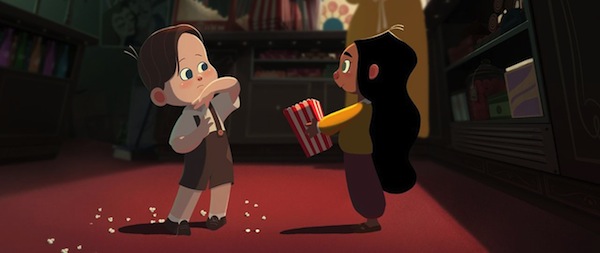
Mouize and Ranin become friends over popcorn and a shared love of cinema in Cinema Rex. (image from Reel 2 Real)

In another charming film, the young also show the adults the possible way to some form of peace. In the Israeli animated short Cinema Rex, the Jewish boy Mouize and the Arab girl Ranin become friends over popcorn and a shared love of cinema.

Set in Jerusalem in 1938, a new movie theatre opens, “In the heart of the city, on the seam line between the Jewish side and the Arab side, and adjacent to the British police.” It is “co-owned by partners from both sides of [the] divided city” and Mouize’s dad is the projectionist. When Mouize catches a glimpse of someone peeking into the projection room, he follows the trail of popcorn to Ranin, who shares it with him in exchange for a seat beside him in the best seats in the house. The two imagine themselves as the heroes in Robin Hood, as actors in a Laurel and Hardy film, dancers in a Fred Astaire and Ginger Rogers movie, and more.

Ranin’s mother is non-plused to find her daughter hanging out with Mouize, and Mouize’s dad tries to tell him, “Someday, you’ll understand why you and she can’t be friends.” But the kids have none of it.

Beautifully drawn and a story simply told – in Arabic, English and Hebrew with English subtitles – this short is highly recommended viewing.

***

still - Alina is a tension-filled short film
Alina is a tension-filled short film. (image from Reel 2 Real)

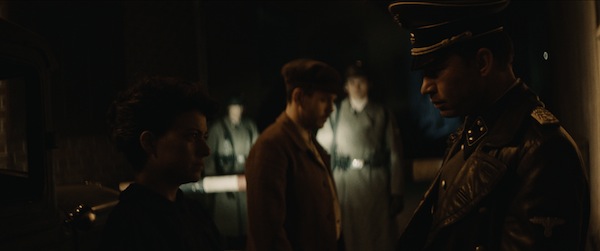
A more serious and nerve-wracking short is the tension-filled American film Alina. For 25 minutes, breathing will be more difficult, as the fate of a three-month-old baby lies in the hands of Alina (played by Alia Shawkat). The non-Jewish woman is part of a group of women (and men, as her brother helps) who are smuggling Jewish children out of the Warsaw Ghetto during the Holocaust.

Inspired by factual events, but fictional, the film opens as Nazi soldiers kick their way into a building and make their way up each floor, searching every room for children, with orders to seize them. Alina must escape from an upper-level apartment with the baby through the bathroom window, using a makeshift rope of tied sheets. She must then meet her brother, make it through a checkpoint and even face Nazi soldiers in her own home, as a Nazi captain accompanies her there from the checkpoint, so convinced is he that she is hiding something from him.

Alina is a multiple-award-winning film for many reasons. And it precedes the fascinating feature-length documentary The Lesson, which sees its Canadian première at Reel 2 Real.

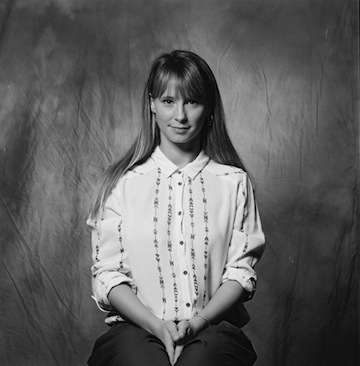
photo - The Lesson director Elena Horn
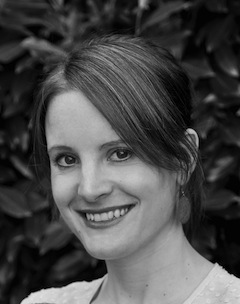
The Lesson director Elena Horn. (image from Reel 2 Real)

Through the lens of German filmmaker Elena Horn, who herself grew up in Fröndenberg and went to Fröndenberg Comprehensive School, The Lesson is a personal look at how students in Germany are taught about the Holocaust. Over a five-year period, Horn followed a handful of students through their classes on the topic, their projects and field trips. She juxtaposes this perspective with archival footage from the 1930s, showing children doing paramilitary exercises, learning about what makes a good German and other propaganda. She also includes current-day nationalism and how some of the students deal with the differences between what they’re being taught in school about the Holocaust and what their families have told them about that period in time.

Horn frames the content in the context of overarching questions such as, could the Holocaust have been initiated by other countries just as easily as in Germany, or is there something inherent about Germany that allowed it to start there? She wonders if history is repeating itself, and she continues to struggle with the question, “What would I have done?” She highlights some of the efforts of those who refused to be bystanders to genocide, and she hopes to inspire some viewers to be courageous if, God forbid, they ever face such a choice.

***

For the full festival schedule and tickets, as well as information on Reel 2 Real’s several youth programs and workshops, visit r2rfestival.org.

Format ImagePosted on April 2, 2021March 31, 2021Author Cynthia RamsayCategories TV & FilmTags animation, anti-racism, Arab-Israeli conflct, courage, education, Elena Horn, entertainment, Holocaust, Israel, movies, Noah Schnapp, peace, Reel 2 Real, Seu Jorge, youth
Anti-racism fundraiser

Anti-racism fundraiser

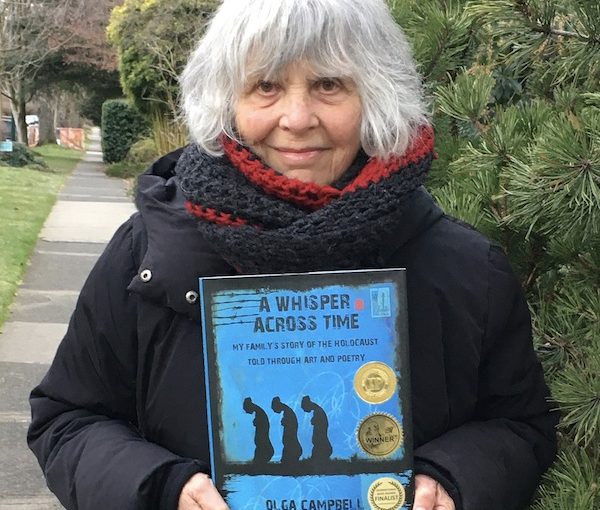
Olga Campbell is raising money for the Vancouver Holocaust Education Centre’s anti-racism programming. (photo from Olga Campbell)

Half of all sales during March of Olga Campbell’s multiple-award-winning A Whisper Across Time: My Family’s Story of the Holocaust Told Through Art and Poetry will be donated to the Vancouver Holocaust Education Centre’s anti-racism programming, engaging youth and teachers in promoting human rights, social justice and genocide awareness. Campbell’s goal is to raise $5,000. Her objective is to raise “concerns about the fragility of democracy and the rise of white nationalism, racism and antisemitism in the world today.”

In A Whisper Across Time, Campbell – whose mother lost all of her family during the Second World War – writes, “This is the story of one family out of millions of families who went through the Holocaust.”

As quoted in the Jewish Independent when the book was published in 2019, “It is ‘the story of survival and death,’ ‘of how trauma of such magnitude is passed from one generation to another to another….’ It is also an ardent call for readers to remember Rwanda, Rohingya, Bosnia, Syria, Afghanistan, Sudan, Iraq, Cambodia.” Campbell notes in the book that, “by the end of 2016, there were 65.6 million refugees, asylum seekers and internally displaced people in the world.” She pleads, “eighty years ago, the world looked away / we must not look away now.” (Read more at jewishindependent.ca/a-story-told-in-art-and-poetry and jewishindependent.ca/whisper-across-time.)

Campbell will be giving away five signed copies of her book. Everyone who wins or buys a book before the end of March will also receive a signed miniature print – images from the book.

Winners of the book giveaway will be announced on March 21, which is the International Day for the Elimination of Racial Discrimination.

To buy the book ($32), visit olgacampbell.com/new-book-whisper-across-time.


Format ImagePosted on March 5, 2021March 4, 2021Author JI staff with information from Olga CampbellCategories BooksTags anti-racism, education, fundraiser, Holocaust, Olga Campbell, philanthropy, tikkun olam, VHEC
Mufti house to be shul

Mufti house to be shul

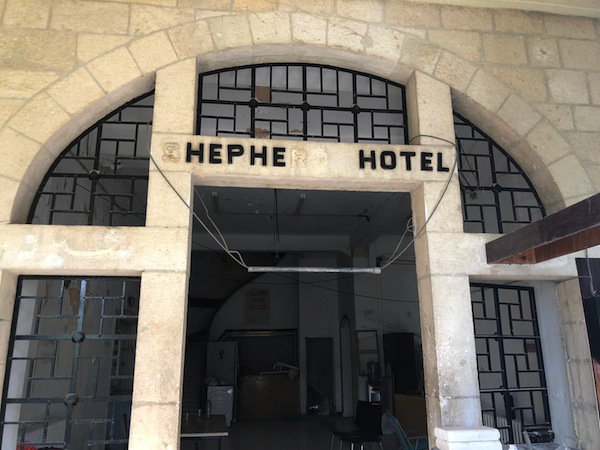
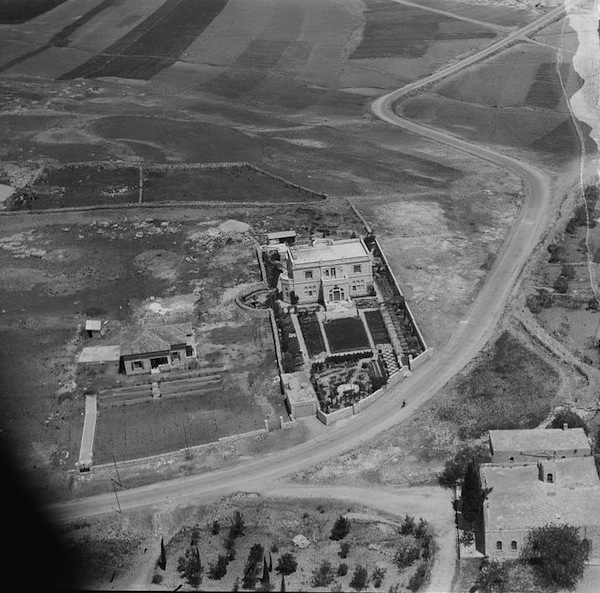
Hajj Amin al-Husseini’s mansion turned into the Shepherd Hotel for a period of time. (photo from Daniel Luria)

Hajj Amin al-Husseini, the mufti of Jerusalem in the 1920s and 1930s, who spent much of the Second World War in Berlin as a Nazi collaborator and war criminal, must be spinning in his grave in Beirut. The landmark mansion he built 88 years ago in affluent Sheikh Jarrah, between the Old City and Mount Scopus, is slated to become a synagogue in a future 56-apartment Jewish neighbourhood in east Jerusalem.

The 500-square-metre manor house, called Qasr al-Mufti (the Mufti’s Palace) in Arabic, today stands derelict at the centre of a largely completed 28-apartment complex which itself lacks an occupancy permit. The reason the new neighbourhood is not being finished – and indeed has not been marketed in the 10 years since demolition and construction began – is that the developers have applied to rezone the 5.2-dunam site to double the number of units to 56, according to Daniel Luria, a spokesman for Ateret Cohanim, which backs the housing project.

Luria was unclear when the rezoning application would be approved. The historic house at the core of the site will be preserved and repurposed for communal needs, including a synagogue and perhaps a daycare centre, he said.

“There is a beautiful poetic justice when you see the house of Hajj Amin al-Husseini crumbling down,” said Luria.

Though al-Husseini built the mansion, he never lived in it. Following the outbreak in 1936 of the Arab Revolt against the British Mandate government, the mufti became a fugitive, hiding in the Old City’s Haram ash-Sharif. When the British attempted to arrest him in 1937, he fled Palestine and the British made do with confiscating his property. The al-Husseini clan owned numerous properties in Jerusalem, among them the Palace Hotel (today the Waldorf Astoria), the Orient House and the villa subsequently turned into the Shepherd Hotel in Sheikh Jarrah on a plot of land known as Karam al-Mufti (the Mufti’s Vineyard), named for al-Husseini.

Among those who did occupy the mansion was his secretary George Antonius (1891-1942), who wrote The Arab Awakening while living there, in 1938. Antonius’s widow, Katy, continued living in the building, which functioned as a salon where wealthy Palestinian Arabs and British officials socialized. (The city’s British sports club had a “No Natives” policy.)

At one of her elegant soirées in 1946, she met Sir Evelyn Barker. The much-decorated general was commanding officer of the British forces in Palestine and Trans-Jordan from 1946 to 1947. The two carried on an affair and exchanged Judeophobic love letters. In April 1947, he wrote her about Jews: “Yes, I loathe the lot – whether they be Zionists or not. Why should we be afraid of saying we hate them. It’s time this damned race knew what we think of them – loathsome people.”

photo - Hajj Amin al-Husseini’s mansion in the Sheikh Jarrah neighbourhood circa 1938
Hajj Amin al-Husseini’s mansion in the Sheikh Jarrah neighbourhood circa 1938. (photo from Daniel Luria)

On April 13, 1948, both Scottish Highlanders garrisoned at the mansion and other British troops stationed at the nearby Police Academy failed to intervene for eight hours when a convoy of doctors and nurses headed to Hadassah Hospital came under fire from Arab guerillas. Seventy-eight Jews, many doctors and nurses, died in the massacre.

Following the War of Independence, the al-Husseini mansion became the Shepherd Hotel in the now-divided and impoverished city. It was eclipsed by the Hotel Jerusalem Intercontinental, today called the Seven Arches, which opened on the Mount of Olives in 1964. After the Six Day War in 1967, when Israel conquered and annexed east Jerusalem, the hotel was taken over by the custodian of absentee property.

In 1985, it was sold to C and M Properties Ltd., owned by Florida bingo hall billionaire Irving Moskowitz (1928-2016), the benefactor of right-wing Israeli settler groups intent on housing Jews in the eastern side of the now united city. Following the zoning of Plan 2591, a request was made on Nov. 6, 2008, to permit the company to build two new residential blocks, including 28 apartments on top of an underground parking lot. In January 2011, the four-storey Shepherd Hotel annex – added on to the mufti’s original mansion – was demolished to make way for the future housing.

Rather than attempt to rezone the site – which adjoins the British consulate – for a higher density at the beginning of the redevelopment process, it was decided to build what was legally permitted and later apply to amend the zoning, Luria explained.

“Ateret Cohanim is not involved in the building project but we have an interest in strengthening Jewish roots in and around the Old City,” he said.

Gil Zohar is a writer and tour guide in Jerusalem.

Format ImagePosted on March 5, 2021March 4, 2021Author Gil ZoharCategories IsraelTags antisemitism, development, Hajj Amin al-Husseini, Holocaust, Israel, Jerusalem
Court verdict on Grabowski

Court verdict on Grabowski

Jan Grabowski (photo from facebook.com/TheCJN)

A Polish court’s ruling that a Canadian Holocaust scholar must apologize for tarnishing the memory of a wartime mayor in Poland continues to reverberate around the world.

The case is being condemned by Jewish organizations and historians as an attack on free academic inquiry. Scholars warn the ruling could further chill an already touchy area of research: the role played by Poles in the murder of Jews in Nazi-occupied Poland.

In a long-awaited ruling on Feb. 9, a civil court in Warsaw ordered two prominent Holocaust scholars to apologize to an elderly woman who claimed they had defamed her late uncle over his wartime actions.

Prof. Jan Grabowski, an historian at the University of Ottawa, and Prof. Barbara Engelking, a sociologist and founder of the Polish Centre for Holocaust Research, were accused of defaming Edward Malinowski, the wartime mayor of Malinowo, a village in northeast Poland, by suggesting in a book that he delivered several dozen Jews to Nazi occupiers.

The professors were ordered to apologize for a passage in Night Without End: The Fate of Jews in Selected Counties of Occupied Poland, a two-volume work they co-edited, which the court said “violated Malinowski’s honour” by “providing inaccurate information.”

The court declined a demand for monetary damages of 100,000 Polish zlotys (about $34,000 Cdn) but ordered the scholars to apologize to Malinowski’s niece, 81-year-old Filomena Leszczynska, who brought the case; publish a statement on the website of the Centre for Holocaust Research; and correct the passage in any future edition.

Leszczynska had argued that her uncle had actually aided Jews and was acquitted of collaboration in 1950.

Grabowski, whose father survived the Holocaust, called the outcome “a sad day for the history of the Holocaust in Poland and beyond Poland. I have no idea what will be the consequences as well as the implications of this trial. But I can say for certain this thing will be studied for a long time by historians,” he told the Globe and Mail.

Prior to the verdict, he warned that, if the lawsuit were successful, “then basically it will mean the end to the independent writing of the history of the Holocaust in Poland.”

The professors were sued under a Polish law allowing for civil action against anyone claiming that the Polish nation or state was responsible for Nazi atrocities. The law was amended in 2018 to drop plans to criminalize the offence.

In her ruling, the judge said the decision “must not have a cooling effect on academic research,” but that is how it is being perceived.

As a senior tenured professor, the verdict, Grabowski conceded in a Postmedia interview from Poland, is “unpleasant. But, imagine you are a 25-year-old graduate student of history. Do you think you’re going to embark upon discovery of difficult history? I don’t think so.”

Grabowski and Engelking said they will appeal the ruling.

Mina Cohn, director of the Centre for Holocaust Education and Scholarship at Carleton University in Ottawa, called the campaign against Grabowski and Engelking “ugly.”

“The Polish government’s attempt to discredit them, and to silence and distort the historical facts of the Holocaust in Poland is appalling,” Cohn told The CJN. “It endangers the basic right of the future freedom of historical research of the Holocaust in that country.”

She said that, as daughter and granddaughter of Holocaust survivors with roots in Poland, “I find this blatant attempt by the Polish government to reject the reality of inherent antisemitism within Polish society before and during the Holocaust, and to discredit survivors’ testimonies, very offensive.”

For Prof. Piotr Wrobel, a specialist in Polish history at the University of Toronto’s Munk School of Global Affairs, the case is an example of the current Polish government’s attempt to control the historical record.

“They try to shape the ‘official’ version and persecute people who do not share [it],” he told The CJN. “This is very sad.”

It was “very clearly” the intention of those behind the lawsuit “to freeze scholarly research into the Holocaust. This was supposed to be a warning. Young people should remember this. If your opinions [and] historical interpretations are different than the official ones, then do not touch the Holocaust,” Wrobel said. “There is a choice between comfort and truth.”

In a statement on Feb. 10, the University of Ottawa offered its “unwavering support” to Grabowski and his “widely respected” Holocaust research. The university called the verdict “unjust.”

“Prof. Grabowski’s critical examination of the fate of Polish Jews during World War II shows how knowledge of the past remains vitally relevant today,” said university president Jacques Frémont. “The impact his work has had in Poland, and the censorious reaction it has generated, demonstrates this truth.”

The university “emphatically supports” Grabowski’s “right to pursue historical inquiry unencumbered by state pressure, free from legal sanction and without fear of extrajudicial attack.”

In Israel, the Yad Vashem Holocaust memorial and museum decried the ruling as “an attack on the effort to achieve a full and balanced picture of the history of the Holocaust.”

Even before the verdict, David Silberklang, a senior Holocaust historian in Israel, said the libel case intended for the two scholars to be “sued into submission.”

The decision “damages an open and honest coming to terms with the past,” said Gideon Taylor, president of the Conference on Jewish Material Claims Against Germany, which sponsors historical research on the Holocaust.

Taylor said Poland “must encourage open inquiry into its history, both the positive and the negative aspects.”

Canadian historian Frank Bialystok, who has written extensively about the Holocaust, sees the verdict against Grabowski and Engelking as a flipping of political extremes in Poland.

The murder of Jews in Poland, even after the war, was documented at the time. “This research was acceptable during the communist era as a weapon against nationalism,” said Bialystok. Now, the two professors are being “vilified” by the nationalist camp.

Friends of Simon Wiesenthal Centre said the ruling could have “a devastating impact on Holocaust research and education.” The organization said it is reaching out to senior government leaders, urging them to speak out against “Holocaust distortion in Poland.”

The American Historical Association went so far as to write Polish President Andrzej Duda, saying “a legal procedure is not the place to mediate historical debates” and urged Polish leaders to “uphold the rights of historians to investigate the past without legal harassment and with no fear of reprisals for making public their historical- and evidence-based findings.”

In 2018, Grabowski announced he was suing the government-funded group that backed Leszczynska’s libel case for allegedly libeling him. He claimed that the ultranationalist Polish League Against Defamation had itself defamed him by questioning his findings about the complicity of Poles in the wartime murder of Jews.


This article originally was published on facebook.com/TheCJN. For more on Prof. Jan Grabowski, see jewishindependent.ca/revealing-truth-elicits-threats.

Format ImagePosted on February 26, 2021February 24, 2021Author Ron Csillag The CJNCategories WorldTags antisemitism, Filomena Leszczynska, free speech, history, Holocaust, Jan Grabowski, Poland

A childhood spent in hiding

Alex Buckman, a child survivor of the Holocaust, shared the story of his harrowing childhood years during a moving online event Jan. 27. The program, marking International Holocaust Remembrance Day, was the second annual such event organized by the Bayit in Richmond.

Buckman is the president of the Vancouver Child Survivors Group and has shared his experiences with thousands of students as a Vancouver Holocaust Education Centre (VHEC) survivor speaker.

“I was born on Oct. 31, 1939, in Brussels, Belgium,” he told more than 100 people who attended virtually. “My family was Jewish. I was 7 months old when Nazi Germany invaded Belgium on May 10, 1940. Everything changed for Jewish people in Belgium.”

He recalled how, at the age of 4, he was escorted by a strange woman, as they traveled through the night, sleeping in forests and foraging for food. After days of walking, they arrived at an orphanage. He would only discover years later that his parents were sent to Auschwitz.

At the orphanage, he met up with his cousin Annie but was told that they were to refer to each other as siblings.

When Nazis would come for inspections, Jewish boys were hastily sent into a cellar. “They told us again to be very quiet, then they shut the two wooden doors, replaced the carpet and furniture,” he said. “In the cellar, we were very cold and scared and we peed our pants. We saw large things running around us. They told us later that they were rats. The first time this happened I was 4 years old…. It seemed like we were in that cellar for a very long time. Soon, we heard every footstep over our heads. We heard men screaming loudly in a language that we did not understand. We were scared. We did not know what was going on. They told us that we should not cry but we were scared children so we cried.

“Suddenly, we heard the pushing of the furniture and they opened two wooden doors and we saw the light,” he continued. “They asked us to come out but we did not want to go out. We told them that we had peed our pants [so] they promised that they would give us a warm bath. This happened too many times from the age of 4 to 6-and-a-half.”

Annie’s mother, Alex’s Aunt Becky, was sent to the women’s concentration camp Ravensbrück. When each new train of prisoners would arrive, Becky would run through the crowds of arriving women calling the name of her sister, Devora.

“A young girl came close to Becky and said, I knew Devora but she is dead,” Buckman recounted. “Becky asked her: how did you know Devora? The young girl replied, I am from Belgium and I used to babysit her son, Alex. Becky thanked her and cried. Becky looked at the sky and prayed. She said, if I survive this, one day, and find Alex, I will raise him as my son.”

When liberation finally did come, it took time for the surviving family to find one another. Alex and Annie waited in the orphanage as one child after another was claimed by family. Alex tried to reassure his cousin, whom he believed to be his sister.

“I would tell her that our parents would come soon,” he said, “but, like Annie, I did not know what happened to our parents and why they were not coming for us. The orphanage kept all the children for another six months, hoping that our parents would come and pick us up. But no one came for us.”

The remaining children were transferred to a Red Cross facility in Brussels. Eventually, they were reunited with Annie’s parents, who Alex assumed were also his own. It was another cousin who, in an act of revenge for a childhood spat, blurted out the truth to Alex that his parents were dead.

Buckman went on to share his experience in April 2010 as a survivor-participant in the March of the Living, a program that brings Jewish youth to Poland and then on to Israel to explore firsthand the history of the Holocaust and its survivors who helped build Israel.

“It is almost impossible to describe the feeling I felt entering that camp, Auschwitz,” Buckman said. “On both sides of the camp there were shoes. As I passed the shoes, I caressed the little pair of shoes. The students were crying, but we had to continue.… We saw a mountain of glasses all tangled together.

“We finally walked in a shower room and I closed my eyes,” he said. “I was thinking of my mother and her sister.… We were told that the women panicked when they did not see the water come down from the showers. They ran toward the walls and scratched them with their fingernails. When I heard this, I turned and caressed the wall, feeling the scratches made by Jewish women prisoners. I wondered, were those scratches made by my mother? I would never know.

“In that room, I finally said, au revoir, Maman.”

At the commemoration, Richmond Mayor Malcolm Brodie, accompanied by four city councilors, spoke and read a proclamation.

All four Richmond MLAs were present, with Kelley Greene, MLA for Richmond-Steveston, reading a proclamation from the premier. Finance Minister Selina Robinson also addressed the event, as did Steveston-Richmond East Member of Parliament Kenny Chiu, who spoke of his own visit to Auschwitz.

The Bayit’s Rabbi Levi Varnai noted that this year’s event, which represents the 76th anniversary of the liberation of Auschwitz-Birkenau, also fell on erev Tu b’Shevat, the new year of the trees.

“The marriage of these two days is chilling,” said the rabbi. “Man is compared to the trees of the field, our tradition tells us. The six million souls murdered in the Holocaust were like individual human trees, each had the potential to grow, to flourish, and to bear fruit of the generations. They were obliterated, but one thing remained that can never be destroyed: their roots.

“The roots of the Jews who perished in the Holocaust goes back 3,300 years to Mount Sinai. What gives Holocaust survivors the sustenance to keep going? What motivates future generations of Jews to double down on life? It’s not just the memory of those who passed away, it’s also the memories of hundreds of generations who came before them, the generations who struggled and prevailed against all odds…. As we remember today the six million souls who left us, we can also remember the millions of souls who came before them and the millions who will come after.

“Today, we mourn. Tomorrow, we plant and renew,” said Varnai.

The Bayit’s International Holocaust Remembrance Day program was co-presented with partners including the Centre for Israel and Jewish Affairs, the VHEC, the Kehila Society of Richmond and the Jewish Federation of Greater Vancouver. The program was emceed by Bayit president Keith Liedtke.

Earlier in the day, a national virtual commemoration took place, organized by the Friends of the Simon Wiesenthal Centre in partnership with the VHEC and other groups across Canada. Survivors, including Vancouver’s Serge Haber, lit memorial candles. Heather Dune Macadam, author of the book 999: The Extraordinary Young Women of the First Official Jewish Transport to Auschwitz, spoke with Michael Berenbaum, a writer and professor and director of the Sigi Ziering Institute: Exploring the Ethical and Religious Implications of the Holocaust.

Posted on February 12, 2021February 11, 2021Author Pat JohnsonCategories LocalTags Alex Buckman, child survivor, CIJA, Holocaust, IHRD, International Holocaust Remembrance Day, Jewish Federation, Kehila Society, Serge Haber, VHEC
Protecting children’s rights

Protecting children’s rights

Dr. Jennifer Charlesworth, British Columbia’s representative for children and youth, presented the Dean’s Distinguished Lecture and the Janusz Korczak Medal for Children’s Rights Advocacy on Jan. 27. (photo from the Office of the Representative for Children and Youth)

The University of British Columbia’s faculty of education presented the Dean’s Distinguished Lecture and the Janusz Korczak Medal for Children’s Rights Advocacy on Jan. 27, International Holocaust Remembrance Day. Dr. Jennifer Charlesworth, British Columbia’s special representative for children and youth, gave the talk and the medal was awarded to Dr. Kimberly Schonert-Reichl, an applied development psychologist at the University of Illinois, Chicago.

Born Henryk Goldszmidt, Janusz Korczak (1878-1942) was a Polish-Jewish pediatrician, journalist and educator. His advocacy for children is still recognized today through his writings, which served as a basis of the United Nations Convention on the Rights of the Child.

Prior to the Second World War, Korczak was the director of an orphanage in Warsaw. Although he was offered freedom during the Holocaust, he chose to stay with his orphans when they were forced to board a train to the Treblinka extermination camp in 1942. He, members of his staff and more than 200 children were murdered.

Korczak considered children as partners, equal to adults, insisting that there are no human rights without children’s rights. His pioneering work and enduring legacy were felt throughout the recent event. In the words of B.C. Lt.-Gov. Janet Austen, who introduced the main speaker, “Korczak was an extraordinary man who reimagined the relationship between children and adults. A man of great personal courage and a revolutionary thinker, he understood, whoever saves one child, saves the whole world.”

Charlesworth began her talk on Korczak’s connection to the contemporary era by encouraging the Zoom audience to “think of how far ahead of his times Korczak was in suggesting that each child must be respected. He was rejecting the ideas of his time. His commitment to children is awe-inspiring.”

According to Charlesworth, the first indisputable right of a child is to articulate their own thoughts. Those working with children need to nurture the capacity to listen and understand, to be curious and receptive. Further, practitioners have “to place child’s rights at the centre of their practice, to have both ears open to a child’s voice.” Too often, she said, the individual voices of children can be lost in operational systems.

Charlesworth spoke about advocacy and highlighted the fact that those who work with children will have a significant impact on their lives. Korczak’s advocacy for children, she said, “set the bar very high.”

Adults should want to help children realize their potential, and the relationship between adults and children should never result in the appearance of a struggle for rights. Charlesworth emphasized that, without prioritizing youth voices, there would be no Greta Thunberg, the Swedish environmental activist, or Katherine McParland, co-founder of the B.C. Coalition to End Youth Homelessness.

“We are living in a time of great change and uncertainty. Children and youth sense this, too, and we stand to learn a lot from them as well,” Charlesworth said.

Writer and child survivor Lillian Boraks-Nemetz, a board member of the Janusz Korczak Association of Canada (JKAC), which partnered on the event, drew further on the prescience of Korczak’s work and its continued importance. “Today’s children do not have the same sense of normalcy and routine as before COVID-19,” she said. “At times like these, my thoughts turn to Korczak and a child’s right to education, respect and love.”

Afterwards, JKAC president Jerry Nussbaum and Charlesworth presented this year’s award to Schonert-Reichl, an expert on social and emotional learning, whose nearly four-decade career has been dedicated to children’s rights and well-being. Formerly an educator in British Columbia, she was at the forefront of the province’s revitalized education curriculum, which is often heralded internationally for its advancements in social and emotional learning.

“I am so honoured,” she said upon receiving the award. “And to be in a group where so many are advocating for children’s rights.”

The evening also saw the giving of the Janusz Korczak Graduate Scholarship in Children’s Rights and Indigenous Education to Cayley Burton, a third-year master of arts student in early childhood education at UBC and an instructor in the Indigenous Early Childhood Education Program at Native Education College. Her thesis delves into gender-inclusive teaching practices for preschool children through LGBTQ+ picture books.

“It’s an inspiring, overwhelming honour to have Dr. Korczak’s name associated with the advocacy work that I do alongside and on behalf of young children who are marginalized in Canada,” Burton said.

Sam Margolis has written for the Globe and Mail, the National Post, UPI and MSNBC.

Format ImagePosted on February 12, 2021February 12, 2021Author Sam MargolisCategories LocalTags children, children's rights, health, Holocaust, human rights, Janusz Korczak, Janusz Korczak Association, Jennifer Charlesworth, Kimberly Schonert-Reichl, Lillian Boraks-Nemetz, survivor, UBC, University of British Columbia

Posts pagination

Previous page Page 1 … Page 13 Page 14 Page 15 … Page 44 Next page
Proudly powered by WordPress