Olive trees have long history

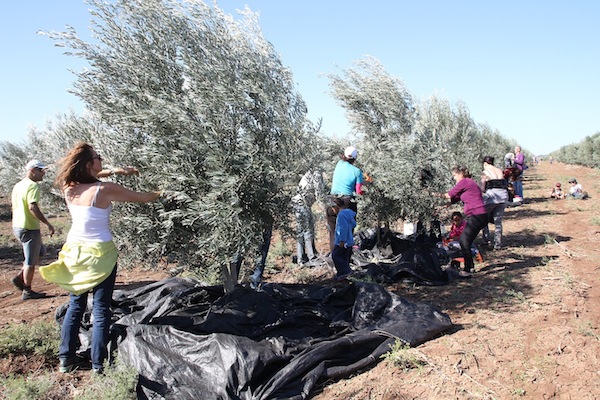
Volunteers help pick olives on a windy day in the fair trade grove of Emek Yizrael. (photo from Yoram Ron)

For thousands of years, olive trees have grown in Israel. Neolithic pottery containing olive pits and remnants of olives have been discovered in Israel’s Mount Carmel region, proving that early people produced olive oil by pulverizing the ripe olives in small pots. Some ancient trees reportedly still exist – in the Palestinian village of al-Walaja, residents claim they have the world’s oldest olive tree, supposedly 5,000 years old. More realistic is Beit Jala’s claim to an 800-year-old olive tree.

Olives for making oil are picked around December or January, so it is probably no coincidence that Chanukah comes so close to the picking season. As you know, Chanukah’s miracle revolves around the story that a very limited amount of olive oil burned in the Temple menorah for eight nights.

While the olive branch is a symbol of peace, the olive harvest in both Israel and the Palestinian territories is a challenging time. For Palestinian olive growers, extremist settlers and Israeli government policy have turned their harvest into an uncomfortable, if not a physically and economically dangerous event. Documented cases show some settlers assaulting Palestinian farmers – threatening them, driving them off their own land, physically attacking them or throwing stones at them. Sometimes, settlers vandalize Palestinian vehicles and damage farming equipment. In other cases, settlers jump-start the harvest, stealing the fruit from hundreds of trees. In the saddest of cases, settlers vandalized hundreds upon hundreds of Palestinian olive trees, in what appears to be a gross violation of Deuteronomy’s 20:19 bal tashchit precept. In this law, we may not uproot or cut down a fruit tree if we do not have an acceptable reason to do so. In the early part of last year’s harvest, the Office for Coordination of Humanitarian Affairs reported that 25 Palestinians were injured, more than 1,000 olive trees were burnt or otherwise damaged and large amounts of produce were stolen.

Since the construction of the separation barrier, some Palestinian olive growers have ended up with their groves located on the other side of the barrier and farmers must obtain special permits and go through special gates to get to their trees. The B’Tselem Organization has documented situations in which Israeli soldiers have blocked the access gates or held farmers up, and there have been reports that soldiers have used anti-riot material on the growers.

In a few cases, the separation between olive groves and homes means that growers have to travel some 25 kilometres round trip. Moreover, the growers are given fixed times to get to their trees and, sometimes, the periods available are not long enough to finish all the picking. Related, Palestinians are sometimes put into a situation in which they have to pick their fruit while the olives are still strongly attached to the branches. Olive picking is largely a manual procedure, so, to dislodge the unripened olives, growers either hit the trees with a rod or shake the trees very hard. This can result in damage to both the trees and the olives.
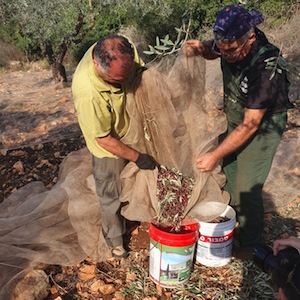
photo - Two men loading freshly picked olives in the organic grove of the Galilee’s Kfar Deir Hanna, November 2020
Two men loading freshly picked olives in the organic grove of the Galilee’s Kfar Deir Hanna, November 2020. (photo by Itiel Zion)

The current pandemic has caused financial havoc all over the world, including in Israel. This harvest season, Jewish Israeli olive growers have had tons of olives stolen. In the Emek Yizrael area, the Border Police found about 10 tons of olives in a nearby sheep pen. The olives had already been bagged and the gathering containers were standing to the side. The alleged thieves live in Zarzir, a village some 10 kilometres from Nazareth. Shomer Hachadash (the New Guard) tries to prevent these incidents using dogs and heat-sensing drones for nighttime surveillance. Some very bold olive thieves have even been spotted in daylight hours.

Despite this gloomy picture, however, there are promising things happening in Israel’s olive industry. Kfar Kanna’s Sindyanna is an olive oil producer. The Galilee operation is a certified fair trade establishment. In addition, it is a nonprofit organization with strong social and political commitments. Their olive oil bottles proudly say that the oil is produced by Jewish and Arab women in Israel.

Sindyanna aims to improve the working conditions and livelihoods of local Arab women, a clearly marginalized group. For example, Sindyanna provides employment training for Arab women. On the political level, Sindyanna is committed to inter-religious understanding by contracting Muslim, Jewish and Christian women. Moreover, the growers who sell their olives to Sindyanna, like the population of the Galilee itself, are a mix of ethnic groups.

Hadas Lahav, Sindyanna’s chief executive officer, said the company strongly affirms sustainable farming. Over the years, it has built strong connections with local farmers, buying olive oil directly from about 100 individual farmers and large family groups. Some of the farmers are organized into large family companies, like Al-Juzur’s seven families of the Younis clan. In Deir Hanna, the 2,500 organic olive trees belong to the Hussein family. In the Birya Forest, there are 10,000 organic olive trees maintained by Hussein Hib.

In the Jezreel Valley, there is a non-organic grove that belongs to Sindyanna in cooperation with the landowners, the Abu Hatum family from Yafi’a. In Iksal, the non-organic groves belong to the Dawawsha family. In Arabeh, the non-organic olive groves belong to the Khatib family and, at Moshav HaYogev, they belong to the Ashush family.
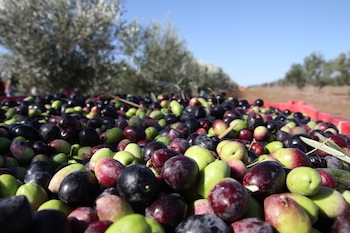
photo - Close-up of freshly picked olives in Sindyanna’s fair trade grove in Emek Yizrael
Close-up of freshly picked olives in Sindyanna’s fair trade grove in Emek Yizrael. (photo from Yoram Ron)

As Lahav pointed out, with olives, there are good years and less good years. The 2020 harvest was significantly smaller than the 2019 harvest. In a way, it was fortuitous that 2020 produced less fruit, as, with COVID-19, few permits were given to seasonal pickers entering Israel from the West Bank.

The olives picked for Sindyanna’s products are Coratina (this olive tree is highly adaptable and produces abundantly in hot dry climates, including rocky soils), Barnea (this olive was bred in Israel for oil production, but is also used for green or black table olives) and Souri (olives that are native to Israel and have been the major variety cultivated traditionally under rain-fed conditions in northern Israel). On average, in irrigated groves, a tree produces five kilograms of olive oil and, in a non-irrigated grove, a tree produces three kilograms of olive oil. The olive oil is kosher.

Here are some factoids about Sindyanna. Many of us are familiar with Dr. Bronner’s soaps, but did you know that Sindyanna of the Galilee’s organic olive oil is an essential ingredient in Dr. Bronner’s Magic Pure-Castile Soaps? KKL-JNF is also involved with Sindyanna of the Galilee – in KKL-JNF’s Birya Forest, the organic olive grove was once part of the now-defunct Qabba’a village. Not too long ago, another organic grove in Wadi Ara (planted on a former Israeli army firing range) was threatened by the construction of high-tension wires; following the protests of local farmers and the village council, the course of the power line was diverted.

Sindyanna of the Galilee sells its olive oil on Amazon and, this year, it will start selling its olive oil on select Canadian websites and in certain food stores.

Deborah Rubin Fields is an Israel-based features writer. She is also the author of Take a Peek Inside: A Child’s Guide to Radiology Exams, published in English, Hebrew and Arabic.
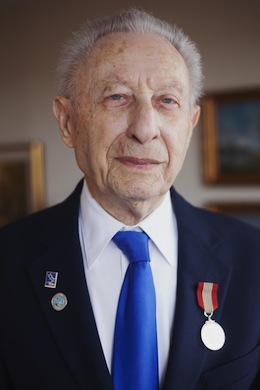
Fruits for the holiday

The holiday of Chamisha Asar b’Shevat or Tu b’Shevat is not mentioned in the Torah but makes its first appearance in the Talmud, where it is called Rosh Hashanah l’Ilan (New Year of the Tree).

Jewish literature of the sixth to 11th centuries identifies Tu b’Shevat as the day on which the fate of the trees and fruit is decided. The holiday gets its name from when it occurs. “Tu” is an acronym for the Hebrew letter tet, which in the Hebrew system of counting is nine, and the letter vav, which is six, thus adding up to 15, the day on which the holiday falls in the month of Shevat.

The date was chosen when the rabbinic schools of Hillel and Shammai (from the time of the Second Temple) argued about the dates. Hillel said it fell on the 15th of Shevat; Shammai said it began on the first. Hillel’s opinion prevailed because it was thought that, by the later date, the winter rains in Israel were almost over.

Tu b’Shevat links Jews to the land of Eretz Yisrael. In the time of the Second Temple, on the 15th of Shevat, Jewish farmers would estimate their obligatory tithes for tax collectors, as well as other contributions that Jewish law required. In effect, Tu b’Shevat was the beginning of the new fiscal year.

Part of the celebration is a seder with certain foods.

In her book The Jewish Holiday Cookbook, Gloria Kaufer Greene mentions that the drinking of four cups of wine at the seder symbolizes the changing of seasons. She suggests that the first cup is chilled, dry, white wine, to symbolize winter. The second cup of wine is pale, perhaps a rosé, and signifies spring and the early thaw. The third cup of wine is deeply coloured, like a dark rose, and represents the late spring and the blossoming trees. The fourth cup of wine is rich and red and stands for the fertility of summer.

In between drinking, one eats fruit in order of “ascending spirituality.” After the first cup of wine, one eats fruit with inedible coverings, like almonds, avocado, banana or melon, to represent the body covering the soul. After the second cup, one eats fruit with pits, such as plum, prune, date, apricot, olive or carob, to symbolize the heart being protected. After the third cup of wine, one eats fruit that can be eaten in its entirety, such as berry, apple, pear or fig, because they are closest to the pure spiritual creation.

In Encyclopedia of Jewish Food, the late Rabbi Gil Marks lists different ethnic dishes for the holiday, including borleves, Hungarian wine soup; salata latsheen, Moroccan orange salad; dimlama, Bulgarian vegetable and fruit stew; savo, Bukharian baked rice and fruit; gersht un shveml, Ashkenazi barley with mushrooms, fruit strudels and fruit kugels; and schnitzelkloese, German fried dumplings with fruit. Food customs associated with Tu b’Shevat are fruits and nuts connected to Eretz Yisrael, such as the seven species mentioned in Deuteronomy 8:7-8 – barley, wheat, figs, dates, grapes, olives and pomegranates.

Here are a couple of my fruit recipes. The first is one that a friend gave me about 40 years ago.

CREAMY FRUIT SALAD
6-8 servings

2-3 cut up apples
1-2 peeled, cut-up oranges
2-3 cut-up bananas
1/4 cup coconut
1/4 cup chopped nuts
3/8 cup sour cream or 3/4 cup lemon yogurt
1 1/2 tbsp sugar or whipped cream
1/8 cup orange juice
3/8 cup vanilla yogurt
raisins (optional)

Combine apples, orange and bananas in a bowl. Add coconut and nuts. Combine sour cream or lemon yogurt, sugar or whipped cream, orange juice and vanilla yogurt. Pour over fruit and refrigerate.

I have altered this recipe at times and use pareve whipping cream to make it pareve, leaving out the sour cream/yogurt.

HOT SPICED FRUIT
4 servings

6 peaches, pears or apricots, halved
1/2 cup red wine
2 tbsp sugar
dash cloves
1/8 tsp cinnamon
dash cardamom
3/4 tsp grated orange peel

Combine wine, sugar, cloves, cinnamon, cardamom and orange peel in a saucepan. Add fruit and cook 15-20 minutes. Drain and reserve liquid. Chill fruit. Serve with vanilla ice cream. Spoon sauce on top.

Sybil Kaplan is a journalist, lecturer, book reviewer and food writer in Jerusalem. She created and leads the weekly English-language Shuk Walks in Machane Yehuda, she has compiled and edited nine kosher cookbooks, and is the author of Witness to History: Ten Years as a Woman Journalist in Israel.

Honouring history amid virus

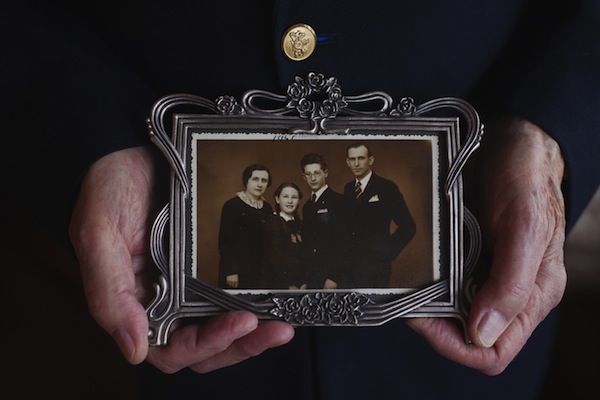
Leslie Vértes shares a family photograph. Vértes is one of the survivors featured in the Montreal Holocaust Museum exhibit Witnesses to History, Keepers of Memory. (photo from Montreal Holocaust Museum)

Collective memory has always played an important role in Jewish life and traditions. For thousands of years, Jews have celebrated holidays, mourned loss and memorialized history together as a people. And, most often, we have done so in person.

We say Kaddish as a community, celebrate a bris among a gathering of peers and family and come together every year to retell over dinner the story of the exodus of the Jewish people from ancient Egypt. The 20th-century philosopher and historian Isaiah Berlin noted, “All Jews who are at all conscious of their identity as Jews are steeped in history.” The late Lord Rabbi Jonathan Sacks expressed it another way: “Memory for Jews is a religious obligation.”

This past year has presented huge challenges for those institutions that strive to educate the public about history in general and, specifically, the Holocaust. During the pandemic, many museums and educational centres have been forced to choose alternative venues to connect with their members and the larger community. On Yom Hashoah and Kristallnacht, organizations across the world turned to recordings and interactive discussions in their effort to remind people that the Shoah’s messages remain relevant, even if their institution’s doors were temporarily closed.

Finding ways to continue that education and connection on a daily basis has required some creative thinking, said Sarah Fogg, who serves as the head of marketing, communications and PR for the Montreal Holocaust Museum. The museum, which was founded by Holocaust survivors, had been planning to launch a special photographic exhibit this year, highlighting the lives and wartime experiences of 30 survivors from the Montreal area.

“[The exhibit] was something that we had dreamt of for a really long time,” said Fogg. The museum had planned to narrate each of the stories visually using a triptych of personal images and the sharing of an artifact that the survivors had preserved: a father’s cap that he was required to wear at Auschwitz, a woman’s prayer book, an irreplaceable but tattered passport to freedom. But how could such stories be presented in the midst of a pandemic?

“The pandemic completely forced us to change, to rethink, to overhaul the plan we had for the exhibit,” said Fogg, who admitted there was a sense of urgency to the exhibit’s launch. Some of the speakers are now in their 90s and have already retired as volunteers. Plus, 2020 marked the 75th anniversary of the liberation of the concentration camps (and the 41st anniversary of the museum’s founding). This year, 2020, was the ideal time to launch the exhibit.

photo - Leslie Vértes
Leslie Vértes (photo from Montreal Holocaust Museum)

“[The online presentation] is the result of many brainstorming sessions where we discussed … how we could present this exhibit in a way that is different to other portrait exhibits that have happened around the world,” said Fogg. “And so, the ‘triptych’ as we have been calling it, the three photos, was really the result of wanting to showcase more than one portrait of the survivor and really wanting to showcase their uniqueness and their personalities.”

Fogg said it was in the middle of one of the photography sessions that the staff suddenly realized what was needed to translate this photographic essay to an online presentation. It was the survivors’ own accounts of why their personal artifacts held irreplaceable significance. It was also the story of how they had survived and how it had transformed them, once they began their new lives in Canada.

“So often when we talk about the stories of Holocaust survivors, the narrative tends to end when they leave Europe,” Fogg said. “But there is so much more to talk about.” Many of the survivors, who were children or young adults when they arrived in Montreal, went on to raise a family. All became volunteer speakers through the museum and other organizations in order to educate people about the Holocaust. Some became published authors and teachers. All, Fogg said, became inspiring leaders of their community.

photo - Margaret Newman Kaufman with her wedding photograph
Margaret Newman Kaufman with her wedding photograph. (photo from Montreal Holocaust Museum)

“If I had to summarize what the lesson or the inspiration would be for viewers, it’s resilience. I mean, not only are they incredible survivors who escaped the Holocaust, but they come to Canada, they build new lives, they start careers, they make families and they find happiness again. They are this embodiment of resilience.”

Taken on their own, the artifacts tell dozens of unique and often heart-rending stories about the Holocaust. But they are also testimony to the survivors’ remarkable ability to draw meaning, purpose and even beauty from the darkest of memories. Sarah Engelhard’s black-and-white snapshot tells the story of her first Passover in Canada. Ted Bolgar’s touching account gives renewed significance to friendship and the value of a precious tea set. Marguerite Elias Quddus’s last memory of her father, as he was arrested, is embodied in a bitter-sweet tale about his forgotten eyeglasses.

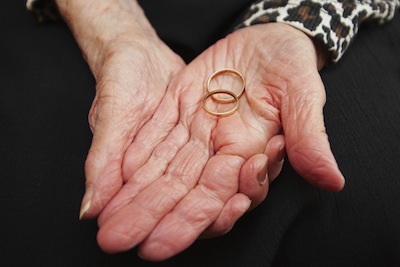
photo - Margaret Newman Kaufman displays her wedding rings
Margaret Newman Kaufman displays her wedding rings. (photo from Montreal Holocaust Museum)

Following the Second World War, Montreal became a second home for thousands of Holocaust survivors, some who saw it as a temporary port of refuge, and many who stayed to make it their home. The museum was opened in 1979 by members of the Association of Survivors of Nazi Oppression as a means to educating the public about the dangers of antisemitism and racism. More than four decades after its founding, the museum’s legacy still continues to be relevant, Fogg said. And, like the testimonies and artifacts that illumine these stories, the message it carries is an intensely human and important one.

“You know, we’re not talking about numbers or figures, we’re talking about Ted, Leslie, Liselotte and Daisy. These are real people that we love and care about and they are real people whose families and lives were torn apart by the Holocaust,” said Fogg. “And so, I think we can make a parallel to situations today, where real people are continuing to be impacted and devastated by genocide.

“I think what’s beautiful about the exhibit and working with survivors is that they are real people. What better way to understand history and especially difficult, complex and painful history than to hear it from such wonderful and caring and generous individuals,” she said. “They are the best educators and we are so lucky to learn from them, and we’re so lucky that they wanted to be a part of this exhibit.”

The museum’s effort to reach virtual audiences during the pandemic does appear to be working. Fogg said that, since its launch in September, the exhibit has not only been seen by viewers around the world, but has won three international awards for its visual presentation and design. The pandemic may have temporarily limited the world’s physical ability to connect, but it hasn’t stopped innovation or the heartfelt effort to care about others.

To see the Montreal Holocaust Museum’s exhibit, Witness to History, Keepers of Memory, visit witnessestohistory.museeholocauste.ca.

***

Montreal Jewish history in brief

The first Jews in the Montreal area were Sephardim serving in a British regiment. One was Aaron Hart, whose son would later be elected to the legislature to represent the Trois-Rivières area.

By the early 19th century, Ashkenazim from Eastern Europe had begun to trickle in and, by the early 20th century, more than 7,000 Jews had made their way to Montreal, most fleeing antisemitism in the Russian Empire and Europe. Many would arrive to find that prejudice and discriminatory policies weren’t exclusive to distant geography. The election of Ezekiel Hart to the legislature would later inspire a resolution to ban Jews from serving in office. It take another 60 years before a law would be enacted that would give Jews in Lower Canada the right to self-representation.

By the 1930s, Montreal’s Jewish population had increased to 60,000, making it the largest Jewish hub in the country. Many worked in the growing garment industry or owned stores and restaurants in the city. A smaller number moved to the country to become farmers and use skills they brought with them from the old country.

Distrust toward Jews and the growing number of Jewish refugees looking desperately for a new home before and after the Holocaust made immigration to Canada virtually impossible in the early 1940s. It took the efforts of organizations like the Canadian Jewish Congress to push for changes to immigration laws and open doors to refugee families. By the early 1950s, another 9,000 Jewish refugees eventually made their way to Montreal’s port. By the 1970s, those numbers had swelled again, reaching close to 120,000.

Today Montreal’s Jewish community is much smaller, for many reasons, including out-migration from the 1970s to 1990s. But the early Jewish pioneers, those who arrived in Montreal in the 18th and 19th centuries, are not only credited with building new businesses and opportunities for a growing city, but for planting the seeds for Canada’s diverse Jewish community.

Jan Lees articles and blog posts have been published in B’nai B’rith Magazine, Voices of Conservative and Masorti Judaism, Times of Israel, as well as a number of business, environmental and travel publications. Her blog can be found at multiculturaljew.polestarpassages.com.

Complexities of Poland’s past

Andrzej Mańkowski, Poland’s consul-general in Vancouver, shared some reflections on his country’s history with the Jewish Independent, including about the Ładoś Group, which tried to help Jews escape the Nazis by the issuing of fake passports. (photo from Andrzej Mańkowski)

The wartime actions of Poland and its people provide a prime example of the human capacity for good and evil. Many Poles today proudly point out that there are more of their compatriots recognized in Yad Vashem’s Garden of the Righteous Among the Nations than there are heroes of any other nationality. By contrast, the work of Polish-Canadian historian Jan Grabowski and a team of researchers in Poland chronicles in great detail the collaboration by Polish officials and ordinary citizens in assisting the Nazis in the goal of executing the “Final Solution” in that country.

Poland’s government prefers to focus on the more positive fact. So sensitive and contentious is the history that, in 2018, Poland passed – then, in the face of international outrage, rescinded – a law that criminalized expressions of Polish complicity in the Holocaust. At the time, Israel’s President Reuven Rivlin acknowledged that many Poles had aided Jews during the war era, but also that “Poland and Poles had a hand in the extermination” of Jews during the Holocaust.

Poland’s consul-general in Vancouver spoke to the Jewish Independent last week and shared some personal reflections on his country’s history – including how his own grandfather was murdered in Auschwitz.

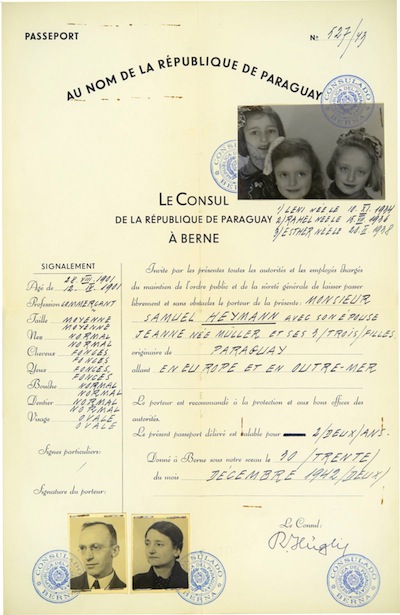
Andrzej Mańkowski wanted readers of the Independent to know of a recently discovered story of a group of Polish diplomats in Switzerland who provided faked passports to help Jews flee Europe.

Called the Ładoś Group, after Aleksander Ładoś, the Polish envoy in Bern from 1940 to 1945, the six individuals included four Polish diplomats, one of whom was Jewish, and two representatives of Jewish organizations that conspired with the officials. The RELICO Assistance Committee for the Jewish Victims of the War, established by the World Jewish Congress, and the Agudat Yisrael worked with Ładoś and his colleagues.

In addition to Ładoś himself, three other Polish diplomats were members of the group: Stefan Ryniewicz, Konstanty Rokicki and Juliusz Kühl. The two members of Jewish organizations in Switzerland who rounded out the group were Abraham Silberschein of RELICO and Chaim Eiss of Agudath Israel.

Beginning in 1941 (or possibly earlier) until the end of 1943, the six men illegally purchased passports and citizenship certificates from Latin American countries, primarily Paraguay. The documents were sent to Jews in nations under German occupation, where possessing them increased chances of survival.

“Many of those passports came too late to save people,” Mańkowski said. “The recipients or the holders of the passports ended up in Auschwitz in spite of already having the false passports in their hands.”

As many as 10,000 forged passports may have been obtained, but most reached their intended recipients – primarily German and Dutch Jews, as well as some Polish Jews – too late. Of about 3,200 passports issued to individuals whose names are known, it is estimated that about 800 individuals – approximately 25% – survived the war.

Mańkowski’s own family history is deeply impacted by the horrors of the Nazi era. His grandfather, Emeryk Mańkowski, fled Ukraine after the 1917 Bolshevik revolution and settled in central Poland, where his wife’s family owned land. Part of that land was forested and, during the German occupation, Nazi officials discovered a radio communications device in the forest on the property. Unable to identify the owner of the contraband device, they arrested 10 members of the local intelligentsia – including Emeryk Mańkowski – and sent them to Auschwitz as a warning to the rest of the population.

At the time, Polish inmates were permitted 100 zlotys per month from their family. During the second month of his incarceration, Mańkowski’s family had their monthly stipend returned, with a message telling them that the prisoner was no longer present in the camp.

“The German Nazi bureaucracy was so precise and honest to send back money after killing the victim,” said his grandson, the consul-general.

image - As many as 10,000 forged passports may have been obtained, but most reached their intended recipients too late. Of about 3,200 passports issued to individuals whose names are known, it is estimated that about 800 individuals survived the war
As many as 10,000 forged passports may have been obtained, but most reached their intended recipients too late. Of about 3,200 passports issued to individuals whose names are known, it is estimated that about 800 individuals survived the war. (image from Andrzej Mańkowski)

While Poles suffered at the hands of the Nazis, Mańkowski acknowledges the magnitude is incomparable. Three million Polish Jews died during the Holocaust and, during the same period, three million non-Jewish Poles also died, he said. This represented about 10% of the larger Polish population, but 90% of the Jewish population. After the war, he said, a Polish family of 10 would have a relative missing from their holiday table. A Polish Jew from a family of 10 would be alone.

The consul lamented that Poles and Jews have incompatible narratives.

“We have two separate histories,” he said, citing the visits by Israeli students to the memorial sites of the Shoah in Poland. “These groups of Jewish youths from Israel walk around in Warsaw and see only ghetto, only death all around. They never see us, living Poles. They are coming with bodyguards, they are insulated from Poles.”

The controversy around the now-rescinded law proscribing discussion of Polish complicity led to a major diplomatic eruption with Israel, and Polish Prime Minister Mateusz Morawiecki acknowledged that it was not any respect for civil liberties or historical veracity that led to the reversal, but international pressure.

“Those who say that Poland may be responsible for the crimes of World War II deserve jail terms,” Morawiecki said at the time. “But we operate in an international context and we take that into account.”

Chrystia Freeland, then Canada’s minister of foreign affairs, wrote on Twitter that Canada is “concerned by the potential impact on free speech” of the Polish law and urged that country to “ensure open discussion and education about the horrors of the Nazi death camps.”

The consul emphasized that the law didn’t apply to scientific publication, research or artistic activity, as these fields were excluded from the jurisdiction of this law.

World attention has focused on Poland in recent years not only because of concerns around free expression and inquiry into Holocaust-era history. Poland has been called the worst country in the European Union for gay rights. Expressions of hate speech are leveled against LGBTQ+ Poles by individuals at the highest levels of government. There is a lack of legal protections for sexual minorities and criminal charges have been laid against individuals exhibiting Pride flags. Dozens of Polish communities have declared themselves “LGBT-free zones.”

Mańkowski acknowledged that Poland is a conservative country. Last month, a new abortion law was promulgated, banning abortion in almost all cases.

“It’s a question of some conservative attitudes and opinions on the part of Polish society,” he said. “We are quite conservative, that’s true…. It’s a hot discussion within Polish society and, if you follow polls and opinion research, you will see the real judgment of Polish society and maybe the political system is not following the tendencies of the changing trends.”

Thoughts on Bahrain

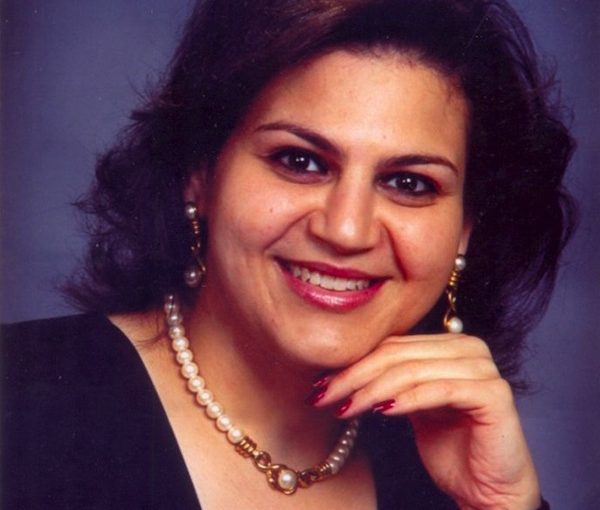
Nancy Khedouri, a member of the National Assembly of Bahrain. (photo from bahrainthisweek.com)

Nancy Khedouri, a Jewish politician, writer and businesswoman from Bahrain, provided insight into the history of the Jewish community in the small Gulf state and its recent normalization agreement with Israel, signed in September. She spoke at a Nov. 29 Zoom talk organized by Canadian Friends of the Hebrew University and moderated by Ambassador Ido Aharoni.

A member of the National Assembly of Bahrain since 2010, Khedouri is also the author of From Our Beginnings to Present Day, a history of the Bahraini Jewish community, which started at the end of the 19th century.

“Bahrain was known as a place that always embraced people of various religious and cultural backgrounds. The Jews of Bahrain were always allowed to practise their religion freely,” said Khedouri, a third-generation Bahraini and descendant of Iraqi Jews.

The Jewish community in Bahrain totaled close to 2,000 people a century ago. From the 1940s through the 1960s, many Jews left the country on their own volition; they were never expelled, she pointed out. These days, their numbers are rather small, with roughly a half-dozen resident families, or about 40 individuals, covering all age groups. Most Jews living in Bahrain now came from Iraq.

“Overall, the Jewish people worked in various professions, tobacco, olive oil, electronics, some were in the record business – both my grandfathers were involved in the leasing of cinemas. Some of those here today work in the money exchange business. We have integrated very well in the texture of society. We are highly respected,” she said

One famous member of Bahrain’s Jewish community in the 1940s was a midwife known as Um-Jan, in Arabic, whose story influenced a popular 2020 Arabic television series Um Harun. When the community was larger it had a shochet (ritual slaughterer), and it still maintains a Jewish cemetery.

These days, Jewish traditions and festivals in Bahrain are taught and celebrated at home. Bahrain’s synagogue, located in country’s capital, Manama, is not presently in use. Established in the 1930s, the shul was funded by a Jewish pearl trader from France who wanted to create a place of worship for local Jews. At that time, he entrusted a community member with the responsibility of looking after the title deeds of the property. The synagogue is currently under renovation, and the hope is to have it reopen by Purim.

On the question of the tolerance shown towards Jews in Bahrain, Khedouri highlighted the “open-mindedness” of the ruling family and Islam, “a religion that teaches coexistence, peace and respect for one another. They have embraced the true values of being Muslim.” She pointed out that other religions live in peace in Bahrain: in addition to the synagogue, Bahrain houses churches and the only Hindu crematorium in the Gulf.

Aharoni remarked on the prominent role women seem to have in Bahraini society and public life. “Bahrain took pioneering steps to empower women. We have reached advanced stages,” said Khedouri. “We have had women as ministers and leading roles through the years.” Khedouri’s cousin, Houda Nonoo, served as Bahrain’s ambassador to the United States from 2008 to 2013.

Since the 1950s, women have joined the workforce and, since the 1960s, have started companies, said Khedouri. They joined the police force in the 1970s, she continued. And, now, Bahraini women constitute a high percentage of those employed as doctors. Nonetheless, there is still room for improvement, she said.

On the newly formed ties with Israel, Khedouri commented, “We must remember that Israel never posed a threat to the Gulf countries or the region. Seven decades of lost opportunity is a long time. Everyone met the new agreement with great excitement. We believe both countries will benefit. Israel will benefit by having a great trading partner.”

She expects joint collaborations in many aspects. There are opportunities, she said, in technology, in cinema, arts and tourism. In Manama, much preparation is underway for the arrival of Israeli tourists to the country. A number of hotels and supermarkets are offering kosher menus and products.

Khedouri lauded outgoing American president Donald Trump and his son-in-law and senior advisor Jared Kushner for being instrumental in bringing about a peaceful arrangement with Israel. Bahrain followed the United Arab Emirates in normalizing ties with Israel; afterwards, Sudan and, later, Morocco established deals with the Jewish state. These agreements collectively have been referred to as the Abraham Accords.

Bahrain’s political system is a constitutional monarchy with two legislative chambers. Its Council of Representatives is elected while its Consultative Council (or Shura Council), on which Khedouri sits, is appointed by the king.

Sam Margolis has written for the Globe and Mail, the National Post, UPI and MSNBC.

Make history inclusive

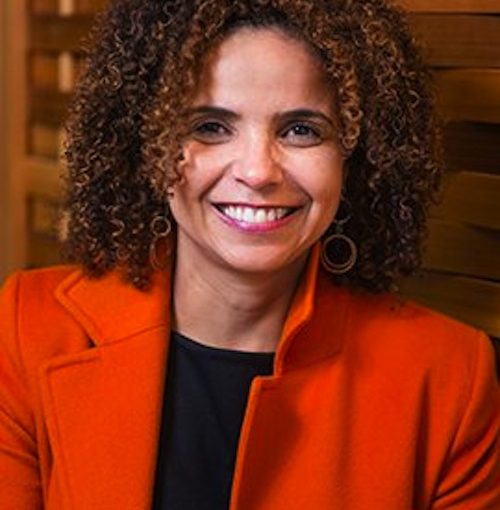
Dr. Elizabeth Shaffer (photo from ischool.ubc.ca)

The expression of history matters. This issue, previously confined mainly to academic discourse, has been thrust into the public sphere as never before. In this year of upheaval and change, a spotlight seemed to follow the systemic racism exhibited by police forces across North America. Along with widespread protests about police behaviour came a wave of questions and action about how we choose to convey our collective history. Monuments toppled around the world, raising questions about how and why certain people are memorialized in our national consciousness and whose story is missing.

In Vancouver, the Jewish Museum and Archives of British Columbia is at the forefront of this dialogue, pushing the agenda of inclusion and trying to make sure that the stories of as many members of our community are heard and recorded. The museum, which was founded as the Jewish Historical Society of British Columbia, has been engaged for decades in collecting the oral histories of Jews from the spectrum of Jewish life – the stories that provide a greater context to what it means to be Jewish in this place.

This year, at the Jewish Museum’s annual general meeting on Nov. 18, the keynote speaker contextualized the importance of having a variety of voices and experiences shape our collective understanding of history. Dr. Elizabeth Shaffer, executive director of the University of British Columbia’s Indian Residential School History and Dialogue Centre and assistant professor at the UBC School of Information, spoke to a group of well over 100 people via Zoom.

Shaffer highlighted issues of social justice, marginalization, accountability and collective remembering. Each of these topics is thought-provoking on its own, but, grouped together, the picture she painted was more than the sum of its parts. Shaffer discussed why certain monuments are problematic. She said the protests that took place this summer across the globe created a robust dialogue about “who counts.” Increased understanding that our current narrative is depicted from the perspective of the colonizer has shown the need for viewpoints of “othered people” to be included.

While Shaffer’s primary focus is on reconciliation and how museums and archives should be reimagining their roles in terms of the Indigenous population of Canada, she presented a broad call to examine practices and positionality vis-à-vis marginalized people. She suggested that museums need to collaborate with communities more and that technology has presented us with unique opportunities to do so. Social media has democratized the recording of history, allowing more citizens to contribute to the dialogue in ways never seen before. The challenge for museums and archives will be to decide how to thoughtfully filter and present this information.

“Under-documented communities do not trust museums because they are not represented,” said Shaffer. She suggested that participatory archives, which are by their nature democratic, holistic and citizen-focused, would help fill in the gaps and provide a broader representation of our history. She said, “Archival records hold power … they hold the collective and individual memory, and shape who is included and who is not.”

The recognition that museums and archives are not neutral is an important part of this work. These are some of the challenges facing the archives and museums, as greater transparency and community participation make our institutions of memory “safe and non-oppressive spaces” and repositories of an inclusive history.

Shaffer called on museums and archives to be agents of change, to be actively anti-racist and to dismantle the oppressive practices that have excluded marginalized narratives. One suggestion she had pertaining to the importance of transparency is documenting the way the story is told. She said there are deep-rooted challenges in the long game, but she has seen an interest in the museum community to do things better.

“Humility as an institution is key,” said Shaffer. “We need to reflect and evolve and have the courage to act when change needs to be made.”

In response to a question from the audience, Shaffer endorsed the practices of the JMABC, as it fulfils its mission and mandate. She encouraged the community to support other organizations as well. “Cross-pollination enriches everyone,” she said.

For more information on the JMABC, visit jewishmuseum.ca.

Michelle Dodek is a freelance writer, chef and longtime community volunteer in Vancouver. One of her current involvements is as a board member of the Jewish Museum and Archives of British Columbia.

Jewish Museum marks 50th

On Nov. 18, the Jewish Museum and Archives of British Columbia held its annual general meeting and JMABC president Carol Herbert gave the following report, which has been edited for length.

What a roller coaster the last months have been! We are most grateful to our three dedicated staff members Marcy Babins, Alysa Routtenberg and Michael Schwartz, who reacted to the pandemic crisis promptly and creatively…. The staff have successfully sought out financial resources from government and granting agencies to allow us to continue our operations, supplemented by the generosity of our members when we put out a special call for donations. We are most grateful to those of you who responded, and especially to those of you who are Sustainers of the Archives.

The board has had a busy year…. We adopted a strategic communications plan prepared by Michael and the development committee, which states our vision and values. We completed and submitted a letter of intent to Federation and JCC to indicate our wish to relocate within the new campus when it is built. The board also endorsed an anti-racism statement, which was posted on our website in response to the troubling events of last summer, and since then has developed a policy on advocacy. A major focus for the board has been the plan for our 50th anniversary celebration of the Jewish Historical Society, which operates as the JMABC….

I have particularly appreciated the support of the executive committee, Daniella Givon, Michael Levy, Phil Sanderson and Perry Seidelman. The finance committee was activated after last year’s AGM, a programs committee has been established…. The Scribe committee has also been active, supporting the production of the 2020-21 issue on Jewish Education in British Columbia: K-12, and reviewing topics for future Scribes…. While we were unable to hold live events from early in March, staff continued to work on expanding the archival collection and preparing the 2020 Scribe, and they have conducted virtual programs…. While we have even been able to sustain some volunteer activity, only 72 hours have been logged since March of the total of 323.5 hours for the year, far less than usual…. Michael and Alysa have been able to recruit terrific students and interns to work with them virtually….

We reactivated the Council of Governors and we are most grateful to the stalwart supporters who serve as advisers to the board. Chaired by our past president, Perry, the council members are Gary Averbach, Isabelle Diamond, Mariette Doduck, Michael Geller, Bill Gruenthal, Richard Menkis and Ronnie Tessler…. We are most grateful to the board members who have continued to serve during these difficult times. We thank departing members Jerry Berkson (2018-20) and Ralph Swartz (2019-20), who served on the finance committee. We also thank Bill Gruenthal, who leaves the board after 22 years of service, though we are very happy that he will continue to serve on the Council of Governors. Three new individuals … are on the board slate….

Helen Aqua is a second-generation, Canadian-born Vancouverite…. Looking back in time has always interested Helen and, at one point, she volunteered as a docent with the Delta Museum and Archives, delivering local history talks to Grade 3 Delta schoolchildren in their classrooms…. After 17 years with Scouts Canada as a cub pack leader, member of the district service team and then the regional service team, Helen returned to school in 1985, earning a diploma in information systems and records management from Douglas College. Many interesting work opportunities resulted, culminating as the office coordinator for Immigrant Services Society’s Drake Street Settlement Services location. Post-retirement … Helen spent four years taking courses on end-of-life studies at Simon Fraser University, which led her to seek qualification as a death doula and then an advance care planning facilitator….

Lianna Philipp grew up in Vancouver and attended Richmond Jewish Day School as well as King David High School. She lived in Kingston, Ont., where she obtained a BComm at Queen’s University and returned to Vancouver to complete her CPA designation. Lianna currently serves on the board of the Jewish Federation of Greater Vancouver and Temple Sholom Synagogue. She is passionate about engaging the next generation of Jewish leaders to help ensure a strong future for our community….

Barb Schober was born in the former Czechoslovakia but grew up in North Delta. She is currently a graduate student in the history department at the University of British Columbia, with a special interest in the history of Vancouver’s Jewish community. She is well-acquainted with the JMABC in that capacity, having made extensive use of the community records during some of her previous work on Holocaust commemoration and Jewish women’s groups. She is working on her PhD thesis, which is about Jewish immigration to Vancouver from Russia and the Soviet Union. She is also the student member of UBC’s faculty of arts Holocaust education committee.

[The AGM marks the official launch of] our 50th anniversary celebration, which will continue throughout 2021. Our first event is the speaker [who] will follow our AGM, Elizabeth Shaffer, who will talk about dialogue and disruption in contemporary museums, particularly in the context of anti-racism and human rights. [See story on page 12.] We will continue with the launch of the 2020-21 Scribe…. Plans are also underway for a photo exhibit from Ronnie Tessler’s fantastic collection that she donated to the archives, for a children’s art contest that we hope will engage young families, and for a gala launch event in November 2021 for the 50th anniversary commemorative book, which will be an overview of 160 years of Jewish history across British Columbia with lots of historical photos…. On our website [jewishmuseum.ca] you will find a sponsorship brochure, which details 50th anniversary and ongoing projects and programs….

Again, let me emphasize that we want every Jewish person in British Columbia to know that JMABC is your organization, keeping the record of community-building that has been accomplished by an array of individuals and families. Our watchwords are diversity and inclusion…. As Perry reminded us every year in his president’s remarks, make sure to seek out your own family stories and don’t throw away family photos and memorabilia. Every one of your stories matters. We will be delighted to interview you so that your oral narrative can be included in our archives – just contact us.

Views on various occupations

COVID-19 changed a lot of people’s perceptions as to what types of jobs are essential. Not only doctors, nurses and other healthcare workers are on the front lines, but so are retail clerks, maintenance workers, truck drivers and many others. In this context, it is interesting to think about what occupations, if any, have been promoted or praised in Judaism.

As it turns out, Jewish scholars gave work considerable attention. Talmudic sages advocated for working rather than living off charity. Indeed, this principle provides some food for thought for modern-day Israel, where many ultra-Orthodox do live off charity. According to a January 2020 report by Dr. Lee Cahaner and Dr. Gilad Malach for the Israel Democratic Institute, between the years 2003 and 2018, about 50% of ultra-Orthodox men aged 25-64 and 76% of women in the same age bracket worked.

Scholars had a great deal of respect for labour. The Talmud abhorred idleness and argues that it leads to mental illness and sexual immorality. (See Babylonian Talmud, Tractate Ketubot 59b, at jlaw.com/articles/idealoccupa.html.)

“Rabban Gamliel the son of Rabbi Judah HaNasi would say: Beautiful is the study of Torah with the way of the world, for the toil of them both causes sin to be forgotten. Ultimately, all Torah study that is not accompanied with work is destined to cease and to cause sin.” (Pirkei Avot, Ethics of the Fathers, 2:2). Midrash Rabbah Bereshit (Vayetze chapter) goes even further, saying that practising a craft saved lives.

Yet, the sages believed that being absorbed with making money is not the ideal for an individual. Again referring to the Pirkei Avot (4:10), Rabbi Meir asserted: “Rather limit your business activities and occupy yourself with the Torah instead.”

Historically, teachers were valued – but only to a point. The high priest Joshua ben Gamla (circa the first century CE) issued an opinion that “teachers had to be appointed in each district and every city and that boys of the age of six or seven should be sent.” Where the boy had a father, it was the father’s responsibility to make sure his son had a basic education. Significantly, between the third and the fifth century CE, providing the salary of the Torah and Mishnah teacher became a communal task. Even those without children contributed to the teacher’s wages.

But teachers were not fully trusted. The Mishnah of Tractate Kiddushin 82a teaches that a single man or single woman should not become a teacher. The Gemara explains that the rabbis worried that such a teacher might have an affair with a parent of one of the students.

On torahinmotion.org, Rabbi Jay Kelman contends that the Gemara initially suggests that the Mishnah is afraid that an unmarried teacher might molest his students, but then rejects this explanation, noting that molestation is not something we need to suspect happening. Kelman, however, says, “this is something which no longer can be said with any degree of certainty. What we can say with certainty is such a fear is warranted even with those who are married and that, while rare, when it occurs, the results are devastating and tragic.”

While on the subject of sexual misconduct in certain occupations, here is an idea that might resonate with the #MeToo movement: the Talmud lists certain precarious trades that require men to often be alone with women. For example, a male goldsmith who makes jewelry for women. Talmud scholars were uneasy that such a businessman would be tempted to sin.

Curiously, harsh words were said about doctors. Tractate Kiddushin 82a ends with this statement by Rabbi Yehudah: “The best of physicians deserves Gehenna.” Why do they deserve a damned place? An article on talmudology.com contends that the opinion was based either on the belief that doctors were haughty before G-d or the fact that their treatment sometimes killed the patient.

Even though Israeli citizens highly value their army, Shalom Sabar points out in a Forward video that, in Medieval Haggadot, the “bad son” was portrayed as a soldier. This was because, at the time, non-Jewish soldiers would come to kill Jews.

Sailors, on the other hand, “are mostly pious … with many a ship sinking, sailors were in constant fear causing most to be super honest in the hope that G-d would protect them.” As Kelman summarizes, there really are no atheists in the foxhole.

On myjewishlearning.com, Rabbi Jill Jacobs states that, since Mishnah Zeraim (Seeds) deals solely with agricultural issues, we have proof that Judaism emerged from an agriculturally based community. Yet, in the Torah, farmers get off to a really bad start. Early in Genesis, we learn that Cain was the first farmer. Notwithstanding, G-d refused to accept his offering, accepting only his brother Abel’s. Cain couldn’t accept this rejection. In a jealous rage, Cain killed his brother and hid what he had done. G-d, consequently, reduced Cain to a life of wandering.

At a time when, around the globe, people are learning more about the extreme misconduct of some police officers, it is worth looking further into the Torah to see what Deuteronomy 16:18 and later commentators wrote about the police. Deuteronomy points out that both judges and police should be appointed to govern the people with due justice. Drawing on various Jewish sources, Rabbi Jacobs divides the function of the Deuteronomy-based police into several specific, but integrated parts: the patroling police person who “reminds the public to obey the law”; the roving inspector who ensures fair pricing and compliance with local ordinances; the arresting police officer who, while assuming the person is innocent until judged guilty, nevertheless begins the judgment process by arresting the suspect; the bill collector police officer who extracts payment from the obligated party to give to the aggrieved party; and the police officer who is a leader in his/her community. From Jacob’s assessment on truah.org, it would appear that today’s police have what to improve, especially when it comes to trust-building measures.

Over the centuries, Jewish scholars have taken into account the fallibility of people engaged in certain occupations. With tremendous insight into human behaviour, our sages apparently realized progress is not always in a forward direction. We have a long way to go in (re)establishing the integrity that Jewish scholars outlined for certain professions.

Deborah Rubin Fields is an Israel-based features writer. She is also the author of Take a Peek Inside: A Child’s Guide to Radiology Exams, published in English, Hebrew and Arabic.
***

The abstract of the article “Jewish Occupational Selection: Education, Restrictions or Minorities?” (The Journal of Economic History 65, no. 4 [2005]), Maristella Botticini and Zvi Eckstein reads: “Before the eighth-ninth centuries CE, most Jews, like the rest of the population, were farmers. With the establishment of the Muslim Empire, almost all Jews entered urban occupations

despite no restrictions prohibiting them from remaining in agriculture. This occupational selection remained their distinctive mark thereafter. Our thesis is that this transition away from agriculture into crafts and trade was the outcome of their widespread literacy, prompted by a religious and educational reform in Judaism in the first and second centuries CE, which gave them a comparative advantage in urban, skilled occupations.”

The full article is available at jstor.org.

– DRF

Grinding coffee for a century

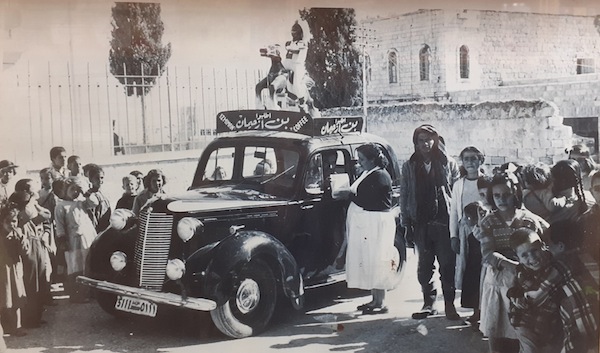
Izhiman’s – the car is decorated with the company’s logo, based on advertising from that era showing a turban-wearing waiter – à la Cairo’s legendary El Fishawy coffee house in the Khan al-Khalili – serving, of course, coffee. (photo from Izhiman’s)

When the Izhiman family opened its coffee roasting and grinding business in 1921 on Suq Khan a-Zeit (Beit Habad Street), 100 metres inside the Old City’s Damascus Gate, Sir Herbert Samuel had recently arrived as Great Britain’s first high commissioner for Palestine, and Egyptian chanteuse Umm Kulthum was just beginning her illustrious career. Over the last century, the Middle East has changed beyond recognition but Izhiman’s flavourful qahwa – blended from high-quality Arabica beans – has remained a staple for Jerusalem’s coffee aficionados. And, at NIS 48 ($19 Cdn) per kilogram, the cardamom-flavoured finely ground secret mix – which includes Brazilian, Colombian, Guatemalan, Costa Rican and Tanzanian beans – is a bargain.

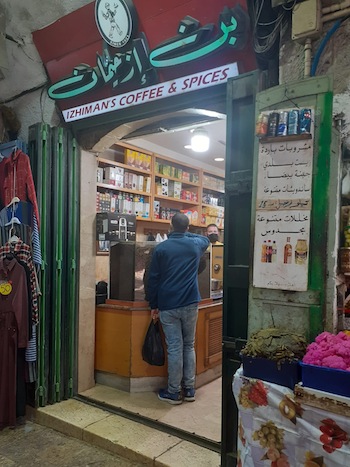
From that first roaster and grinding shop in the Old City, Izhiman’s has grown to a chain of six stores, with a presence in Jerusalem, Ramallah and Bethlehem. Besides its signature blend of Arab/Turkish coffee, the Izhiman family-operated chain sells tea, nuts, spices, condiments, chocolate and henna from Thailand, Turkey, Egypt and elsewhere. Many of the imports are cheaper than their Israeli counterparts.

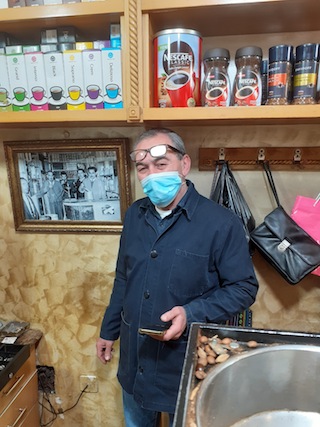
“I manage three stores,” said Mazen Izhiman, 63, who started working at the Old City branch in 1976. “My son Mahmoud is the operations manager.”

photo - Mazen Izhiman
Mazen Izhiman (photo from Izhiman’s)

Mazen points to the various historic photos decorating his shop. One shows an antique car bearing Mandate Palestine licence plate 5111. The vehicle is decorated with the company’s logo, based on advertising from that era showing a turban-wearing waiter – à la Cairo’s legendary El Fishawy coffee house in the Khan al-Khalili – serving, of course, coffee.

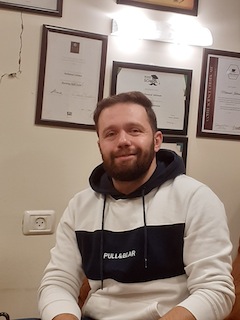
Interviewed at the company’s office in Atarot Industrial Park, not far from the now-decommissioned Qalandia Airport, Mahmoud (Mamu) Izhiman, 32, explains the roaster was moved there from Abu Dis in 2014 because of transportation problems in reaching the West Bank suburb. Originally, the roaster was located on Suq Khan a-Zeit, across from the shop that his father manages today. A century ago, the beans were ground by hand, he noted. A few grams of coffee wrapped in a cone made from newspaper were sold in single-serving portions.

While the Izhiman family came to Jerusalem from the Hijaz eight centuries ago, during the time of Saladin to fight the Crusaders, the details of the founding of the business have been lost, said Mahmoud, who studied political science at the Hebrew University of Jerusalem before deciding that the coffee business was more satisfying to him than the Israeli-Palestinian quagmire.

Even the given name of the company’s founder a century ago is in dispute, he said. The family business began splitting apart in 1948, when one brother fled to Amman, Jordan, where he opened a coffee roaster of the same name. Another split occurred in 1994, and a further one in 2008, which resulted in a 2014 lawsuit in the Jerusalem District Court for copyright infringement. Notwithstanding the favourable ruling, family members continue to operate unauthorized Izhiman’s branches across the West Bank and Dubai. Indeed, the website izhiman.com is used by the unlicensed stores, said Mahmoud.

photo - Mahmoud (Mamu) Izhiman
Mahmoud (Mamu) Izhiman (photo from Izhiman’s)

Joining the family business, Mahmoud apprenticed at a 2013 course in Izmir, Turkey, offered by the Specialty Coffee Association of America, and then earned a coffee science certificate from Nouva Simonelli in Ancona, Italy.

“I was the first one in the Middle East to study with the SCAA,” he said.

That expertise led him to experiment roasting different blends, seeking a taste that he calls “balanced and aromatic” with “no acidic bitter aftertaste.” The exact blend is “top secret,” he said.

Having relocated the roaster from Abu Dis, Mahmoud bought an $80,000 machine capable of roasting a 120-kilogram batch of coffee beans in 20 minutes. In 2018, he upgraded to a $110,000, fully automated, 240-kilogram-capacity, Turkish-manufactured roaster with a built-in fire extinguisher. To preserve trade secrets, Mahmoud asked me not to take photos of the roasting machine, which he custom designed. The plant also boasts a high-tech, Chinese-made grinding and filling machine that injects nitrogen into each package before it is sealed to prevent oxidation. Mahmoud’s brother, Abdullah, is the production manager at the Atarot facility.

photo - Izhiman’s has grown to a chain of six stores, with a presence in Jerusalem, Ramallah and Bethlehem
Izhiman’s has grown to a chain of six stores, with a presence in Jerusalem, Ramallah and Bethlehem. (photo from Izhiman’s)

How much java does Izhiman’s sell? Mahmoud hesitates before answering: “Enough to call us a major coffee factory. We have a presence in every supermarket and grocery in East Jerusalem.”

But Izhiman’s success isn’t limited to providing a caffeine fix for the Arab half of the city. In December, the company opened its first outlet in Jewish Jerusalem. Mahmoud calls the four-square-metre kiosk at the First Station a “pilot.” It sells “macchiato, lokum [pistachio, hazelnut, rose and pomegranate-flavoured Turkish delight], everything,” he enthused. “If you’re afraid to come to the Old City, I’m coming to you.”

As well, Izhiman’s sister company, Coffee Zone, will soon be launching a line of espresso capsules, he added.

Delicious coffee is one of the flavours of co-existence, Mahmoud believes.

With peace on the horizon, foodies may want to visit the Izhiman’s booth at the Gulfood 2021 expo taking place Feb. 21-25 at the Dubai World Trade Centre. Inshallah.

Gil Zohar is a writer and tour guide in Jerusalem.

Festival of light & song

Chanukah lights on Agron Road in Jerusalem, 2012. (photo from Djampa)

History tends to repeat itself or, as Sholem Aleichem put it, The Wheel Makes a Turn. In this story, he wrote about Chanukah, depicting a proud Jew lighting the nine-branched candelabrum, celebrating this festival of dedication and liberation with warmth and affection. Later in the story, this same Jew, now old and infirm, is barely allowed to light the chanukiyah by his assimilated son, while his grandson is not even allowed to watch. The story ends when the grandson is an adult, and celebrates Chanukah with his friends to the dismay of his “modern” parents who cannot understand why their son has rejected their assimilation and returned to his Jewish roots.

Chanukah is one of Israel’s favourite festivals, widely celebrated even by secular Jews. Unlike in the Diaspora, it doesn’t have to compete with the glamour of Christmas, with its shopping frenzy, Santa Claus, carols and other Christian symbols of the holiday, which can be very seductive, even to Jews.

In Jerusalem during the Festival of Lights, you can see chanukiyot and their tiny, multi-coloured candles on almost every windowsill and, at sunset, you’ll hear voices from quivering childish soprano to deep baritone, all singing “Maoz Tzur” (“Rock of Ages”). There is a candlelighting ceremony, as well as free sufganiyot (jelly doughnuts), in my local supermarket every evening for the whole eight nights, and a giant menorah burns atop the Knesset and many public buildings and water tower reservoirs throughout the country. Gifts are exchanged, children receive Chanukah gelt, often in the form of chocolate coins, and dreidels, spinning tops inscribed with the first letters of the Hebrew words for the phrase: “A great miracle happened here.”

The Zionist movement has used Chanukah as a symbol and historical precedent of national survival. The Maccabi sports organization was named after the Maccabees, who are the stars of the holiday, and it holds the Maccabiah Games every four years, just like the Olympics.

The singing of “Maoz Tzur” is a feature of the holiday with mysterious origins. The only clue to its composer is the acrostic of the first five stanzas, spelling out the name “Mordecai”; such naming was a common practice at the time and one used in a lot of zemirot (Sabbath songs). Many scholars believe the composer to be Mordecai ben Isaac, who lived in Germany in the 13th century.

There is a Chabad saying: “Song opens a window to the secret places of the soul.” It is hard to define what makes music specifically Jewish, and many categories exist, including Chassidic, Yiddish, Yemenite, Moroccan, Kurdish, Israeli, secular, religious … the list comprises a broad range.

There is nothing in Jewish law against creating new tunes for hymns. The Gerer Rebbe once stated: “Were I blessed with a sweet voice, I would sing you new hymns and songs every day, for, with the daily rejuvenation of the world, new songs are created.”

Rebbe Nachman of Bratslav wrote: “How do you pray to the Lord? Come, I will show you a new way … not with words or sayings, but with song. We will sing and the Lord on high will understand us.”

When we sing “Maoz Tzur” as a family, grouped around the candles, there is harmony of a special kind. The harmony is not just in the song, but in the sanctity and affection that binds the family and gives it a foundation as solid as a rock.

In painful times for Israel, which has seen so much suffering and loss throughout its history, it brings a measure of comfort to be able to recite the traditional blessing: “Blessed art Thou, O Lord our G-d, King of the Universe, who has kept us in life and hast preserved us, and enabled us to reach this season.” This year, amid the pandemic, the blessing resonates even more deeply. Happy Chanukah!

Dvora Waysman is a Jerusalem-based author. She has written 14 books, including The Pomegranate Pendant, which was made into a movie, and her latest novella, Searching for Sarah. She can be contacted at dwaysman@gmail.com or through her blog dvorawaysman.com.