Skip to content
  • Home
  • Subscribe / donate
  • Events calendar
  • News
    • Local
    • National
    • Israel
    • World
    • עניין בחדשות
      A roundup of news in Canada and further afield, in Hebrew.
  • Opinion
    • From the JI
    • Op-Ed
  • Arts & Culture
    • Performing Arts
    • Music
    • Books
    • Visual Arts
    • TV & Film
  • Life
    • Celebrating the Holidays
    • Travel
    • The Daily Snooze
      Cartoons by Jacob Samuel
    • Mystery Photo
      Help the JI and JMABC fill in the gaps in our archives.
  • Community Links
    • Organizations, Etc.
    • Other News Sources & Blogs
    • Business Directory
  • FAQ
  • JI Chai Celebration
  • JI@88! video

Recent Posts

  • Zionism wins big in Vegas
  • Different but connected
  • Survival not passive
  • Musical celebration of Israel
  • Shoppe celebrates 25 years
  • Human “book” event
  • Reclaiming Jewish stories
  • Bema presents Perseverance
  • CSS honours Bellas z”l
  • Sheba Promise here May 7
  • Reflections from Be’eri
  • New law a desecration
  • Resilient joy in tough times
  • Rescue dog brings joy
  • Art chosen for new museum
  • Reminder of hope, resilience
  • The national food of Israel?
  • Story of Israel’s north
  • Sheltering in train stations
  • Teach critical thinking
  • Learning to bridge divides
  • Supporting Iranian community
  • Art dismantles systems
  • Beth Tikvah celebrates 50th
  • What is Jewish music?
  • Celebrate joy of music
  • Women share experiences 
  • Raising funds for Survivors
  • Call for digital literacy
  • The hidden hand of hate
  • Tarot as spiritual ritual
  • Students create fancy meal
  • Encouraging young voices
  • Rose’s Angels delivers
  • Living life to its fullest
  • Drawing on his roots

Archives

Follow @JewishIndie
image - The CJN - Visit Us Banner - 300x600 - 101625

Searching for hope in future

Searching for hope in future

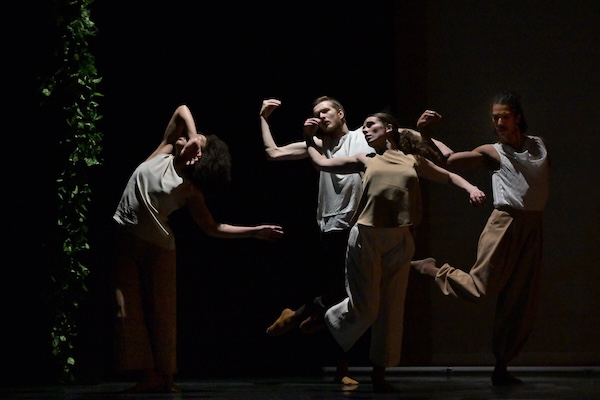
Belle Spirale’s dance double-bill, Universus, is at the Vancouver Playhouse March 21-22, as part of the Chutzpah! Plus Spring Edition. (photo © Michael Slobodian)

“As I think many of us are right now, I am feeling sense of trepidation, endangerment and uncertainty about the future that I have honestly never felt before in this way. My faith in the future and humanity’s ability to call in a future that I want (for myself and also for future generations) has been shaken to the core,” Alexis Fletcher told the Independent. “And yet, my spirit knows that hope, togetherness, connection – they are all necessary. Indeed, they are what propel the world, evolution, the cosmos and each other forward. Everything and Nothing asks what hope and resiliency mean to me – as a woman, as an artist, as a citizen – at this moment in history.”

Fletcher is co-director with Sylvain Senez of Belle Spirale Dance Projects. Their March 21-22, 8 p.m., Chutzpah! Festival dance double-bill at the Vancouver Playhouse, called Universus, also features Fernando Hernando Magadan’s Statera.

The title of Belle Spirale’s Everything and Nothing comes from a poem Fletcher wrote several years ago, “exploring the idea that we are at once both the entire universe and a tiny speck of almost nothingness within the vastness of that universe. That we are both ‘everything and nothing in the same split-instant,’” she said.

Acknowledging that this was a broad place from which to start, she and the dancers asked themselves, “Who are the leaders of the future that we actually want? How can we create an imagination-based, artistic response to these important questions and feelings? I see so many qualities of this leadership in each and every person who is making Universus with us,” said Fletcher. “I have been curious about what the archetypes, or the energetic qualities, these future leaders would embody, and how could they usher the world forward into a new and more hopeful paradigm.”

To explore these questions, Fletcher came to the studio with “movement phrases,” she said. “The dancers then took these movements and made new sequences which combined the original phrases with their own responses to the text, images and perceptions about the subject matter.

“We also use structured improvisation to explore different states of being and allow those to inform the choreography,” she added. “Then, everything gets layered together and composed into different sections, working with the music, the design aspects, and how that all relates in space and time to where the audience will be. It is a truly collaborative process, with each artist contributing hugely to the final outcome.”

This includes “the images of the natural world and the cosmos that Sylvain has so exquisitely crafted with his visual design,” said Fletcher. “These images, to me, represent our shared origin point in the cosmos, reminding us that our journey is mystical as well as concrete or tangible. While this is all explored in an abstract way very open to interpretation, we hope to evoke a sense of possibility, of awe and wonder with this work.”

Another important collaborator is Marisa Gold, who Fletcher and Senez met some time ago. “Immediately, I was compelled by her stage presence and the insightful, kind, courageous way she conducts herself in the world,” said Fletcher, noting that Gold has been part of Everything and Nothing from its beginnings in 2023. As the piece has developed, Fletcher felt that a live, spoken-word element “could act as a counterpoint to the inherently more abstract and image-driven metaphor of the dancing body and the choreography.

“Inside of this desire for text, I had a gut feeling that it wasn’t supposed to be my voice or my writing,” said Fletcher. “I needed to bring a different voice into the mix, with different lived experience and perceptions than my own. What came out of this was expanding and amplifying Marisa’s role within the work by commissioning her to create and perform original poetry and spoken word throughout Everything and Nothing. And … she still does a phenomenal amount of dancing, and she is incredible in that too! I can’t wait for everyone to share in her journey. What Marisa has created is truly special – profound and insightful. I gain something new from the text every day.”

For Gold, Everything and Nothing has a powerful message.

“Personally,” she said, “the subject matter and poetry of Everything and Nothing align very closely to my interests as an artist and human being in a volatile world. As a collective humanity, the depth of our connection to Earth is reflected in our ability to deeply connect with ourselves and each other. This work addresses not only our inner/personal world, it also drives home the mirroring effect and metaphor which surrounds us in nature. From my perspective, these images are incredibly supportive to the healing so needed on our planet today.”

The scope of the work wouldn’t have been possible, said Fletcher, if she and Senez weren’t artists in residence at the Chutzpah! Festival.

“We have been fortunate to receive residency, creation and presentation support from the Chutzpah! Festival since 2019,” she said. “Each of these years provided us with stage creation time, financial contributions to our projects and the opportunity to premiere new works; this relationship has been instrumental to our artistic practice. 

“Theatre and studio residencies are critical to artists collaborating and developing their craft. In addition, 

having a presenter invest in a project from research to presentation creates an environment grounded in solidity and consistency,” she said.

“I really cannot over-emphasize not only how rare, but also how needed and important it is, what Chutzpah! is doing with their residency program.”

This season, Belle Spirale had a couple weeks on stage to rehearse and create, then a two-week, full time technical residency, where the visual and lighting design for the performance was created, so the company could mount the show at the Playhouse.

“The art we make together is a way of life for us, and inseparable from our relationship,” said Fletcher about husband and fellow artist in residence Senez. “While we have different strengths that make us a great team, we also share a profound kinship with regards to our artistic sensibilities and reverence for this art form.”

The two were with Ballet BC for many years, and started creating and producing work together in 2015. 

“As a couple – both in our personal story of coming together and in our creative partnership – we have always made each other brave, right from the start, dreaming big and diving into creative ventures without fully realizing the scale they would eventually take,” said Fletcher.

“Tackling meaningful subjects and focusing on the humanity that touches us all, we initially began with quite intimate work,” she said. But, as their exploration continued, so did their desire to integrate other creative voices alongside their own. Formally bringing Belle Spirale into being “became a necessary next step,” and the company was launched in July 2023. The not-for-profit structure allows them to create community networks and garner the support they need. “This comes in the form of our board of directors, and our partnerships with like-minded creative spirits such as our sister company Dance//Novella,” said Fletcher.

“Most importantly,” she said, “Belle Spirale was born from our desire to expand our ability to support a range of artistic voices through commissioning new work, creating our own work, fostering and celebrating Vancouver’s exceptional freelance artists, and presenting/producing both our own, and others’, creations…. We truly believe in the power of the live performing arts to bring people together, to create community and a lifeline for the spirit – a space to contemplate, reflect and be moved – during these complex times we live in.”
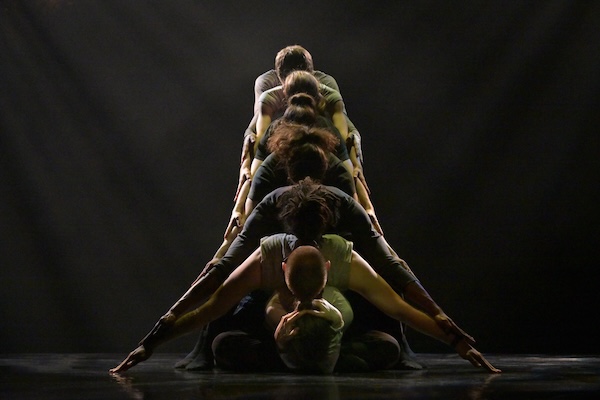
photo - Belle Spirale performs at the Playhouse March 21-2
Belle Spirale performs at the Playhouse March 21-22. (photo © Michael Slobodian)

One of the aspects Fletcher and Senez like most about cross-disciplinary work is the ability “to reach a broader demographic of audience members,” said Fletcher. “Every person feels connected, or has their heart opened, in different ways by different things. Human beings are layered and complex, and we use different mediums, such as film, set design, text and lighting design, to reflect this complexity in our stage environments. 

“We love to create textured, visually impactful and theatrical settings which are completely immersive for the dancers,” she continued. “Everything is crafted to highlight the humanity, athleticism and journey of the dancing body – this human instrument is always the focus of our work…. In my pieces, I work co-creatively with the dancers, with Sylvain as visual/set/film designer and with Belle Spirale’s lighting designer Victoria Hunter Bell.”

In Universus, Fletcher also has gotten to work with Magadan – she co-created and dances in Statera.

“Sylvain and I both met Fernando in 2014, when he created White Act for Ballet BC,” Fletcher explained. “I was an original cast member of this work and Sylvain was his rehearsal director, as well as assisted with some of the visual design. We all just clicked … and it has always been a dream of ours to work with Fernando again. When we commission work at Belle Spirale, I am fortunate to get to be one of the performers we bring together.”

Universus would not exist, said Fletcher, without Belle Spirale’s partnership with Chutzpah! She also noted that, thanks to the company’s partnership with Vancouver International Dance Festival, they are able to offer general admission and sliding scale ticket prices, which start at $25. Visit chutzpahfestival.com. 
Format ImagePosted on March 14, 2025March 13, 2025Author Cynthia RamsayCategories Performing ArtsTags Alexis Fletcher, Belle Spirale, Chutzpah!Plus, dance, Marisa Gold, poetry, Sylvain Senez, Universus
O Canada! tote bag line

O Canada! tote bag line

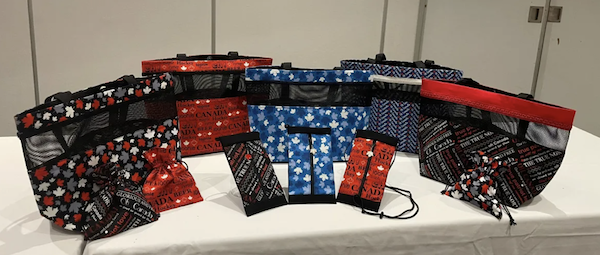
Tikun Olam Gogos’ O Canada! bags proclaim dedication to the ethic of improving the world in friendship with other nations, raising much-needed funds for grandmothers in sub-Saharan Africa who are raising their grandchildren due to the HIV & AIDS pandemic. (photo from Tikun Olam Gogos)

As proud Canadians and fundraisers for the Stephen Lewis Foundation Grandmothers to Grandmothers Campaign, Tikun Olam Gogos have launched a special edition line of O Canada! tote bags – determined to respond to the threats American tariffs pose to Canada, and to the suspension of USAID, which is devastating to the Gogos’ partner organizations in Africa. 

According to Stephen Lewis, “Lives will be lost. Our best contribution at this perilous moment is to attempt to replace the resources that America has expunged.”

Tikun Olam Gogos’ response to the White House is to raise more funds by intensifying its efforts to handcraft and market its O Canada! line of large tote bags, zippered and drawstring pouches.

Tikun Olam Gogos (TOG) is part of the Greater Vancouver Gogos, which includes about 20 Gogo groups across the Lower Mainland. Gogo is the Zulu word for “grandmother” and tikkun olam is Hebrew for “repair of the world.” TOG is a volunteer group of grandmothers and grand-others (non-members who help out the group periodically) in Vancouver that was founded in May 2011 and is sponsored by the Sisterhood of Temple Sholom. Its mission is to raise awareness, build solidarity and mobilize support in Canada for grandmothers in sub-Saharan Africa who are raising their grandchildren due to the HIV & AIDS pandemic. 

In 14 years of operation, Tikun Olam Gogos has raised more than half a million dollars for the SLF Grandmothers to Grandmothers Campaign. With its partners in Africa reeling from the withdrawal of other international programs, TOG is more determined than ever to fulfil its motto: “we will not rest until they can rest.”

Priced at $50, just $5 more than TOG’s original signature totes, the O Canada! bags proclaim dedication to the ethic of improving the world in friendship with other nations. So, wear your maple leaf and your heart proudly on your O Canada! tote. You are telling the world “Canada cares.”

To order your O Canada! tote bags, zippered pouches and drawstring pouches, visit tikunolamgogos.org or call Joyce Cherry at 604-261-5454. 

– Courtesy Tikun Olam Gogos

Format ImagePosted on March 14, 2025March 13, 2025Author Tikun Olam GogosCategories LocalTags Canada, fundraising, Grandmothers to Grandmothers campaign, Stephen Lewis, tariffs, tikkun olam, Tikun Olam Gogos, United States
Na’amat – 100 years of service

Na’amat – 100 years of service

From 1925 to today, Na’amat volunteers across Canada and the United States continue to empower women and children in Israel and abroad. (photo from Na’amat Canada)

At a time when charities are fighting to survive, an organization that’s been helping women and children in Israel and North America is celebrating its 100th anniversary. 

Na’amat Canada and Na’amat USA, which began as a North American chapter in 1925, will mark the centenary at a gala conference in Toronto in May with delegates from across Canada and the United States. 

“It’s a huge deal. It’s a milestone,” said Vivian Reisler, executive vice-president of Na’amat Canada. “We’ve come a long way from Golda Meir sending a message that we need $100 to build X, Y, Z.” 

The forerunner of Na’amat was founded in 1921, in what would later become the modern state of Israel, to empower women, including providing vocational training and advocating for improved working conditions and equal pay.  

Four years later, a North American branch was born and Na’amat chapters were formed across Canada and the United States over the ensuing decades. Today, thousands of volunteers are continuing to empower women and children in Israel and abroad.

“The success of the organization is due to the dedication of the members, volunteers and donors – because, without them, we wouldn’t be where we are today,” said Reisler. 

Na’amat Canada president Susan Inhaber, a member of the organization for 25 years, agrees.

 “We just want to keep building, get our name out there, build the membership and thank all the donors, supporters and members who are making everything possible,” she said. “This is an exciting time for us to be together. It’s nice that we have an organization that’s lasted so long.” 

While the North American branch of Na’amat (a Hebrew acronym for “Movement of Working Women and Volunteers”) began in 1925, Na’amat Canada and Na’amat USA became two autonomous divisions in 1965.

“We were together, we split, and now we’re back together (informally, at the Toronto conference) celebrating 100 years,” said Reisler. 

Na’amat is the largest women’s organization in Israel. It provides a wide variety of services, including a daycare network for thousands of children, legal aid centres, technological high schools for students who have trouble succeeding in other classroom settings, boarding schools for underprivileged students, and the Na’amat Canada Glickman Centre for Family Violence Prevention.

photo - Na’amat Canada members at the Glickman Centre for Family Violence Prevention
Na’amat Canada members at the Glickman Centre for Family Violence Prevention. (photo from Na’amat Canada)

Established in 1993 in Tel Aviv, the Glickman Centre was the first women’s shelter in Israel. It has three distinct sections: the shelter, a counseling and treatment area, and the Rhodie Blanshay Benaroch Children’s Centre wing, a haven for children living in the shelter.  

The Rhodie Blanshay Benaroch Children’s Centre houses a computer room, baby nursery, kindergarten, audiovisual education corner, library, learning centre and outdoor playground, named in honour of Rhodie’s granddaughter, Rho Schneiderman. A musical playground was built in honour of Rhodie’s two granddaughters. Blanshay Benaroch was a dynamic third-generation Na’amat member who was committed to building a safe, loving environment for children who needed it most. 

Recently, Na’amat Canada was instrumental in building a new middle school at Kanot Youth Village. More than 300 students will now have a state-of-the-art school to enhance their education.  

In the aftermath of the Israel-Hamas war, Israel needs Na’amat’s help as much – or even more – than it did a century ago, said Doris Wexler-Charow, past national president of Na’amat Canada.

“I think that Oct. 7 changed everything,” she said of the deadliest attack against Jews since the Holocaust.

Everyone in Israel is suffering from PTSD, said Wexler-Charow, a retired social worker. “Everybody’s been traumatized,” she said, explaining that Na’amat is providing more counseling services than ever. “Israel needs us. It’s important for us to keep going. The cause is a good one and I think we need our young people to continue where we leave off.” 

– Courtesy Na’amat Canada

Format ImagePosted on March 14, 2025March 13, 2025Author Na’amat CanadaCategories NationalTags anniversaries, Doris Wexler-Charow, history, milestones, Na’amat Canada, philanthropy, Susan Inhaber, tikkun olam, Vivian Reisler, women
Flights to Israel resume

Flights to Israel resume

With Air Canada’s announcement of the resumption of flights from Toronto and Montreal to Tel Aviv, it will be much faster for Canadians to fly to Israel. But will it be cheaper?

The Canadian national carrier is set to resume its routes to Tel Aviv on June 8 with four weekly flights between Pearson International Airport and Ben-Gurion Airport. From August, it will fly from YUL Montréal-Trudeau International Airport once weekly.

Since 2022, when El Al Israel Airlines halted its flights to Canada, there have been no direct flights between Toronto or Montreal and Tel Aviv. Air Canada suspended its Israel operations following Hamas’s Oct. 7, 2023, terror attack on Israel. It resumed services just before the Iranian missile attack on Israel on April 13, 2024, then again suspended flights, repeatedly extending the suspension, until announcing that flights would not be resumed until further notice.

“We are looking forward to booking direct non-stop flights from Toronto and Montreal again,” said Toby Soil of Toronto’s Peerless Travel. “During these very difficult times, we were booking flights from New York with El Al, which did an excellent job, or booking flights with Air Canada, El Al and other European airlines through Europe with a stop-over.”

Air Canada has undertaken an extensive safety analysis, which will continue leading up to and after June 8, said Soil. The airline will continue to monitor the situation in the region and adjust its schedule accordingly, including future service increases as warranted. Prices will depend on availability, class of service and season, she explained.

Other North American carriers that have announced they are resuming flying on the Tel Aviv-New York route include United Airlines, which scheduled flights beginning on March 15, and Delta Airlines, on April 1. Delta had ceased flying to Israel at the end of July 2024.

Air India resumed its long-haul flight services from Delhi and Mumbai to Tel Aviv on March 2. Similarly, China’s Hainan Airlines will resume twice weekly direct flights between Tel Aviv and Beijing starting April 10.

European airlines that have recently announced the resumption of flights to and from Israel include Air France, which resumed flying to Ben-Gurion Airport on Jan. 25; Iberia, which will start on April 1; Air Baltic, on April 2; and KLM and EasyJet both beginning on June 1.

By the summer peak season, three North American airlines will be operating flights to Israel after months in which only El Al scheduled direct flights between Tel Aviv and New York. That near-monopoly allowed El Al to raise its fares. Last November, the airline posted record quarterly profit and revenue. The Israeli airline drew criticism from customers in Israel and abroad for alleged price-gouging.

David J. Rotfleisch is a Toronto lawyer who made aliyah two-and-a-half years ago and now lives in Jerusalem, but commutes regularly to Canada.

“In October 2022, the month after I made aliyah, El Al stopped flying directly to Tel Aviv from Canada,” he said. “That left Air Canada as the only option for a direct flight. Post-October 2023, Air Canada canceled its flights, meaning there was no way to fly directly to Israel from Canada, which I need to do, both because my law office is in Toronto and to visit friends and family.

“Now, with the resumption of the Air Canada flights, a direct 12-hour return flight for the holidays, leaving in September and returning in October, is around $2,300 Cdn in basic economy. Flying Polish LOT Airlines via Warsaw will cost about $1,600 Cdn return in basic economy and will take 19 hours or longer depending on the connections.”

Last September, Rotfleisch was forced to fly Ethiopian Airlines to Addis Ababa to reach Israel for Rosh Hashanah.

With high demand and limited capacity, travel experts don’t forecast a fall in prices during the Passover holiday or summer season.

“Services by foreign airlines are going to gradually grow and we are going to gradually see prices come down, but they are not going to be down dramatically for Passover or the August period, when most Israelis are looking to book vacations with their families,” Yaneev Lanis, co-founder of online booking site Secret Flights, told the Times of Israel. “Passover period is always an expensive period to travel, and especially this year, when there is still going to be less supply than usual.”

He said, “Passover ticket prices are going to be higher, and I wouldn’t expect prices to drop, as demand will be very high and foreign airlines are planning to come back in a low capacity, which means that they will easily be able to fill up their planes and there is no reason for them to reduce prices.”

Overall, ticket prices to and from Israel have more than doubled at times since the Gaza War broke out on Oct. 7, 2023. 

Gil Zohar is a writer and tour guide in Jerusalem.

Format ImagePosted on March 14, 2025March 13, 2025Author Gil ZoharCategories Israel, NationalTags Air Canada, David J. Rotfleisch, economics, El Al, flights to Israel, Israel-Hamas war, Yaneev Lanis

Hebron key to conflict

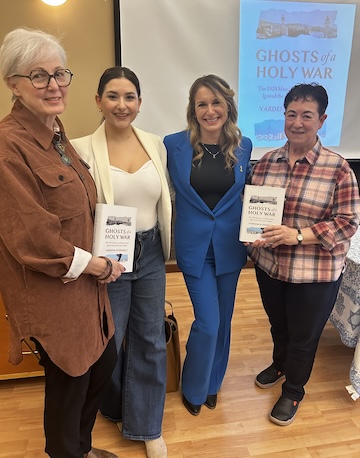
The White Rock/South Surrey Jewish Community Centre hosted Yardena Schwartz, author of Ghosts of a Holy War: The 1929 Massacre in Palestine that Ignited the Arab-Israeli Conflict, on Feb. 23.

photo - Left to right: Gay Cohen, organizer of the White Rock/South Surrey Jewish Community Centre Book Club; Helen Mann of the Jewish Federation of Greater Vancouver; author and journalist Yardena Schwartz; and WRSS JCC president Adele Ritch
Left to right: Gay Cohen, organizer of the White Rock/South Surrey Jewish Community Centre Book Club; Helen Mann of the Jewish Federation of Greater Vancouver; author and journalist Yardena Schwartz; and WRSS JCC president Adele Ritch. (photo by Chloe Heuchert)

At the event, held in partnership with the Jewish Federation of Greater Vancouver and the Cherie Smith JCC Jewish Book Festival, Schwartz – an award-winning producer and journalist – spoke about her book and then answered some questions from the audience.

Schwartz has worked for NBC, among other organizations, and reported for many publications, including the Wall Street Journal, New York Times and Foreign Policy. She lived in Israel from 2013 to 2023.

While working as a freelance journalist in Tel Aviv, Schwartz was introduced to a family from Memphis, Tenn., who had a box of letters written by their late uncle, David Shainberg, who was one of the 70 Jews killed by some of the Arab residents of Hebron during the massacre in 1929. He had sailed to Palestine in 1928, and studied at Hebron Yeshivah; he wrote hundreds of letters to his family about how Jews and Arabs were living together, coexisting, peacefully. Schwartz spoke about those letters, and the massacre and how it relates to Oct. 7. 

Helen Mann, who works with the Jewish Federation and is also a part of the White Rock/South Surrey Jewish community, told the Independent that reading Schwartz’s book amid growing antisemitism was empowering, that “it felt more important than ever to spread the historical truth of our people and this contentious and tiny piece of land, especially in such a tiny Jewish community we are in, of White Rock/South Surrey.”

Mann said there is so much misinformation being disseminated, on social media in particular.

“Yardena has meticulously delved through and cited sources to do the work for us, and weave that history into a page-turner,” she said. “While I hope this book gets into the hands of anyone who wishes to speak on the current conflict and politics, it’s of high priority that we as a Jewish community are educated on our own history; to know who we are in order to know where we are going.”

The Jewish Independent spoke with Schwartz after the event.

JI: What types of research did you do for the book?

YS: My research started with interviews in Hebron with Palestinians and Israelis living there. And then, from there, I focused on the period of history that preceded the massacre, so 1928 and 1929. That involved looking at archival newspaper articles in places like the Palestine Post and the New York Times, and Arabic press… There’s an archive in Hebron that I spent a lot of time in, archives in Jerusalem, and Hagana Archives in Tel Aviv. This was during COVID, so I couldn’t go to the London archives, but some other authors who had been there and got materials were kind enough to share them with me.

It was a lot of archival research, a lot of interviews: hundreds of hours of interviews with Israelis and Palestinians in Hebron between 2019 and 2023.

I also read as many books as I could that were focused on that period. There were two books that were really helpful in my research. One was Hillel Cohen’s Year Zero of the Arab Israeli Conflict, which tells the story not just of the Hebron massacre, but of the riots of 1929. And it’s very succinct, it just focuses on the riots, like none of the history before or after. Then, a book by Orin Kessler, Palestine 1936, which focused on the Great Arab Revolt from 1936 to 1939.

JI:  During your research, did you find any information that surprised you in a way?

YS: Well, the letters that David Shainberg wrote to his family were really eye-opening for me in painting a picture of what Hebron was like before the massacre and what Hebron was like during the British Mandate before the massacre…. I had never known that Jews and Muslims had lived side by side in peace in Hebron and owned businesses and drank coffee together. That was really surprising to me, given what Hebron is today.

But I think what shocked me most during my research was what I discovered about the mufti, the grand mufti, Amin al-Husseini, who was the first leader of the Palestinian people, and, specifically, his role during the Holocaust, his affiliation with the Nazis, his role as a Nazi, and his role in recruiting tens of thousands of Muslims to fight for the Nazis – and the fact that he lived the rest of his life out in the open. I mean, he was wanted for Nazi war crimes and yet he didn’t have to live out the rest of his life in hiding, like so many Nazis did…. He was never arrested, never was prosecuted or put on trial for his crimes. 

JI: Since this is your first book, how was the overall experience, and what challenged you the most? 

YS: I think what challenged me the most was giving birth to two children during the course of writing this book. I honestly still have no idea how I wrote a book while raising two kids – my kids are now 2 and 4-and-a-half. I was pregnant with my first child when I started this research … and it was really difficult to write about such a depressing, heavy subject while bringing new life into this world. It was really difficult.

It had always been a dream of mine to write a book. I’d been a journalist for years, but I don’t think I could grasp, until writing this book, just how difficult writing a book is, especially something that covers 100 years of history. So, it was … a tremendous undertaking. Sometimes, it was torturous, but other times it was really fulfilling and especially now that it’s out there in the world, and hearing from readers is just like an incomparable experience…. I feel really blessed that I was entrusted with these letters by these families. Without them, this book wouldn’t have come to fruition, basically. 

JI: What key message do you want readers to take from the book? 

YS: I think my key message is that we will never be able to resolve this conflict if we can’t agree on the facts that drive it and the history that precedes this tragic moment we’re in. And, I think, to anyone who wants to see peace in Israel, peace between Israel and Palestinians, I hope they’ll read this book. I hope they’ll learn the lessons of history, so that we can stop repeating the mistakes of the past. 

Chloe Heuchert is an historian specializing in Canadian Jewish history. During her master’s program at Trinity Western University, she focused on Jewish internment in Quebec during the Second World War.

Posted on March 14, 2025March 13, 2025Author Chloe HeuchertCategories BooksTags antisemitism, Helen Mann, history, misinformation, South Surrey, White Rock, WRSS JCC, Yardena Schwartz
Determined to help others 

Determined to help others 

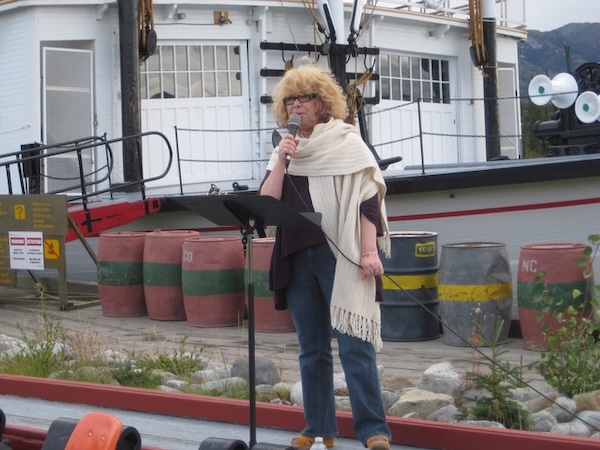
Photos from the book include Joy Karp speaking to a group of people at a Terry Fox Run in Whitehorse. (photo from Rick Karp)

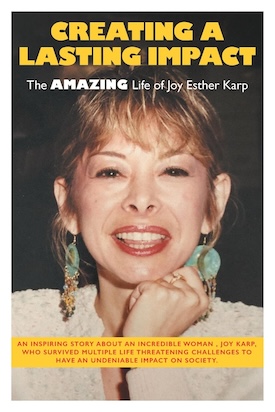
Creating a Lasting Impact: The Amazing Life of Joy Esther Karp was recently published.

Written by Rick Karp, who was married to Joy for 49 years – many of them spent in the Yukon – the account tells of her determination to make a difference and how she made numerous contributions to society, while having to overcome life-threatening issues every few years.

Joy Karp died in 2017.

image - Creating a Lasting Impact book cover“I promised Joy a few weeks before she passed that I would ‘tell her story,’ and that is what I have done. People need to know who she was, what she accomplished throughout her life, how caring and supportive she was for others,” Rick Karp told the Independent. 

Two of the setbacks Joy Karp faced were a heart attack, after giving birth to twins in her early 20s, and a car accident, in which she was thrown from the vehicle onto a frozen Lake Ontario, smashing the bones in her left foot; she had to wear specially made shoes thereafter.

In 1986, the Karps moved from Ottawa to Whitehorse, where they brought the first McDonald’s to the North and were deeply involved in the economic, social and cultural fabric of the Yukon. But this didn’t protect the couple from life’s vicissitudes. 

Joy was kidnapped in 1992 and buried in her car for close to 17 hours.  The kidnappers shackled her wrists and ankles, blindfolded her, put a bag over her head and left her there without needed medication, despite knowing she had heart issues.

“After the kidnapping, Joy suffered horribly for years from PTSD and, a couple of years later, her heart gave out and she had to have a quadruple bypass operation,” Rick Karp said.

In addition, Joy’s foot was severely damaged after the kidnapping, and doctors considered amputation. The Karps, though, demanded that the doctors pursue another course, which allowed her to keep her foot.

A few years later, Joy had her first case of cancer and required operations, chemotherapy and radiation. The cancer returned after several years and proved incurable.

“The doctors thought it was a heart issue and all that Joy needed was a pacemaker,” Karp said. “The X-rays that they did to determine the positioning of the pacemaker showed that the issue was a cancerous growth that had developed in her right lung and had reached out and attached to her heart. 

photo - Rick Karp’s book about his wife, Joy, was recently released
Rick Karp’s book about his wife, Joy, was recently released. (photo from Rick Karp)

“They said that it was inoperable and that Joy only had about three months left, but she survived for close to 11 months.”

Despite all these adversities, Joy had an innate ability to understand and see the potential in others, to learn what they needed, and then make things happen for them, said Karp. People were always drawn to her, he said.

“This was one of the amazing things about Joy. She thought of others. She was a great listener. As a student, she helped her fellow students with assignments, and she had the ability to resolve issues.”

One of Joy Karp’s legacies is the McDonald’s Hands-On Business Training Program. The story begins in Ontario in the 1970s, with a job she had helping an owner-operator grow to five stores, and managing the head office. Confronted with a high turnover rate in some towns, the owner approached Joy for a solution. 

She created a training program in 1978 and implemented it at local McDonald’s restaurants. By the early 1980s, according to Karp, the program was used throughout the fast-food chain.

“This is a three-year program that takes employees, or others that apply, through training and development that solidifies their knowledge of all of the stations in McDonald’s, training in customer service, and all aspects of how the restaurant operates,” he said.

“Then, to the right people, the program offers the chance to rise from crew person to crew trainer, to swing manager, to assistant manager and to manager – it offers career opportunities. Also, embedded in the program is the concept of ‘promote from within,’ which has been adopted by businesses, well, everywhere.”

Among other accomplishments, Joy organized service and customer satisfaction workshops for the Whitehorse Chamber of Commerce when the city played host to the Canada Winter Games in 2007. Her efforts, Karp said, were recognized by the event’s organizers.

Additionally, she played a key role in bringing the Special Olympics to Whitehorse, helped arrange for an outdoor play area and training computers at the Yukon Child Development Centre, and was pivotal in obtaining funding to make the Yukon Arts Centre wheelchair accessible. In 2013, she wrote The Power of Service: Service Through the Eyes of Customers, a book that emphasizes the importance for businesses to develop relationships and trust with those they serve.

Creating a Lasting Impact can be purchased on the Bookstore page at rwkarp.ca. A signed copy can be ordered by emailing Karp at [email protected]. 

Sam Margolis has written for the Globe and Mail, the National Post, UPI and MSNBC.

Format ImagePosted on March 14, 2025March 13, 2025Author Sam MargolisCategories BooksTags business, health, history, Joy Karp, McDonald's, memoir, Rick Karp, tikkun olam
The people’s army of Israel

The people’s army of Israel

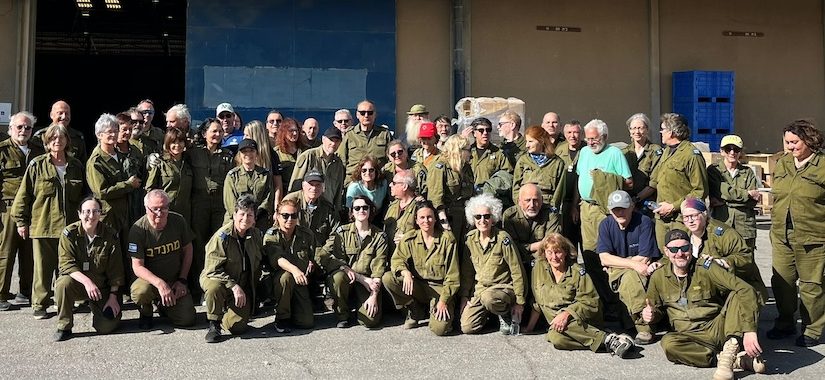
Volunteers with Sar-El in Israel last March. (photo from Marina Sonkina)

Last year, about this time, I was in Israel, volunteering with Sar-El, an organization that connects the Israel Defence Forces with volunteers from more than 30 countries, who provide the army with non-combat support. So many others had wanted to help after Oct. 7 that I had to wait several months for my documents to be processed.

The mood was understandably sombre. Not just the trauma of the Hamas terror attacks, with hostages captive, but also the antisemitism that engulfed the Western world like fire. 

I asked some of my fellow volunteers why they had come to Israel during such a dangerous time. The answers I got, especially from non-Jews, both surprised and comforted me. A Christian volunteer from Detroit wanted Israel to know that it did not stand alone. A middle-aged Australian had been sponsored by her church in Sydney to help people of the Holy Land under an attack. Two Romanian girls didn’t speak a word of Hebrew or English, but answered me in Italian: “Aiuto” (“Help”).

“I had a very good life. I had a chance to travel all over the world. But, until now, I’ve been traveling horizontally,” a Parisian Jew of Algerian descent told me. “Now, it’s time to travel vertically,” she said, raising her eyes to the sky. “This land is sacred. I feel it here like nowhere else. And now it’s in peril.”

In spite of rockets being fired into Israel from Lebanon, Gaza and Yemen, the volunteers felt more protected in Israel than they did back home. Many felt relieved that, finally, there was no need to conceal one’s true feelings or to hide one’s Jewishness.

“I don’t feel safe in the US anymore,” said a New York lawyer who had been attacked from behind in the streets of Manhattan, his yarmulke yanked off his head.

A German woman from Munich was on her 10th visit to Israel. “I’m not Jewish, and I can’t explain it,” she said. “All I know is that I love people here. Love their warmth. Chaos? Yes! They talk loud, they are emotional, but I don’t mind that. I plan to spend half a year here once I retire.”

Initially, I wasn’t sure how we, civilians, could help the IDF fight Hamas in Gaza, but my first day at the medical military base near Tel Aviv made it clear. Hundreds of different medications and medical devices that had come from warehouses across the country had to be sorted out, their expiration dates checked. Those who accuse Israel of racism should see these medicines, each labeled in four languages: Hebrew, Arabic, English and Russian. (Thanks to Soviet antisemitism and, lately, to Putin’s war on Ukraine, 15% of Israel’s population comes from Russia.) 

On the military base, I saw clearly what is best in Israel: its people. The IDF mirrors the diversity and inclusiveness of a society that, in its short history, has accepted refugees from more than 100 countries. 

Without Moshe, for example, we would have had no idea how to sort the truckloads of medications arriving every day. Having come to Israel from Bukhara (in Central Asia) as a child, Moshe kibitzed in three languages, instructing us by means of his hands while talking on his cellphone. From his easy smile, I would never have guessed that his wife had recently died of cancer, that his two sons were fighting in Gaza and that, every day after his work with us, he went to a synagogue to pray. One morning, Moshe directed us to place boxes in long rows on the floor, in an unusual configuration. The next morning, a group of children with autism and down syndrome came to finish the sorting, also helping their people’s army.

Paul, a mathematician who came from France, was in charge of the military base’s math department. Ruth, who had made aliyah from the Netherlands as a teenager, was serving as one of the madrichot (female soldiers tasked with organizing and looking after Sar-El’s volunteers); after the army, she hoped to become a specialist in Japanese culture.

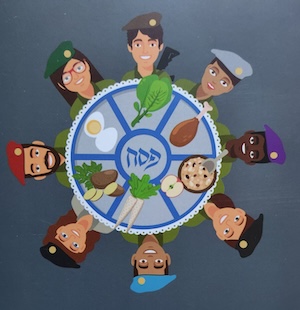
On another military base, about 20 kilometres from Gaza, in the Negev Desert, one of our tasks was to assemble care packages for soldiers spending Passover at the front, away from home. In two days, we filled 15,000 boxes with grape juice, matzah and other traditional items. A  soldier with a distinct Californian accent came to help us. He was a “lone soldier,” a soldier who has no family in Israel. Various families take turns welcoming lone soldiers for Shabbat, feeding them and giving them a sense of home.

photo - The cover of a Haggadah that Sar-El volunteers inserted into thousands of Passover boxes that were sent to Israeli soldiers in Gaza. It shows the multicultural character of the Israel Defence Forces
The cover of a Haggadah that Sar-El volunteers inserted into thousands of Passover boxes that were sent to Israeli soldiers in Gaza. It shows the multicultural character of the Israel Defence Forces. (photo from Marina Sonkina)

Once, an officer joined us, helping make up the boxes, which was unusual, given his rank. Later, I saw him in the mess hall speaking in Hebrew to the base commander, who was originally from India. I found out that the officer was Druze. Living mainly in the country’s north, in the Galilee region, the Druze community enjoys all the civil rights of other Israelis, while maintaining their Arabic language and customs. Many Druze reach high echelons in the army, in medicine and other professions. When a Hezbollah rocket struck the Druze town of Majdal Shams, killing 12 children playing soccer, Prime Minister Binyamin Netanyahu went there, addressing community members as “brothers and sisters.” He promised that Hezbollah would “pay a heavy price” for killing their children, and he kept his word.

When I think of the soldiers I met and talked to, one thing sets them apart from young people of their age in North America: a seriousness of purpose, and the burden of responsibility. They know that the survival of Israel lies on their shoulders. They also know that, while defending their  country, they may not survive. Death lurks behind every corner in Gaza and Lebanon. It has hidden in an effigy of a child pleading, in Hebrew, for help, but booby-trapped with explosives. It was underground, in the tunnels, some going 50 kilometres deep. It disguised itself in doctors’ scrubs, inside Kamal Adwan Hospital in Gaza, which was appropriated by Hamas terror operatives.

Every fallen soldier is loved and mourned as one’s own child. Army service acts as a social glue in a country into which millions of refugees, speaking different languages, have poured. The IDF is still the backbone and pride of this society.

At a party for troops just returned from Gaza, I saw a religious Jew in a yarmulke (skullcap) and tzitzit (prayer shawl) hanging from under his uniform, with a baby girl in each arm and an automatic rifle dangling behind his back. I talked to a medic, a corporal who was more outspoken than many – a college history teacher in times of peace, he had three young children at home.  

“Is there any possibility of peace between Palestinians and Jews?” I asked him.

“Before Oct. 7, I supported a two-state solution because I wanted peace, but the Palestinians do not want peace,” he responded. “We’ve tried it many times in the past. They want only one state, an Islamic Caliphate with Sharia rule. We, Jews, are in their way and they want us dead…. We have to fight – if we want to survive.”

“What about your children?” I asked. “Will they have to fight, too?”

“Yes, them, too,” he said. “They’ll be left with no other choice.” 

I shook my head in distress but said nothing.

“Look,” said the man, “illusions cost us very dearly. We can’t afford them anymore.”

I remembered Golda Meir’s words, spoken in 1957: “Peace will come when the Arabs will love their children more than they hate us.”

There is a truce in Gaza now. But, while some 20,000 Hamas fighters have been eliminated, 10,000 armed fighters are still at large. 

Marina Sonkina is a fiction writer, and teaches in the Liberal Arts Program 55+ at Simon Fraser University.

Format ImagePosted on March 14, 2025March 13, 2025Author Marina SonkinaCategories IsraelTags antisemitism, IDF, Israel, Israel Defence Forces, Israel-Hamas war, Oct. 7, Passover, Sar-el, volunteerism
Welcoming guests again

Welcoming guests again

There may not be magic at hand to prepare dinner or clean up afterwards, but the Weasleys’ home in the Harry Potter series, the Burrow, is a good model for how to welcome guests, with Mrs. Weasley’s always sharing her love, food, home, and even her motherly reprimands with others. (photo by Karen Roe / flickr)

This winter, I felt our household was in hibernation. Between endless viruses brought home from middle school and -30˚C temperatures in Winnipeg, I doubted we’d ever emerge. Then, our household caught a break. We’ve had a few weeks now where all four of us seem mostly healthy. Also, there has been a rare moment of “early spring,” where temperatures are around freezing, the sun is out and everyone seems cheerful about the deep, goopy slush.

We have started to dig ourselves out. Not from the snow, but from all the activities we piled up during the coldest time of year. One kid removed his slot car racers and a 3D printer project from the dining room. Another kid tidied up a huge set he’s building for his video production class. There are still too many books and knitting projects on the coffee table (my fault). My husband even cleaned up his piles of paper. Why all the hurry? Well, suddenly people are coming over again to visit. We’re hopefully emerging from our long retreat.

During our hibernation, we stayed home, went to work and school, and to synagogue. That was mostly it. But then I got an email out of the blue. When I walk my setter-mix dog, we often encounter a tiny dog, Lulu, and her human, and we chat. Deep into our winter sojourn, we weren’t seeing Lulu or her people much, it was just too cold. Yet Lulu’s people, thoughtful neighbours, invited us over for cheese fondue, wine and a warm chat. After a great night out a block from home, I realized how small our world had become. I decided we owed them a dinner invitation. They’re coming (probably without Lulu) for Shabbat dinner this week.

I’ve always enjoyed cooking big Shabbat and holiday dinners for friends and having great conversations at the table. I was raised with this kind of hospitality. My parents’ home was always open to my friends, who timed their visits to enjoy their favourite foods or discuss things with my parents or siblings, and their friends, too. However, over the years, I’d really cut back on these dinners. First, because my twins still go to bed early. Then, because of the pandemic. After Oct. 7, I felt wary about the outside world and wanted to feel safe at home. About a year ago, I stopped inviting people. I could say it was because I was concentrating on my twins’ b’nai mitzvah preparations or the event itself, with friends and family visiting, but that was last June. This winter, we’ve been sick and it’s been so cold.

On one Shabbat at synagogue, I heard an impromptu talk from a young adult visiting home. He was serving in the Israel Defence Forces as a lone soldier and spent part of his time at home talking to groups about what was happening in Israel, and we discussed how to combat antisemitism in Canada. At this event, a community member suggested that inviting friends and allies over, perhaps to Shabbat dinner, could help others learn about who we are and gather more support. 

What happened afterwards, along with the warmer, slushy weather, is that some of our friends began to seek us out. 

Last week, an amazing acquaintance, who used to run a gallery we loved, asked me to sign one of my books for her friend’s birthday. Of course, I said, come on over. I showed her our “new” historic house and she brought me tulips.

Then, a longtime artist friend in her 80s contacted me and decided she was coming over the next morning for muffins and coffee, so she could show off her newest marbled paper experiments.

Last week, a retired newspaper columnist that I really respect happened to spot my husband outdoors with the dog. He started to text with my husband and asked to come see how we’d renovated things. My husband said yes. Our neighbourhood’s full of old houses with interesting quirks, so visiting each other’s homes is always fun. They’re coming for coffee and cake on Sunday. It seemed like high time to pick up the dog toys from the living room carpet.

All of these encounters with warm people who sought us out and wanted to get back in touch? None of them is Jewish. All of them are people who want us to know they are safe, they care about us, and they value our company. This was an important realization, well worth the effort it takes to clean up the messy paw prints and kid fingerprints for a visit.

When I imagine how I want my home to appear to friends, or even strangers, I think of the Burrow, the Weasleys’ home in the Harry Potter series. Well, that’s not quite right. Our house doesn’t use magic to knit sweaters or stir pots of soup. Those are my hands, my knitting and my cooking, instead. However, whenever I think of the Burrow, I think of a warm, welcoming place where Mrs. Weasley feeds everybody and makes everyone feel welcome and loved, despite the normal clutter and chaos of family life.

My notion of hachnasat orchim (welcoming guests) comes from Jewish tradition, a much older playbook than the Harry Potter series. However, the meaning feels the same, even if my household menu includes hamantashen and chicken soup. Mrs. Weasley’s always sharing her love, food, home, and even her motherly reprimands with others, and it goes beyond her family. Her home, the Burrow, sounds like a retreat, but it’s not a hibernation. It’s an enthusiastic embrace.

I am hoping to get back to that safe and cheerful place, where our home is full again with fascinating friends, good food, stimulating conversation and an open heart. Our gardens are still under dirty snow here. It sometimes takes a heroic effort to rise above winter weather and the residual sadness of the war, but good things await. Things are warming up at my house in Manitoba. I’m hoping for happier days ahead. 

Joanne Seiff has written regularly for the Winnipeg Free Press and various Jewish publications. She is the author of three books, including From the Outside In: Jewish Post Columns 2015-2016, a collection of essays available for digital download or as a paperback from Amazon. Check her out on Instagram @yrnspinner or at joanneseiff.blogspot.com.

Format ImagePosted on March 14, 2025March 13, 2025Author Joanne SeiffCategories Op-EdTags antisemitism, family, friends, hachnasat orchim, Harry Potter, hibernation, Judaism, liefstyle, Oct. 7, spring, the Burrow, welcoming guests, Winnipeg, winter
Popeye and peanut butter

Popeye and peanut butter

The teeny size of these peanut butter banana bites makes you think you’re not eating much, so be careful. (photo from adasheofmegnut.com)

I’m long overdue to share a new recipe or two. With our recent move to a new condo, I’ve been preoccupied with exploring the neighbourhood, trying new-to-us restaurants and cafés, and doing a few renos here and there. Despite the excitement of it all, sleep is still elusive to me. Plus, I’ve been feeling a little tired lately (iron-deficient?), so I figured some iron-rich soup might just hit the spot. I whipped up some creamy spinach soup and immediately felt like Popeye. Or Popeye’s favourite sister. Perfect soup for a cold day, of which we’ve had so many over the last few weeks. You’re welcome.

EASY CREAMY SPINACH SOUP
(from the Spruce Eats)

2-3 tsp olive oil
2 medium Yukon Gold potatoes, peeled and cubed
1/2 medium onion, finely chopped
1 stalk celery, finely chopped
2 cloves minced garlic
2 cups chicken broth
2 cups milk (or 1 cup milk and 1 cup coconut milk)
1 large bunch of fresh spinach, stems removed
ground black pepper, to taste
kosher salt, to taste

In a large saucepan, heat the olive oil. Sauté the cubed potato, the onion, celery and garlic for about five minutes. Add the chicken broth and milk. Bring to a boil, cover and simmer on low for 10 minutes. Stir in all the spinach, cover, and simmer for 10 more minutes. Cool slightly, then transfer the soup to a blender, 1working in batches. Blend until smooth. Taste for seasoning and serve.

I didn’t use any onion, since onions don’t particularly like me, and I ended up using four cups of chicken broth, since I didn’t have enough regular or coconut milk. The consistency was a bit thin but it was still yummy. And I got a month’s worth of non-heme iron in one go. I’ve learned that potatoes are a nice way to thicken soups, especially if you’re going for something dairy-free. 

I had intended to bake challah to go with the soup, but time got away from me and I just couldn’t swing it. At the last minute, the understudy sourdough bread came to the dunking rescue and we had a satisfying meal. Harvey declared the soup a solid success, so who can argue with that? I was worried that the simplicity of the recipe might spell bland, but it was surprisingly tasty. 

Skipping right to dessert, I discovered a fun little recipe for Peanut Butter Banana Bites on adashofmegnut.com. It’s crazy easy and can be jazzed up with chocolate chips or melted chocolate. It was billed as a kid-friendly snack but I would never presume to declare something a “toddler snack,” since who among us doesn’t like peanut butter, or chocolate? 

PEANUT BUTTER BANANA BITES
(from A Dash of Megnut)

one banana, sliced 1/4” to 1/2” pieces
3 tbsp peanut butter (or almond butter), melted slightly
6 oz mini chocolate chips or melted chocolate (optional)

Line a mini muffin tin with 12 liners or use a silicone mini muffin tin. Put a slice of banana into each muffin liner. Pour one to two teaspoons of peanut butter on top of each banana slice. Top with a few mini chocolate chips or melted chocolate (optional, but, seriously, who would say no to chocolate?). Freeze for a few hours to harden the peanut butter. Then enjoy!

These keep well in the freezer and make for a quick and easy snack. And if you substitute hemp hearts for mini chocolate chips you get an even healthier snack (don’t hate me). I haven’t tried it, but you could probably add some cooked quinoa to the melted peanut butter to jack it up to a superfood (again, don’t hate me). The teeny size of these peanut butter banana bites makes you think you’re not eating much, so be careful.

As for main courses, I’m in a bit of a rut right at the moment. It seems like we have an endless loop of chicken, fish and meat every week. We’re not huge pasta eaters (well, Harvey would eat it every day if I let him), so I feel kind of limited in my repertoire. I can’t eat a lot of roughage and high-fibre foods, so huge salads are out. I think I just need a holiday in the sun, where someone else does the cooking for a couple of weeks and I can recharge.

On the home front, our new condo has an induction stove, which I love. There’s one glitch though. Harvey recently had a pacemaker and defibrillator implanted in his chest, which means he’s not allowed to get within two feet of our induction stove or he might get shocked from the electromagnetic field. This presents a problem for a man who regularly makes omelettes, crepes and other stovetop foods. A natural born problem solver, Harvey immediately went out and bought a single-burner countertop hotplate. And, to my surprise, he’s produced some pretty darn good omelettes. But there are only so many eggs you can eat. I hinted that the hotplate might work well for crepes, but he hasn’t taken the bait so far. I guess we’ll be ordering in sushi and Chinese food until I get my groove back.

For now, I’ll just keep trying new marinades for our weekly chicken, fish and meat. As they say: You can put lipstick on a chicken thigh … but it’s still a chicken thigh. I suppose I could go full-bore Cher (from the movie Mermaids) and feed my husband fun finger foods (read: hors d’oeuvres) for all our meals. That could be a lot of fun. Or not.

Harvey: “What’s for dinner tonight, sweetie?”

Shelley: “Cocktail weiners in grape jelly sauce, and melted brie with walnuts and honey.”

Harvey: “You’re fired.”

Shelley: “Who do you think you are – Trump? You can’t fire me. I’m your wife.”

Harvey: “So, will it be sushi or pizza?”

Bon appetit. 

Shelley Civkin, aka the Accidental Balabusta, is a happily retired librarian and communications officer. For 17 years, she wrote a weekly book review column for the Richmond Review. She’s currently a freelance writer and volunteer.

Format ImagePosted on March 14, 2025March 13, 2025Author Shelley CivkinCategories LifeTags Accidental Balabusta, baking, cooking, recipes

What your tchotchkes think

Ever wondered what your leather-bound journal thinks about you? Your menorah? The bowl you made in a pottery class? What astrological sign your keepsakes might be? How they’d like to be handled, cared for? Where they’d like to be in your home?

For most of us, the answer is probably no … to all of the above. But Elisabeth Saake has thought of all these things. And, after reading her latest book, Tchotchkes and their F*cked-Up Thoughts: The Messed-Up Minds of Your Trinkets and Treasures (Collective Book Studio), you will too. It’s a follow-up to her 2023 Houseplants and Their F*cked-Up Thoughts: PS, They Hate You, which she wrote with Carlyle Christoff.

image - Tchotchkes and their F*cked-Up Thoughts book coverDivided into five sections, no knickknack is spared. Saake covers the whimsical (lava lamp, rubber chicken, etc.), vintage and collectibles (antique compass, souvenir spoon, etc.), cultural and artisanal (woven tapestry, ceramic urn, etc.), spiritual and mystical (worry stone, crystal ball, etc.) and functional and decorative (novelty salt and pepper shakers, participation trophy, etc.).

About your journal, don’t worry, it thinks “your poetry is profound” and is “totally listening and deeply moved”; it only appears to be setting itself on fire.

But your menorah would like to be treated as more than a “fancy candleholder”: “Fill my branches with holy oil from trees grown on the Mount of Olives, just a day’s worth, and watch me burn for eight! Or cram in cheap candles from your big box store’s Hanukkah display. That works, too. Way to honour your ancestors, nudnik.”

And your handmade pottery is a “real bowl,” even if it “was made in a beginner’s night class at the community college”: “I’m round enough, I’m stable enough and, doggone it, people like me!” Though, it’s “a bit wobbly,” so perhaps no soup … maybe just display it on a kitchen shelf, as the “mantel is for the perfect porcelain.”

Tchotchkes and their F*cked-Up Thoughts would make a great gift to any friend (with a sense of humour) who’s a collector of things, or to any friend who has judged others’ collections of things. It’s snarky, a little dark at times, but will bring many chuckles and laughs, even if every joke doesn’t land. It’s colourful and beautifully put together. Hopefully, it will think as highly of you, its place in your home and how you care for it – and have an astrological sign that’s compatible with yours. 

Posted on March 14, 2025March 13, 2025Author Cynthia RamsayCategories BooksTags Collective Book Studio, Elisabeth Saake, home, lifestyle, Tchotchkes and their F*cked-Up Thoughts

Posts pagination

Previous page Page 1 … Page 49 Page 50 Page 51 … Page 664 Next page
Proudly powered by WordPress