Skip to content
  • Home
  • Subscribe / donate
  • Events calendar
  • News
    • Local
    • National
    • Israel
    • World
    • עניין בחדשות
      A roundup of news in Canada and further afield, in Hebrew.
  • Opinion
    • From the JI
    • Op-Ed
  • Arts & Culture
    • Performing Arts
    • Music
    • Books
    • Visual Arts
    • TV & Film
  • Life
    • Celebrating the Holidays
    • Travel
    • The Daily Snooze
      Cartoons by Jacob Samuel
    • Mystery Photo
      Help the JI and JMABC fill in the gaps in our archives.
  • Community Links
    • Organizations, Etc.
    • Other News Sources & Blogs
    • Business Directory
  • FAQ
  • JI Chai Celebration
  • JI@88! video

Recent Posts

  • Story of Israel’s north
  • Sheltering in train stations
  • Teach critical thinking
  • Learning to bridge divides
  • Supporting Iranian community
  • Art dismantles systems
  • Beth Tikvah celebrates 50th
  • What is Jewish music?
  • Celebrate joy of music
  • Women share experiences 
  • Raising funds for Survivors
  • Call for digital literacy
  • The hidden hand of hate
  • Tarot as spiritual ritual
  • Students create fancy meal
  • Encouraging young voices
  • Rose’s Angels delivers
  • Living life to its fullest
  • Drawing on his roots
  • Panama City welcoming
  • Pesach cleaning
  • On the wings of griffon vultures
  • Vast recipe & story collection
  • A word, please …
  • מארק קרני לא ממתין לטראמפ
  • On war and antisemitism
  • Jews shine in Canucks colours
  • Moment of opportunity
  • Shooting response
  • BC budget fails seniors
  • Ritual is what makes life holy
  • Dogs help war veterans live again
  • Remain vital and outspoken
  • An urgent play to see
  • Pop-up exhibit popular
  • An invite to join JWest

Archives

Follow @JewishIndie
image - The CJN - Visit Us Banner - 300x600 - 101625

Parshat Shelach Lecha

Parshat Shelach Lecha

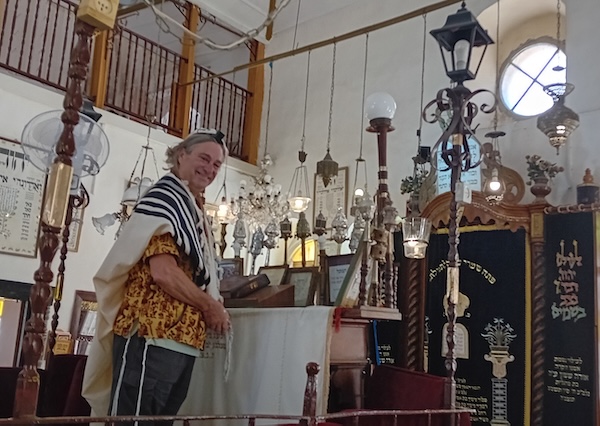
On June 21, at Ohel Yitzhak in Nahalat Shiva, Gil Zohar celebrated the 57th anniversary of his bar mitzvah. (photo Gil Zohar)

Man plans, God laughs, goes the Yiddish aphorism. For the last half year, I have been diligently learning the trope of Parshat Shelach Lecha (the Torah portion meaning Send for Yourself) to celebrate the 57th anniversary of my bar mitzvah, which I had when I was a boy in Toronto. My wife Randi and I had planned a kiddush at the historic Beit HaRav Kook synagogue near our home in downtown Jerusalem. We are members there, and enjoy the leadership of Rabbi Yitzhak Marmorstein, formerly of Vancouver’s Or Shalom. Alas, the war with Iran started. In accordance with the Home Front Command orders against large public assemblies, the shul closed. And so, we considered canceling the simchah.

While all but Jerusalem’s most essential businesses were locked down tight as a drum, the wartime defence regulations allowed synagogues near a bomb shelter to keep their doors open, with limited attendance. Hence, Ohel Yitzhak, the Sephardi synagogue in our courtyard in Nahalat Shiva, built in 1888, remained open. And so, we switched the venue from the former home and yeshivah of Abraham Isaac Kook (1865-1935) – the first Ashkenazi chief rabbi of British Mandatory Palestine – to the equally historic synagogue where Ben-Zion Meir Uziel (1880-1953) – Kook’s Sephardi counterpart, who served as nascent Israel’s chief Sephardi rabbi until his death – used to pray.

The illustrious Sephardi landmark, resembling a house of worship in a mellah in Morocco, is close to the Herbert Samuel Hotel, which opened its miklat (bomb shelter) to the public as well as hotel guests. So, on June 21, undeterred by the spectre of a ballistic missile salvo, I was called up to chant Maftir and read the Haftarah. 

What’s it like when the air-raid sirens sound nightly and warplanes roar through the starry sky? Lori Nusbaum of Toronto, who came with her son, Ryan De Simone, for my second bar mitzvah, has been posting on Facebook:

“The 3rd night in Jerusalem and the 3rd siren alert went off; it was 4:35 a.m. Sleep is hard. You don’t want to be in a deep sleep and miss the [cellphone] notifications so you try to have ‘one eye open.’ There’s something strangely intimate about being in a smallish space with a bunch of strangers, some in bathrobes, carrying pillows and blankets, wearing slippers, with sleep still in their eyes. You aren’t sure if you should make eye contact or not. It’s nighttime, so conversation is not really happening. I think we all want to keep sleep in our brains, hope we can go back upstairs quickly and close our eyes for a peaceful rest of the night.”

Like many guests at the synagogue, Lori found my wartime bar mitzvah intensely emotional. “My somewhat unaffiliated son had an aliyah at one of the oldest shuls in Jerusalem,” she posted on Facebook. “Our friend, whose bar mitzvah we came to witness, literally took the tallit off his back to wrap around my son so he could go to the bimah. With tears in my eyes, so many emotions washed over me. Too many to describe adequately. This is what Israel is all about. The people who in the middle of a war come together, pray, help each other and celebrate life together. And give you the proverbial shirt off their back.”

The grim situation in which we find ourselves today parallels the Torah reading of Shelach Lecha (Numbers 13:1-15:41) and its equally pertinent Haftarah (Joshua 2:1-24).

Returning after 40 days of reconnoitring the Promised Land, the spies sent by Moses reported: “We went into the land to which you sent us, and it does flow with milk and honey! Here is its fruit [showing a huge cluster of grapes hanging from a stave, today the symbol of the Ministry of Tourism, proudly worn by every licensed tour guide]. But the people who live there are powerful, and the cities are fortified and very large.”

Then, Calev ben Yefune shushed the crowd declaring, “We should go up and take possession of the land, for we can certainly do it.”

Ten of his fellow spies (all except Joshua) disagreed – “We can’t attack those people; they are stronger than we are” – and they spread a slanderous report about the land they had probed. Misunderstanding the many funerals they had witnessed because of the plague God had sent so that the spies would go unnoticed, they said, “The land we explored devours its inhabitants. All the people we saw there are of great size. We saw the Nephilim there [the descendants of the giant Anak]. We seemed like grasshoppers in our own eyes, and we looked the same to them.”

Grasshoppers? They might as well have called the Jewish people cockroaches.

In the words of Rabbi Lord Jonathan Sacks ztz”l, this dibbat ha’aretz (slanderous report about the Land of Israel) is the language of fear and demoralization. They are big, we are small. They are strong, we are weak. They do not fear us, but we fear them. We cannot prevail.

Was this, in fact, the case? As the Haftarah makes clear, the 10 scouts could not have been more mistaken. A generation later, Joshua bin Nun too sent two spies – the same Calev, and Pinchas ben Zimri. They slept on the roof of a house belonging to Rahav the prostitute, which formed part of the walls of Jericho. Hearing about the spies, the city’s king ordered his soldiers to arrest them, but Rahav hid them and misdirected the guards. What is more interesting is what she tells the spies of the feelings of Jericho’s residents when they heard that the Israelites were on their way:

“I know that the Lord has given this land to you and that a great fear of you has fallen on us, so that all who live in this country are melting in fear because of you. We have heard how the Lord dried up the water of the Red Sea for you when you came out of Egypt, and what you did to Sihon and Og, the two kings of the Amorites east of the Jordan, whom you completely destroyed. When we heard of it, our hearts melted and everyone’s courage failed because of you, for the Lord your God is in heaven above and on the earth below.”

Like contemporary Gazans and Iranians, the people of Jericho were anything but giants – they were terrified of us. The spies of Moses’s day should have known this. They had already said in the song they sang at the Red Sea: “Nations heard and trembled; terror gripped Philistia’s inhabitants / The chiefs of Edom were dismayed / Moab’s leaders were seized with trembling / The people of Canaan melted away.”

How did 10 of the spies so misinterpret the situation? They misunderstood Moses’s instructions: “Alu zeh b’Negev v’alitem et ha-har” – ascend (alu) through the south, and ascend (va’alitem) the mountain. The word “ascend” (aliyah in Hebrew) also means to overcome. (When Martin Luther King Jr. famously said, “We shall overcome,” he was citing this verse.) The spies lacked the faith that the land would be theirs, despite God’s promises, and 39 years of wandering in the desert followed.

The Jewish people, in Israel and the diaspora, experienced a crisis of confidence in 1313 BCE following the Exodus from Egypt, on the eve of entering the Promised Land. Not so today. We have no such hesitations as the Israel Defence Forces battle the regime of the latter-day Haman in Iran and its Hamas, Hezbollah and Houthi proxies. Our response is to follow Moses’s instructions: “Alu.” Ascend. Overcome. Make aliyah.

To that end, I invite you to celebrate Parshat Shelach Lecha with me at Beit Ha Rav Kook (9 Rabbi Kook St.) on June 13, 2026. Next year, in peaceful Jerusalem. 

Gil Zohar is a writer and tour guide in Jerusalem.
Format ImagePosted on June 27, 2025June 26, 2025Author Gil ZoharCategories Op-EdTags bar mitzvah, Israel, Judaism, Ohel Yitzhak, Shelach Lecha, Torah portion, war

Seeing the divine in others

I recently participated in a conference panel on hope in a time of divisive politics. A friend in the Jewish community couldn’t do it, so she asked me to help instead. I won’t lie, I felt nervous.

I worried that I wouldn’t measure up to some of the speakers, who had big job titles, awards and experience. This was compounded by a few missteps that left me feeling embarrassed and humbled. First, my friend’s name was left on the conference program and mine wasn’t listed, even though organizers had ample time to update the panelists’ names. Second, social media amplified the panel on Facebook and Instagram, but listed my name with incorrect, made-up undergraduate degrees. I’d provided my graduate degrees in religious studies and education because I felt they were relevant. Somehow, five years of education went away due to clerical errors.

The weird part was that my brief talk, and my presence at the panel, was to elevate Jewish experience and Jewish hope in an approachable way. Two academics spoke, using big concepts and bigger words, while minimizing their personal approach to the issues. Then, an amazing African Canadian legal professional spoke of her family’s journey and deep roots in Canada – it was personal, compelling and important. I was up next.

I’d prepared my notes in advance. I spoke from them, but, first, I changed gears. The night before the panel, held at Winnipeg’s Canadian Museum for Human Rights, I encountered members of the Persian community, holding up their lion flags to represent the Iranian people and their opposition to the Islamic Republic. I stopped to tell a young woman holding the flag that our hearts were with her, and we were thinking of her, and hoping the people of Iran were safe. She seemed shocked. Surprised that I saw her, knew what she represented, and embraced this message against extremism and violence of the Islamic Republic of Iran. She asked where I was from, I smiled and only said, “Winnipeg.” 

The day of the panel, I struggled with a parking meter. Then I crossed a street, sharing a warm smile with an Indigenous man on a bicycle who passed by. My heart thumped hard. Though I’ve done plenty of public events and teaching, I felt on edge. Maybe it was because I was one of the only representatives of the Jewish community in that multi-faith gathering. Maybe it was because I’d been checking on where the Iranian missiles were landing in Israel right before I came. I worried about repercussions following me into the Canadian Museum for Human Rights.

Pretending to check if the microphone was on, I said, “Welcome. Thank you for coming …” and, looking at the crowd, I greeted everyone with a “Hello y’all!” After that informal start, I made sure to mention the Jewish concept of the world as a broken pot, in which the vessel’s shards, our souls, are in each of us. I talked about tikkun olam, repairing the world, and putting those shards back together, as an act of hope that we work towards, as an act of ongoing creation – a human and divine partnership. Throughout the morning, I took time to look at people, greet them and try to see G-d in each of them. I decided that the way to confront my feelings of embarrassment, and the erasure of my name and credentials, was to fully see others the way I would want to be treated.

At this conference, there were many references to reconciliation. An Anglican bishop who is also a residential school survivor spoke during our panel question period. When I recounted all this later to my family, we recognized an important theme.

As a professor, my husband often attends events with a land acknowledgement. Working with a group of Indigenous students last year, he asked them how they feel about the “workshopped” statement the university uses. They said it was often done by rote and perhaps lost its meaning as a result. They didn’t feel seen by it. 

Almost immediately, I recalled that our congregation had changed its Prayer for Canada. The new one feels genuine to me. It includes aspects of a land acknowledgement by mentioning by name the first inhabitants of the land. It also includes the current Canadian political infrastructure. It’s a prayer to maintain our diversity, so that never again will Canada say, “None is too many,” in reference to the antisemitic exclusion of Jewish refugees fleeing Europe during the Second World War.

My husband will meet again this summer with a new group of Indigenous students. He’s considering a different discussion. What does it mean when society suggests that some people’s innate connection to the land must be acknowledged, but others don’t deserve a similar acknowledgement of their homeland? This issue isn’t “just” about Israel, either. What about the Kurds? What about the Druze? The dispossessed list is a long one.

When we moved to Winnipeg 16 years ago, celebrations for Canada Day included enormous festivals and bombastic firework displays. Over time, due to the pandemic and to a change in how we perceive the day, this has changed. Many Indigenous Canadians don’t celebrate Canada Day. 

Having my name left out and hard-earned credentials jumbled was difficult, but it reminded me of how acknowledgement works. We can choose, as Canadians, to look up from our phones and really see one another. We all deserve to take up space and be here, recognized for our special contributions, in this land of plenty. We may not be able to control the huge geopolitical events around us, but we can see one another and pray for our loved ones and our neighbours, too, both here and elsewhere. Recognizing the divine, individual spark in each person is crucial.

I’m hoping for a family cookout at home this Canada Day. We might talk about how we connect to Canada, and how we fit in the Jewish diaspora and homeland. It’s a complicated equation, worth talking about during a war. We should also choose to see, greet and value all those we walk with on this land and in the world. Let’s recognize everyone’s names, identities – and souls – as meaningful, too. 

Joanne Seiff has written regularly for the Winnipeg Free Press and various Jewish publications. She is the author of three books, including From the Outside In: Jewish Post Columns 2015-2016, a collection of essays available for digital download or as a paperback from Amazon. Check her out on Instagram @yrnspinner or at joanneseiff.blogspot.com.

Posted on June 27, 2025June 26, 2025Author Joanne SeiffCategories Op-EdTags Canada Day, civil society, interfaith relations, Judaism, lifestyle, tikkun olam
Deborah Wilde makes magic

Deborah Wilde makes magic

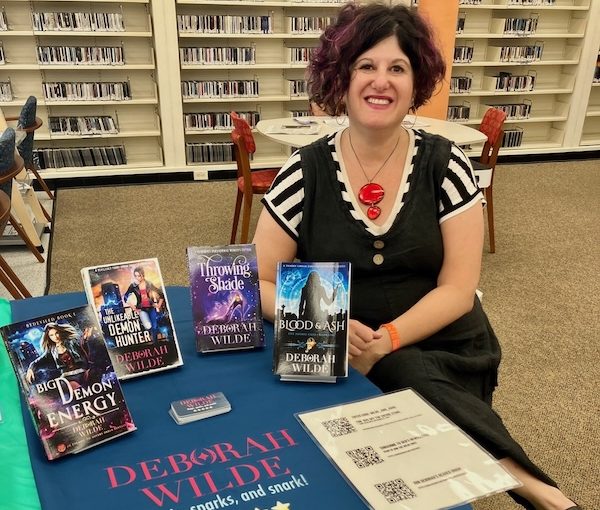
Writer Deborah Wilde is more public now about the Jewish elements in her novels, which have always had a Jewish sensibility. (photo from Deborah Wilde)

East Vancouver author Deborah Wilde has been a writer since childhood, when she filled countless notebooks with her stories. Born and raised in Greater Vancouver, she also spent some years in Kitimat; hers was the only Jewish family in town. She read Isaac Bashevis Singer and watched Neil Simon movies. It was an upbringing she describes as being “rich in tradition.” 

Wilde started her writing career in TV and film. “I loved it. I got to be in writers’ rooms, it was a real privilege,” she said. However, she added, screenwriters are “part of a machine: you’re hired to work on other people’s stories. I wanted to tell my stories.” These stories, as it turns out, are ones with strong Jewish representation and tough, sassy female protagonists.

With the movie industry being in what she describes as “a terrible state,” Wilde took the leap into young adult fiction. In writing the Nava Katz series, she was pleased to find that many of her screenwriting skills were transferable to this new genre. “Dialogue is my happy place,” she laughed. “I had a great time doing it.”

She knew that she had to have Jewish protagonists. “I was an avid reader as a kid but I only saw myself in Holocaust stories,” she explained. “Where was the Jewish girl falling down the rabbit hole or going through the cupboard into Narnia?”

In Wilde’s books, we meet a Jewish mom from Mumbai, and the love interest in her current series is a Mizrahi Jew. Diversity even within the Jewish community is vital, she said. “I want smart Jewish women who have adventures, who are the object of desire.”

Having embarked on her career in fiction, Wilde has reached her initial goal of publishing five books in three years. It took a lot of stamina and she learned that being an independent (or “indie”) young adult author was “not sustainable.” Setting her sights on an adult audience, she took inspiration from her “love of old Hollywood – it was the banter. And I’d always read romances,” she said, “so I wanted to include that as well.” 

Wilde settled on first-person, urban fantasy. A relatively new but extremely popular genre, urban fantasy tales are set in the world we live in but with magical and supernatural elements. Ordinary or “mundane” activities are constantly disrupted by these troublemaking nasties, sometimes with deadly consequences.

And that is where we meet Jewish heroine Ashira Cohen, private investigator. Walking down a Vancouver street, Cohen comes across a “grimy convenience store selling long-distance phone cards and bongs.” A Vancouver scene we probably recognize, but she might also run into a bodyguard who’s been possessed by a demon or a delinquent teen with a talent for vanishing into thin air. Cohen is fast-talking, feisty and funny, but she’s also “someone you’d want to run into at Café 41,” said Wilde. 

Meanwhile, Cohen’s finances are in a state, her love life is stagnant and she’s extraordinarily (and creatively) accident prone. The character is unsentimental, caustic and cynically bored. An interview with a young adult client gave her, she says, “all the details about their nauseatingly cute courtship and very little useful information.” 

Wilde’s novels bring a big helping of zany chaos, a nod to the screwball comedies of the 1940s, staple viewing in the author’s childhood home. But, while the books conform to established genres – such as the “chosen one” trope, the terribly attractive and just as infuriating nemesis – they’re also full of little winks at the reader: neurotic elders, Jewish idioms, references to Jewish traditions. 

Wilde’s talent lies in her ability to layer elements of regular life – like an eye-rolling teen whose statements sound like questions, or the intrusive badgering of Ash’s mother at a moment when tensions are already running high – over the frenzied dangers of the world inhabited by Cohen. The result is fiction that is absurd, surreal and peppered with rapid-fire dialogue reminiscent of the classic film His Girl Friday. 

There is also a serious undercurrent. The author seasons her prose with references to history. For example, one of the magical characters, Meryem, is a Turkish magic refugee who has fled the “purges.”

Jewish representation is very important to Wilde. “There is so little fiction and television with strong, tough Jewish characters,” she said. The Jezebel narrative isn’t a Jewish story but, explained Wilde, “it has a Jewish sensibility – because that’s my own. It’s authentic to my experience.” 

There has always been a Jewish flavour to Wilde’s writing, but it was more subtle; it could be found in the humour. “Readers would find the Jewish stuff eventually,” she said. “But now I’m talking about it in my ads, or even in certain interviews. I’m more public about it now.”

This is one of the aspects that makes Wilde’s work original. While Greek, Celtic, Roman and Norse tales have been all the rage for years, Jezebel’s Jewish folklore and mythology make it stand out. “I won’t write it if I don’t have something original to say,” said Wilde. And that’s where we find a magical organization called Nefesh, or, in Hebrew, “soul” or “life.”

Wilde is both a prolific writer and a businessperson. Talking about the switch to indie authorship, she describes it as “exhausting and a huge learning curve.” She is now both an author and her own publishing house. She has learned about search engine optimization, how to print and distribute books, the advantages of the different platforms and the wizardry required to publish ebooks online. But, despite all the technology that runs behind the scenes, Wilde finds that “word of mouth is still the best form of advertising – many people comment on my ads with things like, I just bought this book because of all the comments, so it had better be as funny as you all said!”

But she’s not alone in her work: her team now includes her husband (who designed the back end of her online store), an editor, cover designers and a slew of peers on whom she has depended for critical (but kind) feedback, moral support, professional insight and companionship. 

Wilde sells her books directly to readers. She explained that, when you buy from Amazon, “you’re actually leasing the book.” Instead, she said, “When you buy digitally from an author, you actually own the book – it’s yours, not just a link you have access to while you have that device.”

Past and present intersect with Wilde’s writing. Most of her grandfather’s family was killed in the Warsaw Ghetto. Of those who survived, she said, “They ended up in a displaced persons’ camp in Germany. My mom was born prematurely in that camp, delivered by a former Nazi doctor.” So, stories about how Jews once lived in Russia, which invaded Poland in 1939 and fully occupied it at the end of the Second World War, “that was my childhood.” 

Having been raised by her grandparents, Wilde said, “I know there is absolutely an aspect of me working through this generational trauma, baggage, but, at the same time, there’s also me working through the patriarchal aspect of Judaism.” 

Shula Klinger is an author and journalist living in North Vancouver.

Format ImagePosted on June 27, 2025June 26, 2025Author Shula KlingerCategories BooksTags Deborah Wilde, fiction, identity, Judaism, novels, urban fantasy, writing

With the help of friends

“‘You’re dead, Weiss!’ Declan shouted. He turned back to his friends. ‘This is our chance. Let’s get him!’”

And so the chase after sixth-grader Matthew Weiss begins, led by bully classmate Declan Bollard, with Declan’s three followers right behind. It leads to an adventure all the kids might have been happy to forego, but also a lesson in humanity that they all needed, even the bullied Matthew, who discovers not only his self-worth, but that people who seem to have everything going for them probably don’t.

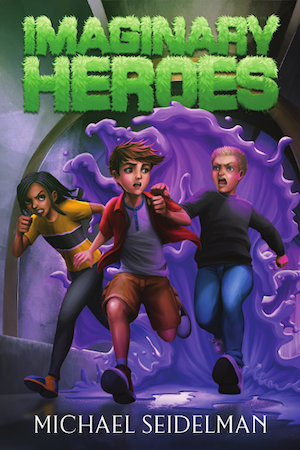
image - Imaginary Heroes book coverMichael Seidelman’s latest novel for readers around Matthew and Declan’s age – called Imaginary Heroes – is propelled by fear and anger but resolved by putting those feelings to constructive use, refusing to be defined by others, trusting in ourselves and braving the day, whatever challenges we face.

Like the character of Matthew, Seidelman has Tourette’s Syndrome and was bullied growing up because of it, which makes his descriptions of Matthew’s feelings so realistic that readers’ hearts will break a little.

Most kids ignore Matthew’s involuntary actions and sounds, a few laugh, but Declan menaces, with Booker, Booker’s twin sister Sam, and Cricket as an audience. After a particularly nasty incident at lunch, where, thanks only to Booker’s intervention, Declan steals Matthew’s dessert instead of beating him up, Seidelman writes: 

“The bell rang, and Matthew did his best to hold back his tears until the lunchroom was empty. Then he let it all out. Every day, he had to deal with those jerks, and this wasn’t even one of the worst days. At least Declan hadn’t hurt him physically this time. So far, at least.”

Arriving just in time for class nonetheless, the teacher berates Matthew for not getting there earlier. The adults – teachers and other kids’ parents – are little help to Matthew, just as they were to Seidelman as he was bullied growing up.

“Though many teachers and school administrators were of little to no help with the bullying I endured, there were a few who stood up for me, and those individuals have not been forgotten,” writes Seidelman in the acknowledgements. “And again, I must thank my parents and family; without their support, I truly don’t know where I would be today.”

The character of Matthew also has a supportive, loving family. And he has two imaginary friends, who not only help get him through the school days, but really step up when he, Declan, Booker, Sam and Cricket find themselves in a literal hole, with no apparent way out. The journey that ensues is a danger-filled adventure during which all the kids find out more about themselves and one another, and what bravery and humanity entail not only in life-threatening moments, but also in life in general.

To purchase an electronic or hard copy of Imaginary Heroes, or Seidelman’s Garden of Syn trilogy, visit michaelseidelman.com. 

Posted on June 27, 2025June 26, 2025Author Cynthia RamsayCategories BooksTags disability awareness, fantasy, Imaginary Heroes, Michael Seidelman, youth fiction

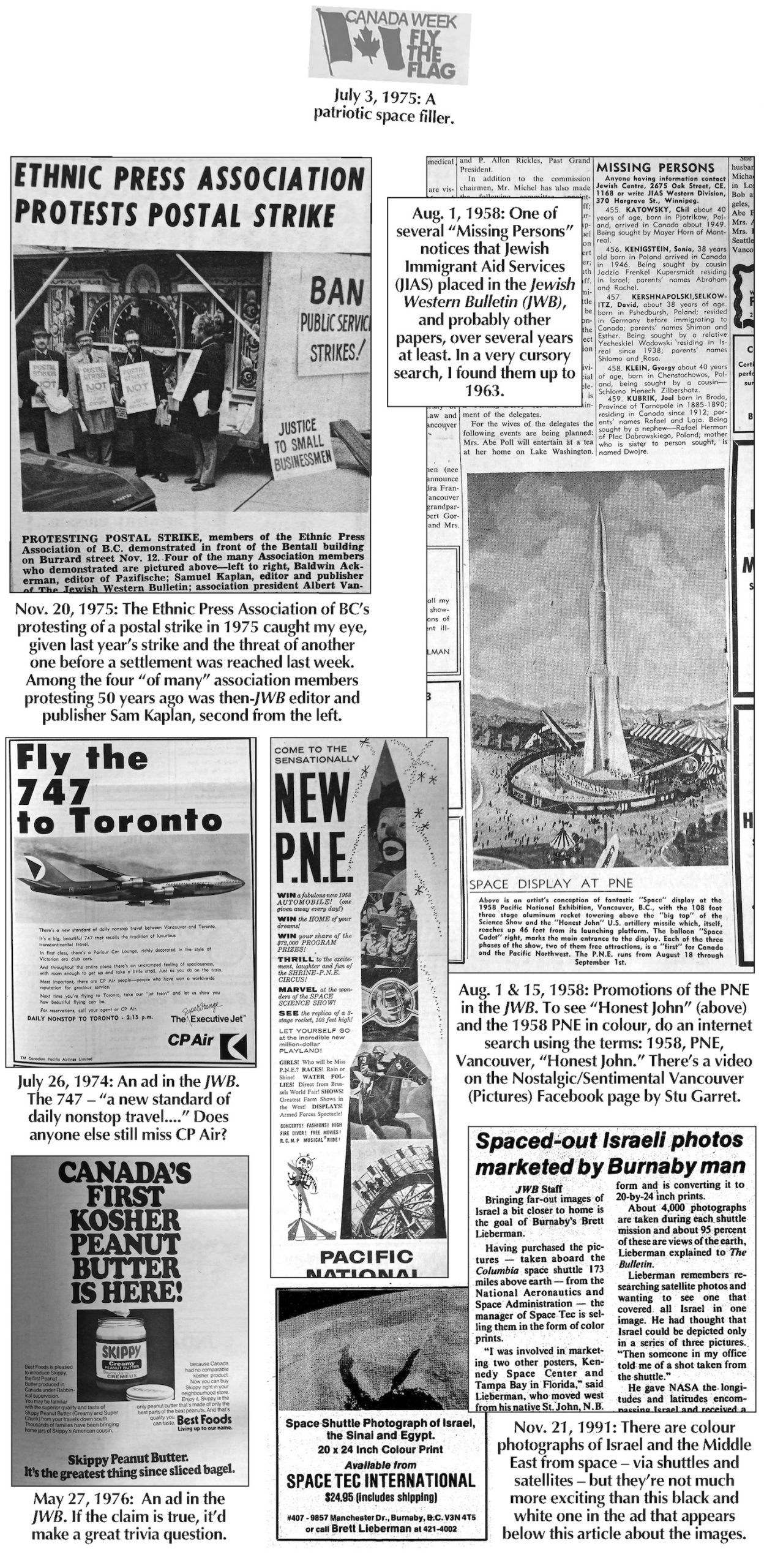
From the JI archives … oh, Canada

image - Clippings from the JI archives that fit with the June 27 issue's theme of Canada

Posted on June 27, 2025June 26, 2025Author Cynthia RamsayCategories From the JITags Canada, history, Jewish Independent, Jewish Western Bulletin, milestones

היהירות הישראלית עולה ביוקר

בתור אחד שגר בישראל ארבעים וחמש שנים אני מכיר מקרוב את היהירות הישראלית שרק הולכת ומתעצמת כל הזמן. הישראלים יודעים הכל, הם מבינים הכל, ישראל היא המדינה החשובה בעולם, והישראלים יכולים להסביר בקלות ללא ישראלים: מה צריך לעשות, כיצד לפעול, מה חשוב באמת ועד כמה הישראלים הם מה שבאמת חשוב

נראה לי שהניצחון הגדול במלחמת ששת הימים שהפך את ישראל למעצמה צבאית עליונה, כאשר כל מדינות העולם מכירות בהצלחתה הגדולה, היא נקודת הציון המשמעותית, כאשר מאותה עת היהירות בישראל הלכה וגדלה, הלכה והתעצמה

אנו זוכרים היטב את הכבוד הגדול לו זכרו הבכירים בצבא לאור הניצחון במלחמה שארכה רק שישה ימים. כל הדלתות נפתחו בפניהם, כולם רצו להיצמד אליהם וליהנות מחברתם. מאז גם מדד השחיתות בישראל החל לעלות וכיום הוא נוגע בשמים

תוצאות המלחמה הביאו את ישראל לשלוט בשטחים הכבושים ומאז נולדה תנועת המשיחיות שהקימה התנחלויות באזורים אלה ופגעה קשות באזרחים המקומיים הפלסטינים. גם אצל המתנחלים שמספרם הולך וגדל במשך השנים, היהירות היא תכונה בולטת אשר גורמת לנזק גדול למדינה ואזרחיה

בין הבודדים שיצא נגד חגיגות הניצחון במלחמה היה פרופ’ ישעיהו ליבוביץ’, שטען כי הניצחון ובעקבותיו אחזקת השטחים הכבושים יביאו נזק גדול לישראל בהמשך הזמן. נביא הזעם ליבוביץ’ צדק וישראל הולכת בכיוון הלא נכון, אזרחיה מפוצלים ללא אפשרות של איחוד, ממשלתה מושחתת והיא מבודדת יותר מתמיד בעולם

לאור היהירות הישראלית בעקבות תוצאות מלחמת ששת הימים, ישראל לא הייתה מוכנה וחטפה על הראש מהמצרים והסורים במלחמת יום כיפור. לממשלה, לצבא ולאזרחים בכלל היה ברור כי אף אחד לא יוכל על ישראל ואין סיכוי שהיא תופתע. המציאות הוכיחה אחרת

אחרי מלחמת יום כיפור ועדת החקירה הממלכתית, חשבנו לרגע שתהיה ירידה משמעותית במדד היהירות הישראלי אך טעינו. לא מעט ישראלים ירדו מהמדינה לאור השבר הגדול שנוצר אז, אך בחו”ל הם המשיכו לנהוג ביהירות ושחצנות לא פחותה מזו שבישראל

ואם לא הספיק המחדל הנוראי של מלחמת יום כיפור, כעבור חמישים שנה שוב היהירות והשחצנות הישראלית, הביאו את המחדל הקשה ביותר בתולדות המדינה והוא של השבעה באוקטובר. בישראל חשבו שהצבא מוכן, שהמודיעין יודע, שהגדר האלקטרונית תגן על ישראל ובעיקר יודעת הכל ממשלת נתניהו היהירה והמושחתת – וכמובן כל המערכות קרסו מול מחבלי החמאס הנוראים

אייר קנדה לא חוזרת לישראל

אייר קנדה חברת התעופה הקנדית, שהייתה אמורה לחדש את טיסותיה לישראל במהלך חודש יוני הודיעה על דחייה נוספת וצפויה לחדש טיסותיה רק בספטמבר. זאת בעקבות המצב הביטחוני והטיל ששוגר מתימן ונחת בשטח נמל התעופה בן גוריון

מנכ”לית אייר קנדה בישראל, רות בן צור, אומרת כי לאחר בדיקה מעמיקה עם גורמי הביטחון, הוחלט בחברה שלא לחדש את הטיסות לישראל. אייר קנדה מחוייבת לישראל ולהמשיך לטוס אליה, כי שהיא עושה כבר למעלה משלושים שנה. כמובן החברה מחוייבת גם ללקוחות הרבים שלה. אייר קנדה תמשיך לפעול בנחישות כאשר יתאפשר לה לחדש את הטיסות לישראל, ולספק את השירות המקצועי והאיכותי שהלקוחות רגילים אליו. אליו הערכים החשובים לאייר קנדה

כזכור אל על הפסיקה את הטיסות הישירות לקנדה במהלך חודש אוקטובר לפני כשלוש שנים. באל על הסבירו את ההחלטה על רקע חוסר כדאיות כלכלית, והמטוסים הוסטו ליעדים רווחים יותר. מדובר בהחלטה תמוהה במקצת לאור כך שבקנדה יש את אחד מהריכוזים הגדול של יהודים וישראלים בעולם

Posted on June 25, 2025June 11, 2025Author Roni RachmaniCategories עניין בחדשותTags Air Canada, El Al, Hamas terrorists, history, Israel, Netanyahu, Oct. 7, Six Day War, Yom Kippur War, אייר קנדה, אל על, היסטוריה, השבעה באוקטובר, ישראל, מחבלי החמאס, מלחמת יום כיפור, מלחמת ששת הימים, נתניהו
Saying goodbye to a friend

Saying goodbye to a friend

Left to right: Rabbi Philip Bregman, Archbishop Michael Miller and Rabbi Jonathan Infeld. (photo by Pat Johnson)

A lesson from a Jewish professor decades ago has remained with Archbishop Michael Miller all his life.

Miller retired last month as archbishop of Vancouver – head of the region’s nearly half a million Catholics. During his last week in office, he spoke with the Independent about his relationship with the Jewish community. 

The new head of the Catholic Church, Pope Leo XIV, has emphasized the need for dialogue between Catholics and Jews, and spoke almost immediately after his election as pontiff about how close the issue is to his heart. But Miller didn’t need a nudge from the Vatican. According to several Vancouver rabbis, Miller has been a stalwart friend to the community since he arrived in the city more than a decade-and-a-half ago. 

When Miller was a student, he and a group of other young Catholics were in a professional setting with noted medieval scholar Julian Wasserman, who was Jewish. Someone made a comment that was antisemitic. Miller doesn’t remember the exact context, but he does remember what happened next. No one in the meeting had contested the antisemitic remark and the professor challenged them on it afterwards.

“I remember Julian expressed to us his disappointment,” said Miller. “And that stung, because it was true.”

It wasn’t as though Jews were unfamiliar to Miller. He grew up in a heavily Jewish neighbourhood in Ottawa and attended friends’ bar mitzvahs. At university and in seminary, he had several Jewish professors and he has always had an interest in Jewish topics.

As a member of the clergy, he sees interfaith dialogue as central to his role. “And the first place of dialogue, of course, is with the Jewish community,” he said, “which preexisted Christianity by at least 1,500 years, maybe 1,800 years.”

Miller was named archbishop of Vancouver in 2009. In the hierarchy of the Catholic Church, an archbishop is a bishop who leads an archdiocese. Above them are the cardinals who, among other roles, come together to elect a new pope, as they did last month. 

Rabbi Philip Bregman, who leads an interfaith group called the Other People and is rabbi emeritus of Temple Sholom, has been in the city since 1980.

“It wasn’t until I met Archbishop Miller that I actually had a relationship with an archbishop,” Bregman told the Independent. “Even though Pope John XXIII [in the 1960s] had really opened the door of dialogue between Christians and Jews previously closed, it still took time before that concept actually trickled down. Archbishop Miller was the one who really walked the walk and not simply talked a talk.” 

Bregman noted that he had heard the new pope speak about the necessity of Catholics renewing relationships with Jews.

“Archbishop Miller has been there for many, many years and we are tremendously grateful,” he said. “This is an incredible man, who has reached out to the Jewish community and has been there in the most open fashion, for dialogue, for consultation, for support.”

Rabbi Jonathan Infeld of Congregation Beth Israel had equally enthusiastic praise. 

“His spiritual leadership, because of his forward thinking and his intelligence, goes well beyond the Catholic community and has truly touched the hearts and souls of all religious people in the city, which is really due to his leadership, his insight and his intelligence and we wish him the best of luck in retirement but are sad to see him leave,” said Infeld, who wandered the dozen or so blocks from the synagogue to the archbishop’s office to bid Miller farewell.

The archbishop’s relationship with the Jewish community was strong before Oct. 7, 2023, but has only strengthened since then. Rabbi Dan Moskovitz, Bregman’s successor as senior rabbi at Temple Sholom, has spoken publicly in appreciation of Miller’s support in the days after the terror attacks. 

The lesson Miller learned from Prof. Wasserman decades earlier may have ensured he did not remain silent about what happened on Oct. 7.

“The history of the Jews in Germany before the Second World War, before there was blatant antisemitism, there was a lot of silence,” he said. “Even though we now know that a lot of people were uneasy, they were not uneasy enough to say anything. That silence is often very damning. That’s true, certainly, today as well [about antisemitism], but also on other issues where we are not so willing to speak up, [where] we are a little cowardly and we can find reasons to justify it.”

Before being appointed a bishop, Miller was a professor and later president at the University of St. Thomas, in Houston, Tex. In 2003, Pope John Paul II appointed him secretary of the Congregation for Catholic Education, in the Vatican. He came to Vancouver in 2007 as coadjutor – effectively, the assistant to the archbishop and the apparent successor.

Fluent in English, French, Spanish and Italian, Miller has authored several books on Catholic education and the papacy. He is succeeded by Archbishop Richard W. Smith, who previously served as archbishop of Edmonton. 

Miller credits his team at the archdiocese office for their commitment to Catholic-Jewish dialogue, and he and Bregman both praised Ann Marie McGrath, who serves as the religion lead at St. Patrick Regional Secondary School in Vancouver. Bregman has connected McGrath with King David High School, and a new relationship is budding between those schools. 

Miller has now relocated to Houston. He does not like the term “retirement,” he said, and his first few weeks have been filled with speaking engagements and other responsibilities. He will be sharing his wisdom when invited to do so.

“I’ll probably read more – I look forward to that – and, God willing,” he said, “pray a little more because not every moment will be scheduled as it has been.” 

Format ImagePosted on June 13, 2025June 12, 2025Author Pat JohnsonCategories LocalTags allyship, archdiocese, Catholic Church, interfaith relations, Jonathan Infeld, Michael Miller, Philip Bregman

The importance of empathy

Dr. Terri Elizabeth Givens, professor of political science at the University of British Columbia, started her lecture with a quote from Dr. Martin Luther King Jr.: “It takes empathy, patience and compassion to overcome anger, hatred and resentment.”

“And this really rings true during these times,” said Givens, who was giving the keynote address at Vancouver School of Theology’s May 27-29 conference called Compassion: Mutual Care in Troubled Times. “As an American, in particular, I’m very concerned about the situation. I really think it’s hard during times like this to have empathy and patience and compassion.”

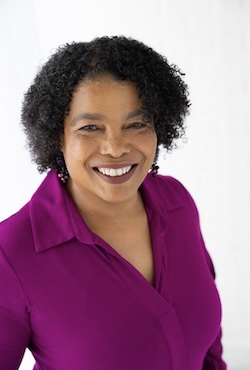
Rabbi Laura Duhan-Kaplan, director of inter-religious studies at VST, introduced Givens, who spoke on May 27, giving the |opening lecture of VST’s annual inter-religious studies conference. Givens is the author of several books, including Radical Empathy: Finding a Path to Bridging Racial Divides. Her next book, Reckoning: Creating Positive Change Through Radical Empathy, will be released in October. She has written on immigration policy, European politics, right-wing politics and more.

photo - Dr. Terri Elizabeth Givens gave the keynote lecture for the Vancouver School of Theology’s May 27-29 conference Compassion: Mutual Care in Troubled Times
Dr. Terri Elizabeth Givens gave the keynote lecture for the Vancouver School of Theology’s May 27-29 conference Compassion: Mutual Care in Troubled Times. (photo from terrigivens.com)

Givens grew up in Spokane, Wash., did her undergrad at Stanford University and PhD at the University of California, Los Angeles. Her first job was at University of Washington, in Seattle, then she and her husband moved to Austin, where their careers took off. Before UBC, Givens worked at McGill University, first as a lead and advisor on the university’s plan to address anti-Black racism, then as an associate dean. 

She started studying the radical right in Europe in the mid-1990s, having first become aware of their existence in 1986, when she visited France as an undergrad. At that time, Jean-Marie Le Pen was on the rise.

“I was one of the first Americans to even pay attention to this topic,” said Givens, who added that all her research is “really about how do we create change – that’s the underlying push for all of this.”

The professor shared some of her personal history, how she was raised, her father’s death in 2001, instances of racism experienced by her parents  – her mother, who grew up in rural Louisiana in the 1930s, and her dad, who was born in 1928 near Pittsburgh. Her parents met in Los Angeles but chose to live in Spokane because they thought it would be safer for their kids.

“I think, in telling my story, I’m trying to talk about the different identities we have,” she said. For example, she is a mom, a teacher, an athlete, and more.

For Givens, integrity also has multiple variations. There’s physical integrity, taking care of ourselves. There’s integrity in terms of being honest and straightforward. And there’s integrity in terms of having a solid foundation.

Identity and integrity come into play with radical empathy, which comprises, according to Givens, six steps: a willingness to be vulnerable, becoming grounded in who you are, opening yourself to the experiences of others, practising empathy, taking action, and creating change and building trust.

About the first step, she said, “It’s not about being vulnerable with others, it’s about  being vulnerable with yourself…. We have a really hard time [with that] – even just giving ourself a pat on the back is hard…. But the reason that’s so important is … you need to become grounded in who you are, and that’s an ongoing process.”

Taking care of yourself and being grounded in yourself allows you to be open to others, she said.

Radical empathy is circular, said Givens. “It’s a constant movement towards becoming who you want to be. You want to have goals for yourself that reach beyond where you are now, but also you want to have a process to get there.”

We can tap into our integrity, she said, by telling our story, where we fit in family, community, education, health, love and marriage, relationships, and work.

“Empathy is not absolution,” she said. “It doesn’t mean I have to  say everything is OK…. Sometimes, people do things that I don’t believe are good for anybody. And so, that’s an important component and, for me, it helps me tap into my integrity because I have to create those boundaries and make sure that I understand where I fit into this broader picture and in the community.”

As she ages, the health aspect is something she is dealing with more. “My dad had a heart attack at 72, my mom had a stroke at 75. Why those things happen, how to understand that, is a big part of our ability to  function.”

With respect to love and marriage, she said, “When people ask me what’s important in the relationship, it’s, well, you want to be with somebody who makes you a better person. And that it’s reciprocal.”

This is something that applies to relationships in general, she added.

“Work is a huge part of our lives. I think sometimes we forget how important it is to make sure that our work is something that, regardless of what you do, you take pride in it. It may be something that you don’t want to be doing  forever but, where you are right now, it’s important that your work is a part of your story.” 

We can’t change the past, but we can change how we go forward, Givens said. “There are these lifelong self-reflection processes that help us learn from the people around us, whether they’re clients or colleagues or friends, and cultural humility is being willing to say I don’t know everything.”

She said, “Too many leaders are full of themselves. It’s good to be modest about your capabilities. And here’s where  vulnerability comes in. You have to be willing to admit mistakes. And I really believe that, if you have integrity, that’s not so difficult, to admit mistakes – it’s like, I’m a human being, I’m not perfect, and [having an] awareness of bias…. We know that the system is set up often in a biased way and we talk about meritocracy but what does that mean? It’s not just that you hire people who look like you or are really similar to you – it’s being willing to look beyond that and say, no, this person is the best person for the job even though we don’t have a whole lot in common.”

Givens spoke about having a curiosity about others, having an open mindset, listening without judgment and seeking, with empathy, to understand people. “And then, cultural intelligence is being attentive to other cultures and to adapt as required.” 

In the question-and-answer period, Duhan-Kaplan asked about mistakes made by our ancestors, and how we deal with them. She also asked about dealing with the expectations “placed on us in a charged environment – we might open social media for some entertainment and then what we get is, whatever perspective we have, people are ridiculing it and calling us names,” said Duhan-Kaplan. “Cultural humility – once you start to get defensive about yourself and your identity, how do you keep being open to changing?”

“I still struggle with that,” said Givens.

“As a person who’s been racialized, who has ancestors who were enslaved, and yet I have ancestors who were killing Indigenous and pushing Indigenous out of their homelands,” she explained, “one of the things I’m coming to is that we’re a sum of all of this – and all of us are…. And, again, it comes back to acceptance. I have to accept the fact that, if I look in my family history, there are these evil people and there are some really good people.”

History is ugly, she concluded. “I think it’s better to know it and understand it and be willing to say, but I’m here to be better.”

For Givens, the opposite of empathy is apathy because apathy allows us to feel badly about what’s happening but then just throw up our hands and say, “the world is crazy, you can’t do anything.” Her books highlight ways that people can get involved, what they can do, and she incorporates taking action into everything she does, she said.

Ultimately, it’s the actions, the outcomes, and the way we are engaging with the world that is important, said Givens.

Vancouver School of Theology is offering Summer School courses that will be of particular interest to Jewish community members: Rabbi Or Rose teaches Mystics in Modernity, Rabbi David Seidenberg’s class is Kabbalistic Hints in Tanakh, and Rabbi Laura Duhan-Kaplan presents Zechariah: Spiritual Activism for Difficult Times. Classes run July 21-25 at VST or online. Register at vst.edu/vst-summer-school.

Posted on June 13, 2025June 12, 2025Author Cynthia RamsayCategories LocalTags empathy, Laura Duhan Kaplan, School of Theology, Terri Elizabeth Givens, theology, VST

Time to vote again!

You may not know there is an election underway. Voting to elect delegates to the Canadian Zionist Federation closes Sunday, so you still have time to cast your ballot. 

Although some of us have been receiving emails urging us to vote, it’s likely that most of us don’t even know there is campaign going on. It’s not front-page news. 

Those chosen in the CZF election on Sunday will become delegates to the 39th World Zionist Congress, in Jerusalem, in October. (The legendary First Zionist Congress was convened by Theodor Herzl, in Basel, Switzerland, in 1897.)

Even if you haven’t yet heard about the elections, we think it’s worth taking a few moments to familiarize yourself with the slates, their platforms, and the role of CZF in connecting Canadian Jews to Israel. We encourage you to take this opportunity to have a small but important voice in the future of Zionism and our relationship with the Jewish homeland. Registering to vote costs $2. 

The Canadian Zionist Federation is a national affiliate of the World Zionist Organization, and is comprised of 11 national Jewish Zionist organizations. These include the religiously affiliated groups ARZA Canada, “the Zionist voice of the Canadian Reform movement,” the Conservative movement’s MERCAZ Canada, and the Orthodox Eretz HaKodesh; political groups affiliated with Israeli parties, including Likud Canada, Herut Canada and Meretz Canada; ethnically oriented groups like Shas Olami, affiliated with the Sephardi and Mizrahi Orthodox party Shas, and Mizrahi Canada; and a linguistic grouping, the Canadian Forum of Russian-Speaking Jewry, as well as the non-denominational, non-partisan youth group Young Judaea, and Ameinu Canada, “a national, multi-generational community of progressive Jews in Canada, the United States, Australia and Brazil.” The slates in this election reflect and overlap within and across these groupings.

The World Zionist Organization styles itself as “the parliament of the Jewish people,” and it convenes every five years. WZO sets priorities for the Zionist movement worldwide. It is the main global voice on policy around Israel-diaspora relations, on such topics as Jewish education funding abroad, aliyah and religious recognition. The WZO allocates hundreds of millions of dollars in funding through Zionist institutions like the Jewish Agency, Keren Hayesod (United Israel Appeal) and Jewish National Fund.

Through the Canadian Zionist Federation – and then via the World Jewish Congress – each of us is granted a say in these essential issues. If you care about Israel and its relationship with the diaspora, and you would like to have a voice in the direction of that relationship, this is one important avenue.

Take time to peruse the platforms of the various groups vying for your vote.  You may want to place particular attention on issues around the preservation of Israeli democracy, and legal protections and social equality for women and minorities in the country. Perhaps one or more of the platforms will reflect your views on how Israel can work toward peace while protecting its citizens and ensuring the long-term security of its borders.

Read the materials and see which slate best reflects your opinion on how many millions of dollars should be spent to strengthen Jewish life in Israel and worldwide. These elections – and the decisions to be taken at the Congress to which the delegates will be sent – represent the values and priorities of world Jewry. 

Israel and Jews collectively are at an unprecedented moment – and while, by definition, every moment is unprecedented, especially in Jewish history, this feels different. 

Perhaps you didn’t know you were eligible to vote. Maybe you were only vaguely aware of the Canadian Zionist Federation and what it does. You had probably heard of the First Zionist Congress but maybe didn’t know that the through-line in Zionist history continues from Basel in 1897 to Jerusalem in 2025. 

Now you know a little more. Dive deeper. And, on or before Sunday, vote at czf.ca. 

Posted on June 13, 2025June 12, 2025Author The Editorial BoardCategories From the JITags Canadian Zionist Federation, CZF, Diaspora, elections, Israel, World Jewish Congress, world Jewry
Light and whimsical houses

Light and whimsical houses

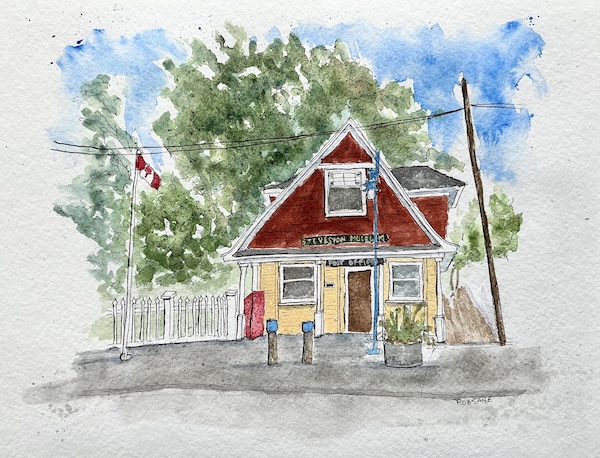
Roxsane Tanner’s watercolours are on exhibit at the Steveston Museum and Post Office (painted here by Tanner) this month. 

“Steveston is such a beautiful place,” artist Roxsane Tanner told the Independent. Her first solo show of watercolours features quaint houses of the village, where she has lived and worked for many years. The exhibit opened at the Steveston Museum and Post Office on June 1 and will be on display for the month.

photo - Roxsane Tanner
Roxsane Tanner (photo courtesy)

Born in Holland soon after the Second World War, Tanner came to Canada with her family in 1951.

“My father was in the resistance, and my mother was in hiding during the war. They were both Jewish and wouldn’t have survived otherwise,” she said.

Her older sister was born during the German occupation, and her mother had to hide her baby with a local family. “My sister was 3 years old when my mom came for her after the war, to take her back. That was the first time she saw her mother.”  

After the family came to Canada, her parents moved a lot. “They were very entrepreneurial,” said Tanner. “We lived in many small towns in Ontario and Quebec. Sometimes, my parents had several businesses open at the same time in the same town: a pet shop, a fabric shop, some others. They always worked hard. When I was 19, my parents and I moved to Vancouver. In the beginning, we lived in a trailer, the same one we drove here from across Canada.”

Tanner inherited her parents’ work ethic and their courage to try new things. “After high school, I wanted to study nursing, but soon after I started classes, I hurt my knees and had to come home – I couldn’t walk.”

After she healed, she became a dental assistant and worked as one for several years. “Until I met my first husband,” she recalled with a smile. “He was a wallpaper hanger. I fell in love with the man, married him, and joined his business. We worked together for several decades.”

Even after her first husband’s untimely death from cancer, she continued their business on her own. Many houses in Richmond and Vancouver feature wallpaper installed by Roxsane Tanner. By now, she has been a wallpaper hanger for more than 50 years. “But I’m slowing down,” she said. “I’m not accepting many new clients, not anymore.”

Now, she is becoming more and more absorbed in various artistic endeavours. Art was always on the periphery of her life. “I always dabbled,” she said. “Then, about 15 years ago, my second husband, Fred, and I visited Italy. He was a high school counselor before he retired; we were chaperoning a group of kids on that trip. I saw some beautiful jewelry local artisans sold on the street. I liked it, but it was too expensive. I thought maybe I could make something like that, and Fred encouraged me. When we returned home, I enrolled in a course on silversmithing and started making my own jewelry. Fred built a silversmithing studio for me in our backyard.”

She took more classes in different techniques, many of them on YouTube. “I can spend hours watching educational videos on YouTube,” she said. “There is always something new. Thousands of talented artists offer classes there. The good thing about YouTube: once you subscribe, you can watch the same lesson several times, until you really get it.” 

She sells her jewelry – earrings, bracelets and necklaces – in a local Steveston shop. Occasionally, she offers her own classes in jewelry-making, to children and adults. What started as a hobby from a casual observation in Florence ended up becoming a small business, as many of Tanner’s hobbies tend to do: sewing, for example.

“My mother taught me to sew, knit and crochet,” she said. And, wanting to pass the skills on to others, she started, out of her home, to teach children how to sew. “We buy special kits and make hats and scarves for the homeless,” she said. 

But that was not enough for her. Her creativity needed another outlet. About the same time as she embarked on jewelry-making, she also started painting in watercolours. “I took classes, of course, some on YouTube, others at the local Phoenix Art Workshop here in Steveston. At first, I painted landscapes, but I didn’t like it. A few years later, I went to Malta on a trip with the Phoenix Studio – they have amazing houses there, and I was inspired. The next year, we traveled to Mexico. I admired their historical buildings, but we also have amazing houses here, in Steveston. There are many heritage places here. I wanted to paint them.”    

When she returned from Mexico, she noticed a blue house in Steveston she liked and took a photo of it. “I painted it from my photo. It was my first, and my friends kept bugging me: you need to show your painting to the owner. So, I went and knocked on his door. I never met him before that day, and he was somewhat gruff at first. He asked me if I would sell it to him, and I agreed. That’s how it started.”

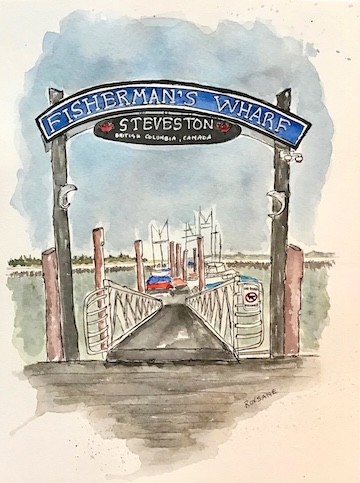
image - Steveston’s Fisherman’s wharf, painted by Roxsane Tanner
Steveston’s Fisherman’s wharf, painted by Roxsane Tanner.

Tanner has built another small business on that foundation. “I paint houses that are for sale. Realtors around Steveston commission my paintings as gifts for the new homeowners. People also come to me and ask me to paint their houses, or their children’s houses, as gifts. Sometimes, I paint from my own photographs. Other times, the clients bring their photos and order a painting from that image.”

Besides personal homes, she paints heritage places around Steveston. The old community centre, a coffee shop, a church turned into a thrift store, the pier, with its picturesque boats, and the tiny post office – the same one where some of her work is now on display.

The exhibition includes Tanner’s original watercolour paintings plus postcards and mugs with her artwork. Some of the paintings sport charming, quirky houses found only in the artist’s imagination. “I go online and search for heritage homes around the world. If I like one, I use it as my inspiration, but I don’t copy the photos. I want my painted houses light and whimsical, like a fairy tale. Maybe a bit crooked, but reflecting the essence of the house, its soul and personality. Even the real houses I paint are not exact copies of the photos. I don’t use a ruler to make the straight lines. I use my watercolours to remind people of the fun and joy their homes bring them.”

You can see more of Tanner’s art at instagram.com/studioplace99. 

Olga Livshin is a Vancouver freelance writer. She can be reached at [email protected].

Format ImagePosted on June 13, 2025June 12, 2025Author Olga LivshinCategories Visual ArtsTags art, exhibits, jewelry, painting, Roxsane Tanner, Steveston, watercolours

Posts pagination

Previous page Page 1 … Page 34 Page 35 Page 36 … Page 662 Next page
Proudly powered by WordPress