Skip to content
  • Home
  • Subscribe / donate
  • Events calendar
  • News
    • Local
    • National
    • Israel
    • World
    • עניין בחדשות
      A roundup of news in Canada and further afield, in Hebrew.
  • Opinion
    • From the JI
    • Op-Ed
  • Arts & Culture
    • Performing Arts
    • Music
    • Books
    • Visual Arts
    • TV & Film
  • Life
    • Celebrating the Holidays
    • Travel
    • The Daily Snooze
      Cartoons by Jacob Samuel
    • Mystery Photo
      Help the JI and JMABC fill in the gaps in our archives.
  • Community Links
    • Organizations, Etc.
    • Other News Sources & Blogs
    • Business Directory
  • FAQ
  • JI Chai Celebration
  • JI@88! video

Recent Posts

  • Zionism wins big in Vegas
  • Different but connected
  • Survival not passive
  • Musical celebration of Israel
  • Shoppe celebrates 25 years
  • Human “book” event
  • Reclaiming Jewish stories
  • Bema presents Perseverance
  • CSS honours Bellas z”l
  • Sheba Promise here May 7
  • Reflections from Be’eri
  • New law a desecration
  • Resilient joy in tough times
  • Rescue dog brings joy
  • Art chosen for new museum
  • Reminder of hope, resilience
  • The national food of Israel?
  • Story of Israel’s north
  • Sheltering in train stations
  • Teach critical thinking
  • Learning to bridge divides
  • Supporting Iranian community
  • Art dismantles systems
  • Beth Tikvah celebrates 50th
  • What is Jewish music?
  • Celebrate joy of music
  • Women share experiences 
  • Raising funds for Survivors
  • Call for digital literacy
  • The hidden hand of hate
  • Tarot as spiritual ritual
  • Students create fancy meal
  • Encouraging young voices
  • Rose’s Angels delivers
  • Living life to its fullest
  • Drawing on his roots

Archives

Follow @JewishIndie
image - The CJN - Visit Us Banner - 300x600 - 101625

Youth feed homeless people

Youth feed homeless people

Youth from Temple Beth Ora and Gathering Angels in Edmonton help out at Boyle Street Community Services shelter. (photo from Rabbi Gila Caine)

In Edmonton, Rabbi Gila Caine and Muslim leader Nesrine Merhi-Tarrabain have combined forces to serve their local community.

Caine is spiritual leader of Temple Beth Ora, a Reform synagogue in Edmonton with nearly 100 families, which celebrated its 40th anniversary last year. Merhi-Tarrabain is director of Gathering Angels, which runs an educational centre that teaches Muslim girls Islamic values.

Caine grew up in Jerusalem and moved with her husband, Ariel, and their two young children to Edmonton more than two years ago to lead Temple Beth Ora. Their kids attend the local Talmud Torah school.

Growing up, Caine learned early on, and more so in her early teens, to always be looking for ways to strengthen and help community. She wanted to bring that same mindset – of taking responsibility for your local community – to b’nai mitzvah-age kids at her Edmonton congregation.

“We’ve wanted to go out of the classroom and do stuff outside for a few years now,” Caine told the Independent in a recent interview. “And then, through another connection I have, with Salaam Shalom group, I asked one of them if perhaps they have somebody in their community that does stuff with kids … and that maybe we could do stuff together.

“I thought that would be really cool if we could get the b’nai mitzvah kids to go out and do stuff in the community, but with other youth of a different faith group,” she said.

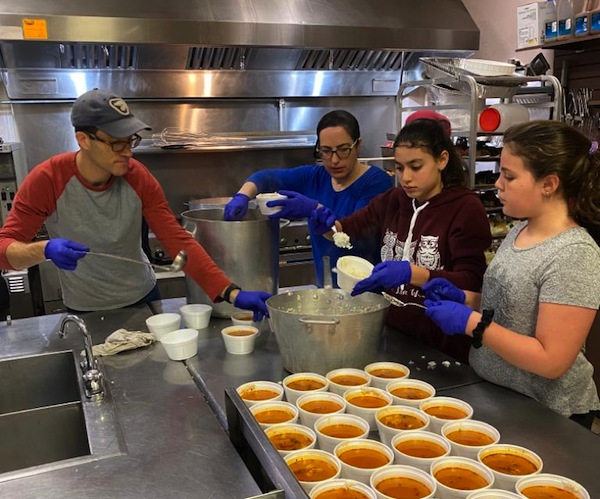
Caine was connected with Merhi-Tarrabain. After some effort and time, the synagogue and educational centre managed to get together on a Saturday in November, preparing and serving both breakfast and lunch at Boyle Street Community Services shelter.

“We brought food with us, had her girls, my kids, and some parent volunteers working in two shifts there that day – working together, preparing sandwiches, cooking,” said Caine. “It was actually funny to see – it was more the parents that were connecting and talking … [while] the kids were basically doing their work quietly. But, the parents got into really nice conversations with each other and they served the food. And everybody from both sides came away feeling that we should do this again.”
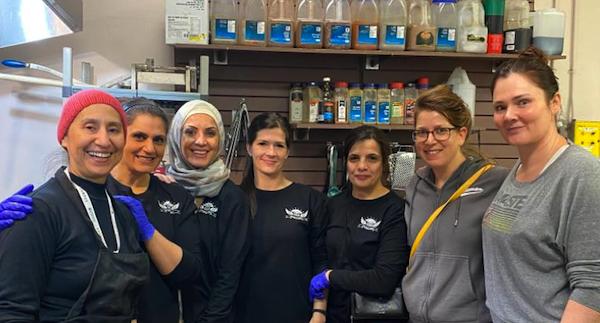
photo - The interfaith initiative at Boyle Street Community Services was led by Nesrine Merhi-Tarrabain, third from the left, and Rabbi Gila Caine, second from the right
The interfaith initiative at Boyle Street Community Services was led by Nesrine Merhi-Tarrabain, third from the left, and Rabbi Gila Caine, second from the right. (photo from Rabbi Gila Caine)

Caine is hoping to make serving the community a tradition at Temple Beth Ora, possibly with Gathering Angels again, as well as with other groups.

When thinking of the best activity to launch the b’nai mitzvah community service initiative, Caine chose this particular one – preparing and serving food – as she knew from experience that many of the kids really enjoy dealing with food service, having seen them help out at the shul.

“Some of these kids are b’nai mitzvah kids and they want to volunteer again,” said Caine. So, the youth group counselors “will sit with them and talk to them about what they want to do. This is the next step,” she said.

After the November project, there was another food-related volunteering opportunity for the kids last year. They joined the Edmonton Jewish community as a whole to prepare a Christmas meal for another shelter. “They really wanted to take part in that,” said Caine. “And now we will see what they will come up with next.”

According to Caine, having Merhi-Tarrabain at the Boyle Street Community Services kitchen was beneficial for several reasons, including that she had volunteered there with the girls in the past and had experience. That meant Merhi-Tarrabain could offer tips about what food to bring and how to best help in the food’s preparation and serving.

“Now, some of the parents who were there, they want to initiate more of these things,” said Caine. “And now, we have a better idea of how to do that.”

Both faith groups understand that more such gatherings are necessary before the youth can make lasting connections.

Caine said her synagogue is trying to create a project with another Muslim youth centre in Edmonton and also with one of the city’s churches. “We’re trying to create a program,” she said, “where they will have meetings, talk and learn and do stuff together … hopefully resulting in some real connection-making.”

Rebeca Kuropatwa is a Winnipeg freelance writer.
Format ImagePosted on January 31, 2020January 28, 2020Author Rebeca KuropatwaCategories NationalTags Boyle Street Community Services, Edmonton, Gila Caine, interfaith, Jews, Muslims, Nesrine Merhi-Tarrabain, tikkun olam, youth
Promoting fair trade in Israel

Promoting fair trade in Israel

Raz Frogel (photo from Fair Trade Israel)

Raz Frogel, 23, has taken it upon himself to increase the number of fair trade items on Israeli store shelves.

Frogel, who lives in Dror Israel commune in Haifa, first read about child labour and improper working conditions when he was 16 years old. The article was about people working in cocoa fields and, after reading it, he announced to his parents that he would no longer eat chocolate, and explained why. He then spent the next two years in search of a solution.

“When I was 18 years old, I found fair trade and started doing research about it and looked into where I could find fair trade products,” Frogel told the Independent. “When I was released from the army, I started the fair trade movement in Israel.”

In his research, Frogel came across a 2016 article in the Independent: jewishindependent.ca/many-benefits-of-fair-trade.

“I realized nobody in Israel tried to promote fair trade or was trying to change the situation,” said Frogel. So, he took on the responsibility “and started to spread word of fair trade in Haifa, trying to make Haifa the first Fair Trade City in Israel. There are 2,000 cities in the world with the designation of fair trade towns,” he said, “but none in Israel.”

Frogel said many people try to shame companies into becoming fair trade employers, but he sees this as a wrongheaded approach, akin to movements and groups promoting the boycott of Israeli companies and products.

“We try to focus on the good companies and give them our support, and not on companies with what we see as wrong or bad practices,” he said. “I don’t want to shame anybody. I just want everybody to go fair trade.”

As a first step to achieve this goal, Frogel is trying to raise awareness.

“When you walk on a street in Israel, you can ask 10 people what fair trade is and maybe one will know,” he said. “So, before we can go to the companies and ask for fair trade products and change behaviour, we need to educate the public, create awareness.

“Ten years ago, there were no vegan products in Israel, but, when the community and demand grew and grew … there is now no coffee shop without soy milk or something like that. So, with fair trade, we need to copy this process. We need to raise awareness, create demand, and create communities that create demand. Then, we need to go to companies and ask for fair trade products.”

About 20% of Israelis live in poverty, the majority of whom are women, some of whom are paid less than minimum wage and suffer from other unfair labour practices. With this in mind, Frogel connected with an organization working to empower women. So far, Achoti (My Sister) is the only business in Israel that uses fair trade.

While fair trade in the food industry is a relatively known issue, Frogel pointed out that the fashion industry is also problematic.

If workers need to be paid more, that extra cost could be added to the price of the product. But, the extra money paid to the workers could come from another part of the industry chain. And, while investors want the highest possible return, it is up to us – the end users – to determine the value of a product by voting with our dollars or shekels, said Frogel. If the demand is high enough, more producers could be encouraged to enter the market, thereby increasing supply and placing a downward pressure on prices.

“I think there is no price to pay,” contended Frogel, “because, when you look at the U.K., the cheapest products in the store are fair trade, like Cadbury or Nestle … and Starbucks. When you look at fair trade in places where it’s common, it’s cheaper than non-fair trade products. When we talk to people, we try to explain to them that, when there is a demand, the prices of products will come down and everybody can support it.

“Right now, it’s very expensive to buy fair trade in Israel,” he admitted. “I can’t lie. But, we’re working on it and I don’t think fair trade should be more expensive.”

While Frogel is working on bringing fair trade to Israel, he hopes that readers will join the global movement, wherever they are, and join a local fair trade initiative to promote it in their communities.

Currently, Fair Trade Israel has a Facebook presence and the organization can offer tax receipts to donors through Achoti.

“We are trying to raise Friends of Fair Trade, wanting to raise a lot of support from all over the world, to show that fair trade is part of Jewish values,” said Frogel. He wants to see Israel become “a fair trade movement leader.”

Starting by focusing on Haifa, and Israel in general, Frogel is organizing events and doing advocacy work in schools and businesses. As far as getting Haifa recognized as a Fair Trade City, he is working to fulfil the requirements for such recognition, such as attaining a high level of fair trade awareness and product availability. “We have a lot of support from the city council and have a group of great people leading this project,” said Frogel. “We have stores with fair trade products, but not in every neighbourhood. We started programs in schools in the last month and we have special programs on campuses to raise fair trade awareness and product availability.”

For more information, visit achoti.com (which is in Hebrew) or contact Frogel at [email protected].


Rebeca Kuropatwa is a Winnipeg freelance writer.

Format ImagePosted on January 31, 2020January 28, 2020Author Rebeca KuropatwaCategories IsraelTags economics, free trade, justice, Raz Frogel, tikkun olam

The comfort in imperfection

We’re not perfect. Yes, and you’re saying, so, why is this in the newspaper? I’m writing this over winter break. Like many families, we chose a staycation. We’ve done some walks and games outside, and a lot of time just hibernating, resting and rejuvenating indoors. All the Chanukah treats were investments in this: new toys that our twins could play with for hours, books, warm socks – and a huge gift for all of us: my husband chose to repaint our main bathroom as part of his time off.

I know, you’re still thinking, why is this in the Jewish newspaper?

Well, first, if you’re a Jewish family who celebrates only Chanukah, winter break gets long. It’s a time when the radio and TV are full of someone else’s holiday celebrations. In a cone of silence, my family has always turned inwards, to hang out together. My parents used to joke it was the time of year for wallpapering. (My mom would choose the paper and my dad would hang it and curse about wallpaper!)

Aside from a much-improved colour and some very important anti-moisture paint, the bathroom fix-up also gives us a chance to seek comfort and self-improvement from within, by focusing solely on our household. I think my husband gets a great sense of satisfaction when he finishes a home repair project and feels it is a “job well done.” He dwells endlessly on the parts that aren’t perfect, and what might be better.

This is connected to the Torah portion Vayechi (Genesis 47:28-50:26) for a few reasons. This portion is very much about family, connections, our blessings and our imperfections. Joseph’s father, Jacob, is dying. Jacob’s dying blessings and wishes are both comforting to some and very uncomfortable for others. His need to include Ephraim and Menashe (his grandchildren) and to offer blessings out of birth order strike many as unfair. The rabbis discuss why Jacob crossed his arms and preferred the younger over the older grandchild. One wonders why he includes the children of his favourite child at all.

Yet, if you think back, Jacob has never been particularly even-handed with his kids. This is the dad that made Joseph the multicoloured coat. Joseph is the child of his old age. Jacob is unfair. He plays favourites, and this rubs us wrong as modern parents or family members. Dads shouldn’t play favourites, right?

When you read Jacob’s predictions (or blessings) for each of his children, some of them sound generous, and others are really harsh. It’s hard to imagine how this experience would feel from a modern perspective, it’s so out of whack with how we see modern family relationships. True, his sons have not been consistently upright people. However, at least Jacob mentions them. He doesn’t even acknowledge Dina – his daughter doesn’t exist here.

This story remains something I dwell upon because my twins’ Hebrew names, in part, are Ephraim and Menashe. Their dad’s Hebrew name is Yoseph (Joseph). Their grandfather’s name? Ya’akov (Jacob). You get the picture. Whenever we bless our kids on Friday nights, we say, in Hebrew, “May you be like Ephraim and Menashe.” Then we translate the prayer into English. We say, “May you be like …” and we use their English names. May they be like (true to) themselves.

When we reflect on it, we can see that, even among our patriarchs, like Jacob, we have imperfect role models. Jacob stole his twin brother’s birthright. He wrestled with the Divine. He played favourites with his children in harmful ways. He was by no means a perfect person. In a sense, this is comforting. No matter how crummy our mistakes or imperfect our efforts, we know that many biblical role models also weren’t perfect. Perfection may be overrated.

Our best hope is that we be true to ourselves – continually striving to seek peace and justice and pursue it, in a flawed world. We can commit to doing our best, within our own particular skill sets, to making things better.

As we start a new secular year, 2020, and decade, we have so many opportunities to reflect on what’s not right about the world. Yet, we can also gain comfort from the knowledge that imperfect people (and paint jobs!) can still make a positive difference for a long time to come.

Here’s to a better world in 2020 – imperfections, warts and all.

Joanne Seiff has written regularly for CBC Manitoba and various Jewish publications. She is the author of three books, including From the Outside In: Jewish Post Columns 2015-2016, a collection of essays available for digital download or as a paperback from Amazon. Check her out on Instagram @yrnspinner or at joanneseiff.blogspot.com.


Posted on January 31, 2020January 28, 2020Author Joanne SeiffCategories Op-EdTags Chanukah, ethics, home repair, Judaism, lifestyle, Torah
Mystery photo … Jan. 31/20

Mystery photo … Jan. 31/20

Congregation Or Shalom members and others at the 19th annual Pride Parade, 1996. (photo from JWB fonds, JMABC L.01103)

If you know someone in these photos, please help the JI fill the gaps of its predecessor’s (the Jewish Western Bulletin’s) collection at the Jewish Museum and Archives of B.C. by contacting [email protected] or 604-257-5199. To find out who has been identified in the photos, visit jewishmuseum.ca/blog.

Format ImagePosted on January 31, 2020January 28, 2020Author JI and JMABCCategories Mystery PhotoTags history, LGBTQ+, Or Shalom, Pride
טיסת שבע חמש שתיים – חלק ב’

טיסת שבע חמש שתיים – חלק ב’

רוג’ה אומידבקאש, שניספתה באסון המטוס באיראן

רוג’ה אומידבקאש (בת עשרים ושלוש) היא אחת ממאה שבעים ושישה הנוסעים, בהם חמישים ושבעה מקנדה, שנספו בהתרסקות המטוס הנוסעים של חברת התעופה הבינלאומית האוקראינית, לאחר שהמריא משדה התעופה בטהרן.

אומידבקאש הגיעה מטהרן ללמוד בקנדה בחודש ספטמבר. היא החליטה ללמוד מסחר אלקטרוני באוניברסיטת ויקטוריה. לפני מספר שבועות היא ניצלה את חופשת חג המולד, וטסה למספר שבועות לטהרן לשהות עם בני משפחתה. לאחר מכן אומידבקאש עזבה את איראן במטוס שכאמור התרסק, ולחברתה הטובה מובינה רפיפור יש רק זכרונות טובים ממנה.

האם את כועסת על הממשלה בטהרן כמו המפגינים ברחוב וחלק מחברי משפחה של נספים אחרים מקנדה?

“אני לא מוכנה כרגע להיכנס לעניין של לחפש אשמים. זה מוקדם מדי עבורי. אני מעדיפה בשלב זה לעסוק ברוג’ה ולא במי שאחראי למחדל הקשה הזה. אני יודעת היטב שבאיראן יש כעס רב, כמו גם כאן בקנדה בקרב משפחות של איראנים נוספים שנהרגו. אני עדיין לא יודעת את כל העובדות והאניפורמציה, ומבקשת שלא להיכנס לשאלות החקירה והאשמה. אני לא מחפשת לשפוט אף אחד ולא מחפשת אשמים. בכל מקרה זה לא יביא לחזרתה של רוג’ה אלינו. אני מקווה שאתה מבין אותי. בתחילה לא הסכמתי להתראיין על חברתי המנוחה, אך שיניתי את דעתי כדי להשאיר את הזכרונות ממנה בחיים”.

מה הביא את אומידבקאש לכאן (לקנדה)?

“רוג’ה כמונו הגיע ללימוד בקנדה כדי להשיג חינוך טוב יותר. הרי זה ידוע לכולם שהחינוך בקנדה נחשב לאחד מהטובים בעולם. לכן רצינו גם אנו להינות ממנו”.

הייתן הרבה מבלות ביחד?

“בוודאי. היינו יוצאות מהקמפוס למרכז של העיר וקיטוריה לבלות. עשינו קניות וסתובבנו בקומות שונים. כל פעם שאחת מאיתנו הייתה מזהה איראני אחר ברחוב, היא הייתה אומרת את הסיסמה ‘קולומבוס’ ואז היינו עוברות מייד לדבר באנגלית”.

אומידבקאש היא הנספה היחידה מהמטוס שלמדה באוניברסיטת וקיטוריה. הנהלת המוסד קיימה אירוע מיוחד לזיכרה לפני יותר משבועיים, במרכז אגודת הסטודנטים הבוגרים. השתתפו בו עשרות סטודנטים ומרצים, וכן חברי הקהילה האיראנית שגרים בוויקטוריה. רבים בכו תוך שהם סופדים לסטודנטית היפה שקיפחה את חייה בגיל כה צעיר. זרי פרחים רבים הנוחו לצידי תמונתה. דווקא חברותיה הטובות רפיפור והדדי לא היו מסוגלות להשתתף באירוע והעדיפו להסתגר בדירתן ולבכות ארוכות.

המרצה של אומידבקאש, פרופ’ מארק קולגקיט, אמר עליה באירוע: “רוג’ה הייתה מאוד חיובית וחייכנית והראתה עניין רב בשיווק. היא היתה במסלול להשיג תואר ראשון במסחר אלקטרוני ונראתה יותר בוגרת מסטודנטים אחרים. נשבר ליבנו לאור מה שקרה ואנו שולחים את תנחומינו למשפחתה ולחבריה לספסל הלימודים. זו ממש טרגדיה לאבד סטודנטית כה צעירה שרק למדה מספר חודשים בשנתה הראשונה באוניברסיטה. אנחנו מנסים להבין את השלכות המקרה הקשה הזה על הסטודנטים האחרים שישבו ליד רוג’ה”.

נשיא האונירסיטה, פרופ’ גימי קסלס, אמר בין היתר בהודעה לעיתונות: “לבנו ומחשבותינו עם המשפחה של רוג’ה ועם אלה שאהבו אותה. אנו מצטרפים לאבל הכבד על האובדן שלה”.

ואילו שריל שמשמשת מרצה בבית הספר לכלכה ועסקים באוניברסיטת ויקטוריה, אמרה לאור האבדות הרבות בקרב הקהילה האיראנית בקנדה: “הסנקציות הכלכליות של נשיא ארה”ב, דונלד טראמפ, הפכו את חייהם של איראנים רבים לבלתי נסבלים. זו גם הסיבה לכך שסטודנטים צריכים לטוס במסלולים ארוכים יותר כמו דרך אוקראינה או רוסיה – כדי להגיע לקנדה”.

Format ImagePosted on January 29, 2020June 30, 2020Author Roni RachmaniCategories UncategorizedTags Flight 752, Iran, Roja Omidbakhsh, Ukraine, אוקראינה, איראן, טיסת שבע חמש שתיים, רוג'ה אומידבקאש
Novelist explores Trump era

Novelist explores Trump era

Gary Shteyngart opens the Cherie Smith JCC Jewish Book Festival on Feb. 8 at Rothstein Theatre. (photo by Brigitte Lacombe)

“You want to know the first rule of running a billion-dollar-plus hedge fund?” Lake Success protagonist Barry Cohen recalls telling the high school boys who invited him to speak to their Investors’ Club. “Don’t sweat the metrics. We’re not really about the numbers. Do you know what we are? We are a story. Hedge funds are a story about how we’re going to make money. They’re about being smart, gaining access, associating with someone great. You. You are someone smart enough to make others feel smart. You are bringing your investors something far more elusive than a metric. You’re bringing them the story of how great you’ll be together.”

Through the character of Barry Cohen, on his journey to what would be self-discovery if he were at all self-aware, author Gary Shteyngart explores the societal circumstances in the United States that led to the election of President Donald Trump – and could well do so again.

Shteyngart opens the Cherie Smith JCC Jewish Book Festival on the night of Feb. 8. In conversation with CBC’s Lisa Christiansen at Rothstein Theatre, he will no doubt talk about his latest novel, Lake Success, about a hedge-fund manager who flees his wife and young child, who has recently been diagnosed with severe autism, as well as a Securities and Exchange Commission investigation into his financial dealings.

Barry is stuck in a childlike state. He had a difficult father and his mother was killed in a car crash, a death Barry witnessed and which haunts him. Barry yearns for affection; he cannot regulate his emotions. He believes himself to be a self-made man and he is constantly coming across people he thinks would benefit from his mentorship, from fellow fund managers to a poor black youth he encounters on his travels to his first girlfriend, with whom he is trying to reconnect – hence, the bus trip. He is trying to find her, in the hopes of rekindling that relationship, and all the lost hope it encapsulated, while disregarding all the relationships – personal and business – he has left behind in New York City.

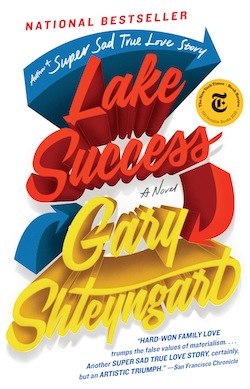
image - Lake Success book coverThe main female characters in Lake Success – Barry’s wife, Seema, and his former girlfriend, Layla – are not as well-constructed as is Barry. Despite a sympathetic portrayal, it is hard to understand what anyone would see in Barry, yet he manages to attract smart and beautiful women. The novel provides some explanation as to why Seema would marry him, including family expectations. And, after meeting him for the first time, she recalls, “she went home and Googled Barry’s net worth and found it comforting. A man that rich couldn’t be stupid. Or, Seema thought now, was that the grand fallacy of 21st-century America?” So, she thought she was connecting with an intelligent and wealthy man, but how Barry continues to be an attractive prospect to women (and men) after he cowardly runs away from his responsibilities and is nearly penniless is a bit of a mystery.

For some readers, Shteyngart might come down a little too easy on the one-percent, as exemplified by Barry, Seema and the few people we meet in their realm. When the Jewish Independent asked the author why it was important to imbue the character of Barry with humanity, Shteyngart said, “Books about inhumane characters are not fun to write. Imagine an entire novel set from Trump’s point of view. Eat burger, get angry, eat burger, get angry. It’s just not 330 pages worth of material.”

That is not to say that Shteyngart is condoning the lifestyle of the ultra-rich; in fact, quite the opposite, though he does so with seeming resignation.

“Without giving too much away for the new reader,” he said, “Barry does change. Somewhat. Slightly. But the damage that has been done to the country socially and politically by Barry-like oligarchs is not going to go away, even if the next election ends the so-called Trump Era.”

While Lake Success doesn’t offer insight into how the divisions in Trump’s United States could be repaired, Shteyngart’s acerbic wit and astute observations offer an entertaining read that will hopefully elicit readers’ introspection about our own privilege and identities, how we define and carry ourselves in the world. Both Barry and Seema have a conflicted relationship with their cultural heritage; Barry his Jewish, Seema her Tamil.

As Barry holds his three-week-old son in his arms – long before the autism has been diagnosed – “he whispered through all his agnostic lapsed-Jew bullshit, ‘Please, God, just don’t do anything to him, okay? My sins are my own.’”

Later in the novel, on the bus as it enters Louisiana, Barry overhears a conversation between two white men, one an aspiring preacher who declares hatred of “any kind of ignorance,” then goes on to explain why “they nailed Jews to the cross” and that “Muhammad was killed, because he couldn’t accept Jesus Christ as permanent.” At that moment, “Barry realized that the man was now looking at him. And also that he was a Jew. He hadn’t really thought of being Jewish since he was in grade school. But he did now.”

Even later, Barry would again look at his heritage differently, considering how it could be passed on to his son. For the most part, though, Barry is perceived as a white male throughout the novel.

“Yes, it’s very strange,” said Shteyngart about being Jewish in America. “I was being interviewed by a Jewish intellectual who was trying to convince me that we weren’t white. Which is oddly enough the talking point of the neo-fascist right. In any case, the feeling that Jews were a part of the American mainstream – think Seinfeld – has been badly shaken both by the physical attacks against Jews and by the general feeling that the country is now being run as an exclusive enclave for straight white Christian males with the occasional sprinkling of Sheldon Adelson.”

Lake Success is a provocative read with some brilliant one-liners, such as the description of neighbours in their building, whom Barry hates, as being “so featureless, they could have come with the hallway,” and, when he faces difficulty becoming a writer, Barry concludes, “He was a damaged person, but not damaged enough to make a life out of it.”

The Jewish Book Festival runs to Feb. 13 at the Jewish Community Centre of Greater Vancouver and other venues. For the full lineup, visit jewishbookfestival.ca.

Format ImagePosted on January 24, 2020January 22, 2020Author Cynthia RamsayCategories BooksTags Cherie Smith JCC Jewish Book Festival, Gary Shteyngart, humour, Lake Success, novelist, social commentary, Trump

Campaign wraps up

“We’re making our final push toward another record-breaking campaign,” Jonathon Leipsic, chair of Jewish Federation of Greater Vancouver’s annual campaign, said when the Independent caught up with him last month, as the 2019 fundraising drive was entering the home stretch.

The campaign’s goals for the year are “to continue to grow to meet the ongoing needs around security, education, affordability and beyond.” The distinguishing message of the 2019 campaign, when it kicked off on Sept. 1, was to amplify the impact of donors’ giving and to “create a ripple effect.”

That amplification can be seen on several fronts, such as affordable housing, the most pressing concern of Lower Mainland residents. In 2007, long before real estate prices reached the levels of the late 2010s, Jewish Federation helped establish the Tikva Housing Society. Tikva serves all those who have been impacted by the high costs of rent – families, young individuals and seniors. The society now manages 98 affordable housing units, 37 of which came about in late September through a joint project with the YWCA – awarded by the City of Vancouver – for rentals at the new Arbutus Centre at 4188 Yew St.

Jewish Federation’s work encompasses all phases of a person’s life by providing community planning expertise, developing partnerships and raising funding for critical programs and services throughout the region. These are delivered through its many partner agencies, including programs that support seniors, Jewish education, arts and culture, and services for youth and young adults.

By 2031, it is predicted that the number of Jewish seniors in Greater Vancouver will double to 6,200. With this comes the challenge of helping them keep living independently and stay engaged within the Jewish community. As part of its strategic planning process, Jewish Federation co-hosted the second annual Changing Landscapes Forum on Nov. 26, which focused on three areas to address the high-priority needs of elderly community members: aging in place, caregiver support and social connection.

As for Jewish education and educational programs, Jewish Federation currently partners with Jewish day schools, summer camps and supplementary school programs across the region. As well, its vision reaches beyond the metropolitan area, to Israel. More than a decade ago, it identified at-risk youth in its partnership region of the Upper Galilee as a group in urgent need. It then invested in tech education, which has allowed other organizations to build on its success. The Israeli government recently selected an international consortium of venture capital groups to develop a food-tech centre in Kiryat Shmona, the Upper Galilee’s largest city. The centre will benefit residents of the region and position the area as a global hub of innovation.

Jewish Federation’s work also extends to eastern Russia, home to some of the most impoverished Jews in the world. Through its partnership with the Joint Distribution Committee, an international rescue and relief organization, Federation provides needed services to 27,000 Jewish children and their families and more than 165,000 elderly Jews. As the nearest federated community to these Jews, Federation’s efforts help bring humanitarian aid in the form of food packages, medicine, heating fuel and home-care visits, among other things.

For his part, Leipsic said, “I am always humbled by the generosity of our Jewish community and the incredible volunteerism exhibited by the army of volunteers and canvassers that give their time in support of Am Yisrael.

“It is a privilege and honour to serve,” he added, in explaining why he took on the role as campaign chair, on top of having a full schedule as a physician, radiologist and professor of radiology. “I try to live my life in accordance with the talmudic saying klal Yisrael arevim zeh bazeh – all of Israel is a guarantor for each other.”

Sam Margolis has written for the Globe and Mail, the National Post, UPI and MSNBC.

Posted on January 24, 2020January 22, 2020Author Sam MargolisCategories LocalTags annual campaign, education, Israel, Jewish Federation, Jonathon Leipsic, philanthropy, Russia, seniors, tikkun olam
Interfaith youth unite in service

Interfaith youth unite in service

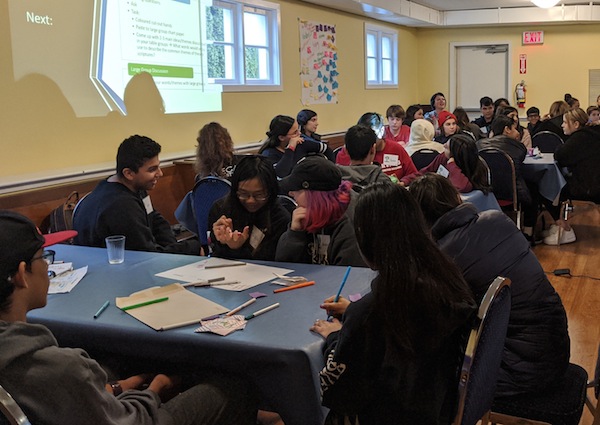
Interfaith Youth BC participants gather at Or Shalom Synagogue on Dec. 8. (photo from Pamela Evans)

Being stewards of the earth, performing acts of kindness: it’s not just Judaism that promotes these principles, and it’s for this reason that three faith groups in Metro Vancouver have brought youth together to explore shared values while participating in community service projects.

The Ismaili Centre of British Columbia, Or Shalom Synagogue and the United Church of Canada began working together in 2019 under the moniker Interfaith Youth BC to deliver programs for youth ages 11 and up. Participants learn about tenets of Islam, Judaism and Christianity while giving back to the community at large.

“You have kids, especially the ones in high school, they’re getting together and some of them have preconceived ideas of the [different faiths],” said Harriet Frost of Or Shalom Synagogue. “Sure, they get along in what they have in common in terms of their interests, ages and what they’re all going through as teenagers, but we’re addressing the elephant in the room. We’re addressing their faith traditions…. It’s an opening to see that they have a lot more in common than they might have realized before.”

Pamela Evans, a regional minister for youth and young adults for the United Church, said the guiding principle behind the collaboration is relationship building. “We make assumptions about others that aren’t based on reality,” she said. “If we’re able to build relationships, it’s less comfortable for us to do that and it affects the way we think about things. I love that sense that [the program] is an open place for curiosity and it’s grounded in this respect for one another.”

In May 2019, youth were given texts from the Torah, Qur’an and Bible that focused on stewardship and caring for the land, and had to determine which holy book each quote was from.

“The fascinating thing is no one could get it quite right because it was quite similar,” said Frost. “It’s a powerful exercise for anyone to see that.”

Later, the youth cleaned up English Bay beach in partnership with the Great Canadian Shoreline Cleanup.

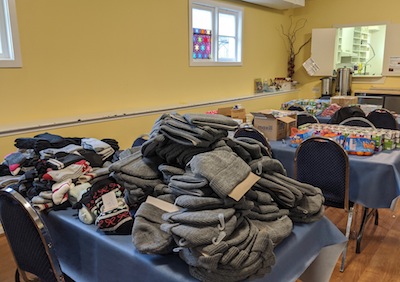
photo - Some of the items Interfaith Youth BC participants assembled into care packages to distribute in Downtown Eastside on Dec. 8
Some of the items Interfaith Youth BC participants assembled into care packages to distribute in Downtown Eastside on Dec. 8. (photo from Pamela Evans)

On Dec. 8, 45 young people gathered in the social hall at Or Shalom to once again dive into pieces of scripture, this time focused on acts of kindness. They assembled 150 care packages that included warm clothing, toiletries, sandwiches and snacks to distribute in the Downtown Eastside with support from the Lookout Housing and Health Society. The teens composed handwritten notes to include in each package. Several businesses donated items for the packages.

Through the nexus of study and action, “we are able to … provide a greater understanding of how faith and service are connected,” said Alina Daya, a secondary teacher at Ismaili Tariqah and Religious Education Board. “Through these events, youth are able to actually live out the guidance of their respective faiths and appreciate the similarities in values, guidance and practice within all of our traditions.”

Gabriel, one of the youth who attended the Dec. 8 event, was moved by the opportunity to make a difference. “I thought it was great how all the teens from different religious backgrounds could come together to help provide some small comforts to those less fortunate in Oppenheimer Park,” he said. “I was surprised at how similar our values were, especially of human kindness and compassion.”

Frost believes the exposure to different faiths and cultures can, in the long run, have the potential to break down political barriers. “It’s a bridge to sitting down and talking about it…. It’s a pathway towards peace and reconciliation in a broader sense,” she said. “If you develop a personal relationship, you realize the commonalities between everything.”

While the program is for youth, Evans sees it has ripple effects for adults as well. “I learn from my colleagues about things I didn’t know about and it feels like a blessing and a privilege to be a part of those conversations. I think sometimes adults are afraid to be in those conversations, or their privilege clouds their understanding. Youth don’t do that, so what would it look like if we shaped this generation of youth to think differently?”

The organizers plan to hold another event this year, a “festival of faiths,” at which they hope to invite other faith communities to participate.


Shelley Stein-Wotten is a freelance journalist and comedy writer. She has won awards for her creative non-fiction and screenwriting and enjoys writing about the arts and environmental issues. She is based on Vancouver Island.

Format ImagePosted on January 24, 2020January 22, 2020Author Shelley Stein-WottenCategories LocalTags interfaith, Ismaili Centre, Or Shalom, tikkun olam, United Church, youth
Auschwitz 75 years on

Auschwitz 75 years on

The King David Hotel was partially obscured by a temporary security barrier as part of the preparations that were carried out in Jerusalem for the arrival of leaders from more than 45 countries for in the Fifth World Holocaust Forum, which took place at Yad Vashem this week, and marked the 75th anniversary of the liberation of Auschwitz-Birkenau in Poland. (photo from Ashernet)

Monday marks the 75th anniversary of the liberation of Auschwitz-Birkenau. That date, Jan. 27, has been set aside annually to mark International Holocaust Remembrance Day.

Scores of officials from around the world were to descend on Jerusalem this week to attend a ceremony at Yad Vashem and a forum on the Holocaust. Expected guests include Canada’s Governor-General Julie Payette, Prince Charles, Russian President Vladimir Putin, French President Emanuel Macron, U.S. Vice-President Mike Pence and a long list of royalty, heads of government and others from around the world, especially from Europe.

Among the more attention-grabbing guests is Volodymyr Zelensky, president of Ukraine. Zelensky is a particularly interesting man in a particular role at an interesting time. He will be in Jerusalem alongside Pence and other world leaders at the very moments when the U.S. president is undergoing an impeachment trial initiated as a result of a phone call with Zelensky, probably the only reason most North Americans know his name. But that is among the least remarkable things about the leader.

A political neophyte (aside from playing the Ukrainian president in a satirical TV series), Zelensky was elected on an anti-corruption platform. In advance of his visit to Israel for the commemoration events this week, he engaged in a lengthy and witty interview with the Times of Israel about his family’s history – some relatives live in Israel and he has visited and performed comedy there many times – and his reflections on Jewishness, Israel and contemporary politics.

It caused some curiosity when Zelensky was elected because he has, in his words, “Jewish blood.” It is a common term, perhaps especially in formerly Soviet societies where religion was officially negated and so identities are defined obliquely, but the phrase “Jewish blood” is unfortunate in the context of Ukrainian history.

Among the considerations facing the country at present is the complicity of its citizens in the Holocaust, including in the massacres at Babi Yar, a ravine in the capital of Kyiv, where an estimated 100,000 to 150,000 individuals were murdered during the Nazi occupation, including more than 33,000 Jews on one day in September 1941.

In 1976, Soviet officials erected a monument marking the site and the cataclysm – ignoring the Jewish particularity of the mass murder and lamenting the deaths of Soviet victims of Nazism. It is undeniably true that victims at Babi Yar also included Roma, communists, Ukrainian nationalists and prisoners of war, all of whom deserve to be commemorated and mourned. But the omission of the Jewish identities of most of the victims at the site has been a point of pain and conflict for decades.

Zelensky’s government is remedying this. Begun by civic officials and Jewish leaders and endorsed by Zelensky’s predecessors, a Babi Yar Holocaust Memorial Centre is being constructed, with anticipated completion in 2023. The government is also undertaking a more transparent assessment of the country’s role and its citizens’ collaboration during the Second World War, outpacing most of their eastern European neighbours in addressing this dark past.

Still, some red flags remain. Zelensky claims that there is no antisemitism in Ukraine, an unequivocal statement that bewilders. It would be careless for any leader to ascribe complete innocence of bigotry to their entire citizenry, more so the leader of a country with a history like Ukraine’s.

He is, in some ways, between a rock and a hard place. While making blanket denials of Ukrainian antisemitism, he is also attempting to move his society away from the glorification of nationalist – meaning, among other things, inevitably antisemitic – historical figures. He points to the fact that he, a novice politician with “Jewish blood,” was elected to the country’s top post as evidence of tolerance in Ukrainian society. It does seem encouraging.

Also encouraging is the extensive list of world leaders arriving at Yad Vashem not only for a commemoration but for an educational forum, titled Remembering the Holocaust: Fighting Antisemitism. Israel’s President Reuven Rivlin has said the purpose of the meeting is “to think about how to pass on Holocaust remembrance to generations who will live in a world without survivors, and what steps we must take to ensure the safety and security of Jews, all around the world.”

Seventy-five years after that terrible epoch, the topic remains timely.


Format ImagePosted on January 24, 2020January 22, 2020Author The Editorial BoardCategories From the JITags antisemitism, Auschwitz-Birkenau, Holocaust, Israel, politics, Ukraine, Volodymyr Zelensky, Yad Vashem
Jazz that’s personal, timely

Jazz that’s personal, timely

Andrea Superstein’s next local performance is at Centennial Theatre in North Vancouver on Feb. 5. Her new album is Worlds Apart. (photo from the artist)

For the last year, Andrea Superstein has been touring Canada with her new jazz album, Worlds Apart. Her next local performance will be at Centennial Theatre in North Vancouver on Feb. 5.

“I discovered my voice when I was a kid. My parents enrolled me in a musical theatre program at school and I sang in a choir,” Superstein told the Independent in a recent interview. “But my family were concerned about music as a profession for me. They thought the life of an artist was uncertain, so I went on to train as a teacher. I have been teaching theatre in several Vancouver schools since I moved here from Montreal. I still teach part-time. I taught at King David [High School] for awhile. But I always had music in my life as a hobby.”

At some point, the young teacher decided to explore if music could be more for her than a hobby. In 2009, she attended a weeklong summer swing camp, a jazz camp for adults in Sorrento, B.C. “I loved it,” she said. “It gave me access to the big names on the Vancouver jazz scene. I learned so much. I decided that, for my next birthday, I would get myself a gig. I knew I could do it and I did it.”

That performance was so successful and meant so much to her, she committed to pursuing jazz as a career. She couldn’t live without it anymore.

In 2010, Superstein released her first album, comprised of her arrangements of jazz standards. The same year, her debut performance at the Vancouver International Jazz Festival earned her a nomination for a Galaxie Rising Star award. Now, 10 years later, she is a well-known Vancouver jazz vocalist.

“I still teach theatre, while I’m still a learner in jazz,” she said with a smile. “It is good to have different outlets for my creativity.”

Her latest album, Worlds Apart, is mostly her own compositions, although it includes a few of her interpretations of other songs.

“I love jazz because it is often a reinvention of something old, something known, but the musician makes it her own, as I did with the song ‘My Favourite Things’ from The Sound of Music,” said Superstein by way of example. “I’ve seen the movie many times. I performed in the musical, in the roles of Maria and Reverend Mother.” She created her own arrangement of the song for her album.

“With Worlds Apart, I wanted to deliver something personal by examining the timely issues we all face,” she added. “We simultaneously exist in conflict and in symbiosis, and the contrast fascinates me. It is not only explored in the lyrics but also reflected in the harmonic structure and the songs’ arrangements.”

For her original compositions, Superstein writes both the music and the lyrics. She loves performing, interacting with the audience. “It gives me the biggest joy,” she said.

“I love talking to people between the songs, telling them funny stories about my music and lyrics, offering some extras. I love to hear the audience laugh or applaud. It’s like building a community, creating relationships. Not many jazz performers do that, I think, and it sets me apart. Or maybe it is my theatre background showing…. Usually, my talks are not scripted. There is always an element of impromptu. I try to be open to possibilities.”

Worlds Apart includes songs in three languages: English, French and Hebrew. “I grew up in Montreal, so I’m fluent in both English and French. When we performed this album in Montreal, people loved it when I spoke to them in French,” Superstein said.

She wrote the album’s Hebrew song years ago. “When I was 17, in 1996, I spent six months on an exchange program in Israel, on a kibbutz,” she said. “I was overwhelmed by the different life there, by the people. There were many bus bombings at that time, [Yitzhak] Rabin was recently assassinated, but people didn’t exhibit fear. Just the opposite. Everyone was passionate, on fire for life, and I wrote a song about it.”

When she started working on this latest album, she remembered that song and thought it appropriate for Worlds Apart, so she revised it and recorded it.

“This album is the first I didn’t produce myself,” said Superstein. “It’s good to have someone else to listen, to make suggestions. I invited the Montreal jazz singer Elizabeth Shepherd to be my producer. I also hired a group of Montreal musicians to record the disc. They are wonderful musicians, I enjoyed working with them, and I toured with them for the past year.”

The musicians performed in jazz concert series, in small theatres and bookstores; they also gave some house concerts.

“The life of a musician is a challenging one,” said Superstein, “but I’m fueled by my love for my art.”

For more information and other concert dates, visit andreasuperstein.com.

Olga Livshin is a Vancouver freelance writer. She can be reached at [email protected].

Format ImagePosted on January 24, 2020January 22, 2020Author Olga LivshinCategories MusicTags Andrea Superstein, jazz, Worlds Apart

Posts pagination

Previous page Page 1 … Page 280 Page 281 Page 282 … Page 664 Next page
Proudly powered by WordPress