Skip to content
  • Home
  • Subscribe / donate
  • Events calendar
  • News
    • Local
    • National
    • Israel
    • World
    • עניין בחדשות
      A roundup of news in Canada and further afield, in Hebrew.
  • Opinion
    • From the JI
    • Op-Ed
  • Arts & Culture
    • Performing Arts
    • Music
    • Books
    • Visual Arts
    • TV & Film
  • Life
    • Celebrating the Holidays
    • Travel
    • The Daily Snooze
      Cartoons by Jacob Samuel
    • Mystery Photo
      Help the JI and JMABC fill in the gaps in our archives.
  • Community Links
    • Organizations, Etc.
    • Other News Sources & Blogs
    • Business Directory
  • FAQ
  • JI Chai Celebration
  • JI@88! video

Recent Posts

  • Zionism wins big in Vegas
  • Different but connected
  • Survival not passive
  • Musical celebration of Israel
  • Shoppe celebrates 25 years
  • Human “book” event
  • Reclaiming Jewish stories
  • Bema presents Perseverance
  • CSS honours Bellas z”l
  • Sheba Promise here May 7
  • Reflections from Be’eri
  • New law a desecration
  • Resilient joy in tough times
  • Rescue dog brings joy
  • Art chosen for new museum
  • Reminder of hope, resilience
  • The national food of Israel?
  • Story of Israel’s north
  • Sheltering in train stations
  • Teach critical thinking
  • Learning to bridge divides
  • Supporting Iranian community
  • Art dismantles systems
  • Beth Tikvah celebrates 50th
  • What is Jewish music?
  • Celebrate joy of music
  • Women share experiences 
  • Raising funds for Survivors
  • Call for digital literacy
  • The hidden hand of hate
  • Tarot as spiritual ritual
  • Students create fancy meal
  • Encouraging young voices
  • Rose’s Angels delivers
  • Living life to its fullest
  • Drawing on his roots

Archives

Follow @JewishIndie
image - The CJN - Visit Us Banner - 300x600 - 101625

Category: News

BI to honour beloved couple

BI to honour beloved couple

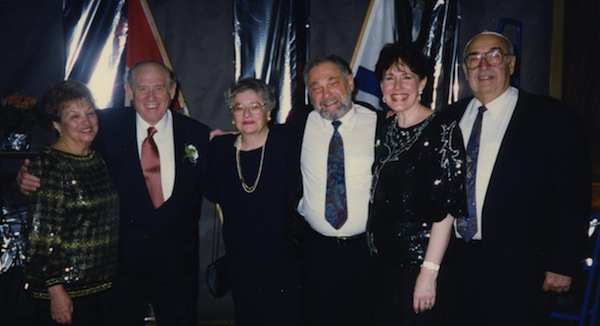
Phyllis and Rabbi Wilfred Solomon, centre, with Cantor Murray Nixon and his wife Dorothy, left, and Sharon and Irving Kates, at Beth Israel’s 60th anniversary gala in 1992. (photo from Congregation Beth Israel fonds, JMABC L.22263)

On June 17, Congregation Beth Israel will pay tribute to Rabbi Emeritus Wilfred (Zev) and Phyllis Solomon. The rabbi was spiritual leader of the synagogue from 1964 to 1997. During that time, gala co-chair Marcy Schwartzman told the Independent, he officiated at more than 4,000 lifecycle events, including about 500 brit milot and baby namings, 750 weddings, 800 b’nai mitzvah, 250 conversions, 900 funerals and 900 unveilings.

But the cause for celebration goes beyond numbers, of course.
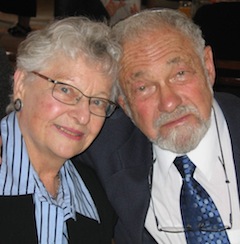
photo - Phyllis and Wilfred Solomon are being honoured by Congregation Beth Israel on June 17
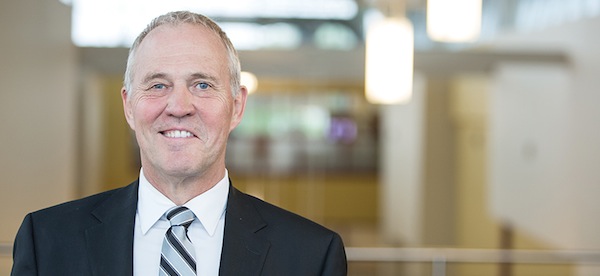
Phyllis and Wilfred Solomon are being honoured by Congregation Beth Israel on June 17. (photo from Beth Israel)

“Rabbi Zev and Phyllis Solomon were the heart and soul of Congregation Beth Israel for many years,” said board president Helen Pinksy. “Together, they gave our synagogue honour and status as a warm, caring, forward-thinking and progressive community of committed Jews in Vancouver. The role of emeritus for Rabbi Solomon indicates his distinguished service and was not awarded pro forma, but because he, together with his wife, accomplished much and were beloved by the people they served. It is a true pleasure to be honouring him in return with this gala.”

Pinksy and her family have been members of Beth Israel for about 25 years. Upon joining the synagogue, she said, “Almost immediately, I asked Rabbi Solomon to teach me Torah and Haftarah reading, because I wanted to have an adult bat mitzvah. Under his tutelage, it took place. After that, my oldest son Isaac was in Rabbi Solomon’s last bar mitzvah cohort, in 1997.”

Current spiritual leader of Beth Israel, Senior Rabbi Jonathan Infeld, met the Solomons at his installation 13 years ago.

“Rabbi Solomon was beloved because of his warmth, love and concern for the Jewish people, the Vancouver Jewish community and the members of our synagogue,” said Infeld. “He worked extremely hard to bring Torah and love to everyone in his realm. I always hope to emulate his examples.”

Both Infeld and Pinsky attended the Rabbinical Assembly, which took place this year in Montreal May 5-8. Solomon was one of six rabbis honoured by the Conservative movement organization on the first night of the convention.

“Conservative rabbis from across the world were in attendance,” said Infeld. “Unfortunately, Rabbi Solomon and Phyllis were not able to make it because they live in Jerusalem. Rabbi Lionel Moses organized and chaired the ceremony. I spoke about Rabbi Solomon and his wife, Phyllis. Liberal MP Anthony Housefather presented an award that Helen Pinsky received on Rabbi Solomon’s behalf.”

“As soon as I heard about the tribute ceremony for the Solomons, I wanted to be there,” said Pinsky. “It was an extreme honour to accept the certificate of merit and tribute on their behalf. The certificate is signed by Prime Minister [Justin] Trudeau, and the prime minister filmed a message of congratulations to the Rabbinical Assembly to welcome us there.
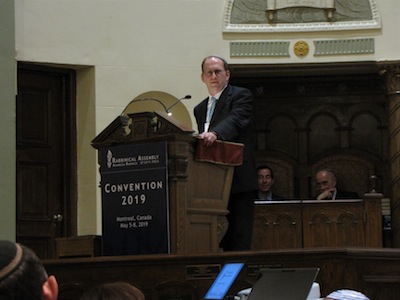
photo - Congregation Beth Israel Senior Rabbi Jonathan Infeld speaks about BI Rabbi Emeritus Wilfred Solomon at the Rabbinical Assembly in Montreal on May 5-8
Congregation Beth Israel Senior Rabbi Jonathan Infeld speaks about BI Rabbi Emeritus Wilfred Solomon at the Rabbinical Assembly in Montreal on May 5-8. (photo from Beth Israel)

“The greatest thrill,” she said, “was to hear Rabbi Infeld describe the accomplishments and the personal courage and integrity of the Solomons to the assembled rabbis and other guests at the assembly. It was easy for us to decide to attend, because we didn’t want this opportunity to honour the Solomons to go by without proper acknowledgement.”

The Solomons worked for the benefit of the synagogue and the larger community. “They became friends with many of their congregants and the families that made up the synagogue, grew up with the Solomon family,” said Pinsky. “Rabbi Solomon took a leading role in advocating for human rights and protecting human dignity within the Vancouver Jewish community and neither he nor Phyllis hesitated to stand up for what they believed to be fair. He was involved in demanding freedom of Soviet Jews, in the exodus of Ethiopian Jews, and he supported Martin Luther King and other leaders who fought for racial and social equality during the ’60s, ’70s and onwards. The Solomons also aided in the synagogue’s adaptation to include women as equals within the Conservative movement. Their impact was huge.”

The couple made aliyah right after Rabbi Solomon’s retirement in fall 1997, said Pinsky. “They have lived in Jerusalem ever since,” she said. “In around 2006, they attended and Rabbi Solomon officiated at my niece’s bat mitzvah at the Southern Wall, just below the Western Wall, and we socialized all weekend. The Solomons retained a warm and friendly relationship with my extended family, as they did with most of the families in the synagogue. They had known my parents since the ’70s, for example, and were quick to send us kids kind notes of sympathy on the passing of our father and then our mother. I know of many congregants who have lunched with the Solomons each time they visit Jerusalem, and still maintain that special relationship that one can have with ‘my rabbi.’”

“I see them every time that I am in Israel,” said Infeld. “We also talk on the phone and email.”

Infeld is joined in leading the congregation by Assistant Rabbi Adam Stein, Ba’alat Tefillah Debby Fenson and youth director Rabbi David Bluman. The synagogue has more than 640 member families, according to its website.

“Rabbi Solomon and Phyllis gave so much to Beth Israel and the entire Vancouver Jewish community. We are as we are today as a synagogue because of the two of them. They built so much. We should always be grateful to them,” said Infeld. “Our gala will be just one way to continue to show them our gratitude and appreciation.”
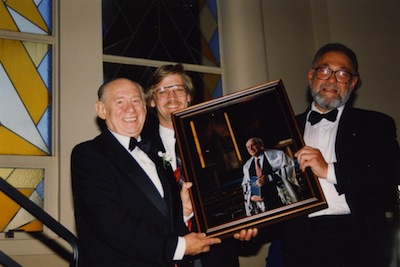
photo - Cantor Murray Nixon, left, and Rabbi Wilfred Solomon, right, hold a framed photo of Nixon taken by Don McGregor, middle, at Beth Israel, circa 1995
Cantor Murray Nixon, left, and Rabbi Wilfred Solomon, right, hold a framed photo of Nixon taken by Don McGregor, middle, at Beth Israel, circa 1995. (photo from Congregation Beth Israel fonds, JMABC L.22388)

For the last while, the gala committee, which Schwartzman co-chairs with Leatt Vinegar, has been asking the community to send in photographs of and stories about the Solomons. These photos will be shared throughout the event in different ways, said Schwartzman.

“It is going to be a lovely evening of celebrating our beloved Rabbi and Mrs. Solomon,” she said, “but it is also a celebration of our congregation and how it touches our lives at those lifecycle pivotal moments.”

In this vein, a new exhibit is being mounted.

“We are excited to officially open the museum cases in the synagogue once again,” said Schwartzman. “Jean Gerber and Lissa Weinberger have been working hard at bringing back these displays. Phyllis Solomon helped develop the original museum in the old building and she has been involved in helping to decide which pieces will be in this new display that officially opens at the gala.

“We will also be naming the street that leads down to our parking lot … and, if technology holds up, we will be trying a live link to the Solomons in Israel.”

A special book of messages is being designed to give to the Solomons as a keepsake, and a digital version will also be created, so that everyone can view it. To contribute to the book, contact Esther Moses-Wood at [email protected].

Proceeds from the gala and book will support the operation of the synagogue. For tickets ($180), call 604-731-4161 by June 1.
Format ImagePosted on May 24, 2019May 23, 2019Author Cynthia RamsayCategories LocalTags Beth Israel, Conservative movement, history, Solomons
נושא הלבנת הכספים בבריטיש קולומביה

נושא הלבנת הכספים בבריטיש קולומביה

השר האחראי בממשלה הפדרלית על הפחתת הפשע המאורגן בקנדה, ביל בלייר, אמר כי אם הם ידרשו, פקידי הממשלה יעידו בפני הוועדה המיוחדת.

הממשלה הפדרלית בראשות המפלגה הליברלית והמשטרה הפדרלית (האר.סי.אם.פי) הודיעו בנפרד, כי ישתפו פעולה עם ועדת החקירה המיוחדת שתבדוק את נושא הלבנת הכספים במחוז בריטיש קולומביה. על הקמת הוועדה החליט הפריימר של בריטיש קולומביה, ג’ון הורגן, ובראשה יעמוד שופט בית המשפט העליון אוסטין קלאן.

השר האחראי בממשלה הפדרלית על הפחתת הפשע המאורגן בקנדה, ביל בלייר, אמר כי אם הם ידרשו, פקידי הממשלה יעידו בפני הוועדה המיוחדת. זה כולל גם נציגים של האר.סי.אם.פי, סוכנות המודיעין לנושאים פיננסים ופ’ינטרק. המידע ימסר על ידם כל אימת שידרשו ובלבד שלא יסכן חקירות בהם הם עוסקים.

בלייר הוסיף כי הממשלה הפדרלית נקטה כבר במספר צעדים משמעותיים בנושא הלבנת ההון. בין היתר הממשלה השקיעה שבעים מיליון דולר נוספים למשך חמש השנים הבאות, כדי להקים כוח משימה מיוחד להילחם בהלבנת כספים. הממשלה החליטה גם להגביר את קליטת ואיסוף המידע הפיננסי בנושא.

במקביל המשטרה הפדרלית הודיעה בנפרד כי גם היא תשתף פעולה באופן מלא עם הוועדה לחקירת הלבנת הכספים במחוז.

ממשלת בריטיש קולומביה החליטה לבדוק לעומק את פרשת הלבנת הכספים, מקלט מתשלום מיסים ומקום להפקדת מזומנים ללא זהות, המתרחשות בוונקובר ובאזור. הממשלה פרסמה לאחרונה דוחות שחשפו את ממדי התופעה החמורה, כאשר בתקופת השלטון המפלגה הליבראלית היא הושתקה.

בשנה שעברה לפי הערכה הולבנו באזור ונקובר למעלה משבעה מילארד דולר. למעלה מחמישה מיליארד מהסכום המולבן הושקע בנדל”ן. הדבר הביא לפי הערכה לעלייה של יותר מחמישה אחוזים במחירי הנדל”ן אשתקד. לא פלא שבוונקבור עצמה מחירי הנדל”ן עלו ביותר משבעים אחוז בחמש השנים האחרונות.

הממצאים של הדוחות הממשלתיים ממחישים כיצד זרם מזומן רב להלבנה בבתי קזינו השונים, רכישת מכוניות ותכשיטים יקרים וכמובן לענף הנדל”ן.

דיווחים קודמים של הממשלה גילו כיצד בתי קזינו במשך שנים קיבלו מיליוני דולרים במזומן. ואילו לאחרונה פורסם איך השוק האפור משגשג ביצוא מכוניות יוקרה מונקובר לסין. זאת תוך קבלת מיליוני דולרים בגין החזרי מס מכירות רכבים לקונים בחו”ל. אבל כל אלה לא קרובים למה שקורה בתחום הנדל”ן. מדובר במגזר שעל פי הערכות מהווה כשליש מהתוצר המקומי הגולמי של המחוז והוא בעצם הדלק של הכלכלה המקומית.

לפי הערכות בממשלת המחוז למעלה ממאתיים מיליארד דולר הולבנו באזור ונקובר בעשרים השנים האחרונות. מרבית הכסף השחור הושקע כאמור בנדל”ן כאשר אחד מכל חמישה בתים נרכש במזומן, ולנכסים רבים אין זהות ברורה מי בעליהם. לפעמים דירות רבות נרכשו עת ידי אותו גורם בבניין מגורים אחד. בעלי נכסים רבים פורעים את המשכנתאות שלהם מהר מאוד, ויש בעלי נכסים שמחזיקים בעשרות משכנתאות בו זמנית.

על פי הדוחות של ממשלת מחוז בריטיש קולומביה: ונקובר רבתי הפכה למכבסת כספים של הפשע המאורגן בו שותפים גורמים זרים. על הגורמים הפליליים נמנים: קרטלי סמים של מקסיקו, גורמי פשע מאורגן מאירן כולל ארגון החיזבללה, וגורמי פדע מסין. אזור ונקובר רכש לעצמו מוניטין שאין להכחישו כמקום נוח להלבנת הון, סחר בסמים והפקדת מזומנים בהיקף גדול.

הממשלה המחוזית מתכננת להקים מרשם ציבורי של בעלי קרקעות במהלך השנה, כדי לדעת בוודאות מי עומד מאחורי הנדל”ן היקר באזור כולו. במקביל הממשלה ממשיכה להפעיל לחצים על הממשלה הפדרלית לקבלת משאבים משמעותיים, להילחם בהון השחור. וכן להתקין חדשות כדי לפקח טוב יותר על עסקאות במזומן ועל פעילויות חשודות.

Format ImagePosted on May 22, 2019May 22, 2019Author Roni RachmaniCategories עניין בחדשותTags Bill Blair, British Columbia, investigation, money laundering, ביל בלייר, בריטיש קולומביה, הלבנת הכספים, חקירה
Community day of learning

Community day of learning

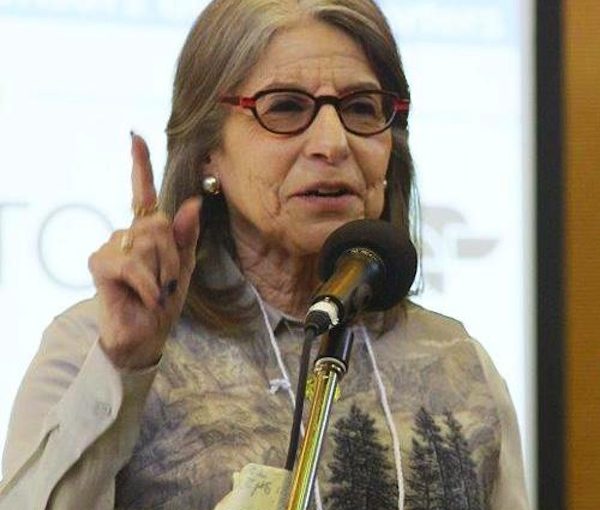
Prof. Norma Joseph (photo from Association for Canadian Jewish Studies)

On June 2, the Association for Canadian Jewish Studies is holding a day of lectures in the Jewish community that will be topped off with music from the Vancouver Jewish Folk Choir, the granting of the 2019 Louis Rosenberg Canadian Jewish Studies Distinguished Service Award to scholar and activist Norma Joseph and a talk by Franklin Bialystok on Canadian Jewish Congress.

“We offer a community day every year, and it’s always the opening day of the conference,” co-organizer Jesse Toufexis told the Independent.

“The motivations for the community day are plentiful,” said Toufexis. “Firstly, we receive great support in a number of ways from Jewish communities all over Canada, so this is an excellent way not only to thank them but to show them what the scholarly community is up to.

“Secondly, the Jewish community is interested in the topics we cover, from history to sociology to literature and art. So, coming from fields where we work on such minutely detailed projects, it’s fun to engage with a community that gets excited about the topics we ourselves find exciting.

“Thirdly, I think holding a community day is just part of a tradition that fosters togetherness. We aren’t scholars out in the ether, doing our own thing and keeping it to ourselves. I think of us more as a branch of a much larger Canadian Jewish community that includes all the various roles and aspects of Jewish life in this country, and I think it’s something of a duty to share what we’re constantly learning about our common past, present and future.”

Prof. Rebecca Margolis, ACJS president, praised Toufexis and co-organizer Prof. Richard Menkis on having “put together an amazing community day together in partnership with a team of local organizations that have gone above and beyond to make this day a success: Jewish Museum and Archives of B.C. and our host, the Peretz Centre for Secular Jewish Culture. As a member-run organization,” she said, “we value opportunities to collaborate with local organizations in order to produce exciting programming on the Jewish Canadian experience.”

The first panel session of the day is Jewish Space in Literature and Popular Culture, followed by Antisemitism and the Holocaust. At lunch, a panel discusses the topic Archives Matter. The two afternoon panels are Media Studies, and Challenging the Status Quo. Joseph’s talk in this last session is called No Longer Silent: Iraqi Jewish Immigrants and the CJC.

“I’ve been working on the Iraqi Jewish community in a bunch of different ways and my most recent publications are about their food and what we can learn about their cultural history and immigration patterns through studying their food,” Joseph told the Independent in a phone interview from her home in Montreal. “But I’ve also looked at, through the immigration pattern, the traumas they suffered by the expulsion from Iraq and the processes through which they had to escape from Iraq, as well as the ways in which they adapted to life in Montreal.”

It is only in the last decade or two, said Joseph, that Iraqi Jewish community members have “begun to present their memoirs and talk about how awful the experience from the Farhud in 1941 was. So, then I began to gather their stories.”

Joseph is particularly interested in the transition of the community from being unwilling to talk about their experiences to talking about them. “And also,” she said, “in the process of [preparing for] this year’s conference, which is celebrating 100 years of Canadian Jewish Congress, to figure out in what ways did Canadian Jewish Congress help or not help this community migrate or emigrate into Canada, which was, in fact, to Montreal. And that’s where I’m doing research right now. The Iraqi Jews themselves say, oh no, they didn’t help us … we came alone, we found our way on our own and nobody ever helped us. We didn’t ask for help. We weren’t refugees…. End of story.”

This perspective, as well as the larger Jewish community’s focus at the time on dealing with the impacts of the Holocaust, contributed to the silence, said Joseph.

“I wanted to go behind the scenes and say, OK, but in what ways that they [Iraqi Jews] might not have known was Congress working with the Government of Canada to open the doors, because we know that the doors of Canada were closed to Jewish immigration during World War Two but, afterwards, in the 1950s the doors open…. Did anyone in Congress help Middle Eastern Jews come? That’s my question. And that’s what I’m researching now at the archives, interviewing some people.”

Joseph’s interest in the Iraqi Jewish community comes in part from her and her husband Howard’s experiences.

“In 1970,” she said, “we came to Canada [from the United States]. He was invited to become the rabbi of the Spanish and Portuguese congregation. He was their rabbi for 40 years. And the congregation has many different communities – it has Iraqis, Lebanese, Moroccan, some Iranians, and we love the diversity of communities, the cultural diversity was so exciting.

“I never thought of studying the communities that we were friendly with and that my husband was the rabbi of, but, eventually, at some point, somebody said to me, why don’t you study Canadian Jews? And I looked around me at all these wonderful, diverse ethnic communities of Jews and I said, oh, this is a great idea, why not study the people I know so well?

“And I was interested in gender. I started asking a lot of questions and I especially focused on the women. And it came out that they were willing to talk to me, especially about food, and food was an entree into learning about their experiences, both in Baghdad and the transitions to Montreal and how hard those transitions were…. They couldn’t find the right foods and they didn’t know how to cook and there were no cookbooks and how were they going to cook and where were they going to find the spices? That was very symbolic of life, the difficulties of life in Montreal for this community that didn’t like gefilte fish.”

Joseph is being honoured by the ACJS for attaining the “highest standards of scholarship, creative and effective dissemination of research, and activism in a manner without rival in our field of Canadian Jewish studies, as well as being a respected voice in Jewish feminist studies more broadly.” Not only is she being recognized for “her mastery of both traditional rabbinic sources and anthropological methods,” but her teaching, her work in documentary and educational film, being a founding member of the Canadian Coalition of Jewish Women for the Get, as well as participating in the founding of the Institute for Canadian Jewish Studies at Concordia University, among many other accomplishments. For more than 15 years, she has written a regular column in the Canadian Jewish News. In one of these columns, in recent months, she recalled a time “when the phrase ‘liberal values’ was not a dirty word.”

“I was raised Orthodox,” she told the Independent. “My grandfather was a great Orthodox rabbi in Williamsburg…. But my parents worked very, very hard to send me to one of the great liberal Orthodox schools. It was called the Yeshivah of Flatbush, where boys and girls study together and we were taught that boys and girls could learn, and girls were included in that equation. It was one of the best schools because I learned fluent Hebrew, which was very rare, and it was a Zionist school, beginning in the ’50s.”

She added, “It wasn’t our liberal values in the 21st century, but it was mid-20th-century values. We learned to love Israel. We learned about justice, we learned about equality in some very interesting ways. We were patriotic Americans, my country right or wrong, which, after Vietnam, we had to rejig, but we were there before Vietnam…. I’ll tell you another thing that’s interesting about my upbringing – we didn’t learn about the Holocaust. At that age, in the ’50s and ’60s, parents didn’t want their children traumatized by stories of the Holocaust.”

Between her own studies of Jewish law and those of her husband, Joseph lauded the insight and flexibility that can be found in Judaism. “My husband always taught me that, if you are a legalist, are in charge of the law … the easiest answer is no, because it means you don’t have to examine and search the law. The hardest thing, but most creative thing, is to find a way to say yes…. We have thousands of years of law – surely in all that precedent you can find something.”

As but one example, Joseph has used Jewish law to argue for the rights (and obligations) of women, and has seen progress on the feminist front.

“For example,” she said, “let’s just take the world of bat mitzvah. In the 1950s, there weren’t bat mitzvahs, for the most part. Even the Conservative and Reform movements didn’t want bat mitzvahs…. Today, 2019, there isn’t a community that doesn’t offer some form of recognition of a girl’s 12th birthday,” including Chassidic communities.

“That’s a transformation because of feminist critique,” she said. “They will never admit it. They will say we always did it. But that’s a big change, on one hand. On the other hand, it’s silly, it’s narishkeit; it’s small, it’s nothing.”

But even incremental change leads to larger change, and Joseph spoke about the “incredible historical research coming out – women [always] had strong ritual lives, but what’s coming out now is the need for public ritual formats for women in all sectors of society.”

For the full schedule of and to register for the ACJS community day, visit eventbrite.ca.

Format ImagePosted on May 17, 2019May 16, 2019Author Cynthia RamsayCategories LocalTags education, history, Iraq, Jesse Toufexis, Norma Joseph, Peretz Centre, Rebecca Margolis, Richard Menkis
Korczak course at UBC

Korczak course at UBC

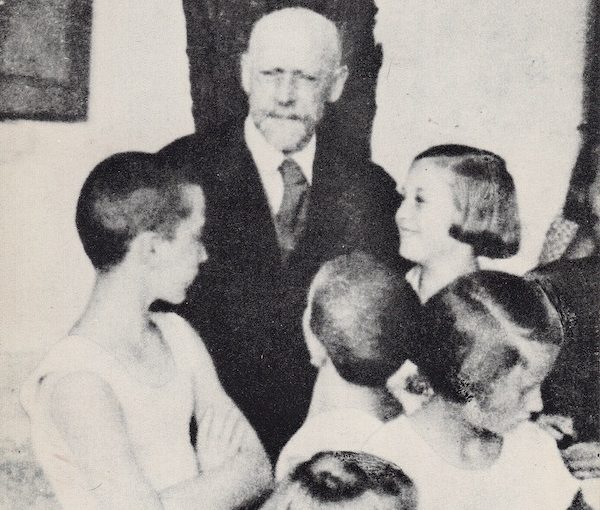
A postcard showing Janusz Korczak in the courtyard of the orphanage on Krochmalna Street in Warsaw, Poland, in the early 1930s.

An unprecedented interdisciplinary event will take place this summer at the University of British Columbia, focusing on the legacy of Janusz Korczak, a pioneer in the area of children’s rights and welfare.

Korczak is perhaps remembered most for his final act of heroism: his refusal to accept an offer of a reprieve, choosing instead to walk with the 200 or so orphaned children of his school as they were sent to their deaths at Treblinka. But it is his legacy as an educator, physician and writer that will be the focus of the 2019 Korczak Summer Institute. The two-week intensive program, called Advocacy in Action: The Legacy of Janusz Korczak, is open to graduate and undergraduate students across disciplines. It takes place July 2-11.

“To the best of my knowledge, there’s never been a university-based course on the work of Janucz Korczak, not in his native Poland, not in Israel, certainly not in North America,” said Rabbi Dr. Hillel Goelman, professor emeritus in UBC’s department of educational and counseling psychology, and special education. The program was developed across disciplines, reflecting Korczak’s range of academic and philosophical work.

“He was a pediatrician by training, so we reached out to the department of pediatrics to get their help and a number of faculty members are going to do Korczak-related activities,” said Goelman. “He was an educator, so the faculty of education were happy to co-sponsor the course with the Januscz Korczak Association [of Canada]. But it would also be open to people studying social work or any sort of child-focused activity. A lot of people at UBC support the whole cause of child activism and child welfare from an interdisciplinary perspective.”

Korczak’s philosophy inspired and informed the United Nations Charter on the Rights of Children. Importantly, his work was not limited to academics or writing, but was devoted to applying his values of child empowerment directly to the real world.

“Children are not the people of tomorrow but people today,” Korczak wrote. “They are entitled to be taken seriously. They have a right to be treated by adults with tenderness and respect, as equals.”

“In the orphanage that he ran in Warsaw, they had a children’s parliament, where children elected their leaders to make the rules and enforce the rules,” said Goelman. “There was a children’s court, where children could complain about their treatment either by the staff or by other students. There was a children’s newspaper that they published. He very much empowered children and he thought it was important to draw on this and give them opportunities to develop their own leadership. I think those are all very important contemporary messages for educators, social workers, pediatricians … and it’s kind of timeless. It’s really relevant to where we are today in terms of child activism, child welfare and child advocacy.”

The institute is designed to help participants transform their working environment to model democratic principles pioneered by Korczak in his writings, pedagogy and governance of the orphanages under his care. It will also encourage participants to adopt strategies to translate the respect for children’s rights into professional practices, including communication with parents and the larger community, and to learn how to help children in developing and sustaining their cultural identity, particularly among those who may struggle with multiple identities.

The course will be taught by Prof. Tatyana Tsyrlina-Spady, an internationally recognized expert on the life and legacy of Korczak and adjunct professor at Seattle Pacific University. She will be joined by a team of international and national invited speakers: teacher trainer and UNICEF consultant Jonathan Levy (Paris, France); founders and leaders in the field of social pediatrics Dr. Gilles Julien and Hélène Trudel (Montreal); researcher and practitioner of Korczak’s legacy Wojtek Lasota (Warsaw, Poland); several UBC professors of nursing and psychology; U.S.-Canadian writer Tilar Mazzeo (Victoria); and a Holocaust survivor and poet, Vancouverite Lillian Boraks-Nemetz.

Promoting Korczak’s pedagogical ideas, as well as their effect on children’s education, is part of the mandate of the Janucz Korczak Association of Canada, which was founded in 2002. The president, Jerry Nussbaum, lives in Vancouver, as do fellow board members Goelman and Boraks-Nemetz.

“His work is very much alive,” said Goelman of Korczak.

The deadline to register for the UBC course is May 28: pdce.educ.ubc.ca/child-advocacy.

Format ImagePosted on May 17, 2019May 16, 2019Author Pat JohnsonCategories LocalTags children, education, Hillel Goelman, history, Holocaust, Janusz Korczak, UBC
ED is a complex condition

ED is a complex condition

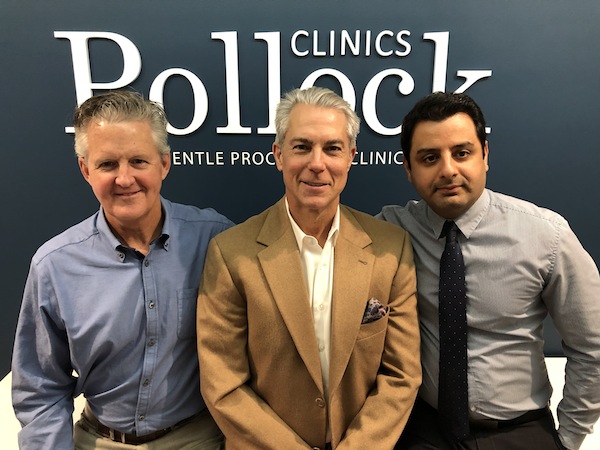
Left to right: Pollock Clinics sex therapist Tom Foster and physicians Neil Pollock and Roozbeh Ahmadi. (photo from Pollock Clinics)

While there may be any number of reasons why the frequency of a couple’s intimate sexual contact may wane, it is a critical cornerstone supporting the continuation of a healthy relationship. Often, when a couple is having sex infrequently, or not at all, their relationship becomes vulnerable to anger, detachment, infidelity and divorce. One factor that can come into play regarding a couple and their sex life is erectile dysfunction.

“ED is a medical condition where a man is consistently unable to achieve and maintain an erection that allows for satisfactory sexual function. ED is also referred to as impotence,” explained Drs. Neil Pollock and Roozbeh Ahmadi of Pollock Clinics in an email interview with the Independent. “The Canadian Study of Erectile Dysfunction identified 49.4% of men over the age of 40 with ED (Canadian Urological Association erectile dysfunction guideline 2015). By the time men reach the age of 70, almost 70% of them will experience some form of erectile dysfunction.”

Conventional treatment for ED generally involves blocking the symptoms, with medications like Viagra and Cialis. “If pills are not working, the next step is the injection or suppository forms of medications that patients can inject into the penis or infuse into the urethra prior to having intercourse,” said the doctors. “If these medications are not satisfactory, then there is the option of a vacuum erection device that a patient will need to apply to the penis and get an erection through the vacuum created within the tube. If none of the options is satisfactory, then there is the option of surgery, such as penile implant surgery.

“The issue with pills, injection and pump is the fact that all need prior timing and preparation and, in the case of pills, they can cause significant side effects, such as headaches, flushing, upset stomach and visual changes, which a lot of patients cannot tolerate.”

There are many factors that can cause ED. “These include neurological disorders, hormonal imbalance, structural abnormalities, side effects of medications or surgeries, mood disorders,” said the doctors, but “the most important and prevalent one is vascular disease.

“When a man becomes aroused, the brain releases a neurochemical substance to increase the size of blood vessels carrying blood to the penis and reduce the size of the vessels that carry it out,” they explained. “Twin compartments that run the length of the penis, called corpora cavernosa, become flush with blood that is trapped in the shaft. This causes the penis to stiffen and become erect. If blood flow to the penis is inhibited or the blood vessels are clogged or constricted, erection cannot be achieved or maintained.”

High cholesterol and the buildup of arterial plaque, over time, cause blood vessels to narrow, lessening their capability to carry blood. One of the first places men will notice this reduced flow is with ED, which is why ED has been dubbed “the canary in the coal mine” – it can serve as a distress signal three to five years prior to a major heart attack.

Lifestyle choices and health conditions that can also contribute to ED include smoking, obesity, a sedentary lifestyle and chronic alcoholism and/or substance abuse.

“Sexual wellness is essential to men’s health and happiness,” said Pollock and Ahmadi. “It is an integral part of men’s overall wellness as they age. A great number of scientific studies have shown the many benefits of a healthy and active love life, which include living longer, greater well-being and a happier and longer lasting relationship with your partner.”

Pollock Clinics provides a few treatments for ED.

“In the last few years, there are innovative regenerative treatment options to deal with the root cause of the problem, and not just the symptom,” said the doctors. “These new modalities include low-intensity shockwave therapy and platelet-rich plasma therapy [also known as the PRP shot], and are currently used in many countries around the world.”

PRP is created from a patient’s own blood and is commonly used in orthopedics, plastic surgery and sports medicine. “Studies have shown that this penile injection contains several different growth factors that can stimulate the healing of erectile tissue and is a safe and effective option for penile rejuvenation and improvement of erectile function … by enhancing and increasing the blood flow to the erectile tissue, offering a longer lasting desired outcome.

“ED shockwave therapy,” the doctors explained, “also promotes the regeneration of blood vessels in the penile shaft. That, like PRP, leads to longer and more satisfying erections and is accomplished by directing painless energy waves into the shaft of the penis.”

In addition to these two treatments, Pollock Clinics offers therapy, since ED has both physiological and psychological causes.

“Pollock Clinics also has a certified sex therapist to deal with psychogenic issues that might be affecting a man’s sexual health,” said the doctors. The goal of therapy is to provide “strategies to get a patient’s mind working with him instead of against him in a sexual encounter.”

Pollock and Ahmadi strongly encourage men to talk to their own doctor about any health issues they may have and the treatment options available.

Rebeca Kuropatwa is a Winnipeg freelance writer.

Format ImagePosted on May 17, 2019May 16, 2019Author Rebeca KuropatwaCategories LocalTags erectile dysfunction, health, men, Neil Pollock, Roozbeh Ahmadi
Extension granted

Extension granted

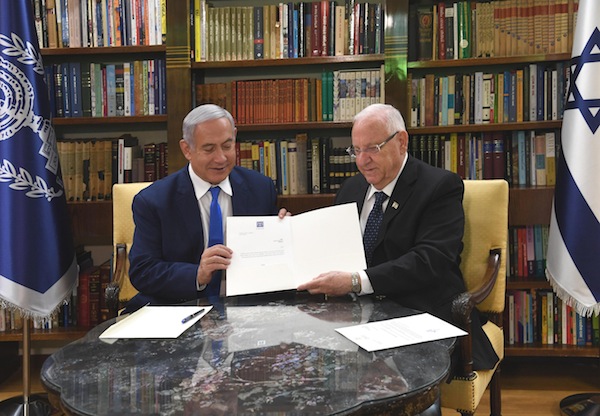
Prime Minister Binyamin Netanyahu, left, and President Reuven Rivlin hold the agreement that allows Netanyhau another two weeks to try and form a coalition government. (photo from Ashernet)

Prime Minister Binyamin Netanyahu met with President Reuven Rivlin May 13 to formally request an extension on forming the government. If Netanyahu is not able to form a majority coalition, then Rivlin would call on the head of the political party with the next highest number of votes to try and form a viable coalition government.

Format ImagePosted on May 17, 2019May 16, 2019Author Edgar AsherCategories IsraelTags Netanyahu, politics, Rivlin
מכבסת כסף מהמובילות בעולם

מכבסת כסף מהמובילות בעולם

(Wikimedia)

קשה להאמין אך העיר היפה שאנו גרים בה ונקובר זוכה בימים אלה לכותרות גדולות בעולם כולו. אך זאת לא מהסיבות הנכונות. בימים האחרונים פורסמו נתונים קשים כל כמות הכספים האדירה המולבנת בעיר ובשאר רחבי מחוז בריטיש קולומביה. חומר למחשבה מעמיקה.

שורה של חקירות שהוזמנו על ידי ממשלת בריטיש קולומביה בראשות הפריימר, ג’ון הורגן, החליטה לבדוק לעומק את פרשות הלבנת הכספים, מקלט מתשלום מיסים ומקום להפקדת מזומנים ללא זהות, המתרחשות בוונקובר ובאזור מסביב. שרת האוצר בממשלתו של הורגן פרסמה לאחרונה דוחות שחשפו את ממדי התופעה המדגיאה הזו, שמשום מה בתקופת השלטון של המפלגה הליבראלית היא הושתקה. אך הממשלה בראשות המפלגה הדמוקרטית החדשה החליטה לשנות כיוון לעסוק בתופעת הכסף השחור כאן.

לפי ממצאי הדוחות בשנה שעברה לפי הערכה הולבנו באזור ונקובר למעלה משבעה מילארד דולר. מרבית סכום (למעלה מחמישה מיליארד) הושקע בנדל”ן. הדבר הביא לפי הערכה לעלייה של יותר מחמישה אחוזים במחירי הנדל”ן אשתקד. לא פלא שבוונקבור עצמה מחירי הנדל”ן עלו ביותר משבעים אחוז בחמש השנים האחרונות.

הממצאים המדהימים של הדוחות הממשלתיים ממחישים כיצד זרם מזומן רב להלבנה בבתי קזינו השונים, רכישת מכוניות ותכשיטים יקרים וכמובן לענף הנדל”ן.

להלן מספר ממצאים מהדוחות: נתח כזה של עסקאות הוא גדול מספיק כדי להביא להשפעה ניכרת על מחירי הנדל”ן. ההערכה היא כי הכסף המלוכלך גרם לעלייה משמותית של הנדל”ן בריטיש קולומביה. למשל מחירי הבתים עלו בשל כך מכארבעה חוזים לשבעה וחצי אחוזים בממוצע.

דיווחים קודמים של הממשלה גילו כיצד בתי קזינו במשך שנים קיבלו מיליוני דולרים במזומן, דחוסים לעתים קרובות בשקיות ובמזוודות של הוקי. לאחרונה פורסם איך השוק אפור משגשג ביצוא מכוניות יוקרה מונקובר לסין. זאת תוך קבלת מיליוני דולרים של החזרי מס מכירות רכבים לקונים בחו”ל. אבל כל אלה לא מגיעים אפילו קרוב למה שקורה בתחום הנדל”ן. מדובר מגזר שעל פי הערכות מהווה כשליש מהתוצר המקומי הגולמי של קולומביה הבריטית. הוא בעצם הדלק של הכלכלה המקומית.

לפי הערכות בממשלת המחוז למעלה ממאתיים מיליארד דולר הולבנו באזור ונקובר בעשרים השנים האחרונות. מרבית הכסף השחור הושקע בנדל”ן כאשר אחד מכל חמישה בתים נרכש במזומן, ולנכסים רבים אין זהות ברורה מי בעליהם. לפעמים למעלה מעשר דירות נרכשו עת ידי אותו גורם בבניין מגורים אחד. ידוע למשל על מקרה בו “סטודנט” רכש חמש עשרה דירות באותו בניין, תמורת כשלושים מיליון דולר. בעלי נכסים רבים פורעים את המשכנתאות שלהם מהר מאוד, יש בעלי נכסים שמחזיקים בעשרות משכנתאות בו זמנית.

על פי הדוחות של ממשלת מחוז בריטיש קולומביה: ונקובר רבתי הפכה למכבסת כספים של הפשע המאורגן בו שותפים גורמים זרים, כולל קרטלי סמים של מקסיקו, גורמי פשע מאורגן מאירן (כולל ארגון החיזבללה כפי שכבר פרסמנו) ומסין. האזור רכש לעצמו מוניטין שאין להכחישו כמקום נוח להלבנת הון, סחר בסמים והפקדת מזומנים בהיקף גדול.

הממשלה המחוזית מתכננת להקים מרשם ציבורי של בעלי קרקעות במהלך השנה, כדי לדעת בוודאות מי עומד מאחורי הנדל”ן היקר באזור כולו. במקביל הממשלה ממשיכה להפעיל לחצים על הממשלה הפדרלית לקבלת משאבים משמעותיים, להילחם בהון השחור. וכן להתקין חדשות כדי לפקח טוב יותר על עסקאות במזומן ועל פעילויות חשודות. לדברי שרת האוצר והיועץ המשפטי לממשלה החגיגה הסתיימה מבחינת אלה שנערכים להמשיך ולהלבין כספים כאן, באמצעים השונים שעמדו בידיהם עד כה.

Format ImagePosted on May 15, 2019May 12, 2019Author Roni RachmaniCategories עניין בחדשותTags money laundering, real estate, Vancouver, הלבנת הון, ונקובר, נדל"ן
Recalling heroism, Holocaust

Recalling heroism, Holocaust

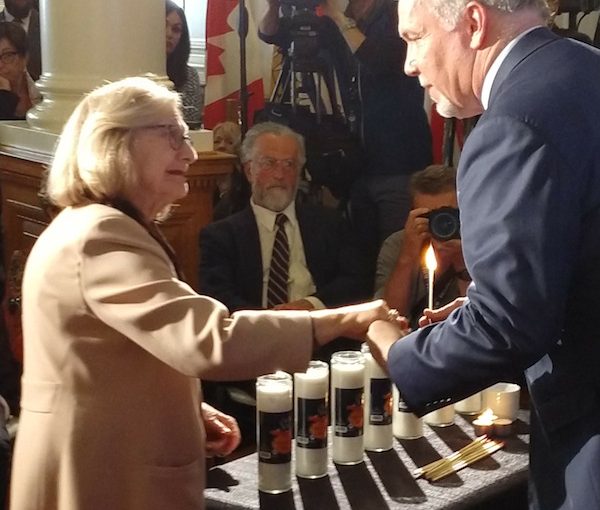
Holocaust survivor Rita Akselrod and Premier John Horgan at the Yom Hashoah commemoration that took place at the British Columbia legislature May 2. (photo by Pat Johnson)

The history of Jewish tragedy in the Holocaust – but also the heroism of Jews and non-Jews – was commemorated last week in moving ceremonies in Vancouver and Victoria.

Yom Hashoah, Holocaust Remembrance Day, occurred May 2 this year, coinciding with 27 Nissan in the Jewish calendar, the anniversary of the Warsaw Ghetto Uprising. A community commemoration convened by the Vancouver Holocaust Education Centre (VHEC) took place on the evening of May 1 at the Jewish Community Centre of Greater Vancouver. The following day, Holocaust survivors and others gathered in Victoria at the British Columbia legislature with the premier of the province and many elected officials in what has become an official annual commemoration.

Premier John Horgan assisted survivors and representatives of other targeted groups – people with disabilities, LGBTQ+, Roma – to light candles of remembrance.

“We need to remember that, if we do not stand together – Christians, Jews, Muslims, those who have no faith at all – if we do not stand together when hate raises its head, we will have failed not only those that have lost their lives so many decades ago in the millions, but folks who will come after us,” said Horgan. “We acknowledge the murders in San Diego and the tragic loss of life in Pittsburgh … in a synagogue there. We acknowledge the loss of Christian lives in Sri Lanka and the loss of Muslim lives in New Zealand. But, on this Yom Hashoah, we must always remember, in the presence of those who survived those horrors, that today we stand with you, tomorrow we will stand with you and forever we will remember the impacts of your lives and the consequences that you have lived for so many decades.”

Marie Doduck, a Holocaust survivor who lives in Vancouver, shared some of her life story with the audience at the legislature.

“Living in Brussels, Belgium, I was only three-and-a-half years old when my life was suddenly ripped apart and irrevocably changed by hate, by Nazism,” she said. “In 1939, our family, which was made up of 10 children – three were already married at the time with children of their own – were all separated by the scourge of war. We were all put into peril by the fact of our Jewishness – a crime under the rule of Nazis in Europe. We were marked for death by the accident of being born Jewish.”

She was hidden in a succession of non-Jewish homes and even in a Catholic convent.

“We had to run and to vanish in order to survive,” she said. “We became the children of silence. No talking, no crying, no disturbance – a blank mind with no feelings and no future. We lived only in the moment, felt nothing except hunger. Feelings like loneliness were a luxury. It was better not to feel. People and the world did not care. We were nothing – just Jews.

“This frightened little girl, Mariette, saw her beloved family disappear. My mother, Channah Malka, whom my firstborn is named after, and my brother, Albert, were deported to Auschwitz, where they were murdered. I saw my mother and brother being loaded into trucks…. That was the last time I saw either of them alive. Another brother, Jean, who was in the French Resistance, was hung by the Gestapo in the city square. Another brother, Simon, like hundreds of thousands, died three weeks after the war from the mistaken kindness of American and Canadian soldiers who liberated the camps and fed the fragile, thin and starving prisoners food that they could no longer digest.”

Like many survivors, Doduck’s experience is filled with close calls and fortunate near-misses.

“In order to survive, I jumped off moving trains and high buildings, was thrown into a sewer and was even hidden in a barn, where I took shelter in a bale of hay. I still bear the scar of being impaled by the pitch fork of a Nazi soldier searching there for Jews,” she said. “I lived mostly in darkness – literally – in dank cellars and other dark hiding places where the Nazis could not find me. When I returned to Brussels years later, I could not recognize the city in daylight, for my Brussels was a place of darkness.

After the war, Doduck immigrated to Canada as part of the War Orphans Project, the youngest of 1,123 Jewish children admitted to Canada in 1947 through an agreement between Canadian Jewish Congress and the federal immigration department.

“I arrived in Vancouver on Jan. 3, 1948, at age 12 and was taken in by a foster family,” said Doduck. “While I was warmly welcomed by the Jewish community and Canadian society – and grew up to be a proud Canadian – not everyone received a warm welcome when attempting to flee Nazi Germany. It was indeed the policy of many countries not to accept those seeking refuge.

“This is the important message that I share with students when I speak – that no society is immune to the dangers of discrimination and racism; and that we must work together to stand up when we see injustice in the world around us.”

B.C. Education Minister Rob Fleming, who emceed the event, noted the startling increase in antisemitic incidents in recent years and called for vigilance.

“Today also requires us to acknowledge the role that apathy and indifference played in enabling these atrocities to happen, the thousands of Jewish refugees turned away at our Canadian borders and the borders of other countries, the people who stood by and said nothing while their neighbours were hunted down in their homes because of their faith and identity,” said Fleming. “We come together to say never again.”

While mourning the atrocities, Fleming said, it is necessary to also remember the heroism of survivors and others who took the most dangerous risks to resist the dystopia of Nazism.

“They teach us that standing up for others, standing up for the values of tolerance and inclusiveness is how we can stop hate crimes, it’s how we can maintain and protect the peace that we are privileged to enjoy in our country.”

MLA Nicholas Simons played Kol Nidre on the cello to open the ceremony.

The evening before, the heroism of survivors was the topic of remarks from a member of the second generation. Carla van Messel, a board member of the VHEC, reflected on the lessons imparted by her father, Ies van Messel, who was a 5-year-old in Rotterdam, in the Netherlands, at the start of the war.

“Throughout my life, my father has demonstrated to me how to transform tragic memories into the strength to do good,” she said. “He taught my family that our Jewishness doesn’t make us evil or other and, therefore, by the same reasoning, neither should someone’s Germanness or Polishness or Arabness. He taught me that, if we don’t want something like the Holocaust to happen again, we have to continue to be better than the Nazis, and better than the nations who stood idly by. We have to actively protect all people … despite the history, despite the wounds, despite the deaths.

“As a second-generation survivor, I am energized by the examples of the survivors among us. They have inoculated us with their strength and resilience, with their will to turn bad into good. I want our survivors to know that they are leaving their memories, their essence, in good hands. Among the second generation are upstanding citizens of today’s very complicated world. They have taken the pain of their family’s personal history and transmuted it into the positive energy of tikkun olam. They continue to translate the hate of antisemitism into a hate of injustices: of racism, of bigotry, of sexism, of the demonization of otherness, of discrimination in all its many, many forms.”

The keynote address at Vancouver’s JCC was delivered by Lillian Boraks-Nemetz.

“Not a day passes when I don’t ask myself: Why did I survive when six million perished?” she said. “When 1.5 million [of the murdered] were children and, among them, my 5-year-old sister. And I survived. Why? When every European Jewish child was automatically sentenced to death by Hitler. I wonder: Was my survival a miracle? A twist of fate? The will of God? Why me?”

She detailed the series of close calls and fortunate happenstances that allowed her to survive, in part due to the persistence of her parents to do anything within their powers to save their two daughters.

The family was relocated into what would become the Warsaw Ghetto, sharing shelter with 20 other people in a three-room flat.

“Eventually, the ghetto grew more and more crowded – up to about 480,000 bodies in the small space of 1.3 square miles … with the lack of hygiene and medication, we were quarantined for typhus. Most of the boys and girls I played with died of the disease. Young children were dying on the streets; if not from illness, from starvation. Shabby and haunted people would simply pass by, powerless to help them,” she said.

“As 1942 approached, things got worse and worse. People out of desperation stole food from each other. I saw a woman carrying a bowl of soup when a man grabbed it. It spilled onto the pavement and the man fell to the floor licking the broth off the stones. All morality ceased to exist in an immoral, murderous universe of Nazi domination.”

As things in the ghetto deteriorated, Boraks-Nemetz’s parents bribed ghetto guards to allow young Lillian to escape. Her grandmother, who never entered the ghetto, had bought a little house in a nearby village, which she promised to give to a Catholic man who, in exchange, would let her live under his Polish name, ostensibly as siblings.

Boraks-Nemetz joined her grandmother and the man at the home.

“One night in the spring of 1943 we were outside in the yard, looking with horror at a blood-red sky above Warsaw,” she said. “We knew from a friend that it was the Warsaw Ghetto leveled to the ground by fire ordered by Hitler, after the courageous stand of the ghetto fighters against Nazi soldiers.”

Only after the war did she discover the fate of her sister.

“I found out that she was informed on by a Polish neighbour as a Jewish child and murdered by an unwilling Polish policeman who was commanded to do so, or else, by the Gestapo. The policeman found a ball lying on the street and threw it, telling my sister to run after it, then shot her in the back.”

While the Russians liberated her and her parents, Boraks-Nemetz said, the reality was not liberating.

“While adults worked to reestablish their lives, we children were left to grow up alone carrying the burden of experiences that nobody wanted to know about.… I was always told to forget and to let go by people who didn’t have a clue what was on my mind and in my soul. This was not a physical wound that results in a bruise or scab, which then falls off and mostly disappears. This was a branding on the Jewish soul with fire caused by man’s inhumanity to man, woman and child.

“It took me a long time after the war to realize myself as a human being who deserves to live and to be a Jew,” she said.

Philip Levinson, president of the VHEC board, introduced the procession of Holocaust survivors who lit candles in memory of the six million Jews murdered in the Holocaust. Cantor Yaakov Orzech chanted El Maleh Rachamim and survivor Chaim Kornfeld led Kaddish. Under music director Wendy Bross Stuart, violinist Nancy di Novo and the Yom Hashoah singers performed songs in Ladino, Yiddish and Hebrew. Sarah Kirby-Yung, a Vancouver city councilor, brought greetings from the city and read a proclamation. The evening ended as it does every year with the singing of “Zog Nit Keynmol,” “The Partisan Song.”

Format ImagePosted on May 10, 2019May 9, 2019Author Pat JohnsonCategories LocalTags British Columbia, Carla van Messel, history, Holocaust, Lillian Boraks-Nemetz, Marie Doduck, Rob Fleming, VHEC, Yom Hashoah
Community endeavour

Community endeavour

Emily Greenberg is Vancouver Talmud Torah’s new head of school. (photo from VTT)

After 17 years of leadership under Cathy Lowenstein, Vancouver Talmud Torah will have a new head of school.

Starting in September this year, Emily Greenberg will be joining the staff from her position as a vice-principal at Bialik Hebrew Day School in Toronto. Greenberg is currently responsible for the elementary division’s 350 students.

Josh Pekarsky was the chair of the VTT head of school search committee. “We were looking for someone with operational strengths, but also a strong educational leader who is engaging, dynamic and transparent,” Pekarsky told the Independent.

This they found in Greenberg, whom Pekarsky described as “very positive, yet very grounded; she sets high standards for herself and her team.”

Originally from Toronto, Greenberg is the daughter of an Israeli father and an American-born mother.

Together, they have devoted their working lives to education, music and their spiritual community at Temple Emanu-El in the city’s North York neighbourhood. Greenberg’s mother served as the synagogue’s music director for more than 25 years.

Born and raised in Canada, Greenberg has sought out positions in schools in Colombia, Thailand and Paraguay. Her educational philosophy rests on the notions of tikkun olam (repair of the world, social justice), chesed (kindness) and tzedakah (justice, charity). These were guiding tenets of her upbringing at Temple Emanu-El, a Reform congregation.

Greenberg’s concept of education is as a community endeavour. For her, education grows from a partnership between students and their educators, be they teachers in a school or adults in the wider community.

The seven-member search committee – four of whom are VTT graduates themselves – brought a wealth of professional expertise to the search process. In addition, the group’s previous work with numerous Jewish organizations, school accreditation and the spiritual community kept them focused on candidates’ qualities as leaders of children. The committee’s first priority was to find a group of candidates who represented “the diverse school community and had the educational expertise, institutional knowledge and sechel (common sense)” for the task, said Pekarsky.

Rather than starting with a profile of the perfect candidate, the group began their search with questions not only about what they sought in a head of school, but also about the search process itself. They recognized the value of stakeholder engagement in this process, and worked hard to invite the perspectives of as many individuals and groups as possible. These included school faculty, donors, parents, alumni, Jewish Federation of Greater Vancouver members and community rabbis.

Throughout the search, interested parties were given opportunities – both in-person and via correspondence – to express their values and dreams for the future of the school’s leadership. Participants were asked questions like, “What do you think are VTT’s biggest challenges in the years ahead?” and “What skills and attributes are most important in our next head of school?”

Pekarsky said he was impressed by the amount of input the committee received from the community. “The majority of people went out of their way to say, I support whatever the school decides,” he said. “That was really gratifying. There was confidence in the process and support for the school.”

The committee also reached out for guidance across the border, working closely with Prizmah: Centre for Jewish Day Schools. Their input and insights helped the VTT committee weigh their priorities – while founded on Jewish principles, students at VTT must also meet the requirements of the provincial curriculum – and refine their search tool. Ultimately, the 12 applications came from as far away as Israel but also included candidates from California, Illinois and Quebec.

Greenberg and her husband, Daniel – a special needs educator – have three children, all of whom will be starting at VTT in the fall.

Shula Klinger is an author and journalist living in North Vancouver. Find out more at shulaklinger.com.

Format ImagePosted on May 10, 2019May 9, 2019Author Shula KlingerCategories LocalTags education, Emily Greenberg, Josh Pekarsky, Vancouver Talmud Torah, VTT
Many reasons for optimism

Many reasons for optimism

Given two recent murderous attacks on American synagogues, combined with terrorist missiles from Gaza landing throughout southern and central Israel, it is easy and understandable to be pessimistic. But a new study on Jews in Canada is jam-packed with reasons for optimism.

The report 2018 Survey of Jews in Canada was released recently. Produced by the Environics Institute for Survey Research, the University of Toronto and York University, the study was funded by Federation CJA and other Jewish communal organizations. To those who have followed these subjects closely, the data are not completely surprising but, brought together in a single document, it is quite a compendium of encouragement.

Inspired by a groundbreaking 2013 Pew Research Centre study on American Jewry, the report assesses a wide range of factors, including the importance of Jewishness in the lives of respondents, how they define that identity, membership in synagogues and Jewish organizations, financial support for Jewish causes, candlelighting and other religious observances, intermarriage, experiences with discrimination, connections to Israel, dedication to repairing the world, migration patterns and even federal political party support.

image - 2018 Survey of Jews in Canada coverPerhaps because of its inspiration in the American example, the study routinely compares Canadian findings with the situation to the south. This is fair, given the useful contrasts it provides – and it is especially illuminating to see that many of the differences between the Jewish communities in the two countries paint a very positive picture of the Canadian situation.

Only half of American Jews have made a financial donation to a Jewish organization or cause, compared with 80% of Canadian Jews.

Canadian Jewish kids are twice as likely to attend a Jewish day school or yeshivah and a greater proportion of Canadian Jews have attended Sunday school, Hebrew school or an overnight Jewish summer camp. The number of Canadian Jews who are bar or bat mitzvah is higher than that of Americans – 60% versus 50%. Intermarriage rates in the United States are about 50%, compared with 23% in Canada.

Canadian Jews have a much stronger connection to Israel than American Jews, with twice the likelihood of having visited the country. Nevertheless, Canadians and Americans “are similarly divided in their opinions about the political situation in Israel,” according to the report.

Rudimentary Hebrew is common among the vast majority of Canadian Jews, with 75% saying they know the aleph-bet and 40% claiming to be able to have a conversation in the language. Among the groups with the greatest proficiency in Hebrew are those under 30 years of age. These numbers are significantly higher than those of our American cousins.

Among Jewish Canadians, 64% say that being Jewish is very important in their lives, compared with 46% of Americans, while only 8% of Canadian Jews say being Jewish is not very, or not at all, important, compared with 20% of American Jews.

An astonishing 80% of Canadian Jews (or, at least, respondents to the survey) indicate an educational attainment of a bachelor’s degree or higher, compared with 29% of the general population. Similar findings two decades ago led to a major investment by Jewish communal bodies in youth-serving agencies like Hillel, which was seen as the last, best hope for reaching unaffiliated young Jews. As these numbers suggest, while many other aspects of Jewish identity may be discarded or de-emphasized, the commitment to education is among the most effectively transmitted values from generation to generation.

Among Canadian Jews, 47% belong to a Jewish communal organization other than a synagogue, compared with 18% for Jewish Americans. (In Winnipeg, this number is 57%, which helps explain why that comparatively small Jewish community is so impressively active.)

The report does not provide definitive explanations for the differences, though different factors are suggested to play a role in various scenarios. If we were to posit an overarching theory about the differences between American and Canadian Jews, it would go back to the 20th century’s very different experiences. The Canadian Jewish community was massively influenced by postwar immigration, including survivors of the Holocaust. These newcomers remade the Canadian Jewish community, to some extent, in their own image. The American Jewish community, in comparison, was already strong and had well-developed infrastructures before the

influx of survivors and other immigrants after 1945. As the report indicates, Canada also has a different approach to multiple identities, with multiculturalism being officially celebrated, whereas the American trend is to downplay difference and assume a unified Americanism.

Of course, there is no prize for being “better” Jews than our fellows from another country – even if it does satisfy our innate Canadian need to differentiate ourselves from Americans. Nonetheless, in a world with so many challenges, where is the harm in celebrating good news?

Jewish people worldwide are in a time of challenge and change. Many European Jews are questioning their futures there, and communities in Latin America, Africa and Asia are experiencing a range of external and internal challenges, including changing relationships with Israel and with the rest of the Diaspora. Some of the factors that account for the positive news in the recent report are distinctively Canadian and cannot be replicated. But the study deserves a closer look by all Diaspora Jewish communities to see if there are successes that could be replicated elsewhere. We sometimes like to flatter ourselves by declaring “the world needs more Canada.” So might the Jewish Diaspora.

Format ImagePosted on May 10, 2019May 9, 2019Author The Editorial BoardCategories NationalTags Canada, Diaspora Jews, Israel, Jewish life

Posts pagination

Previous page Page 1 … Page 156 Page 157 Page 158 … Page 323 Next page
Proudly powered by WordPress