Skip to content
  • Home
  • Subscribe / donate
  • Events calendar
  • News
    • Local
    • National
    • Israel
    • World
    • עניין בחדשות
      A roundup of news in Canada and further afield, in Hebrew.
  • Opinion
    • From the JI
    • Op-Ed
  • Arts & Culture
    • Performing Arts
    • Music
    • Books
    • Visual Arts
    • TV & Film
  • Life
    • Celebrating the Holidays
    • Travel
    • The Daily Snooze
      Cartoons by Jacob Samuel
    • Mystery Photo
      Help the JI and JMABC fill in the gaps in our archives.
  • Community Links
    • Organizations, Etc.
    • Other News Sources & Blogs
    • Business Directory
  • FAQ
  • JI Chai Celebration
  • JI@88! video

Recent Posts

  • Zionism wins big in Vegas
  • Different but connected
  • Survival not passive
  • Musical celebration of Israel
  • Shoppe celebrates 25 years
  • Human “book” event
  • Reclaiming Jewish stories
  • Bema presents Perseverance
  • CSS honours Bellas z”l
  • Sheba Promise here May 7
  • Reflections from Be’eri
  • New law a desecration
  • Resilient joy in tough times
  • Rescue dog brings joy
  • Art chosen for new museum
  • Reminder of hope, resilience
  • The national food of Israel?
  • Story of Israel’s north
  • Sheltering in train stations
  • Teach critical thinking
  • Learning to bridge divides
  • Supporting Iranian community
  • Art dismantles systems
  • Beth Tikvah celebrates 50th
  • What is Jewish music?
  • Celebrate joy of music
  • Women share experiences 
  • Raising funds for Survivors
  • Call for digital literacy
  • The hidden hand of hate
  • Tarot as spiritual ritual
  • Students create fancy meal
  • Encouraging young voices
  • Rose’s Angels delivers
  • Living life to its fullest
  • Drawing on his roots

Archives

Follow @JewishIndie
image - The CJN - Visit Us Banner - 300x600 - 101625

Category: News

B.C. inspires activist’s work

B.C. inspires activist’s work

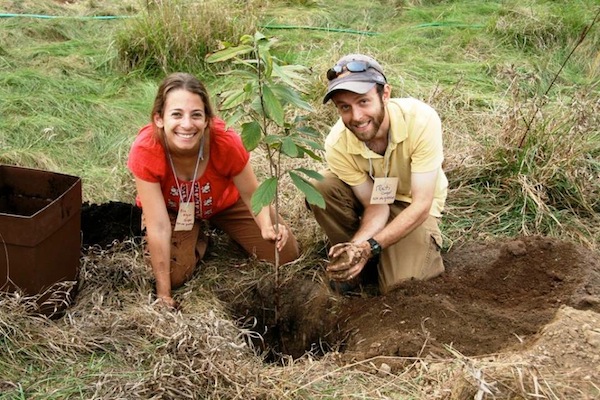
Shoresh executive director Risa Alyson Cooper and Mati Cooper plant a tree. (photo from Shoresh)

Risa Alyson Cooper, who was raised in the Toronto suburb of Thornhill, was road-tripping across the country with a friend about 20 years ago when they ran out of cash in Nelson, B.C. That misfortune changed the course of her life – and is making a big impact in Canada’s Jewish community.

“We were invited to a free church dinner for homeless and struggling individuals and we decided to go,” Cooper said of the adventure. “That was, for me, one of those aha moments. It was the first time that I thought religion might have what to say about the food that we eat.”

Cooper is now executive director of Shoresh, a Toronto-area charity that “inspires and empowers our community to take care of the earth by connecting people, land and Jewish tradition.” Cooper is one of four speakers at FEDtalks Sept. 9, the annual campaign opening event for the Jewish Federation of Greater Vancouver.

The church supper made her think about something that hadn’t really struck her before.

“I wondered if Jewish tradition has anything to say about food,” she recalled with a laugh in a recent telephone interview. “It was the first time that I really started thinking about food ethics. I’d grown up Jewish, I knew that food was so much of an anchor of Jewish observance, [that] my family’s Jewish identity was about meals to celebrate holidays, but I never really thought about the moral values that we can express through the food that we eat.”

She quickly discovered that Jewish tradition has a great deal to say about food and the moral, social and ethical issues around it. Agriculture is so intrinsic to the ancient texts that, Cooper said, a friend refers to Torah as “the Jewish Farmer’s Almanac.”

“It has very clear rules for how we farm, what we plant, where we plant, when we plant, and it also has rules beyond that,” she said. “It has rules for how we celebrate the harvest, how we hold gratitude for that which we receive from the land, and it also has very, very clear rules about how we share our resources with others in our community.”

There have been a number of Jewish “back to the land” movements – the most consequential being Zionism – but, on the shoulders of all this history, there is something new happening today.

“The idea of there being a Jewish way of thinking about food security is as old as Jewish tradition,” she said, “but what we are seeing now are really innovative ways of addressing food insecurity and also building vibrant Jewish communities”

Shoresh (the name is the Hebrew word for “root”) operates Kavanah Garden, adjacent to the Jewish Community Campus in suburban Vaughan, Ont., and invites children and adults to “participate in experiential programs rooted in Jewish text, tradition and values, and [is] designed to elicit experiences of awe in response to the wonders of the natural world.” Food grown at the garden is used in programming or donated through tzedakah partnerships.
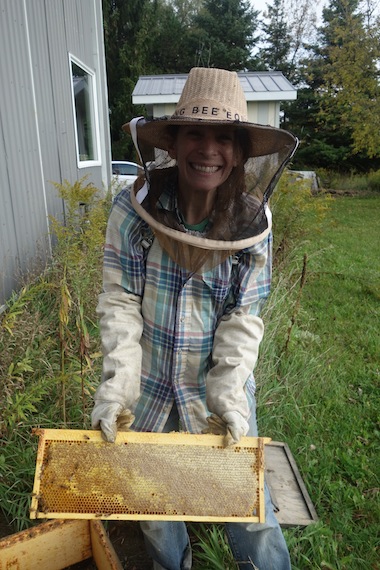
photo - Risa Alyson Cooper beekeeping. Shoresh’s Bela Farm, in Hillsburgh, Ont., is home to an apiary and bee sanctuary
Risa Alyson Cooper beekeeping. Shoresh’s Bela Farm, in Hillsburgh, Ont., is home to an apiary and bee sanctuary. (photo from Shoresh)

Shoresh also operates Bela Farm, in Hillsburgh, Ont., a little further outside Toronto. This 100-acre farm, home to Shoresh’s apiary, bee sanctuary and native reforestation efforts, offers “deep, immersive experiences for land-based Jewish learning and living, creating for participants sustained connections with self, community and the earth.”

Their third location is Maxie’s Garden, a partnership between Shoresh and Jewish Family and Child, located in the Kensington Market yard of a Shoresh member. Here, an urban sanctuary in the heart of Toronto’s historic Jewish neighbourhood is “a haven for people, plants and pollinators.” It was envisioned to empower, educate and inspire clients of the social service agency through the power of nature connection and food production.

Beyond these three sites, Shoresh runs programs out of schools and camps, and in green spaces, parks and ravines throughout Toronto.

Cooper’s own agricultural journey, which began here in British Columbia, led her to a master’s degree in which she looked at religious food and environmental ethics. Then she went to Connecticut, where she worked for three years as a Jewish environmental educator at the Teva Learning Center, the only full-time, year-round program dedicated to innovative, experiential Jewish education taught through the lens of the natural world.

She got her hands even dirtier in small-scale organic farming as a member of the Adamah Jewish Farming Fellowship. She grew vegetables on a four-acre farm, worked in a raw goat-milk dairy and dabbled in the art of fermentation.

“I was so deeply in love with the community that I discovered in the States I probably would have stayed there but I had my visa revoked and I got sent back to Canada,” she said, laughing again.
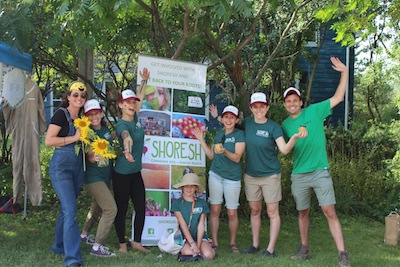
photo - The Shoresh team
The Shoresh team. (photo from Shoresh)

Living out Jewish values on the land in the Diaspora raises particular issues, Cooper said.

“What does it mean to be holding a tradition that is in many ways land-based,” she said. “So much about the Torah, so many of our holidays, have agricultural connections. What does it mean to be having these land-based traditions and to be practising them in Canada? How do we honour the elements of our tradition, while honouring the fact that not only are we in the Diaspora – so not on the land where many of these traditions are rooted – but we are also specifically here on Turtle Island, this land that has been stewarded by indigenous communities for thousands and thousands of years?”

In Vancouver next month, Cooper said, she will talk about contemporary Jewish food insecurity issues and will share something about the model that Shoresh has developed, as well as ideas spawned from similar organizations across North America.

Everything she shares at the event will owe a debt back to that fateful visit to British Columbia’s Kootenay region.

“That was the moment that I can trace all this back to,” she said.

Other speakers at FEDtalks, which takes place at the Vancouver Playhouse on Monday, Sept. 9, at 7 p.m., are National Young Leadership Cabinet member Dr. Gillian Presner, who will offer “hard-earned wisdom about the power of community and the nature of our true legacies”; Rabbi Brian Strauss, whose Houston, Tex., synagogue and home were flooded by Hurricane Harvey and who subsequently witnessed an outpouring of support from Jewish federations across the continent; and Isaac Herzog, chairman of the Jewish Agency for Israel and former longtime politician, who led Israel’s Labour party and was opposition leader from 2013 to 2018 (featured in the other cover story in this issue).

For tickets ($36/$10) to FEDtalks Sept. 9, 7 p.m., at Vancouver Playhouse, visit jewishvancouver.com/fedtalks.
Format ImagePosted on August 30, 2019August 29, 2019Author Pat JohnsonCategories LocalTags annual campaign, FEDtalks, fundraising, Jewish Federation, philanthropy, Risa Alyson Cooper
Building Jewish future

Building Jewish future

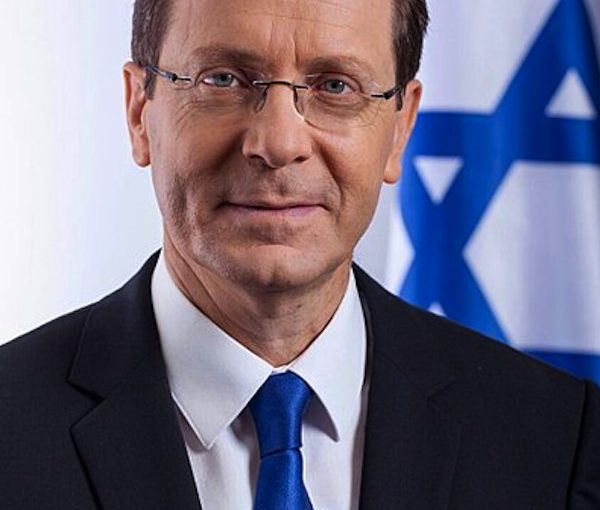
Isaac Herzog, chairman of the Jewish Agency for Israel. (photo from JFGV)

Isaac Herzog was elected chair of the Jewish Agency for Israel in August 2018. The past year has seen him hit the ground running in the unique role as head of the sprawling organization whose mission is to “inspire Jews throughout the world to connect with their people, heritage and land, and empower them to build a thriving Jewish future and a strong Israel.”

In Vancouver Sept. 9, Herzog will share some of his experiences in this new role. He joins three other speakers at FEDtalks, the opening event of the Jewish Federation of Greater Vancouver’s annual campaign.

“I’m looking very much forward toward my visit, especially in Vancouver, where I for a long time wanted to meet the community,” Herzog told the Independent in a telephone interview from Israel. “I hear wonderful [things] about the strong stance of Jewish purpose and Zionist feeling in this community.”

Founded in 1929, the Jewish Agency is, said Herzog, “a great Jewish story.”

“We are the biggest Jewish organization in the world. We founded the state of Israel. We brought millions of olim, immigrants, to Israel,” he said.

In this generation, the agency has focused heavily on issues of safety and well-being for Jews worldwide, as well as encouraging aliyah and advancing Jewish identity and continuity through education, youth exchange programs and partnerships between the Diaspora and Israel.

Part of his role, he said, is to impress on Israelis the reality of the diversity of the Jewish world. He tells political leaders and rabbis in Israel that they have a “huge lack of knowledge” about the Diaspora and its pluralistic nature and the commitment of Diaspora Jews to Jewish knowledge, writing and education. Similarly, he said, he wants Diaspora Jews to have a realistic view of Israel.

“I expect world Jewry to know that Israel is not what you read in the New York Times, for example, or in Ha’aretz. It is a much more elaborate, developed, interesting, multifaceted, multicultural and incredible place that needs to be nurtured,” he said. “All these challenges are something that I have focused heavily on as a major leader of the Jewish people.”

An important focus of the Jewish Agency’s work right now is with young Diaspora Jews who are disaffected or disengaged from Israel or Judaism, or both.

“That’s a major challenge, of course,” he said. “We are developing programs that will rekindle the Jewish identity within alienated millennials, such as the whole idea of tikkun olam, healing the world, whereby we have programs all over the world where we take young Jews to volunteer, also in non-Jewish communities, in inner cities and Third World countries, as a venue for those who don’t want to be involved directly with Jewish activities.”

Herzog took the helm at a critical juncture.

“We are now in a major change process in the Jewish Agency,” he said, an ongoing development that will see a shift in priorities, changes in the organizational structure, some different areas of focus and new programs.

He added that this is not a path the agency is taking by itself.

“We can’t do everything alone,” said Herzog. “We work with partners and partnerships for specific purposes. This is a very exciting process in the 90-year-old organization.”

He stressed that the Jewish Agency has got a great number of things right over its nearly a century of activity.

“This is another chapter in the life of this organization,” he said. “It’s an exciting new chapter because of the challenges of the era.”

In addition to challenges presented by the younger generation, Herzog cited the need for dialogue that involves all streams of Judaism and all kinds of practices.

“We believe in the right of every Jew to live as a Jew wherever they want to live and [to] practice whatever kind of Judaism they want to practice,” he said.

Prior to assuming the leadership of the Jewish Agency, Herzog was a leading political figure, having served in five Knessets, having held five cabinet roles, including ministry of Diaspora affairs and ministry of welfare, and, from 2013 to 2018, being leader of the opposition as chair of the Labour party.

“I’m going to be in Vancouver just about a week before the election, 10 days before the Israeli election,” he said, acknowledging that sitting this one out feels different. “I cannot say that the bug is not with me. I’m fully attentive to what’s going on in the Israeli elections. People consult with me, but I took upon myself a new historical role of serving my nation, my people, in a different way.”

His priority now, he said, is to ensure that the Israeli body politic realizes the importance of the Jewish Agency’s mission and that these priorities are priorities for the next government, whoever forms the government after Sept. 17.

Herzog’s lineage of history-making Jewish leaders is widely known – his grandfather, Rabbi Yitzhak Halevi Herzog, was chief rabbi of Ireland and then Ashkenazi chief rabbi of Israel; his father, Chaim Herzog, served two terms as president of Israel. But, in speaking with the Independent, Herzog stressed his Canadian bona fides.

His uncle, Yaakov Herzog, was ambassador to Canada in the 1960s. His cousin, Shira Herzog, who passed away five years ago, served as head of the Canada Israel Committee for a decade and was involved in a range of Jewish and non-Jewish philanthropic works across Canada. Herzog’s wife, Michal, who is joining him on this summer’s trip, graduated school in Canada.

The Vancouver stop is part of a cross-Canada tour, in which he will also visit Montreal, Toronto and Calgary. In each place, he said, he will visit schools and federations and meet with leaders and communities. The Jewish Agency, he said, supports Jewish organizations, youth movements and infrastructure, beyond the shlichim, emissaries, the agency facilitates in sending from Israel to Diaspora communities.

For tickets ($36/$10) to FEDtalks Sept. 9, 7 p.m., at Vancouver Playhouse, visit jewishvancouver.com/fedtalks.
Format ImagePosted on August 30, 2019August 29, 2019Author Pat JohnsonCategories LocalTags FEDtalks, fundraising, Isaac Herzog, Jewish Federation, philanthropy
Forging interfaith friendship

Forging interfaith friendship

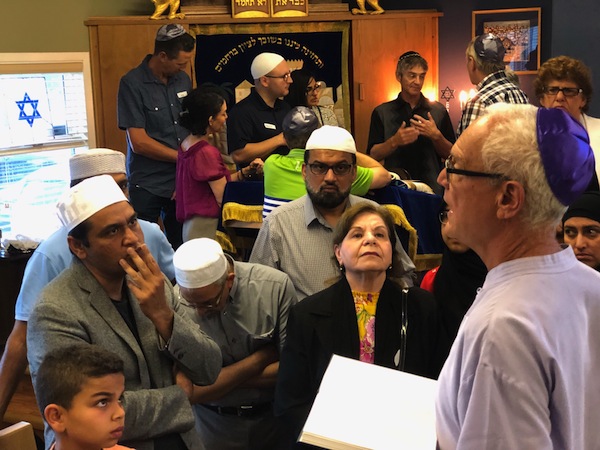
Okanagan Jewish Community Association president Steven Finkleman explains Jewish prayer books. (photo by Don Plant)

It sounds like a joke – a Muslim and a Jew walk into a Tim Hortons. But there’s no ethnic punch line in this story. As representatives of their congregations, Rehan Sadiq and Philippe Richer-Lafleche met over coffee several times to arrange a get-to-know-you gathering of their communities. After decades of living in Kelowna, B.C., but seldom rubbing shoulders, members of the Muslim and Jewish faiths decided to learn about each other’s history and culture by visiting their respective places of worship.

Their latest encounter in Kelowna’s main synagogue included a briefing on the Jewish faith and a close-up look at the Torah. Sixty people, more than half of them members of the Kelowna Islamic Centre, listened to a Hebrew psalm as they sat in the sanctuary of the Okanagan Jewish Community Centre in June. In exchange, board member Hassan Iqbal recited from the Holy Quran and his teenage son Musab Hassan sang prayers in Arabic.

The gathering followed a similar event in February, when Muslim members hosted a contingent of Jewish visitors at a get-to-know-you function in their new mosque in Kelowna. Both communities share the will to look past the history that divides them and forge a longstanding friendship. [See jewishindependent.ca/okanagan-interfaith-initiative.]

“The last thing I want our children to learn [about our relations] is from the news,” Sadiq, the mosque’s interfaith director, told both congregations in June. “This kind of meeting is extremely important. We should talk about building bridges.”

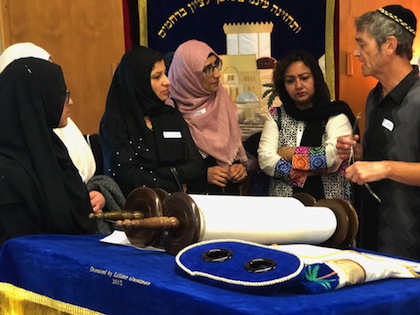
Organizers circulated the visitors through three stations at the synagogue to inform them about the basics of Judaism. OJC members showed them the Torah, explained the prayer books, interpreted symbols of the synagogue and demonstrated artifacts.

photo - Members of the Muslim community in Kelowna listen to Evan Orloff explain the Torah
Members of the Muslim community in Kelowna listen to Evan Orloff explain the Torah. (photo by Don Plant)

Once everyone sat down, lay leader Evan Orloff sang a psalm to the tune of Leonard Cohen’s “Hallelujah.” OJC president Steven Finkleman discussed the importance of loving your neighbour as yourself. Grant Waldman and Annik Moyal-Waldman sang Shalom Aleichem, the Hebrew phrase for “peace be upon you.”

Once Islamic Centre president Mostafa Shoranick made a few remarks, Finkleman announced, “Let’s eat,” and everyone lined up for a lavish buffet of Middle Eastern dishes. People mingled as they ate and at least one group of Muslim and Jewish women agreed to meet again. Over dessert, Sadiq and Finkleman led a discussion on which charities both faith groups could jointly support.

“I really think peace in the world will come on a one-to-one basis. It’s not governments [that generate it],” Richer-Lafleche, whose Jewish and Muslim grandparents married in Morocco, said in February. “It’s within small communities that you actually get to know people…. We make choices. We can choose to be loving or otherwise.”

The Muslim community is trying to educate the public and its own members about what true Islam is, said Shoranick, who grew up in Lebanon. Many in his Muslim community are new to Canada and want to assimilate, he said. “We come from different countries and different sects. We believe that, in this country, we’re lucky that we’re able to do our religion…. The religion is for God but the country is for everybody.”

Both groups have discovered they share several monotheistic beliefs. Among them:

  • the greetings “salaam” and “shalom” are virtually the same;
  • Islam and Judaism regard Abraham, Isaac, Jacob and Moses as prophets;
  • neither religion proselytizes or compels anyone to adopt their beliefs; and
  • both agree it’s wrong to judge people, and how you worship is up to you.

“It’s not our differences that get in the way; it’s how we perceive our differences,” Orloff said.

Don Plant is a retired journalist and member of the Okanagan Jewish Community in Kelowna. This article was originally published in the CJN, cjnews.com.

Format ImagePosted on August 30, 2019August 29, 2019Author Don PlantCategories LocalTags interfaith, Jews, Kelowna, Kelowna Islamic Centre, Mostafa Shoranick, Muslims, OJC, Okanagan Jewish Community, Philippe Richer-Lafleche, Rehan Sadiq
View of the past

View of the past

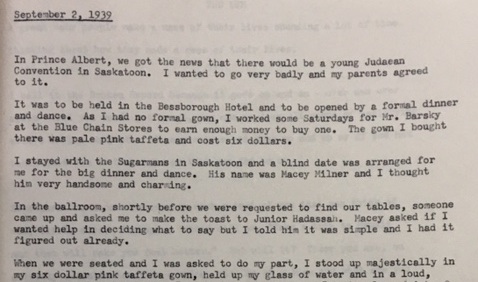
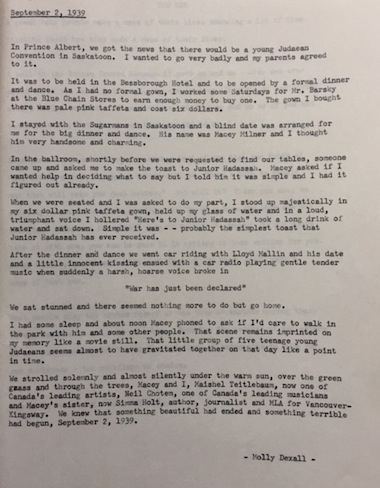
This diary note from Molly Dexall, recalling events from Sept. 2, 1939, was found by her son, Fred Dexall, and Alex Krasniak, community support worker at Yaffa House, in one of Dexall’s old binders. It was written by his mother, who was 19 at the time; she died in 1977. It is reprinted here with permission, marking 80 years since the outbreak of the Second World War on Sept. 1, 1939.

September 2, 1939

In Prince Albert, we got the news that there would be a young Judaean Convention in Saskatoon. I wanted to go very badly and my parents agreed to it.

It was to be held in the Bessborough Hotel and to be opened by a formal dinner and dance. As I had no formal gown, I worked some Saturdays for Mr. Barsky at the Blue Chain Stores to earn enough money to buy one. The gown I bought there was pale pink taffeta and cost six dollars.

image - A diary note from Molly Dexall, recalling events from Sept. 2, 1939

I stayed with the Sugarmans in Saskatoon and a blind date was arranged for me for the big dinner and dance. His name was Macey Milner and I thought him very handsome and charming.

In the ballroom, shortly before we were requested to find our tables, someone came up and asked me to make the toast to Junior Hadassah. Macey asked if I wanted help in deciding what to say but I told him it was simple and I had it figured out already.

When we were seated and I was asked to do my part, I stood up majestically in my six dollar pink taffeta gown, held up my glass of water and in a loud, triumphant voice I hollered “Here’s to Junior Hadassah” took a long drink of water and sat down. Simple it was – probably the simplest toast that Junior Hadassah has ever received.

After the dinner and dance we went car riding with Lloyd Mallin and his date and a little innocent kissing ensued with a car radio playing gentle tender music when suddenly a harsh, hoarse voice broke in

“War has just been declared”

We sat stunned and there seemed nothing more to do but go home.

I had some sleep and about noon Macey phoned to ask if I’d care to walk in the park with him and some other people. That scene remains imprinted on my memory like a movie still. That little group of five teenage young Judaeans seems almost to have gravitated together on that day like a point in time.

We strolled solemnly and almost silently under the warm sun, over the green grass and through the trees, Macey and I, Maishel Teitlebaum, now one of Canada’s leading artists, Neil Chotem, one of Canada’s leading musicians and Macey’s sister, now Simma Holt, author, journalist and MLA for Vancouver-Kingsway. We knew that something beautiful had ended and something terrible had begun, September 2, 1939.

– Molly Dexall –

Format ImagePosted on August 30, 2019August 29, 2019Author Molly DexallCategories LocalTags Canada, history, memory, Second World War, youth
Community milestones … a special visit, a big birthday, a cycling win and a wedding

Community milestones … a special visit, a big birthday, a cycling win and a wedding

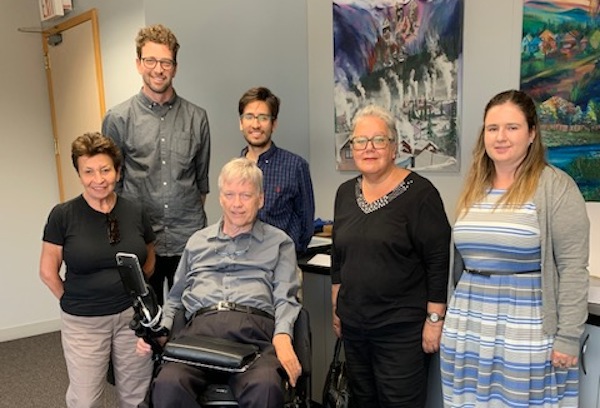
Left to right are Shirley Barnett, Michael Schwartz, Sam Sullivan, Julian Prieto, Margaret Sutherland and Alysa Routtenberg. (photo from Jewish Museum and Archives of British Columbia)

The Jewish Museum and Archives of British Columbia was pleased to welcome Sam Sullivan, MLA for Vancouver-False Creek, for a tour of the B.C. Jewish Community Archives on Aug. 15, 2019. Archivist Alysa Routtenberg and director of community engagement Michael Schwartz shared highlights of the archival collection and explained how JMABC staff and volunteers work to preserve and share these important documents.

Among his many accomplishments, Sullivan is a former mayor of Vancouver and the founder of Transcribimus, an online service dedicated to transcribing early Vancouver city council meeting minutes and publishing them online. Transcribimus was an essential resource in the JMABC’s efforts to restore the Jewish section of Mountain View Cemetery in 2013-2015, an initiative led by former JMABC board member Shirley Barnett.

***

President Cate Stoller gives an overview of the year.
photo - Jane Stoller reports on Operation Dress-Up
Jane Stoller reports on Operation Dress-Up.
photo - Vancouver musician Babe Coal entertains
Vancouver musician Babe Coal entertains (photos from NCJW Vancouver)

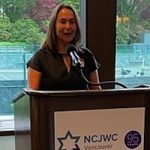
National Council of Jewish Women of Canada celebrated its 95th year in Vancouver with a birthday party June 4, 2019, at the Vancouver Lawn Tennis and Badminton Club.

* * *

photo - Ben Etkin-Goulet
Ben Etkin-Goulet (photo by Cheralyn Chok)

Ben Etkin-Goulet beat all the other cyclists in his category at the GranFondo Axel Merckx Okanagan on July 14. The 24-year-old Vancouverite completed the 92-kilometre Mediofondo in two hours and 30 minutes, beating out hundreds of competitors. It was only his second competitive race.

“I’ve been commuting for as long as I can remember,” said Etkin-Goulet, “but I started cycling more as a sport in 2016 and I’ve been ramping up since then. This last year was my first year training throughout the winter.”

Etkin-Goulet graduated last year with a degree in commerce from the University of British Columbia and works in data analytics at Boeing. He is the son of Fabienne Goulet and Alan Etkin and grandson of Leonor Etkin.

* * *

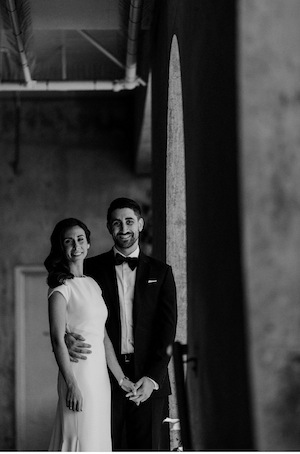
photo - Newlyweds Jaclyn and Alex
Newlyweds Jaclyn and Alex

Parents Cyndi and Max Mintzberg and Ricki and Mark Kahn and grandparents Evelyn, Gloria and Irwin are delighted to celebrate the marriage of Jaclyn and Alex.


Format ImagePosted on August 30, 2019August 29, 2019Author Community members/organizationsCategories LocalTags Alysa Routtenberg, Babe Coal, Ben Etkin-Goulet, Cate Stoller, Jane Stoller, Julian Prieto, Kahn, Margaret Sutherland, Michael Schwartz, Mintzberg, NCJW, Sam Sullivan, Shirley Barnett
Bedside visit

Bedside visit

(photo from Ashernet)

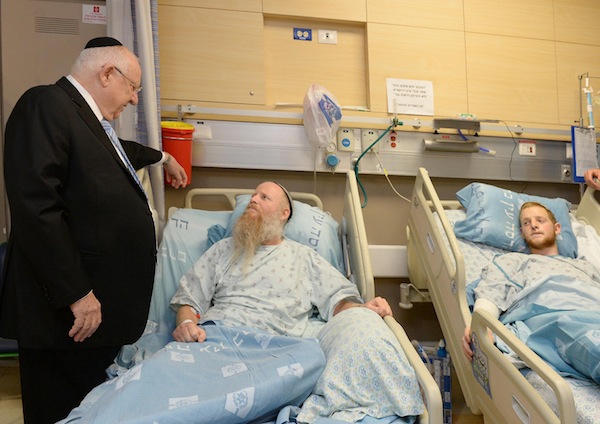
Israeli President Reuven Rivlin talks to Rabbi Eitan Shnerb at Hadassah Medical Centre in Ein Kerem on Aug 26. On the right is Shnerb’s son, Dvir, 19, who was also seriously wounded in a bomb blast near the settlement of Dolev. The rabbi’s 17-year-old daughter Rina was killed instantly. The three were hiking when the bomb was detonated. Rina’s funeral was held in the family’s hometown of Lod on Aug. 23. The blast was the latest in a series of terrorist attacks and clashes recently in Jerusalem and the West Bank.

Format ImagePosted on August 30, 2019August 29, 2019Author Edgar AsherCategories IsraelTags Reuven Rivlin, Shnerb, terrorism, West Bank
ונקובר: העיר מספר אחת

ונקובר: העיר מספר אחת

אחד המקומות הפופולריים בה הוא סטנלי פארק, שהוא אתר היסטורי לאומי. (flickr)

ונקובר: העיר מספר אחת ביבשת אמריקה – חלק א’

במרץ שנה שעברה פרסמה חברת הייעוץ הבינלאומית מרסר את דירוג הערים הכי טובות לגור בהן בעולם ואף אחד בוונקובר לא הופתע. כבר ידוע זה שנים שוונקובר היא העיר שהכי טוב לגור בה ביבשת אמריקה. עיר איכותיתת, תחבורה לא רעה, די נקייה, חינוך טוב, אטרקציות טבעיות וביטחון אישי לא רע. אין כמעט תחום שהיא לא טובה בו. ובעיקר היא עיר יפה. מצד אחד מפרץ עצום וירוק שעוטף את חצי האי בו שוכן הדאון טאון. ומצד שני מי האוקיאנוס השקט. ומסביב הרים מיוערים בעלי אוויר נקי וצונן. בחורף ונקובר אפורה, שותקת ודי ישנה, אך בקיץ העיר פורחת ותוססת. ולא רק כיף וטוב לגור בה, אלא מומלץ מאוד לבקר ולטייל בה. ונקובר שוכנת בקצה המערבי של קנדה ומספיקים יומיים או שלושה לטייל בה כדי להבין מדוע תיירים כל כך אוהבים אותה.

לקנדה יש דימוי של ארץ ענקית וריקה שבה הטבע הפראי שולט והאנשים בה רגועים ואדיבים. ובכן זה באמת די נכון. מספיק כדי לטייל מדינה כמה ימים או מספר שבועות כדי להבין שמתרגלים לזה מהר ואם העולם היה טוב יותר, אז הוא היה כנראה עולם יותר קנדי. מטרו ונקובר היא מטרופולין של קרוב לשניים וחצי מיליון איש שלא מעט מתושביו הם מהגרים מרחבי העולם, היא עיר די שונה גם בקנדה, מיוחדת, ירוקה ואולי וסוערת בחודשי הקייץ שהולך ומתחמם כאן.

חברת המחקר מובהב שמספקת מידע עבור אלה שמעוניינים לעבור ולגור בחו”ל, מדרגת את העיר ונקובר כעיר עם חיי הלילה המסעירים ביותר בקנדה. האמת? בכלל לא! ונקובר נחשבת לעיר ישנה לחלוטין ובמספר חודשי הקייץ החמים היא מתעוררת. טורונטו ומונטריאול הן הנחשבות לערים התוססות ביום ובלילה.

ונקובר הצעירה שהוקמה בתקופת תור הבהלה לזהב באמצע המאה התשע עשרה על ידי מחפשים שהתיישבו בשפך נהר פיירזר, צמחה במהירות בשנות הארבעים והחמישים של המאה הקודמת בעקבות גלי הגירה, והפכה כאמור לעיר מספר אחת באמריקה.

אחד הדברים שבולטים בוונקובר הוא שהיא ירוקה כחולה, בזכות הטבע שעוטף אותה. אחד המקומות הפופולריים בה הוא סטנלי פארק, שהוא אתר היסטורי לאומי. מדובר בפארק גדול שנמצא בקצה הדאון טאון. יש בו מסלולי ריצה, רכיבה על אופניים, רכיבה על סוסים, חופי רחצה, מספר קטן של סעדות וציוני דרך היסטוריים בהתפתחותה של העיר. זה מקום טוב להתחיל להכיר בו את העיר, גם בגלל הנוף היפהפה הנשקף ממנו. בפארק יש גם כמה נקודות ציון חביבות כמו העץ החלול – גזע של עץ ארז כבן שמונה מאות שנה שנפגע בסופה בשנת אלפיים ושש. במקום לכרות אותו הוא הפך לסמל לשימור הטבע בעיני תושבי העיר. גן שייקספיר שהוקם בהשראת יצירתו של המחזאי ברוקטו והמפורסם ואזור עמודי הטוטם – תשעה עמודים צבעוניים בעלי עיטורים אינדיאניים מקומיים בנקודת ברוקטון. תמונה שלהם על רקע ההרים והמפרץ היא חלק מהזיכרונות שתספק לכם ונקובר. בפארק נמצא האקוואריום העירוני, שבו תוכלו להתרשם ממגוון עצום של דגים ויונקים ימיים. האקוואריום הוא אחת האטרקציות המפורסמות של העיר, וקיימים בו מינים נדירים של דולפינים ולווייתנים.

זהו לא המקום היחיד שבוונקובר מספקת לחובבי הטבע. בדאון טאון של העיר תמצאו את מרכז עולם המדע, שבו תערוכות משתנות וקבועות, כולל היכל החלל שבו תקבלו מענה או לפחות כיוון חשיבה לגבי חייזרים, אסטוראידים וכוכבי לכת אחרים, כולל טיול בתחנת חלל.

Format ImagePosted on August 28, 2019Author Roni RachmaniCategories עניין בחדשותTags best cities, tourism, Vancouver, הערים הכי טובות, ונקובר, תיירות
A dialogue on human rights

A dialogue on human rights

Zena Simces and Simon Rabkin (photos from organizers)

A first-annual event next month aims to mobilize individuals and groups to tackle issues of human rights in a comprehensive way.

The Simces and Rabkin Family Dialogue on Human Rights, on Sept. 12, will feature Kasari Govender, British Columbia’s incoming human rights commissioner. A number of invited guests will offer comments from the audience and a reception will follow for less formal interactions. The free event has already reached full capacity.

Govender is the province’s first human rights commissioner since 2002, when the government, under the B.C. Liberals, abolished the position, making this the only province in the country without a human rights commission. Currently, Govender is the executive director of West Coast LEAF (Legal Education and Action Fund), which advances gender equality through involvement in equality rights cases at all levels of court. Govender assumes her new position in September.

The dialogue event, intended to be replicated each year, is the brainchild of Vancouver couple Zena Simces and Simon Rabkin. The series is presented in partnership with Simon Fraser University’s Morris J. Wosk Centre for Dialogue, where the event is to take place, and the Canadian Museum for Human Rights. The topic of this year’s forum is From Hate to Hope in a Digital Age.

“Human Rights has been an interest of mine for many years,” said Simces, a health and social service policy consultant who has worked with minority communities. She is also a former Pacific region chair of the now-defunct Canadian Jewish Congress. “Simon and I felt that there was not one overall organization in Vancouver that was devoted to human rights issues.”

When Simces lived in Fredericton, N.B., she set up a lecture series in conjunction with the Atlantic Centre for Human Rights. It has continued for 30 years and Simces travels there annually for the event.

“In the last year or so, there’s just been so much going on about hate and abuse of human rights, violence, far-right groups and antisemitism, so we both felt there was a void in Vancouver with respect to a dedicated program on human rights,” she said. “There are a lot of different interest groups – women’s groups, specific minority groups – that have different programs, but there isn’t one group really now in Vancouver that is looking at the whole area of human rights broadly for the whole community. When we approached Simon Fraser’s Wosk Centre for Dialogue, they felt the same and thought it was a great idea.”

Rabkin is a cardiologist, a professor of medicine at the University of British Columbia and president of the medical staff at Vancouver Hospital. He also does investigative research in cardiology and has led numerous organizations.

“I’ve been involved for years with looking after individuals in either under-serviced areas in Canada or in Africa and have looked after disadvantaged peoples as patients and have seen the impact of problems of human rights affecting individuals’ lives, and so I wanted to see about doing something that might alter the attitudes towards minimizing or denigrating human rights, which have affected people that I’ve been involved with,” he said.

With SFU, the pair set up an advisory group that includes thought leaders in the field, including a legal expert in international human rights; a former ambassador who has dealt with peace, security and human rights issues; a representative from the Canadian Museum for Human Rights; and representatives from the Wosk Centre.

“We also brought together a multicultural group of young leaders for a one-time focus group,” Simces said. It was out of this group that the idea arose to prioritize the issue of human rights in the digital age.

In addition to opening the event up to the public, specific invitations were made to multicultural organizations, indigenous groups, police, members of the legal community, health workers, educators and representatives of different religious communities, including Rabbi Laura Duhan-Kaplan, director of inter-religious studies at the Vancouver School of Theology, among others.

“What we wanted to do is to create a venue and an opportunity for people to start talking together … not just to complain about problems, but also to be able to start formulating approaches to solve problems and address them and solve them,” said Rabkin. “We don’t have a political mandate to change things. But we believe that by dialoguing and by having the community speak to and hear from the newly appointed commissioner and to have people such as the Canadian Museum for Human Rights involved and other groups involved … then there will be a lot of important ideas created and a lot of opportunities for exchange of information and thoughts and we believe that this will be a catalyst moving forward.”

Simces added that she expects antisemitism to come up in the discussions, as statistics indicate that the Jewish community is one of the most targeted groups for hate crimes. However, she added: “We wanted this to be broader than just the Jewish community. I think it’s educating the broader community on antisemitism and other issues, so we wanted to make sure that this was a dialogue within the broader community.”

“If we can reduce hate generally, then that impacts a reduction in antisemitism,” said Rabkin. “That’s the objective.”

“We hope people will come and participate in the dialogue and really think about how to follow-up in terms of addressing the issue of hate from a legal, social media, education and community perspective,” Simces said.

Format ImagePosted on August 23, 2019August 22, 2019Author Pat JohnsonCategories LocalTags dialogue, human rights, internet, Simon Rabkin, Zena Simces
How can we be happy?

How can we be happy?

Left to right are Canadian Friends of the Hebrew University Vancouver president Stav Adler, CFHU Vancouver executive director Dina Wachtel and Hebrew U’s Prof. Yoram Yovell. (photo from CFHU Vancouver)

The happiest time in the average person’s life is when the last grown child leaves home and the dog dies. That was the tip of the iceberg in happiness advice from one of world’s foremost experts and researchers on the subject.

Prof. Yoram Yovell, a psychiatrist, brain researcher, psychoanalyst, author and media phenomenon in Israel, spoke to an overflow crowd at Beth Israel Synagogue July 25. An associate professor in the division of clinical neuroscience, Hadassah Ein Kerem Medical Center, at the Hebrew University of Jerusalem, Yovell is author of two bestsellers: Brainstorm and What is Love? He hosted the award-winning primetime TV show Sihat Nefesh (Heart-to-heart Talk) for 10 years. His visit was presented by Canadian Friends of the Hebrew University of Jerusalem and made possible by the Dr. Robert Rogow and Dr. Sally Rogow Memorial Endowment Fund in Support of Academic Lectures.

Yovell speculated that the audience was so large because of a sad fact about Vancouver.

“Now I understand why all of you are here,” he said. “I didn’t know this before I came here – you are considered to be the unhappiest city in Canada.”

He supposes this status might have to do with the combination of rainy days and the proportion of new Canadians, because “immigrants, for very important reasons, happen to be less happy than people who live in the same place where they were born,” he said.

But advancing happiness (or ameliorating unhappiness) requires us to define it, he said. He asked the audience to raise their hands if they were happy – most did – but then he demanded to know how they knew they were happy.

“That question sounds silly,” he said. “Because happiness is a subjective mental state. It’s something that I feel inside.… You probably did with yourself something that you would have done had I asked you, are you hungry or not hungry? Are you hot or cold? Are you tired or awake? In all the circumstances, people look inside and try to get a certain feeling and then that’s what they report. By doing so, we are treating happiness as if it’s something we feel. I’m not saying it’s bad that happiness is something we feel, but I think we have lots to gain by really questioning whether happiness is something that we feel or something that we do.”

Aristotle, who wrote a lot about happiness, differentiated hedonia, pleasure, from eudaimonia, a much more complex concept that has more to do with achieving one’s potential in every aspect of our lives.

Instead of asking, “Are you happy?” Aristotle would ask, “Are you the best doctor you can be, the best husband, the best parent?”

Yovell said, “And, if the answer is yes, or almost yes, to most of those questions, then, for Aristotle, I’m eudaimonia and he doesn’t care how I feel.”

Tal Ben Shahar, an Israeli who wrote the book Happier about 2,400 years after Aristotle’s ponderings on happiness, developed a simple equation: happiness equals pleasure plus meaning. This dictum is, Yovell said, the only thing that every school of philosophy and every religion agrees on. Pleasure does not equal happiness. Meaning is the additional ingredient that turns fleeting pleasure into lasting happiness.

“The contribution of pleasure to happiness is there, but it’s small,” said Yovell. “And what’s even more important is it does not last, whereas the contribution of meaning to our happiness is huge and it’s stable. That makes an enormous difference to how we should conduct our lives if we want to be happier.”

One example he discussed was a study showing that most parents say, in retrospect, that child-rearing is the thing that made them happiest. But ask them when they’re changing diapers, doing laundry or settling squabbles, and they’ll tell you their happiness level is in the basement.

“It doesn’t really matter what you felt in the meantime,” he said. “What matters is what is kept in your memories. We live in our memories.”

Having children, for most people, is the most meaningful thing they’ve ever done, said Yovell.

“Pleasure is good. Have a good dinner, have a vacation abroad, upgrade your car model – all these things are going to make you happier. But not to a great degree and not for very long,” he said. “The things that are going to make us happy long-term are the things that give our lives meaning.”

Still, the road to happiness can be arduous.

“If you take a regular couple and ask, ‘When are these two people going to be at the top of their marital happiness?’ the answer is a short time after they get married and, with every child they have, their level of happiness decreases. And when their first child hits adolescence …” at this point his words were drowned out by the laughter and applause of the audience. “You know what I’m talking about, right?” he said.

“But there is light at the end of the tunnel,” he continued. “For those of us who manage to bypass this ‘Death Valley,’ there is going to come a time in our marital life where our happiness level [improves]. The vast majority of you are going to get happier … the older you become, the happier you’re going to be.”

A study of 340,000 American men and women looked at the correlation between their well-being and their age.

“At 18, they’re pretty happy – before they’ve realized what’s going to happen,” said Yovell. “Soon, they go off to college and there goes their happiness and they keep going down and down and down and it gets worse and worse and then they hit rock bottom here, in the 40s and 50s,” he said, pointing at a slide on the projection screen. “But, it gets better as they get older, sicker, less attractive, closer to death – and happier.”

Yovell’s academic work has often focused on reducing extreme unhappiness so that, for example, suicidal people are improved enough to be brought back from that brink.

He cited Sigmund Freud, a founding board member of Hebrew University, noting that “many things that Freud hypothesized were proven wrong, but many were proven right.” One example, he said, was Freud’s observation in his first book that “Much will be gained if we succeed in transforming hysterical misery into common unhappiness.”

The science of happiness has advanced dramatically in just the past two decades, Yovell said. We now know that the parts of the brain that register physical pain overlap with those that register emotional pain.

“This is something that 20 years ago we knew absolutely nothing about and now we do. In the last two decades, we’ve gradually learned that it is true that mental suffering is encoded in our brains using the same neural pathways, the same neurotransmitters that also mediate the extremes of physical pain.”

If you ask a friend about the most painful thing they’ve experienced in their life, they are unlikely to tell you about a ski accident or an operation, he said.

“They’re going to tell you about the loss of a first-degree relative. They’re going to tell you of how they felt when a father, a mother, a sibling, a spouse or, God forbid, a child has died and has left them bereaved,” said Yovell. “That, for most of us, is going to be the most painful thing in our life.”

Similarly new research indicates that emotional pain is something we can quantify, that it is more than subjective. With this knowledge, Yovell said, the follow-up question is: “Can we make it better and, if so, how?”

First, it is important to understand what we can control and what we cannot.

In 2014, a study looked at the relationship between happiness and genetics and concluded, the professor said, “that our genetics do influence our happiness but they are responsible for about 32% of our happiness, which means that 68% of our happiness – more than two-thirds of how happy or unhappy we’re going to be – has something to do with us. Part of it is the circumstance into which you were born, but the rest is how we conduct our lives – both our real lives out in the world and our inner world, our mental lives. This is what we have to work with and that ain’t bad.”

Yovell described a study of university students, in which a control group was given a placebo and another group regular-strength Tylenol and participants were then asked to journal about how they felt with their ongoing lives on campus.

“Those who got Tylenol instead of placebo actually experienced those mental pains to a lesser degree,” he said. “That’s nice, but that ain’t going to do the job when things get more difficult when someone, God forbid, loses a spouse or when someone sinks into a big depression. Tylenol will not be the answer. But what about opioids? What about narcotics? What about those drugs that mitigate the effects of endorphins. Do they make mental suffering better? And, if so, at what price?”

Opioids were used in the treatment of depression for at least 100 years, he said, between the mid-19th and mid-20th centuries.

“Drugs like morphine and codeine were the first drugs of choice in the treatment of mental depression and they actually worked,” he said. But the problems were threefold. These drugs induce tolerance, meaning a patient has to increase the dose in order to achieve the same effect. Narcotics or opioids also cause addiction and that’s a huge problem. And they are easy to overdose on.

Recently, scientists have begun investigating the use of the opioid buprenorphine.

“It’s less addictive and it’s much less dangerous in overdose because, if you give it in high doses, it actually blocks its own effect, so it’s very, very hard to overdose on,” Yovell said. “Even though it’s 40 times more potent than morphine, it’s actually a lot less dangerous to overdose and also less addictive.… We took people in Israel who are not only incredibly depressed but also suicidal. In addition to existing treatments for their depression and suicidality, the experiment added buprenorphine to their regimen.… Those who received the active drug, unbeknownst to them and to us as well, continued to improve. So there is hope, which is very nice.”

A drug-free way to marginally increase one’s happiness, he said, is simple goodness, generosity and philanthropy. Making others happy makes us happy, he said.

“People who contribute their time and money, who volunteer, will not only be happier, they will live longer,” he said. He then directed audience members to donation forms on their tables and asked them to consider contributing to scholarships for graduate students who are working with him.

“I leave it up to you,” he said, “whether you want to save your lives.”

Format ImagePosted on August 23, 2019August 22, 2019Author Pat JohnsonCategories LocalTags CFHU, happiness, Hebrew University, science, Yoram Yovell
Election date remains

Election date remains

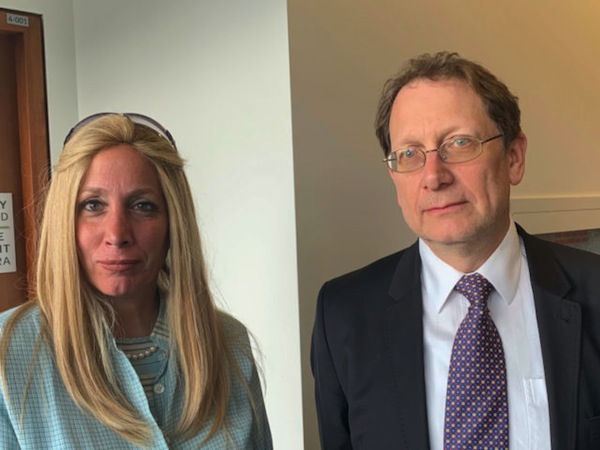
Conservative candidate Chani Aryeh-Bain, left, and activist Ira Walfish at Federal Court in Toronto on July 16. (photo by Ron Csillag/CJN)

Last month, Elections Canada announced that it will not recommend that the date of the next federal election be changed, despite pressure to do so because it clashes with the Jewish holiday of Shemini Atzeret.

Moving the date “is not in the public interest,” Chief Electoral Officer Stéphane Perrault said in a statement on July 29. Only a few days earlier, the Federal Court of Canada ordered Perrault to reconsider his earlier refusal to move the date of the election – Oct. 21 – after it heard from observant Jews who pointed out that they cannot drive, campaign or vote on a holy day.

Lawyers for Chani Aryeh-Bain, the Conservative candidate in the Toronto riding of Eglinton-Lawrence, and Ira Walfish, an activist and voter who lives in the York Centre riding, had argued before the court that Perrault’s refusal to move the date to Oct. 28 was unreasonable and that they, along with 75,000 other Orthodox Jews in Canada, faced discrimination under the Charter of Rights and Freedoms. The court gave Perrault a deadline of Aug. 1 to strike a balance between election laws and the rights of Orthodox Jews to vote and campaign. He was not empowered to move the date himself, but could recommend that cabinet do so.

However, “after having carefully considered the impact of holding the election on Oct. 21 on the ability of observant Jews to participate in the electoral process, and having balanced that with my mandate to ensure accessible voting opportunities for all Canadians, I conclude that it would not be advisable to change the date of the election at this late stage,” Perrault stated. It was “not a decision that I make lightly, but with a view to providing the broadest possible range of accessible voting services to the population at large.”

In a written statement to the CJN, Aryeh-Bain, who had argued that, as an observant candidate she was prevented from getting out the vote on election day, said she was “extremely disappointed” with Perrault’s decision.

“We do not believe he balanced the democratic and religious rights of Jewish voters and candidates,” she said. “He has 85 days to prepare for this election – almost triple the amount of time than he has to prepare for a snap election. Why Perrault has dug his heels in is mystifying to me.”

Perrault acknowledged that, in the case of Aryeh-Bain, the effect of not moving the election date “is very significant.” He conceded that “no arrangement can be made that would truly allow her to meet her religious obligations and compete on equal terms with non-observant candidates.”

At a press conference at B’nai Brith Canada’s offices on the day of the decision, Walfish said, “We are obviously very disappointed. We do not agree that the [chief electoral officer] balanced the relevant interests in his further decision to not move the election.”

Walfish said that Orthodox Jewish-Canadians “will not participate in this election on an equal footing with other Canadians, not by design or choice, but because their conscience prevents them from doing so.”

Aryeh-Bain and David Tordjman, an observant Conservative candidate in Montreal, “are both seriously disadvantaged with an election on Oct. 21,” said Walfish.

In an 11-page statement, Perrault referenced a detailed “action plan for observant Jewish community voting,” which was launched in April. The statement noted that the Orthodox Jewish population is primarily located in urban areas in 36 of the 338 federal ridings. It said that those ridings range from one to 13.4% Jewish, according to the 2016 census, “which makes it possible to design local solutions … to ensure that Elections Canada’s services are targeted and responsive to local needs.”

Perrault took note of the argument presented in court that the four days of advance polls, from Oct. 12-15, reduce the ability of religiously observant Jews to cast ballots because they coincide with Shabbat and Sukkot. However, Perrault pointed out that there are many days during the election period in which observant Jews can vote, including by mail-in ballot, at an Elections Canada kiosk, or at one of roughly 115 post-secondary campuses from Oct. 5-9.

Moving the election date “will not remove all of the barriers that Jewish electors face in voting this election cycle,” Perrault stated. And if the date were moved, “the new dates for the advanced polls will also overlap with Jewish holidays,” he said. “There is no such thing as a perfect election day, especially in a country as diverse as Canada.”

Michael Mostyn, B’nai Brith’s chief executive officer, said Perrault’s decision was “just as wrong” as his initial refusal to move the date. He said Perrault’s admission that observant candidates cannot compete equally with non-observant ones is “a red line” for B’nai Brith. But Elections Canada has “run out the clock” because of the Aug. 1 deadline for setting an election date, he noted.

Mostyn called on “every Canadian Jew who is capable of doing so [to] cast a ballot via advanced polls or special ballots” and on Jewish voters to ask candidates whether they support changes to elections laws, to ensure that voting does not fall on a Jewish holiday again.

The Centre for Israel and Jewish Affairs (CIJA), on the other hand, said it “respects” Perrault’s decision.

“While mindful of the inconvenience that some will experience and the clear disadvantages faced by a religiously observant candidate, we trust that those challenges can and will be mitigated by the measures put into place by Elections Canada,” said CIJA chief executive officer Shimon Koffler Fogel in a statement.

CIJA said it, too, will focus on changing election dates, which have been fixed since 2007, so they no longer clash with Jewish holidays.

Perrault said he is “committed to continuing to work with the Jewish community to maximize voting options within the existing calendar in ways that are convenient and consistent with their religious beliefs.”

– For more national Jewish news, visit cjnews.com

Format ImagePosted on August 23, 2019August 22, 2019Author Ron Csillag CJNCategories NationalTags Chani Aryeh-Bain, democracy, elections, Ira Walfish, Judaism, politics, voting

Posts pagination

Previous page Page 1 … Page 150 Page 151 Page 152 … Page 323 Next page
Proudly powered by WordPress