Skip to content
  • Home
  • Subscribe / donate
  • Events calendar
  • Business Directory
  • FAQ
  • News
    • Local
    • National
    • Israel
    • World
    • עניין בחדשות
      A roundup of news in Canada and further afield, in Hebrew.
  • Opinion
    • From the JI
    • Op-Ed
  • Arts & Culture
    • Performing Arts
    • Music
    • Books
    • Visual Arts
    • TV & Film
  • Life
    • Celebrating the Holidays
    • Travel
    • The Daily Snooze
      Cartoons by Jacob Samuel
    • Mystery Photo
      Help the JI and JMABC fill in the gaps in our archives.
  • Community Links
    • Organizations, Etc.
    • Other News Sources & Blogs
  • JI Chai Celebration
  • JI@88! video

Recent Posts

  • Federation now across BC
  • Israel fighting for its existence
  • Deal strengthens Iran
  • Patriotic belonging diminishes
  • A campaign to engage
  • Upstanders’ first live event
  • Responding to Carney
  • Having your own home
  • Music a family tradition
  • Musical to warm heart
  • Community milestones … June 2026
  • Sharing her passion for Israel
  • Or Shalom reopens its doors
  • JFS from past to future
  • Need holistic approach
  • Sharing stories, advice
  • Journalist shares fears
  • Skills to live together
  • Road to independence
  • Cutting grass with scissors
  • Zionism as a solution
  • Deceit, desire & the divine
  • Reclaiming sacredness
  • Creative project ideas
  • Summer squares and cobbler
  • Thou shalt … summer commandments
  • Legal help for students
  • Revisiting myth of Lilith
  • Wrong person rebuked
  • Canada’s mixed messages
  • Questions for museum
  • Symposium on antizionism
  • Making soccer political
  • CJPAC lauds Pulver’s impact
  • City recognizes Vrba’s legacy  
  • Organ donation saves lives

Archives

Follow @JewishIndie
image - CJN box ad Rockowers 2026

Category: Local

Okanagan interfaith initiative

Okanagan interfaith initiative

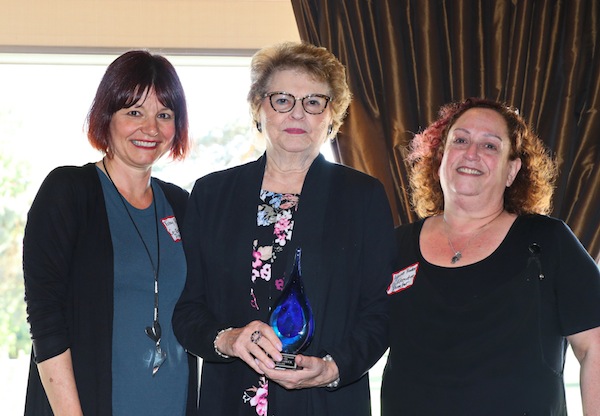
Women from the Okanagan Jewish and Muslim communities at a Feb. 9 event, which is the first of hopefully many bringing the communities together. (photo by Steven Finkleman)

The Jewish and Muslim communities of Kelowna and its surrounding areas have started celebrating their similarities with neighbourly get-togethers.

Coming from a mixed religious background, Okanagan Jewish Community member Philippe Richer-Lafleche knows well how upsetting it can be to be labeled or misunderstood. Yet, he has consciously chosen to look beyond his negative experiences.

“I feel that we’re not called to religion. God doesn’t call us to religion. He calls us to relationships,” said Richer-Lafleche. “We talk about the covenant as a relationship. We have communities, and out of communities come tradition, and out of tradition and culture comes religion. When you get hung up on the religious thing and the symbolism, and forget about the relationship, that’s when we get into trouble…. For me, what’s important is how I relate to myself, the world around me and the people I live with.”

Last summer, OJC president Steven Finkleman asked Richer-Lafleche if he would consider being part of the board and Richer-Lafleche agreed. A few months later, Finkleman and Richer-Lafleche began talking about connecting with the growing Muslim community in hopes it would provide a blueprint for connecting with the other local communities, including First Nation, Sikh, Christian, Hindu, Buddhist and others.

“We began by approaching the mosque,” Richer-Lafleche told the Independent. “Steven knew somebody who’s on their council, got in touch, and we had a meeting. We thought that the two of us would go to the mosque and meet with one or two people. We met with the entire board for the mosque – about eight people, three women, five men, I think. They said they’ve wanted to do this, too, and had been talking about how.”

The Muslim community appointed Rehan Sadiq as their lead in the initiative, and Richer-Lafleche and Sadiq began meeting at the local Tim Hortons almost every weekend for coffee and conversation, becoming friends in the process.

The first event bringing together the communities took place Feb. 9 at the Kelowna Islamic Centre, and the next one is being planned for this spring at Kelowna’s Beth Shalom Congregation.

“The concern I had was just how many people at the synagogue would be interested,” said Richer-Lafleche. “But, it worked out very well, with about two dozen people from both sides, open to families and people of all ages.

“It started with a 10-minute talk – somebody from the mosque, somebody from the synagogue, talking about the community, how the community in Kelowna or in the Okanagan developed, where the Jews or Muslims here came from … some of the challenges in the community…. There was a little bit of talk about some of the shared values, and I think a lot of the people from the synagogue were astounded that there weren’t a lot of differences, that a lot of the values were the same.”

Once the formal part of the event took place, participants had lunch together and mingled, then took a tour of the newly built mosque, which included a call to prayer.

“There was a young fellow who calls to prayer, beautiful voices in Arabic, from my perspective it was absolutely beautiful, moving,” said Richer-Lafleche. “People from both sides said this was the beginning of a relationship between the two communities, but also core for interfaith connection with other communities.”

Both Richer-Lafleche and Sadiq are working on other ways for their communities to connect with, learn about and support each other.

“I know, in the Islamic world, Jews living in the Islamic world throughout our history, there was this interchange between Muslims and Jews, with science, literature, philosophy, and even spirituality,” said Richer-Lafleche. “It’s unfortunate that, in the 20th century, it seems to have broken down. Maybe, in a small way, in a small part of the world, with a very small group of people, we can start to do something like that … and maybe peace in the world.

“I know there may be a few people at the synagogue that may be very uncomfortable with the fact that there’s this connection with Muslims … and that’s just simply fear,” he added. “We’re stepping outside that comfort zone and you progress slowly.”

“We had a very small Jewish community,” said Sadiq, referring to Pakistan, where he was born. “When I came here [in 2008], there was a very small mosque, housed in an old church. We recently built a large mosque and wanted to find ways to connect with the Jewish community.

“My children go to public school and have friends of all different faiths. I don’t want my kids to be biased. I want them to explore and appreciate. I want them to get to know our neighbours.

“I’m glad that our story is newsworthy and very important. One-on-one interaction is the best way to move forward, instead of relying on what we hear in the news.”

“There’s a saying,” added Richer-Lafleche. “‘When you look into the face of another human being, it’s wonderful when you realize you’re actually looking into yourself.’ And it’s that connection that we need in this world. I think that’s what’s important.”

For more information about the OJC, call 250-862-2305 or visit ojcc.ca.


Rebeca Kuropatwa is a Winnipeg freelance writer.

Format ImagePosted on March 22, 2019July 2, 2020Author Rebeca KuropatwaCategories LocalTags interfaith, Jews, Kelowna, Muslims, OJC, Okanagan, Philippe Richer-Lafleche, Rehan Sadiq
Strategies for LinkedIn

Strategies for LinkedIn

Organizer Debbie Rootman, left, and guest speaker Janice Porter at Temple Sholom Sisterhood’s networking event Feb. 28. (photo by Baila Lazarus)

If you’re a decision-maker in business, and especially if you’re a small-business owner or entrepreneur or are looking for a job, LinkedIn should be one of the main tools in your arsenal.

That was the message from LinkedIn trainer Janice Porter, who spoke at a business networking event sponsored by Temple Sholom Sisterhood on Feb. 28.

“LinkedIn is about relationships,” Porter told the group. “It starts with having a fully optimized profile that will have more people see it. But it’s about building connections. Even a good profile won’t be seen if you don’t have any connections.”

Porter said the first step, however, is to determine if the platform is right for you.

“It’s not for everybody,” she said. “If you’re looking for a job, you should be on LinkedIn. But, if you’re in business, if you’re promoting something, you have to know whether your target audience is on LinkedIn.”

LinkedIn, a professional networking platform, was launched in 2003. It has 590 million members in 200 countries. Users create profiles and then reach out to other users to connect online and possibly take the business relationship into the “real” world. Such relationships can lead to direct sales, referral partners, strategic alliances and, if you’re on the job hunt, interviews.

At the Temple Sholom event, Porter outlined five steps that would help users get the most out of the social media platform.

  1. Have an authentic profile. Having a well-done, completed profile allows a user to be seen as an authority. As well, Porter pointed out, if you have a strong LinkedIn profile, it will come up high on Google search results. Be sure to include a good photo. People are 14 times more likely to look at profiles that have a photo.
  2. Create an optimized headline. This is the first line people see when they are searching. The headline should include a benefit positioning statement – what you do and what the result is. For example, Porter’s headline says, “LinkedIn trainer, relationship marketing specialist, networking coach, increasing qualified leads online & nurturing them into sales offline.”

“Most people just say ‘my job at my company,’ which focuses on the company rather than the person,” Porter explained. “Usually people search for the type of job that you do, so putting your company name in is wasting space. So rather than say, ‘Mortgage broker at …,’ say ‘Mortgage broker with specialty in.…”

  1. Be visible. Having a profile is not enough, said Porter. Users need to be active by writing and sharing new content, and commenting on other members’ posts. “The more you engage with other people, the more people will want to connect with you,” she said.
  2. Be personal. When reaching out to connect with other members, customize the connection request. Put in a sentence explaining why you are reaching out to this person.
  3. Make new connections. Porter recommends that users connect with five new people daily.

When asked if it’s worth it to buy a premium account on LinkedIn, Porter suggested starting with a free account because there are enough people you can connect to without the upgrade. However, if you really need to connect directly with certain C-suite employees or you feel a need to follow up on everyone who has looked at your profile, a premium account would make that easier. A third level – Sales Navigator – is particularly useful for those whose focus is selling products or services.

You can try the paid versions on a 30-day free trial, but Porter cautioned that, if you’re not interested in continuing, cancel the trial early. After 30 days, you get a bill for a year, not a month, she said.

Karalee Greer, an independent market partner with Monat Global, attended the event because she wants to be more active on LinkedIn. “Having a more complete and updated professional profile will help people find me on the site,” she said. “Also, by being regularly active and connecting with my target market potential, Linkedin will help me find people more suited for me to build relationships with. I feel my time will be better spent on this platform.”

Mortgage planner Deborah Burnstein said she attended the event not just for the guest speaker but for the networking opportunities. She was already familiar with LinkedIn before attending the event. “Now it’s about finding content to post,” she said.

Baila Lazarus is a Vancouver-based writer and principal media strategist at bailalazarus.com.

Format ImagePosted on March 22, 2019March 20, 2019Author Baila LazarusCategories LocalTags business, Janice Porter, LinkedIn, networking, Sisterhood, Temple Sholom
Take new walking tour

Take new walking tour

Grade 8 monitors, Lord Strathcona Elementary School, 1948. The new Cross Cultural Strathcona Walking Tours start at the school and then take visitors through Hogan’s Alley, Jewish Strathcona, Japantown (Powell Street) and Chinatown. (photo from Bev Nann)

The Cross Cultural Strathcona Walking Tour celebrates the history of Vancouver’s Downtown Eastside neighbourhoods Hogan’s Alley, Jewish Strathcona, Japantown (Powell Street) and Chinatown. The guided walking tour builds awareness of the contributions of early immigrant communities then and now, in celebration of Vancouver Asian Heritage Month and Canada’s Jewish Heritage Month, both of which fall during the month of May.

The walking tour theme is education, and each tour starts at the oldest elementary school in Vancouver, Lord Strathcona Elementary School, at 592 East Pender St. Referred to as the “League of Nations” for its multicultural make-up, this school brought and continues to bring many communities together.

Tours will feature community experts and wind their way through the streets of Vancouver’s Eastside pioneer neighbourhoods, concluding at the Vancouver Japanese Language School (475 Alexander St.), where participants can enjoy complimentary “after-school” snacks from the featured communities.

“Last summer, I had the privilege of going on a number of walking tours, where it dawned on me that we were walking the same streets and even talking about the same homes, just through different community lens,” said Carmel Tanaka, co-founder of the Cross Cultural Strathcona Walking Tour. “A lightbulb moment was to bring all these experts into one room and create one inclusive walking tour highlighting all our voices together!”

The tours will take place on the traditional, ancestral and unceded territories of the Musqueam, Squamish and Tsleil-Waututh peoples, with the support of the Grant family, who offer greetings from the Musqueam Nation. The Cross Cultural Strathcona Walking Tour project is a coordinated effort by the following participating organizations: Association of United Ukrainian Canadians; Benny Foods Italian Market; Dr. Sun Yat-Sen Classical Chinese Garden; Musqueam elder Larry Grant; Greater Vancouver Japanese Canadian Citizens Association; Heritage Vancouver Society; Hogan’s Alley Society; Jewish Independent; Jewish Museum and Archives of British Columbia; Nikkei National Museum and Cultural Centre; Pacific Canada Heritage Centre Museum of Migration; Vancouver Asian Heritage Month Society’s explorASIAN; Vancouver Heritage Foundation; Vancouver Japanese Language School and Japanese Hall; Vancouver School Board; Vancouver School Board Archives and Heritage Committee; Wongs’ Benevolent Association; and Youth Collaborative for Chinatown.

Tours will run Sunday, May 5, 12, 19 and 26, 11 a.m. and 1:30 p.m., rain or shine. Each tour will last just over two hours and cost $15/person (free for children and moms on Mother’s Day). For tickets, visit strathconawalkingtour.eventbrite.com.

Format ImagePosted on March 22, 2019March 20, 2019Author Cross Cultural Strathcona Walking TourCategories LocalTags Carmel Tanaka, education, history, multicultural, Strathcona, walking tour
Beth Hamidrash celebrates

Beth Hamidrash celebrates

Congregation Beth Hamidrash is celebrating its 50th year with a gala dinner to raise funds to better serve the congregation’s increasing number of young families. (photo from Beth Hamidrash)

“I want this to go on and on,” Albert Melul told the Independent about Congregation Beth Hamidrash. The longtime member said, “We have something precious. I don’t want it to be lost.”

Beth Hamidrash celebrates its 50th anniversary this year with a gala dinner March 31. Melul, who hails originally from Tangier, Morocco, has been involved with the congregation from the beginning. In the early 1960s, when he worked as program director at the Vancouver Jewish Community Centre, he was approached by some other members of the Sephardi community, who were looking for a space at the JCC for services. Melul helped the fledgling congregation get started.

In recent years, the synagogue has seen an increase in the number of young families attending services, with an average of 25 children present on Shabbat. In September 2018, the congregation hired Shira Puterman to lead their children and youth programming. The upcoming 50th jubilee celebration will raise money for the building of an expanded multi-purpose room to better serve these, and other, families.

The fundraising dinner, which will offer a door prize of two tickets to Israel, will include the induction of Beth Hamidrash’s new spiritual leader, Rabbi Shlomo Gabay, by the chief rabbi of the United Kingdom, Rabbi Ephraim Mirvis. Gabay, who most recently worked as a high school teacher in the Sephardi community of Gibraltar, came into his position in the community following the departure of Rabbi Ilan Acoca in the summer of 2016. (See jewishindependent.ca/looking-to-the-future.)

“This is a huge honour and privilege. Frankly, to have such a distinguished personality visit us is incredible,” Gabay told the Independent.

Induction is common in the United Kingdom but may not be familiar to Canadians. “It’s when a senior rabbi officially welcomes a newer rabbi into a leadership position,” said Gabay. “The joke around the synagogue is that I’m going to be knighted.”

Mirvis, formerly the chief rabbi of Ireland, is known for his close connection to the British Royal Family – he took Prince Charles on a trip to Israel last year – as well as for his interfaith work, and he has a reputation for moderation and diplomacy. When a scandal broke out in the United Kingdom last year after an Orthodox day school censored all mention of homosexual victims of the Holocaust in its textbooks, Mirvis supported an initiative to introduce LGBTQ+ education into Jewish schools in the United Kingdom. In 2012, he appointed Lauren Levin as Britain’s first Orthodox female halachic (Jewish law) adviser at Finchley Synagogue in London.

In addition to Mirvis, several prominent local politicians are expected to be in attendance at the 50th jubilee, including Janet Austin, the lieutenant governor of British Columbia.

photo - Rabbi Shlomo Gabay will be inducted as part of Beth Hamidrash’s 50th anniversary celebrations on March 31
Rabbi Shlomo Gabay will be inducted as part of Beth Hamidrash’s 50th anniversary celebrations on March 31. (photo from Beth Hamidrash)

Beth Hamidrash is Vancouver’s only Sephardi synagogue, keeping alive the Jewish traditions of the Sephardim, the Jewish community whose roots go back to the expulsion of Jews from Spain in 1492. The Sephardim (from the Hebrew word for Spain, Sefarad) immigrated to North Africa, the Ottoman Empire and other parts of Europe, where they sustained their unique liturgies, customs and musical culture for centuries. Beth Hamidrash carries on these traditions, passing them onto each new generation.

The first meeting of the Sephardi community of Greater Vancouver was held in the late 1960s, followed by the first organized Sephardi prayer service. In 1973, the Sephardic Congregation was incorporated as a society in British Columbia, with the goal of establishing a synagogue. In the late 1960s and early 1970s, High Holiday services were held in the kindergarten classroom of the previous building of the JCC at 41st Avenue and Oak Street, and in the Vancouver Talmud Torah gymnasium. During the 1970s, the congregation began holding regular services at 3231 Heather St., in what was then a dilapidated former synagogue, which the congregation renovated and made into the beautiful congregational space there today.

The synagogue website notes that Beth Hamidrash congregants hail from Iraq, Morocco, Algeria, Libya, Egypt, Syria, Lebanon, Yemen, Israel, India, France, China, Japan, the United Kingdom, South Africa, Zimbabwe, Russia, and many other parts of Canada and the world.

“What we have here is very special,” said Melul. “When you walk in the door here, you are a somebody. Our community is very warm, and we share each other’s sorrows and joys. When you visit this shul, someone will welcome you, someone will give you a siddur, someone will tell you when is Kiddish, someone will want to get to know you.”

“I landed in a spectacular community,” added Gabay. “The people are so kind and generous and forthcoming – they want to grow and they want to do. I really feel blessed to be here.”

To RSVP for the March 31 afternoon induction ceremony, email [email protected]. For tickets to the dinner gala, call the synagogue office at 604-872-4222 or email [email protected].

Matthew Gindin is a freelance journalist, writer and lecturer. He is Pacific correspondent for the CJN, writes regularly for the Forward, Tricycle and the Wisdom Daily, and has been published in Sojourners, Religion Dispatches and elsewhere. He can be found on Medium and Twitter.

Format ImagePosted on March 15, 2019March 20, 2019Author Matthew GindinCategories LocalTags Albert Melul, Beth Hamidrash, Ephraim Mirvis, Judaism, milestones, Shlomo Gabay
Jewish fraternity at 20

Jewish fraternity at 20

Alpha Epsilon Pi chapter members with the fraternity’s “sweetheart,” Rachel Meadow. A “sweetheart” is elected every year at the chapter’s formal. (photo from AEPi)

The Vancouver chapter of Alpha Epsilon Pi, the traditionally Jewish fraternity, is 20 years old this year. So is Benny Stanislawski, the chapter’s president, who will help oversee the anniversary celebrations next month.

AEPi, as it is commonly known, was not the first Jewish fraternity at the University of British Columbia. Another frat operated on campus in years past but eventually disbanded. In the summer of 1999, the former longtime international executive director of the fraternity contacted Jeff Waldman, a student at UBC, suggesting he consider founding a chapter. A group of eight “founding fathers” came together and Adam Propp, a high school friend of Waldman, also a UBC student, was chosen as the first president, or “brother master,” as the role is called internally.

Hillel has been on the UBC campus since 1947 and provided an avenue for Jewish fellowship and involvement for many students. But the founders of the fraternity saw advantages in creating the male-only society.

“I think all of us had different reasons,” Propp recalled. “For me, to be able to have an impact on the university experience for young Jewish men like myself was important. When I look back at it, Hillel appealed to many, but not all. [The fraternity] just appealed to a different set of people who might not have been attracted to Hillel right away. It was a way to get more people more active and involved in a Jewish experience on campus, especially since UBC is such a commuter school.”

Propp became philosophical reflecting on the chapter’s founding two decades ago, noting that, in the next few years, some sons of the original brothers will likely be pledging to the fraternity. In recent days, Propp has been reconnecting with many of the original brothers, as they plan to gather for the 20th-anniversary celebration with a series of events over the weekend of April 5-7.

photo - Benny Stanislawski, president of the Vancouver chapter of Alpha Epsilon Pi
Benny Stanislawski, president of the Vancouver chapter of Alpha Epsilon Pi. (photo from AEPi)

The relationship between AEPi and Hillel differs from campus to campus and, at UBC, it has generally been extremely strong, sometimes highly symbiotic.

Gabe Meranda, who was executive director of the Vancouver Hillel Foundation at the time the chapter formed, admits he had some trepidation about a Jewish fraternity, not having had any experience with what is called “the Greek system.”

“I was skeptical at first, since I was cautious about fraternities. But these first few guys were so excited about launching the chapter in B.C. that I decided I must get behind it,” Meranda recalled. “I remember the night of their first party at Hillel. I didn’t know what to expect, but all seems to have gone well and it’s taken off from there.”

The chapter made Meranda an honorary brother and he still proudly has the pin, he said.

While fraternities have a reputation for certain excesses, Canadian campuses tend to be a little more low-key, in part because the lower drinking age in Canada means access to booze is not a motivator to joining a frat. What is less obvious to the general public are programs of leadership development, philanthropic ventures and, in the case of AEPi, Jewish cultural activities and, to varying extents, Israel programming or education.

Stanislawski stressed that AEPi has no political or religious orientation. Jewish young men, as well as non-Jewish ones who want to pledge – of which there are usually a few each year – are welcome without concern for their religious affiliation (or lack of affiliation) or their approach to Zionism.

The chapter’s main annual philanthropic event is Hoops 4 Health, an all-day, three-on-three basketball tournament that takes place this year on March 31 at War Memorial Gym. The chapter’s charity beneficiary used to be different health causes, but the Heart and Stroke Foundation has a special meaning to the brothers. A couple of years ago, an AEPi member, Nitai Weinberg, suffered a stroke at the age of 18. Now fully recovered, he and his brothers raised $8,000 for the cause last year, and this year have significantly upped their goal to $25,000.

As an example of the range of programs, the chapter recently hosted a presentation on sexual assault awareness, led by the UBC Mental Health Network. They also host “Greek Shabbats” at Hillel House, where members of all the university’s fraternities are invited.

Fraternities, in general, are a place to nurture leadership.

AEPi has an added mission, noted Stanislawski: “Developing leaders for the Jewish community.”

Founded in 1913, the fraternity now serves 190 campuses in seven countries; it claims 90,000 living alumni. The UBC branch, officially called the Beta Chi chapter, welcomes students from Langara, Simon Fraser, Emily Carr, Capilano and all post-secondary institutions in the region. The chapter usually has 40-plus brothers in any given year, peaking last year at 49.

“I’d love to see the organization get into the 70s,” said Stanislawski. But, given the limited number of Jewish students on campus, slow, steady growth is the realistic goal.

Samuel Heller, the current executive director of Hillel at UBC, congratulated the fraternity and thanked them for their contributions.

“Both the Hillel community and wider campus community are enriched by this brotherhood of young men who exemplify leadership and champion Jewish values,” said Heller. “Brothers of AEPi are a positive force on campus … by creating a group of young leaders who are changing the face of UBC and who, in turn, will change the world.”

Pat Johnson is an honorary brother of Alpha Epsilon Pi Beta Chi chapter.

Format ImagePosted on March 15, 2019September 8, 2025Author Pat JohnsonCategories LocalTags Adam Propp, AEPi, education, fraternities, Gabe Meranda, Judaism, milestones, Sam Heller, tikkun olam, UBC
Helping Rose’s Angels

Helping Rose’s Angels

Some of the 70 volunteers who helped out at Rose’s Angels Feb. 17. Event founder Courtney Cohen is holding the bags and Kehila Society executive director Lynne Fader is standing in the front, with the long sweater. (photo by Lianne Cohen Photography)

For most people, getting out of the house and being somewhere by 9 a.m. might be no big deal. For me, especially on a weekend morning, it’s a challenge. But, at least once a year, it’s a challenge I enjoy.

As the owner and editor of the Jewish Independent, I’ve known of Rose’s Angels since it launched six years ago, but only first participated last year in the packing of the more than 1,000 care packages for Metro Vancouverites in need. Courtney Cohen, who created the annual event in honour of her grandmothers, Rose Lewin and Babs Cohen, with longtime friend Lynne Fader, was among the 18 Jewish community members under the age of 36 who were honoured by the Jewish Independent with a JI Chai Award in December 2017 for doing good. Having made the personal connection, I headed out to Richmond Jewish Day School a couple of months after the JI Chai Celebration to help out. It was such a fun experience that I went again this year.

The atmosphere at RJDS is like “Old Home Week.” This time around, I drove there with a friend – she brought the muffins and I made the coffee. As before, I ran into several people that I don’t see often. A well-organized venture, Rose’s Angels, which is run under the auspices of the Kehila Society of Richmond, provides coffee and pastry for those who can wait till they get to the school for their fix. Lists taped onto the wall tell volunteers at which station they’ll be working.

I must have done an OK job last year because I was once again assigned to putting together glove and sock bundles, wrapped in ribbon, colour-coded to indicate whether the bundle was for men, women or children. So absorbed was I in the work and conversation that I can’t say what others were doing, but there was much bustling about and, by noon, a big truck and several cars were stuffed with boxes to be delivered.

photo - Volunteers put together 1,200 care packages, which were distributed to those in need by various social services agencies and programs
Volunteers put together 1,200 care packages, which were distributed to those in need by various social services agencies and programs. (photo by Lianne Cohen Photography)

This year, said Cohen, 70 volunteers put together 1,200 packages, filled with necessities from toiletries to books to food to warm clothing, thanks to donations of items and money. The packages were distributed by a couple dozen organizations, including Turning Point Recovery Society, Heart of Richmond AIDS Society, Light of Shabbat program, Jewish Food Bank, Richmond Food Bank, United Way, Tikva Housing, Richmond Centre for Disability, Touchstone Family Services, St. Alban’s Drop-In Centre, Richmond Mental Health Society and Richmond Food Aid.

Scheduled to happen around Valentine’s Day, this year’s Rose’s Angels took place Feb. 17.

“Watching firsthand our community come together to give back on a long weekend, with family and friends is quite amazing,” Cohen told me when I asked her what was the most fun aspect of the day for her. “Seeing people of all ages working together to help package the care packages in such an organized manner is really something to behold.”

Fader, who is co-executive director of the Kehila Society, also enjoys the communal feel, as well as the diversity of the group that gathers to help. “It is always a fun, well-spirited, well-oiled machine that puts months of hard work gathering all the items together to produce a beautiful bundle of items,” she said.

In looking to the future, Fader would like to see the annual event become “bigger, better,” serving “more recipients in our community,” referring to Richmond as a whole, not only its Jewish community. “Although Rose’s Angels is an annual project,” she added, “the Kehila Society is daily working with our community agencies and partners to assist on a daily basis.”

“I see the success of Rose’s Angels growing from year to year with the involvement of the community partners and individuals,” said Cohen. “Personally, I already see the success and fulfilment that Rose’s Angels has given our community at large. Receiving thank you phone calls, emails and messages from the recipient agencies reminds me of the impact that Rose’s Angels is making to so many individuals.”

Format ImagePosted on March 8, 2019March 6, 2019Author Cynthia RamsayCategories LocalTags Courtney Cohen, Kehila Society, Lynne Fader, Rose’s Angels, tikkun olam
Story about friendship

Story about friendship

Penny Sprackman receives the special shoes on her 60th birthday, in 2006. (photos from Shirley Barnett)

Some things just happen and, before long, they become a tradition. In 1987, Harvey Shafron, while working at Freedman Shoes on South Granville, came across a rather clunky pair of women’s shoes on a top shelf and gave them to his sister, Rhoda (Shafron) Brickell.

Brickell, in turn, presented them to her friend Lola Pawer for her 50th birthday. Since then, the shoes have been passed from friend to friend among a group of Vancouver Jewish women on birthdays that end in a zero or five.

“It just happened,” said Shirley Barnett, a two-time recipient – on her 60th and 70th birthdays. “It became kind of fun to say, ‘Oh my God, it’s the shoes again.’”

The pair is not casually delivered; the recipient is formally presented the shoes at a celebration, usually at a restaurant, in front of the assembled pals.

“I really believe, as they were passed around, that it’s a story about friendship,” Barnett said. “When you reach a special age of some sort, everybody seems to say girlfriends are really important. It doesn’t matter if you’re divorced or widowed or you’re still married. At a certain age – and that could be 60, 70, 80 or 90 – a light seems to go on in women’s heads that says girlfriends are important. They are the ones you call in the middle of the night – maybe not, maybe you call your kids, I don’t know – but there seems to be an unwritten code that the older you get, you just need a few good girlfriends.”

photo - The “traveling shoes”
The “traveling shoes.” (photo from Shirley Barnett)

The size 8C shoes have fit every recipient, Barnett said. A ceremonial walkabout by the birthday celebrant is a part of the ritual.

Leslie Diamond and Pawer have received the shoes five times. Sylvia Cristall and Darlene Spevakow have received them four times. Karla Marks is a three-time recipient and Carole Chark and Penny Sprackman have gotten them twice. Others who have been honoured with the pair are Maja Mindell, Shelley Lederman, Anita Silber, Sandy Magid, Esther Glotman and Cynthia Levy.

At the start, the names of the recipients were written on the soles of the shoes but, as Dorothy Parker said, time wounds all heels, and the inscriptions have become mostly illegible.

What has remained indelible are some of the remarks made by recipients over the years. Barnett, who is sort of the informal archivist of the group, has collected words of wisdom shared over the years.

“It is the friends we meet along life’s way who make the trip more fun,” said one birthday celebrant.

“Friends make good things better and bad things not so bad,” said another.

“Being older sets you free,” reflected one. “You care less about what other people think, you no longer need to question yourself. You have earned the right to be wrong and not think about what could have been or what will be.”

On one birthday, a friend declared: “Remember, growing old is a privilege and old friendships are rare. So, when your ‘old’ friends reach for your hand, grab it.”

Another gem Barnett has collected: “The better the friend, the less cleaning you have to do before they come over!”

Format ImagePosted on February 22, 2019February 21, 2019Author Pat JohnsonCategories LocalTags friendship, lifestyle, Shirley Barnett, shoes, women
OJC busy and growing

OJC busy and growing

Members of the Okanagan Jewish Community came together to celebrate Chanukah. (photo from OJC)

The Okanagan Jewish Community in Kelowna has been keeping a busy schedule. Bolstered by many new members who have moved to the region – word has gotten out … who wouldn’t want to live here? – the community is growing both in numbers and in strength.

photo - The Tu b’Shevat seder on Jan. 20 was attended by 30 members
The Tu b’Shevat seder on Jan. 20 was attended by 30 members. (photo from OJC)

Traditional events such as the High Holidays – with visiting rabbis Larry and Linda Seidman from California – Sukkot and a Chanukah party attended by 80, started out our Jewish year. Of particular note was a Tu b’Shevat seder on Jan. 20, led by OJC member Barb Pullan, which was attended by 30 members. Everyone gathered to celebrate trees and discuss their importance to the preservation of life. We ate specific fruits representing those grown in Israel, drank wine or grape juice, recited blessings, told stories and sang songs. This definitely will be a repeat event in 5780.

Shabbat services were led by visiting Cantor Russ Jayne from Calgary in October and November, along with other services led by local community member Evan Orloff.

A Movie Night (The Boys: The Sherman Brothers Story) was presented on Nov. 9. The screening was organized by OJC member David Spevakow and took place at the Okanagan College Theatre, with almost 200 guests in attendance. We hope to continue the movie nights on a regular basis.

New programs this year have included:

  1. Coffee, cake and cultural anthropology talks. I gave the first talk, on my experience meeting with the Jews in Gondar, Ethiopia. The second session was presented by Murray Oppertshauser, a retired Canadian diplomat, who spoke about his many postings throughout the world. Further talks are planned.
  2. Several intercultural “meet and greets” have been planned with various cultural/ethnic groups in town.
  3. The OJC participated in Taste of Home, a Kelowna community event, in which various ethnic communities in the city participated by selling a sampling of their ethnic food, and with ethnic dancing. We contributed 340 cheese knishes prepared by our members under the direction of Barb Finkleman. Our local Israeli dance group provided the entertainment.

Future events include a ball hockey tournament, Purim, Passover, regular meetings of the Ladies Group, the continuation of the Hebrew school, and our annual golf tournament in the summer.

The OJC is searching for a full-time resident rabbi. We are in the process of having several candidates come out for a Shabbat weekend, after which the community will decide which spiritual leader best fits our needs.

If you’re visiting Kelowna or, better still, moving here, contact the OJC at 250-862-2305 or [email protected].

Steven Finkleman is one of the original members of the Okanagan Jewish Community, having arrived in 1982. He has acquired lots of memories over the years. Currently retired, he has been serving as the president of the OJC since October 2018.

Format ImagePosted on February 22, 2019February 21, 2019Author Steven FinklemanCategories LocalTags Chanukah, Judaism, Kelowna, OJC, Okanagan, Tu b'Shevat
Community milestones this February

Community milestones this February

Left to right, back row, are Rory Richards, Kasimir Kish, Gord Kushner, Sarah Ann Chisholm (Jewish Family Services liaison), Daniel Bar Dayan, Jeremy Berger and Anat Gogo. In the front, left to right, are Rhonda Sacks, Marcela Manes, Shelley Karrel, Selina Robinson (guest speaker at the recent AGM), Alice Sundberg and Eric Fefer. (photo from Tikva Housing)

Tikva Housing had its annual general meeting Dec. 13, 2018. Two new directors were elected at the AGM, and another has joined since, to be appointed at the next board meeting.

The new directors elected in December were Jeremy Berger, a commercial property manager with Porte Realty, and Rhonda Sacks, a realtor with Sutton Group. Both have demonstrated a keen interest in Tikva’s work and have been actively engaged since joining. The new director to be appointed at the Feb. 28 board meeting is Rory Richards, who brings marketing and communications expertise, as well as strong links in the Jewish community.

Continuing board members are Shelley Karrel (chair), Gord Kushner (treasurer), Heather Sirlin (secretary) and directors-at-large Dan Granirer, Marcela Manes, Kasimir Kish and Mike Grudman.

Alice Sundberg, Tikva Housing’s director of operations and housing development, describes the Tikva board as a dynamic group of professionals who share a passion for providing affordable housing in an expensive region. In a meeting last October, they made a plan for Tikva’s next three years. The key strategic goals are engaged and committed board members and active committees; an endowment fund to provide stable and predictable funding for the rent-subsidy program; an expanded housing portfolio; closer ties with other Jewish nonprofit housing providers; and adequate human resources to manage all these goals.

Housing administrator Anat Gogo noted that the demand for rent subsidies is constant. Currently, Tikva is assisting approximately 30 families to be able to stay where they are, without worry of eviction for failure to pay their rent. For more information or to get involved with Tikva, contact the office at 604-998-4582.

***

photo - Tanya Paz
Tanya Paz (photo by Belle Ancell)

National Council of Jewish Women of Canada, Vancouver, welcomes Tanya Paz as executive director. Paz volunteered for NCJWC in the 1990s, subsequently served on the board of directors and was Council’s liaison to Canadian Jewish Congress (now Centre for Israel and Jewish Affairs).

Both Paz’s background as development director for the first car-sharing organization in British Columbia (Modo) and her involvement with the Vancouver Jewish Film Festival and other organizations, make her a valuable addition to the community of volunteers that is NCJWC. She also brings a wealth of experience in municipal affairs, in environmental initiatives and in social activism. And her expertise in community development and her commitment to women’s and children’s issues ensure a strategic approach to the goals of Council.

Working with the board of directors, Paz will help bring the goals of NCJWC – advocacy, education and social action – to both the Jewish and general communities throughout the region, with a focus on women and children experiencing poverty.

***

Nina Krieger, executive director of the Vancouver Holocaust Education Centre, is among those who have been appointed to the National Expert Committee on Countering Radicalization to Violence.

The Canada Centre was officially launched in 2017. Located at Public Safety Canada headquarters in Ottawa, its work includes the National Strategy on Countering Radicalization to Violence and the role of the expert committee is to help the centre meet the strategy’s three priorities: building, sharing and using knowledge; addressing radicalization to violence in the online space; and supporting interventions.

Krieger, who previously was education director and curator at the VHEC, is highly regarded for developing educational programs and exhibits that challenge audiences to probe the difficult historical, cultural and ethical issues raised by the Holocaust. She is also a member of the Canadian delegation to the International Holocaust Remembrance Alliance and past chair of the Memorials and Museums Working Group.

Joining Krieger on the expert committee are Dr. Ghayda Hassan (co-chair), a clinical psychologist and professor of clinical psychology at the Université du Québec à Montréal: Peter John M. Sloly (co-chair), a former Toronto police service deputy chief and currently a partner at Deloitte Canada; Bob Rae, a professor of public policy at both the Munk School and Victoria College at the University of Toronto, who also serves as senior counsel at Olthuis Kleer Townshend LLP; Dr. Jaspreet Khangura, an emergency physician at Royal Alexandra Hospital and Northeast Community Health Centre in Edmonton; Dillon Black, a gender-nonconforming feminist anti-violence and LGBTQ+ rights advocate and current PhD student with the eQuality Project in the department of criminology at the University of Ottawa; Max FineDay, executive director of Canadian Roots Exchange, an organization that builds bridges between indigenous and non-indigenous youth in Canada, among other things; Rizwan Mohammad, a Canadian Muslim civic engagement coordinator; Irfan Chaudhry, a hate crimes researcher and the director of the Office of Human Rights, Diversity and Equity at MacEwan University; and Dr. Shelly Whitman, executive director of the Roméo Dallaire Child Soldiers Initiative, who is considered a subject matter expert on the issue of child soldiers.

***

photo - Ten Bnei Menashe immigrants to Israel celebrated their bat mitzvah on Jan. 28
Ten Bnei Menashe immigrants to Israel celebrated their bat mitzvah on Jan. 28. (photo from Shavei Israel/Laura Ben-David)

On Jan. 28, 10 recent Bnei Menashe immigrants brought on aliyah from India by Shavei Israel, celebrated their bat mitzvah at a gathering of family and friends hosted by Girls Town Jerusalem, where they are enrolled as students.

“We were delighted to attend this very special and moving bat mitzvah celebration, which symbolizes the right of passage that the girls and their families have undergone in returning to the Jewish people,” said Shavei Israel founder and chair Michael Freund.

“We are determined to continue with our efforts until all the remaining 7,000 Bnei Menashe still in India are able to return to Zion,” he added.

The Bnei Menashe are descendants of the tribe of Manasseh, one of the Ten Lost Tribes exiled from the Land of Israel more than 2,700 years ago by the Assyrian Empire. So far, some 4,000 Bnei Menashe have made aliyah with Shavei Israel over the past 15 years, including more than 450 last year.

Format ImagePosted on February 22, 2019February 21, 2019Author Community members/organizationsCategories LocalTags Bnei Menashe, Girls Town Jerusalem, National Council of Jewish Women of Canada, NCJW, Nina Krieger, Shavei Israel, Tanya Paz, Tikva Housing, Vancouver Holocaust Education Centre, VHEC
Conference invigorates

Conference invigorates

In New York for the 2018 International Conference of Chabad-Lubavitch Women Emissaries. (photo from Lubavitch BC)

Last month, nine shluchos (female emissaries) of Chabad-Lubavitch in British Columbia – Henia Wineberg, Rivki Yeshayahu, Chanie Kaplan, Shainy Wineberg, Fraidy Hecht, Chanie Baitelman, Blumie Shemtov, Chaya Rosenfeld and Malky Bitton – joined more than 3,000 women leaders from all 50 U.S. states and 100 countries at the International Conference of Chabad-Lubavitch Women Emissaries (Kinus Hashluchos) in Brooklyn, N.Y.

The annual event is aimed at reviving Jewish awareness and practice around the world. At this year’s gathering, thousands of women – hailing from as far away as Laos and Angola, Ghana and Uzbekistan – came together for five days of brainstorming about the future of world Jewry and their roles as representatives of the Chabad-Lubavitch movement.

The leaders, who embrace multiple roles and responsibilities, explored numerous issues and learned from professionals and colleagues with years of experience. The topics covered ran the gamut: understanding troubled relationships; adult education and inclusion; responding to tragedy; fundraising; the opioid epidemic; and mental health. There was also a conference within the conference for Hebrew school and preschool directors, as well as one for those who serve students on college campuses. The meeting included a parallel track for lay leaders.

“The Kinus is my yearly dose of inspiration,” said one of the shluchos. “It gives me strength and motivation for the whole year, to continue bringing light to everyone around me.”

Additional highlights of the five-day conference were a visit to the gravesite of the Rebbe, Rabbi Menachem M. Schneerson, of righteous memory, in the New York City borough of Queens; the “class picture,” where they posed for a group photo; as well as the gala banquet, where they were joined by admirers, supporters and influential women leaders for a sit-down dinner.

The conference is a tribute to the legacy of Rebbetzin Chaya Mushka Schneerson, the esteemed wife of the Rebbe, and is timed to the anniversary of her passing. Rebbetzin Schneerson’s deep care for and insight into their work remains a source of inspiration to the Chabad women emissaries.

The conference also serves another vital purpose: it represents an opportunity to connect with colleagues and recharge their personal energy. This gives the participants, especially those going back to isolated outposts, an exhilarating send-off, coupled with the sense that they are not alone.

Format ImagePosted on February 15, 2019February 13, 2019Author Lubavitch BCCategories LocalTags Chabad-Lubavitch, emissaries, Kinus Hashluchos, leadership, shluchos, women

Posts pagination

Previous page Page 1 … Page 109 Page 110 Page 111 … Page 181 Next page
Proudly powered by WordPress