Skip to content
  • Home
  • Subscribe / donate
  • Events calendar
  • News
    • Local
    • National
    • Israel
    • World
    • עניין בחדשות
      A roundup of news in Canada and further afield, in Hebrew.
  • Opinion
    • From the JI
    • Op-Ed
  • Arts & Culture
    • Performing Arts
    • Music
    • Books
    • Visual Arts
    • TV & Film
  • Life
    • Celebrating the Holidays
    • Travel
    • The Daily Snooze
      Cartoons by Jacob Samuel
    • Mystery Photo
      Help the JI and JMABC fill in the gaps in our archives.
  • Community Links
    • Organizations, Etc.
    • Other News Sources & Blogs
    • Business Directory
  • FAQ
  • JI Chai Celebration
  • JI@88! video

Recent Posts

  • New rabbi settles into post
  • A light for the nations
  • Killed for being Jewish 
  • The complexities of identity
  • Jews in time of trauma
  • What should governments do?
  • Annie will warm your heart
  • Best of the film fest online
  • Guitar Night at Massey
  • Partners in the telling of stories
  • Four Peretz pillars honoured
  • History as a foundation
  • Music can comfort us
  • New chapter for JFS
  • The value(s) of Jewish camp
  • Chance led to great decision
  • From the JI archives … camp
  • עשרים ואחת שנים להגעתי לונקובר
  • Eby touts government record
  • Keep lighting candles
  • Facing a complex situation
  • Unique interview show a hit
  • See Annie at Gateway
  • Explorations of light
  • Help with the legal aspects
  • Stories create impact
  • Different faiths gather
  • Advocating for girls’ rights
  • An oral song tradition
  • Genealogy tools and tips
  • Jew-hatred is centuries old
  • Aiding medical research
  • Connecting Jews to Judaism
  • Beacon of light in heart of city
  • Drag & Dreidel: A Queer Jewish Hanukkah Celebration
  • An emotional reunion

Archives

Follow @JewishIndie
image - The CJN - Visit Us Banner - 300x600 - 101625

Category: Arts & Culture

Mastering menopause

Michelle Biton has released a new book. Written in the same style as The Instant Anxiety Solution: 5 Simple Steps to Quiet the Mind & Achieve Calm, her recently released The Menopause Weight Loss Solution: A Woman’s Guide to Menopause Without Pounds offers six steps to help women live their best lives during menopause. Both books are published by Hatherleigh Press Ltd.

The mnemonic device that anchors this book is SHRINK. After an introductory chapter about what menopause is, some of its symptoms, the role of cortisol (“the body’s primary stress hormone”) and a couple of other topics, each section explores one of the letters. So, chapters 2 through 7 are (italics added): Stimulate Your Metabolism; Harness the Power of Your Vagus Nerve; Reinforce the Eight Nutritional Strategies; Incorporate Daily Pelvic Floor and Core Exercises; Nurture Mindfulness and Mindful Eating; and Know Your Female Powers with Confidence.

“Menopause is a natural process,” writes Biton. “You officially hit menopause when you do not get your period for 12 consecutive months. The ovaries stop making estrogen and progesterone and the period disappears. It signifies the end of the reproductive years and the beginning of the wise ‘goddess’ years.

“But that is the easy version. Menopause, or pre-menopause, can feel like a rollercoaster ride of hormones or a symphony of fireworks.”

Pre-menopause, or perimenopause, can start in one’s 30s or 40s and last up to 10 years, writes Biton. “At least 80% of women will experience menopausal symptoms of varying degrees and severity.” And there are many symptoms or changes, including but not at all limited to: slower metabolism, poor memory or brain fog, weight gain around the middle, thinning hair, increased irritability and moodiness, night sweats, increased sadness, diminished sex drive and itchy skin.

image - The Menopause Weight Loss Solution book coverWeight gain during menopause apparently affects 65-70% of women, who gain an average of five to 10 pounds. One reason for this is that “women’s ability to burn calories gets cut by 30% or more,” says Biton. “By the time she reaches middle age, she will have to work almost twice as hard to burn the same amount of calories as she did in her 20s.”

Biton recommends many different types of exercise to build muscle and kickstart one’s metabolism. “Simple things like lifting your body weight against gravity does the job perfectly,” she writes. “You can do them anywhere; they are easy to do and very effective. This includes exercises like push-ups, triceps dips, lunges and squats.” She gives a description of how to do lunges and planks, and talks about things like ideal intensity levels: “Regular physical activity [like walking], versus doing one intense workout on the weekend, will be more beneficial at increasing your metabolism long-term.” She notes that adding protein to every meal can help boost metabolism, as can eating the “right kind of fat,” such as omega-3 and omega-6.

A moderate approach to exercise and eating is, not surprisingly, the recommended approach and she dedicates Chapter 4 to nutritional strategies. Chapter 5 is about ways to increase core strength (“namely, your corset and girdle muscles”), to combat weight gain around the midsection, and exercises to strengthen the pelvic floor muscles to keep incontinence at bay.

The chapter on the vagus nerve – the “key” to activating the parasympathetic nervous system (PSNS), which helps us “calm down, handle stress better, regulate your mood and feel more relaxed, connected and compassionate” – takes a lot from Biton’s previous book on dealing with anxiety. (See jewishindependent.ca/ways-to-tackle-anxiety.)

“During menopause, it is common to feel stressed and overwhelmed, not to mention disconnected, irritable, worried, anxious, depressed and questioning a lot of things in life,” she writes.

She advises: “If you’re having a hard time regulating your emotions, feeling overwhelmed or overly emotional, it’s a good idea to activate your PSNS right away.” And she offers many ways to do that, from splashing cold water on your face, to running on the spot as long as you can, to deep breathing, to immersing yourself in nature, and more.

The chapter on mindfulness focuses on differentiating between physical and emotional hunger. The former “begins in the stomach” and is “a physiological need,” while the latter is “when you eat in response to feelings…. Emotional foods tend to be high in carbohydrates, as they allow more L-tryptophan, a mood-regulating amino acid, to enter the brain. Carbohydrates (and sugar) help the body to make serotonin, the ‘feel-good’ neurotransmitter, so it makes sense why emotional eaters tend to consume foods that give them a ‘sugar high.’” Biton suggests practices like mindful eating (slowing down, chewing your food well); trying “to eat out of physical hunger 95% of the time,” while allowing yourself occasional treats; and, again, adding protein to meals “to feel full for longer.”

The last chapter of The Menopause Weight Loss Solution is about retraining our minds to think more positively and reduce negative thoughts about ourselves. It also tackles perhaps sensitive topics like changes to the vagina, body odor, breast tenderness, skin and more that happen during menopause.

There’s nothing revolutionary or in-depth in this book, but rather it provides an overview and the basics of what a woman can do to understand and get through menopause more easily.

Biton has a master’s in holistic nutrition, a bachelor’s in psychology, and a certificate in kinesiology and fitness studies. She is a former Vancouverite who now lives in Los Angeles. For more information, visit michellebiton.com. 
Posted on May 9, 2025May 8, 2025Author Cynthia RamsayCategories BooksTags health, menopause, Michelle Biton, women
Don’t miss Jewish film fest

Don’t miss Jewish film fest

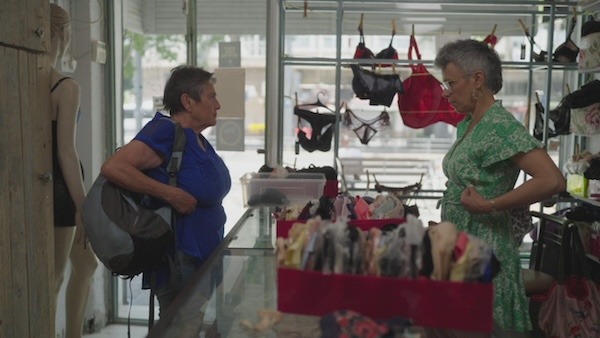
Full Support shines a positive, life-affirming light on Noa’s Bras, in Jaffa. (photo by Tulik Galon / Go2Films)

The Vancouver Jewish Film Festival is now underway, with screenings at Fifth Avenue Cinemas through May 1, then at the Rothstein Theatre May 2 and 4. There are numerous films being presented, from documentaries to mysteries, dramas and more.

Being supportive

It may seem like a strange thing to say, but women should put Noa’s Bras, in Jaffa, on the itinerary of their next trip to Israel. If you don’t need a bra, you can go try some on, just for the experience of being well taken care of. At least, that’s how it seems a visit would go, from watching Michal Cohen’s documentary, Full Support.

Full Support shines a positive, life-affirming light on this store to which women come in need of varying sizes, looks and fits. Some brave clients share their stories with the filmmakers, and the result is a moving portrayal of women of all ages, socioeconomic backgrounds and life circumstances. Among them are cancer survivors, victims of abuse, divorcées; one woman wants something sexy, another just wants something comfortable, a preteen looking for her first bra comes in with her mom. The staff – maybe one or two of whom are proprietors? (it’s not clear) – are knowledgeable, respectful and helpful. It is amazing to see the staff literally size up a client from across the counter and then know which of many, many boxes they must go to for the bras they’re looking for. The store apparently offers 189 sizes!

Outside the store, the camera catches men walking by the shop, some even peeking in, then almost running away with embarrassment. There are other moments of humour, as well as many touching moments, including when one of the store clerks pops into the tailor next door for him to sew up this or that and we find out that he and his wife are waiting for a permit to visit their daughter in Nablus.

Full Support is an interesting, thoughtful and funny film. 

– CR

A murder mystery

photo - In Highway 65, a demoted Tel Aviv detective, Daphna (Tali Sharon), finds herself assigned to investigations in the hick town of Afula
In Highway 65, a demoted Tel Aviv detective, Daphna (Tali Sharon), finds herself assigned to investigations in the hick town of Afula. (still from film)

Family secrets are the theme in Highway 65, in which a demoted Tel Aviv detective finds herself doing slashed tire and lost phone investigations in the hick town of Afula. 

Daphna (Tali Sharon), the downgraded cop, is a shlubby Columbo with appalling table manners but proficiency at her job. The lost phone – a seemingly innocuous investigation – leads to something much larger. The phone’s owner, Orly, has been missing for a week and no one has reported her absence. 

It’s a small town where everyone knows everybody’s business and outsider Daphna finds herself in the midst of a perversely convoluted family drama, crossing personal and professional boundaries with nonchalance. 

The family is marking the 10th yahrzeit of the missing woman’s husband and Daphna’s investigation puts a serious crimp in the commemoration. The family has an ominous mafia feel to it and the film jolts the viewer with an instant of truly shocking violence that illuminates the narrative and ultimately fingers the culprit.

Fans of quality Israeli TV will recognize Sharon from her role as Hodaya in Srugim, about Orthodox singles in Jerusalem. The male lead, Matan, is played by Idan Amedi, a singer-songwriter and actor known for playing Sagi Tzur in Fauda. Amedi was seriously injured during reserve duty in January 2024, when six fellow soldiers were killed in Gaza.

– PJ

Relentlessly talented

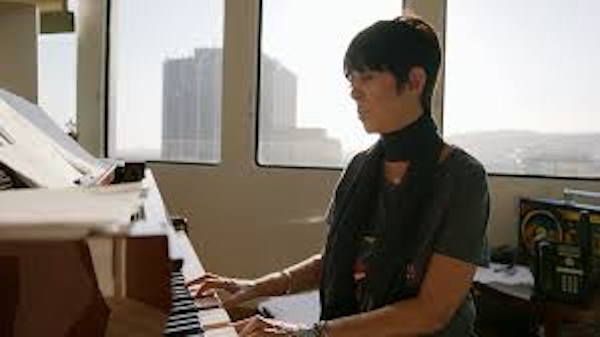
photo - Diane Warren: Relentless introduces audiences to the seemingly chaotic genius of songwriter Diane Warren
Diane Warren: Relentless introduces audiences to the seemingly chaotic genius of songwriter Diane Warren. (still from film)

Everyone knows a song that was written by American songwriter Diane Warren – everyone. For more than 40 years, she has been writing hits in multiple genres. From “Rhythm of the Night,” performed by the band DeBarge; to “When I See You Smile,” for Bad English; to “I Don’t Want to Miss a Thing,” sung by Aerosmith; to multiple songs performed by Beyoncé, Michael Bolton, Cher, Celine Dionne, Meat Loaf, Whitney Houston and so many others. Her writing has earned her a long list of awards and 16 Academy Award nominations – while she has yet to win an Oscar for a particular song, she was recognized with an honorary Oscar in 2022 for her achievements.

The documentary Diane Warren: Relentless, directed by Bess Kargman, introduces audiences to the seemingly chaotic genius of Warren, who was born in Van Nuys, Calif., into a middle-class Jewish family. The third daughter of David and Flora Warren, she is much younger than her sisters and knew, from a young age, that music – rather than something more conventional – was the path she wanted to follow. 

Her parents struggled with how to parent Warren. Her dad was supportive of her music dream, at least, but her relationship with her mother was troubled till the end. Warren grew up feeling an outsider both at home and at school. It is not clear when she was diagnosed, but having Asperger’s syndrome contributes to both Warren’s genius and her struggles. She also shares that she was molested as a child, in the context of having written “Till It Happens to You,” which Warren wanted Lady Gaga, also a survivor of sexual assault, to sing.

A lot of Warren’s collaborators lend their views to this documentary, and their respect for Warren is clear, even when there are hurt feelings. For example, she gave both LeAnn Rimes and Trisha Yearwood the song “How Do I Live,” but both versions ended up being a hit.

A master of romantic songs, Warren has no romantic partner, only a love for creating music – something she is driven to do and will continue to do as long as she is able.

Relentless is a fascinating look at a fascinating person.

– CR

Quest for the past

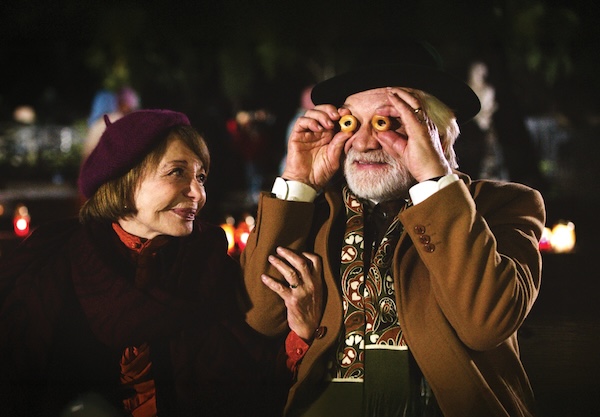
photo - The Property closes the Vancouver Jewish Film Festival May 4
The Property closes the Vancouver Jewish Film Festival May 4. (still from film)

One probably wouldn’t expect lots of yuks in a film about a grandmother and granddaughter traveling from Israel to Poland to reclaim property lost during the Holocaust. But the first great guffaw in the closing night film of the Vancouver Jewish Film Festival, The Property, comes early, with the frustrated chaperone of ill-behaved high school students shouting, “You don’t deserve to be taken to the concentration camps!”

Dark humour and subtle situational absurdity shine a light on serious paradoxes, twists of fate, loss and possible redemption. The film by Dana Modan, based on a graphic novel by her brother, Rutu Modan, centres around distinctive characters and intersecting personal and world history.

The trip’s mission seems straightforward, but Savta has a secret – and a secret agenda. Secrets abound, actually, but the conundrum, as the granddaughter observes drily, is that no one really cares.

Ostensibly, the family is returning to Poland to regain physical property stolen during the war – an apartment building – but it becomes clear almost immediately that the grandmother is after something else. The viewer’s assumptions about her motivations will be subtly upended. 

The grandmother, Regina (Rivka Michaeli), and granddaughter, Mika (Sharon Strimban), spend much of their time in Poland doing their own things, but their experiences – past and present – imitate the other’s. History and the present day seem to merge, then diverge, when Mika stumbles into a too-authentic immersive experience at a museum that is the essence of dark humour, as is the interaction with a museum curator who takes her work just a tad too seriously.

Family secrets, though, are the heart of the film, as are the complex interactions between Jewish and non-Jewish Poles across generations. 

Beginnings and endings and the sense that the past keeps repeating are a thread throughout The Property.

“How many times can you start a life all over again?” asks the grandmother at one point. But Mika’s experience suggests it’s all a big repetitive cycle anyway. 

– PJ

For tickets to the Vancouver Jewish Film Festival, visit vjff.org.

Format ImagePosted on April 25, 2025April 23, 2025Author Pat Johnson and Cynthia RamsayCategories TV & FilmTags Bess Kargman, Diane Warren, Full Support, Highway 65, Michal Cohen, Rivka Michaeli, Sharon Strimban, Tali Sharon, Vancouver Jewish Film Festival, VJFF
Art Vancouver underway

Art Vancouver underway

“Warm Blossoms” by Lauren Morris. (image courtesy Art Vancouver)

image - “The Watchers” by Lisa Wolfin
“The Watchers” by Lisa Wolfin. (image courtesy Art Vancouver)

Jewish community members Sky Lilah, Lauren Morris, Taisha Teal, Talin Wayrynen and Lisa Wolfin are among the artists participating in Art Vancouver International Art Fair, which runs until April 27 at the Vancouver Convention Centre. Tickets: artvancouver.net.

– Courtesy Art Vancouver

Format ImagePosted on April 25, 2025April 24, 2025Author Art VancouverCategories Visual Arts
Guns & Moses to thrill at VJFF 

Guns & Moses to thrill at VJFF 

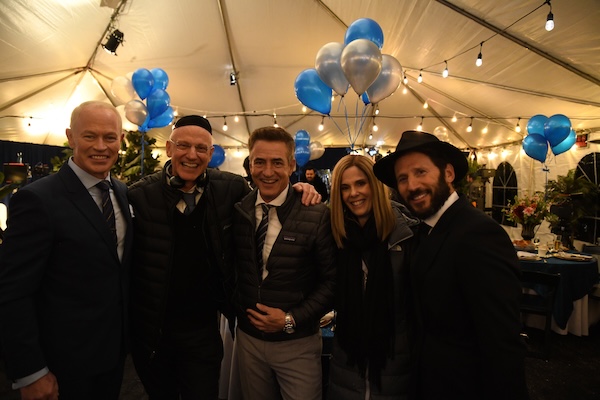
Filmmakers Salvador and Nina Litvak with Guns & Moses cast members Neal McDonough, left, Dermot Mulroney, centre, and Mark Feuerstein, right. (photo from Pictures from the Fringe)

Los Angeles filmmaker and author Salvador Litvak (no relation) will be in the city for this year’s Vancouver Jewish Film Festival to promote and talk about his and wife Nina Davidovich Litvak’s latest movie, Guns & Moses, which screens April 27, 4 p.m., at Fifth Avenue Cinemas.

The action thriller features a Chabad rabbi who becomes a detective and gunfighter to investigate a murder at his synagogue. This will be the third movie by the Litvaks and their production company, Pictures from the Fringe. Their previous films are When Do We Eat?, about “the world’s fastest seder gone horribly awry,” and Saving Lincoln, which is based on the true story of Abraham Lincoln and his friend and bodyguard Ward Hill Lamon.

Between movies, Salvador Litvak became the Accidental Talmudist – in fact, his last event in Vancouver was an Accidental Talmudist Shabbaton at the Kollel. He and his wife co-manage accidentaltalmudist.org, which has more than one million followers. Last year, he published a bestselling book, Let My People Laugh: Greatest Jewish Jokes of all Time.

Salvador Litvak grew up in New York but was born in Santiago, Chile. 

“My mother’s family, both my mother and grandmother, were Holocaust survivors who came to Chile from Hungary and my father’s family ended up in Chile fleeing the pogroms in the Ukraine about 1905,” he told the Independent. As immigrants, he said, “we got to this country and my parents wanted me to go to Harvard to be a doctor and, since I was 5, I said OK, but, eventually, I figured out that I didn’t want to be a doctor and I didn’t want to be a lawyer because I enjoyed writing and creating very much.”  

He said, “Eventually, I talked my way into UCLA film school, where I arrived in the 1990s, attended the MFA director’s program, and said thank G-d I didn’t miss this because this is what I was meant to do.” 

Pictures from the Fringe’s first feature film, When Do We Eat?, about a dysfunctional family’s Passover seder, was inspired by the fact that there were no Jewish holiday movies and the Litvaks wanted to “create a Jewish version of It’s a Wonderful Life.” Both filmmakers are baalei teshuva, or returnees to Judaism, and were “in the early stages of their journey,” said Salvador Litvak. They infused the movie with a “tremendous amount of spirituality, Torah and Chassidut,” but, he noted, “now that we’re Orthodox, we admit that it’s a little edgier than we would like.” However, he said, “All of the deep stuff in it, the Torah, the love, in addition to the raucous humour, stands the test of time.”

Litvak said his journey as the Accidental Talmudist and the establishment of accidentaltalmudist.org have helped When Do We Eat? gain new popularity and provide a built-in audience for Guns & Moses, which was partially inspired by a tragic shooting in California on April 27, 2019.

The couple had “built a large audience interested in authentic Jewish content, and we are filmmakers, so we knew that our next movie would be somehow Jewish. I wanted it to be an action thriller because I love action thrillers,” he said.  

The Litvaks watched a thriller a day for three years to “learn the genre inside out,” he said. “While we were immersed in that, there was a tragic murder, a shooting at a Chabad synagogue in Poway, Calif., where a young white nationalist came in and murdered a woman named Lori Gilbert-Kaye, injured the rabbi, and would have killed a lot more people if his gun had not miraculously jammed and members of the congregation rushed at him and then he fled. 

“I went down the next day and attended Lori’s funeral and interviewed the rabbi and congregants and got to know what happened there personally, and I said there is something in this that can become an action thriller with a murder/mystery structure,” he said.

image - Guns & Moses posterAnd so, Guns & Moses – about a Chabad rabbi who becomes an investigator and gunfighter after witnessing a tragic shooting at his synagogue – came into being. It was filmed in 2022.

Litvak said he knew that a movie about Jews under attack who fight back “would always be relevant, but we had no idea how relevant it would be” after Oct. 7, 2023.

One of the important themes of the movie, said Litvak, is that Jews are in danger and need to protect themselves and be responsible for their own safety. For him personally, that has meant joining a Jewish self-defence organization called Magen Am (which means Shield of the Nation) and going through extensive training (including learning how to use a gun) so that he can protect his own synagogue in case of an attack like the one in Poway. In the movie Guns & Moses, the character of Rabbi Mo Saltzman goes through the same training that Litvak went through.

In Guns & Moses, Saltzman is played by actor Mark Feuerstein, who starred in the hit series Royal Pains and appeared in the movie Defiance, among other things. The cast includes American-Israeli actor Alona Tal as the rebbetzin, Christopher Lloyd as a Holocaust survivor, as well as veteran actors Neal McDonough and Dermot Mulroney, Jake Busey, Craig Sheaffer, Mercedes Mason, Mark Ivanir (who also appeared in When Do We Eat?) and young actor Jackson Dunn, who Litvak believes will become a star. Litvak praised his cast, who only had 20 days to film Guns & Moses.

Litvak is looking forward to coming back to Vancouver, where he has visited many times because he has family here. The city is “very dear to my heart,” he said, and he loves the people and feels at home as soon as he lands here.

For tickets to Guns & Moses and other Vancouver Jewish Film Festival screenings, visit vjff.org. 

David J. Litvak is a prairie refugee from the North End of Winnipeg who is a freelance writer and publicist, and a mashgiach at Louis Brier Home and Hospital. His articles have been published in the Forward, Globe and Mail and Seattle Post-Intelligencer. His website is cascadiapublicity.com.

* * *

Editor’s Note: Guns & Moses’ North American release date is July 18. For more information, visit collider.com/guns-and-moses-trailer-release-date.

Format ImagePosted on April 25, 2025May 16, 2025Author David J. LitvakCategories TV & FilmTags Guns & Moses, movies, Nina Litvak, Salvador Litvak, thrillers, Vancouver Jewish Film Festival, VJFF
An almost great movie 

An almost great movie 

Coexistence, My Ass! follows Israeli activist and comedian Noam Shuster Eliassi as she develops her show of the same name. (photo from DOXA)

Coexistence, My Ass!, directed and produced by Amber Fares, is almost a great documentary. But it fails to ask at least two key questions that would have made for a more in-depth portrayal of an interesting and complex human being. 

Coexistence, My Ass!, whose May 4 screening at the DOXA Documentary Film Festival already has sold out, is about comedian Noam Shuster Eliassi, who was born in Wahat Al-Salam / Neve Shalom / Oasis of Peace, a village in which Jewish and Palestinian Israelis have chosen to live together. It has been considered a model of coexistence and  Shuster Eliassi grew up amid the idealism it represented, and speaks Arabic fluently. She and her best friend (to this day), Ranin, a Palestinian Israeli living in Oasis of Peace, were among the kids trotted out as the generation who would bring peace. 

Shuster Eliassi’s mother is Jewish Iranian and her father is Jewish Romanian. The couple met in high school (in what country is not revealed), so basically grew up together. They decided to live in Oasis of Peace and became, says Shuster Eliassi in her act, what most Israelis love to hate most: woke, progressive leftists. “They believe in the radical idea that Israelis and Palestinians deserve the same equal human rights! Crazy. So radical.”

It seems important to know why Shuster Eliassi’s parents left their respective countries to live in Israel, but especially her mother. With Iran as the main funder of Hamas’s – and other terrorists’ – murderous activities, and the fact that tens of thousands of Jews had to flee after the 1979 revolution, it seems that Shuster Eliassi’s mother’s experience is crucial to understanding Shuster Eliassi. But this question, if ever asked, doesn’t make it into the film.

Shuster Eliassi is an intelligent and accomplished person. By age 15, she had graduated, so to speak, from being one of the kids giving flowers to visiting celebrities (who would often mistake her, because of her dark skin, for being Palestinian – and with such good Hebrew!) to speaking around the world about coexistence and the possibilities for peace. At 21, she got a full scholarship at Brandeis University for being a peace activist. She even met the Dalai Lama, who, she quips, didn’t think she was Palestinian –  “He just thought I was Indian.”

At 25, Shuster Eliassi landed a “peace worker’s dream job” – a position at the United Nations. We don’t learn much about what her job entailed, but there are clips of her speaking about the West Bank and Gaza as being the biggest prisons in the world, and how “the occupation” affects Palestinians and Israelis. Career-wise, she was on a wave of success, she says in her show, when she saw Ukrainian President Volodymyr Zelenskyy’s TV program, made before he was elected, about a comedian who becomes president. Zelenskyy, of course, then did become president, so Shuster Eliassi observes that, if she wanted to take her political career seriously, she needed to start writing jokes.

photo - Comedian Noam Shuster Eliassi in performance
Comedian Noam Shuster Eliassi in performance. (photo from DOXA)

This takes us to where the film begins, with her at Harvard in 2019, where she’s been asked to deliver a peace-building project. She tells them that Coexistence, My Ass! will be that project, and she’s accepted.

In the documentary, we see the development of Coexistence, My Ass! and how Shuster Eliassi’s views change as the political situation in Israel deteriorates and the violence increases. Her parents are often her sounding board, as are friends and fellow comedians. We witness the results of a hate crime – the school in Oasis of Peace was set on fire in September 2020. We see moments of happiness, most unexpectedly, perhaps, when Shuster Eliassi returns to Israel from the United States with COVID and must be quarantined in a hotel, where sick Jews and Palestinians are being isolated from the general population.

“And everyone is radically getting along. This is a 5-star oasis of peace. If they continue getting along, my comedy career is over. Just kidding, you’ve read the news, I have material for years. Netanyahu has my back,” says Shuster Eliassi in her act. “Somebody give him a beeper,” she adds sheepishly, referring to Israel’s taking out of Hezbollah with exploding pagers in September 2024.

Months before Oct. 7, 2023, Shuster Eliassi was disillusioned and would get into yelling matches with Jewish Israelis protesting the Netanyahu government and dangers to democracy because their protests didn’t also explicitly call for equal rights for Palestinians. Whereas pre-COVID, she says, “My biggest responsibility is to speak to my people…. The Jewish audience is where we have to work,” the purpose of Shuster Eliassi’s comedy ceases at some point to be a way to encourage peace and becomes a form of resistance.

After Oct. 7, when some of Shuster Eliassi’s family and friends abandon their belief in coexistence because they feel peace with Palestinians isn’t possible, Shuster Eliassi goes the other way, giving up on coexistence because she feels – though doesn’t state explicitly – that peace with Jewish Israelis is not possible. 

Moria, a comedy writer, advises Shuster Eliassi that people need to hear what Shuster Eliassi has to say, but it can’t just be “genocide, genocide!” The role of a comedian, says Moria, is “to bring people together. To unify. We can’t stop the killing, but we can unify people. To get people to see the world through your eyes.”

“No, that’s not what I’m doing,” responds Shuster Eliassi, who explains that her goal isn’t to unify, it’s “to voice resistance to this insane show of force that has swept everyone up blindly.”

Shuster Eliassi’s friend Ranin reluctantly retains hope for coexistence because, otherwise, she tells Shuster Eliassi, there is no place for Palestinians and Arabs within Israel. For Shuster Eliassi, though, by the end of the film, there seems to be no place for Jews in Israel. She only sees fault with Israel, and somehow thinks that Hamas wouldn’t want to kill all Jews if Israel had dealt with “the occupation.”

If memory serves, Hamas is only mentioned once in the documentary, in a clip from Shuster Eliassi’s show, where it is part of a joke, perhaps one told before 2023, it’s not clear. Why Hamas plays little or no role in Shuster Eliassi’s view of the evolving situation is the second of those two key questions that would have made Coexistence, My Ass! a better film. 

While Shuster Eliassi laments that Israelis – even the coexistence crowd – are not able to meet Palestinians where they’re at, she is unable to meet her fellow Jewish Israelis where they are at. While she is comfortable performing at a Palestinian festival where she’s greeted by a man wearing a “Palestine vs the world” T-shirt that, on the back, has a Palestinian flag over all Israel, she isn’t comfortable with Israelis who would fill out that same map with no Palestinian territories. While she is correct that peace is only possible between equals, she only sees one oppressor – Israel. Not Hamas. Not any other international party, like Iran. Just Israel. 

Many of the people at the sold-out screening of Coexistence, My Ass! will think it’s the most amazing film ever because, despite attempting to be fair – and it seems like Fares honestly did try to present multiple sides – it ultimately heralds their anti-Zionist beliefs and justifies them. Others will be disappointed that Coexistence, My Ass! ends up being just another anti-Israel film, which will, no doubt, win more awards than it has already, despite its critical flaws. 

Format ImagePosted on April 25, 2025April 24, 2025Author Cynthia RamsayCategories TV & FilmTags coexistence, comedy, Gaza, identity, Israel, Israeli-Palestinian conflict, Neve Shalom, Noam Shuster Eliassi, Oasis of Peace, Oct. 7, politics, storytelling, Wahat Al-Salam, war
Beckman gets his third FU

Beckman gets his third FU

The big reveal: Vitaly Beckman fools Penn & Teller a third time with his illusion “Still Life.” (image courtesy Vitaly Beckman)

“It’s a real privilege to be able to share something that was created from just an idea, and see how well it’s received,” Vitaly Beckman told the Independent after winning his third FU (Fool Us) trophy on Penn & Teller: Fool Us last month.

With his characteristic charm and sense of humour, Beckman had the host of the show, Brooke Burke, arrange a pineapple, a pomegranate, a couple of melons and a clock (whose hands she set however she liked) either on a fruit stand or beside it. Beckman even invited her to move any item after her initial placement, which she did not. Then, he turned his attention to a covered painting that had been on stage the whole time. When unveiled, the revealed artwork depicted Burke’s arrangement exactly.

“The concept might have been in my head for years,” said Beckman, a member of the Jewish community who lives in New Westminster. “I think I even had a sketch of the idea in my diary years ago. After I finished my off-Broadway run, I had some time to work on a few ideas, and this is the one I decided to pursue in 2019. I started performing it in Singapore and, right after that, the pandemic started, so only a few years later could I test it out some more on the road. So, while the illusion took a few months to create, it took a few years to polish and work out the kinks.”

Beckman fooled Penn & Teller in 2016 and again in 2021.

“Nothing beats the first time,” Beckman said. “However, this was also very exciting because it is harder and harder to come up and stump them, especially after they know me already, but also the illusion I picked is more difficult to perform this time, and a lot more things can go wrong. So, because of that, the stakes were higher! Definitely exciting to be able to do it with all that in mind.”

For his third attempt, Beckman considered several pieces from his current touring show, An Evening of Wonders, and “Still Life” ticked a lot of boxes, he said.

“The illusion was telling a very simple story, in about five minutes, which is the optimal time for a show like Fool Us. Yet, it was also very visually startling,” he said. “It has inspirational elements, as my goal is not really to trick people but to inspire and uplift them. But then, of course, the mystery elements in it were also very strong. I knew that Penn & Teller would have a real hard time with it!”

Winners of the FU trophy get to perform in Penn & Teller’s live show, and Beckman will join them in Las Vegas on April 26. To watch Beckman fool the duo, go to youtube.com/watch?v=Z3hJA2I-Fig. 

Format ImagePosted on April 25, 2025April 24, 2025Author Cynthia RamsayCategories TV & FilmTags An Evening of Wonders, illusion, Penn & Teller, Vitaly Beckman
Film Fest starts soon

Film Fest starts soon

Sabbath Queen is a film about the life of Amichai Lau-Lavie, part of a rabbinic dynasty going back 38 generations. (still from film)

The 36th annual Vancouver Jewish Film Festival runs April 24 to May 4, beginning with opening night film Midas Man, which “offers Beatles fans a fresh look at the pivotal role Brian Epstein played in the band’s meteoric rise.” An enormous range of dramatic and documentary films, features and shorts, fill out the festival’s run, and the Independent reviews some of them here.

Tradition!

Hester Street, based on Abraham Cahan’s 1896 Lower Eastside immigrant novel Yekl, was released in 1975, about the same time as Fiddler on the Roof. The movie approaches some of the same topics of assimilation and tradition, without the song and dance.

Yankl (now Americanized Jake, played by Steven Keats) transforms from a yeshivah bocher to a shmatte sweatshop worker. Along comes Gitl, the wife who had waited behind in Russia, and young son Yossele who, payos cut off, becomes Joey.

The 50th anniversary of the film’s release reminds us that the 1970s were a time of nostalgia and of Jewish narratives that both idealized and lamented the American dream. In Hester Street, which is in black-and-white for mood, the boarder Bernstein (Mel Howard) represents tradition and continuity, contrasting with Jake in the fight of money versus learning, of getting ahead versus getting an education. Bernstein’s presence in the home of the primary couple puts Gitl in a predictable three-cornered bind both romantic and cultural.

Hester Street, which is filmed in black-and-white for mood, confronts the themes of tradition and assimilation
Hester Street, which is filmed in black-and-white for mood, confronts the themes of tradition and assimilation. (still from film)

Younger viewers might take some time to recognize Gitl (Carol Kane) as the kooky landlady from Unbreakable Kimmy Schmidt. Meanwhile, the tough-talking landlady in Hester Street is recognizable as Doris Roberts, who contemporary viewers will recognize as the buttinsky mother-in-law from Everybody Loves Raymond.

There are subversive components of the film, including the role of divorce in perpetuating traditional values. Subversion twists again and indeed Gitl assimilates in her particular ways. As the last line in the film declares ambivalently, “We mustn’t be too quick to say this or that.”

Director Joan Micklin Silver was a pioneering woman in male-dominated 1970s Hollywood. 

Kosher queen

Tradition, continuity and modern times are absolutely the themes of Sabbath Queen, a film by Sandi DuBowski about the life of Amichai Lau-Lavie.

The scion of a rabbinic dynasty going back 38 generations, Amichai is the son of politician, ambassador (“and we suspect a spy”) Naphtali Lau-Lavie and nephew of Israel Meir Lau, former chief rabbi of Israel. Filmed over 21 years, the documentary follows Amichai as he is ordained as a rabbi, via the Conservative movement’s Jewish Theological Seminary. But choosing the Conservative movement over orthodoxy is the least of Amichai’s rifts with his traditional family.

In 1993, Amichai was outed as a gay man in a news report and, it seems, he never looked back. After fleeing to New York a couple of years later and getting involved with the Radical Faeries, a queer, shamanistic spirituality group, “one vodka too many” leads to his alter ego emerging “out of my head like Athena.” 

The drag queen Hadassah Gross – a Hungarian sex advisor, kabbalist, matchmaker and widow of six rabbis – was born. Amichai describes his drag persona as “something between channeling and performing” and it is all about exploring the intersections of feminine and masculine. (“What the goyim call the yingele and the yangele,” says Hadassah.)

“Artists are the new rabbis,” he declares, but eventually seems to decide that being an artist is not enough and he seeks his rabbinical smicha, in large part, it seems, to combat his brother and the larger establishment on Orthodox dogma.

He becomes the spiritual leader of a decidedly unorthodox congregation called Lab/Shul. And, when his officiating of interfaith partnerships clashes with the Conservative movement, the rabbi faces the consequences.

Amichai’s brother, father and mother have their reservations, to put it mildly, about Amichai’s activities.

“We’re pushing a lot of boundaries here,” he acknowledges. Or, as his Orthodox rabbi brother puts it, not entirely sympathetically, “He’s playing with Judaism.” 

One feels invasive as the camera goes close up on Amichai at his father’s funeral and that sense of voyeurism repeats throughout the film, as does the feeling that the documentary’s subject is something of an emotional exhibitionist.

The relationship between Amichai and his immediate family represents the larger cultural dissonance between queer and other nonconforming Jews and the orthodoxy of the tradition, though there is an astonishing, uplifting conclusion to some of these challenges by the film’s ending.

A family affair

I first saw A Real Pain on a flight home from Israel last month. Selecting a Hollywood treatment of two cousins doing a Holocaust road trip to their grandmother’s hometown in Poland, I girded myself for cringe-inducing, inappropriate or otherwise disappointing fare. My expectations were pleasantly upended. This is a profound, beautifully presented film that hits the right notes in so many ways.

I am not the only one impressed. Unbeknownst to me when I chose it, the script and the acting were already grabbing accolades worldwide. Costars Jesse Eisenberg (who won the BAFTA Award for best original screenplay) and Kieran Culkin (who won both an Oscar and a Golden Globe for best supporting actor) deliver moving and multidimensional characters. 

David (Eisenberg) and Benji (Culkin) are the proverbial odd couple but what I had somehow anticipated to be slapstick comedy turned out to be deeply touching. As we find out more about Benji’s story, his erratic behaviour makes more sense.

Moments that could come off as didactic – almost documentary-like scenes at the Polin Museum and the Monument to the Ghetto Heroes, among others – somehow work even when you think they shouldn’t. The British tour guide James (Will Sharpe) is repeatedly challenged by Benji and acknowledges his own shortcomings as a non-Jewish facilitator, inviting viewers to ponder insider/outsider roles in the immediate and larger story.

If you ever wondered what corner Baby from Dirty Dancing ended up in, here she is – Jennifer Grey – playing a supporting role as one of the members of the cousins’ small tour group.

Spousal secrets

It is hard to write about Pink Lady without giving too much away. A seemingly ordinary religious Jerusalem couple with three happy kids and an involved extended family are upended when the husband is subjected to violence and blackmail. 

Director Nir Bergman’s Hebrew-language feature film sees Lazer (Uri Blufarb) and Bati (Nur Fibak) pondering the most existential questions of how God challenges even his most dedicated adherents. A deeply serious film with both laugh-out-loud incongruities and eye-covering discomfiture, Pink Lady is a slice-of-life with deep theological questions.

Oct. 7 revisited

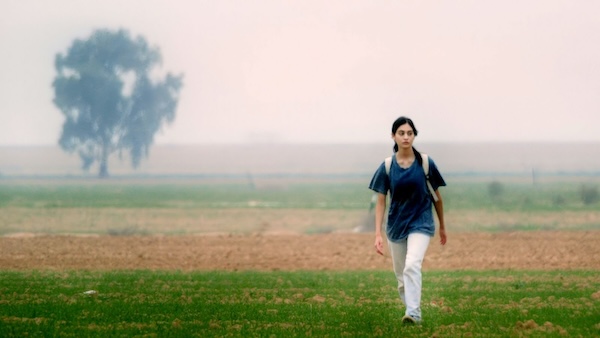
image - Of Dogs and Men, which deals directly with the attacks of Oct. 7, 2023, is a blend of fiction and documentary
Of Dogs and Men, which deals directly with the attacks of Oct. 7, 2023, is a blend of fiction and documentary. (still from film)

At least two films in the festival deal directly with the attacks of Oct. 7, 2023.  

Of Dogs and Men is a blend of fiction and documentary. Director Dani Rosenberg’s film follows 16-year-old Dar (Ori Avinoam, also cowriter) as she sneaks back into Nir Oz, her vacated kibbutz, in search of her missing dog Shula. 

While the quest for the dog may be a stand-in for the larger search 

Israelis have undertaken as individuals and collectively to discover the fate of missing people – Dar’s mother’s fate remains unknown – it is hard not to wonder if the choice to centre a (missing) dog in the story is not meant to invite dissonance among overseas viewers. Given the indifference and even celebration with which some people worldwide have responded to the Oct. 7 attacks, is the tragedy of a lost dog a statement on the qualitative value the world places on Jewish life?

Dar tags along with a woman who rescues animals in the abandoned and war-torn areas.

“Aren’t you afraid of dealing with those dogs?” she asks the woman.

“Look what human beings did. So, I should be afraid of dogs?” the woman responds. “There’s no creature more awful, crueler than human beings and I still live among you.”

Through the imagery of destruction and the litany of names of victims, the film breaks down distinctions between Israeli and Palestinian victims.

The documentary 6:30 provides a harrowing, minute-by-minute narrative of Oct. 7 events from different locations and perspectives. The interviews with survivors just a week after the attacks show raw emotion.

Some of the Nova festival-goers thought they were hallucinating as the hellish day unfolded. Several people, including first responders, speak of detachment, of a disconnect between what they were seeing and what they could believe. In retrospect, one survivor wonders if his liberation is real or if he died and that is what he is now experiencing. Others talk of the emotional burdens they will carry forever.

Linor Attias, a United Hatzalah volunteer who arrived at Kibbutz Be’eri in a mass casualty event vehicle, notes with pride that Arabs and Jews were united among the rescue workers trying to save the lives of victims. She loaded people into ambulances, where they released piercing shrieks of agony, having held them in for hours of silence in order to save their lives.

“That howl of pain cuts through the soul,” she says.

The most chilling thing about the film is realizing, amid all these horror stories, that these are the testimonies of the lucky ones.

Full details and tickets are available at vjff.org. 

Format ImagePosted on April 11, 2025April 10, 2025Author Pat JohnsonCategories TV & FilmTags drama, history, identity, immigration, Israel, movies, New York, Oct. 7, thrillers, Vancouver Jewish Film Festival

Drama teacher back on stage

People of a certain age will have seen the iconic 1980 comedy 9 to 5, starring Jane Fonda, Dolly Parton, Lily Tomlin and Dabney Coleman. Even more will know the eminently singable title song of the movie, written by Parton, which remains popular today, 45 years later. Those of us who enjoyed the story and like (love!) the song will be happy to know that Royal City Musical Theatre (RCMT) is presenting 9 to 5 The Musical – the score of which Parton wrote – April 25 to May 11 at New Westminster’s Massey Theatre.

“Set in 1979, 9 to 5 The Musical follows three co-workers – Violet, Doralee and Judy – as they endure their mundane and demoralizing office jobs at Consolidated Industries, under the thumb of their sexist and egotistical boss, Franklin Hart Jr.,” reads the press release for the production, which is co-directed by Valerie Easton and Chris Adams. “When the women are suddenly given the chance to turn their wildest revenge fantasies into reality, they hatch a plan to kidnap their nasty boss and step into their full potential – ultimately taking control of the company.”

photo - Keri Smith is in Royal City Musical Theatre’s 9 to 5 The Musical, which runs April 25-May 11 at Massey Theatre
Keri Smith is in Royal City Musical Theatre’s 9 to 5 The Musical, which runs April 25-May 11 at Massey Theatre. (photo from Royal City Musical Theatre)

The RCMT production stars Irene Karas Loeper as Violet, Maia Beresford as Doralee, Madeleine Suddaby as Judy and Dustin Freeland as Franklin Hart Jr. Jewish community member Keri Smith plays Margaret, a secretary in Hart’s office, who drinks a bit, and she is the understudy for Violet.

RCMT’s 9 to 5 The Musical marks a return to the stage for Smith – who trained at the American Musical and Dramatic Academy in New York City – after a long hiatus, during which time she has taught grades 1-7 at Vancouver Talmud Torah.

The Jewish Independent interviewed Smith in advance of the musical’s opening.

JI: Can you tell me a bit about your general background, how you got into education and theatre, when and why you came to Vancouver? Or did you just study in New York?

KS: After completing my studies at theatre school and spending several years working in New York, my visa expired, prompting my return to Vancouver. Upon arriving, I quickly recognized the challenges of pursuing a full-time acting career in the city. As a result, I sought a position that would allow me to continue engaging with theatre while securing a steady income. I found a role as an early childhood educator at Vancouver Talmud Torah, the elementary school I had attended as a child.

Two years into my position, when an opening for a drama instructor became available, I approached the principal and shared my theatrical background … [and] she entrusted me with the role. I quickly developed a deep passion for teaching and decided to pursue a teaching certification to further my commitment to education.

Over the past 19 years at Vancouver Talmud Torah, I’ve had the privilege of helping to establish a vibrant musical theatre program for students aged 10 to 13. I am immensely grateful to be in a position where I can combine my love for theatre with the joy of teaching every day.

JI: What role, if any, does Judaism and/or Jewish community play in your life?

KS: Judaism and the Jewish community hold a deeply cherished place in my life, shaping both my personal journey and my work as an actor and educator. In my daily life, Jewish values of compassion, justice and the importance of education are guiding principles.

In my role as an educator, I am reminded every day of the power of knowledge and the responsibility we bear in passing on these values to future generations. Judaism has a long tradition of asking questions, seeking understanding and fostering growth through learning, which resonates deeply in my approach to teaching.

As an actor, I find that storytelling in the Jewish tradition has influenced my perspective, as narratives in Judaism often revolve around struggles, resilience and the pursuit of justice – ideas that transcend time and place. Whether in a classroom or on stage, I strive to embody the deep sense of connection and responsibility that Judaism fosters, with gratitude for the wisdom that has been passed down through generations.

The Jewish community, with its strength, support and shared commitment to growth, reminds me that we are all part of something much larger than ourselves and that, together, we can bring light into the world.

JI: What attracts you to acting?

KS: What I love most about acting is the profound escape it offers – an opportunity to leave behind my own world and immerse myself fully in someone else’s reality. The process of stepping into a character’s shoes, seeing the world through their eyes, and experiencing their emotions and struggles is not just thrilling; it’s transformative. It’s an addicting experience because each new role is a journey of discovery – of understanding, empathy and expression that goes beyond my own personal experiences.

JI: What’s your favourite part of teaching?

KS: What truly deepens my love for acting is the opportunity to teach it. Teaching drama allows me to share that same transformative experience with others, especially young people. Watching students experience the same magic of stepping into a character’s shoes for the first time is incredibly rewarding. There’s something truly special about guiding them through the process of self-expression, helping them find their voice and watching them take risks on stage. Drama gives students a unique platform to explore their own identities and develop their confidence, creativity and empathy – all essential skills not just for acting, but for life.

JI: What motivated you to audition for 9 to 5 The Musical? What was that process?

KS: I felt it was the perfect time to step out of my comfort zone and challenge myself, so when I saw the opportunity, I didn’t hesitate to audition. The process was incredibly enjoyable! I was given a song and a scene to prepare, and I went in with the goal of giving it my all. Afterward, I felt confident and proud of my performance.

JI: How often do you perform, and approximately for how long have you been a performer?

KS: I first discovered my passion for performing as a Grade 7 student at VTT, where I played Hodel in Fiddler on the Roof. That role was my introduction to acting, and I’ve been hooked ever since. While I “perform” daily in my role as a teacher, engaging with my students, I haven’t had the chance to take the stage in over 10 years. This production marks my return to acting, and it feels incredible to be back!

For tickets to 9 to 5 The Musical, visit royalcitymusicaltheatre.com. 

Posted on April 11, 2025April 10, 2025Author Cynthia RamsayCategories Performing ArtsTags 9 to 5 The Musical, Dolly Parton, drama, Keri Smith, musicals, Royal City Musical Theatre, teaching, Vancouver Talmud Torah, VTT

Scribe camp issue launches

The Jewish Museum & Archives of British Columbia (JMABC) is releasing the 41st edition of The Scribe – which has a summer camps theme – on April 24, 6 p.m., at the Peretz Centre for Secular Jewish Culture.

The JMABC’s flagship publication celebrates the lives and traditions of British Columbia’s Jewish residents by focusing on one sector each edition. This year’s journal features personal memories from seven Jewish summer camps in the Pacific Northwest, highlighting the lasting impact that camp experiences have had on the development of lifelong connections to Jewish culture and community. 

First published in 1989, The Scribe’s mandate is to link the Jewish community’s past with the present to inspire future generations. The publication has documented all aspects of the Jewish experience in British Columbia. Past issues have focused on prominent medical pioneers who have improved the lives of Canadians; top restaurateurs who cultivated Vancouver’s social scene; and ready-to-wear icons who helped British Columbia become an international fashion centre.

“The Scribe: Summer Camps Issue is by far one of the most endearing and nostalgic issues in [the journal’s] 41-year history,” said Daniella Givon, president of the JMABC. “Jewish summer camps have long represented a unique form of organic community-building and Jewish connection. Through the iconic summer camp experience, generations of Jewish youth have developed a sense of resilience and belonging that has strengthened their own connections to Jewish community, personal identity and cultural continuity.”

“The impact and success of Jewish communities in Canada have been significantly enhanced by the collective experiences of summer camp attendees,” said Elana Wenner, JMABC director of programming and development. “We look forward to taking a walk down memory lane with Jewish communities throughout BC with this new issue!”

The launch at the Peretz Centre will be an immersive evening of nostalgia, song and stories, as the summer camp communities of the Pacific Northwest are brought together under one roof.

Tickets are $54 each, and include dinner, a program and a keepsake T-shirt. All proceeds are in support of the JMABC. Copies of The Scribe: Summer Camps Issue will be available for purchase at the event for $20 each. (JMABC members in good standing will receive one free copy per family.) For tickets, visit tinyurl.com/ANightAtCamp. 

– Courtesy Jewish Museum & Archives of British Columbia

Posted on April 11, 2025April 10, 2025Author Jewish Museum and Archives of British ColumbiaCategories BooksTags Daniella Givon, Elana Wenner, events, history, oral history, summer camp, The Scribe

Carousel stages Stuart Little

“When Mrs. Frederick C. Little’s second son arrived, everybody noticed that he was not much bigger than a mouse. The truth of the matter was, the baby looked very much like a mouse in every way. He was only about two inches high; and he had a mouse’s sharp nose, a mouse’s tail, a mouse’s whiskers, and the pleasant, shy manner of a mouse. Before he was many days old, he was not only looking like a mouse but acting like one, too – wearing a grey hat and carrying a small cane. Mr. and Mrs. Little named him Stuart, and Mr. Little made him a tiny bed out of four clothespins and a cigarette box.”

So begins EB White’s classic children’s story Stuart Little, which was published 75 years ago. To celebrate the anniversary, Carousel Theatre for Young People is presenting the play Stuart Little, which was adapted from White’s book by Joseph Robinette. Jewish community members Advah Soudack and Stephen Aberle are part of the production, directed by Carousel Theatre artistic and managing director Jennica Grienke, at Waterfront Theatre April 23-May 11.

Soudack and Aberle take on multiple roles, including as Stuart’s parents. Castmates Melanie Yeats and Megan Zong also play several parts, while Katrina Teitz plays the title role.

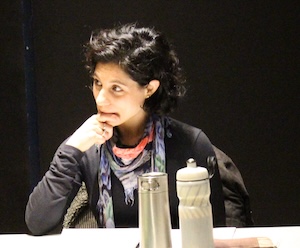
photo - Advah Soudack in a table read of Stuart Little, which will be presented by Carousel Theatre for Young People at Waterfront Theatre April 23-May 11
Advah Soudack in a table read of Stuart Little, which will be presented by Carousel Theatre for Young People at Waterfront Theatre April 23-May 11. (photo by Kezi Jacob)

“I was so excited when Jennica called me to offer me the role of Mrs. Little,” Soudack told the Independent. “I knew being part of Stuart Little would be wonderful and the fact that music was being added to the story made me even more jazzed! I love being part of theatre for young audiences, as I think it is so important for children to get the chance to witness and experience live theatre. I have very fond memories from the theatre productions I saw as a child and I know they were part of what inspired me to be an actor myself.”

“I loved the book when I read it as a child, and the approach taken by this production sounded like fun,” said Aberle of why he wanted to be a part of it. “I have a long history with Carousel, going back to the ’80s and including many years both touring to schools throughout BC and performing at the Waterfront, so it’ll be fulfilling to come back and perform here with the company again. I’ve also had the pleasure of working with director Jennica Grienke in the past, and I’m looking forward to renewing that connection. Finally: it’s work! And I love to work.”

Aberle has performed in Carousel’s Scrooge, Macbeth, Dream Castles, The Taming of the Shrew and other productions over the years. Soudack was in The House at Pooh Corner, directed by Kim Selody, in 2020. “Unfortunately, COVID shut us down, so we didn’t get the chance to finish our run with Carousel, nor did we get to remount with Presentation House,” she said.

In preparation for the play, Soudack re-read Stuart Little, a book she read as a child – “and I remember loving it and putting all this effort into a very detailed title page for a book report I wrote … putting a lot of effort into drawing Stuart Little and trying to get him just right.”

Not only did Aberle read the book – “and Charlotte’s Web, another favourite by the same author” – but he read it “a number of times and loved it.”

“It’s interesting,” he said, “to re-read it now with grown-up eyes and see things I’d forgotten: Stuart’s pluck, and his enduring quest to reconnect with his bird-friend Margalo, for example.”

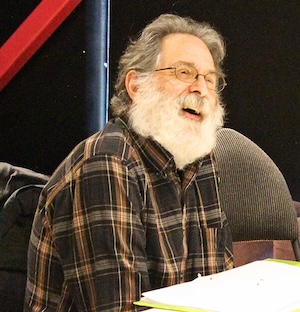
photo - Stephen Aberle in a table read of Stuart Little
Stephen Aberle in a table read of Stuart Little. (photo by Kezi Jacob)

For Aberle, the enduring messages include: “Don’t give up on your dreams – and don’t pout and sulk when things don’t quite go the way you’d planned! Don’t be a pushover, and don’t be a jerk either. It’s OK to be different. It’s OK to love who you love. Everyone – including animals, both human and non-human – matters, deserves respect and has their part to play.”

“I feel that the relevance of the story in today’s world is to not fear differences in one another and to not judge each other by our appearance or stature,” said Soudack.

“The part of the story that I particularly like is how everyone accepts Stuart without judgment or fear,” she said. “His parents love him for who he is and everyone he encounters takes him at face value, shows him respect and treats him like an equal.”

Aberle’s favourite part is Stuart driving off into the north, searching for his love, Margalo.

Rehearsals hadn’t started when the Independent spoke with Aberle and Soudack, so they couldn’t say exactly what playing more than one part would be like, but they explained their process.

“I usually approach playing different roles by working with different character bodies and vocal placement. I like to work off of a first hit that I get from reading the script and various characters and build from there. Some of the roles we get to play are animals, so that will be fun!” said Soudack.

Aberle said “one of the most interesting things about playing several characters is finding the characteristics that distinguish them so that one can step quickly and surely into their shoes – or, in some cases, paws. Vocal qualities, gestures, mannerisms, all that kind of thing.”

Neither actor approaches a performance for younger audiences differently than they do other shows, though both pointed to some differences.

“Children’s theatre is usually quite playful and energetic and requires a different way of storytelling,” said Soudack, “so I keep that all in mind when I start my prep and enter the rehearsal hall.”

“Younger audiences can sometimes be more upfront in their responses, which can teach everyone – actors, directors, playwrights, everyone – a lot,” said Aberle. “Back in the day, when shoemakers moved from laces to Velcro for young people’s footwear, we used to talk about discovering the ‘Velcro moments’ – when the youngest audience members, sitting cross-legged in the front row on the school gym floor, would start to play with the Velcro on their shoes, peeling and re-fastening it, and the sound would fill the air. Usually, these were ‘author’s message’ moments – when the script stopped being the story of the interplay between the characters and started becoming a moral. Young audiences can smell a moral approaching from a mile away, and they have little patience for it. (That’s probably true for older audiences as well, but they’ve grown better at hiding it.)”

For tickets (from $19) to Stuart Little, visit carouseltheatre.ca. 

Posted on April 11, 2025April 10, 2025Author Cynthia RamsayCategories Performing ArtsTags Advah Soudack, Carousel Theatre for Young People, Stephen Aberle, Stuart Little, theatre

Posts pagination

Previous page Page 1 … Page 7 Page 8 Page 9 … Page 160 Next page
Proudly powered by WordPress