Skip to content
  • Home
  • Subscribe / donate
  • Events calendar
  • News
    • Local
    • National
    • Israel
    • World
    • עניין בחדשות
      A roundup of news in Canada and further afield, in Hebrew.
  • Opinion
    • From the JI
    • Op-Ed
  • Arts & Culture
    • Performing Arts
    • Music
    • Books
    • Visual Arts
    • TV & Film
  • Life
    • Celebrating the Holidays
    • Travel
    • The Daily Snooze
      Cartoons by Jacob Samuel
    • Mystery Photo
      Help the JI and JMABC fill in the gaps in our archives.
  • Community Links
    • Organizations, Etc.
    • Other News Sources & Blogs
    • Business Directory
  • FAQ
  • JI Chai Celebration
  • JI@88! video

Recent Posts

  • Sharing her testimony
  • Fall fight takes leap forward
  • The balancing of rights
  • Multiple Tony n’ Tina roles
  • Stories of trauma, resilience
  • Celebrate our culture
  • A responsibility to help
  • What wellness means at JCC
  • Together in mourning
  • Downhill after Trump?
  • Birth control even easier now
  • Eco-Sisters mentorship
  • Unexpected discoveries
  • Study’s results hopeful
  • Bad behaviour affects us all
  • Thankful for the police
  • UBC needs a wake-up call
  • Recalling a shining star
  • Sleep well …
  • BGU fosters startup culture
  • Photography and glass
  • Is it the end of an era?
  • Taking life a step at a time
  • Nakba exhibit biased
  • Film festival starts next week
  • Musical with heart and soul
  • Rabbi marks 13 years
  • Keeper of VTT’s history
  • Gala fêtes Infeld’s 20th
  • Building JWest together
  • Challah Mom comes to Vancouver
  • What to do about media bias
  • Education offers hope
  • Remembrance – a moral act
  • What makes us human
  • המלחמות של נתניהו וטראמפ

Archives

Follow @JewishIndie
image - The CJN - Visit Us Banner - 300x600 - 101625

Byline: The Editorial Board

Will jail curb hater?

The sentencing of a notorious hate promoter in Toronto last week is, in some ways, evidence that our country’s laws and norms against targeting identifiable groups are working.

James Sears, editor of Your Ward News, a propaganda sheet distributed periodically to 300,000 households in Toronto and area, was sentenced to two consecutive six-month terms in jail. His paper is filled with bigotry and hatred, especially targeting Jews, women and LGBTQ+ people. He is obsessed with the Rothschild family, denies the Holocaust, dabbles in bizarre racial theories and celebrates rape. One issue invited volunteers to join an Adolf Hitler Fan Club. He and a co-conspirator, publisher LeRoy St. Germaine, were found guilty in January of promoting hatred against women and Jews. St. Germaine is yet to be sentenced.

The Centre for Israel and Jewish Affairs, among others, praised the judge’s sentence. In fact, the judge openly expressed his wish that he had the legal power to hand down a harsher sentence.

Unlike the United States, where constitutional freedoms make it legal to express almost anything but overt death threats or yelling fire in a crowded hall, Canada’s laws place limits on acceptable discourse. This is, it has seemed, a consensus position that we as a society have accepted as justifiable limits on our freedoms for the greater good. In practice, convictions on the basis of hate speech are exceedingly rare. More common are hearings and decisions via our network of human rights commissions, which provide a quasi-judicial recourse for victims. Neither of these systems is perfect. But cases like Sears’ indicate that, when necessary, they can have the appropriate outcomes.

We hesitate to call this good news, however. Justice may be served but, in the long run, what is gained? A happy ending would have been a society in which ideas like Sears’ are nonexistent. A more realistic world might be one in which some form of restorative justice is the sentence, some construction in which Sears and St. Germaine learn from their victims about the harm they have inflicted and perhaps come to see the humanity of the people they vilify. Instead, Sears will spend a year (or four months, depending on parole) stewing over what he doubtlessly interprets as some heinous injustice perpetrated against him by the imagined forces of evil. Justice is served, probably, but is the larger cause of social cohesion and mutual understanding?

Posted on August 30, 2019August 29, 2019Author The Editorial BoardCategories From the JITags hate crimes, James Sears, justice, law

Ray of light, warmth

In a story that is positive and uplifting, Rabbi Adam Stein, associate rabbi of Vancouver’s Congregation Beth Israel, wrote a piece in Canada’s Anglican Journal, which describes itself as the largest faith-based publication in North America. In the article, Stein describes his engagement with national leaders of the Anglican movement as the church has reviewed its liturgy around Judaism and Jewish people. Stein was representing the Canadian Rabbinical Council, a cross-denominational group under the auspices of the Centre for Israel and Jewish Affairs. (Click here for article.)

While the slow machination of the church’s processes means it won’t be official until at least 2022, the recent General Synod of the church approved the replacement of a prayer for the conversion of the Jews with a prayer for reconciliation with the Jews. The move is monumental in the context of Jewish-Christian relations. The idea that Christianity is a replacement theology to Judaism – and that Jews should convert or disappear, with all that implies – prevailed for nearly 2,000 years. At heart, it is a negation of the Jewish people’s right to exist and, indeed, at times in history, conversion or death were the two choices Jews were offered.

The two-millennia history of conflict, supercessionism and religious-based antisemitism went almost unchallenged until the 1960s, when the Roman Catholic church underwent a revolutionary reconsideration of many aspects of its theology, including its relations with Jews. Since then, other branches of Christianity have taken leads of varying sorts in addressing their own histories of oppression directed at Jews, as well as at women, indigenous people and communities, LGBTQ+ people and others.

The generosity of spirit evidenced by Canadian Anglicans – and the obviously heartfelt expression of gratitude in Rabbi Stein’s written reflections on the issue – are a welcome ray of light and warmth in a world that too often seems lacking in these elements.


Posted on August 30, 2019August 29, 2019Author The Editorial BoardCategories From the JITags Adam Stein, Anglicans, Beth Israel, CIJA, Jews

Israel is not a political toy

The U.S. president accused Representative Rashida Tlaib of a political stunt when the American politician of Palestinian descent rejected Israel’s offer of permission to visit the West Bank on humanitarian grounds.

Israel’s government had first announced that it would permit visits to Palestine by Tlaib and fellow congresswoman Ilhan Omar, another of the four members of the “squad” of progressive women of colour elected to Congress as Democrats in last November’s U.S. midterm elections. Then, apparently after Donald Trump intervened with his continued vendetta against the women, the government of Prime Minister Binyamin Netanyahu changed their minds and declared that the congresswomen would not be permitted to go to Palestine. Then, in another twist, Israel decided to allow Tlaib admission based on “humanitarian” grounds to visit her grandmother and other relatives in the West Bank. Tlaib rejected the offer.

“Silencing me & treating me like a criminal is not what she wants for me,” Tlaib tweeted about her grandmother. “It would kill a piece of me. I have decided that visiting my grandmother under these oppressive conditions stands against everything I believe in – fighting against racism, oppression & injustice.”

Putting ideology over seeing a nonagenarian grandparent seems a tad distorted, but she’s probably correct that Israel’s actions were over-the-top.

The idea that Israel should ban members of the United States Congress from entering the country (en route to the West Bank, which is occupied by Israeli forces, which means Israel controls who can enter and move around there) is a highly dubious move. Given Tlaib’s and Omar’s unrelenting condemnation of Israel and its policies, including support for the BDS movement, some people argued that Israel should ban them. But almost every mainstream Jewish and Zionist organization in the United States that spoke up argued that they should be permitted to go.

In fact, it would have been smart to invite the two as guests of the Israeli government and give them the VIP tour of Israel. Then, they would have at least have heard the Israeli side of the story, take it or leave it. More to the point, had they refused the invitation to see the modern miracle that is the Jewish state, they might have looked closed-minded.

Instead, the two Democrats have come out of it looking righteous, while Netanyahu looks like Trump’s puppet and Trump looks like, well, like he usually does. Especially when he tweeted that the only winner in the scenario is Tlaib’s grandmother because “She doesn’t have to see her now!” One wonders about what goes through the minds Trump’s grandchildren when he blusters into the room.

On the one hand, the recent vote in Congress to criticize the BDS movement was massively lopsided and indicates that Israel’s special relationship with the United States remains steadfast. But among grassroots Democratic voters and some other Americans, the Netanyahu-Trump bromance is repellent and makes some people naturally less amenable to the bilateral relationship – specifically because it has been so spectacularly and cynically politicized by both leaders.

There are serious and legitimate fears that the solid bipartisanship that has defined this relationship for 71 years is fraying, possibly irrevocably.

It doesn’t matter what one thinks of Trump. It doesn’t matter if you agree with the board member of the Republican Jewish Coalition who told the New York Times, “When I look at what he’s done for Israel, I’m not going to take issue with anything he’s said or done.” The day-to-day cut-and-thrust of politics means we will agree and disagree with our leaders in Canada, or those in the United States or Israel or elsewhere. But the deterioration of the nonpartisanship around the foundational importance of the bilateral relationship between Israel and its most significant ally is a grave concern.

We have an election campaign about to launch here in Canada. There will be moments when Middle East policy comes up and we will disagree. What we should strive to ensure is that, regardless of our opinions about Israel’s leader – and what position he may hold after next month’s Israeli elections – or our thoughts about our own political leaders, one thing we should avoid at all cost is turning Israel into a partisan tool. Let’s just not. And let’s not reward politicians who try.

Format ImagePosted on August 23, 2019August 22, 2019Author The Editorial BoardCategories From the JITags BDS, elections, Israel, Israeli-Palestinian conflict, Netanyahu, politics, Rashida Tlaib, Trump

Racism must be curbed

In a world where Israel is accused of being an “apartheid state” and Zionism is equated with racism, it is understandable that we would recoil from accusations of actual racism in Israel, but we can’t afford to do so.

On June 30, 18-year-old Solomon Tekah was shot and killed by a police officer in Haifa. He is one of at least four Ethiopian-Israelis killed by police in recent years, while another seven deaths were cited as suicide or as being the result of uncertain causes after police encounters, according to community leaders. Reports of police brutality against the black community are alarming and suggest a systemic problem.

Supporters of Israel on social media like to celebrate Muslims, Druze and other minorities who reach the pinnacles of Israeli society, and so we should. But we should not restrain our criticism of serious racial injustice in that country just because of what outsiders might think. There have been struggles in Israel not only between Jews and Arabs, but around the treatment of and inequalities experienced by Sephardim and Mizrahim, Bedouins, Ethiopians and others. There are also legitimate concerns around the treatment of African asylum-seekers, concentrated in south Tel Aviv, who have been neglected and used as political footballs by politicians.

The New York Times Sunday compared the growing awareness of police brutality, as well as more casual racism, to the Black Lives Matter movement in the United States. In addition to the most visible cases – police killings – the article also includes examples of pervasive prejudices, such as the Ethiopian-born head of a social services agency who was offered housecleaning work by strangers on the street, as but one example. Interestingly, even though one arm of the Israeli government coordinated the airlift of 14,000 Ethiopian Jews in 1991, another arm insisted on second, symbolic circumcisions for the men, whose Judaism was apparently legitimate enough for the Law of Return but somehow not legitimate enough for the state-sanctioned arbiters of religious identity.

It is particularly disheartening when one compares the racism experienced by Ethiopian-Israelis with the hopefulness this community carried with them to Israel. One individual said that arriving in Israel after journeying for two months was “like touching the moon.”

“Is this the Israel we dreamed of?” Zion Getahun remarked. “It’s a question I ask.”

In light of recent events, the minister for internal security, Gilad Erdan, is setting up a new unit “to fight expressions of racism wherever they exist,” to ensure that force is used by police responsibly and that “over-policing” – in which Ethiopian-Israelis say they feel like they are treated like automatic suspects – is brought to heel.

The parallels are notable with the situation in the United States, where African-Americans experience disproportionate brutality and deaths at the hands of police officers. Also similar are the fears of parents, like the mother who worries about the coming time when her now-11-year-old son will want to go out by himself.

What is notable in the Times article, which seems well presented and fair, is that, unlike African-Americans in the United States, Ethiopian-Israelis do not have nearly the same level of community leadership or representation in government and other places of power. They are a small minority of 150,000, lacking the established community organizations that African-Americans have built over generations.

This means that, more even than in the United States, and more than in Canada, where non-indigenous Canadians have begun to speak up on behalf of the rights of indigenous peoples here and to address the wrongs that have been perpetrated, the moral obligation falls even more heavily on people who do not belong to the affected communities to right these wrongs.

In Israel, there is a need to encourage and support communal leadership among Ethiopian-Israelis while simultaneously speaking out on their behalf when they experience discrimination. As supporters of Israel and as people who are proud of the many achievements of the Jewish state in creating an enviable society nearly from scratch in an historical blink of an eye, we, too, have a voice.

Express concerns to Israeli family and friends, send support to the myriad organizations that build connections across Israel’s many divides and, while we’re at it, consider whether we can improve our own attitudes about and treatment of people who are different from us.

Posted on July 19, 2019July 18, 2019Author The Editorial BoardCategories From the JITags Ethiopian-Israelis, Israel, politics, racism

Happiness thoughts

Summertime and the living is easy! Of all the seasons, probably summer is most closely associated with happiness. Vacation, camping, family time, celebrations, picnics: these are activities that we associate with happiness.

In Western culture, individual happiness is often considered the primary goal of life. What parent hasn’t begun a sentence with, “As long as you’re happy…”? In many other societies, happiness is subordinated to family needs, communal obligations or other less individualistic pursuits. But the pursuit of happiness has a long history in Western culture, codified most notably in the United States Declaration of Independence as an “unalienable right.”

Most of us probably enjoy our happiness without overthinking it. But an Israeli guru of happiness will be in Vancouver later this month and he has thought a great deal about the subject.

Prof. Yoram Yovell is a brain researcher, psychiatrist and psychoanalyst with a PhD in neurobiology. He is the author of bestselling books and is a regular face on Israeli TV.

The United Nations ranks countries on a scale of happiness, topped by the Scandinavian countries, Switzerland, the Netherlands, Canada, New Zealand, Australia – and then Israel.

For people who have not been to Israel or who lack an understanding of its culture, it may be a surprise to find that a country whose history has been so wrapped up in violence and conflict would produce a population that is collectively as happy as almost any society in the developed world. There is, however, an explanation.

Stability, basic freedoms and an economy that allows for individual financial comfort or success are among the baseline requirements for societal happiness, notes Yovell. Things like clean water, a social safety net and an effective, accessible healthcare system are also on the list. In many cases, it is also critical to have a sense of cohesion and shared purpose.

While Israelis may no longer be as united as they were in the days of the early chalutzim, the requirement of military or national service plays a factor in building social cohesion and making individuals feel part of a larger whole. For many, the ability to live in the world’s only Jewish state is another factor that leads to shared purpose and, indirectly, to happiness. (It is worth noting that, although Israeli Arabs report being less happy than Jewish Israelis, their happiness levels are higher than Arabs in neighbouring countries.)

Economic challenges in Israel – inflation, high cost of living and such – do not ultimately have a huge influence on happiness levels, Yovell maintains. Once the most basic needs are met, incremental differences in income or GDP have little impact.

We could all take some time this summer to reflect on the things that make us happy. In so many cases, the things that make us happy are precisely the things that make our society better – volunteerism, engagement and participation in our community, getting outside (especially if it’s sunny!), spending time with family and friends. These are things we could all do well to be more conscious of, be grateful for and try to consciously encourage in our lives.

Posted on July 12, 2019July 10, 2019Author The Editorial BoardCategories From the JITags happiness, Israel, lifestyle, science, Yoram Yovell

Intolerance is growing

A recent study indicates that Americans are increasingly tolerant of the idea that businesses should be able to refuse service to customers based on the customer’s identity.

Of those polled, 19% said that a business should be able to refuse to serve Jews, an increase from 12% the last time the question was asked five years earlier. Twenty-two percent believe that Muslims could be legally denied services, 24% said atheists should be able to be turned away and slightly fewer than one in three believe that gay, lesbian or transgender people could be denied service. Fifteen percent of respondents said that a business should have the right to refuse to serve African-Americans, an increase from 10% in 2014. Most notable is that these numbers have increased over the past five years. For example, the number of people who said gays or lesbians could be denied service almost doubled, to 30% from 16%. (The question did not include Muslims five years ago.)

The issue has come to a head on a couple of occasions, such as when bakeries have refused to provide cakes for same-sex weddings. But it is the increase in the feelings of exclusion that have grown over the past half-decade that indicate we are not in a period of unfettered progress in our acceptance of diversity.

Some economists would suggest that the market should decide the matter – a business that turns away customers may have more trouble surviving, or it may benefit from an increase in like-minded clients, but that is of concern only to its owner. Others would say, if a baker doesn’t want to bake your wedding cake because they are prejudiced against your sexual orientation, why on earth would you want to patronize them? Of course, the principle of equality goes beyond economics. Court decisions in Canada and the United States have indicated that the law will not tolerate the refusal of service to identifiable groups by a business or service that otherwise is available to the general public.

There are nuances to the discussion, though.

This year, the White Rock Pride Society claimed discrimination after the Star of the Sea Catholic church refused to rent a venue to the LGBTQ organization. Here is where things get a little more complicated. A Catholic individual – or a Muslim, or a Jew or anyone – operating a business aimed at the general public does not have the right to discriminate based on a customer’s identity. But a church – or a synagogue or a mosque – is not on par with a business that is open to the public. One has to wonder about the motivation of a gay organization approaching a Catholic church to rent space, which seems like a bit of a set-up for a discrimination complaint. But the larger issue here is that religious organizations should certainly have the right to determine who can use its facilities. Imagine, for example, an overtly antisemitic organization asking to rent space in a Jewish community centre. There is a substantial difference, of course, between one’s beliefs (being anti-Zionist or even antisemitic is a choice) as opposed to an immutable characteristic of one’s personality, such as sexual orientation.

The issue is at once simple and complex. Businesses are not individuals with human rights. They are entities created under laws and they must adhere to the laws and norms of the jurisdiction in which they operate. We might be thankful to know that, if a particular pizza maker or café owner holds antisemitic views, we can choose not to patronize them. This is an entirely different scenario than the flip side of that coin, in which a business refuses to serve Jews.

There has been a lot of commentary in recent years that the American president and others in high-profile positions have given permission to people to air their prejudices openly. A study like this is welcome because it puts quantifiable numbers to the perception of growing intolerance. This is a wake-up call to those who would ignore the warning signs of our current era of discontent. The evidence has arrived. Now, what are we going to do about it?

Posted on July 5, 2019July 3, 2019Author The Editorial BoardCategories From the JITags antisemitism, culture, discrimination, economics, Jews, LGBTQ, Muslims, racism, tolerance, United States

Naming inhumanity

Concentration camps are in the news this week. The term, which was first used in the context of Jews in the Holocaust, is being invoked by opponents of the U.S. government’s detention of migrants from Latin America. Appallingly, those detained include hundreds of children who have been separated from their parents. These current child detainees are among the at least few thousand children who have been separated from their families over the last two years.

The use of “concentration camps” and phrases like “Never again” has been criticized by some high-profile Jewish activists and others as diminishing the meaning and seriousness of the Holocaust. Some see the use of these terms as a cheapening of the Jewish experience or a form of Jew-baiting. In contrast, it is not heartening that Republicans who sanctimoniously condemn the use of these terms have a crass political motivation for defending the sanctity of Jewish historical memory.

There is no question that the words are used for their shock value. And, at a time when short attention spans intersect with what is genuinely a grotesque affront to humanity, there is little wrong with shocking a complacent population.

Reports from the facilities tell of sickening conditions.

A group of lawyers who toured one of the facilities and spent days interviewing child-inmates said that the most basic standards demanded under international law around the treatment of children in custody are being ignored. Children are not supposed to be held for longer than 72 hours, but many have been incarcerated for weeks. They are crammed into windowless warehouses, unwashed for days, in mucous-stained clothing, without the most rudimentary necessities like soap or toothbrushes, sleeping on cold concrete floors, suffering lice-infestations and untreated influenza outbreaks. Guards bring diaperless 2- and 3-year-old children to the facility and ask older children to care for the younger ones. Teenagers serve as unofficial guards in exchange for extra food. Parents are being held separately in unknown locations and some experts have said it is likely some families will never be reunited.

The situation for adults is not to be ignored either. At one facility, about 900 migrants are incarcerated at a facility intended for 125. Cells intended for 35 people are jammed with more than 150.

In an unfathomable breach of what public relations folks call “optics,” there are plans to accommodate the ever-growing number of child detainees by repurposing Fort Sill, Okla., a site where Japanese-Americans were interned during the Second World War.

To be charitable, the argument over language reflects a struggle to find words for what is happening. The situation for these children (and adults) is intolerable in any country, least of all, perhaps, in the land that once welcomed the tired, the poor, the huddled masses yearning to be free.

Still, concerns over the desecration of the memory of the Holocaust are legitimate. We have witnessed too many instances where minor affronts are equated with Nazism and other massively inappropriate comparisons. But the Holocaust did not begin with crematoria. It began with dehumanization and othering and, as the will of the world to tolerate increasingly hostile acts against Jews was tested and found to be elastic, the perpetrators progressed into successive stages leading to genocide.

There is no way to predict the future and there is little point in making unnecessarily combustible assertions about impending genocide. But, when human beings are treated as they are in this circumstance and the trajectory is toward more of the same, people must militate against this inhumanity.

A consensus has developed among Holocaust educators and human rights activists that the term “Never again” does not apply solely to attempts to reprise anti-Jewish ideas and actions, but that the lesson of the Shoah is that we must be vigilant when any people are targeted.

It is unfortunate that the people who seem most inclined to use Holocaust-associated language in the context of current events are also people whose record on issues of concern to Jewish people are highly problematic, drawing reasonable suspicions to their motives. Terminology is important. But, the more we learn about what is happening to children and others in American detention facilities, the more hair-splitting over nomenclature seems to compound the inhumanity we are witnessing.

We are correct to be defensive about any perceived disrespect to the memory of the Holocaust and its victims. However, we might ask ourselves, when judging the appropriateness of such usage: If not now, when?

Format ImagePosted on June 28, 2019June 26, 2019Author The Editorial BoardCategories From the JITags concentration camps, discrimination, Holocaust, human rights, politics, United States

The will of “the people”

The deed is finally done. For years, Quebec politicians have been talking about secularism, or laïcité, proposing a range of actions to ban the presence of visible religious symbols among government employees. On Sunday, following a weekend of almost round-the-clock debate, the Coalition Avenir Québec majority in the National Assembly passed Bill 21. The law bans symbols such as the crucifix, turban, hijab and kippah for provincial employees in positions of authority, such as judges, police, prosecutors, court clerks and schoolteachers.

The bill was met with lamentations and anger from the opposition. Catherine Dorion, a member of the National Assembly representing the left-wing party Québec solidaire spoke powerfully in favour of individual liberty and the right to exhibit religious identity.

“Each person in this room who will vote for Bill 21 will bear the responsibility for this first great breach in the dike we had proudly erected to protect the fundamental rights of all Quebecers,” she said.

The vote came a day after a similarly contentious debate on another bill, which addresses the province’s agreement with the federal government over immigration to Quebec. On the one hand, the bill aims to ensure that immigration reflects the province’s labour requirements, which is justifiable. On the other hand, the bill also permits the creation of a “values test” that new Quebecers would have to pass before admission to permanent residency. A test of this nature is one thing in theory – extreme examples like female genital mutilation are raised as justifications – but it is something else in practice.

Government measures to adjudicate an individual’s beliefs is a recipe for disaster. Certainly we would like to see people with hateful or violent attitudes toward particular cultural groups prevented from entering the country, or rehabilitated if they are already here. There are programs and policies in Canada to address this problem and they should be strengthened. But applying what amounts to a form of prior restraint on the ideas and beliefs of new Canadians by a government with limited respect for civil liberties crosses a perilous line.

The religious symbols law parallels the immigration law in its flouting of civil liberties, but diverges importantly in a number of ways. It applies to people who are already Canadian (for the most part, at least), which is a more grievous affront than putting up barriers for non-citizens.

In responding to criticism, Quebec Premier François Legault declared: “Someone once said, beware of those who say they like the people but do not listen to what the people want.”

This language reflects a populism we have seen in Europe as well as North America, but which has been thankfully rare in this country. The idea that governments should do whatever “the people” want invites a tyranny of the majority that is almost destined to trample on individual rights, especially the rights of members of minority communities. It bears stating that, in Quebec, in order to deliver the will of the people, the assembly had to clip the wings of democracy not once but twice, invoking closure on debate on both bills and, in the case of Bill 21, promising to use the Canadian Constitution’s Notwithstanding Clause to override what even the government of Quebec acknowledges is a unconstitutional infringement on individual rights.

We are seeing flare-ups elsewhere in Canada of how some of “the people” would like to see public policy progress. On the same busy weekend, a rally in downtown Vancouver against transgender rights and opposing the province’s progressive sexual education agenda turned nasty (if the mission of the event wasn’t nasty enough) when counter-protesters showed up to confront them. At the rally were the Soldiers of Odin, a far-right group, people wearing yellow vests, the symbol of an amorphous movement that began in France and has attracted extremists, and at least one leading member of the People’s Party of Canada, a new populist party that seems determined to stoke a range of fears and prejudices in the lead-up to the federal election this fall.

Violence also erupted last weekend at a pride parade in Hamilton, Ont., when protesters showed up at the celebration. A local politician laid blame for the violence, which included punching and choking, on “far-right evangelicals” who he said were “just there to sucker-punch people.”

All of this is to say that Canada is not immune to extremism or even politically motivated violence. There is, of course, an important line between the violence in Hamilton and the laws that were rammed through Quebec’s legislature. Violence deserves universal condemnation while passionate disagreements over politics – even laws we see as repressive and excessive – are justifiable and welcome. Still, these incidents all reflect different approaches to “othering” – the idea that “we” are under threat from “them.”

What is encouraging is hearing the voices of those forced to defend the values of inclusion and respect for diversity. There was eloquence on the opposition side of Quebec’s National Assembly last weekend and, in response to the altercations in Hamilton and Vancouver, admirable recommitment by many to the values that we genuinely hope will represent the Canada we hope to create. This is also a reminder to speak up, so that when politicians say they are doing what “the people” want, what they mean is the will of people who pursue inclusion, acceptance and diversity.

Posted on June 21, 2019June 20, 2019Author The Editorial BoardCategories From the JITags discrimination, diversity, human rights, immigration, inclusion, law, politics, Quebec, racism, religion

A word chosen with care

Words matter. In a period when traditional media compete with social media, where everyone on the planet can pretty much find a place to say whatever they want, the weight of words can seem lost in the deluge of opinions, aspersions and insults. So, it is encouraging, in some ways, to see a pitched battle over the use of a single word. It assures us that many people still understand the power that language can have.

After the Truth and Reconciliation Commission’s 2015 final report, the federal government set up the National Inquiry into Murdered and Missing Indigenous Women and Girls. The MMIWG report, released last week, concluded that there are “serious reasons to believe that Canada’s past and current policies, omissions and actions towards first Nations peoples, Inuit and Métis amount to genocide….”

The use of the term genocide has sparked a debate. Top federal officials at first avoided using the word. At the ceremony marking the release of the report, Prime Minister Justin Trudeau was interrupted by an audience member who yelled, “Genocide! Say it!” Trudeau opted against it on that day, but he would use the term later in the week. Justice Minister David Lametti deflected discussion, saying he would leave the determination around the use of the term genocide “to academics and experts.”

The 1948 Genocide Convention defines it as “intent to destroy, in whole or in part, a national, ethnical, racial or religious group.” Raphael Lemkin, the Polish Jew who coined the term, described genocide as an effort to destroy the foundations of a national group with the objective of annihilation. While genocide certainly includes state-led mass murder, the term can also incorporate a range of less aggressively lethal acts, such as Canada’s residential schools system, the core goal of which was to eradicate indigenous cultures and languages among native peoples in the country.

The report identifies “colonial structures,” including the Indian Act, the Sixties Scoop, residential schools and offences against human rights, as antecedents to current rates of traumatic violence, suicide and deaths among indigenous populations.

The MMIWG report makes a series of recommendations, including, for example, that police services investigate officers for discrimination and mistreatment against indigenous peoples and failures to investigate crimes, government funding to improve recruitment of indigenous peoples into policing, a national task force to review and potentially reinvestigate every unresolved case and a standardizing of protocols around treatment of the thousands of missing and murdered women.

The chief commissioner, Marion Buller, chose the term genocide determinedly and used it throughout the report.

“This report is about deliberate race, identity and gender-based genocide,” she wrote in the opening paragraph of the final report.

However, the report also acknowledged that there are “outstanding disagreements” over the definition of the term. Alongside the final report came a 43-page legal analysis of the term genocide and how it applies to the Canadian situation.

The lead author of the legal assessment, Fanny Lafontaine, a specialist on international criminal justice and human rights at Université Laval, said, “I think it has to be understood as a very distinct type of genocide from the Holocaust…. Genocide is composed of lethal and nonlethal acts. All of that together leads to the physical destruction of indigenous people, but also as a social unit. It’s the genocide taken as numerous acts spanning decades, basically, that is the root cause of the violence against [indigenous] women,” she told the National Post.

RCMP statistics indicate that 16% of female homicides in Canada between 1980 and 2012 were perpetrated against indigenous women, who make up just 4% of the population. This is triple the rate of nonindigenous women and double those of indigenous men. Testimony from individuals and families that were incorporated into the final report tell a harrowing story of violence and dehumanization.

Some might say that the debate over the term genocide detracts from the urgent, less theoretical components of the report and its recommendations. Maybe. But the considered choice by those who best understand the social impacts of systemic discrimination against indigenous Canadians, especially indigenous women, to use the term genocide should give us pause. Among Jewish observers, there may be an understandable sensitivity to anything that seems to shift the weight of the word, which was created specifically to articulate the Jewish experience in the Shoah. Yet, we should also take this opportunity to learn and understand why and how a community in our midst would articulate their own experiences as amounting to genocide.

Knee-jerk responses are not helpful on this front (or any, probably) and, while the arguments over the meaning and intent of the term reassure us that people still appreciate the power of words, we might also caution not to get stalled over this debate. What non-indigenous Canadians should do at this point – especially if we have an issue with the use of the term genocide – is to dive deeply into the tragic legacies of colonialism that have led to this moment and try to understand why this term was carefully chosen. Perhaps, we can each start with a commitment to read the report.


Posted on June 14, 2019June 12, 2019Author The Editorial BoardCategories From the JITags Canada, First Nations, genocide, law, Marion Buller, MMIWG, women
The 2019 Summer Celebration cover photo

The 2019 Summer Celebration cover photo

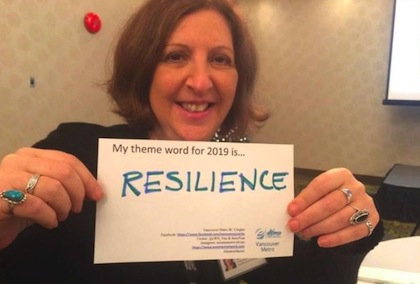
photo - Baila Lazarus, z"l
Baila Lazarus, z”l

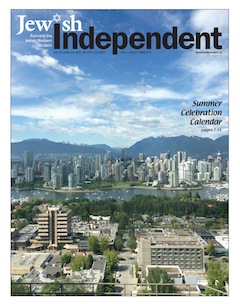
image - 2019 Summer Celebration cover

(photo by Cynthia Ramsay)

This year’s Summer Celebration cover photo was taken from the Vancouver General Hospital palliative care unit’s outdoor garden, on the 16th floor of the Jim Pattison Pavilion. It is dedicated to our dear friend and colleague Baila Lazarus who, at the age of 57, died at the hospital on May 31, due to complications of multiple myeloma. She was resilient to the end. May her memory be for a blessing.

Format ImagePosted on June 14, 2019June 12, 2019Author The Editorial BoardCategories LocalTags Baila Lazarus, palliative care, VGH

Posts pagination

Previous page Page 1 … Page 20 Page 21 Page 22 … Page 49 Next page
Proudly powered by WordPress