Skip to content
  • Home
  • Subscribe / donate
  • Events calendar
  • News
    • Local
    • National
    • Israel
    • World
    • עניין בחדשות
      A roundup of news in Canada and further afield, in Hebrew.
  • Opinion
    • From the JI
    • Op-Ed
  • Arts & Culture
    • Performing Arts
    • Music
    • Books
    • Visual Arts
    • TV & Film
  • Life
    • Celebrating the Holidays
    • Travel
    • The Daily Snooze
      Cartoons by Jacob Samuel
    • Mystery Photo
      Help the JI and JMABC fill in the gaps in our archives.
  • Community Links
    • Organizations, Etc.
    • Other News Sources & Blogs
    • Business Directory
  • FAQ
  • JI Chai Celebration
  • JI@88! video

Recent Posts

  • Sharing her testimony
  • Fall fight takes leap forward
  • The balancing of rights
  • Multiple Tony n’ Tina roles
  • Stories of trauma, resilience
  • Celebrate our culture
  • A responsibility to help
  • What wellness means at JCC
  • Together in mourning
  • Downhill after Trump?
  • Birth control even easier now
  • Eco-Sisters mentorship
  • Unexpected discoveries
  • Study’s results hopeful
  • Bad behaviour affects us all
  • Thankful for the police
  • UBC needs a wake-up call
  • Recalling a shining star
  • Sleep well …
  • BGU fosters startup culture
  • Photography and glass
  • Is it the end of an era?
  • Taking life a step at a time
  • Nakba exhibit biased
  • Film festival starts next week
  • Musical with heart and soul
  • Rabbi marks 13 years
  • Keeper of VTT’s history
  • Gala fêtes Infeld’s 20th
  • Building JWest together
  • Challah Mom comes to Vancouver
  • What to do about media bias
  • Education offers hope
  • Remembrance – a moral act
  • What makes us human
  • המלחמות של נתניהו וטראמפ

Archives

Follow @JewishIndie
image - The CJN - Visit Us Banner - 300x600 - 101625

Byline: The Editorial Board

Historic next election

For the first time in its history, Israel will go to the polls because the Knesset Israelis elected in April could not form a government.

Prime Minister Binyamin Netanyahu crowed after the election results came in that his Likud had defied critics and won a comparatively easy reelection. The number of small right-wing parties in the Knesset made it impossible for the opposition Blue and White bloc to assemble the 61 seats needed for a bare minimum majority coalition, leaving Netanyahu a free hand to form another government. Or so it seemed to everyone.

But there’s right-wing and then there’s right-wing. As in any country, a range of issues and interests combine to make up political parties and movements. While they may be in sync on a whole range of economic, social, internal and foreign policy issues, the one thing that unified Likud and its ostensible allies among the smaller right-wing parties was animosity toward the left, which Netanyahu demonized during the campaign – even accusing the veteran military figures who lead Blue and White of being too far left. The leftist bogeyman Netanyahu was conjuring is, at this point in Israeli history, largely fictitious. The Labour party, once the dominant force in the country, suffered its worst showing ever, finishing with less than 5% of the vote.

What divides the right-wing parties are a few issues of core principle. The ultra-Orthodox parties are right-wing and prefer Netanyahu as prime minister. But they want special considerations for religious institutions maintained and strengthened. Nationalist parties, like Avigdor Lieberman’s Yisrael Beiteinu party, are right-wing, but secular, and Lieberman would not budge on his assertion that there should be no compromise on a new law – promulgated under his watch as Netanyahu’s minister of defence – that yeshivah men not be automatically excused from conscription. The five seats Lieberman’s party won in April were the lynchpin for a fifth Netanyahu government – and the notoriously combustible Lieberman ultimately kiboshed the government and the 21st Knesset.

Some commentators suggest principle was less a factor in Lieberman’s choice than personal pique. The two men were once the closest of allies – and nothing is more bitter than a family fight. A number of policy issues have frayed the relationship. For example, as defence minister, Lieberman publicly excoriated his boss for what he characterized as letting Hamas off the hook too easily in the most recent flare-up of cross-border violence from Gaza. Lieberman, it appears, would have preferred a far more punishing response, though he has a history of making dire threats on which he does not follow up. He once brazenly gave Hamas leader Ismail Haniyeh 48 hours to live if he did not return an Israeli hostage and the bodies of dead Israeli soldiers. The gambit failed. The millionaire Haniyah remains very much alive, luxuriating in a waterfront palace he built with a 20% tax on all goods traveling through the tunnels between Egypt and Gaza. Lieberman meanwhile continues with similar bellicosity to stoke his base, primarily older Israelis with roots in the Soviet Union.

Whether Lieberman’s dashing of Netanyahu’s plans was an ego issue or a strategy to improve his party’s weak showing in April, or whether it was, in fact, a matter of principle, doesn’t matter much now that new elections have been slated for September.

Most of Israel’s 2019 will have been eaten up by election campaigns and, unless the electorate has a swift change of heart – or the criminal charges hanging over Netanyahu’s head shift the discourse – the results in September may be very similar to those of April. Then what?

Ehud Barak, a former prime minister who has been both ally and opponent to Netanyahu, posited last week that, whatever the outcome in September, Netanyahu is finished. While there are anonymous sources inside Likud suggesting the leader may be ousted after the next election, the fact is that Netanyahu’s career has been declared dead several times before, but he has defied prognosticators and triumphed. Not for nothing is his nickname “the Magician.”

Posted on June 7, 2019June 5, 2019Author The Editorial BoardCategories IsraelTags Avigdor Lieberman, Binyamin Netanyahu, democracy, elections, Israel, politics

Hiding is not an answer

“Doctor, it hurts when I do this,” says the patient in an old joke. “Don’t do that,” advises the doctor.

In a decidedly unfunny twist on that old joke, the German government’s Commissioner on Antisemitism Felix Klein responded to the fact that Jews are being beaten up on German streets by advising German Jews not to wear kippot in public.

Discretion may be the better part of valour. In the short term, donning a baseball cap may be a personal choice for someone who merely wants to dash out to the market to pick up some vegetables. As part of a bigger picture, the idea that Jews in Germany should hide their identities – and the bleak historical resonance that act of Jewish hiding evokes in that particular nation – is a testament to something far beyond individual security. If a country – but, more importantly, that country – is not a safe place for identifiably Jewish people to go about their everyday lives, that is a society with a problem.

After the Holocaust, many Jews, including the leaders of Canadian Jewish Congress, determined that the surest path to safety, security and acceptance for Jewish people was to promote a universalist approach and advocate for a society in which all people are safe, secure and accepted. This is one reason why, throughout recent Canadian history, we have seen Jews in leadership roles in multicultural organizations and supporting policies that advance inclusive, universalist goals.

But there may be, in this approach, an unfortunate acknowledgement that asking people to take a stand in support of Jewish people in particular may be a losing bet. Consider the disparate responses in theory and practice of public opinion in recent months. After the murders in synagogues in Pittsburgh and San Diego, a great many voices (on social media, predominantly) declared solidarity with Jewish people. Yet almost concurrently, when Israelis were under attack by missiles and incendiary devices from Gaza, the overwhelming reaction was to condemn Israel’s responses. It is incongruous and incoherent to support Jews under threat in one place and, at the same time, side with those who would attack Jews in another location.

The bigger point is that, if a society like Germany seems prepared to accept a level of social illness that means a kippa becomes a hate target, how do Jews respond?

Israel’s President Reuven Rivlin reacted passionately to events in Germany last weekend.

“We will never submit, will never lower our gaze, and will never react to antisemitism with defeatism – and we expect and demand our allies act in the same way,” he said. But Rivlin’s is the voice of a self-determined Jewish people sovereign in their own land. The reality for Jews in Germany, and in many other places, is that they face antisemitism of a sort and magnitude unseen since 1945. Whether Diaspora Jews will indeed submit, lower our gaze or react with defeatism actually remains to be seen, Rivlin’s encouraging words notwithstanding.

Rivlin is unequivocally correct, though, when he says he expects more of Israel’s allies in protecting Jewish people, rather than suggesting that we hide our identities. Ideally, as a result of this discussion, the German government will recognize the inappropriateness of the commissioner’s words. Through preventive actions, like increased security, and educational efforts, including genuinely tackling antisemitism in schools and public discourse, the government of Germany, as well as other European countries, can move in the right direction.

Equally important, especially when leaders won’t lead, citizens must. It falls to each of us – Jews and non-Jews – to build bridges of understanding across ethnic, religious, linguistic and cultural lines. We need to advocate for those same inclusive values. Yes, times have changed and ideals of multiculturalism and the celebration of difference have taken a beating, but the inherent goodness of those values has not changed.

We also should strive to make intolerance and bigotry socially unacceptable again. The culture in Europe and North America has become coarsened and we are becoming inured to statements and imagery that would have been unacceptable before. Social media is partly to blame for this, but, as it seeps into broader society, we need to keep calling out words and ideas that divide, harm, vilify or seek to diminish others.

We know these “solutions” sound idealistic and perhaps a bit like bailing out the Titanic with a thimble. But we got to this stage in history through a million small incremental steps in the wrong direction. It is a constellation of small, positive steps that may be our best way back – in conjunction with people of all backgrounds who share our views.

Two things are certain. There is no magic wand that is going to right the wrongs we see in the world – and hiding our identities is no solution.

Posted on May 31, 2019May 30, 2019Author The Editorial BoardCategories From the JITags antisemitism, Felix Klein, Germany, Reuven Rivlin
Absorbing controversy

Absorbing controversy

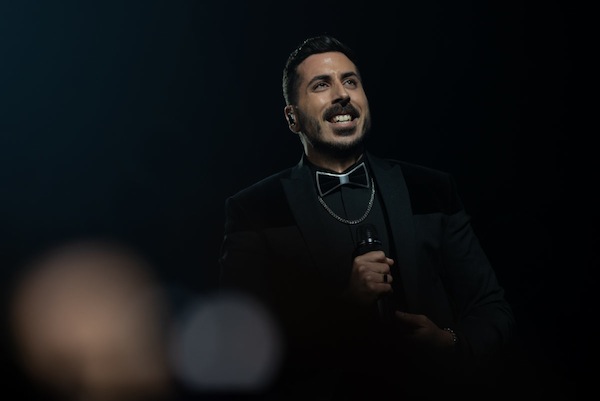
Israel’s Eurovision 2019 entrant, Kobi Marimi, didn’t fare very well but he gave an emotional performance. (photo © Martin Fjellanger, Eurovision Norway, EuroVisionary)

The Eurovision Song Contest, like the World Cup, is one of those cultural phenomena that seems to enrapture huge swaths of the world while North Americans observe it dispassionately, if at all, wondering what it’s all about.

For Jewish North Americans, the annual international songfest gained attention last year and this year for the 2018 Israeli victory by performer Netta Barzilai, a victory that comes with the privilege of hosting the next contest. So it was that the world descended on Tel Aviv last week for the 2019 edition.

Commentary on social media was polarized. Anti-Israel activists called for a boycott of the event, while Israelis and Zionists (as well as tourists who are as attuned to Israel-Palestine politics as most of us are to the nuances of Eurovision or the World Cup) posted photos of a rapturous Mediterranean seaside celebration.

Calls to boycott one of the world’s most watched cultural events because it takes place in Israel represent a continuing effort to portray Israel as a nation apart from the rest, an untouchable among countries. To make this approach make sense, Israel has to be recast to fit the narrative. Notably, there was no serious discussion of a boycott when Eurovision was hosted by Russia, an autocracy guilty of terrible crimes and oppression.

For all its bluster and online ubiquity, the boycott-Israel movement has largely been a failure on the surface. Last week, activists called for a boycott of Israeli wines and, in response, there was a run on Israeli wines at Vancouver-area liquor stores. Similar campaigns have regularly produced far more sizzle than steak, with counter buycotts negating any large impacts that the boycotts might inflict.

What the BDS movement does successfully, though, is solidify in the minds of uninformed or unengaged people the idea that the Israeli-Palestinian conflict can be blamed on one party. If peace, justice and coexistence were the real aim of the movement, they might choose to call out injustices and corruption by the Hamas and Fatah rulers in Palestine alongside wrongs perpetrated by the Israeli government and military. Indeed, boycotts need not have any actual economic success in order to succeed at planting a narrative – a fact the BDS movement has seized upon.

Meanwhile, there has been outrage from supporters of the BDS movement in response to legislative moves to block anti-Israel boycotts. The German Bundestag recently passed a resolution condemning BDS as antisemitic and calling it redolent of Nazi-era boycotts. Activists have responded with a classic goose/gander dichotomy, seemingly demanding the right to boycott while incensed that anyone might boycott them back.

As we have written in this space previously, legislative punishments for boycotting Israel, which have also been passed by many U.S. states, may come from the right philosophical place, but we’d prefer to see the basis of the movement countered intellectually, rather than with the blunt force – and unintended consequences – of these laws.

Ultimately, the message we should take from the Eurovision experience and the broader BDS movement is that misrepresentations must be met with truth, even if that seems like a Sisyphean effort. More specifically, the boycotts should be met with a forceful response that not only declares our opposition to the boycott itself. We must also loudly proclaim that the underlying assertion of unilateral Israeli guilt for this seven-decade conflict is a false premise upon which the entire BDS cause rests. Of course, Israel has responsibilities in the goal of a lasting peace, but so do Palestinians, a fact that BDS supporters and much of the world refuse to acknowledge.

Eurovision organizers tried unsuccessfully to keep politics out of the competition but they came anyway. The supposed controversies did nothing to detract from the “big show” and, in fact, could be said to have highlighted the complex entity that is Israel and its capacity to embrace diverse views.

While Israel’s entrant, Kobi Marimi, didn’t fare very well – coming in 23rd of 26 entrants – he gave an emotional performance, finishing his song “Home” with tears. He later told reporters, “I don’t have words to explain how much I love this country, and how proud I am for myself and my team.” We’re pretty proud, too.


Format ImagePosted on May 24, 2019May 23, 2019Author The Editorial BoardCategories From the JITags antisemitism, BDS, Eurovision, free speech, Israel, Kobi Marimi

Harbingers of future?

In 2015, the federal New Democratic Party nixed Paul Manly’s hopes to run for Parliament, barring his candidacy because his anti-Israel politics were deemed too extreme. Manly joined the Green party and, this month, won a federal by-election in Nanaimo-Ladysmith. As only the second Green federally elected, Manly now makes up 50% of the federal Green party caucus.

By-elections are notoriously poor predictors of voter intentions in general elections. Manly’s win could go down as a footnote in history – or it could be a harbinger of tectonic change in Canadian politics. Little should be extrapolated from a single by-election outcome, but neither should we ignore the fact that the by-election win by Deborah Grey of the Reform Party, in 1989, represented the beginning of a new epoch in Canadian politics. The Reform party in the West and the Bloc Québecois in Québec gobbled up the Progressive Conservative party – and the New Democrats’ share of the vote.

Just days before the Nanaimo by-election, the Green party also made inroads in the Prince Edward Island provincial election, forming the official opposition. Just as a by-election is not a good measure of federal voters’ intentions, neither is a modest success in the micro-province of P.E.I. What both these outcomes do suggest is that a larger number of Canadians than ever before are considering casting a ballot for the Greens.

The outcome in Nanaimo-Ladysmith should send chills down the spines of Liberal and NDP organizers. Both parties saw their vote share collapse while the Greens leapfrogged and the Conservatives held their own.

Conventional wisdom says that the Green party should take more votes away from the NDP than from any other party. However, many 2015 Liberal voters are over their Trudeaumania and millions of Canadians are looking for a place to park their votes. The party would get a significant boost if Jody Wilson-Raybould and Jane Philpott, two women who embody the country’s disappointment in Prime Minister Justin Trudeau and his sunny ways, opt to run under the Green banner, as has been rumoured.

Jagmeet Singh, who managed to win his own by-election last year, can hardly find any silver lining in recent results. With the Liberals, who arguably ran to the left of the NDP last time, hemorrhaging support, the NDP should be sitting pretty. They are not.

Six months out from the general election, Conservative leader Andrew Scheer is the only party leader who should be pleased with the current landscape.

What this all means is not completely clear. Under Thomas Mulcair’s leadership, the NDP was dragged back to a more moderate middle after a period when it had seemed to go a bit off the rails, notably on the issue of Israel and Palestine. How the party addresses that and other contentious issues in the coming years will be determined significantly by the makeup of their caucus after the October elections. It was after their last terrible drubbing, in 1993, that the NDP fell under the sway of anti-Israel extremists. With just nine seats in parliament, and Svend Robinson as the most vocal and visible MP, the party became a hotbed of anti-Zionist activism. (Robinson is seeking a comeback in the riding of Burnaby North-Seymour.)

Under Mulcair’s leadership, a number of former New Democrats, like Manly, shifted over to the Green party. Elizabeth May, the party leader, and, until this month its only MP, doesn’t seem certain of where she stands on the issue. When her party’s convention passed a wildly unbalanced attack on Israel, she threatened to resign unless it was rescinded or watered down. Since then, she herself has made some contentious comments about Israel.

In the NDP and in the Green party, there are a small number of courageous Jewish and non-Jewish Zionists trying to lead their parties to a common-sense position on Middle East matters. Too often, these individuals are ridiculed in our own community when they should be commended for promoting a balanced, reasonable approach to the issue regardless of political persuasion.

Nevertheless, given the emerging landscape, if the Greens and New Democrats do not form some kind of electoral alliance – and if the Liberals do not pull themselves out of their largely self-inflicted pit of unpopularity – Canada is likely to be in for a long run of Conservative government. In that case, the nuance of Israel-Palestine policy on the left will be a moot point.

Posted on May 17, 2019May 16, 2019Author The Editorial BoardCategories From the JITags Canada, elections, politics
Many reasons for optimism

Many reasons for optimism

Given two recent murderous attacks on American synagogues, combined with terrorist missiles from Gaza landing throughout southern and central Israel, it is easy and understandable to be pessimistic. But a new study on Jews in Canada is jam-packed with reasons for optimism.

The report 2018 Survey of Jews in Canada was released recently. Produced by the Environics Institute for Survey Research, the University of Toronto and York University, the study was funded by Federation CJA and other Jewish communal organizations. To those who have followed these subjects closely, the data are not completely surprising but, brought together in a single document, it is quite a compendium of encouragement.

Inspired by a groundbreaking 2013 Pew Research Centre study on American Jewry, the report assesses a wide range of factors, including the importance of Jewishness in the lives of respondents, how they define that identity, membership in synagogues and Jewish organizations, financial support for Jewish causes, candlelighting and other religious observances, intermarriage, experiences with discrimination, connections to Israel, dedication to repairing the world, migration patterns and even federal political party support.

image - 2018 Survey of Jews in Canada coverPerhaps because of its inspiration in the American example, the study routinely compares Canadian findings with the situation to the south. This is fair, given the useful contrasts it provides – and it is especially illuminating to see that many of the differences between the Jewish communities in the two countries paint a very positive picture of the Canadian situation.

Only half of American Jews have made a financial donation to a Jewish organization or cause, compared with 80% of Canadian Jews.

Canadian Jewish kids are twice as likely to attend a Jewish day school or yeshivah and a greater proportion of Canadian Jews have attended Sunday school, Hebrew school or an overnight Jewish summer camp. The number of Canadian Jews who are bar or bat mitzvah is higher than that of Americans – 60% versus 50%. Intermarriage rates in the United States are about 50%, compared with 23% in Canada.

Canadian Jews have a much stronger connection to Israel than American Jews, with twice the likelihood of having visited the country. Nevertheless, Canadians and Americans “are similarly divided in their opinions about the political situation in Israel,” according to the report.

Rudimentary Hebrew is common among the vast majority of Canadian Jews, with 75% saying they know the aleph-bet and 40% claiming to be able to have a conversation in the language. Among the groups with the greatest proficiency in Hebrew are those under 30 years of age. These numbers are significantly higher than those of our American cousins.

Among Jewish Canadians, 64% say that being Jewish is very important in their lives, compared with 46% of Americans, while only 8% of Canadian Jews say being Jewish is not very, or not at all, important, compared with 20% of American Jews.

An astonishing 80% of Canadian Jews (or, at least, respondents to the survey) indicate an educational attainment of a bachelor’s degree or higher, compared with 29% of the general population. Similar findings two decades ago led to a major investment by Jewish communal bodies in youth-serving agencies like Hillel, which was seen as the last, best hope for reaching unaffiliated young Jews. As these numbers suggest, while many other aspects of Jewish identity may be discarded or de-emphasized, the commitment to education is among the most effectively transmitted values from generation to generation.

Among Canadian Jews, 47% belong to a Jewish communal organization other than a synagogue, compared with 18% for Jewish Americans. (In Winnipeg, this number is 57%, which helps explain why that comparatively small Jewish community is so impressively active.)

The report does not provide definitive explanations for the differences, though different factors are suggested to play a role in various scenarios. If we were to posit an overarching theory about the differences between American and Canadian Jews, it would go back to the 20th century’s very different experiences. The Canadian Jewish community was massively influenced by postwar immigration, including survivors of the Holocaust. These newcomers remade the Canadian Jewish community, to some extent, in their own image. The American Jewish community, in comparison, was already strong and had well-developed infrastructures before the

influx of survivors and other immigrants after 1945. As the report indicates, Canada also has a different approach to multiple identities, with multiculturalism being officially celebrated, whereas the American trend is to downplay difference and assume a unified Americanism.

Of course, there is no prize for being “better” Jews than our fellows from another country – even if it does satisfy our innate Canadian need to differentiate ourselves from Americans. Nonetheless, in a world with so many challenges, where is the harm in celebrating good news?

Jewish people worldwide are in a time of challenge and change. Many European Jews are questioning their futures there, and communities in Latin America, Africa and Asia are experiencing a range of external and internal challenges, including changing relationships with Israel and with the rest of the Diaspora. Some of the factors that account for the positive news in the recent report are distinctively Canadian and cannot be replicated. But the study deserves a closer look by all Diaspora Jewish communities to see if there are successes that could be replicated elsewhere. We sometimes like to flatter ourselves by declaring “the world needs more Canada.” So might the Jewish Diaspora.

Format ImagePosted on May 10, 2019May 9, 2019Author The Editorial BoardCategories NationalTags Canada, Diaspora Jews, Israel, Jewish life
Goodness a heroic act

Goodness a heroic act

There is a world of difference, needless to say, between the murder of a congregant in a California synagogue and the publication of an overtly antisemitic cartoon. But, while the incidents are incomparable in magnitude, they both implore us to action.

Lori Gilbert Kaye was killed Saturday morning during Shabbat services on the last day of Passover at Chabad of Poway, north of San Diego. Eight-year-old Noya Dahan was hospitalized with shrapnel wounds, as was her uncle, 32-year-old Almog Peretz, who was shot in the leg. Peretz was visiting family for the holiday from his home in Sderot, Israel, a city adjacent to Gaza that is under constant threat of bombardment and attack.

In the instant terror struck, heroism abounded. Kaye reportedly died intervening to protect the rabbi from the shooter. Rabbi Yisroel Goldstein, although shot in both hands, immediately teamed with Peretz, who was also wounded, to shepherd the children in the synagogue to safety. Army veteran Oscar Stewart chased the assailant out of the synagogue and Jonathan Morales, an off-duty border patrol agent, shot at the getaway car as the perpetrator fled.

The alleged perpetrator had posted on social media that he was willing to give up his life for the cause of white supremacy. He blamed “international Jewry” for a litany of perceived “crimes” and said that Jews “deserve nothing but hell. I will send them there.”

This shooting is the latest in a terrible string of attacks on religious institutions and the people within them, including the Easter attack that killed more than 300 in Sri Lanka and the mass murder of Muslims in a mosque in New Zealand, among many other attacks on people and institutions worldwide that do not make the front pages. While such incidents in the United States are partly a result of that society’s dysfunctional relationship with guns, the propensity to murder people in places of worship – like the endless stream of mass killings in schools – represents a particular manifestation of evil.

Six months to the day before the Poway attack, 11 people were murdered in the Tree of Life synagogue in Pittsburgh. Given that horrific number, it is understandable that human nature would react to the latest news with an unconscious sense of relief that the death toll in California was not higher. But this reaction, however natural, must be resisted. The invasion of a religious sanctuary represents an assault on the most basic human instincts for goodness and stands apart from other crimes in its deliberateness and in the calculated impact it will have on the victimized community’s sense of security and belonging. Such attacks – no matter how frequently they seem to come – must never be responded to routinely. Each attack is cause for a fresh sense of revulsion.

While the situations are clearly not analogous, there was another episode recently that demands vigilance. The New York Times international edition last week ran a cartoon of Donald Trump as a blind man with dark glasses and a black kippah, being led by an elongated dachshund with the head of Binyamin Netanyahu wearing a Star of David around his neck. The cartoon exists as part of a long history of motifs that portray Jews manipulating guileless, gullible non-Jews to serve Jews’ devious ends. The New York Times apologized and blamed a lack of oversight.

If the editors of Der Stürmer were still among us, they could justifiably claim plagiarism, as numerous comparative memes on social media have indicated. Such images are extremely common on the internet, where there is no oversight. When they make their way into print in one of the English-speaking world’s most august media outlets, this is a new challenge.

Commentators have observed that the dachshund is a breed that rarely, if ever, serves as a seeing-eye dog. The choice by the cartoonist to use that breed was clearly deliberate. For at least a century, since the First World War, cartoonists have used a dachshund to represent Germany. In this way, the artist was adding insult to injury by equating Israel with the perpetrator of the gravest attack on Jews in human history.

The point of addressing the violent attack in San Diego together with a grievous but far less tangible affront in the pages of the New York Times is to make the case that vigilance should not be let down by the routinization of either violence or terrible imagery. These incidents seem to fly at us with such regularity that it is understandable that we as individuals and a community would have limited resources to respond to each case with the gravity it deserves. The memes and lies may become routinized, but our responses to them must never fall short.

Jewish tradition says that it is better to light a candle than to curse the darkness. The heroes of the Poway tragedy have done that. While we cannot predict how each of us would respond in such a crisis, we can promote small acts of light within our circles of influence, by advocating for understanding and peace and by supporting organizations that do good work. More immediately, we can take the advice of Rabbi Goldstein and do good in the world whenever and wherever possible. In a world with evil and intolerance, acts of goodness and understanding are their own type of heroism.

Format ImagePosted on May 3, 2019May 1, 2019Author The Editorial BoardCategories From the JITags antisemitism, Chabad, journalism, New York Times, Poway, shooting

Strongmen bromance

Binyamin Netanyahu appears comfortably ensconced in the Israeli prime minister’s office after last week’s elections. While his Likud bloc effectively tied for seats with the upstart Blue and White party, the smattering of smaller parties are mostly of the nationalist, religious and right-wing bent, meaning Netanyahu will have a fifth term as leader. If he hangs on until July, he will surpass David Ben-Gurion as Israel’s longest-serving prime minister.

The likelihood that he will reach that mark seems good. He faces probable criminal charges but that does not necessarily mean the end of his career. Rumours are rife that he is considering a legal escape hatch that would permit him to remain in office even if indicted or, more likely, make it illegal to indict a sitting prime minister. In most democracies, at most times in recent history, such a move would be seen as intolerably corrupt. Times change.

The leaders of democracies today are blazing new trails. The words and actions of the U.S. president confound our capacity for incredulity. Jaw-dropping statements of contempt, bigotry, juvenile pique and lies emanate from his mouth (and Twitter fingers) faster than the outrage can follow. Across Europe, far-right extremist parties are rising, as they did in elections in Finland on the weekend. In Britain, which is convulsing from self-induced Brexit trauma, the leftist Labour party is engulfed in an antisemitism crisis. Positions and statements that would have been unthinkable in the civil discourse of recent decades are suddenly at the centre of public discourse in democracies everywhere.

Israel is no exception. During the recent election campaign, candidates expressed erstwhile unspeakable ideas, including a scheme to ethnically cleanse the West Bank of Arabs and annex the land to Israel. The advocate of that idea was soundly defeated – the Knesset democratically cleansed of his ideology when the party failed to reach the 3.25% minimum vote to enter parliament.

But Netanyahu himself floated some astonishing trial balloons during the campaign. He mooted annexing West Bank settlement blocs into Israel – a concept that is not ludicrously beyond the pale since, if a negotiated settlement ever emerges, it will likely include such a move in exchange for traded land. But he also suggested annexing settlements that are not adjacent to or contiguous with Israel’s recognized boundaries. Such an idea would create a patchwork in the West Bank along the lines that would make an independent Palestine unworkable. The fact that the incumbent prime minister opened this political Pandora’s box is evidence of a new willingness to play with potential fire.

That foot play with extremists is not limited to domestic affairs. If an Israeli Rip Van Winkle fell asleep a couple of decades ago and woke up to Israel’s current diplomatic situation, he would be confused and possibly delighted. If that Van Winkle shared our worldview – an apparently old-fashioned belief in pluralistic, inclusive, universal humanitarian values – he would quickly conclude that the prima facie bonanza of goodwill has a rotting core.

As former Israeli ambassador to the United Nations Ron Prosor said Sunday night (see cover story), Israel has open lines of communication with countries that for decades steadfastly rejected its very existence. Likewise, Israel has excellent relations with some of the most populous and powerful countries in the world – India, China, Russia, Brazil and, in different but important ways, a refreshed, familial relationship with the current U.S. administration.

Israel has superb relations with these countries, and with the Philippines, as well as with Hungary and other eastern European states that have traditionally been problematic for the Jewish state. That seemingly good news is tempered by the fact that these good relations are not based on conventional diplomatic alliances. To a large extent – especially in the cases of Hungary, the Philippines, Brazil, Russia and the reinvigorated bonhomie between the leaders of Israel and the United States – these close relations are based on a shared strain of politics that fill us with more nervousness than naches.

These relationships are less between Israel and Brazil or the Philippines or Hungary or Russia than a bromance between Netanyahu and Jair Bolsonaro, Rodrigo Duterte, Viktor Orban and Vladimir Putin, to say nothing of the continuing lovefest between Bibi and Donald Trump. Each of these figures is a strongman who is, to varying degrees, pushing the limits of their democracies to see how far they can stretch rule of law and diminish respect for human rights. With this in mind, the diplomatic warmth seems less about traditional bilateral relations than about a fraternity of nationalist, populist and authoritarian men leading the world down a path unimagined a decade ago.

With that background, Israel’s unprecedentedly improved relations with so many countries seems less positive a development. Our proverbial sleeper might pull the covers back over his head and hope for better in the decades to come.

Posted on April 19, 2019April 17, 2019Author The Editorial BoardCategories From the JITags Binyamin Netanyahu, democracy, elections, human rights, Israel, politics

Monitoring online hate

On Monday, Facebook eliminated many extremist pages from its platform, including several Canadian pages, such as those of extremist groups Soldiers of Odin, the Canadian Nationalist Front and Aryan Strikeforce, as well as individuals like white supremacists Faith Goldy and Kevin Goudreau.

Some anti-racist activists say it’s a good start, but only the tip of the iceberg. They also assert that occasional purges of hate content will not address the larger issue in the absence of clear, enforceable standards by social media giants like Twitter and Facebook, which also owns Instagram.

Relatedly, the Centre for Israel and Jewish Affairs has launched a campaign, #notonmyfeed, which is intended, according to the accompanying website, “to stop online hate from becoming real-world violence.” (See jewishindependent.ca/cija-fights-online-hate.) CIJA cited social media posts by the murderers in the Pittsburgh synagogue and the Christchurch mosque killings as cause for governments to move on the issue.

“In both cases, the perpetrator used social media to spread their heinous, hateful agenda,” according to the website notonmyfeed.ca. “From white supremacists to ISIS, it is increasingly clear that online hate and radicalization can fuel and foreshadow offline violence.”

The House of Commons justice committee – as if they are not busy enough with the SNC-Lavalin affair – is launching a study on the issue. The intent, according to CIJA, is to develop a national strategy around online hate.

A national strategy confronting hatred, whether online or offline, seems like a positive development if it helps track problematic people and ideas in order to prevent future violence.

The benefits of a crackdown on online hatred are obvious: by making it more difficult for hateful ideas to reach large, mainstream audiences, moves like those by Facebook are a positive step. Groups that use social media to recruit individuals into hate movements may be hobbled by such policies. Although there are plenty of forums online where they can continue their efforts, hate groups may not have as easy and accessible a reach if policies are put in place to monitor and censor such groups and their messages.

Of course, some of the extremists are crowing about being banned.

“Our enemies are weak and terrified,” Goldy tweeted (because she is not banned from that platform). “They forget most revolutions were waged before social media!”

True enough. But if we make Goldy’s job harder, it’s a good thing.

However, while there are potential positive outcomes, we should not be blind to the potential unintended consequences of such a move.

If the murderers of Pittsburgh and Christchurch had given hints on social media of their intent, isn’t the larger issue here that those threats went unchecked and, therefore, the perpetrators were allowed to complete their mission of mass murder without intervention? Do we really want to eliminate forums in which we can track and identify potential terrorists? If we ban them from these platforms, are we forcing them underground into places where we cannot police them?

Presumably, police and intelligence agencies know where to find the online warrens of hatemongers and can monitor those venues almost as easily as they could Facebook or Twitter, while ensuring that members of the public who are innocently surfing the web do not stumble upon violent hate messaging in seemingly innocuous places. Even so, given that, as CIJA points out, the Pittsburgh and Christchurch killers left a trail on social media and still managed to execute their terrible plans, it suggests we’re not doing a stellar job on this front even when the warning signs are on the world’s largest sharing platforms. So, how much better are we to expect things to be when we force them into the darker crevasses of the online world?

This issue is confounding in part because the internet is, by definition, anarchic and largely beyond the control of all but the most authoritarian governments. As a result, governments and even social media behemoths like Facebook can do only so much to control what is shared through the web writ large.

Leaving aside issues of free expression (which differ across jurisdictions in ways that social media do not), there are practical considerations that we hope elected officials, law enforcement and social media corporations themselves consider when addressing online hate.

As governments do begin to take the issue seriously and consider interventions in the interest of public safety (including, especially, the safety of the most commonly targeted identifiable groups), we trust that a balance will be struck between eradicating violently hateful messaging, on the one hand, and, on the other, not harming law enforcement’s ability to do their job by pushing these ideas into clandestine sectors where they can neither be monitored nor challenged. Finding that balance should be the key to formulating public policy on this urgent issue.

Posted on April 12, 2019April 10, 2019Author The Editorial BoardCategories From the JITags #notonmyfeed, antisemitism, CIJA, Facebook, hate, internet, racism, technology
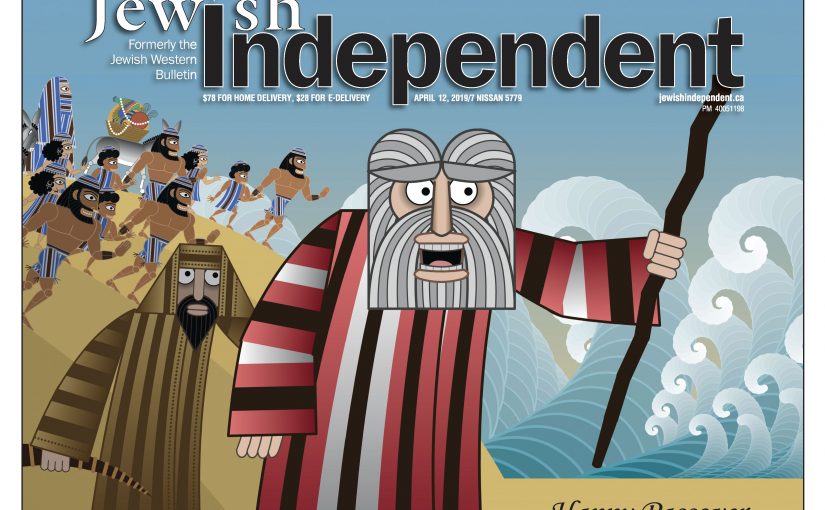
About the cover art – Passover 2019

About the cover art – Passover 2019

Moses and Aaron lead the Israelites to the Red Sea in this still from Nina Paley’s feature-length animated film Seder-Masochism, which screened at the Vancouver International Film Festival last year and is available to view for free online at archive.org/details/sedermasochism. Being in the public domain means that all of Paley’s animation and images are free for anyone to use. Nonetheless, the Jewish Independent requested and received her blessing to run the images from the film that grace the cover of this issue and its Passover section.

According to sedermasochism.com, the film “loosely follows the Passover seder story, with events from the Book of Exodus retold by Moses, Aharon, the Angel of Death, Jesus and the director’s father. The film puts a twist on the traditional biblical story by including a female deity perspective – the Goddess – in a tragic struggle against the forces of patriarchy.”

The feature was “in the works since 2012, when Paley first animated a scene called This Land Is Mine, a parody about never-ending conflict in the Levant, which has been viewed over 10 million times on various online channels.” Paley has written and designed a companion book, The Seder-Masochism: A Haggadah and Anti-Haggadah, which can be purchased through Amazon.

Paley is also the creator of the animated musical feature film Sita Sings the Blues, which, her bio at palegraylabs.com notes, “has screened in over 150 film festivals and won over 35 international awards.” It continues: “Her adventures in our broken copyright system led her to join questioncopyright.org as artist-in-residence in 2008. Prior to becoming an animator, Nina was a syndicated cartoonist. A 2006 Guggenheim Fellow, she also produced a series of animated shorts about intellectual freedom called Minute Memes. Nina began quilting in 2011 as a way to do something real with her hands after years of pushing pixels.”

Readers can find out more about Paley at blog.ninapaley.com.

Format ImagePosted on April 12, 2019April 12, 2019Author The Editorial BoardCategories Celebrating the HolidaysTags art, film, Nina Paley, Passover, Seder-Masochism

Quebec’s underlying goal

Sometimes in complex or far-reaching events, a small, seemingly less significant factor can illuminate a larger understanding. Successive efforts by Quebec governments to enforce laïcité, a policy of compulsory secularism in the delivery of public services, have included a minor exception that really speaks to the inequality such efforts seek to create.

Since 1936, a not-at-all-subtle crucifix has hung above the speaker’s chair in the legislative chamber of the Quebec National Assembly. A week ago, the Quebec government voted to take down the crucifix as part of a much broader policy against religious symbolism in the province’s public life. Even as they proposed policies that would ban religiosity in the forms of Muslim, Sikh and Jewish head coverings and other items, such as pendants with stars of David or crucifixes, previous governments have contended that the legislature’s cross is exceptional. In the narrative advanced across a decade of this debate, the cross represents an indisputable aspect of Quebec history. Reading between the lines of this argument, the crucifix – the definitive symbol of Christianity – transcends its religious particularity, presumably on the idea that Christianity was an inherent part of Quebec’s history and development.

The message of this exceptionalism is clear as a bell: this place was founded on Christian principles and those of other religious traditions, despite whatever contemporary contributions they might make to Quebec society, rank below the founding religion even as we seek to erase all of them from the public eye. Christianity, in other words, is a first among unequals.

To their credit, the government of Premier François Legault is not excepting the crucifix from this latest bill aiming to impose secularism. The bill, which was introduced last week by the centre-right Coalition de l’avenir du Quebec government elected last year, has all the characteristics that have been discussed in recent years by various governments intent on erasing outward appearances of religious difference. In the provision of government services in which an employee has “coercive” influence – including police, prison guards, judges and teachers – kippot, chadors, turbans, kirpans, crucifixes and anything else that speaks to an individual’s religious affiliation will be banned.

The decision on the National Assembly’s crucifix at least pays lip service to the idea of equanimity in the crushing of religious identity. But it cannot erase the foolishness and inherent injustice of the move. The Quebec government makes absolutely no defence against the charge that the bill contravenes Canada’s and Quebec’s constitutional protections of individual and religious rights. In introducing the new law, the government stated it would use the notwithstanding clause, exempting the law from those constitutional safeguards.

The injustice is a matter of principle. The government – backed, according to public opinion polls, by most Quebecers – is fully prepared to infringe on the rights of people who heed obligations to display certain outward evidence of religiosity. Depending on interpretation and levels of observance, Jewish, Muslim, Sikh and other people are required to wear identifiably religious objects. Lay Christians, by contrast, are not. A crucifix necklace is a choice, not a requirement. For observant Jewish men, a kippah is not optional.

On a related front, it is illuminating to hear non-Muslims discuss whether a chador, hijab or niqab is a cultural or a religious requirement. Over the years, some who have justified banning head coverings have contended that Muslim law does not require them. The fact that many or most of those making this case are non-Muslims adds insult to injury: not only will we argue that we don’t want you wearing your religious garb, we will go so far as to argue that you can’t even interpret your religion correctly.

Aside from the principle of the matter, the nuts and bolts of the proposed law guarantee confusion and offence. The bill grandfathers existing employees, meaning that a currently employed teacher who wears some form of religious accoutrement will be free to continue doing so, but a new hire would not. More bizarre is that, if they were to receive a promotion – from teacher to vice-principal, say – the grandfather clause would be removed, and so would the religious article. The opportunities for mayhem abound.

Ostensibly, the bill, which is really the culmination of years of discussion around “reasonable accommodation” and similar concepts in Quebec society, is intended to preserve the importance of Quebec culture. Understandably, as an undeniably distinct cultural and linguistic minority vastly outnumbered by anglophone North Americans, Quebecers are vigilant in preserving their uniqueness. But it is tough to discern any substantive advantages this bill will grant to Quebec’s distinct culture other than to underscore assumptions of intolerance and insularity. The genuine intent of the law – and the larger ideology that drives it – is to encourage assimilation into a dominant (French, nominally Christian) population. In a visit to France last year, Legault didn’t mince words. He wants a Quebec that is more “European.”

Many Canadians outside Quebec accept that some accommodations are necessary to save what makes Quebec unique. We see this as something apart from the xenophobic nationalisms sweeping Europe. But what is inherent in Quebec society that would not also be found in Swiss or Finnish or Hungarian society to justify banning symbols of different cultures? If Quebecers have a right to “protect” their cultural identity through admittedly discriminatory laws, why wouldn’t Polish and Ukrainian people?

Ultimately, a law preventing religiously observant people from displaying the evidence of their faith will not strengthen or save pur laine Quebec society, unless by doing so it discourages such people from coming to Quebec in the first place. And there’s the key to understanding this bill.

One of the first steps Legault took as premier was to reduce Quebec’s share of immigrants by 20%. This was about the same time he went to Paris and declared he wanted more migrants who are European. With this in mind, the secularism bill is probably less about the people who are already in Quebec than about sending a message to those considering a move there. The bill says stay away, Quebec does not welcome you.

Posted on April 5, 2019April 2, 2019Author The Editorial BoardCategories From the JITags Charter of Rights and Freedoms, discrimination, immigration, politics, Quebec, religion

Posts pagination

Previous page Page 1 … Page 21 Page 22 Page 23 … Page 49 Next page
Proudly powered by WordPress