Skip to content
  • Home
  • Subscribe / donate
  • Events calendar
  • News
    • Local
    • National
    • Israel
    • World
    • עניין בחדשות
      A roundup of news in Canada and further afield, in Hebrew.
  • Opinion
    • From the JI
    • Op-Ed
  • Arts & Culture
    • Performing Arts
    • Music
    • Books
    • Visual Arts
    • TV & Film
  • Life
    • Celebrating the Holidays
    • Travel
    • The Daily Snooze
      Cartoons by Jacob Samuel
    • Mystery Photo
      Help the JI and JMABC fill in the gaps in our archives.
  • Community Links
    • Organizations, Etc.
    • Other News Sources & Blogs
    • Business Directory
  • FAQ
  • JI Chai Celebration
  • JI@88! video

Recent Posts

  • Sharing her testimony
  • Fall fight takes leap forward
  • The balancing of rights
  • Multiple Tony n’ Tina roles
  • Stories of trauma, resilience
  • Celebrate our culture
  • A responsibility to help
  • What wellness means at JCC
  • Together in mourning
  • Downhill after Trump?
  • Birth control even easier now
  • Eco-Sisters mentorship
  • Unexpected discoveries
  • Study’s results hopeful
  • Bad behaviour affects us all
  • Thankful for the police
  • UBC needs a wake-up call
  • Recalling a shining star
  • Sleep well …
  • BGU fosters startup culture
  • Photography and glass
  • Is it the end of an era?
  • Taking life a step at a time
  • Nakba exhibit biased
  • Film festival starts next week
  • Musical with heart and soul
  • Rabbi marks 13 years
  • Keeper of VTT’s history
  • Gala fêtes Infeld’s 20th
  • Building JWest together
  • Challah Mom comes to Vancouver
  • What to do about media bias
  • Education offers hope
  • Remembrance – a moral act
  • What makes us human
  • המלחמות של נתניהו וטראמפ

Archives

Follow @JewishIndie
image - The CJN - Visit Us Banner - 300x600 - 101625

Byline: Michelle Dodek

Teens bring Israel to Vancouver

Teens bring Israel to Vancouver

Israelis Ofir Gadi and Or Aharoni are rounding up their year of volunteering in Metro Vancouver. (photo from Jewish Federation of Greater Vancouver)

In Israel, high school graduates can go straight into the Israel Defence Forces (IDF) or opt to do a shnat sherut (year of service, for which the acronym is shinshin). The vast majority of 18-year-olds who do a shnat sherut do so inside Israel, volunteering with a variety of social welfare and other nonprofit organizations throughout the country. But, through the Jewish Agency, approximately 100 teens do their year of volunteering in Jewish communities around the world.

Vancouver began to take part in the program in 2015. In August of that year, Jewish Federation of Greater Vancouver brought three young women to split their time between Vancouver Talmud Torah, Richmond Jewish Day School, King David High School, Beth Israel, Temple Sholom, Beth Tikvah and the Jewish Community Centre of Greater Vancouver. The final quarter of the year was spent volunteering at camps Hatikvah and Miriam and the JCC day camp. Each agency contributed a portion of money to cover the expenses needed to bring the shinshiniot (female plural for shinshin) here from Israel and to contribute to a small monthly stipend. Host families, who welcomed an 18-year-old Israeli into their family for a period of three months, took care of living arrangements and meals.

Nearly four years later, all of the original host organizations continue to participate in the program. Shinshin coordinator Dan Stern helps make the connections between the organizations and the volunteers as smooth as possible. The main challenge continues to be finding host families. While it is a significant responsibility, the fact that many host families have hosted volunteers multiple times speaks to the rewards of doing so.

This year, for the first time, Vancouver picked one male and one female shinshin. Ofir Gadi and Or Aharoni arrived in early September and settled in right away. They spent two days each week at VTT, interacting with students through activities including song, dance, multimedia presentations focusing on Israel, Israeli-style Jewish holiday celebrations, and Hebrew. RJDS had them once a week for similar activities and the pair helped at the JCC with teen programming. On Sundays, they split up to give a special Israeli flavour to various synagogue religious schools. Federation also has had them working at many community events and its outreach program, Connect Me In, which services Squamish, Langley and Burquest. Additionally, the two have helped make other community-wide celebrations special, including making a presentation at this year’s Yom Ha’atzmaut celebration at the Chan Centre for the Performing Arts.

Gadi and Aharoni have proven to have complementary personalities. They have worked together, smiling through the challenges they have faced and thoroughly enjoying almost everything they’ve encountered here.

“Vancouver is my favourite city in the world,” said Aharoni with her typical warm smile. “The weather is much better than what the other Canadian shinshinim have and the people we have met here have been so welcoming and amazing. Also, being here, I’m not the only one saying thank you on the bus!”

Gadi has also had terrific experiences. “We have worked a lot in many areas of the Vancouver Jewish community and the good thing about that is we have met so many wonderful people,” he said.

While they were prepared to a certain degree about what to expect, both Aharoni and Gadi have said being in Vancouver has exceeded their expectations. “We both love it here and plan to return,” said Gadi.

The biggest surprise for Aharoni was that she felt at home as soon as she arrived. “I didn’t know that it would be such a good fit,” she said. “I was positive coming in but I have found the energy and the vibe of the students amazing and the community, host families and friends I’ve made have been so special.”

Although she has traveled outside of Israel, she said she didn’t know anything about what it is like to live as a Jewish person outside of Israel. She comes from a secular Israeli family and, she said, living here has brought up questions about Jewish identity that had never been an issue before.

“Firstly, I am an Israeli. Secondly, I feel fully Jewish even though I am not at all religious,” she said. “I see that it’s important to live the Jewish life the way you want. I also understand that going to synagogue is important here in order to be part of something, and being part of a community is very special.”

Both teens have stayed with families with whom they have deeply connected. “It’s been great to be part of a different family every few months,” said Gadi. “I have enjoyed my host siblings and I hope our connection will continue and my family in Israel will have a chance to host my families from here.”

Gadi is from a small community near Modi’in called Reut and Aharoni’s family lives on a moshav called Aviel, near Caesarea. Both shinshinim expect visitors, as host families and friends of past shinshiniot have kept in touch and visited when in Israel.

“The connections with people makes this experience more powerful and meaningful. Both Ofir and I have made so many special connections with students, families and the Vancouver Jewish community,” said Aharoni.

Up next for both shinshinim is summer camp. Aharoni will help augment the Israel programming at Camp Hatikvah and Gadi will be at Camp Miriam lending an additional Israeli vibe to the camp.

For more information about the shinshin program or how to host one of the two shinshinim who will arrive in September, contact Jewish Federation at 604-257-5100.

Michelle Dodek is a freelance writer living in Vancouver.
Format ImagePosted on June 21, 2019June 20, 2019Author Michelle DodekCategories LocalTags Diaspora, Israel, Jewish Federation, Ofir Gadi, Or Aharoni, shinshin, tikkun olam, youth
Stressed out by technology

Stressed out by technology

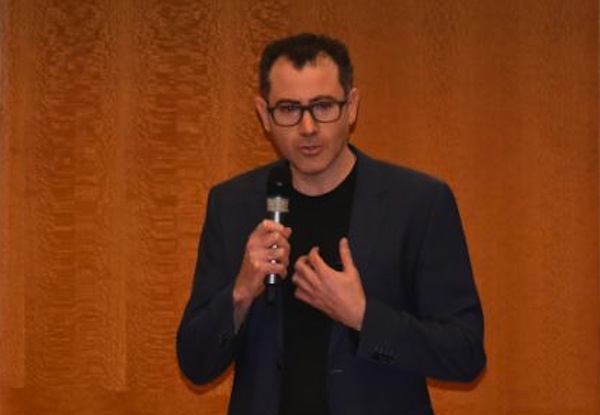
Elan Divon speaks at King David High School earlier this month. (photo from KDHS)

Elan Divon has found his passion and purpose in life – helping people to find their passion and to confidently fulfil a purpose that not only builds their own positive energy but also lets that energy spill out to improve the world in both small and potentially large ways.

On April 8, King David High School’s PAC hosted an evening that featured Divon, founder and chief executive officer of the Divon Academy, which, according to its website, “help[s] students and professionals stand out, and develop skills that are proven to boost their long-term success and well-being.”

He began by sharing the story of avoiding a deadly suicide bombing by sheer coincidence. Twenty years old, a soldier in the Israeli army, he had just returned home and was on a date at a café. The woman wanted ice cream instead, so they left; moments later, they heard three bombs go off, many people were killed, hundreds were injured, in the area they had just been. The experience jolted Divon onto a path of self-reflection and a search for spiritual meaning.

He went to study abroad, later quitting a Wall Street job and then studying archeology and anthropology at Brandeis University, followed by comparative religion at Harvard University.

“Since then,” reads his bio, he “has directed a peace camp for embattled Israeli and Palestinian teens; delivered countless personal development workshops to young professionals around the world, frequently presents before CEOs and business leaders; and, most recently, co-founded the Einstein Legacy Project to inspire the next generation of brilliant minds on the planet.”

Divon explained to the audience at KDHS that he feels he has found his purpose and can, therefore, live his purpose and make every moment count. He wants others to be able to do the same. He spoke about what he called a “stress epidemic” and identified five key aspects that inhibit personal growth and cause poor performance for students and adults alike.

The first factor is how much technology has invaded our ways of behaving and thinking. “Because of technology, people feel that everything needs to happen instantly,” he explained. With smartphones and constant access to the internet and apps, people find the answers they are looking for without really having to search, and they communicate with others without really having to interact.

“Our outer reality works very quickly but our inner reality takes time to develop,” he said about why this causes stress. Using the example of gestation, Divon explained how certain biological functions cannot be rushed – by technology or just because we shower them with attention. It takes time and experiences – both positive and negative – to build the necessary skills for human interaction and resilience, to be a well-rounded and confident person, he said.

The culture of comparison that dominates the internet is the second challenge. Before the advent of the internet, said Divon, a person might compare themselves to their sibling, a neighbour or the most impressive student at school. Today, we see carefully crafted virtual personae online from all over the world, and use those as a totally unrealistic benchmark for self-comparison, he said.

Next, Divon focused on the benefits that can be gained from discomfort. “Parents need to give their children space to solve their problems themselves,” he said, noting that, currently, teens can avoid uncomfortable situations by hiding behind their over-involved parents or their phones.

Social isolation – Divon’s fourth area of concern – can result from living a virtual life. Without direct personal contact, he said, people suffer all kinds of stress. Age-old ways of coping with painful situations or celebrating happy moments are eliminated by text communication. “Studies show that when good news is shared via text, it’s like it didn’t happen, even when the recipient of the text responds. Only through personal contact do people feel supported and connected,” explained Divon.

Finally, he said that overstimulation is damaging everyone. “We are drowning in information but starving for wisdom,” he said.

Divon outlined three ways to enhance happiness and purpose in life.

First, we need to have a proactive rather than a reactive mindset, he said. Using the establishment of the state of Israel as an example, Divon explained how the nascent state was able to turn a rocky beginning into a success. Rather than focus on the paucity of resources and abundance of hostile neighbours, those who established the modern state of Israel were optimistic and counted their blessings. “Being a victor over circumstances rather than a victim of circumstances is what sets people with a positive mindset apart from those with a negative one,” said Divon.

A positive mindset helps build the second key factor: relationships. A strong – real, not virtual – support group is a protection from stress, it helps most people find their jobs and determines and gives meaning to life, said Divon.

The third component to finding contentment and productivity is stress management. “Stress is resisting what is in a present moment,” Divon said. If stress is resistance and 95% of stress occurs in the mind, it is possible to eliminate or manage most of the stress we perceive in our lives, he explained. While the steps needed to manage stress are not easy, Divon said that, with practise, step-by-step, people of all ages can change their habits and develop more effective ways of coping.

Neuroplasticity is the ability of the brain to adapt and change. Divon explained that, although there are many stressors and that technology is often our foe instead of our friend, we can all develop new pathways in our brain. We can enhance the quality of energy we possess and make ourselves and those around us happier.

Michelle Dodek is a freelance writer living in Vancouver, and the mother of a 12- and a 13-year-old.

Format ImagePosted on April 19, 2019April 17, 2019Author Michelle DodekCategories LocalTags Elan Divon, KDHS, King David High School, lifestyle, parenting, technology
To forgive and to save others

To forgive and to save others

Left to right are Megan Laskin, Sherri Wise, Karen James, Jane Stoller, Jeannie Smith, Alyssa Schottland-Bauman and Sharon Goldman. (photo from Jewish Federation)

For the past 14 years, the Jewish Federation of Greater Vancouver has organized a women’s philanthropy event called Choices. The evening is meant to inspire women to understand the power of their tzedakah and to feel part of the community. On Sunday, Nov. 4, in Congregation Beth Israel’s Gales Family Ballroom, the informal consensus in the room of more than 500 women was that Choices exceeded its objectives.

One of this year’s achievements, according to event co-chair Jane Stoller, was that there were 50 first-time attendees. Stoller explained that a table of Hillel BC students had been sponsored and there were new faces from Federation’s young adult program, Axis, in the crowd. In addition, she said a record number of Israeli women were among the new attendees.

As for the featured speakers this year, both not only spoke movingly, but they also tied in Federation as an important component of their respective stories.

Sherri Wise is a dentist who lives and works in Vancouver. She survived a triple bombing on Ben Yehuda Street in Jerusalem on Sept. 4, 1997.

Wise described the sequence of events that led her to be at a café on a beautiful sunny day and what transpired after three Palestinian terrorists each blew themselves up in the immediate vicinity. Wise was seriously injured, with more than 100 nails embedded in her limbs and second- and third-degree burns on many areas of her body. After recounting the details of this tragedy, Wise was able to focus on some of the positives that arose from the horror. “Someone from Jewish Federation in Vancouver contacted Federation in Jerusalem and a kind woman named Trudy came every day to visit me.… I never even learned her last name,” she said.

Wise said she has managed to get on with her life not only with the help of her parents and the Jewish community, but also by making a decision not to harbour anger or hatred toward those who injured her, killed seven and injured 200 others. “Those men were born innocent babies and they were taught to hate – what chance did they have?”

Wise has since helped craft, advocate for and see enacted the Justice for Victims of Terrorism Act. This bill includes deterrents to those who would support terrorist organizations financially and materially, and grants rights to Canadian victims of terrorism. Wise imparted a message of healing, gratitude and finding a way to make a positive difference.

Jeannie Smith, the daughter of Irene Gut Opdyke, was the second speaker. Opdyke, who passed away in 2003, saved the lives of 12 Jews in Poland during the Holocaust and was recognized by the Israeli Holocaust Commission as one of the Righteous Among the Nations. Smith recounted many details of her mother’s story to a captivated crowd.

At the age of 17, Gut was forced to work in, among other places, the home of a high-ranking German officer stationed in Poland near her hometown. Prior to “keeping house” for this officer, she had worked in a laundry facility at a German officer’s camp. When she learned that she would be relocated to a villa in the town and that the Jews of that town would be liquidated, she managed to smuggle the group of Jews she had worked with in the camp’s laundry into the basement of the villa.

Eventually, the officer discovered the hidden Jews but, for a variety of reasons – none of them altruistic – he did not turn them in. As the Soviets approached and the Germans fled Poland, the 12 Jews, one of whom was pregnant, fled to the forest and joined the partisans.

There are many more twists and turns to Gut Opdyke’s story, but she ended up in California, where she married an American man who was the only person in the United States who knew anything about her painful and heroic past. Gut Opdyke was moved to begin speaking about her experiences only after she received a random call from a Holocaust denier. For the rest of her life, she was a Holocaust educator who shared the story her daughter, Smith, shared with the women at Choices.

Smith expressed gratitude toward the Jewish Federation of Portland because they paid for her father to live out his life in the Jewish seniors home once he developed Alzheimer’s. Commenting about Federation, she said, “One person can make a difference, and an organization can make a mighty difference.” She concluded with what she said her mother used to end her speeches with as well: “Every day we have an opportunity to be kind, to stand up for what is right and to go against what is wrong. We can be the difference in someone’s life.”

Both Wise and Smith received standing ovations for their heartfelt stories of love and resilience.

Leanne Hazon was one of the first-time attendees at the event. Having lived in Toronto for the last 18 years, the Richmond native returned to Metro Vancouver earlier this year for work.

“I thought the whole event was amazing!” she said. “It had such a nice vibe and feeling of community, very warm and welcoming. And the speakers were exceptional…. Sherri Wise’s message of forgiveness was so powerful and Jeannie Smith’s story about her mom was very moving.”

For more information on Jewish Federation and its annual campaign, visit jewishvancouver.com. 

Michelle Dodek is a freelance writer living in Vancouver.

Format ImagePosted on November 16, 2018November 15, 2018Author Michelle DodekCategories LocalTags Choices, forgiveness, Holocaust, Jeannie Smith, Jewish Federation, philanthropy, Sherri Wise, terrorism, tikkun olam, women
Local office open again

Local office open again

Yael Levin, executive director, Israel Bonds Vancouver. (photo from Israel Bonds)

For more than two years, the local Israel Bonds office was closed, and anyone wishing to contact Bonds had to go through Toronto. But, last July, the local office started to open again, initially for a few hours a week. By September 2017, it was open two days a week. Finally, on Feb. 1 this year, it reopened fully, with Yael Levin in the role of executive director.

Levin will be spearheading an effort not only to raise the profile of Israel Bonds here and find more investors, but she will also form a strategic plan and host a number of events each year for the community.

The reopening was championed by Israel Bonds Canada chief executive officer Raquel Benzacar Savatti, who wanted to ensure that Vancouver’s Jewish community is served.

“I know that smaller communities do feel the loss when organizations close their offices…. Although we kept in touch with our Vancouver clients through our other offices, it’s not the same as having a presence,” said Savatti. “Vancouver is a wonderful community, our third largest, and it’s important that we have an office to serve investors in this savvy financial hub.”

Savatti was hired in December of 2016 and had a number of other priorities to deal with before searching for the appropriate executive director for the Vancouver office. She credits Nadine Katz – who is still working in client services at the local office – with connecting her to Levin.

Levin comes to the job ready to work in English, Hebrew or Spanish. Born in Mexico City, Levin made aliyah in 2002. She lived and worked in Israel for four years and then moved to Vancouver for a couple of years before returning to Israel until 2012, when she came back to Vancouver with her family to stay.

“I love to work in my community,” said Levin when asked what appealed to her about joining Israel Bonds.

Since her return to Vancouver in 2012, Levin has worked for Jewish National Fund and, most recently, for the Centre for Israel and Jewish Affairs, Pacific Region. At CIJA, she worked with members of the non-Jewish community and welcomes the chance to share the investment tool that Israel Bonds has to offer both within and outside of the Jewish community.

Having never defaulted on a loan since its establishment in 1951, Israel Bonds has a notable track record and a better interest rate than other comparable fixed-term investments. One of the highest-profile investors in the world, Warren Buffett, has been a vocal supporter of Israel Bonds. Savatti shared a story of a recent event that Buffett headlined for Bonds. In order to attend the event, investors needed to buy a minimum of $1 million in bonds. In the first three minutes of his address, Buffett challenged those in attendance to buy five more $1 million bonds, which he would match. She said the crowd responded.

While not everyone can invest so much, obviously, Savatti was clear that the mission of Israel Bonds offices throughout Canada, the United States, Mexico, Brazil and Europe is to raise awareness in the Diaspora of needs in Israel. In the early days of the state’s existence, funds were needed for basic infrastructure like roads and schools. Now, the money, which goes directly to Israel’s finance ministry, is used for projects such as high-speed trains and water desalination.

Savatti was quick to point out that, while things are going well with Israel’s economy at the moment, when the chips are down, it’s friends of Israel, both Jewish and non-Jewish, around the world who continue to support and invest in the state of Israel.

Another important job for local Israel Bonds offices like the one in Vancouver is to educate investors. Levin is actively engaged in the planning of two programs scheduled for this fall. One will be a financial literacy seminar for women and the other will be a larger community event with a keynote speaker of note.

Anyone who is interested in becoming involved as a volunteer for Israel Bonds can contact the local office, which is located on the third floor of the Jewish Community Centre of Greater Vancouver, at 604-266-1210. The hours are Monday through Thursday from 9 a.m. to 5 p.m., and Fridays from 9 a.m. to 3 p.m.

Michelle Dodek is a freelance writer living in Vancouver.

Format ImagePosted on July 20, 2018July 19, 2018Author Michelle DodekCategories LocalTags economics, investment, Israel Bonds, Raquel Benzacar Savatti, Vancouver, Yael Levin
Traveling with family

Traveling with family

Levinsky Market (photo by Daniel Dodek)

The decision to travel with your family to Israel is a big one. It’s so expensive and the long distance requires going for at least two weeks to make it worthwhile. My husband and I debated for years on the merits of taking our children on such a trip. Finally, our daughter’s bat mitzvah convinced us it was time. At nearly 13, she would get a lot out of it, and our 11-and-a-half-year-old son seemed ready as well. To mitigate jet lag, I traveled a week early with the kids to London, England, where we laid low, staying with friends and taking in a few sights. We then met my husband in Jerusalem.

photo - Michelle Dodek with Max and Naomi
Michelle Dodek with Max and Naomi. (photo by Daniel Dodek)

The morning after we arrived, we went on a walking tour. Our guide, Dvir, specializes in tours of the Old City, which must be done on foot. Not only did he take us to all of the highlights, find us the best food in the Old City and explain the geopolitics of Jerusalem but, also, he knew where to find all of the clean toilets. And our children surprised us with the knowledge they had gleaned from their years of Jewish education, enriching our experience, as well. That day, we walked more than 13 kilometres, helping us sleep well and rid us of any jet lag that might have been lingering.

The next day, we returned to the Old City to buy special gifts of Judaica, and managed to pick up plenty of beautiful treasures for ourselves. We finally found use for our son’s bargaining skills, which had previously only been used to negotiate things like screen-time and treat consumption.

One of the best decisions we made was to stay in apartments. With two preteens, the need for food sometimes comes fast and furious. Knowing breakfast was in the fridge and we could make nutritious snacks to take along with us every day contributed enormously to the success of our trip. The other element that made it the best vacation we’ve ever had with our children was the planning my husband did, combining some days with a tour guide and other days with age-appropriate activities. Since neither of us is interested in driving in Israel, he also worked our plans around all the different kinds of transit. Our centrally located lodging enabled us to walk many of the places we wanted to go.

photo - Daniel and Max Dodek enjoy the beach
Daniel and Max Dodek enjoy the beach. (photo by Daniel Dodek)

We were invited by a friend, who was also visiting Israel with her family, to join their tour one morning of an agriculture reserve called Neot Kedumim. Near Modi’in, the site is of archeological significance and takes visitors back to biblical times through the landscape, agriculture and activities. Our experience included tree-planting, za’atar-grinding, pita-making, cooking and pulling water up from a cistern. My husband’s dream now is to spend his birthday working as a shepherd there. Another morning, with the same friends, was spent in fierce competition at the Tower of David doing something called the Amazing Race. It was good fun and educational, too.

We ventured one windy day to Ein Gedi and did a hike. Luckily, before driving to Masada, we discovered that, when it’s too windy for the cable car to run, Masada is closed. However, the Dead Sea was open for business as usual and, while we took in the experience of the mud and the floating, we also loved the variety of people from around the world visiting the waters.

In Jerusalem, we loved the green spaces like Station One. Formerly a train station and tracks, it is beautifully landscaped and is perfect for cycling, so we rented bikes. The public art in Israel makes the parks and streets even more interesting. Markets are favourites when we travel and Machane Yehuda did not disappoint. We returned there a number of times to buy Israeli essentials like halva, rugelach and dates, as well as more mundane food like fruit, vegetables and bread. The dinner scene is like the best food court in the world.

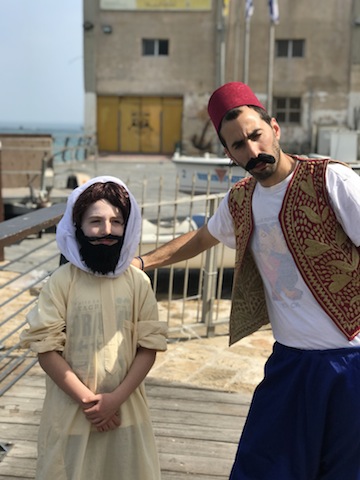
photo - Max Dodek dressed as Aaron Chelouche, founder of Neve Tzedeck, and Noam Rumsack, the guide
Max Dodek dressed as Aaron Chelouche, founder of Neve Tzedeck, and Noam Rumsack, the guide. (photo by Daniel Dodek)

We all enjoyed the food in Israel. Gone are the days when every corner had falafel, fly-covered shawarma and pizza with corn and tuna. You can still find those delights in a few places but, these days, no matter what you like to eat, you can find it in Israel (except on Shabbat or holidays in Jerusalem). Keeping kosher for Passover, once the holiday began, was certainly easier than we find it in Vancouver.

Two days before Passover started, we took the bus from Jerusalem to Tel Aviv. Comfortable, cost-effective and an experience in Israeli culture, the bus took only 45 minutes. Our lovely apartment in Tel Aviv was in an area in transition. Just over a block from the beach and a short walk from Shuk HaCarmel (where we went almost daily), the location was excellent. We were able to walk to many places, including Sarona (the market is like an upscale Granville Island), Shenkin (shopping), the Tachana (eclectic Israeli items) and Neve Tzedeck (artists and fancy touristy stores). We ended every day relaxing at the beach on the powdery sand.

The seder was delightful at my cousin’s house in Ramat Hasharon. Seeing my secular Israeli cousins argue over the tunes and forget the words occasionally showed us that they observe Passover similarly to how we celebrate it. The only difference was that they served twice as much food as I do, including seven types of meat. The food was almost as unreal as the traffic jam at 12:30 a.m., as people left their respective seders.

Other excellent parts of our trip included a fun and informative walking tour of Jaffa. Our guide, Noam, dressed in Turkish garb of 1905 – and, for awhile, our son dressed up as well, beard and all. We spent a day in Ramat Aviv, between the Museum of the Diaspora (Beit Hatfutsot) at Tel Aviv University and the Palmach Museum, just down the road. All of us took full advantage of the many types of exercise equipment in the public parks all around Tel Aviv and rode bikes along the Yarkon River, in addition to enjoying the lively promenade (Tayelet) along the ocean. One day, we took a fabulous full-day private tour up north to Akko, Haifa and Caesarea. The guide enabled us to get the most out of the day.

When we saw the family dynamic start to go sideways, we split up. Our ability to keep good snacks handy and to make sure everyone got enough outdoors time each day made everything we were able to see and do a wonderful experience for all of us. I would recommend a trip to Israel to anyone.

Michelle Dodek is a freelance writer living in Vancouver who spent enough time in Israel in her youth to speak sufficient Hebrew to communicate with taxi drivers and vendors in the shuk.

Format ImagePosted on June 15, 2018June 14, 2018Author Michelle DodekCategories TravelTags family, Israel, travel
Team Kosher at work

Team Kosher at work

Team Kosher are Marat Dreyshner and Barbi Braude. (photos from Dreyshner and Braude, respectively)

Within three months of its launch, more than 700 people in the Greater Vancouver area had signed up to receive Team Kosher Vancouver’s weekly e-publication. The people behind the initiative, Barbi Braude and Marat Dreyshner, say they’re just getting started.

The weekly newsletter primarily features information on kosher products available at the Marine Drive location of Real Canadian Superstore. It highlights specials and new products, and includes community announcements and recipes.

“This is a community-based service,” said Braude. “We would like to use our newsletter to inform the community of events as well as using it as an educational tool about kashrut.”

Braude maintains that people think keeping kosher is difficult and expensive and Team Kosher wishes to change people’s minds by showing them the plentiful, affordable and healthy options available at Superstore. “It’s easy to know what’s in the store with this weekly newsletter,” she said.

Before the e-initiative, Dreyshner – who works at the Marine Drive location – said he spent hours every week answering individual inquiries via text, phone and email. “I wanted a way to reach the community as a whole rather than answering individual questions and, after several conversations with Barbi, Team Kosher was born.”

Dreyshner has been the bakery and grocery supervisor for kosher products at Superstore for several years. He orders the products, acts as mashgiach (kashrut supervisor) and produces a line of freshly baked goods – “I’m very proud of my hand-rolled sourdough bagels that have been at Superstore for a number of years now,” he said.

Ensuring that the kosher section – which is, coincidentally, in Aisle 18 – is stocked with the products people want is a complicated task. Dreyshner collaborates with several vendors in Eastern Canada, New York and Israel to get the products in and personally stocks the shelves. He said the support of former store manager Remo Mastropieri and current store manager Carlo Fierro has enabled the kosher program at the Marine Drive Superstore to grow and thrive.

The number and variety of products continues to increase, especially around the holidays. Braude said the store devotes a section right at the entrance to special holiday food. At Purim, there was a selection of hamantashen and she is anticipating more than 200 products for Passover.

To reach more Jews, Dreyshner advises other Loblaws-owned stores in Metro Vancouver on what kosher products to carry. But the local Jewish community is not the only target for this team.

“We have reached out to the Seventh Day Adventists and are looking at vegan associations. We provide a service to kosher visitors and others with dietary challenges,” explained Braude.

She said that, because kashrut supervision is an extra level of oversight, many people feel kosher food is safer, healthier and of higher quality. Many of the products that come from Israel meet the needs of vegans and, she said, when products are labeled parve, those with dairy issues can rest assured the item is dairy-free.

As Team Kosher continues to grow its database and reaches more people, Dreyshner and Braude want feedback from the community.

“I stress to people that they can reach out to me to make sure we have products at the store they want instead of making an unnecessary trip to find their favourite products out of stock,” said Dreyshner.

“We care about the Jewish community and wanted to work to get the word out that Superstore is making a huge effort to bring our community high-quality, specialty kosher products,” said Braude. “Superstore is very involved with a variety of events in our community and the whole community needs to appreciate that because we all benefit.”

With Passover approaching, Dreyshner added, “We look forward to continuing to provide the best resource for kosher food and holiday specialties.”

For more information or to sign up for the Team Kosher weekly newsletter, contact [email protected], follow them on Instagram or sign up with Kosher Chef on Facebook.

Michelle Dodek is a freelance writer living in Vancouver.

Format ImagePosted on March 9, 2018March 7, 2018Author Michelle DodekCategories LocalTags Barbi Braude, kashrut, Marat Dreyshner, Superstore, Team Kosher
Hatikvah bursting at seams

Hatikvah bursting at seams

Land-based activities at Camp Hatikvah form a large part of the summer experience. (photo from camphatikvah.com)

Like most everything, camp enrolment goes in cycles. And, for the past few years, Camp Hatikvah has had a waiting list for its first session, a full second session and has closed off the summers with the highly popular Family Camp experience that sells out within hours of registration opening in October the year prior. With the largest-ever single age group of campers rising through the ranks, Hatikvah is looking to expand its facilities to accommodate these campers as they move toward the counselor-in-training program.

Camp Hatikvah has a formula that seems to be working well. In order to fill every bunk, current board president Joanna Wasel worked closely with camp director Liza Rozen-Delman to make some changes in programming. In addition, they have brought the concept of camper care front and centre, and the programming is more flexible than the camp experience of yesteryear. As but one example, Hatikvah has been bringing in specialist instructors for activities such as tennis or mountain biking to run weekly sessions, and such initiatives are drawing campers. Once their interest is piqued, the kids tend to come back year after year.

“Liza does an excellent job ensuring that the campers are well cared for, safe and happy,” said Wasel. “I believe her reputation of providing exceptional camper care is the primary reason we are seeing the success we are today.”

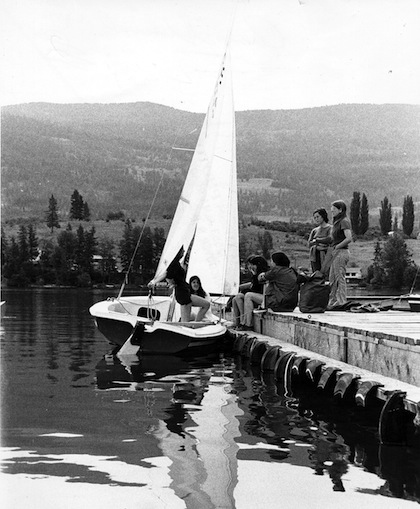
photo - Camp Hatikvah, 1972. Sailing was one of the writer’s favourite camp activities
Camp Hatikvah, 1972. Sailing was one of the writer’s favourite camp activities. (photo from Jewish Western Bulletin fonds, Jewish Museum and Archives of BC L.09596)

While Camp Hatikvah has been known for years as a watersport camp, the land-based activities have been overhauled during Wasel’s tenure as president. “We are now able to offer expert instruction from professionals in a plethora of land activities including tennis, football, basketball, fitness, yoga, dance and more,” she told the Independent. “The change has been dramatic and campers are now equally engaged on land and water.”

Those who remember their own experiences of the “good old days” of camp continue the tradition, and send their children, according to Rozen-Delman. “Many of our campers are second- or third-generation participants,” she said. “Our camp is rich in traditions and many of the programs we offer our campers today are based on programs their grandparents participated in during the ’50s and ’60s and their parents did in the ’70s and ’80s. We are very proud of this dedication to our roots and traditions and believe this makes our camp experience even more meaningful.”

The list of former campers reads a bit like a who’s who of the local Jewish community, something that shows the link between camp attendance and Jewish community involvement. Many of the children from Camp Hatikvah are already well ensconced within the community; many are students at Vancouver Talmud Torah. Rozen-Delman noted that campers also come from Alberta, Ontario, Washington and California. Hatikvah has combined a number of initiatives to draw a diverse group of campers, some of whom have no other connection with the Jewish community.

The effort to diversify and attract unaffiliated Jews this year has been aided by the Laskin Outreach Fund. This initiative, created and entirely funded by Elliot and Megan Laskin, provides $1,800 (almost the full fee) to first-time campers from British Columbia with little or no Jewish communal engagement to try Camp Hatikvah in its second summer session.

Both Wasel and Rozen-Delman stress that the programming at Camp Hatikvah is oriented toward helping children develop as members of the community. As a pluralistic camp, children from all sorts of Jewish backgrounds are introduced to and experience the camp’s motto: “Leadership by example.”

Although the programming for younger campers is focused on fun and socializing, with some Zionist and Jewish learning, it is the staff-in-training (SIT) program that begins the leadership training in earnest.

“This program is designed specifically to enhance the leadership abilities and traits of our campers. Participants engage in almost daily hadracha (leadership) sessions or discussions where they learn the importance of leadership, citizenship and community,” said Rozen-Delman of SIT.

Both Wasel and Rozen-Delman are alumna of Camp Hatikvah, with Wasel starting as a camper in 1988 and Rozen-Delman in 1979. Both have worked and volunteered within the Jewish community, in addition to their work at Camp Hatikvah.

While local Jewish life is part of the formula, Hatikvah’s Zionist roots are as strong as ever. Last summer, there were 14 Israeli schlichim (emissaries) on staff.

This year’s camp sessions are both looking like they will be full, said Rozen-Delman. For more information on the camp, subsidies to attend or the Laskin Outreach initiative, call the camp office at 604-263-1200.

Michelle Dodek is a freelance writer who spent one summer at Camp Hatikvah a long time ago and loved the sailing program.

Format ImagePosted on January 19, 2018January 17, 2018Author Michelle DodekCategories LocalTags camp, education, Joanna Wasel, Judaism, Liza Rozen-Delman, youth

CHW marks 100 years

Canadian Hadassah-WIZO (CHW) has been a driving force in the Jewish community for 100 years. Known to many simply as Hadassah, CHW has rebranded in the last decade to be recognized for its full range of activities, using its acronym to also exemplify the work it does for children, healthcare and women in Israel.

Jewish Canadians can take great pride in the many initiatives that have come from the fundraising and determination of CHW women who have helped build the state of Israel.

One of the keystone projects CHW supports is the Hadassim Children and Youth Village, located east of Netanya. Founded in 1947 for European Jewish refugee children, it is one of the largest residential schools in Israel. The school has evolved over the years to house children as young as age 6 who could not safely remain in their homes. These children live in family units, cared for by foster parents who maintain contact with biological parents when appropriate.

With the world refugee crisis, there has been somewhat of a return for Hadassim to its original purpose. As an example, because of antisemitism, more than 60 teens from France have sought refuge at Hadassim through the Na’aleh program, according to CHW national executive director Alina Ianson.

The program, she said, “is an opportunity for Francophone youth to continue their education in their native language. The Na’aleh program has become increasingly important due to the rise of antisemitism, causing many European teenagers to seek out safety and security. CHW Hadassim gives teenagers freedom: freedom to learn, freedom to live, freedom to be Jewish. CHW Hadassim gives teenagers a home again.”

Over the past 100 years, Israel has grown from the dream of a homeland to a high-tech powerhouse. Nonetheless, pressing social issues, particularly for women and children, still exist. Healthcare has changed dramatically but the need for support is arguably more critical because, while there are more life-saving technologies, they can also be quite expensive. For this reason, CHW continues to be as relevant as ever, national president Debbie Eisenberg told the Independent.

Eisenberg highlighted the CHW Vancouver connection. “Four of CHW’s past national presidents have called Vancouver home,” she said. “These visionary past national leaders include Naomi Frankenberg, z”l, Judy Mandelman, Rochelle Levinson and Claudia Goldman. Throughout our 100 year history, CHW has certainly changed the very fabric of Israeli society by supporting essential programs and services for children, healthcare and women in Israel,” she added.

Current Vancouver centre president Stephanie Rusen is proud to head an organization that has made and continues to make such an impact on the lives of people in Israel. Rusen believes that the focus for Vancouver in CHW’s centennial year is the Hadassim Youth Village partly because it exemplifies everything that CHW does right. Those most vulnerable in Israeli society find a home at Hadassim and grow up to meet their potential as active, contributing members of Israeli society.

“CHW Hadassim has been improving the lives of children and families for the last 70 years,” said Rusen. “Many of the children who come to CHW Hadassim are escaping prejudice, persecution, and even violence. Thanks to our generous supporters, as well as the funds raised at last year’s tribute gala, the Claudia Goldman Dormitory Hey at CHW Hadassim was renovated and is now home to 60 students. These children now have a safe place to call home. CHW Vancouver proudly supports CHW Hadassim.”

Rusen has presided over many local changes in how CHW operates. The previous chapter-based format has given way to an organization that plans citywide programs for all ages and interests, while continuing its efforts to fund its projects in Israel. The local annual kick-off event was held on Sunday at the Shaughnessey Golf and Country Club. Entitled “Heroes Among Us,” the event honoured three local women, ranging in age from the mid-20s to mid-80s, who have made a difference in various aspects of the Metro Vancouver community: Courtney Cohen, Lori Yelizarov and Helen Coleman.

For more information on how to become involved with the activities of CHW, visit their website at chw.ca (look for Vancouver centre) or call the office at 604-257-5160.

Michelle Dodek is a freelance writer living in Vancouver.
Posted on September 22, 2017September 21, 2017Author Michelle DodekCategories WorldTags CHW, Hadassah, Hadassim, healthcare, women, youth

Fader joins HFLA

For the first time in the 100-year-plus history of the organization, the Hebrew Free Loan Association of Vancouver (HFLA) has hired an executive director. In July, HFLA brought Lynne Fader on board to fill the new role.

Active between 1915 and the middle of the Great Depression and then reinvented in 1979, the purpose of the volunteer-run organization is, as the name suggests, to provide interest-free loans to members of the Jewish community. As the community has grown and spread out, the current board of directors decided it was time to extend HLFA’s reach and hire a part-time executive director.

photo - Lynne Fader is the first executive director of the Hebrew Free Loan Association of Vancouver
Lynne Fader is the first executive director of the Hebrew Free Loan Association of Vancouver. (photo from Lynne Fader)

Fader is a familiar face for many in the Jewish community, especially those in Richmond, as she was a founder of the Richmond Kehila Society. Since 2000, Fader has been co-executive director of Kehila and she will continue her work there, as it and HFLA have complementary missions. She also has served as a volunteer on various boards, including those of Richmond Jewish Day School and Richmond Multicultural Society.

Fader recently sold the company she owned and ran for 14 years, ER Plus Risk Management Inc., an enterprise that involved her in efforts to advance access for women in the trades and in the safety industry. She has worked with different levels of government both professionally and as a volunteer, and is looking forward to using her networking skills and drive to significantly raise the profile of HFLA.

Not only will Fader be meeting in the coming months with community leaders, but she will be planning and implementing educational opportunities for people who could most benefit from an HFLA loan. “I recognize that the HFLA is a hidden community treasure,” she told the Independent. “I look forward to meeting with fellow agency professionals in the effort to allow front-line professionals to have a face and a contact to connect with for their clients and members.”

The grassroots nature of HFLA – it has been run by volunteers for nearly 40 years – is a great fit for Fader. She understands the association’s mission and method: help people before they fall into poverty and as they emerge from financial difficulties. With a deep knowledge of the Lower Mainland’s various social safety networks from her work with Kehila, Fader is in the unique position of being able to refer applicants who don’t fit the HFLA framework for a loan to the appropriate assistance.

The HFLA board will continue to perform the work of interviewing and granting financial assistance. The association currently has $417,000 in loans out in the community. The loans are primarily to people in the Lower Mainland but reach as far away as Tofino, Victoria and Salt Spring Island. One of the reasons HFLA was looking to hire an executive director is the increasing number of Jews migrating to more affordable locations in the province, such as Squamish, the Sunshine Coast and further into the Fraser Valley.

In addition to Fader, HFLA also has recently hired a new office administrator, Judy Walker.

“I’m confident that Judy’s unique blend of technical and interpersonal skills will ensure those inquiring about loans are met with a professional experience,” said Leana Gaerber, vice-president of HFLA’s board of directors.

For more information on applying for a loan or becoming involved as a donor or guarantor, call 604-428-2832 or visit hfla.ca.

Michelle Dodek is a freelance writer living in Vancouver.

Posted on August 25, 2017August 25, 2017Author Michelle DodekCategories LocalTags Hebrew Free Loan Association, HFLA, Kehila Society, Lynne Fader
Tackling affordability issues

Tackling affordability issues

The main issues that were brought up at the Affordability Summit. (image by annaleekornelsen.com)

Vancouver is in the throes of an affordability crisis. It’s in the news, provincial politicians are talking about it as they campaign for the upcoming election, the city is implementing new taxes, but does anyone have the solution?

The Jewish Federation of Greater Vancouver decided it would seek some answers. On March 29, the first-ever Federation-sponsored Affordability Summit took place at Temple Sholom. Attended by more than 60 individuals, including New Democratic Party members of the legislature Selina Robinson and George Heyman, the goal was to give direction to Federation’s planning around affordability and being Jewish in Vancouver.

The evening, introduced by Temple Sholom Associate Rabbi Carey Brown, raised the pressing issue about why the Jewish community needs to deal with affordability beyond the basic human issues.

“This evening stemmed from the awareness that we all feel affordability impacting the sustainability our community,” she said. The other reality, she said, is that as Jews become more geographically dispersed, they are no longer near Jewish infrastructure like synagogues, day schools and the Jewish Community Centre of Greater Vancouver, so their participation in the community diminishes.

Participation in Jewish programming and activities is expensive in itself. Jewish community professionals are seeing a rise in requests for assistance for schools, summer camps and JCCGV activities. This also raises issues about the long-term sustainability of the community’s institutions if families cannot afford to live near enough to use them.

The event’s keynote speaker, Richard Fruchter, executive director of the Jewish Family Service Agency, addressed affordable housing, food security and a steep rise in demand for food banks, and raised some suggestions for solutions, including universal childcare, affordable transit and some novel taxation changes.

image - A graphic summary of the speakers’ main points at the summit
A graphic summary of the speakers’ main points at the summit. (image by annaleekornelsen.com)

Eric Fefer, chair of the Tikva Housing Society board, said his organization is in the process of expanding the number of subsidized housing units in its portfolio, with 10 new units called Storeys (Diamond Residences) opening this summer in Richmond.

Starting this fall, applications will be accepted for the Ben and Esther Dayson Residences, a project Tikva Housing is undertaking in conjunction with Vancouver Community Land Trust. The development will include 32 townhomes and apartments of two, three and four bedrooms. These homes, in the River District of south Vancouver, are expected to be available for occupancy in summer 2018.

These new homes will provide families with subsidized housing in the vicinity of Jewish amenities, but Fefer acknowledged this increased supply doesn’t begin to touch demand.

Following the event’s main session, breakout groups convened to discuss topics in greater depth. In addition to issues of food security and housing, affordable childcare advocate Gyda Chud presented solutions for universal childcare. A session on Jewish education was led by Daniel Held, executive director of the Julia and Henry Koschitzky Centre for Jewish Education in Toronto. He shared insights into the efficiencies Toronto is seeking in their Jewish education system to lower the cost of Jewish day school.

The Jewish education session was an example of using the experience of a community like Toronto’s, with greater breadth and depth of experience than ours, to identify ways to be more inclusive and to reduce costs so more Jewish children can access what Held referred to as “high impact Jewish education experiences.”

The Affordability Summit’s results were recorded by each breakout group moderator and then graphically represented by a talented artist who integrated the ideas for the group to see. Each group produced a few suggestions and this information will be used by the Federation’s planning council to help inform the way forward.

For more information on how to become engaged in activities surrounding affordability in Vancouver, contact Shelley Rivkin, vice-president, planning, allocations and community affairs at Jewish Federation at [email protected] or 604-257-5192.

Michelle Dodek is a freelance writer living in Vancouver and the president of the Hebrew Free Loan Association.

Format ImagePosted on April 21, 2017April 20, 2017Author Michelle DodekCategories LocalTags affordability, Jewish Federation

Posts pagination

Previous page Page 1 Page 2 Page 3 … Page 5 Next page
Proudly powered by WordPress