Skip to content
  • Home
  • Subscribe / donate
  • Events calendar
  • News
    • Local
    • National
    • Israel
    • World
    • עניין בחדשות
      A roundup of news in Canada and further afield, in Hebrew.
  • Opinion
    • From the JI
    • Op-Ed
  • Arts & Culture
    • Performing Arts
    • Music
    • Books
    • Visual Arts
    • TV & Film
  • Life
    • Celebrating the Holidays
    • Travel
    • The Daily Snooze
      Cartoons by Jacob Samuel
    • Mystery Photo
      Help the JI and JMABC fill in the gaps in our archives.
  • Community Links
    • Organizations, Etc.
    • Other News Sources & Blogs
    • Business Directory
  • FAQ
  • JI Chai Celebration
  • JI@88! video

Recent Posts

  • Story of Israel’s north
  • Sheltering in train stations
  • Teach critical thinking
  • Learning to bridge divides
  • Supporting Iranian community
  • Art dismantles systems
  • Beth Tikvah celebrates 50th
  • What is Jewish music?
  • Celebrate joy of music
  • Women share experiences 
  • Raising funds for Survivors
  • Call for digital literacy
  • The hidden hand of hate
  • Tarot as spiritual ritual
  • Students create fancy meal
  • Encouraging young voices
  • Rose’s Angels delivers
  • Living life to its fullest
  • Drawing on his roots
  • Panama City welcoming
  • Pesach cleaning
  • On the wings of griffon vultures
  • Vast recipe & story collection
  • A word, please …
  • מארק קרני לא ממתין לטראמפ
  • On war and antisemitism
  • Jews shine in Canucks colours
  • Moment of opportunity
  • Shooting response
  • BC budget fails seniors
  • Ritual is what makes life holy
  • Dogs help war veterans live again
  • Remain vital and outspoken
  • An urgent play to see
  • Pop-up exhibit popular
  • An invite to join JWest

Archives

Follow @JewishIndie
image - The CJN - Visit Us Banner - 300x600 - 101625

Byline: Cynthia Ramsay

CHW’s new year begins

CHW’s new year begins

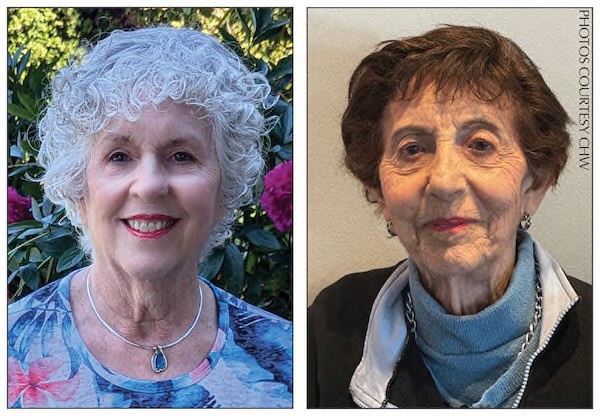
CHW Vancouver Centre’s opening luncheon on Sept. 22 honours longtime members and contributors Bev Corber, left, and Dolly Jampolsky. (photos from CHW)

This year’s CHW Vancouver Centre opening luncheon on Sept. 22 will honour Bev Corber, a past CHW Vancouver Centre president, and recognize the volunteer efforts of Dolly Jampolsky.

“I have had the pleasure of knowing both women for a long time,” CHW Vancouver Centre president Toby Rubin told the Independent. “During Bev’s tenure as CHW Vancouver Centre president, I ran the annual campaign, and I have worked on other committees with her. I am excited for her to finally be recognized for all she has done and continues to do to support CHW and all its projects.

“Dolly is the Energizer bunny in my opinion,” continued Rubin. “At the age of 90, she continues to be our number one volunteer for both obtaining silent auction items and canvassing – no one seems to be able to say no to Dolly. Both Bev and Dolly exemplify strong women and are role models for myself and the rest of the community.”

Rubin has been a supporter of CHW for more than 30 years, Corber has been a member of CHW for almost 40 years, while Jampolsky joined the group more than 60 years ago.

“I had just moved to Vancouver and was seeking friendship and community,” Jampolsky said. “It was also very important for me to do something in support of Israel. CHW seemed to be a good choice.

“Early on, I was very involved with the bazaar. I recall that I would reach out to the better hotels in the city and ask for donations of linens. I also did the pickups of these donations. One time, I was at a very exclusive hotel in downtown Vancouver and I loaded up the elevator with a huge donation of linens. I stepped inside and pushed the button to go down and I got stuck.  I was there inside the elevator for one or maybe two hours; no phones at the time. All I could do was press the emergency button and wait and wait.”

Stephanie Rusen, immediate past president of CHW Vancouver Centre, recalled Jampolsky’s involvement with the Hadassah Bazaar, including that her chapter had the clothing booth, then moved to linens.

“After the bazaar,” said Rusen, “Dolly switched to Pro-Am [golf tournament] and the silent auction. She has continued with the silent auction, expanding it to the Aviva Games Day and then to the openings. For a number of years, she sold the entertainment books.”

According to Rusen, “Dolly said that I was the one to get her calling donors, first for annual campaign, then end-of-year, and finally SOS. Give her a list of 20 names to call and a day later she wants more names. Three years ago, when she asked for yet another list, I only had one with 100 names and told her to call just the first 20. She called them all!”

Corber also joined CHW after moving to Vancouver and, in her decades with the organization, she has contributed in many capacities, including helping create CHW’s Legacy Circle, which allows donors of varying incomes “to create a philanthropic legacy for a cause they care deeply about.” She was active in the Hadassah Bazaar, has served as chapter and centre president, been convenor of multiple fundraisers and events, and participated in different committees, among other things. In 2021, she completed her role as CHW Vancouver Centre’s immediate past president.

“Over the years, I have made lasting friendships with women of all ages,” she said. “I value the opportunity to work with others to support our projects in Israel. With each additional commitment I have made to the organization, I have found that I have been amply rewarded for my efforts. I have particularly enjoyed the opportunity to make a difference (tikkun olam) while connecting to others in the Jewish community.”

For Jampolsky, CHW has met all the goals she had when joining.

“I was able to form many wonderful and lasting friendships that I still treasure to this day and to fulfil the promise I made to myself to support my community and Israel,” she said. “Joining CHW gave me the satisfaction that I could lend my time, energy and creativity to support Israel and set an example for my friends, my community, my children and grandchildren.”

One of the reasons Rubin was attracted to CHW was that it was a women’s organization, “bringing together like-minded women and supporting causes close to women’s hearts.

“It is an organization whose projects in Israel are not only about things that are important to all women – helping at-risk children, empowering women and providing vital health care – but also supports our local community here in Canada,” she said. “CHW looks at what the current needs are, finds the gaps in support and fills them. I am proud to stand strong with CHW and all it does to proudly support Israel and Canada.”

Rubin, who is beginning her third year as CHW Vancouver Centre president, writes on the CHW website: “Since coming in as CHW Vancouver Centre president in the fall of 2022, we have held an almost sold out Games Day, heard World WIZO chairperson Anita Friedman and cookbook author Adeena Sussman, have held SOS (Starting Over Safely) Walks, surpassed expectations on our campaigns, and we continue to try and grow the under-40 chapter.”

She also notes that there have been some tough times, notably Oct. 7. 

“I think Oct. 7 has done the complete opposite of what Hamas and other terror groups thought – it has brought Jewish people together, not pulled them apart,” Rubin told the Independent. “I have found that people want to be together more than ever and are not afraid to attend meetings/events at the JCC, shuls or public places. We are always showing people how CHW is not the same organization it was when our grandmothers were involved and, since Oct. 7, more people are looking to belong to a community like CHW.”

In addition to honouring Corber and Jampolsky, the CHW opening will feature remarks and a Q&A livestreamed with Idit Shamir, consul general of Israel in Toronto and Western Canada. CHW chief executive officer Lisa Colt-Kotler will talk about her recent trip to Israel, where she visited CHW projects and bore witness to the atrocities of Oct. 7. Proceeds from the luncheon will benefit CHW partner Michal Sela Forum (MSF).

“MSF uses technology and innovation to improve the lives of victims of domestic abuse and helps them and their children take back their lives,” explained Rubin. “MSF is about keeping at-risk women safe in their homes instead of relying on shelters. The safety programs, like Michal Sela Canines, also allows women to return to their daily lives without fear of violence – this is so important. Also, everything MSF does, creates and establishes are things their CEO, Lili Ben Ami, wants to share with the world!”

For tickets to the Sept. 22, 11 a.m., opening lunch at Richmond Country Club, go to chw.ca/luncheon. 

Format ImagePosted on August 23, 2024August 22, 2024Author Cynthia RamsayCategories LocalTags Bev Corber, Canadian Hadassah-WIZO, CHW, Dolly Jampolsky, Stephanie Rusen, tikkun olam, Toby Rubin, women

The science behind addiction

Every year, more Canadian teenagers die by suicide than by all medical diseases combined, including cancer, diabetes, asthma and infections.

Dr. Yaron Finkelstein, a professor of pediatrics, pharmacology and toxicology at the University of Toronto and a staff physician at the Hospital for Sick Children (known as SickKids), shared this fact with the Jewish Independent in advance of Bridging Hope: Science and Testimonial in the Fight Against Addiction. Presented by Canadian Friends of the Hebrew University of Jerusalem, King David High School (KDHS) and Vancouver Talmud Torah (VTT), the Sept. 26 event at KDHS will also feature Dr. Yonatan Kupchik, senior lecturer, department of medical neurobiology, the Hebrew University of Jerusalem (HU), and Dr. Rami Yaka, head of the School of Pharmacy at HU, discussing the science of addiction. The testimonial part of the gathering will be shared by members of the Epstein-Bogdonov family. In this issue of the Independent, we talk to the doctors. Next issue, we will meet Elana Epstein and David Bogdonov, who, with their son, Noah Bogdonov, will speak in September about their family’s experience with addiction.

“Drug overdose, led by the opioids crisis, is an immense public health problem in BC, Canada and globally,” Finkelstein said. “Effectively addressing the loss of so many people for overdose daily, a largely preventable condition, must be a national priority. Indeed, youths are also highly affected, and we see them in the emergency departments, in clinics and, sadly, on the streets. Further, some youths use overdose as a common means of self-harm and suicide attempt.”

Finkelstein added that “most medications administered to children, particularly in hospitals (up to 85% in some acute care settings) have not been properly studied and approved in this population. Rather, we ‘borrow’ them from our experience in adults, scale the dose down to the child’s weight and hope to achieve the same effects and outcomes. However, we know this is not always the case, sometimes the outcomes are unwarranted, and I have personally noticed that repeatedly over the years. The goal of my research program is to work hard and close this knowledge gap – find the safest and most effective medications for children, and tailor their dosing regimens to the pediatric needs.”  

photo - Dr. Yaron Finkelstein
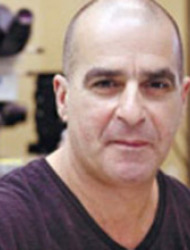
Dr. Yaron Finkelstein (photo from Sickkids website)

At Bridging Hope, Finkelstein will discuss “the impacts of cannabis legalization on pediatric poisonings – trends and severity (for example, many do not appreciate that edible cannabis products can kill a child) – and on mental health, including addiction and the risk of developing schizophrenia in youths and adults.”

Canada became the second country to legalize cannabis for recreational use in 2018, he said. “This ‘natural experiment’ has led to numerous unanticipated outcomes, many have negative impacts on public health, and particularly on children.”

Finkelstein’s main research is centred on pediatric therapeutics in acute-care settings, with the long-term goal of optimizing drug safety.

“During my clinical clerkship in medical school, my passion to help children grew tremendously, and I was inspired by my mentors,” he shared. “Children have immense resilience, and their recovery is often fast and remarkable, and provides hope. I was always fascinated by the mechanistic actions of drugs on the human body, and combining those passions felt natural.”

“From the early beginning of my studies, I was thrilled to understand how the brain functions,” said Yaka, who not just heads HU’s School of Pharmacy but conducts research as well. “The brain reward circuitry is the most important system in any living creature, since it is responsible for our survival and reproduction, therefore, our existence. My main research is focused on synaptic function in health and disease.”

photo - Dr. Rami Yaka
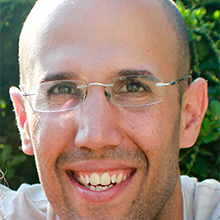
Dr. Rami Yaka (photo from HU website)

Yaka joined the School of Pharmacy in 2003 and has served in many capacities. “Since I feel that the School of Pharmacy is like my second home and I really care about its future, and since I have all the necessary experience to take this mission, I volunteered to head the school,” he said. “Maintaining the right balance between the administrative duties and the research (my main cause of being here) is challenging. I work harder and try to pay the same attention to both tasks without reducing any effort for either.”

On Sept. 26, Yaka will talk about “‘out of the box’ research to battle drug addiction.”

“Since addiction to drugs, screens, food, etc., is very common and spreads all over the world very easily, this subject is very popular among laypeople,” he said. “Therefore, for me, it’s easy to adopt lay language to explain in simple words what the problem is and what we can do to avoid having it. I think that a huge part of the problem is the lack of knowledge among users (mainly young) about the adverse effects and negative impact that drugs have on the brain.”

With respect to educating youth and engaging them more broadly in science, Kupchik sees his role as a principal investigator at a leading university as “not only to generate new knowledge that may lead the world forward but also to plant the seeds for the next generation of principal investigators.”

“In Israel,” said Kupchik, “there are several programs that select the top high school students in the country and expose them to academia at their early age. This is excellent, but … there are many excellent students that we may be missing as a society just because they live in underprivileged places. Therefore, we try in the lab to specifically target those populations of students, and we do it in various ways. For example … [we] started an initiative that invites local high school students to scientific conferences taking place in their vicinity. For many students, this is the first interaction with science and many of them reported later that it induced interest in the scientific world. We also invite high school students to our laboratory and provide an interactive experience in which they learn about the brain and how scientific research is performed.”

photo - Dr. Yonatan Kupchik
Dr. Yonatan Kupchik (photo from HU website)

What most intrigues Kupchik about neurobiology “is how a biological organ, composed of billions of neurons that communicate with each other, generates such complex phenomena as behaviour, emotion, thoughts, etc.” His lab at HU researches the changes occurring in single neurons or in brain circuits in drug addiction or obesity. Among other things, they are currently collaborating with two neighbouring labs.

“One is with the laboratory of Dr. Shai Sabbah, an expert in the neurobiology of light processing in the eye. It is known that exposure to light can affect mood and the neural activity in brain areas related to emotions. We are investigating in this collaboration whether light exposure could also affect drug-seeking behaviour.

“Another collaboration is with the laboratory of Dr. Danny Ben-Zvi, an endocrinologist and expert of the bariatric surgery. As bariatric surgery decreases the craving for rewarding foods, we are now investigating together whether the bariatric surgery drives permanent changes in the reward system of the brain and whether it could affect the craving for other, non-food, rewards.”

Kupchik said, “We believe that there are many similarities between behaviours that may reflect addiction, such as drug dependence, overeating, gambling, hoarding, computer gaming, social media use and so on, and hope that understanding the neurobiological mechanisms in one kind of addiction could hint about the mechanisms of other addictions. We chose to focus on drug addiction and on obesity both because these are two main global health challenges that remain unsolved and because these are conditions that can be modeled in laboratory animals.”

At King David High School, Kupchik “will try to show some of the permanent changes we found that occur in the reward system after using cocaine, and after withdrawal.”

For tickets ($18) to Bridging Hope, visit register.cfhu.org/bridginghope. 

Posted on August 23, 2024August 22, 2024Author Cynthia RamsayCategories LocalTags addiction, Bridging Hope, Canadian Friends of the Hebrew University, CFHU, disease, Hebrew University, KDHS, King David High School, Rami Yaka, science, SickKids, Vancouver Talmud Torah, VTT, Yaron Finkelstein, Yonatan Kupchik
Education a main focus

Education a main focus

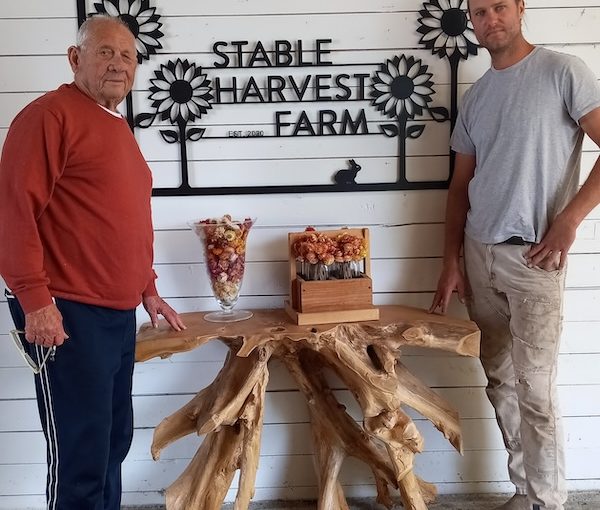
Syd Belzberg, left, founder of Stable Harvest Farm in Langley, and farm manager Kristjan Johannson. (photo by Cynthia Ramsay)

The Jewish Independent visited Syd Belzberg at Stable Harvest Farm in Langley last week, taking a tour of the 65-acre property with Belzberg and farm manager Kristjan Johannson. Much has happened since the JI last visited, in 2021, just a year after the reimagined farm opened.

The land had laid empty for many years, having previously been a horse farm. An organic produce farm for the past four years, its focus is education. (See jewishindependent.ca/hands-on-learning-at-farm.)

About 100 students a day visit from late April to the end of June, then again from the first week of September to the end of October. 

“We’ve got it down to a science,” said Johannson. “About an hour-and-a-half a session, two hours. They come in, they get a welcome speech. We have picnic tables up in the main season. We do a 12-station immersive tour, partnered with BC Agriculture in the Classroom [Foundation], so it’s all specific to the curriculum of the province.”

There are elementary and intermediate student groups who do the sessions. Participants receive workbooks and, every six or seven minutes, a cowbell rings and they move to the next station, where another agriculturalist meets them. University students lead the programs.

The farm also runs harvest projects for the kids. “Radishes were a big hit this year,” said Johannson. There were six beds of radishes planted and harvested.

Over the summer, it’s camp, church and other groups that come to the farm, said Belzberg, and they have different reasons for doing so: perhaps to see the bees, or the butterflies. “This summer, we kept the amount of guests down because we are developing and changing so many things,” he said.

The growing process begins indoors. “We’re able to push the season in that way,” said Johannson. “We start all our plants indoors in the nursery tunnel and that way we get a 30- to 60-day head start, and then it allows us, in a short season, to get two crops of most produce.”

photo - Rows of produce are planted alongside rows of flowers, so that the flowers take the brunt of the bug activity
Rows of produce are planted alongside rows of flowers, so that the flowers take the brunt of the bug activity. (photo by Cynthia Ramsay)

In addition to the planting beds, there are gardens. Belzberg’s friend David Bogoch, another member of the Jewish community, started the Biblical Garden, as well as a couple of other flower beds, which Bogoch maintains with the Stable Harvest Farm team.

“Rabbis normally spend 20 to 30 minutes in here,” said Belzberg of the Biblical Garden, which features four of the seven plants the Hebrew Bible uses to describe the land of Israel – wheat, barley, figs and grapes. “We can’t grow dates, pomegranates or olives, but we’re working on pomegranates and olives!” said Johannson, referring to a greenhouse that’s under construction. 

Johannson also noted that there was a “very happy, healthy ‘Tree of Knowledge,’” an apple tree, but though the “Fujis are looking very good,” the fruit is not quite ready for harvesting. 

Vancouver Talmud Torah probably brings the most kids to the farm, said Belzberg. Grade 3 students, for example, may come in and plant vegetables in spring and then they come back in the fall, as Grade 4s, to harvest what they planted.

When students participate in an education tour, they leave with something the farm produces. That might be honey from one of the 30 hives on the farm (1,500 pounds of honey was extracted a few weeks ago by 40 to 50 volunteers) or bee-forage bookmarks with seeds embedded in them.

“You take the bee off [the bookmark] and plant it in the ground and they [still] have our bookmark with all our information on it,” explained Johannson. “Basically, you have a bunch of kids guerrilla gardening, chucking paper and pouring water on it and having plants that turn into bee forage. Then, they also get popcorn from us or they get sunflower seeds, so, if you’ve got a garden at home, you can plant the corn and plant the sunflowers. If you don’t, you can eat the sunflower seeds and pop the corn.”

Johannson and Belzberg have been working together since the retrofit in 2020, when the farm was converted from housing horses to growing produce.

“We do lots of cover crops and set-asides,” said Johannson, standing next to a field (block) that is lying fallow for a year. “That’s how we build fertility here organically. There are three different types of clover … and all this clover fixes nitrogen from the atmosphere in the ground and then all of this down here will be our organic matter for the next season. We’ll do that on rotation. There are five blocks, so this block here was a cover crop last year.”

Farm heritage chickens and Nigerian Dwarf goats, as well as other animals that pass through or unofficially make their home somewhere on the farm, help keep the soil healthy. “They’ll end up eating all this down and then pooping it [around],” explained Johannson.

We drove past some wheat, which is grown especially for Lubavitch BC’s Model Matzah Bakery.

“Originally, we would just supply the wheat and they would do their thing,” said Belzberg. “In the last year, we changed it…. Everything here was planted by the kids in May. They’re coming back Sept. 8 to harvest it. Then we will store it for them and, at Pesach time, they’ll use it … [in] making the matzah with the bakery, so they’ve got the full cycle.”

For the Lubavitch BC program, some of the wheat harvested by the kids in September won’t be put through a thresher, but rather, in the weeks before Pesach, at the Matzah Bakery, the kids will learn how to remove the grain from the chaff by hand. They’ll put the grain in a stone mill and grind it into flour. “For the sake of expedience, we already have the dough ready,” noted Johannson. “And the kids grab it, it goes onto some sheets and then goes into a pizza oven. They are so good, very efficient,” he said of Lubavitch BC. “They’re the same as our [education] project out here, you’re in and out in an hour and 15.”

photo - Stable Harvest Farm has Jewish and non-Jewish community partners
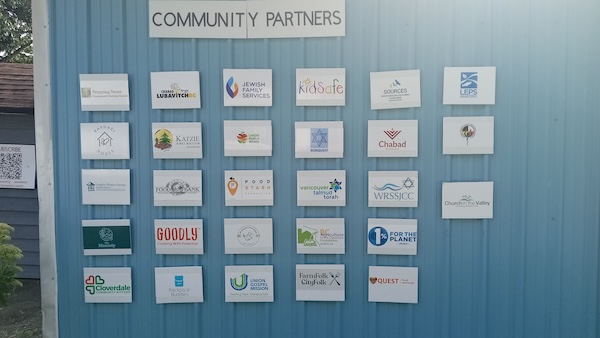
Stable Harvest Farm has Jewish and non-Jewish community partners. (photo by Cynthia Ramsay)

Stopping at several “tunnels,” in which there are rows of flowers alternating with produce – melons, tomatoes, cucumbers, etc. – Johannson picked some treats for the Jewish Independent while talking about the layout.

The flowers are good for pollinators, but also attract the aphids and other bugs, he said. “We come through when they’re all pest-affected, we bag [the flowers] up and remove the pests out of the game.”

There have been challenges over the years – notably, in 2021, both the heat dome and the atmospheric river – and there have been some less successful crops. Johannson pointed to a field of Phacelia. “It’s still going to flower, but … it was too hot when they went in. A lot of the time, with vegetables, with life, with people, if you don’t have a good start to things, things don’t end up well.” The area will become a different cover crop next year, he said.

And there have been other learning opportunities. “This we called the Coyote Area,” said Belzberg as we passed another part of the property. “But we had to change it about a month ago because we had a group of kids out and they were afraid to come [see it]. Now it’s called Beaver Park.”

Belzberg would like to see even more school groups come to the farm, and he’d like to see multiple events happening at one time. In progress are many significant initiatives, from planting more trees (for birds and shade), to grooming an area of the farm for scavenger hunts and orienteering, to building a nature-based playground, to creating an overnight camping section, to adding a picnic area, and to converting what used to be a riding arena into a place where kids can come and do educational projects when it’s raining.

The education aspect of the farm gives Belzberg the greatest satisfaction and enjoyment, he said. “That’s my passion.”

While all the activities at the farm are at no cost to visiting groups, busing kids out to Langley can be expensive, so the farm takes some of their programs to the schools themselves. Belzberg gave Talmud Torah as an example: a program held at the school can reach 500 kids in one or two days, he said.

As well, Belzberg and his team are trying to get funding for a program that would help schools with the cost of busing. “We’re looking to be able to subsidize some or all of that cost,” he said.

As to what Belzberg gets from all these efforts?

“It’s a work of love,” he said. “It’s coming out here, developing it and seeing it grow and become more beautiful [and], mostly, when you get the kids out here.” 

Format ImagePosted on August 23, 2024August 23, 2024Author Cynthia RamsayCategories LocalTags agricultural goods, education, environment, farming, Kristjan Johannson, Lubavitch BC, organic, Passover, Stable Harvest Farm, Syd Belzberg, Vancouver Talmud Torah, VTT
Enjoy Bach with a twist

Enjoy Bach with a twist

Alon Sariel is Early Music Vancouver’s artist in residence for this summer’s festival. (photo by Suzette Vorster-Van Acker)

‘We are thrilled to offer audiences an adventurous program of some of Bach’s seminal works, but with a twist,” said Early Music Vancouver artistic and executive director Suzie LeBlanc in a press release announcing this summer’s early music festival. “From traditional compositions reworked for unique instruments, such as mandolin and oud, to the introduction of vocal improvisation, inspired by Bach’s own customary practice of instrumental extemporization, Bach Untamed welcomes listeners to seek out new perspectives of Bach’s well-known and beloved classics.”

This year’s festival – which runs July 30-Aug. 8 at various venues – features almost 50 emerging and established early music artists from around the world, including mandolinist and multi-instrumentalist Alon Sariel, who is EMV’s 2024 Summer Festival Artist in Residence. 

In addition to headlining two concerts – Alon Sariel: Plucked Bach at Congregation Beth Israel on July 31, in which he will premiere his own Bach-inspired Mandolin Partita, and EMV’s festival finale at the Vancouver Playhouse, which features the Canadian premiere of Amit Weiner’s 2019 reconstruction of Bach’s Italian Concerto – Sariel will perform in several other festival concerts, as well as teach a workshop on Bach for plucked instruments.

Sariel, who was born and raised in Beersheba, Israel, met LeBlanc at the Utrecht Early Music Festival, in the Netherlands, last fall. 

“I was playing there with friends from Profeti della Quinta, an Israeli vocal ensemble based in Switzerland, who was already a guest of EMV in the past,” Sariel told the Independent. “Suzie and I had a chat and it turned out I had some very different programs to offer and that a residency could be a lovely idea to feature a few of those.”

Sariel’s first visit to Vancouver was more than 30 years ago, as a kid, with his family. He’s excited to return. He arrived July 24 and will be staying until Aug. 9 – “the final concert, Bach & the Mandolin, with the Pacific Baroque Orchestra, is on Aug. 8,” he said.

“The program looks really splendid (a huge shout out to Suzie!) and I’m very glad and proud to wear the artist-in-residence hat this summer – can’t wait really!” said Sariel.

LeBlanc started the artist-in-residence program in 2021 “to create more exchanges between EMV’s guests and the local community.”

“EMV has under its wing a local baroque orchestra – the Pacific Baroque Orchestra, led by Alexander Weimann – and a Baroque Mentorship Orchestra Program (BOMP) at UBC for students and community players,” she explained. “In addition to his own concerts in the summer festival, Alon will collaborate with these ensembles, working with professionals, students and community players, going beyond concert performances and delivering a collaborative and educational experience. 

“He will also lead a three-day course called ‘Unconventional Bach,’ which focuses on playing and arranging Bach’s works for different instruments,” she said, noting, “Alon is also a composer and his guiding principle is ‘giving new life to existing material, as well as creating completely new works.’ We’re excited to have an artist in residence who shares this philosophy with EMV and will be so present beyond the concert stage.”

LeBlanc described Sariel’s Bach solos on mandolin as “captivating and very personal.”

“He fully deserves his notoriety as one of the most versatile and gifted mandolin players, lutenists and ensemble directors of today,” she said.

A soloist, chamber player and artistic director, Sariel has performed more than 1,000 concerts in more than 35 countries, according to his bio. In his Plucked Bach recordings (Pentatone), he interprets Bach’s solo music and creates new arrangements for mandolin and lute, the baroque guitar and the oud. His album Telemandolin (Berlin Classics) was awarded an OPUS KLASSIK, making Sariel the first mandolinist to earn the honour. But the path to professional success hasn’t been easy and, said Sariel, “there are still many obstacles in the way of a mandolin player.”

“For any violinist, pianist, conductor, etc., there are many competitions which could serve as a jump step to a musical career – the mandolin has none,” he explained. “I attended several competitions which were open to all instruments and won them all and, even then, I kept getting lines like, ‘Thank you very much for getting in touch, we’ll contact you shall we be interested in the future.’ Booking agencies, record labels and concert halls can still be very suspicious when it comes to the mandolin, that’s why I feel a great responsibility in every concert that I play. It’s not only about me getting re-invited, but it’s about convincing this or that director and, of course, the audience, to give a chance to something new. The theatres could always go for another Rachmaninoff piano concerto or another Beethoven symphony, they don’t have to ‘take a risk’ with a mandolin player, that’s why I really have to stand out in my artistic profile in order to get the chance.”

LeBlanc first heard about Sariel from Renaud Loranger, the artistic director of the Festival de Lanaudière in Québec. When she met Sariel at the Utrecht Early Music Festival, she said, “Our meeting was very pleasant – his playing was fabulous – and I immediately saw that he would be a great and versatile artist in residence. Also, I knew that Vancouverites love the mandolin player Avi Avital, who has played many times in Vancouver. What perhaps they don’t know is that Alon has collaborated with Avi on a recording of Vivaldi’s concerto for two mandolins (Deutsche Grammophon, 2020). I hope all mandolin lovers will come out to hear Alon – he has brought to light many works for the mandolin from centuries past and commissioned composers to write new pieces for him.”

And to think that Sariel wanted to play the electric guitar when he was a kid.

“I wished to learn e-guitar, but I was much too young for that,” he recalled. “The director of the conservatory gave me a little basic test – I had to clap some rhythms and sing some tones, etc. She suggested I should take the violin, but I wasn’t excited. Then she said there’s also the mandolin – which I didn’t know at all – and that it’s in fact ‘very similar’ to the guitar, you hold it pretty much the same way, but the size would be perfect for an 8-year-old. She mentioned the mandolin orchestra and the fact it gets to represent the city occasionally, even abroad, so I agreed to give it a try and thought I’d shift to e-guitar later on. Very soon I forgot about the guitar and was all invested in the mandolin, I absolutely loved it!”

LeBlanc chooses EMV’s artists in residence “first and foremost for their great artistry, for their extensive knowledge of historical performance practice, and their ability to share their ideas and knowledge generously,” she said. Previous artists in residence have been Cree-Métis baritone Jonathon Adams (2021); Scottish Baroque specialists David Greenberg and David McGuiness, violin and keyboard (2022); and Catalina Vicens, keyboard and curator of the Tagliavini Collection of ancient musical instruments in Bologna, Italy (2023). 

“It has been extremely rewarding to watch the program grow over the past few years, and hear the enthusiastic audience feedback to our different artists in residence,” she said.

For more information about and tickets to this summer’s festival, visit earlymusic.bc.ca. 

Format ImagePosted on July 26, 2024July 25, 2024Author Cynthia RamsayCategories MusicTags Alon Sariel, Bach, Early Music Vancouver, festivals, mandolin, Suzie LeBlanc
JI picks up four Rockowers

JI picks up four Rockowers

Israeli writer Gil Zohar (standing, seventh from the left) with other 2024 Rockower Award winners in Nashville, Tenn., last month. (photo by Bill Motchan)

At the annual conference of the American Jewish Press Association, which took place in Nashville, Tenn., June 2-4, Israeli freelance writer and tour guide Gil Zohar was there in person to collect his Rockower Award for Excellence in Jewish Journalism. He won an honourable mention for the article “Identifying the victims,” published by the Jewish Independent Nov. 10, 2023. The Independent picked up four Rockowers this year, for work published in 2023.

Zohar’s article (jewishindependent.ca/identifying-the-victims) won in the Wild Card Category – Award for Excellence in Writing about the War in Israel: News and Feature Writing. It explains how staff at the Israel Defence Forces’ Shura base were working around the clock at the time to identify the remains of the 1,200 people murdered in Israel by Hamas terrorists on Oct. 7, 2023, a process made more grisly and difficult because of the extreme brutality of the attack.

Winning first place in the Wild Card Category for weekly and biweekly newspapers was “New era for world Jewry” by Chaim Goldberg, published by Intermountain Jewish News (Denver, Colo.). Taking second place was “A letter from Israel: It’s okay to start dreaming” by Chaim Steinmetz, published in the Jewish Journal of Greater LA (Los Angeles, Calif.).

The Jewish Independent won first place for weekly and biweekly newspapers in the category of Excellence in Single Commentary with Helen Mintz’s article “Opportunity for healing” (jewishindependent.ca/opportunity-for-healing). Originally presented as a d’var Torah at Or Shalom Synagogue, it was “intended as a beginning of a conversation about how we, as Canadian Jews, can heal our relationship with Ukrainians and Ukraine.” Of the article, the Rockower jury wrote: “A powerful reminder that there are many ways to view complex histories. The beautiful way the story is told is both intimately personal and ultimately universal.”

Taking second place in the Single Commentary category was “Wokeism and the Jews: A reckoning” by Monica Osborne (Jewish Journal of Greater LA), with “The inside story of how Palestinians took over the world” by Gary Wexler (also for the Jewish Journal of Greater LA) receiving an honourable mention.

Local musician, composer and bandleader Moshe Denburg earned the Jewish Independent second place for Excellence in Arts – Review/Criticism, weekly and biweekly newspapers, with his review “Erez’s new CD shows mastery” (jewishindependent.ca/erezs-new-cd-shows-mastery). The Rockower jury wrote: “Sounds like a great CD.”

Placing first Excellence in Arts – Review/Criticism was “Oppenheimer, and the lesson of brainy Jews” by Thane Rosenbaum (Jewish Journal of Greater LA) and Tabby Refael received an honourable mention for the article “For a deaf woman from Iran, freedom never sounded so good” (Jewish Journal of Greater LA).

Winnipeg freelance writer Joanne Seiff won the Independent its fourth award, placing second in the category of Excellence in Writing about Jewish Thought and Life. The JI submitted three of her articles for consideration: “Women’s rights evolve,” “Honouring others in death” and “A yearly reminder to return.” The first article (jewishindependent.ca/womens-rights-evolve) talks about parallels between modern events and talmudic discussions – in particular laws that limit women’s ability to control their own bodies. The second article (jewishindependent.ca/honouring-others-in-death) is about how Jewish tradition could inform the debate that ensued after the remains of four murdered Indigenous women were found in Winnipeg-area landfills, and the third piece (jewishindependent.ca/a-yearly-reminder-to-return) connects the renovation of Seiff’s home with the month of Elul and teshuvah, usually translated as repentance, but also meaning return. “Returning to our best selves might require us to listen, pay attention to our gut feelings, do some renovation,” she writes.

In summing up Seiff’s articles, a member of the Rockower jury commented: “I would love to live in Winnipeg, only to read Joanne Seiff regularly. She is an intelligent writer.”

First place in this category for weekly and biweekly newspapers went to “Ten measures of beauty, of fragility, of hope” by Tehilla Goldberg (Intermountain Jewish News) and Refael won another honourable mention, for the article “I’m an observant Jew, and I need Christmas music more than ever before.” 

To read the writing of all the 2024 Rockower winners, visit ajpa.org.

Format ImagePosted on July 26, 2024July 25, 2024Author Cynthia RamsayCategories LocalTags AJPA, American Jewish Press Association, Gil Zohar, Helen Mintz, Jewish Independent, Jewish journalism, Joanne Seiff, milestones, Moshe Denburg, Rockower Awards
Fundraising for vital services

Fundraising for vital services

Larry Vinegar, left, and Marcy Schwartzman with Daniel Steiner, who presented them with the Lighting the Way Award at JFS Innovators 2024 on May 28. (photo by Kliri Photography)

JFS Innovators 2024: 18 Years of Lighting the Way raised more than $420,000. “With donations raised by Innovators 2024, we can provide holistic, wrap-around care – the kind that recognizes individual needs, situations and life stages,” Tanja Demajo, chief executive officer of Jewish Family Services, told the Independent. “Picture this: a single mom dealing with a debt after divorce, trying to care for her child with autism on a limited income, as her caretaker role and employment conflict each other. With these funds, we are not just filling their fridges, we are nourishing their well-being and giving them the fuel to keep going when it’s hard.”

The annual fundraising event, which was presented this year by Pollock Clinics, took place the evening of May 28 at Parq Vancouver. Originally a luncheon affair, the new approach was well-received, said Innovators 2024 committee co-chairs Candice and Todd Thal. In an email, they shared some of the feedback they had received: “Great event. Positive responses to the change in format. Open bar and food elevated the evening. Video was informative and touching.”

photo - Innovators 2024 co-chairs Candice and Todd Thal
Innovators 2024 co-chairs Candice and Todd Thal. (photo by Kliri Photography)

The Thals have been involved with JFS as donors and volunteers for many years, because they value that JFS “supports our local community, regardless of age, race or religion.” As co-chairs of Innovators, they were responsible for, among other things, marketing and communication, corporate sponsorship and overall event planning, which included sourcing a venue, integrating new fundraising strategies, and developing a menu.

The event started with a welcome and land acknowledgement by actor Christina Chang, who was the night’s emcee. Demajo spoke, offering an overview of JFS and Innovators, and Daniel Steiner presented the Lighting the Way Award to Larry Vinegar and Marcy Schwartzman. After a video featuring former JFS clients Sammy and Tadelu, auctioneer Fred Lee got people bidding. The proceedings wrapped up with remarks from the Thals, who told the Independent that their favourite part of the night was “watching over 350 happy and engaged people come to support the new Innovators format.”

“Having so many people come together to support JFS on this special anniversary of the Innovators event was very inspiring and such a lovely way to spend the evening,” agreed Demajo.

The presentation of the Lighting the Way Award was a highlight. The honour was established to recognize and celebrate “exceptional leadership and commitment within the community,” Demajo said. “This award serves as a tribute to individuals or companies who embody the core values and mission of JFS, particularly in their dedication to uplifting lives and contributing to a world repaired.

“By recognizing individuals or companies JFS not only celebrates their achievements but also encourages others to follow their lead in making the world a brighter place. The Lighting the Way Award serves as a beacon of hope and inspiration, reminding us of the collective responsibility we share in creating a more compassionate and inclusive society.”

photo - Members of the Innovators 2024 committee, left to right: Jessica Hanick, Candice Thal, Tamar Bakonyi and Cydney Shapiro
Members of the Innovators 2024 committee, left to right: Jessica Hanick, Candice Thal, Tamar Bakonyi and Cydney Shapiro. (photo by Josh Bowie Photography)

Vinegar and Schwartzman were given the award in recognition of their contributions to JFS and the community at large.

“They truly embody JFS’s values and demonstrate innovation in their commitment to social good, reminding us that finding a way through darkness can lead to a more resilient, compassionate and inclusive society,” said Demajo.

“Larry and his son Moishe had volunteered with the food bank since Moishe was a kid, demonstrating great passion and commitment to food security. In early 2021, Moishe left this world far too early. Larry and Marcy turned their grief into an amazing opportunity to engage young adults in food and environmental justice through the Moishe’s Farm Retreat,” she explained.

“Wanting to do more, they also planted an acre of land with squash in the Okanagan valley with the intention to donate the produce to the JFS Kitchen. Two years ago, Larry came across a piece of land in Richmond, which he, Marcy and their friends transformed into a thriving farm. Their vision attracted numerous supporters who have helped Larry and Marcy grow and donate fresh food to JFS and other organizations. Each week, Larry and Marcy deliver fresh produce to the JFS Kitchen. Since starting the farm, they have donated over 20,500 pounds of food. Their produce enriches lives by not only ensuring food security but also advancing food justice.”

photo - Former JFS clients Tadelu and Sammy
Former JFS clients Tadelu and Sammy.  (Photo by Kliri Photography)

Steiner, who presented the award to Vinegar and Schwartzman, has a special connection to JFS and Innovators. His wife, Naomi Gropper Steiner, z”l, and her friends Hildy Barnett, z”l, and Kristina Berman started Innovators in 2006. Steiner has been involved since the beginning, and continues to do what he can to continue her legacy.

And there is always more to be done.

“Due to an increase in poverty, hunger, homelessness and mental health issues, JFS faces an unprecedented number of requests for help and support in the community each and every day,” said Demajo. “For every person who receives care and services, there are five more waiting for support. Our mission is to ensure that every single person who crosses our path receives the care they deserve, precisely when they need it most.” 

Format ImagePosted on July 12, 2024July 10, 2024Author Cynthia RamsayCategories LocalTags Candice Thal, fundraising, Innovators, Jewish Family Services, JFS, philanthropy, social services, Tanja Demajo, Todd Thal
Team Canada wins cup

Team Canada wins cup

Team Canada and Team Israel at Softball City July 3 to compete for the Canada Cup International Softball Championship, Women’s division. (photo by Cynthia Ramsay)

The Canada Cup International Softball Championship, Women’s division, took place June 28-July 7, with Team Canada winning the competition in a game against TC Colorado (7-0) on the last day of the tournament.

This year, 12 women’s teams competed for the cup: Saskatchewan 222s, TC Colorado, Team Australia, Team Canada, Team Chinese Taipei, Team Czechia, Team Greece, Team Hong Kong, Team Israel, Team Mexico, Team New Zealand and Team Philippines.

Team Canada and Team Israel played each other July 3 at Softball City, and attendees cheered on both teams, despite the presence of anti-Israel protesters outside the stadium. While Team Israel scored the first two runs of the game, Team Canada went on to win 10-3. In all, Israel won four of its seven games and Canada won all its eight games, which included the final.

For more about the annual event, visit canadacup.com. 

Format ImagePosted on July 12, 2024July 10, 2024Author Cynthia RamsayCategories LocalTags Canada, Canada Cup, Israel, softball, women
Tasty, tangy Shabbat salad 

Tasty, tangy Shabbat salad 

Micah Siva’s Pomegranate Lentil Tabbouleh, the recipe for which is in her book NOSH. (photo by Micah Siva)

This past weekend was hot, and the last thing I wanted to do was cook, so I turned to Micah Siva’s NOSH: Plant-Forward Recipes Celebrating Modern Jewish Cuisine (The Collective Book Studio), which I reviewed for the Passover issue (jewishindependent.ca/tasty-plant-forward-recipes). I made the salad portion of Siva’s suggested summer Shabbat dinner, and it was the perfect meal: fresh and tangy, healthy and filling.

Siva’s summer Shabbat dinner includes the tabbouleh, four variations of hummus, an everything bagel spiced Israeli-style pita (“[t]ypically thicker than other flatbreads or pitas … when made correctly, it contains a pocket”) and falafel balls. Of course, she has recipes for every part of the meal. Here is the one for the tabbouleh. Enjoy!

POMEGRANATE LENTIL TABBOULEH
(serves 4 to 6)

1/2 yellow onion, finely chopped
1 medium tomato, cut into 1/4-inch pieces
1/2 english cucumber, seeded and cut into 1/4-inch pieces
salt
pepper
2 cups roughly chopped fresh parsley
1/2 cup roughly chopped fresh mint leaves
1/2 cup pomegranate arils
1/2 cup cooked brown or green lentils
1 tsp lemon zest
juice of 1 lemon (about 3 tbsp)
3 tbsp olive oil
1/4 cup sesame seeds
2 tsp za’atar

In a medium bowl, combine the chopped onion, tomato and cucumber. Season liberally with salt and pepper. Let sit for 5 to 10 minutes. This helps remove excess water from the vegetables.

While the vegetables are salting, combine the parsley, mint, pomegranate arils and cooked lentils in a serving bowl.

Use a colander to drain the onion and tomato mixture, pressing out any excess liquid. Add the mixture to the serving bowl.

Add the lemon zest, lemon juice, olive oil, sesame seeds and za’atar and toss to combine. Season with salt and pepper to taste.

Note: Make this salad up to 3 days in advance by combining everything but the fresh herbs in an airtight container and refrigerating. Toss with the herbs just before serving. 

Variations: Add 2 teaspoons of ground sumac to this recipe for a tangier variation. Omit the sesame seeds and add hemp seeds for added protein. 

Format ImagePosted on July 12, 2024July 10, 2024Author Cynthia RamsayCategories LifeTags cooking, Micah Siva, NOSH, summer
Get ready to rock at TUTS

Get ready to rock at TUTS

School of Rock cast members, left to right: Crosby Mark, Casey Trotter, Colin Sheen, Mya Forrest, Fumi Okochi and Thailey Roberge. Matthew Rossoff is choreographer of the production. (photo by Emily Cooper)

Matthew Rossoff has returned to Theatre Under the Stars – to choreograph his first production for TUTS, School of Rock. The musical, which alternates with Cats at the Malkin Bowl in Stanley Park, previews July 7-8 and opens July 11.

“Over a year ago, I responded to a posting seeking new creative team members to join the upcoming season and thought it would be a great way to reconnect with the TUTS community,” said Rossoff, who grew up in Richmond and performed in TUTS shows in his younger days. “I was actually on my honeymoon when I received the initial call and am thrilled it all worked out!”

Rossoff, who is a member of the Jewish community, has performed in two TUTS productions: South Pacific in 2000 and Joseph and the Amazing Technicolour Dreamcoat in 2002.

“For several reasons, both of these productions and experiences were huge influences in my career as an emerging artist,” Rossoff told the Independent. “After a long performing hiatus, South Pacific was my first musical after I graduated high school and it was a dream to perform at the Malkin Bowl. Joseph was directed and choreographed by my childhood idol, Jeff Hyslop, and this production catapulted me into my professional career as a dancer and actor, making my CAEA [Canadian Actors’ Equity Association] debut in Fiddler on the Roof at the Vancouver Playhouse later that fall.”

While earning his bachelor of arts at the University of British Columbia, majoring in theatre and minoring in English literature, Rossoff was also doing work in film and traveling across Canada performing in theatrical productions. In 2006, he followed through on his dream to move to New York. There, he performed in several shows, and made his Stratford Shakespeare Festival debut in Camelot and Jesus Christ Superstar.

“Jesus Christ Superstar gained critical acclaim and, eventually, the entire Canadian cast transferred to Broadway in March 2012,” Rossoff said. “I was fortunate to make my Broadway debut, as the dance captain and swing. Our production became a Tony Award nominee for best revival, which offered me a once-in-a-lifetime opportunity to perform on the Tony Awards!”

And to think, Rossoff’s career began in elementary school, when he saw one of his sister’s dance classes. “I was amazed,” he said, knowing it “was something I needed to do. Very much in line with the character Mike from A Chorus Line, I told my parents, ‘I can do that!’

“Tap dancing evoked a passion and spark in my soul so bright that I continued on with it all throughout elementary school,” Rossoff said. “During high school, I decided to put up my dancing shoes for a bit and tried other sports and school activities, but it was after my first show at TUTS, South Pacific in 2000, when I bought a new pair of shoes and reignited my passion for tap dancing. Luckily I did because my career took off and I’ve been so fulfilled and blessed with such amazing dance and performance opportunities.”

He got his first theatre work about the time he started tap dancing, in Grade 3. He played an orphan and one of Fagin’s boys, Mouse, in Oliver!

“My sister was in the production with me and I remember getting bit by the theatre bug,” said Rossoff. “There was a sense of community being created with the cast that I loved being a part of and, of course, the excitement of performing and dancing under the lights.”

photo - Matthew Rossoff choreographs his first production for TUTS this summer – School of Rock
Matthew Rossoff choreographs his first production for TUTS this summer – School of Rock. (photo from Matthew Rossoff)

After 10 years living and working in New York City, Rossoff decided to follow another impulse – “to go back to school and deepen my training as a performer, artist and educator.”

He moved to Toronto to attend York University, earning a master’s of fine arts in the school’s performance (acting) program, with a specialization in teaching.

“Those two years changed me at the core of my artistry and revealed a new sense of how I wanted to move forward in my artistic journey,” he told the Independent. “Along with my long-time dance background, my focus became voice, speech and mindfulness work. I quickly became a faculty member at several post-secondary schools and universities in Toronto – teaching voice, speech and movement at York University, Randolph College, Sheridan College, Brock University and, most recently, Toronto Metropolitan University.

“Knowing that choreography and dance were at the base of my creative foundation, I stepped onto the creative team side of the table and began my director/choreographer journey. Shortly after my time at TUTS this summer, I will be returning to Toronto and stepping into the world of Disney as a resident creative team/dance supervisor for Disney Cruise Lines.”

Rossoff’s body presence, mindfulness and yoga work are at the core of his artistic practice and choreography. 

“This work stemmed from my training and perhaps lack of intersection between dance and how to connect to the breath and emotional journey as an actor and storyteller,” he said. “Dance is an extraordinary universal language of embodiment, but in musical theatre you also have to put the text onto your full voice and hold space in the body to support and reveal the emotional, physical, intellectual and imaginative journey the character moves through.

“I’m always curious how can an actor lead from the internal impulses and connections to what’s happening in the scene and put it fully into their body through external gesture and movement. To play a truthful human experience, an actor must use the breath to spark the imagination, the senses and full range of expression with their whole sense of self.”

While Rossoff puts his whole self into his work, collaboration is the cornerstone of his creative process.

“Working alongside the director and honouring their vision and design of the show, a movement esthetic and point of view is cultivated,” he explained.

“In my own pre-production work, I start with the words off the page from the playwrights, composers and lyricists: the storytelling. I’m curious, What’s the primary narrative being told and how can movement from the actors elevate and further the storytelling in a compelling and exciting way?”

For productions such as School of Rock, Rossoff said, “I listen to the music over and over again and I daydream and imagine ways to bring this … story to life. Once the show is cast and we’re in the rehearsal hall, I come prepared with an overall structure of how the choreography will unfold or, if the story seeks personalized gestures or movement, bring in exercises to draw out embodied movement from the actors. For example, School of Rock has 13 incredible young performers and their energy brings out creative ideas, movements and impulses [and] I try to hold space for them to join in on the collaborative journey. They certainly inform and bring a unique point of view through their personalized storytelling.

“Choreographing a musical is not all about big production dance numbers,” he added, “but also about sorting out the transitions and the moments in between, as they become key to the flow and momentum of the story. As the show gets closer to opening night, it becomes about the details of precision, economy and relaxation in the movement so that each actor feels at ease and ready to perform with unconscious competence and joy!”

For tickets to School of Rock and Cats, which previews July 5-6 and opens July 10, visit tuts.ca. Cats runs to Aug. 21 and School of Rock to Aug. 22. For tickets, visit tuts.ca.

Format ImagePosted on June 28, 2024June 27, 2024Author Cynthia RamsayCategories Performing ArtsTags Broadway, choreography, dance, musicals, School of Rock, Theatre Under the Stars, TUTS
Obliquestra plays at folk fest

Obliquestra plays at folk fest

The accordion “has gradually and sneakily taken over my life,” says musician David Symons, member of the group Obliquestra. (photo by Stephanie Reed)

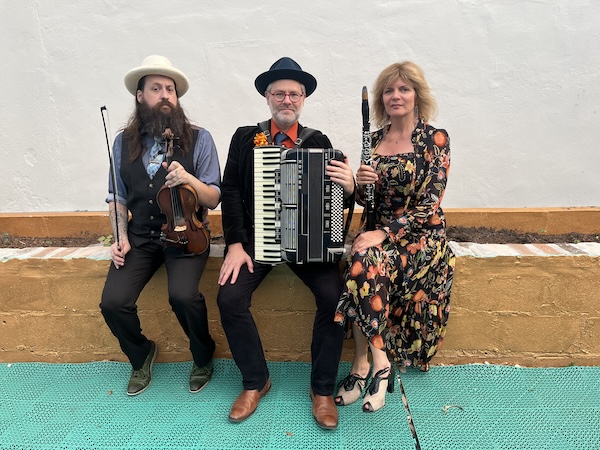
“Klezmer, choro, Tin Pan Alley, French musette, German songs, Russian waltzes, and so on” … Obliquestra plays the music they “most wanted to play after being isolated at home for so long” during the pandemic, David Symons told the Independent. The accordionist, singer and composer is one of the three members of the band who will be playing at the Vancouver Folk Music Festival, which takes place July 19-21 at Jericho Beach Park.

Symons will be joined at the festival by Dr. Sick on violin, guitar and musical saw, and Susanne Ortner on clarinet. It will be their first time performing together in Vancouver.

Obliquestra started when live music started returning in 2021, explained Symons. “Dr. Sick, who I had worked with for years in my band The Salt Wives (and one of the most unfairly talented musicians in town) called me up and said there was a new bar opening next door to his house and it would be amazingly convenient to play there every Saturday. I called Susanne Ortner, who I hadn’t played with, but who I knew was a master klezmer clarinetist, though she mainly does Brazilian choro and jazz now.” 

They started playing together in Symons’ backyard with banjoist Aaron Gunn and bassist Stoo Odom, “without any concept, really,” said Symons, just playing what they wanted to play.

“I’ve sort of always had this eclectic approach,” he said. “Discreet genres of music are mostly a marketing convenience. Musicians have always played and been influenced by whatever they heard, whatever was available, and whatever the public would pay them to play. Klezmer is a good example of this, being an amalgam of various musical styles from central and eastern Europe and, later, America. I doubt those old school musikers (you wouldn’t call someone a klezmer in those days unless you were trying to get punched) were concerned with notions of ‘authenticity’ or genre. They were playing what they heard and liked, and what their public wanted to hear. We are at least doing the first part of that.”

photo - Obliquestra – Dr. Sick, left, David Symons and Susanne Ortner – play at the Vancouver Folk Music Festival on July 21
Obliquestra – Dr. Sick, left, David Symons and Susanne Ortner – play at the Vancouver Folk Music Festival on July 21. (photo by Stephanie Reed)

While Symon has “gotten away from klezmer a bit these last few years, really since the pandemic started, mostly for lack of people to play it with,” he said “it’s still the music closest to my heart.”

Why that’s the case, and why he’s also been interested in Yiddish music, despite not being Jewish, is hard to put into words, he said. “In fact, if I could put it into words, maybe we wouldn’t need music. It makes me feel good?”

He said many people assume that a person is Jewish if they play klezmer, and even that it’s a strange thing for a non-Jew to do. 

“I’ve always felt this attitude contains an implicit condescension toward the music,” said Symons. “It would never occur to anyone that if someone plays Rachmaninoff they must be Russian, or if they play bluegrass they must be a hillbilly, etc. The music stands on its own merits, whatever one’s ethnic background. Most of the Jewish klezmorim I have known didn’t grow up with the music any more than I did. Still, you have to be careful and respectful. I used to do a lot of Yiddish song and, though I love it, I do less of that now because I realized that, unless I am prepared to devote a few years of my life to learning the language, there’s a lot of nuance that I’m going to miss, no matter how much I work on my pronunciation.”

Symons grew up in rural New Hampshire. “My father plays Latin percussion and guitar, but my folks were divorced and I didn’t see him much, and I had very little interest in music until about 15,” he said. “I was into theatre and acting. Then, I more or less simultaneously discovered Tom Waits and classical music, particularly Beethoven, and suddenly fell in love with music. 

“I played guitar for a few years, but the Waits album Frank’s Wild Years convinced me to get an accordion. This was pre-internet in rural New Hampshire, so I put an ad in the local paper asking if anyone had an accordion I could buy. It turned out a lot of people did, and I was very lucky to get something playable. Then, the accordion more or less sat around decoratively for the next couple of years until I happened to see Itzhak Perlman on David Letterman’s show with a bunch of klezmer musicians. He had just released a klezmer album with the top American klezmer bands at the time, and I became obsessed with this music and went down a deep rabbit hole for the next 25 years or so. I taught myself accordion to play klezmer, largely while working in a parking garage in Burlington, Vt., which had nice, cathedral-like acoustics.”

Symons acknowledged, “Of course, no one is truly self-taught – that just means I’ve learned a lot of little things from a lot of different people, without ever having any one teacher or mentor. As for my relationship with the accordion, the damn thing has gradually and sneakily taken over my life. They’ll tell you that you can just pick it up for fun once and awhile and put it down whenever you want, no harm done, but don’t believe them, kids! For many years, I tried to resist accordion clichés and now, in my middle age, I own not one, but two pairs of lederhosen. I started fixing accordions when I moved to New Orleans and there was no one doing it here. Twelve years later, I am sitting in a room in my home with somewhere between 40 and 50 accordions around me, in various states of functionality. The accordions have won.”

About the move to New Orleans, Symons said, “I lived in Vermont for 15 years and was ready for something new. Or, in the case of New Orleans, something old and dirty. I had spent a month in here in 2003 when I was traveling around the country busking in this tiny, ancient Toyota camper. I always thought about going back and trying to live there. Loving New Orleans is like loving a complicated, brilliant, yet self-destructive person. Someone who might be utterly charming one day and destroy a hotel bathroom the next. I still feel like an outsider here most of the time, but I’ve come to terms with that. I’m happy that I’m able to make myself useful to my fellow accordionists by keeping their instruments in working order.”

Symons and his fellow Obliquestra musicians – “Mini-Obliquestra or Obliquestrio,” as Symons quipped – play the folk festival’s South Stage July 21, 11:50 a.m.-12:40 p.m. For the weekend’s full lineup and tickets, visit thefestival.bc.ca.

Format ImagePosted on June 28, 2024June 27, 2024Author Cynthia RamsayCategories MusicTags accordion, David Symons, klezmer, Obliquestra, Vancouver Folk Music Festival

Posts pagination

Previous page Page 1 … Page 13 Page 14 Page 15 … Page 84 Next page
Proudly powered by WordPress