Skip to content
  • Home
  • Subscribe / donate
  • Events calendar
  • News
    • Local
    • National
    • Israel
    • World
    • עניין בחדשות
      A roundup of news in Canada and further afield, in Hebrew.
  • Opinion
    • From the JI
    • Op-Ed
  • Arts & Culture
    • Performing Arts
    • Music
    • Books
    • Visual Arts
    • TV & Film
  • Life
    • Celebrating the Holidays
    • Travel
    • The Daily Snooze
      Cartoons by Jacob Samuel
    • Mystery Photo
      Help the JI and JMABC fill in the gaps in our archives.
  • Community Links
    • Organizations, Etc.
    • Other News Sources & Blogs
    • Business Directory
  • FAQ
  • JI Chai Celebration
  • JI@88! video

Recent Posts

  • Sharing her testimony
  • Fall fight takes leap forward
  • The balancing of rights
  • Multiple Tony n’ Tina roles
  • Stories of trauma, resilience
  • Celebrate our culture
  • A responsibility to help
  • What wellness means at JCC
  • Together in mourning
  • Downhill after Trump?
  • Birth control even easier now
  • Eco-Sisters mentorship
  • Unexpected discoveries
  • Study’s results hopeful
  • Bad behaviour affects us all
  • Thankful for the police
  • UBC needs a wake-up call
  • Recalling a shining star
  • Sleep well …
  • BGU fosters startup culture
  • Photography and glass
  • Is it the end of an era?
  • Taking life a step at a time
  • Nakba exhibit biased
  • Film festival starts next week
  • Musical with heart and soul
  • Rabbi marks 13 years
  • Keeper of VTT’s history
  • Gala fêtes Infeld’s 20th
  • Building JWest together
  • Challah Mom comes to Vancouver
  • What to do about media bias
  • Education offers hope
  • Remembrance – a moral act
  • What makes us human
  • המלחמות של נתניהו וטראמפ

Archives

Follow @JewishIndie
image - The CJN - Visit Us Banner - 300x600 - 101625

Author: Daphna Kedem and Rina Vizer and Dalite Har Toov

Join rally to support Israeli democracy

Join rally to support Israeli democracy

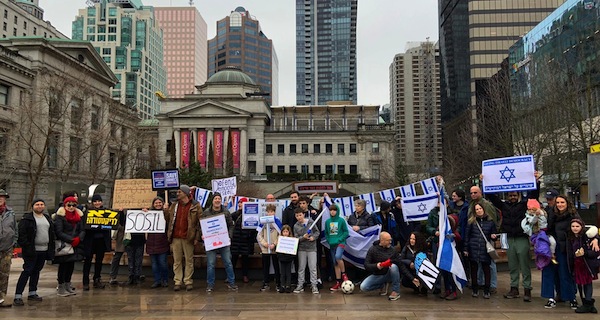
The Vancouver action group UnXeptable has been rallying on Sundays, at noon, at Robson Square, as part of an international grassroots movement to save Israeli democracy. (photo from Daphna Kedem)

We are a group of Israelis and Canadian Jews watching the grim news from Israel closely and feel that Israel’s democracy is on a very slippery slope, without brakes. The judicial crisis is leading to a dramatic loss of checks and balances in a state that has been democratic since its inception. It is shaking Israel and tearing apart its very fabric. We are terrified that the road to dictatorship will be quick and abrupt.

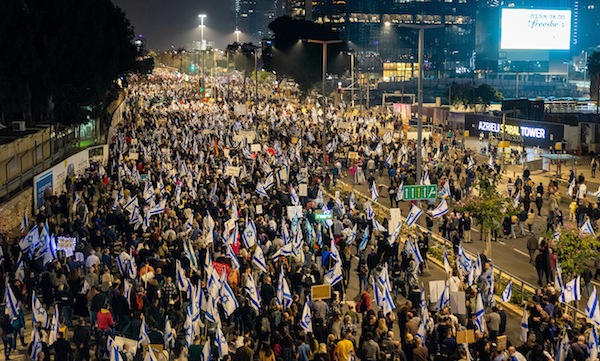
Israelis have been going to the streets in masses for the last many weeks. The biggest demonstrations drew more than 300,000 people to the street, yet we don’t see reference to these events in our local community. It seems that Jewish organizations and leaders are choosing to be on the sidelines, by toning down the crisis. Some are choosing to be silent altogether.

We are utterly frustrated by this silence. We know very well the horrific consequences that silence can bring about. But we realize that unprecedented events have been unfolding. Israel has been our source of pride throughout changing times and because events are happening fast, leaders might feel lost, without a compass in an uncharted territory.

We would highlight the facts as we see them: the Israel that we have known has changed.

Recent elections brought to power a group of people with personal interests counter to the public interest. One is a convicted criminal (bribery) who wants to clear his way to be a minister. The religious parties seek to release religious young people from army service, which is compulsory in Israel. A messianic, racist party wants to spread its agenda. And the prime minister is a defendant in three indictments and, in our opinion, to get away from his trial, he is promoting a change of regime in Israel, a radical move that will eliminate the separation of powers and the independence of the Supreme Court. The legal system will become part of the ruling party.

Until now, the selection of judges to the Supreme Court required agreement between the representatives of the judges and the representatives of the government. But the coalition has voted on a series of laws that approve a change in the judicial system. According to the new proposal, only the representatives of the coalition will be able to choose judges for the court. It seems clear that a preliminary committee will appoint judges that will dismiss the defendant, Binyamin Netanyahu, from all his charges.

The core issue is that the Netanyahu we knew from his 15 years in power previously is not the same Netanyahu. In his previous terms, he defended the Supreme Court as an anchor for freedom and justice. The new Netanyahu’s trial is going into its third year.

Israel has no constitution and no other checks and balances. The Supreme Court is the sole judicial body that secures the rights and freedoms of individuals and minorities. We would like to encourage our local leaders and the community at large to address these issues that will no doubt influence the close and delicate relationship we have with Israel. We would like to encourage people to stand up in defence of Israel’s democracy – our family members in Israel, our friends and colleagues, and the democratic forces in Israel need our help.

We urge you to join the Vancouver action group UnXeptable – Vancouver, which is part of an international grassroots movement in more than 30 cities to save Israeli democracy. Rabbis and community leaders have come out to such rallies around the world to speak out and support the movement. We hope that you, too, will join us. Our next rallies will be held on March 12 and 19, at noon, at Robson Square in downtown Vancouver.

Format ImagePosted on March 10, 2023August 17, 2023Author Daphna Kedem and Rina Vizer and Dalite Har ToovCategories Op-EdTags democracy, Diaspora, governance, Israel, justice, Netanyahu, protests, rallies, UnXeptable
Rallying in Rishon Le-Tzion

Rallying in Rishon Le-Tzion

Protesters in Rishon Le-Tzion Demonstrating against judicial reform February 25, 2023. (photo by Hayden)

It was a valuable experience to attend a protest rally in Rishon Le-Tzion. Several hundred people gathered in a city square to express concerns about the dramatic changes being initiated by the new Israeli government. The rally was more poignant, given that it was held in a square that commemorates people from this city who have died in combat.

As a Canadian, I had mixed feelings about attending. Who am I to be here protesting, as I don’t pay taxes and haven’t served in the army? On the other hand, the changes proposed by the government are going to affect Jews around the world and not just in Israel. Also, having three grandchildren in Israel increases my interest in what happens.

Rishon Le-Tzion, established in 1882, is well known as one of the first cities to be established in modern Israel. Its name, translating as “first in Zion,” says it all. The first Israeli Hebrew school was established here. Baron Edmond de Rothschild established what evolved to be a thriving wine industry here. The city predates the establishment of Tel Aviv by 27 years.

The square itself commemorates the large number of Israelis from Rishon Le-Tzion who have died in combat. Engraved in a monument is a listing, year by year, of names of the deceased. Israel today is one of the most successful countries in the world. When you visualize the large number of names engraved on these walls, it is clear that Israel’s achievements did not come without major losses of life.

The rally itself consisted of many people waving large Israeli flags. There were people of all ages, including many children present.

One of the speakers, Meir Sheetrit, served as minister of several different portfolios in previous Likud governments. Sheetrit was so respected that his name was brought forth as a candidate for the presidency of Israel in 2014. As a Likudnik, he decried the changes taking place and asserted that the current government is deviating radically from the direction of previous Likud governments.

Another speaker was Yair Golan, who was a member of the Knesset and has served on government committees. He was a former general in the Israel army and, at one point, was considered for the position of army chief of staff. He said he values a democracy that is based on law and not on tyranny, a press that is free and not based on peoples’ whims and a government that will protect the rights of minorities.

Merav Michaeli, the leader of the Labour party, was in attendance. She circulated through the audience, but, according to the protocols of the demonstration, being a sitting member of the Knesset, she was not permitted to speak.

The audience was mainly attentive, though occasional side conversations took place. People frequently erupted with Boosha! (Shame) in reference to various proposed government changes. The slogan De-mo-cra-tia frequently reverberated through the audience.

Periodic references were made to the diminishing status of women, LGBTQ+ people and minorities, especially Arab minorities, with the thought that these groups will bear the brunt of the changes.

Jews of non-Orthodox denominations feel that their rights will be diminished under the new government. The Women of the Wall fear they will always be relegated to second-class citizens when they pray at the Kotel. Several of the new government ministers want to cancel the annual Gay Pride parades. Many Israelis and leaders of other countries think the new government will end the possibility of ever having a two-state solution.

Most of all, people are concerned about the future of Israel’s fiercely independent judiciary. In a bill recently introduced into the Knesset, the government will have the ultimate say in who is appointed to the courts. Also, the Knesset will have the ability with a simple majority to overrule decisions of the Supreme Court. Many people, including a large number of Canadian judges and lawyers, have spoken out against these changes.

I came to Israel with major concerns about the new government’s policies and directions. It was instructive to see that a large percentage of the Israeli population shares similar feelings.

The demonstration I attended was only one of many that took place that night. According to reports in the press, there were 40,000 demonstrators in Tel Aviv, 20,000 in Haifa, 2,000 in Beersheva and smaller rallies all over the country. Clearly, a large percentage of the Israeli population strongly objects to the proposed changes. Large demonstrations occur every Saturday night, but also at other times during the week. If public engagement is a sign of a functioning democracy, then Israel is a healthy society.

Will these protests make a difference? So far, the new government has been firm in its conviction that major new directions are needed and is not backing down.

Rallies such as the one in Rishon Le-Tzion raise many questions. Are rallies an effective way to advocate for change in a society? Do democratic governments need to respond to what people participating in rallies are advocating? Are the proposed changes going to lead to a better or worse Israel? Is it important for Diaspora Jews to express their opinions about what is happening in another country far away?

As a Canadian, I came back with a firm opinion about the latter question. Diaspora Jews, who can be greatly affected by what is happening in Israel, need to express their opinions about the changes that may affect them. People who support democratic systems should weigh in anywhere in the world when they perceive that democracy is threatened.

But it is up to Israelis themselves to answer the basic questions as to what type of electoral and judicial systems they prefer. For the sake of the Jewish Diaspora and the rest of the free world, we hope that they will make the right decisions.

Larry Barzelai is a semi-retired physician living in Vancouver. He’s always had strong ties with Israel through the Canadian Zionist Federation, CJPAC and the annual Public Speaking Contest. His main connection now is his three grandchildren who call Israel their home.

Format ImagePosted on March 10, 2023March 9, 2023Author Larry BarzelaiCategories Op-EdTags democracy, Diaspora, governance, Israel, justice, Netanyahu, protesters, rallies, Rishon Le-Tzion
Opposition to policies

Opposition to policies

In Tel Aviv on Jan. 28, Israelis demonstrate against their government’s judicial reform proposals. A majority of Canadian Jews also oppose the proposals. (photo by Oren Rozen)

A new poll shows that most Canadian Jews oppose policies favoured by the current Israeli government. Fully three-quarters of Canadian Jews say they are emotionally attached to Israel. However, 56% claim that Israel’s government is moving in the wrong direction, compared to just 13% who say it is moving in the right direction.

Opposition is especially strong to laws proposed by members of the governing coalition that would allow gender segregation in some public places, ban Pride parades and legalize conversion therapy for LGBTQ+ people on religious grounds, with between 83% and 88% of Canadian Jews expressing opposition to such moves.

Some 73% of Canadian Jews oppose judicial reform that would make it easier for the Israeli government to reverse Supreme Court decisions, thus adding their voices to that of well-known Canadian jurist and former minister of justice Irwin Cotler, among others.

Two-thirds of Canada’s Jews oppose the idea of disallowing Palestinians from serving in the Israeli parliament, compared to just 15% who support the idea. About twice as many Canadian Jews oppose building new Jewish settlements in the West Bank and incorporating parts of the West Bank into the state of Israel as favour such initiatives.

The so-called “grandparent clause” in Israel’s Law of Return allows anyone with one Jewish grandparent to claim citizenship, but religiously Orthodox members want the clause removed. Some 58% of Canadian Jews oppose such a move, while 17% favour it – hardly surprising since fewer than one-fifth of Canadian Jews are Orthodox.

Israel’s minister of national security was once convicted of incitement to racism and supporting a terrorist organization. Israel’s minister of finance recently described himself on radio as a “proud homophobe.” JSpaceCanada and the New Israel Fund of Canada have proposed that the Canadian government refuse to meet or build relationships with these ministers. Nearly six in 10 Canadian Jews agree with that proposal, while just two in 10 disagree.

Commenting on the results, Joe Roberts, board chair of JSpaceCanada, said, “These results couldn’t be clearer, Jewish Canadians are overwhelmingly concerned with the direction and policy decisions proposed by Israel’s radical governing coalition. These are not the shared values that the Canada-Israel relationship was built upon. Jewish Canadians, like the hundreds of thousands of Israelis taking to the streets to protest the undermining of democracy and assault on the human rights of Palestinians, expect bold and decisive leadership on this issue from the government that represents us in Ottawa.”

Ben Murane, executive director of the New Israel Fund of Canada, said, “Canadian Jews are worried that a country that removes basic democratic checks and balances and eviscerates the independence of the judiciary can no longer be referred to seriously as a full democracy. They overwhelmingly oppose the Israeli government’s legislation stripping power from the country’s judiciary, one of the few remaining institutions willing to protect the rights of Palestinians, LGBTQ people, women and other vulnerable populations.”

The poll was funded by JSpaceCanada and the New Israel Fund of Canada, organizations that promote democracy and equality in Israel, as well as a two-state solution to end the Israel-Palestine conflict. It was designed and analyzed by Prof. Robert Brym of the department of sociology and Centre for Jewish Studies at the University of Toronto. Brym commented, “To corroborate these findings we need more polls with larger samples asking similar questions. However, this poll provides a fair baseline representation of Jewish community perspectives on issues of vital importance to the approximately 404,000 Canadians who identify as Jewish by religion or ethnicity.”

The poll, fielded between Feb. 16 and 28, 2023, by EKOS Research Associates, is based on a nationally representative sample of 288 Canadian adults who identify as Jewish by religion or ethnicity. Nineteen of 20 polls like this one would likely yield results with less than a 5.8% margin of error.

– Courtesy JSpaceCanada

Format ImagePosted on March 10, 2023March 9, 2023Author JSpaceCanadaCategories Op-EdTags Ben Murane, civil rights, democracy, Diaspora, governance, Israel, Joe Roberts, JSpaceCanada, justice, Netanyahu, New Israel Fund, NIFC, surveys

Condemn Smotrich’s comments

Independent Jewish Voices Canada is calling for immediate action by the Canadian government in response to comments by a senior Israeli minister that the Palestinian town of Huwara should be “wiped out.”

Speaking at a conference hosted by news publication TheMarker, Finance Minister Bezalel Smotrich, who is also the minister in the defence ministry, in charge of civilian affairs in the occupied Palestinian West Bank, said he thinks “the village of Huwara needs to be wiped out” and that “the state of Israel should do it” rather than private citizens. Huwara is a Palestinian town on the outskirts of Nablus, surrounded by settlements, long subject to violence from Israeli settlers and orchestrated infrastructure shutdowns from the Israeli government.

The minister’s comments came a few days after Israeli settlers went on a violent rampage in Huwara and neighbouring villages, which has been widely labeled a pogrom, including by the Israeli military general in charge of troops in the West Bank and the former director of the Anti-Defamation League. Four hundred-plus Israeli settlers attacked the Palestinian villages of Huwara, Zaatara, Burin and Asira al-Qibliya, burning dozens of homes and killing a 37-year-old Palestinian man while wounding hundreds as Israeli forces stood by. The man who was killed, Samih al-Aqtash, had just returned from volunteering in Turkey to help earthquake victims. He was the 67th Palestinian killed by either the Israeli army or vigilante settlers this year alone.

A pogrom is a violent riot with the specific intent to massacre or expel a specific group of people. It emerged as a Yiddish word in the late 19th century to describe the attacks on Jews across the Russian empire. We use the word “pogrom” to recognize that Israeli settlers are recreating the kind of targeted, racialized terrorism that targeted Jews in Europe. We use this word to recognize the hypocrisy of claims that Jewish settler riots are protecting Jewish safety.

Many Canadian and Israeli Jews, including many of our members, have ancestors who lived through these horrific, targeted antisemitic riots in Europe. Many of our members are also descended from, or are themselves, survivors of ethnic cleansing and genocide. These atrocities often started with pogroms that were officially ignored or officially enabled.

The comments by Smotrich on March 1 are a clear validation of the previous Sunday’s pogrom and constitute an explicit call for ethnic cleansing if not outright genocide. To this we say loudly and unequivocally: “not in our name.”

What we are witnessing in Israel is shocking, but it is by no means an aberration. Emboldened by the impunity afforded to them by the likes of Canada and other Western governments, the Israeli government and settler groups are simply more explicit about their settler-colonial aims to displace, replace and keep Palestinians out from the lands they claim. Israel was founded on the ethnic cleansing of 750,000 Palestinians, known as the Nakba, or “catastrophe,” which continues to this day, 75 years later.

IJV calls on Canada to clearly articulate what the Israeli government is calling for as ethnic cleansing and condemn Minister Smotrich’s comments in the strongest possible terms. Canada cannot claim to be vigilant against ethnic cleansing and genocide while refusing to name Israeli action and incitement to these heinous acts.

IJV also joins calls on the Canadian government to boycott the new far-right Israeli government and to advocate for international protection for the undefended Palestinian people living under Israeli rule.

Finally, IJV calls on organizations representing Canadian Jewish communities to loudly condemn the settler pogrom and government officials’ incitements to violence. Our communities need clear moral leadership to hold Israel to account.

Israel isn’t shying away from saying it as it is. Neither should Canadians.

* * *

Editor’s note: This letter does not acknowledge that more than 850,000 Jews were forced to leave their homes in Arab countries in the 20 years following the Arab-Israeli war of 1948.

Posted on March 10, 2023March 9, 2023Author Independent Jewish Voices CanadaCategories Op-EdTags Bezalel Smotrich, Diaspora, Huwara, Israel, justice, settlers, violence

Making room for compassion

I’ve been under stress lately. It’s the usual: money, household, family and work concerns. Some of it is my own doing: in our enthusiasm for extracurricular activities, I somehow managed to sign our twins up for three different weekly ones during January and February. Yet, even though rushed dinners and drives through snowstorms and -30°C windchills aren’t my favourite activities, I found a silver lining. As my kids learned to use sewing machines at the studio, I got to knit and read quietly in the renovated waiting area overlooking river skating trails and watching the sunset. During chess club at the local Chabad, I saw friends briefly, then I hid, reading alone.

Thinking about the two sides of these activity nights made me reflect further. Having the time and energy and, yes, money to manage these extra enrichments is a gift, even if schlepping kids around can be hard and tiring for parents. The few moments of relative quiet, while the kids are happy, occupied and learning, usually enable me to regain my composure.

Once I have had those moments, I find room to be more patient, kind and compassionate. I’m not big on spas or manicures or tropical vacations. For me, something as simple as a few moments alone in a warm, quiet place with a good book or a good view can give me that reprieve.

I thought of this while speaking with my mom recently. She mentioned that, while on neighbourhood forums, sometimes she feels that all people do is complain. Worse, she feels that, in a Jewish forum, there is always someone who reads everything that happens to her as antisemitic. There was a pause in the conversation as I sensed her frustration. I was able to reach back into one of those warm, calm moments and suggest, in response, that perhaps in an era of rising antisemitism, the person concerned about antisemitism had actually experienced trauma. That, maybe, her fearful responses and anxiety were a response to a real incident.

Similarly, I wondered about those who were “always complaining” online. Perhaps those people also had bad experiences, but had no one offline to comfort or hear them. No one “saw” them. As a result, they were seeking that attention and reassurance online instead.

There is no shortage of distressing stuff happening, particularly if you’re reading about the ongoing earthquakes and displacements in Turkey and Syria, the deaths and violence between Israelis and Palestinians, or the increased crime or fatal drug overdoses at home in Canada. There is plenty of “awful” to go around.

The big challenge is in finding that space in which to compose ourselves and respond to others with compassion and patience. It can be as simple as a cheerful conversation or joke, and as difficult as listening to someone’s painful cries for help, on repeat.

As someone who grew up in the United States, I dreaded what I would hear after the Shabbat recently described as a “Day of Hate” proposed by neo-Nazis. All day, I remained tense, worried. What happened? Thank goodness, nothing much. My brother’s family attended a lovely bat mitzvah at our family’s long-time congregation … like many in the States, they went to synagogue and nothing happened. Yet, the overall increased antisemitic activity afoot made it hard for me to just relax and hope for the best. Even if nothing happened on that day, the amount of hate going around has increased. Almost worse though is the response that Jews who are anxious about this are simply “crybabies” or “crying wolf” or worried about nothing. The bad feeling comes from fear. Some of it, due to intergenerational trauma, is internalized.

My husband’s father was born in a displaced persons camp in Germany after the Second World War. Although my husband’s grandparents lived, they lost most of their families. They managed to survive the war, with harrowing stories. My husband’s bubbe, may she rest in peace, talked about her experiences over and over. I often sat next to her, holding space for her stories, as she repeated her trauma in different ways. She’d effortlessly shift languages, speaking whatever language – among them, Hebrew, Yiddish and English – to whomever also had that room to hear her, see her and listen.

By contrast, my husband’s zayde, z”l, spoke less about the war, but, in his final years, when he lived in a nursing home, he replayed a scary story over and over. At every door of the care home, the healthcare workers posted photos of him, because he’d try to escape. Mimicking what must have happened during the war, he’d trick someone or sneak past or do something that allowed him to leave the home. They were the enemy, trapping him, and he needed to get out. Zayde often succeeded, showing up on the doorstep or sitting in his car in the driveway. He scared the heck out of Bubbe when she found him. He, too, was replaying his traumatic past.

We’re lucky to have new kinds of therapies and medications that help some people cope with trauma, but many of us still are working through issues. Even with access to basics like housing, food, medication and, hopefully, love, we all struggle to be seen and heard, to find enough compassion and love to make it through. We need to each find that quiet, well-lit space to regain our composure, so we can then reach out and help others.

As Hillel says in Pirkei Avot: “In a place where there are no men, strive to be a man.”  It could also mean: “In a place where no one is acting like a good person, strive to be one.” Nowadays, some of our places for listening are online. Our social encounters are different than before, and finding that patience or inner strength can require more effort.

Love, and its close cousin, compassion, are not limited commodities. A heart full of kindness can find more space to help. As my crazy wintertime parenting and worry load lightens, I realize that I wish everyone could have that gift of an hour of solitude, watching the sun set over a river, seeing a rabbit’s tracks or a biker commuting home. We can’t singlehandedly fix or stop the world’s trauma, but we can gift each other our time and patience to help others feel seen and to heal from it.

Joanne Seiff has written regularly for CBC Manitoba and various Jewish publications. She is the author of three books, including From the Outside In: Jewish Post Columns 2015-2016, a collection of essays available for digital download or as a paperback from Amazon. Check her out on Instagram @yrnspinner or at joanneseiff.blogspot.com.

Posted on March 10, 2023March 9, 2023Author Joanne SeiffCategories Op-EdTags antisemitism, compassion, lifestyle, parenting
Fashion with a long history

Fashion with a long history

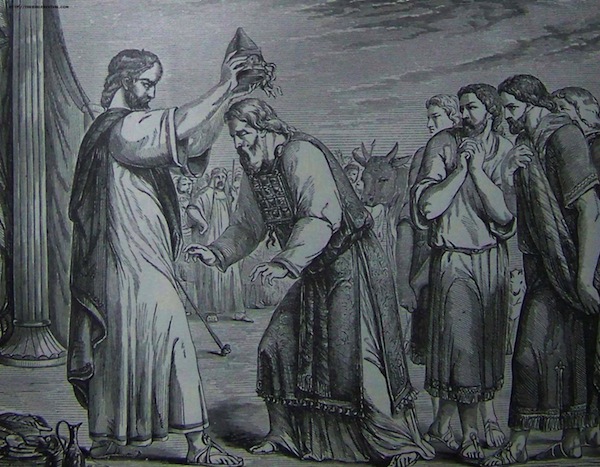
“Consecration of Aaron and His Sons,” an illustration from the 1890 Holman Bible, 1890. Aaron’s high priest attire is elaborately described in the Hebrew Bible. (photo from Wikipedia)

Fashion in the Bible? What does that mean? The biblical text actually offers us an idea of what people wore in those times – and even why.

For the majority of us, the most familiar example of biblical fashion is found in Genesis 37:3 in the description of young Joseph’s problematic coat of many colours. This coat, which was gifted by Joseph’s father Jacob, served to anger and increase the jealousy Joseph’s brothers towards him. Consequently, they throw him in a pit to be left to his fate: to die of thirst, to be killed by a wild animal or to be picked up by traveling merchants.

From a chronological point of view, however, the first real example of Old Testament fashion comes at the very beginning of Genesis. In this instance, G-d has decided to exile Adam and Eve from the Garden of Eden. As we all know, G-d was angered by Adam and Eve’s disobedience in eating from the Tree of Knowledge. While He is upset with them, He obviously still cares enough to provide them with warm coverings, more than the fig leaves they chose for themselves: “the Lord G-d made garments of skin for Adam and his wife and clothed them.” (Genesis 3:21)

Moving on in the Book of Genesis, we read that, when Abraham’s servant Eliezer escorts Rebecca (who will become the second Matriarch) back from Aram-Naharaim, she sees Isaac (who will become the second Patriarch) for the first time. She asks Eliezer about Isaac’s identity. After he tells her, she modestly conceals her face: “‘It is my master.’ And she took her veil, and covered herself.” (Genesis 24:65)

Veils are used for a different purpose in the story of the widow Tamar and her widowed father-in-law Judah. In this story, Judah does not fulfil his promise to make his youngest son her husband in accord with the practice of levirate marriage. (Judah thinks that Tamar has basically brought about the death of his first two sons when, in fact, it was G-d’s doing.) Judah also subjects Tamar to widowhood when she should have been free to remarry.

In response, Tamar takes drastic action. She hides her true identity behind a veil. She sits at the side of the road, where, presumably, she could be taken for a harlot or public woman: she “put off … the garments of her widowhood and covered herself with her veil and wrapped herself.” (Genesis 38:14) Without Judah being any the wiser, she allows him to have intercourse with her and, when a pregnant Tamar presents Judah with his staff and seal, he realizes what he has done and acknowledges his wrongdoing. The Bible tells us that she secures her place in the family by having twin sons from this union. The biblical reader doesn’t know more about Tamar, but one knows that Perez, one of her twins, will provide the lineage for King David.

One might think that, after hundreds of years of slavery, the Hebrews would want no reminders of their life in Egypt. But, according to the biblical text, the Hebrews took clothes from the Egyptians: “And the children of Israel did according to the word of Moses; and they borrowed from the Egyptians … clothing.” (Exodus 12:35) Significantly, before the Hebrews hear G-d declare the 10 Commandments, Moses instructs them to prepare themselves by laundering their clothes: “And Moses went down from the mount unto the people and sanctified the people; and they washed their garments.”(Exodus 19:14)

According to Rabbi Simeon – a scholar who was active between 135 CE and 170 CE – at the time of the Exodus from Egypt, the Hebrew weavers did not take their looms. Yet the Hebrews’ clothes never wore out in the 40 years of desert wandering. In Deuteronomy 8:4, it states: “Thy raiment waxed not old upon thee.”

We read that, in keeping with her status as part of the royal family, King David’s daughter Tamar (like Joseph before her) wore a vibrant robe: she “had a garment of many colours upon her; for with such robes were the king’s daughters that were virgins appareled.” (2 Samuel, 13:18) Not befitting royalty, King David’s firstborn son Amnon rapes Tamar, his half-sister, then throws her out.

Both violated and rejected, Tamar tears her robe, going into mourning: “And Tamar put ashes on her head and rent her garment of many colours that was on her; and she laid her hand on her head and went her way, crying aloud as she went.” (2 Samuel, 13:19) Absalom, her full brother, has her stay in his household for the rest of her life. Two years later, Absalom takes revenge by having Amnon killed.

When Queen Esther had to talk with her husband, King Ahasuerus, she put on her royal apparel (Scroll of Esther 5:1). Had Esther been made wary by the fate of her predecessor, Queen Vashti? As we recall, King Ahasuerus ordered Queen Vashti to appear “wearing her royal crown.” (Scroll of Esther 1:11) One rabbinical tradition interprets this to mean that the king’s instructions were to wear only her royal crown; in other words, to appear naked (Babylonian Talmud, Megillah 12b). According to that tradition, Queen Vashti refused because she did not want to be put on display before a bunch of guys who had been drinking for a week straight. Vashti’s refusal apparently resulted in her banishment. Admittedly, she paid a heavy price, but it would appear as if both these queens admirably set the terms for how they would respond to their husband.

Of all the given examples, the most elaborate description is given to the clothes Aaron (Moses’s brother) wore as the high priest. The description is more or less repeated in a few places, but here is the narrative of Moses dressing Aaron: “And he put upon him the tunic, and girded him with the girdle, and clothed him with the robe, and put the ephod upon him, and he girded him with the skilfully woven band of the ephod, and bound it unto him therewith. And he placed the breastplate upon him…. And he set the mitre upon his head; and upon the mitre, in front, did he set the golden plate, the holy crown.” (Leviticus 8:7-9) The clothing, like the text itself, is meant to impress.

The Hebrew Bible has been around a long time; in its present form, most likely since the second century CE. The clothing it describes may truly be termed sustainable fashion.

Deborah Rubin Fields is an Israel-based features writer. She is also the author of Take a Peek Inside: A Child’s Guide to Radiology Exams, published in English, Hebrew and Arabic.

Posted on March 10, 2023March 9, 2023Author Deborah Rubin FieldsCategories LifeTags fashion, Judaism, Torah

מספר הישראלים המעוניינים לעזוב למדינה אחרת אלה הולך וגדל

 כצפוי מספר הישראלים המעוניינים לעזוב למדינה אחרת לאור המשבר הקשה הפוקד את המדינה בימים אלה הולך וגדל. זאת בעיקר לאור הרפורמה במערכת המשפטית אותה מציעה ממשלת הימין בראשות ראש הממשלה, בנימין נתניהו. קנדה משמשת באופן קבוע אחד היעדים הבולטים בעולם להגירה כולל לאלה שרוצים להגיע מישראל. בקנדה יש כיום את הריכוז השלישי-רביעי בעולם של יהודים הגרים מחוץ לישראל וגם נקודה זו חשובה לישראלים

הנה מספר תגובות בנושא שמתפרסמות בימים אלה בפורומים השונים של ישראלים בקנדה של פייסבוק – בנושא המעבר מישראל אל קנדה

אלינור כהן כותבת: יש עלייה של מאה אחוז במספר הבקשות שאני מנהלת ואני מוצפת בשאלות ממשפחות שחושבות לעבור לגור בקנדה מהסיבות הכי עצובות שיש

לגבי נושא המחאה נגד תוכנית הרפורמה במערכת המשפט כותבת דפנה קדם: בטורונטו וונקובר אנו מוחים זה שבוע שלישי למען שמירת הדמוקרטיה בישראל. היא מציעה למעוניינים להצטרף לקבוצות המחאה בטורונטו, ונקובר או גם בערים אחרות בקנדה

אסנת קמחי חושבת לעבור עם המשפחה לקנדה. היא שואלת: אנו חושבים לעבור לקנדה. נשמח לקבל עצות, טיפים והמלצות

דניאלה בואנו גם היא מעוניינת לעבור לקנדה. היא כותבת בפורום: מחפשת לעשות רילוקיישן לקנדה עם בעלי והילד בן השנה. יש לי ניסיון של שלוש שנים בצילומי רנטגן של שיניים. אשמח באם תוכלו לעזור לי בנושא

ליאת מרסו מחפשת עזרה דחופה בנוגע להגירה לקנדה ושואלת איך מתחילים ובמי היא יכולה להיעזר

עידן סטולרוב מחפשת עורך דין מומחה להגירה לקנדה

נטלי קיינן מחפשת להכיר ישראלים שגרים באדמונטון שבמחוז אלברטה כיוון שהיא מעוניינת להגר לשם

ג’ניפר סיל כותבת כי אחיה בן העשרים ושתיים הוא שחקן כדורגל (חופשי) שמעוניין לעבור לקנדה. היא שואלת האם מישהו מכיר סוכן מקומי או מישהו אחר שיכול לעזור לו

אלמוני המציין כי משפחתו מתכננת להגר לקנדה בקיץ הקרוב. הוא שואל האם ניתן לפתוח חשבון בנק בקנדה און-ליין מישראל, כדי להעביר כספים לקראת ההגעה

אלדד בלייש שמעוניין לעבור לקנדה הוא טכנאי רנטגן. הוא שואל האם בקנדה מקבלים תעודות רשמיות מישראל ומה התהליך לאישורן

מאיה טאוב מעוניינת לעבור לקנדה והיא שואלת מה האתגר המרכזי של זוגיות ברילוקיישן

אלמונית כותבת כי היא גרה כיום בישראל. היא מעוניינת לחדש את האזרחות הקנדית שלה ולהשיג אזרחות קנדית לבעלה ולילדים. היא שואלת כיצד עושים זאת בצורה היעילה ביותר ומה התנאים לכך

מעיין עופרי שהיא פרמדיקית בישראל שואלת בפורום על פרמדיקים שעובדים כיום בקנדה. היא רוצה מידע מפורט בתחום התעסוקה הזה

מספר הפורומים של ישראלים בקנדה בפייסבוק הולך וגדל עם השנים. הרשימה כוללת כיום בין היתר: חמישה פורומים שונים בעלי אותו שם של ישראלים בקנדה (הכוללים 18 אלף חברים, שמונת אלפים חברים, שבעת אלפים חברים, שש מאות חברים, כחמש מאות חברים, כשלוש מאות חברים), שני פורומים בעלי אותו שם של ישראלים בטורונטו (הכוללים כעשרים ואחד אלף חברים ועשרת אלפים חברים), ישראלים החיים בקנדה (הכולל כארבעת אלפים ושש מאות חברים), ישראלים בהייטק באמריקה – מיועד לאלה שגרים בארה”ב ובקנדה (כולל כארבעת אלים חברים), סטודנטים ישראלים בקנדה (כולל אלף שלוש מאות חברים), שני פורומים בעלי או שם של ישראלים באמריקה – מיועד לאלה שגרים בארה”ב ובקנדה (כוללים עשרים אלף חברים ואלף ארבע מאות חברים) וכן קנדה למטיילים (הכולל כתשעת אלפים חברים)

Posted on March 1, 2023February 28, 2023Author Roni RachmaniCategories UncategorizedTags Canada, emigration, governance, immigration, Israel, Netanyahu, politics, בנימין נתניהו, הגירה, ישראל, משילות, פוליטיקה, קנדה
Israelis not that divided

Israelis not that divided

Dr. Einat Wilf and Mark Regev spoke at a Centre for Israel and Jewish Affairs event Feb. 9.

Canadian Jews who don’t like the look of Israel’s new government should not withdraw from engagement with that country and its discourse, but get more involved, says Dr. Einat Wilf, a former Labour party member of the Knesset.

Leaders in the North American Jewish community are expressing concerns over the new government and aspects of its policy agenda, while others worry that the always-present fear of schisms between Israeli and Diaspora Jewry could be reaching a breaking point. But Wilf said this is a time for overseas Jews to act strategically to influence policies that reflect their priorities.

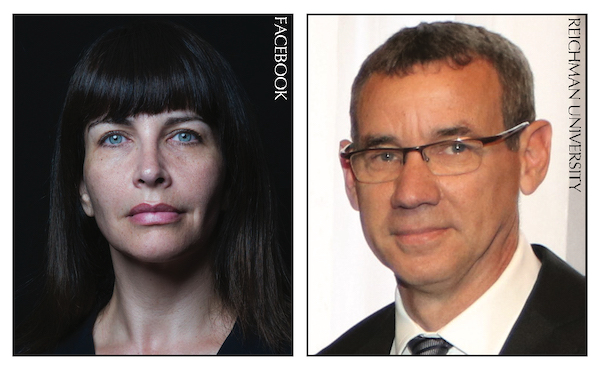
Wilf, who served in the Knesset from 2010 to 2013, is an author, businessperson and one-time foreign policy advisor to Shimon Peres. She was part of a panel convened by the Centre for Israel and Jewish Affairs Feb. 9. Wilf engaged with Mark Regev, who is chair of the Abba Eban Institute for Diplomacy and Foreign Relations at Reichman University and a former spokesperson and senior foreign affairs advisor to Binyamin Netanyahu. He also served as Israel’s ambassador to the United Kingdom. Yaron Deckel, the Jewish Agency for Israel’s director for Canada and a veteran Israeli journalist, moderated the event.

Wilf said it is up to Canadian Jews to decide how to respond to the political situation in Israel. “But my personal view is that this is perhaps the time for Jews outside Israel to fund more and channel money and efforts to things that have to do not with welfare but actually with how Israel is Jewish,” she said. “North American Jews, if they want Israel to be hospitable to their kind of Jewish practice, they need to make a stark choice.”

The Conservative and Reform movements in Israel are simply too small to be major players in this discussion and so the more practical camp with which Diaspora adherents of those denominations can partner to meet their goals is the secular movement, Wilf said. This is the most likely way to advance policies such as egalitarian prayer at the Kotel, liberal interpretations of identity for aliyah and reducing the powers of the chief rabbinate.

Both panelists attempted to dispel some conventional wisdom, including that Israeli society is divided, turning its back on liberalism and getting more and more religious.

“Israeli democracy, as it stands now, is more inclusive, more representative of the greater diversity of voices than it has been probably throughout its history,” said Wilf. That diversity, by its very inclusiveness, has opened the door to ideas that can be considered contrary to traditional progressive Israeli values, she argued. “That means that more non-liberal voices are represented than ever before.”

Regev concurred. The “good old days” of early Israeli democracy were, he said, “a one-party state run by the Labour Party.… It was a much more conformist society, it was difficult for gays, it was difficult for women, it was a society that was more closed, it was difficult for Mizrahim,” he said. “Today, I have no doubt if you look at the trajectory, Israel is more liberal, more pluralist, more open, more free than ever before.”

A couple of decades ago, Regev noted, if you wanted to go out for dinner in Jerusalem on a Friday night, you had to travel to east Jerusalem. “Now, in Jewish Jerusalem, you have all sorts of places you can go to,” he said. “The idea that Israel is becoming only more religious, more Haredi, more Orthodox is just not true.”

One of the areas where most Israelis agree, said Wilf and Regev, is on the Palestinian issue. After Yasser Arafat ended the peace process and started the Second Intifada, and his successor Mahmoud Abbas demonstrated no more conciliatory a tone, Israelis realized the ball was not in their court. All they can do is wait for a change of leadership on the Palestinian side, both said.

The fiercest divisions in Israeli society right now are over proposals to reform the judiciary, including allowing the Knesset to override Supreme Court decisions by a majority vote and to hand the power of judicial appointments to politicians.

Deckel noted that Canadian legalist Irwin Cotler has warned that the judicial overhaul would make Israel a flawed democracy and other Jewish leaders in North America have spoken up in ways that are rare or unprecedented against some of what the new government is advocating.

“Is there really a threat to Israeli democracy?” asked Regev. “I’m not so sure. I don’t believe there is. I believe Israeli democracy is strong. I believe we can debate the pros and cons of the different judicial reforms put on the table without having to say this is the end of democracy.”

Both commentators think fears of the new government are overblown, although Wilf has a caveat. She has studied past Netanyahu governments and concluded their bark is generally worse than their bite or, at least, that the “hysteria” with which they were met was not commensurate with the policies they enacted.

“All Netanyahu governments, especially the one of 2015, were received with complete hysteria and none of it materialized,” said Wilf. “Sometimes the exact opposite. Netanyahu turned out to be much more centrist, careful, generally very much eschewing violence and conflict and even bringing peace agreements.”

A difference now, said Wilf, is that Netanyahu is head of a more ideologically narrow government, where in the past he had built fairly broad coalitions.

“For Netanyahu, that was very comfortable,” Regev said. “Because, when you have a coalition partner to the left of you and a coalition partner to the right of you, that allows you to be the conductor of the orchestra, so to speak.”

Regev sees a danger in Diaspora Jews who disagree with events in Israel airing dirty laundry, but Wilf said that is the least of her concerns. No matter who is in charge or what policies they advance, overseas opponents will make the same case, she said. “They still would have argued that Israel is a settler-colonial, apartheid, genocidal, white European blah blah blah,” she said. “That’s how they work.”

Addressing the widespread spike in antisemitism, Regev sees a silver lining. “You could be very cynical and you could say some things don’t change. But something has changed,” he said. “Something very important has changed. Unlike my father when he was a child and the Jews were stateless and defenceless and knocking on people’s doors [saying] ‘Please let me in so they won’t kill me,’ today we can proudly say that, if something has changed, the Jews have changed. We have a state. We have a successful state. With all our problems, Israel is a very successful country, politically, economically, diplomatically, militarily. We can protect ourselves.”

Gail Adelson-Marcovitz, national chair of the board of the Centre for Israel and Jewish Affairs, opened the online event, which attracted more than 1,000 participants. “Many of us believe that Israel is a state of the totality of the Jewish people and not just its citizens,” she said. “While it is the citizens of Israel who elect their government, that choice has ramifications for many aspects of our partnership and specifically impacts Diaspora Jews. We feel that our interest must, at the very least, be heard, if not respected, particularly in those areas where we are impacted.”

Format ImagePosted on February 24, 2023February 23, 2023Author Pat JohnsonCategories Israel, LocalTags Centre for Israel and Jewish Affairs, CIJA, democracy, Diaspora, Einat Wilf, Gail Adelson-Marcovitz, Israel, Mark Regev, politics
Artfully exploring heritage

Artfully exploring heritage

Lindsey Tyne Johnson (photo from Lindsey Tyne Johnson)

Returning from a Birthright trip to Israel in 2019, artist Lindsey Tyne Johnson was inspired. Learning the aleph-bet, she made a laser-engraved spirit board in Hebrew, but accidentally arranged the letters left to right, as they would be in English, and not right to left, as Hebrew is read. The mistake spurred her not only to create the exhibit Hebrew Spelled Backwards, which is on display at the Kamloops Art Gallery until April 1, but to explore her cultural heritage, from which she had been estranged, and learn more about Judaism.

The other, more sombre, inspiration for the Hebrew spirit board and the exhibit was, Johnson writes in a blog post, a “desire to feel closer to my brother after the events that left him homeless and his eventual passing.”

“Born with the name Liam, my brother changed his name to his chosen Hebrew name, Noah as an adult,” she writes on her website (lindseytynejohnson.com). “My mother had mentioned our Jewish ancestry to us as children, but my brother was the only person to explore it…. I can still remember it as what my mother called ‘one of his many phases’ in his late teenage years. She chalked it up to a phase, but it’s the string I use to tie memories of my brother together.”

“My brother was the first person I witnessed who explored their Jewish heritage,” Johnson told the Independent. “When he moved to Vancouver in his early 20s, he legally changed his name to his Hebrew name, Noah. He struggled a lot with his mental health, and there were times when I felt like I was losing the brother I grew up with. It was an attempt to feel closer to him that I went on Birthright and had a bat mitzvah. I wanted to remember the part of him that was happy, passionate and excited about life.

“My brother lost his life to fentanyl in 2021. It was devastating and broke my family apart,” said Johnson, who has two other siblings. “Many struggle to understand substance abuse/mental illness’s connection to generational or cyclical trauma. It’s unfair to look down upon those who might suffer from those things. I try my best to advocate for the destigmatization of mental illness where I can, though I’ve had to be careful not to let others’ ideas also negatively affect my mental health.”

While not a large exhibit, Hebrew Spelled Backwards is powerful, thought-provoking in a serious way, but also using humour. For the exhibit’s images, Johnson explains on her website, “The sandy colour palette was chosen as a tribute to the desert, a significant location in Jewish history and culture. I use digital media to blend traditional Jewish motifs with modern techniques, creating a dynamic visual experience.”

Johnson said, “Like many artists, my process is sporadic and requires a particular head space to create something I’m happy with. I often have ideas for pieces while doing mundane daily activities; if I don’t write them down, they’re lost forever. I practise a lot of sequential art, which is usually silly comics about everyday life, but they’re generally never seen by other humans. My style reflects the graphic novels I like to consume. I can’t help but be inspired by artists like Craig Thompson and Marjane Satrapi, both visually and thematically. My dream is to produce a graphic novel one day.”

The Hebrew Spelled Backwards exhibit comprises not only Johnson’s artwork, but her voice. Each picture has a QR code and viewers can hear Johnson give explanations of the Hebrew words and some context for the images, making the exhibit more accessible and inclusive. The illustrations variously include Jewish symbols and/or Hebrew text, supernatural elements, pop art iconography (a Warholesque can of Birthright’s Instant Bat-Mitzvah, for example) and current topics of concern, like rapper Ye’s antisemitic comments, poignantly drawn as a short series of cellphone text messages from a mom to her child that ends with the child asking, “mum, why is ye mad at us?” This is one of the works that, as the exhibit description reads, “examines the complexities of identifying as Jewish and the fear and uncertainty that often come with it.”

“I have a couple of fears about identifying myself as Jewish,” Johnson told the Independent. “Initially, when diving into Jewish culture and Judaism as a religion, I was afraid people might not think I was ‘Jewish enough,’ since only one of my parents has Jewish ancestry. My siblings and I were raised without Jewish traditions or education…. Having a bat mitzvah really helped with that fear, though. I’m also grateful that I’ve never really encountered anyone from the Jewish communities I’ve belonged to that has made me feel that way.

image - “RaeF” by Lindsey Tyne Johnson
“RaeF” by Lindsey Tyne Johnson

“The other part of that fear was that people would think differently of me or assume certain tropes or ideologies about me if I publicly identified myself as Jewish. This is an unfortunate reality I’ve experienced, even if subtly. Most commonly, people think I’m OK with antisemitic jokes or jokes that involve the Holocaust. It’s an exhausting thing to experience.”

Putting together the exhibit has allowed Johnson not only to explore her fears, but also her own biases.

“Creating these pieces required me to reflect on the experiences of people like Batsheva Dueck (aka Cynical Duchess, a modest fashion content creator) or more conservative Jews, who experience more assumptions made about them based on their dress or religious beliefs,” she said. “Since working on this exhibition, I’ve been more sensitive to times when I’ve excused antisemitic values expressed by my peers or acquaintances. When I lived in Brooklyn, I lived with someone who spoke quite negatively about Hasidic communities. This has been an excellent opportunity to witness my biases and encourage others to reflect on their biases or assumptions, too.

“It’s also allowed me to tie other pieces of my identity together,” she continued. “I’ve been able to connect my Irish ancestry with my Jewish ancestry, for example. It has given me a sense of wholeness or completeness and I’ve accepted that I can be many things all at the same time and I’ve accepted that that’s OK. We all contain multitudes.”

Johnson went to Ireland this past summer to visit where her Ashkenazi family moved to in the 19th century, and “to visit the Irish Jewish Museum and Waterford treasures.”

“I was probably in the fourth grade when my mother talked to my siblings and me about it,” said Johnson of first learning about her Jewish heritage. “It was after I had come home and talked about how we were learning about World War II at school. It was surreal to hear my mother, an immigrant from England, talk about a side of our ancestry that had never really been discussed before. I didn’t understand what it meant at the time.”

Johnson herself has lived many places. She was born in Edmonton in 1993, but her family moved to Saskatchewan and then Prince George, B.C., shortly after.

“I spent most of my youth in Prince George but moved to Dawson City, Yukon, as soon as I could save up enough money to attend the Yukon School of Visual Arts,” she said. “Yukon SOVA is a one-year foundational arts program. Still, I decided to stay in the Yukon upon completion and remained in the territory for about five years before I moved to Brooklyn in 2018. I was in Brooklyn for only half a year before moving to Kamloops to be closer to my family, but it made a lasting impression. Going from a territory of 35,000 people to my neighbourhood in Williamsburg with four times that amount was dizzying.”

Johnson said she loves the Kamloops Jewish community. “I joined shortly after moving to Kamloops from Brooklyn and felt incredibly welcomed,” she said. “The [Okanagan Jewish Community Centre] president, Heidi Coleman, is a huge inspiration and comfort to me. It’s pretty relaxed in terms of how often we have gatherings. We don’t have a synagogue or a place to meet, so we usually celebrate holidays at someone’s house. The ‘younger’ (20 to 30 years old) of us have a close bond, and I often have a group of us over for various holidays, too.”

Johnson is currently in her third year at Thompson Rivers University, where she is doing a bachelor’s in criminology. “I’m most interested in victimology,” she said. “I think Canada and most of the world fail victims of crime to an astronomical degree. It’s wild to think about how much attention we give criminals without considering how we could better support the survivor or victims of their crimes.”

Artistically, she is planning a piece that more specifically honours her brother Noah. “I want to educate the general public about how the consequences of generational or cyclical trauma can lead to mental health struggles like substance abuse,” she said. “I would like to highlight that it’s not specifically someone’s ‘fault’ for struggling the way they do.”

For more on Johnson, visit lindseytynejohnson.com. Kamloops Art Gallery’s website is kag.bc.ca.

Format ImagePosted on February 24, 2023February 22, 2023Author Cynthia RamsayCategories Visual ArtsTags digital art, family, Hebrew, history, intergenerational trauma, Kamloops Art Gallery, Lindsey Tyne Johnson, social commentary, stigma, substance abuse

Calling out antisemitism

When news broke that a Jewish person had been shot near a Los Angeles synagogue on Wednesday a week ago, the police statement said there was “no evidence” that the shooter had been targeting Jewish people. When another Jewish person was shot the next day, near the same synagogue, police repeated that these appeared to be separate incidents and that there was again no evidence that Jews were being targeted. Both victims were injured but survived.

When a single suspect in both shootings was arrested Friday, it turned out he has a long history of bombarding Jewish acquaintances and others with violent antisemitic threats.

There is nothing to be gained by having police or anyone else speculate on motives during or in the immediate aftermath of a crime. But if police are going to venture in that direction anyway, why err on the side of randomness? Denying the possibility of antisemitic intent until evidence makes it impossible to do so is a too-common response. It has happened around the world.

In 2015, two days after terrorists murdered 12 people at the offices of the French magazine Charlie Hebdo, ISIS-affiliated extremists took hostages and murdered four people at a kosher supermarket in Paris. Then-U.S. president Barack Obama referred to the attack on an explicitly Jewish store as “a bunch of violent, vicious zealots who … randomly shoot a bunch of folks in a deli in Paris.” There was, of course, nothing random about the “deli” that was chosen.

It happened again during an antisemitic attack in Jersey City, N.J., in December 2019, when six people were murdered. Police initially said they believed the kosher market was randomly chosen and there was no evidence of terrorism. Within hours, they acknowledged that the perpetrators had “targeted the location they attacked.”

In 2022, there was an 11-hour hostage-taking at a synagogue in Colleyville, Tex., in which there were thankfully no casualties but the perpetrator. A police spokesperson said immediately after the incident that the hostage-taker’s demands were “specifically focused on issues not connected to the Jewish community” and, two days later, officials amended this to “a terrorism-related matter, in which the Jewish community was targeted.”

The reality was less oblique. The perpetrator chose that synagogue because it was closest to the federal penitentiary holding a terrorist he sought to free. He chose a synagogue because that would be the surest way to get his demands met since, as he told the hostages, the U.S. “only cares about Jewish lives” and because “Jews control the world.”

What is this instinct to deny that antisemitism is a cause of antisemitic violence until the evidence makes denial untenable?

In her book People Love Dead Jews, Dara Horn posits that efforts at Holocaust education in recent years may be having the opposite of the intended effect. Rather than making people sensitive to anti-Jewish ideas or crimes, it may set the bar too high. When a few people are murdered in Paris or shot in Los Angeles, after all, it’s not the Holocaust. If the only thing a person (or a society) knows about antisemitism is the Holocaust, then cases of hate crimes involving a couple of people are, well, nothing to get too concerned about.

There may be a denial not only of the magnitude, but of the very existence of the phenomenon itself. We are in a time of reckoning about race and racism. These issues are a central fact in our collective discourse. But antisemitism does not fit neatly into this narrative. When skin colour is the defining factor, white-passing Jews are excluded from the discourse and non-white Jews are made even more invisible than they too often already are. Moreover, the outcomes by which racism is measured are, to some extent, economic inequities. Proof of racism is seen in reduced economic outcomes: higher unemployment, lower household wealth, fewer opportunities. These are not, collectively, how antisemitism manifests. Ergo, in some eyes, this means antisemitism does not exist – or does not have the serious, quantifiable impacts other forms of racism have.

Antisemitic incidents, including violent crime, are at alarming levels, according to every survey and measure available. The least that law enforcement, media and ordinary people can do under the circumstances, when a Jewish individual or community is attacked, is avoid retrenching into a defensive position that defaults to the assumption that anything but antisemitism is at work.

Posted on February 24, 2023February 22, 2023Author The Editorial BoardCategories From the JITags antisemitism, Dara Horn, police, racism, terrorism

Posts pagination

Previous page Page 1 … Page 142 Page 143 Page 144 … Page 667 Next page
Proudly powered by WordPress