Skip to content
  • Home
  • Subscribe / donate
  • Events calendar
  • News
    • Local
    • National
    • Israel
    • World
    • עניין בחדשות
      A roundup of news in Canada and further afield, in Hebrew.
  • Opinion
    • From the JI
    • Op-Ed
  • Arts & Culture
    • Performing Arts
    • Music
    • Books
    • Visual Arts
    • TV & Film
  • Life
    • Celebrating the Holidays
    • Travel
    • The Daily Snooze
      Cartoons by Jacob Samuel
    • Mystery Photo
      Help the JI and JMABC fill in the gaps in our archives.
  • Community Links
    • Organizations, Etc.
    • Other News Sources & Blogs
    • Business Directory
  • FAQ
  • JI Chai Celebration
  • JI@88! video

Recent Posts

  • Sharing her testimony
  • Fall fight takes leap forward
  • The balancing of rights
  • Multiple Tony n’ Tina roles
  • Stories of trauma, resilience
  • Celebrate our culture
  • A responsibility to help
  • What wellness means at JCC
  • Together in mourning
  • Downhill after Trump?
  • Birth control even easier now
  • Eco-Sisters mentorship
  • Unexpected discoveries
  • Study’s results hopeful
  • Bad behaviour affects us all
  • Thankful for the police
  • UBC needs a wake-up call
  • Recalling a shining star
  • Sleep well …
  • BGU fosters startup culture
  • Photography and glass
  • Is it the end of an era?
  • Taking life a step at a time
  • Nakba exhibit biased
  • Film festival starts next week
  • Musical with heart and soul
  • Rabbi marks 13 years
  • Keeper of VTT’s history
  • Gala fêtes Infeld’s 20th
  • Building JWest together
  • Challah Mom comes to Vancouver
  • What to do about media bias
  • Education offers hope
  • Remembrance – a moral act
  • What makes us human
  • המלחמות של נתניהו וטראמפ

Archives

Follow @JewishIndie
image - The CJN - Visit Us Banner - 300x600 - 101625

Author: Cynthia Ramsay

Local heads new office

B’nai Brith Canada has returned to Vancouver. This time with a local office headed by Aron Csaplaros, who was born and raised in Vancouver.

B’nai Brith and its now-defunct newspaper the Jewish Tribune last made their presence felt here in 2009. In an interview with the Jewish Independent, Csaplaros emphasized “that our organization is not the B’nai Brith of the 1960s or 1970s, or the 2000s. Mr. [Michael] Mostyn took over control of our organization in 2014 as CEO and has created a ‘B’nai Brith 2.0.’ We are still heavily involved in affordable housing, feeding the vulnerable and seniors and social programming (something we hope to bring to B.C. as well in the future), but our main focuses have been advocacy and combating antisemitism.”
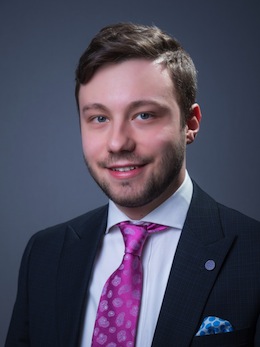
photo - Aron Csaplaros is the regional manager of the new local office of B’nai Brith Canada
Aron Csaplaros is the regional manager of the new local office of B’nai Brith Canada. (photo from B’nai Brith Canada)

As regional manager, Csaplaros said, “My mandate is 100% focused on combating antisemitism in our province. This includes responding to incidents of antisemitic vandalism, liaising with Jewish organizations on university campuses regarding antisemitism, and also keeping tabs on antisemitic individuals and organizations active in B.C. and devising strategies, which can range from working with local police and Crown prosecutors on criminal charges, removal of their platform, which they use to spread hate, or other legal measures we can take. I am also working on having the provincial government and municipalities across B.C. adopt the crucial IHRA [International Holocaust Remembrance Alliance] definition of antisemitism.”

Csaplaros acknowledged that there are already organizations based in British Columbia that deal with antisemitism and discrimination.

“B’nai Brith’s goal, and my presence in B.C., is not to compete with, duplicate or replace the important work that other organizations do,” he said. “On the contrary, we plan to work together with other organizations when we can establish a united front against antisemitism and Jew-hate.

“The value that B’nai Brith, and my presence here, adds is our laser focus on fighting antisemitism and the legal acumen that B’nai Brith possesses to aid us in this goal. We have several staff lawyers with expertise in criminal law and constitutional law, and many of our staff members (including myself and our CEO, Michael Mostyn) have legal backgrounds in litigation. This gives the ability to devise creative strategies when dealing with antisemitic organizations and individuals, and allows us to work closely with police departments and Crown prosecutors.

“We also have a Canada-wide network of volunteer Jewish lawyers called the Matas Law Society,” he said. “These lawyers are available to assist us in anything from writing submissions for parliamentary committee hearings, to intervening in court cases that impact the Jewish community.

“We are also the only Jewish organization in Canada to have an anti-hate hotline and a mobile app with the same purpose, where people can report incidents of antisemitism or other forms of discrimination. In addition, we have produced an annual, comprehensive audit of antisemitic incidents in Canada, and this publication is used by, among other entities, Statistics Canada, the U.S. State Department and Tel Aviv University. B’nai Brith does not engage in Israel advocacy, and we only respond to issues concerning antisemitism in Canada affecting Canadian members of the Jewish community. We also have a lean but well-connected team working at our organization, which allows us to respond quickly to incidents as they arise.”

Csaplaros started his position as the B.C. regional manager for B’nai Brith in January, and has met with local leaders in the Jewish community, politicians, and leaders of non-Jewish organizations that are also involved in combating hatred and discrimination, he said.

Csaplaros was born to a family of Hungarian immigrants, with his grandfather having been the first to arrive in Canada, in the 1950s. His parents arrived in 1995.

“I was brought up in a traditional Jewish household, and my paternal grandmother is a child survivor of the Holocaust,” he said. “I grew up very close to Congregation Schara Tzedeck, the synagogue which I am a member of and still attend to this day with my wife. I sit in the same seat that my grandfather purchased over 30 years ago, and it gives me great pride to continue his legacy by sitting in his seat and regularly attending services and events at the synagogue.

“I attended Vancouver Talmud Torah all the way from preschool until graduating in seventh grade,” he continued. “I then spent a year at King David High School, before transferring to Pacific Torah Institute (PTI) [which is no longer in Vancouver] and completing high school there. I then spent three years in their post-high school program, before attending Yeshivas Chofetz Chaim in New York for a year, where I received my bachelor’s degree in rabbinical studies.”

Throughout his time at PTI and at the yeshivah in New York, Csaplaros said, “I was engaged in learning with community members and teaching how to read Jewish source texts in their original format. I was also involved in community outreach, spending time and studying with elementary and high school-aged students from disadvantaged backgrounds. I also served on the board of directors of PTI.”

After his bachelor’s degree, Csaplaros attended law school at the University of Calgary, completing his articles at Kornfeld LLP.

“I’ve always had a passion for research, advocacy and governmental affairs, and I regularly participated in debates organized by Federation,” he said. “Yeshivah studies also involve debate and plenty of research, so that is another reason I chose to pursue a yeshivah education for several years. I then decided that the best way for me to develop my advocacy skills and learn more about the structure of Canada’s government was to attend law school…. I knew from the beginning of my legal studies that I wanted to be a litigator and, in the future, focus on human rights and civil liberties matters. Throughout law school, I was involved in initiatives to increase access to justice for members of the Indigenous community.”

During his time at Kornfeld LLP, Csaplaros said, “I focused on litigation, including construction, real estate and general commercial litigation. I was fortunate to appear in court several times and run a small claims trial on my own.

“These experiences further strengthened my desire to be an advocate,” he said, “and, as my time as an articling student at the firm was coming to a close, I learned that B’nai Brith Canada was looking for a regional manager for B.C. whose main mandate would be advocacy and fighting antisemitism and hatred in all forms. I knew that B’nai Brith Canada is a leader in fighting antisemitism in Canada, and I also knew that I could use my knowledge of the legal system to help me further this goal.”

Csaplaros can be reached at [email protected].
Posted on March 10, 2023March 9, 2023Author Cynthia RamsayCategories LocalTags antisemitism, Aron Csaplaros, British Columbia, B’nai Brith Canada, safety
Hillel BC marks its 75th

Hillel BC marks its 75th

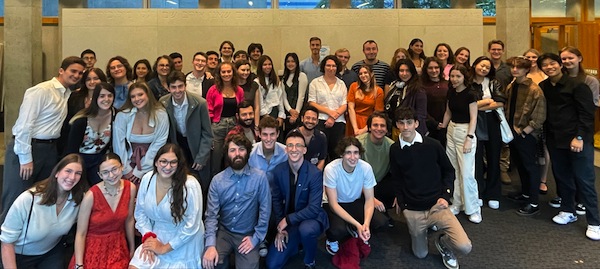
Attendees at UBC Hillel House’s Rosh Hashanah dinner to start the 2022/23 school year. (photo from Hillel BC)

Hillel BC celebrates its 75th year with a celebration March 30 at the University of British Columbia Hillel House.

Hillel BC was founded in 1947, under the name B’nai B’rith Hillel Foundation, in the same spot on UBC’s campus where it still operates from today. This came from an understanding that Jewish students were being excluded from the main student clubs on campus and they needed a place to socialize and be Jewish.

The original space was an old, wooden one-room house that was at the outskirts of campus. Little did they know then that this location would become the heart of the campus as the university expanded.

photo - Established in 1947 on UBC campus (left), Hillel BC’s current building – on the same site as the old one – opened in 2010
Established in 1947 on UBC campus (left), Hillel BC’s current building – on the same site as the old one – opened in 2010. (photo from Jewish Museum and Archives of BC L.00070)

In 2002, B’nai B’rith Hillel Foundation became Vancouver Hillel Foundation, the first Hillel International-affiliated program in Canada, which was followed by establishing space at both Simon Fraser University and University of Victoria. Eight years later, the current building was opened, solidifying Hillel’s space on the UBC campus and beyond. Today, Hillel BC continues to serve at UBC, UVic, SFU, Langara College, Emily Carr University of Art + Design and other post-secondary institutions as needed.

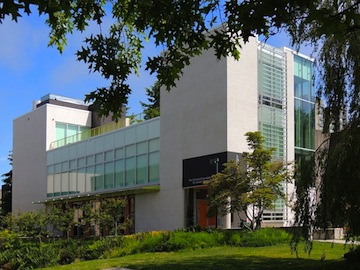
photo - The current Hillel BC building on UBC campus
The current Hillel BC building on UBC campus. (photo by ThosGee via panoramio.com)

In addition to celebrating 75 years on campus, Hillel @ 75 on March 30, 7:30 p.m., will provide an opportunity to thank recent executive directors Rabbi Philip Bregman and Sam Heller. The Jewish Student Association, Israel on Campus Club and AEPi (Jewish fraternity) will offer the community an overview of their activities in dedicated tables, and a short presentation will be given by the board and current staff. Special guests include Deborah Buszard (UBC interim president), Joy Johnson (SFU president), Skip Vichness (Hillel International board chair) and Vancouver Mayor Ken Sim.

“We are very excited to have the community back in our building for this celebration of our 75th anniversary,” said Rob Philipp, executive director of Hillel BC. “Due to COVID, we missed a lot of important events worth noting, specifically the 10th anniversary of our UBC building, and the retirement of Rabbi Philip Bregman and Sam Heller. We want to take the opportunity to celebrate our successes and recognize some of the key people who helped lead us through some difficult times. The evening reception will be at our UBC building, attended by special guests, and it will host the first viewing of our promotional video.”

For more about Hillel BC and to purchase a ticket for the event ($75), visit hillelbc.com. A portion of the ticket price is tax-deductible. 

– Courtesy Hillel BC

Format ImagePosted on March 10, 2023March 9, 2023Author Hillel BCCategories LocalTags anniversary, education, gala, Hillel BC, Hillel House, history, milestone, Philip Bregman, Rob Philipp, Sam Heller, UBC

Give to increase housing

The Metro Vancouver Jewish community continues to struggle with housing insecurity. There is an urgent need for affordable, safe and stable homes, with more than 300 applicants on the Jewish Housing Registry’s growing waitlist. Of those, 71 are families with children and 65 are persons with disabilities.

Tikva Housing Society currently serves more than 300 people, with 100% occupancy in its 128 subsidized rental units, and by providing rent subsidies for those living in market rentals facing a temporary crisis.

photo - Anat Gogo, executive director of Tikva Housing Society
Anat Gogo, executive director of Tikva Housing Society. (photo from Tikva Housing Society)

“The only way that Tikva can address our community’s housing needs is through your generosity. Donations are crucial to help in achieving our mission to provide innovative and affordable housing solutions,” said Anat Gogo, executive director of Tikva Housing Society.

That is why, this month, the society is calling upon the collective power of the community’s compassion and generosity, as it launches Tikva’s annual fundraising campaign. Here is how you can help:

1) Plan. Mark your calendars for March 17 to March  27.

2) Give. Starting March 17, go to tikvahousing.org/donate and make your gift.

3) Inspire. Encourage your family and friends to join you in making a difference.

4) Share. Spread the word by sharing Tikva’s campaign posts on your social media and tag @TikvaHousing to expand its reach on Twitter and Facebook.

When you donate, you help provide a safe and secure home for Jewish community members, enabling them to put food on their table, buy medication and send their kids to camps. Dignity comes with the stability of shelter, as does the strength to fight for a better future.

– Courtesy Tikva Housing Society

Posted on March 10, 2023March 9, 2023Author Tikva Housing SocietyCategories LocalTags affordable housing, fundraising, Tikva Housing
Alegría a gratifying movie

Alegría a gratifying movie

Alegría screens at the Rothstein Theatre March 19, and online March 19-26. (photo from vjff.org)

You can pick your friends, the old saying goes, but you can’t pick your family. For Alegría, a prerequisite of adulthood is distancing from relatives and interacting with them on her terms.

The vital 40-something protagonist of Alegría, screening in the Vancouver Jewish Film Festival (vjff.org), has deliberately carved out a self-centred existence in her quiet hometown of Melilla, a small Spanish city on the northern coast of Africa. Alegría (Cecilia Suárez) Facetimes with her kibbutznik daughter and directs the young Muslim woman who cooks and cleans for her, relishing her independence.

Warm colours and inviting interiors, however, signal from the outset that Alegría is going to be a story of connection rather than isolation, of love supplanting loneliness and redemption trumping regret. In her satisfying and touching feature debut, Spanish director and co-writer Violeta Salama’s generosity extends well beyond Alegría to the young women who enter her orbit.

But none of that is on the table when Alegría gets a call that her Orthodox brother, sister-in-law and niece are coming to Melilla for the latter’s wedding to a local guy. They plan to stay at Alegría’s place – the house where she and her brother grew up – invading her space and brushing the cobwebs from her dormant Sephardi Jewish identity.

Alegría has literally sealed off the past – mezuzot, photos, furniture and menorot behind a locked door. Secular to the point of caustic irreverence, Alegría views her assimilation as an emblem of freedom and enlightened coexistence. Bit by bit, though, she will realize that she has denied a core component of her character.

Alegría doesn’t define herself in terms of or in reaction to men, and hasn’t for a long time. Yet the tough love, bordering on lack of empathy, that this stalwart feminist evinces for Yael, the bride, and Dunia, her part-time housekeeper, is shocking.

Yael is used to obeying her father but is beginning to doubt the merits of transferring that acquiescence to her soon-to-be husband. Dunia’s brother, the head of that household, stands in the way of her dream of studying drawing in Paris.

Women escaping the constraints, and embracing the ties, of family has long been the stuff of melodrama. But the filmmaker adopts a lighter tone with humorous bits that undercut the seriousness with which the characters take their respective situations.

“I’d cut my foot off before stepping into a synagogue,” Alegría proclaims in a seemingly unambiguous rejection of ritual, tradition and faith. But when she visits the rabbi to reserve the mikvah for the bride and Yael’s mother, their banter suggests that he and Alegría had a youthful romance (while opening the window to a potential future relationship). The synagogue, therefore, doesn’t represent a religious institution or unhappy family memories to Alegría. It’s just a reminder of who she used to be – or, more accurately, who she is.

One of the pleasures of Alegría is that it unfolds in a calm, civilized setting that feels like an oasis. No sirens or boom boxes jangle our nerves, and the family feudings rarely require the raising of voices.

Salama told an interviewer when she was completing the film in 2021: “To create Alegría’s world, I wanted to steer away from the realism of life in a border town, a major port, instead setting her down in the world of my childhood. I want to share the city as I see it, the city I carry inside me, and so I recreated certain moments where the focus is entirely on these seemingly very different women who share the same problems and contradictions.”

To that end, the centrepiece of the film is an overnight outing to Dunia’s grandmother’s house, just over the border in Morocco, where the women cook, dance and toss an impromptu bachelorette party for Yael. They are free to live on their terms, fully self-sufficient, with no men in sight.

Alegría offers some passing yet pointed critiques of patriarchal autocracy, and the male characters are relegated to the edges of the frame. This is what used to be disparagingly called a “woman’s picture,” because it centres women’s demands – to be who they want to be – and desires – to avail themselves of every opportunity. The most gratifying aspect, however, is that the movie’s spirit of cooperation and, yes, coexistence ultimately touches every character.

Michael Fox is a writer and film critic living in San Francisco.

Format ImagePosted on March 10, 2023March 9, 2023Author Michael FoxCategories TV & FilmTags Alegría, movies, Vancouver Jewish Film Festival, VJFF

Depictions of turbulent times

In March ’68, the shocking events of the Polish political and social crisis of that time are dramatized through the eyes of two families. Hania, a young woman who is Jewish, is in love with Janek, a boy whose father is a member of the nomenklatura, a senior official whose career is endangered by the political activism his son is dabbling in.

But careers are only one of the concerns for Jewish Poles, whose very identities as citizens of the country are in jeopardy, as the society spirals with a chilling and apparent suddenness into antisemitic frenzy. The blatant antisemitism is masqueraded as an “anti-Zionist” campaign and a defence against “non-Polish” elements.

Poland was in a financial panic, with wage reductions and assorted economic turmoil. Events spiraled after the expulsion from the university of political dissidents and the closure of a theatre presentation deemed anti-government. No prerequisites are required. The film, from director Krzysztof Lang, tells the viewer all they need to know about the history – and the petty and not-so-petty indignities of living under a repressive regime.

Through the braying voices of the country’s communist leaders and parallel street-level Jew-baiting, the status of Jewish Poles deteriorates rapidly and Hania’s family is faced with a choice for their future.

This Romeo and Juliet story is endearingly told against the heartbreaking backdrop of generational divisions that were tearing at families all over the world in 1968, a microcosm of the larger tumult. In Poland, these divisions were exacerbated by a social contagion that forced an exodus of much of the tiny remnant of post-Shoah Polish Jews, a disappearance that is emotionally depicted in black-and-white at the end of the film.

* * *

Lost Transport opens like a war-era cinematic news short, an elementary map of Europe being encroached by Allied forces from the West and Red Army movements from the east.

As the Soviets advanced, the Nazis selected from among the prisoners at Bergen-Belsen a few thousand of what they called Austauschjuden, “exchange Jews,” who they imagined to be of particular value to the Allies and who, as a result, the Nazis intended to barter for German prisoners of war or money. Almost 7,000 inmates, in three train transports, were being moved from the advancing front. A train bound for Theresienstadt (now in Czechia) encountered a blown-up bridge and was stranded near the German town of Tröbitz. Within days, the incarcerated passengers were liberated by the Red Army (and, later, by Americans).

Lost Transport demonstrates the chaos and confusion of liberation for the Jewish passengers and defeat for the German residents.

It seems a tactless quibble with these sorts of dramatizations to note that healthy actors are obligated to believably depict the victims of atrocities, but in this instance the task seems particularly stark, with almost all of the liberated people well-clothed, clean, remarkably well-groomed and bright-eyed.

The story is viewed primarily through the eyes of Isaac and Simone, a Dutch couple liberated from the train; Vera, a Russian sniper; and Winnie, a young German woman who sees her mother shot by the Red Army and her home taken over by the other main figures in the film. The characterizations are often cardboard – the individuals are rough stand-ins for their respective peoples – and the script ham-fisted. The three women eventually see one another’s humanity (even if the viewer struggles to do so) and the resolution is almost painfully perfect.

March ’68 and Lost Transport screen as part of this year’s Vancouver Jewish Film Festival. For tickets and the full festival lineup, visit vjff.org.

Posted on March 10, 2023March 9, 2023Author Pat JohnsonCategories TV & FilmTags Holocaust, Lost Transport, March ’68, movies, politics, Vancouver Jewish Film Festival, VJFF
Moscovitch play about life in Canada pre-legalized birth control

Moscovitch play about life in Canada pre-legalized birth control

(photo by Matt Reznek – Reznek Creative)

Excavation Theatre presents What a Young Wife Ought to Know by Jewish-Canadian playwright Hannah Moscovitch, at Performance Works on Granville Island March 24-April 1.

It’s Ottawa in the 1920s, pre-legalized birth control. Sophie (Bronwyn Henderson), a young working-class girl, falls madly in love with and marries a stable-hand named Jonny (Michael Briganti). After two difficult childbirths, doctors tell Sophie she shouldn’t have any more children, but don’t tell her how to prevent it. When Sophie inevitably becomes pregnant again, she faces a grim dilemma. Inspired by real stories of mothers during the Canadian birth-control movement of the early 20th century, playwright Moscovitch vividly recreates a couple’s struggles with reproduction.

The Excavation Theatre production will be playing in the final weeks of Women’s History Month, exactly 100 years after Canada’s first birth-control advocacy group was formed in Vancouver, and fresh off the landmark announcement that birth control prescriptions will be free in British Columbia starting April 1. For tickets, visit excavationtheatre.com.

– Courtesy Excavation Theatre

Format ImagePosted on March 10, 2023March 9, 2023Author Excavation TheatreCategories Performing ArtsTags birth control, freedom, governance, Hannah Moscovitch, history, politics, theatre

Helping people stay at home

People are living longer and, ideally, they’d be living longer at home. Pragmatically, this means that they and their primary caretaker(s) would need support not just for medical care, but for errands and companionship, as well. Enter Rona Goodman and her small business, Bubbymobile.com.

“Bubbymobile.com is a senior concierge service that offers a multitude of non-medical services to families. They include companionship, lunch, errand running, grocery shopping, accompanying to medical appointments and check-ups, transportation, walks and more,” Goodman told the Jewish Independent.

photo - Rona Goodman
Rona Goodman (photo from Bubbymobile.com)

Goodman thought of the concept for Bubbymobile.com a few years ago but waited until the pandemic subsided and it was safe to launch.

“I would say it’s been around a year since I started, and it is going very well,” she said. “It’s growing organically and that’s the way I wanted it. Mostly word of mouth and recommendations, and that’s the best advertising you can get. I would love to meet more families in the community.

“The concept came to fruition when I was visiting my friend’s mom who was in a seniors home. I would take her for walks and be her companion. I met several people in the facility who didn’t have anyone visit them or assist with their non-medical needs. After researching, I thought this service would be a great resource to complement what is already out there.”

Goodman named her business after her maternal grandmother.

“My bubby was the best and the matriarch of our family,” said Goodman. “I’m from Montreal and grew up with a close family because of my bubby and zadie. Every Friday night since I can remember, we would have dinner at their house with my family, aunts, uncles and cousins. We all grew up together and I wanted to honour my bubby with the name.”

Goodman said she had two wonderful grandmothers, but “my dad’s was my grandmother…. Both were lovely but I did spend more time with my bubby cause of Friday night dinners. But we (me, my brother and sister) did visit my grandmother and would take her out for drives and lunches/dinners and had lovely visits. She made the best coleslaw…. Both of my grandfathers passed when I was pretty young. Everyone has had a bubby or grandmother or grandfather, so it’s really in honour of them all!”

For Goodman, two of the best things about being Jewish are family and giving back. “You take care of the ones you love and give back to others who may not be as fortunate,” she said. “There was always an extra plate for dinner at Bubby’s house for drop-ins and friends. You also must be compassionate, patient, a good listener, understanding, kind and giving to do this kind of work. That’s how I walk through this world and this service is a natural fit for me. I also do volunteer work for VCDS (Vancouver Cancer Drivers Society), a wonderful organization that involves transportation.”

In addition to Bubbymobile.com, Goodman is a musician and a public-relations professional.

“My professional life has always been about passion, creativity and being of service,” she said about the common threads that tie her diverse endeavours together. “I’ve worked in the music industry for over 25 years in many areas of the business. From record labels, musician, songwriter to sales, marketing and publicity. As a PR person, I’ve learned a lot about communication, understanding people’s needs, listening to their stories and reaching out and engaging community – I think it brings out the kid in me and keeps me vibrant and young. These qualities are important when working with seniors, as it’s parallel in many ways.

“As a composer, songwriter and producer, I tell stories through music, lyrics and composition,” she added. “Music is a healer and there is nothing better to lift the soul. To be a composer, you need to write about life’s experiences and adventures. That’s why I love hearing the stories shared by my seniors. What a gift to be in their presence really. I would happily pick up my guitar and sit and play some music for someone that I’m working with. It’s fun and I’m grateful that I can give that little extra service to my clients. There is nothing better than to share the love of music.”

Ultimately, Goodman would like to be able to offer Bubbymobile’s services in every community in the province.

“In the long term,” she said, “I would like to build the business so it can develop into a franchise opportunity across Canada. The more I talk with people, the more excited they are that I’m doing this and how much it is needed. As we grow older, we are living longer, and I find it does provide some relief for families looking for that extra support. I’ve talked with families who may not be living in Vancouver who need extra assistance for their loved ones. Many are also too busy with work and raising families to visit during the week. That’s why I’m here – for that extra support.”

Posted on March 10, 2023March 9, 2023Author Cynthia RamsayCategories LocalTags Bubbymobile.com, companionship, healthcare, Rona Goodman, seniors
B’nai mitzvah tutoring

B’nai mitzvah tutoring

Sasha Kaye (photo from B’nai Mitz-Van)

Sasha Kaye recently launched B’nai Mitz-Van, a tutoring service that prepares b’nai mitzvah students for their Torah and Haftarah readings. She also offers basic voice training, performance anxiety management and d’var Torah writing support.

Kaye completed a double major in voice performance and psychology for her bachelor’s degree from the University of British Columbia, and she has a master’s degree in performance science from the Royal College of Music in London, England. In her master’s thesis, Kaye examined the experiences of musicians with moderate-to-severe performance anxiety in simulated performance environments.

“I came back to Vancouver in January 2023,” Kaye told the Independent. “Most of my time so far has been spent unpacking and readjusting to life in Vancouver!”

Kaye grew up attending Congregation Har El, where she is a member. She has led services as a lay cantor. “I performed at various holiday and milestone community events, and participated in extracurricular, Jewish-led activism with peers from King David High School,” she said about her younger years.

Kaye has performed with the University Singers choral ensemble, UBC Opera, the Vancouver Orchestra Club and Postmodern Camerata, among other groups. She performs as a solo recitalist and has almost 10 years of teaching experience.

“I came up with the idea for B’nai Mitz-Van while I was still in London, and the idea was partially inspired by my master’s thesis,” she said of her latest venture. “In addition to struggling with an anxiety disorder, I had particularly vivid performance anxiety as a musician. The two collided pretty spectacularly for my own bat mitzvah. Despite being well-prepared for it, I was constantly ruminating on potential mishaps and catastrophizing the consequences. What if I got so anxious that I forgot the trope for my Torah reading? What if I forgot the words? What if my voice cracked? What if I dropped the Torah? I would let my family down. These cognitive distortions are evident to my adult self, but the distress was very real to 12-year-old Sasha. When I told people I was anxious, they told me I had nothing to be anxious about. While I’m sure they were trying to reassure me, this ultimately dismissed my feelings and made me feel much worse. I had zero tools to cope with or manage my anxiety.”

Kaye said she has little recollection of the bat mitzvah itself. “I was so anxious, I essentially blacked out,” she said. “Based on second-hand information, I did well enough on the day, but I was unable to enjoy the simchah – and that’s ultimately what the day should have been about. B’nai mitzvot should be joyous occasions for everyone, including the b’nai mitzvah themselves.

“As someone who knows how to chant Torah and Haftarah, and knowing what I know now about performance anxiety, my hope is that B’nai Mitz-Van can both teach young adults what they need to know for their special day, and also give them the tools to manage feelings of nervousness or anxiety that they may have.”

Kaye has experience teaching b’nai mitzvah-age kids from when she used to teach singing lessons, which she did for about three years, and she has five more years of experience teaching older students.

“Performance anxiety is extremely common,” said Kaye. “While it may or may not necessarily impact the quality of your performance, that doesn’t make it any less uncomfortable to deal with.

“The experience can manifest cognitively, meaning through the kinds of thoughts you have, like fixating on the possibility of making mistakes in performances and overestimating the consequences; physiologically, meaning through bodily sensations like racing heart, dry mouth, shaking or feeling restless; emotionally, like feelings of nervousness, dread or irritability; or behaviourally, like avoiding practising.

“How to manage performance anxiety is the million-dollar question!” she said. “There are a number of techniques and methods that have been researched, and different things may work for different people. Some things that can help pretty reliably, if they are practised, are feeling prepared in your material; breathing exercises, like box breathing; grounding exercises that focus your senses on the here and now; and examining your self-talk, that is, how you talk to yourself in your own mind.

“Retraining self-talk can take a long time and it can be very challenging,” she acknowledged, “but it helps to start by noticing how you talk to yourself. Would you speak that way to a friend who was going through the same thing? If not, chances are your self-talk needs some adjusting from the harsh and self-defeating to the encouraging and self-supporting.”

About working with b’nai mitzvah-aged kids, Kaye said they “are at a really fascinating stage in life. They’re starting to come into their own sense of self, and they’re able to start thinking critically about the world around them without the cynicism that can follow us as adults. There’s an enthusiasm and idealism for tikkun olam that’s really refreshing.”

And, given her years of experience as a tutor of academic writing, Kaye can help students organize their enthusiasm and their ideas into a clear and concise d’var Torah. “More importantly,” she said, “I help them find their own way of relating to their parsha, so they can find the lesson they want to share with the congregation.”

Kaye offers both in-person and online lessons. She can be reached at [email protected] or 236-515-9469.

Format ImagePosted on March 10, 2023March 9, 2023Author Cynthia RamsayCategories LocalTags B'nai Mitz-Van, b'nai mitzvah, education, Judaism, music, Sasha Kaye, tutoring, writing

Avoid being scammed

Millions of dollars have been lost through the schemes of fraudsters who take advantage of trusting, isolated and vulnerable senior citizens, said guest speaker Patrick Harkness at the latest Jewish Seniors Alliance – Phyliss and Irving Snider Foundation Empowerment Series talk.

On Feb. 16, JSA, in partnership with Council of Senior Citizens Organizations of B.C. (COSCO) and L’Chaim Adult Day Centre, sponsored the program Frauds and Scams, which took place at the JSA offices at Mount Pleasant Community Centre. The program was accessible both in person and online, and about 50 people participated, the majority remotely. Its purpose was to investigate the ways in which fraudsters deceive people, especially seniors, in order to rob them of their money and possessions. The question was: what are the main types of scams, and how can people protect themselves?

Gyda Chud, coordinator of the JSA program committee, welcomed participants and introduced Barb Mikulec of COSCO, who introduced Harkness. Before he retired in 1999, Harkness worked for the provincial government in the department of safety and emergency preparedness. Now, he is a volunteer, one of many, who present workshops on topics important to the senior community through COSCO’s Seniors’ Health and Wellness Institute.

In his Empowerment Series talk, Harkness outlined some of the many types of scams perpetrated on seniors. The approaches can be made by phone, email, post and even in person, depending on the type of scam, he said. He warned that one should not respond to unfamiliar phone calls or email requests and one should not open any attachments included with these requests. He also advised people to never give out personal information or send money. If the information provided sounds too good to be true, he said, then, very likely, it is not true.

According to Harkness, here are some of the most common scams, and how to avoid them:

  1. Stealing photos from dating sites and engaging in a trusting relationship. Do not send money or photos, as the photos can be used to blackmail you.
  2. Emails or calls from the federal government indicating that you owe money and should forward it right away. Do not respond to the caller or emailer, and report the call/email to the police and to the Canadian Anti-Fraud Centre.
  3. Purchases online are fake, unless you have ordered the item(s).
  4. Calls from people claiming they are Canada Revenue Agency (CRA) agents. Do not respond – call the CRA yourself (and not on the number you received the call from) to confirm if they really called you.
  5. Prize scams. Ignore them, as you cannot win a prize for a contest that you have not entered.
  6. Do not buy lottery tickets by phone.
  7. Don’t meet with people claiming to be bank investigators, who ask you to meet in a neutral place to give them money.
  8. Grandparent or nephew scam – claiming you must pay bail money to free the relative. They often have the person’s name. But still, don’t believe them. Check with the relative in question. You will likely find that they are fine.
  9. Offers to fix your computer. Don’t accept. Chances are, it is not broken. If it is, call an authorized repair person.
  10. Scams involving cheap prescription drugs. Never give those offering the items your credit card number.
  11. Charity scams. They may say it is, for example, for Ukrainian relief, but check whether this or any other charity that’s calling is a legitimate, reputable charity, and then donate directly.
  12. Home repair people may come to your door offering their services. Be sure to check with Better Business Bureau to make sure they are licensed and legitimate.
  13. Identity theft is very common and dangerous. Thieves may try to get your social insurance number (SIN) and other identifying information from old mail that you have thrown out. Shred all items that have such information on them before putting them into the recycling bin.

As well, do not carry around a lot of personal information with you or leave your purse or wallet unattended. Choose personal identification numbers (PINs) wisely, so they are not obvious: for example, do not use birthdates or family names.

If you do fall victim to a scam, report it immediately to the police and also to the Canadian Anti-Fraud Centre (CAFC) at 1-888-495-8501. COSCO’s Seniors’ Health and Wellness Institute’s website has several resources on various topics, including frauds and scams: seniorshelpingseniors.ca.

Shanie Levin is a Jewish Seniors Alliance Life Governor. She is also on the editorial committee of Senior Linemagazine.

Posted on March 10, 2023March 9, 2023Author Shanie LevinCategories LocalTags COSCO, Empowerment Series, fraud, Jewish Seniors Alliance, JSA, Patrick Harkness, scams, seniors, Seniors’ Health and Wellness Institute, Snider Foundation
Canadians Jews doing well

Canadians Jews doing well

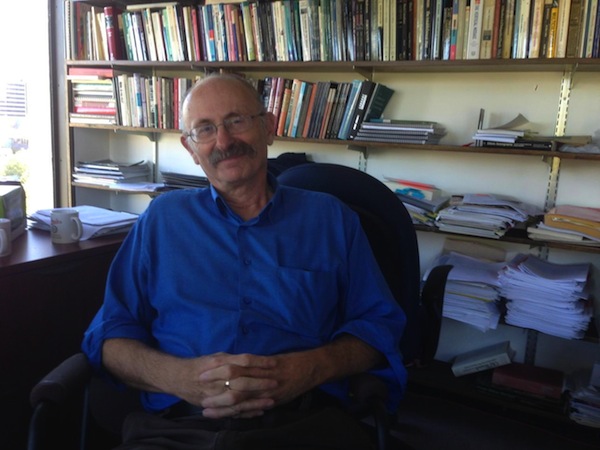
Prof. Dr. Morton Weinfeld was the latest speaker in Kolot Mayim’s 2022/23 series. (photo from Twitter)

On Feb. 5, Morton Weinfeld, a professor of sociology at McGill University in Montreal, presented the talk The Jewish Glass Is Half Full, as part of the 2022/23 Building Bridges Zoom lecture series put on by Kolot Mayim Reform Temple in Victoria.

Weinfeld, the child of Holocaust survivors from Poland and the author of Like Everyone Else But Different: The Paradoxical Success of Canadian Jews, started teaching at McGill in 1977 and has seen more than 4,000 students participate in his course on the sociology of North American Jewry.

The course, Weinfeld explained, formed the basis of his book, in which he uses Jews as a case study for the challenges in Canada of identity, culture and acceptance of the country’s multicultural position. By his own description, he tends to take a more liberal stance on Israel.

Weinfeld confessed at the beginning of his talk that the track record for predicting the future has been, and remains, dismal. The same is the case for sociological studies of the Jewish community, he asserted. As an example, he noted that the social sciences in the 20th century missed the mark on predicting the Holocaust, the triumph of Zionism, and the revival of orthodoxy in North America, among other things.

“Thus, I am doing this presentation with humility, in case anyone thinks I can predict the future,” he stated at the outset.

Accentuating the positive at first, Weinfeld praised Canadian multiculturalism. “Canada is committed to helping promote and enhance cultures, and Canada also will try to offer these cultures maximum participation in Canadian society. So, if you want to be a professor at McGill, or you want to run for a cabinet post in any government, you are free to do that. Canada will remove the barriers that prevent you from achieving that.”

In Weinfeld’s view, the Canadian Jewish community is currently doing quite well in this regard, particularly when compared to other minority groups in Canada and Jewish communities elsewhere in the world.

“One of the reasons why Jews have done well in diasporic settings [like Canada] is because they have been at it for such a long time,” he said. “For at least 2,000 years, since the Roman exile, Jews have had no choice but to learn how to live in a variety of the diasporic settings. Practise makes perfect. Other Canadian minority groups have not had anything like this.”

Weinfeld offered another piece of news: that the Canadian Jewish population is growing. While the number of Jews self-identifying as ethnically Jewish decreased from the 2011 Census to the 2021 Census, the number of Jews self-identifying as Jewish by religion increased from 329,500 in 2011 to 335,295 in 2021. In the context of this statistic, he referred to a 1964 cover story in Look magazine called “The Vanishing American Jew,” which painted a bleak future for North American Jewry, with intermarriage being among the main concerns. Look is no longer around, he noted, but the number of Jews in North America has grown and, “over the past two decades, the fears of assimilation have become muted.”

Further, the pluralism seen in the Jewish community, from liberal denominations to orthodoxy, is a source of strength, said Weinfeld. Together, he said, the different groups combine to make Jews in Canada far more interesting and viable, despite the lack of understanding each group in the community may have for one another.

Weinfeld characterized Jews in Canada as having a high-degree of voluntary self-segregation; that is, each group tends to congregate more within its own circles. However, he said, the comfort of one group can lead to a bolstering of overall Jewish identity.

“Those doom and gloom predictions for Jewish disappearance, certainly in the United States and Canada, have been excessive,” he said.

Weinfeld then spoke about the presence of antisemitism in modern North American society, pointing out that, just a few years ago, it would have been unimaginable for a former American president to dine with an unabashed antisemite like Kanye West.

“There is no question that antisemitism is a reality in Canadian Jewish life,” Weinfeld said, referring to surveys and polls showing that millions of Canadians believe in conspiracies theories, often with Jews as the masterminds behind them.

Canada, according to surveys by the Anti-Defamation League (ADL), is worse than Scandinavian countries and the Netherlands when it comes to levels of antisemitism, but fares better than France and Germany.

Regarding the situation at Canadian universities, Weinfeld said, “I think that, on campuses today, there is a tendency to dismiss the concerns of those Jewish students that like to support Israel. And I’m not speaking of the extreme right, I’m speaking of very liberal, progressive Jewish students who want to also retain Israel’s right to exist.”

Later in his talk, Weinfeld warned, “I think that we may be in for a rocky period – with regard to antisemitism and its links with Israel, Israeli policy and Zionism, in part because of the new Israeli government. But I want to be very clear, the seeds of all of that predate the current Israeli government.”

Rabbi Suzanne Singer of Temple Beth El in California, a former journalist, will wrap up this year’s speaker series on April 9. With a history of leadership at Kolot Mayim, Singer will talk about Hope: How Do We Find Hope in a World with Unending Problems? To register for this talk, visit kolotmayimreformtemple.com.

Sam Margolis has written for the Globe and Mail, the National Post, UPI and MSNBC.

Format ImagePosted on March 10, 2023March 9, 2023Author Sam MargolisCategories LocalTags antisemitism, Canada, census, freedom, governance, Kolot Mayim, Morton Weinfeld, politics

Posts pagination

Previous page Page 1 … Page 141 Page 142 Page 143 … Page 667 Next page
Proudly powered by WordPress