Skip to content
  • Home
  • Subscribe / donate
  • Events calendar
  • News
    • Local
    • National
    • Israel
    • World
    • עניין בחדשות
      A roundup of news in Canada and further afield, in Hebrew.
  • Opinion
    • From the JI
    • Op-Ed
  • Arts & Culture
    • Performing Arts
    • Music
    • Books
    • Visual Arts
    • TV & Film
  • Life
    • Celebrating the Holidays
    • Travel
    • The Daily Snooze
      Cartoons by Jacob Samuel
    • Mystery Photo
      Help the JI and JMABC fill in the gaps in our archives.
  • Community Links
    • Organizations, Etc.
    • Other News Sources & Blogs
    • Business Directory
  • FAQ
  • JI Chai Celebration
  • JI@88! video

Recent Posts

  • Sharing her testimony
  • Fall fight takes leap forward
  • The balancing of rights
  • Multiple Tony n’ Tina roles
  • Stories of trauma, resilience
  • Celebrate our culture
  • A responsibility to help
  • What wellness means at JCC
  • Together in mourning
  • Downhill after Trump?
  • Birth control even easier now
  • Eco-Sisters mentorship
  • Unexpected discoveries
  • Study’s results hopeful
  • Bad behaviour affects us all
  • Thankful for the police
  • UBC needs a wake-up call
  • Recalling a shining star
  • Sleep well …
  • BGU fosters startup culture
  • Photography and glass
  • Is it the end of an era?
  • Taking life a step at a time
  • Nakba exhibit biased
  • Film festival starts next week
  • Musical with heart and soul
  • Rabbi marks 13 years
  • Keeper of VTT’s history
  • Gala fêtes Infeld’s 20th
  • Building JWest together
  • Challah Mom comes to Vancouver
  • What to do about media bias
  • Education offers hope
  • Remembrance – a moral act
  • What makes us human
  • המלחמות של נתניהו וטראמפ

Archives

Follow @JewishIndie
image - The CJN - Visit Us Banner - 300x600 - 101625

Month: April 2021

Shalhevet annual gala

Shalhevet annual gala

Shalhevet Girls High School will honour Shelley Rivkin at its gala on April 11. (photo from Shalhevet)

On April 11, at its annual gala, Shalhevet Girls High School will honour Shelley Rivkin as a Guardian of the Flame.

“Every year, we honour a Jewish woman who is passionate and dedicated to the Jewish community,” Vivian Claman, president of the Shalhevet board, told the Independent. “Shelley personifies the kind of woman we inspire our students to become – independent thinkers and leaders in their communities. Shelley not only works hard for the Jewish community but for the Vancouver community, as well.

Rivkin is the third woman to be so honoured by Shalhevet. Anita Silber was the first, in 2019, and Sarah Berger was recognized last year.

Rivkin is vice-president of planning, allocations and community affairs for the Jewish Federation of Greater Vancouver. She is an adjunct professor of social work at the University of British Columbia and at Langara College, and she is a member of British Columbia’s Multicultural Advisory Committee.

“My parents were a significant influence,” said Rivkin about her choice of career and her participation in community. “My mother was a social activist and early feminist who introduced me to many of the ideas that contributed to my decision to go into social work, while my father was deeply connected to Jewish values and traditions. Both believed in the value of volunteer work and had me volunteering for a variety of causes from an early age.

“My Jewish education at Schara Tzedeck and involvement in both NCSY and BBYO also provided me with a deeper understanding of Judaism and Jewish life that I have carried with me throughout my career.

“There have also been some amazing women who have inspired me along the way,” she noted. “The late Rosemary Brown, who I had the privilege of meeting when I was in university, really opened my eyes to the barriers and obstacles that many women were facing and continue to face in our society.”

Rivkin’s specific areas of responsibility at Jewish Federation include community planning, local grants distribution, Jewish education, partner agency relations and community security. While she was hired in 2007, she had volunteered with the organization for a couple of years before that.

“In 2005, I was asked to chair the poverty coalition,” she explained. “This connection brought me closer to the work of Jewish Federation and, as I took on more volunteer responsibilities, I became more intrigued by the work that Federation did on a daily basis. In 2007, Federation went through a restructuring process to move toward a closer alignment between central planning and financial resource development. A new senior position was created, and [then-Federation head] Mark Gurvis asked me to apply. This was an opportunity to connect my Jewish values to my day-to-day work.

“The most rewarding aspects of the job are when you can move from project inception to project completion,” she said. “The most recent example was the establishment of the Food Security Task Force in 2017. I was responsible for staffing the task force. The task force released their report in late 2018. The report had an important impact in raising awareness about the depth of food insecurity in our community. Through the hard work of Jewish Family Services and many generous donors, we have seen the implementation of one of the key recommendations of that report, the establishment of an integrated food hub. This has been very rewarding.”

Rivkin feels strongly about the benefits of a Jewish education.

“I am setting up an endowment with the Jewish Community Foundation that I hope that Shalhevet supporters will contribute to,” she said. “Over time, the interest earned on the capital can enable Shalhevet to support special projects that are not covered through their general operations.

“I am setting this up because I believe strongly that young Jewish women should have full access to quality general studies and Judaics education. As an Orthodox woman myself, I am committed to ensuring that young Orthodox women living in Vancouver have the best educational opportunities available.”

Currently, Shalhevet has 14 students enrolled for the 2020-2021 school year, and they anticipate around the same number of students for the next year, Meira Federgrun, head of school, told the Independent. “What we lack in student numbers, we definitely make up in enthusiasm and involvement,” she said.

About how the school has been coping with COVID-19, Federgrun shared, “As with all schools in B.C., Shalhevet had to craft a safe return-to-school document that was approved by the Ministry of Education before the start of the school year last September; we have been doing full-time, in-person learning since then. We have sanitizing products available throughout the school and high-touch surfaces, as well as equipment, are sanitized several times a day. Our staff and students wear masks in all areas of the school, including the main room and classrooms, and remove them to eat or drink.

“Because Shalhevet is a small school,” she said, “our entire staff and student body is considered one cohort, so we are fortunate in that we don’t have to worry about a lot of the restrictions and traffic flow that larger schools with multiple cohorts have. As a result, we’ve been able to provide our students with as ‘normal’ a daily school experience as possible.”

The annual gala is the only way the school raises money. “It’s our once-a-year fundraiser,” said Claman. “It’s also a way to bring awareness of Shalhevet’s great contribution to the community and its importance in maintaining a thriving Orthodox community.”

Part of the virtual celebration will be a piece performed by the Israel Philharmonic Orchestra, which was organized by Danielle Ames Spivak, chief executive officer of the Friends of the Israel Philharmonic Orchestra.

It will include “an introduction from [Irit Rub] the director of KeyNote, the musical education department of Israel Philharmonic, talking about the relevance of education and music,” said Claman. “Every year, we offer some form of entertainment, like comedians, a magician, etc., but we had to find something that would be conducive to online entertainment.”

Also part of this year’s gala, said Claman, “For the first time ever, we will be showing a video taking an inside look at Shalhevet.”

For her part, Rivkin said, “I am so grateful to the Shalhevet community to be honoured this way. It has been so uplifting for me to know about this honour, especially following such a challenging year.”
Format ImagePosted on April 2, 2021March 31, 2021Author Cynthia RamsayCategories LocalTags coronavirus, COVID-19, education, fundraiser, gala, Guardian of the Flame, Jewish Federation, Meira Federgrun, Orthodox, philanthropy, Shalhevet, Shelley Rivkin, Vivian Claman, volunteerism
Memoir, tribute, history

Memoir, tribute, history

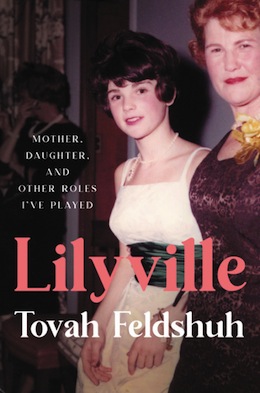
Actor Tovah Feldshuh talks about her new book, Lilyville, on April 15, in an event held in partnership with the JCC Jewish Book Festival. (PR photo)

The long-awaited Cherie Smith JCC Jewish Book Festival closing night event – Tovah Feldshuh talking about her new book, Lilyville: Mother, Daughter, and Other Roles I’ve Played – finally takes place on April 15.

The event was postponed to piggyback on the Book Festival of the Marcus JCC of Atlanta and JCC National Literary Consortium In Your Living Room Live series. It will feature Feldshuh in conversation with CNN correspondent Holly Firfer, and promises to be an entertaining evening with many laughs and lots of good advice, if Lilyville is any indication.

Feldshuh’s first book is a unique memoir in that it is framed in terms of her relationship with her mother – the longest and most important of Feldshuh’s roles having been the one she didn’t audition for, being the daughter of Lillian (Lily) Kaplan Feldshuh. The memoir is structured as a theatre piece, starting with the Program Note and ending with Exit Music, with three acts, many scenes and more in between.

Strong women characters, from the fictional Yentl (from the mind of Sholem Aleichem) to the very real U.S. Supreme Court Justice Ruth Bader Ginsburg, dominate Feldshuh’s career. She has performed in theatre, film and television, winning numerous awards and nominations for the excellence of her work. She also has been recognized for her charity work. And, it seems, through it all, family has been a priority.

image - Lilyville book cover

In Lilyville, Feldshuh writes about her upbringing, how and why she became an actor, some of the people and incidents that have influenced her, her marriage (to a lawyer, like her beloved father was, and which she considered becoming at one point) and being a mother herself. Given her successes, readers may be surprised at the professional challenges she has overcome along the way, including being told outright by a director that she’d never make a good actress, she should become an accountant. But the biggest obstacle for her was coming to understand that her mother, who seemed cold and shy throughout Feldshuh’s (and her older brother’s) upbringing, loved them. While hypercritical and emotionally closed throughout their growing-up years, their mother was always there for them. It was only after their father died that their mother – who had been raised to be what was considered a good woman back then, ie. a woman who dedicated herself to her husband and kids, her own aspirations be damned – blossomed.

In an interview with the Detroit Jewish Book Fair, Feldshuh said about writing Lilyville that she “felt compelled to tell her [mother’s] story and mine and how the two of us had a lifelong journey toward each other. In essence, I dig down into the primal relationship between parent and child, with the specifics between mother and daughter.”

Luckily for the women, they had the time to repair and build their relationship, as Feldshuh’s mother lived to 103. Through that century-plus, Lily Kaplan Feldshuh, who was born before women were given the vote in the United States, witnessed countless social, cultural and technological changes, and Lilyville is partly a history of women’s rights in that country.

General admission to Feldshuh’s book talk is free. Admittance to the pre-event meet-and-greet portion of the event comes when, in addition to registering, you purchase the book; the $36US includes shipping and you will receive a copy with a signed bookplate. Visit jccgv.com/jewish-book-festival.

Format ImagePosted on April 2, 2021March 31, 2021Author Cynthia RamsayCategories BooksTags acting, JCC Jewish Book Festival, Lilyville, memoir, Tovah Feldshuh
Dance-opera closer to final

Dance-opera closer to final

Ted Littlemore is one of seven dancers in the latest iteration of Idan Cohen’s Orfeo ed Euridice, which will be available online April 6-13. (photo by Flick Harrison)

The first article the Jewish Independent published about choreographer and opera director Idan Cohen was about his reimagining of Christoph Willibald Gluck’s opera Orfeo ed Euridice. Much progress has been made in the few years since, and excerpts from the contemporary dance work will be streaming on demand April 6-13.

Cohen was a relatively recent arrival from Israel back in 2018. As artistic director of Ne. Sans Opera and Dance, which he established here in 2017, he has become a prominent part of the Vancouver arts scene. He is currently artist-in-residence at the Dance Centre, which describes Cohen’s approach to this 18th-century opera as one that interprets

“Orpheus not as a god, but as an artist – a human who looks at the complex and sometimes violent history of Western, classical opera and dance with eyes wide open, the dancing body serving as a living example of human strength and fragility.”

In the myth, poet and musician Orfeo mourns the death of his wife, Euridice, and tries to get her back from the Underworld. It is an effort fraught with challenges, not unlike creating a new artistic work.

“Staging an opera is a monumental task, and it is really exciting to have an audience who has been following this production from its inception,” Cohen told the Independent. “Alongside the Dance Centre’s residency, we were given a grant from the Canada Council for the Arts, through the Piercey family – the Sheila Kathleen Piercey Fund – which enabled us to continue and present this final phase of the research, leading to the full production in 2022.

“For the past few months,” he said, “I have been rehearsing with Leslie Dala as the music director and with seven incredible dancers and five opera singers. We are presenting almost 40 minutes of a piano reduction of the score, played live by Leslie, and the singers, as a dance-opera. So you’ll get to see and listen to a live opera that is also a dance performance.”

In 2019, Ne. Sans presented Trionfi Amore, as a part of the research for Orfeo ed Euridice. That production featured Ted Littlemore, Kate Franklin and Jeremy O’Neill. For this April’s production, they are joined by dancers Hana Rutka, Rachel Meyer, Aiden Cass and Stephanie Cyr.

“The wonderful counter-tenor Shane Hanson is singing Orfeo and the chorus singers are Heather Pawsey, Tyler Simpson, Heather Molloy and William Grossman,” said Cohen. Costume designer and stylist is Evan Clayton, while Littlemore pulls double duty – not only performing, but in charge of the makeup and masks.

The number of people involved now brings its own challenges, given the continuing pandemic.

“The Dance Centre’s residency enabled us to rehearse in large spaces that allowed for our relatively big group to remain socially distanced at all times,” said Cohen. “Following COVID-19 protocols meant that we needed to be wearing masks and that the performers could not touch. I tried to look at these not as obstacles but as creative opportunities and I am very proud of what we’ve managed to achieve.”

Ever the one to look on the bright side of things, Cohen added, “It was wonderful to gather musicians and dancers and create. There’s nothing quite like it, and I hope that the result will be as pleasurable to our audience as it was to us.”

The April streaming, which will have been pre-recorded, includes a discussion with Cohen. Tickets are on a sliding scale, and can be purchased from thedancecentre.ca/event/idan-cohen.

Format ImagePosted on April 2, 2021March 31, 2021Author Cynthia RamsayCategories Performing ArtsTags coronavirus, COVID-19, dance, Dance Centre, Idan Cohen, Ne. Sans, opera, Orfeo ed Euridice
R2R fest teaches, entertains

R2R fest teaches, entertains

Seu Jorge, left, and Noah Schnapp in a still from Abe. (image from Reel 2 Real)

The upcoming Reel 2 Real International Film Festival for Youth is not just for youth, though younger viewers are its target audience. There are entertaining and engaging films for all ages among the 18 features and 45 shorts that will be available for streaming online April 14-23.

The focus of this year’s festival is “films that explore the impact of social media, racism and discrimination, with a focus on Germany.” While many of the offerings will interest Jewish community members, at least four cover topics of specific relevance.

The American feature Abe was part of the recent Vancouver Jewish Film Festival. It is carried by the impressive acting of Noah Schnapp as 12-year-old Abe and that of Seu Jorge as Chico, the Brazilian-American chef that Abe idolizes. The food, glorious food, is an added bonus.

While the writing of Abe’s family dynamics is clunky and without nuance – his father’s side is Muslim, his mother’s Jewish, and never the twain shall meet on religion or the Palestinian-Israeli conflict – Abe himself is charming. He puts his heart into trying to bring everyone together, in part, by creating a fancy dinner that comprises several of his grandmothers’ traditional recipes. The grumpy but caring Chico helps, having reluctantly taken Abe in, first as a dishwasher then as one of his prep cooks.

Food doesn’t turn out to be the way to his family members’ hearts but the disastrous fusion meal, which ends in a big fight and Abe running away, does push his family to at least reconsider their priorities.

***

still - Mouize and Ranin become friends over popcorn and a shared love of cinema in Cinema Rex
Mouize and Ranin become friends over popcorn and a shared love of cinema in Cinema Rex. (image from Reel 2 Real)

In another charming film, the young also show the adults the possible way to some form of peace. In the Israeli animated short Cinema Rex, the Jewish boy Mouize and the Arab girl Ranin become friends over popcorn and a shared love of cinema.

Set in Jerusalem in 1938, a new movie theatre opens, “In the heart of the city, on the seam line between the Jewish side and the Arab side, and adjacent to the British police.” It is “co-owned by partners from both sides of [the] divided city” and Mouize’s dad is the projectionist. When Mouize catches a glimpse of someone peeking into the projection room, he follows the trail of popcorn to Ranin, who shares it with him in exchange for a seat beside him in the best seats in the house. The two imagine themselves as the heroes in Robin Hood, as actors in a Laurel and Hardy film, dancers in a Fred Astaire and Ginger Rogers movie, and more.

Ranin’s mother is non-plused to find her daughter hanging out with Mouize, and Mouize’s dad tries to tell him, “Someday, you’ll understand why you and she can’t be friends.” But the kids have none of it.

Beautifully drawn and a story simply told – in Arabic, English and Hebrew with English subtitles – this short is highly recommended viewing.

***

still - Alina is a tension-filled short film
Alina is a tension-filled short film. (image from Reel 2 Real)

A more serious and nerve-wracking short is the tension-filled American film Alina. For 25 minutes, breathing will be more difficult, as the fate of a three-month-old baby lies in the hands of Alina (played by Alia Shawkat). The non-Jewish woman is part of a group of women (and men, as her brother helps) who are smuggling Jewish children out of the Warsaw Ghetto during the Holocaust.

Inspired by factual events, but fictional, the film opens as Nazi soldiers kick their way into a building and make their way up each floor, searching every room for children, with orders to seize them. Alina must escape from an upper-level apartment with the baby through the bathroom window, using a makeshift rope of tied sheets. She must then meet her brother, make it through a checkpoint and even face Nazi soldiers in her own home, as a Nazi captain accompanies her there from the checkpoint, so convinced is he that she is hiding something from him.

Alina is a multiple-award-winning film for many reasons. And it precedes the fascinating feature-length documentary The Lesson, which sees its Canadian première at Reel 2 Real.

photo - The Lesson director Elena Horn
The Lesson director Elena Horn. (image from Reel 2 Real)

Through the lens of German filmmaker Elena Horn, who herself grew up in Fröndenberg and went to Fröndenberg Comprehensive School, The Lesson is a personal look at how students in Germany are taught about the Holocaust. Over a five-year period, Horn followed a handful of students through their classes on the topic, their projects and field trips. She juxtaposes this perspective with archival footage from the 1930s, showing children doing paramilitary exercises, learning about what makes a good German and other propaganda. She also includes current-day nationalism and how some of the students deal with the differences between what they’re being taught in school about the Holocaust and what their families have told them about that period in time.

Horn frames the content in the context of overarching questions such as, could the Holocaust have been initiated by other countries just as easily as in Germany, or is there something inherent about Germany that allowed it to start there? She wonders if history is repeating itself, and she continues to struggle with the question, “What would I have done?” She highlights some of the efforts of those who refused to be bystanders to genocide, and she hopes to inspire some viewers to be courageous if, God forbid, they ever face such a choice.

***

For the full festival schedule and tickets, as well as information on Reel 2 Real’s several youth programs and workshops, visit r2rfestival.org.

Format ImagePosted on April 2, 2021March 31, 2021Author Cynthia RamsayCategories TV & FilmTags animation, anti-racism, Arab-Israeli conflct, courage, education, Elena Horn, entertainment, Holocaust, Israel, movies, Noah Schnapp, peace, Reel 2 Real, Seu Jorge, youth
A great-grandmother’s song

A great-grandmother’s song

Jesse Waldman was inspired by his great-grandmother Adele Waldman to reimagine the Yiddish song “Papirosen.” (photo from Jesse Waldman)

Several weeks ago, I was offered a commission by the Shadbolt Centre for the Arts to do a musical piece for their Covid Chronicles series. A Jewish musician living in Vancouver, I made a video of the classic Yiddish tune “Papirosen.” It has special significance, and it’s something I want to share with others.

As far back as I can remember, my family has been into taking photos, videos and recordings – I have at least three huge albums and a bunch of VHS tapes from birthdays, bar mitzvahs, etc. As well, there was a piano in my grandparents’ living room and music was always part of our lives. Before my grandmother passed away, she gave me a cassette that had been made on a reel-to-reel tape machine in Toronto in 1958. It included my mom at 2-and-a-half-years-old singing nursery rhymes, interviews with other family members, and my great-grandmother, Adele Waldman, singing traditional Yiddish folk songs.

Adele was my grandfather’s mother and she died before I was born. The quality and soul of her voice is absolutely stunning – some of the most moving singing I’ve ever heard, both haunting and soothing at the same time. I could listen to the recordings a million times and still be amazed by the off-the-cuff performances she did in the kitchen of my grandparents’ house.

photo - Jesse Waldman
Jesse Waldman (photo from Jesse Waldman)

I recently went through my storage closet and found a binder of sheet music that used to live in my grandparents’ piano bench. It was mostly big band and jazz tunes, but also a handful of Yiddish songs, including “Papirosen,” which was one the songs Adele sang on those tapes. As I put the sheet music on my music stand and began to study it, I was transported back to Eastern Europe in the 1920s.

Written by Herman Yablokoff in that decade, this song has the most dark yet beautiful melody, and I absolutely adore it. I looked up the lyrics (translated into English) and was struck again by the powerful storytelling about a young boy selling cigarettes, or papirosen, on the streets, offering an introspective look at his inner world.

For the Shadbolt-commissioned piece, I combined Adele’s recorded performance of “Papirosen” and a reimagined rendition of the song that I performed on guitar. After trying a few different things, I landed on the idea of sharing the first segment of her performance (her rendition is five minutes long) followed by a one-take performance by myself. The video can be found at youtube.com/watch?v=RWAVr2W0vvo.

Format ImagePosted on April 2, 2021March 31, 2021Author Jesse WaldmanCategories MusicTags Adele Waldman, family, folk songs, history, Papirosen, Shadbolt Centre, Yiddish
JNF Pacific’s fresh face

JNF Pacific’s fresh face

Michael Sachs, the new executive director of Jewish National Fund of Canada, Pacific region, with his wife Shira, a Hebrew and Judaics teacher at Vancouver Talmud Torah, and their children Izzy, 8, and Desi, 5-and-a-half. (photo by Michael Sachs)

The Jewish National Fund, founded by Theodor Herzl in 1901, is inextricably tied up in the history of the land and the state of Israel. Associated in the minds of generations of Diaspora Jews with planting trees in Israel, the agency – and its Canadian arm – have expanded into almost every area of civil infrastructure in that country.

The Jewish National Fund of Canada raises awareness and funds for projects that still include planting trees, but many years ago expanded into constructing water reservoirs, preserving natural habitats and building parks and bicycle trails. More recently, the focus has included social service infrastructures for vulnerable populations, such as at-risk youth, victims of domestic abuse, children with special needs, veterans and those with economic disadvantages.

For many years, JNF was represented in British Columbia by a shaliach, an emissary, sent here to advocate and raise funds for projects in Israel. Ilan Pilo was the last shaliach appointed and, when the Israeli office of JNF decided to stop funding the position, Jewish National Fund of Canada hired him and he continued in the role as executive director. Pilo and his family returned to Israel permanently this year after eight years in the community here.

Immediately after Passover, on April 5, Michael Sachs becomes the first non-Israeli to helm the Pacific region office. “I’m making history without doing anything,” he joked.

Sachs has spent the past decade working in the wholesale diamond sector as vice-president of sales at ERL Diamonds. In his off hours, he has been involved in an array of community organizations, including serving as president of the Bayit, a Richmond synagogue, during a time of exponential growth in membership. He has also served on the boards of the Kehila Society of Richmond, Vancouver Hebrew Academy, Tikva Housing, and on the development committee of Jewish Family Services. His efforts have been recognized both with a Jewish Independent 18 Under 36 Award, as well as a Jewish Federation of Greater Vancouver Young Leadership Award.

Although his community work has been extensive, Sachs may be familiar to most as a member of the family that ran Kaplan’s Deli for years. His mother and stepfather, Sally and Marshall Cramer, owned the restaurant and young Mike worked the counter.

“I always joked that one of the best sitcoms ever written would be something about being behind the counter of a Jewish deli because you hear everything that’s going on in the community, you meet everybody and it’s like watching a show,” he said.

In his early 20s, Sachs traveled to Israel on Birthright and he was transformed. “I came back and I longed for that connection,” he said, “because, when you’re there, it is electrifying through the soles of your feet; the energy, the buzz.”

Taking a leadership role in JNF may be a direct legacy of the impact of that visit.

Sachs refers to his new position as “an absolute dream.” He said, “Something like this is a once-in-a-lifetime opportunity.” And added, “JNF is, in my eyes, the global Jewish community’s hand in building Israel.”

Sachs and Pilo have been in contact and the former executive director will be on hand from his new home in Israel to assist virtually in the transition. Meanwhile, Sachs has set his sights on expanding the geographic reach of the Pacific region office. He aims to increase the agency’s presence in the Okanagan, on Vancouver Island and in the outlying Metro Vancouver communities.

Speaking before he formally takes on the role, Sachs said he doesn’t want to prejudge what changes might come, but he guarantees two things: “Excitement and energy.”

The staff of two in the regional office – Liisa King and Moran Nir – “do the work of five people,” he said.

“I don’t think I’ve ever seen such a group of dedicated community members as I have on the board of JNF,” he added, specifically citing Pacific region president Bernice Carmeli and vice-president Shannon Gorski.

Carmeli and Sachs would like to not only reach a broader geographic area, but a larger demographic. Just before the pandemic hit, Carmeli told the Independent, they were about to launch in earnest a new young adult division called JNF Future. As the reopening continues, both she and Sachs hope to develop that cohort and build a strong base of support among the next generation.

Carmeli sees Sachs, who turned 40 on March 27, as the ideal fit for expanding JNF’s message to wider audiences. She shares Sachs’ overt enthusiasm for the future.

“Onward and upward,” she said. “We have a new ED, a lot of exciting things are going to happen.”

Format ImagePosted on April 2, 2021March 31, 2021Author Pat JohnsonCategories LocalTags Jewish National Fund, JNF, Mike Sachs, milestones, philanthropy
Navigating gender, sexuality

Navigating gender, sexuality

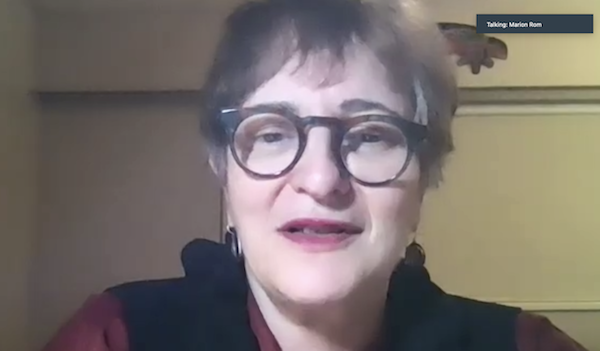
Marion Rom, who works with gender-diverse youth, spoke as part of a Beth Tikvah-hosted panel on the topic Navigating Gender and Sexuality in the 21st Century. (screenshot)

“Almost one-third of people who have gender dysphoria will attempt suicide and have mental health issues, and that’s why we often have such a high rate of kids with eating disorders who are transgender,” said Marion Rom, a counselor who works with gender-diverse youth in the Lower Mainland.

Rom was speaking as part of a March 11 panel on the topic Navigating Gender and Sexuality in the 21st Century. She defined gender dysphoria as when “your body doesn’t match the sense of who you are.” She also explained to the 65-plus attendees of the discussion the difference between sex and gender, some of the terminology around gender, and a few resources for those who want to learn more.

The panel, which was hosted by Beth Tikvah Congregation, also included Dean Kaplan, who joined the conversation from Washington, D.C., and the Abelson family – Kay, Bernard and their son Jason – who live here. The discussion was started by the congregation’s spiritual leader, Rabbi Susie Tendler.

“I think that we have a special mission, as the Jewish people, of finding people who have a potential to be marginalized and always elevating them, along with elevating everyone, to ensure that we are all in a sacred space,” said Tendler. She described her rabbinate as being “about opening doors” and a kehila kedosha, holy community, as one that creates pathways for everyone to be welcome in sacred spaces. She thanked the Zoom participants for their efforts in opening the door of community wider to “welcome everyone as their authentic selves because that’s the only way that, I believe, we really approach God.”

Rom was asked to speak by BT congregant Linda Steiner, who had heard Rom’s talk at a Habonim alumni meeting last year. The presentation was geared to older people, like Rom herself, who is 63.

She defined sexuality, and explained several terms, including lesbian (a female attracted to another female), heterosexual (females attracted to males and vice versa), bisexual (someone attracted to both males and females) and pansexual (someone attracted simply to the person, irrespective of gender). She broke down the acronym LGBTQ+ (lesbian, gay, bisexual, transgender, queer; with the plus including but not limited to asexual, two spirit, and allies). She also went through some of the gender terminology, such as cisgender (“either male or female”) and transgender (someone whose sense of self doesn’t match their birth gender). She spoke briefly about hormone therapy and gender reassignment surgery.

For people wanting to start learning more about gender and sexuality, Rom suggested the books Love Lives Here by Amanda Jette Knox and Transgender Children and Youth: Cultivating Pride and Joy with Families in Transition by Elijah Nealy, the Israeli documentary Family in Transition and the narrative film The Danish Girl (or the book from which it was adapted, written by David Ebershoff).

Dean Kaplan, 28, who goes by the pronouns they, them and their, came out as non-binary a couple of years ago. They spoke about how they see themselves and their relationship to how the world sees people like them. Describing themselves as Jewish, white and having grown up upper-middle-class and with privilege, Kaplan acknowledged that these factors have “contributed to me being able to live as myself comfortably.”

Despite that comfort, Kaplan first came out as queer in terms of their sexuality, at the age of 17 or 18, before identifying as gender-nonconforming.

“An important part of identifying as queer in almost any part of the world,” said Kaplan, “is not only understanding who you are, but also, in some ways, accepting this label as ‘deviant’ by society.”

In their early 20s, Kaplan began to realize “I very much enjoy connecting with parts of myself that would be considered feminine,” such as having longer hair and wearing tights.

From a young age, they said, “I’ve had this latent sense of difference in how I want to emotionally connect with people and that played a lot into my sense that I was gender-nonconforming. I think also a little bit of it is this sense that I want to live in a world and exist in space without a lot the negative aspects of masculinity that I was raised to cherish in a lot of ways. I’m still aware of the fact that almost all of my male friends are embarrassed to cry, even alone; it’s a sign of anti-masculinity. And so, being non-binary for me is very freeing in a lot of ways. I can be who I want to be and who I feel I am without the kind of embarrassment or labels that go with certain actions for certain genders.”

That said, the reactions to their coming out were mixed and some were hurtful. They get misgendered every day – “sometimes I correct, sometimes I don’t,” said Kaplan. That will depend, for example, on whether the person making the mistake is a superior at work or a peer. “Power and economics play into my ability to be myself in the spaces I happen to be in,” they said.

Jason Abelson, 24, started his transition in 2012, but his first memory of wanting to be a boy goes back to a gymnastics class when he was in preschool, so 4 or 5 years old. Initially, he attended an Orthodox elementary school in South Africa, where he was born, but his parents switched him to a public school. He used the fact that he was a swimmer to cut his hair short in Grade 4. He hated it when his parents would correct people who would mistake him for being a boy. “I just wanted to go and hide somewhere,” he said.

When his chest began to develop in puberty, he would try and hide it, but, eventually, he quit swimming. He has since picked the sport up again, and has joined an LGBTQ+ team.

When he was younger, he said, “I didn’t know what transgender was. I didn’t know that you could transition, that the feelings I had for wanting to be a boy were experienced by anyone else until an Oprah show that my mom was watching one summer’s afternoon. In that Oprah show, they had a transgender guy and his family, and shared his story.”

Seeing the possibilities for himself, Abelson thought about next steps and started the process of transitioning, one part of which is convincing a psychologist “that you are transgender.” He then saw an endocrinologist. In Grade 10 at the time, he stayed at the same school throughout. “I finished the first semester as a girl; came back five days later as a boy,” he said. “All we did was we changed the name on the class list.”

While he was given a key to the teacher’s washroom, he didn’t want to call attention to himself, so he avoided using the facilities. “Bathrooms still do give me a little bit of anxiety,” he said.

He started hormones nine years ago, at age 15. About a year after that, he had top surgery – prior to that he had used binders to keep his chest down.

With respect to going to an Orthodox shul after he started his transition, Abelson was told that he could come to services but would have to sit in the women’s section. Even now, attending a new synagogue and sitting on the men’s side, he said, “I don’t feel like I have a place in the shul. Being gay as well, I can’t get married in that shul, so that’s still a world that is being navigated.”

Kay Abelson spoke about both the emotional journey and the “very practical life journey.” She said she struggled with those early years when her son was asserting his identity – in his clothing choices and in his desire to cut his hair short, for example.

“I found it really hard, as a mother,” she acknowledged. “And it did cause some conflict in our family.” However, she noted, “For me, the time before Jason’s transition was more of a struggle than once he transitioned…. I found the earlier time hard, before we knew what we were dealing with. Bernard and I both always had a sense that there was something with Jason when he was growing up, but we just could not put our finger on it. And so, that moment of him watching the Oprah show and having that ah-ha moment was a huge turning point for all of us.”

It took time for her and her husband to understand and digest what was happening. She had fears about what people would think and say, but people were supportive and accepting, she said.

“When you start thinking about the history and the background about all those situations that Jason mentioned,” said Bernard Abelson, such as the first time he cut his hair short. “All I wanted to do was get him earrings so that he could look more feminine.” When people would refer to his son, “I was immediately defending, ‘This is my daughter.’… I thought I was

defending him. That’s the irony of all that, is that, as a parent, you think you’re doing the right thing by

defending them … but, at the end of the day, for him, as you’ve heard, it wasn’t working for him at all.”

One thing that helped the family was watching the documentary Becoming Chaz, about Chaz Bono’s transition. Watching it helped Bernard Abelson to accept, “This is real.”

“It’s been an incredible, incredible journey for all of us,” said Kate Abelson.

While some parents go through a mourning period for the son or daughter they once had, Kay Abelson said, “I never felt like I lost anything. In fact, I actually gained something through the process because, before Jason’s transition, as you heard in his story, he never felt comfortable with who he was. He was always yearning to be someone different, so he was never really happy within himself…. When he transitioned and he could actually stand loud and proud and be who he was … it was just so exciting.”

Rom reentered the conversation by stressing that the level of grieving varies among families. She then opened the question-and-answer session that included Dean Kaplan’s dad, Des Kaplan, talking about some of his challenges in understanding his child’s gender and sexuality. There was also discussion about Jewish tradition, which identifies at least six genders, and that some Jewish communities have changed the b’nai mitzvah rituals to be more gender-inclusive.

To watch the panel discussion, without the Q&A, visit btikvah.ca/inclusion-and-diversity.

Format ImagePosted on April 2, 2021March 31, 2021Author Cynthia RamsayCategories LocalTags Bernard Abelson, Beth Tikvah, Dean Kaplan, diversity, education, gender, inclusion, Jason Abelson, Judaism, Kay Abelson, Marion Rom, Rabbi Susie Tendler, sexuality, transgender
Penn & Teller stumped

Penn & Teller stumped

Illusionist Vitaly Beckman in the midst of fooling Penn & Teller on the March 19 broadcast of Penn & Teller: Fool Us. (screenshot)

Illusionist Vitaly Beckman has done it again – he stumped Penn & Teller a second time. The co-hosts of CW television network’s Penn & Teller: Fool Us could not figure out how Vitaly made a cup of coffee and a muffin appear from seemingly nowhere, brought into existence by his mere drawing of the items. They also could not figure out how he made the breakfast disappear, by simply tearing the illustration out of his sketchbook.

Vitaly’s winning performance, which aired March 19, can be seen via his Facebook page, facebook.com/beckman.vitaly, YouTube, or jewishindependent.ca. He first stumped the famous magicians in 2016 and his return to the reality show brought some tough (joking) remarks from Penn, who said he thought Vitaly was a nice guy the first time they met. Noting that he and Teller don’t like to be fooled once, let alone twice, Penn said, “You’re not a nice guy. You’re someone we have to take down!”

Despite the jovial animosity, Vitaly, who admitted to having been nervous in his first appearance on the show, told the Independent, “I was much more comfortable this time. However, the illusion I prepared, even though it looked simple in its execution, it was quite difficult to perform, requiring a lot of concentration, precision and coordination. I was rehearsing it for a few months before the show. So, when I was performing, I focused all of the nervous energy to work for me and help me execute well.”

Penn & Teller’s guesses at Vitaly’s secret – the use of mirrors and/or hidden assistants off-stage – proved incorrect, garnering Vitaly another Fool Us trophy.

Vitaly performed his act from his home in Metro Vancouver, while Penn & Teller were in Las Vegas, and a virtual audience appeared behind them.

“I’m used to feeding off a live audience’s energy and reactions, so not having any definitely makes it more challenging,” said Vitaly. “When I perform live, I like to interact with the audience, hear them laugh and be amazed; sometimes I bring a volunteer on stage. I purposely designed an act that wouldn’t rely on any of that, yet still translated through the TV screen. I think we all can connect to the idea of making a cup of coffee and a muffin or another favourite dish appear whenever we want one, and it’s certainly nice to have that ability during a pandemic!”

Vitaly is currently working on some TV projects and planning live tours. “I’m also working on brand new illusions, and can’t wait for you to see some of the new things,” he said.

Vitaly added, “I love to stay in touch with my fans, and hear their feedback about their favourite acts and what are they up to, so feel free to send me messages through my Facebook page.”

Format ImagePosted on April 2, 2021March 31, 2021Author Cynthia RamsayCategories Performing Arts, TV & FilmTags illusion, magic, Penn & Teller, Vitaly Beckman
Mandylicious babka baking

Mandylicious babka baking

Mandy Silverman (photo from mandyliciouschallah.com)

Dozens of eager bakers joined Mandy Silverman, aka Mandylicious, for an evening of “thinking inside the braid,” as she shared various ways of making babkas – as well as her enthusiasm towards them – during a Zoom class hosted by Congregation Schara Tzedeck before Passover.

Silverman, a self-described “carbololgist,” is founder of Mandylicous Challah in Sharon, Mass. She was accompanied in this pre-Pesach virtual baking binge – titled Babkalicious with Mandylicious – by her husband and assistant, Dannylicious. The setting was their East Coast kitchen, where, by the time the first ingredients hit the mixing bowl, it was past 10 p.m., for them.

She demonstrated both traditional and new-wave babkas: the first, a standard babka twist filled with chocolate and, the second, shaped like a flower and filled with cookie dough. The secret for the latter’s filling is brown sugar, Silverman confided.

Throughout the presentation, she provided the audience with numerous pointers regarding the dough. Her recipes called for a more glutenous flour, one that is called bread flour – as opposed to all-purpose flour – which “helps the dough ball up easier.” Early on, she emphasized the importance of using instant yeast, which “means that it can just be added in with the rest of the ingredients in no particular order.” She suggested one should avoid quick-rise or rapid-rise yeasts, except when there is no alternative available.

“You can use it – you just have to proof it first. To proof active dry yeast, use the same amount (one tablespoon) but add it to one-third cup [of] 40ºC water and a pinch of sugar, and mix. When it bubbles, the yeast has been activated and can be added to the rest of the ingredients. Use one-third cup less water in the rest of the recipe,” she said.

photo - A heart-shaped chocolate babka made by Mandy Silverman, aka Mandylicious
A heart-shaped chocolate babka made by Mandy Silverman, aka Mandylicious. (photo from facebook.com/mandyliciouschallah)

“Dough consistency is crucial,” she stressed. “Dough that is too wet will be hard to shape and won’t bake properly. Dough that is too dry will not rise well and [will] taste dense and floury. The goal is to create a cohesive ball of dough that is not floury to the touch. Dough consistency can vary from kitchen to kitchen based on weather, humidity levels and type of flour used. You can get your dough to the proper consistency simply by adding flour or water, one or two tablespoons at a time, as the dough comes together, before the first rise – dough consistency will not improve as the dough rises.

“If you are finding that you are having to add a lot of flour, try using one-third cup less water at first and adding more as necessary,” she added. “After the first rise, dough can be refrigerated for up to five days or frozen for up to a month.”

Completely self-taught, Silverman became curious about baking after a family friend in her hometown of St. Louis would not divulge the recipe of a challah filled with honey. Before then, she confessed, she had never made anything with yeast, but decided to face the challenge.

Silverman started Mandylicious in 2013. During American Thanksgiving that November, which coincided with Chanukah, she posted an image of a turkey-shaped challah with a pumpkin-flavoured stuffing on Facebook. The image was so widely shared that people drove from as far away as New Hampshire and Maryland to purchase her challah. Since then, she has created more than 300 challah and babka recipes and has developed a worldwide following, including more than 33,000 Instagram followers.

Her fearlessness with challah and babka indicates that nearly all things can go well with the right dough. Among her culinary inventions, which she has described as “a diving board into carbs,” are Buffalo chicken challah, salami challah, pistachio pesto-stuffed challah and a red-velvet Christmas challah. Recent variations posted on her Instagram page have included challah French toast with a caramel core, rainbow-coloured challah (with rainbow sprinkles) and a strawberry and vanilla babka with a Fruity Pebbles crust.

Besides selling challah and babka and teaching classes, Silverman loves sharing recipes and tips, and supporting others who want to make their own challah. In the Boston area, Mandylicious offers a rotating assortment of gourmet challot. She uses 100% kosher and dairy-free ingredients and keeps a kosher kitchen.

For the recipes covered during the March 18 lesson, go to images.shulcloud.com/197/uploads/MandyliciousBabkaClass-Vancouver.pdf. Silverman is open to questions and can be direct messaged @mandyliciouschallah on Instagram.

Silverman’s class was part of the eight-part Schara Tzedeck Speaker Series. Two speakers remain: Rabbi Dr. Edward Reichman, a professor at Montefiore Medical Centre and the Albert Einstein College of Medicine, on April 11; and Judaics educator Michal Horowitz, from Five Towns, N.Y., on April 25. The Zooms start at 7 p.m. Register via scharatzedeck.com.

Sam Margolis has written for the Globe and Mail, the National Post, UPI and MSNBC.

Format ImagePosted on April 2, 2021March 31, 2021Author Sam MargolisCategories LocalTags babka, baking, challah, education, kosher, Mandylicious, Schara Tzedeck

Complex issues up for debate – IHRA definition

I met my husband long ago at Cornell University Hillel events. One event celebrated what looked like the success of the Israel-Palestinian peace process. It was part of the Oslo Accords and, in October 1994, the Nobel Peace Prize was awarded to Yasser Arafat, Yitzhak Rabin and Shimon Peres. It was a sunny, warm day, but things have shifted often since then. These are thorny political issues, but one can hope.

I recently completed studying the talmudic tractate of Pesachim. When finishing a tractate, one says a prayer called Hadran. It ends with Kaddish, much like what’s said at any Jewish service. It ends with praying for peace. We have lots of prayers for peace.

Meanwhile, my husband, now a biology professor, asked me to look at a motion from his faculty union. It claimed a deep concern with academic freedom. The motion proposed rejecting the IHRA’s definition of antisemitism. (The IHRA stands for International Holocaust Remembrance Alliance.) This motion theoretically responded to a student union motion that supported the IHRA’s definition. Many countries, including Canada, have adopted the IHRA’s working definition.

The politics behind this are tangled. Many on the political left suggest that to truly support truth and reconciliation and BIPOC (Black and Indigenous People of Colour), one must support all Indigenous movements worldwide. According to this argument, Palestinians must be supported as the sole true Indigenous people – against the colonial-settler narrative of Israel. There are issues with this position. One is that Britain is the colonial power whose actions helped lead to the creation of Israel. Also, Jews have been indigenous to, or lived in what is now, Israel for thousands of years.

There are practical consequences when universities debate these topics. North American Jews are a minority. This vote, which affects us, is one where we have no majority voting power. We rely on non-Jews to advocate for us and support anti-discrimination guidelines. We often must confront those who feel these definitions threaten them intellectually – while we’re feeling threatened in reality.

Jewish students on campus feel attacked. Jewish academics are forced to step up and speak out. In some cases, Jewish professors and students face discrimination as a result of this advocacy.

Just before Passover this year, at a special meeting, the faculty union put forth its agenda. The meeting agenda was to consider this motion that opposes the IHRA’s working definition of antisemitism. Those attending the meeting wouldn’t approve the agenda. (Note that approving the agenda is usually not a big deal.) Without an agenda, the motion couldn’t go forward. There was no vote.

Some attendees suggested that the entire union membership should vote. First though, they said, this motion should be considered by the cultural diversity and academic freedom committees. In the end? This meeting’s outcome just puts off the problem for the Jewish community.

Multiple professors in relevant fields spoke out against this motion, which opposed using a working definition of antisemitism. Behind the scenes, the local Jewish federation got involved. The motion was problematic – and it’s still out there. It could be voted on at another meeting, potentially one with even less notice or publicity.

It’s particularly troublesome that those voting on whether one can use the IHRA definition at this university in teaching or research aren’t all relevant experts. Most aren’t professors in religious studies, Jewish studies, Holocaust studies, Near Eastern studies. Most of the voting representatives won’t be Jewish. In their argument to maintain “academic freedom,” they’re proposing to limit the freedoms of colleagues. This limits others’ right to use whatever definitions they prefer when they speak about anti-Jewish discrimination.

There’s a bigger argument here. If Canadian universities want to show ally-ship with Indigenous communities and to be partners in truth and reconciliation, the way is clear. It starts much closer to home. Stand with Canada’s Indigenous peoples on the issues that matter to them. For instance, pressure the government to provide all Canadians with clean drinking water. Support Indigenous students at universities. Hire and appoint Indigenous peoples (First Nations, Inuit and Métis) to academic positions. The list is long. To start, read the Truth and Reconciliation Commission of Canada’s 94 calls to action.

None of these feuds are new. My husband and several other Jewish professor friends spent a lot of time on how to address this motion. This is “their” problem because they’re Jewish, but not because this is in their fields of research.

This gut-wrenching position is familiar. Does supporting academic freedom mean that antisemitism is up for discussion? It shouldn’t mean this, but antisemitic incidents are on the rise. Freedom of speech shouldn’t mean danger to minority students and professors.

Complexity isn’t resolved easily. Delving into these issues without lots of prior knowledge reflects badly on this faculty union and, by extension, the university. Smart people know there aren’t easy answers to entrenched political problems. Motions such as this one show a lack of rigour.

Canadian university professors should be sophisticated enough to know that complex issues aren’t resolved by simply opposing a working definition. It’s useless virtue signaling. Just as it shouldn’t be up to Black people or Indigenous people to fight every battle without allies, we, as Jewish people, shouldn’t have to keep fighting these battles alone over how to define antisemitism.

My husband and I met with a hope for peace. We care about human rights, but this union issue just seems to be wasting time during a pandemic. Opposing this working definition that protects a minority population, because it could possibly affect free speech? This really isn’t what a biology professor wants to be doing at work – even if he’s Jewish.

If Canadians care about peace, truth and reconciliation, and about the well-being of all people, we shouldn’t be attacking one group to elevate others. We shouldn’t have to keep fighting over definitions about discrimination against minorities.

Perhaps, we can leave the global political issues and their definitions up to the relevant experts. For us, it might be simple: we should show up to care for one another with respect instead. Advocate for better conditions close to home: safety without discrimination, fresh food, clean water, housing security, and economic and social supports. Even at their preschool, my children learned about key Jewish concepts like “Shalom Ba-bayit.” In other words, peace and tolerance start at home.

Joanne Seiff has written regularly for CBC Manitoba and various Jewish publications. She is the author of three books, including From the Outside In: Jewish Post Columns 2015-2016, a collection of essays available for digital download or as a paperback from Amazon. Check her out on Instagram @yrnspinner or at joanneseiff.blogspot.com.

Posted on April 2, 2021March 31, 2021Author Joanne SeiffCategories Op-EdTags academic freedom, antisemitism, discrimination, freedom of speech, IHRA, International Holocaust Remembrance Alliance, Israel, Israeli-Palestinian conflict, Judaism, university campuses

Posts pagination

Previous page Page 1 Page 2 Page 3 Page 4 Next page
Proudly powered by WordPress