How technology can connect people and reduce social isolation was the topic of the Jewish Seniors Alliance’s fall symposium. (photo from pixnio.com)
At the fall symposium of the Jewish Seniors Alliance, which took place on Zoom Nov. 21, attendees heard from experts on the topic Triumphs and Trials Using Technology: Social Isolation Among Older Adults.
Dr. Kristen Haase, assistant professor of applied science at the University of British Columbia School of Nursing, and Dr. Megan O’Connell, professor of geriatric psychology at the University of Saskatchewan, were welcomed by Gyda Chud, co-president of Jewish Seniors Alliance. Chud pointed out that this session related to the key pillars of JSA:
Outreach: to seniors in the community.
Education: we can learn from the professors’ study results.
Peer support: JSA has projects that help combat loneliness and isolation.
Of their study on social isolation among older adults during the pandemic, Haase said they wanted to explore how the inability to interact in person during the pandemic has impacted seniors. She mentioned that two scientific publications – The Lancet and The Journal of the American Medical Association – had commented on the detrimental effect of isolation on seniors. Haase and O’Connell wanted to look at the effects and what could be done to alleviate them.
There is empirical evidence that social isolation impacts mental, physical and cognitive health. Since technology can facilitate social connection, the idea was to train older adults to use these facilities to lessen their isolation. Use of both the telephone and Zoom was embraced by many older adults, and even those people with some cognitive impairment could be trained to use Zoom and other such tools.
Haase and O’Connell reached out to groups and individuals in British Columbia and Saskatchewan for participants. Four hundred individuals and 41 seniors groups were involved in the study, including JSA. Two of the questions were: How did they change their programs? and How did they maintain social connections?
Some groups opted to meet outdoors. The advent of a vaccine helped alleviate some fears. One of the findings was that introverted people, as well as those who lived in rural areas and those who had family nearby, fared better than more extroverted people.
Many community groups rose to the challenge and introduced new technology to their members. In addition to providing training, they also kept in touch with frail members. In rural areas, where broadband access was problematic, groups had to make major use of the telephone. A 1-800 line was purchased to facilitate contact in these areas. These types of disparities in access were highlighted by the pandemic.
A few community groups closed during COVID, but many rose to the occasion by staying in regular contact, providing iPads to clients and helping them learn how to use them.
Haase and O’Connell then turned to the audience for any questions or other information that would help with their research.
One question was how do we find the truly isolated, as we usually rely on people to self-identify if they are in need. The poser of that question, Larry Shapiro, pointed out that, in the United Kingdom, they use the postal service to check on isolated individuals.
Another issue raised was whether groups should continue with a hybrid model of services – this would involve in-person events plus a Zoom possibility. Hybrid models make programming more accessible for those who are ill or who have a disability that impedes mobility. As well, many older adults are still fearful and need help to re-enter society. Funding would be needed to facilitate such programs.
Tammi Belfer thanked the speakers for their research, which was helping improve the lives of older adults.
Shanie Levin is program coordinator for Jewish Seniors Alliance and on the editorial board of Senior Line magazine.
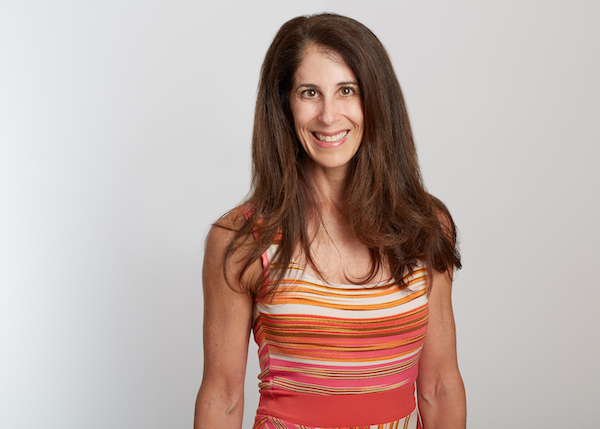
Michelle Pollock, chair of Jewish Federation of Greater Vancouver’s Israel and global engagement committee. (photo from JFGV)
For Montreal native Michelle Pollock, chair of Jewish Federation of Greater Vancouver’s Israel and global engagement committee (IGEC), love and loyalty to world Jewry were firmly established early in life – at home, school and in the community at large.
That deep affinity was further solidified after a two-month trip to Israel with her ninth-grade class. More recently, while serving as president of the Jewish Community Centre of Greater Vancouver in 2016, Pollock took a trip with her husband Neil to visit the Krakow and Moscow JCCs.
“These visits were incredibly powerful,” Pollock told the Independent. “Witnessing the young adults of these communities, discovering and exploring their Jewish heritage was beautiful. Even more inspiring was the hard work and dedication of the Polish and Russian volunteers and staff in creating welcoming spaces to facilitate this Jewish self-discovery.”
In November 2017, Pollock traveled to northern Israel as a participant on a Centre for Israel and Jewish Affairs mission. “Many of the participants on the trip were IGEC members or staff and their passion for our partnership region was infectious. I joined the IGEC soon thereafter,” she said.
A visit to Federation’s partnership region, Etzba HaGalil (the Galilee Panhandle), followed, in November 2019. That experience was multifaceted. The area is known for its physical beauty and the warmth of its residents, said Pollock, but the harsh reality of security issues and the regional challenges of jobs, infrastructure and opportunity also prevail, she noted.
“Seeing this firsthand infused me with gratitude to our Federation, which has worked so closely with the region since the mid-1990s to bring desperately needed aid and programming in a continuing effort to address the challenges faced by its residents,” Pollock said. “Jewish Federation has strategically invested funds to strengthen this region through education and social welfare programs, capital projects and regional development, and building enduring relationships between members of our community and residents of Etzba HaGalil.”
Similar to efforts locally, some of the funds to Israel have been allocated to new programs addressing youth mental health issues, violence and abuse at home, educational gaps and food security – all problems that have been compounded by the pandemic.
As for the challenges in another region in need, Far East Russia, where many Jews live in remote locations, Federation partners with the Joint Distribution Committee. The JDC is a global organization that addresses critical rescue and relief needs in more than 60 countries, including in the former Soviet Union (FSU).
“Working together with the JDC, life-saving aid is provided to over 80,000 elderly Jewish people in the former Soviet Union who struggle to survive on meagre pensions of $2 per day. They are the poorest Jews in the world, most without family or government support. Their distress and vulnerability are exacerbated by the region’s remoteness and freezing winters,” Pollock explained.
Many of these elderly Jews are well-educated and trained as doctors, lawyers, scientists and educators, she said. Having spent most of their working lives under communism, however, they were unable to accumulate savings. When the Soviet Union collapsed, along with the region’s pension and social assistance infrastructure, they were left poverty-stricken.
“Vancouver is geographically the nearest Jewish community to the Jewish communities in the easternmost part of Russia, adjacent to Siberia. As a strategic priority to strengthen Jewish life around the world, Jewish Federation (as the closest Federation) plays a very active role in supporting this region,” Pollock said. “We ensure long-term economic and social stability for Jews living overseas and in Israel by funding much-needed programs that provide a safety net for our most vulnerable people.”
These specialized programs, funded in part by the Jewish Federation of Greater Vancouver through the annual campaign, impact the lives of at-risk youth, low-income seniors and those living in economically fragile areas.
This year, Federation is funding a program directed at youth in the FSU called Active Jewish Teen (AJT). Engagement in the Jewish community, it believes, is an essential first step in making communal responsibility an inseparable part of one’s Jewish identity. Though still building momentum, AJT already has more than 3,200 members in 63 locations across seven countries.
Besides investing strategically, Federation’s IGEC has made solid connections with the groups it is serving in the FSU, said Pollock. It is also attentive to urgent needs arising in other Jewish communities around the world, helping fund operations and campaigns in South America, Ethiopia, the United States and elsewhere, she said.
Closer to home, throughout the year, Jewish Federation’s Israel and global engagement department brings opportunities for the Vancouver community to experience Israeli culture. Next year’s Yom Hazikaron (Israel’s Memorial Day) and Yom Ha’atzmaut will present opportunities for the community to come together in person.
“Building off the success of last year’s virtual Israeli Independence Day celebration, we will include more local talents and have community fun projects such as the community song and more surprises,” said Pollock, adding that there is a contingency plan in place should the COVID situation change.
Further, shinshinim, teenage emissaries from Israel, will be in town in the coming year. The shinshinim engage local young people in various activities and help foster meaningful ties between Disapora Jews and Israel.
Members of the Vancouver community have a chance to travel to Israel next summer, as well. Federation is facilitating a community mission from July 24 to Aug. 5, 2022.
“I know many of us are keen to travel and get back to Israel and this is going to be an amazing experience,” said Pollock. “At this point, we are looking for people to register their interest and there are a number of information sessions coming up.”
To learn more about the trip to Israel and to donate to the annual campaign, visit jewishvancouver.com.
Sam Margolishas written for the Globe and Mail, the National Post, UPI and MSNBC.
Want to make a difference in the lives of Israeli teens? Consider joining Israel Connect, a program where local adult volunteers connect online, one-on-one, via Zoom, with Israeli high school students who want to improve their English conversation and reading skills. This year’s program starts on Oct. 10 and is organized by Chabad Richmond, in partnership with the Israeli Ministry of Education. It entails a commitment of 45 minutes once a week.
There are currently 21 local volunteer tutors/mentors participating in Israel Connect, but more are needed. “We’re looking for volunteers who are retirees, seniors, or any adults with flexible schedules…. No previous tutoring experience is necessary and the curriculum is provided for tutors/mentors,” said Shelley Civkin, local coordinator of the program.“If you’re an adult who’s a fluent English-speaker, has basic computer skills and owns a computer with a camera, that’s pretty much all you need,” she said. “And, of course, a strong desire to help Israeli youth.”
Volunteers do not need to speak Hebrew and can tutor from home. Basic training and technical support are available if needed. Time preferences of volunteer tutors/mentors will be coordinated beforehand and sessions take place in the morning between 7 and 11 a.m. PST any day between Sunday and Thursday. “All Israel Connect asks is a minimum commitment of one school year, in order to ensure consistency for the students,” said Civkin.
“It’s a very meaningful, practical way for community members to support Israel and build bridges between Diaspora Jews and Israelis,” said Rabbi Yechiel Baitelman of Chabad Richmond. “You’ll be doing a mitzvah, while investing in Israel and its young people. Plus, good English skills will give them an advantage in accessing post-secondary education and getting better jobs. English proficiency is crucial to Israeli students, since it accounts for a third of their entrance exam marks for university.”
“Partnering with the Israeli Ministry of Education, the Israel Connect program targets teens from less advantaged neighbourhoods in Israel,” added Civkin. “Most volunteers really enjoy helping their Israeli students and develop a lasting bond with them…. This kind of one-on-one tutoring makes a huge difference in their lives, both educationally and personally. It gives them a feeling of confidence, that they can converse in English. Estimating the impact of this program on Israeli youth is, of course, speculative, but we do know for certain that it helps improves their school grades.”
The curriculum consists mainly of a tour of Israel, focusing on the wealth of historically, culturally and biblically significant cities and sites. It’s not uncommon for both the students and the tutors to learn something new about Israel at each lesson. Civkin said several tutors have visited their students on trips to Israel and keep in touch way past the end of the school year.
For more information on tutoring, contact Civkin at 604-789-5806 or civie1956@gmail.com. Anyone who would like to support the program financially, helping cover costs for aspects such as technical support and staffing, can call Chabad Richmond at 604-277-6427 or email admin@chabadrichmond.com.
Sar-El volunteers from Canada, the United States, England, Germany and the Caribbean at a base not far from Sderot in 2018. (photo from Ed Rozenberg)
This past July, I found myself shlepping boxes full of medical supplies and loading them onto pallets. How did I get here? I was volunteering in Sar-El, or Sherut LeYisrael, which means “service for Israel.”
Sar-El enables people, both inside and outside Israel, to volunteer to provide assistance to the Israel Defence Forces while contributing to the country, experiencing Israel and integrating into Israeli society. At present, due to COVID-19 and its resulting limitations on visitors, it is rare to meet a non-resident volunteer but, hopefully, that won’t be the case for much longer.
Sar-El volunteering comes in two types: arriving in the morning and leaving in the afternoon or arriving on a Sunday in the morning and leaving after lunch on a Thursday (sleeping on the base).
This recent volunteering stint, my wife Ida and I went to a central pickup spot in north Tel Aviv and were taken by bus with the rest of our group to the medical division (Matzrap, which is Hebrew shorthand for Centre for Medical Supplies) of Tel Hashomer, a large army base about 25 minutes away from the city. The usual group has about 15 volunteers, evenly divided between the sexes. Before COVID, the groups would consist of about 25 people, also evenly divided between the sexes, and about 60% Jewish and 40% non-Jewish. My co-workers have ranged in age from 20 to 92.
On arriving at the base, we are taken to our dorm building, with men and women sleeping on separate floors. We are told that there is to be no alcohol, drugs or romantic liaisons. Discussions of religion and politics are strictly forbidden. The group is led by two or three madrichot (female leaders) who are part of an IDF unit trained to lead Sar-El groups. It is important to remember that Sar-El is a unit of the IDF and, while on the base, you are under IDF jurisdiction, which means that you can’t leave the base except with hard-to-get permission. We receive uniforms, which we’re required to wear from the morning till after dinner.
A usual day begins with breakfast at 7 a.m. and the flag-raising at 8:15, followed by the singing of Hatikvah. This is often a very emotional moment, as we volunteers from all over the world are assembled with the same purpose, namely, to do something important for Israel. I have been on 10 Sar-Els and have met people from Canada, the United States, New Zealand, Australia, many European countries, South Africa, Brazil, Uruguay and Argentina. Volunteering with Sar-El is an extremely broadening experience and you make close friends for life.
Announcements come after the flag-raising. The madrichot ask us if there are any concerns or questions, and take care of them. We are then assigned to our workstations.
The work depends on the type of base. This was my fifth time in Matzrap, which deals with the packing and loading of medical supplies. Other parts of Matzrap deal with checking whether batches of medical equipment, such as stethoscopes, pressure gauges and night vision equipment, are functioning properly, or checking the expiration dates of drugs. The supplies are used in Israel, as well as by emergency units sent abroad to assist in disaster areas.
I first found out about Sar-El in early 2006 from an article in the Jerusalem Report. When the Second Lebanon war broke out, Ida and I flew to Israel and were assigned to a base in the Negev, where we loaded tanks, assembled army equipment, packed uniforms and weapons and loaded food.
One of my favourite activities in Matzrap is to help prepare worktables for adolescents with intellectual challenges. It is fulfilling to see these young people working and getting a feeling of accomplishment. There is always a small thank you ceremony at the end of the work period that I find quite touching. One thing that has struck me since moving to Israel in 2016 is the degree to which people here are encouraged to reach their potential no matter what their background and abilities.
Work continues till lunch at noon. After lunch and a rest period (and, for those who choose to participate, minchah prayers), we return to work till about 4 p.m. Dinner is at 6 p.m. and, at 7 p.m., there is an activity of some sort, either educational or entertaining, or both, such as quizzes, led by the madrichot. The atmosphere is relaxed.
Sar-El itself was the brainchild of General Aharon Davidi (z”l), a former head of the IDF paratrooper and infantry corps. In the summer of 1982, in the midst of the First Lebanon War, Golan Heights communities faced the prospect of losing their entire agricultural crop. The majority of able-bodied farmers and other workers were called up for army reserve duty and entire farms, with crops already ripened, were left unattended.
Davidi was then the director of community and cultural activities of the Golan and Jordan Valley. He sent a number of friends as a recruitment team to the United States and, within a few weeks, some 650 volunteers arrived to help. Those first volunteers expressed the wish that the project be continued. As a result, in the spring of 1983, Sar-El, the National Project for Volunteers for Israel, was founded as a nonprofit, nonpolitical organization. Sar-El is represented in more than 30 countries.
On many occasions, Sar-El volunteers work with soldiers who are assigned to the same workstations. At the beginning, the soldiers are amazed that there are people who actually volunteer for this but, after awhile, they feel more comfortable with the volunteers, they chat with them, get advice from older souls and practise their English.
The lunch on Thursday before the group returns to Tel Aviv can be a quiet time. By then, we have gotten used to one another, laughed, sweated and yelled at one another and many of us have become quite close. The madrichot always set up a WhatsApp group for anyone who wants to join and through which we get our notifications.
I have no doubt that, on balance, I have gotten more from volunteering for Sar-El than from any other contribution that I might have made through volunteering. It has been an enormously enriching experience for both Ida and myself.
Jack Copelovici and his wife, Ida, made aliyah from Toronto in 2016. Sar-El (Sherut LeYisrael) is one of the organizations for which they volunteer. They first volunteered for it in 2006.
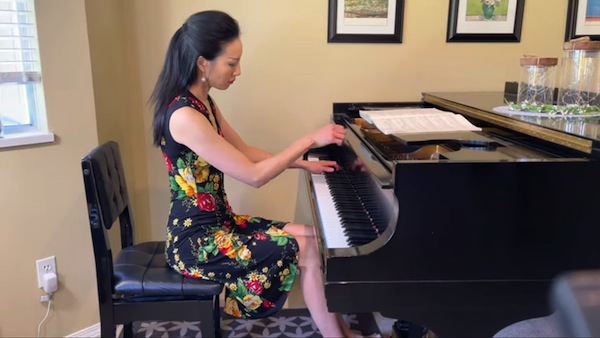
Libby Yu performed A Concert for the Soul on June 28, hosted by Jewish Seniors Alliance and the Kehila Society of Richmond. (screenshot)
On June 28, Jewish Seniors Alliance and the Kehila Society of Richmond presented classical pianist Libby Yu in performance via Zoom. A Concert for the Soul was the last session of the 2020-21 JSA Snider Foundation Empowerment Series.
Toby Rubin, coordinator of Kehila Society, welcomed everyone to the concert and introduced Yu, who was born and grew up in Richmond. An accomplished performer, collaborator, teacher and adjudicator, Yu has graced international stages and has appeared as soloist with major symphony orchestras. She brings her passion for music to audiences of all ages and venues. She is an artist for the Health Arts Society’s Concerts in Care, which allows her to share her music in residential care homes and hospitals. Rubin encouraged us all to watch Yu’s fingers as they moved on the keyboard.
Yu greeted everyone from her home, saying how much she enjoys performing for JSA and Kehila and that she looks forward to playing for us in person in the future. She told us that she would be playing Ludwig van Beethoven, Franz Schubert and Frédéric Chopin.
The first piece was Beethoven’s Moonlight in three movements. The first was slow, the second light and happy, while the third was dramatic with many runs and chords.
The next piece was Schubert’s Impromptu, 4th Opus in A Flat Major. This piece is full of cascades, arpeggios, with a beautiful melody. It is in the ABA format, where the third movement returns to the melody of the first.
This was followed by two of Chopin’s Etudes, the first in F minor and the second his well-known revolutionary étude that reflects his turmoil over the instability of his native Poland.
Yu ended her performance with a Chopin Ballade, in G minor. The main theme is a quiet, still melody that builds in virtuosity and then flourishes to huge dramatic chords. The coda is fast and exciting.
It is indeed a pleasure to watch Yu in her intensity and concentration. After her performance, she thanked us and said she hoped the music brought us all joy.
Gyda Chud, co-president of JSA, thanked Yu for the program. She reminded everyone that, in the past, events with Kehila have included lunch and, hopefully, we will all be able to enjoy both lunch and a performance in person soon.
Chud again thanked Yu, saying the concert was not only an inspiration for the soul, but also for the heart and mind.
The Empowerment Series will continue with the theme “Be Inspired” for the 2021-22 season.
Shanie Levinis program coordinator for Jewish Seniors Alliance and on the editorial board of Senior Line magazine.
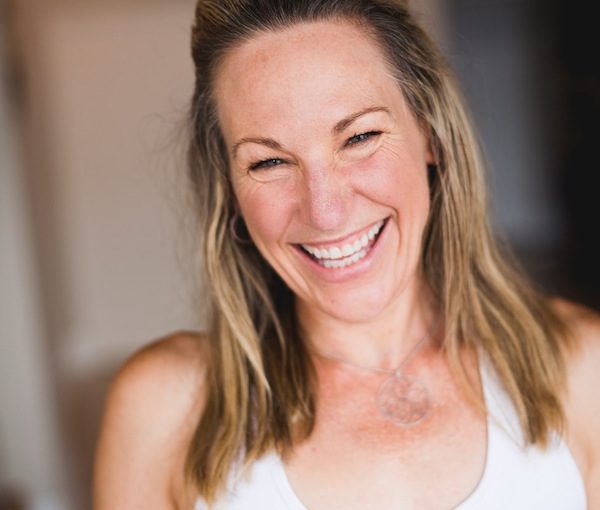
Yoga therapist and teacher Tianne Allan (photo from yogatianne.com)
Don’t hold your breath. Breath is life, and each breath we take optimizes our health. This is what I learned at Jewish Seniors Alliance’s third empowerment session – Discover the Power of Your Breath – which was held on May 4.
Gyda Chud, co-president of JSA, welcomed the 75 Zoom participants, explaining that the overarching theme for the empowerment series is “Be Inspired.”
Fran Goldberg introduced the speaker – yoga therapist and teacher Tianne Allan, who was involved for two decades in the world of aquatics and high-performance athletics. After a car accident, her yoga practice became her pathway to healing, both physically and emotionally. She now specializes in pain care and in the treatment of anxiety and insomnia.
Allan guided the group in movement – breathing while opening the arms and bringing them back to the chest. She explained that the foundation of our breath is comprised of three steps:
1. Sit up straight and breathe through your nose.
2. Low and slow, take a breath down into your belly.
3. Smooth and steady, inhale and exhale.
Other types of breathing are the relaxation breath, where you sit back, relax and exhale with a sound; and the humming breath, to relieve anxiety, where you inhale through the nose and exhale through a hum.
Correct breathing can also help ease pain, Allan explained. And it can help us sleep better. The sleep exercise involved imagining ourselves looking through the ceiling to the blue sky and letting the sun fill our bodies with warmth. This exercise actually lulled some of us to sleep.
Shanie Levin thanked Allan for getting us involved in using our bodies and minds, and reminded the audience of the JSA’s next Empowerment Series session, on June 28, featuring Libby Yu, a classical pianist.
Tamara Frankel is a member of the board of Jewish Seniors Alliance and of the editorial committee of Senior Line magazine. She is also a board member of the Jewish Community Centre of Greater Vancouver.
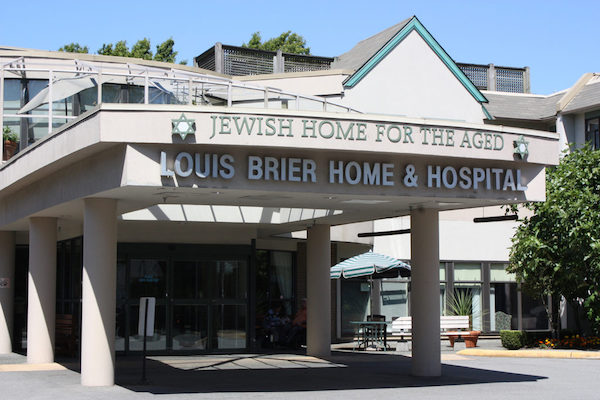
This spring saw the launch of the This Year Like No Other, This Year More Than Ever 2021-2022 Louis Brier Jewish Aged Foundation campaign, which is raising funds to enhance care and innovate the program and service offerings for residents of the Louis Brier Home and Hospital.
Early in 2020, the foundation stepped up to assist the Louis Brier leadership in its exemplary response to the COVID-19 pandemic. By doubling the home’s funding, the foundation was able to support the home in keeping its seniors safe and engaged during one of the most challenging years of their life.
The biennial campaign, which started April 19, will run to May 28. With the community’s help, the goal is to raise $2.4 million. Campaign chairs are Harry Lipetz (board president) and Lee Simpson (immediate past president).
The $2.4 million amount is needed to keep up with the home and hospital’s funding needs, which doubled with the onset of COVID-19. While the foundation is well aware of the many challenges of the present time, we believe this year, like no other, and more than ever, we must collectively come together to care for, and give a well-deserved kavod, to the people who built our community for us in the first place. To contribute and create impact where it’s most needed after the extraordinary challenges of the year 2020. To be part of ensuring that the physical, mental and spiritual needs of the home’s Jewish seniors are met.
Louis Brier’s background
In 1945, 14 friends known as the Hebrew Men’s Cultural Club shared a vision to create a home for Jewish seniors in Vancouver. That home, initially built to accommodate 13 residents, was established in 1946. Over time, that modest facility grew, changed locations and expanded its services, eventually becoming the Louis Brier Home and Hospital, which has progressed in step with Vancouver’s Jewish community.
Today, Louis Brier is part of a continuum of care known as the Snider Campus, which also includes the Weinberg Residence, a boutique assisted living and multi-level care residence adjacent to Louis Brier.
The Louis Brier Jewish Aged Foundation provides and distributes funds to the Snider Campus towards maintaining and fostering the well-being of the Jewish aged of British Columbia, while supporting the enhancement of their quality of life based on Jewish traditions.
Some quick facts
The Louis Brier is a 215-bed long-term residential care home serving Vancouver’s Jewish community.
The home and hospital provide three levels of residency (intermediate care, extended care and special care).
Thirty-five residents of the current population at Louis Brier are Holocaust survivors.
Eighty percent of Louis Brier Home and Hospital’s residents are diagnosed with varying levels of dementia.
The Louis Brier has 436 employees – 195 full-time, 101 part-time and 140 casual.
The home and hospital residents range in age from 50 to 103, with the average age being 84.
The Louis Brier is an accredited institution with exemplary standing (2018). The Accreditation Canada survey team spent four days at the facility and reviewed a total of 19 required organizational practices (ROPs), 216 high priority criteria and 295 other criteria, for a total of 551 criteria. The surveyors determined that Louis Brier successfully met 100% of the 551 criteria evaluated.
The Louis Brier was awarded the 2020 Canadian Non-profit Employer of Choice Award.
The Louis Brier is the only facility in British Columbia with a companion program and has the largest recreation team in Western Canada.
The Louis Brier had a single COVID case among residents.
To donate to the campaign, click here. For more information, call 604-261-5550.
To say that COVID-19 has wreaked havoc on British Columbians would be an understatement. The virus has disrupted anything that we would call the normal activities of daily life. Most of us have had to make major compromises: where we go, what we do and how we can avoid getting the terrible virus. These adjustments have had a major impact on Jewish Seniors Alliance clients, who are already compromised by loneliness and isolation.
How we serve our clients and how we support our volunteers has undergone major changes – let’s give it the label “reinventing peer services.” In order to better understand what has taken place, I interviewed Charles Leibovitch, JSA senior peer support services coordinator, and Grace Hann, JSA trainer of volunteers of senior support services.
In the beginning
By mid-March 2020, the first sign of COVID-19 began to show its ugly head. The lockdown left clients and volunteers absolutely unprepared. Persons who were already isolated and lonely found themselves even more isolated and lonelier. As time progressed, clients were cut off from family members who might have supported their relatives through personal contact and social events. This was especially devastating for persons without family.
In many situations, volunteers were their primary contact; their lifeline! Being alone undermines one’s mental health. Being alone exaggerates one’s fear of COVID-19. Most of the clients were cut off from community programs, like adult day care. Spouses who usually spent time with their spouse in a long-term care facility were also cut off. Simple activities like going for a walk and sitting on a bench were curtailed. Elders had depended on having that human connection – having that human touch makes us feel needed and whole.
Volunteers meet challenge
The changing scene called for quick action, initiated by Grace and Charles. Instead of personal visits, the telephone would become the prime instrument of contact between volunteers and their clients. It was necessary to contact the volunteers quickly. Support for the volunteers would be provided by Zoom. This necessitated a steep learning curve for volunteer and client. After all, making and keeping the connection was critical. The three services – peer support, friendly visits and friendly phone calls – had to be reassessed in terms of the neediest clients. Each of the three services’ volunteers had different levels of training by Grace.
In some situations, a certified peer support volunteer was assigned to a person who ordinarily would have had contact with a friendly visitor or a friendly phone caller. Moving from in-person contact to impersonal contact was a major transition – almost like reinventing how support was to be provided. The JSA volunteers made the transition like veterans, with the extraordinary help of Grace and Charles. There was an increase in the contacts between volunteers and clients and an increase in Zoom online meetings to support the very special work being carried out by the volunteers.
Supporting the volunteers
Grace and Charles organized many activities, including outdoor picnics, weekly webinar seminars, a Chanukah party with a singalong and group support meetings every three weeks. The spirit and esprit de corps by the volunteers has been amazing. Volunteers will send cards to their clients as an additional way to keep in contact. Who doesn’t like to receive mail?
Next steps
Challenging times require challenging solutions. Charles and Grace rose to the challenge and proved that, with dedication, imagination and determination, obstacles can be overcome. When the COVID-19 vaccine has been fully distributed, we will establish a “new normal.” This will present JSA, Grace, Charles and the volunteers with a new set of issues and situations. And, as the song goes, “we shall overcome” – they will face these challenges with creativity, empathy and caring.
Ken Levitt is a past president of Jewish Seniors Alliance, former chief executive officer of Louis Brier Home and Hospital, and a past chair of Camp Miriam. In 1985, he co-edited The Challenge of Child Welfare, the first textbook on child welfare in Canada. A version of this article originally appeared in the March 2021 issue of Senior Line.
The Vancouver Jewish Film Festival is set to go online March 4, and all the many offerings will be available until March 14. There are plenty of gems for viewers of varying tastes and ages, including a few Israeli films that seem to be nostalgic paeans to American comedies or kids’ movies of the 1960s and 1970s. But we start with romance.
The film Love in Suspenders opens with a wild car ride through Tel Aviv, as we are introduced to main character Tammy (Nitza Shaul) who drives like … well, an Israeli. When she backs into pedestrian Benno (Yehuda Barkan), this adorable slice-of-life gets rolling.
Her son Michael, a lawyer, warns that one more infraction will lead to the loss of her driver’s licence. Making nice with her victim (while continuing to argue it was his own carelessness that led to the mishap), Tammy begins what evolves into an innocent and unintentional courtship with Benno.
The luxurious seniors facility where Tammy lives is a hotbed of sexual tension – with lectures on the wonders of Viagra, a supporting character in the film that really should have received its own credit.
Tammy venerates her late husband Yoni in ways that probably exceed what would be considered normal grieving. Hanging on to her glorious past – Tammy and Yoni were a musical duo that toured Israel and abroad – versus facing an exciting but unnerving new romance is the conflict that drives her character.
Benno’s character is driven by all sorts of unnerving situations. Benno’s got his own problems with the next generation, but both he and Tammy handle their affairs like adults, despite being treated like children by their kids.
Michael’s horror at both his mother’s rekindled sex life and the uncertain provenance of the unkempt and possibly homeless Benno threatens to undermine the trajectory of their affection.
Kids aren’t the only interfering forces. The extravagant dining hall and luxurious hallways of the seniors home are brimming with prying eyes and wagging tongues. The roosters in the facility are put out that Tammy has scored a love interest from the outside, despite all their strutting and preening. The women in the building always seem to be nearby when Tammy’s male caller is coming or going from her apartment.
The title Love in Suspenders is a play on the phrase “Tuesdays in suspenders,” a program in which Israeli seniors get weekly discounts at venues like the cinema. The movie is an absolutely charming vignette of finding love at a later age and dealing with the impacts of a fresh future on a cherished past. It is a respectful treatment of older characters and their romantic explorations, which are topics too often treated shabbily by Hollywood and other depictions.
– PJ
***
Not one of us will be able to avoid death. Yet, despite its inevitability, few of us prepare for dying and most of us put the thought of it to the back of our minds, even as we mourn those who have died.
The hour-long documentary Dying Doesn’t Feel Like What I’m Doing is almost a must-see for anyone struggling with the reality of mortality. It is a caring portrait of Rachel Cowan’s 18-month journey from a cancer diagnosis (a brain tumour) to her passing. Along the way, we learn about how remarkable this human’s life was and how her impacts continue. However, while Cowan was successful by almost any measure, it is not only her accomplishments that are noteworthy, but her struggles and her finding of strength in love and gratitude at her most vulnerable, when she had every right to be bitter and selfish.
Cowan was a civil and women’s rights activist of some acclaim. She was married to Paul Cowan, a journalist for the The Village Voice, and theirs was a partnership that extended into work at times; she took incredible photographs for his stories, capturing on film the best and worst of humanity in a tumultuous era. The couple lived and fought for their beliefs and really did make the world a better place.
Paul died from leukemia in 1988, at 48 years old. Rachel had converted to Judaism earlier in their relationship, after his parents died in a horrific apartment fire. The tragedy spurred Paul to explore his Jewish roots and her to search for God and meaning, which led her to Judaism. She was studying to become a rabbi during the period that Paul was ill and she was ordained soon after his death. At that point, still deep in grief, she thought, “Now, what?” How possibly could she counsel others when she herself was so ungrounded. She decided, “Choose life.”
She not only chose life for herself, but for others. While working at the Nathan Cummings Foundation, she established the Jewish Healing Centre, after seeing how little Jewish community support Paul had had in palliative care. She also established other initiatives and wrote a book on wise aging. As the documentary begins, we see Rachel leading a meditation group, continuing her life’s work. The film’s title comes from a comment Rachel makes about nine months after her diagnosis: “I’m living my life. Dying doesn’t feel like what I’m doing.”
– CR
***
With a harrowing opening scene, A Starry Sky Above the Roman Ghetto begins an historical back and forth between the terrible past and the present. The intertwined timeframes and eventual plot twists remind the viewer that the past is not really past.
Roman high schooler Sofia (Bianca Panconi) finds a Second World War-era letter and photograph hidden in the lining of a flea market suitcase. Her curiosity piqued, she begins a quest to uncover the story behind the mystery, which forms the narrative of the film.
Bringing the artifacts to her schoolmates, who enthusiastically join in the sleuthing, Sofia and pals then recruit students from the neighbouring Jewish high school to join in the mystery-solving.
There is charm in the cross-cultural friendships and some minimal tension when the teens meet obstruction from their parents and teachers. But the film is generally simplistic, too often cutesy and frequently hammy.
Before they have even tracked down the basics of the historical mystery, the students decide to turn their quest into a play. The movie itself has the feel of a high school production, and the fresh-faced, upbeat teen spirit seems incongruous with the Holocaust narrative at the heart of both the theatre production and the film. Impediments are too easily overcome. Archival research eurekas far too effortlessly and speedily fall into place. (The way the characters manhandle historical documents would make an archivist recoil.) An ostensible Montague/Capulet hurdle to a pair of star-crossed lovers is resolved in the most facile manner imaginable. The ending is unbelievably tidy – unbelievable being the operative term.
Continuity and fidelity to peoplehood and identity are core themes, but even these are handled poorly. For example, a Jewish boy gives Sofia a convincing explanation for why he must date and marry only a Jewish girl, but the next day he apologizes, apparently deciding that maybe continuity isn’t as sacred as a little amorousness after all.
The resolution to the larger mystery falls very close to home for Sofia, whose own life is altered by her discovery. This outcome provides some justification for the girl’s otherwise inexplicably dogged devotion to unraveling the mystery. But the whole thing has more of a Scooby-Doo vibe than the solemn drama the film probably set out to create.
There is some eye candy in the form of Roman architecture, including parts of the city’s Jewish quarter, but it is perhaps a thwarted COVID-era wanderlust to blame for finding fault that the film is not more of a visual celebration of the eternal city.
There is some decent acting and there are enjoyable components to A Starry Sky Above the Roman Ghetto, but it is hard to sustain the premise of an historical mystery when every twist and turn is foreseeable long before the ostensibly bright students clue in.
– PJ
***
Fans of Airplane, Naked Gun and Austin Powers will settle right in with the ridiculous Israeli comedy Mossad. Upending the perception of the Israeli intelligence agency as one of the world’s greatest, the film centres on what must be Mossad’s most moronic agent.
The action begins with the kidnapping of the world’s foremost tech magnate, Jack Saterberg, while he visits Israel. (One doesn’t have to stretch the imagination much to conjure a mashup of Twitter’s Jack Dorsey and Facebook’s Mark Zuckerberg). It falls to Mossad operative Guy Moran (Tsahi Halevi) to team up with CIA agent Linda Harris (Efrat Dor) to confront the bad guys.
When Mossad hit Israeli theatres in 2019, it saw a box office-smashing open. It is an all-ages bit of entertainment, with slapstick buffoonery and sight gags – and not really a lot more. There is certainly plenty of violence, but it is exclusively of the cartoonish variety.
In addition to sight gags, smartass dialogue drives what there is of a direction to the story. “I’m a Mossad agent. Here’s my card,” Moran says. “It’s blank,” replies the recipient. “I’m a secret agent,” he says. Nyuk nyuk nyuk.
The kidnappers threaten to stop all cellphone service worldwide. When they offer a two-minute taste of the threat, global mayhem and violence ensue, underscoring the urgency of preventing the calamity. Suffice to say the only real tension in the 90 or so minutes comes from bracing for the next corny gag.
All the predictable scenarios are packed in – like a countdown clock to doomsday and other tenets of the genre – but in the most outlandish forms. Romance also figures, with Israeli-Israeli, Israeli-American and human-machine flirting adding spice and disorientation befitting a script that seems to view no joke as too absurd if there’s a chance of a laugh.
For a harmless multigenerational movie night, Mossad will deliver a few side-splitters and a lot of snickers.
– PJ
***
Hila Natanzon and Amir Tessler rebuild a derelict airplane in Sky Raiders.
Sky Raiders is pure family fun. In Hebrew with English subtitles, the audience needs to be old enough to read, but not even that well, as the action is pretty easy to follow. For the parents who may have watched The Love Bug when they were a kid, there will be a comforting sense of familiarity with Sky Raiders, though the historic plane that gets rebuilt in this movie isn’t anthropomorphized and the love story in this case is between the teens.
Yotam (Amir Tessler) is the new kid at school and has trouble fitting in. When he spots Noa (Hila Natanzon) playing soccer with a group of boys, and holding her own, he is smitten. He joins the game but soon requires medical attention for an asthma attack, having left his inhaler at home, despite his over-protective mother’s multiple reminders for him to take it with him; his father, a pilot, died a few years earlier in a plane crash. Noa has her own parental problems – her father, also a pilot, has dismissed her as, basically, “just a girl” – and her older brother bullies her.
The two teens share both the love of all things planes and flying, as well as parents who actively try to dissuade them from these loves. They find their father figure in the grumpy old man dubbed “Mad Morris” by the local kids, who, surprise, is a really nice guy, just sad and lonely.
When Yotam and Noa discover a Messerschmitt that had been left to rot in a plane cemetery, the two – with Morris’s help – set to restore it. And, not only to restore it so that it can sit in a museum, but so that it can actually be flown in the upcoming annual Yom Ha’atzmaut airshow.
With some cheesy CGI, young love conquering all, bullies put in their place, the ostracized taking front-stage, and happy parent-child reconciliations, Sky Raiders is Disney-esque and charming. Cue the music to swell, as the credits begin.
The Stroke and Brain Injury Assistance Organization (BINA), based in New York, awarded Dr. Cirelle Rosenblatt their Brain Injury Leadership Award on Jan. 24.
Created in 2003, BINA provides guidance and support to thousands of stroke and brain injury survivors and their families. Dr. Rosenblatt has been involved with BINA since its early days.
Dr. Rosenblatt has worked as a neuropsychologist for more than 25 five years in a wide range of rehabilitation medicine settings. She is a sought-after expert in neuropsychological evaluation and therapy.
Dr. Rosenblatt trained and worked at leading facilities in the United States prior to moving to Vancouver with her family in 2003.
She founded and is currently the clinical director of Advance Concussion Clinic (ACC). Located in Vancouver and Surrey, ACC is British Columbia’s only dedicated concussion clinic. She also serves as a consultant to national and Olympic snow athletes and teams, and other professional and competitive athletes.
Mazal tov to Dr. Cirelle Rosenblatt!
* * *
Alison Klein
Alison Klein was selected to participate in the CBC Hot Docs Podcast Career Accelerator, which took place during the CBC Hot Docs Podcast Festival (Jan. 27-29). She was one of 70 emerging Canadian audio creators chosen for their innovative Canadian podcasts. Alison’s show, The Self Advocate, was created to provide a forum to talk to people with cognitive disabilities who advocate for themselves. It can be heard on Co-op Radio 100.5 FM or coopradio.org, and is available on Spotify and other podcast providers.
* * *
Ayelet Cohen Weil (photo from Louis Brier Foundation)
The board of directors of the Louis Brier Foundation recently announced the appointment of Ayelet Cohen Weil as the new executive director of the foundation. With more than 12 years of experience working in Jewish community organizations, both in British Columbia and in Israel, Cohen Weil brings an impressive background in nonprofit management, fundraising, strategic planning, community relations and development.
Prior to joining the foundation on Feb. 1, Cohen Weil held the position of associate director of community engagement at the Jewish Federation of Greater Vancouver, as well as manager of women’s philanthropy and manager of major gifts for Jewish Federation’s annual campaign. Her previous experience includes working in academia at the Interdisciplinary Centre Herzliya, as well as serving as managing director of Hillel BC. She holds a master’s degree in public policy, conflict resolution and mediation, with international mediation certification and distinction from Tel Aviv University.
The Louis Brier Foundation has a broad perspective and commitment in fulfilling its mission statement, and raising funds to maintain and foster the well-being, care and happiness of the seniors of the Snider Campus, site of the Louis Brier Home and Hospital and the Weinberg Residence.
“This year, one like no other, and after more than 12 years of working in Jewish communal life and being exposed to the many facets of the fabric of our community, I have been pondering upon the vitality in embracing, more than ever, the value of caring warmly and worthily for our seniors, the ones who built our community for us in the first place,” said Cohen Weil. “They are the living examples of our aspirations: the builders, the thinkers, the visionaries, the creators.
“I started working with the young generation in my years in Hillel and then at Federation across the community…. I truly wish to impress upon the younger generation how important this is for immediate family members and for the kavod we owe to our elderly. I would love to raise even more the profile of the centrality of this foundation in our community across all generations. This, for me, is thinking of the fabric of our Jewish community … in its full cycle and in its entirety. This is what excites me the most – to hopefully be able to contribute and create a large impact where it’s mostly needed after what we have experienced in 2020 with the COVID-19 pandemic…. To now be part, as well, of ensuring that the physical, mental and spiritual needs of our Jewish seniors are met so that they have a life of dignity, fulfilment and happiness, which they so much deserve…. Anything that would bring an extra smile, a feeling of comfort and warmth to Jewish seniors in our community is never too much, and I am incredibly excited and humbled for this opportunity.”