Skip to content
  • Home
  • Subscribe / donate
  • Events calendar
  • News
    • Local
    • National
    • Israel
    • World
    • עניין בחדשות
      A roundup of news in Canada and further afield, in Hebrew.
  • Opinion
    • From the JI
    • Op-Ed
  • Arts & Culture
    • Performing Arts
    • Music
    • Books
    • Visual Arts
    • TV & Film
  • Life
    • Celebrating the Holidays
    • Travel
    • The Daily Snooze
      Cartoons by Jacob Samuel
    • Mystery Photo
      Help the JI and JMABC fill in the gaps in our archives.
  • Community Links
    • Organizations, Etc.
    • Other News Sources & Blogs
    • Business Directory
  • FAQ
  • JI Chai Celebration
  • JI@88! video

Recent Posts

  • Zionism wins big in Vegas
  • Different but connected
  • Survival not passive
  • Musical celebration of Israel
  • Shoppe celebrates 25 years
  • Human “book” event
  • Reclaiming Jewish stories
  • Bema presents Perseverance
  • CSS honours Bellas z”l
  • Sheba Promise here May 7
  • Reflections from Be’eri
  • New law a desecration
  • Resilient joy in tough times
  • Rescue dog brings joy
  • Art chosen for new museum
  • Reminder of hope, resilience
  • The national food of Israel?
  • Story of Israel’s north
  • Sheltering in train stations
  • Teach critical thinking
  • Learning to bridge divides
  • Supporting Iranian community
  • Art dismantles systems
  • Beth Tikvah celebrates 50th
  • What is Jewish music?
  • Celebrate joy of music
  • Women share experiences 
  • Raising funds for Survivors
  • Call for digital literacy
  • The hidden hand of hate
  • Tarot as spiritual ritual
  • Students create fancy meal
  • Encouraging young voices
  • Rose’s Angels delivers
  • Living life to its fullest
  • Drawing on his roots

Archives

Follow @JewishIndie
image - The CJN - Visit Us Banner - 300x600 - 101625

Tag: seniors

New CEO for seniors

New CEO for seniors

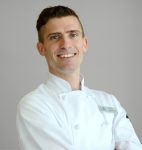
David Keselman (photo from the Louis Brier)

After an extensive search, the Dr. Irving and Phyliss Snider Campus for Jewish Seniors, comprised of the Louis Brier Home and Hospital and the Weinberg Residence, have appointed David Keselman chief executive officer.

“David is the ideal candidate at this time for the organization,” said Louis Brier board chair Arnold Abramson in a press release. “David’s experience will benefit Louis Brier directly in our commitment to providing quality patient care for residents. We feel that his innovative approach, enthusiasm and leadership style will enable Louis Brier as it moves forward with both our clinical operations and our upcoming site redevelopment.”

Sandra Bressler, chair of the Weinberg Residence, echoed Abramson’s endorsement.

“I plan first to get to know and understand the environment, both clinical, social and political in the organization and in B.C. in general,” Keselman told the Independent. “The relationships with stakeholders (both internal and external) are important, as well as familiarizing myself with the Jewish community and finding opportunities for integration as appropriate.”

Born in Lvov, Keselman was raised north of Haifa, in Kiriyat Yam, and served three years in the Israel Defence Forces. At 21, he followed his high school sweetheart to Toronto and began working at Baycrest, Toronto’s major Jewish home for the elderly. He has a doctorate of health administration from Central Michigan University, and a master’s of nursing and a bachelor of science in nursing from the University of Toronto, and he worked in acute care for many years.

In Toronto, the couple had two children, now aged 20 and 17, both of whom attended Jewish day school. They live with their mother but are following in their father’s footsteps – his son is enrolled in the nursing program at Ryerson University and his daughter plans to become a nurse as well.

Coming with his partner to Vancouver from Yellowknife – where he was vice-president of patient services at Stanton Territorial Health Authority – Keselman is looking forward to getting back to a place with a Jewish community. While he admits that he does not connect with the synagogue experience, he feels connected to many aspects of the Jewish community.

“As I get older,” he said, “the affinity and need to get closer to my roots becomes more important. Seeing that I grew up in Israel, keeping our community strong and active is imperative on many levels, not only to ensure that our tradition and culture continue to exist, but also because a strong community here ensures the strength of Israel and its ability to cope with the many adversities it is facing.”

Keselman comes to the campus in the 70th anniversary year of the Louis Brier.

“I am excited about the renewal plans,” he said, “and look forward to a future design that integrates culture, tradition, values with evidence-based and best practices to create a dynamic environment that provides a holistic continuum for patients/residents of the Louis Brier and their families, with an aim of creating a centre of excellence in geriatric care anchored in the philosophy of client- and family-centred care.”

Keselman has a five-year history of involvement with Accreditation Canada, the organization that certifies health-care facilities, where he has gained considerable knowledge in the area of quality improvement and risk reduction. He has held a wide range of executive roles in Ontario and the Northwest Territories, and is an associate instructor at both the Ryerson University School of Nursing and Athabasca University.

“I believe my experiences to date culminate in a progressive, open-minded, transformational leadership style that will support the team, stakeholders and, of course, the residents of the Louis Brier in achieving quality outcomes and satisfaction from the environment and the services delivered in the organization,” he said.

Sounding like a West Coaster already, Keselman said he is looking forward to a very different lifestyle in Vancouver than he had in Yellowknife. Jewish community is a big bonus, he said, but so is the increased opportunity for fitness – Keselman has taught aqua fitness and spin classes for almost 20 years. According to Abramson, Keselman is expected to be on-site at the Louis Brier on Sept. 14.

Michelle Dodek is a freelance writer living in Vancouver.

Format ImagePosted on August 26, 2016August 25, 2016Author Michelle DodekCategories LocalTags health, Keselman, Louis Brier, seniors, Weinberg Residence

Upgrades at L’Chaim

L’Chaim Adult Day Centre has completed upgrades to its outdoor seating area. Additions include a custom-built overhead awning and new patio furniture. The purchase of this equipment was made possible by a federal grant from Western Economic Diversification Canada’s Canada 150 Community Infrastructure Program, and a generous donation made in 2014 to L’Chaim in memory Dr. Betty Horodesky.

The infrastructure program was established as part of Canada 150 Celebrates, the federal government’s celebration of the 150th anniversary of Confederation.

“Investing in facilities that support a healthy and thriving community embodies the spirit of our Canada 150 celebrations and honors our diverse and inclusive nation,” said the Hon. Navdeep Bains, minister of innovation, science and economic development and minister responsible for Western Economic Diversification Canada. “By providing funding that enhances access to the outdoor space at L’Chaim Adult Day Centre, our government is helping seniors stay connected and active in their community.”

L’Chaim was established in 1985 and provides social, therapeutic and recreational services to the elderly in a safe, supportive environment. L’Chaim strives to improve the quality of life of its participants by providing a caring and stimulating group experience for those who might otherwise be socially isolated, while also providing support and respite for care-giving families and friends.

The new awning will provide shelter from the elements, allowing L’Chaim participants (and others) to enjoy the fresh air no matter the weather. The seating upgrades will ensure that participants are able to spend more time outdoors. Outdoor activities may now include arts and crafts, Friday Shabbat services, trivia, meals, and more. Recent research has indicated that the majority of adults spend 90% of their time indoors, and this percentage is expected to be even higher for people 65 and over, many of whom are living with mobility limitations. However, spending time outdoors is essential to maintaining good mental and physical health, and to ensuring a high quality of life.

Posted on August 26, 2016August 25, 2016Author L’Chaim Adult Day CentreCategories LocalTags JCC, renovations, seniors

A call to community seniors

Recently, I met an old friend. During our conversation over coffee, he asked if I was still involved with the Jewish Seniors Alliance of Greater Vancouver. “Of course,” I said. With a funny look on his face, he said, “You are putting a lot of time into this work.”

His remark and the look irritated me quite a bit, and I said, “Joe, you are probably 10 years younger than I am, you have your wife and children near you, you are a lucky man. You are also financially independent. It may be possible that you are not aware and possibly don’t care about what is happening around you – you are complacent.”

Let me bring Joe – and you – up to date.

There are several hundred elders in our community who are poor, lonely, marginalized or abused. JSA is making every possible effort to find these isolated individuals in order to help them.

In its outreach and advocacy programs, JSA is contributing to the well-being of countless elders with our educational programs. We reach out to these people through our two forums and four Empowerment Series sessions yearly; through our Senior Line magazine, which is published three times a year and contains current, relevant and well-research articles; and by means of our website, which not only informs but entertains.

And Joe, why should your indifferent attitude change? You are OK and you believe that JSA has nothing to offer you. But, there are hundreds of seniors giving of their time and wisdom to help other seniors. Something else you should know Joe – sooner or later, almost every senior needs help.

At our annual general meeting in September, JSA will be honoring a few individuals selected by their organizations for their extensive volunteer work for Vancouver’s seniors. And Joe, please note that JSA’s events are cost-free and are not fundraisers. Our outreach programs have a preventive focus, so that people like us remain functioning and enjoying a healthy life for as long as possible.

And Joe, if you think that this is all, let me tell you about our Peer Support Program, which JSA started almost four years ago.

Our two professionals have trained more than 100 senior volunteers to be peer counselors: to give emotional support, to conduct weekly visits at seniors’ homes and to make weekly phone calls. The peer counselor takes a 55-hour training course, and the callers and visitors take a 17.5-hour training course.

These trained volunteers come from every walk of life and different cultural backgrounds, and they speak many languages. They have a clean police record and they sign a confidentiality agreement. Their commitment to JSA is for at least one year. To date, we have more than 50 volunteers servicing more than 150 families.

JSA also provides referrals to seniors and their families, enabling them to access benefits and services offered by the municipal, provincial and federal governments. JSA’s bereavement support program helps seniors, either individually or in a group setting.

Last year, JSA trained 11 seniors to be ambassadors for creating awareness of senior abuse in homes and institutions. They talk to individuals or groups of seniors, and more than 300 seniors have benefited so far from this program.

Frankly, Joe, I shudder at the thought of what would happen if JSA were unable to provide these unique services in our community. We are in contact with 5,000 seniors, and we are doing our best to inform, educate and entertain them.

Seniors have the untapped power to help themselves politically. Unfortunately, this power is being wasted by either disinterest or failing to act. Only 650 to 700 seniors have chosen to be members of JSA, although it costs a mere $18 a year.

JSA must exist, grow and be able, with the support of the community, to provide these services. However, community involvement and financial support and interest are crucial. Without volunteers, nothing would be possible!

How about you Joe? You are not involved in anything right now – perhaps it is about time to start giving of yourself to our community?

Serge Haber is president emeritus of Jewish Seniors Alliance of Greater Vancouver. A version of this article was originally published in the June issue of the organization’s magazine, Senior Line.

Posted on August 19, 2016August 18, 2016Author Serge HaberCategories Op-EdTags advocacy, JSA, seniors, volunteering
New chef’s meals “fabulous”

New chef’s meals “fabulous”

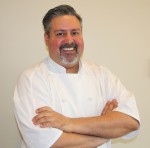
Executive chef Steven Boudreau heads Weinberg Residence kitchen. (photo from Weinberg Residence)

The Weinberg Residence recently hired executive chef Steven Boudreau, whose extensive culinary experience includes stints at Cioppino’s (under chef Pino Posterero) and Il Giardino (under Umberto Menghi). How did such a talented chef come to work at the Weinberg Residence? For Boudreau, the reasons lay in his desire to find a more balanced, happier work life.

“After 18 years working in a high-pressure restaurant environment, I wanted a chance to spend more time with family. Here at the Weinberg, it’s refreshing to be able to relax into the cooking a little more,” he explained. “Above all, I took this position because of the wonderful people here. The residents are great to be around and I come to work happy and smiling.”

Born and raised in Cape Breton, N.S., Boudreau attended the Culinary Institute of Canada in Prince Edward Island. After graduation, he was selected with four other students to work on Nantucket Island. He worked there for two seasons and then made his way out west, where he landed in Vancouver and worked for Cioppino’s and Il Giardino.

Boudreau left Vancouver to work two seasons at Painter’s Lodge on Vancouver Island and April Point on Quadra Island as executive sous chef. He then spent the winter traveling and exploring such countries as Vietnam, Cambodia, Argentina, Peru, Uruguay, France, Germany and beyond, gaining inspiration and knowledge of diverse culinary traditions from around the world. Next, he spent a year in Montreal, running a bistro and catering company.

Longing for the West Coast, he returned to British Columbia to become the executive chef of Poets Cove Resort and Spa on Pender Island for the next five years. Finally, he spent two seasons working for the Restaurant at Painted Boat on the Sunshine Coast before moving to Vancouver to work at the Weinberg Residence.

As for his philosophy on cooking, Boudreau stresses the importance of keeping things simple.

“I have a real passion for creating tasty and healthy meals to inspire people. For me, it’s all about keeping the process as simple as possible, while creating delicious food that the residents will love,” he said.

The residents are already raving about Boudreau’s culinary contributions. “The food is great and there’s a lot of variety. His fish is the best I’ve ever tasted,” said resident Dr. Jimmy White. “The soups are outstanding and the theme meals are fabulous,” added resident Frieda Brown.

To share the news with the community, if you, your spouse or family member is considering assisted living or multi-level care, the Weinberg Residence is currently offering complimentary lunch when you take a tour. Call Vanessa Trester at 604-267-4722 for more information and to book a no-obligation tour.


Format ImagePosted on July 8, 2016July 6, 2016Author Weinberg ResidenceCategories LocalTags Boudreau, chef, seniors, Weinberg Residence
Raising awareness of abuse

Raising awareness of abuse

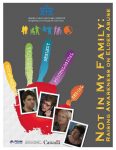
Earlier this year, Winnipeg’s Jewish Child and Family Services (JCFS) premièred the short film Not in My Family, to raise awareness on the topic of elder abuse.

JCFS executive director Al Benarroch greeted the approximately 150 attendees that filled the Berney Theatre of the Asper Jewish Community Centre on Feb. 13.

“This film serves as a springboard for discussion and to help educate groups on how they might handle the issue of elder abuse,” said Benarroch. “It also provides a lot of valuable resources available in our community. Along with the film, we’ve created a kit with a booklet that provides information and also a discussion guide with some specific questions to be used following the viewing of the film. We envision this package having widespread application as a tool for organizations and professionals who work with seniors, who are educators, and other community professionals in regular contact with seniors, either individually or in groups.”

Developed by the JCFS, the project was funded by the Government of Canada’s New Horizons for Seniors Program. The 13-minute video is available from the World Elder Abuse Awareness Day Manitoba website (weaadmanitoba.ca/resources.asp?t=4), as is the accompanying resource guide.

Following the screening was a panel discussion with Jamie Kinaschuk from A & O Support Services for Older Adults Inc.; Sharon Tod, chair of the elder law section of the Manitoba Bar Association; and Dara Maternick, coordinator of Prevent Elder Abuse Manitoba.

“Every situation is different,” said Tod. “So, you have to tailor the answer to the particular problem. It’s an excellent resource to have a lawyer that you trust. The other thing I will urge you to do is make sure you have everything in place early on in the process. I’m talking about powers of attorney. Because, if you do it while you are fully competent and can assess properly who is the best person(s) to be your attorney, that is way better than what we often see in my profession, which is someone who is already in the early stages of dementia and in a vulnerable position who is then talked into appointing someone as their attorney … who is the exact wrong person for the job.”

According to Canadian research, between four and 10% of seniors are subject to some form of abuse. In addition to that, experts believe that, for every report of elder abuse, there are another four cases that are never reported. Most of the seniors who reach out for help say they are being financially abused.

Maternick said the best way to deal with the problem is through a team approach that respects the individuals and their choices. “We are proud to be here today in partnership with the JCFS to launch this valuable resource,” she told attendees. The film and its guide were highlighted at World Elder Abuse Awareness Day (June 15) events.

As Benarroch opened the discussion for audience questions, an elderly woman asked how to deal with abuse by home-care workers.

Kinaschuk suggested contacting her case supervisor, saying that, if she fails to get somewhere with that route, she can always call their supervisor. Benarroch advised that she contact the JCFS to have their social workers help guide her through the process of launching a complaint if need be.

Another audience member shared his situation. “My father’s been taken for $95,000 in the past two years, sending money to Jamaica and Dubai,” he said. “While he has been talking about giving me power of attorney, he has the full capacity to do it himself. Where would I go with that?”

Tod suggested that the son talk to his father’s lawyer, and then went on to share a story about one of her own clients. “He was at a stage where he was vulnerable, but competent, so we couldn’t force him to do things he didn’t want to,” she said. “So, I sat down with him and his son. We had a discussion.

“It’s difficult to talk about, because he was embarrassed that he had been taken for this money. But, we did, we sat down and talked about it and, ultimately, what we did was, he agreed voluntarily that his son would take over his affairs under the power of attorney, and the son took a number of steps to prevent the father from being contacted by these scam artists again.”

The steps, according to Tod, included the son changing his father’s phone number to unlisted, having all of his father’s mail redirected to his home and ensuring that his father had access to only one bank account with a limited amount of money in it, so that, if he was taken advantage of, at least the loss would be limited.

In another situation, Tod was appointed with the power of attorney, to prevent a son from threatening his mom for money. “Now, when the son came to her, she could say that she doesn’t know where her bank is anymore, that he would have to talk to her lawyer,” said Tod.

Tod spoke about capacity and how difficult it can be to determine, pointing out that it is part of a lawyer’s responsibility. “Before we have people sign documents, we have to make sure we are comfortable that the clients understand what the documents mean,” she said. “But, there are different capacity tests for different legal documents that you sign.

“It’s even difficult for doctors to determine someone’s capacity. Some doctors say someone has capacity while other doctors disagree. It also depends on the specific thing you’re looking at. People may have fairly good cognitive function, but their judgment may be impaired.”

Family members or social workers usually end up making these determinations and, if there are concerns, a doctor should be consulted.

Kinaschuk pointed out that, when the abuser is a family member, it catches one off guard. “You don’t expect a family member to be the abuser, so your guard isn’t up,” he said. “In this case, in the film, the grandson is telling grandma, ‘No, you’re wrong, you didn’t give me the money.’ And, she’s like, ‘Maybe I didn’t.’”

Even when an abuse situation is identified, Kinaschuk added, it is still very difficult to take action, as the victims come up with excuses for their abusers. “They’ll say things like, ‘He or she is having a tough time. They just need a little help until they get a job.’ And, it goes on and on. We provide support, discuss options and help them recognize what’s going on, but it is up to them to take it further.”

According to Maternick, it takes a lot for people to reach out for help. “The type of circumstance for elder abuse will be different for everybody,” she explained. “It becomes very difficult to answer these questions because you need to dig into the situation to understand what’s happening. There’s complexity with all these issues.”

Maternick suggested that a good place to start is by calling the senior support line. “The reason that line is so important is because it allows you to access information and resources to better understand what your options are,” she said. “There is no single answer that’s going to apply to every situation.”

In British Columbia, the Jewish Seniors Alliance can be reached at 604-732-1555 and a list of where to go for help, including for instances of abuse, is available at jsalliance.org/resources/where-to-go. Among the contacts listed by the JSA is the B.C. Centre for Elder Advocacy and Support’s elder law clinic (604-437-1940 or via bcceas.ca).

Rebeca Kuropatwa is a Winnipeg freelance writer.


Format ImagePosted on June 17, 2016June 16, 2016Author Rebeca KuropatwaCategories NationalTags dementia, elder abuse, seniors
Applicable knowledge

Applicable knowledge

Left to right: Gyda Chud (co-chair), Serge Haber, Jackie Weiler (co-chair) and Dr. Kendall Ho. (photo by Binny Goldman)

Jewish Seniors Alliance of Greater Vancouver’s annual spring forum – this year with the topic An App a Day Keeps the Doctor Away – drew a large and curious crowd to the Peretz Centre for Secular Jewish Culture on April 3.

JSA president Marilyn Berger welcomed attendees and thanked pianist Stan Shear for opening the forum. Shear would add the harmonica and his voice to his later performance, but first shared that his wife, Karon Shear, JSA coordinator, had suggested the opening song, “Accentuate the Positive, Eliminate the Negative,” by Johnny Mercer, as she thought it embodied the message JSA tries to instil in its approach to helping others.

Berger then surprised the audience by introducing Dan Ruimy, who is the Liberal member of Parliament for Pitt Meadows-Maple Ridge, where he owns and operates Bean Around Books and Tea.

photo - Dan Ruimy, Liberal Party of Canada MP for Pitt Meadows-Maple Ridge
Dan Ruimy, Liberal Party of Canada MP for Pitt Meadows-Maple Ridge. (photo by Binny Goldman)

Ruimy said that living in Maple Ridge doesn’t give him much opportunity to meet many Jews, so it was only on a recent trip to Israel as a parliamentarian that he rediscovered his Jewish roots. He said he was especially happy, honored and touched to talk to a group of his “compadres,” referring to those gathered at the forum. He said that seniors have given their life, blood sweat and tears to the building of Canada and he hopes to help the government become better equipped to meet the needs of seniors.

JSA is run by volunteers, said Berger – from peer support to education programming to advocacy – and its membership is diverse. As she called upon Larry Shapiro to introduce the forum’s keynote speaker, Dr. Kendall Ho, she noted that Shapiro had been volunteering with JSA since his arrival in Vancouver from Montreal. Smiling, Shapiro denied he had volunteered to be part of JSA, but rather had been shlepped in – and now would have to be hauled away from doing what he loves.

A practising emergency physician at Vancouver General Hospital, Ho is founding director of Digital Emergency Medicine within University of British Columbia’s department of emergency medicine. He praised the creativity of the day’s topic title – An App a Day Keeps the Doctor Away – which was penned by Berger. Ho said he was turning to mobile apps as a way of helping patients help themselves. There are many new ones in the market, he said, that can help people achieve better health and even strive for excellent health. Some of these apps are free.

Mobile technology can also supply life-saving information and provide immediate access to life-saving help. About the use of such technology by seniors, Ho gave some of the statistics from a recent study: 63% use wearable data for monitoring, 76% read online reviews to select a doctor, 74% book online appointments and pay bills, 73% of doctors use mobile devices to share information, 61% are interested in 3-D printing for prosthetic and hearing aids, and 57% use cutting-edge devices.

In choosing an app, Ho advised asking yourself the following questions: Is this a worthy tool and how effective is it? Is this technology good for me? Is it safe? Is my privacy/identity protected? Is it easy?

Ho demonstrated how easy it is to download a free app and encouraged the audience to download it as he went through the procedure step by step.

Of the available free apps, he recommended:

  • Canadian Red Cross’ First Aid app, which helps users maintain their life-saving skills
  • Medisafe Medication Reminder, available for a free trial period, which helps people manage the pills they have to take, including sending an alarm to their phone or watch as a reminder
  • MindShift, which was developed in British Columbia to track the symptoms of anxiety and offers ways in which to cope with anxiety
  • BellyBio Interactive Breathing, for relaxation
  • Instant Heart Rate, monitors users’ heart rate
  • Sleeptime, detects users motion while they’re sleeping, and can be programmed to allow you to complete your dream, as it can detect when you are in REM
  • My Fitness Pal, a calorie counter and diet plan, and one of Ho’s personal favorites – it helped him lose 10 pounds.

Ho also suggested some important websites: healthlinkbc.ca to connect to a nurse or a health professional, myehealth.ca to get the results of a blood test (deleted after 30 days) and medlineplus.gov (research) for basic health information written in everyday language.

He advised the audience to ask their medical advisor which apps would work best for them, and to discuss results with the medical professional, so as not to cause themselves unnecessary anxiety by misinterpreting the data.

There are sensors available now, he said, such as wristbands, orthotics, helmets that detect concussions, a UV patch, a wand that monitors hydration (for cyclists) and T-shirts with sensors in the fabric.

Patient engagement, said Ho, is the blockbuster “drug” of the century. Using these types of technology, 88% of patients feel engaged in their health care. Using wearables shows a reduction of cardiac-related deaths and there is a 76% reduction in overall mortality when a patient is involved in his or her own health care.

Ho said that studies show that two out of three seniors 65 and over want to use technology to support their own health and access outcome-related data. Seniors now are tech savvy, he said.

Ho would like to see the use of health-related technology spread to the entire province; involve doctors, nurses, patients, governments and tech companies; be studied for its benefits, patient satisfaction and safety; and be further developed, with new sensors and devices over time.

The audience was reluctant to allow Ho to end his talk. Nonetheless, event co-chair Gyda Chud, who along with Jackie Weiler convened the forum, stepped in to ask if there were any questions for the doctor.

Ho was visibly moved when Al Stein said he would be forever grateful to Ho, as Ho had saved his life when he was having a cardiac problem and was admitted to emergency. Others who had been similarly helped thanked Ho fervently, as well.

Questions included whether there was an app for drug interaction and, yes, there is, but only for professionals. Attendees were also concerned that apps would reduce the amount of time doctors would spend with them. Ho said that apps were there to help both patients and doctors, but there was still the need for the right doctor to guide patients on their health journey.

It is safe to say that many in the audience felt that Ho would be the best guide and that the best mobile app would be Ho.

Chud thanked Ho, coining a slogan that Ho enjoyed: “Beat the stats, use more apps.”

Barbara Bronstein and Shapiro organized the refreshments, which Chud provided, and countless volunteers were everywhere from set-up to shalom. Karon Shear and Rita Propp also were integral to the whole event, while Stan Shear not only performed but, with son David, recorded the proceedings. The video can be found at jsalliance.org.

Binny Goldman is a member of the Jewish Seniors Alliance of Greater Vancouver board.

Format ImagePosted on April 15, 2016April 13, 2016Author Binny GoldmanCategories LocalTags Dan Ruimy, emergency medicine, JSA, Kendall Ho, seniors, technology
Bringing our seniors home

Bringing our seniors home

The author and her youngest son, Joel, enjoy Purim at the Louis Brier Home and Hospital. Her eldest son, Benjamin, was the photographer. (all photos by Benjamin Harrington)

When the Hebrew Men’s Cultural Club met in 1945 to talk about starting a home for the elderly, their project began with 14 men, with $5 each. The first home opened in 1946 with 13 residents. Now home to more than 200 seniors, the Dr. Irving and Phyliss Snider Campus for Jewish Seniors includes the Louis Brier Home and Hospital, and the Weinberg Residence. With many new programs and services, the campus has formed powerful bonds with the surrounding community.

This spring sees the launch of a new fundraising campaign by the Louis Brier Jewish Aged Foundation, which provides financial support to the campus. To interview members of the foundation board and staff about the campaign, I made my visit to the Louis Brier Home with both of my children during their spring break. Benjamin, 8, and Joel, 5, are used to volunteering in a seniors home, and are quite comfortable coming to work with me. Without grandparents in the area, it was a blessing for us all to be able to visit the home.

photo - Music therapist Megan Goudreau provides holiday entertainment
Music therapist Megan Goudreau provides holiday entertainment.

Before even shaking any hands, the first thing we noticed was the art. There is art everywhere, and not mass-produced art but carefully curated, vibrant images, full of life, movement and different textures. According to foundation president Harry Lipetz, this is thanks to the organization’s art committee. Every piece is a donation.

We met first with Dr. Judith Globerman, interim chief executive officer of the Snider Campus. Asked to point to some of the home’s distinguishing features, she described an atmosphere that is “more personal than institutional. Our staff feels it’s their home, too, and they tend to stay with us a long time.”

Residents also have a sense of agency, so, for example, if the seniors want to suggest changes – even to the art hanging outside their room – these changes can be made quickly.

Describing her place of work, Globerman spoke about energy, love and understanding. “The energy is warm, celebrating life; people’s faces here light up, there’s always life going on around you, even if you’re not moving yourself.”

Lipetz joined the Brier Foundation for this very reason. “It is a happy place,” he said. “I saw the level of caring, from custodial staff right through to top management.”

Bernard Pinsky, chair of the current fundraising campaign, can attest to the heimish (comfortable, homey) quality of the Louis Brier Home.

“Both of my parents lived there, as well as my uncles and aunt,” he said. “For a period of 21 years, at least one of my relatives lived there. My mom was at Louis Brier for 13 years. I was there a lot and saw for myself the warmth, the quality of the care. The program director goes into residents’ rooms personally to check in, to encourage seniors to join activities. It makes such a difference to be invited personally, to keep you connected to community life.”

The Louis Brier is the only Jewish home for seniors in the province. As such, it carries a certain responsibility, said Pinsky. He speaks of the community’s pride in being able to offer a life with dignity in a warm and stimulating environment to our seniors.

“Donors’ contributions make it a Jewish home,” he said. “They allow us to offer the special things that help people to live more fulfilling lives: kosher food, a weekly minyan, festivities for every Jewish holiday.”

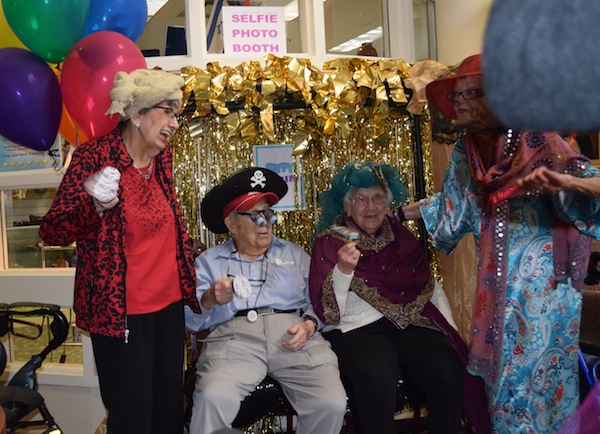
That said, nothing prepared us for our visit at Purim, where we were greeted by staff wearing rainbow tutus, feather boas, glittery glasses and spotted mouse ears. As we stood in the entrance hall among the balloons, an elderly resident wearing googly-eye glasses strolled through with some friends waving groggers. Needless to say, this was a little different from my sons’ previous experiences of seniors facilities.

photo - Residents get into the spirit of Purim
Residents get into the spirit of Purim.

When I spoke with Pinsky, he talked at length about the Louis Brier’s music therapy program. Offered by a team of professionals, it is based on research that shows how music calls on a different part of the brain than speech. Pinsky observed, “People can sing songs they knew 60 or 70 years ago, when they can’t even speak.”

He added, “We have the best seniors music therapy in the province. There’s music every single day.”

The March calendar includes weekly Shabbat music, ukelele sing-alongs and jam sessions, as well as a concert of Russian music and a piano recital. We caught a flavor of this during our visit when music therapist Megan Goudreau played her guitar and sang one of the residents’ favorite songs, “Kol Ha’olam Kulo.”

photo - Even a friendly dog joins in the festivities
Even a friendly dog joins in the festivities.

The home was a hive of activity when we visited, with youngsters volunteering, residents – and a couple of friendly dogs! – milling about. Costumed kids came by with their families and sang on both floors of the home. Nothing beats the sight of a mini race-car driver delivering a “Chag Purim!” message with a huge smile to delighted seniors.

“The three things that concern residents the most – beyond housing – are food, music and companionship. The foundation provides that. It’s beyond public funding,” said Lipetz.

The seniors “are not coming here to be housed,” he added, “they are coming here to live.”

Pinsky agreed. “It’s amazing what we’re able to do. Loneliness is one of the biggest problems for seniors, so seniors with families who live out of town can be visited by special companions.”

Louis Brier residents have access to their own rabbi, Hillel Brody, spiritual leader of the Chava and Abrasha Wosk Synagogue. Located within the home, the synagogue is funded solely by the foundation. In other words, like the music, the companions and occupational therapy, it is a gift from the community.

The new campaign is a quest to raise $1 million. Pledges are for two years, so a $5,000 donation would be given in two portions of $2,500 each.

“These funds are essential to maintain continuity in the programming,” said Pinsky. “The home needs to budget 12 months ahead, for the next fiscal year. If we fall into deficit, these life-improving programs need to be cut.”

Added Lipetz, “For many residents, this is their last home. We want to make it their best home.”

Shula Klinger is an author, illustrator and journalist living in North Vancouver.

Format ImagePosted on April 8, 2016April 6, 2016Author Shula KlingerCategories LocalTags fundraising, Globerman, Lipetz, Louis Brier, music, Pinsky, Purim, seniors, Weinberg Residence
New chef at Weinberg

New chef at Weinberg

Shane McNeil, formerly of Bridges Restaurant, is the new executive chef at Weinberg Residence. (photo from Weinberg Residence)

For the Weinberg Residence’s recently hired executive chef Shane McNeil, formerly of Bridges Restaurant, his new job is about more than just cooking great-tasting kosher food.

“What I love about cooking is that it puts a smile on people’s faces, which gives me a lot of satisfaction. My philosophy on cooking is simple: use the freshest ingredients possible, local when available, and let the ingredients speak for themselves. I tend to use a nice light seasoning or sauce, so the quality of the ingredients really stands out,” explained McNeil, who began at the Jewish seniors home in September 2015. “I also like to check in with the residents pretty much every day. Getting that regular feedback from them is really important, as it helps me become a better chef and gives me the pleasure of knowing that I’m a bright spot in their day.”

McNeil’s lifelong passion for cooking began as a young man in Toronto, where he attended George Brown College’s Chef School, which counts several internationally recognized chefs among its graduates. He then relocated to Vancouver, where he excelled under the tutelage of local talents, chefs Scott Kidd and Chef Dino Gazzola of Raincity Grill and Bridges Restaurant.

photo - Shane McNeil’s incorporation of classic French culinary techniques with contemporary flair showcases the fresh, local and seasonal ingredients of the West Coast
Shane McNeil’s incorporation of classic French culinary techniques with contemporary flair showcases the fresh, local and seasonal ingredients of the West Coast. (photo from Weinberg Residence)

McNeil’s culinary acumen has already begun to have a considerable impact at the Weinberg Residence. His roasted sablefish with orange-ginger glaze and green-beans almondine, his Italian beef stew with garlic mashed potatoes and roasted corn and his sockeye salmon farfale with ratatouille are all garnering praise. His incorporation of classic French culinary techniques with contemporary flair showcases the fresh, local and seasonal ingredients of the West Coast.

“The food is absolutely delicious. He’s an excellent chef who’s open to suggestions. He made a polenta lasagna the other night that was absolutely wonderful and he makes the best cheese sandwiches I’ve ever tasted!” said resident Sheila Cantor.

The residence executive is also pleased. “We are extremely grateful and very excited to have such an exceptional chef on our team and we look forward to this exciting enhancement to our hospitality offering,” said Vanessa Trester, gerontologist and leader of the Weinberg.

To share the good news with the community about the new dishes being served at the Weinberg Residence, if you, your spouse or family member is considering assisted living or multi-level care, the Weinberg is currently offering a complimentary lunch when you book a tour. To make a reservation, call Trester at 604-267-4722.

Format ImagePosted on December 11, 2015December 9, 2015Author Weinberg ResidenceCategories LocalTags seniors, Shane McNeil, Vanessa Trester, Weinberg Residence

Are food banks here to stay?

In March 2013, 833,098 persons were served by food banks in Canada. Food bank use remains high and many Canadians depend on food banks for weekly, semi-monthly or monthly grocery items in order to put food on the table. One-half of the families being served include children and close to one-half are two-parent families. More than one-third of food bank recipients are children, many of whom are school age and go to bed hungry.

In Richmond, 1,300 persons are served each week by the Richmond Food Bank. Of the 1,300 recipients, there are 524 persons who actually attend this food bank and they represent 2.4 persons per household. The majority are seniors and people with mental health issues. These groups usually visit each week. Others who use the food bank are on low incomes and use the service as needed. Users must be Richmond residents. Once residency is proven, recipients are granted food packages on an honor system. The average value of a food hamper is about $100 and the food bank tries to ensure the five basic food groups are included.

The Jewish Food Bank in Vancouver serves 350 persons, of whom 55 are children under 18 years of age, and 95 are seniors. If, as it is estimated, 16% of the Jewish community lives on or below the poverty level, it is possible that many in need are not being served or are being served by other organizations. The value of each Jewish Food Bank hamper for a single individual, for example, is $54. Larger family units receive more food. This is in addition to food vouchers supplied by Jewish Family Service Agency. Food that is made available is seen as “supplementary,” enough to fill the gap until the next pay cheque or income. Food hampers are delivered every two weeks to those unable to attend for personal pick up.

For seniors, this is a very troubling scenario. As of two years ago, three out of five women in Greater Vancouver over 65 lived on an income of less than $25,000 per year (as reported by United Way). Many seniors on low, fixed incomes must make major decisions each month. Once rent is paid, are there enough funds for food or do they have to choose between prescription drugs (if not covered by a drug program) and food? Will there be funds for sundries, clothing and entertainment? Will there be enough money to eat out once or twice during the month? Most of us who live in the comfort of our warm homes take this for granted. For a good description of the need for affordable housing, see David Hume’s excellent article in the Nov. 23 Province.

It is generally accepted that food banks had their origins in the early 1980s during a major recession. Hunger was affecting the lives of many Canadians who were unemployed, unable to work, under-employed or whose incomes were below a living wage. It was to be a short-lived situation until the economy improved, as it eventually did, and the need for food banks diminished. However, today, food banks are an integral part of the social fabric. There are currently about 500 food banks across Canada, a sad commentary for a rich nation. In this writer’s opinion, food banks have become secondary extensions of weakened social safety nets. In this respect, food banks may be seen as undermining the state’s obligation to respect and fulfil its requirement to ensure that none of its citizens go hungry. Food banks are driven by poverty but in no way solve the problem of poverty. If anything, the goodwill they provide allows governments to opt out of taking their leadership role in decreasing the need for food banks.

Those persons who staff and volunteer at food banks are not “do-gooders looking for recognition.” Volunteers are the backbone of most not-for-profit organizations. The volunteers that I met while observing one food bank in action were made up mostly of senior citizens who were giving back to the community, who understood the plight of those being served and who served them with respect and genuine caring. Thousands of individual donors, many anonymous, provide millions of dollars each year in support. Many corporations take great pride in supporting food banks, in kind and in cash. They often make the public aware through advertising, hoping what they do will encourage other corporations to do the same.

Food banks will be needed for some time in the future until governments at all levels – federal, provincial and municipal – develop, embrace and put in place a viable national anti-poverty program. Food banks can collectively lobby for stronger and sustainable social safety nets for those in need. In a recent publication, Dignity for All: A National Anti-Poverty Plan for Canada (2013), a number of priorities were considered: income security, housing and homelessness, health, food security, early childhood education and care, jobs and employment. If two or three of these were prioritized and put into operation, it would bring many thousands into mainstream Canada.

Much has already been studied and written about poverty and its effects on too many Canadian citizens. It is time for a concerted and coordinated plan of action. Until that happens, thank G-d for food banks.

Ken Levitt is a vice-president of the Jewish Seniors Alliance of Greater Vancouver and a former chief executive officer of Louis Brier Home and Hospital.

Posted on December 4, 2015December 3, 2015Author Ken LevittCategories Op-EdTags food bank, Jewish Family Service Agency, JFSA, poverty, seniors
Some superior senior solutions

Some superior senior solutions

Michael Geller, left, and Dr. Eric Cadesky. (photo by Binny Goldman)

Every year, we look to the Jewish Seniors Alliance Spring Forum for inspiration and the 170 people gathered in the Wosk Auditorium at the Jewish Community Centre of Greater Vancouver on April 26 found it.

Debbie Cossever, representing the Jewish Seniors Alliance, and Claire Weiss of the L’Chaim Adult Day Centre were co-chairs of the partnered event, entitled YOLO: You Only Live Once – How Full is Your Cup?

Marshall Berger opened the afternoon’s program with a humorous song to the tune of “Side by Side” about a newly married aged couple. Cossever welcomed the audience, described the aims of JSA and invited newcomers to join the organization. JSA has approximately 700 members, including 34 affiliates representing more than 5,000 seniors in the Greater Vancouver area.

Cossever introduced Weiss, who explained that the afternoon was also a celebration of L’Chaim’s 30th anniversary, the group having started in the Beth Israel Youth Lounge in 1985 and then moving to the J in 1988. Last year, their staff delivered 1,933 client hours. She reminded those present that they are always looking for more members to join their “family.” The candles on a huge chocolate cake celebrating the 30 years were lit and all sang “Happy Anniversary,” which ended with calls of mazel tov!

Moderator Gloria Levi, a social services consultant, was then introduced. Levi has a master’s degree in public policy and is the author of Dealing with Memory Changes As You Grow Older and a series of booklets, Challenges of Later Life.

She introduced Michael Geller, an architect, planner, real estate consultant and property developer, who serves on the adjunct faculty of Simon Fraser University’s Centre for Sustainable Community Development. The talk was conducted in an interview format.

Geller’s topic was Lessons My Father Taught Me. He acquainted listeners with the unique and collaborative relationship he shared with his father, Sam Geller, who was one of the first members of the Jewish Senior Advisory Council (the original name of the JSA). He passed away 11 years ago at the age of 92.

Sam Geller was born in England and was a soldier in the Second World War who had survived being a prisoner of war. That occurrence colored his life. The very fact that he had survived made him happy and grateful to be alive and he never sought material things for happiness, often saying that things could have been so much worse. He moved to Vancouver from Toronto and enjoyed life at Langara Gardens, his grandchildren visiting him, doing Sudoku, crosswords, swimming and exercising daily. Then, after an emergency life-saving surgery, Geller said his father attempted to live each day to the fullest, saying, after all, it could very be his last.

Geller said his dad was a stoic, truly enjoying what he had rather than accumulating more items just to impress others who he may not care about in the first place. The lesson he received from his father was “Do what you enjoy, what makes you happy and continue contributing to the happiness of others, as that increases one’s own inner joy.” Geller recommended the book The Ancient Art of Stoic Joy by William B. Irvine.

The love and respect that Geller said he felt for his father was reflected on his face throughout the talk. Thoughts of his father swimming are with him as he does his own laps in the pool.

Levi then introduced Dr. Eric Cadesky, a family physician, assistant professor at the University of British Columbia, medical coordinator at Louis Brier Home and Hospital and a board member of Doctors of British Columbia. His presentation was entitled Getting It Just Right: How to Maximize Your Quality of Senior Life.

Cadesky disclosed that his mother-in-law was amused when she learned of his topic and asked, “What do you know about aging?” He explained that all of us age, no matter our number of years, but it is how we do it that is really important.

Cadesky believes that some of the choices we make act to decrease our quality and length of life and suggested that people live by three guidelines: Do enough. Not too much. Start now.

Enough means to be active, to walk or swim, as movement will lessen and ease pain. Enough also means to eat fresh, colorful foods that don’t require a microwave or have an expiry date. Enough means to socialize, learn a new language, do puzzles, these activities help to keep dementia at bay. Enough also means to use patience to deal with people who give you advice and knowing what advice to toss aside.

Not too much reminds us that anything that sounds too good to be true usually is. Certain vitamins (except for Vitamin D and B12) can be unhealthy to take in pill form. For example, post-menopausal women should not be taking calcium, and A, C, E, copper, zinc and selenium should be acquired from fresh food only. It is very important to be honest with your doctor when seeking medical advice. Sometimes “de-prescribing” is necessary – and an assessment can be made on all of your medications.

Start now means that we should be discussing with our doctors challenges that may be stopping us from doing what we want to be doing. Also, we generally do more for others than we choose to do for ourselves and we should start thinking of ourselves.

Cadesky advised us to have a realistic approach to life and not to fall for advertisements, which may be totally misleading. Scrutinize, be critical and intelligent in your choices and have confidence in your doctors, he said. Remember, too, he said, making others happy enriches our own happiness.

Audience questions were many. How can we ease a senior’s loneliness? Get involved in activities, he said, perhaps at JSA or L’Chaim. What are the benefits of fish oil? There is benefit in eating fresh fish but not in taking fish oil in pill form, he answered. There was also a discussion around the value of probiotics and alternative medicine. Cadesky recommended directing individual questions to your physician and stressed how critical it is to be honest with your doctor. A question, which made everyone laugh, was “Are you taking any new patients?”

Marilyn Berger, JSA president, and Serge Haber, JSA president emeritus, thanked the many volunteers who made the event possible. Special thanks went to the co-chairs, table sponsors and staff, Annica Carlsson, Karon Shear, Rita Propp, and to Stan Shear for videotaping the session, which will be posted to the JSA website (jsalliance.org).

Door prizes were then handed out to the delight of the recipients. Over tea and coffee and chocolate cake, as well as fresh fruit and veggies by Susy Segal’s Nava Catering, helped by Bagel Club volunteers Ophira Schwartzfeld, Harriet Corda and David Benbaruj, attendees felt we had experienced an extraordinary afternoon and had adhered to the advice of our two speakers and that adage of Dr. Charles Glassman, “Live your everyday extraordinary!”

Binny Goldman is a member of the Jewish Seniors Alliance of Greater Vancouver board.
Format ImagePosted on May 8, 2015May 6, 2015Author Binny GoldmanCategories LocalTags Eric Cadesky, health, Michael Geller, seniors

Posts pagination

Previous page Page 1 … Page 11 Page 12
Proudly powered by WordPress