Skip to content
  • Home
  • Subscribe / donate
  • Events calendar
  • News
    • Local
    • National
    • Israel
    • World
    • עניין בחדשות
      A roundup of news in Canada and further afield, in Hebrew.
  • Opinion
    • From the JI
    • Op-Ed
  • Arts & Culture
    • Performing Arts
    • Music
    • Books
    • Visual Arts
    • TV & Film
  • Life
    • Celebrating the Holidays
    • Travel
    • The Daily Snooze
      Cartoons by Jacob Samuel
    • Mystery Photo
      Help the JI and JMABC fill in the gaps in our archives.
  • Community Links
    • Organizations, Etc.
    • Other News Sources & Blogs
    • Business Directory
  • FAQ
  • JI Chai Celebration
  • JI@88! video

Recent Posts

  • Sharing her testimony
  • Fall fight takes leap forward
  • The balancing of rights
  • Multiple Tony n’ Tina roles
  • Stories of trauma, resilience
  • Celebrate our culture
  • A responsibility to help
  • What wellness means at JCC
  • Together in mourning
  • Downhill after Trump?
  • Birth control even easier now
  • Eco-Sisters mentorship
  • Unexpected discoveries
  • Study’s results hopeful
  • Bad behaviour affects us all
  • Thankful for the police
  • UBC needs a wake-up call
  • Recalling a shining star
  • Sleep well …
  • BGU fosters startup culture
  • Photography and glass
  • Is it the end of an era?
  • Taking life a step at a time
  • Nakba exhibit biased
  • Film festival starts next week
  • Musical with heart and soul
  • Rabbi marks 13 years
  • Keeper of VTT’s history
  • Gala fêtes Infeld’s 20th
  • Building JWest together
  • Challah Mom comes to Vancouver
  • What to do about media bias
  • Education offers hope
  • Remembrance – a moral act
  • What makes us human
  • המלחמות של נתניהו וטראמפ

Archives

Follow @JewishIndie
image - The CJN - Visit Us Banner - 300x600 - 101625

Tag: Rosh Hashanah

Renewing a commitment to hope

Renewing a commitment to hope

If you were to write a personal “book of life” to express your aspirations for growth in the year ahead, what would its title be? (photo from thisenchantedpixie.org)

In the face of the immense sadness and devastation of the past 11 months, and the suffering that seems to know no bounds, I find it difficult to even register that Elul, the last month on the Jewish calendar, has arrived. But, as the Jewish year inevitably advances, I seek solace and meaning in two practices that have helped me prepare for new years past.

The first is writing my “book title,” for a family ritual we created years ago to facilitate the work of reflection, forgiveness and imagination that are core to themes of the High Holidays. The Rosh Hashanah and Yom Kippur liturgies tie our teshuvah, our annual returning to our best selves, to our desire to be inscribed in a celestial “Book of Life.” Using this image, my family gathers around the Rosh Hashanah lunch table each year to share the titles of our personal “books of life” and to express our aspirations for growth and desires to be held accountable by one another in the year ahead.

The second is to dust off my shofar and sound the first blast, as I will continue to do, in keeping with tradition, each morning of the month of Elul, until the holidays arrive. Each day, I will I close my eyes and coax out the sounds that the shofar has been compared to: Sarah weeping for Isaac, a call to battle, the blasts that signal God’s presence on Mount Sinai, the call of justice that cracks open the hardness of the universe, the hardness in our hearts and in the hearts of our political leaders and awakens in us a renewed sense of purpose and possibility. By doing this, I hope I will be prepared, both physically and spiritually, for the full complement of 100 blasts, short and long, that will sound over the holidays themselves.

In the past, each of these rituals has given me hope, hope that change is possible, that I can do better, that collectively we can do better and that a better future is possible.

This Elul, I am finding it more difficult, as I imagine many of us are, to muster a feeling of hope. Last Elul, we could not have imagined the challenges of the past year: the slaughter of Oct. 7; the long and devastating war in Gaza; the plight of the hostages; the loss of friends and allies; the fractious polarization within the Jewish community; the rise in antisemitism. All of this on top of the many issues we continue to work on globally, from hunger to homelessness to climate change. Hope feels at best elusive; in our most cynical moments, it feels naïve.

Hope requires of us that we allow for the possibility of a variety of better futures, futures that are as yet unexperienced and perhaps even unimaginable. Hope requires that we acknowledge that a catastrophe that may feel imminent is not a forgone conclusion. Hope demands the humility to recognize that we just don’t know what will be, and the audacity to own our role in shaping it. Human imagination, intention and action forge a line between this present and the better future for which we long.

“People often confuse optimism and hope,” said Rabbi Jonathan Sacks, z”l. “They sound similar. But, in fact, they’re very different. Optimism is the belief that things are going to get better. Hope is the belief that, if we work hard enough together, we can make things better. It needs no courage, just a certain naïvety to be an optimist. It needs a great deal of courage to have hope.… And hope is what transforms the human situation.”

In Hope in the Dark, Rebecca Solnit describes a commitment to hope as essential to the work of activism toward social change. She shares example after example of times when the future (now history) unfolded because of the powerful imagination, agency and organizing of people who held on to hope. “Hope locates itself in the premises that we don’t know what will happen,” she writes, “and that in the spaciousness of uncertainty is room to act.”

Elul reminds us that we don’t know what will happen but that we have the tools individually and collectively to shape the future. The practices of reflecting on the year past and imagining the year ahead that are built into the Jewish holiday cycle offer us the “spaciousness of uncertainty” we need that can spark hope and move us to action. I rely on my two Elul rituals to facilitate this process of reflection and imagination. Whether it’s journaling, reading, speaking to a colleague or friend, or listening to music, I’m sure that each of us has tools for creating space for the kind of reflection and imagination that makes hope, and the attendant action it demands, possible. And our hopefulness has the potential to inspire others. We can hold possibility for them when they feel discouraged and they can do the same for us.

Elul reflection pushes us to awaken ourselves to new possibilities even in the face of despair, fatigue, anger and overwhelm. And this awakening of hope makes it possible to act.

I consider my book title as I blow the shofar each morning in Elul. I’m leaning toward making it “Hope.” 

Questions for reflection

• What practices or rituals will help awaken you to new possibilities this month and coming year?

• What is your book title for the coming year, and who do you want to share it with?

Rachel Jacoby Rosenfield is chief executive officer of the Shalom Hartman Institute of North America (hartman.org.il). Earlier this month, the Hebrew month of Elul, Olam (“a network of Jewish individuals and organizations committed to global service, international development and humanitarian aid” – olamtogether.org) asked her to share her thoughts as a profoundly challenging year for the Jewish people ended.
Format ImagePosted on September 20, 2024September 18, 2024Author Rachel Jacoby RosenfieldCategories Celebrating the HolidaysTags Elul, High Holidays, hope, intention, mourning, Oct. 7, Olam, Rosh Hashanah, Shalom Hartman Institute, shofar, trauma, Yom Kippur

Setting intentions, priorities

This year, the High Holidays fall later than usual, with Rosh Hashanah just a few days before the anniversary of Oct. 7, 2023 – the most tragic date in the history of modern-day Israel. 

The High Holidays offer special opportunities for reflection and renewal, reaffirming what matters most, pursuing positive change and strengthening our connections with others.

As we look back on 5784, we should examine our own actions, reflecting honestly on our challenges and successes, and seeking lessons we can take from our experiences to carry into the year ahead. It’s a time to consider which elements of our lives and our relationships with others need improvement.

This leads naturally to an opportunity to contemplate our intentions and priorities and plan for the future. It is a means of charting a course that aligns with our values and contributes to the strength of our families and our communities.

While Canada remains one of the safest places for Jewish communities, the Centre for Israel and Jewish Affairs’ advocacy – especially since Oct. 7 – has been fueled by a profound dedication to tackling the disturbing rise in antisemitism.

The alarming surge in antisemitism, both online and on the streets, has been deeply shocking. Yet, it has also driven us to forge essential connections with all levels of government, law enforcement, educational institutions and community organizations representing the majority of Canada’s Jewish population and other vulnerable minorities. 

Just as the High Holidays are arriving late this year, so too are long-awaited protections from the government. We have seen some progress, but there is much to be done to ensure “bubble legislation” (safe-access laws to protect defined areas from protests, harassment and hate) becomes common, if not ubiquitous, across Canada. Vaughan, Ont., has adopted an encouraging example, and many other municipalities have expressed serious interest in following suit, but there is still much work ahead. 

Federal online hate legislation has been in development under various ministries for years, and we are not backing down on contributing to and securing this fundamental legislation that will enhance security measures.

The accusations against Israel of war crimes from the International Court of Justice (ICJ) are both absurd and detrimental to Canada and the West’s long-standing policies aimed at achieving peace in the Middle East. If the Canadian government wants to rescue the reputation of the ICJ, it must denounce this evidence of its politicization.

Antisemitism is not a “Jewish” problem. Jew-hatred poses a grave danger to all who cherish our core Canadian values. We know from history that, wherever antisemitism is allowed to thrive unchecked, social malaise and political oppression follow. Its defeat requires a concentrated, multi-pronged approach involving many cultural, political, ethnic and faith organizations, as well as individuals from across the country. Together, we are working to combat antisemitism while building relationships with many partner groups, promoting the Canadian values of dialogue and understanding, tolerance and respect. 

As Canada’s special envoy on preserving Holocaust remembrance and combatting antisemitism, Deborah Lyons, wrote in a July op-ed in the National Post: “Jews did not create antisemitism and … it is not on them to fight it alone.”

As we approach the sad and sombre anniversary of the Oct. 7 massacre, many will join us in honouring the memories of those murdered by Hamas and in praying for the safe return of the hostages and for the restoration of peace to the region. And, if we are so blessed to have welcomed home the hostages by the time you are reading this, we’ll have more to celebrate as we begin the new year.

In the meantime, I wish you a sweet, healthy, peaceful and happy 5785. 

Judy Zelikovitz is vice-president, university and local partner services, at the Centre for Israel and Jewish Affairs.

Posted on September 20, 2024September 18, 2024Author Judy ZelikovitzCategories OpinionTags Centre for Israel and Jewish Affairs, CIJA, Hamas, hate crimes, High Holidays, hostages, Israel, Judaism, Oct. 7, reflection, Rosh Hashanah
The first of many Shabbats

The first of many Shabbats

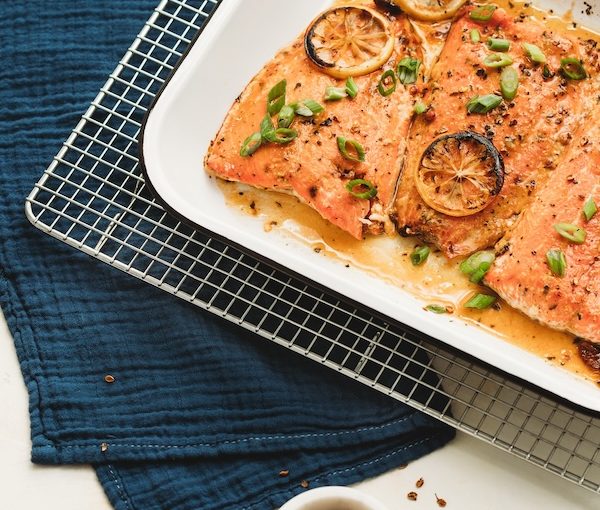
Faith Kramer’s Roasted Salmon with Citrus-honey Sauce. (photo by Clara Rice)

Somehow, I missed the cookbook 52 Shabbats: Friday Night Dinners Inspired by a Global Jewish Kitchen by Faith Kramer when it was published by the Collective Book Studio in 2021. Well, I now have a copy and, in an ideal world, my next year of 52 Shabbat dinners would all be cooked à la Kramer. Instead, it’ll probably take me several years to make all the special meals in this informative, well-laid-out, easy-to-follow cookbook – but at least I’ve gotten a head start.

In this last month of the Jewish year 5784, I made two of Kramer’s main dishes, a salad dressing and a dessert. Each recipe is prefaced with a blurb containing more information about the dish. Many recipes have suggestions of what to serve together (starter, main, dessert, etc.) to elevate the meal for Shabbat, as well as suggested variations and what can be made in advance. Kramer also provides explanations of lesser-known ingredients.

52 Shabbats begins with some discussion of different Jewish traditions around Shabbat and various Jewish communities’ ways of cooking food and the ingredients they use. Kramer gives a brief overview of Jewish dietary laws and shares her preferences for the common ingredients she uses throughout. The book is divided into the four seasons, plus chapters on side dishes and accompaniments, desserts, and fundamentals (sauces, etc.). There are additional resources listed near the end, as well as measurement conversions.

I chose the recipes to make from the fall section, focusing on Rosh Hashanah. I made a carrot and lentil main because, as Kramer writes: “Carrots are symbolic in Judaism of asking for prosperity and for our blessings to multiply. Combined with the sweetness of silan [date syrup] … or honey, they make an edible wish for a Happy New Year at Rosh Hashanah.” I also made a fish main, because fish is another symbol of Rosh Hashanah, with the hope that we be the head and not the tail, ie. a leader rather than a follower.

Kramer recommended mini cheesecakes as the dessert for both of these mains, so I made those as well. I also made the Lemon, Za’atar and Garlic Dressing for a green salad, but much preferred the dressing as a marinade for blanched green beans. For space reasons, I’ve not included the recipe intros or the “make it in advance” suggestions, nor have I included the dressing recipe. The three recipes here will hopefully inspire you to get a copy of the cookbook, and perhaps start some new Shabbat traditions this year.

SWEET-AND-TART SILAN-ROASTED CARROTS WITH LENTILS
(serves 4 as a main, 8 as a side)

for the lentils:
1 cup green or brown lentils
3 cups vegetable broth
1/4 tsp ground black pepper
1/4 tsp ground cumin
1/4 tsp paprika
1/2 cup chopped fennel or celery
1/2 cup chopped onion
1 tsp minced garlic
1 tsp minced jalapeño, optional
1/4 tsp salt, plus more if desired 

for the carrots:
2 tbsp olive oil, plus more for baking sheet
1 cup silan, honey or agave syrup
1/4 cup water
2 tbsp fresh lemon juice
1/4 tsp ground cumin
1/4 tsp ground cardamom
1/4 tsp cayenne pepper or paprika
1/8 tsp ground cloves
1 lb multicoloured carrots, peeled (cut large carrots into thirds)
1 tsp coarse sea salt
2 tbsp tahini
2 tbsp chopped fresh mint or flat-leaf parsley

In a large saucepan, stir together the lentils, vegetable broth, black pepper, cumin and paprika and bring to a simmer over medium heat. Stir in the fennel, onion, garlic and jalapeño (if using) and return to a simmer. Cover and cook, lowering the heat as needed to maintain a gentle simmer, until the lentils are tender and the liquid is absorbed, 15 to 20 minutes. Add the salt and stir well. Taste and adjust the seasoning, if desired. Remove from the heat, drain any excess liquid, and set aside while you make the carrots. 

Preheat the oven to 450°F. Line a rimmed baking sheet with parchment paper or aluminum foil. Grease the parchment paper with olive oil. 

In a wide, flat dish, whisk together the silan, water, olive oil, lemon juice, cumin, cardamom, cayenne and cloves. Add the carrots and toss until evenly coated.

Place the carrots in a single layer on the prepared baking sheet. Set aside any left-over silan mixture. 

Lower the oven temperature to 400°F. Roast the carrots for 40 to 50 minutes, or until tender and browned, tossing in the pan juices every 10 to 15 minutes.

Reheat the lentils, if desired, or keep them at room temperature. Add any leftover silan mixture to the lentils and stir to combine. Transfer the lentils to a large serving dish and top with the roasted carrots. Sprinkle with the coarse salt, drizzle with the tahini and garnish with the fresh mint.

ROAST SALMON WITH CITRUS-HONEY SAUCE
(serves 4-6 as a main, 8-10 as a starter)

1/3 cup fresh orange juice
1/2 cup light-coloured honey
1/2 tsp dried mint
1/4 tsp salt
1/4 tsp cayenne pepper or paprika
1/4 tsp ground black pepper
1/2 to 1 tsp Sichuan peppercorns, lightly crushed, optional
vegetable oil for baking sheet
1 1/2 to 2 lbs salmon fillet
6 tbsp thinly sliced green onions

In a small bowl, mix together the orange juice, honey, mint, salt, cayenne, black pepper and crushed Sichuan peppercorns (if using) to make a marinade. Set aside half of the marinade to use later for the sauce.

photo - Faith Kramer’s Roasted Salmon with Citrus-honey Sauce
(photo by Clara Rice)

Grease a rimmed baking sheet with oil. Place the salmon, skin side down, in the pan and brush the top of the salmon with some of the marinade. Let sit for at least 30 minutes or up to 60 minutes, brushing often with the marinade. 

Preheat the oven to 350°F. 

While the fish is marinating, pour the reserved marinade into a small saucepan over medium heat and bring to a boil. Lower the heat to low and simmer, uncovered, stirring occasionally, until the liquid is reduced by two-thirds, 15 to 20 minutes. Taste, and adjust the salt and other seasonings, if desired. Set the sauce aside.

Brush or spoon the remaining marinade over the salmon. Roast for 15 to 20 minutes, basting with the pan juices after 10 minutes, until the salmon is cooked to the desired doneness. For fully cooked fish, it should read 145°F when an instant-read thermometer is placed in the thickest part of the fillet. The flesh should be opaque all the way through but still be very moist. 

Transfer the salmon to a platter and spoon the sauce over the fish. Sprinkle with green onions and serve warm, at room temperature, or chilled.

MANGO AND CARDAMOM MINI CHEESECAKES
(makes 24 individual cheesecakes)

24 ginger snaps, lemon snaps or wafers, or vanilla wafers
1 1/2 cup fresh or defrosted frozen mango chunks, divided
3 (8-ounce) packages regular or light cream cheese, at room temperature
3 large eggs, beaten
1 cup sugar
1/2 tsp ground cardamom
1/4 tsp salt
1/4 tsp ground ginger
1 1/2 tsp vanilla extract
1 tsp fresh lemon juice

Preheat the oven to 375°F. Line two 12-cup cupcake pans with paper or foil liners. (If you don’t have enough tins, use foil cupcake liners on a baking sheet.)

Put a cookie in the bottom of each liner. Break cookies to fit and cover the bottom of the liner, if necessary.

In a blender, purée 3/4 cup of mango chunks until smooth. Set aside.

Cut the cream cheese into 1-inch chunks. In a large bowl, combine the eggs, sugar, cardamom, salt, ginger, vanilla extract and lemon juice and beat with an electric hand or stand mixer until light and lemony in colour, 1 to 2 minutes. Add the cream cheese chunks in 3 batches, incorporating each batch before adding the next. Beat on medium-high speed until totally smooth, 3 to 4 minutes. 

Fill each cupcake liner two-thirds full. Place 1 teaspoon of the mango purée in the centre of each cake. Using a knife, swirl the purée through the batter to create a marbleized look. 

Bake for 20 minutes, or until the centres of the cheesecakes are a bit loose and jiggly, puffed up and pale in colour. Turn off the oven, open the oven door and leave the cheesecakes there for 30 minutes. Transfer the cheesecakes to a wire rack and let cool. (The tops of the cakes will collapse.) Place the cheesecakes in the refrigerator until chilled. 

To serve, remove the cheesecakes from the liners, if desired. Chop the remaining 3/4 cup of mango and spoon it onto the cheesecakes. Serve cold or cool. 

Format ImagePosted on September 20, 2024September 18, 2024Author Cynthia RamsayCategories Books, Celebrating the HolidaysTags 52 Shabbats, baking, carrots, cheesecake, cooking, Faith Kramer, Jewish holidays, Rosh Hashanah, salmon
Songs with a biblical touch

Songs with a biblical touch

Of course, not everyone in Israel is religious. Yet, there is a rich heritage of Hebrew songs with lyrics taken either directly from the Hebrew Bible or inspired by it. Over the years, these songs have been tremendously popular with the Israeli public.

The first example – a song taken from Deuteronomy Chapter 30, verse 19 – unfortunately has special meaning in Israel today, as thousands of residents from both the northern and southern parts of the country have been forced to live away from their homes for almost a year now.

“Because man is a tree of the field” – this verse has been variously understood to mean human beings are like a tree planted on their land. While it has been recorded by more than one Israeli singer, a version I really like is the one with extended lyrics taken from a poem by the late Nathan Zach. It can be found at nli.org.il, if you know Hebrew.

Early in the daily morning prayer service and on holidays, including Rosh Hashanah, there is a section meant to put us in the mood for prayer, but is not prayer itself. In p’sukei d’zimra, we recite “Adonai [G-d] is my strength and my might; G-d is my deliverance.” These words are taken from the Song of the Sea, which is in the Book of Exodus, Chapter 15, verse 2. It was not only a popular Israeli song, but it was sung as part of the morning prayers by the Women of the Wall, which is fighting for women’s right to pray aloud, with Torah scrolls and tefillin, at the Western Wall (the Kotel). A version of it, sung by Naomi Zuri, is on YouTube.

From the same Song of the Sea comes a song of thanksgiving by Amir Benayoun. Found in the Book of Exodus 15:1-15 and 15:20-21, the text describes how the Israelites successfully crossed the Red Sea, leaving Pharaoh and his chariots to their fate when the sea closes back up. It’s on YouTube as well.

Another popular song is based on an event in the Book of Numbers 20:11, though it doesn’t use the exact wording of the biblical text. In the story, Moses hits a rock twice in frustration, water gushes out, and the Israelites and their animals drink. G-d apparently refused Moses entry into the Land of Canaan because of this angry action. According to the late Rabbi Lord Jonathan Sacks, Moses failed to understand that times had changed and he was facing a new generation. The people he confronted the first time were those who had spent much of their lives as slaves in Egypt. Those he now faced were born in freedom in the wilderness.

Rabbi Sacks clarified what that meant: slaves respond to orders, free people do not. Free people must be taught; otherwise, they will not learn to take responsibility. Slaves understand that a stick is used for striking, but free human beings must not be struck. Hence, Sacks suggested that, for this lack of understanding, Moses was punished.

There is a video on YouTube of Aviva Semadar singing “Mosheh hikah al sela” (“And Moses Struck a Rock”) and there is also a video of “Ya’aleh v’Yavo” (“He Will Go Up and He Will Come”), performed by Gidi Gov, who first sang Yoram Taharlev’s song in a 1973 song contest. In the first stanza, Moses has climbed Mount Nebo to look at the Promised Land. While no one knows for sure where Moses is buried, many claim he died on Mount Nebo and G-d Himself is said to have buried him. 

Curiously, these words – “Ya’aleh v’Yavo” – also appear in the Amidah. And, those who are familiar with the Grace after Meals will note that this phrase is added on Rosh Chodesh and holidays. It is chanted right before the section dealing with the [re]building of Jerusalem. 

Significantly, on Rosh Hashanah, we sing a verse from the Book of Jeremiah (31:19) during the Zikhronot section (which, according to Mahzor Lev Shalem, recalls the covenantal relationship between G-d and humanity) of the musaf Amidah for Rosh Hashanah:

“‘Is not Ephraim, my dear son, my precious child, whom I remember fondly even when I speak against him? So, my heart reaches out to him, and I always feel compassion for him,’ declares Adonai.”

image - Miri Aloni album coverYou can listen to Israeli singer Miri Aloni sing “Haben Yakir Li” (“My Dear Son”) at matchlyric.com.

There are several songs taken from the Song of Songs. One of the older well-known pieces is “Dodi Li,” “My Beloved is Mine,” sung by Sharona Aron, which is on YouTube, as are two other pieces from the Song of Songs, which have been composed more recently.

The first is performed by the Yamma Ensemble – a group that records in both Hebrew (ancient or modern) as well as in Ladino and Arabic dialects – which is coming to Vancouver for Chutzpah! (For story, click here.)

The lyrics are: “As a lily among thorns, so is my love among the daughters.  My beloved spoke and said unto me: ‘Rise up, my love, my fair one, and come away. For, lo, the winter is past, the rain is over and gone.”

The other piece from the Song of Songs is performed by singer Hadar Nehemya: “Many waters cannot quench love, neither can the floods drown it; if a man would give all the substance of his house for love, he would utterly be condemned / As a lily among thorns, so is my love among the daughters / My beloved spoke, and said unto me: ‘Rise up, my love, my fair one, and come away.’”

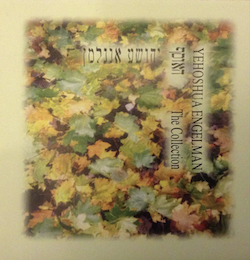
image - Yehoshua Engelman’s The Collection album coverSince Rosh Hashanah is approaching, I will end with an optimistic song, Yehoshua Engelman’s “Eliyahu (Elijah),” which can be heard on Spotify. Eliyahu is mentioned in numerous places in the Hebrew Bible and takes on numerous roles, though we don’t ever learn much about him. He is a bit of a mystery man, supposedly the harbinger of the Messiah. At the end of Havdalah, the ceremony marking the end of either Shabbat or holidays, we sing to Eliyahu, asking him to bring us redemption.

We could certainly use it. 

Deborah Rubin Fields is an Israel-based features writer. She is also the author of Take a Peek Inside: A Child’s Guide to Radiology Exams, published in English, Hebrew and Arabic.

Format ImagePosted on September 20, 2024September 18, 2024Author Deborah Rubin FieldsCategories Celebrating the Holidays, MusicTags Hebrew Bible, Israel, popular music, Rosh Hashanah
Be seen and heard this year

Be seen and heard this year

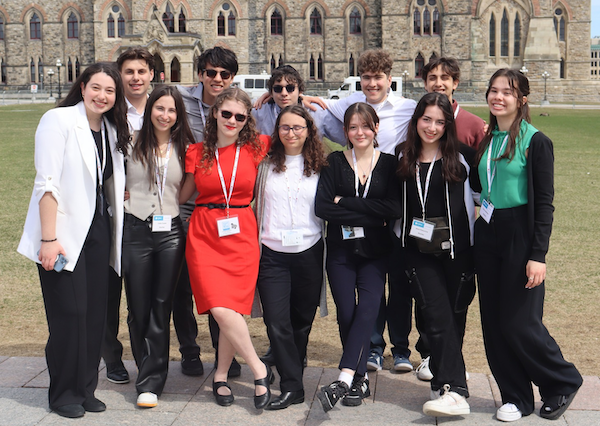
Students from CJPAC’s 2023/24 Generation: Student Leaders Program cohort (photo from CJPAC)

It is Elul, the month before the Jewish new year. Traditionally, this is a time for cheshbon hanefesh, an accounting of one’s soul, before the reflection and repentance of Rosh Hashanah and Yom Kippur. 

This year is not like years past. This year, our individual and community accounts are overdrawn. Instead of looking into how our souls spent 5784, instead of wondering what we could have done better, instead of cheshbon hanefesh, this year should be one of hashka’at hanefesh, investment in our souls. 

As we move towards Rosh Hashanah, Jewish communities and individuals will blow the shofar and recite Psalm 27. This is a daily call to action and a recitation of a mantra that means so much more this year. 

Of David: Hashem is my light and my salvation; whom should I fear?… Though an army may camp against me, my heart will not be afraid; though war rises against me, I will be confident…. Deliver me not to the will of my enemies, for false witnesses are risen against me and breathe out violence…. Look to Hashem; be strong and of good courage! Look to Hashem! (Psalm 27, excerpted)

The 14 verses of this psalm help us examine the past year and focus and inspire us for the coming one. Recited through the High Holy Days until Hoshannah Rabbah, it is a call to make that investment.

The year 5784 was a challenge. It was a year of pain. Through it, the worldwide Jewish community declared, “We will dance again.” Now, the shofar and the words of the psalm force us to confront metaphors made real. Though it seems like we are surrounded by enemies, these verses call upon us to act. If we do, our “head[s] will be lifted” and we will again “offer sacrifices of joy.” “We will dance again” will be realized when we stand up to say, “Hineini.”

Hineini – I am here. It is a word of intentional presence. When God approaches Avraham, Avraham answers, “Hineini.” When Moshe is called to lead, he responds, “Hineini.” Our leaders were not prepared. Nevertheless, when asked, they stepped up. This is the lesson of the High Holy Days. It is a call to action that begins with the individual and moves to the communal. 

It is our time to answer that call. It is time for our community and our allies to stand up and step forward to make a difference and an impact. It is time to say, “Hineini. I am here, I am present.”

The Canadian Jewish Political Affairs Committee (CJPAC) is here and present to help Canadian Jews and their allies be seen and heard.

Now is the perfect time to get involved in politics, with the BC general election set for Oct. 19. You can make a real and tangible impact. CJPAC is here to guide you. In political campaigns, every single volunteer who steps up can be the deciding factor in a candidate’s success. 

It is not the loud, angry voice that makes the lasting impact. The difference is made by people who show up and get the job done. Say “Hineini,” and sign up to volunteer for the candidate or party of your choice.

Sign up for CJPAC emails to stay informed about specialized training opportunities. From Politics 101 to the importance of running for a school board or campaign volunteering, CJPAC’s Advancing Campaign Training (ACT) program will help prepare and connect you. 

In our tradition, what begins with the individual ultimately ends with the community. Sign up with friends for a CJPAC Day of Impact or create your own. By coming together, we inspire future generations. Volunteering with children not only teaches but empowers them to take action – and not just during difficult times.

If you have, or know, a teen in grades 10 to 12, be sure to check out CJPAC’s Generation: Student Leaders Program. Throughout the school year, teens engage in thoughtful discussions with peers, empowering them to participate in the democratic process.

CJPAC’s flagship Fellowship Program trains 50 of the top pro-Israel, politically engaged post-secondary students from across Canada to become the next generation of political leaders. Applications close on Sept. 18.

We make a difference when we show up. The more people who give of their time and efforts, the greater our impact. Connecting with the party or campaign of your choice through CJPAC offers you a tangible opportunity to support the community and build a better Canada.

Listen to the call this Elul. It is time for our community and our allies to stand up and step forward to make this difference. 

Hineini – I am here. 

Hineini – I am ready. 

Hineini – Even if I am afraid, I will be an upstander. I will pray with my feet before and beyond the chaggim (holidays), acting for the future, the future of our children, and of our communities – both Jewish and more broadly Canadian.

Hineini. 

Rabbi Jennifer Gorman is CJPAC national director of outreach & programming. To learn more about CJPAC or sign up to volunteer, visit cjpac.ca or contact Kara Mintzberg at [email protected].

Format ImagePosted on September 13, 2024September 11, 2024Author Rabbi Jennifer GormanCategories NationalTags BC election, CJPAC, democracy, elections, Judaism, Rosh Hashanah, volunteering

Allowing for joyful holidays

My house smells like chicken soup. That is one of the surefire ways to tell that holidays are on the horizon. It’s a cooler summer day. I have two slow cookers “working” to make that all important broth for autumn days to come. Chicken soup is a little thing but it’s one of those small details that I do in advance to make our family holidays special.

I recently read an introduction to a page of Talmud on My Jewish Learning by Dr. Sara Ronis. It examines Bava Batra 60. This page of the Babylonian Talmud resonates with what many of us are wrestling with during this past year of war. To summarize, Rabbi Yehoshua comes upon Jewish people, who, after the destruction of the Second Temple, in 70 CE, chose to become ascetics. They give up eating meat and drinking wine, because these things could no longer be offered in sacrifice at the Temple in Jerusalem. The ascetics suggested that, given the loss of the Temple, life could no longer be as spiritually rich or as physically nourishing.

Rabbi Yehoshua tries to reason with them, asking if they should stop eating bread, since the meal offerings at the Temple have also stopped. The ascetics suggested they could subsist on produce.

Rabbi Yehoshua asked if they would give up eating the seven species of produce offered at the Temple. They said they could eat other produce.

So, Rabbi Yehoshua says, I’m paraphrasing here: “We’ll give up drinking water, since the water libation has ceased.” To that, the ascetics responded with silence – of course. You can’t give up drinking water and stay alive.

Rabbi Yehoshua encourages the people to make space for mourning but to avoid extremes; he suggests that choosing to be an extremist is dangerous. Making space in our life for other things like daily pleasures and regular foods is important. Devoting all our energies to mourning will rob us of life, too.

This story came to mind when I saw the celebratory photos of Noa Argamani, a rescued hostage. She wore a yellow bikini and danced with her father atop others’ shoulders at a party. In addition to having been a hostage, her mother had passed away from brain cancer, only three weeks after Noa’s rescue on June 8. The pure, almost ecstatic joy of the images clashed in a difficult way with the ongoing war, the hostages still in Gaza, and all those suffering in the conflict. Some immediately sought to criticize this behaviour. There are those who said, “if only Jewish women were more modest, the hostages would be returned.” On the other side, some said, “Look at these Israelis celebrating even while Gazans suffer.”

I remember being told at a long ago Simchat Torah celebration that mourners, after a death of a family, shouldn’t dance or sing. Yet, maybe 10 years ago, when my twin preschoolers asked a Moroccan Jewish family in mourning for their mother, to sing with them Mipi El (a Jewish acrostic song, a piyyot, with a traditional Sephardi tune loved by my sons), these older men held up my kids, danced and sang with the Torah. It was a meaningful moment. It was full of emotion. Maybe one can dance with the Torah and celebrate a little – even while mourning. I almost felt their mother, who I never knew, who raised them to be committed and involved Jewish adults, would approve.

Rabbi Yehoshua’s logical argument and suggestion that we hold onto joy even while mourning is important. Making space for all these feelings in our lives is both powerful and hard. Smelling the chicken broth aroma filling my house makes me anticipate the New Year and holidays to come. Also, like many others, I will never be able to celebrate Simchat Torah the same way again. Yet, nothing made me happier than seeing Noa Argamani and her father make the most of every moment they have together. They deserve every happiness.

In this past year, finding ways to be grateful, to anticipate rituals, holidays and joy has felt really heavy at times. Twice in recent weeks, my family has returned home from a fun summer outing to see antisemitic graffiti in our neighbourhood. There is nothing like having to take photographs of a hate crime, call the police to make a report, and send off the photos to B’nai Brith and CIJA as well to turn a sunny family adventure into a downer. I struggle with processing all this and going on with daily life.

So, when someone I follow on Instagram showed off her Instant Pot chicken soup process, I started up my serious chicken broth production. Here’s to getting new batches of chicken soup, that liquid gold, into the freezer, ready to make new positive memories and associations for the fall holidays to come. 

Joanne Seiff has written regularly for the Winnipeg Free Press and various Jewish publications. She is the author of three books, including From the Outside In: Jewish Post Columns 2015-2016, a collection of essays available for digital download or as a paperback from Amazon. Check her out on Instagram @yrnspinner or at joanneseiff.blogspot.com.

Posted on September 13, 2024September 11, 2024Author Joanne SeiffCategories Op-EdTags choosing life, cooking, Judaism, lifestyle, living, mourning, Oct. 7, Rosh Hashanah, Talmud
An alternative to honey cake

An alternative to honey cake

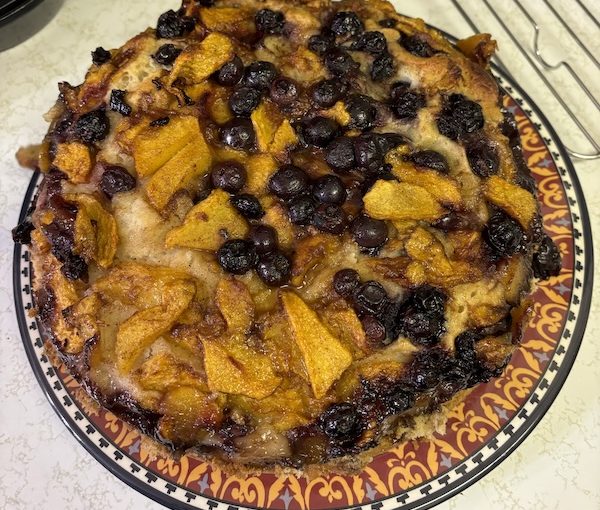
Peach-blueberry cake à la Ina Garten, made by the Accidental Balabusta. (photo by Shelley Civkin)

With Rosh Hashanah right around the corner, I’m already thinking of honey cake … but not honey cake. Wanting to ring in the new year with something sweet but not traditional, I found a recipe that might just fit the bill perfectly. Looking around the stores, there is still lots of fresh fruit to be had and, in a final hurray to summer, I decided to indulge in the juicy sweetness of peaches and local blueberries. Add in a few dozen other ingredients and, voila, I produced a cake that my husband declared worthy of a Balabusta column. 

Reading the recipe I found online at sweetandsavourypursuits.com, I was initially apprehensive, since the ingredients list reads like a Tolstoy novel. Then I thought, heck, stop being a kitchen-weeny and get the job done. If the internet is to be believed (ha!), this recipe is “adapted from Ina Garten,” the “Barefoot Contessa,” so it was all but guaranteed to be good. And it was. However, I have one caveat: the baking temperature and cooking time are way off. But that’s an easy fix.

Made in a nine-and-a-half-inch springform pan, this cake has got legs. It’s gooey and sticky and holds its own. It’s the opposite of light and fluffy, but you don’t necessarily expect light and fluffy from a fruit-filled cake. Anyway, no more excuses. Just try it. But keep in mind that you will probably need to adjust your temperature up from the stated 350˚˚ F to about 365˚ F or even higher, depending on your oven. The recipe calls for a cooking time of 45 to 55 minutes at 350˚F, but the batter was still wet and jiggly after 55 minutes, so I upped the temperature and just kept adding time until the cake set, which ended up being more like an hour and 15 minutes or so. Flexibility is a must for this recipe. Don’t expect to make it when you’re in a rush. Won’t happen. But darn, it’s worth the time.

PEACH-BLUEBERRY CAKE

1/2 cup unsalted butter at room temperature
2 cups white sugar
2 large eggs at room temperature
1 cup sour cream at room temperature
1 tsp vanilla extract
2 cups all-purpose flour
1 tsp baking powder
1 tsp baking soda
1/2 tsp ground cinnamon
1/2 tsp ground cardamom (optional, and I didn’t use it)
2 large fresh ripe peaches, peeled, pitted and sliced
3/4 cup fresh blueberries rinsed and dried
1/3 cup light brown sugar packed
1/2 tsp ground cinnamon
1/4 tsp ground cardamom (optional)

1. Place rack in the middle of the oven and heat oven to 350˚ F (as I said above, I would recommend more like 365˚ F or higher – your call). Line the bottom of a 9 1/2” springform pan with parchment paper or lightly grease it. Set aside.

2. In a large bowl, sift the flour, baking powder, baking soda, salt, cinnamon and cardamom (if using). Set aside.

3. In the bowl of your mixer, add the butter and white sugar and beat on medium-high for 3 to 5 minutes, until mixture is fluffy.

4. Add eggs, one at a time, mixing after each addition.

5. Add the sour cream and vanilla extract and beat until smooth.

6. Scrape the side and bottom of the bowl before gradually adding the flour mixture on low speed.

7. Once the flour has been added, increase the speed and beat until the batter is smooth. Don’t over-beat the batter. 

8. In a medium bowl, mix the peaches and blueberries with the brown sugar, cinnamon and cardamom (if using).

9. Spread the batter evenly into the springform pan.

10. Add the fruit to the top of the batter by arranging the peaches in a circular pattern and scattering the blueberries in the gaps. (At this point, I was so tired, I just threw the whole fruit mixture on top of the batter.)

11. Bake for 45 to 55 minutes or until a toothpick inserted in the centre of the cake comes out clean or with a few crumbs clinging to it.

12. Cool the cake on a wire rack for 10 minutes before running a knife along the edge and releasing the cake from the pan.

The recipe says to serve the cake at room temperature, but who are we kidding? As soon as I could touch the cake without burning my fingers, I was stuffing it into my mouth. The recipe also suggested serving it with sweetened whipped cream or vanilla ice cream, neither of which I had, so we ate it au naturel.

The cake can be stored at room temperature for up to two days and, after that, it should be refrigerated. But, once again, who are they kidding? As if a cake would last two days in our home. Maybe we’re gluttons. Or maybe we just wanted the cake while it was fresh. My money is on freshness. And expediency.

However you parse it, this cake is summer-yummy. And, since I can already feel fall in the air, if I were you, I’d hightail it to your local grocer, buy some peaches and blueberries and get baking. The cake was delicious right from the oven. It was delicious the next morning for breakfast. And it was still delicious that afternoon. Now, it is no longer. I have no idea if it would freeze well or not, but, if so, it would make a refreshing alternative to honey cake for Rosh Hashanah. You could probably substitute berries of any kind in this cake, but I hear that blueberries are a particularly good antioxidant food. If, however, you happen to be pro-oxidant, then skip the blueberries and opt for something less controversial. Whatever. Just try this. Then thank me. 

Shelley Civkin, aka the Accidental Balabusta, is a happily retired librarian and communications officer. For 17 years, she wrote a weekly book review column for the Richmond Review. She’s currently a freelance writer and volunteer.

Format ImagePosted on September 13, 2024September 11, 2024Author Shelley CivkinCategories Celebrating the HolidaysTags Accidental Balabusta, baking, cake, Rosh Hashanah

Celebrating two new years 

It would be fun to be a fly on the wall at Vancouver Talmud Torah on Feb. 14 as Richard Ho reads from his book Two New Years, illustrated by Lynn Scurfield, and discusses it with the children. Being that the story is based on his own life experience, he will likely be quite animated (pun intended) and his enthusiasm, combined with Scurfield’s bright, colourful and joyful art, will no doubt hold their attention.

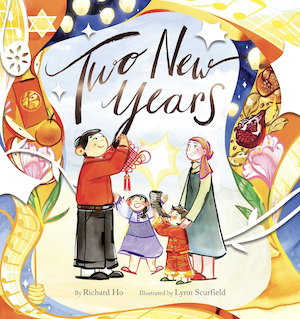
image - Two New Years book coverHo has several kids books to his credit and, according to his website, more on the way. Two New Years highlights the differences and similarities between Rosh Hashanah and the Lunar New Year, both of which he celebrates.

The book notes the differences first: Rosh Hashanah takes place in the fall, is based on the Jewish calendar and began in the Middle East, and the Lunar New Year generally falls in spring, is based on the Chinese calendar and began in East Asia. “They represent different peoples with different histories, cultures and traditions,” he writes. “But in many ways they are also alike.” The many similarities include that each holiday is a chance to “try on new beginnings,” to “bring family home” and “remember the ancestors who live in our hearts,” to eat “foods that symbolize togetherness and the heartfelt sharing of good wishes,” among several other things.

In the author’s note, Ho shares that he converted to Judaism as an adult and that “the blending of two cultures was a conscious choice” for him. These days, he revels in experiencing both new years through the eyes of his children. “The best part?” he asks. “They’re not alone! All over the world, families with mixed backgrounds are blurring the barriers between cultures and customs. With the guidance of parents, grandparents and extended family on all sides, many children are weaving an increasingly diverse tapestry of celebration.”

The book features an eight-page illustrated glossary that’s as interesting to read as the story: it explains what a lunisolar calendar is, and some of both holidays’ rituals and symbols. It is followed by questions that readers can use to facilitate a discussion with others about their own traditions.

Ho’s presentation at VTT is part of the Cherie Smith JCC Jewish Book Festival (jccgv.com/jewish-book-festival). 

Posted on January 26, 2024January 24, 2024Author Cynthia RamsayCategories BooksTags children's books, Chinese heritage, culture, Jewish heritage, Lunar New Year, Lynn Scurfield, Richard Ho, Rosh Hashanah

Moment for gratitude

This fall, for people with compromised immune systems or other health issues, extra precautions – social distancing and masking – remain a wise choice. For most people in Canada, the pandemic is over.

While the pandemic will never truly be past for those who lost family members and those whose health has been permanently affected (in ways we may not fully understand for years), this will be the first fear-free High Holidays since 2019 for the vast majority of Jews.

At the beginning of the pandemic, we were told it might take a couple of weeks’ isolation to overcome the spread. That stretched to three years of various levels of regulation and recommendations, decreasing and increasing again based on numbers of transmissions. Each new cycle of the calendar brought its own adaptations, beginning with outdoor seders and simchas – fine in Tel Aviv and Miami, less so, sometimes, in Winnipeg and Warsaw.

It is perhaps a symptom of both Jewish and human nature that, when one problem is resolved, we focus on another. It has been a dependable habit since the creation of the state of Israel that, when immediate external threats subside, attentions turn to internal disagreements – “Who is a Jew?” is a repeating topic, for example. Of course, one thing need not preclude the other. Israel is currently experiencing both external threats, in terms of a spate of terrorist attacks, and unprecedented political and social divisions.

But let’s not be so quick to find something to worry about. At this time of reflection, we all deserve to take a moment to consider the successes of the recent past. As we gather around holiday tables, we probably do not need to be reminded how fortunate we are to be together. Let us consider extending that sense of gratitude into the rest of our lives.

As young people return to classes, let’s celebrate the incredible resilience of kids who had formative years of their lives disrupted – and their teachers, who responded to exceptional circumstances! And parents, who admirably acted in the breach.

The synagogues and nonprofit organizations that are the backbone of our community transitioned on a dime to deliver programs and services as best they could during the pandemic – in many cases reaching more people virtually than they had in person, and expanding inclusivity and accessibility for all ages and abilities, as well.

Businesses that form the foundation of our economy – locally and globally – encountered supply chain (and plenty of other) constraints that they confronted as best they could.

We should also celebrate the manner in which our community steps up to respond to other urgent issues. Most recently, wildfires in British Columbia, Canada’s north, Hawaii and elsewhere – with Jewish people and organizations helping with accommodations for evacuees, food and other supplies, and more.

We have plenty of reasons to be concerned about the state of the world. There is time for that. During the month of Elul and into the Days of Awe, as we ponder the transcendent, take a few moments to consider and celebrate both the recent challenges overcome and the good fortune you experience in the day-to-day of life.

Posted on September 1, 2023August 29, 2023Author The Editorial BoardCategories From the JITags community, COVID, gratitude, Israel, Rosh Hashanah
About the Rosh Hashanah cover art

About the Rosh Hashanah cover art

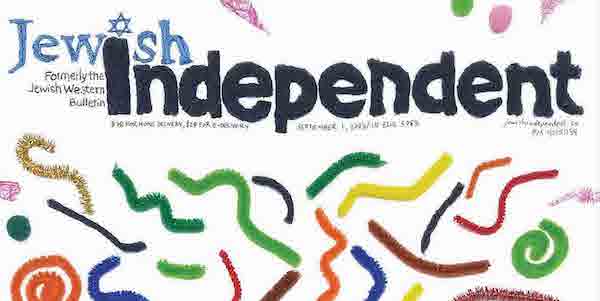
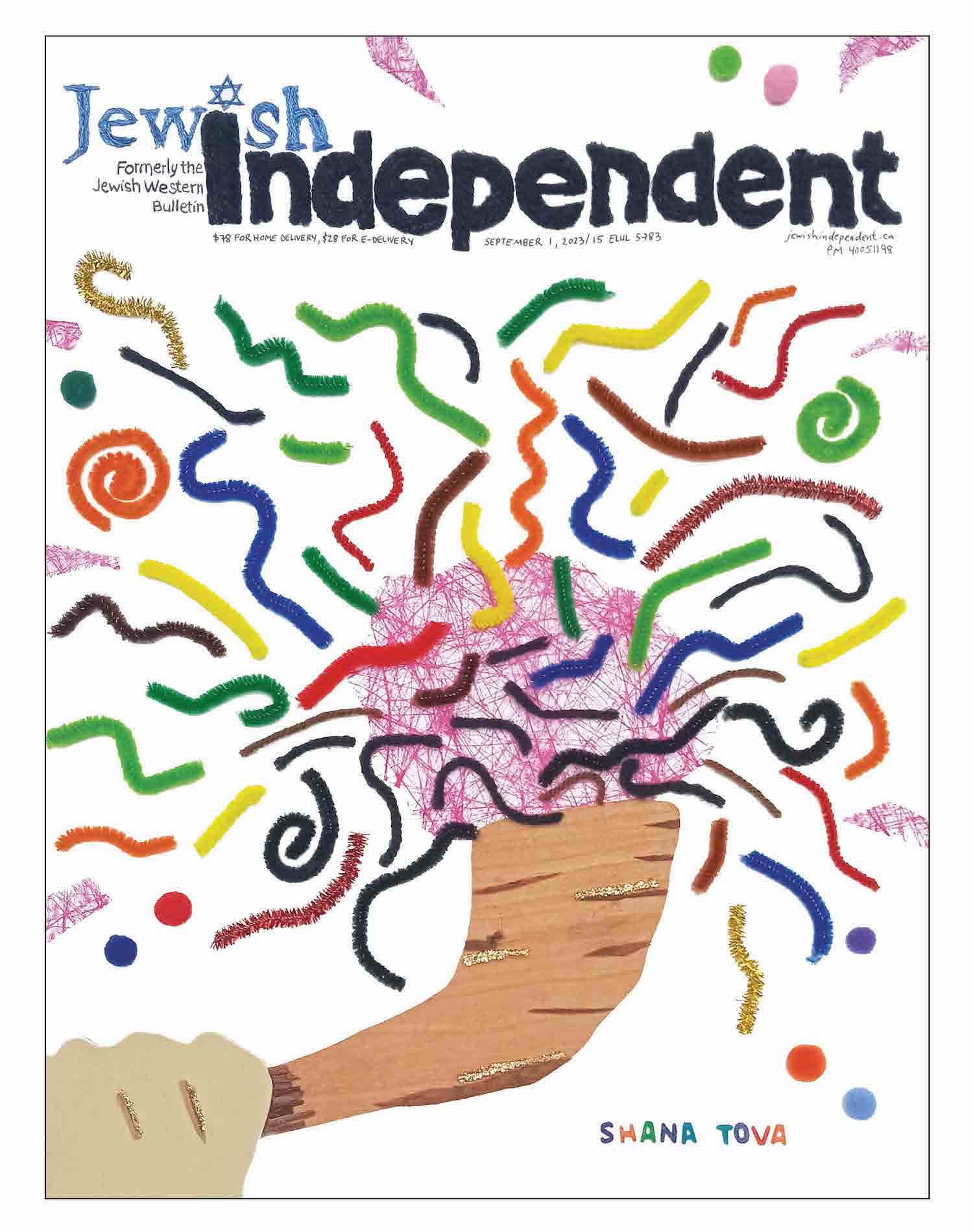
I spent hours online trying to find a suitable piece of art for this year’s Rosh Hashanah cover, then even more hours for what I might do myself. I really wanted to include a shofar in whatever I did, as a call to hope and action, for myself as much as anyone else.

I stumbled on artist Yitzchok Moully’s Elul Shofar Art Challenge (moullyart.com). Moully’s work is bright, colourful, full of life. As I mulled it over, I received an email from local artist Merle Linde, who generously created art for the JI ’s Passover cover this year and for last’s year Rosh Hashanah issue. She sent me an emotionally charged piece lamenting the countless trees that have been destroyed by wildfires. The base painting was an acrylic pour, and I spent several fun hours learning about and practising the technique, deciding it wasn’t quite what I wanted for my shofar blast.

I eventually came across creativejewishmom.com, the site that inspired my 2020 Passover cover depicting the Israelites (made of corks) crossing the Red Sea, who made a second appearance for Passover 2021, participating in Zoom seders. This time, it was a Tashlich picture made with yarn, coloured paper and felt marker that caught my eye on creativejewishmom.com. Inspired, I made the JI masthead out of yarn and ink, and created the shofar and the hand holding it – I wanted there to be a human presence, as we are critical to any change, for better or worse.

image - JI Rosh Hashanah 2023 coverThe middle section of the page eluded me for days, and I tried various things that just didn’t feel or look right. Thankfully, a middle-of-the-night couple of hours resulted in the finished cover, albeit with some tweaking in Photoshop. It ended up being more cheerful than I was intending. I am happily surprised at my latent optimism, and hope that readers also find it uplifting.

Posted on September 1, 2023August 30, 2023Author Cynthia RamsayCategories Celebrating the HolidaysTags art, High Holidays, Merle Linde, Rosh Hashanah, shofar, Yitzchok Moully

Posts pagination

Previous page Page 1 Page 2 Page 3 … Page 10 Next page
Proudly powered by WordPress