Skip to content
  • Home
  • Subscribe / donate
  • Events calendar
  • Business Directory
  • FAQ
  • News
    • Local
    • National
    • Israel
    • World
    • עניין בחדשות
      A roundup of news in Canada and further afield, in Hebrew.
  • Opinion
    • From the JI
    • Op-Ed
  • Arts & Culture
    • Performing Arts
    • Music
    • Books
    • Visual Arts
    • TV & Film
  • Life
    • Celebrating the Holidays
    • Travel
    • The Daily Snooze
      Cartoons by Jacob Samuel
    • Mystery Photo
      Help the JI and JMABC fill in the gaps in our archives.
  • Community Links
    • Organizations, Etc.
    • Other News Sources & Blogs
  • JI Chai Celebration
  • JI@88! video

Recent Posts

  • Federation now across BC
  • Israel fighting for its existence
  • Deal strengthens Iran
  • Patriotic belonging diminishes
  • A campaign to engage
  • Upstanders’ first live event
  • Responding to Carney
  • Having your own home
  • Music a family tradition
  • Musical to warm heart
  • Community milestones … June 2026
  • Sharing her passion for Israel
  • Or Shalom reopens its doors
  • JFS from past to future
  • Need holistic approach
  • Sharing stories, advice
  • Journalist shares fears
  • Skills to live together
  • Road to independence
  • Cutting grass with scissors
  • Zionism as a solution
  • Deceit, desire & the divine
  • Reclaiming sacredness
  • Creative project ideas
  • Summer squares and cobbler
  • Thou shalt … summer commandments
  • Legal help for students
  • Revisiting myth of Lilith
  • Wrong person rebuked
  • Canada’s mixed messages
  • Questions for museum
  • Symposium on antizionism
  • Making soccer political
  • CJPAC lauds Pulver’s impact
  • City recognizes Vrba’s legacy  
  • Organ donation saves lives

Archives

Follow @JewishIndie
image - CJN box ad Rockowers 2026

Tag: politics

The art of conversation

The art of conversation

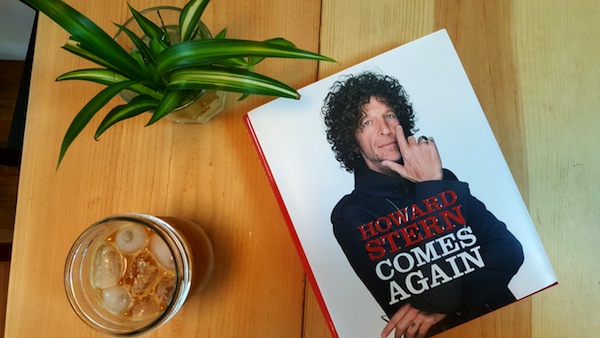
Howard Stern Comes Again highlights 37 interviews from Howard Stern’s show, and much more. (photo by Adam Bogoch)

Conversation is almost a dead art. Technology, ludicrously divisive politics and sheer laziness have almost entirely killed it. How often do you see true connection happen through dialogue anymore? Most people talk at each other, not to each other. Heck, most of the time they’re more interested in their phone. And I can’t say I’m guiltless in this department. Nor would radio talk-show legend Howard Stern, at least for the first 30 years of his epic career. This is a theme that’s intentionally threaded throughout his masterful new book, Howard Stern Comes Again (Simon & Schuster, 2019).

Not a fan of Howard Stern? Many people see him as a crude entertainer willing to insult and demean others in order to win a laugh. Well, as a die-hard fan of his, I can say that’s an accurate observation – at least partially. Ever since he moved his extraordinarily successful radio show to satellite in 2006, he’s become so much more than that. His level of insight and tolerance has grown exponentially. He’s learned to see beyond himself. And he attributes this shift to his new platform, meditation and, most importantly, extensive psychotherapy. Because of these changes, he’s regarded as “the greatest celebrity interviewer of all time.”

Don’t believe it? If you’re not willing to purchase a full SiriusXM subscription, a copy of Howard Stern Comes Again will suffice as proof. Don’t worry, this book isn’t meant for those who know what “Baba-Booey” means. It’s for anyone and everyone who loves actual communication.

The New York Times bestseller highlights 37 edited transcripts of interviews from Stern’s show. Each features a guest, such as Sir Paul McCartney, Chris Rock, Joan Rivers, Bill Murray, Jerry Seinfeld, Steve Martin, Lady Gaga, Larry David – and Stern’s mom. They contain fascinating revelations from these individuals, as well as from Stern, who has written an eloquent foreword to each chapter.

Every topic under the sun is covered. Nothing stays in a “safe space,” unless it’s honest to the individual he’s interviewing. The conversations are revealing, genuine, hilarious, and even pretty upsetting at times. It’s astounding how Stern is able to extract such information from celebrities who often try to maintain a level of secrecy to protect themselves, their families, and sometimes their art. They clearly feel comfortable with him. Maybe because there’s no question he asks that he’s unwilling to answer himself. He injects his own personal experiences, opinions and shtick into his interviews, making them real dialogues. The conversations are intimate and almost seem to be taking place privately – the opposite of interviews on shows like Late Night, 60 Minutes or Oprah.

Stern’s approach has influenced countless podcasters and radio hosts. In a May 8 interview with the Hollywood Reporter this year, Stern described his style as “the dinner party approach.” This is an apt description. And, thanks to his new book, it is not only his listeners who get to be flies on the wall.

Howard Stern Comes Again is 130 mini-biographies in less than 600 pages. It’s not just the 37 that are included. The beautifully bound and well-formatted book also features short exchanges between Stern and a variety of other comedians, actors, news anchors, mobsters, filmmakers and musicians. These snippets are compiled in special chapters where the likes of Dave Chappelle, James Taylor, Tina Fey and Vancouver’s own Seth Rogen speak on topics like sex, religion and death.

Which brings me to Trump.

Unfortunately, I can’t get away without mentioning the current president of the United States. He features heavily in the book thanks to several chapter breaks entitled, “And Now a Word from Our President.” They present fragments of Stern’s now-famous interviews with “the Donald” before he became leader of the Free World. Although Stern has revealed he isn’t a supporter of Trump – a fact that put Stern in Trump’s bad graces – not every interaction with him is negative. Stern shows that he’s capable of doing something Trump clearly is not able to do – having a conversation, even a light-hearted one, with someone of a different opinion. Having said that, there are certainly some cringe-worthy moments here that maybe even Stern regrets. But, honestly, it wouldn’t be a Howard Stern book without them.

Because of Stern’s approach to conversation, as well as his outrageous comedy, he’s been described as “divisive.” I actually thought he was a monster before I was turned onto him by another member of the Jewish community who encouraged me to listen. And, guess what? I laughed. I learned to take things less seriously – especially the darkest aspects of society. Confronting them the way he does makes them more manageable.

I also became aware of Stern’s enlightened stance on equal rights, the environment, freedom of speech, Israel, and animal rights. Even when I disagree with him, I love him. Because he comes from an authentic place. A place of experience. Of flaws. A place with passion and desire. And never has this been more obvious than in a book focusing on – gasp – actual human interaction.

It’s apparent that Howard Stern Comes Again is meant to be considered as Stern’s legacy. Whether you’re an active listener or completely unfamiliar with him, it is something to appreciate and, maybe, just maybe, from which to learn.

Adam Bogoch is a Vancouver-based screenwriter and content writer.

Format ImagePosted on August 23, 2019August 22, 2019Author Adam BogochCategories BooksTags dialogue, Howard Stern, politics, Trump

Racism must be curbed

In a world where Israel is accused of being an “apartheid state” and Zionism is equated with racism, it is understandable that we would recoil from accusations of actual racism in Israel, but we can’t afford to do so.

On June 30, 18-year-old Solomon Tekah was shot and killed by a police officer in Haifa. He is one of at least four Ethiopian-Israelis killed by police in recent years, while another seven deaths were cited as suicide or as being the result of uncertain causes after police encounters, according to community leaders. Reports of police brutality against the black community are alarming and suggest a systemic problem.

Supporters of Israel on social media like to celebrate Muslims, Druze and other minorities who reach the pinnacles of Israeli society, and so we should. But we should not restrain our criticism of serious racial injustice in that country just because of what outsiders might think. There have been struggles in Israel not only between Jews and Arabs, but around the treatment of and inequalities experienced by Sephardim and Mizrahim, Bedouins, Ethiopians and others. There are also legitimate concerns around the treatment of African asylum-seekers, concentrated in south Tel Aviv, who have been neglected and used as political footballs by politicians.

The New York Times Sunday compared the growing awareness of police brutality, as well as more casual racism, to the Black Lives Matter movement in the United States. In addition to the most visible cases – police killings – the article also includes examples of pervasive prejudices, such as the Ethiopian-born head of a social services agency who was offered housecleaning work by strangers on the street, as but one example. Interestingly, even though one arm of the Israeli government coordinated the airlift of 14,000 Ethiopian Jews in 1991, another arm insisted on second, symbolic circumcisions for the men, whose Judaism was apparently legitimate enough for the Law of Return but somehow not legitimate enough for the state-sanctioned arbiters of religious identity.

It is particularly disheartening when one compares the racism experienced by Ethiopian-Israelis with the hopefulness this community carried with them to Israel. One individual said that arriving in Israel after journeying for two months was “like touching the moon.”

“Is this the Israel we dreamed of?” Zion Getahun remarked. “It’s a question I ask.”

In light of recent events, the minister for internal security, Gilad Erdan, is setting up a new unit “to fight expressions of racism wherever they exist,” to ensure that force is used by police responsibly and that “over-policing” – in which Ethiopian-Israelis say they feel like they are treated like automatic suspects – is brought to heel.

The parallels are notable with the situation in the United States, where African-Americans experience disproportionate brutality and deaths at the hands of police officers. Also similar are the fears of parents, like the mother who worries about the coming time when her now-11-year-old son will want to go out by himself.

What is notable in the Times article, which seems well presented and fair, is that, unlike African-Americans in the United States, Ethiopian-Israelis do not have nearly the same level of community leadership or representation in government and other places of power. They are a small minority of 150,000, lacking the established community organizations that African-Americans have built over generations.

This means that, more even than in the United States, and more than in Canada, where non-indigenous Canadians have begun to speak up on behalf of the rights of indigenous peoples here and to address the wrongs that have been perpetrated, the moral obligation falls even more heavily on people who do not belong to the affected communities to right these wrongs.

In Israel, there is a need to encourage and support communal leadership among Ethiopian-Israelis while simultaneously speaking out on their behalf when they experience discrimination. As supporters of Israel and as people who are proud of the many achievements of the Jewish state in creating an enviable society nearly from scratch in an historical blink of an eye, we, too, have a voice.

Express concerns to Israeli family and friends, send support to the myriad organizations that build connections across Israel’s many divides and, while we’re at it, consider whether we can improve our own attitudes about and treatment of people who are different from us.

Posted on July 19, 2019July 18, 2019Author The Editorial BoardCategories From the JITags Ethiopian-Israelis, Israel, politics, racism
Timeless political satire

Timeless political satire

Michael Scholar Jr. co-directs the political comedy Born Yesterday, which opens July 13 at the Jericho Arts Centre. (photo from ETC)

Garson Kanin’s comedy Born Yesterday opened on Broadway on Feb. 4, 1946, and was a hit. It has been made into a film (1950), returned to Broadway twice (1989 and 2011) and seen countless productions. About political corruption, it has a timeless quality.

“This play seems to have been written for this exact moment, when populism, corruption and bullying are an omnipresent part of our political and personal lives,” co-director Michael Scholar Jr. told the Independent.

Scholar co-directs the Ensemble Theatre Company (ETC) production with Shelby Bushell. Part of the company’s Annual Summer Repertory Festival, Born Yesterday opens July 13 at the Jericho Arts Centre.

“Kanin wrote the piece while in Europe,” said Scholar. “While he was serving in the army to defeat fascism abroad, he seemed more concerned about those same tendencies within our own democracy back home. This play and one of its central figures, Harry Brock, the bullying millionaire who tries to buy his way into power, are sadly all too familiar 80 years on.”

In Born Yesterday, junkman Harry has come to Washington, D.C., to use his money to influence legislation. Despite his own uncouthness, Harry is concerned that his girlfriend, Billie, a former showgirl, will make him look bad, so he hires a reporter, Paul, to educate her. As her newly released intelligence begins to surface, she could prove Harry’s undoing.

The Independent last spoke with Jewish community member Scholar about The Enemy, another political play, which was at the Firehall Arts Centre late last year.

“Since The Enemy, a lot has changed for me,” he said. “I spent a semester teaching acting and directing at Arizona State University in Phoenix. And now, on my summer break, I’m co-directing Born Yesterday for ETC and, a day after opening, I fly to New York to direct A Midsummer Night’s Dream for Colonial Theatre of Rhode Island, which I get to work on with my 6-year-old daughter, Alice.”

About how he came to co-direct Born Yesterday, Scholar said, “I was talking with artistic director Tariq Leslie while on a movie set here in Vancouver, and we got to talking about how ETC was hitting above its weight class and doing some powerful work in town. He had seen my production of As You Like It at Studio 58 and enjoyed my work. And so a match was made.”

Scholar described having a co-director as “a real blessing.”

“It means that we can tag team on rehearsals, and I actually get to have a day with my family each week,” he said of working with Bushell. “Also, having her perspective in the room has meant that we are covering more ground and that, together, we have fewer blind spots. This play is about a woman who is perceived to be a ditz, but whose sense of civic duty is awoken through education and intellectual stimulation. This play, written in the ’40s by Garson Kanin, is surprisingly relevant to our current political climate, but it also has some potentially problematic elements [so it is] worth having two sets of eyes looking at this material.”

One of those elements is the depiction of women.

“Brock is a bully and, without giving away too much of the plot, he is a violent character towards both men and women in his entourage,” explained Scholar. “The play deals with toxic masculinity, misogyny and stereotypes, but, in its time, it was working to subvert those ideas. So, we’ve reworked parts of the piece to highlight this intention and to not reinforce gender stereotypes, which has been another great reason to have Shelby as a collaborator on this project.”

Ensemble Theatre’s website highlights a quote from the play: “A world full of ignorant people is too dangerous to live in.” It notes, “By turns uproarious and sobering, and packed with a cast of vibrant characters throughout, Kanin’s play reminds us that a healthy democracy depends on its inhabitants to stay healthy, and that abuse of power cannot be stemmed without an informed and engaged citizenry.”

Scholar stressed that, despite the weighty issues tackled, the play is primarily a comedy. “It has a fast-pace banter and physical precision that is almost farcical,” he said. “It uses comedy as a way of dealing with challenging ideas, disarming us with laughter so that we can reflect on our situation with not just our heads, but our hearts, too. I’m sure audiences will have much to discuss afterwards, but they will also be entertained while on this poignant journey.”

ETC’s summer festival runs to Aug. 16. In addition to Born Yesterday, it features Michael Healey’s The Drawer Boy, which opened July 12, and Tracy Letts’s Superior Donuts, which opens July 19. For tickets, visit ensembletheatrecompany.ca.

Format ImagePosted on July 12, 2019July 10, 2019Author Cynthia RamsayCategories Performing ArtsTags comedy, Ensemble Theatre Company, Michael Scholar Jr, politics, theatre
Play’s Vancouver links

Play’s Vancouver links

Zayd Dohrn’s Reborning returns to the New York stage this summer. (photo from Zayd Dohrn)

The play Reborning, written by Zayd Dohrn, is being performed Off-Broadway at the Soho Playhouse in New York City from July 5 through Aug. 3, thanks to Vancouver’s Reality Curve Theatre.

A Canadian nonprofit professional theatre company founded in 2011, Reality Curve reached out to Dohrn to bring this play, which ran in Vancouver last year, to the New York stage. The production is produced by artistic director Paul Piaskowski, Darren Lee Cole and Rebecca McNeil, and is presented by Playbook Hub with support from the Vancouver Film School, the Canada Council for the Arts and Shimon Photo.

Reborning is a dark comedy-drama with elements of horror. In it, people are able to buy life-like infant dolls that look like loved ones who have died. The play centres around Kelly, a woman who lives with her boyfriend in Queens, N.Y., and creates “reborn” baby dolls. She has a client who commissions her to make a replica of her dead baby girl and, as Kelly constructs this doll, it stirs up memories from her own life.

“It’s a relationship between a younger and older woman – a customer and an artist – who are both looking for something and it becomes dangerous,” said Dohrn, who lives in Chicago and is an associate professor at Northwestern University. “There is a whole subculture with these dolls. I wrote the play right after the birth of our first child. My wife was shopping online for baby toys and clothes and she found these life-like dolls. The photos of them are incredible, realistic, detailed and medically accurate. Some even have hospital bracelets. There is something beautiful about them, yet very disturbing.”

Dohrn talked to customers and heard their testimonials. “Many of these people can’t get over the loss of their baby and use the dolls therapeutically.”

The play stars Emily Bett Rickards (CW’s Arrow), Piaskowski (Unspeakable, The Twilight Zone) and Lori Triolo (Riverdale), who is also the director.

The first production of Reborning, which starred Ally Sheedy, was 10 years ago at the Summer Play Festival at the Public Theatre in New York City, when Dohrn was at the Julliard School. It has had more than 20 productions nationally and internationally over the last decade, including in Los Angeles, Brazil, Panama, Florida, San Francisco and, in 2018, Vancouver, where he connected to Reality Curve.

Dohrn’s life and road to literary success could be a fascinating play in itself. His parents, Bill Ayres and Bernadine Dohrn, were leaders in the radical group the Weather Underground (also known as the Weathermen) back in the 1960s and 1970s. There was an accidental explosion in a Greenwich Village townhouse where Weathermen lost their lives, and the couple went underground, using assumed names. Dohrn, who is now 41, spent his early childhood on the run.

“It didn’t seem strange to me to grow up being fugitives, that was just our life,” he said. “We lived in New York City in Harlem, traveled a lot, moved around a lot and lived in communes. Then my parents turned themselves in and we settled in New York. My mom went to jail for almost two years when I was 5, and I have vivid memories of visiting her there. My dad took care of me while she was gone.”

When his mom was released from prison, she became a lawyer. “My dad became a professor and I was raised in a middle-class house, although they still had their notoriety and they were committed to their politics and their cause,” said Dohrn. “Growing up, we would go to a lot of demonstrations and meetings with other activists.”

Dohrn went on to earn an undergraduate degree from Brown University, a master’s in fine arts from New York University, a master of arts from Boston University and a playwriting fellowship from Julliard. He also spent a lot of time in China. Fourteen years ago, he married Rachel DeWoskin, and they have two daughters. DeWoskin, who is from Ann Arbor, Mich., is an author, teaches at the University of Chicago and also spent many years living in China before she and Dohrn met.

Many of Dohrn’s plays draw from his childhood and life experiences. In one of his earlier plays, Haymarket, set in 1886, a bomb explodes in the middle of a peaceful rally of demonstrators in Chicago – at least one of the radicals goes into hiding. His play Sick, about a Manhattan couple who go to extreme measures to protect themselves from pollution, was reminiscent of living in Beijing and witnessing the fear during the SARS epidemic.

When asked about his religion, Dohrn said he considers himself a cultural Jew. “My mom was half-Jewish and my parents were atheists, but, culturally, my mom considers herself Jewish and we were raised as cultural Jews and celebrated Passover and Chanukah,” he explained. “We celebrated in a radical way – we did Passovers in a women’s prison in upstate New York, celebrating the Exodus as a story of freedom and celebrating with female inmates in prison.”

Dohrn noted that he, his wife and kids have traveled a lot, visiting Jewish sites. “My wife considers herself Jewish and we are raising our girls with a lot of Jewish cultural influences,” he said.

Dohrn and DeWoskin spend time each year in China. “Rachel kept her apartment in Beijing for at least 10 years and we would go for a few months every year,” he said. “When our kids started to grow up, we wanted a place where they could be more independent so we got an apartment in Shanghai. We spend three-quarters of the year in Chicago and one-quarter of the year in Shanghai. We both have academic schedules so we are able to spend the summers and winters there. There are still historical monuments and artifacts from the Jewish community in Shanghai and the synagogue is now a museum. Our apartment there is in the building that was the Jewish processing centre for the refugees during World War II.”

Currently, Dohrn is developing a series about radical political movements like the Weather Underground and the Black Panthers for Showtime and a feature film for Netflix. He’s looking forward to Reborning being back on the New York stage. “For me,” he said, “it’s a bookend, to have it back in New York again after all these years.”

Alice Burdick Schweiger is a New York City-based freelance writer who has written for many national magazines, including Good Housekeeping, Family Circle, Woman’s Day and The Grand Magazine. She specializes in writing about Broadway, entertainment, travel and health, and covers Broadway for the Jewish News. She is co-author of the 2004 book Secrets of the Sexually Satisfied Woman, with Jennifer Berman and Laura Berman.

Format ImagePosted on July 5, 2019July 3, 2019Author Alice Burdick SchweigerCategories Performing ArtsTags New York, politics, Reality Curve, Reborning, theatre, Zayd Dohrn

Naming inhumanity

Concentration camps are in the news this week. The term, which was first used in the context of Jews in the Holocaust, is being invoked by opponents of the U.S. government’s detention of migrants from Latin America. Appallingly, those detained include hundreds of children who have been separated from their parents. These current child detainees are among the at least few thousand children who have been separated from their families over the last two years.

The use of “concentration camps” and phrases like “Never again” has been criticized by some high-profile Jewish activists and others as diminishing the meaning and seriousness of the Holocaust. Some see the use of these terms as a cheapening of the Jewish experience or a form of Jew-baiting. In contrast, it is not heartening that Republicans who sanctimoniously condemn the use of these terms have a crass political motivation for defending the sanctity of Jewish historical memory.

There is no question that the words are used for their shock value. And, at a time when short attention spans intersect with what is genuinely a grotesque affront to humanity, there is little wrong with shocking a complacent population.

Reports from the facilities tell of sickening conditions.

A group of lawyers who toured one of the facilities and spent days interviewing child-inmates said that the most basic standards demanded under international law around the treatment of children in custody are being ignored. Children are not supposed to be held for longer than 72 hours, but many have been incarcerated for weeks. They are crammed into windowless warehouses, unwashed for days, in mucous-stained clothing, without the most rudimentary necessities like soap or toothbrushes, sleeping on cold concrete floors, suffering lice-infestations and untreated influenza outbreaks. Guards bring diaperless 2- and 3-year-old children to the facility and ask older children to care for the younger ones. Teenagers serve as unofficial guards in exchange for extra food. Parents are being held separately in unknown locations and some experts have said it is likely some families will never be reunited.

The situation for adults is not to be ignored either. At one facility, about 900 migrants are incarcerated at a facility intended for 125. Cells intended for 35 people are jammed with more than 150.

In an unfathomable breach of what public relations folks call “optics,” there are plans to accommodate the ever-growing number of child detainees by repurposing Fort Sill, Okla., a site where Japanese-Americans were interned during the Second World War.

To be charitable, the argument over language reflects a struggle to find words for what is happening. The situation for these children (and adults) is intolerable in any country, least of all, perhaps, in the land that once welcomed the tired, the poor, the huddled masses yearning to be free.

Still, concerns over the desecration of the memory of the Holocaust are legitimate. We have witnessed too many instances where minor affronts are equated with Nazism and other massively inappropriate comparisons. But the Holocaust did not begin with crematoria. It began with dehumanization and othering and, as the will of the world to tolerate increasingly hostile acts against Jews was tested and found to be elastic, the perpetrators progressed into successive stages leading to genocide.

There is no way to predict the future and there is little point in making unnecessarily combustible assertions about impending genocide. But, when human beings are treated as they are in this circumstance and the trajectory is toward more of the same, people must militate against this inhumanity.

A consensus has developed among Holocaust educators and human rights activists that the term “Never again” does not apply solely to attempts to reprise anti-Jewish ideas and actions, but that the lesson of the Shoah is that we must be vigilant when any people are targeted.

It is unfortunate that the people who seem most inclined to use Holocaust-associated language in the context of current events are also people whose record on issues of concern to Jewish people are highly problematic, drawing reasonable suspicions to their motives. Terminology is important. But, the more we learn about what is happening to children and others in American detention facilities, the more hair-splitting over nomenclature seems to compound the inhumanity we are witnessing.

We are correct to be defensive about any perceived disrespect to the memory of the Holocaust and its victims. However, we might ask ourselves, when judging the appropriateness of such usage: If not now, when?

Format ImagePosted on June 28, 2019June 26, 2019Author The Editorial BoardCategories From the JITags concentration camps, discrimination, Holocaust, human rights, politics, United States

The will of “the people”

The deed is finally done. For years, Quebec politicians have been talking about secularism, or laïcité, proposing a range of actions to ban the presence of visible religious symbols among government employees. On Sunday, following a weekend of almost round-the-clock debate, the Coalition Avenir Québec majority in the National Assembly passed Bill 21. The law bans symbols such as the crucifix, turban, hijab and kippah for provincial employees in positions of authority, such as judges, police, prosecutors, court clerks and schoolteachers.

The bill was met with lamentations and anger from the opposition. Catherine Dorion, a member of the National Assembly representing the left-wing party Québec solidaire spoke powerfully in favour of individual liberty and the right to exhibit religious identity.

“Each person in this room who will vote for Bill 21 will bear the responsibility for this first great breach in the dike we had proudly erected to protect the fundamental rights of all Quebecers,” she said.

The vote came a day after a similarly contentious debate on another bill, which addresses the province’s agreement with the federal government over immigration to Quebec. On the one hand, the bill aims to ensure that immigration reflects the province’s labour requirements, which is justifiable. On the other hand, the bill also permits the creation of a “values test” that new Quebecers would have to pass before admission to permanent residency. A test of this nature is one thing in theory – extreme examples like female genital mutilation are raised as justifications – but it is something else in practice.

Government measures to adjudicate an individual’s beliefs is a recipe for disaster. Certainly we would like to see people with hateful or violent attitudes toward particular cultural groups prevented from entering the country, or rehabilitated if they are already here. There are programs and policies in Canada to address this problem and they should be strengthened. But applying what amounts to a form of prior restraint on the ideas and beliefs of new Canadians by a government with limited respect for civil liberties crosses a perilous line.

The religious symbols law parallels the immigration law in its flouting of civil liberties, but diverges importantly in a number of ways. It applies to people who are already Canadian (for the most part, at least), which is a more grievous affront than putting up barriers for non-citizens.

In responding to criticism, Quebec Premier François Legault declared: “Someone once said, beware of those who say they like the people but do not listen to what the people want.”

This language reflects a populism we have seen in Europe as well as North America, but which has been thankfully rare in this country. The idea that governments should do whatever “the people” want invites a tyranny of the majority that is almost destined to trample on individual rights, especially the rights of members of minority communities. It bears stating that, in Quebec, in order to deliver the will of the people, the assembly had to clip the wings of democracy not once but twice, invoking closure on debate on both bills and, in the case of Bill 21, promising to use the Canadian Constitution’s Notwithstanding Clause to override what even the government of Quebec acknowledges is a unconstitutional infringement on individual rights.

We are seeing flare-ups elsewhere in Canada of how some of “the people” would like to see public policy progress. On the same busy weekend, a rally in downtown Vancouver against transgender rights and opposing the province’s progressive sexual education agenda turned nasty (if the mission of the event wasn’t nasty enough) when counter-protesters showed up to confront them. At the rally were the Soldiers of Odin, a far-right group, people wearing yellow vests, the symbol of an amorphous movement that began in France and has attracted extremists, and at least one leading member of the People’s Party of Canada, a new populist party that seems determined to stoke a range of fears and prejudices in the lead-up to the federal election this fall.

Violence also erupted last weekend at a pride parade in Hamilton, Ont., when protesters showed up at the celebration. A local politician laid blame for the violence, which included punching and choking, on “far-right evangelicals” who he said were “just there to sucker-punch people.”

All of this is to say that Canada is not immune to extremism or even politically motivated violence. There is, of course, an important line between the violence in Hamilton and the laws that were rammed through Quebec’s legislature. Violence deserves universal condemnation while passionate disagreements over politics – even laws we see as repressive and excessive – are justifiable and welcome. Still, these incidents all reflect different approaches to “othering” – the idea that “we” are under threat from “them.”

What is encouraging is hearing the voices of those forced to defend the values of inclusion and respect for diversity. There was eloquence on the opposition side of Quebec’s National Assembly last weekend and, in response to the altercations in Hamilton and Vancouver, admirable recommitment by many to the values that we genuinely hope will represent the Canada we hope to create. This is also a reminder to speak up, so that when politicians say they are doing what “the people” want, what they mean is the will of people who pursue inclusion, acceptance and diversity.

Posted on June 21, 2019June 20, 2019Author The Editorial BoardCategories From the JITags discrimination, diversity, human rights, immigration, inclusion, law, politics, Quebec, racism, religion
Israel honours Trump with a settlement

Israel honours Trump with a settlement

(photos by Kobi Gideon / IGPO via Ashernet)

photo - A special cabinet meeting was convened in the Golan Heights on June 16 to name a new settlement there in honour of U.S. President Donald Trump
A special cabinet meeting was convened in the Golan Heights on June 16 to name a new settlement there in honour of U.S. President Donald Trump.

A special cabinet meeting was convened in the Golan Heights on June 16 to name a new settlement there in honour of U.S. President Donald Trump. Israeli Prime Minister Binyamin Netanyahu, together with U.S. Ambassador David Friedman, attended the special meeting, unveiling a sign reading Ramat Trump (Trump Heights) in Hebrew and English. The decision to name the settlement after the U.S. president was as a sign of appreciation for the Trump administration’s support of Israel. While Ramat Trump does not presently exist, the planned location is next to an isolated outpost with no more than 10 residents. It appears on paper that the plan is to build some 110 new homes. The Golan Heights is of strategic importance to Israel – before 1967, when Syria had control of the area, the Kinneret (Sea of Galilee), which is located below the heights, was constantly being fired upon from Syrian positions, making life unbearable for the residents of that part of the Galilee.


Format ImagePosted on June 21, 2019June 20, 2019Author Edgar AsherCategories IsraelTags Netanyahu, politics, Trump, United States

Historic next election

For the first time in its history, Israel will go to the polls because the Knesset Israelis elected in April could not form a government.

Prime Minister Binyamin Netanyahu crowed after the election results came in that his Likud had defied critics and won a comparatively easy reelection. The number of small right-wing parties in the Knesset made it impossible for the opposition Blue and White bloc to assemble the 61 seats needed for a bare minimum majority coalition, leaving Netanyahu a free hand to form another government. Or so it seemed to everyone.

But there’s right-wing and then there’s right-wing. As in any country, a range of issues and interests combine to make up political parties and movements. While they may be in sync on a whole range of economic, social, internal and foreign policy issues, the one thing that unified Likud and its ostensible allies among the smaller right-wing parties was animosity toward the left, which Netanyahu demonized during the campaign – even accusing the veteran military figures who lead Blue and White of being too far left. The leftist bogeyman Netanyahu was conjuring is, at this point in Israeli history, largely fictitious. The Labour party, once the dominant force in the country, suffered its worst showing ever, finishing with less than 5% of the vote.

What divides the right-wing parties are a few issues of core principle. The ultra-Orthodox parties are right-wing and prefer Netanyahu as prime minister. But they want special considerations for religious institutions maintained and strengthened. Nationalist parties, like Avigdor Lieberman’s Yisrael Beiteinu party, are right-wing, but secular, and Lieberman would not budge on his assertion that there should be no compromise on a new law – promulgated under his watch as Netanyahu’s minister of defence – that yeshivah men not be automatically excused from conscription. The five seats Lieberman’s party won in April were the lynchpin for a fifth Netanyahu government – and the notoriously combustible Lieberman ultimately kiboshed the government and the 21st Knesset.

Some commentators suggest principle was less a factor in Lieberman’s choice than personal pique. The two men were once the closest of allies – and nothing is more bitter than a family fight. A number of policy issues have frayed the relationship. For example, as defence minister, Lieberman publicly excoriated his boss for what he characterized as letting Hamas off the hook too easily in the most recent flare-up of cross-border violence from Gaza. Lieberman, it appears, would have preferred a far more punishing response, though he has a history of making dire threats on which he does not follow up. He once brazenly gave Hamas leader Ismail Haniyeh 48 hours to live if he did not return an Israeli hostage and the bodies of dead Israeli soldiers. The gambit failed. The millionaire Haniyah remains very much alive, luxuriating in a waterfront palace he built with a 20% tax on all goods traveling through the tunnels between Egypt and Gaza. Lieberman meanwhile continues with similar bellicosity to stoke his base, primarily older Israelis with roots in the Soviet Union.

Whether Lieberman’s dashing of Netanyahu’s plans was an ego issue or a strategy to improve his party’s weak showing in April, or whether it was, in fact, a matter of principle, doesn’t matter much now that new elections have been slated for September.

Most of Israel’s 2019 will have been eaten up by election campaigns and, unless the electorate has a swift change of heart – or the criminal charges hanging over Netanyahu’s head shift the discourse – the results in September may be very similar to those of April. Then what?

Ehud Barak, a former prime minister who has been both ally and opponent to Netanyahu, posited last week that, whatever the outcome in September, Netanyahu is finished. While there are anonymous sources inside Likud suggesting the leader may be ousted after the next election, the fact is that Netanyahu’s career has been declared dead several times before, but he has defied prognosticators and triumphed. Not for nothing is his nickname “the Magician.”

Posted on June 7, 2019June 5, 2019Author The Editorial BoardCategories IsraelTags Avigdor Lieberman, Binyamin Netanyahu, democracy, elections, Israel, politics

Harbingers of future?

In 2015, the federal New Democratic Party nixed Paul Manly’s hopes to run for Parliament, barring his candidacy because his anti-Israel politics were deemed too extreme. Manly joined the Green party and, this month, won a federal by-election in Nanaimo-Ladysmith. As only the second Green federally elected, Manly now makes up 50% of the federal Green party caucus.

By-elections are notoriously poor predictors of voter intentions in general elections. Manly’s win could go down as a footnote in history – or it could be a harbinger of tectonic change in Canadian politics. Little should be extrapolated from a single by-election outcome, but neither should we ignore the fact that the by-election win by Deborah Grey of the Reform Party, in 1989, represented the beginning of a new epoch in Canadian politics. The Reform party in the West and the Bloc Québecois in Québec gobbled up the Progressive Conservative party – and the New Democrats’ share of the vote.

Just days before the Nanaimo by-election, the Green party also made inroads in the Prince Edward Island provincial election, forming the official opposition. Just as a by-election is not a good measure of federal voters’ intentions, neither is a modest success in the micro-province of P.E.I. What both these outcomes do suggest is that a larger number of Canadians than ever before are considering casting a ballot for the Greens.

The outcome in Nanaimo-Ladysmith should send chills down the spines of Liberal and NDP organizers. Both parties saw their vote share collapse while the Greens leapfrogged and the Conservatives held their own.

Conventional wisdom says that the Green party should take more votes away from the NDP than from any other party. However, many 2015 Liberal voters are over their Trudeaumania and millions of Canadians are looking for a place to park their votes. The party would get a significant boost if Jody Wilson-Raybould and Jane Philpott, two women who embody the country’s disappointment in Prime Minister Justin Trudeau and his sunny ways, opt to run under the Green banner, as has been rumoured.

Jagmeet Singh, who managed to win his own by-election last year, can hardly find any silver lining in recent results. With the Liberals, who arguably ran to the left of the NDP last time, hemorrhaging support, the NDP should be sitting pretty. They are not.

Six months out from the general election, Conservative leader Andrew Scheer is the only party leader who should be pleased with the current landscape.

What this all means is not completely clear. Under Thomas Mulcair’s leadership, the NDP was dragged back to a more moderate middle after a period when it had seemed to go a bit off the rails, notably on the issue of Israel and Palestine. How the party addresses that and other contentious issues in the coming years will be determined significantly by the makeup of their caucus after the October elections. It was after their last terrible drubbing, in 1993, that the NDP fell under the sway of anti-Israel extremists. With just nine seats in parliament, and Svend Robinson as the most vocal and visible MP, the party became a hotbed of anti-Zionist activism. (Robinson is seeking a comeback in the riding of Burnaby North-Seymour.)

Under Mulcair’s leadership, a number of former New Democrats, like Manly, shifted over to the Green party. Elizabeth May, the party leader, and, until this month its only MP, doesn’t seem certain of where she stands on the issue. When her party’s convention passed a wildly unbalanced attack on Israel, she threatened to resign unless it was rescinded or watered down. Since then, she herself has made some contentious comments about Israel.

In the NDP and in the Green party, there are a small number of courageous Jewish and non-Jewish Zionists trying to lead their parties to a common-sense position on Middle East matters. Too often, these individuals are ridiculed in our own community when they should be commended for promoting a balanced, reasonable approach to the issue regardless of political persuasion.

Nevertheless, given the emerging landscape, if the Greens and New Democrats do not form some kind of electoral alliance – and if the Liberals do not pull themselves out of their largely self-inflicted pit of unpopularity – Canada is likely to be in for a long run of Conservative government. In that case, the nuance of Israel-Palestine policy on the left will be a moot point.

Posted on May 17, 2019May 16, 2019Author The Editorial BoardCategories From the JITags Canada, elections, politics
Extension granted

Extension granted

Prime Minister Binyamin Netanyahu, left, and President Reuven Rivlin hold the agreement that allows Netanyhau another two weeks to try and form a coalition government. (photo from Ashernet)

Prime Minister Binyamin Netanyahu met with President Reuven Rivlin May 13 to formally request an extension on forming the government. If Netanyahu is not able to form a majority coalition, then Rivlin would call on the head of the political party with the next highest number of votes to try and form a viable coalition government.

Format ImagePosted on May 17, 2019May 16, 2019Author Edgar AsherCategories IsraelTags Netanyahu, politics, Rivlin

Posts pagination

Previous page Page 1 … Page 26 Page 27 Page 28 … Page 36 Next page
Proudly powered by WordPress