Skip to content
  • Home
  • Subscribe / donate
  • Events calendar
  • News
    • Local
    • National
    • Israel
    • World
    • עניין בחדשות
      A roundup of news in Canada and further afield, in Hebrew.
  • Opinion
    • From the JI
    • Op-Ed
  • Arts & Culture
    • Performing Arts
    • Music
    • Books
    • Visual Arts
    • TV & Film
  • Life
    • Celebrating the Holidays
    • Travel
    • The Daily Snooze
      Cartoons by Jacob Samuel
    • Mystery Photo
      Help the JI and JMABC fill in the gaps in our archives.
  • Community Links
    • Organizations, Etc.
    • Other News Sources & Blogs
    • Business Directory
  • FAQ
  • JI Chai Celebration
  • JI@88! video

Recent Posts

  • Sharing her testimony
  • Fall fight takes leap forward
  • The balancing of rights
  • Multiple Tony n’ Tina roles
  • Stories of trauma, resilience
  • Celebrate our culture
  • A responsibility to help
  • What wellness means at JCC
  • Together in mourning
  • Downhill after Trump?
  • Birth control even easier now
  • Eco-Sisters mentorship
  • Unexpected discoveries
  • Study’s results hopeful
  • Bad behaviour affects us all
  • Thankful for the police
  • UBC needs a wake-up call
  • Recalling a shining star
  • Sleep well …
  • BGU fosters startup culture
  • Photography and glass
  • Is it the end of an era?
  • Taking life a step at a time
  • Nakba exhibit biased
  • Film festival starts next week
  • Musical with heart and soul
  • Rabbi marks 13 years
  • Keeper of VTT’s history
  • Gala fêtes Infeld’s 20th
  • Building JWest together
  • Challah Mom comes to Vancouver
  • What to do about media bias
  • Education offers hope
  • Remembrance – a moral act
  • What makes us human
  • המלחמות של נתניהו וטראמפ

Archives

Follow @JewishIndie
image - The CJN - Visit Us Banner - 300x600 - 101625

Tag: JCC Jewish Book Festival

True crime wraps up festival

They both made headlines in their day, and then were more or less forgotten. A social climber who ends up convicted of killing his wife in one instance, an inventor-turned-money launderer in the other. Two very different men living in different eras who achieved the wealth and lifestyle they sought, then lost it all in spectacular fashion.

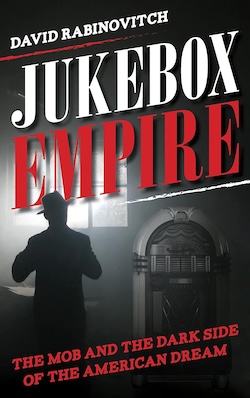
Historian Allan Levine and filmmaker David Rabinovitch close the Cherie Smith JCC Jewish Book Festival on Feb. 15, 8 p.m., at the Jewish Community Centre of Greater Vancouver with the event Jewish True Crime Stories, moderated by SM Freedman, who spent years as a private investigator in Vancouver before becoming a bestselling author of psychological thrillers. Levine will talk about his latest book, Details Are Unprintable: Wayne Lonergan and the Sensational Café Society Murder (2020), and Rabinovitch will talk about : The Mob and the Dark Side of the American Dream (2023), his first book.

Both true crime publications have a similar structure. They both have a cast of characters at the beginning, followed by a prologue or preface, then the narrative proceeds chronologically, beginning with each protagonist’s origin story, and following the circumstances and decisions that led to their headline-grabbing lives. Both books have extensive notes and bibliographies. Levine and Rabinovitch each read more than a thousand pages of court transcripts and related documents, like witness testimonies and letters, as well as newspapers of the day. These types of resources, written as events were unfolding, allow both authors to tell their stories with an immediacy that propels readers along. In both books, it feels as if what we’re right in the midst of what is happening.

image - Details Are Unprintable book coverFor Levine, the idea of exploring Toronto-born opportunist Wayne Lonergan’s conviction for the Oct. 23, 1943, murder of his wife, Patricia Burton Lonergan, the daughter of a wealthy German-Jewish family in New York City, came from reading a 1948 Cosmopolitan article by Raymond Chandler. The renowned detective fiction writer listed Lonergan’s case as #9 in his list of the “10 greatest crimes of the century.” There have been a couple of novels based on the case and, writes Levine, “Over the years, the story of the murder, with the requisite number of theories about Lonergan’s sexual identity, has been told and retold in countless tabloid newspapers and magazines and remains a favourite topic of crime and mystery bloggers.”

Lonergan’s bisexuality plays an important part in the story, including his initial alibi, and Levine adds social context in this and other instances, such as describing the mores of the café society into which Lonergan married. Levine takes the tabloid aspect out of the telling, in that he seems to have harnessed the facts and his conclusion as to Lonergan’s innocence or guilt seems solid.

image - Jukebox Empire book coverRabinovitch’s ability to step back and tell the story of Wolfe Rabin in an apparently unbiased way is even more impressive, given that Rabin is his uncle. Granted, Rabinovitch never met Rabin, but still, family is family. 

“How did my father’s brother, raised in an immigrant Jewish family in a remote Canadian prairie town [Morden, Man.], become a jukebox tycoon, a crony of gangsters and the mastermind behind an audacious and complex international money-laundering scheme?” writes Rabinovitch. “My investigation would reveal his world and a tale of jukeboxes, money laundering and organized crime.”

Rabin was a smart, creative and resourceful person. “He invented the car radio. He was a wartime profiteer. He designed the first jet-age jukebox. He was an international bonds trader,” writes Rabinovitch. “Wolfe and his sexy wife Trudy were a glamorous couple.”

But, early in his career, Rabin makes a deal with the proverbial devil, a mobster, and it’s a deal that makes him rich at first. But a competitor – fellow Manitoban David Rockola – successfully sues for patent infringements in the late 1940s, putting Rabin out of business and in need of money to pay back his criminal investors. It is fascinating to read of the mob connections to the jukebox industry, an industry that pulled in millions a week because, as Rabinovitch writes, “Even at the nadir of the Depression, anyone could afford a nickel for a song.”

And Rabin’s story becomes even more incredible after his jukebox business fails. In pursuit of much-needed cash, he becomes involved with stolen bonds, in what the U.S. Department of Justice called “the largest money-laundering scheme in history.” Eventually, the law does catch up with Rabin and some of his associates. Jail time is served. But Rabin’s biggest secret was only revealed long after his death in 1967, after Rabinovitch completed the draft of this book. It is one of the sadder elements of Rabin’s story. Despite all his achievements, there is much Rabin missed out on in his quest for wealth. 

The Cherie Smith JCC Jewish Book Festival runs Feb. 10-15. For tickets, visit jccgv.com/jewish-book-festival.

Posted on February 9, 2024February 8, 2024Author Cynthia RamsayCategories BooksTags Allan Levine, David Rabinovitch, Details Are Unprintable, history, JCC Jewish Book Festival, Jukebox Empire, the mob, true crime, Wayne Lonergan, Wolfe Rabin

Exploring ideas, worlds

“If there is one thing we learn during difficult times, it’s that community plays a crucial role, fostering unity, resilience and offering emotional support,” writes Dana Camil Hewitt, director of the annual Cherie Smith JCC Jewish Book Festival, in her introduction to this year’s event, which will once again bring community members together to share stories and conversations – and in a difficult time.

The festival opens Feb. 10 with playwright, journalist and author Michael Posner in conversation with Alan Twigg, founder and editor for 33 years of BC BookWorld, about Posner’s three-volume biography of musician, composer and poet Leonard Cohen. The opening night includes a live musical performance with Harriet Frost and Martin Gotfrit, which illustrates perfectly how the influence of books extends beyond the printed page.

The world around us and how it shapes who we are, and vice versa, is front and centre in the Feb. 11 festival event Essays as Life Stories, featuring Vancouver’s Yosef Wosk and Hamilton’s Gary Barwin.

Traveling beyond the world

image - Naked in a Pyramid book coverIn his new book, Naked in a Pyramid: Travels & Observations, scholar, rabbi and philanthropist Yosef Wosk brings readers along on his extraordinary journeys throughout the world. But this is no Rick Steves guidebook. There are no hotel recommendations or Top 10 must-see lists. Far from it. Rather than inspiring wanderlust, in fact, some of Wosk’s adventures will make the reader happy to be home in an easy chair experiencing vicariously rather than accompanying him on these not-always-alluring quests. 

Wosk acknowledges that travel for him is not about R&R but always about adventure, challenging himself to discover not only the world but his place in it. Travel, for him, is “more of an intuitive imperative, a pilgrimage to the ends of the earth so that I might know both the planet and myself better.”

To these ends (literally), Wosk has traveled to both the north and the south poles. His reflections on being – within a little more than a year of each other – at the figurative top and bottom of the planet, lead to fascinating metaphysical contemplations. He is also provoked to contest mundane assumptions when he sees, at the South Pole, an upside-down globe. Why, he realizes he has never contemplated, should north be on top?

Wosk does not just see stuff, or even experience it, like an ordinary traveler, but finds himself transported beyond even the remote locales he visits to some supernatural planes. Near the North Pole, for example, he alarms travel-mates by laying down, albeit densely insulated, on the frozen Arctic ground “like some marooned sapien seal.” Becoming one with the planet’s most northerly extremity, he recalls, “I was seized by this unanticipated epiphany of transcendent unity.” 

The intensity with which he lives the places he encounters makes for a fascinating read and those of us who lack his depth of connection with the ethereal may feel pangs of jealousy, if not inferiority, at failing to experience as profoundly.

He visits Venice, the birthplace of Marco Polo – well, one of the reputed birthplaces – and finds resolve from the “Master of Travelers, the one who dared.” But Venice, as magnificent as it is, seems to be among the least remarkable of Wosk’s destinations.

“I have explored caves and caverns in Israel, Thailand and deep within the Rock of Gibraltar where Neanderthals lived for over 100,000 years, and also entered the coastal caves along the cerulean Na Pali coast in Kauai,” he writes. “Gazing into the luminous waters of the Blue Grotto in Capri, one of the most enchanting islands on the planet, one senses its womb of wonders.”

Claustrophobia is a recurring theme (for the reader, if less so the writer), with reminiscences of crawling on his back into a sarcophagus, descending into the bowels of a Soviet-era nuclear-powered Arctic icebreaker, or meditating (naked) in the subterranean hollows of the pyramid that gives the book its title. 

The book is deeply personal, including revealing insights into his deepest thoughts, as well as the sorts of travel nightmares to which anyone can relate, such as being stuck together with a sulky travel companion who he had considered a potential love interest, but who turns out to be the roommate from hell. He seems to recognize that his well-intentioned psychoanalyzing of her behaviour may not have been the remedy he had hoped.

His sense of being an outsider is not merely social but otherworldly.

“I have always felt like a fool, somewhat awkward in an unfamiliar world – as if I have just awakened from a distant dream and been planted, like Adam, in a strange Garden of Gaia. I spent most of my life as an unrepentant pilgrim, exploring often exotic and embarrassing sensations of mind, body and soul.” 

He openly admits that some of these sensations are enhanced by herbal or chemical assistance.

“On a beach off the road from Pafos to Limassol, in southern Cyprus, a friend and I took LSD at the fabled birthplace of Aphrodite,” he writes. “The beach was gravel and the waters rough but as the long, foaming waters born of the massive surf around the Rock reached the shore, one could easily imagine the earth being impregnated by the semen-bubbled surf and picture the goddess of love emerging from the sea.”

The book is about travel, but Wosk also covers voyages more broadly defined, such as the process of moving through life itself, including the reflection that a great rabbi imparted to him.

“One of my teachers, Zalman Schachter-Shalomi, used to tell us that you don’t have to wait until you’re dead to die; that one can be involved in a succession of deaths and rebirths, that there is non-mortal death and resurrection while still alive,” writes Wosk.

In a harrowing experience while illicitly climbing the Egyptian pyramid of the title, he seems to have exactly this sort of non-mortal death, which may well have been entirely mortal had things turned any further awry.

Wosk has rubbed shoulders (or, more accurately, minds) with greats like Buckminster Fuller, Marshall McLuhan and Joseph Campbell. He worked at the right hand of Nobel laureate Elie Wiesel as his teaching assistant and calls the late humanitarian author “one of the most influential mentors in my life.”

If Wosk sometimes seems a figure remote from the ordinary human, he yanks himself back down to earth in numerous segments, such as explaining how he overcame his intimidation at applying for Harvard’s divinity school. He eventually conquers his resistance and completes the graduate school application in the mechanic’s anteroom while his car is being serviced nearby. Even by the standards of a vegetarian, which he is, Wosk’s culinary tastes are decidedly and literally down to earth. (Favourite food? The potato.)

He refers modestly to his extensive philanthropy, which includes the Beit Wosk Community Centre, in Ashkelon, Israel, and the Dena Wosk School of Performing Arts at the Jewish Community Centre of Greater Vancouver (named for his late mother), but elides hundreds of other contributions over the years.

He pays tribute to his late father Morris (“MJ”) and late uncle Ben, who arrived as children in this country. The brothers did odd jobs before starting a business collecting and repairing used pots and pans, which they shined up and sold around town using a horse and buggy. From this, they graduated to a storefront and later a furniture chain. Eventually, the brothers reshaped the city’s skyline with some of Vancouver’s most recognizable high-rise residential towers. To say the family came a long way from rural Ukraine is an understatement. MJ Wosk is estimated to have donated $50 million to a variety of causes.

It is difficult to sum up this book as this or that genre. While one section is an extended poem, much of the rest reads as prose poetry. Moreover, it is travel journal, philosophy treatise, theological tract and memoir of a person who curates and collects not just fascinating objects (which he does) but ideas, experiences and memories. Perhaps the book could be best described as an exhibition, a retrospective of a just a few of the intangible treasures Wosk has amassed in a lifetime that seems more unique than every life, by definition, is.

As fellow thinker John Ralston Saul said of this book, “He brings us a life intensely lived.” To appreciate how intensely, one really needs to immerse oneself in these pages.

 – Pat Johnson

Exploring language’s many facets

Gary Barwin’s Imagining Imagining is reflective, sentimental, intellectual and absurd. His facility with the English language is remarkable and he is more well-read than most of us, but there are various levels of understanding of any text, and everyone will take away something of value from this imaginative and mind-expanding collection of essays.
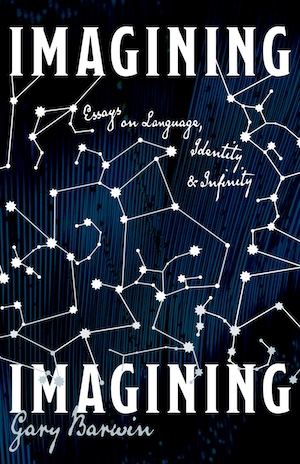
image - Imagining Imagining book coverThe multiple-award-winning author of some 30 books, including the bestselling Yiddish for Pirates, Barwin is also a musician, composer and artist. He draws upon all his varied skills and interests in his imaginings. He begins with reflections on the Hebrew alphabet, where the Book of Genesis says the world began: “the earth was without form and void until God gave shape or reality to it, all with words. With the letters that form the Hebrew alphabet.” He talks of the letters’ sounds and shapes, even illustrates the letter shin with an extra arm on the left that looks like it is topped with a crown, the image of which appears on the tefillin box that Orthodox Jews place on their forehead for morning prayers. According to a kabbalist text, there is a letter missing from the Hebrew alphabet and some think this four-armed shin might be it. “So, the thinking goes, we might already know what it looks like. But we don’t know what new sound it might make, this new sound that might heal the universe.”

While lauding language and its potential as a cause for hope, Barwin warns that language can also lull and trick us. “We must always look very carefully at language. At its beauty, its mystery. Its power to make us think and feel things. Its power to make and remake the world,” he writes.

If it’s not obvious already, Barwin is a big thinker. And he has a big vocabulary. Imagining Imagining might be a book to read as an ebook, for easy access to a dictionary. For the most part, however, his skill as a writer means that we get the gist if not the whole idea, that our curiosity is piqued and we continue to revel in our own thoughts long after we finish reading an essay.

Those who have read Barwin’s novels will know that he has a great sense of humour, and there are many smiling, even laugh-aloud, moments in these essays. One essay is entirely devoted to humour, and it’s fascinating – and funny. In it, he shares his favourite poem, “Modern Poem,” written by Martin Laba: “one, two, / three, four, / five, you idiot.”

“I like it because we can empathize with the feeling of having read something, perhaps a modern poem, something that is so hard to understand, that appears to be saying something willfully inaccessible or that appears so entirely pointless that it seems to be deliberately trying to make you feel like an idiot,” writes Barwin. “I like the poem because of the nice twist, the surprise at the end, the shock of recognition. Oh yes, I know poems like this. And I know that feeling.”

There are many shocks of recognition in Imagining Imagining, as there are shocks of non-recognition. Barwin is a smart, accomplished person and his views on things – from Hebrew letters, to insomnia, to ampersands, to his grandfather’s moustache, and more – will have you thinking about yours in new ways. For example, that chapter on humour stresses the immense value in laughter, not the least of which is that it “gives us an alternative to despair,” it allows us “the ability to frame our experience.”

“Through humour, we are able to stand outside what’s happening and look at it philosophically. Through humour, we find a way to engage, to think about what is happening and still have agency,” writes Barwin.

Engagement, community, the interconnectedness of all things. Barwin challenges readers to think outside the box, to reconsider what is a box, whether a box can ever truly exist. Speaking “mostly but not entirely metaphorically,” Barwin asks about the need for (cell) walls, “don’t things morph into one another, if only eventually? The same is true of concepts and abstractions. One person’s manbun is another’s mantra. Is it true that someone’s pain is my pain and it is only the self and society which create reasons to keep them at a distance? I want my thinking and feeling to reflect the fundamental unipanrhizomatubiquity between/of things.”

After reading Imagining Imagining, you should have a notion of what “unipanrhizomatubiquity” means, even though Prof. Google doesn’t. That feeling of getting it, not getting it, is an unsettling sensation perhaps, but it’s one that propels questions, discovery. That makes what seems impossible potentially possible. That makes reading – and so many other things – exciting and worthwhile.

– Cynthia Ramsay

For the Cherie Smith JCC Jewish Book Festival, guide visit jccgv.com/jewish-book-festival. 

Posted on January 26, 2024January 24, 2024Author Pat Johnson and Cynthia RamsayCategories BooksTags essays, Gary Barwin, JBF, JCC Jewish Book Festival, Jewish Book Festival, travel, writing, Yosef Wosk

Putting the fun in dystopia – Steven Mayoff’s The Island Gospel According to Samson Grief

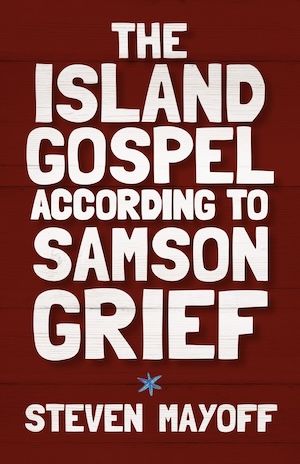
For all intents and purposes, it shouldn’t work, but Steven Mayoff’s The Island Gospel According to Samson Grief is a grand work of, let’s say, magical fiction that uses humour in large measure to elicit some very serious thoughts about art, politics, law, love, faith, community and more.

Mayoff takes part in two events during the Cherie Smith JCC Jewish Book Festival: on Feb. 11, he presents at Burquest Jewish Community Association in Coquitlam and, on Feb. 12, he is at the Jewish Community Centre of Greater Vancouver, along with Jeffrey Groberman, author of Globetrotting Strikes Again! Groberman also presents at Har El in West Vancouver on Feb. 11.

image - he Island Gospel According to Samson Grief book coverIt is hard to describe simply the plot of The Island Gospel According to Samson Grief. The title character is a middling artist who, when we meet him, is struggling to finish a painting. Outside his window, he has just seen – after a break of 13 years – three figments of his imagination. The Figs, as he calls them, present themselves in the forms of Judas, Fagin and Shylock, and they have returned with an important mission for Grief.

“The Supreme One,” who the Figs represent, was impressed by Grief’s scandalous, and most famous, painting of Prince Edward Island icon Anne of Green Gables as a Holocaust survivor, which Grief described in an interview as a statement “on the post-911 world we’re living in, where nobody is safe anymore and the primary victim is the delusion of our collective innocence.” Despite that Grief has not had much artistic or other success in the years since that painting – and that he is not actively involved in the island’s Jewish community – the Supreme One wants Grief to build PEI’s first synagogue. Once complete, the province will be consecrated as the new Promised Land, according to the Figs.

Among Grief’s many challenges – once he decides to take on the mission – is that the Supreme One has decreed that the synagogue must be built on a particular plot of land, a once-sacred place that has become a garbage dump and the focus of much political intrigue. It is hard to keep track of all the political manoeuvrings in this novel, but they sadly resonate, with some reality in their self-serving and unscrupulous nature.

It takes Mayoff awhile to set up the many pieces of his narrative puzzle. The characters are numerous, and quirky only begins to describe them. The societal issues that arise as Grief tries to achieve his mission, the role played by the media – both conventional and unconventional – in what ends up happening, the reliability and unreliability of friendship and love … so many factors are up in the air and changing as the story progresses. Somehow Mayoff juggles them all in a way that allows readers to follow along, discovering various elements as Grief does, and losing our naiveté as he does.

The Island Gospel According to Samson Grief is an ambitious novel that delivers beyond its promise. 

For the Cherie Smith JCC Jewish Book Festival guide, visit jccgv.com/jewish-book-festival. 

Posted on January 26, 2024January 24, 2024Author Cynthia RamsayCategories BooksTags fiction, humour, JCC Jewish Book Festival, Steven Mayoff
Book Fest epilogue event

Book Fest epilogue event

Jack and Edie Austin (photos from JCC Jewish Book Festival)

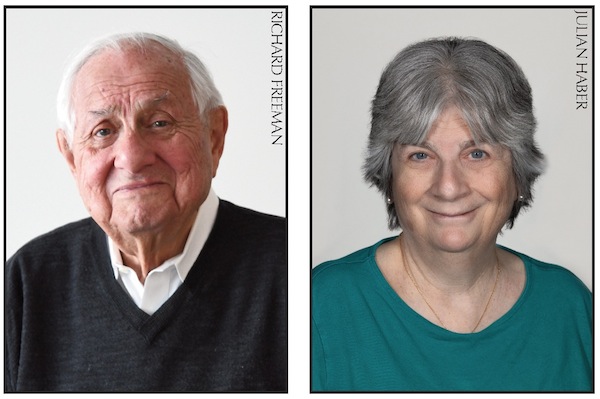
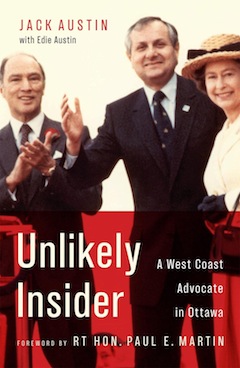
image - Unlikely Insider book coverFormer federal cabinet minister and senator Jack Austin, who has been involved in politics and public policy for more than 50 years, and his daughter, Edie Austin, editorial page editor of the Montreal Gazette, will be in conversation with Ronald Stern, founder and president of Stern Partners, on Feb. 28, 7 p.m., at the Rothstein Theatre as a Cherie Smith JCC Jewish Book Festival epilogue event.

The two will discuss their book, Unlikely Insider: A West Coast Advocate in Ottawa, about Jack Austin’s public service. With both historical perspective and an eye to the future, Austin reflects on events and people whose impacts are still being felt, and on the enduring challenges of Canadian life. For tickets ($18) to attend the event, visit jccgv.com/jewish-book-festival.

– Cherie Smith JCC Jewish Book Festival

Posted on February 24, 2023February 24, 2023Author Cherie Smith JCC Jewish Book FestivalCategories BooksTags Edie Austin, Jack Austin, JCC Jewish Book Festival, politics
Reading expands experience

Reading expands experience

Letters that highlight friendship, writing that facilitates healing, stories that dissect societal mores – the books reviewed by the Jewish Independent this week represent only a small fraction of those featured at the Cherie Smith JCC Jewish Book Festival this year.

While the official festival runs Feb. 11-16, opening with Dr. Gabor Maté in conversation with Marsha Lederman about his latest book, The Myth of Normal: Trauma, Illness & Healing in a Toxic Culture, there are a couple of pre-festival events this month: German writer Max Czollek launches the English version of his book De-Integrate! A Jewish Survival Guide for the 21st Century on Jan. 19 and American-Israeli photographer Jason Langer presents his book Berlin: A Jewish Ode to the Metropolis on Jan. 26. As well, there is a post-festival event, on Feb. 28, which sees former federal cabinet minister and senator Jack Austin launching his memoir, Unlikely Insider: A West Coast Advocate in Ottawa.

If the books reviewed by the Independent are any indication, attendees of the festival can expect to have their views challenged and their perspectives broadened; they will be moved, disturbed and amused, sometimes all at once.

Intimate portraits

Two years ago, the JCC Jewish Book Festival featured the book Memories of Jewish Poland: The 1932 Photographs of Nachum Tim Gidal (jewishindependent.ca/gidals-photos-speak-volumes). It was the fulfilment of a dying request that Israeli photographer Tim Gidal made in 1996 to Vancouver scholar, writer and philanthropist Yosef Wosk. The book was released at the same time that an exhibit of its photos was mounted at the Zack Gallery (jewishindependent.ca/jewish-poland-in-1932).

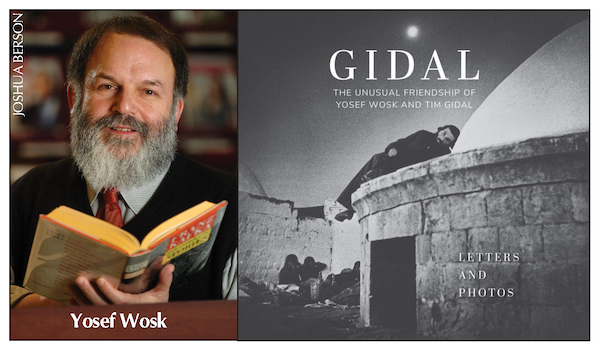
The friendship between Wosk and Gidal was evident in that book and in the exhibit. How the two men – separated in age by some 40 years and in geography by almost 11,000 kilometres – became such good friends is the subject of Gidal: The Unusual Friendship of Yosef Wosk and Tim Gidal, written by Wosk (and, technically, Gidal) and edited by another of Wosk’s good friends, Alan Twigg.

photo - Alan Twigg
Alan Twigg (PR photo)

The bulk of Gidal is letters that Gidal and Wosk wrote to each other from 1993, soon after they met, through to Gidal’s death in 1996. The postscript is a letter from Wosk to Gidal’s wife, Pia, mourning Gidal’s death and hoping that “his work and vision continue to inspire others.” Twigg has masterfully edited the multi-year correspondence, which comprised hundreds of letters, into an engaging narrative that offers insight into the core of these undeniably brilliant men, their work, ideas, loves, frustrations, sadnesses and more. Their vulnerability makes this a brave publication for Wosk to have created, and a meaningful one.

The other main component of Gidal is, of course, Gidal’s photographs, which, Wosk writes in the afterword, “serve as background to the letters.” As he did with Memories of Jewish Poland, Wosk mostly lets the photographs speak for themselves. Each photo section has a theme but each image within the section is simply captioned, placed and dated, without commentary.

There is a short chapter on Gidal and one on his and Wosk’s friendship and how this book came about. Gidal is creatively and esthetically put together. Each letter is headed by a key quote from the missive and the date it was sent. Images are included of some of the actual letters, most of which were sent by fax. It is interesting to contemplate whether this fount of communication would exist if it had been made via email.

Wosk and Twigg will talk about Gidal on Feb. 14, 7 p.m., at the book festival. The event is free of charge.

 Therapeutic memoirs

Paired together for a presentation are Margot Fedoruk and Tamar Glouberman. The program categorizes them as “modern-day women” who will be presenting their “offbeat memoirs,” summarized by the question, “How B.C. is that?” Indeed, both Fedoruk and Glouberman tell coming-of-age stories of a sort, Fedoruk’s beginning in her 20s and Glouberman’s in her 30s. And they both lead outdoorsy, independent lives that could be described as the B.C. ideal, yet both have also faced many challenges and darker sides of that ideal.

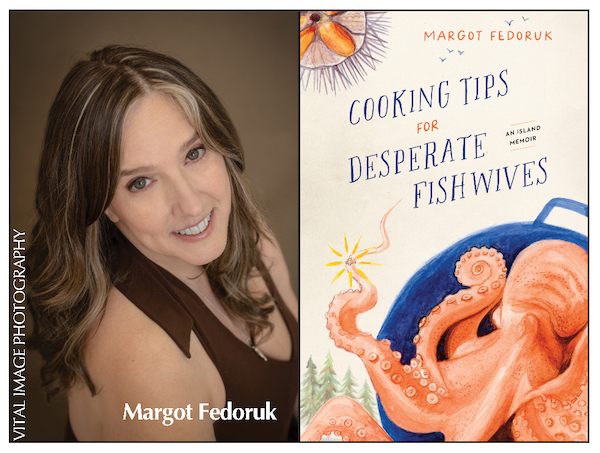
Fedoruk is the author of Cooking Tips for Desperate Fishwives, in which she openly shares her anxieties of being married to a West Coast sea urchin diver – she is lonely without him, must raise their two daughters mostly without him and is worried that an accident may result in her having to live without him. Yet, she loves Rick, even though she does try (unsuccessfully) to convince him to take up another profession and stay closer to home. The pair moves around a lot, and Fedoruk herself takes up many different jobs over the years to make ends meet. But they stick together, getting married after their daughters are all grown up and have left home.

images - Margot Fedoruk and Cooking Tips for Desperate Fishwives coverAs dysfunctional as their relationship appears at times, Fedoruk had a more challenging life before she met Rick. Her father is a horrible man, her mother dies of cancer and she and her sister lose the family home to her mother’s second husband, also a horrible man. And there’s more. It is no wonder she leaves Winnipeg, eventually settling in British Columbia, though settling may be too strong a word, as she and her family do live in several different places on the coast, with some time in Calgary.

What makes Fedoruk’s memoir unique is the inclusion of a recipe in almost every chapter that reflects the mood or subject matter of the chapter, like the Killer Lasagne in the introduction, which begins, “The night I ran over Rick with my car, I was over four months pregnant with our first daughter.” Other recipes include Easy Curried Chickpeas With Rice, which appears as an affordable comfort food in a chapter about her being exhausted, on her own, caring for her two then-young daughters; and Wild-crafted Stinging Nettle Pesto, which comes after one of her descriptions of the soaps she makes – her business is Starfish Soap Company.

Near the end of her memoir, Fedoruk mentions that she has started therapy. I would have liked her to have written this book further into that process. As honest as she is about her feelings and circumstances, the memoir would have been more layered and impactful had she been further along in understanding how her traumatic childhood experiences, her genes and other factors affect how she moves through the world.

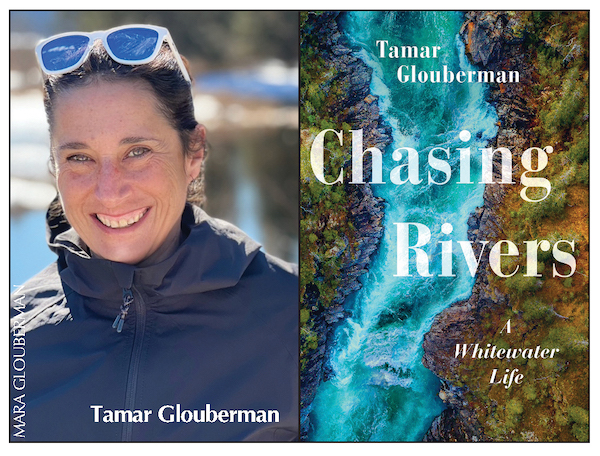
Glouberman has a less tragic background but a similarly transient life – and also loves something that gives her both great joy and great anxiety, the latter of which eventually takes over. In Chasing Rivers: A Whitewater Life, she shares her emotional journey of trying to make a life as a whitewater rafting guide.

images - Tamar Glouberman is the author of Chasing Rivers: A Whitewater LifeOne of the few women to guide tours, Glouberman does face sexism, her skills often underestimated by clients, but her male bosses and colleagues all seem to appreciate her abilities – certainly more than she does. She is constantly worried about making a mistake that will kill her or someone else and, while this is rational, given her job and its risks, the feeling becomes overwhelming. With an accident on the road – there is a lot of travel required to get to places like Chilko River, Williams Lake and further afield, outside the province – and her worst nightmare coming true on a rafting trip, Glouberman’s fears have very real incidents on which to grow.

Glouberman tries other types of work, but is always drawn back to the water. She struggles with depression and has a few other harsh experiences that add to her self-doubt. She tries various forms of therapy, some of which make her feel worse. Her family is supportive, though, and her sister’s home in Whistler is a refuge. She is only beginning her journey to healing when the memoir ends, and part of that has to do with getting into a master’s writing program. Both she and Fedoruk, who also went back to university for a writing degree, thank several people for their memoirs coming to fruition.

Glouberman and Fedoruk present at the book festival Feb. 12, 2 p.m. (tickets are $18). They also speak at Congregation Har El that day, at 11 a.m.

The price of victory

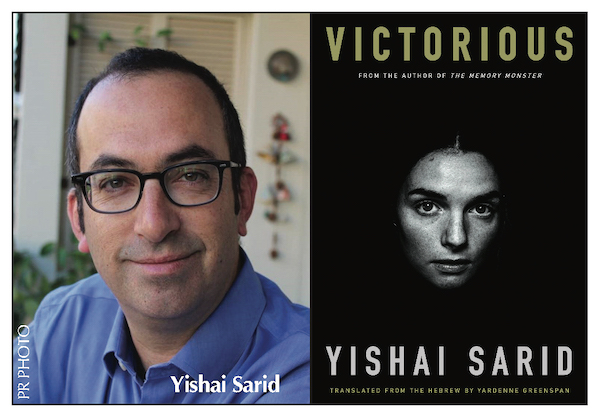
The harm inflicted on a society by war culture is front and centre in Israeli writer Yishai Sarid’s book Victorious. The main character, Abigail, is a military psychologist who, basically, tries to make soldiers into better killers, both “helping” them through trauma after they’ve experienced it and teaching them ways to be immune to trauma so that they can “beat the enemy.” Her father, who strongly disapproves of her work with the army, is a renowned clinical psychologist. On more than one occasion, he tries to talk her out of working for the military, but does not succeed. That the character of the father is dying of cancer is not coincidental.

images - Yishai Sarid and Victorious book coverAbigail blurs professional lines everywhere, working for the married man who fathered her son, the man who is now the army’s chief of staff; sleeping with a patient/friend; trying to become close friends with a former patient; and having a sexual relationship with one of the young soldiers whose unit she’s evaluating. The lessons she teaches are chilling, as is her abandonment of a patient who becomes too difficult for her to handle and some of her other actions.

She believes her job is her patriotic duty, even as her own son, Shauli, enters military service, in the paratroopers no less, and her fears for him fight with her pride in his choice. Though, with both his father and mother being staunch militarists, it could be argued that Shauli doesn’t really have a choice.

Victorious is a sparingly written novel that readers will not only ponder but feel well after they put it down. Translator Yardenne Greenspan must be given credit for making Sarid’s words as impactful in English as they are in Hebrew.

Sarid’s book festival event is Feb. 12, at 8 p.m. Tickets are $18.

For the full author lineup and to purchase festival tickets or passes, visit jccgv.com/jewish-book-festival or call 604-257-5111.

Format ImagePosted on January 13, 2023January 11, 2023Author Cynthia RamsayCategories BooksTags Alan Twigg, fiction, JCC Jewish Book Festival, Margot Fedoruk, memoirs, photography, Tamar Glouberman, Tim Gidal, Yishai Sarid, Yosef Wosk
A roadmap to remembering

A roadmap to remembering

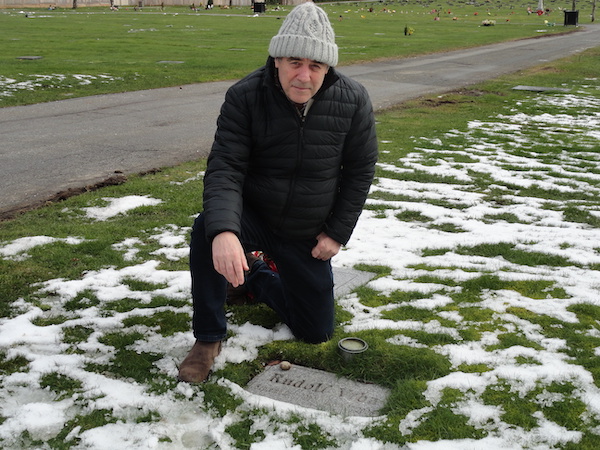
Alan Twigg, author of Out of Hiding: Holocaust Literature of British Columbia, at the gravesite of Rudolf “Rudi” Vrba, who died in 2006. (photo from JCC Jewish Book Festival)

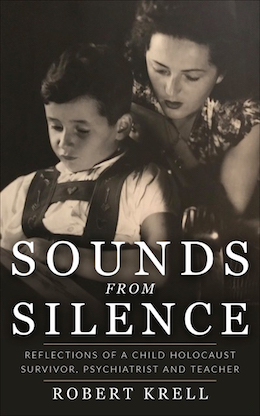
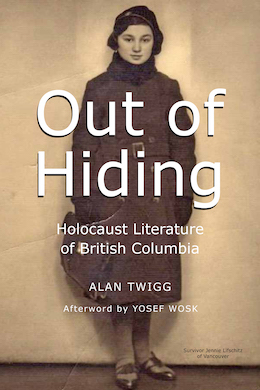
Fittingly for a man who has dedicated his life’s work to the written word, Alan Twigg has compiled a fascinating bibliography. Out of Hiding: Holocaust Literature of British Columbia is one of two books to be launched in a JCC Jewish Book Festival epilogue event on April 5. The other is Sounds from Silence: Reflections of a Child Holocaust Survivor, Psychiatrist and Teacher by Dr. Robert Krell, to whom Twigg’s book is dedicated.

image - Sounds from Silence book cover“More than anyone in Canada, Robert Krell has continuously carried the torches of healing, investigation and discourse about the Shoah since the 1970s to counteract ever-encroaching racism, denial and wilful ignorance,” writes Twigg, whose book is also dedicated to the late publisher and editor Ronald Hatch, who died last November. Hatch and his wife Veronica co-managed Ronsdale Press, which published Out of Hiding.

Among other things, Twigg is the founder of the BC BookWorld newspaper, The Ormsby Review (now called The British Columbia Review), the ABCBookWorld reference site, the Literary Map of BC and the Indigenous Literary Map of BC, as well as many of the province’s literary prizes. He has published 20 books and made seven literary documentaries.

Twigg wrote Out of Hiding with the help of many, including, notably, Yosef Wosk, who wrote the book’s afterword, in which Wosk discusses various kinds of hiding – from one’s mission, from persecution, in dreams, in silence, from truth. Wosk notes that the perpetrators of the Holocaust also tried to hide: “The Nazis engaged in fraud, deception and secrecy on a massive scale,” he writes.

“The secrecy was complete and, to a large extent, effective,” he adds. “The very monstrosity of the crime made it unbelieveable. In fact, the Nazis speculated that the unimaginability of their Aktionen would work in their favour.” But this expectation “was frustrated by the Allied victory. [What remained of] Nazi archives were opened, contemporary Jewish documents were discovered, and facts were ferreted out by courts and scholars. Moreover, by 1942, the Free World had gradually learned the truth, albeit not always complete and precise.”

Wosk concludes, “There is much to remember and even more to know as the Holocaust comes out of hiding.”

And this is one of the reasons Twigg compiled this collection.

“I am not a Jew. I am not a German. I simply believe it is the responsibility of everyone on the planet to know more than just a little about the Holocaust,” begins Twigg in the foreword. “It is our collective responsibility to teach our children – with details – about why the Shoah is unique among the many genocides.”

He points out: “No other political regime has ever systematically murdered at least 1.5 million babies and children.”

As well: “Never before or after has a modern, industrial state mobilized all of its resources to systematically commit murder at least six million times in about eight years (from Kristallnacht in 1938 to 1945) and no other government has established a separate killing ground to murder approximately 50,000 women (at Ravensbruck, north of Berlin).

“No other regime has so thoroughly and consistently degraded its victims,” writes Twigg. “Estimates vary but the United States Holocaust Memorial Museum claims Germans created 980 concentration camps, 30,000 slave labour camps, 1,150 Jewish ghettos, 1,000 prisoner-of-war camps and 500 brothels where women were sex slaves.” And yet, Holocaust education surveys have shown that most people would struggle to name one or two camps, other than perhaps Auschwitz.

Twigg believes that, “if the most-heinous, most-planned and most extensive genocide can be deep-sixed by mankind, all genocides thereafter can be shrugged off as natural – as inevitable as forest fires, plagues, droughts, locusts or tidal waves.” If that happens, he argues, then genocide becomes “someone else’s problem.” As for something the magnitude of the Holocaust, he writes, “Most certainly it can happen again.”

image - Out of Hiding book coverOut of Hiding is an intensely personal project for Twigg. He describes the book as “a roadmap back to places and experiences that must never be forgotten, offering a wide range of perspectives from the Holocaust-related books of British Columbian authors.” In total, he covers some 160 books in four sections. Some authors have written, edited or otherwise helped bring into being more than one memoir, novel, report or study; some of the people discussed are the subjects of the publications, rather than the writer.

Part One features relatively long expositions on Rudolf Vrba, Robert (Robbie) Waisman and Krell.

Twigg considers Vrba – who lived in Vancouver for the last few decades of his life – the “most important author of British Columbia.”

Writes Twigg in Out of Hiding, “Historian Ruth Linn estimates there were about 500-700 attempts to escape from Auschwitz-Birkenau, and most failed. Some 75 of these attempts were made by Jews; only five Jews made it successfully to freedom. The most significant of these five was Rudolf ‘Rudi’ Vrba, the main author of the most authoritative report on the true nature of the concentration camps, co-authored with co-escapee Alfred Wetzler.”

The Vrba-Wetzler Report, dated April 25, 1944, “finally revealed to the Allies the true nature and extent of the Holocaust.”

Twigg provides a biography of Vrba and some of what he learned from him as a friend. He also shares that Vrba, who died in 2006, was buried in a “seldom-visited cemetery, known to few people, where there is only a simple headstone.”

The April 5 event will include a video of Wosk chanting a Jewish blessing for Vrba at the graveside – something that apparently has not been done before.

Both Waisman and Krell are discussed in as much depth as Vrba, from their brief childhoods before the Holocaust through to recent history, sharing some of their writings and accomplishments, giving readers a sense of who they are and why their contributions are so vital.

Part Two offers shorter personal summaries on dozens of authors and publications. This section includes Lillian Boraks-Nemetz, Claudia Cornwall, Peter Hay, David Lester, Robert Mermelstein, Heather Pringle, Peter Suedfeld, Mark Zuehlke and many others. It features survivors of the Holocaust, as well as researchers, educators, journalists, graphic artists and editors who have studied the Holocaust, members of the Second or Third Generation, and a few non-Jews.

Part Three features an eclectic mix of 26 writers/artists, including Olga Campbell, Esi Edugyan, Jean Gerber, Rabbi Marvin Hier, Nikolaus Martin, Isa Milman, Norman Ravvin, Colin Upton and others.

Part Four:  One Doctor, Two Rabbis comprises three essays. The first is on Dr. Tom Perry, who served with the U.S. Army Medical Corps in the Second World War, and “took a series of rarely seen photos that his widow Claire Perry donated to the Vancouver Holocaust Education Centre in 1994 along with a five-page letter he wrote to her from ‘somewhere in Germany,’ describing his feelings and impressions of Buchenwald.” The letter is included in this section – and it is a powerful testament, though words don’t capture the horror as much as do his photographs.

The second essay, “Lulek’s Story,” flows from a well-known photo taken by Tim Gidal on July 17, 1945, in a refugee compound near Haifa – front and centre is Israel Meir “Lulek” Lau, holding a Buchenwald banner. Rabbi Meir Lau, who became Ashkenazi chief rabbi of Israel, was the youngest survivor of Buchenwald and his story is moving and inspirational.

Wosk’s afterword rounds out the collection with his thought-provoking reflections on hiding.

“Soon all witnesses will be gone,” concludes Twigg in his author’s statement. “The Holocaust must not be relegated to being merely the psychic preserve of Jews and Germans.”

The double-book launch event is presented with the Vancouver Holocaust Education Centre and takes place at the Rothstein Theatre. Admission is free but registration via jccgv.com/jewish-book-festival/events or at eventbrite.ca is required. To read a discussion of Krell’s Sounds from Silence, visit jewishindependent.ca/a-child-survivor-reflects.

Format ImagePosted on March 11, 2022March 10, 2022Author Cynthia RamsayCategories BooksTags Alan Twigg, Holocaust, JCC, JCC Jewish Book Festival, literature, Robert Krell, Vancouver Holocaust Education Centre, VHEC, Yosef Wosk
Freedom found in art

Freedom found in art

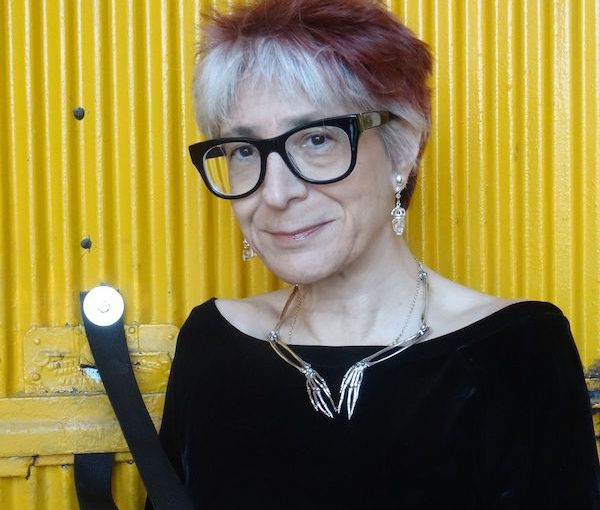
Riva Lehrer, author of Golem Girl, recently spoke on the topic Art Celebrating JDAIM (Jewish Disability Awareness, Acceptance and Inclusion Month). (photo from JBF)

Artist, writer and curator Riva Lehrer spoke at this month’s Cherie Smith JCC Jewish Book Festival on the topic Art Celebrating JDAIM (Jewish Disability Awareness, Acceptance and Inclusion Month). Lehrer’s work focuses on issues of “physical identity and the socially challenged body.”

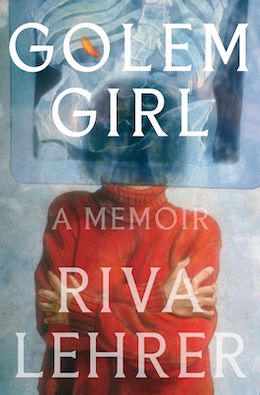
In the Feb. 7 Zoom talk from her home in Chicago, Lehrer discussed her 2020 illustrated memoir, Golem Girl,and her life as an artist born with disabilities into a world determined to “fix” her. Later in life, she found freedom through the flourishing disability arts movement.

Lehrer was born in 1958 with spina bifida. Throughout her early years, the message she received from those around her was that she was broken and would never have a job, a romantic relationship, or an independent life.

The memoir is comprised of two parts. The first deals with growing up in a time when people with disabilities were supposed to be hidden away from the rest of the world. The second looks at reaching adulthood after being raised to think that she was a mistake.

“I grew up thinking I was always wrong and always needed to be fixed, not just from medical professionals, but from everyone in society, who treated me like something to stare at or feel pity for. A lot of the book is taking that apart and addressing why people are stigmatized,” she said.

During Lehrer’s youth in Cincinnati, most children with a condition like hers were institutionalized. There was not a lot of modeling as to how to parent a child with disabilities. Lehrer, however, does credit her mother, who had worked as a medical researcher, for being much less fearful of the situation than an average parent might have been and for refusing the inclination to have her institutionalized.

Lehrer attended a school for children with impairments. “When you are surrounded with others like you, you are just a kid. You stop thinking you are different,” she recalled. The downside, however, was that kids at the time were not encouraged to imagine what they could be as far as a career, and high schools and colleges were not obligated to admit people with disabilities.

“The force of the message that I was a mistake was pretty powerful. By the time I was 12, I knew I was going to live in a body like this forever,” she said.

A resulting feeling of self-loathing persisted until her mid-30s, when novelist and disability rights activist Susan Nussbaum invited her to meet with a group of artists in Cincinnati. Lehrer reluctantly agreed to go and found it a life-changing experience.

“The sight of a lot of disabled people who were not hiding, and who were also funny and bright, gave me a way to understand my life and not just endure it,” she said.

The group showed Lehrer that disability is an opportunity for creativity and resistance. Finding inspiration and empowerment from people in the group, Lehrer asked them if she could paint their portraits. Even though she worked in portraiture, she “was very aware that she never saw images of people with disabilities ever, in museums or classes, only in telethons. It was never anything good.”

image - Golem Girl book coverNowadays, she said, her main interest is how people deal with and survive stigmatization. These are at the forefront of the 65 images contained in her book. Among the works she shared at the talk were a charcoal portrait of Nomy Lamm, an amputee musician, political activist and director of Sins Invalid in the Bay Area; a charcoal image of Mat Fraser, a British actor, writer and performance artist who was a regular cast member in American Horror Story: Freak Show television series; and a painting of Liz Carr, a British comedian, broadcaster and international disability rights activist.

“There is such a story behind each of these people,” Lehrer reflected.

As for the title, Golem Girl, Lehrer revealed a lifelong fascination with monsters. “One of the things monsters do is that they break boundaries,” she said. “Dead and moving, animal, person, person and machine, there is always something that violates a boundary. I was thinking how much this is like disability, that people don’t understand the disabled body. They think it is not human in some way. It is treated like it is alien.”

Lehrer is a faculty member of the School of the Art Institute of Chicago, and an instructor in medical humanities at Northwestern University.

The discussion was moderated by book festival director Dana Camil Hewitt.

Sam Margolis has written for the Globe and Mail, the National Post, UPI and MSNBC.

Format ImagePosted on February 25, 2022February 23, 2022Author Sam MargolisCategories BooksTags art, disability awareness, Golem Girl, JCC Jewish Book Festival, Riva Lehrer, stigma
Stepping back from abyss

Stepping back from abyss

Daniel Sokatch, New Israel Fund chief, urges openness to narratives of both peoples. (photo from JCC Jewish Book Festival)

The experiences of Jews and Arabs in the area between the Jordan and the Mediterranean are complex and both peoples deserve to have their stories understood, according to a leading voice of progressive Zionism.

Daniel Sokatch was the keynote speaker at the closing event of the 2022 Cherie Smith JCC Jewish Book Festival Feb. 10. Sokatch is chief executive officer of the New Israel Fund, a U.S.-based nonprofit funding Israeli civil and human rights organizations and initiatives, which also engages in reconciliation and conflict resolution efforts between Israelis and Palestinians. He shared reflections from his new book Can We Talk About Israel? A Guide for the Curious, Confused and Conflicted, which was illustrated by Christopher Noxon.

“Over my years of service at NIF as the chief executive officer – I’ve been there for over 13 years now – I witnessed personally the discourse about Israel become more heated, more vituperative, more emotional and less fact-based,” Sokatch said. He wrote the book to give average people “a GPS to the conflict that would help them negotiate their own relationship to this complex issue.”

Israel was at the edge of an abyss before the new eight-party coalition government was sworn in last year, Sokatch said.

“This government is a Frankenstein’s monster made up of parties of the right, centre, left and Arab community that shouldn’t work but does work because enough people from all parties, except for the hard right-wing parties, knew that Benjamin Netanyahu was leading Israel over a cliff,” he said. “That was my editorial opinion but it is also the rationale for this government.”

A chunk of the Israeli public realized that Netanyahu was moving Israel toward neo-authoritarianism and a “democracy recession,” said Sokatch. This was exemplified, in part, by moves to abrogate the country’s balance between its Jewish and its democratic identities, he said.

image - Can We Talk About Israel? book cover“Israel passed a series of laws – most of them, I think it’s important to note, passed only barely – that really reduce the standing of Arab citizens of Israel to something that looked a lot more like second-class citizenry,” said Sokatch. “The worst of these laws was something called the Nation-State Law.… The Nation-State Law essentially said to Arab-Israeli citizens, you may have the right to vote but only Jewish citizens of the state have the right to what the law says is ‘self-determination.’… It stripped Arabic of its official language status…. The only reason you do things like that is if you want to throw red meat to your base and make a statement to the minority about where they stand. Anyone who has been to Israel recently – and by recently I mean at any point during its entire existence as a state – knows that the Jewish character of Israel is under no threat. In that sense, the alarm raised by Netanyahu and that Nation-State Law was like [former U.S. president Donald] Trump’s Muslim ban. It was a draconian solution for a problem that doesn’t actually exist.”

Reuven Rivlin, who was president of Israel at the time, acknowledged that he was obligated to sign the bill into law, but promised to sign in Arabic, which he did as a symbol of protest.

Sokatch addressed the recent Amnesty International report that accuses Israel of operating an apartheid system. He said that any honest and fair-minded left-wing observer who traveled the length and breadth of Israel would recognize that the apartheid label does not fit. But, he added, any honest and fair-minded right-wing observer who traveled the length and breadth of the West Bank would see things that could legitimately justify the terminology.

“I happen to think that the Amnesty report is deeply flawed,” he said. But, on the flip side: “To dismiss it all as antisemitism is to, like an ostrich, stick your head in the ground and ignore the reality of the problem.”

If Jews worldwide are held responsible for Israel’s actions, that is antisemitic, he said. Likewise, if Israel is depicted as a tentacled monster controlling the world, or if Jews are depicted as clannish, disloyal and the embodiment of “cosmic evil,” these are examples of antisemitism. The hostage-taking at a Texas synagogue in January is another example.

“Why did the guy go to a synagogue, instead of a church or McDonald’s or wherever?” Sokatch asked. “He went to the synagogue because he thought the Jews could get him what he wanted. He thought that we were so powerful in the United States that we could pick up the phone and tell Joe Biden to let the person he wanted let out of jail let out of jail. When criticism of Israel engages in those tropes, you can bet your life it’s antisemitism.”

But these examples of bias should not blind people to the legitimate criticisms being leveled against Israel, he warned. He hopes his book will open up more dialogue.

“Too often, I think, we are afraid to talk about the hard things,” he said. “What is the role of Israel’s Arab citizenry? What is the relationship between the U.S. and Israeli Jewish communities, the two largest Jewish communities in the history of the world? What is the deal with the settlements? Is Israel an apartheid state? What is the boycott, divestment and sanctions movement? I didn’t want to shy away from those things. But I also felt strongly that, in order to have an intelligent conversation about them, or to hold informed opinions about them, you have to know what you’re talking about.”

The first half of his book is mostly straightforward history, he said, with his analysis in the second half. He encourages a more fluent understanding of the narratives of both peoples.

“These are two peoples, Israelis and Palestinians, Jews and Arabs, who have been victims of the world, of each other and of themselves,” said Sokatch. “I felt that it was important to hold both of their stories with compassion and curiosity and concern, and to acknowledge that both parties have legitimate claims to this little place between the Mediterranean Sea and the Jordan River. Both of these peoples have real histories of trauma and persecution and both of them have stories that help them understand who they are and where they are in the world and their connection to this place, and I wanted to tell those stories rather than just one of the stories.”

Sokatch appeared virtually in conversation with Dana Camil Hewitt, director of the book festival. Rikki Jacobson, chair of the festival committee, welcomed the audience and thanked the speaker.

Format ImagePosted on February 25, 2022February 23, 2022Author Pat JohnsonCategories BooksTags Amnesty International, Daniel Sokatch, democracy, Israel, JCC Jewish Book Festival, New Israel Fund, NIF, Palestine
Secret Jewish fighters

Secret Jewish fighters

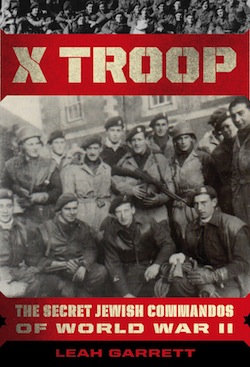
Leah Garrett has pieced together the most comprehensive story yet of a little-known but fascinating footnote to the Second World War, and she shares her findings in her new book, X Troop. (photo by Deb Caponera / Hunter College)

Using recently declassified military records and interviewing family members, author Leah Garrett has pieced together the most comprehensive story yet of a little-known but fascinating footnote to Second World War history – and the role that a few score of Jewish men played at pivotal moments in the conflict.

Garrett is a professor at Hunter College, in New York City. As part of the Cherie Smith JCC Jewish Book Festival, she will speak about her new book, X Troop: The Secret Jewish Commandos of World War Two, in a virtual event on Feb. 6.

X Troop tells of the 87 men – 83 of them Jewish – who made up the No. 10 (Inter-Allied) Commando, 3 Troop. The secret weapon X Troop members shared was that most of them were from German-speaking parts of Europe, had escaped occupied countries and, as Jews, had a deeply personal drive to defeat the Nazis.

Formed officially on July 2, 1942, the unique commando unit would, among other things, allow British forces to expedite interrogation of captured Axis soldiers.

“X Troop would be Britain’s secret shock troop in the war against Germany,” Garrett writes. “They would kill and capture Nazis on the battlefield. But that would not be all. They would also immediately interrogate captured Germans, be it in the heat of battle or right afterward. The men’s fluency in German would enable them to get essential intelligence that would guide the next moment’s choices rather than having to wait to interview prisoners until they were back at headquarters.”

No less than Winston Churchill himself gave the group their nickname.

“Because they will be unknown warriors … they must perforce be considered an unknown quantity. Since the algebraic symbol for the unknown is X, let us call them X Troop,” declared the then-prime minister of the United Kingdom.

One of the many consequential incidents, which could have turned disastrous, was when two troop members, whose anglicized noms de guerre were Roy Wooldridge and George Lane, were captured by the Germans and taken to a command post. The next day, they were driven to the French countryside and, instead of being summarily executed as they had feared, found themselves in the château that was serving as headquarters for field marshal Erwin Rommel.

“During his training … Lane had been taught to give only his (fake) name, rank and serial number if he was captured,” writes Garrett. “But instead he found himself having an extended conversation with the field marshal over tea. Lane fortunately recovered his composure and didn’t say anything that would give him and his comrade away.”

Later, when they were transferred to a POW camp in central Germany, which was filled with 300 British officers, the pair was able to share their knowledge of Rommel’s location – information that was surreptitiously conveyed back to London through a hidden homemade wireless radio.

“A few months later … during the Normandy campaign, Rommel’s staff car was strafed by RAF Spitfires as he drove from Château de La Roche-Guyon to the front near Saint-Lô. The attack left Rommel, one of Germany’s best and most creative generals, with serious injuries, and from that moment on his participation in the war was effectively over,” notes Garrett.

The irony was that some of the members of X Troop suddenly transformed from prisoners of war – Jews of German or Austrian origin, who were viewed as “enemy aliens” – to members of an elite British military troop.

image - X Troop book cover“I found it rather odd that one day I could not be trusted with anything more lethal than a broomstick and the next I was told that I was going to be a spy for the British,” said one member, Tony Firth. “But who said that the English are logical?”

The men faced a fourfold risk if captured. Hitler had ordered Allied commandos to be shot on sight. As refugees from Europe who may have still had family in Nazi-occupied areas, they risked not only their own lives, but those of their families. As Jews, they were the explicit target of state-sanctioned murder and, as German or Austrian nationals, they would be considered traitors to their homelands if captured.

The commandos were trained in a Welsh village and, though each had each created a false persona, it took wilful blindness for the village folk to not realize there was something odd about these particular British soldiers. Recalled one townswoman, “… when we would ask them what nationality they were, they would say: ‘Vee are English.’” (A memorial to X Troop in that Welsh village today ostentatiously omits the fact that almost all of them were Jewish.)

Though trained together and with a tight-knit sense of camaraderie, the troop was deployed not as a group but across the British military. The book follows members of the troop through heroics and horrors at Normandy and in Egypt, Italy, Greece and Yugoslavia. In the end, half of the men would be killed, wounded or forever missing in action.

Some reviewers have drawn parallels between the real-life exploits of X Troop and a 2009 Hollywood blockbuster, but Garrett contrasts the facts and fictions. “Whenever possible, the X Troopers used their intelligence to outmanoeuvre the Nazis and to capture them before a shot was fired,” she writes. “In this regard, the X Troopers were the opposite of Quentin Tarantino’s vengeful Jews in his film Inglourious Basterds. Rather than wreaking personal revenge on the Germans, they followed the rules of war. They coolly collected battlefield intelligence from the enemy and outwitted them using their intellect rather than brute force. And even in extreme instances, such as when Colin Anson confronted the man who had been responsible for his own father’s death, they refused to compromise their own moral standards.”

Among the lessons the author aims to convey is the heroism of Jews in the fight against Nazism, adding a new layer to a growing literature on resistance of various forms.

“Through their exemplary and courageous service,” Garrett writes, “their story challenges the idea that only in Israel did the Jews become armed warriors who fought to try to establish a safe life for themselves and their families.”

Garrett’s Feb. 6 book festival event starts at 3:30 p.m. For tickets, visit jccgv.com/jewish-book-festival.

Format ImagePosted on January 28, 2022January 27, 2022Author Pat JohnsonCategories BooksTags history, Holocaust, JCC Jewish Book Festival, Leah Garrett, war, X Troop
Poetry and painting flourish

Poetry and painting flourish

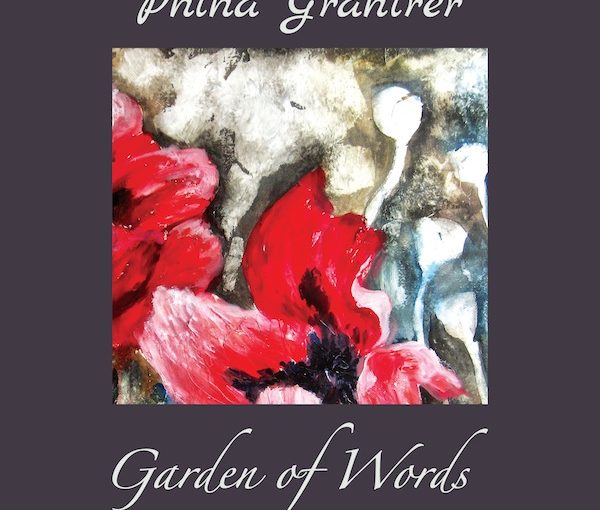
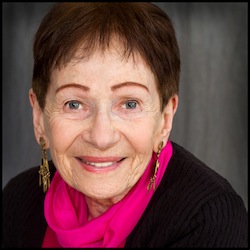
Pnina Granirer launches her new book, Garden of Words, at the Cherie Smith JCC Jewish Book Festival Feb. 9. (photo from JBF)

“Unexpected and unplanned, like small gifts offered by a kind friend, poems have been forming in my head ever since I was a child,” writes Pnina Granirer in her most recent book, Garden of Words. “Unexpected” is the perfect word for Granirer, who continually reinvents her artistic self.

Garden of Words is a beautiful mix of Granirer’s painted “words” and her written ones, her more distant past and recent experiences, including the loss of her life-partner of more than 65 years, in August 2020. The book is dedicated to Eddy and the final poem (“Goodbye”) and image (“Eddy Studying During Power Outage,” 1957, charcoal on paper) are of him.

This collection is a very personal work that shows Granirer’s powers of observation, both in her paintings and drawings, as well as in her poetry. It also shows her strength via her willingness to be vulnerable.

photo - Pnina Granirer
Pnina Granirer (photo courtesy JBF)

Two poems are part of the book’s foreword. The first, explains Granirer, who was born in Romania, “expresses the joy and happiness of a 10-year-old when on August 23, 1944, the Soviet Red Army entered our town, on the day that the cattle cars were waiting at the train station to take us away to the concentration camps. It had been a narrow escape, indeed!” The second is the title poem, in which Granirer notes that she is a painter, “I speak with paint and brush / my words are written / with colour and with line.” But, she recognizes the power of words, their ability to “conjure a Universe”: “I should so like to plant / a garden of words / in my field of colours // and watch them grow.”

Garden of Words has six sections: Sea and Stones; Pandemic; Dancers; Memories of Spain; This and That; and Closure. Her poems are short, concisely capturing the ephemerality of life – not even stones are permanent, the ebb and flow of water covers and exposes them, reshapes them, while they absorb past lives (fossils) and form sculptures. Stones offer inspiration and company to Granirer, who listens to their “quiet whispering.”

While all of the paintings Granirer has selected for this book interact wonderfully with her poems, reinforcing their themes, particularly powerful is the interplay between the poems about COVID-19 and artworks that had, of course, other meanings when they were created years ago. The new poem “All Together Now,” which starts, “This novel enemy is democratic. // In its indifference / all prey is equal,” is followed by the 2008 painting “Utopia – All Together Now,” which features four people dancing within a diamond-shaped boundary. One dancer’s head and their left foot cross the barrier. With dancing as one of the activities that has been restricted during the pandemic and the fact that we’ve all had to create bubbles (diamonds?) within which we can socialize safely, this probably once-joyous painting takes on a more sombre joy.

There are also sparks of sombre humour in various poems, including “Visit with El Greco” and “City Woman.” And the fear is palpable and relatable in the prose poem “Grenada,” which includes the stark reflection: “Five hundred years after the Inquisition, the burnings and autos-da-fé are pushed out of memory, conveniently forgotten, but the ceremonies persist; the dark past is not taught in Spanish schools. It has been turned into an Easter celebration, a parade, a fun event.” But, for Granirer, the crowds are ominous, evoking images of the Inquisition: “I am a Jew and it is coming for me. I am a Muslim and I am afraid. I am a Black woman and here is the KKK coming. I am terrified. The sight of those pointed hoods unleashes a flood of emotion I did not know I was capable of. My anxiety is close to panic.”

There are happier reflections. “Pas-de-deux,” for example, describes two men, each flying their own kite, but close together: “They leap / they dance / they bend and kneel / they sway from side to side / and turn as one.” When the men and their kites finish their dance, they receive “scattered applause from the small gathered crowd.”

At age 86, Granirer continues to create in new and meaningful ways. She launches her new book at the Cherie Smith JCC Jewish Book Festival on Feb. 9, 1 p.m. Visit jccgv.com/jewish-book-festival.

Format ImagePosted on January 28, 2022January 27, 2022Author Cynthia RamsayCategories BooksTags art, Garden of Words, JCC Jewish Book Festival, painting, Pnina Granirer, poetry

Posts pagination

Previous page Page 1 Page 2 Page 3 Next page
Proudly powered by WordPress